Best Time to Visit Mostar
Month-by-month weather, crowds and prices, plus a full calendar of festivals and events worth planning a trip around.
Best monthsMay, Sep
CheapestJan, Feb, Nov, Dec
AvoidJul
BusiestJul, Aug
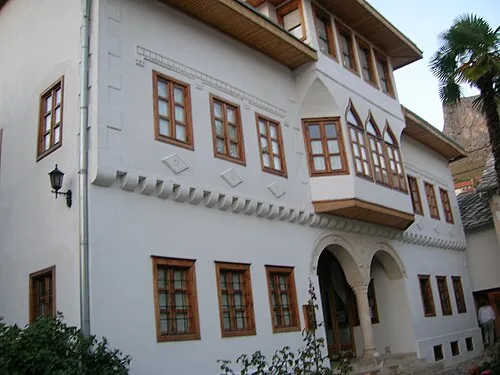
When is the best time to visit Mostar?
Come in May or September: 22-30°C, the Neretva still turquoise-green, and none of July's brutal 40°C heat or the day-tripper coach crush around Stari Most. Hotels run 100-160 BAM (50-80 €), roughly 30-45% below the July peak. Skip late July unless you came for the Red Bull Cliff Diving, when the Old Town is mobbed and every guesthouse sells out by May. February and November are the cheapest, quietest months at 55-90 BAM a night.
Start our tool and find your best time to visit Mostar
Your perfect month
Free · ~30 seconds
or tap a month directly
What matters to you?
And this?
Best overall: May, Sep. May and September are the sweet spot: comfortable 22-30°C, the Neretva at its turquoise best, full light on the bridge, and hotel rates 100-160 BAM, around 30-45% below the July peak. The day-tripper coaches are much thinner than in summer, so Stari Most is walkable at any time of day rather than gridlocked from 10am to 5pm.
Best value: Feb, Nov. February and November bring hotels at 55-90 BAM (28-45 €), the cheapest of the year, with no coach crowds and clean photographs of an empty bridge. The catch is short days and the wettest stretch of the year, though Mostar's rain comes as short intense bursts rather than all-day drizzle, and rarely disrupts a day's sightseeing.
Avoid: Jul. July, and the last ten days in particular, is the year's worst value. Temperatures routinely hit 38-42°C, the cobblestones radiate heat until midnight, every hotel is sold out or at maximum price, and the Old Town is impassable from 10am to 6pm with day-trippers. Glorious if you came for the Red Bull Cliff Diving weekend, miserable if you wanted the quiet Ottoman town.
- January: Good time, 9°C. This is the month to have the Old Bridge and the Kujundžiluk bazaar almost to yourself. It is cool and damp, the souvenir shops keep short hours, but the town is calm, cheap and unstaged. Bring a warm layer and a rain jacket and you get the Ottoman town stripped of its summer crush.
- February: Good time, 12°C. February is honest, off-season Mostar with no markup and no crowds. The town runs on its own rhythm rather than for tourists, which is exactly its charm if you want the bridge, the bazaar and the canyon without a single coach in sight, for half the summer price.
- March: Great time, 14°C. March is the last genuinely empty month before the spring shoulder season builds. The weather is improving, the Neretva is green from snowmelt, and you still get the bridge and bazaar without crowds. If you can time around the Eid closures, it is one of the calmest ways to see the Ottoman town.
- April: Great time, 18°C. April is when Mostar shakes off winter without the summer heat or crowds. The canyon walls look their most dramatic in morning light with low haze, and a brief afternoon thunderstorm clears within the hour. It is the couples' month: turquoise river light, quiet streets, dinners outside without sweating.
- May: Great time, 23°C. May is the quietly perfect month: comfortable walking weather, the river at its turquoise best, and the bridge accessible at any time of day rather than gridlocked. No punishing heat, shoulder-season prices, and the canyon at its most photogenic. This is the month to come for a first visit.
- June: Good time, 28°C. June is the tipping point into the hot, busy season. The middle of the day around the bridge gets crowded and the heat builds, but the long daylight means cool, golden early mornings and pleasant evenings. Plan your sightseeing before 09:00 and after 18:00 and the heat is manageable.
- July: Tough month, 32°C. July is full-throttle Mostar: brutal heat, mob crowds and a packed event calendar. The last weekend, with Red Bull Cliff Diving and the traditional divers, is spectacular if that is why you came, and miserable if you wanted the quiet Ottoman town. When the midday heat and the pre-booked guide prices climb, our in-browser AI guide is the cheap, always-available alternative to an expensive private guide: it walks you through the bazaar at flat 5€ an hour, telling the story at each stop and answering your questions, so you can sightsee in the cooler early hours and let it lead the way.
- August: Tough month, 32°C. August is the second peak: hot, busy and lake-and-river focused. The first half is full-on summer, but the back half, as the Moba festival opens and the diving crowds clear, starts to feel more relaxed and a little cheaper. Stick to early mornings and evenings for the bridge and the heat is survivable.
- September: Great time, 26°C. September feels like Mostar exhaling: still warm enough to swim, the festival energy lingering into the first week, but the coach mobs and the peak prices gone. After mid-month the Old Town opens up and you can walk the bridge at any hour. This is one of the two best months of the year to visit.
- October: Great time, 21°C. October is the couples' and photographers' month: warm amber light, autumn colour in the gorge, and the Old Town all but emptied of day-trippers. Cool, romantic and quiet, with prices well below summer and the bridge yours to photograph without a crowd. A genuinely underrated time to come.
- November: Great time, 16°C. November is Mostar at its most introverted: quiet, cheap and almost touristless, with the bridge and bazaar yours alone. The trade is short days, the wettest month, and reduced shop hours, but the consolation is genuine solitude in front of one of Europe's great views, for the lowest prices of the year.
- December: Good time, 11°C. December is calm, cheap and empty, with the bridge and bazaar all but deserted. Do not come expecting a festive Christmas-market atmosphere, there isn't one. Come instead for the rare chance to stand alone on Stari Most in the low winter light, with a hot Bosnian coffee and the whole Old Town to yourself.
Mostar weather by month
HighLowRainfall
Jan9°
Feb12°
Mar14°
Apr18°
May23°
Jun28°
Jul32°
Aug32°
Sep26°
Oct21°
Nov16°
Dec11°
| Month | Temp | Rain | Sun | Crowds | Prices | Highlight |
|---|---|---|---|---|---|---|
| Jan | 9° / 2° | 195mm · 13 rainy days | 5.8 h/day | ●○○○○ | ●○○○○ | |
| Feb | 12° / 3° | 181mm · 12 rainy days | 6.8 h/day | ●○○○○ | ●○○○○ | |
| Mar | 14° / 5° | 167mm · 10 rainy days | 8.7 h/day | ●○○○○ | ●○○○○ | Eid al-Fitr |
| Apr | 18° / 8° | 145mm · 12 rainy days | 10.2 h/day | ●●○○○ | ●●○○○ | |
| May | 23° / 13° | 171mm · 14 rainy days | 11.3 h/day | ●●○○○ | ●●○○○ | Eid al-Adha |
| Jun | 28° / 17° | 80mm · 9 rainy days | 12.7 h/day | ●●●○○ | ●●●○○ | |
| Jul | 32° / 19° | 43mm · 6 rainy days | 13.5 h/day | ●●●●● | ●●●●● | Mostar Summer Fest |
| Aug | 32° / 20° | 61mm · 5 rainy days | 12.9 h/day | ●●●●○ | ●●●●○ | Red Bull Cliff Diving World Series, Mostar |
| Sep | 26° / 16° | 175mm · 9 rainy days | 10.4 h/day | ●●●○○ | ●●●○○ | Moba Street Food Festival |
| Oct | 21° / 11° | 183mm · 9 rainy days | 8.8 h/day | ●●○○○ | ●●○○○ | |
| Nov | 16° / 8° | 306mm · 13 rainy days | 6.0 h/day | ●○○○○ | ●○○○○ | |
| Dec | 11° / 4° | 224mm · 13 rainy days | 5.7 h/day | ●○○○○ | ●○○○○ |
How we score this: weather = long-run climate normals (Open-Meteo), crowds & prices = relative season read, events checked yearly against official dates.
Best time to visit Mostar: weather, prices & crowds
Best months for good weather
May, Sep, Oct
May, September and October give you the comfortable 22-30°C walking weather without July's punishing heat. The Neretva canyon walls look most dramatic in morning light, and afternoon thunderstorms in spring clear within the hour rather than washing out a day.
Quietest months to avoid the crowds
Feb, Nov, Dec
From November through February the day-tripper coaches from Dubrovnik and Split stop entirely. You can photograph Stari Most with no one on it, walk the empty Kujundžiluk bazaar, and have the Koski Mehmed Pasha Mosque minaret viewpoint to yourself.
Cheapest time to visit Mostar
Feb, Nov
February and November are Mostar's cheapest: a 3-star central hotel runs 55-90 BAM (28-45 €) a night, genuinely the floor for the year and roughly half the July rate. The bridge and bazaar are free, so an off-season trip here costs very little.
Best time for festivals and events
Jul, Aug
Late July brings the Red Bull Cliff Diving World Series (31 July to 1 August), when professionals leap from the 21-metre Stari Most into the icy Neretva in front of 20,000-plus spectators, free to watch from the riverbanks. The traditional Ikari club divers, jumping for donations since the 17th century, perform throughout the same weeks.
How many days do you need in Mostar?
One full day covers the historic core of Mostar comfortably, but two days is the smarter choice: the old town is genuinely tiny, and the real rewards around it, Blagaj Tekke, the village of Počitelj, and Kravica Waterfall, each deserve half a day of their own. Most day-trippers from Dubrovnik see only the bridge; staying overnight lets you see Mostar after the coaches leave, which is when the place is at its best.

One day
The Old Bridge and the Ottoman core
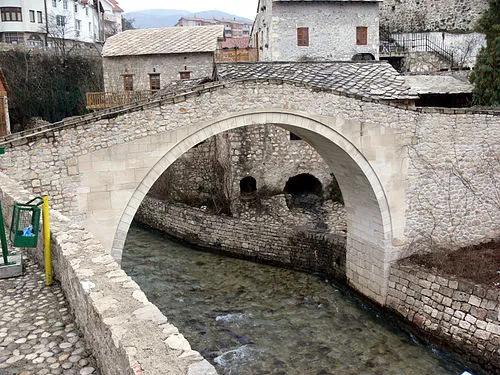
Take the self-guided Mostar walking tour first: 5 stops across a compact 2.6 km in about 1.3 hours, linking the Muslibegović House, the Kujundžiluk bazaar, the Crooked Bridge, Stari Most itself, and the Koski Mehmed Pasha Mosque minaret viewpoint. Start before 09:00 to beat the coach arrivals, then spend the middle of the day eating on Mala Tepa or Fejićeva (one street back from the tourist strip) before returning to the bridge at golden hour. That is a full and satisfying day in Mostar.
Two daysRecommended
Day trips to Blagaj, Počitelj, and Kravica
The second day is for the surrounding region, which is genuinely spectacular and crowded only on summer weekends. Combine Blagaj Tekke (12 km south, 6 BAM, a 16th-century dervish lodge at the source of the River Buna) with the hilltop Ottoman village of Počitelj on the same morning run, arriving at Blagaj before 10:00. Alternatively, go south 45 km to Kravica Waterfall (8 BAM entry), arriving before 09:30 on a weekday to beat the Dubrovnik buses that fill it from 11:00. Two days turns a Mostar stop into a proper Herzegovinian experience.
Three days
West Mostar, the war history, and a slower pace
A third day gives you time for the parts most visitors skip: West Mostar across the Bulevar, where prices are 20-30% lower and the street life is Croatian rather than Ottoman, and the war memorials including the Spanish Square and the Partisan Cemetery designed by Bogdan Bogdanović. The Stara Čaršija (the old market lanes behind Kujundžiluk) repays an unhurried morning when you have already ticked the highlights. In the evening, eat at Tima-Irma on Lučki most, the locally endorsed address for Bosnian grilled meat.
Four days or more
Deeper Herzegovina and the Dalmatian coast connection
With four days you can add Medjugorje (28 km west, a major Catholic pilgrimage site with an extraordinary atmosphere even for non-religious visitors), or push south to the coastal town of Neum on the Adriatic, Bosnia's only sea access, for a swim. Alternatively, use Mostar as a base for a day trip into the Sutjeska National Park (about 2.5 hours northeast), home to one of Europe's last primeval forests. Mostar makes a logical transit point between Dubrovnik and Sarajevo, so four days here fits naturally into a broader Balkans itinerary.
Best time to visit Mostar by traveller type
Same city, different trip. Here's the month that fits how you're travelling.
🧭
Best time to visit Mostar for the first time
MaySep
May or September: pleasant 22-30°C, no punishing heat, good light on the bridge, shoulder-season prices around 100-150 BAM a night, and the day-tripper coaches far thinner than in July. Stari Most is walkable at any hour rather than shoulder-to-shoulder.
❤️
Best time to visit Mostar for couples
AprOct
Late April for the turquoise snowmelt Neretva and wildflowers on the hills, or early October for warm amber light and almost no crowds. Candlelit dinners outside are possible without sweating, and prices sit 30-40% below the July peak.
💶
Best time to visit Mostar on a budget
FebNov
February or November, with hotels at 55-90 BAM (28-45 €), genuinely the cheapest months. The bridge and bazaar are free; Koski Mehmed Pasha Mosque at 12 BAM is the only paid must-see. Eat on the west (Croat) side of town, where a plate of ćevapi runs 20-30% less than in the Old Bazaar.
🍝
Best time to visit Mostar for food and wine
AugSep
Late August into early September for the Moba Street Food Festival (26 August to 6 September) at Španjolski trg, eleven days of regional Herzegovinian and Croatian coastal vendors, free entry, street food 3-8 BAM a plate. The main-season heat has eased and restaurants are far less rushed than in July.
Worst time to visit Mostar
July is the month to skip unless you have a specific reason to come. Temperatures routinely hit 38-42°C and the limestone basin that Mostar sits in radiates stored heat until midnight, making even the evenings uncomfortable. Every hotel within walking distance of the Old Town sells out by May and charges peak prices, 170-280 BAM for a standard 3-star room and 220-340 BAM on the festival and diving weekends. The Old Town itself is impassable from 10:00 to 17:00 with day-tripper coaches from Dubrovnik and Split, and the Kujundžiluk bazaar becomes a slow-moving human traffic jam from mid-morning.
Still worth it for July works if you came specifically for the Red Bull Cliff Diving (last weekend of July), when professionals leap from the 21-metre Stari Most before 20,000-plus spectators in a free, genuinely spectacular event. The Blues and Rock Festival (late July) and the Mostar Summer Fest (early July) also make it worth the heat and crowds for music fans who book their accommodation months in advance.
Go instead in May, September, when Mostar is at its best.
Best time for a tour of Mostar
Mostar's 2.6-kilometre loop from Muslibegović House through the cobblestoned lanes of Kujundžiluk to Stari Most is short enough to walk in any season, but the weather makes a real difference to how you experience it. April and early May are the sweet spot: highs around 18 to 22 °C, long golden afternoons, and thin crowds on the bridge. The limestone of Stari Most radiates heat fast, and by July and August the temperature climbs to 31 or 32 °C with no canopy to speak of on the main promenade. On a midsummer afternoon the old bazaar is packed shoulder to shoulder and the narrow passage to Koski Mehmed Pasha Mosque feels airless. June offers a reasonable middle ground at around 28 °C and noticeably fewer people than peak July, but spring or early October, when the mercury sits at a comfortable 21 °C and the town is quiet, is when the walk genuinely breathes. January through March, Mostar is near-empty and cold, with highs barely nudging 9 to 14 °C and rain on roughly twelve days each month; fine for atmosphere, less so for lingering on the bridge.
With AI Tourguide running in your browser, no download required, the timing of this walk is entirely your call. Set off across the Crooked Bridge at seven in the morning on a July day before the heat builds, pause on Stari Most when the light is still soft, and the voice guide starts talking the moment you do: greeting you, telling you the story of the bridge's reconstruction, asking what you want to know more about, and remembering your answers as you move on to the mosque. There is no operator's departure time to chase, no fixed group pace, just you and a guide that adapts to however long you want to stand and look. Start your Mostar tour whenever the morning light and the temperature feel right.

 +1
+1All 5 stops are already on the map.
You just press start.
You just press start.
 AI Tourguide
You just read the route.
Now walk it with a guide in your ear.
Press start wherever you are, even hundreds of kilometres from Mostar, and the guide begins telling its stories right away. In the city, pick any of the 5 stops to start from: it leads you there, then talks with you the whole route, asking, listening, remembering, and shaping the tour around your answers.
5stops2.6km1.3hours11languages
▶Start the tour freeFree to start · Runs in your browser · No app, no download
Mostar events and festivals calendar
Annual highlights worth timing a trip around, listed month by month.
March
⛪ ReligiousEid al-Fitr Ramazanski Bajram
Mar 20 ~
one day, date moves with the Islamic lunar calendar
The end-of-Ramadan celebration.
May
⛪ ReligiousEid al-Adha Kurban Bajram
May 27 ~
one day, date moves with the Islamic lunar calendar
One of the two major Islamic holidays, the Feast of Sacrifice, and a Federation public holiday.
July
🎵 MusicMostar Summer Fest
Jul 2–4
early July, three days
A three-day open-air music festival at the Kantarevac amphitheatre near the Old Bridge, with regional Balkan acts spanning rock, alt-pop, hip-hop, reggae, sevdah and blues.
🎵 MusicMostar Blues and Rock Festival Mostar Blues i Rock festival
Jul 24–25 ~
typically the last weekend of July
A two-evening blues and rock festival at an open-air venue near the Old Town, with regional and international blues, roots and rock acts.
🏃 SportTraditional Old Bridge Diving Competition Skokovi sa Starog mosta
Jul 26 ~
late July, usually the weekend before or alongside the Red Bull event
An annual competition held since the 17th century by the Mostar Diving Club (Ikari).
🏃 SportRed Bull Cliff Diving World Series, Mostar Red Bull Cliff Diving Mostar
Jul 31 – Aug 1
the last weekend of July into 1 August
World-class professional cliff divers leap from the 21-metre Stari Most into the Neretva River as part of the global Red Bull Cliff Diving World Series.
August
🍷 Food and wineMoba Street Food Festival Moba, Street Food Festival
Aug 26 – Sep 6
late August into early September, eleven days
An eleven-day street food festival at Španjolski trg (Spanish Square), one block from the Old Town.
Insider tips for visiting Mostar
The rules buried in forums, in one place.
- For clean photographs of Stari Most, shoot before 08:00 or after 20:30. By 09:00 the morning coach departures from Dubrovnik and Split arrive and the bridge fills continuously until sunset. The bridge glows gold in the 30 minutes before sunset, so bring a tripod for that light but accept the crowds.
- The Ikari diving club members collect donations (typically 5-20 BAM, higher in peak season) before they jump from the bridge, and will not jump until enough is collected. There is no fixed schedule; they dive throughout the day when they have enough pledges. If you do not want to contribute, just step back from the railing.
- The Koski Mehmed Pasha Mosque minaret is the best vantage for bridge photos. Entry is 12 BAM including minaret access; come at the 09:00 opening before tour groups arrive. The mosque closes briefly during the five daily prayer times, with the 13:00 call and the sunset prayer the longest, and is off-limits Friday midday during Jumu'ah prayer.
- Eat one street back from the bridge. Tourist-trap places on Kujundžiluk price ćevapi at 12-18 BAM; move to Mala Tepa or Fejićeva and pay 7-10 BAM for the same plate. West Mostar, the Croat side across the boulevard, has almost no tourists and runs 20-30% cheaper again. Tima-Irma is the locally endorsed choice for Bosnian grilled meat.
- For the Kravica Waterfall day trip (45km south, 8 BAM entry), go on a weekday and arrive before 09:30. The falls fill with Dubrovnik tour buses by 11:00 on summer weekends. A pre-arranged driver runs 60-80 BAM return, best negotiated the night before.
- Blagaj Tekke, the 16th-century dervish lodge at the source of the River Buna (12km from Mostar, 6 BAM entry), closes for midday prayer. Arrive before 10:00 or between 14:00 and 16:00. It opens at 08:30, and only 30 visitors are allowed inside the lodge at a time in peak season, so early arrival matters.
- Book any July hotel by late April, not just early. The Red Bull Cliff Diving, Blues Festival and Summer Fest cluster means every guesthouse within walking distance of the Old Town is sold out from mid-July by May. The best-positioned riverside pensions fill first.
- Best walking hours in summer are before 09:00 and after 18:00. Between 11:00 and 16:00 the heat is genuinely punishing, so seek shade in the Kujundžiluk arcades or retreat to the riverside. Combine Blagaj and Počitelj in one morning trip and be back in Mostar by 14:00, before the peak afternoon heat.
Public holidays in Mostar
On these dates many shops and offices close, transport thins out, and sights can be mobbed or shut. Plan around them.
| Date | Holiday | What closes |
|---|---|---|
| Jan 1 | New Year's Day | Most shops and banks closed, with the 2 January holiday extending the lull. Tourist sites and the Old Town largely stay open, though it is the deep off-season and the town is quiet. |
| Mar 1 | Independence Day (Federation) | A Federation public holiday: government offices closed, tourist sites open, flags displayed and a local atmosphere across town. Few international visitors are around this early in the year. |
| Mar 20 | Eid al-Fitr (Ramazanski Bajram) | End-of-Ramadan public holiday. The Old Town mosques are busy from dawn around Koski Mehmed Pasha Mosque; some restaurants in the old quarter close or open late for the day. Respectful low-key visitors are welcome. |
| Apr 3 | Good Friday (Catholic) | Partial closures on the Catholic side of town (West Mostar). Tourist sites and most of the Old Town stay open. |
| Apr 5 | Easter Sunday (Catholic) | Public holiday. The Croatian Catholic community in West Mostar celebrates and some shops close, but the Ottoman quarter and main sights remain open. |
| May 1 | Labour Day | National public holiday. Some restaurants close and markets are quiet, but tourist sites stay open. |
| May 27 | Eid al-Adha (Kurban Bajram) | A major Islamic public holiday in the Federation. Many local businesses and some restaurants close, the old quarter is festive and quiet, and most tourist-facing sites stay open, making it good for crowd-free photography. |
| Nov 1 | All Saints' Day | Public holiday. The Catholic cemeteries are busy and the town is quiet. A calm, near-empty day, excellent for photography. |
| Nov 25 | Statehood Day | Federation public holiday: government offices closed. Falls in the quietest stretch of the year, with very few tourists in town. |
| Dec 25 | Christmas (Catholic) | Federation public holiday observed by the Catholic community in West Mostar. Mostar has no dedicated Christmas market, just a handful of lights in the old city. A still, off-season day. |
Mostar month by month
January in Mostar
High9°C / 49°F
Low2°C
Rain195mm / 13 rainy days
Sun5.8 h/day
Daylight9 h/day
Humidity74%
Crowds●○○○○Prices●○○○○
January is Mostar at its quietest. Daytime highs reach about 9°C and the city's mild micro-climate means snow is occasional rather than the rule, though it is the wettest stretch of the year, with rain coming in short intense bursts. The day-tripper coaches from the coast have stopped entirely, so the traffic is predominantly local, and you can photograph Stari Most with no one on it.
The vibe This is the month to have the Old Bridge and the Kujundžiluk bazaar almost to yourself. It is cool and damp, the souvenir shops keep short hours, but the town is calm, cheap and unstaged. Bring a warm layer and a rain jacket and you get the Ottoman town stripped of its summer crush.
Don't miss Clean, crowd-free photographs of Stari Most and the empty bazaar lanes, plus the Koski Mehmed Pasha Mosque minaret viewpoint (12 BAM) without a queue. The Neretva runs full and turquoise from winter rain, and the canyon walls are dramatic in low winter light.
Crowd drivers Pure off-season: the Dubrovnik and Split day-tripper coaches do not run, and there is no winter event calendar. The lowest visitor pressure of the year, alongside February and November.
In season Bosnian grilled meat is consistent year-round; this is the month to take your time over ćevapi at Tima-Irma or a plate on the cheaper west side of town with no wait for a table.
Deep off-season pricing: a 3-star central hotel runs 60-90 BAM (30-45 €) a night, near the annual floor.
February in Mostar
High12°C / 53°F
Low3°C
Rain181mm / 12 rainy days
Sun6.8 h/day
Daylight10 h/day
Humidity74%
Crowds●○○○○Prices●○○○○
February is the coldest month on paper but still mild, with highs near 12°C, and it is the cheapest month of the year. Ramadan begins on 18 February in 2026, which trims the hours of some older restaurants in residential areas, though the tourist food strip on Kujundžiluk is accustomed to non-Muslim guests and stays largely unaffected. International visitors are essentially absent.
The vibe February is honest, off-season Mostar with no markup and no crowds. The town runs on its own rhythm rather than for tourists, which is exactly its charm if you want the bridge, the bazaar and the canyon without a single coach in sight, for half the summer price.
Don't miss Empty-bridge photography at any hour, the Old Bazaar arcades to yourself, and short day trips to Blagaj Tekke (6 BAM) and Počitelj without the summer bus queues. The Neretva is at its fullest and most turquoise from winter rain.
Crowd drivers The quietest, cheapest month of the year. No coach tours, no events, and the start of Ramadan on 18 February has no tangible impact on visitors in this Bosnian city.
In season During Ramadan some residential-area restaurants only open after sunset, but the Old Town strip keeps normal hours; ćevapi, burek and begova čorba are available all day.
Cheapest month on record: 3-star central hotels at 55-85 BAM (28-43 €) a night.
March in Mostar
High14°C / 58°F
Low5°C
Rain167mm / 10 rainy days
Sun8.7 h/day
Daylight12 h/day
Humidity69%
Crowds●○○○○Prices●○○○○
March is a quiet shoulder month with highs climbing toward 14°C and the sun returning. Independence Day (Federation) falls on 1 March, and Eid al-Fitr on 20 March brings dawn prayers at the Old Town mosques and a festive local mood, with some restaurants closing or opening late for the day. International tourists are still few, and the first day-trippers do not really begin until late April.
The vibe March is the last genuinely empty month before the spring shoulder season builds. The weather is improving, the Neretva is green from snowmelt, and you still get the bridge and bazaar without crowds. If you can time around the Eid closures, it is one of the calmest ways to see the Ottoman town.
Don't miss Eid al-Fitr around Koski Mehmed Pasha Mosque offers an authentic cultural moment for respectful visitors. Otherwise the bridge, bazaar and canyon viewpoints stay crowd-free, and the snowmelt Neretva runs turquoise through the gorge.
Crowd drivers Low all month. Eid al-Fitr on 20 March is a local celebration rather than a tourist draw, and the coast-based day-tripper season has not yet started.
In season Some restaurants in the old quarter close or reduce hours on 20 March for Eid al-Fitr, so plan meals around the holiday; the rest of the month, Bosnian grills run as normal.
Still off-season value: 3-star central hotels at 60-95 BAM (30-48 €) a night.
Events this month
⛪ ReligiousEid al-Fitr Ramazanski Bajram
Mar 20 ~
one day, date moves with the Islamic lunar calendar
The end-of-Ramadan celebration. Mostar's mosques hold special prayers at dawn, families gather, and some shops and restaurants in the old quarter close for the day or open late. The atmosphere is most felt around Koski Mehmed Pasha Mosque and the Old City.
An authentic cultural experience in this Bosnian city, and respectful low-key visitors are welcome. Note that some restaurants in the old quarter reduce hours or close on the day itself.
April in Mostar
High18°C / 65°F
Low8°C
Rain145mm / 12 rainy days
Sun10.2 h/day
Daylight13 h/day
Humidity68%
Crowds●●○○○Prices●●○○○
April is the spring shoulder and one of the best walking seasons, with pleasant 17-20°C days, the Neretva turquoise-green from snowmelt and wildflowers on the surrounding hills. Catholic Easter falls on 5-6 April, observed in West Mostar. The day-tripper season begins in late April as the Dalmatian coast opens, but the morning coach crush is still mild.
The vibe April is when Mostar shakes off winter without the summer heat or crowds. The canyon walls look their most dramatic in morning light with low haze, and a brief afternoon thunderstorm clears within the hour. It is the couples' month: turquoise river light, quiet streets, dinners outside without sweating.
Don't miss The Neretva is at its turquoise best from snowmelt, ideal for canyon and bridge photography in the soft morning light. Day trips to Kravica Waterfall, Blagaj Tekke and Počitelj are comfortable and uncrowded before the summer buses arrive.
Crowd drivers Crowds stay light through most of the month, building only in the last week as the coast opens and the first Dubrovnik and Split coaches return.
In season Restaurant terraces reopen for the warm afternoons; this is a fine month to eat outside by the river without the July squeeze for a table.
Heads up Catholic Good Friday (3 April) brings partial closures in West Mostar, and Easter Sunday and Monday (5-6 April) close some shops on the Croat side, though the Ottoman quarter and main sights stay open.
Spring shoulder pricing: 3-star central hotels at 70-110 BAM (35-55 €) a night.

May in Mostar
High23°C / 73°F
Low13°C
Rain171mm / 14 rainy days
Sun11.3 h/day
Daylight15 h/day
Humidity71%
Crowds●●○○○Prices●●○○○
May is one of Mostar's two best months: warm 22-30°C days, the Neretva gorge and waterfalls at their greenest, and crowds still moderate before the summer surge. Eid al-Adha on 27 May is a Federation holiday with a quiet, festive mood in the old quarter. Package tourism based out of Dubrovnik and Split grows through the month, but it is nothing like the July crush.
The vibe May is the quietly perfect month: comfortable walking weather, the river at its turquoise best, and the bridge accessible at any time of day rather than gridlocked. No punishing heat, shoulder-season prices, and the canyon at its most photogenic. This is the month to come for a first visit.
Don't miss The waterfalls and the Neretva gorge are at their greenest, and Kravica Waterfall is a fine warm-weather day trip before the summer buses dominate it. Stari Most is walkable any time of day, and the morning light on the canyon is superb. Eid al-Adha brings a quiet, festive local atmosphere.
Crowd drivers Day-tripper coaches from the Dalmatian coast build steadily as the package-tourism season ramps up, but the punishing summer crush and full-price peak are still ahead.
In season Restaurants are relaxed and rarely full; eat one street back from the bridge on Mala Tepa or Fejićeva, or cross to the cheaper west side, for the same Bosnian grills at lower prices.
Heads up Eid al-Adha (Kurban Bajram) on 27 May closes some local businesses and restaurants in the old quarter, though most tourist-facing sites stay open.
Pre-peak shoulder value: 3-star central hotels at 80-125 BAM (40-63 €) a night.
Events this month
⛪ ReligiousEid al-Adha Kurban Bajram
May 27 ~
one day, date moves with the Islamic lunar calendar
One of the two major Islamic holidays, the Feast of Sacrifice, and a Federation public holiday. Many local businesses close, the atmosphere in the old quarter is festive and quiet, and livestock markets run in the outskirts.
Most tourist-facing sites stay open while day-trippers are largely absent, so it is good for quiet photography. Some restaurants in the old quarter close for the day.

June in Mostar
High28°C / 82°F
Low17°C
Rain80mm / 9 rainy days
Sun12.7 h/day
Daylight15 h/day
Humidity67%
Crowds●●●○○Prices●●●○○
June opens the early-summer surge. Day-trippers arrive by coach from the Dalmatian coast, and the heat reaches 32-35°C. The Old Bridge area is packed from 10:00 to 17:00, so the best walking is early morning or evening. Corpus Christi (Federation) falls on 4 June. The Neretva swimming window opens, though the river runs a cold 15-18°C even now.
The vibe June is the tipping point into the hot, busy season. The middle of the day around the bridge gets crowded and the heat builds, but the long daylight means cool, golden early mornings and pleasant evenings. Plan your sightseeing before 09:00 and after 18:00 and the heat is manageable.
Don't miss The Neretva swimming window opens: the flat rocks below Stari Most on the western bank are the local spot, where a dip in the 15-18°C water is a ritual on a hot day. Early-morning bridge photography beats the coach crowds, and Blagaj Tekke is best before 10:00 while it is cooler and quieter.
Crowd drivers The coast-based day-tripper coaches arrive in force, filling the Old Bridge area from mid-morning to late afternoon. The peak heat and absolute price maximum are still ahead in July.
In season Riverside terraces come into their own for evening meals once the heat eases; the cooler hours after 18:00 are when the Old Town comes back to life.
Summer pricing begins: 3-star central hotels at 110-160 BAM (55-80 €) a night.
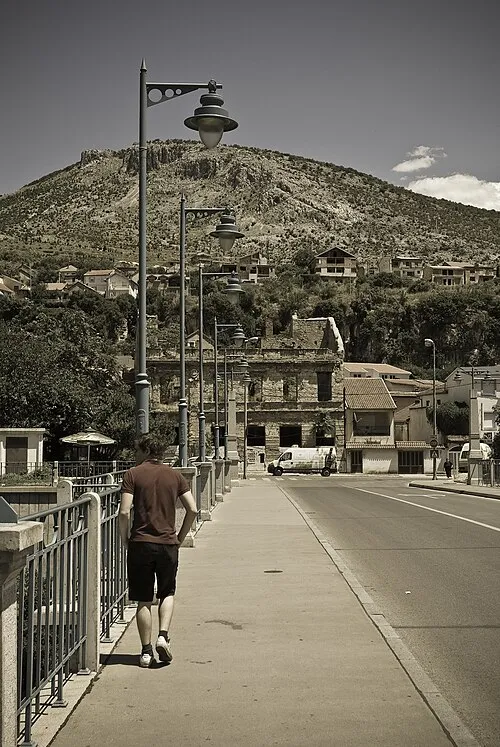
July in Mostar
High32°C / 89°F
Low19°C
Rain43mm / 6 rainy days
Sun13.5 h/day
Daylight15 h/day
Humidity59%
Crowds●●●●●Prices●●●●●
July is full-throttle Mostar: brutal heat, mob crowds and a packed event calendar. The last weekend, with Red Bull Cliff Diving and the traditional divers, is spectacular if that is why you came, and miserable if you wanted the quiet Ottoman town. Walk before 09:00 and after 18:00, seek shade in the Kujundžiluk arcades through the hottest midday hours, and cool off with a dip in the cold Neretva, the local way to survive a July afternoon.
The vibe July is full-throttle Mostar: brutal heat, mob crowds and a packed event calendar. The last weekend, with Red Bull Cliff Diving and the traditional divers, is spectacular if that is why you came, and miserable if you wanted the quiet Ottoman town. When the midday heat and the pre-booked guide prices climb, our in-browser AI guide is the cheap, always-available alternative to an expensive private guide: it walks you through the bazaar at flat 5€ an hour, telling the story at each stop and answering your questions, so you can sightsee in the cooler early hours and let it lead the way.
Don't miss Red Bull Cliff Diving (31 July to 1 August) is the dominant annual event, free to watch from the riverbanks as professionals leap from the 21-metre Stari Most. The traditional Ikari club divers, jumping for donations since the 17th century, perform throughout the same weeks. Swim the Neretva at 15-18°C to escape the 40°C heat, the local ritual.
Crowd drivers The single busiest month, driven by morning coach tours from the coast plus the late-July cluster of Summer Fest, the Blues Festival, the Ikari diving competition and the Red Bull Cliff Diving, which draws 20,000-plus spectators and sells out every guesthouse by May.
In season Old Town restaurant prices peak with demand; move one street back to Mala Tepa or Fejićeva, or to the west side, for the same ćevapi at 7-10 BAM rather than the 12-18 BAM charged on Kujundžiluk.
Year's peak: 3-star central hotels at 170-280 BAM (85-140 €), and 220-340 BAM on the festival and diving weekends. Book eight or more weeks ahead.
Events this month
🎵 MusicMostar Summer Fest
Jul 2–4
early July, three days
A three-day open-air music festival at the Kantarevac amphitheatre near the Old Bridge, with regional Balkan acts spanning rock, alt-pop, hip-hop, reggae, sevdah and blues. Past headliners have included Dubioza Kolektiv, Galija and Grše. All ages, festival wristband required.
A midsummer atmosphere with top regional acts in a historic setting. Hotel prices spike 20-30% that weekend, so book eight or more weeks ahead. Skip it if you came for quiet sightseeing, as the Old Town is noisier those three evenings.
🎵 MusicMostar Blues and Rock Festival Mostar Blues i Rock festival
Jul 24–25 ~
typically the last weekend of July
A two-evening blues and rock festival at an open-air venue near the Old Town, with regional and international blues, roots and rock acts. The mood is more relaxed and atmospheric than the larger Summer Fest.
Smaller and more local than the corporate productions, and worth timing a trip around for music lovers. It runs back-to-back with the diving weekend, which makes the last week of July the most event-dense stretch of the year.
🏃 SportTraditional Old Bridge Diving Competition Skokovi sa Starog mosta
Jul 26 ~
late July, usually the weekend before or alongside the Red Bull event
An annual competition held since the 17th century by the Mostar Diving Club (Ikari). Divers, predominantly local young men, collect donations from onlookers before jumping from the 24-metre bridge into the icy Neretva. The event has been held continuously for over 450 editions and is recognised as one of the oldest sporting traditions in the Balkans.
An authentic, free, local alternative to the Red Bull spectacle, with no grandstand. The ritual often happens mid-morning. Running concurrently with Red Bull in late July makes that the single most event-dense period in Mostar.
🏃 SportRed Bull Cliff Diving World Series, Mostar Red Bull Cliff Diving Mostar
Jul 31 – Aug 1
the last weekend of July into 1 August
World-class professional cliff divers leap from the 21-metre Stari Most into the Neretva River as part of the global Red Bull Cliff Diving World Series. First held in Mostar in 2015, it now draws 20,000-plus spectators over the weekend and is the city's most-watched annual event.
The dominant annual event: spectacular, free to watch from the riverbanks, and a once-a-year experience. The Old Town is completely mobbed and all hotels sell out by May, so book accommodation three to four months ahead if you want to witness it.
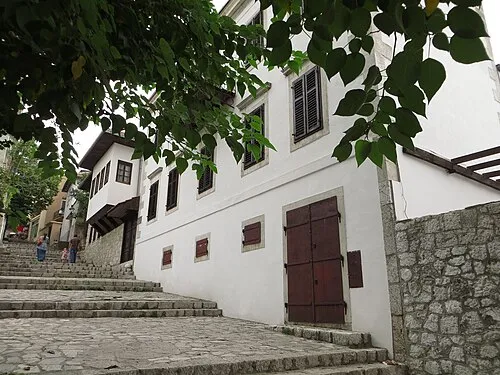
August in Mostar
High32°C / 89°F
Low20°C
Rain61mm / 5 rainy days
Sun12.9 h/day
Daylight14 h/day
Humidity60%
Crowds●●●●○Prices●●●●○
August stays very hot and crowded, easing slightly once the Red Bull weekend has passed. Highs still sit near 32°C, and clean photographs of Stari Most are hard to get without crowds until 06:30 or after 20:00. The Moba Street Food Festival opens at Španjolski trg on 26 August and runs into early September, drawing regional visitors. Swimming in the Neretva remains popular.
The vibe August is the second peak: hot, busy and lake-and-river focused. The first half is full-on summer, but the back half, as the Moba festival opens and the diving crowds clear, starts to feel more relaxed and a little cheaper. Stick to early mornings and evenings for the bridge and the heat is survivable.
Don't miss Swimming the cold Neretva below Stari Most is the way to beat the heat. From 26 August the Moba Street Food Festival at Španjolski trg, one block from the Old Town, brings regional vendors, live music and an artisan market, free to enter with plates at 3-8 BAM. Shoot the bridge before 06:30 or after 20:00 for clear photographs.
Crowd drivers Still very crowded with coach tours and summer holidaymakers, easing after the Red Bull weekend. The Moba Street Food Festival from 26 August draws regional visitors from Bosnia, Croatia and Serbia toward month-end.
In season The Moba Street Food Festival (from 26 August) is the food highlight of the year, with regional Herzegovinian and Croatian coastal dishes at budget prices. A handful of family-run places keep their own summer rhythm, so check ahead.
Still high but easing after the diving weekend: 3-star central hotels at 150-240 BAM (75-120 €) a night.
Events this month
🍷 Food and wineMoba Street Food Festival Moba, Street Food Festival
Aug 26 – Sep 6
late August into early September, eleven days
An eleven-day street food festival at Španjolski trg (Spanish Square), one block from the Old Town. Local and regional food vendors, live music evenings and an artisan market, very popular with visitors from Bosnia, Croatia and Serbia. Free entry, street food 3-8 BAM a plate.
The best reason to visit in late August, when the main-season crowds thin but the weather stays warm. Budget-friendly and lively, with hotels around 10-15% cheaper than the July peak.
🏃 SportRed Bull Cliff Diving World Series, Mostar Red Bull Cliff Diving Mostar
Jul 31 – Aug 1
the last weekend of July into 1 August
World-class professional cliff divers leap from the 21-metre Stari Most into the Neretva River as part of the global Red Bull Cliff Diving World Series. First held in Mostar in 2015, it now draws 20,000-plus spectators over the weekend and is the city's most-watched annual event.
The dominant annual event: spectacular, free to watch from the riverbanks, and a once-a-year experience. The Old Town is completely mobbed and all hotels sell out by May, so book accommodation three to four months ahead if you want to witness it.
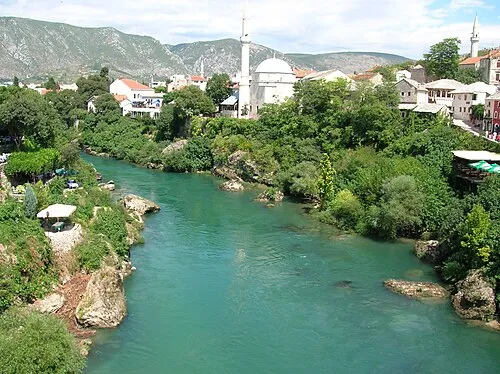
September in Mostar
High26°C / 79°F
Low16°C
Rain175mm / 9 rainy days
Sun10.4 h/day
Daylight12 h/day
Humidity68%
Crowds●●●○○Prices●●●○○
September is the best shoulder month for value. Temperatures of 27-32°C are warm but no longer punishing, and the Moba Street Food Festival runs into the first week. Coach tours thin noticeably after 10 September, and river swimming stays viable until late in the month. It is, alongside May, the month to come for comfortable weather without the summer crush.
The vibe September feels like Mostar exhaling: still warm enough to swim, the festival energy lingering into the first week, but the coach mobs and the peak prices gone. After mid-month the Old Town opens up and you can walk the bridge at any hour. This is one of the two best months of the year to visit.
Don't miss River swimming below Stari Most stays viable until late September. The Moba Street Food Festival runs into the first week at Španjolski trg, and once the coaches thin you get clean bridge photography and uncrowded day trips to Kravica, Blagaj and Počitelj in warm, comfortable weather.
Crowd drivers Day-tripper coaches thin out markedly after 10 September. The Moba Street Food Festival running into the first week keeps the start of the month lively before the calm sets in.
In season The Moba festival lingers into early September, then restaurants settle into a calm, unhurried rhythm. Bosnian grills are as good as ever, and a table by the river is easy to come by.
Best shoulder value returns: 3-star central hotels at 100-160 BAM (50-80 €) a night, roughly 30-45% below the July peak.
Events this month
🍷 Food and wineMoba Street Food Festival Moba, Street Food Festival
Aug 26 – Sep 6
late August into early September, eleven days
An eleven-day street food festival at Španjolski trg (Spanish Square), one block from the Old Town. Local and regional food vendors, live music evenings and an artisan market, very popular with visitors from Bosnia, Croatia and Serbia. Free entry, street food 3-8 BAM a plate.
The best reason to visit in late August, when the main-season crowds thin but the weather stays warm. Budget-friendly and lively, with hotels around 10-15% cheaper than the July peak.

October in Mostar
High21°C / 70°F
Low11°C
Rain183mm / 9 rainy days
Sun8.8 h/day
Daylight11 h/day
Humidity74%
Crowds●●○○○Prices●●○○○
October is a quiet, comfortable autumn month, with highs of 21-27°C early on and the Neretva gorge and karstic hills turning amber and rust into early November. The days are shorter but pleasant, and there are almost no coach crowds. It is the most comfortable temperature of the year outside spring, and the foliage adds a real visual change to the canyon.
The vibe October is the couples' and photographers' month: warm amber light, autumn colour in the gorge, and the Old Town all but emptied of day-trippers. Cool, romantic and quiet, with prices well below summer and the bridge yours to photograph without a crowd. A genuinely underrated time to come.
Don't miss Autumn foliage in the Neretva gorge and on the surrounding karst hills, best in October into early November. Comfortable 21-27°C walking weather, crowd-free bridge and bazaar photography, and easy uncrowded day trips to Blagaj and Počitelj in the soft autumn light.
Crowd drivers Almost no coach crowds. A handful of independent travellers and culture-minded visitors drawn to the region keep it from being completely empty, but the pressure is low all month.
In season Restaurants are calm and unhurried; the riverside terraces are still pleasant on the milder days, and eating one street back from the bridge or on the west side keeps the bill low.
Quiet autumn value: 3-star central hotels at 75-120 BAM (38-60 €) a night.
November in Mostar
High16°C / 60°F
Low8°C
Rain306mm / 13 rainy days
Sun6.0 h/day
Daylight10 h/day
Humidity79%
Crowds●○○○○Prices●○○○○
November is near-empty and excellent for crowd-free photography. Highs sit near 16°C and most souvenir shops reduce their hours. All Saints' Day (1 November) and Statehood Day (25 November) are public holidays. It is the wettest month of the year on paper, though Mostar's rain comes as short intense events rather than all-day drizzle, so it rarely ruins a day's sightseeing.
The vibe November is Mostar at its most introverted: quiet, cheap and almost touristless, with the bridge and bazaar yours alone. The trade is short days, the wettest month, and reduced shop hours, but the consolation is genuine solitude in front of one of Europe's great views, for the lowest prices of the year.
Don't miss Crowd-free photography of Stari Most and the empty bazaar at any hour, with the late-autumn foliage lingering in the gorge early in the month. The Koski Mehmed Pasha Mosque minaret viewpoint (12 BAM) is yours without a queue.
Crowd drivers One of the three quietest months. No coach tours, no events, and the dry off-season makes it a favourite for photographers who want the bridge to themselves.
In season With souvenir shops on reduced hours, the town is quiet, but the Bosnian grills stay open year-round; this is the month to linger over begova čorba and ćevapi without any wait.
Near the annual floor: 3-star central hotels at 60-90 BAM (30-45 €) a night.
December in Mostar
High11°C / 52°F
Low4°C
Rain224mm / 13 rainy days
Sun5.7 h/day
Daylight9 h/day
Humidity78%
Crowds●○○○○Prices●○○○○
December is deep off-season. Highs near 11°C, the shortest days of the year at about 9 hours of light, and the wettest stretch continuing. Catholic Christmas (25 December) is observed in West Mostar. Mostar has no dedicated Christmas market and no winter event calendar, just a handful of lights in the old city, so it is a town for solitude rather than festivity.
The vibe December is calm, cheap and empty, with the bridge and bazaar all but deserted. Do not come expecting a festive Christmas-market atmosphere, there isn't one. Come instead for the rare chance to stand alone on Stari Most in the low winter light, with a hot Bosnian coffee and the whole Old Town to yourself.
Don't miss Solitary, crowd-free photography of Stari Most and the bazaar in low winter light. The Neretva runs full from winter rain, the canyon walls are dramatic, and day trips to Blagaj and Počitelj are completely yours, with only the short daylight to plan around.
Crowd drivers Pure off-season with no winter events and no coach tours. Visitor pressure is at its annual minimum, alongside January, February and November.
In season Warming Bosnian fare comes into its own: begova čorba, grilled meats and thick coffee in the cellar restaurants of the Old Town, with never a wait for a table.
Heads up Catholic Christmas (25 December) is a Federation public holiday observed in West Mostar, with some shops closed; the Ottoman quarter and main sights are largely unaffected.
Off-season pricing: 3-star central hotels at 65-95 BAM (33-48 €) a night.
Frequently asked questions
What is the best time to visit Mostar?
Late April to mid-May and September are the best overall. You get comfortable 22-30°C walking weather, the Neretva at its turquoise-green best, good light on Stari Most, and hotel rates around 100-160 BAM (50-80 €), roughly 30-45% below the July peak. The day-tripper coaches from Dubrovnik and Split are much thinner than in summer, so the Old Bridge is walkable at any time of day rather than gridlocked.
What is the cheapest time to visit Mostar?
February and November are the cheapest, with a 3-star central hotel at 55-90 BAM (28-45 €) a night, genuinely the floor for the year and roughly half the July rate. The bridge and bazaar are free and Koski Mehmed Pasha Mosque is the only paid must-see at 12 BAM, so an off-season trip costs very little. Eat on the west (Croat) side, where a plate of ćevapi runs 20-30% less than in the Old Bazaar.
What is the worst time to visit Mostar?
July, and the last ten days especially, unless you came for the Red Bull Cliff Diving. Temperatures routinely hit 38-42°C, the cobblestones radiate heat until midnight, every hotel is sold out or at maximum price, and the Old Town is impassable from 10:00 to 18:00 with day-trippers. The Red Bull weekend (31 July to 1 August) brings 20,000-plus spectators into a town built for far fewer. Spectacular for the event, miserable for quiet sightseeing.
How hot does Mostar get in summer?
Genuinely punishing. Mostar sits in a basin in the Neretva canyon, surrounded by limestone karst that absorbs and radiates heat, making it one of the hottest cities in the Balkans. July and August regularly hit 38-42°C in heat waves, and the cobblestone Old Town stays hot until midnight. Walk before 09:00 and after 18:00, seek shade in the Kujundžiluk arcades from 11:00 to 16:00, and cool off in the cold Neretva.
Can you swim in the Neretva River in Mostar?
Yes, from June through mid-September. The popular spot is the flat rocks below Stari Most on the western bank. The river runs cold from snowmelt and underground springs even in July, around 15-18°C at the surface, so the shock of cold water on a 40°C day is a local ritual rather than a long swim. Mostar has no sea: the nearest sea swimming is Neum or Dubrovnik, both about 90 minutes by car.
When is the Red Bull Cliff Diving in Mostar?
The Red Bull Cliff Diving World Series stop in Mostar runs on the last weekend of July into 1 August (31 July to 1 August in 2026). Professional divers leap from the 21-metre Stari Most into the Neretva in front of 20,000-plus spectators, and it is free to watch from the riverbanks. The Old Town is completely mobbed and every hotel sells out by May, so book accommodation three to four months ahead if you want to be there.
When can you photograph Stari Most without crowds?
In summer, shoot before 08:00 or after 20:30. By 09:00 the morning coach departures from Dubrovnik and Split arrive and the bridge fills continuously until sunset. The bridge glows gold in the 30 minutes before sunset, so bring a tripod for that light but accept the crowds. From November to February the coaches stop entirely and you can photograph an empty bridge at any hour.
How many days do you need in Mostar?
One full day covers the core: Stari Most, the Kujundžiluk bazaar, the Koski Mehmed Pasha Mosque minaret viewpoint and a Bosnian meal. Add a second day for the surrounding sights, which are the real reason to stay over: Blagaj Tekke at the source of the River Buna, the Ottoman village of Počitelj, and Kravica Waterfall (45km south) for a swim. Two days lets you see Mostar after the day-trippers leave, which is when it is at its best.

Any month, any day: your guide is already there
Whatever date you pick, a private human guide gets pricier and harder to book on weekends, holidays and in peak season. Our live AI guide, the one that walks with you and answers anything you ask out loud, works the opposite way.
One flat price, every day
No holiday, weekend, night or peak-season surcharge. A private guide in Mostar runs well over 100 euro for a half day, and more on holidays. Ours stays the same.
Available the moment you want it
Start at midnight or at dawn, on Christmas, in the snow, in the August heat. No sold-out high season, no booking weeks ahead.
Your pace, no meter running
Pause for a long lunch, restart after dark, repeat a stop. The tour simply waits for you.
Free to try, a fraction of the cost
Test it for free, then a transparent flat price that undercuts any private guide, in every season.
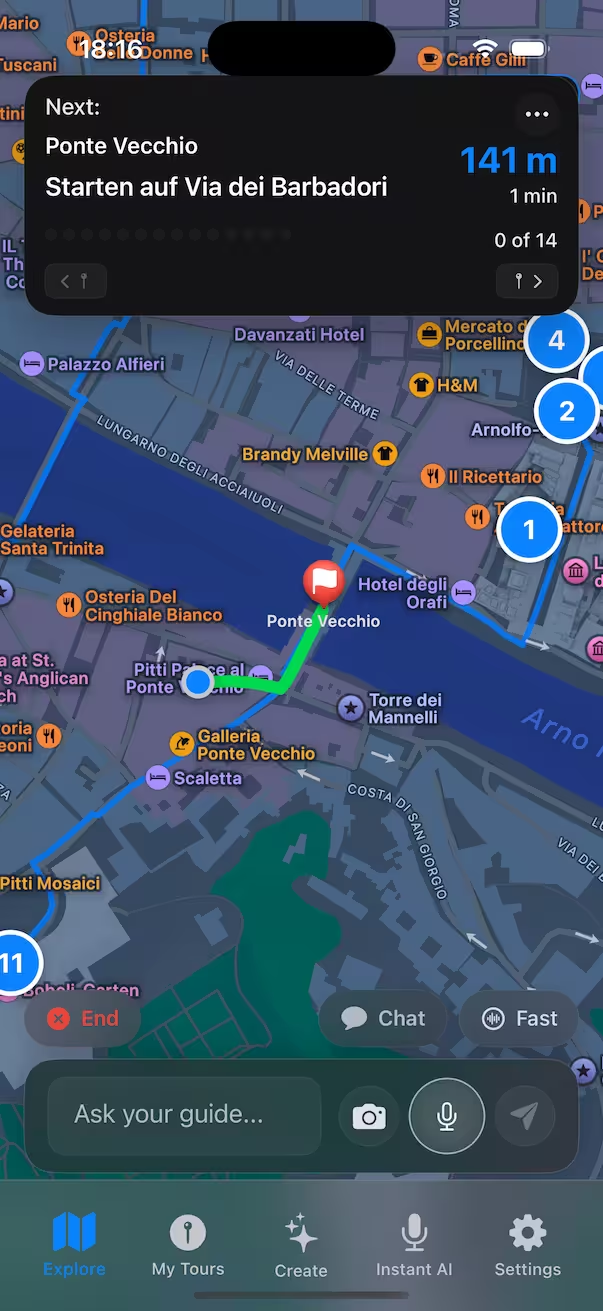
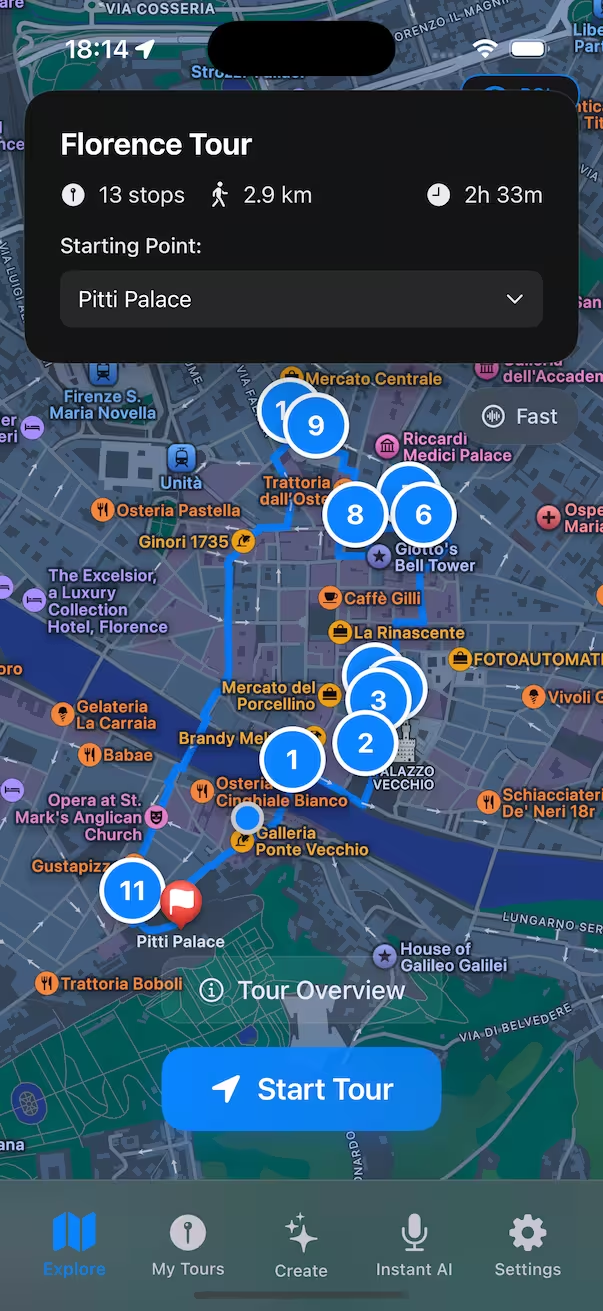
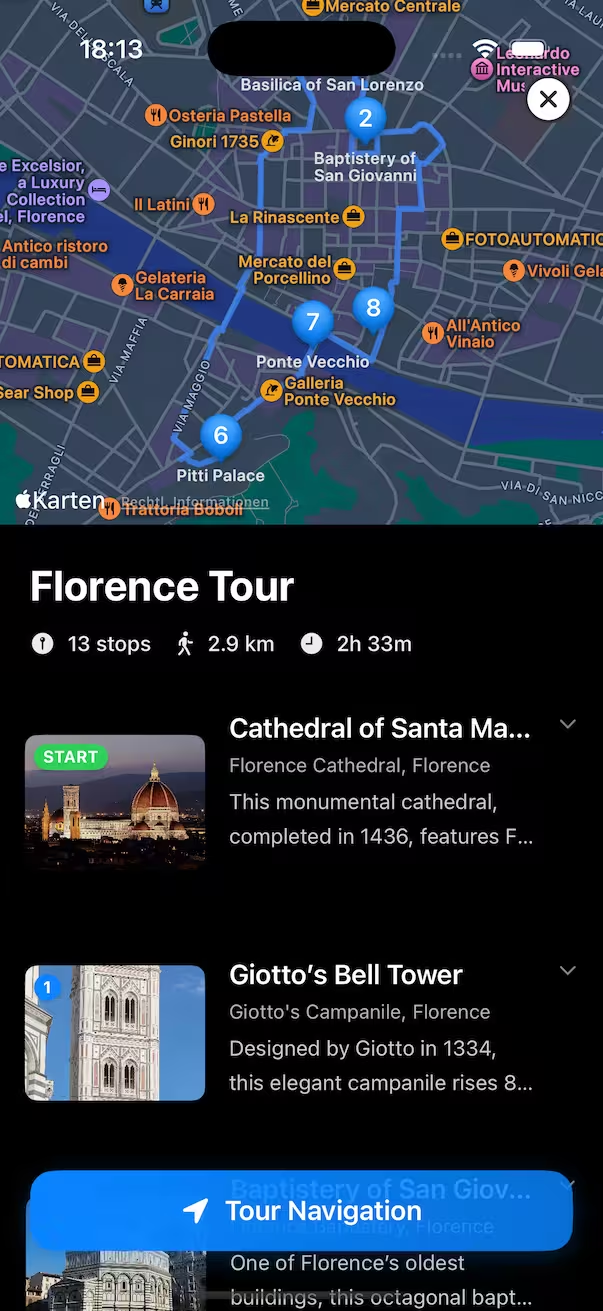
The classic Mostar tour: 5 stops, 2.6 km, about 1 h on foot
Your live AI guide and the self-guided Mostar route, together in your browser.