Best Time to Visit Mumbai
Month-by-month weather, crowds and prices, plus a full calendar of festivals and events worth planning a trip around.
Best monthsNov, Dec, Jan, Feb
CheapestJun, Jul, Aug
AvoidJun, Jul, Aug
BusiestDec

When is the best time to visit Mumbai?
Come November to February, when dry 24 to 30°C days, low humidity and open Elephanta ferries make every corner of the city walkable. December is the busiest and priciest. June to August is the monsoon: cheap rooms, but flooding, ferry shutdowns and stalled local trains. May is brutally humid heat.
Start our tool and find your best time to visit Mumbai
Your perfect month
Free · ~30 seconds
or tap a month directly
What matters to you?
And this?
Best overall: Nov, Dec, Jan, Feb. November to February is the real answer: dry, comfortable 24 to 30°C, low humidity, Elephanta ferries running, every neighbourhood reachable, and a packed culture calendar from the Kala Ghoda Arts Festival to the Banganga and Elephanta music nights. December is the peak within the peak, so book early.
Best value: Oct, Nov. October and November are the smart-money window: post-monsoon the city is at its greenest, Sewri flamingos start returning, Navratri and Diwali light the streets, yet rates sit well below December and the international crowd has not landed. The best mix of conditions and price all year.
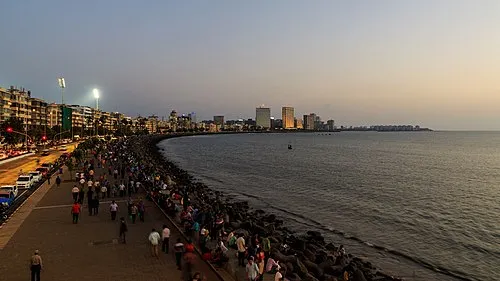
Avoid: Jun, Jul, Aug. June to August: monsoon at full force. Elephanta ferries suspended, flooding likely, local trains delayed or cancelled, and Marine Drive waves breaking six metres over the promenade. Cheap, yes, but you spend the trip dodging rain and waterlogged streets.
- January: Good time, 29°C. This is the month the city actually delivers on the brochure. The weather is genuinely pleasant rather than merely survivable, and the cultural calendar is full. The flip side is honest peak season: you pay top rates and share Elephanta and the Gateway with everyone else who read the same advice.
- February: Good time, 30°C. February feels like the city showing off without breaking a sweat. The light is clear, the heat has not arrived, and Kala Ghoda turns the most beautiful quarter of Mumbai into a nine-day open-air gallery. If you want peak conditions with the smallest possible premium, this is the month to pick.
- March: Tough month, 32°C. March is a closing door. The first half still feels like the good season, the second half is the warning shot before the heat sets in. Catch it early and you get pleasant weather with smaller crowds and softer prices; leave it late and you are into the sweaty pre-monsoon grind.
- April: Tough month, 33°C. April is for travellers who do not mind heat and want the city without the peak-season tax. The afternoons are heavy and the air sticks to you, but mornings on Marine Drive and inside the cool stone of CSMVS or the Elephanta caves are still rewarding, and you are paying half of February's rates to be there.
- May: Tough month, 33°C. May is not a romantic empty-city month, it is an endurance test. The heat is the draining, soak-through-your-shirt kind, and midday outdoors is genuinely unpleasant. Come only if heat does not bother you and a bargain matters more than comfort, and structure every day around dawn and dusk.
- June: Good time, 30°C. June splits travellers cleanly. If you want clear-sky sightseeing, it is the wrong month: ferries stop, streets flood, and plans get rained out. If you came for the drama of the Mumbai monsoon, the six-metre waves breaking over Marine Drive and the Western Ghats exploding into green two hours away, this is exactly when it starts.
- July: Good time, 28°C. July is the wettest, most disrupted month, and there is no pretending otherwise. Whole days can be written off to rain and flooded roads. The reward is a moody, dramatic city almost empty of other tourists, and rooms at half-price, if you treat the monsoon as the experience rather than an obstacle.
- August: Good time, 28°C. August is still firmly the rainy season, a touch less relentless than July but not by much. The city in monsoon mood, Marine Drive grey and dramatic, has its own pull, and the prices are unbeatable. Just go in knowing your itinerary bends around the weather, not the other way round.
- September: Good time, 28°C. September is two cities in one. The Ganesh Chaturthi week is overwhelming in the best sense: deafening, crowded, the single most intense thing you can witness in Mumbai. The rest of the month is a quiet, green, fast-emptying monsoon at low-season prices. Pick your week deliberately, because they could not feel more different.
- October: Tough month, 31°C. October is the insider's month, the one locals quietly recommend. The city looks washed-clean and green after the rains, the heat is manageable, Ganesh Chaturthi is over, and the December crowds have not landed. You get near-peak conditions without the peak price or the peak queue.
- November: Tough month, 32°C. November is the moment Mumbai flips back to its best self. Diwali gives it a glow that nothing else in the year matches, the weather is finally dry and pleasant, and the city feels alive and lit-up. The catch is that prices have started their climb toward the December peak, so the earlier in the month you come, the better the deal.
- December: Tough month, 31°C. December is Mumbai at full tilt: perfect weather, festive energy, and the whole city out celebrating. It is also the most expensive and crowded week-for-week, with luxury hotels sold out and New Year's Eve on Marine Drive drawing a 200,000-strong crush. Come for the buzz and the conditions, but book everything early and brace for peak prices.
Mumbai weather by month
HighLowRainfall
Jan29°
Feb30°
Mar32°
Apr33°
May33°
Jun30°
Jul28°
Aug28°
Sep28°
Oct31°
Nov32°
Dec31°
| Month | Temp | Rain | Sun | Crowds | Prices | Highlight |
|---|---|---|---|---|---|---|
| Jan | 29° / 19° | 1mm · 0 rainy days | 10.7 h/day | ●●●●○ | ●●●●○ | Tata Mumbai Marathon |
| Feb | 30° / 20° | 1mm · 0 rainy days | 10.9 h/day | ●●●●○ | ●●●●○ | Kala Ghoda Arts Festival |
| Mar | 32° / 22° | 3mm · 0 rainy days | 11.3 h/day | ●●●○○ | ●●●○○ | Holi |
| Apr | 33° / 25° | 0mm · 0 rainy days | 11.9 h/day | ●●○○○ | ●●○○○ | Elephanta Caves Ferry Season |
| May | 33° / 27° | 33mm · 3 rainy days | 11.7 h/day | ●●○○○ | ●●○○○ | Elephanta Caves Ferry Season |
| Jun | 30° / 27° | 408mm · 25 rainy days | 8.6 h/day | ●○○○○ | ●○○○○ | |
| Jul | 28° / 26° | 753mm · 31 rainy days | 5.5 h/day | ●○○○○ | ●○○○○ | |
| Aug | 28° / 25° | 454mm · 30 rainy days | 7.4 h/day | ●○○○○ | ●○○○○ | |
| Sep | 28° / 25° | 426mm · 26 rainy days | 8.5 h/day | ●●○○○ | ●●○○○ | Ganesh Chaturthi |
| Oct | 31° / 25° | 95mm · 10 rainy days | 9.9 h/day | ●●●○○ | ●●●○○ | Elephanta Caves Ferry Season |
| Nov | 32° / 22° | 7mm · 2 rainy days | 10.2 h/day | ●●●●○ | ●●●●○ | Elephanta Caves Ferry Season |
| Dec | 31° / 20° | 17mm · 1 rainy days | 9.8 h/day | ●●●●● | ●●●●● | Elephanta Caves Ferry Season |
How we score this: weather = long-run climate normals (Open-Meteo), crowds & prices = relative season read, events checked yearly against official dates.
Best time to visit Mumbai: weather, prices & crowds
Best months for good weather
Nov, Dec, Jan, Feb
November through February is Mumbai at its kindest: dry 24 to 30°C days, humidity down near 62 to 65%, and the golden Marine Drive sunset light at its best between 17:30 and 18:30.
Quietest months to avoid the crowds
Oct
October is the quiet sweet spot: the monsoon has cleared, the city is green and fresh, Ganesh Chaturthi is over, and international tourists have not yet arrived for the December high season.
Cheapest time to visit Mumbai
Jul, Aug
July and August, the monsoon trough, are the cheapest months by far. Hotel rates run 50 to 60% below December and flights from Europe hit their yearly low, the trade being all-day rain and waterlogging.
Best time for festivals and events
Sep
September brings Ganesh Chaturthi, India's biggest festival, when over two million people fill the streets for the Visarjan procession on Anant Chaturdashi and the Lalbaugcha Raja pandal in Parel draws queues up to 12 hours long.
How many days do you need in Mumbai?
Give Mumbai three full days, and four if you want to balance the colonial South Mumbai core with the city's wider sprawl. This is a vast, dense metropolis where one day only opens the door: neighbourhoods like Dharavi, Bandra, the Haji Ali Dargah and the Elephanta Island ferry each deserve unhurried time of their own.

One day
South Mumbai's colonial heart
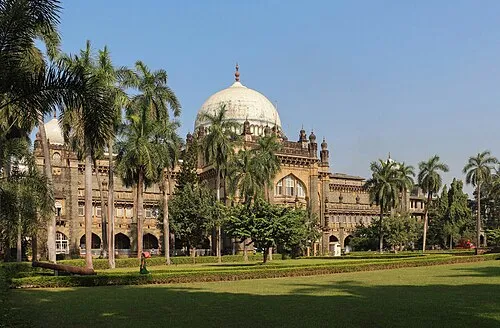
Start at the Gateway of India beside the Taj Mahal Palace Hotel and work north through the Fort district on the self-guided Mumbai Historic Walk, covering 9 stops including the Rajabai Clock Tower, Flora Fountain, Horniman Circle Gardens and Chhatrapati Shivaji Terminus across 8.1 km in about 3.1 hours. End the afternoon at the Chhatrapati Shivaji Maharaj Vastu Sangrahalaya museum, then walk Marine Drive at sunset for the Queen's Necklace view.
Two days
Elephanta Island and the city's layers
Take the morning ferry from the Gateway of India to Elephanta Island (ferries 9:00 to 14:30, closed Mondays) to explore the UNESCO Shiva caves before the midday heat builds. Back on the mainland, spend the afternoon in the Kala Ghoda gallery strip or the markets around Crawford Market. In the evening, cross to Bandra for the clifftop church of Mount Mary and the village lanes of Pali Hill.
Three daysRecommended
Dharavi, Haji Ali and the docks
A third day opens the city beyond its tourist core. Join a Dharavi walking tour in the morning to understand how this quarter of a million people functions as a working micro-economy. Head south to the Haji Ali Dargah at low tide (check the day's tide times beforehand, as the causeway floods at high water), then continue to the Sassoon Docks fish market in Colaba for the late-afternoon catch coming in.
Four days or more
Day trips and hidden layers
Four days and beyond opens Alibaug beach (one hour by catamaran from the Gateway), the Western Ghats hill stations of Lonavala or Matheran (two hours by train), and the flamingo mudflats at Sewri, best at 6:00 to 8:30 during the November to May season. Within the city, the Banganga tank on Malabar Hill, the Sewri fort and the Mahalaxmi Racecourse are quieter alternatives to the main circuit.
Best time to visit Mumbai by traveller type
Same city, different trip. Here's the month that fits how you're travelling.
🧭
Best time to visit Mumbai for the first time
JanFeb
January or February: comfortable 24 to 30°C, low humidity, every sight open including Elephanta, plus the free Kala Ghoda Arts Festival in late January and February. Balanced conditions with no extreme heat or monsoon risk, the safe best-overall answer.
❤️
Best time to visit Mumbai for couples
OctNovFeb
October for the golden-green post-monsoon city and returning flamingos, November for Marine Drive under Diwali lights before the December crush, or February for the Elephanta Festival concerts under the floodlit UNESCO caves at sunset.
💶
Best time to visit Mumbai on a budget
JulAugSep
July and August for hotels 50 to 60% off December and the lowest flights of the year, accepting the rain as a given. September outside the Ganesh Chaturthi week gives you the monsoon tailing off and festival energy without peak prices.
🍝
Best time to visit Mumbai for food and wine
SepOctMar
September and October for peak monsoon street food (bhutta, vada pav, cutting chai) and the start of the October to February seafood season at Sassoon Docks. March around Eid ul-Fitr unlocks the Mohammed Ali Road nihari, haleem and malpua spread that stays open past midnight.
Worst time to visit Mumbai
June, July and August are the months most worth avoiding for a first visit. July alone drops over 750 mm of rain across 31 days, more than London receives in a full year, and it falls as sudden hammering bursts rather than drizzle. Elephanta Island ferries stop completely from June through September because of monsoon swell, so the caves are entirely off the table. Low-lying neighbourhoods including Kurla, Andheri and Sion flood routinely, and local trains run 4 to 6 hours late on the worst days. May is also hard: highs around 33°C that feel like 44°C with the humidity make any outdoor sightseeing genuinely punishing from mid-morning onwards.
Still worth it for Travellers who specifically want the drama of the Mumbai monsoon, including six-metre waves breaking over Marine Drive and the Western Ghats turning saturated green two hours away, will find July and August compelling. Budget travellers also benefit from hotels running 50 to 60% below December rates and the cheapest flights of the year from Europe.
Go instead in November, December, January, February, when Mumbai is at its best.
Best time for a tour of Mumbai
The 8.1-kilometre walk through South Mumbai's colonial core is genuinely comfortable only in the dry, cooler months from November through February, when highs sit between 29 and 32 °C and rain days drop to zero or one. December brings the largest crowds, with the waterfront promenade at Marine Drive and the plaza around the Gateway of India packed shoulder to shoulder from mid-morning, but the air is breathable and the pavements dry. January and February are the sweet spot: slightly quieter, mornings cool enough that you can walk the full stretch from Chhatrapati Shivaji Terminus through Horniman Circle Gardens to the harbour without feeling the heat until well past noon. March and April push into the low 30s with humidity climbing, but rain remains absent, so the walk is still doable if you start early. From June through August you are looking at 25 to 31 rain days per month: the streets between Flora Fountain and the Gateway flood repeatedly, the stonework of Chhatrapati Shivaji Maharaj Vastu Sangrahalaya glistens under sheets of rain, and walking any significant distance is a wet, slow effort. September still logs 26 rain days, though the downpours ease. October is the transition: crowds are modest and the worst of the monsoon is gone, making it a genuinely underrated time to visit.
With AI Tourguide running in your browser, no tour operator sets your departure time, so the climate can. In December, when the Gateway of India esplanade is at its most heaving by 10 am, you can start your Mumbai tour at seven in the morning while the harbour is still quiet, the fishing boats are returning, and the Taj Mahal Palace Hotel catches the early light without a crowd between you and it. The guide leads the walk, tells the stories, and keeps a real conversation going at whatever pace suits you. On a humid April afternoon you might pause for twenty minutes in the shade of Horniman Circle Gardens and simply pick up the story where you left off.

 +5
+5All 9 stops are already on the map.
You just press start.
You just press start.
 AI Tourguide
You just read the route.
Now walk it with a guide in your ear.
Press start wherever you are, even hundreds of kilometres from Mumbai, and the guide begins telling its stories right away. In the city, pick any of the 9 stops to start from: it leads you there, then talks with you the whole route, asking, listening, remembering, and shaping the tour around your answers.
9stops8.1km3.1hours11languages
▶Start the tour freeFree to start · Runs in your browser · No app, no download
Mumbai events and festivals calendar
Annual highlights worth timing a trip around, listed month by month.
January
🎨 Art and cultureBanganga Classical Music Festival बाणगंगा संगीत महोत्सव
Jan 17–18 ~
Two days in January at the Banganga tank; exact dates announced by MTDC.
A two-day Indian classical music festival staged at the sacred Banganga tank in Walkeshwar on Malabar Hill, with concerts performed by torchlight beside the ancient stepped reservoir.
🏃 SportTata Mumbai Marathon टाटा मुंबई मॅरेथॉन
Jan 18
Third Sunday of January every year; check the official website for the confirmed date each edition.
A 42km race drawing 55,000-plus runners through all of South Mumbai, past Marine Drive and over the Bandra-Worli Sea Link.
🎨 Art and cultureKala Ghoda Arts Festival काळा घोडा कला महोत्सव
Jan 31 – Feb 8
Last week of January into early February, nine days, 10:00 to 22:00; exact dates announced by the Kala Ghoda Association each year.
Asia's largest multidisciplinary street arts festival, filling the Kala Ghoda quarter of Fort with art, music, dance and theatre across nine days, all free and open from 10:00 to 22:00.
February
🏳️🌈 PrideQueer Azaadi Mumbai Pride March क्वियर आझादी मुंबई
Feb 7 ~
Early February, in the cool dry season; exact date announced closer to the day.
India's oldest Pride parade, marching from August Kranti Maidan (Gowalia Tank) to Girgaum Chowpatty.
🎨 Art and cultureElephanta Festival एलिफंटा उत्सव
Feb 21–22 ~
Two days in February on Elephanta Island; exact dates set by MTDC.
Classical dance and music (Kathak, Bharatanatyam, Odissi) performed on Elephanta Island in front of the UNESCO caves, with the ferry and an evening concert at sunset (tickets around 200 to 500 rupees, including the ferry).
March
🎉 FestivalHoli होळी / रंगपंचमी
Mar 4 ~
Holika Dahan on the full-moon evening before Rangwali Holi; Mumbai's wilder Rang Panchami follows five days after the main night. Dates move each year with the Hindu lunar calendar, usually falling in late February or early March.
The festival of colour, celebrated in Mumbai as Rangwali Holi and again as Rang Panchami five days on.
⛪ ReligiousEid ul-Fitr ईद उल-फ़ित्र
Mar 21 ~
End of Ramadan, set by the moon sighting; falls roughly ten to eleven days earlier each Gregorian year, cycling through all seasons over time.
Marked by prayers in the mosques and eidgahs of Bandra, Byculla and South Mumbai.
September
⛪ ReligiousGanesh Chaturthi गणेश चतुर्थी / गणेशोत्सव
Sep 14–25 ~
Ten days from Bhadrapada Shukla Chaturthi; Visarjan on Anant Chaturdashi closes the festival. Dates shift each year with the Hindu lunar calendar, generally falling in late August or September.
India's biggest festival: ten days of Ganesh worship centred on the Lalbaugcha Raja pandal in Parel, climaxing in the Visarjan on 25 September when over two million people fill the streets to immerse the idols.
October
🌸 Seasonal natureElephanta Caves Ferry Season Elephanta Caves
Oct 1 – May 31
October to May, ferries daily from the Gateway of India 9:00 to 14:30; suspended June to September for the monsoon. Caves closed Mondays.
The UNESCO World Heritage caves, carved with 5th to 9th century Shiva sculptures, reached by ferry from the Gateway of India.
November
🌸 Seasonal natureSewri Flamingo Season Sewri Flamingos
Nov 1 – May 31 ~
November to May, peaking January to March; best viewed 6:00 to 10:00 at low tide.
Thousands of migratory flamingos (up to 25,000 at peak) gather on the Sewri mudflats, visible at low tide and best in the early morning.
💡 LightsDiwali दिवाळी
Nov 8 ~
Lakshmi Puja falls on Kartik Amavasya; Dhan Teras opens the shopping season two days before. Dates shift with the Hindu lunar calendar, usually landing in October or November.
The festival of lights, when the whole city glows.
December
🇮 HolidayChristmas and New Year Christmas & New Year
Dec 25 – Jan 1
Christmas on 25 December, New Year's Eve on 31 December into 1 January.
Bandra's Catholic churches (Mount Mary, Our Lady of Salvation) are packed on Christmas night, and for New Year's Eve Marine Drive and Girgaum Chowpatty close to traffic, with rooftop parties at the Four Seasons and InterContinental from 10,000 to 20,000 rupees a head.
Insider tips for visiting Mumbai
The rules buried in forums, in one place.
- For Lalbaugcha Raja during Ganesh Chaturthi, the queue starts forming at 5 am and stretches to a 12-hour wait by mid-afternoon. The VIP darshan entry (around 500 rupees) cuts it to roughly 2 hours instead of 10, but you must book days ahead. The whole of September in Parel runs on festival time.
- Elephanta Caves close every Monday and the ferries do not run that day. On weekends and holidays the ticket queue at the Gateway of India can hit 45 minutes, so book the 9 am ferry online the day before. There is no air conditioning anywhere on the island, so carry sun cover and water.
- The Elephanta ferries stop completely from June to September because of monsoon swell, so the only window to see the UNESCO caves is October to May. Pair that with the Monday closure and your real planning window narrows fast.
- On New Year's Eve, Marine Drive is free but pulls 200,000-plus people, and taxis vanish after 22:00. Book a hotel within walking distance at Nariman Point or Marine Lines, or arrive by local train to Churchgate, because getting home afterwards is the hard part.
- Mumbai local trains are crushed solid from 8:00 to 10:00 and 18:00 to 20:00. As a visitor, ride the first-class compartment (70 to 100 rupees rather than 15), and better still travel between 11:00 and 16:00 when there is room to breathe.
- CSMVS Museum (the old Prince of Wales) is free on the first Sunday of the month, but the queue builds from 9:30. It closes every Monday; the calm window is Tuesday to Thursday, 10:30 to 11:30, when the Gandhara sculptures sit in soft daylight and you have the room to yourself.
- The Haji Ali Dargah causeway floods at high tide, so check the day's tide times (tide-forecast.com/Mumbai) and aim for roughly two hours after high water. The shrine also closes to sightseeing during Friday afternoon prayers, around 12:30 to 13:30.
- For the Sewri flamingos, go early (6:00 to 8:30) and about two hours before high tide, when the birds come closest to shore; peak density runs January to March. The Atal Setu bridge works have reshaped the mudflats and pushed birds toward Thane Creek, so check a recent local report before you set out.
Public holidays in Mumbai
On these dates many shops and offices close, transport thins out, and sights can be mobbed or shut. Plan around them.
| Date | Holiday | What closes |
|---|---|---|
| Jan 1 | New Year's Day | Hotels and restaurants open on a reduced schedule after the New Year's Eve crowds; Elephanta ferries run normally from 9 am. |
| Jan 26 | Republic Day | Main celebration and flag ceremony at Shivaji Park, Dadar. Museums stay open but government buildings close. Patriotic mood across the city, no major sightseeing disruption. |
| Feb 15 | Maha Shivratri | Shiva temples are packed; state offices close. Most restaurants stay open. Expect long queues at Babulnath and other Shiva shrines. |
| Mar 4 | Holi (Rangwali) | Streets fill with colour the evening before; public offices close. Best atmosphere on Juhu and Girgaum Chowpatty beaches. Mumbai also celebrates the wilder Rang Panchami five days later. |
| Mar 21 | Eid ul-Fitr | Mohammed Ali Road and Byculla markets close in the morning for prayers, then run a feast through to midnight. Museums stay open. The Eid food spread is one of the year's culinary highlights. |
| Apr 3 | Good Friday | Many Christian institutions in Bandra close; Mount Mary and the Bandra churches are crowded. Limited impact on the main sights elsewhere. |
| May 1 | Maharashtra Day | Parade at Shivaji Park; public transport runs as normal. Some shops close. Falls inside the year's worst heat, so plan early-morning or evening only. |
| Aug 15 | Independence Day | Public ceremonies across the city. Falls in the monsoon, so Elephanta ferries are already suspended. No real effect on museums or indoor sights. |
| Sep 14 | Ganesh Chaturthi | Ten days of city-wide upheaval: Lalbaugcha Raja queues run up to 12 hours, road closures hit hard on the Visarjan day (25 September), and local trains are jammed. Book accommodation within walking distance of Chowpatty. |
| Oct 20 | Dussehra | Closes Navratri; Ravana effigies burn at Shivaji Park and Azad Maidan. Central traffic snarls in the evening, but sights stay open. |
| Nov 8 | Diwali (Lakshmi Puja) | Many non-vegetarian restaurants close on Lakshmi Puja day; fireworks run until 1 am, taxis get scarce, and you should book dinner ahead. The city is at its most lit-up and atmospheric. |
| Dec 25 | Christmas | Bandra's Mount Mary and Our Lady of Salvation churches are packed 20:00 to midnight; Colaba Causeway closes to pedestrians in parts. Museums stay open. |
Mumbai month by month
January in Mumbai
High29°C / 84°F
Low19°C
Rain1mm / 0 rainy days
Sun10.7 h/day
Daylight11 h/day
Humidity65%
Crowds●●●●○Prices●●●●○
January is Mumbai at its absolute best: dry days around 29°C, nights near a cool 19°C, humidity down to 65%, and effectively zero rain. This is the comfortable, walkable city, with Elephanta ferries running and Marine Drive sunsets at their sharpest. It is also peak tourist season, so prices and queues are high, and the Tata Mumbai Marathon on the third Sunday locks down all of South Mumbai for a morning.
The vibe This is the month the city actually delivers on the brochure. The weather is genuinely pleasant rather than merely survivable, and the cultural calendar is full. The flip side is honest peak season: you pay top rates and share Elephanta and the Gateway with everyone else who read the same advice.
Don't miss Sewri's flamingo season is hitting its peak (January to March, up to 25,000 birds on the mudflats at low tide). The two-day Banganga Classical Music Festival lights the sacred Banganga tank on Malabar Hill, and the Mahalaxmi Racecourse turf season is in full swing.
Crowd drivers International winter tourists, cheap direct flights from Europe and North America, and the Tata Mumbai Marathon (18 January), which closes Marine Drive and the Bandra-Worli Sea Link from 3:00 to 14:00.
In season Coastal seafood season is at its height. Head to the Koliwada fish markets at Sassoon Docks (from 5:30 am) for the day's catch before it reaches the city's seafood restaurants.
Peak season; Colaba and BKC hotels run 8,000 to 18,000 rupees a night, with a 15 to 20% jump over the Tata Marathon weekend.
Events this month
🏃 SportTata Mumbai Marathon टाटा मुंबई मॅरेथॉन
Jan 18
Third Sunday of January every year; check the official website for the confirmed date each edition.
A 42km race drawing 55,000-plus runners through all of South Mumbai, past Marine Drive and over the Bandra-Worli Sea Link. Roads close from 3:00 to 14:00, so the whole southern peninsula is car-free for the morning.
Even if you are not running, the atmosphere along Marine Drive is unique, and knowing about the road closures is essential if you have plans in South Mumbai that day.
🎨 Art and cultureBanganga Classical Music Festival बाणगंगा संगीत महोत्सव
Jan 17–18 ~
Two days in January at the Banganga tank; exact dates announced by MTDC.
A two-day Indian classical music festival staged at the sacred Banganga tank in Walkeshwar on Malabar Hill, with concerts performed by torchlight beside the ancient stepped reservoir.
The setting is unmatched: classical music by torchlight at a centuries-old temple tank, a glimpse of a Mumbai well off the tourist trail.
🌸 Seasonal natureSewri Flamingo Season Sewri Flamingos
Nov 1 – May 31 ~
November to May, peaking January to March; best viewed 6:00 to 10:00 at low tide.
Thousands of migratory flamingos (up to 25,000 at peak) gather on the Sewri mudflats, visible at low tide and best in the early morning. Free to visit.
A wild, free natural spectacle within the city limits; January to March gives maximum density, though the Atal Setu bridge works have shifted some birds toward Thane Creek, so check current reports first.
🌸 Seasonal natureElephanta Caves Ferry Season Elephanta Caves
Oct 1 – May 31
October to May, ferries daily from the Gateway of India 9:00 to 14:30; suspended June to September for the monsoon. Caves closed Mondays.
The UNESCO World Heritage caves, carved with 5th to 9th century Shiva sculptures, reached by ferry from the Gateway of India. Ferry around 200 rupees return, entry 40 rupees for Indians and 600 for foreign visitors.
The ferries stop June to September for the monsoon swell, so October to May is the only window to see one of Mumbai's two UNESCO sites; plan it on a non-Monday.
February in Mumbai
High30°C / 87°F
Low20°C
Rain1mm / 0 rainy days
Sun10.9 h/day
Daylight12 h/day
Humidity62%
Crowds●●●●○Prices●●●●○
February holds the perfect weather of January with a touch more warmth: dry highs around 30°C, comfortable 20°C nights, and humidity at its yearly low of 62%. The city's cultural peak lands now, led by the free Kala Ghoda Arts Festival in the colonial Fort district. Crowds stay high, but rates are a notch below the December and January maximum, making it arguably the best-value month inside the peak season.
The vibe February feels like the city showing off without breaking a sweat. The light is clear, the heat has not arrived, and Kala Ghoda turns the most beautiful quarter of Mumbai into a nine-day open-air gallery. If you want peak conditions with the smallest possible premium, this is the month to pick.
Don't miss The Elephanta Festival stages Kathak, Bharatanatyam and Odissi at sunset before the floodlit UNESCO caves, widely rated one of India's finest cultural evenings. Kala Ghoda runs free art, music, dance and theatre 10:00 to 22:00 across the Fort, and the Sewri flamingos are at maximum density.
Crowd drivers Sustained international peak season, the Kala Ghoda Arts Festival drawing national visitors, plus the Banganga and Elephanta festivals and the Queer Azaadi Mumbai Pride march.
In season Peak seafood season continues; the Koliwada catch at Sassoon Docks and Bhaucha Dhakka is at its best before the pre-monsoon heat thins the supply.
Still peak but the cheapest of the high months; rates ease slightly from December and January to around 7,000 to 15,000 rupees.
Events this month
🎨 Art and cultureKala Ghoda Arts Festival काळा घोडा कला महोत्सव
Jan 31 – Feb 8
Last week of January into early February, nine days, 10:00 to 22:00; exact dates announced by the Kala Ghoda Association each year.
Asia's largest multidisciplinary street arts festival, filling the Kala Ghoda quarter of Fort with art, music, dance and theatre across nine days, all free and open from 10:00 to 22:00.
Nine days of free culture in the most beautiful colonial district in the city, the perfect frame for a late-January or February visit.
🎨 Art and cultureElephanta Festival एलिफंटा उत्सव
Feb 21–22 ~
Two days in February on Elephanta Island; exact dates set by MTDC.
Classical dance and music (Kathak, Bharatanatyam, Odissi) performed on Elephanta Island in front of the UNESCO caves, with the ferry and an evening concert at sunset (tickets around 200 to 500 rupees, including the ferry).
A ferry across the harbour and a sunset concert before the floodlit Shiva caves is rated one of the most beautiful cultural evenings anywhere in India.
🏳️🌈 PrideQueer Azaadi Mumbai Pride March क्वियर आझादी मुंबई
Feb 7 ~
Early February, in the cool dry season; exact date announced closer to the day.
India's oldest Pride parade, marching from August Kranti Maidan (Gowalia Tank) to Girgaum Chowpatty. The most important Pride event in South Asia, festive and political in equal measure.
South Asia's flagship Pride, with the Bandra and Colaba quarters especially lively around it, a landmark moment to time a February trip around.
🌸 Seasonal natureSewri Flamingo Season Sewri Flamingos
Nov 1 – May 31 ~
November to May, peaking January to March; best viewed 6:00 to 10:00 at low tide.
Thousands of migratory flamingos (up to 25,000 at peak) gather on the Sewri mudflats, visible at low tide and best in the early morning. Free to visit.
A wild, free natural spectacle within the city limits; January to March gives maximum density, though the Atal Setu bridge works have shifted some birds toward Thane Creek, so check current reports first.
March in Mumbai
High32°C / 90°F
Low22°C
Rain3mm / 0 rainy days
Sun11.3 h/day
Daylight12 h/day
Humidity65%
Crowds●●●○○Prices●●●○○
March is the handover month. Early on it still holds dry, manageable highs around 32°C, but from mid-month the heat and humidity climb noticeably and international tourists thin out. Holi (4 March) triggers a short demand spike, then the city slides toward its quieter, hotter pre-monsoon stretch. It is the last genuinely comfortable travel window before May's extremes, and prices have already eased.
The vibe March is a closing door. The first half still feels like the good season, the second half is the warning shot before the heat sets in. Catch it early and you get pleasant weather with smaller crowds and softer prices; leave it late and you are into the sweaty pre-monsoon grind.
Don't miss Holi, celebrated in Mumbai as Rangwali and again as the wilder Rang Panchami five days later, is best on Juhu and Girgaum Chowpatty. After the Eid ul-Fitr prayers, Mohammed Ali Road becomes a midnight feast of nihari, haleem and fresh malpua.
Crowd drivers Holi (4 March) drives a brief surge, then numbers fall as rising heat pushes tourists away. Eid ul-Fitr around 21 March brings local festival crowds to the Muslim quarters.
In season The Eid food window opens late March: Mohammed Ali Road and Bohri Mohalla serve a depth of Mughlai street food you simply will not find the rest of the year.
Rates fall roughly 20% from January to around 5,000 to 12,000 rupees; the last comfortable-weather window before prices and heat both drop.
Events this month
🎉 FestivalHoli होळी / रंगपंचमी
Mar 4 ~
Holika Dahan on the full-moon evening before Rangwali Holi; Mumbai's wilder Rang Panchami follows five days after the main night. Dates move each year with the Hindu lunar calendar, usually falling in late February or early March.
The festival of colour, celebrated in Mumbai as Rangwali Holi and again as Rang Panchami five days on. Juhu and Girgaum Chowpatty beaches host the biggest public celebrations (organised parties from around 500 rupees).
Unique energy, and the Mumbai Rang Panchami version in late March is often wilder than the main Holi night itself.
⛪ ReligiousEid ul-Fitr ईद उल-फ़ित्र
Mar 21 ~
End of Ramadan, set by the moon sighting; falls roughly ten to eleven days earlier each Gregorian year, cycling through all seasons over time.
Marked by prayers in the mosques and eidgahs of Bandra, Byculla and South Mumbai. After the morning prayer the Mohammed Ali Road and Bohri Mohalla food markets stay open to midnight with nihari, haleem and fresh malpua.
The Mohammed Ali Road feast after the Eid prayer (9 to 11 am) is a culinary spectacle, dense crowds and food you will not find this way the rest of the year.
🌸 Seasonal natureElephanta Caves Ferry Season Elephanta Caves
Oct 1 – May 31
October to May, ferries daily from the Gateway of India 9:00 to 14:30; suspended June to September for the monsoon. Caves closed Mondays.
The UNESCO World Heritage caves, carved with 5th to 9th century Shiva sculptures, reached by ferry from the Gateway of India. Ferry around 200 rupees return, entry 40 rupees for Indians and 600 for foreign visitors.
The ferries stop June to September for the monsoon swell, so October to May is the only window to see one of Mumbai's two UNESCO sites; plan it on a non-Monday.
April in Mumbai
High33°C / 91°F
Low25°C
Rain0mm / 0 rainy days
Sun11.9 h/day
Daylight13 h/day
Humidity74%
Crowds●●○○○Prices●●○○○
April is hot and increasingly sticky, with highs near 33°C and humidity climbing toward 74% as the sea breeze stops cooling the nights. International tourism falls away, though Indian school holidays from mid-April bring domestic travellers. Sightseeing works only in the early morning and evening, but Elephanta is still running and prices have come right down, so culture-led trips that stay indoors at midday make sense.
The vibe April is for travellers who do not mind heat and want the city without the peak-season tax. The afternoons are heavy and the air sticks to you, but mornings on Marine Drive and inside the cool stone of CSMVS or the Elephanta caves are still rewarding, and you are paying half of February's rates to be there.
Don't miss This is the last full month of the Elephanta ferry season before the monsoon shuts it down. Early-morning visits to the caves and the Sewri mudflats (flamingos still present through May) are the comfortable way to use the day before the heat peaks.
Crowd drivers Heat and humidity drive international tourists away, while Indian school holidays from mid-April bring a wave of domestic visitors to the city's sights.
In season Mango season arrives: the prized Alphonso (hapus) from the Konkan coast floods Crawford Market through April and May, the one fruit Mumbai genuinely obsesses over.
Hotels drop to the yearly average, around 4,000 to 9,000 rupees; a good value window for indoor-led culture trips.
Events this month
🌸 Seasonal natureElephanta Caves Ferry Season Elephanta Caves
Oct 1 – May 31
October to May, ferries daily from the Gateway of India 9:00 to 14:30; suspended June to September for the monsoon. Caves closed Mondays.
The UNESCO World Heritage caves, carved with 5th to 9th century Shiva sculptures, reached by ferry from the Gateway of India. Ferry around 200 rupees return, entry 40 rupees for Indians and 600 for foreign visitors.
The ferries stop June to September for the monsoon swell, so October to May is the only window to see one of Mumbai's two UNESCO sites; plan it on a non-Monday.
🌸 Seasonal natureSewri Flamingo Season Sewri Flamingos
Nov 1 – May 31 ~
November to May, peaking January to March; best viewed 6:00 to 10:00 at low tide.
Thousands of migratory flamingos (up to 25,000 at peak) gather on the Sewri mudflats, visible at low tide and best in the early morning. Free to visit.
A wild, free natural spectacle within the city limits; January to March gives maximum density, though the Atal Setu bridge works have shifted some birds toward Thane Creek, so check current reports first.

May in Mumbai
High33°C / 91°F
Low27°C
Rain33mm / 3 rainy days
Sun11.7 h/day
Daylight13 h/day
Humidity75%
Crowds●●○○○Prices●●○○○
May is the hardest month to be outdoors in Mumbai. Highs sit around 33°C but feel like 44°C with the humidity, and the westerly sea wind stops the nights cooling below 27°C. Marine Drive offers almost no shade, so sightseeing only makes sense from 6:00 to 9:00 and 18:00 to 20:00. Tourism hits its annual low and even locals retreat into air-conditioned malls. Prices are at rock bottom, but the comfort is too.
The vibe May is not a romantic empty-city month, it is an endurance test. The heat is the draining, soak-through-your-shirt kind, and midday outdoors is genuinely unpleasant. Come only if heat does not bother you and a bargain matters more than comfort, and structure every day around dawn and dusk.
Don't miss It is still the last of the Elephanta and Sewri flamingo windows before the monsoon, but only worth attempting at first light. By late May the pre-monsoon clouds build and the city watches the sky for the rains, which usually break in mid-June.
Crowd drivers The year's strongest heat and humidity push tourism to its annual floor. Domestic school-holiday travel tapers as the pre-monsoon mugginess deepens.
In season Final weeks of Alphonso mango season; vendors across Crawford Market and roadside stalls sell off the last of the year's hapus before the rains end the supply.
The cheapest pre-monsoon month, around 3,500 to 8,000 rupees; last-minute bookings are easy as demand bottoms out.
Events this month
🌸 Seasonal natureElephanta Caves Ferry Season Elephanta Caves
Oct 1 – May 31
October to May, ferries daily from the Gateway of India 9:00 to 14:30; suspended June to September for the monsoon. Caves closed Mondays.
The UNESCO World Heritage caves, carved with 5th to 9th century Shiva sculptures, reached by ferry from the Gateway of India. Ferry around 200 rupees return, entry 40 rupees for Indians and 600 for foreign visitors.
The ferries stop June to September for the monsoon swell, so October to May is the only window to see one of Mumbai's two UNESCO sites; plan it on a non-Monday.
🌸 Seasonal natureSewri Flamingo Season Sewri Flamingos
Nov 1 – May 31 ~
November to May, peaking January to March; best viewed 6:00 to 10:00 at low tide.
Thousands of migratory flamingos (up to 25,000 at peak) gather on the Sewri mudflats, visible at low tide and best in the early morning. Free to visit.
A wild, free natural spectacle within the city limits; January to March gives maximum density, though the Atal Setu bridge works have shifted some birds toward Thane Creek, so check current reports first.

June in Mumbai
High30°C / 86°F
Low27°C
Rain408mm / 25 rainy days
Sun8.6 h/day
Daylight13 h/day
Humidity83%
Crowds●○○○○Prices●○○○○
June brings the monsoon. The rains usually arrive between 10 and 15 June, the heat breaks, and the city transforms: 408mm of rain over 25 days, dramatic seas, and the start of widespread waterlogging. Elephanta ferries stop until September. It is the cheapest month of the year and has a genuine atmosphere, but flooding and stalled trains make ordinary sightseeing unreliable from now until the rains ease.
The vibe June splits travellers cleanly. If you want clear-sky sightseeing, it is the wrong month: ferries stop, streets flood, and plans get rained out. If you came for the drama of the Mumbai monsoon, the six-metre waves breaking over Marine Drive and the Western Ghats exploding into green two hours away, this is exactly when it starts.
Don't miss The silver lining is out of town: the Western Ghats around Lonavala and Matheran, two hours away, turn saturated green and the waterfalls run at full force, the best month of the year for that landscape. In the city, the Marine Lines station overpass gives a safe view of the waves without the deadly risk of the promenade itself.
Crowd drivers Monsoon arrival empties the city of tourists. Elephanta ferries suspend for the season, and waterlogging in Kurla, Andheri and Sion begins.
In season Monsoon street-food season opens: hot bhutta (grilled corn), vada pav and cutting chai are the rainy-day ritual on every corner.
The cheapest month of the year, around 2,500 to 6,000 rupees, roughly 50% below December; the backpacker window.

July in Mumbai
High28°C / 82°F
Low26°C
Rain753mm / 31 rainy days
Sun5.5 h/day
Daylight13 h/day
Humidity89%
Crowds●○○○○Prices●○○○○
July is the monsoon at maximum. Mumbai takes 753mm of rain over 31 days, more in this one month than London gets all year, and it comes as hammering bursts rather than drizzle. Local trains on the Western and Harbour lines run 4 to 6 hours late on the worst days, and waterlogging is the seasonal norm rather than the exception. Cheapest and quietest of the year, but only for travellers ready to build around the rain.
The vibe July is the wettest, most disrupted month, and there is no pretending otherwise. Whole days can be written off to rain and flooded roads. The reward is a moody, dramatic city almost empty of other tourists, and rooms at half-price, if you treat the monsoon as the experience rather than an obstacle.
Don't miss This is the photographer's monsoon: Marine Drive waves at full power (viewed safely from the Marine Lines overpass), and the Western Ghats waterfalls at their absolute peak. Mangrove boat tours on Thane Creek and the green of the hills are the season's real draw.
Crowd drivers Peak rainfall keeps tourism at its annual floor. Elephanta remains closed and local-train disruption deters all but committed monsoon travellers.
In season Monsoon street food is at its peak: bhutta, bhajia and cutting chai are the city's collective comfort against the rain.
Rates from around 2,000 rupees; budget travellers benefit, but expect all-day rain in return.

August in Mumbai
High28°C / 82°F
Low25°C
Rain454mm / 30 rainy days
Sun7.4 h/day
Daylight13 h/day
Humidity88%
Crowds●○○○○Prices●○○○○
August keeps the monsoon going strong, with 454mm of rain over 30 days and the heat fully broken at highs of 28°C. Independence Day (15 August) brings domestic visitors, and at the Haji Ali Dargah the causeway floods at high tide. It is the cheapest flight month of the year from Europe, ideal for budget travellers who accept that rain frames the whole trip. Elephanta is still shut until September.
The vibe August is still firmly the rainy season, a touch less relentless than July but not by much. The city in monsoon mood, Marine Drive grey and dramatic, has its own pull, and the prices are unbeatable. Just go in knowing your itinerary bends around the weather, not the other way round.
Don't miss Time the Haji Ali Dargah for roughly two hours after high tide, when the causeway is passable. The Western Ghats stay lush, and mangrove and creek boat tours run well between the heavier downpours.
Crowd drivers Continuing monsoon keeps international numbers low; Independence Day (15 August) adds a short burst of domestic visitors.
In season Monsoon seafood thins as fishing pauses in the rough seas, so this is the street-food and vegetarian-thali stretch rather than the catch-of-the-day season.
Around 2,500 to 6,500 rupees and the cheapest flight month from Europe; deep monsoon value with rain as the trade-off.
September in Mumbai
High28°C / 83°F
Low25°C
Rain426mm / 26 rainy days
Sun8.5 h/day
Daylight12 h/day
Humidity87%
Crowds●●○○○Prices●●○○○
September is the monsoon winding down and the festival season exploding. Ganesh Chaturthi (14 to 25 September) is the biggest festival in India, and the Visarjan on Anant Chaturdashi (25 September) puts over two million people on the streets. Outside that week the rains are easing and prices are still low. The Lalbaugcha Raja pandal in Parel defines the whole month, with queues up to 12 hours.
The vibe September is two cities in one. The Ganesh Chaturthi week is overwhelming in the best sense: deafening, crowded, the single most intense thing you can witness in Mumbai. The rest of the month is a quiet, green, fast-emptying monsoon at low-season prices. Pick your week deliberately, because they could not feel more different.
Don't miss Pandal-hopping in the evenings is the experience: the top sites (Lalbaugcha Raja, Andhericha Raja, Girgaoncha Raja) sit along the Central Line, and Metro Line 1 now eases the crush across central Mumbai. The Lalbaugcha Raja VIP darshan (around 500 rupees) cuts the wait from 10 hours to about 2.
Crowd drivers Ganesh Chaturthi (14 to 25 September) packs the city to bursting, transport buckles, and the Visarjan procession draws over two million people. Outside the festival week, numbers stay low.
In season Post-monsoon street food peaks and the October to February seafood season is about to open; Koliwada fish markets start filling again as the seas calm.
Around 4,500 rupees outside festival week, but Ganesh Chaturthi week spikes rates 30 to 50%; book accommodation 6 to 8 weeks ahead.
Events this month
⛪ ReligiousGanesh Chaturthi गणेश चतुर्थी / गणेशोत्सव
Sep 14–25 ~
Ten days from Bhadrapada Shukla Chaturthi; Visarjan on Anant Chaturdashi closes the festival. Dates shift each year with the Hindu lunar calendar, generally falling in late August or September.
India's biggest festival: ten days of Ganesh worship centred on the Lalbaugcha Raja pandal in Parel, climaxing in the Visarjan on 25 September when over two million people fill the streets to immerse the idols. Lalbaugcha Raja entry is free, with queues up to 12 hours.
The single most intense thing you can witness in Mumbai. Transport collapses, so book accommodation within walking distance of Chowpatty, and the whole of September is shaped by it.

October in Mumbai
High31°C / 88°F
Low25°C
Rain95mm / 10 rainy days
Sun9.9 h/day
Daylight12 h/day
Humidity79%
Crowds●●●○○Prices●●●○○
October is the city's quiet gem. The monsoon has cleared, leaving Mumbai green and fresh, highs around 31°C with humidity falling fast, and the worst of the festival crush behind it. Elephanta ferries resume, Navratri (11 to 20 October) lights up the Garba grounds, and the Sewri flamingos begin returning. Conditions are excellent and tourist numbers have not yet built, so the value-to-experience ratio is the best of the year.
The vibe October is the insider's month, the one locals quietly recommend. The city looks washed-clean and green after the rains, the heat is manageable, Ganesh Chaturthi is over, and the December crowds have not landed. You get near-peak conditions without the peak price or the peak queue.
Don't miss Navratri fills Andheri, BKC and Juhu with nine nights of Garba and Dandiya, from traditional to techno (passes 300 to 2,000 rupees, book early). Elephanta ferries are running again, and the Sewri flamingos and Thane Creek mangrove tours come back into season.
Crowd drivers Post-monsoon improvement starts drawing visitors back, with Navratri (11 to 20 October) and Dussehra (20 October) adding domestic festival crowds, but well short of December levels.
In season The coastal seafood season opens: the October to February catch returns to Sassoon Docks and the Koliwada markets, the best stretch for fish thalis and Koli cuisine.
Around 4,500 to 10,000 rupees; the best hidden-value window, with great conditions and rates still below December.
Events this month
🎉 FestivalNavratri / Dandiya Garba नवरात्रि / दांडिया-रास
Oct 11–20 ~
Nine nights from Ashwina Shukla Pratipada; ends with Dussehra. Dates move with the Hindu lunar calendar, typically falling in October, occasionally late September.
A nine-night dance festival with huge organised Garba and Dandiya events in Andheri, BKC and Juhu, from traditional to techno-Garba (event passes 300 to 2,000 rupees). Couples turn out in chaniya-choli and kurta.
The best Garba atmosphere in all Maharashtra; book passes early as the big nights sell out.
🌸 Seasonal natureElephanta Caves Ferry Season Elephanta Caves
Oct 1 – May 31
October to May, ferries daily from the Gateway of India 9:00 to 14:30; suspended June to September for the monsoon. Caves closed Mondays.
The UNESCO World Heritage caves, carved with 5th to 9th century Shiva sculptures, reached by ferry from the Gateway of India. Ferry around 200 rupees return, entry 40 rupees for Indians and 600 for foreign visitors.
The ferries stop June to September for the monsoon swell, so October to May is the only window to see one of Mumbai's two UNESCO sites; plan it on a non-Monday.
🌸 Seasonal natureSewri Flamingo Season Sewri Flamingos
Nov 1 – May 31 ~
November to May, peaking January to March; best viewed 6:00 to 10:00 at low tide.
Thousands of migratory flamingos (up to 25,000 at peak) gather on the Sewri mudflats, visible at low tide and best in the early morning. Free to visit.
A wild, free natural spectacle within the city limits; January to March gives maximum density, though the Atal Setu bridge works have shifted some birds toward Thane Creek, so check current reports first.

November in Mumbai
High32°C / 90°F
Low22°C
Rain7mm / 2 rainy days
Sun10.2 h/day
Daylight11 h/day
Humidity65%
Crowds●●●●○Prices●●●●○
November is the start of the good season proper. The cool, dry air settles in (highs around 32°C, humidity down to 65%, near-zero rain), Diwali (8 November) lights the city, and international tourists return. The booked high season begins, so rates climb and the Diwali week spikes 40%. Marine Drive under the festival lights is one of the year's signature sights, and conditions are reliably excellent.
The vibe November is the moment Mumbai flips back to its best self. Diwali gives it a glow that nothing else in the year matches, the weather is finally dry and pleasant, and the city feels alive and lit-up. The catch is that prices have started their climb toward the December peak, so the earlier in the month you come, the better the deal.
Don't miss Diwali is the visual highlight: the city glows, Chowpatty and Marine Drive fill with spontaneous fireworks running past midnight, and the markets buzz from Dhan Teras. Elephanta and the Sewri flamingo season are both open, and the Mahalaxmi Racecourse turf season begins.
Crowd drivers Diwali (8 November) and the onset of cool weather bring international tourists back, opening the booked high season. Dhan Teras (6 November) packs the markets.
In season Diwali sweets (faral, chakli, ladoo) take over the markets; note many non-vegetarian restaurants close on Lakshmi Puja day (8 November), so book dinner ahead that night.
Around 6,500 to 14,000 rupees; the booked season begins, with a 40% Diwali-week spike around Lakshmi Puja (8 November).
Events this month
💡 LightsDiwali दिवाळी
Nov 8 ~
Lakshmi Puja falls on Kartik Amavasya; Dhan Teras opens the shopping season two days before. Dates shift with the Hindu lunar calendar, usually landing in October or November.
The festival of lights, when the whole city glows. Lakshmi Puja falls on 8 November, Dhan Teras (6 November) opens the shopping season, and Chowpatty and Marine Drive fill with spontaneous fireworks running past midnight.
Mesmerising atmosphere, but many non-vegetarian restaurants close on 8 November, so book dinner ahead, and the fireworks run until 1 am.
🌸 Seasonal natureElephanta Caves Ferry Season Elephanta Caves
Oct 1 – May 31
October to May, ferries daily from the Gateway of India 9:00 to 14:30; suspended June to September for the monsoon. Caves closed Mondays.
The UNESCO World Heritage caves, carved with 5th to 9th century Shiva sculptures, reached by ferry from the Gateway of India. Ferry around 200 rupees return, entry 40 rupees for Indians and 600 for foreign visitors.
The ferries stop June to September for the monsoon swell, so October to May is the only window to see one of Mumbai's two UNESCO sites; plan it on a non-Monday.
🌸 Seasonal natureSewri Flamingo Season Sewri Flamingos
Nov 1 – May 31 ~
November to May, peaking January to March; best viewed 6:00 to 10:00 at low tide.
Thousands of migratory flamingos (up to 25,000 at peak) gather on the Sewri mudflats, visible at low tide and best in the early morning. Free to visit.
A wild, free natural spectacle within the city limits; January to March gives maximum density, though the Atal Setu bridge works have shifted some birds toward Thane Creek, so check current reports first.

December in Mumbai
High31°C / 87°F
Low20°C
Rain17mm / 1 rainy days
Sun9.8 h/day
Daylight11 h/day
Humidity64%
Crowds●●●●●Prices●●●●●
December is the busiest and priciest month of the year. The weather is excellent (dry highs around 31°C, cool 20°C nights, humidity down near 64%), which is exactly why everyone comes. European and North American winter holidaymakers, Christmas, New Year and the Indian family holiday season all stack up. Marine Drive and Girgaum Chowpatty close for the New Year's Eve crowds, and rooms book out weeks ahead.
The vibe December is Mumbai at full tilt: perfect weather, festive energy, and the whole city out celebrating. It is also the most expensive and crowded week-for-week, with luxury hotels sold out and New Year's Eve on Marine Drive drawing a 200,000-strong crush. Come for the buzz and the conditions, but book everything early and brace for peak prices.
Don't miss New Year's Eve centres on Marine Drive (free but mobbed) and Girgaum Chowpatty, with rooftop parties at the Four Seasons and InterContinental from 10,000 rupees a head. Elephanta, the Sewri flamingos and the Mahalaxmi turf season are all in full swing in the clear, dry weather.
Crowd drivers European and US winter holidaymakers, Christmas and New Year, and the Indian family holiday season all converge, making this the year's busiest and most expensive stretch.
In season Peak seafood season and Christmas in the Catholic neighbourhoods of Bandra: East Indian bottle masala dishes and festive sweets appear in the homes and bakeries around Mount Mary.
The most expensive month: hotels 9,000 to 25,000 rupees, luxury properties sold out, roughly 90% above monsoon rates; NYE rooftops run 10,000 to 20,000 rupees a head.
Events this month
🇮 HolidayChristmas and New Year Christmas & New Year
Dec 25 – Jan 1
Christmas on 25 December, New Year's Eve on 31 December into 1 January.
Bandra's Catholic churches (Mount Mary, Our Lady of Salvation) are packed on Christmas night, and for New Year's Eve Marine Drive and Girgaum Chowpatty close to traffic, with rooftop parties at the Four Seasons and InterContinental from 10,000 to 20,000 rupees a head.
The busiest night of the year in Mumbai. Marine Drive on New Year's Eve is free but draws a 200,000-strong crush, and taxis are almost impossible afterward, so stay within walking distance.
🌸 Seasonal natureElephanta Caves Ferry Season Elephanta Caves
Oct 1 – May 31
October to May, ferries daily from the Gateway of India 9:00 to 14:30; suspended June to September for the monsoon. Caves closed Mondays.
The UNESCO World Heritage caves, carved with 5th to 9th century Shiva sculptures, reached by ferry from the Gateway of India. Ferry around 200 rupees return, entry 40 rupees for Indians and 600 for foreign visitors.
The ferries stop June to September for the monsoon swell, so October to May is the only window to see one of Mumbai's two UNESCO sites; plan it on a non-Monday.
🌸 Seasonal natureSewri Flamingo Season Sewri Flamingos
Nov 1 – May 31 ~
November to May, peaking January to March; best viewed 6:00 to 10:00 at low tide.
Thousands of migratory flamingos (up to 25,000 at peak) gather on the Sewri mudflats, visible at low tide and best in the early morning. Free to visit.
A wild, free natural spectacle within the city limits; January to March gives maximum density, though the Atal Setu bridge works have shifted some birds toward Thane Creek, so check current reports first.
Frequently asked questions
What is the best time to visit Mumbai?
November to February is the best time to visit Mumbai. Dry days of 24 to 30°C, low humidity around 62 to 65%, and almost no rain make every neighbourhood walkable, the Elephanta ferries run, and the culture calendar is full, from the Kala Ghoda Arts Festival to the Banganga and Elephanta music festivals. December is the busiest and priciest within that window.
What are the cheapest months to visit Mumbai?
July and August, the monsoon peak, are the cheapest months. Hotels run 50 to 60% below December (from around 2,000 to 6,500 rupees) and flights from Europe hit their yearly low. June is the single cheapest month, roughly 50% under December. The trade-off is heavy all-day rain, flooding, and Elephanta ferries shut from June to September.
When should I avoid visiting Mumbai?
Avoid June to August, the monsoon peak. July alone gets over 750mm of rain across 31 days, more than London in a whole year, local trains run 4 to 6 hours late on bad days, and Elephanta ferries stop until September. May is also tough: 33°C highs that feel like 44°C with the humidity make daytime sightseeing genuinely punishing.
Is the monsoon a good time to visit Mumbai?
Only for a specific traveller. June to September brings cheap rooms, dramatic seas, monsoon street food and the Western Ghats turning lush green two hours away. But Elephanta ferries are suspended, streets flood, trains stall, and whole days can wash out. If you came for the Mumbai monsoon experience, plan around it; for a normal first visit, choose November to February instead.
What is Mumbai like in December?
December is Mumbai's best weather and its busiest, priciest month. Dry highs around 31°C, cool 20°C nights and low humidity draw European, US and Indian holidaymakers all at once. Marine Drive and Girgaum Chowpatty close for the New Year's Eve crowds, luxury hotels sell out, and rates run roughly 90% above the monsoon. Book everything weeks ahead.
When can I see the Elephanta Caves?
October to May only. The ferries from the Gateway of India run daily 9:00 to 14:30 in that window but stop completely from June to September because of the monsoon swell. The caves also close every Monday. Plan your visit on a non-Monday between October and May, ideally on the 9 am ferry booked the day before, and carry sun cover and water.
When is the best time to see the Sewri flamingos in Mumbai?
Flamingo season runs November to May, peaking January to March when up to 25,000 birds gather on the Sewri mudflats. Go early, 6:00 to 8:30, and about two hours before high tide when the birds come closest to shore. It is free, but the Atal Setu bridge works have pushed some birds toward Thane Creek, so check a recent local report before you go.
When is Ganesh Chaturthi in Mumbai in 2026?
Ganesh Chaturthi runs 14 to 25 September 2026, ten days climaxing in the Visarjan on Anant Chaturdashi (25 September), when over two million people fill the streets. The Lalbaugcha Raja pandal in Parel is the centrepiece, with queues up to 12 hours. Transport buckles all week, so book accommodation within walking distance of Chowpatty and expect a 30 to 50% room-rate spike.
How many days do I need in Mumbai?
Three days cover the essentials: the Gateway of India and a half-day ferry to Elephanta, the colonial Fort and Kala Ghoda quarter, Marine Drive at sunset, and the CSMVS museum. Four to five days let you add Dharavi, the Haji Ali Dargah, the Sassoon Docks fish market at dawn, and the Bandra churches. A week opens up day trips to the Western Ghats or the beaches at Alibaug.

Any month, any day: your guide is already there
Whatever date you pick, a private human guide gets pricier and harder to book on weekends, holidays and in peak season. Our live AI guide, the one that walks with you and answers anything you ask out loud, works the opposite way.
One flat price, every day
No holiday, weekend, night or peak-season surcharge. A private guide in Mumbai runs well over 100 euro for a half day, and more on holidays. Ours stays the same.
Available the moment you want it
Start at midnight or at dawn, on Christmas, in the snow, in the August heat. No sold-out high season, no booking weeks ahead.
Your pace, no meter running
Pause for a long lunch, restart after dark, repeat a stop. The tour simply waits for you.
Free to try, a fraction of the cost
Test it for free, then a transparent flat price that undercuts any private guide, in every season.
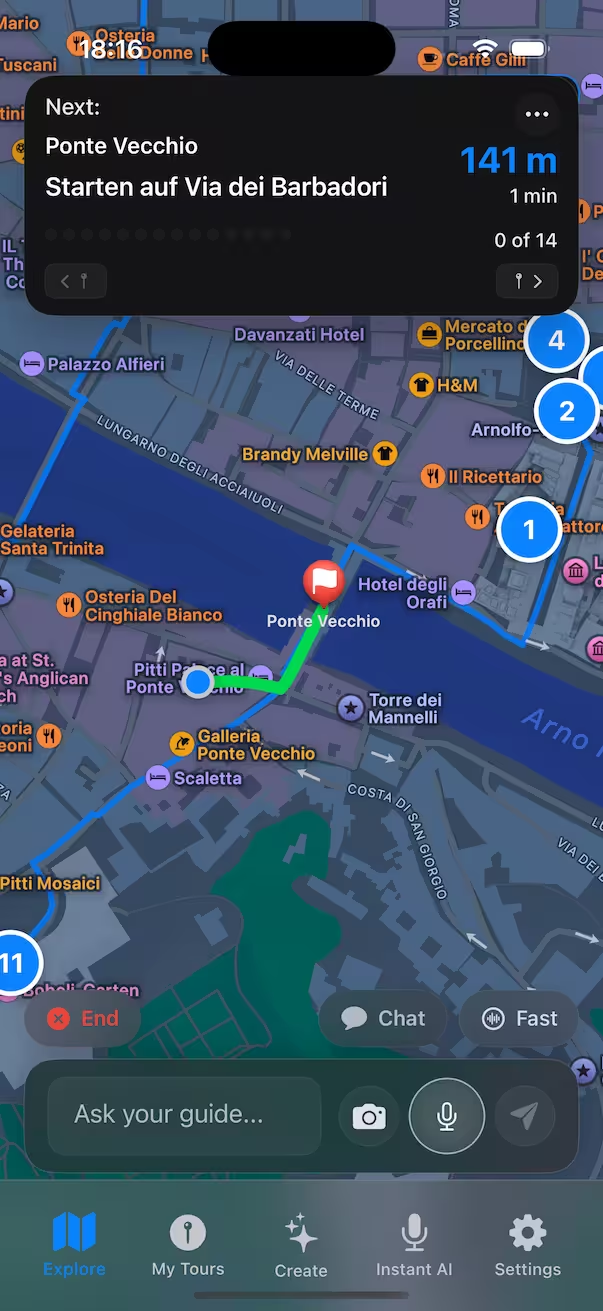
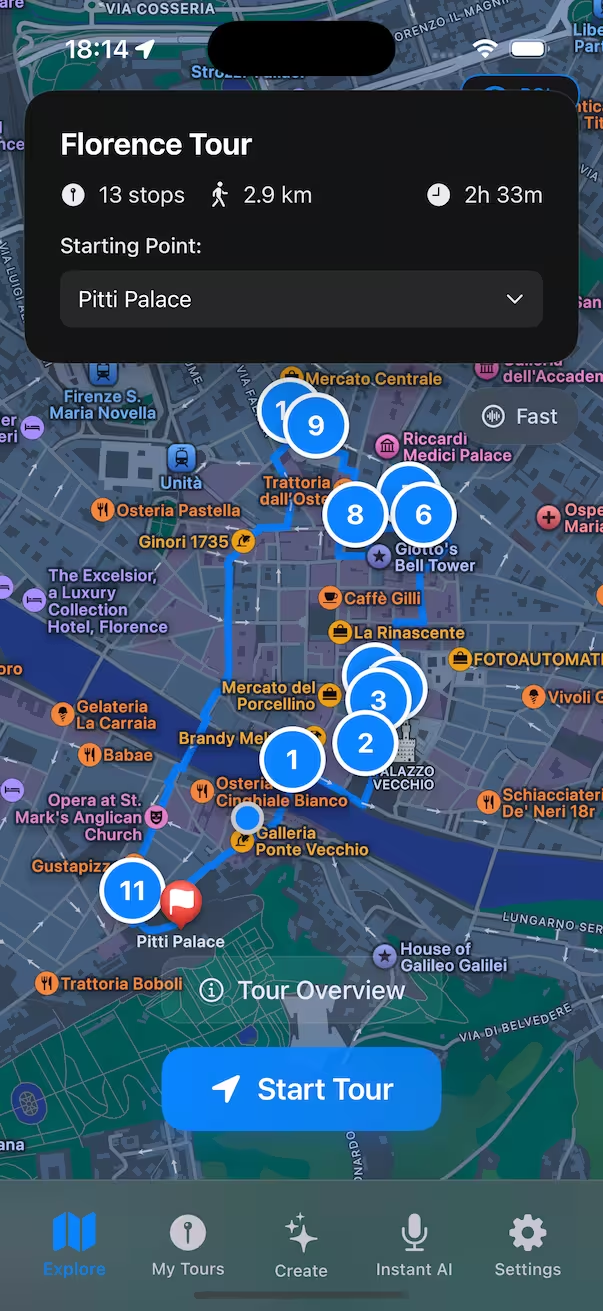
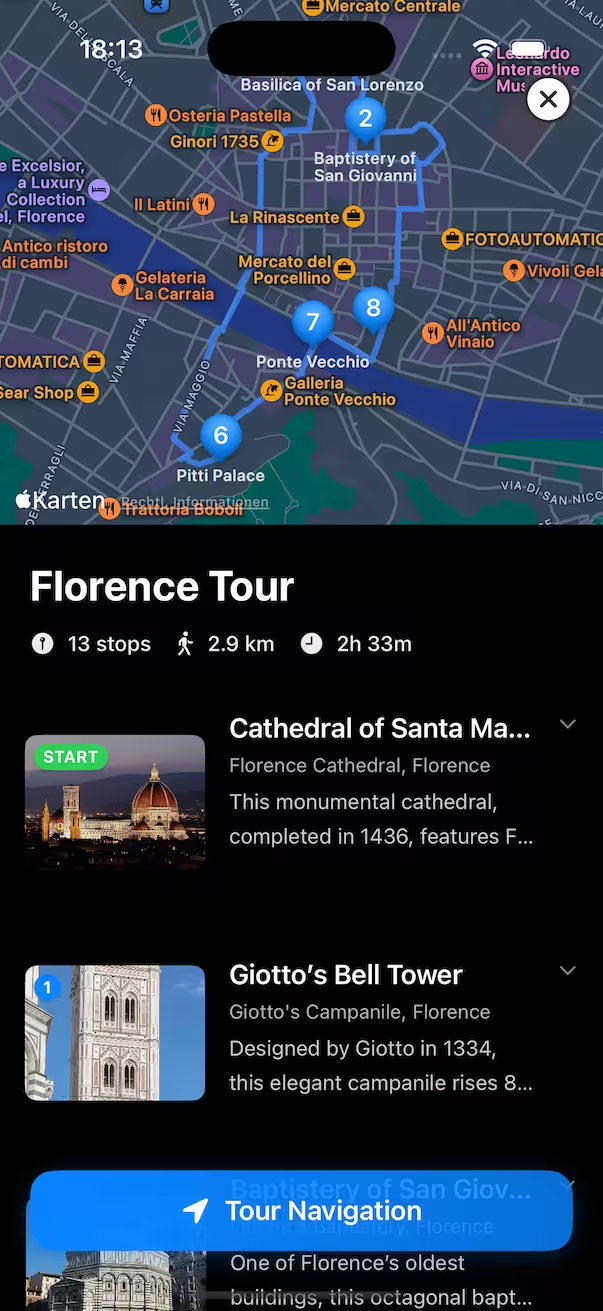
The classic Mumbai tour: 9 stops, 8.1 km, about 3 h on foot
Your live AI guide and the self-guided Mumbai route, together in your browser.