Best Time to Visit Nara
Month-by-month weather, crowds and prices, plus a full calendar of festivals and events worth planning a trip around.
Best monthsMar, Apr, Oct, Nov
CheapestFeb, Jun, Jul
AvoidApr
BusiestApr, Oct

When is the best time to visit Nara?
Come in late March to early April for the cherry blossoms over Nara Park's deer and Todai-ji, or mid-October to mid-November for the once-a-year Shosoin treasures and autumn maples. Both give you mild 15-22°C days and the city's richest calendar. Skip the last week of April through the first week of May: Golden Week brings 45 to 60 minute queues at Todai-ji, gridlocked park paths and the year's highest hotel rates. February is the cheapest, calmest month if you don't mind the cold.
Start our tool and find your best time to visit Nara
Your perfect month
Free · ~30 seconds
or tap a month directly
What matters to you?
And this?
Best overall: Mar, Apr, Oct, Nov. Late March to early April for the iconic scene (1,500 cherry trees framing Todai-ji and the Kofuku-ji pagoda with deer wandering beneath), or mid-October to mid-November for the deepest culture: the Shosoin Treasures Exhibition runs 24 October to 9 November and the maples at Isuien peak around 15-28 November. October and November give you the same content with calmer weekday crowds.
Best value: Feb, Jun, Dec. February delivers the cheapest beds (7,500-13,000 JPY) and the calmest deer, with snow on Todai-ji's roof a real possibility. December is nearly as cheap and hands you the Kasuga Wakamiya Onmatsuri festival in an empty city. June is rainy but quiet and cheap. All three avoid the spring and autumn price spikes entirely.
Avoid: Apr, May. The last week of April through the first week of May (Golden Week, 29 April to 6 May) is the worst value of the year: Todai-ji queues of 45 to 60 minutes, park paths gridlocked on weekends, day-tripper overflow from Kyoto and Osaka at its peak, and hotels at their annual maximum (18,000-30,000 JPY), booked out 60 to 90 days ahead.
- January: Good time, 8°C. Hushed and crisp. After the New Year hatsumode rush fades past 3 January, the deer park belongs to a handful of early risers, and snow on Todai-ji's roof is a real if occasional reward.
- February: Good time, 9°C. Deep winter stillness with the year's lowest tourist numbers. Light snow falls two to five times a season, rarely settling more than a few centimetres, but enough for a coveted snow-on-deer photograph.
- March: Good time, 14°C. The year's most comfortable spring air arrives at 10-17°C, and the calendar wakes up. Early March is still calm; by late month the first hanami crowds spill into Nara Park.
- April: Tough month, 18°C. Pink blossom over deer and pagoda is the postcard of Japan, and everyone wants it. Mild 17-22°C days draw extreme day-tripper overflow from Kyoto and Osaka; weekday mornings are the only sane window.
- May: Good time, 23°C. A month of two halves. To 6 May it is gridlocked and pricey; from mid-month the day-trippers thin, the air warms to a comfortable 23°C, and the deer stay active and gentle.
- June: Good time, 26°C. Quiet and damp at 26°C with persistent drizzle rather than dramatic monsoon. Since nearly every sight here is outdoors, the deer-park walks turn genuinely soggy, but you share them with almost no one.
- July: Good time, 30°C. Hot and sticky once the rains lift, with thin international demand. The open grassland of Nara Park bakes by midday, so the city feels emptiest of all at the wrong hours.
- August: Tough month, 31°C. Brutal afternoons give way to enchanted evenings. Obon (13-16 August) brings heavy domestic travel, but the lantern and fire festivals make the heat worth enduring after dark.
- September: Good time, 27°C. Calm and warming down from summer at 27°C. Day-tripper numbers ease, prices soften, and the only caution is the occasional Kansai typhoon. The deer turn more assertive as the male rut begins.
- October: Good time, 21°C. Crisp, dry and culturally dense at 21°C, the start of Nara's premium autumn window. Weekdays are manageable; weekends during the exhibition pull thousands of extra day-trippers into the park.
- November: Good time, 16°C. The most reliably dry and arguably most beautiful month, with maples and ginkgos blazing over the deer at a comfortable 16°C. Domestic foliage tourism keeps weekends busy.
- December: Good time, 10°C. Calm and cold (10°C highs) with the year's best-kept secret: a major historic festival in a nearly tourist-free city. The year-end shrine crowds only return from 28 December.
Nara weather by month
HighLowRainfall
Jan8°
Feb9°
Mar14°
Apr18°
May23°
Jun26°
Jul30°
Aug31°
Sep27°
Oct21°
Nov16°
Dec10°
| Month | Temp | Rain | Sun | Crowds | Prices | Highlight |
|---|---|---|---|---|---|---|
| Jan | 8° / 0° | 70mm · 8 rainy days | 7.5 h/day | ●●○○○ | ●●○○○ | Wakakusa Yamayaki (Grass Burning) |
| Feb | 9° / 0° | 60mm · 8 rainy days | 7.7 h/day | ●●○○○ | ●●○○○ | Setsubun Mantoro |
| Mar | 14° / 4° | 119mm · 12 rainy days | 8.5 h/day | ●●●○○ | ●●●○○ | Omizutori (Water-Drawing Ceremony) |
| Apr | 18° / 8° | 145mm · 11 rainy days | 8.7 h/day | ●●●●● | ●●●●● | Cherry Blossom (Nara Park Hanami) |
| May | 23° / 13° | 157mm · 11 rainy days | 9.6 h/day | ●●●●○ | ●●●●○ | Takigi O-Noh (Firelight Noh) |
| Jun | 26° / 18° | 219mm · 15 rainy days | 8.6 h/day | ●●○○○ | ●●○○○ | |
| Jul | 30° / 23° | 238mm · 17 rainy days | 9.3 h/day | ●●○○○ | ●●○○○ | |
| Aug | 31° / 24° | 194mm · 14 rainy days | 10.2 h/day | ●●●○○ | ●●●○○ | Nara Tokae Lantern Festival |
| Sep | 27° / 20° | 201mm · 14 rainy days | 8.5 h/day | ●●○○○ | ●●●○○ | Uneme Matsuri (Moon-Viewing Dragon Boat) |
| Oct | 21° / 13° | 181mm · 11 rainy days | 8.1 h/day | ●●●●○ | ●●●●● | Shika-no-Tsunokiri (Deer Antler Cutting) |
| Nov | 16° / 8° | 86mm · 8 rainy days | 7.7 h/day | ●●●●○ | ●●●●○ | Shosoin Treasures Exhibition |
| Dec | 10° / 2° | 71mm · 8 rainy days | 7.4 h/day | ●●○○○ | ●●○○○ | Kasuga Wakamiya Onmatsuri |
How we score this: weather = long-run climate normals (Open-Meteo), crowds & prices = relative season read, events checked yearly against official dates.
Best time to visit Nara: weather, prices & crowds
Best months for good weather
Mar, Apr, Nov
Late March to mid-April (15-22°C, long daylight, blossom) and November (16°C, the driest stretch at 86mm) are the most comfortable walking weather of the year. The open grassland of Nara Park has little shade, so these mild, dry windows matter far more here than in a city of cafes and museums.
Quietest months to avoid the crowds
Feb, Jun, Dec
February, June and December empty out. February is the deep off-season with the fewest day-trippers; June's rainy season scares people off; December clears the moment the autumn maples drop. In all three you can stand before the Great Buddha almost alone if you arrive before 09:00.
Cheapest time to visit Nara
Feb, Jun, Jul
February is Nara's cheapest month: a central 3-star room runs 7,500-13,000 JPY, against 22,000-38,000 on sakura weekends. June and July (rainy and hot respectively) sit just behind at 8,000-15,000. Overnight stock is thin here, so off-season pricing is the real reward for braving the weather.
Best time for festivals and events
Jan, Aug, Dec
Nara's fire and lantern nights are the year's hidden gems. The Wakakusa Yamayaki sets the whole 342m hillside ablaze on the fourth Saturday of January; the Nara Tokae fills the park with over 20,000 candles for ten August nights; and the 900-year-old Kasuga Wakamiya Onmatsuri runs a 500-person Heian procession in a nearly tourist-free December city.
How many days do you need in Nara?
One full day covers Nara's essential sights, which is why most travellers visit as a day trip from Kyoto or Osaka. The major temples, shrines and gardens all cluster inside Nara Park, so you walk between them in minutes, often with deer trailing behind you for crackers. A second day rewards anyone who wants to linger at Isuien Garden, explore quiet Naramachi or time a morning start before the day-tripper wave arrives from 10:00.

One day
Deer, the Great Buddha and a hilltop view
Start at Todai-ji the moment the Great Buddha Hall opens at 07:30 to beat the tour groups that arrive from 09:30. Walk south through Nara Park to Kofuku-ji Temple and its five-story pagoda, then loop back along the deer-dotted paths to Kasuga Grand Shrine and its 3,000 lanterns. Take the self-guided Nara walking tour, which links 8 stops across 7.1 km in about 2.7 hours and folds in Isuien Garden and the Nigatsu-do hilltop terrace for free panoramic views at golden hour.
Two days
Early mornings and Naramachi at your own pace
Use the overnight advantage: Nara Park before 09:00 and after 17:00 belongs almost entirely to you, once the day-trippers from Kyoto and Osaka are gone. On day two, visit Shin-Yakushiji Temple and the Nara National Museum (700 JPY, closed Mondays), then spend the afternoon walking the preserved merchant streets of Naramachi before finishing with sunset from the Nigatsu-do terrace.
Three days
Seasonal depth: Yoshino or the Shosoin Exhibition
A third day opens the region. In late March or early April, book a ryokan in Yoshino (30 km south) three to four months ahead and spend a night among 30,000 mountain cherry trees. In October and November, use the extra day for a timed-entry visit to the once-a-year Shosoin Treasures Exhibition at the Nara National Museum, where 1,300-year-old imperial objects are shown only in autumn dryness.
Four days or more
Slow travel: Isuien, sake breweries and Asuka
Four days lets you move between Nara's three paces: early-morning temples before the crowds, midday Naramachi coffee shops and persimmon sweets, and evening lantern walks. In autumn, add the doburoku sake brewery openings in November or the Kasuga Wakamiya Onmatsuri procession in December. Day four can reach the ancient capitals of Asuka or Horyuji, both within 30 minutes by train.
Best time to visit Nara by traveller type
Same city, different trip. Here's the month that fits how you're travelling.
🧭
Best time to visit Nara for the first time
MarAprOct
Late March to early April is the most iconic: sakura, deer and every major sight open in mild weather. If you want a better crowd-to-content balance, come mid-October to mid-November for the Shosoin exhibition and foliage on manageable weekdays. Avoid Golden Week weekends either way.
❤️
Best time to visit Nara for couples
MarDec
Late March for blossom and golden-hour views from the free Nigatsu-do terrace (the city's best free viewpoint, open 24/7 and almost empty). Or December for the Kasuga Wakamiya Onmatsuri, a near-empty city, the chance of snow and intimate ryokan evenings.
💶
Best time to visit Nara on a budget
FebJun
February has the cheapest rooms (7,500-13,000 JPY), no price-driving events and calm, approachable deer. June is rainy but similarly cheap with uncrowded weekdays. The Nara National Museum's regular collection is just 700 JPY any day except Monday, when it closes.
🍝
Best time to visit Nara for food and wine
MayNov
May and June for Naramachi's spring menus: bamboo shoots, persimmon sweets and yomogi (mugwort) mochi, with the Higashimuki arcade food stalls at their least crowded. October and November for autumn kaiseki with matsutake mushroom, chestnut and persimmon, plus Nara's doburoku sake breweries opening for tasting.
Worst time to visit Nara
The last week of April through 6 May, Japan's Golden Week, is the single worst stretch to visit. Todai-ji queues run 45 to 60 minutes, park paths gridlock on weekends and hotels reach their annual maximum of 18,000 to 30,000 JPY, booked out 60 to 90 days ahead. Day-tripper overflow from Kyoto and Osaka peaks simultaneously, so the park paths that are usually pleasant turn genuinely unpleasant even on foot.
Still worth it for If Golden Week is your only option, arriving at Todai-ji by 07:30 on opening still buys you a near-empty first hour. July and August afternoons are also punishing, with 33 to 35°C heat and almost no shade on the open grassland approach to Todai-ji, though early mornings before 09:30 and evenings from 17:00 remain walkable.
Go instead in March, April, October, November, when Nara is at its best.
Best time for a tour of Nara
Nara's 7-kilometre loop through ancient temples and deer parks rewards walkers most in October and November, when highs settle between 16 and 21 °C, rain falls on only 8 to 11 days a month, and the crowds thin noticeably compared to spring. That window lets you cover the long stone path to Kasuga Grand Shrine at a comfortable pace and climb the wooden terrace of Nigatsu-do Hall without queuing. Avoid the sakura peak in April: temperatures are pleasant at 18 °C, but the park becomes shoulder-to-shoulder packed and even quiet side lanes fill quickly. June brings a full 15 rain days as the rainy season sets in, and July and August push highs above 30 °C with oppressive humidity. Todai-ji sits in an open, shadeless plaza, and two hours there on a July afternoon with no canopy above is genuinely exhausting. January and February are cold, with lows near zero and highs barely reaching 8 or 9 °C, though the deer-filled grounds are near-empty and carry a contemplative stillness. May is a solid compromise: 23 °C highs, moderate rain, and a lighter feel before the summer heat sets in.
With AI Tourguide running in your browser, no fixed departure time or group schedule ties you to anyone else's preferred hour. In October, that means you can start your Nara tour at dawn, reaching Kasuga Grand Shrine before the lantern-lit approach loses its early morning quiet, and wrapping up at Nigatsu-do Hall as the afternoon light turns amber. The guide talks with you the whole way: it opens with a story at the first stop, asks what catches your eye, listens, and shapes what comes next around your answers. No app to download, no login, just open a browser tab and go when the temperature and the moment suit you.


 +4
+4All 8 stops are already on the map.
You just press start.
You just press start.
 AI Tourguide
You just read the route.
Now walk it with a guide in your ear.
Press start wherever you are, even hundreds of kilometres from Nara, and the guide begins telling its stories right away. In the city, pick any of the 8 stops to start from: it leads you there, then talks with you the whole route, asking, listening, remembering, and shaping the tour around your answers.
8stops7.1km2.7hours11languages
▶Start the tour freeFree to start · Runs in your browser · No app, no download
Nara events and festivals calendar
Annual highlights worth timing a trip around, listed month by month.
January
🌸 Seasonal natureWakakusa Yamayaki (Grass Burning) 若草山焼き
Jan 24 ~
fourth Saturday of January, fireworks 18:15, ignition 18:30
After a fireworks display and a torch procession, the entire 342m slope of Mt.
February
⛪ ReligiousSetsubun Mantoro 節分万燈籠
Feb 3
3 February (Setsubun), 17:30-20:30
All 3,000 bronze and stone lanterns at Kasuga-Taisha are lit at dusk for the bean-throwing festival, creating a glowing corridor through the cryptomeria forest.
March
⛪ ReligiousOmizutori (Water-Drawing Ceremony) お水取り / 修二会
Mar 1–14
1-14 March, torches nightly from 19:00; the 12 March main night runs 19:30 for about 45 minutes
Monks at Todai-ji's Nigatsu-do Hall carry enormous cedar torches across the veranda every night for fourteen days.
🌸 Seasonal natureCherry Blossom (Nara Park Hanami) 桜
Mar 31 – Apr 7 ~
peak full bloom around 31 March to 7 April in Nara Park; Yoshino peaks about 28 March to 7 April
Nara Park's 1,500-plus trees frame Todai-ji and the Kofuku-ji five-story pagoda in pink, with deer roaming freely beneath, a uniquely Japanese scene.
May
🎨 Art and cultureTakigi O-Noh (Firelight Noh) 薪御能
May 15–16 ~
third Friday and Saturday of May
Ancient Noh theatre performed by torchlight in the outer grounds of Kofuku-ji Temple, with Sarusawa Pond as the backdrop.
August
💡 LightsNara Tokae Lantern Festival なら燈花会
Aug 5–14
5-14 August, 19:00-21:30
Over 20,000 candles in glass jars are placed across Nara Park, Ukigumoenchi and the temple approaches for ten nights, turning the park into a sea of flickering light with deer wandering among the candles.
⛪ ReligiousChugen Mantoro 中元万燈籠
Aug 14–15
14-15 August, 19:00-21:30
Kasuga-Taisha's 3,000 lanterns are lit for Obon to guide ancestral spirits, the stone lanterns along the forest path glowing amber in the dark.
⛪ ReligiousNara Daimonji Okuribi 奈良大文字送り火
Aug 15
15 August, from 20:00
A giant kanji character 大 (great) is burned on Mt.
September
🌸 Seasonal natureUneme Matsuri (Moon-Viewing Dragon Boat) 采女祭
Sep ~
the evening of the harvest-moon full moon, typically mid-September (moveable)
Dragon-headed boats circle Sarusawa Pond carrying court ladies in Heian costume to ancient court music, commemorating a legendary imperial lady, with torch-lit reflections on the water.
October
🌸 Seasonal natureShika-no-Tsunokiri (Deer Antler Cutting) 鹿の角きり
Oct ~
Sundays and public holidays in mid-October; exact dates announced each year
At the Roku-en enclosure near Kasuga-Taisha, trained handlers chase and rope male deer before their antlers are ceremonially sawn off, a 340-year-old Edo-period practice that prevents injury during the rut.
🎨 Art and cultureShosoin Treasures Exhibition 正倉院展
Oct 24 – Nov 9
late October to early November; timed-entry tickets on sale from early September
The Nara National Museum displays a rotating selection of 1,300-year-old imperial treasures from the Shosoin Repository at Todai-ji, shown only once a year when autumn dryness minimises conservation risk.
December
🎉 FestivalKasuga Wakamiya Onmatsuri 春日若宮おん祭
Dec 15–18
15-18 December, with the main Jidai Gyoretsu procession on 17 December
A 900-year-old Shinto festival at Kasuga-Taisha with a 500-person procession in Heian-to-Edo costume, kagura dance and bugaku court music over four days.
Insider tips for visiting Nara
The rules buried in forums, in one place.
- Arrive at Todai-ji before 08:00 to beat the tour groups. The first Kintetsu and JR trains from Osaka and Kyoto land around 07:15-07:30, the Great Buddha Hall opens at 07:30 (entry 600 JPY), and the first 30-45 minutes are nearly empty even during Golden Week. By 09:30 the hall queue can hit 30-45 minutes on peak days.
- Day-tripper overflow from Kyoto and Osaka peaks between 10:00 and 15:00, since trains run every 15-30 minutes. The majority arrive 09:30-11:00 and leave 15:30-17:00. If you stay overnight you get Nara Park almost to yourself before 09:00 and after 17:00, the single biggest reason to book a bed rather than day-trip.
- Isuien Garden, the single best framed view of the Great Buddha Hall from a garden, closes every Tuesday year-round. Plan around it, especially in mid-to-late November (around 15-28 Nov) when its maples peak.
- The Nigatsu-do Hall terrace is free and open 24/7. The panoramic view over Nara city from this hilltop is the city's best free viewpoint and stays uncrowded outside Omizutori season. Come at golden hour (17:00-18:00 in spring and autumn) or just after sunrise.
- July and August are punishing: 33-35°C with 70-80% humidity and almost no shade on the open approach to Todai-ji. Walk only 06:30-09:30 and 17:00-19:00; the midday 12:00-16:00 window on the park grassland is close to unbearable, and even the deer retreat to shade and turn standoffish.
- On the Omizutori main night (12 March) arrive by 18:00 and stand on the slope below Nigatsu-do, not on the steps. The sparks fly from the balcony and the south-side slope gets the best view, while the steps pack out uncomfortably after 19:00. On any other night of the 1-14 March run you can watch the 19:00 torches from a weeknight slope with no crush.
- For Yoshino's mountain sakura (30km south, full bloom around 28 March to 7 April) book a ryokan three to four months ahead. The village has fewer than 40 rooms and they sell out by December. Day-tripping works, but the last trains leave before dusk, so the lit-up night blossoms require staying over.
- During the Shosoin Exhibition (24 Oct to 9 Nov) do not enter Nara Park on Saturday or Sunday afternoons. The exhibition needs a timed-entry ticket (about 1,100 JPY, on sale from early September) and also pulls thousands of extra day-trippers into the park. Weekday mornings are far more manageable, and the museum stays open to 20:00 on Fri/Sat/Sun and holidays during the show.
Public holidays in Nara
On these dates many shops and offices close, transport thins out, and sights can be mobbed or shut. Plan around them.
| Date | Holiday | What closes |
|---|---|---|
| Jan 1 | New Year's Day | Todai-ji, Kasuga-Taisha and Kofuku-ji throw open for the hatsumode pilgrim rush, with extreme crowds 1-3 January and packed trains. Many Naramachi restaurants and shops close 29 December to 3 January, though convenience stores and the major shrines stay open. |
| Jan 12 | Coming-of-Age Day | A long weekend brings a modest domestic spike, but nothing close to the spring peaks. Sights run normal hours. |
| Feb 11 | National Foundation Day | A quiet midweek holiday with minimal effect on a visit. February is the off-season; the city stays calm. |
| Feb 23 | Emperor's Birthday | Quiet, with minimal effect. Hotels remain at their cheapest February rates. |
| Mar 20 | Vernal Equinox Day | A long weekend. If the early cherry blossoms have opened, expect the first real sakura crowds of the year in Nara Park. |
| Apr 29 | Golden Week (Showa Day to Children's Day) | The 29 April to 6 May block, with bridge days on 30 April and 1-2 May, is Nara's single biggest domestic-tourist spike. Todai-ji queues run 45-60 minutes, the park paths gridlock on weekends, and hotels hit their annual maximum. Book trains and rooms 60-90 days ahead. |
| Jul 20 | Marine Day | A long weekend with moderate Kansai domestic travel, but the summer heat keeps overall numbers low and prices soft. |
| Aug 11 | Mountain Day | Falls just before Obon and feeds the 8-16 August travel surge that overlaps the Nara Tokae and Chugen Mantoro lantern nights. Book accommodation two-plus months ahead for this week. |
| Sep 21 | Respect for the Aged Day | A long weekend with a light increase in domestic visitors. The 20-22 September three-day weekend does not form a long Silver Week in 2026. |
| Oct 12 | Health and Sports Day | A long weekend that precedes the Shosoin rush. Crowds build but the exhibition has not yet opened. |
| Nov 3 | Culture Day | Falls during the Shosoin Exhibition, adding museum crowds and some street performances. The park is busiest on this holiday during the autumn peak. |
| Nov 23 | Labour Thanksgiving Day | A long weekend when the autumn foliage is at its peak. Nara Park and Isuien Garden draw heavy domestic weekend crowds; come on a weekday instead. |
Nara month by month
January in Nara
High8°C / 46°F
Low0°C
Rain70mm / 8 rainy days
Sun7.5 h/day
Daylight10 h/day
Humidity75%
Crowds●●○○○Prices●●○○○
A quiet, cold off-season month: 8°C highs, the fewest day-trippers and cheap beds, broken by one dramatic fire festival on the fourth Saturday.
The vibe Hushed and crisp. After the New Year hatsumode rush fades past 3 January, the deer park belongs to a handful of early risers, and snow on Todai-ji's roof is a real if occasional reward.
Don't miss Watch the Wakakusa Yamayaki set the whole 342m hillside ablaze on 24 January. On a clear cold morning, catch the deer and the Great Buddha Hall under fresh snow, then warm up over a bowl of cha-gayu (tea rice gruel), a Nara winter specialty.
Crowd drivers Extreme hatsumode shrine crowds 1-3 January, then a sharp drop; the Yamayaki creates a single one-night spike.
Central 3-star rooms run 8,000-14,000 JPY, spiking past 18,000 on the Yamayaki weekend.
Events this month
🌸 Seasonal natureWakakusa Yamayaki (Grass Burning) 若草山焼き
Jan 24 ~
fourth Saturday of January, fireworks 18:15, ignition 18:30
After a fireworks display and a torch procession, the entire 342m slope of Mt. Wakakusa is set ablaze, a winter night spectacle unique to Nara.
One of Japan's most dramatic fire festivals. Arrive by 17:00 for a viewing spot on the park lawn; the crowds clear out by 19:30.
February in Nara
High9°C / 48°F
Low0°C
Rain60mm / 8 rainy days
Sun7.7 h/day
Daylight11 h/day
Humidity72%
Crowds●●○○○Prices●●○○○
The cheapest, calmest month of the year. Cold (9°C highs) keeps day-trippers away, and the deer are at their most relaxed and approachable.
The vibe Deep winter stillness with the year's lowest tourist numbers. Light snow falls two to five times a season, rarely settling more than a few centimetres, but enough for a coveted snow-on-deer photograph.
Don't miss See all 3,000 lanterns at Kasuga-Taisha lit for the Setsubun Mantoro on 3 February, one of only two nights a year it happens. Feed calm, gentle deer and have the Great Buddha almost to yourself before 09:00.
Crowd drivers No major crowd-driving events; two quiet midweek public holidays barely register.
The year's cheapest beds at 7,500-13,000 JPY for a central 3-star room.
Events this month
⛪ ReligiousSetsubun Mantoro 節分万燈籠
Feb 3
3 February (Setsubun), 17:30-20:30
All 3,000 bronze and stone lanterns at Kasuga-Taisha are lit at dusk for the bean-throwing festival, creating a glowing corridor through the cryptomeria forest. Outer precincts are free; the inner shrine costs 500 JPY.
Only two nights a year (this one and mid-August) see every lantern lit. Deeply atmospheric and still under the radar compared with Kyoto's winter crowds.
March in Nara
High14°C / 57°F
Low4°C
Rain119mm / 12 rainy days
Sun8.5 h/day
Daylight12 h/day
Humidity72%
Crowds●●●○○Prices●●●○○
Mild walking weather (14°C highs) and the spectacular two-week Omizutori fire ceremony, with cherry-blossom crowds building from the last week.
The vibe The year's most comfortable spring air arrives at 10-17°C, and the calendar wakes up. Early March is still calm; by late month the first hanami crowds spill into Nara Park.
Don't miss Watch monks carry giant cedar torches across the Nigatsu-do veranda every night 1-14 March (the 12 March main night is the climax). Catch the first cherry blossoms over the deer and Todai-ji at the end of the month, before the weekend crush.
Crowd drivers Omizutori draws specialist visitors all fortnight; late-month sakura and the Vernal Equinox long weekend start the spring surge.
10,000-18,000 JPY through Omizutori week, jumping to 20,000-28,000 on peak blossom weekends.
Events this month
⛪ ReligiousOmizutori (Water-Drawing Ceremony) お水取り / 修二会
Mar 1–14
1-14 March, torches nightly from 19:00; the 12 March main night runs 19:30 for about 45 minutes
Monks at Todai-ji's Nigatsu-do Hall carry enormous cedar torches across the veranda every night for fourteen days. Running unbroken since 752 AD, it is one of Japan's oldest religious ceremonies, with sacred water drawn from a well before dawn on 13 March.
Free to watch from below, with embers believed to ward off evil. 12 March is the crowded climax; on any weeknight stand on the slope below by 18:30 for a front-row view without the crush.
🌸 Seasonal natureCherry Blossom (Nara Park Hanami) 桜
Mar 31 – Apr 7 ~
peak full bloom around 31 March to 7 April in Nara Park; Yoshino peaks about 28 March to 7 April
Nara Park's 1,500-plus trees frame Todai-ji and the Kofuku-ji five-story pagoda in pink, with deer roaming freely beneath, a uniquely Japanese scene. Yoshino, 30km south, layers 30,000 trees up the mountain tiers.
Deservedly one of Japan's finest hanami venues. Weekdays are tolerable; peak-week weekends mean extreme crush. Yoshino needs a ryokan booked three to four months ahead.
April in Nara
High18°C / 65°F
Low8°C
Rain145mm / 11 rainy days
Sun8.7 h/day
Daylight13 h/day
Humidity72%
Crowds●●●●●Prices●●●●●
The single busiest and most expensive month: peak sakura in the first week, then Golden Week begins 29 April. Iconic but extremely crowded.
The vibe Pink blossom over deer and pagoda is the postcard of Japan, and everyone wants it. Mild 17-22°C days draw extreme day-tripper overflow from Kyoto and Osaka; weekday mornings are the only sane window.
Don't miss Stand among 1,500 cherry trees framing Todai-ji and the Kofuku-ji pagoda at full bloom (around 31 March to 7 April), or day-trip to Yoshino's 30,000 mountain trees. Arrive at Todai-ji by 08:00 to beat the queues that hit 30-45 minutes by mid-morning.
Crowd drivers Peak cherry blossom plus the start of Golden Week (29 April) and overflow from neighbouring Kyoto and Osaka.
22,000-38,000 JPY on sakura-peak weekends, 18,000-32,000 JPY mid-month; the year's top rates.
Events this month
🌸 Seasonal natureCherry Blossom (Nara Park Hanami) 桜
Mar 31 – Apr 7 ~
peak full bloom around 31 March to 7 April in Nara Park; Yoshino peaks about 28 March to 7 April
Nara Park's 1,500-plus trees frame Todai-ji and the Kofuku-ji five-story pagoda in pink, with deer roaming freely beneath, a uniquely Japanese scene. Yoshino, 30km south, layers 30,000 trees up the mountain tiers.
Deservedly one of Japan's finest hanami venues. Weekdays are tolerable; peak-week weekends mean extreme crush. Yoshino needs a ryokan booked three to four months ahead.

May in Nara
High23°C / 74°F
Low13°C
Rain157mm / 11 rainy days
Sun9.6 h/day
Daylight14 h/day
Humidity72%
Crowds●●●●○Prices●●●●○
Golden Week jams the first week, then crowds drop sharply after the 10th into a warm (23°C), pleasant, blossom-free window.
The vibe A month of two halves. To 6 May it is gridlocked and pricey; from mid-month the day-trippers thin, the air warms to a comfortable 23°C, and the deer stay active and gentle.
Don't miss After the rush, catch Takigi O-Noh, torchlit Noh theatre in the grounds of Kofuku-ji on the third Friday and Saturday (around 15-16 May). Mid-to-late May is ideal for unhurried deer-feeding and Naramachi's spring menus of bamboo shoots and yomogi mochi.
Crowd drivers Golden Week (to 6 May) is the spike; crowds ease 40-50% from mid-month.
18,000-30,000 JPY during Golden Week, falling to 11,000-18,000 JPY after 10 May.
Events this month
🎨 Art and cultureTakigi O-Noh (Firelight Noh) 薪御能
May 15–16 ~
third Friday and Saturday of May
Ancient Noh theatre performed by torchlight in the outer grounds of Kofuku-ji Temple, with Sarusawa Pond as the backdrop. One of Japan's three great firelight Noh performances. Tickets are 3,500 JPY for one day, 5,000 JPY for two.
A singular atmosphere, and tickets sell out weeks ahead through Kofuku-ji. Buy the moment they go on sale.
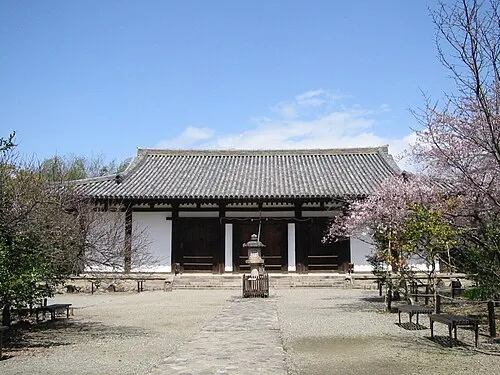
June in Nara
High26°C / 79°F
Low18°C
Rain219mm / 15 rainy days
Sun8.6 h/day
Daylight14 h/day
Humidity78%
Crowds●●○○○Prices●●○○○
The rainy season (tsuyu) arrives around 7 June, scaring off day-trippers. Humid and grey, but uncrowded and the second-cheapest window.
The vibe Quiet and damp at 26°C with persistent drizzle rather than dramatic monsoon. Since nearly every sight here is outdoors, the deer-park walks turn genuinely soggy, but you share them with almost no one.
Don't miss Have Nara Park and Todai-ji to yourself on weekday mornings. This is prime time for Naramachi's seasonal cuisine and for the Higashimuki arcade food stalls at their least crowded, with fresh hydrangeas around the temple grounds.
Crowd drivers Rainy-season weather suppresses day-tripper numbers across the board; no major events compete.
8,000-13,000 JPY, the second-cheapest stretch of the year.

July in Nara
High30°C / 86°F
Low23°C
Rain238mm / 17 rainy days
Sun9.3 h/day
Daylight14 h/day
Humidity82%
Crowds●●○○○Prices●●○○○
Tsuyu ends around 21 July and the heat sets in: 30°C highs, high humidity and low tourist demand make this one of the cheapest months.
The vibe Hot and sticky once the rains lift, with thin international demand. The open grassland of Nara Park bakes by midday, so the city feels emptiest of all at the wrong hours.
Don't miss Walk only 06:30-09:30 and 17:00-19:00 to beat the heat. Reward early starts with a near-empty Great Buddha Hall and a free golden-hour panorama from the Nigatsu-do terrace before the humidity peaks.
Crowd drivers Punishing heat and humidity hold both domestic and international numbers down; no festival spikes until August.
9,000-15,000 JPY, among the cheapest months of the year.

August in Nara
High31°C / 88°F
Low24°C
Rain194mm / 14 rainy days
Sun10.2 h/day
Daylight13 h/day
Humidity79%
Crowds●●●○○Prices●●●○○
Hot (33-35°C) but magical at night: the Nara Tokae candles, the Chugen Mantoro lanterns and the Daimonji fire cluster into one unmissable Obon week.
The vibe Brutal afternoons give way to enchanted evenings. Obon (13-16 August) brings heavy domestic travel, but the lantern and fire festivals make the heat worth enduring after dark.
Don't miss Walk among over 20,000 candles for the Nara Tokae (5-14 Aug), see all 3,000 Kasuga-Taisha lanterns lit for Chugen Mantoro (14-15 Aug), and watch the giant 大 character burned on Mt. Takamado for the Daimonji Okuribi on 15 August. The 14th and 15th are the only nights all of it overlaps.
Crowd drivers Obon domestic travel plus the clustered lantern and fire festivals create a must-see week.
12,000-20,000 JPY, spiking past 22,000 during the Obon and festival week.
Events this month
💡 LightsNara Tokae Lantern Festival なら燈花会
Aug 5–14
5-14 August, 19:00-21:30
Over 20,000 candles in glass jars are placed across Nara Park, Ukigumoenchi and the temple approaches for ten nights, turning the park into a sea of flickering light with deer wandering among the candles. Free to enter.
One of Japan's most photogenic summer night events, free and family-friendly. It coincides with Obon, so book accommodation two-plus months ahead.
⛪ ReligiousChugen Mantoro 中元万燈籠
Aug 14–15
14-15 August, 19:00-21:30
Kasuga-Taisha's 3,000 lanterns are lit for Obon to guide ancestral spirits, the stone lanterns along the forest path glowing amber in the dark. Outer precincts free; inner shrine 500 JPY.
On 14-15 August this overlaps the Nara Tokae, the only nights both fire at once. Extremely atmospheric even with the Obon crowds.
⛪ ReligiousNara Daimonji Okuribi 奈良大文字送り火
Aug 15
15 August, from 20:00
A giant kanji character 大 (great) is burned on Mt. Takamado above Nara to send ancestral spirits back after Obon, visible from much of the city.
Smaller and more intimate than Kyoto's Gozan Okuribi the following day. Watch from the northeast areas of Nara Park.

September in Nara
High27°C / 81°F
Low20°C
Rain201mm / 14 rainy days
Sun8.5 h/day
Daylight12 h/day
Humidity80%
Crowds●●○○○Prices●●●○○
A pleasant shoulder month as Obon travel subsides and temperatures cool from late month, though typhoon risk lingers.
The vibe Calm and warming down from summer at 27°C. Day-tripper numbers ease, prices soften, and the only caution is the occasional Kansai typhoon. The deer turn more assertive as the male rut begins.
Don't miss Catch the small-scale Uneme Matsuri around the harvest moon, when dragon-headed boats circle Sarusawa Pond under torchlight to ancient court music. A beautiful, low-crowd evening with none of the summer crush.
Crowd drivers Obon travel subsides; the Respect for the Aged long weekend brings a light, brief increase.
In season Naramachi's autumn produce starts to appear: early persimmon and the first chestnut sweets.
10,000-17,000 JPY as prices ease from the August festival peak.
Events this month
🌸 Seasonal natureUneme Matsuri (Moon-Viewing Dragon Boat) 采女祭
Sep ~
the evening of the harvest-moon full moon, typically mid-September (moveable)
Dragon-headed boats circle Sarusawa Pond carrying court ladies in Heian costume to ancient court music, commemorating a legendary imperial lady, with torch-lit reflections on the water.
A brief (one to two hours) but exquisitely beautiful evening event, with low crowds compared with the summer festivals.

October in Nara
High21°C / 71°F
Low13°C
Rain181mm / 11 rainy days
Sun8.1 h/day
Daylight11 h/day
Humidity77%
Crowds●●●●○Prices●●●●●
The most expensive month, driven by the Shosoin Treasures Exhibition (from 24 Oct) and the start of autumn foliage. Rich culture, building weekend crowds.
The vibe Crisp, dry and culturally dense at 21°C, the start of Nara's premium autumn window. Weekdays are manageable; weekends during the exhibition pull thousands of extra day-trippers into the park.
Don't miss See 1,300-year-old imperial treasures at the once-a-year Shosoin Exhibition (timed-entry, about 1,100 JPY, from 24 Oct). Watch the extraordinary Shika-no-Tsunokiri deer antler-cutting on mid-October Sundays, and visit Isuien Garden (closed Tuesdays) as its maples begin to turn.
Crowd drivers The Shosoin Exhibition is the autumn price driver; foliage build-up and the Sports Day long weekend add domestic weekend crowds.
In season Autumn kaiseki season begins, with matsutake mushroom, chestnut and persimmon on Naramachi menus.
18,000-32,000 JPY, the highest monthly average of the year per hotel data.
Events this month
🌸 Seasonal natureShika-no-Tsunokiri (Deer Antler Cutting) 鹿の角きり
Oct ~
Sundays and public holidays in mid-October; exact dates announced each year
At the Roku-en enclosure near Kasuga-Taisha, trained handlers chase and rope male deer before their antlers are ceremonially sawn off, a 340-year-old Edo-period practice that prevents injury during the rut. Ticketed, with proceeds going to deer preservation.
One of Japan's most unusual living traditions, with sessions of about 40 minutes, four to five times a day. Buy tickets on the day at the enclosure.
🎨 Art and cultureShosoin Treasures Exhibition 正倉院展
Oct 24 – Nov 9
late October to early November; timed-entry tickets on sale from early September
The Nara National Museum displays a rotating selection of 1,300-year-old imperial treasures from the Shosoin Repository at Todai-ji, shown only once a year when autumn dryness minimises conservation risk. Timed-entry tickets are about 1,100 JPY.
The only annual window to see these treasures, and the single largest hotel-price driver of the autumn. Book tickets and accommodation months ahead; the queues form from opening.

November in Nara
High16°C / 61°F
Low8°C
Rain86mm / 8 rainy days
Sun7.7 h/day
Daylight10 h/day
Humidity77%
Crowds●●●●○Prices●●●●○
Peak autumn foliage (around 15-30 Nov) over Nara Park and Isuien, the driest month (86mm), and the Shosoin Exhibition running to the 9th. Very popular domestically.
The vibe The most reliably dry and arguably most beautiful month, with maples and ginkgos blazing over the deer at a comfortable 16°C. Domestic foliage tourism keeps weekends busy.
Don't miss Frame the Great Buddha Hall through the autumn maples at Isuien Garden (closed Tuesdays) when it peaks around 15-28 November. Catch the final days of the Shosoin Exhibition before it closes on the 9th, and time park walks for weekday mornings.
Crowd drivers Peak koyo foliage and Onmatsuri preparations draw heavy domestic crowds, concentrated on weekends and the Labour Thanksgiving holiday.
In season Persimmon, matsutake and chestnut continue, and Nara's doburoku sake breweries open for autumn tasting.
15,000-26,000 JPY, rising toward 30,000 on foliage-peak weekends.
Events this month
🎨 Art and cultureShosoin Treasures Exhibition 正倉院展
Oct 24 – Nov 9
late October to early November; timed-entry tickets on sale from early September
The Nara National Museum displays a rotating selection of 1,300-year-old imperial treasures from the Shosoin Repository at Todai-ji, shown only once a year when autumn dryness minimises conservation risk. Timed-entry tickets are about 1,100 JPY.
The only annual window to see these treasures, and the single largest hotel-price driver of the autumn. Book tickets and accommodation months ahead; the queues form from opening.

December in Nara
High10°C / 51°F
Low2°C
Rain71mm / 8 rainy days
Sun7.4 h/day
Daylight10 h/day
Humidity75%
Crowds●●○○○Prices●●○○○
Crowds thin sharply once the foliage drops, leaving a quiet, atmospheric city and the culturally special Kasuga Wakamiya Onmatsuri festival (15-18 Dec).
The vibe Calm and cold (10°C highs) with the year's best-kept secret: a major historic festival in a nearly tourist-free city. The year-end shrine crowds only return from 28 December.
Don't miss Watch the 900-year-old Kasuga Wakamiya Onmatsuri, with its 500-person Heian-to-Edo procession on 17 December, from the pavement in an empty city. The chance of snow on the deer and Todai-ji adds to the intimate, off-season mood.
Crowd drivers Crowds thin sharply after foliage ends; the Onmatsuri barely moves hotel prices, while the year-end shrine rush builds only from 28 December.
Heads up Many Naramachi izakayas and restaurants close 30 December to 3 January, though convenience stores and the major shrines stay open.
8,500-14,000 JPY, with no festival spike, jumping past 18,000 only from 29 December to 2 January.
Events this month
🎉 FestivalKasuga Wakamiya Onmatsuri 春日若宮おん祭
Dec 15–18
15-18 December, with the main Jidai Gyoretsu procession on 17 December
A 900-year-old Shinto festival at Kasuga-Taisha with a 500-person procession in Heian-to-Edo costume, kagura dance and bugaku court music over four days. One of Japan's three great festivals alongside Gion and Aoi. Outer viewing is free.
December crowds are thin, making this a genuine insider's visit: a culturally rich winter festival in a nearly tourist-free city, with no accommodation price spike.
Frequently asked questions
What is the best time to visit Nara?
Late March to early April for the iconic cherry blossoms over the deer park and Todai-ji (full bloom around 31 March to 7 April), or mid-October to mid-November for the once-a-year Shosoin Treasures Exhibition and autumn foliage. Both give mild 15-22°C days and Nara's richest cultural calendar. The autumn window has the better crowd-to-content balance on weekdays.
When should I avoid visiting Nara?
Golden Week, the last week of April through 6 May, is the worst value of the year. It brings Nara's biggest domestic-tourist spike, with Todai-ji queues of 45-60 minutes, gridlocked park paths on weekends and the year's highest hotel rates, booked out 60-90 days ahead. July and August afternoons are also tough, with 33-35°C heat and little shade on the open park grassland.
When is the cheapest time to visit Nara?
February is the cheapest and calmest month, with central 3-star rooms at 7,500-13,000 JPY against 22,000-38,000 on sakura weekends. June (rainy season) and July (hot) are the next cheapest at 8,000-15,000 JPY. Overnight stock in Nara is thin, so these off-season rates are the genuine reward for braving cold, wet or hot weather.
Is Nara worth an overnight stay or just a day trip?
Stay overnight if you can. Day-tripper overflow from Kyoto and Osaka peaks between 10:00 and 15:00, while overnight guests get Nara Park almost to themselves before 09:00 and after 17:00. Arriving at Todai-ji by 08:00 means the first 30-45 minutes are nearly empty even during Golden Week. The free Nigatsu-do terrace at golden hour or sunrise alone justifies an evening in town.
When can I see the cherry blossoms and autumn foliage in Nara?
Cherry blossoms peak in Nara Park around 31 March to 7 April, with Yoshino's mountain trees (30km south) peaking about 28 March to 7 April. Autumn foliage peaks at Isuien Garden and across Nara Park around 15-28 November. Even a week either side of these windows is rewarding, and weekday mornings avoid the worst of the crowds at both.
What are Nara's must-see seasonal festivals?
The Wakakusa Yamayaki grass-burning lights the whole hillside on the fourth Saturday of January; Omizutori runs torch ceremonies nightly 1-14 March; the Nara Tokae fills the park with 20,000 candles 5-14 August; the Shosoin Treasures Exhibition shows 1,300-year-old imperial treasures 24 October to 9 November; and the 900-year-old Kasuga Wakamiya Onmatsuri runs 15-18 December in a near-empty city.
What is a good cheap way to explore Nara with a guide?
If you want context as you walk between Todai-ji, the Kasuga-Taisha lantern paths and Naramachi but don't want a fixed group tour, try our in-browser AI tour guide. It works in your phone's browser with no app or download, leads you like a human guide telling the story at each stop and answering your questions as you go, and you simply pick where to start and tap onward to the next place. It costs a flat 5 EUR per hour or 20 EUR all-in, with 100 free credits to try, a cheap, fully flexible alternative to a group tour or an expensive private guide.

Any month, any day: your guide is already there
Whatever date you pick, a private human guide gets pricier and harder to book on weekends, holidays and in peak season. Our live AI guide, the one that walks with you and answers anything you ask out loud, works the opposite way.
One flat price, every day
No holiday, weekend, night or peak-season surcharge. A private guide in Nara runs well over 100 euro for a half day, and more on holidays. Ours stays the same.
Available the moment you want it
Start at midnight or at dawn, on Christmas, in the snow, in the August heat. No sold-out high season, no booking weeks ahead.
Your pace, no meter running
Pause for a long lunch, restart after dark, repeat a stop. The tour simply waits for you.
Free to try, a fraction of the cost
Test it for free, then a transparent flat price that undercuts any private guide, in every season.
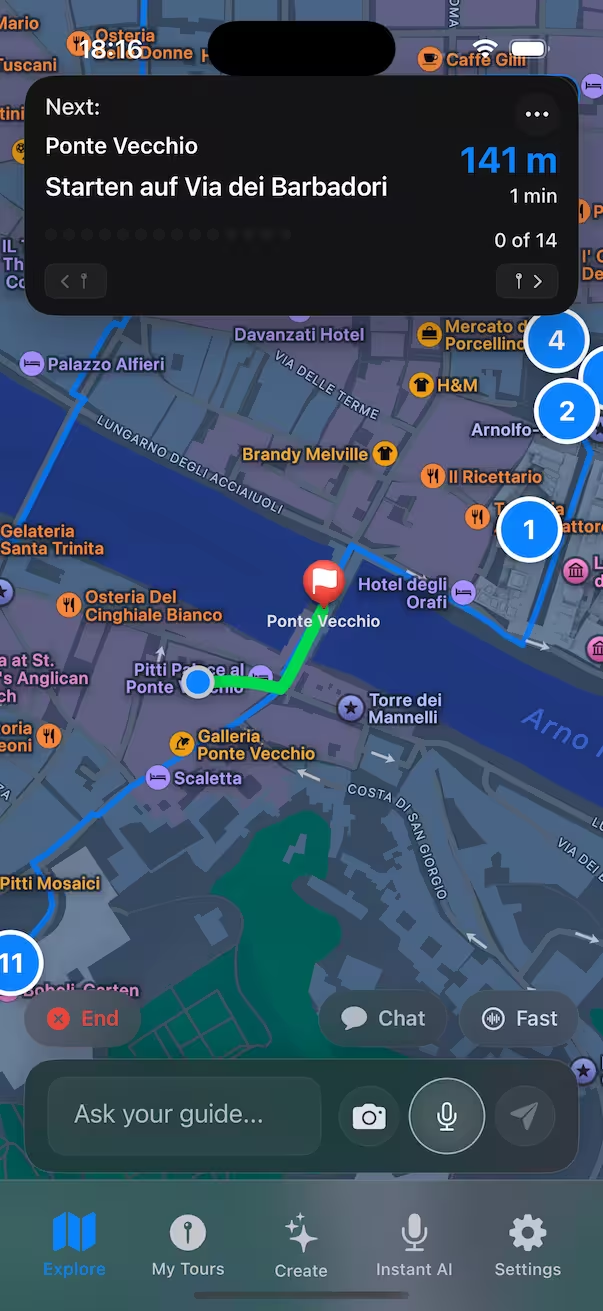
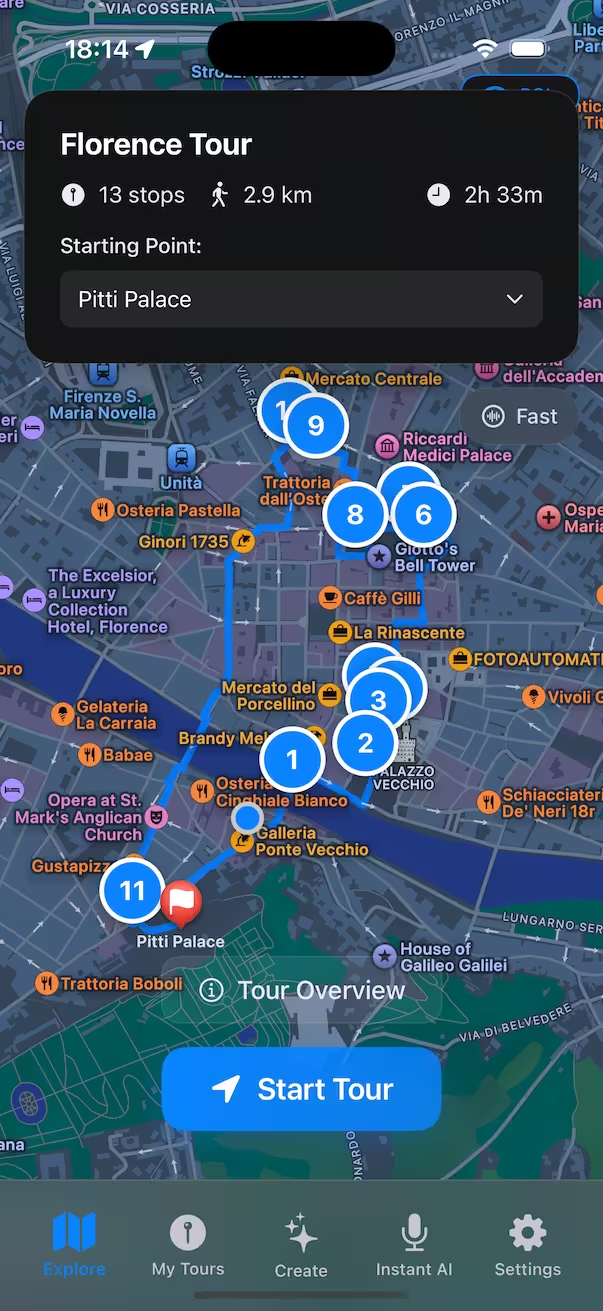
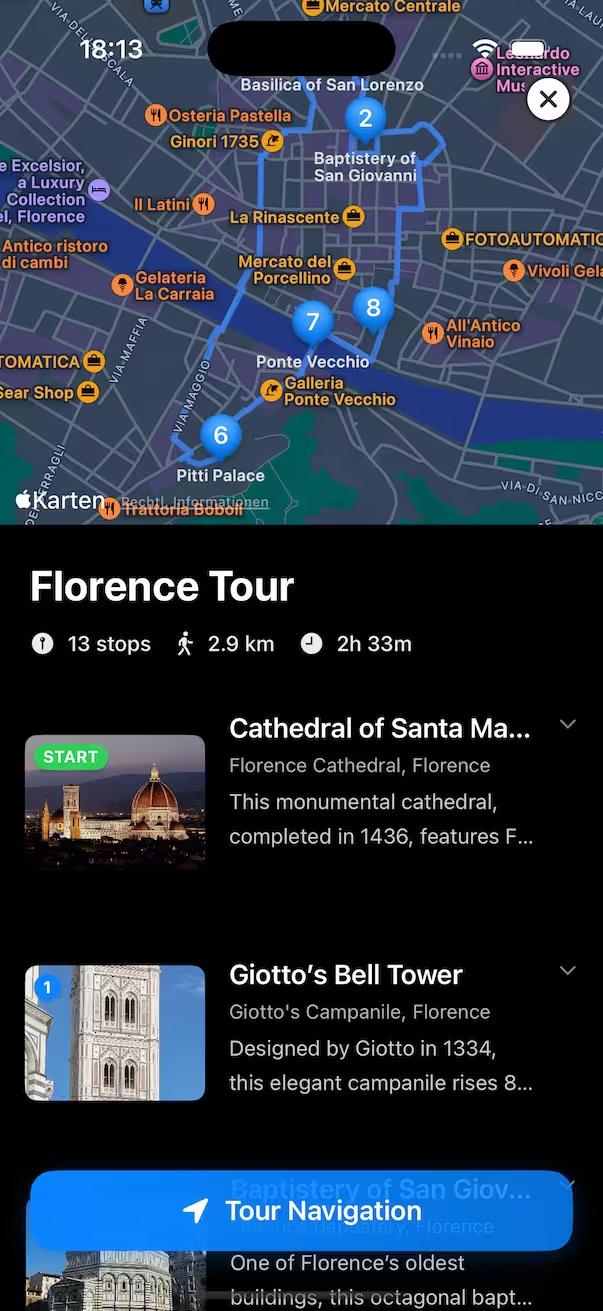
The classic Nara tour: 8 stops, 7.1 km, about 3 h on foot
Your live AI guide and the self-guided Nara route, together in your browser.