Best Time to Visit Sydney
Month-by-month weather, crowds and prices, plus a full calendar of festivals and events worth planning a trip around.
Best monthsSep, Oct, Nov
CheapestMay, Jun, Jul
AvoidDec
BusiestJan, Dec

When is the best time to visit Sydney?
Come September to November: spring delivers 20-23°C, jacarandas blooming purple in October, beaches warming back into swimming range, and prices roughly 10-15% below the summer peak. January gives you the iconic harbour-summer vibe but at 26°C-plus, peak crowds and the priciest hotels of the year.
Start our tool and find your best time to visit Sydney
Your perfect month
Free · ~30 seconds
or tap a month directly
What matters to you?
And this?
Best overall: Sep, Oct, Nov. Spring is the real answer: comfortable 20-23°C, jacarandas turning the streets purple in October, Sculpture by the Sea on the Bondi cliffs, beaches warming into swimming range, and prices well below the summer ceiling. Book the Sculpture week and Everest race weekend early.
Best value: May, Jun, Jul. May, June and July are the value play: hotels 25-30% below the January peak, the 75%-free Vivid Sydney light walk in May and early June, free entry at the Art Gallery of NSW every day, and a quiet Bondi all to yourself on a weekday.
Avoid: Dec. The 26 December to 1 January week is the worst value of the year: rates 40-50% above average, every beach and attraction mobbed, harbour-view NYE rooms at AUD 600-1,200, and a real chance of a 35°C-plus heatwave.
- January: Tough month, 26°C. This is the postcard Sydney summer, and everyone knows it. The harbour sparkles, the beaches are alive, and it is also the most expensive, most crowded month of the year. The western suburbs can hit 40°C on heatwave days while Bondi stays cooler on the sea breeze, but you will share every grain of sand.
- February: Good time, 26°C. February belongs to Mardi Gras energy in the inner city: Oxford Street, Surry Hills and Newtown buzz for weeks. Outside the festival bubble it is still high-summer Sydney, hot and humid, with the beaches at their fullest. The afternoon storms are dramatic rather than disruptive.
- March: Good time, 24°C. March is the locals' secret: summer warmth without the summer crush or the summer prices. The beaches are still swimmable, the evenings are balmy, and you can walk into a good restaurant without a booking. The catch is the rain, the wettest month of the year, though it comes as short downpours rather than grey all-day soak.
- April: Good time, 22°C. April is gorgeous autumn weather wrapped around a very busy calendar. The Easter Show plus two long weekends and the school break mean queues at the zoo and aquarium, but the mild temperatures and the moving ANZAC Day Dawn Service make it memorable. Aim for the post-Easter gap if you want the weather without the crush.
- May: Great time, 20°C. May is the value sweet spot most visitors overlook. The weather is mild and dry, the crowds have gone, hotels are at their cheapest, and Vivid Sydney lights up the harbour after dark. Bondi belongs to the locals again. If your budget matters more than beach swimming, this is the smart month.
- June: Great time, 17°C. June is winter Sydney, and far better than its reputation. The light is crisp, the harbour glows under Vivid, and you get the city almost to yourself at the lowest prices of the year. It is genuinely cold for swimming, but a midweek Bondi under dramatic winter skies is the most photogenic the beach ever looks.
- July: Great time, 17°C. July is honest winter Sydney: cold mornings, crisp clear days, and a city emptied of international tourists. The school holidays bring families to indoor attractions, but the beaches and coastal walks are yours on a weekday. This is budget Sydney at its most rewarding, if you don't mind packing a jacket.
- August: Great time, 18°C. August is the calm before spring: still cheap, still quiet, but with the first hint of warmth and the racing season stirring. It is Sydney's most overlooked month, which is exactly the point. Clear, dry, low-humidity days make it excellent for walking the coast and watching whales offshore.
- September: Great time, 20°C. September is Sydney waking up: the first warm days, the jacarandas starting, the beaches edging back into swimming range, and the crowds still well below the summer peak. This is the shoulder month that first-timers and couples actually want, the postcard city without the postcard prices or the postcard queues.
- October: Great time, 22°C. October is Sydney showing off. The jacarandas turn whole streets purple, Sculpture by the Sea lines the cliffs with art, the sea is swimmable again, and the weather is the gentle 22°C that the rest of the world calls perfect. It is the month locals quietly tell you to come, and they are right.
- November: Great time, 23°C. November is the last window before the summer prices arrive: warm enough for the beach, late jacarandas still purple, and the calendar full but the crowds not yet at peak. This is the savvy alternative to January, the same harbour-summer feel for noticeably less money and far less squeeze.
- December: Tough month, 25°C. December is Sydney's blockbuster month, and it earns the crowds and the cost. The harbour summer is in full glory, but the Christmas-to-New-Year stretch is the most expensive, most crowded ten days of the year. If you want the iconic NYE fireworks, accept that you are paying top dollar and booking far ahead. Come earlier in the month for the warmth without the worst of the crush.
Sydney weather by month
HighLowRainfall
Jan26°
Feb26°
Mar24°
Apr22°
May20°
Jun17°
Jul17°
Aug18°
Sep20°
Oct22°
Nov23°
Dec25°
| Month | Temp | Rain | Sun | Crowds | Prices | Highlight |
|---|---|---|---|---|---|---|
| Jan | 26° / 19° | 88mm · 12 rainy days | 10.9 h/day | ●●●●● | ●●●●● | Sydney Festival |
| Feb | 26° / 19° | 104mm · 13 rainy days | 10.6 h/day | ●●●●● | ●●●●○ | Sydney Gay & Lesbian Mardi Gras |
| Mar | 24° / 18° | 156mm · 16 rainy days | 9.4 h/day | ●●●○○ | ●●●○○ | Sydney Gay & Lesbian Mardi Gras |
| Apr | 22° / 15° | 83mm · 10 rainy days | 9.4 h/day | ●●●●○ | ●●●●○ | Sydney Royal Easter Show |
| May | 20° / 11° | 47mm · 6 rainy days | 8.8 h/day | ●●○○○ | ●●○○○ | Vivid Sydney |
| Jun | 17° / 9° | 66mm · 9 rainy days | 8.4 h/day | ●●○○○ | ●●○○○ | Vivid Sydney |
| Jul | 17° / 8° | 63mm · 6 rainy days | 8.9 h/day | ●●○○○ | ●●○○○ | Bastille Day French Festival |
| Aug | 18° / 8° | 56mm · 7 rainy days | 9.2 h/day | ●●○○○ | ●●○○○ | Sydney Spring Racing Carnival |
| Sep | 20° / 11° | 45mm · 8 rainy days | 10.5 h/day | ●●●○○ | ●●●○○ | Sydney Spring Racing Carnival |
| Oct | 22° / 13° | 79mm · 11 rainy days | 10.5 h/day | ●●●○○ | ●●●○○ | Sydney Spring Racing Carnival |
| Nov | 23° / 15° | 72mm · 10 rainy days | 11.2 h/day | ●●●○○ | ●●●○○ | Sydney Spring Racing Carnival |
| Dec | 25° / 18° | 73mm · 11 rainy days | 11.5 h/day | ●●●●● | ●●●●● | Sydney New Year's Eve |
How we score this: weather = long-run climate normals (Open-Meteo), crowds & prices = relative season read, events checked yearly against official dates.
Best time to visit Sydney: weather, prices & crowds
Best months for good weather
Oct, Nov, Mar
October, November and March hit the sweet spot: 22-24°C, long daylight, low humidity and the sea warm enough to swim without a wetsuit, the classic Sydney outdoor weather without January's heatwave risk.
Quietest months to avoid the crowds
May, Jun, Jul
May to July is the quietest stretch: international visitors thin right out, Bondi belongs to the locals on weekdays, and you can walk into a Surry Hills restaurant on a Friday without a booking.
Cheapest time to visit Sydney
May, Jun, Jul
May, June and July bring the year's lowest rates, with CBD hotels 25-30% below the January average and European airfares around 40% cheaper than summer.
Best time for festivals and events
May, Jun, Oct
Vivid Sydney lights up 6.5km of harbour foreshore from late May to mid-June, and in mid-October Sculpture by the Sea lines the Bondi-to-Tamarama cliff walk with 100-plus free outdoor artworks.
How many days do you need in Sydney?
Sydney needs at least three full days to do it justice. The harbour core alone, Opera House, Harbour Bridge, The Rocks and the Royal Botanic Garden, fills the better part of two days, and anything shorter leaves you sprinting past the highlights rather than absorbing them. A fourth day opens up Bondi, the coastal walk to Coogee, and a Manly ferry crossing.

One day
The harbour icons in one circuit
Start at the Queen Victoria Building on George Street, then head west to Darling Harbour before looping back through the CBD to the Art Gallery of New South Wales and down into the Royal Botanic Garden. Finish at the Opera House forecourt and walk across to The Rocks before the light fades. The self-guided Sydney Historic Walk covers 9 stops across 10 km in roughly 3.2 hours and makes a clean spine for this day, threading the Harbour Bridge, Museum of Contemporary Art and Sydney Tower Eye into a single route.
Two days
Bondi, the coastal walk and Manly by ferry
Take the bus from the CBD to Bondi Beach for a morning swim, then walk the cliff path to Bronte and Coogee past the ocean pools. In the afternoon, catch the Manly ferry from Circular Quay (AUD 10.40 with an Opal card, 30 minutes each way) for the best harbour panorama money cannot otherwise buy. Return for dinner in Surry Hills or Newtown, where good tables are easier to walk into than in the tourist core.
Three daysRecommended
Culture, markets and a neighbourhood on foot
Spend the morning at the Art Gallery of New South Wales, which is free and includes a World War II fuel bunker converted into a subterranean gallery. Pick up provisions at the Carriageworks Farmers Market in Eveleigh on a Saturday, or walk through Paddington's terrace-lined streets on any morning. Round the day out with a dusk harbour cruise or a Bondi to Bronte walk timed for the golden light after 5pm.
Four days or more
Blue Mountains, whale watching or a deeper dive
A fourth or fifth day is best spent leaving the city entirely. The Blue Mountains are two hours by train from Central Station and offer sandstone canyon walks that contrast sharply with the harbour. From May to November, whale-watching boats leave from Circular Quay and Darling Harbour as humpbacks migrate past Sydney Heads. Alternatively, spend a half-day at the Taronga Zoo for the city skyline backdrop, then cross back by ferry.
Best time to visit Sydney by traveller type
Same city, different trip. Here's the month that fits how you're travelling.
🧭
Best time to visit Sydney for the first time
SepOctNov
September to November is the safe best-overall pick: warm 18-23°C, jacarandas in October, the beaches swimmable again, Sculpture by the Sea, and crowds below the summer crush. For the postcard harbour-summer feel instead, come in January and accept the heat and the prices.
❤️
Best time to visit Sydney for couples
MarOct
March for warm post-summer evenings and easy restaurant tables, or October for jacaranda streets, Sculpture by the Sea and golden afternoon light. Vivid Sydney in late May and early June is the romantic wildcard, the harbour lit up after dark.
💶
Best time to visit Sydney on a budget
MayJunJul
May to July: hotels 25-30% cheaper, the Vivid light walk mostly free, the Art Gallery of NSW and Australian Museum free year-round, and the Manly ferry harbour cruise for just AUD 10.40.
🍝
Best time to visit Sydney for food and wine
SepOctNov
Spring for peak produce markets and the Carriageworks Farmers Market, or June for the Good Food & Wine Show. For Sydney rock oysters and prime fish, November to April is the warm-water season at the Fish Market.
Worst time to visit Sydney
The 26 December to 1 January stretch is the one window most visitors should sidestep. Hotel rates run 40 to 50 percent above the annual average, and harbour-view rooms on New Year's Eve hit AUD 600 to 1,200 a night. Every beach is too packed to lay a towel by 10am, and a heatwave can push afternoon temperatures past 35°C in the western suburbs while the coast sits in queues. Even early December is affected from the 18th onward, when school holidays begin and prices start their climb.
Still worth it for If the New Year's Eve fireworks are the whole point of the trip, they genuinely are spectacular: a million people, 9 tonnes of pyrotechnics launched from the Bridge and Opera House, and a 9pm family show. Just book six to twelve months ahead and budget for the premium.
Go instead in September, October, November, when Sydney is at its best.
Best time for a tour of Sydney
The 10-kilometre loop from the Queen Victoria Building down to Darling Harbour and out along the harbour edge to the Opera House and back through The Rocks is one of those walks where the weather shapes almost every hour of it. The sweet spot falls between May and August: highs of 17 to 20 °C, rarely more than 6 or 7 rain days a month, low humidity, and thin crowds on the paths through the Royal Botanic Garden. You walk comfortably for the full three-plus hours without stopping for shade. From September through November temperatures climb gently to 20 to 23 °C and the city starts filling again, but conditions stay reasonable and the harbour light is at its best. January and February flip the equation: highs above 25 °C, 12 to 13 rain days that tend to arrive as short, intense downpours, and the streets around the Opera House and Sydney Harbour Bridge packed shoulder to shoulder with summer holiday crowds. March is the wettest single month on the calendar, with up to 16 rain days, and the humidity lingers. If you must walk in high summer, start before 8 am and move quickly through the exposed harbour promenade before it turns punishing.
The advantage of AI Tourguide here is that Sydney's climate decides the hour, not a tour operator's timetable. On a clear July morning, when the air is crisp and the Royal Botanic Garden is near-empty, you can set off at first light and hear the full story of the Opera House with no one jostling around you. The guide leads and talks with you the whole way, remembers what you say, and adapts as you go: if you linger on the Harbour Bridge walkway longer than planned, there is no group waiting. It runs entirely in your browser, no download, no booking in advance. Start your Sydney tour whenever the morning looks right, and let the season work in your favour.


 +5
+5All 9 stops are already on the map.
You just press start.
You just press start.
 AI Tourguide
You just read the route.
Now walk it with a guide in your ear.
Press start wherever you are, even hundreds of kilometres from Sydney, and the guide begins telling its stories right away. In the city, pick any of the 9 stops to start from: it leads you there, then talks with you the whole route, asking, listening, remembering, and shaping the tour around your answers.
9stops10.0km3.2hours11languages
▶Start the tour freeFree to start · Runs in your browser · No app, no download
Sydney events and festivals calendar
Annual highlights worth timing a trip around, listed month by month.
January
🎨 Art and cultureSydney Festival
Jan 8–25
first three weeks of January
Sydney's flagship summer arts festival: 18 days of theatre, dance and music across 40-plus venues, including the Blak Out Indigenous program and free outdoor events at Barangaroo.
🇮 HolidayAustralia Day
Jan 26
26 January
A public holiday marked by Circular Quay harbour celebrations, a ferrython, and Opera House forecourt concerts and fireworks, alongside a roughly 20,000-strong Invasion Day protest through the CBD.
February
🏳️🌈 PrideSydney Gay & Lesbian Mardi Gras
Feb 13 – Mar 1 ~
mid-February to early March; parade on the last Saturday
A 17-day LGBTQ+ festival of 120-plus events climaxing in a parade of 12,000-plus marchers and 200-plus floats down Oxford Street, with dance parties and theatre across the inner city.
April
🎉 FestivalSydney Royal Easter Show
Apr 2–13 ~
12 days over the Easter period
Australia's largest ticketed annual event, drawing 828,000-plus people to Sydney Olympic Park for animals, carnival rides, showbags and food over 12 days.
🇮 HolidayANZAC Day
Apr 25
25 April
A national day of remembrance with a Dawn Service at the Martin Place cenotaph from about 4:30am drawing thousands, followed by marches and traditional two-up gambling in pubs from noon.
May
💡 LightsVivid Sydney
May 22 – Jun 13
late May to mid-June, 23 nights
A 23-night festival of light, music and ideas with 43 installations along a 6.5km Light Walk from Circular Quay to Darling Harbour, 75% of events free, running nightly from 6pm to 11pm.
June
🎬 FilmSydney Film Festival
Jun 3–14
first two weeks of June
Twelve days of cinema with 248 films from 81 countries, including Cannes titles and world premieres, screening at venues across the city for the $60,000 Sydney Film Prize.
🍷 Food and wineGood Food & Wine Show
Jun 19–21
a weekend in mid-to-late June
A three-day showcase of Australian food, wine and celebrity chefs at ICC Sydney in Darling Harbour, with tastings, demos and producer stalls.
July
🍷 Food and wineBastille Day French Festival
Jul 16–19
around 14 July, over four days
Sydney's French festival of food, wine, art and live music spread across The Rocks and Hyde Park over four days, with crepe and cheese stalls and Gallic flair.
August
🏃 SportSydney Spring Racing Carnival
Aug 29 – Nov 7
late August to early November; Everest Day mid-October
An 11-week racing program at Royal Randwick and Rosehill Gardens headlined by the $20M The Everest in mid-October, the world's richest turf race, plus the $10M Golden Eagle and nine Group 1 races.
September
🎨 Art and cultureSydney Contemporary
Sep 3–6
first weekend of September
Australia's leading art fair at Carriageworks in Eveleigh, with 60-plus galleries showing over three nights.
October
🌸 Seasonal natureJacaranda Season
Oct 15 – Nov 15 ~
mid-October to mid-November; peak late October
Sydney's jacaranda trees bloom brilliant purple, most famously along the single mature row on McDougall Street in Kirribilli and across the 80-plus trees of the University of Sydney campus.
🎨 Art and cultureSculpture by the Sea, Bondi
Oct 16 – Nov 2
mid-October to early November, 18 days
The world's largest free outdoor sculpture exhibition, with 100-plus works by Australian and international artists along the 2km Bondi-to-Tamarama coastal walk.
December
🎄 Christmas marketChristmas at Sydney
Dec 1–31
all December
A month of CBD lights, free outdoor concerts, Christmas carols at Hyde Park and harbour illuminations, building toward the New Year's Eve countdown.
🎉 FestivalSydney New Year's Eve
Dec 31
31 December, midnight fireworks
About a million people line the Sydney Harbour foreshore for 9 tonnes of fireworks launched from the Harbour Bridge, the Opera House and eight water platforms, with a 9pm family show and a midnight show.
Insider tips for visiting Sydney
The rules buried in forums, in one place.
- For New Year's Eve, either buy a ticketed vantage point or claim a free zone early. The foreshore fills from 2pm, premium spots like Mrs Macquaries Point and Observatory Hill sell out six to nine months ahead, and free lookouts at Kirribilli, Balmain and Cremorne Point are full by 4pm.
- Bondi on a summer weekend means 10,000-plus people and no shade left by 10am. Go Tuesday to Thursday before 9am or after 3pm. In winter (June to August) midweek Bondi is at its most photogenic: locals only, dramatic skies, no crowds.
- At Vivid Sydney, skip Friday and Saturday nights, when 70,000 to 100,000 people pack Circular Quay and ferries run 30-60 minutes late. Walk the same light installations Tuesday to Thursday between 6pm and 8pm without the sardine crush.
- BridgeClimb runs 362 days a year and closes only on Christmas Day. The pre-dawn Dawn Climb has the smallest groups and the best golden morning light. Book at least four weeks ahead for summer and Vivid-weekend slots.
- Photograph the Opera House before 9am, when no tour buses sit in the forecourt, or after 6pm for golden light on the shells and harbour reflections. The 7am Opera House tour reaches stage areas before the late-morning crowds arrive.
- Take the Manly Ferry from Circular Quay (AUD 10.40 with an Opal card, 30 minutes) instead of a paid harbour cruise: it passes the Opera House and Bridge for a fraction of the price. The 8:15am weekday departure carries the lightest tourist load.
- Avoid the NSW autumn school holidays (7-17 April) for attraction queues. Easter Show plus the school break pushes Taronga Zoo, SEA LIFE Aquarium and the Powerhouse to 30-60 minute waits, so book timed entry online for that fortnight.
- For jacaranda photos, go to McDougall Street in Kirribilli on a weekday between 7 and 9am in late October, before the street turns into a photographic scrum. The University of Sydney campus has 80-plus trees, best shot from Science Road.
Public holidays in Sydney
On these dates many shops and offices close, transport thins out, and sights can be mobbed or shut. Plan around them.
| Date | Holiday | What closes |
|---|---|---|
| Jan 1 | New Year's Day | Everything closed, the CBD deserted after the night before, and public transport on a reduced schedule. Plan a recovery day at the beach rather than around shops or museums. |
| Jan 26 | Australia Day | Harbour celebrations, a ferrython and Opera House forecourt concerts, alongside a 20,000-strong Invasion Day protest. Circular Quay roads close roughly 11:30am to 2:30pm. Most shops shut, many restaurants stay open. Avoid Circular Quay around noon. |
| Apr 3 | Good Friday | Most shops, major supermarkets and many restaurants close. Attractions are mostly open and the Manly Ferry runs. Plan meals in advance, as your usual lunch spot may be shut. |
| Apr 6 | Easter Monday | Public holiday and the last day of the Easter Show. Beaches are heaving with locals (the most crowded beach day of autumn) and popular restaurants in Newtown and Surry Hills book out, so reserve ahead. |
| Apr 25 | ANZAC Day | National day of remembrance. The Dawn Service at the Martin Place cenotaph draws thousands from about 4:30am, so arrive by 4am for a spot. Most attractions open; pubs may be restricted in the morning before two-up gambling from noon. |
| Apr 27 | ANZAC Day substitute | Extra NSW public holiday because 25 April falls on a Saturday. Most shops close and the long weekend pushes hotel demand up, so book accommodation early. |
| Jun 8 | King's Birthday | NSW public holiday. Banks close, some museums shorten hours, but the city runs fairly normally. It falls just as Vivid Sydney wraps up, so the harbour is still lit and busy. |
| Oct 5 | Labour Day | NSW public holiday and a spring long weekend. Most attractions stay open, banks and government offices close, and it overlaps the tail of the spring school holidays, so book popular venues ahead. |
| Dec 25 | Christmas Day | Everything closes and there is no public transport until late afternoon. Restaurants that open require booking weeks ahead. BridgeClimb is the one major attraction that shuts entirely on this single day. |
| Dec 26 | Boxing Day | Major retail sales draw huge crowds, most attractions reopen, and the beaches are packed. This kicks off the busiest, priciest ten days of the year heading into New Year's Eve. |
| Dec 28 | Boxing Day substitute | Extra NSW public holiday because Boxing Day falls on a Saturday. Sales continue, beaches stay mobbed, and accommodation sits at peak summer pricing. |
Sydney month by month
January in Sydney
High26°C / 80°F
Low19°C
Rain88mm / 12 rainy days
Sun10.9 h/day
Daylight14 h/day
Humidity76%
Crowds●●●●●Prices●●●●●
January is Sydney at full summer intensity: average highs of 26°C, occasional heatwaves topping 35°C, and the harbour lifestyle in full swing. NSW summer school holidays run to early February, Sydney Festival fills 40-plus venues, and Australia Day surges Circular Quay on the 26th. Both the beaches and the city are packed at once. Sea temperature sits at an ideal 21-24°C, so swimming is the saving grace through the hottest afternoons.
The vibe This is the postcard Sydney summer, and everyone knows it. The harbour sparkles, the beaches are alive, and it is also the most expensive, most crowded month of the year. The western suburbs can hit 40°C on heatwave days while Bondi stays cooler on the sea breeze, but you will share every grain of sand.
Don't miss Sydney Festival runs 18 days of theatre, dance and free outdoor events at Barangaroo. The sea is at its warmest of the year (21-24°C), so this is prime ocean-swimming season at Bondi, Bronte and the harbour beaches.
Crowd drivers NSW summer school holidays to 4 February, Sydney Festival drawing over a million visitors, Australia Day on the 26th, and the international summer peak all at once.
In season Peak Sydney rock oyster and warm-water fish season at the Fish Market (now in its new Glebe home), with flathead, snapper and kingfish at their best.
Heads up New Year's Day shuts almost everything with reduced transport, and Australia Day closes Circular Quay roads roughly 11:30am to 2:30pm.
Priciest month of the year: hotel rates run 35-45% above the annual average, beachfront hostels from AUD 60 a night versus AUD 40 in June.
Events this month
🎨 Art and cultureSydney Festival
Jan 8–25
first three weeks of January
Sydney's flagship summer arts festival: 18 days of theatre, dance and music across 40-plus venues, including the Blak Out Indigenous program and free outdoor events at Barangaroo.
World-class programming fills the city, but January's warning holds: the beaches and the city are packed simultaneously, so expect peak crowds everywhere.
🇮 HolidayAustralia Day
Jan 26
26 January
A public holiday marked by Circular Quay harbour celebrations, a ferrython, and Opera House forecourt concerts and fireworks, alongside a roughly 20,000-strong Invasion Day protest through the CBD.
The harbour atmosphere is spectacular, but CBD road closures run around noon to mid-afternoon, so avoid Circular Quay between noon and 2pm.
🎉 FestivalSydney New Year's Eve
Dec 31
31 December, midnight fireworks
About a million people line the Sydney Harbour foreshore for 9 tonnes of fireworks launched from the Harbour Bridge, the Opera House and eight water platforms, with a 9pm family show and a midnight show.
It is the world's most-watched New Year's Eve event, but harbour-view venues book 6-12 months ahead and it is the single most expensive hotel night of the year.
February in Sydney
High26°C / 78°F
Low19°C
Rain104mm / 13 rainy days
Sun10.6 h/day
Daylight13 h/day
Humidity75%
Crowds●●●●●Prices●●●●○
February stays hot and busy at 25-26°C, with heatwaves still common and the sea a warm 21-24°C. School resumes on the 2nd, but the 17-day Mardi Gras festival inflates inner-city demand from mid-month. The beaches peak on the third weekend. Humidity is high (around 75%) and February is Sydney's wettest summer month at 104mm, mostly as sudden afternoon thunderstorms that clear in 30-60 minutes.
The vibe February belongs to Mardi Gras energy in the inner city: Oxford Street, Surry Hills and Newtown buzz for weeks. Outside the festival bubble it is still high-summer Sydney, hot and humid, with the beaches at their fullest. The afternoon storms are dramatic rather than disruptive.
Don't miss Mardi Gras turns Oxford Street into a 200-float, 12,000-marcher parade with 120-plus events across the city. The ocean is still warm enough for wetsuit-free swimming at every patrolled beach.
Crowd drivers The Sydney Gay & Lesbian Mardi Gras festival (13 February to 1 March) and the summer beach crowd at its peak through the third weekend.
In season Still peak warm-water seafood, with Sydney rock oysters at the Glebe Fish Market and stone fruit at its summer best in the markets.
Rates start softening late in the month, but Mardi Gras parade weekend sees inner-city hotels at a triple-digit premium.
Events this month
🏳️🌈 PrideSydney Gay & Lesbian Mardi Gras
Feb 13 – Mar 1 ~
mid-February to early March; parade on the last Saturday
A 17-day LGBTQ+ festival of 120-plus events climaxing in a parade of 12,000-plus marchers and 200-plus floats down Oxford Street, with dance parties and theatre across the inner city.
It is Sydney's LGBTQ+ flagship, but inner-city hotels around Oxford Street, Surry Hills and Newtown run 2-3 times normal for parade weekend, so book six months ahead.
March in Sydney
High24°C / 76°F
Low18°C
Rain156mm / 16 rainy days
Sun9.4 h/day
Daylight12 h/day
Humidity77%
Crowds●●●○○Prices●●●○○
March is the post-summer lull, and the best-value warm-weather month. Highs ease to 24°C, the sea holds a comfortable 19-22°C, and the crowds drop now that school is back and Mardi Gras is over. It is also the wettest month of the year at 156mm over 16 rain days, the post-summer storm season, so pack a light waterproof. Evenings stay warm and restaurant tables open up.
The vibe March is the locals' secret: summer warmth without the summer crush or the summer prices. The beaches are still swimmable, the evenings are balmy, and you can walk into a good restaurant without a booking. The catch is the rain, the wettest month of the year, though it comes as short downpours rather than grey all-day soak.
Don't miss The last reliable warm-water swimming month without a wetsuit, with the sea around 19-22°C. Quiet weekday coastal walks from Bondi to Coogee before the autumn cools off.
Crowd drivers Mostly domestic weekend travellers, with UK and European visitors beginning their autumn school-break arrivals only in late March.
In season Autumn produce arrives at the Carriageworks Farmers Market, held every Saturday year-round in Eveleigh.
Cheapest shoulder window: hotel rates 15-20% below the annual average and flights 20-30% cheaper than January.
April in Sydney
High22°C / 72°F
Low15°C
Rain83mm / 10 rainy days
Sun9.4 h/day
Daylight11 h/day
Humidity76%
Crowds●●●●○Prices●●●●○
April brings mild autumn at 22°C and the year's busiest family event, the Royal Easter Show (2-13 April, 828,000-plus attendees). Easter (3-6 April) and the NSW autumn school holidays (7-17 April) stack crowds onto attractions, with ANZAC Day on the 25th adding a long weekend. The sea cools to 19-22°C, comfortable for most swimmers. Book timed entry for any paid attraction during the school-holiday fortnight.
The vibe April is gorgeous autumn weather wrapped around a very busy calendar. The Easter Show plus two long weekends and the school break mean queues at the zoo and aquarium, but the mild temperatures and the moving ANZAC Day Dawn Service make it memorable. Aim for the post-Easter gap if you want the weather without the crush.
Don't miss The Royal Easter Show at Sydney Olympic Park runs animals, rides and showbags over 12 days. The ANZAC Day Dawn Service at Martin Place from about 4:30am is one of the city's most moving mornings.
Crowd drivers The Royal Easter Show, the Easter long weekend, NSW autumn school holidays (7-17 April), and the ANZAC Day long weekend all overlap.
In season Showbags and Sydney's famous Easter Show food aside, autumn brings the first cool-water fish back to the Glebe market.
Heads up Good Friday (3 April) shuts most shops and supermarkets; Easter Monday (6 April) sees popular restaurants fully booked.
Easter Show weekend and the long weekends push CBD hotels 20-30% above baseline; the post-Easter gap (18-24 April) is a good-value window.
Events this month
🎉 FestivalSydney Royal Easter Show
Apr 2–13 ~
12 days over the Easter period
Australia's largest ticketed annual event, drawing 828,000-plus people to Sydney Olympic Park for animals, carnival rides, showbags and food over 12 days.
It is a family highlight, but Easter Sunday and Monday are extremely crowded and tickets must be bought online in advance, with no gate sales.
🇮 HolidayANZAC Day
Apr 25
25 April
A national day of remembrance with a Dawn Service at the Martin Place cenotaph from about 4:30am drawing thousands, followed by marches and traditional two-up gambling in pubs from noon.
The Dawn Service is deeply moving, so arrive by 4am for a spot; most attractions stay open and it makes for a meaningful autumn long weekend.

May in Sydney
High20°C / 67°F
Low11°C
Rain47mm / 6 rainy days
Sun8.8 h/day
Daylight10 h/day
Humidity73%
Crowds●●○○○Prices●●○○○
May is the quiet, cheap start of the cool season: highs around 20°C, only 47mm of rain over 6 days (the driest stretch of the year), and the fewest international tourists. Vivid Sydney launches on 22 May, lifting the weekends with light installations along 6.5km of harbour foreshore. The sea cools to 19-20°C, wetsuit optional. This is Sydney at its best value, mild days and clear, crisp light.
The vibe May is the value sweet spot most visitors overlook. The weather is mild and dry, the crowds have gone, hotels are at their cheapest, and Vivid Sydney lights up the harbour after dark. Bondi belongs to the locals again. If your budget matters more than beach swimming, this is the smart month.
Don't miss Vivid Sydney (from 22 May) sends 43 light installations along the Light Walk from Circular Quay to Darling Harbour, 75% of it free, nightly 6pm to 11pm. Whale-watching season begins as humpbacks migrate north past Sydney Heads.
Crowd drivers Predominantly domestic visitors and low business travel, with Vivid Sydney lifting only the weekends from 22 May.
In season Cool-season seafood and the start of the oyster cool-water lull; warm bistro dishes return to the Surry Hills dining scene.
Cheapest month of the year: CBD hotel rates 25-30% below the January average, European airfares around 40% below summer.
Events this month
💡 LightsVivid Sydney
May 22 – Jun 13
late May to mid-June, 23 nights
A 23-night festival of light, music and ideas with 43 installations along a 6.5km Light Walk from Circular Quay to Darling Harbour, 75% of events free, running nightly from 6pm to 11pm.
It is a must for light-art lovers, but weekends draw 200,000-plus visitors and 30-60 minute ferry delays, so go Tuesday to Thursday.

June in Sydney
High17°C / 62°F
Low9°C
Rain66mm / 9 rainy days
Sun8.4 h/day
Daylight10 h/day
Humidity75%
Crowds●●○○○Prices●●○○○
June is Sydney's coolest, quietest month: highs near 17°C, lows around 9°C, and the fewest international tourists of the year. Vivid Sydney runs to 13 June and the Sydney Film Festival fills the first two weeks, a cultural double-header. The sea drops to 16-18°C, cold for tourists though locals still swim. Days are short at the winter solstice, around 10 hours of daylight, but rarely disrupted by the showery, mild winter weather.
The vibe June is winter Sydney, and far better than its reputation. The light is crisp, the harbour glows under Vivid, and you get the city almost to yourself at the lowest prices of the year. It is genuinely cold for swimming, but a midweek Bondi under dramatic winter skies is the most photogenic the beach ever looks.
Don't miss Vivid Sydney's final nights and the Sydney Film Festival (3-14 June, 248 films from 81 countries) overlap in early June. Whale-watching peaks as humpbacks pass Cape Solander and Sydney Heads.
Crowd drivers The international visitor trough, with only the closing weekend of Vivid Sydney (ends 13 June) lifting numbers before the July school holidays arrive.
In season The Good Food & Wine Show (19-21 June) brings celebrity chefs and Australian wine to ICC Sydney; free cooking demos run at nearby markets that weekend.
Hotel rates around 28% below the peak-season average, with good availability even at premium properties.
Events this month
💡 LightsVivid Sydney
May 22 – Jun 13
late May to mid-June, 23 nights
A 23-night festival of light, music and ideas with 43 installations along a 6.5km Light Walk from Circular Quay to Darling Harbour, 75% of events free, running nightly from 6pm to 11pm.
It is a must for light-art lovers, but weekends draw 200,000-plus visitors and 30-60 minute ferry delays, so go Tuesday to Thursday.
🎬 FilmSydney Film Festival
Jun 3–14
first two weeks of June
Twelve days of cinema with 248 films from 81 countries, including Cannes titles and world premieres, screening at venues across the city for the $60,000 Sydney Film Prize.
It overlaps the final stretch of Vivid Sydney, giving early June a cultural double-header of light art by night and world cinema by day.
🍷 Food and wineGood Food & Wine Show
Jun 19–21
a weekend in mid-to-late June
A three-day showcase of Australian food, wine and celebrity chefs at ICC Sydney in Darling Harbour, with tastings, demos and producer stalls.
It is the foodie highlight of the quiet winter months, and budget travellers can catch free cooking demos at nearby markets that weekend.

July in Sydney
High17°C / 62°F
Low8°C
Rain63mm / 6 rainy days
Sun8.9 h/day
Daylight10 h/day
Humidity70%
Crowds●●○○○Prices●●○○○
July is mid-winter and the international trough, but NSW school winter holidays (6-17 July) bring domestic families. Highs sit near 17°C with only 6 rain days, one of the drier months. The sea is cold at 16-18°C, too chilly for most tourists to swim. Bastille Day French Festival (16-19 July) adds free food, wine and music in Hyde Park. Bondi is empty and dramatic on weekdays, the year at its quietest and cheapest.
The vibe July is honest winter Sydney: cold mornings, crisp clear days, and a city emptied of international tourists. The school holidays bring families to indoor attractions, but the beaches and coastal walks are yours on a weekday. This is budget Sydney at its most rewarding, if you don't mind packing a jacket.
Don't miss The Bastille Day French Festival (16-19 July) fills The Rocks and Hyde Park with free food and music. The Darling Harbour ice rink and the Manly to Spit coastal walk are at their winter best. Returning whales with calves begin passing Sydney Heads.
Crowd drivers NSW winter school holidays (6-17 July) bring domestic families, but international visitor numbers are at their annual low.
In season Bastille Day brings French cheese, crepes and wine stalls; winter is comfort-food season across Newtown's King Street eateries.
Lowest prices of the year outside June; quiet beaches and the Darling Harbour ice rink popular with families.
Events this month
🍷 Food and wineBastille Day French Festival
Jul 16–19
around 14 July, over four days
Sydney's French festival of food, wine, art and live music spread across The Rocks and Hyde Park over four days, with crepe and cheese stalls and Gallic flair.
It is a free, lively highlight in otherwise quiet July, ideal value during the city's coldest, cheapest stretch.

August in Sydney
High18°C / 64°F
Low8°C
Rain56mm / 7 rainy days
Sun9.2 h/day
Daylight11 h/day
Humidity68%
Crowds●●○○○Prices●●○○○
August is the quietest international month and the last of the cheap winter window. Highs edge up to 18°C with low humidity (around 68%) and one of the driest, sunniest cool-season stretches. The Sydney Spring Racing Carnival begins late in the month and harbour cruise season starts. The sea is still cold at 16-18°C. This is whale-watching's prime stretch as humpbacks and their calves return south past Sydney Heads.
The vibe August is the calm before spring: still cheap, still quiet, but with the first hint of warmth and the racing season stirring. It is Sydney's most overlooked month, which is exactly the point. Clear, dry, low-humidity days make it excellent for walking the coast and watching whales offshore.
Don't miss Prime whale-watching from Cape Solander at Kamay Botany Bay National Park as humpbacks return south with calves. The Royal National Park's spring wildflowers begin (August to October). Sydney Spring Racing opens at Royal Randwick.
Crowd drivers The year's quietest international stretch, with Sydney Spring Racing beginning late August and cruise-ship arrivals starting to pick up.
In season Cool-water fish remain at their best; the warm-season oyster window is approaching but not yet open.
Last-chance winter pricing; spring accommodation starts rising only from late August.
Events this month
🏃 SportSydney Spring Racing Carnival
Aug 29 – Nov 7
late August to early November; Everest Day mid-October
An 11-week racing program at Royal Randwick and Rosehill Gardens headlined by the $20M The Everest in mid-October, the world's richest turf race, plus the $10M Golden Eagle and nine Group 1 races.
Everest Day spikes Eastern Suburbs hotel prices 30-50%, so book ahead if visiting mid-October, but the spring-racing atmosphere defines the social calendar.
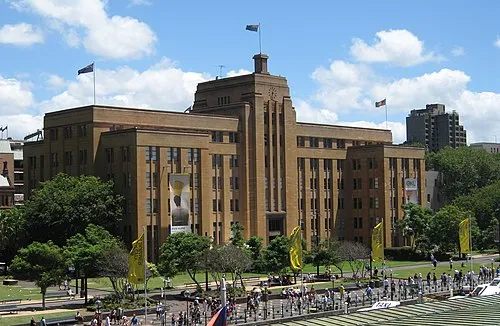
September in Sydney
High20°C / 68°F
Low11°C
Rain45mm / 8 rainy days
Sun10.5 h/day
Daylight12 h/day
Humidity68%
Crowds●●●○○Prices●●●○○
September opens spring: highs climb to 20°C, humidity stays low, and the jacarandas begin blooming late in the month. The sea starts warming back toward 18-21°C. Spring school holidays (28 September to 9 October) and the Spring Racing Carnival lift the crowds, and international visitors begin returning. This is the start of the city's best-overall window, mild, dry and bright, with prices still well below summer.
The vibe September is Sydney waking up: the first warm days, the jacarandas starting, the beaches edging back into swimming range, and the crowds still well below the summer peak. This is the shoulder month that first-timers and couples actually want, the postcard city without the postcard prices or the postcard queues.
Don't miss Sydney Contemporary art fair (3-6 September) at Carriageworks previews the spring season with 60-plus galleries. The first jacarandas bloom late in the month, and the sea warms enough for early-spring swimming.
Crowd drivers Spring school holidays (28 September to 9 October), the peak of the Spring Racing Carnival, and international visitors beginning to return.
In season Spring produce peaks at the Carriageworks Farmers Market; the Sydney rock oyster warm-water season is approaching.
Spring shoulder: rates 10-15% above July, popular with couples and first-timers; Sculpture week books early.
Events this month
🎨 Art and cultureSydney Contemporary
Sep 3–6
first weekend of September
Australia's leading art fair at Carriageworks in Eveleigh, with 60-plus galleries showing over three nights.
It is the spring preview for gallery-goers and a strong signal that the city's best season is starting.
🏃 SportSydney Spring Racing Carnival
Aug 29 – Nov 7
late August to early November; Everest Day mid-October
An 11-week racing program at Royal Randwick and Rosehill Gardens headlined by the $20M The Everest in mid-October, the world's richest turf race, plus the $10M Golden Eagle and nine Group 1 races.
Everest Day spikes Eastern Suburbs hotel prices 30-50%, so book ahead if visiting mid-October, but the spring-racing atmosphere defines the social calendar.

October in Sydney
High22°C / 72°F
Low13°C
Rain79mm / 11 rainy days
Sun10.5 h/day
Daylight13 h/day
Humidity71%
Crowds●●●○○Prices●●●○○
October is the single best month: 22°C highs, jacarandas at peak purple from mid-month, and the sea warming to a swimmable 18-21°C. Sculpture by the Sea lines the Bondi-to-Tamarama walk with 100-plus free artworks from 16 October, and Everest race day at Royal Randwick draws the spring-racing crowd. Comfortable, dry-ish weather and the spring calendar's highlights make this the planner's top pick.
The vibe October is Sydney showing off. The jacarandas turn whole streets purple, Sculpture by the Sea lines the cliffs with art, the sea is swimmable again, and the weather is the gentle 22°C that the rest of the world calls perfect. It is the month locals quietly tell you to come, and they are right.
Don't miss Sculpture by the Sea (16 October to 2 November) is the world's largest free outdoor sculpture show along the Bondi cliffs. Jacaranda season peaks mid-October at McDougall Street in Kirribilli and the University of Sydney campus, best photographed at 7-9am on a weekday.
Crowd drivers Sculpture by the Sea, Everest race day at Royal Randwick (the world's richest turf race), and the tail of the spring school holidays.
In season The Sydney rock oyster warm-water season opens; spring markets overflow with stone fruit and asparagus.
Solid mid-range pricing, but Everest race-day and Sculpture weekends surge Eastern Suburbs and CBD hotels.
Events this month
🎨 Art and cultureSculpture by the Sea, Bondi
Oct 16 – Nov 2
mid-October to early November, 18 days
The world's largest free outdoor sculpture exhibition, with 100-plus works by Australian and international artists along the 2km Bondi-to-Tamarama coastal walk.
It is completely free and one of Sydney's great spring events, best combined with the Bondi to Coogee walk on a weekday morning to avoid the weekend crowds.
🏃 SportSydney Spring Racing Carnival
Aug 29 – Nov 7
late August to early November; Everest Day mid-October
An 11-week racing program at Royal Randwick and Rosehill Gardens headlined by the $20M The Everest in mid-October, the world's richest turf race, plus the $10M Golden Eagle and nine Group 1 races.
Everest Day spikes Eastern Suburbs hotel prices 30-50%, so book ahead if visiting mid-October, but the spring-racing atmosphere defines the social calendar.
🌸 Seasonal natureJacaranda Season
Oct 15 – Nov 15 ~
mid-October to mid-November; peak late October
Sydney's jacaranda trees bloom brilliant purple, most famously along the single mature row on McDougall Street in Kirribilli and across the 80-plus trees of the University of Sydney campus.
Peak falls in the last two weeks of October, and a weekday 7-9am visit gets you the purple-canopy photo before the petals drop and the crowds arrive.

November in Sydney
High23°C / 74°F
Low15°C
Rain72mm / 10 rainy days
Sun11.2 h/day
Daylight14 h/day
Humidity72%
Crowds●●●○○Prices●●●○○
November is late spring and the pre-summer sweet spot: highs of 23°C, jacarandas still blooming through mid-month, and the sea comfortable at 18-21°C without a wetsuit. Sculpture by the Sea runs to 2 November and the Golden Eagle horse race headlines the racing calendar. Crowds build toward December but prices haven't spiked yet. Warm, long days make this an ideal, lower-cost alternative to the January peak.
The vibe November is the last window before the summer prices arrive: warm enough for the beach, late jacarandas still purple, and the calendar full but the crowds not yet at peak. This is the savvy alternative to January, the same harbour-summer feel for noticeably less money and far less squeeze.
Don't miss Sculpture by the Sea closes on 2 November, and the sea is warm enough for wetsuit-free swimming again. Late jacarandas linger through mid-month across Kirribilli and the inner west. The Night Noodle Markets typically run in Hyde Park.
Crowd drivers Crowds building toward the December summer peak, with the Golden Eagle race and the close of Sculpture by the Sea as the headline draws.
In season Peak Sydney rock oyster season is in full swing; the Fish Market's warm-water fish are at their best from now into April.
Pre-December sweet spot: reasonable pricing before the summer surge kicks in.
Events this month
🌸 Seasonal natureJacaranda Season
Oct 15 – Nov 15 ~
mid-October to mid-November; peak late October
Sydney's jacaranda trees bloom brilliant purple, most famously along the single mature row on McDougall Street in Kirribilli and across the 80-plus trees of the University of Sydney campus.
Peak falls in the last two weeks of October, and a weekday 7-9am visit gets you the purple-canopy photo before the petals drop and the crowds arrive.

December in Sydney
High25°C / 78°F
Low18°C
Rain73mm / 11 rainy days
Sun11.5 h/day
Daylight14 h/day
Humidity73%
Crowds●●●●●Prices●●●●●
December swings into peak summer: highs of 25°C, the sea back to 21-24°C, and the year's busiest ten days from 18 December onward. New Year's Eve draws about a million people to the harbour foreshore for 9 tonnes of fireworks off the Bridge and Opera House. School holidays, Christmas and the cruise season collide. Prices and crowds are at their absolute peak from Boxing Day to New Year's Eve.
The vibe December is Sydney's blockbuster month, and it earns the crowds and the cost. The harbour summer is in full glory, but the Christmas-to-New-Year stretch is the most expensive, most crowded ten days of the year. If you want the iconic NYE fireworks, accept that you are paying top dollar and booking far ahead. Come earlier in the month for the warmth without the worst of the crush.
Don't miss Sydney New Year's Eve is the world's most-watched NYE event, with a 9pm family show and a midnight show off the Harbour Bridge. The sea is back to its warmest, so the harbour beaches and ocean pools are prime. Christmas lights fill the CBD and Hyde Park.
Crowd drivers Summer school holidays from 18 December, the Christmas to New Year peak, the million-strong NYE harbour crowd, and the international summer arrivals at their height.
In season The Fish Market's 24-hour Christmas and New Year auction is an institution; arrive by 5am on 31 December for the best seafood selection.
Heads up Christmas Day shuts everything with no transport until late afternoon, and BridgeClimb closes for its single day of the year.
Priciest 10 days at New Year: CBD harbour-view rooms hit AUD 600-1,200 on 31 December; rates 40-50% above average from 18 December.
Events this month
🎉 FestivalSydney New Year's Eve
Dec 31
31 December, midnight fireworks
About a million people line the Sydney Harbour foreshore for 9 tonnes of fireworks launched from the Harbour Bridge, the Opera House and eight water platforms, with a 9pm family show and a midnight show.
It is the world's most-watched New Year's Eve event, but harbour-view venues book 6-12 months ahead and it is the single most expensive hotel night of the year.
🎄 Christmas marketChristmas at Sydney
Dec 1–31
all December
A month of CBD lights, free outdoor concerts, Christmas carols at Hyde Park and harbour illuminations, building toward the New Year's Eve countdown.
The festive atmosphere is warm and summery, but it gets extremely crowded and expensive from 26 to 31 December, so book NYE venues 6-12 months ahead.
Frequently asked questions
What is the best time of year to visit Sydney?
September to November (spring) is the best overall: comfortable 20-23°C, jacarandas blooming purple in October, Sculpture by the Sea on the Bondi cliffs, beaches warming back into swimming range, and prices roughly 10-15% below the summer peak. October is the single strongest month. For the iconic harbour summer, January works but brings heat and peak crowds.
What is the cheapest month to visit Sydney?
May, June and July are the cheapest. CBD hotel rates run 25-30% below the January average, and European airfares can be around 40% lower than summer. May is typically the single cheapest month, with mild 20°C days and the dry season, while June and July bring the year's lowest international visitor numbers and quiet beaches.
What is the worst time to visit Sydney?
The 26 December to 1 January week is the worst value. Hotel rates run 40-50% above average, harbour-view New Year's Eve rooms hit AUD 600-1,200 a night, beaches are too crowded to lay a towel by 10am, and a heatwave can push the afternoon past 35°C. The Easter Show fortnight in April also means long attraction queues.
When can you swim in the ocean in Sydney?
December to April is the prime swimming window, with the sea at 21-24°C and no wetsuit needed. Spring (September to November) warms from 18 to 21°C, comfortable by November. Winter (June to August) drops to 16-18°C, cold for most tourists, though ocean pools like Bondi Icebergs hold slightly warmer trapped water year-round.
When do the jacarandas bloom in Sydney?
Jacarandas bloom from mid-October to mid-November, peaking in the last two weeks of October. The most famous single row is on McDougall Street in Kirribilli, and the University of Sydney campus has 80-plus trees, best shot from Science Road. Go on a weekday between 7 and 9am for the purple canopy before the petals drop and the crowds arrive.
What is the weather like in Sydney in winter?
Winter (June to August) is mild, not harsh: highs around 16-18°C, lows near 8-9°C, and some of the driest months of the year. June and July see just 6-9 rain days. There is no snow, days run about 10 hours, and grey spells are common but rarely disruptive. Pack a jacket and a light waterproof, and Bondi on a clear winter weekday is at its most photogenic.
Is Vivid Sydney worth timing a trip around?
Yes, if you love light art. Vivid Sydney runs 23 nights from 22 May to 13 June, with 43 installations along a 6.5km Light Walk from Circular Quay to Darling Harbour, 75% of it free, nightly 6pm to 11pm. Avoid Friday and Saturday, when 200,000-plus visitors and 30-60 minute ferry delays hit. Go Tuesday to Thursday between 6pm and 8pm.
When is the best time to visit Sydney to avoid crowds?
May to July is the quietest stretch, with international visitors at their annual low and Bondi nearly empty on weekdays. Avoid the summer school holidays (18 December to 4 February), Sydney Festival in January, the Easter Show fortnight (7-17 April school holidays) and Mardi Gras parade weekend in late February, all of which spike crowds and prices.
How many days do you need in Sydney?
Three to four full days covers the essentials: the Opera House and Harbour Bridge, Bondi and the Bondi-to-Coogee coastal walk, the Royal Botanic Garden and a Manly ferry trip (AUD 10.40 each way) for the best harbour views. Add a fifth day for the Blue Mountains or a whale-watching cruise in winter and early spring. A self-guided walking tour with a live AI guide stretches each day further than a fixed group tour.

Any month, any day: your guide is already there
Whatever date you pick, a private human guide gets pricier and harder to book on weekends, holidays and in peak season. Our live AI guide, the one that walks with you and answers anything you ask out loud, works the opposite way.
One flat price, every day
No holiday, weekend, night or peak-season surcharge. A private guide in Sydney runs well over 100 euro for a half day, and more on holidays. Ours stays the same.
Available the moment you want it
Start at midnight or at dawn, on Christmas, in the snow, in the August heat. No sold-out high season, no booking weeks ahead.
Your pace, no meter running
Pause for a long lunch, restart after dark, repeat a stop. The tour simply waits for you.
Free to try, a fraction of the cost
Test it for free, then a transparent flat price that undercuts any private guide, in every season.
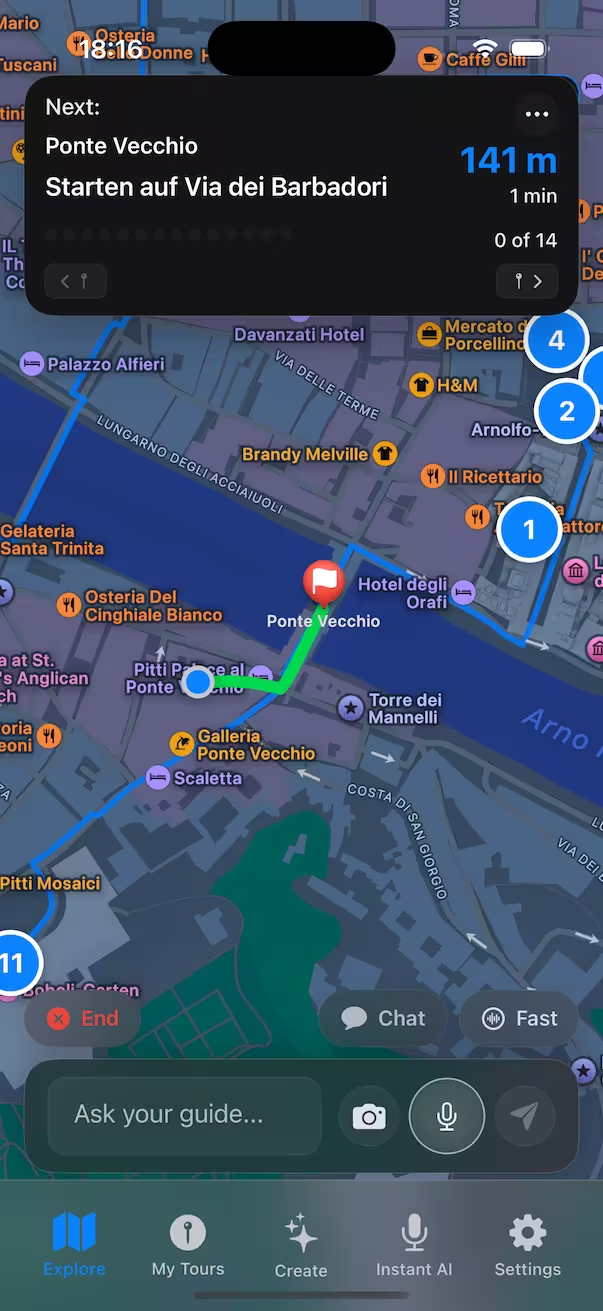
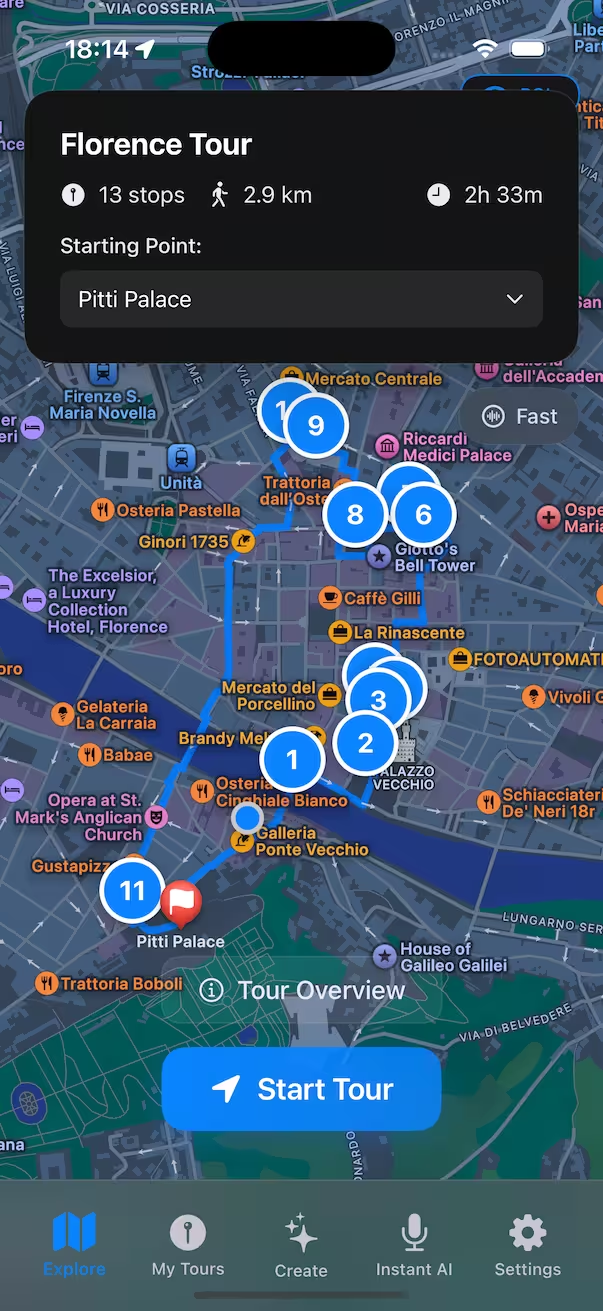
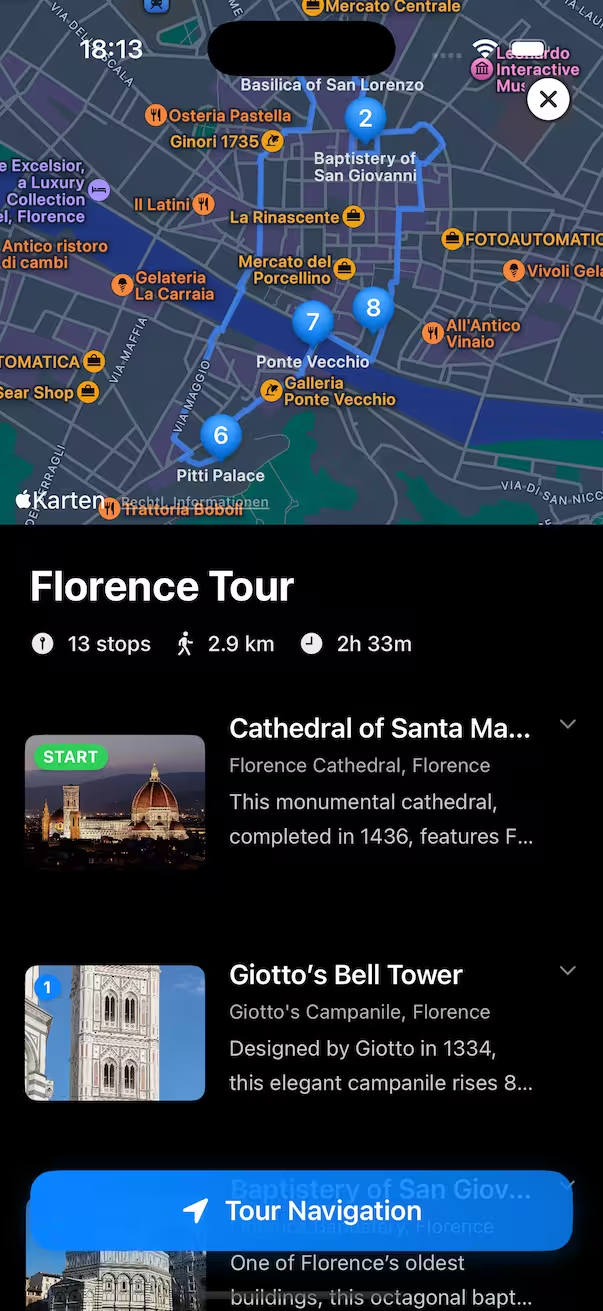
The classic Sydney tour: 9 stops, 10.0 km, about 3 h on foot
Your live AI guide and the self-guided Sydney route, together in your browser.