Self-Guided Walking Tour in Dublin

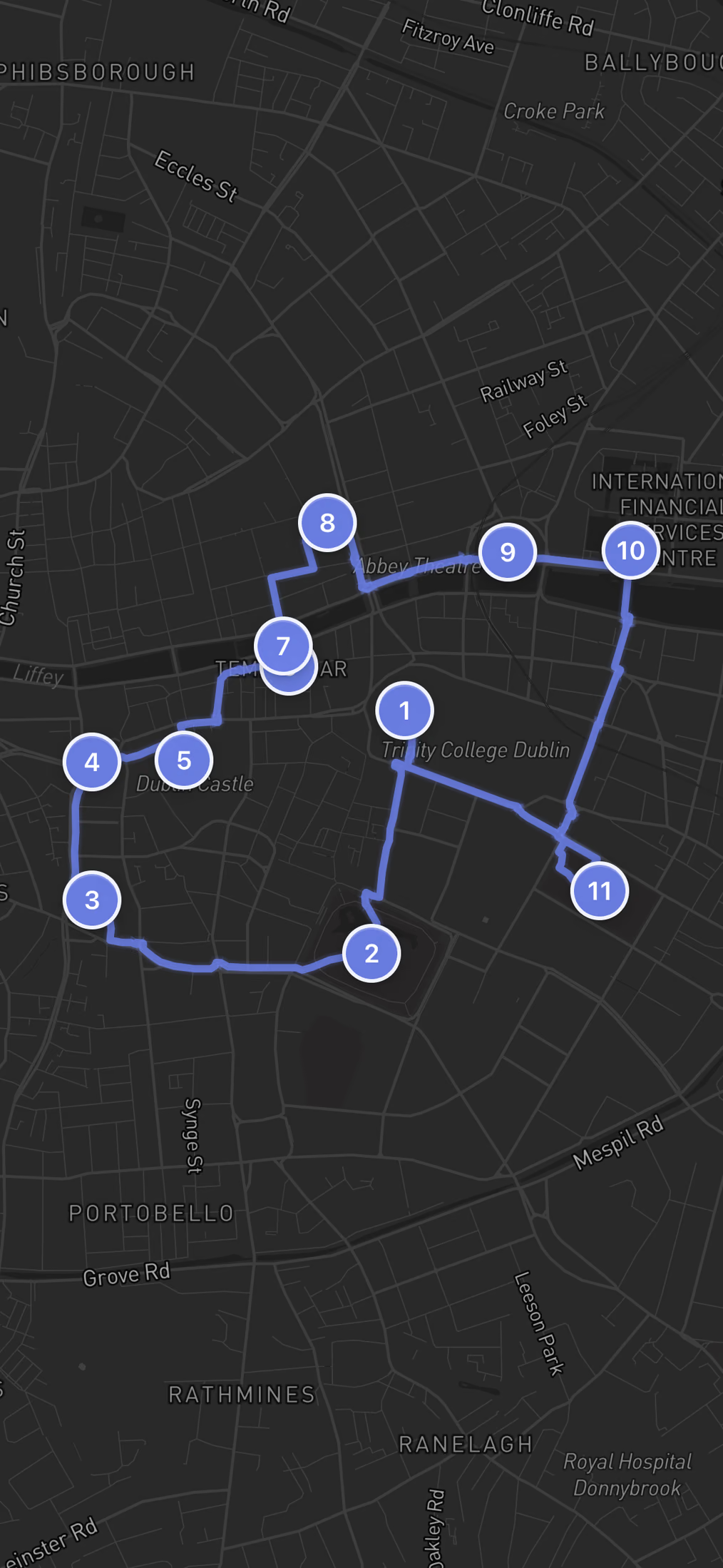
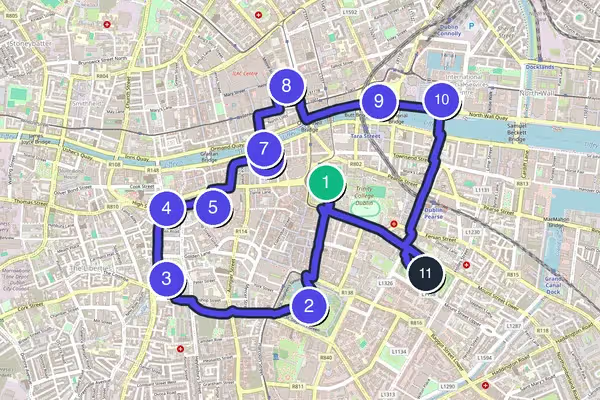
A self-guided loop through Dublin's historic core, 11 stops over 7.2 km from Trinity College and the Book of Kells to the Georgian doors of Merrion Square. This page gives you the full map, walking time for every leg, real admission prices and opening hours, and shorter versions when you have less time.

11 Stops7.2 km~3 hours walking3–4 hours with stops
What you get with AI Tourguide
Full GPS navigationInteractive AI guidePersonalized to youWorks in your browser
Try this tour with Alex

Dublin Walking Tour at a Glance

This route is built for anyone who wants to see the essential Dublin on foot, at their own rhythm, without a group or a fixed clock. Every interior on the way is optional: you can pay to step inside the cathedrals, the castle and Trinity's Old Library, or simply follow the outdoor route past them for free. You decide where to linger and what to skip.

StartTrinity College, Dublin
FinishMerrion Square
Route typeA compact loop through the historic core: south from Trinity, west to the two cathedrals and the castle, north to the Liffey quays, then back south to Merrion Square, which sits only a few streets from where you began. Almost no backtracking.
Realistic timeAbout 3 to 4 hours at a comfortable pace with short stops. The walking alone is roughly 90 minutes; the outdoor sights add an hour, and the paid interiors add 30 to 45 minutes each.
DifficultyEasy and flat. All 7.2 km run on paved city streets and park paths, with only the cobblestones around Temple Bar and Trinity's Front Square underfoot to slow you down.
Cost to followThe walk itself costs nothing and most stops are free open spaces. Only four interiors charge: Trinity College and the Book of Kells (€14), St. Patrick's Cathedral (€8), Christ Church Cathedral (€7) and Dublin Castle (€10).
Best for:

First-time visitors who want the medieval, Georgian and revolutionary layers of Dublin in one flat, walkable circuit they can shorten or stretch as they like.

The Route

Free Walking Tour Map of Dublin

11 stops7.2 kmabout 3 hours
Loading the interactive map…The complete walking route will appear here.
Want the route to guide you while you walk?Open the route with navigation and a personal guide for the history, stories and questions that matter to you.
Open route + AI guide

The 11 stops along this route

  1. Trinity College, Dublin in Dublin, stop 1 on the self-guided walking tour
    1Trinity College, Dublin
  2. Saint Stephen's Green in Dublin, stop 2 on the self-guided walking tour
    2Saint Stephen's Green
  3. St Patrick's Cathedral in Dublin, stop 3 on the self-guided walking tour
    3St Patrick's Cathedral
  4. Christ Church Cathedral, Dublin in Dublin, stop 4 on the self-guided walking tour
    4Christ Church Cathedral, Dublin
  5. Dublin Castle in Dublin, stop 5 on the self-guided walking tour
    5Dublin Castle
  6. Temple Bar in Dublin, stop 6 on the self-guided walking tour
    6Temple Bar
  7. Ha'penny Bridge in Dublin, stop 7 on the self-guided walking tour
    7Ha'penny Bridge
  8. General Post Office in Dublin, stop 8 on the self-guided walking tour
    8General Post Office
  9. The Custom House in Dublin, stop 9 on the self-guided walking tour
    9The Custom House
  10. Famine in Dublin, stop 10 on the self-guided walking tour
    10Famine
  11. Merrion Square in Dublin, stop 11 on the self-guided walking tour
    11Merrion Square
  12. That's the complete route.

    If you want more than the map and text, add live navigation and a conversational AI guide while you walk.

    Open route + AI guide
    You made it
Stop 1 of 11
Swipe →

Your Dublin Walking Tour, Stop by Stop

  1. 1

    Trinity College, Dublin

    Trinity College, Dublin in Dublin, stop 1 on the self-guided walking tour

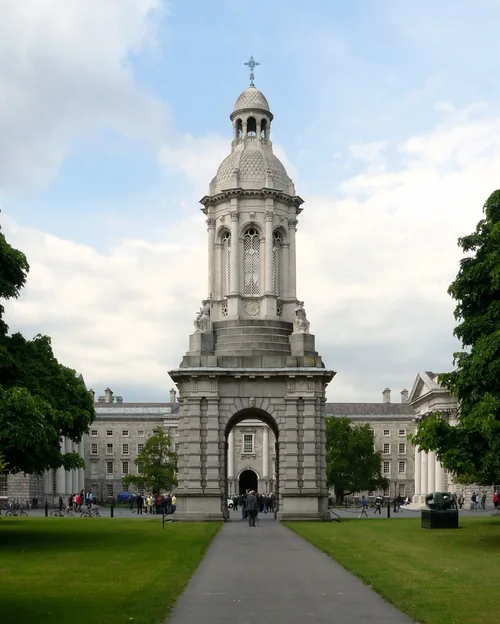
    Founded in 1592 by Queen Elizabeth I, Trinity is Ireland's oldest university and home to the Book of Kells, a lavishly decorated 9th-century gospel manuscript displayed in the Old Library. The Long Room stretching above it holds over 200,000 of the library's oldest volumes beneath a barrel-vaulted ceiling that rivals any cathedral. Admission costs €14 and includes both the Book of Kells exhibition and the Long Room. The college opens Mon to Sat 9:00 AM to 5:00 PM and Sun 9:00 AM to 4:00 PM. Arrive right at opening to beat tour bus crowds; by 11:00 AM the queue snakes across the cobblestoned Front Square. After the library, walk through the cricket pitch side of campus toward the Nassau Street exit, which drops you directly toward your next stop.

    Hours
    Mon-Sat: 9:00 AM – 5:00 PM, Sun: 9:00 AM – 4:00 PM
    Price
    €14 (includes Book of Kells and Long Room)
    Website
    tcd.ie ↗
  2. 2

    Saint Stephen's Green

    Saint Stephen's Green in Dublin, stop 2 on the self-guided walking tour

    This 9-hectare Victorian park at the top of Grafton Street played a surprising role in the 1916 Easter Rising: Irish rebels dug trenches across the manicured lawns while British forces occupied the Shelbourne Hotel overlooking the green. During the week-long battle, both sides reportedly paused fighting each evening so the park keeper could feed the ducks. Today it is one of the city's best free green spaces, open daily from 8:00 AM until dusk. The central garden with its ornamental lake and waterfall is worth a slow lap. Enter from the Grafton Street corner and exit via the south gate toward Harcourt Street, then follow Cuffe Street and Kevin Street south toward the Liberties neighbourhood.

    Hours
    Daily: 8:00 AM – Dusk
    Price
    Free
  3. 3

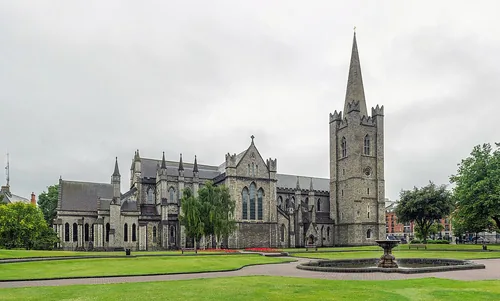
    St Patrick's Cathedral

    St Patrick's Cathedral in Dublin, stop 3 on the self-guided walking tour

    Ireland's largest church has stood on this site since 1191, though the current Gothic structure dates mostly from the 13th century. Jonathan Swift, author of Gulliver's Travels, served as dean here for over 30 years and is buried in the nave alongside his companion Stella. Look for the famous Door of Reconciliation near the north transept: a hole was cut in it during a 1492 feud between two earls so one could extend his arm through in peace, giving rise to the phrase "chancing your arm." Admission is €8 for adults. Hours are Mon to Fri 9:30 AM to 5:00 PM, Sat 9:00 AM to 5:00 PM, and Sun limited to 9:00 to 10:30 AM and 1:00 to 2:30 PM. The choir sings evensong most days during term, so check the schedule posted at the entrance.

    Hours
    Mon-Fri: 9:30 AM – 5:00 PM | Sat: 9:00 AM – 5:00 PM | Sun: 9:00 – 10:30 AM, 1:00 – 2:30 PM
    Price
    Adults €8
  4. 4

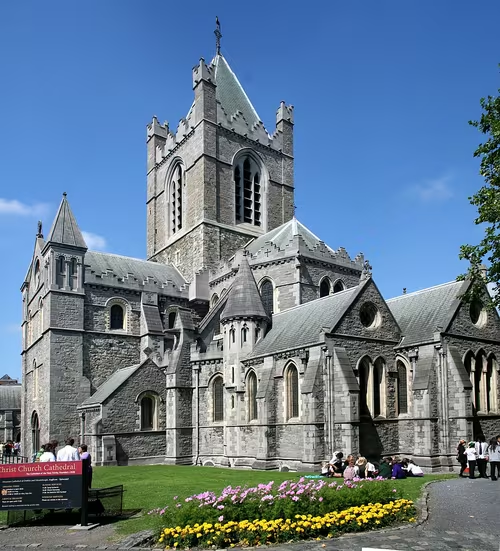
    Christ Church Cathedral, Dublin

    Christ Church Cathedral, Dublin in Dublin, stop 4 on the self-guided walking tour

    Founded in 1030 by the Viking King Sitric Silkenbeard, Christ Church predates its neighbour St. Patrick's by over 150 years. The highlight is the medieval crypt stretching nearly 63 metres beneath the nave, making it the largest of its kind in Ireland. Down there you will find a mummified cat and rat trapped together in an organ pipe, a curiosity Dubliners have nicknamed "Tom and Jerry." Admission is €7. The cathedral opens Mon to Sat 9:30 AM to 5:00 PM and Sun 12:30 to 3:00 PM. The bridge linking Christ Church to Dublinia, the Viking and medieval history museum next door, makes a good detour if you have an extra 45 minutes. From the cathedral grounds, walk east along Lord Edward Street toward Dublin Castle.

    Hours
    Mon-Sat: 9:30 AM – 5:00 PM | Sun: 12:30 – 3:00 PM
    Price
    €7
  5. 5

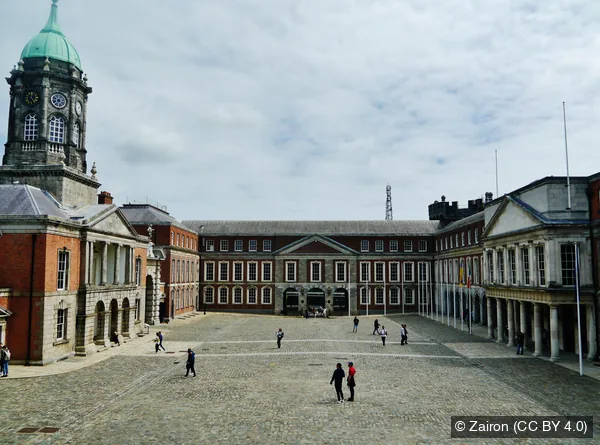
    Dublin Castle

    Dublin Castle in Dublin, stop 5 on the self-guided walking tour

    Built in 1204 on a former Viking settlement, Dublin Castle served as the seat of British rule in Ireland for 700 years until it was formally handed to Michael Collins in 1922. The State Apartments, used today for presidential inaugurations, are open for guided tours. The medieval undercroft beneath the castle reveals sections of the original Viking-age city wall and the now-buried River Poddle. Admission is €10 and the castle opens daily 9:45 AM to 5:15 PM. The Chapel Royal, with its elaborate exterior carvings of over 90 heads, is easy to overlook but worth a close look on your way out. Exit through the castle's front gate onto Dame Street and turn left toward Temple Bar.

  6. 6

    Temple Bar

    Temple Bar in Dublin, stop 6 on the self-guided walking tour

    Named after Sir William Temple who owned land here in the 17th century, Temple Bar preserved its medieval cobblestone street layout almost by accident: the area was slated for demolition in the 1980s to build a bus station, but community resistance saved it. Today it is Dublin's cultural quarter, packed with pubs, galleries, and weekend food markets. A pint here costs €7 to €9, roughly €2 more than pubs a few streets away. For better value and more character, duck into The Porterhouse on Parliament Street (Dublin's first craft brewhouse) or Vintage Cocktail Club on Crown Alley. The area is open late: Mon to Wed until 1:30 AM, Thu to Sun until 2:30 AM. Walk north through the lanes toward the river.

    Hours
    Mon-Wed: 10:30 AM – 1:30 AM | Thu-Sun: 10:30 AM – 2:30 AM
    Price
    $$$
  7. 7

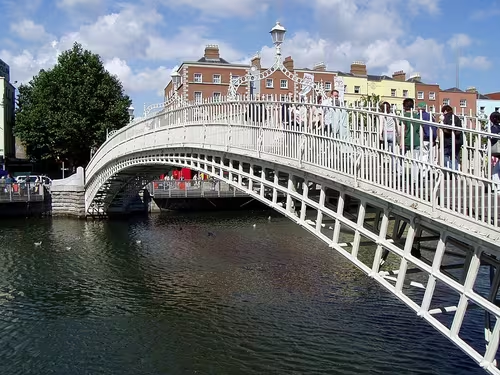
    Ha'penny Bridge

    Ha'penny Bridge in Dublin, stop 7 on the self-guided walking tour

    Dublin's most photographed bridge was built in 1816 as the city's first iron pedestrian crossing. Officially named the Wellington Bridge, it earned its nickname from the halfpenny toll charged to anyone crossing until 1919. Before it was built, commuters relied on a ferry operator named William Walsh, and the bridge was constructed partly to replace his ageing boats. The three elliptical iron arches and ornamental lamps are best photographed from Merchants Arch on the south bank, especially around sunset when the white ironwork catches the light. The bridge is open 24/7 and free to cross. Pause at the centre for a good view upriver toward the Four Courts dome, then continue north across to the O'Connell Street side.

    Hours
    Open 24/7
    Price
    Free
  8. 8

    General Post Office

    General Post Office in Dublin, stop 8 on the self-guided walking tour

    The GPO on O'Connell Street is the most symbolically important building in modern Irish history. During the 1916 Easter Rising, Patrick Pearse stood on its front steps to read the Proclamation of the Irish Republic, and the building served as rebel headquarters for the six-day insurrection. You can still see bullet holes pockmarking the Greek Revival portico columns from British gunfire. The building remains a working post office, open Mon 8:30 AM to 6:00 PM, Tue 9:00 AM to 6:00 PM, Wed to Sat 8:30 AM to 6:00 PM, closed Sunday. Entry to the main hall is free. Outside, the Spire of Dublin, a 121-metre stainless steel needle, rises from the spot where Nelson's Pillar once stood before it was blown up in 1966.

    Hours
    Mon: 8:30 AM – 6:00 PM | Tue: 9:00 AM – 6:00 PM | Wed-Sat: 8:30 AM – 6:00 PM | Sun: Closed
    Price
    Free (exterior visible, interior serves as post office)
  9. 9

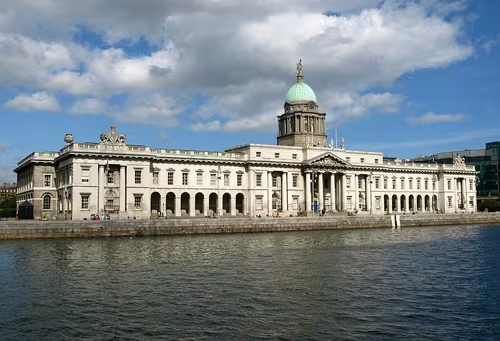
    The Custom House

    The Custom House in Dublin, stop 9 on the self-guided walking tour

    James Gandon's neoclassical masterpiece, completed in 1791, is one of Dublin's finest 18th-century buildings. The Portland stone facade stretches 114 metres along the Liffey, crowned by a copper dome that was green until a recent restoration returned it to its original colour. The IRA burned the interior during the 1921 War of Independence in a deliberate strike against British administrative power, destroying centuries of records. The building was painstakingly restored and now houses government offices. The exterior is best viewed from George's Quay on the south bank. The building is open Mon to Fri 9:00 AM to 5:00 PM but interior access is limited, so focus your time on the facade and the riverfront. Free to view.

    Hours
    Mon-Fri: 9:00 AM – 5:00 PM | Sat-Sun: Closed
    Price
    Free (exterior visible, limited interior access)
  10. 10

    Famine

    Famine in Dublin, stop 10 on the self-guided walking tour

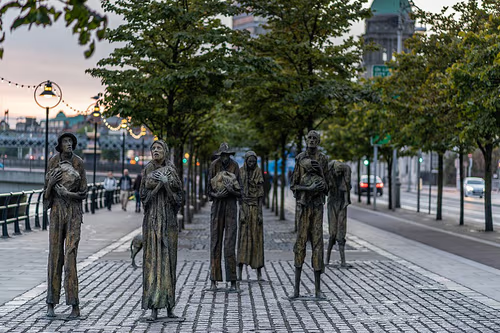
    These six gaunt bronze figures by sculptor Rowan Gillespie, unveiled in 1997, depict starving emigrants walking toward Custom House Quay to board coffin ships during the Great Famine of the 1840s. Each figure carries a different expression of desperation and exhaustion, and the level of anatomical detail is unflinching. A companion set of sculptures stands at the arrival point in Toronto's Ireland Park, completing the journey across the Atlantic. The memorial sits on the quayside and is accessible 24 hours, free of charge. It is one of the most powerful public artworks in Europe and rewards a few quiet minutes. From here, walk south along Pearse Street and Westland Row toward the Georgian quarter.

    Hours
    Open 24/7
    Price
    Free
  11. 11

    Merrion Square

    Merrion Square in Dublin, stop 11 on the self-guided walking tour

    Surrounded by immaculate Georgian townhouses with their signature brightly painted doors, Merrion Square is Dublin's most elegant public park. Oscar Wilde lived at No. 1 as a child, and a colourful statue of the writer lounging on a quartz boulder sits at the park's northwest corner, directly across from his former home. The park was a private garden for residents until 1974 and is now open 24/7, free to all. On weekends, local artists hang paintings along the railings for sale. The National Gallery of Ireland borders the square's west side and is free to enter if you want to extend your visit. This is a perfect final stop: find a bench, look up at the Georgian rooflines, and reflect on 800 years of history you have just walked through.

    Hours
    Open 24/7
    Price
    Free

How Long Does This Walking Tour Really Take?

Plan for 3 to 4 hours. The 7.2 km of walking takes about 90 minutes on its own; the free outdoor stops push it past two and a half hours, and entering all four paid interiors can add another two hours if you take your time inside.

About 3 hours at a comfortable pace, including short visits at each stop. Add 30 to 45 minutes if you plan to enter both cathedrals and the castle. The walking itself takes roughly 90 minutes without stops.

Full Route, Shorter Walk or Two-Day Version?

The full walk is 11 stops, but it splits cleanly if you have less time or want to spread it out. Here are three ways to run it, using the real stop numbers and per-leg walking times from the route.

The Short Core

The medieval and cultural heart only

Stops 1 to 7, about 3.9 km, 2 to 2.5 hours with stops

Trim the northern river stops. Walk from Trinity through St. Stephen's Green, the two cathedrals and Dublin Castle, then finish in Temple Bar and at the Ha'penny Bridge. This keeps every major interior and the oldest streets while cutting the Custom House and the long walk to Merrion Square.

Two Easy Halves

Split the loop at the river

Day one stops 1 to 7, day two stops 7 to 11, each about 1.5 hours

Use the Ha'penny Bridge as the hinge. Do the southern half (Trinity to Temple Bar) one day and the riverside half (the bridge, GPO, Custom House, Famine Memorial and Merrion Square) another. Ideal if you want to enter the cathedrals and Trinity's Old Library without rushing.

You can run the loop backwards from Merrion Square to Trinity College, but the given direction is better: you reach Trinity right at opening before the Book of Kells queue builds, tackle the cathedrals and castle mid-morning, and end among the quiet Georgian benches of Merrion Square rather than fighting the Trinity crowds at the finish.

Is This Dublin Walking Tour Right for You?

This is a flat, city-centre walk with plenty of ways to shorten or extend it. Here is who it suits and how to adapt it to your day.

A good fit if you…

  • First-time visitors who want Dublin's medieval, revolutionary and Georgian history in one flat 7.2 km loop
  • Walkers comfortable with paved streets and a stretch of cobblestones around Temple Bar
  • Travellers who want to choose which interiors to pay for and which sights to see only from outside
  • Anyone who prefers moving at their own pace over following a fixed-time guided group

Adapt the route if you…

  • Short on time: run the Short Core (stops 1 to 7) and skip the northern quays
  • Visiting on a Sunday: both cathedrals have restricted hours and the GPO is closed, so start later and hit the cathedrals in their morning windows
  • Travelling with a stroller or wheelchair: the route is flat and mostly step-free, though the Temple Bar cobbles are uneven
  • Want a slower trip: split the loop at the Ha'penny Bridge and walk it across two days

Tickets & Skip-the-Line in Dublin

Only four of the eleven stops charge admission; the rest are streets, parks, bridges and memorials you can walk straight into for free.

Trinity College, Dublin14 euro including the Book of Kells and the Long Room. Open Mon to Sat 9:00 AM to 5:00 PM, Sun 9:00 AM to 4:00 PM. Book the timed-entry ticket online in advance, walk-up queues regularly top 45 minutes by mid-morning and sell out on weekends.
St Patrick's Cathedral8 euro for adults. Open Mon to Fri 9:30 AM to 5:00 PM and Sat 9:00 AM to 5:00 PM; Sunday access is limited to 9:00 to 10:30 AM and 1:00 to 2:30 PM, so time a Sunday visit carefully.
Christ Church Cathedral, Dublin7 euro, which includes the medieval crypt. Open Mon to Sat 9:30 AM to 5:00 PM and Sun 12:30 to 3:00 PM.
Dublin Castle10 euro for the State Apartments, sold as a guided tour. Open daily 9:45 AM to 5:15 PM.
Everything else is freeSt. Stephen's Green, Temple Bar, the Ha'penny Bridge, the GPO's main hall, the Custom House exterior, the Famine Memorial and Merrion Square all cost nothing to enter. The four cathedrals and Trinity together total 39 euro if you go inside every one.
Optional upgrade
+7
The same 11-stop route,
now with navigation and a guide.
Optional AI experience

You already have the route.
The AI guide brings it to life.

Standing in the cobbled crowd of Temple Bar, or under the Old Library at Trinity College? Open AI Tourguide in your browser, nothing to download, and a voice guide walks the whole route to Merrion Square with you, telling the story behind Dublin Castle and the two cathedrals, asking what you are into and shaping 800 years of history around your answers. A real conversation, not a recording. Start with 100 free credits.

Livenavigation13languagesAnyquestionYourinterests
Open this route with the AI guide

Try it in your browser · No app or download required

Tips for Walking in Dublin

  • Start at the St. Stephen's Green Luas stop (Green Line) or Pearse Street DART station, both within 3 minutes of Trinity College.
  • Book your Trinity College and Book of Kells tickets online in advance. Walk-up queues regularly exceed 45 minutes by mid-morning, and timed-entry tickets often sell out on weekends.
  • For the best photo of Ha'penny Bridge, stand on the boardwalk at Merchants Arch on the south bank. Sunset light from the west hits the white ironwork perfectly.
  • Skip the overpriced pubs on Temple Bar's main drag. Walk one street south to Dame Lane for better-value pints, or try The Stag's Head on Dame Court for a proper Victorian pub interior.
  • If you are doing this walk on a Sunday, note that both cathedrals have restricted hours and the GPO is closed. Start later and plan your cathedral visits for the morning windows.

Where to Eat Along the Route

The best cooking in Dublin sits a few streets off the route you are walking, not on it. Skip the pub kitchens on Temple Bar's main drag and the generic spots around Grafton Street, where you pay a tourist premium for bland food, and cross the river or drop south into the villages where Dubliners actually eat.

  • Camden Street and the Liberties, just south of St. Stephen's Green: this is where locals head instead of Temple Bar, packed with modern Irish bistros, North Indian, and craft pubs.
  • Ormond Quay along the north bank by the Ha'penny Bridge: riverside dining rooms and early-bird menus with views straight down the Liffey.
  • Drury Street, one block west of Grafton Street: a walkable strip of natural-wine bars, independent coffee, and Dublin's oldest vegetarian kitchen.
  • Smithfield, a short walk northwest of the Four Courts: an artsy northside pocket with the city's best seafood counter and nightly trad music at The Cobblestone.
The Woollen Mills⌖On Ormond Quay overlooking the Ha'penny Bridge, right on your route. The early-bird menu runs two courses for 28 euro or three for 33 euro from 5 to 6:45pm, some of the best value modern Irish cooking in the centre.
Loose Canon⌖A tiny natural-wine bar and cheese shop on Drury Street near St. Stephen's Green, walk-ins only. Come before 5:30pm for the cheese toasties, stay after for charcuterie and wine by the glass.
Fish Shop⌖A ten-to-fifteen-seat marble counter in Smithfield serving the freshest fish and chips, oysters and cockles in the city. Reservations are essential, even for lunch.
Delahunt⌖Modern Irish cooking in a restored Victorian grocer's on Camden Street, the reliable dinner locals return to. The early-dinner set menu is the value play; book ahead.

Do not eat around Temple Bar's main drag or at The Church: the food is generic and overpriced, and a pint runs 8 to 10.50 euro versus 5 to 6 a couple of streets away.

Tourist Traps to Avoid in Dublin

Dublin is one of Europe's safer capitals, so most of the traps here are about wasted money and a few predictable street scams rather than danger.

  • Temple Bar pints run 8 to 10.50 euro against 5 to 6 elsewhere, and the trad music advertised on every corner is often staged for tourists; drink and hear real sessions at The Cobblestone, Kehoe's or Grogan's instead.
  • Watch your pockets in the crowds on Grafton Street, in Temple Bar and around the Spire on O'Connell Street; carry bags in front and never keep a wallet in a back pocket.
  • Refuse any stranger who offers to help at an ATM: it is a common skimming scam. Cover the keypad when you enter your PIN.
  • Say no if a friendly stranger asks you to take their photo near a tourist spot; the camera-drop routine ends with them demanding you pay for the 'damage'.
  • City buses do not take contactless bank cards and give no change; buy a Leap Card or a TFI Leap Visitor Card (8, 16 or 32 euro for 1, 3 or 7 days of unlimited bus, Luas and DART) before you travel.
  • If an ATM or card terminal offers to charge you in your home currency instead of euro, decline; the built-in conversion rate is worse than your own bank's.
  • Skip the 'Made in Ireland' souvenirs in the tourist-quarter shops, many are mass-produced overseas; look for a 'Handmade in Ireland' mark if you want the real thing.

Why Walk This Route?

This self-guided walking tour covers 11 stops across 7.2 km of Dublin's historic core, from the medieval campus of Trinity College through Viking-era cathedrals, the cobblestones of Temple Bar, and along the Liffey quays to the Georgian elegance of Merrion Square. Allow roughly 3 hours including time inside each site. The route threads together 800 years of Irish history: rebellion, famine, literature, and revival, all within comfortable walking distance on flat city streets.

Common Questions

Is this walking tour doable with a stroller or wheelchair?

Most of the route follows flat city pavements and is fully accessible. The cobblestones in Temple Bar are uneven but passable. Trinity College, Dublin Castle, and both cathedrals have step-free access at their main entrances. Merrion Square park paths are paved and level.

What is the best time of day to start?

Aim for 9:00 AM to reach Trinity College right at opening and beat the tour groups. You will finish at Merrion Square around noon, perfectly timed for lunch on Baggot Street or in the Merrion Row area.

Can I do this tour in the rain?

Dublin gets rain roughly 150 days a year, so chances are you will encounter some. The route includes enough indoor stops (Trinity Library, both cathedrals, Dublin Castle, GPO) to stay dry for large stretches. Bring a compact rain jacket rather than an umbrella, since Dublin's wind tends to flip them.

Take this route with you

Open this exact tour with navigation and your personal AI guide.

Start GPS Navigation + AI Guide
AI Tourguide
Researched and curated by the AI Tourguide teamWe plan and quality-check every route, then research and verify the opening hours, prices, and practical tips for each stop along it.
▶ Open route with AI guideNavigation, stories and your questions