Things to Do in Dublin - Top Attractions, Hidden Gems & Must-See Sights

Discover the best things to do in Dublin. Complete guide to must-see sights, popular attractions, hidden gems, museums, food markets and parks.

31 Attractions 6 Categories Travel Guide

Table of Contents

Dublin Overview

Dublin, the vibrant capital of Ireland, is a city where medieval history meets modern energy. From the hallowed halls of Trinity College and the ancient Book of Kells to the lively pubs of Temple Bar pouring perfect pints of Guinness, Dublin offers an unforgettable blend of culture, heritage, and warm hospitality. Explore the city's Viking roots at Christ Church Cathedral, walk in the footsteps of revolutionaries at Kilmainham Gaol, and discover literary giants like Joyce, Wilde, and Beckett who called this UNESCO City of Literature home. Beyond the cobblestone streets and Georgian architecture, Dublin surprises with hidden gems like the secret Iveagh Gardens, the hipster quarter of Stoneybatter, and the breathtaking coastal walks at Howth. Whether you're delving into Irish history, enjoying world-class museums, or simply soaking up the craic in a traditional pub, Dublin's charm will capture your heart.

Must-See Attractions in Dublin

  • Christ Church Cathedral
  • Dublin Castle
  • Guinness Storehouse
  • Kilmainham Gaol
  • St. Patrick's Cathedral
  • Trinity College Dublin
🏛️ Must-See ⭐ Sights 💎 Hidden Gems 🎨 Museums 🌳 Parks & Views

🏛️ Must-See Attractions in Dublin

These iconic landmarks and must-see sights are essential stops for any visitor to Dublin.

Christ Church Cathedral

1. Christ Church Cathedral

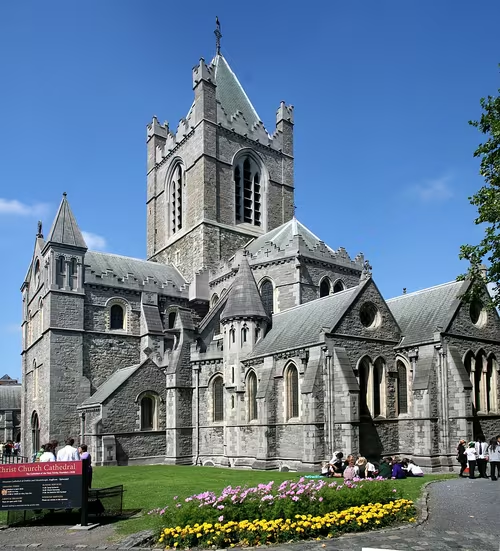
Christ Church is the older of Dublin's two medieval cathedrals, founded around 1030 by the Viking king Sitric Silkenbeard. It was rebuilt in stone in the late 12th century under the Norman lord Strongbow, then significantly enlarged through the 13th century using Somerset stone and craftsmen brought over from England. A partial collapse in the 16th century left it damaged for centuries, and the major Victorian restoration of the 1870s gave it the form it has today — including the tower, flying buttresses, and the covered stone bridge that connects the cathedral to the old synod hall.

The crypt is one of the best things about the visit. It's the oldest surviving structure in Dublin, running the full length of the cathedral, and it houses a small museum of medieval artifacts including two silver-gilt maces from the 1600s. The more peculiar exhibit is the mummified cat and rat — found locked together inside the organ pipes in the 1860s, preserved accidentally by the dry air.

The cathedral is still an active Church of Ireland church, which means Sunday services are not tourist hours. It's crowded during peak season but genuinely ancient in a way that many European churches aren't. It's among the best sights in Dublin for anyone with even a passing interest in Viking or Norman history.
Hours Mon-Sat: 9:30 AM – 5:00 PM | Sun: 12:30 – 3:00 PM
Price €8-10
Insider TipThe cathedral and the nearby Dublinia Viking museum share a covered bridge — a combined ticket saves money and Dublinia is worth the 45 minutes, especially with kids.
Dublin Castle

2. Dublin Castle

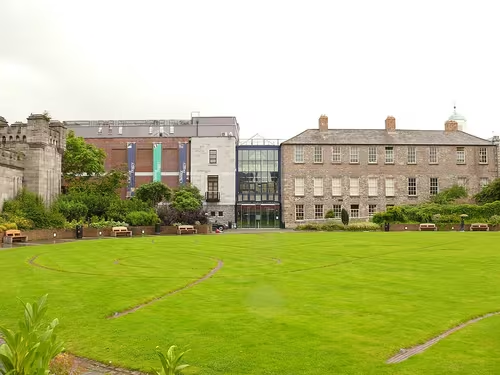
Dublin Castle was the administrative center of British rule in Ireland from the 13th century until 1922 — nearly 700 years of colonial government operating from this one site. The original medieval castle was largely destroyed by a powder magazine explosion in 1684 and subsequently rebuilt in the Palladian style, which is why it looks more like a Georgian palace complex than the crenellated fortress visitors sometimes expect.

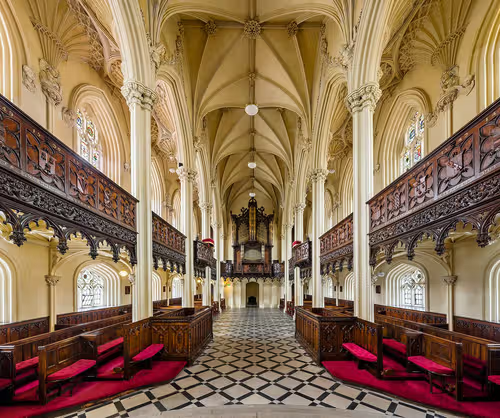
The visit covers the State Apartments, used for state occasions and EU summits, which are grand and well-preserved. The medieval Undercroft below the Upper Yard reveals the original Viking and Norman foundations, including the remains of the original Powder Tower and a section of the old city wall. The Chapel Royal, completed in 1814, has some of the finest Gothic Revival plasterwork in Ireland.

The Chester Beatty Library is also within the castle grounds — a world-class museum of manuscripts that is free and often overlooked because visitors don't realize it's here.

Hours Daily: 9:45 AM – 5:15 PM
Price €8
Location Maps
Insider TipThe Chester Beatty Library is in the Clock Tower Building at the south side of the grounds — many people walk past it without realising it's one of the best free museums in Europe. Always check their temporary exhibitions before you go.
Guinness Storehouse

3. Guinness Storehouse

The Guinness Storehouse opened in 2000 inside the old fermentation building of St. James's Gate Brewery, which has been producing Guinness since Arthur Guinness signed a 9,000-year lease on the site in 1759. The building was redesigned around a central glass atrium shaped like a giant pint glass — a gimmick that actually works. Over twenty million people have visited since it opened, which makes it consistently Ireland's most visited paid attraction.

The seven floors work through the four ingredients (water, barley, hops, yeast), the history of the brand, and some genuinely good advertising history. It's not a working brewery tour — the production facility is separate — but the exhibits are well-done and not as corporate-feeling as you'd expect. The sixth floor has a good whiskey bar if you want a detour from stout.
The whole thing ends at the Gravity Bar on the seventh floor, where your included pint comes with 360-degree views across the Dublin skyline. As attractions in Dublin go it's touristy and not cheap, but most people leave thinking it was worth it. The views alone make a strong case.

Hours Mon-Fri: 10:00 AM – 5:00 PM | Sat: 9:00 AM – 5:00 PM | Sun: 9:30 AM – 5:00 PM
Price Free
Insider TipPre-book online for the cheapest ticket rate, and go on a weekday afternoon when the Gravity Bar is least packed. The bar staff will show you how to pour a proper pint if you ask — they're happy to demonstrate.
Kilmainham Gaol

4. Kilmainham Gaol

Kilmainham Gaol was built in 1796 and operated as a working prison for 128 years. It held rebels, criminals, and famine victims over its history, then fell derelict until volunteers spent years restoring it by hand in the 1960s. That history of abandonment followed by community rescue gives the place an unusual texture — it doesn't feel manufactured.

The prison's place in Irish history is stark. The seven leaders of the 1916 Easter Rising — including Patrick Pearse and James Connolly — were executed in the stone-breakers' yard here by British firing squad. Connolly, wounded and unable to stand, was tied to a chair before being shot. The cells where they spent their final nights are on the tour, and the Victorian wing's cast-iron galleries and skylit central hall are genuinely dramatic spaces.

The guided tour is the only way in and lasts about an hour. It also appeared in The Italian Job, In the Name of the Father, and several other films.

Hours Daily: 10:30 AM – 5:15 PM
Price €8
Insider TipTours sell out weeks ahead in summer — book online as soon as your dates are fixed. The last tour of the day typically has the smallest group, which makes the experience less rushed.
St. Patrick's Cathedral

5. St. Patrick's Cathedral

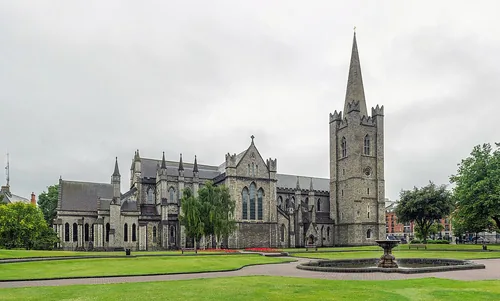
St. Patrick's Cathedral is the national cathedral of the Church of Ireland and the largest church in the country. It was built in 1191 on a site where Patrick is said to have baptized converts, and the Gothic structure has been altered and restored many times since. The most significant restoration happened in the 1860s, funded by the Guinness family, which is why the building looks more complete today than it did for most of the previous four centuries.

Jonathan Swift, author of Gulliver's Travels and A Modest Proposal, was Dean of St. Patrick's from 1713 until his death in 1745. He is buried inside the cathedral next to his companion Esther Johnson — you can read his self-written Latin epitaph on the wall near the entrance. The cathedral also holds the chair and table used by Brian Boru, the High King of Ireland, and banners from the former Order of St. Patrick hang along the nave.

The park surrounding the cathedral is small but well-maintained and free. Inside, the building is genuinely imposing — high vaulted ceilings, extensive medieval stonework, and a real sense of accumulated history. It's worth an hour of anyone's time among the attractions in Dublin's historic Liberties neighbourhood.

Hours Mon-Fri: 9:30 AM – 5:00 PM | Sat: 9:00 AM – 5:00 PM | Sun: 9:00 – 10:30 AM, 1:00 – 2:30 PM
Price €8-10
Insider TipThe cathedral closes for services on Sunday mornings and early afternoon — arrive before 11am or after 2:30pm on Sundays. The Evensong service at 5:45pm on weekdays is free and worth attending for the choir alone.
Trinity College Dublin

6. Trinity College Dublin

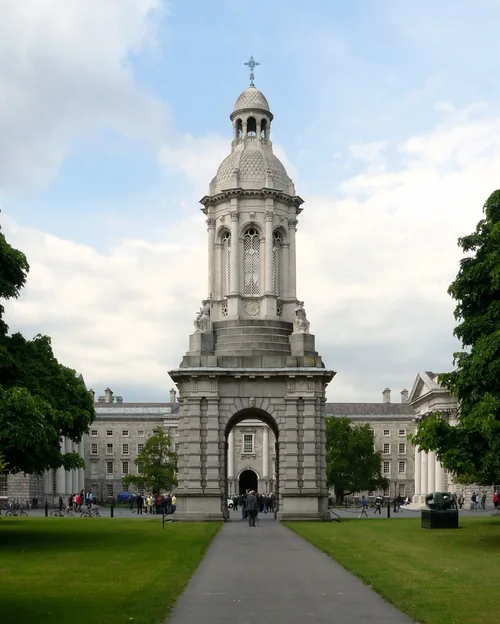
Trinity College was founded in 1592 by Queen Elizabeth I, built on the site of a dissolved Augustinian priory. For over two centuries it was a Protestant-only institution — most of Catholic Ireland was locked out until 1793. The campus has barely changed since the 18th century. The cobblestoned Front Square, the Campanile, and the long sweep of the cricket pitch give it the feel of an Oxbridge college dropped into the middle of the city.

The main draw is the Old Library, where the Book of Kells has been kept since 1661. This illuminated Gospel manuscript, created by monks around 800 AD, is extraordinary up close — the detail in every page defies belief. The Long Room above it, with its barrel-vaulted ceiling and 200,000 antique books lining two floors of dark oak shelves, is one of the great rooms of Europe. The Brian Boru harp, Ireland's national symbol, also lives here.

Alumni include Oscar Wilde, Samuel Beckett, Bram Stoker, Jonathan Swift, and Edmund Burke. The college receives over two million visitors a year, making it one of the top things to do in Dublin — but the crowds are very manageable if you arrive early on a weekday.

Hours 9am-5pm
Price €15-20
Website www.tcd.ie/
Location 53.3444, -6.2577
Insider TipBook Book of Kells tickets online the night before — same-day queues run over an hour, and online entry goes straight in. Tuesday and Wednesday mornings are noticeably quieter than weekends.
Get Your Own Private Tour with AI Guide
AI Guide
  • Personalized tour tailored to your interests
  • Your AI guide tells stories, shares facts, and cracks jokes
  • Turn-by-turn GPS navigation
  • Available in your language — no download needed
Try for Free

💎 Hidden Gems in Dublin - Off the Beaten Path

Beyond the tourist crowds, Dublin hides remarkable treasures waiting to be discovered.

Glasnevin Cemetery

1. Glasnevin Cemetery

Daniel O'Connell founded Glasnevin in 1832 specifically as a non-denominational cemetery — a radical act at a time when Catholics were forced to bury their dead in Protestant churchyards. It is now 124 acres in size and holds over 1.5 million people, making it Ireland's national cemetery. The round tower at its centre is a replica of medieval Irish towers and was built as a monument to O'Connell himself.

The graves read like a roll call of Irish history: Michael Collins, Éamon de Valera, Charles Stewart Parnell, Countess Constance Markievicz, Brendan Behan, Luke Kelly of the Dubliners. The cemetery museum at the entrance has a searchable database of all 1.5 million burials, which makes it possible to find almost anyone buried here. The O'Connell Crypt inside the tower is open for visits.

The guided tours are excellent and run daily — the guides know the cemetery in detail and deliver the history with real energy. It's one of those attractions in Dublin that surprises people who come expecting something morbid and leave genuinely engaged. The adjoining National Botanic Gardens make for a good combined visit.

Hours Daily: 8:00 AM – 6:00 PM
Price Free
Insider TipThe self-guided audio tour using the cemetery map covers more ground than the guided tour, but the guided version is better for understanding the politics. Book the guided tour online — it fills up fast in summer.
Iveagh Gardens

2. Iveagh Gardens

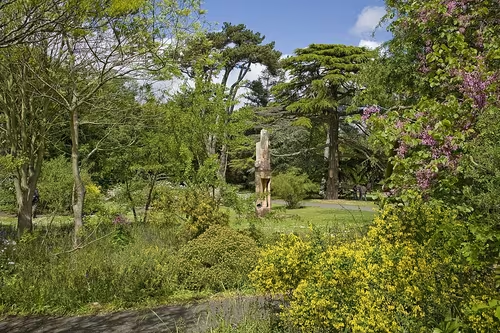
The Iveagh Gardens are a Victorian-era park tucked between Clonmel Street and Upper Hatch Street, near the National Concert Hall. They are almost entirely surrounded by buildings, which makes them genuinely hard to find — even people who have lived in Dublin for years sometimes don't know they exist. The entrance on Clonmel Street is easy to walk past without noticing. That obscurity is exactly what makes them worth seeking out.

The gardens were designed in 1863 by Ninian Niven, the Dublin Botanic Gardens' curator, in a formal Victorian style. They have a yew maze, a rosarium, a cascade waterfall fed by a small stream, rustic grottos, and lawns bordered by herbaceous borders. Unlike St. Stephen's Green nearby, there are no traffic arteries bordering them, no tram noise — just birdsong and the occasional fountain.

Entry is free and they are a National Historic Property. The Iveagh Gardens Music Festival takes over the grounds each July with outdoor concerts — if you're in Dublin then, it's one of the best ways to see the space. For the rest of the year they are simply a quiet place that most tourists miss entirely.

Hours Mon-Sat: 8:00 AM – 4:30 PM | Sun: 10:00 AM – 4:30 PM
Price Free
Location 53.335, -6.26
Insider TipThe cascade waterfall is at the far end of the gardens from the Clonmel Street entrance — walk through the rose garden and follow the path to the right. Most people who do find the gardens stay near the entrance and miss the waterfall.
Marsh's Library

3. Marsh's Library

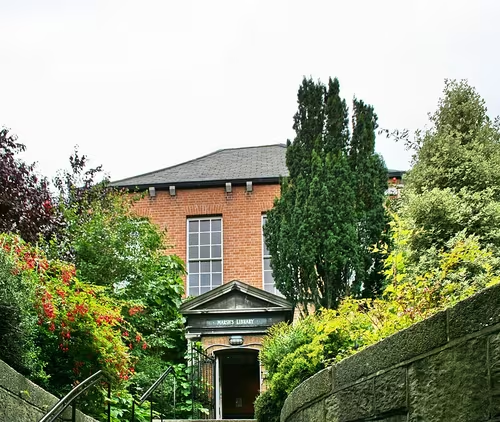
Marsh's Library is Ireland's oldest public library, built in 1701 and opened in 1707 at the order of Archbishop Narcissus Marsh. It was designed by William Robinson, the same architect who built the Royal Hospital Kilmainham, and sits in St. Patrick's Close directly beside St. Patrick's Cathedral. When it opened it was the first library in Ireland that was public — meaning any gentleman could enter without being a member of a college or church.

The collection has barely changed since the 18th century. Over 25,000 books and 300 manuscripts fill the original dark oak bookcases, still fitted with the iron cages where readers were locked in with rare volumes to prevent theft. Jonathan Swift, who was Dean of St. Patrick's Cathedral next door, was a governor of the library and some of his annotations survive in the margins of books. The building and its contents have a quiet, slightly eerie completeness — it has been used as a set for film productions for good reason.

Admission is €7, and the library is small enough to see properly in under an hour. Most tourists walk past it while visiting the cathedral next door without realising what it is. One of the most genuinely unusual attractions in Dublin.

Hours Mon: Closed | Tue-Fri: 9:30 AM – 5:00 PM | Sat: 10:00 AM – 5:00 PM | Sun: Closed
Price €7
Insider TipAsk at the reception desk to see Jonathan Swift's annotated books — the staff will point out volumes with his handwriting in the margins, which are not specifically labelled for general visitors.
National Botanic Gardens

4. National Botanic Gardens

The National Botanic Gardens were founded in 1795 by the Dublin Society on 19.5 hectares beside the River Tolka in Glasnevin, about 5 kilometres from the city centre. They hold approximately 20,000 living plant species and many millions of dried specimens, making them one of the most significant botanical collections in Europe. Entry is free, and they are Ireland's second most visited free attraction.

The most architecturally notable features are the Victorian glasshouses: the curvilinear glasshouse range designed by Richard Turner (who also built the Palm House in Belfast and Kew's Great Palm House) in the 1840s and 1850s, and the Great Palm House from 1884. Inside the curvilinear range, palms, cycads, and tropical plants fill a space that feels like being inside a 19th-century engineering drawing. The rose garden, the rock garden, and the water garden are each worth separate attention depending on the season.

The gardens are next to Glasnevin Cemetery, which makes for a good combined visit — unusual pairing, genuinely rewarding. The café is decent. Mornings on weekdays are almost empty, even in summer.

Hours Mon-Fri: 9:00 AM – 4:30 PM | Sat-Sun: 10:00 AM – 4:30 PM
Price Free
Insider TipThe curvilinear glasshouse range is the most interesting building — go inside even if the weather is good, because the plants are extraordinary and most visitors walk past without entering. The cactus section in the far wing is particularly good.
Poolbeg Lighthouse

5. Poolbeg Lighthouse

The Poolbeg Lighthouse has marked the mouth of the River Liffey since 1767, making it one of the oldest lighthouses in Ireland. It was rebuilt into its current form in 1820 and painted a distinctive red — the same red as the twin Poolbeg chimneys that dominate Dublin's south bay skyline and have become an unlikely symbol of the city. The lighthouse is active and automated; it's not open for visitors to enter, but reaching it is the point.

To get there you walk the Great South Wall, a 2-kilometre granite sea wall built in the 18th century to channel the Liffey's flow and prevent the river mouth from silting up. The wall is flat and exposed — wind, spray from waves in bad weather, ships passing close by. The walk takes about 25 minutes each way. At the lighthouse end, the view back toward the city is one of the best panoramas of the Dublin skyline available anywhere, with the bay spread wide and the Wicklow Mountains visible to the south.

It's completely free, genuinely off the tourist trail, and one of the best best sights in Dublin for getting a sense of the city's relationship with the sea. Locals walk and run the wall regularly.

Hours Open 24/7
Price Free
Location 53.3421, -6.1517
Insider TipDrive or taxi to Irishtown Nature Park and walk from there — it's faster than going from Ringsend. Wear shoes you don't mind getting wet on windy days, and check the wind before you go: the wall is genuinely exposed.
Stoneybatter

6. Stoneybatter

Stoneybatter — the name comes from the Irish Bóthar na gCloch, meaning 'road of the stones' — is a northside neighbourhood in Dublin's D7 postal district. Time Out named it one of the coolest neighbourhoods in the world in 2019, which delighted and mildly horrified its residents in equal measure. The neighbourhood sits between Smithfield, Grangegorman, and the North Circular Road, and its Victorian red-brick terraces have been increasingly taken over by a younger, independent-minded crowd over the past decade.

The food and drink scene is concentrated along Manor Street and Prussia Street. Craft beer bars like the Belfry and Glas sit alongside old-school Dublin pubs that haven't changed since the 1970s. The restaurants are serious — Ox, Mulberry Garden, and several other places worth booking ahead. There's also a good second-hand bookshop, independent coffee shops, and a neighbourhood feel that central Dublin's tourist areas have lost entirely.

For visitors the draw is seeing what Dublin actually looks like when it's not performing for tourists. It's a 15-minute walk from the Phoenix Park gate, which makes it a natural lunch stop after a morning in the park.

Hours Open 24/7
Price Free
Website Wikipedia
Location 53.35134, -6.283
Insider TipL. Mulligan Grocer on Stoneybatter street proper has one of the best whiskey selections in Dublin and does a good Sunday roast — it's packed at weekends but quieter on weekday lunchtimes.
Get Your Own Private Tour with AI Guide
AI Guide
  • Personalized tour tailored to your interests
  • Your AI guide tells stories, shares facts, and cracks jokes
  • Turn-by-turn GPS navigation
  • Available in your language — no download needed
Try for Free

🎨 Best Museums & Galleries in Dublin

World-class museums and galleries that make Dublin a cultural treasure.

Chester Beatty Library

1. Chester Beatty Library

Sir Alfred Chester Beatty was an American-born mining magnate who spent his life collecting manuscripts and rare books from around the world. When he died in 1968 he left his collection to Ireland, having settled in Dublin and been made the country's first honorary citizen. The museum that bears his name opened in its current location in Dublin Castle in 2000, and was named European Museum of the Year in 2002.

The collection is extraordinary in range. It includes one of the oldest surviving New Testament manuscripts, among the earliest illustrated biographies of the Prophet Muhammad, Quranic manuscripts of exceptional quality, Chinese jade books, Japanese woodblock prints, and Egyptian papyri. The galleries are designed to be browsed slowly — the objects are small and detailed, and the contextual information is well-written.

Entry is free, which makes this one of the best deals among Dublin's attractions. Wednesday evenings are open until 8pm, making it a good option for a late afternoon visit. The rooftop garden has good views and is pleasant in good weather.

Hours Mon: Closed | Tue: 9:45 AM – 5:30 PM | Wed: 9:45 AM – 8:00 PM | Thu-Sat: 9:45 AM – 5:30 PM | Sun: 12:00 – 5:30 PM
Price Free
Location 53.342, -6.267
Insider TipThe temporary exhibitions on the ground floor often feature objects from the permanent collection that don't usually go on display — always check what's showing before you go. Wednesday evenings are quiet and you can take your time.
EPIC The Irish Emigration Museum

2. EPIC The Irish Emigration Museum

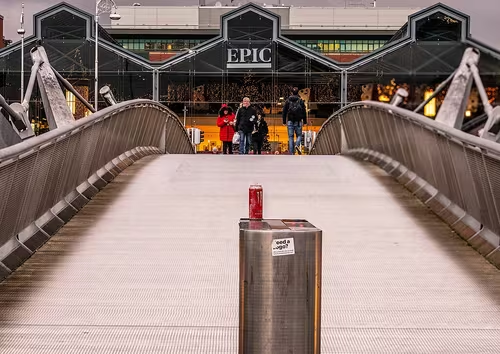
EPIC opened in 2016 in the vaulted brick cellars of the CHQ Building in Dublin's Docklands — a 19th-century bonded warehouse where goods from the docks were stored. The museum tells the story of Irish emigration: the roughly 10 million people who left Ireland between 1700 and the early 20th century, driven by famine, poverty, or opportunity, and the 70 million people of Irish descent now living outside the country.

The 20 interactive galleries cover the mechanics of emigration — who left, why, and where they went — and the individual stories of notable Irish emigrants: presidents (nine US presidents claim Irish ancestry), scientists, writers, criminals, soldiers, and musicians. The design is genuinely immersive rather than just touch-screen heavy, and the narrative arc from desperation to diaspora achievement is handled without being sentimental. It won Europe's Leading Tourist Attraction at the World Travel Awards three years running.

At €18–20 it's on the more expensive end of Dublin's attractions, but most visitors take 2–2.5 hours and find it worth the price. It's in the Docklands near the 3Arena, easily combined with a walk along the riverside or a visit to the nearby Jeanie Johnston tall ship.

Hours Daily: 10:00 AM – 6:30 PM
Price €18-20
Location 53.348, -6.248
Insider TipUse the family name search at the start of your visit — the database traces Irish surnames through emigration records and tells you where your name ended up. It's a good hook for the rest of the museum.
Irish Museum of Modern Art

4. Irish Museum of Modern Art

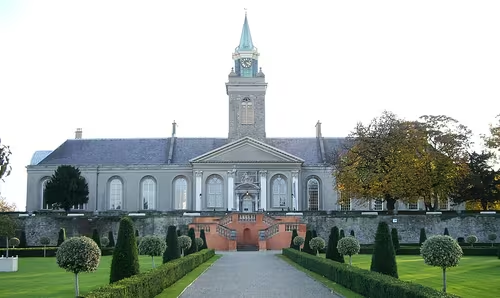
IMMA is housed in the Royal Hospital Kilmainham, a 17th-century building completed in 1684 as a home for retired soldiers — the oldest classical building in Ireland and a model for the Royal Hospital Chelsea in London. The building itself is worth the visit: a formal arcaded courtyard, a baroque chapel with original ceiling paintings, and extensive formal gardens that are free to walk through at any time.

The museum opened in 1991 and holds Ireland's largest collection of modern and contemporary art. The permanent collection includes work by Gilbert and George, Olafur Eliasson, Dorothy Cross, and a strong body of Irish contemporary painting and sculpture. IMMA is known for ambitious temporary exhibitions rather than resting on the permanent collection, and programming tends to be more adventurous than the national gallery format.

It's a 20-minute walk from the city centre or a short bus ride, which means it's less visited than it deserves to be. The grounds and courtyard are free regardless of whether there are paid exhibitions on. A genuinely worthwhile stop among Dublin's attractions for anyone interested in art made after 1960.

Hours Mon: Closed | Tue: 10:00 AM – 5:30 PM | Wed: 11:30 AM – 5:30 PM | Thu-Sat: 10:00 AM – 5:30 PM | Sun: 12:00 – 5:30 PM
Price Free
Website imma.ie/
Location 53.3429, -6.3
Insider TipThe formal gardens behind the building extend down to the Liffey and are almost always quiet — most visitors don't realise they go that far. Good place to sit and have a coffee from the museum café in good weather.
Little Museum of Dublin

5. Little Museum of Dublin

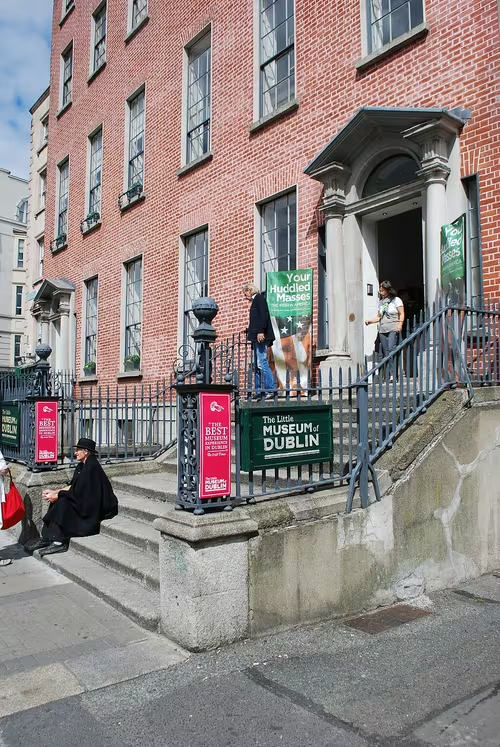
The Little Museum of Dublin occupies a restored Georgian townhouse at 15 St. Stephen's Green, a building owned by Dublin City Council. It opened in 2011 and built its collection almost entirely from donations by the public — over 5,000 objects collected from Dubliners who were asked to contribute items that told the story of the city in the 20th century. The result is an eccentric, affectionate, occasionally funny portrait of a city rather than a conventional history.

The objects range from U2 memorabilia and vintage advertising to political pamphlets, photographs, and domestic items from Dublin households across the century. The guided tours, which are the only way to move through the museum properly, run every 30 to 45 minutes and are the most entertaining museum tours in the city — the guides are selected for their storytelling ability as much as their historical knowledge.

At €18 for a guided tour it's not cheap, but the experience is genuinely good and the format — small group, intimate rooms, strong narrative — is quite different from the big national museums. One of the best smaller things to do in Dublin for visitors who want to understand the city rather than just its monuments.

Hours Daily: 9:30 AM – 4:30 PM
Price €18
Insider TipBook the first tour of the day at 9:30am — it's the smallest group and the guide tends to take more time on questions. Last entry tours at 4pm are also less crowded than midday.
Get Your Own Private Tour with AI Guide
AI Guide
  • Personalized tour tailored to your interests
  • Your AI guide tells stories, shares facts, and cracks jokes
  • Turn-by-turn GPS navigation
  • Available in your language — no download needed
Try for Free

🌳 Parks & Best Viewpoints in Dublin

Beautiful parks, gardens, and panoramic viewpoints for the best views of Dublin.

Herbert Park

1. Herbert Park

Herbert Park is a 12-hectare public park in Ballsbridge, Dublin's embassy quarter, named after Sidney Herbert, the 19th-century British war minister (and friend of Florence Nightingale) after whom the surrounding streets are also named. The park was first laid out in 1911 for the Dublin International Exhibition of that year, then handed over to the city afterwards. It has a large ornamental pond with ducks and swans, a bandstand, tennis courts, and formal gardens.

The neighbourhood around it is affluent and the park reflects that — well-maintained, relatively quiet, popular with people exercising dogs and buggies rather than the tourist crowds that fill St. Stephen's Green. The RDS arena and several embassies are nearby. It's a comfortable 20-minute walk from Merrion Square through Georgian streets.

On Saturdays, the Herbert Park Hotel hosts a farmer's market beside the park that draws local producers selling cheese, bread, vegetables, and prepared food. It's smaller than the Temple Bar market but less crowded and more local in character. One of those Dublin parks that rewards visitors who get south of the Grand Canal and explore beyond the city centre.

Hours 10am-dusk
Price Free
Website Wikipedia
Location 53.3274, -6.2355
Insider TipThe Saturday market runs from around 9am to 2pm — go before 11am for the full selection and before the queues build at the popular cheese and bread stalls.
Killiney Hill

2. Killiney Hill

Killiney Hill is 153 metres high and sits at the southern edge of Dublin Bay. The obelisk at the summit was completed in 1742 and was built as a famine relief project, employing local labourers during the desperate Irish Famine of 1740–41 — a century before the Great Famine. The monument has stood for nearly 300 years and is in good condition given its age and exposure.

The views from the top are legitimately spectacular. On a clear day you can see the full sweep of Dublin Bay north to Howth Head, the Wicklow Mountains to the south, and across the Irish Sea to the mountains of Wales. Killiney itself is one of Dublin's most expensive neighbourhoods — Bono, The Edge, and Enya have all lived on Killiney Hill Road — but the park at the top is open to everyone and free.

The DART train stops at Killiney station, a short walk from the park entrance. It pairs well with Dalkey village, the next stop south on the DART, which has good pubs and restaurants. Killiney is one of those places to visit near Dublin that people who come only for the city centre always regret missing.

Hours Open 24/7
Price Free
Website Wikipedia
Insider TipTake the DART to Killiney station, walk up through the park to the obelisk, then descend on the far side to Dalkey village and get the DART back from Dalkey station — a loop of about 90 minutes with lunch at the end.
Phoenix Park

3. Phoenix Park

Phoenix Park covers 707 hectares — larger than Central Park in New York, larger than Hyde Park and Regent's Park combined. It sits two kilometres west of the city centre and has been public land since the 17th century, though it was originally a deer park for the Viceroys. The Irish Government has applied to UNESCO to have it designated a World Heritage Site, which gives some indication of how seriously Dubliners take the place.

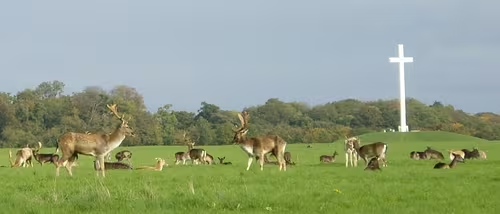
The park holds Dublin Zoo, Áras an Uachtaráin (the President's official residence), the US Ambassador's residence, and the headquarters of the Irish police. A herd of around 600 wild fallow deer roams freely across the grassland — they've been here since the 1600s and are easy to spot most mornings near the Fifteen Acres area. The 11-kilometre perimeter wall encloses enough space that you can walk for hours without doubling back.

For locals it's primarily a running and cycling park. The wide tree-lined avenues are fast and flat, and on weekend mornings the main road through the park is closed to cars.

Hours Open 24/7
Price Free
Insider TipThe fallow deer are most reliably seen around the Fifteen Acres (the central grassland area) in the early morning, especially on weekday mornings before dog walkers arrive. Get there before 9am for the best chance.
Get Your Own Private Tour with AI Guide
AI Guide
  • Personalized tour tailored to your interests
  • Your AI guide tells stories, shares facts, and cracks jokes
  • Turn-by-turn GPS navigation
  • Available in your language — no download needed
Try for Free

Explore with AI Guide

AI Guide App

Get personalized tours with our AI-powered guide. No download needed — works right in your browser.