Self-Guided Walking Tour in Hanga Roa

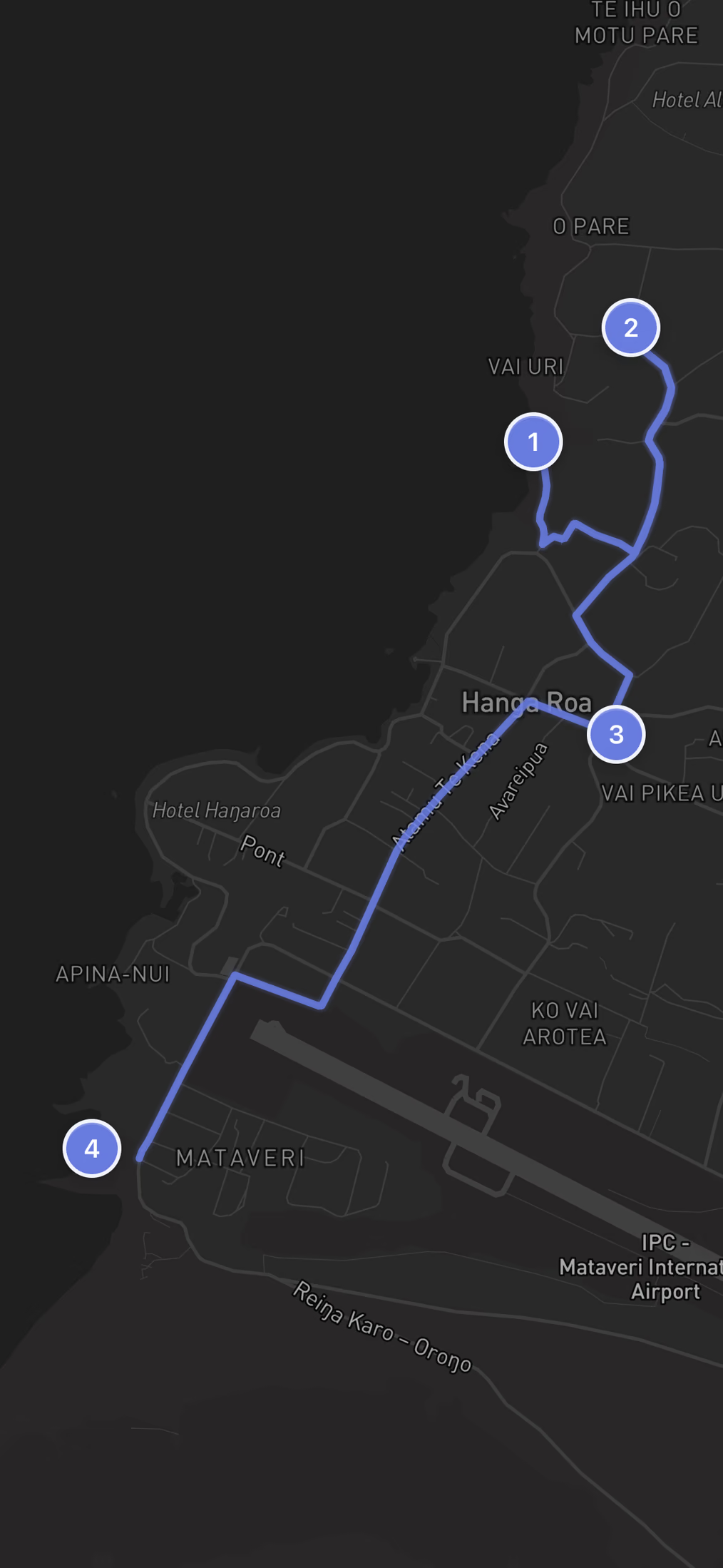
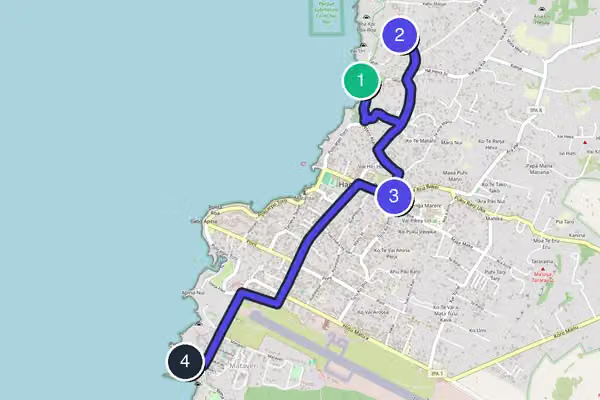
A four-stop coast walk through Hanga Roa, from the moai at Ahu Tahai north of the village down to the painted sea cave of Ana Kai Tangata in the south, about 5.7 km one way. This page maps every leg with real walking times, current opening hours and the single ticket you actually need, plus shorter versions.

4 Stops5.7 km~2 hours walking2.5–3 hours with stops
What you get with AI Tourguide
Full GPS navigationInteractive AI guidePersonalized to youWorks in your browser
Try this tour with Alex

Hanga Roa Walking Tour at a Glance

This route is built for your first day on Rapa Nui, when you want the island to make sense before you spend money on the far inland sites. It links the four things you can reach on foot straight out of Hanga Roa, and every interior is optional: the outdoor stops carry the walk on their own, and you decide whether to step inside the museum or the church. Nobody sets your pace, nobody herds you back to a van.

StartTahai
FinishAna Kai Tangata
Route typeA point-to-point arc, not a loop: it runs roughly north to south down the west coast, from Ahu Tahai through the village to the sea cave, with no backtracking unless you choose to return to Tahai for sunset.
Realistic timeAbout 2.5 to 3 hours if you stop properly, and longer if you time the final stretch for sunset back at Ahu Tahai.
DifficultyEasy to moderate: 5.7 km, mostly flat along the coast and through the village, with one short descent over wet volcanic rock at the sea cave.
Cost to followThe walk itself is free. The one unavoidable cost is the Rapa Nui National Park pass at USD $100, which you need anyway for the rest of the island; the museum, church and cave cost nothing.
Best for:

First-timers on Easter Island who want an orientation on foot, walkers happy with a few flat kilometres, and travellers who would rather understand the moai than just photograph them.

The Route

Free Walking Tour Map of Hanga Roa

4 stops5.7 kmabout 2 hours
Loading the interactive map…The complete walking route will appear here.
Want the route to guide you while you walk?Open the route with navigation and a personal guide for the history, stories and questions that matter to you.
Open route + AI guide

The 4 stops along this route

  1. Tahai in Hanga Roa, stop 1 on the self-guided walking tour
    1Tahai
  2. Father Sebastian Englert Anthropological Museum (Museo Antropológico Padre Sebastián Englert) in Hanga Roa, stop 2 on the self-guided walking tour
    2Father Sebastian Englert Anthropological Museum (Museo Antropológico Padre Sebastián Englert)
  3. Holy Cross Church, Hanga Roa (Iglesia de la Santa Cruz) in Hanga Roa, stop 3 on the self-guided walking tour
    3Holy Cross Church, Hanga Roa (Iglesia de la Santa Cruz)
  4. Ana Kai Tangata in Hanga Roa, stop 4 on the self-guided walking tour
    4Ana Kai Tangata
  5. That's the complete route.

    If you want more than the map and text, add live navigation and a conversational AI guide while you walk.

    Open route + AI guide
    You made it
Stop 1 of 4
Swipe →

Your Hanga Roa Walking Tour, Stop by Stop

  1. 1

    Tahai

    Tahai in Hanga Roa, stop 1 on the self-guided walking tour

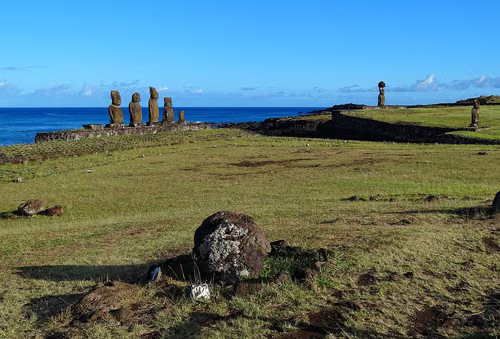
    You hear the surf before you see the stone. Walk to the northern edge of the village and the grass opens onto the sea, and there they are: three ceremonial platforms on a roughly 250 square metre site, the ancestral rapanui ahu strung north to south as Ko Te Riku, Tahai, and Vai Ure. The single moai on Ko Te Riku still wears its replica eyes of coral and obsidian, which is the detail to look for, because almost no moai on the island has them anymore. This is the most reachable moai site you will find, close enough to walk from town, and it sits inside Rapa Nui National Park. The park ticket is USD $100 (CLP $40,000) and covers every site for ten days, so buy it once and keep it. Open daily 9:00 to 21:30. Note the stone village ruins and the grave of archaeologists William and Emily Mulloy beside the platforms. From here, walk south along the coast path toward the museum, signed for the Museo Antropológico, a few minutes inland.
    Hours
    Daily: 9:00 AM – 9:30 PM
    Price
    USD $100 / CLP $40,000 (adult; covers all Rapa Nui National Park sites, 10-day pass)
  2. 2

    Father Sebastian Englert Anthropological Museum (Museo Antropológico Padre Sebastián Englert)

    Father Sebastian Englert Anthropological Museum (Museo Antropológico Padre Sebastián Englert) in Hanga Roa, stop 2 on the self-guided walking tour

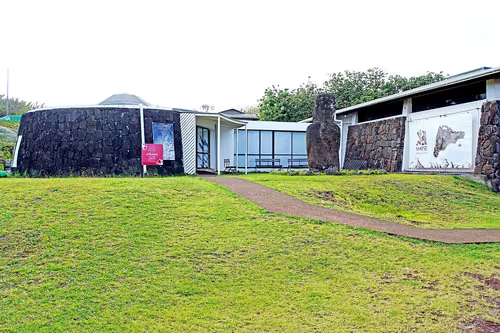
    After the open coast, this low building a short walk south feels like stepping into the quiet that lets the moai make sense. Go inside before you see anything else on the island. Founded in 1973, the museum is named for Father Sebastián Englert, the priest who donated his collection of Rapa Nui objects and documents to start it, and it holds the things you cannot see out in the field: one of the real coral-and-obsidian moai eyes (the eyes from Tahai are replicas, the original is here), a rare female moai, and rongorongo tablets carved with the island's undeciphered script. It also houses the William Mulloy Library, named for the archaeologist buried back at Tahai. Best part: entry is free. Open Tuesday to Friday 09:30 to 13:00 and 14:00 to 17:30, weekends and holidays 09:30 to 12:30, closed December 25 and January 1. Give it 45 minutes. When you leave, head south on the road back into the village, following Atamu Tekena toward the church on Te Pito Te Henua street.

    Hours
    Tue-Fri 09:30-13:00 & 14:00-17:30, Sat-Sun & holidays 09:30-12:30, closed Dec 25 & Jan 1
    Price
    Free
  3. 3

    Holy Cross Church, Hanga Roa (Iglesia de la Santa Cruz)

    Holy Cross Church, Hanga Roa (Iglesia de la Santa Cruz) in Hanga Roa, stop 3 on the self-guided walking tour

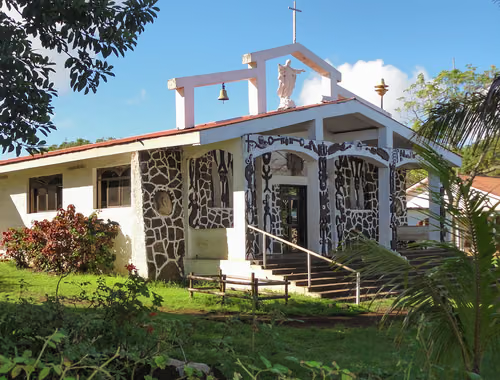
    The village wraps around you now, and on Te Pito Te Henua street the church stands behind its gardens, the building most locals treat as the heart of modern Hanga Roa. The facade is the giveaway: Christian motifs sitting right next to native Rapa Nui imagery. Step inside and look at the wooden saints. They are carved in the local style, and you will find the birdman and makemake worked into figures of Christ, the Virgin, and the saints. Hold that image, because you will meet the birdman again at the last stop. The church was established in 1937 under Father Sebastián Englert, the same priest from the museum. Free to enter. Visiting works best around the services: Mass is Saturday at 16:00 and Sunday at 07:00, 09:00, and 11:00, when you may hear hymns sung in the Rapa Nui language. The artisan market sits right beside it, open Monday to Saturday from 9:00 and Sunday mornings, worth a browse for carvings. From the church, walk south and downhill toward Mataveri and the harbour, then follow the coast road to the sea cave.

    Hours
    Mass Sat 16:00, Sun 07:00/09:00/11:00 (visiting around services; source: easterisland.travel / Parroquia Sta. Cruz 2026)
    Price
    Free
  4. 4

    Ana Kai Tangata

    Ana Kai Tangata in Hanga Roa, stop 4 on the self-guided walking tour

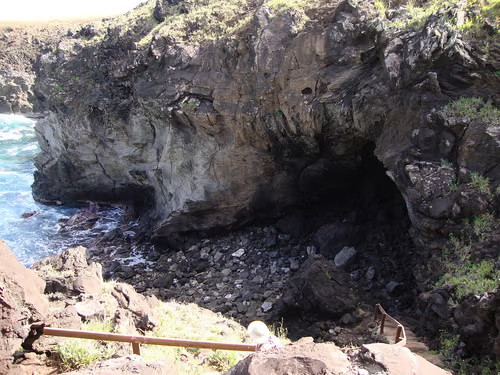
    The walk down to the coast near Mataveri ends with the sea cave, and you will hear the swell rolling straight into it because the mouth opens right onto the incoming waves. Climb down and look up. The ceiling is painted with red and white birdman figures, the manutara sea-bird tied to the same tangata-manu cult whose carvings you just saw inside the church. This is the close of the thread: the gods in stone at Tahai, explained in the museum, fused with Christ at the church, and here painted onto rock centuries ago. It is one of the most visited spots on the island for good reason, and it is free with open access, no separate ticket. Visit in daylight, since there is no schedule and no lighting. Watch your footing on the wet rock at the entrance and never turn your back on the sea here. This is the southern end of the arc, so from the cave you can loop back along the coast into town, or save the return for sunset and walk all the way back up to Ahu Tahai, which is where the day should end.

    Hours
    Daylight hours (open-air cave; no set schedule; source: rapanuitravelguide.com 2026)
    Price
    Free (open-access site within Rapa Nui; no separate ticket)

How Long Does This Walking Tour Really Take?

Plan roughly 2.5 to 3 hours with real stops. The museum earns the most patience at around 45 minutes, since the real moai eye and the rongorongo tablets inside make everything else on the island read better. Ahu Tahai rewards lingering too, but save that for a sunset return rather than the start.

Plan on roughly two and a half to three hours if you stop properly, longer if you time the end for sunset. The museum deserves the most patience: give it a full 45 minutes, because everything you see for the rest of your trip lands better once you have looked at the real moai eye and the rongorongo tablets. Ahu Tahai also rewards lingering, but save that for the return rather than the start. The church and market together take maybe 20 to 30 minutes.

The natural break is the village stretch around the church on Te Pito Te Henua and Atamu Tekena, where the cafes and the artisan market are. Grab a bench or a coffee there before the longer downhill leg to the sea cave, since there is nothing to buy once you are out on the Mataveri coast. Then walk to Ana Kai Tangata, turn back, and aim to be standing at Ahu Tahai as the sun drops into the Pacific. That is the only sunset spot you can reach on foot from town, and it is the right place to end.

Full Route, Shorter Walk or Two-Day Version?

The full arc is four stops over about 5.7 km, and it splits cleanly if you have less time or want to spread it over two visits. The legs are short at the top and longest at the bottom, so the easiest thing to trim is the final downhill stretch to the sea cave.

Village short

Skip the long leg to the cave

Stops 1–3, Ahu Tahai to Iglesia de la Santa Cruz, about 3.2 km and 1.5 hours

Cut the longest leg, the 2.5 km downhill to Ana Kai Tangata, and finish at the church in the heart of the village. You keep the moai, the museum and the birdman carvings, all within an easy flat stretch, and stay close to the cafes and market.

Two easy halves

Split at the museum over two afternoons

Stops 1–2 one afternoon, stops 3–4 the next, roughly an hour each

For a gentler pace or if you land tired, do Ahu Tahai and the museum on the first afternoon, then pick up at the church and walk down to the sea cave another day. The museum is the natural pause between the two halves.

You can walk it the other way, starting at Ana Kai Tangata and climbing north to Ahu Tahai, but the given direction is the better one: it ends at Tahai, the only sunset spot you can reach on foot from town, so you finish the day facing the moai as the sun drops into the Pacific.

Is This Hanga Roa Walking Tour Right for You?

This is a flat, mostly coastal walk with one ticketed site and three free ones, easy to shorten and easy to build a first day around. It suits some travellers better than others, so here is who it fits and how to adapt it.

A good fit if you…

  • First-timers who want to understand Rapa Nui before booking the pricey 4x4 day trips inland
  • Walkers comfortable with about 5.7 km, mostly flat along the coast and through the village
  • Travellers who value context: a real moai eye, rongorongo tablets, and the birdman story tie the four stops together
  • Anyone who wants to end their first afternoon at Ahu Tahai for the island's classic sunset

Adapt the route if you…

  • Short on time or energy: stop at the church (stops 1–3) and skip the 2.5 km leg down to the sea cave
  • Travelling with limited mobility: the descent into Ana Kai Tangata is over wet volcanic rock, so admire it from above or leave it out
  • Arriving late in the day: start at the museum while it is open (it closes 17:30 on weekdays) and save Tahai for last
  • Prefer to spread it out: split at the museum and walk the two halves on separate afternoons

Tickets & Skip-the-Line in Hanga Roa

There is really only one ticket to worry about on this walk, the Rapa Nui National Park pass, and it covers the whole island for ten days. Everything else on this route is free to enter. Here is what to buy, where, and when each place is open.

TahaiYou need the Rapa Nui National Park pass to visit: USD $100 / CLP $40,000 per adult, valid 10 days and covering every park site. Buy it at the CONAF office or the airport on arrival, not from anyone on the street. Open daily 9:00 to 21:30, and since Tahai allows re-entry, the same pass gets you back here for sunset.
Father Sebastian Englert Anthropological Museum (Museo Antropológico Padre Sebastián Englert)Free entry, no ticket needed. Open Tuesday to Friday 09:30–13:00 and 14:00–17:30, weekends and holidays 09:30–12:30, closed Dec 25 and Jan 1. Give it about 45 minutes and time your walk to arrive well before the weekday 17:30 close. official ticket site ↗
Holy Cross Church, Hanga Roa (Iglesia de la Santa Cruz)Free to enter. Visiting works best around the services, when you may hear hymns in the Rapa Nui language: Mass is Saturday at 16:00 and Sunday at 07:00, 09:00 and 11:00. The artisan market beside it is worth a browse for carvings.
Everything elseAna Kai Tangata and the outdoor stretches are free, open-access sites within Rapa Nui with no separate ticket. The sea cave has no set schedule, so visit in daylight and watch your footing on the wet rock at the entrance.
Optional upgrade
The same 4-stop route,
now with navigation and a guide.
Optional AI experience

You already have the route.
The AI guide brings it to life.

Standing at Ahu Tahai with the moai in front of you? Press play and let the guide walk you south through the museum, the church, and the painted sea cave, telling you why the eyes are replicas and how the birdman ended up carved into a Catholic saint. It is self-guided, free to start, and follows the exact coast route under your feet right now.

Livenavigation13languagesAnyquestionYourinterests
Open this route with the AI guide

Try it in your browser · No app or download required

Tips for Walking in Hanga Roa

  • Buy the Rapa Nui National Park ticket before you start, at the CONAF office or the airport on arrival. It is USD $100 / CLP $40,000, covers all sites for 10 days, and you need it the moment you reach Ahu Tahai. Note that some sites (Orongo) allow single entry only, but Tahai does not, so it is fine to return here at sunset on the same pass.
  • Wear real shoes, not flip-flops. The coast path to Tahai is grass and packed earth, the village streets are paved but uneven, and the descent into Ana Kai Tangata is over wet volcanic rock right beside the surf. Trainers with grip, not sandals.
  • There are no public restrooms out on the route, so use them in town. The Museo Antropológico Sebastián Englert has facilities and entry is free, so it doubles as your reliable mid-walk stop before the long coastal leg south.
  • Eat and refill in the village before heading to the sea cave. The cafes and small shops cluster on Atamu Tekena and Te Pito Te Henua near the church. There is nothing for sale on the Mataveri coast, so carry water and a snack from here.
  • For the best photo, stand at Ahu Tahai in the late afternoon and face west, with the moai in front of you and the Pacific behind. This is the island's classic sunset shot and the only one you can walk to. For the cave, shoot upward at the red-and-white birdman ceiling in midday light, since there is no lighting inside.

Why Walk This Route?

Most people fly to Easter Island to see moai standing in a row out in the grass, far from anywhere, and they spend a fortune on guided 4x4 trips to reach them. What almost nobody tells you is that the best introduction to Rapa Nui is a walk you can do on your own two feet, straight out of the only town on the island. Hanga Roa is small. The whole village runs along the west coast, and the sights that matter most for a first day here line up in a single arc from the northern shore down to a sea cave in the south. That is what this walk does: it strings them together so you arrive understanding the island instead of just photographing it.

Why this route specifically? Because the order tells a story. You start at the moai (Ahu Tahai), then walk a few minutes to the museum that explains who carved them and how, then reach the village church where the old birdman religion and Catholicism share the same carved saints, and you finish at the cave where that birdman cult was painted onto the ceiling centuries ago. By the end you have seen the gods twice: once in stone, once in red paint. Wandering would give you none of that thread.

About five and a half kilometres total, mostly flat along the coast with one ticketed site and three that are free. Do it on your first afternoon and the rest of the island makes far more sense. Bring water and the cash for the park ticket, and do not rush Ahu Tahai at the end of the day, because that is where you will want to be at sunset anyway.

Common Questions

Is Hanga Roa safe to walk around?

Yes. Hanga Roa is the only town on Easter Island and it is small and calm, and this whole route stays on the coast and through the village. The real hazards are natural, not human: the surf at Ana Kai Tangata comes straight into the cave mouth, so do not turn your back on it or climb on wet rock near the waves. There are no tourist scams to speak of, but do buy your national park ticket from the official CONAF office or the airport, not from anyone offering one on the street.

What if it rains during my Hanga Roa tour?

Rain on Rapa Nui tends to come in short bursts, so often you can wait it out. If it sets in, the two indoor refuges on this route are the Museo Antropológico Sebastián Englert, which is free and easily worth an hour, and the Iglesia de la Santa Cruz, where you can study the carved saints under cover. The artisan market beside the church is also partly sheltered. Save Ahu Tahai and the sea cave for a clear spell, since both are fully open to the weather.

What's the best time of day for this walking tour?

Start in the early afternoon, around 14:00 or 15:00. That puts you at the museum while it is open (it closes at 17:30 on weekdays, earlier on weekends), gets you through the village and down to Ana Kai Tangata in good daylight, and leaves you walking back up to Ahu Tahai just as the sun is setting into the Pacific. Doing it in this direction means you finish at the island's best sunset spot rather than starting there.

Take this route with you

Open this exact tour with navigation and your personal AI guide.

Start GPS Navigation + AI Guide
AI Tourguide
Researched and curated by the AI Tourguide teamWe plan and quality-check every route, then research and verify the opening hours, prices, and practical tips for each stop along it.
▶ Open route with AI guideNavigation, stories and your questions