Self-Guided Walking Tour in Maracaibo

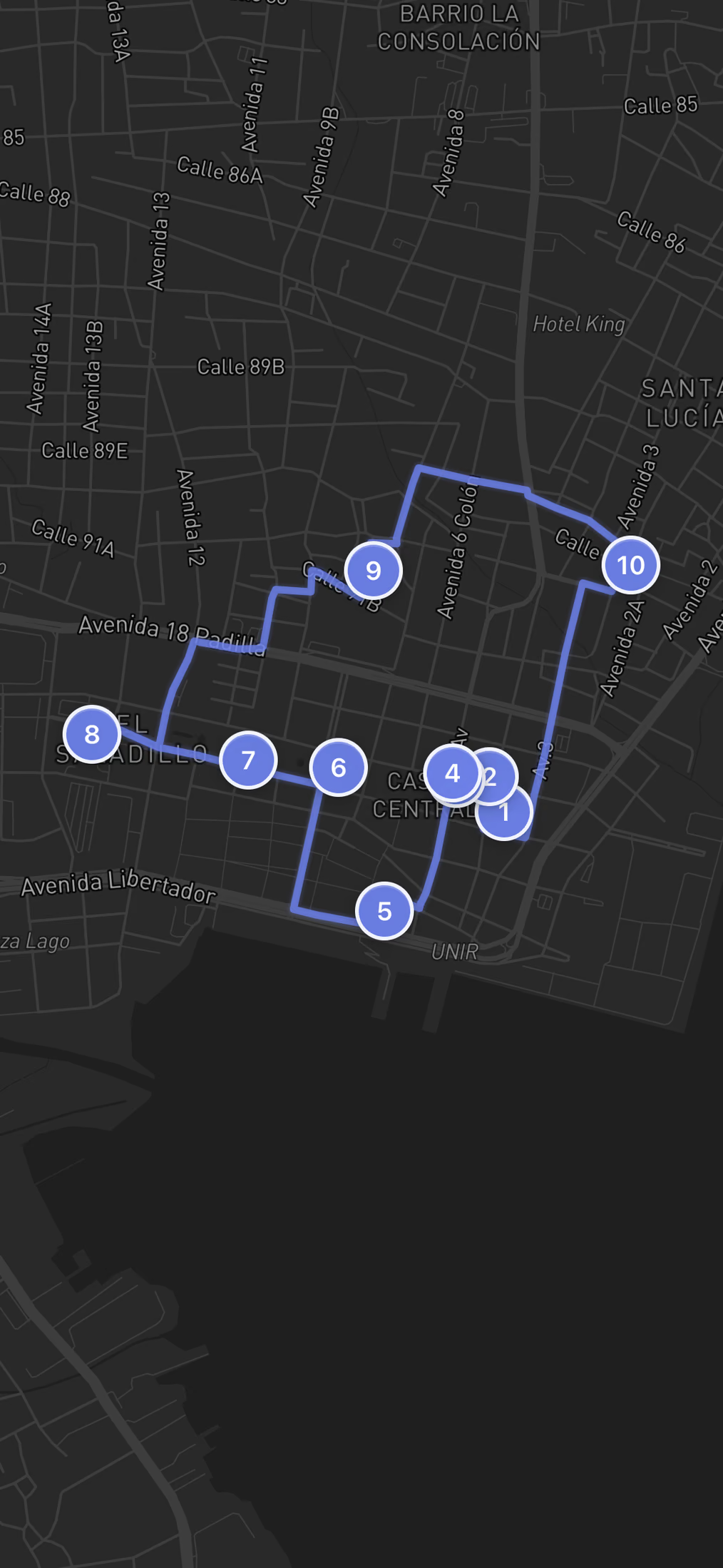
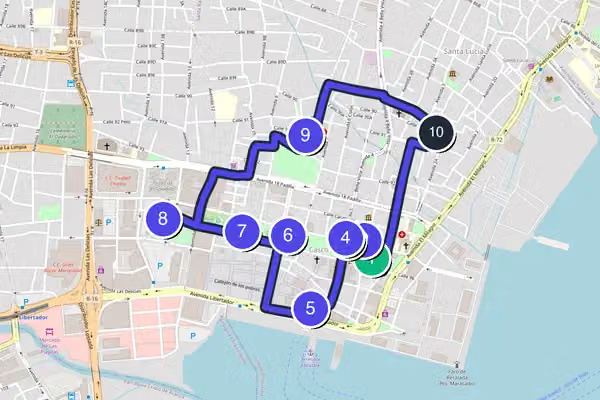
A self-guided walk through Maracaibo's old center: ten stops from the Catedral de San Pedro y San Pablo west to La Chinita and up into Santa Lucía, just under 5 km on foot. This page gives you the map, per-leg walking times, real church hours, and the single paid ticket to plan around.

10 Stops4.9 km~2 hours walking3 to 3.5 hours with stops
What you get with AI Tourguide
Full GPS navigationInteractive AI guidePersonalized to youWorks in your browser
Try this tour with Alex

Maracaibo Walking Tour at a Glance

This route is built for travelers who want Maracaibo's colonial center on foot, without a group and without a fixed schedule. Every interior is optional: the walk from square to square is the spine, and you decide which churches and museums to step into based on the hours and your own interest. Almost everything is free, so timing matters more than money.

StartSt. Peter and St. Paul Cathedral, Maracaibo (Catedral de Maracaibo)
FinishChurch of St. Lucia (Iglesia de Santa Lucía)
Route typeA compact point-to-point through the old center. It clusters around Plaza Bolívar, drops southwest to the lakefront art center, tracks west along Calle Carabobo to La Chinita, then curls northeast and ends in Santa Lucía, only a few blocks from where you began.
Realistic timeWalking alone is about two and a half hours across the 4.9 km. Add the open interiors and it stretches to roughly three to three and a half hours, most of it spent inside La Chinita and the art center.
DifficultyUnder 5 km and flat throughout, so the terrain is easy, apart from the cobbled blocks of Santa Lucía and two longer legs near the end (about 1 km and 900 m). The real challenge is the heat, not the ground.
Cost to followThe outdoor route costs nothing. Every church, the legislature facade, the Lía Bermúdez art center, and the Museo Rafael Urdaneta are free to enter. The only paid stop is the Teatro Baralt guided tour at around US$2 per person.
Best for:

Confident travelers who want the old center's churches and colonial squares on foot, who read opening hours in advance, and who are comfortable moving through a working Latin American downtown.

The Route

Free Walking Tour Map of Maracaibo

10 stops4.9 kmabout 2 hours
Loading the interactive map…The complete walking route will appear here.
Want the route to guide you while you walk?Open the route with navigation and a personal guide for the history, stories and questions that matter to you.
Open route + AI guide

The 10 stops along this route

  1. St. Peter and St. Paul Cathedral, Maracaibo (Catedral de Maracaibo) in Maracaibo, stop 1 on the self-guided walking tour
    1St. Peter and St. Paul Cathedral, Maracaibo (Catedral de Maracaibo)
  2. Palacio Legislativo del Zulia (Palacio Legislativo del Estado Zulia) in Maracaibo, stop 2 on the self-guided walking tour
    2Palacio Legislativo del Zulia (Palacio Legislativo del Estado Zulia)
  3. Missing required field: waypoints[2].image
    3Casa de la Capitulación (Casa Morales)
  4. Baralt Theatre (Teatro Baralt) in Maracaibo, stop 4 on the self-guided walking tour
    4Baralt Theatre (Teatro Baralt)
  5. Centro de Arte Lía de Bermúdez (Centro de arte de Maracaibo Lía Bermúdez) in Maracaibo, stop 5 on the self-guided walking tour
    5Centro de Arte Lía de Bermúdez (Centro de arte de Maracaibo Lía Bermúdez)
  6. Saint Barbara Church (Iglesia de Santa Bárbara) in Maracaibo, stop 6 on the self-guided walking tour
    6Saint Barbara Church (Iglesia de Santa Bárbara)
  7. Plaza y Monumento a la Chinita in Maracaibo, stop 7 on the self-guided walking tour
    7Plaza y Monumento a la Chinita
  8. La Chiquinquirá Church (Basílica de Nuestra Señora de Chiquinquirá) in Maracaibo, stop 8 on the self-guided walking tour
    8La Chiquinquirá Church (Basílica de Nuestra Señora de Chiquinquirá)
  9. Missing required field: waypoints[8].image
    9Museo Rafael Urdaneta
  10. Church of St. Lucia (Iglesia de Santa Lucía) in Maracaibo, stop 10 on the self-guided walking tour
    10Church of St. Lucia (Iglesia de Santa Lucía)
  11. That's the complete route.

    If you want more than the map and text, add live navigation and a conversational AI guide while you walk.

    Open route + AI guide
    You made it
Stop 1 of 10
Swipe →

Your Maracaibo Walking Tour, Stop by Stop

  1. 1

    St. Peter and St. Paul Cathedral, Maracaibo (Catedral de Maracaibo)

    St. Peter and St. Paul Cathedral, Maracaibo (Catedral de Maracaibo) in Maracaibo, stop 1 on the self-guided walking tour

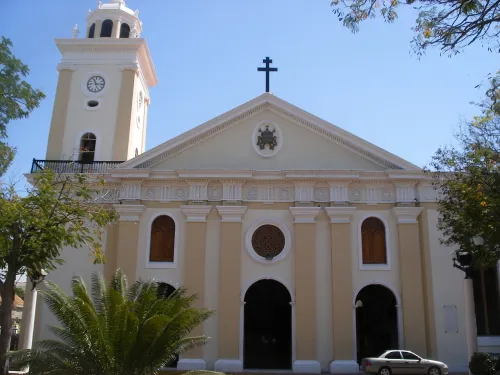
    Start where the city started, on the east side of Plaza Bolívar. The cathedral here is the mother church of Maracaibo, raised to cathedral rank by a papal bull from Leo XIII on 28 July 1897. Inside, the draw is the Cristo Negro de Gibraltar, a darkened wooden Christ that locals treat with deep devotion. Entry is free, which makes the strange opening hours the only real obstacle. The doors open very early, roughly 4:00 to 6:30 in the morning and again 8:00 to noon on weekdays, with shorter windows on weekends. If it is locked, do not panic, the facade and the square are the point at this first stop anyway. Give it ten minutes, then turn and look across the plaza. The pale neoclassical block on the north side is your next stop, a short walk along the square.
    Hours
    Mon-Fri: 4:00 – 6:30 AM, 8:00 AM – 12:00 PM | Sat: 4:00 – 6:30 AM | Sun: 4:30 – 6:30 AM, 7:00 – 11:00 AM
    Price
    Free
  2. 2

    Palacio Legislativo del Zulia (Palacio Legislativo del Estado Zulia)

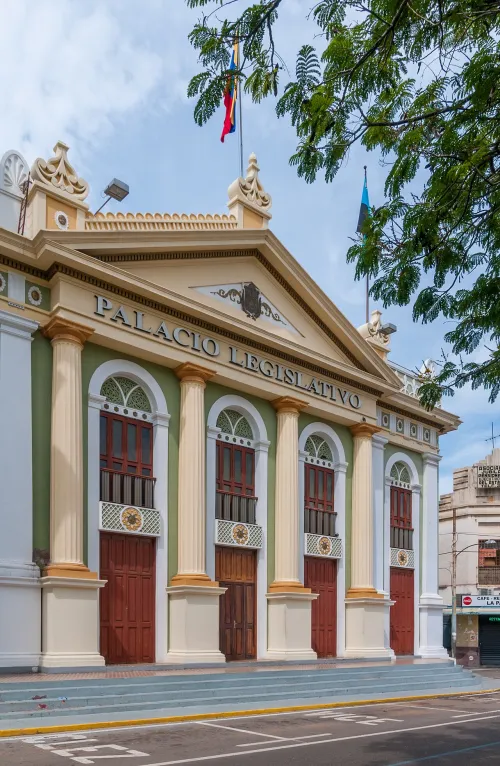
    Palacio Legislativo del Zulia (Palacio Legislativo del Estado Zulia) in Maracaibo, stop 2 on the self-guided walking tour

    A few steps along the plaza brings you to the Palacio Legislativo, the seat of Zulia's state assembly. This is the columned, formal block that gives Plaza Bolívar its civic weight, sitting right beside the Palacio de los Cóndores where the state executive works. It is a working government building, not a museum, so you admire it from the square rather than touring the halls. Hours are weekdays 9:00 to 5:00, closed weekends, and any interior visit is by prior arrangement only. Honestly, for most walkers this is a facade stop: clean lines, good for a photo, two minutes of your time. The real value is understanding that this single square holds the city's church, its parliament, its oldest house, and its theater all at once. Walk west along the plaza toward the corner, and the modest old house with the colonial roofline is next.

    Hours
    Mon-Fri: 9:00 AM – 5:00 PM | Sat-Sun: Closed
    Price
    Free (government building; guided visits by arrangement)
  3. 3

    Casa de la Capitulación (Casa Morales)

    Missing required field: waypoints[2].image

    This is the quiet one that matters most. Tucked on the western side of the square, the Casa de la Capitulación, also called Casa Morales, is the only colonial house still standing on Plaza Bolívar. Everything else around it was rebuilt; this survived. The name comes from the document signed here that sealed the Spanish capitulation of 1823, ending Spanish rule on the lake. Today it works as a free museum. The hours are tight and a little awkward: Monday and Tuesday 9:00 to 3:00, Wednesday through Friday 9:00 to 5:00, and closed all weekend. If you are here on a Saturday or Sunday you will only get the exterior, so plan a weekday morning if the inside matters to you. The whitewashed walls and low colonial proportions are a real contrast to the grand stone around them. Right next door, sharing the same corner, stands the theater.

  4. 4

    Baralt Theatre (Teatro Baralt)

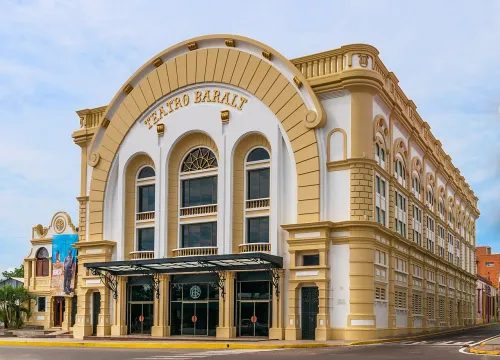
    Baralt Theatre (Teatro Baralt) in Maracaibo, stop 4 on the self-guided walking tour

    Diagonal to the plaza on Avenida 5 at calle 95, the Teatro Baralt is the cultural heart of the old center and has a stubborn history of dying and coming back. The first Baralt theater dates to 1847 and was demolished after just three years because the materials were rotten. A second opened on 24 July 1883, then it too was destroyed in 1928. The building you see now went up and opened in 1932. This is where Venezuela's first film was screened, and it is a recognized National Historic Monument. Unlike the free stops, this one has a ticket: around US$2 per person for a guided tour, offered Monday to Wednesday mornings between 9:00 and noon. General hours are weekdays 8:00 to 5:00. If you care about the interior and the stage, time your walk for a weekday morning and pay the two dollars; it is worth it. From here, head downhill toward the lake, walking south to the waterfront.

    Hours
    Mon-Fri: 8:00 AM – 5:00 PM | Sat-Sun: Closed
    Price
    US$2 per person (adults and children, guided tour Mon-Wed 9:00-12:00)
  5. 5

    Centro de Arte Lía de Bermúdez (Centro de arte de Maracaibo Lía Bermúdez)

    Centro de Arte Lía de Bermúdez (Centro de arte de Maracaibo Lía Bermúdez) in Maracaibo, stop 5 on the self-guided walking tour

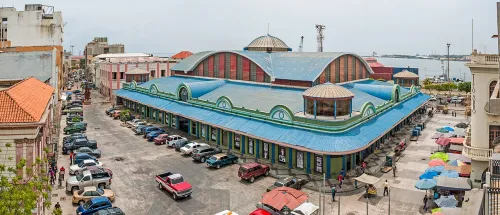
    Walk down toward the water and the building changes character completely. The Centro de Arte Lía Bermúdez sits in a grand 1928 rotunda that spent decades as the city's main public market before it was reborn as an art center, founded as a foundation in 1990 and opened in 1993. It carries the name of the Venezuelan sculptor Lía Bermúdez, and it was declared a National Monument back in 1986. The Beaux-Arts shell alone justifies the detour, all curves and light near the lakefront. General entry is free, though ticketed concerts and events come and go. Hours run Monday to Saturday 9:00 to noon and 1:00 to 5:00, with Sunday 10:00 to 4:00. Give it twenty to thirty minutes; the rotating exhibitions and the architecture are the reward. When you are done, double back inland and turn west along Calle Carabobo, the spine that leads to the next church.

    Hours
    Mon-Sat: 9:00 AM – 12:00 PM, 1:00 – 5:00 PM | Sun: 10:00 AM – 4:00 PM
    Price
    Free (general access; ticketed events vary)
  6. 6

    Saint Barbara Church (Iglesia de Santa Bárbara)

    Saint Barbara Church (Iglesia de Santa Bárbara) in Maracaibo, stop 6 on the self-guided walking tour

    Walking west along the Calle Carabobo axis, you reach Santa Bárbara, set within the Paseo Los Libertadores between the plaza and the basilica. This is the church with the most tangled story in the whole city. An ermita already stood here by 1583, it was rebuilt from 1618 into a chapel, and the current neo-Gothic and neoclassical form came out of an 1862 reconstruction with later twentieth-century touches. The fights over who controlled it pulled in friars, bishops, and even the King of Spain. Inside it keeps a neo-Gothic pipe organ made in France, now silent, and the death certificate of the poet Udón Pérez. It was declared cultural heritage of Zulia on 2 August 1960. One catch: the hours are brutal. It is closed Monday through Saturday and only opens Sunday morning, 8:00 to noon. Treat it as a facade stop unless it is Sunday. Continue west along the same axis toward the bright open square ahead.

    Hours
    Mon-Sat: Closed | Sun: 8:00 AM – 12:00 PM
    Price
    Free
  7. 7

    Plaza y Monumento a la Chinita

    Plaza y Monumento a la Chinita in Maracaibo, stop 7 on the self-guided walking tour

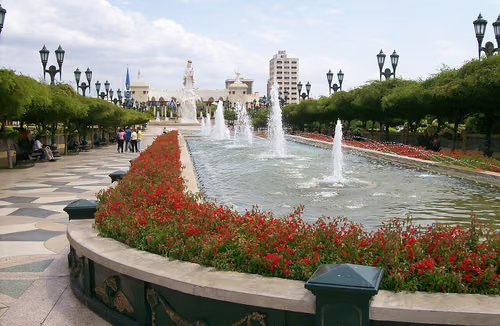
    The street opens out and the air feels different here, with fountains and flower beds spreading in front of you. This is the Paseo de la Chinita, also called the Plaza del Rosario, built starting in 2002 and inaugurated on 24 March 2004. It honors the Virgen de Chiquinquirá, patron of Zulia, and a religious event dated to 18 November 1709. The whole plaza is crowned by an 8-meter sculpture of the Virgin Mary on a 7-meter base, ringed by angels and cherubim, and it divides into three sections: San Juan de Dios, the Monument of the Virgin, and San Sebastián. It is open around the clock and free. This is the warm-up act, deliberately placed a few meters short of the basilica itself so the approach builds. Sit on the edge of a fountain for a minute, then walk the last short stretch west. The twin towers ahead are the reason most people come to Maracaibo at all.

    Hours
    Open 24/7
    Price
    Free
  8. 8

    La Chiquinquirá Church (Basílica de Nuestra Señora de Chiquinquirá)

    La Chiquinquirá Church (Basílica de Nuestra Señora de Chiquinquirá) in Maracaibo, stop 8 on the self-guided walking tour

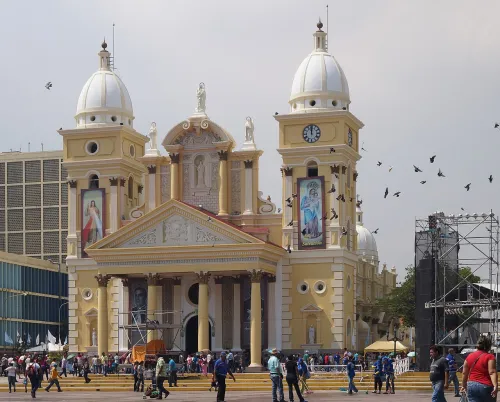
    This is the one. La Chinita is the most visited church in all of Zulia, and you feel that the moment you step inside; on a busy day the candles, the murmured prayers, and the crowd around the image make the rest of the walk feel quiet by comparison. The basilica is dedicated to the Virgen de Chiquinquirá, patron of the state, tied to a colonial-era apparition to a native Venezuelan. The building has three naves and two towers, a high altar, a presbytery, and rows of niches for different saints. Entry is free and the doors are open daily, roughly 9:00 to 6:30 in the evening, which makes this the easiest church on the route to actually get into. Give it real time, fifteen or twenty minutes at least, and keep your voice down and your camera respectful; this is an active shrine, not a photo set. When you leave, you turn the loop back, heading northeast toward the house-museum on the way to Santa Lucía.

    Hours
    daily 09ː00-18ː30
    Price
    Free
  9. 9

    Museo Rafael Urdaneta

    Missing required field: waypoints[8].image

    Heading northeast off the basilica, on the spine toward Santa Lucía, you reach the house-museum dedicated to Rafael Urdaneta, the Zulian general who fought for Venezuelan independence. The museum is said to sit on the spot where he was born, and inside it chronicles the history of Maracaibo alongside his story. Entry is free. The hours are friendlier than the churches: Monday to Friday 8:00 to 3:00, Saturday 9:00 to 1:00, closed Sunday. It is a modest stop, not a blockbuster, so budget fifteen minutes or so. The value is context, the man this whole city keeps naming things after, the bridge over the lake included. After the intensity of the basilica, this small, quiet house is a good place to slow down. From here keep climbing northeast, and the streets start to change color as you near the heritage quarter.

  10. 10

    Church of St. Lucia (Iglesia de Santa Lucía)

    Church of St. Lucia (Iglesia de Santa Lucía) in Maracaibo, stop 10 on the self-guided walking tour

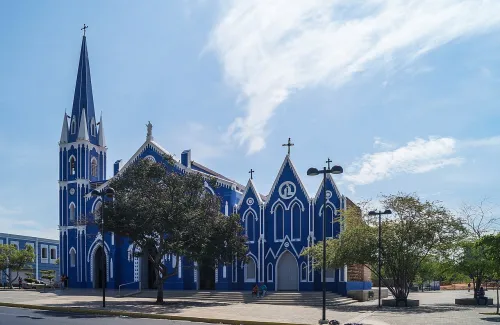
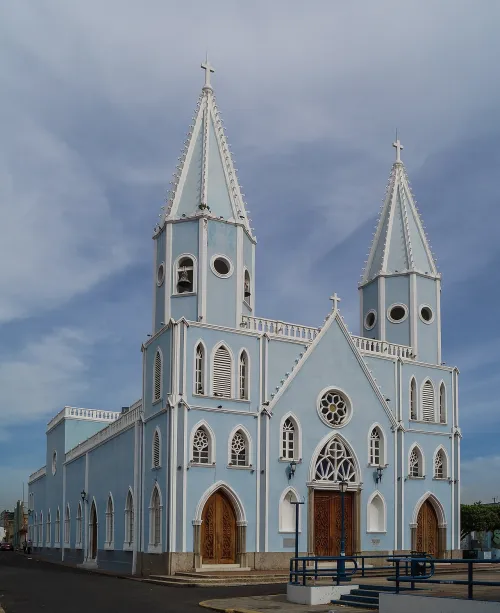
    The walk ends in the prettiest part of Maracaibo. Santa Lucía, also known as El Empedrao, is the old painted barrio of colonial houses in flat blocks of color, and the parish church anchors it. The neo-Gothic church grew out of a group of parishioners who met from 1834 hoping to build a temple to the Sicilian martyr; work began in 1867 under Zulia president Venancio Pulgar and finished in 1876, with a full reconstruction in the twentieth century. The devotion to Santa Lucía, patron of sight and the throat, is second only to La Chinita in this city. Entry is free, but the hours are scattered: closed Monday, short evening windows Tuesday to Saturday, and a Sunday morning slot 9:00 to noon plus a brief Sunday evening one. Even if the door is shut, the painted streets around it are the photo you came for. This is the natural end of the loop. Wander the colored blocks before you head out.

    Hours
    Mon: Closed | Tue-Wed: 5:30 – 7:00 PM | Thu: 5:30 – 8:00 PM | Fri-Sat: 5:30 – 7:00 PM | Sun: 9:00 AM – 12:00 PM, 5:00 – 6:00 PM
    Price
    Free

How Long Does This Walking Tour Really Take?

Under 5 km of walking, roughly two and a half hours on foot, three to three and a half if you go inside the open buildings. La Chinita deserves fifteen to twenty minutes on its own, and the Lía Bermúdez art center wants another twenty to thirty when an exhibition is up.

Plan on roughly three to three and a half hours if you actually go inside the open buildings, less if you treat the closed churches as facade stops. The walking itself is under 5 km and not strenuous, but the heat and the time spent inside the two big draws are what stretch it out. The basilica of La Chinita deserves the most time, fifteen to twenty minutes minimum, and the Lía Bermúdez art center wants another twenty to thirty if an exhibition is on.

The natural place to break is right in the middle, at the Plaza y Monumento a la Chinita. It is open all day, it has fountains and flower beds, and sitting on the edge of one of the fountains in the shade is the best free rest stop on the whole loop. Do it just before you enter the basilica, so you go in cooled down rather than dripping. If you want food and a chair, the area around Plaza Bolívar at the start has the most options; eat early before the midday heat peaks. Santa Lucía at the end is for slow wandering, not rushing, so leave yourself a relaxed half hour there.

Full Route, Shorter Walk or Two-Day Version?

The full loop stitches ten stops into just under 5 km, but the last two legs (about 1 km and 900 m up to Santa Lucía) are where the distance adds up. If you have less time or the heat is winning, here are three ways to walk it.

The short version

Plaza Bolívar to La Chinita

Stops 1 to 8, ending at the Basílica de Nuestra Señora de Chiquinquirá, about 2 hours.

This cuts the two longest legs, the 1 km haul to the Museo Rafael Urdaneta and the 900 m stretch to Santa Lucía, and ends at the emotional core of the city instead. You keep every church and both squares, and you finish next to the plaza where you can grab shade and a taxi.

The two-day split

Center one day, Santa Lucía the next

Day one stops 1 to 8 (about 2 hours); day two stops 9 to 10, the museum and Santa Lucía (about 90 minutes).

For anyone who wants to beat the heat or has kids in tow. Day one covers Plaza Bolívar, the art center, and the walk to La Chinita. Day two is the easier northeast leg to the Museo Rafael Urdaneta and a slow late-afternoon wander through the colored blocks of Santa Lucía.

You can walk it in reverse, from Santa Lucía down to Plaza Bolívar, but the given direction is the better one. It puts you at the tight morning church windows around Plaza Bolívar first, and it saves the painted streets of Santa Lucía for the warm afternoon light that photographs best.

Is This Maracaibo Walking Tour Right for You?

Whether this exact walk suits you depends on your legs, your tolerance for heat, and how much you care about getting inside the churches versus photographing their facades. Here is who it fits and how to bend it.

A good fit if you…

  • Walkers comfortable with just under 5 km on flat but sometimes uneven, cobbled streets
  • Travelers who want colonial churches and squares over museums, since almost every stop is a church or plaza
  • Budget travelers, because the entire outdoor route is free apart from one US$2 theater ticket
  • Early risers who can start by 8 or 9 to beat the heat and catch the short weekday church hours

Adapt the route if you…

  • You are traveling with small children or in peak heat: use the two-day split so nobody wilts on the long final legs
  • You only have a couple of hours: walk the short version, stops 1 to 8, and end at La Chinita
  • It is a Sunday: several churches (Santa Bárbara, Santa Lucía) open only in narrow morning windows, so front-load your day
  • The interiors matter to you: skip the walk on Saturday and Sunday, when the legislature, the theater tour, and the museum are all closed

Tickets & Skip-the-Line in Maracaibo

There are no ticket lines to skip in Maracaibo: almost every stop is free, and the one paid stop is a US$2 walk-up. The real planning problem here is hours, not queues. Churches keep short and unusual windows, so this is what to book, what to time, and what you can just walk into.

Baralt Theatre (Teatro Baralt)The only paid stop on the walk. The guided tour is about US$2 per person and runs Monday to Wednesday between 9:00 and noon only; general building hours are weekdays 8:00 to 5:00, closed weekends. Bring small US dollars in cash, since downtown card payment is unreliable.
Centro de Arte Lía de Bermúdez (Centro de arte de Maracaibo Lía Bermúdez)Free general entry, with ticketed concerts and events coming and going. Hours are Monday to Saturday 9:00 to noon and 1:00 to 5:00, plus Sunday 10:00 to 4:00. Check its channels for what is on before you go. official ticket site ↗
Museo Rafael UrdanetaFree to enter. Friendlier hours than the churches: Monday to Friday 8:00 to 3:00 and Saturday 9:00 to 1:00, closed Sunday. A good covered stop on a weekday or Saturday morning. official ticket site ↗
St. Peter and St. Paul Cathedral, Maracaibo (Catedral de Maracaibo)Free, but the hours are unusual: weekdays roughly 4:00 to 6:30 in the early morning and again 8:00 to noon, with shorter windows on weekends. Aim for the 8:00 to noon slot on a weekday, or treat the facade and the plaza as the stop.
Saint Barbara Church (Iglesia de Santa Bárbara)Free, but the hardest door to catch: closed Monday through Saturday and open only Sunday morning, 8:00 to noon. Unless it is a Sunday, plan on it as a facade stop.
La Chiquinquirá Church (Basílica de Nuestra Señora de Chiquinquirá)Free and the easiest church to actually get into: open daily, roughly 9:00 to 6:30. This is an active shrine, so keep your voice down and be respectful with the camera.
Church of St. Lucia (Iglesia de Santa Lucía)Free, but with scattered hours: closed Monday, short evening windows Tuesday to Saturday (5:30 to 7:00, with Thursday to 8:00), and Sunday 9:00 to noon plus a brief evening slot. Even if the door is shut, the painted streets around it are the real reason to come.
Everything elseThe remaining stops, Plaza Bolívar and the Palacio Legislativo facade, the Casa de la Capitulación exterior, and the Plaza y Monumento a la Chinita, are free open spaces you can simply walk up to at any time.
Optional upgrade
+6
The same 10-stop route,
now with navigation and a guide.
Optional AI experience

You already have the route.
The AI guide brings it to life.

Standing on Plaza Bolívar with the cathedral on one side and the Teatro Baralt on the other? Hit start and let the guide walk you west to La Chinita, telling the story of the Cristo Negro and the 1823 capitulation as you go. It keeps pace with you, so you can linger in the basilica or skip a closed church without losing the thread.

Livenavigation13languagesAnyquestionYourinterests
Open this route with the AI guide

Try it in your browser · No app or download required

Tips for Walking in Maracaibo

  • Start at Plaza Bolívar between 8:00 and 9:00 in the morning. You beat the worst of the heat, you catch the cathedral's 8:00 to noon weekday window, and the legislature and Casa de la Capitulación are both open by then on weekdays.
  • These are downtown streets, some cobbled and uneven especially in Santa Lucía (El Empedrao literally means the paved one). Wear closed, flat shoes with grip, not sandals, and watch your footing on the older blocks.
  • The most reliable free restroom on the route is at the Centro de Arte Lía Bermúdez, open Monday to Saturday and Sunday afternoons. Use it there; downtown public toilets are scarce.
  • The Teatro Baralt guided tour is the one paid thing on the walk and a bargain at about US$2 per person, but it only runs Monday to Wednesday between 9:00 and noon. Bring small US dollars in cash; downtown card payment is unreliable.
  • For the classic Maracaibo photo, shoot the painted houses of Santa Lucía in late-afternoon light, facing the colored facades with the sun behind you. The flat color blocks pop most in the warm hour before sunset.

Why Walk This Route?

Maracaibo wears its heat like a second skin, and the old center wears its history in a tight little grid you can cover on foot in an afternoon. This is Venezuela's second city, the capital of Zulia, sitting on the western shore of the lake that made it rich on oil. The good news for a walker: the parts worth seeing cluster around two squares and the painted lanes between them. You do not need a car, you do not need a tour bus, and you do not need to wander hoping to stumble onto something. This route stitches the highlights into one loop of just under 5 km.

The reason to walk this specific line instead of zig-zagging on your own is the logic of it. You start at Plaza Bolívar, where the cathedral, the state legislature, the oldest colonial house, and the Teatro Baralt all face the same open square. From there you drop to the waterfront art center, then track west along Calle Carabobo past two churches to La Chinita, the basilica that is the emotional core of the whole city. The loop closes by climbing northeast into Santa Lucía, the candy-colored heritage barrio that most photos of Maracaibo actually come from.

Almost every stop on this walk is free to enter, which is rare anywhere. The catch is that churches here keep short and odd hours, so timing matters more than money. Read the hours on each stop before you set off, because turning up at the wrong moment means a locked door and a photo of a facade. Do this walk in the morning, carry water, and respect that this is a living, working city center, not a museum quarter.

Common Questions

Is Maracaibo safe to walk around?

Walk the historic core in daylight, keep valuables out of sight, and you are doing the sensible thing. The route around Plaza Bolívar, La Chinita, and Santa Lucía is a busy working center, not deserted, which helps. Avoid wandering alone after dark, do not flash phones or cash, and skip the quieter side streets. Carry small US dollars in cash for the Teatro Baralt ticket and water, since card payment downtown is patchy. As anywhere, the main risk is opportunistic theft, not the monuments themselves.

What if it rains during my Maracaibo tour?

Maracaibo is hot and humid and rain tends to come in short, heavy bursts rather than all-day drizzle. If one hits, duck into the open indoor stops: the basilica of La Chinita is open daily 9:00 to 6:30 and the Centro de Arte Lía Bermúdez has long daytime hours Monday to Sunday. Both let you wait out a downpour while still seeing something. The Museo Rafael Urdaneta is another covered option on weekday and Saturday mornings. The plazas and church facades can wait until the sky clears.

What's the best time of day for this walking tour?

Start in the morning, ideally by 8:00 or 9:00. Maracaibo's midday heat is serious, so you want the bulk of the walking done before noon, and the morning is also when the cathedral, the Casa de la Capitulación, and the Teatro Baralt tour are open on weekdays. The one exception is Santa Lucía at the end: its painted houses look best in late-afternoon light, so if you can, save that final stretch for the cooler hours before sunset.

Take this route with you

Open this exact tour with navigation and your personal AI guide.

Start GPS Navigation + AI Guide
AI Tourguide
Researched and curated by the AI Tourguide teamWe plan and quality-check every route, then research and verify the opening hours, prices, and practical tips for each stop along it.
▶ Open route with AI guideNavigation, stories and your questions