Self-Guided Walking Tour in Nida

A linear 5.4 km walk across the Curonian Spit, from Nida Harbour to the top of Parnidis Dune, taking in 6 stops. The page gives you the full map, the walking time for every leg, real prices and opening hours for each museum, and two shorter ways to do it.

6 Stops5.4 km~2 hours walking4–5 hours with stops
What you get with AI Tourguide
Full GPS navigationInteractive AI guidePersonalized to youWorks in your browser
Try this tour with Alex

Nida Walking Tour at a Glance

This route is built for a traveller who wants to actually understand Nida, not just photograph a few weathervanes and drive off. It threads 6 stops onto one linear walk, and every interior along the way is optional: the outdoor route stands on its own, and you decide at each door whether the museum is worth your euros and your time. You set the pace, you choose what to enter, and nothing is booked or timed for you.

StartPort of Nida (Nidos uostas)
FinishParnidis Dune (Parnidžio kopa)
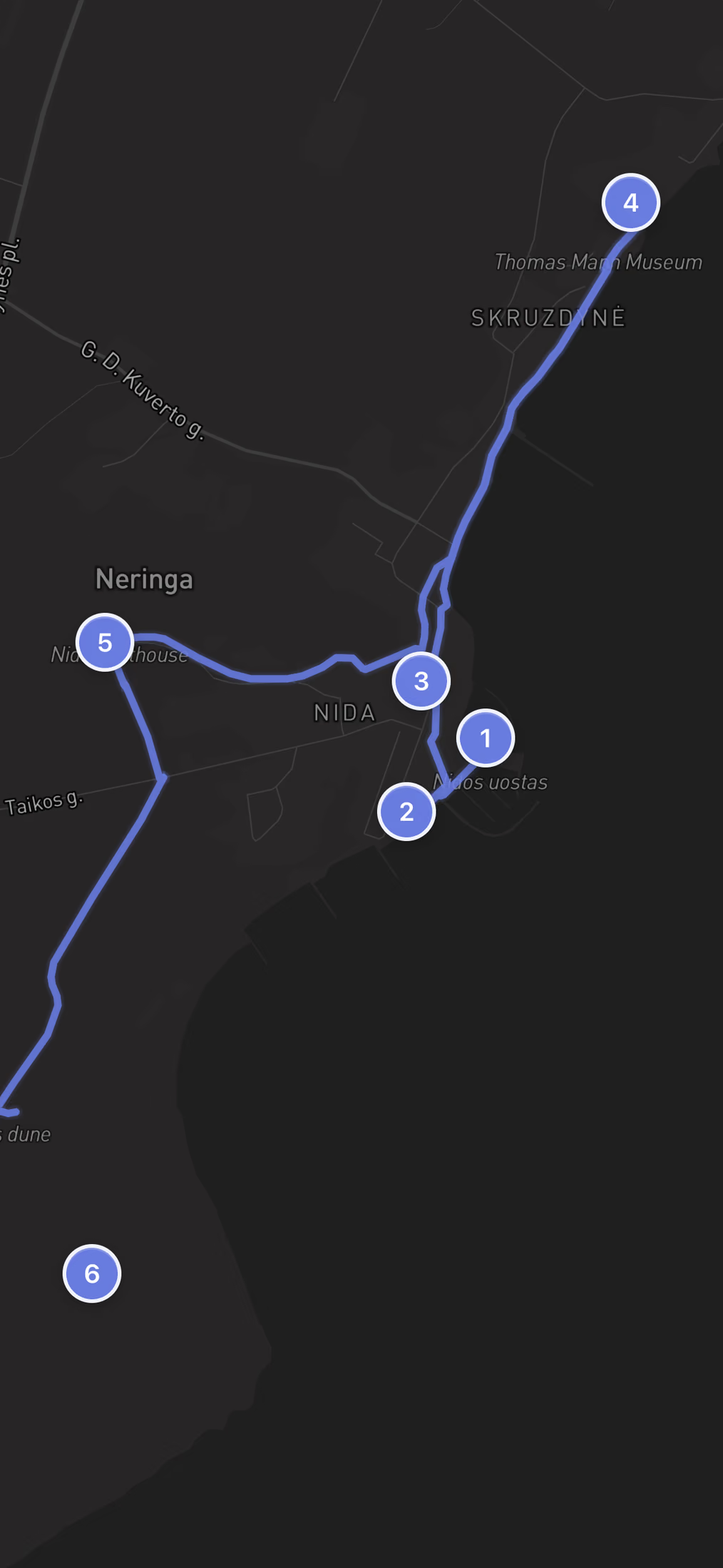
Route typeA linear point-to-point walk, not a loop. It trends broadly south down the spit from the harbour, with one westward climb up to the lighthouse before dropping to the dune, so there is only minor backtracking and you finish well south of where you began.
Realistic timeRoughly an hour and a quarter of pure walking is spread across the 5.4 km, but realistically this is a half-day: add the harbour, the two or three museums you choose to enter, and a long stop on the dune, and you are looking at 4 to 5 hours.
DifficultyEasy for most of its length. The village paths are flat and level, and the only real effort is the sandy climb west to the lighthouse on Urbo hill and the boardwalks up to the dune. No technical terrain, just soft sand and a modest uphill stretch near the end.
Cost to followThe outdoor walk itself costs nothing: the harbour and Parnidis Dune are both free. The paid interiors are the Fisherman's Homestead at €2, the Thomas Mann house at €2.50, the Nida Lighthouse at €5, and the Mizgiris Amber Museum at €9, and you enter only the ones you want.
Best for:

Travellers who like a short, story-rich walk with real variety in a compact space: a working harbour, a literary house, the Baltic amber trade, and one of the highest drifting dunes in Europe, all in a single afternoon on foot.

The Route

Free Walking Tour Map of Nida

6 stops5.4 kmabout 2 hours
Loading the interactive map…The complete walking route will appear here.
Want the route to guide you while you walk?Open the route with navigation and a personal guide for the history, stories and questions that matter to you.
Open route + AI guide

The 6 stops along this route

  1. Port of Nida (Nidos uostas) in Nida, stop 1 on the self-guided walking tour
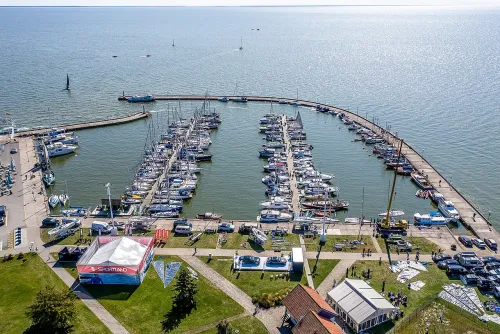
    1Port of Nida (Nidos uostas)
  2. Nida Fisherman's Ethnographic Homestead (Nidos žvejo etnografinė sodyba) in Nida, stop 2 on the self-guided walking tour
    2Nida Fisherman's Ethnographic Homestead (Nidos žvejo etnografinė sodyba)
  3. Mizgiris Amber Museum in Nida, stop 3 on the self-guided walking tour
    3Mizgiris Amber Museum
  4. Thomas Mann Memorial Museum (Tomo Mano memorialinis muziejus) in Nida, stop 4 on the self-guided walking tour
    4Thomas Mann Memorial Museum (Tomo Mano memorialinis muziejus)
  5. Nida Lighthouse (Nidos švyturys) in Nida, stop 5 on the self-guided walking tour
    5Nida Lighthouse (Nidos švyturys)
  6. Parnidis Dune (Parnidžio kopa) in Nida, stop 6 on the self-guided walking tour
    6Parnidis Dune (Parnidžio kopa)
  7. That's the complete route.

    If you want more than the map and text, add live navigation and a conversational AI guide while you walk.

    Open route + AI guide
    You made it
Stop 1 of 6
Swipe →

Your Nida Walking Tour, Stop by Stop

  1. 1

    Port of Nida (Nidos uostas)

    Port of Nida (Nidos uostas) in Nida, stop 1 on the self-guided walking tour

    Start where the village starts. The harbour on Naglių street is small, busy, and free to walk around, with passenger ferries, fishing boats, and pleasure craft tied up along the quay. Come on a weekday and the harbour office is open 8:00 to 17:00, Monday to Friday, though you do not need it open to enjoy the waterfront. This is the centre of village life: people eat smoked fish on the benches, boats come and go, and the lagoon stretches flat and pale toward the mainland. Spend ten minutes here getting your bearings. Look for the brightly painted Curonian weathervanes on some of the masts, a local tradition you will see more of at the next stop. From the harbour, walk southwest along the shore path toward the cluster of old wooden cottages set back from the water.
    Hours
    Mon-Fri: 8:00 AM – 5:00 PM | Sat-Sun: Closed
    Price
    Free
  2. 2

    Nida Fisherman's Ethnographic Homestead (Nidos žvejo etnografinė sodyba)

    Nida Fisherman's Ethnographic Homestead (Nidos žvejo etnografinė sodyba) in Nida, stop 2 on the self-guided walking tour

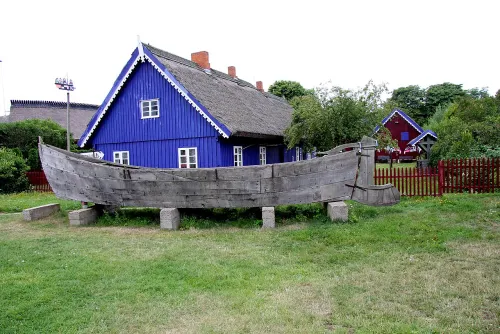
    A short walk from the harbour brings you to a traditional Curonian cottage, low and timber-built, the kind of home a Nida fishing family lived in a century ago. Inside is a small ethnographic museum run by the Neringa museums network: the furniture, the nets, the cramped rooms, and the carved, painted weathervanes that fishermen used to identify their boats out on the lagoon. Entry is €2, and it is open Tuesday to Saturday, 10:00 to 17:00, closed Monday and Sunday, so plan around those closed days. It is a quick visit, fifteen or twenty minutes, but it gives you the human backstory before the village turns toward amber and literature. If the museum is shut, the exterior and the garden weathervanes are still worth the detour. From here, head north back through the village lanes toward Pamario street.

    Hours
    Mon: Closed | Tue-Sat: 10:00 AM – 5:00 PM | Sun: Closed
    Price
    €2
  3. 3

    Mizgiris Amber Museum

    Mizgiris Amber Museum in Nida, stop 3 on the self-guided walking tour

    Baltic amber is the craft that put this coast on the map, and the Mizgiris museum, also signed as the Amber Gallery, is where you get the full story. It sits in the village core and stays open daily, 10:00 to 19:00, which makes it the easy fallback when other museums are closed. Entry runs €9, the priciest stop on this route, so decide whether amber genuinely interests you. If it does, the collection of inclusions, raw lumps with trapped insects and plant matter millions of years old, is the real draw, alongside a garden and shop. If you just want to buy a piece, the shop is free to browse and you can skip the ticket. Either way, this is the place to learn why amber is called Baltic gold before you move on. Continue northeast through the village toward the lagoon shore and the road up to the Thomas Mann house.

  4. 4

    Thomas Mann Memorial Museum (Tomo Mano memorialinis muziejus)

    Thomas Mann Memorial Museum (Tomo Mano memorialinis muziejus) in Nida, stop 4 on the self-guided walking tour

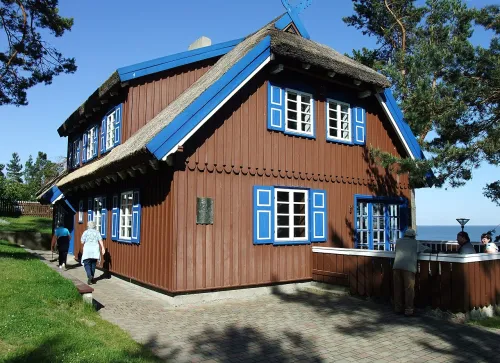
    Set on a slope above the lagoon, this is the literary anchor of Nida. The German writer Thomas Mann, a Nobel laureate, built this summer villa in 1930 and spent the summers of 1930 to 1932 here with his family. The house was nationalised in 1939, nearly demolished after the war, then restored and given museum status in 1995. Today the ground floor holds a permanent exhibition and the upper floor preserves Mann's study, and the place runs as a cultural centre hosting concerts and the international Thomas Mann festival. It is open daily, 10:00 to 18:00, and entry is just €2.50, one of the best-value tickets in the village. Give it half an hour, and step out to the terrace for the lagoon view he wrote about. From here the route turns west and uphill, away from the water, toward the lighthouse on Urbo hill.

    Hours
    Daily: 10:00 AM – 6:00 PM
    Price
    €2.50
  5. 5

    Nida Lighthouse (Nidos švyturys)

    Nida Lighthouse (Nidos švyturys) in Nida, stop 5 on the self-guided walking tour

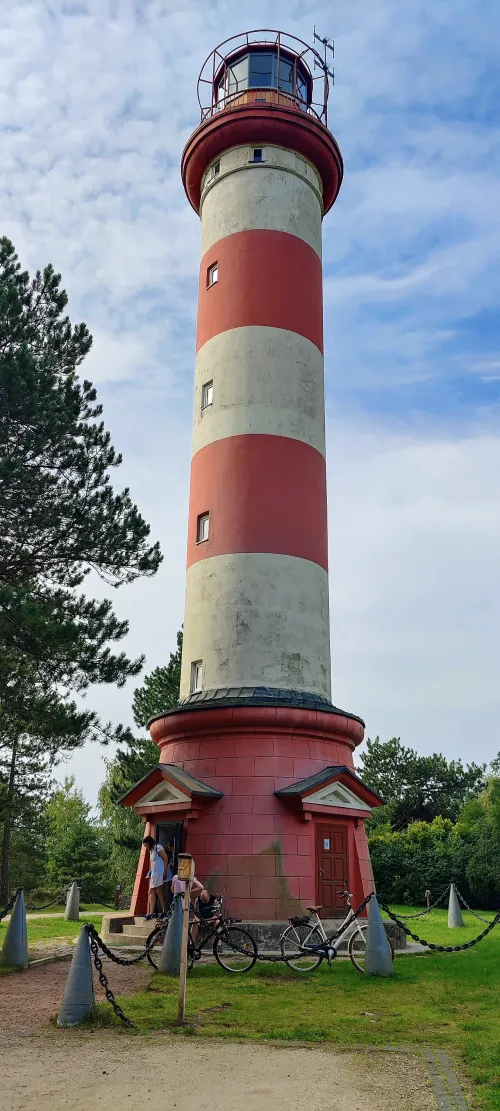
    The climb west to Urbo hill is the steepest part of the day, but it earns you the best orientation point in Nida. The lighthouse stands 79 metres above sea level, 900 metres from the Baltic, and its signal carries roughly 40 kilometres out to sea. You can go up inside for €5, daily from 12:00 to 18:00, and the view stitches the whole spit together: lagoon on one side, sea on the other, the village below, and the pale ridge of dunes to the south where you are headed. If you arrive before noon it is closed, so time it for early afternoon. Even from the base, the hilltop is a fine vantage point and costs nothing. After the lighthouse, follow the forest path south toward the sand. The trees thin, and the dune comes into view.

    Hours
    Daily: 12:00 – 6:00 PM
    Price
    €5
  6. 6

    Parnidis Dune (Parnidžio kopa)

    Parnidis Dune (Parnidžio kopa) in Nida, stop 6 on the self-guided walking tour

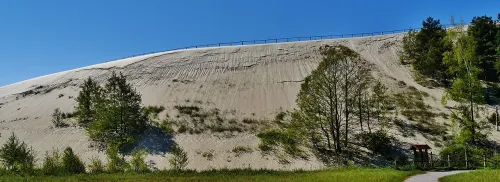
    This is why you came, and saving it for last is the whole point of the route. Parnidis Dune rises 52 metres above the lagoon, one of the highest drifting sand dunes in Europe, and it really does drift: over the centuries it has buried four villages and crept across the village of Nida itself more than once. The summit holds a granite sundial, built in 1995, wrecked by a hurricane in 1999, and rebuilt in 2011. It is open 24/7 and free. From the top you look down into the so-called Valley of Silence and across to the Russian border, with quartz sand so pure it glows pale in low light. Stay on the marked 1.8 km Parnidis trail and boardwalks, because walking on the bare dune is restricted to protect it. Come for sunset if you can. It is the natural finale of the walk and the image you will remember.

    Hours
    Open 24/7
    Price
    Free

How Long Does This Walking Tour Really Take?

The walking alone runs a little over an hour across the whole spit, but the two stops that reward extra time are the Thomas Mann house, where half an hour in the study and out on the lagoon terrace is well spent, and Parnidis Dune, where you will want to linger at the summit sundial rather than hurry back down. Time the dune for the late-afternoon light and the half-day becomes the point of the trip.

Budget around two hours of walking plus stops, so a half-day in total if you go into the museums. The two stops that reward extra time are the Thomas Mann house, where half an hour in the study and on the terrace is well spent, and Parnidis Dune, where you will want to linger at the summit sundial rather than rush back down.

The natural break point is midway, after the amber museum and before the climb to the Thomas Mann house. Head back to the harbour benches on Naglių street, buy a portion of smoked fish from one of the waterfront stalls, and eat it looking at the lagoon. If you would rather sit indoors, the cafes clustered near the harbour serve coffee and cake. Then tackle the uphill stretch to the lighthouse and the dune with fresh legs, ideally timing the dune for the late-afternoon light.

Full Route, Shorter Walk or Two-Day Version?

The full walk is short enough that most people do it in one linear go, but the 5.4 km stretches out at the end, when the legs to the lighthouse and dune get long and sandy. Here are three ways to run it depending on your energy and how much time you have on the spit.

Short Version

Skip the Lighthouse Detour

Stops 1 to 4, then walk straight south to Parnidis Dune, cutting the lighthouse. About 3.6 km, roughly 3 hours.

The longest single leg on the route is the 26-minute stretch west to the lighthouse and back toward the sand. Drop stop 5 and go directly from the Thomas Mann house to the dune, and you lose the steepest climb while keeping the harbour, the museums, and the finale intact.

Two-Day Split

Village Core, Then the Heights

Day one, stops 1 to 3 in the village. Day two, stops 4 to 6 up to the dune. Each half is roughly 2 hours.

The natural break is after the amber museum, before the uphill turn toward the Thomas Mann house. Do the harbour, the fishing homestead, and the amber gallery on an easy first afternoon, then tackle the lighthouse and the dune fresh on the second, ideally reaching the summit near sunset.

You can walk it in reverse, starting on Parnidis Dune and ending at the harbour, and some people prefer to get the sandy climb over first. The order here is recommended because it builds the story from the working village up to the dune, and puts you on the summit for the late light rather than in the harsh midday glare.

Is This Nida Walking Tour Right for You?

This is one of the most walkable villages on the Baltic, but the terrain shifts from flat lanes to soft sand, and the payoff is heavily weighted toward the end. Here is who it suits and how to bend it if you need to.

A good fit if you…

  • Walkers happy with 5.4 km and a modest sandy climb, who want variety over distance in a compact village.
  • Anyone drawn to a mix of fishing heritage, Baltic amber, and literary history rather than one single theme.
  • Photographers chasing the sunset shot from the Parnidis Dune sundial over the Valley of Silence.
  • Museum-minded travellers who like cheap, quick interiors: three of the four cost €5 or less to enter.

Adapt the route if you…

  • You want to skip the climb: drop the lighthouse and go straight from the Thomas Mann house to the dune.
  • You are travelling with limited mobility: the village core stops are flat and easy, but the dune boardwalks and Urbo hill are sandy and uphill.
  • You are here on a Monday or Sunday: the Fisherman's Homestead is closed, so lean on the amber museum and the Thomas Mann house, both open daily.
  • You arrive before noon: the lighthouse only opens at 12:00, so start with the village core and time the climb for early afternoon.

Tickets & Skip-the-Line in Nida

Nothing in Nida needs advance booking. Queues are short even in high summer, and you simply pay at the door. The one thing worth planning is the opening days and hours, because a couple of the museums close on set days and the lighthouse only opens after noon. Here is what each paid stop costs and when to turn up.

Nida Fisherman's Ethnographic Homestead (Nidos žvejo etnografinė sodyba)Entry €2. Open Tuesday to Saturday, 10:00 to 17:00, closed Monday and Sunday. Plan around those closed days; if it is shut, the exterior garden weathervanes are still worth a look.
Mizgiris Amber MuseumEntry €9, the priciest stop on the route. Open daily, 10:00 to 19:00, which makes it the reliable fallback when other museums are closed. The shop is free to browse if you only want to buy a piece.
Thomas Mann Memorial Museum (Tomo Mano memorialinis muziejus)Entry €2.50, one of the best-value tickets in the village. Open daily, 10:00 to 18:00. Book or check hours through the Neringa museums network. official ticket site ↗
Nida Lighthouse (Nidos švyturys)Entry €5 to climb up inside. Open daily, 12:00 to 18:00, so time it for early afternoon; arrive before noon and it is closed, though the hilltop base is a free vantage point either way.
Everything elseNida Harbour and Parnidis Dune are free open spaces with no ticket. The harbour is a public waterfront and the dune is open 24/7, though you must stay on the marked Parnidis trail and boardwalks.
Optional upgrade
+2
The same 6-stop route,
now with navigation and a guide.
Optional AI experience

You already have the route.
The AI guide brings it to life.

Standing at Nida Harbour with the lagoon in front of you? Open AI Tourguide in your browser, no app and no download, and a voice guide walks the whole spit with you up to the summit of Parnidis Dune, greeting you, telling the story at the Thomas Mann house and the lighthouse as you pass, and asking what you want to see so you can watch the boats instead of your screen. A real conversation, not a recording. Start with 100 free credits.

Livenavigation13languagesAnyquestionYourinterests
Open this route with the AI guide

Try it in your browser · No app or download required

Tips for Walking in Nida

  • Timing: buses run along Taikos street and connect Nida with Klaipėda via the Smiltynė ferry. Aim to start the walk by early afternoon so the lighthouse (open 12:00 to 18:00) is accessible and you reach Parnidis Dune near sunset.
  • Terrain and shoes: the village paths are flat and easy, but the stretch up to the lighthouse on Urbo hill and the boardwalks to the dune are sandy and uphill. Closed walking shoes beat sandals once you hit the sand trails.
  • Restrooms: the harbour area on Naglių street has public facilities and cafes, the best toilet stop before the long uphill push to the lighthouse and dune, where there are none on the trail.
  • Food and drink: buy smoked fish from the harbour stalls, a Curonian specialty, usually a few euros a portion. Eat it on the waterfront benches. It is the cheapest, most local meal in Nida.
  • Photo: climb to the Parnidis Dune sundial for the signature shot. Face southwest over the Valley of Silence toward the dune ridge, and go at sunset when the low light turns the pale quartz sand gold.

Why Walk This Route?

Nida is tiny, and that is exactly why a walk works here. The whole village sits on a narrow spit of sand between the Curonian Lagoon and the Baltic Sea, in the far southwest corner of Lithuania, and you can cross most of it on foot in an afternoon. Cars are an afterthought. Bicycles and walking shoes are how locals get around, and the only real elevation comes from the dune you will end on. This route runs about 5.4 km from the harbour to the summit of Parnidis Dune, roughly two hours of actual walking before you start stopping to look at things.

Most people who come to Nida wander aimlessly along the waterfront, photograph a few painted weathervanes, then drive off having missed the point. The point is the contrast: a working fishing harbour, a Nobel laureate's summer house, the Baltic amber trade that built fortunes here, and one of the highest drifting sand dunes in Europe, all within a single linear walk. Doing it in this order means you save the dune for last, which is the right call. You want to arrive there as the light softens.

The route is linear, not a loop, so it ends well south of where it starts. That is fine. The whole village is small enough that walking back to the harbour takes 25 minutes, or you grab a bus on Taikos street. Go in the order below and the story builds the way it should.

Common Questions

Is Nida safe to walk around?

Yes, Nida is about as safe as a destination gets. It is a small, quiet resort village with very little traffic and almost no crime. The main hazards are practical: the dune trails are exposed with no shade, and you should stay on the marked Parnidis path and boardwalks because walking on the bare dune is restricted to protect it from erosion. Carry water on the lighthouse-to-dune stretch, where there are no shops.

What if it rains during my Nida tour?

Duck into the indoor stops. The Thomas Mann Memorial Museum (€2.50, daily 10:00 to 18:00), the Ethnographic Fisherman's Homestead (€2, Tuesday to Saturday), and the Mizgiris Amber Museum (€9, daily 10:00 to 19:00) all give you cover and content. The dune and lighthouse views suffer in heavy rain, so save those for a clear spell. The harbour cafes are a fine place to wait out a shower with coffee and smoked fish.

What's the best time of day for this walking tour?

Early to mid afternoon start. It lets you reach the Nida Lighthouse after it opens at noon, gives you the harbour and museums in good daylight, and puts you on top of Parnidis Dune for sunset, which is the highlight. Summer light on the spit lingers late, so even a 14:00 start leaves plenty of time. Avoid arriving at the dune in the harsh midday glare.

Take this route with you

Open this exact tour with navigation and your personal AI guide.

Start GPS Navigation + AI Guide
AI Tourguide
Researched and curated by the AI Tourguide teamWe plan and quality-check every route, then research and verify the opening hours, prices, and practical tips for each stop along it.
▶ Open route with AI guideNavigation, stories and your questions