Self-Guided Walking Tour in Sucre

A tight 3.7 km loop through Sucre's white old town, starting and ending on Plaza 25 de Mayo and turning at the La Recoleta mirador on the hill. Nine stops: churches, the ASUR weaving museum, the La Recoleta viewpoint, and the two sights behind Bolivia's founding. The page gives you a map, per-leg walking times, real hours and prices in bolivianos, and shorter versions.

9 Stops3.7 km~2 hours walkingAbout 4 hours with stops
What you get with AI Tourguide
Full GPS navigationInteractive AI guidePersonalized to youWorks in your browser
Try this tour with Alex

Sucre Walking Tour at a Glance

This route is built for anyone who wants Sucre's essentials on foot without a bus, a group, or a fixed schedule. It links nine stops across the compact white center, and every interior is optional: the plaza, the churches from the street, and the La Recoleta viewpoint are all free, so you decide which museums and rooftops are worth a ticket. You lead, you set the pace, you skip whatever you like.

StartPlaza 25 de Mayo
FinishSucre Cathedral (Catedral Metropolitana de Sucre)
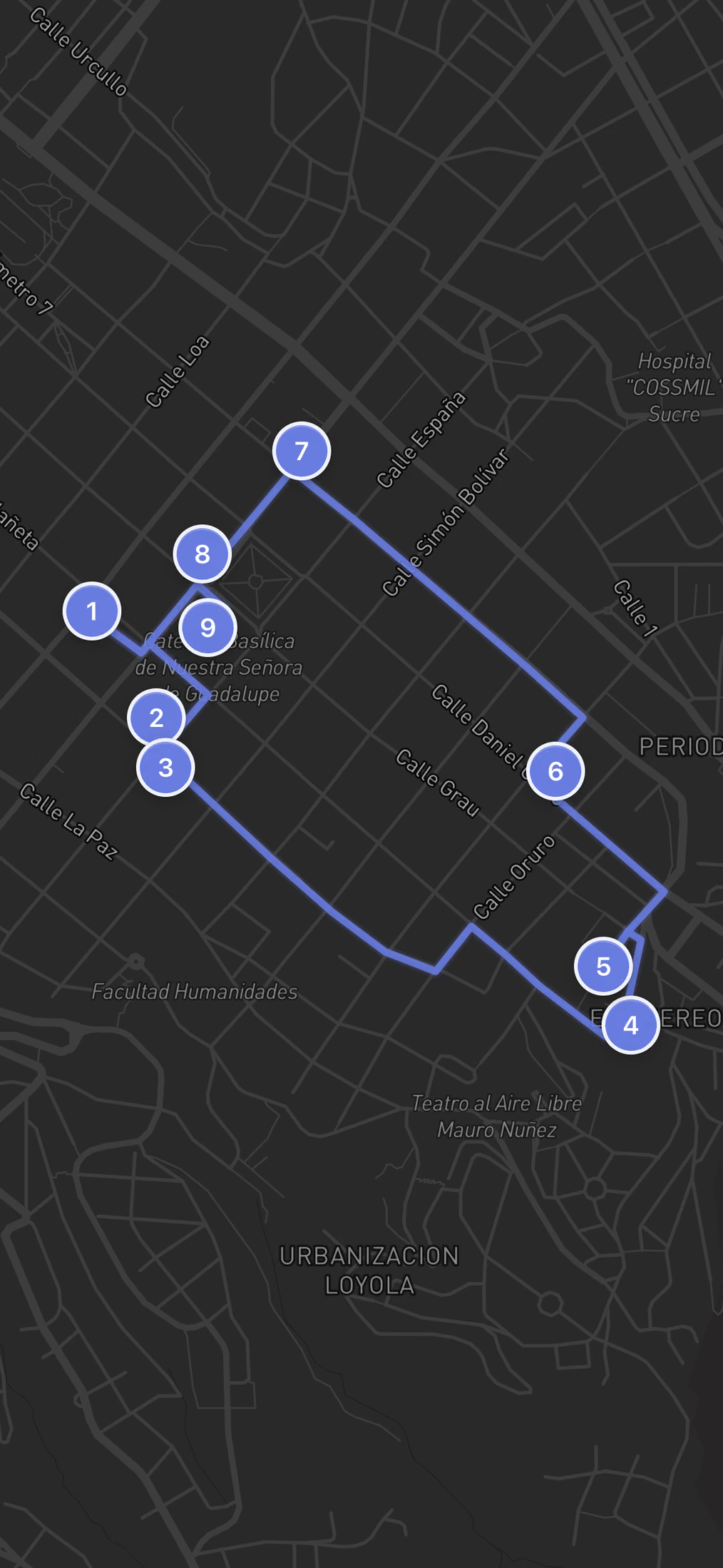
Route typeA compact loop that starts and ends on Plaza 25 de Mayo, running south-east up to the La Recoleta hill on the eastern edge, then curving back north-west through the older churches into the center, so there is almost no backtracking.
Realistic timeWalking alone is a little over 90 minutes across 3.7 km. Add the outdoor stops and viewpoints and it fills a couple of hours; go inside the museums and it becomes a full afternoon of roughly four hours.
DifficultyEasy to moderate over 3.7 km. The center is flat but paved in cobblestone and stone slab, uneven in places, and there is one real, steady uphill from the churches to La Recoleta. At 2,798 meters that climb leaves you breathing harder than you expect.
Cost to followFollowing the route costs nothing. The plaza, the streets, and the free La Recoleta plaza viewpoint are all open. Paid interiors are optional: Casa de la Libertad is Bs 30 for foreigners, the ASUR museum Bs 30, the cathedral museum Bs 20, plus a few churches at Bs 10 to 15.
Best for:

Independent travelers who want Bolivia's founding story, colonial churches, and a hilltop view of the white city in one flat, walkable afternoon, at their own pace.

The Route

Free Walking Tour Map of Sucre

9 stops3.7 kmabout 2 hours
Loading the interactive map…The complete walking route will appear here.
Want the route to guide you while you walk?Open the route with navigation and a personal guide for the history, stories and questions that matter to you.
Open route + AI guide

The 9 stops along this route

  1. Plaza 25 de Mayo in Sucre, stop 1 on the self-guided walking tour
    1Plaza 25 de Mayo
  2. Convento de San Felipe de Neri in Sucre, stop 2 on the self-guided walking tour
    2Convento de San Felipe de Neri
  3. Iglesia de la Merced in Sucre, stop 3 on the self-guided walking tour
    3Iglesia de la Merced
  4. La Recoleta Monastery (La Recoleta) in Sucre, stop 4 on the self-guided walking tour
    4La Recoleta Monastery (La Recoleta)
  5. Museo de Arte Indigena ASUR (Museo de Arte Indígena) in Sucre, stop 5 on the self-guided walking tour
    5Museo de Arte Indigena ASUR (Museo de Arte Indígena)
  6. Templo de San Lazaro (Templo de San Lázaro) in Sucre, stop 6 on the self-guided walking tour
    6Templo de San Lazaro (Templo de San Lázaro)
  7. Basílica de San Francisco, Sucre, Bolivia (Basílica de San Francisco de Charcas) in Sucre, stop 7 on the self-guided walking tour
    7Basílica de San Francisco, Sucre, Bolivia (Basílica de San Francisco de Charcas)
  8. House of Freedom (Casa de la Libertad) in Sucre, stop 8 on the self-guided walking tour
    8House of Freedom (Casa de la Libertad)
  9. Sucre Cathedral (Catedral Metropolitana de Sucre) in Sucre, stop 9 on the self-guided walking tour
    9Sucre Cathedral (Catedral Metropolitana de Sucre)
  10. That's the complete route.

    If you want more than the map and text, add live navigation and a conversational AI guide while you walk.

    Open route + AI guide
    You made it
Stop 1 of 9
Swipe →

Your Sucre Walking Tour, Stop by Stop

  1. 1

    Plaza 25 de Mayo

    Plaza 25 de Mayo in Sucre, stop 1 on the self-guided walking tour

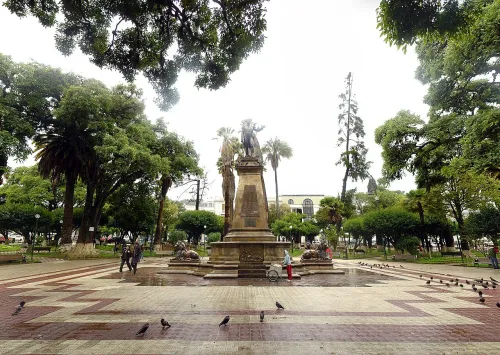
    Start where the whole city orients itself. The plaza is a full block of tall palms, clipped hedges and benches, ringed by the cathedral, the Casa de la Libertad and the government buildings, all of it that same Sucre white. In the center stands the statue of Mariscal Antonio Jose de Sucre, Bolivar's right-hand man and the country's first president, flanked by stone lions. It is free and open around the clock, so sit for ten minutes before you do anything else. Get a shoeshine if you want the full local treatment, the kids will find you regardless of your footwear. The square was declared national cultural and historic heritage in 2014. Use it to get your bearings: the hill with La Recoleta is to the southeast. Leave the plaza by its southeast corner and head down Calle Nicolas Ortiz toward the convent.
    Hours
    Open 24/7
    Price
    Free
  2. 2

    Convento de San Felipe de Neri

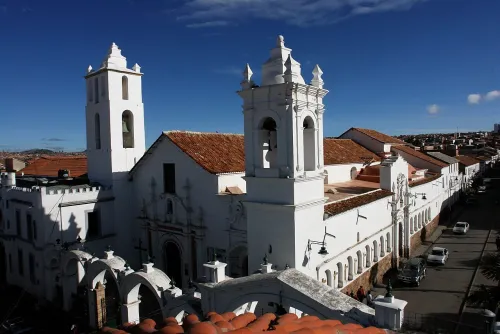
    Convento de San Felipe de Neri in Sucre, stop 2 on the self-guided walking tour

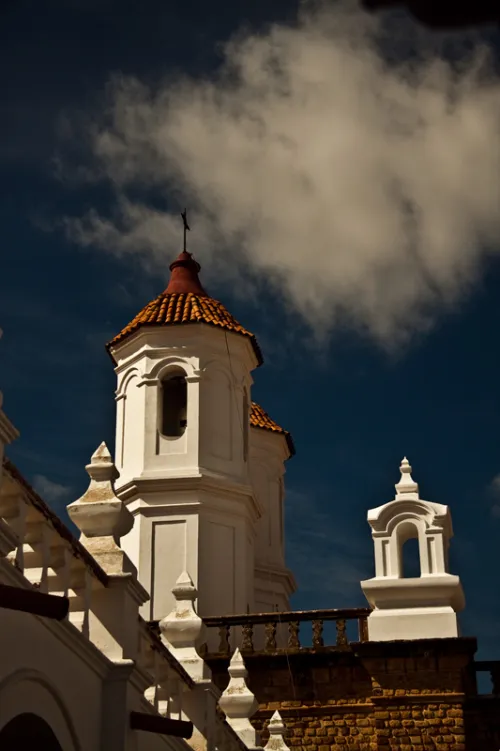
    One short block off the plaza and you reach a plain white wall with a silver-trimmed bell tower behind it. This is an 18th-century convent that still runs as a school, which is why the hours are strict and oddly timed. The reason to come is the roof. They take you up onto the whitewashed terraces, between tiled domes and bell towers built with silver from the Potosi mines, for a clean sweep over the city's red roofs and its dozens of church towers. The exterior was fully restored in 2018 and it shows. Entry is Bs 15. Crucial timing note: it is shut Sunday and only opens afternoons on weekdays, 3 to 6 PM, with a longer Saturday window from 9 AM. If the door is locked, do not panic, you get a similar view later for free. From the gate, continue downhill one block to Iglesia de la Merced.

    Hours
    Mon-Fri: 3:00 – 6:00 PM | Sat: 9:00 AM – 6:00 PM | Sun: Closed
    Price
    Bs 15
  3. 3

    Iglesia de la Merced

    Iglesia de la Merced in Sucre, stop 3 on the self-guided walking tour

    Just past San Felipe you hit another church, and this one is worth ducking into if the timing lines up. La Merced was built between 1581 and 1630 and the payoff is inside: a baroque interior with heavy gilding that locals will tell you is the finest in the city. It was named a National Monument of Bolivia in 1967. Entry is Bs. 10, which is close to nothing. The catch, again, is hours. It only opens Monday to Friday, roughly 2 to 5:30 PM, and that is it. No weekend, no morning. So this is an afternoon-only stop, and if you are walking earlier in the day just note the carved facade from the street and keep moving. From La Merced, you start the climb. Pick up Calle Pantaleon Dalence or Calvo and head uphill, southeast, toward the green hill of La Recoleta. It is a steady ten-minute walk and the streets get quieter and cobbled.

    Hours
    M–F 14:00–17:30
    Price
    Bs. 10
  4. 4

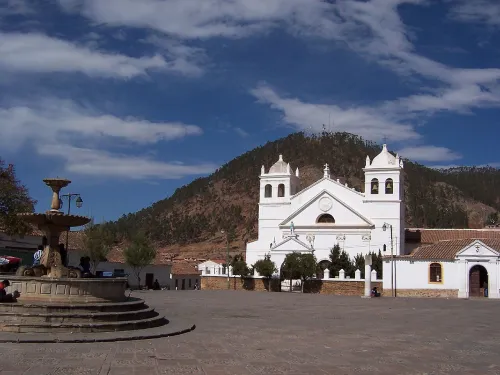
    La Recoleta Monastery (La Recoleta)

    La Recoleta Monastery (La Recoleta) in Sucre, stop 4 on the self-guided walking tour

    The climb pays off the moment you reach the top. La Recoleta is a Franciscan monastery, Santa Ana de Monte Sion, sitting on the hill above town with its own small plaza and a stone mirador looking straight back over the whole white city. This is the photo everyone comes to Sucre for. The view from the public plaza is free, so you do not have to buy anything to get it. The monastery museum itself is Bs 15 for tourists and entry is by guided tour only, with hours that break for lunch: roughly 9 to 11:30 AM and 2:30 to 4:30 PM on weekdays, mornings only on Saturday, closed Sunday. The Mirador cafe on the corner has the best seats and charges European-level prices for the privilege, so coffee here is a splurge, not a deal. This is your turnaround point and the right place for a longer break. When you are done, walk back down toward the museum entrance just below the plaza.

    Hours
    Mon-Fri: 9:00 – 11:30 AM, 2:30 – 4:30 PM | Sat: 9:00 AM – 12:00 PM | Sun: Closed
    Price
    Bs 15 (tourists; Bs 10 residents; guided visit mandatory)
  5. 5

    Museo de Arte Indigena ASUR (Museo de Arte Indígena)

    Museo de Arte Indigena ASUR (Museo de Arte Indígena) in Sucre, stop 5 on the self-guided walking tour

    On the way down from the mirador, a couple of minutes below the plaza, is the one museum on this route I would tell you not to skip. ASUR is dedicated to the textile traditions of the Jalq'a and Tarabuco peoples, two cultures from this region whose weaving is genuinely unlike anything else in the Andes, dense with dark, dreamlike creatures. Better still, you can usually watch master weavers working the looms on site, which turns it from a display case into something live. Entry is Bs. 30. The labels are in Spanish, but the staff hand you an English booklet, and fair warning, there is a lot of text, so come with energy and ideally caffeine. Hours are wide for Sucre: 9 AM to roughly 6 PM weekdays and Saturday with a midday break, closed Sunday. Plan 45 minutes minimum. From the museum, continue downhill and west, working back toward the center, and aim for the small white church of San Lazaro.

    Hours
    Mon-Fri: 9:00 AM – 12:15 PM, 2:30 – 6:00 PM | Sat: 9:00 AM – 12:00 PM, 2:30 – 6:00 PM | Sun: Closed
    Price
    Bs. 30
  6. 6

    Templo de San Lazaro (Templo de San Lázaro)

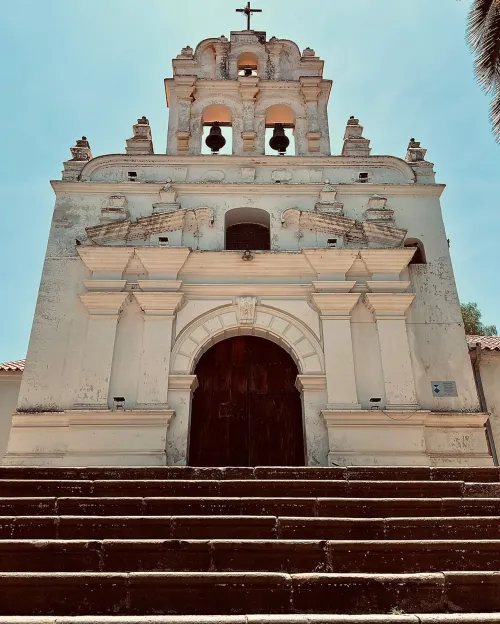
    Templo de San Lazaro (Templo de San Lázaro) in Sucre, stop 6 on the self-guided walking tour

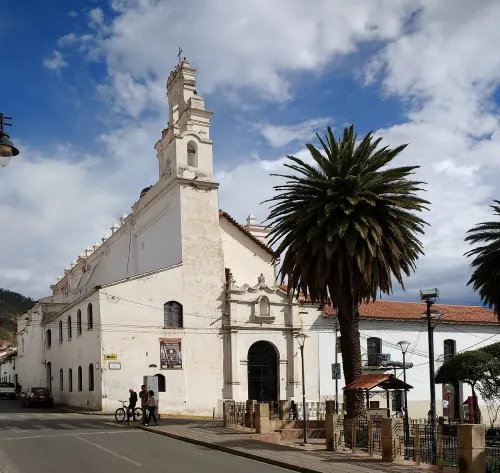
    Coming down off the hill, the first old church you meet is the one many locals will swear was the city's first cathedral. It was not, officially, but San Lazaro did serve as the main church of the early town, and its construction dates to around 1544, which makes it the oldest religious building in the country. It started as a tiny chapel of straw with a mud altar. What survives from the original is the walls and the par y nudillo timber ceiling. Look for the open chapel built in the atrium in 1790 to preach to the rural population, one of the few surviving examples of a capilla abierta in South America, a form tied to pre-conquest Andean ritual. Inside there are paintings by Siciliano Polanco and a carved cedar altarpiece once covered in gold leaf. Entry is free, a donation is appreciated, but access is outside mass times, so this is a quick look rather than a long visit. From here, head north on the descent toward the larger Basilica de San Francisco.

    Hours
    Mon-Sat 19:00 (mass); Sun 07:00 & 19:00 (tourist access outside mass times)
    Price
    Free (donation appreciated)
  7. 7

    Basílica de San Francisco, Sucre, Bolivia (Basílica de San Francisco de Charcas)

    Basílica de San Francisco, Sucre, Bolivia (Basílica de San Francisco de Charcas) in Sucre, stop 7 on the self-guided walking tour

    A few blocks closer to the center you reach San Francisco, founded in 1538 and one of the oldest churches in the country. This one carries real historical weight: its bell, the Campana de la Libertad, was rung to call the people of the city to the independence uprising of 1809, the first cry for freedom in South America. The church itself is free to enter. The Bs 15 ticket gets you the museum and, the actual reason to pay, the climb up the bell tower for another rooftop view back over the white city. Hours are split, mornings and late afternoon on weekdays plus Sunday morning, and it is closed all day Saturday, so check the time before you commit to the tower. If you only have legs for one climb today, you already got the better view at La Recoleta, so this is optional. From San Francisco, walk southwest back to Plaza 25 de Mayo. You are about to finish on the two most important stops.

    Hours
    Mon-Fri: 9:00 AM – 12:00 PM, 3:00 – 5:00 PM | Sat: Closed | Sun: 9:00 AM – 12:00 PM
    Price
    Bs 15 museum & bell tower (church free)
  8. 8

    House of Freedom (Casa de la Libertad)

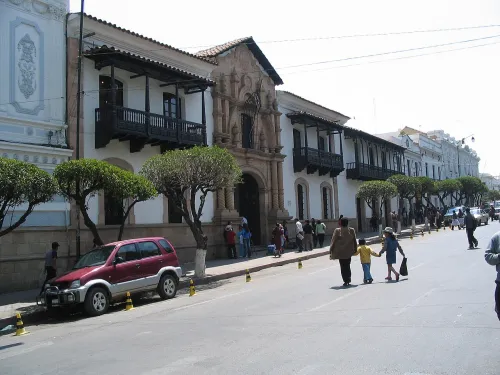
    House of Freedom (Casa de la Libertad) in Sucre, stop 8 on the self-guided walking tour

    Back on the plaza, on its northern side, is a building that looks modest and is anything but. This is where Bolivia's Act of Independence was signed on 25 May 1825, in a chapel that served as the meeting hall, and where the country's first constitution was drafted. The Bolivian Congress met inside until 1898. If you visit one paid sight in Sucre, make it this one. The Bs. 30 ticket for foreigners (Bs. 20 for Bolivians) gets you the independence hall and rooms of paintings and objects from the break with Spanish rule. Hours are generous: 8:30 to 12:30 and 2:30 to 6:30 on weekdays, 9 to 1 on weekends, which is why it sits near the end of this loop, you can reach it almost any time. Budget 45 minutes to an hour. When you come out, the cathedral is a few steps to your left, on the same square.

    Hours
    M-F 08:30-12:30 and 14:30-18:30, Sa Su 09:00-13:00
    Price
    Bs. 30 foreigners, Bs. 20 for Bolivianos
  9. 9

    Sucre Cathedral (Catedral Metropolitana de Sucre)

    Sucre Cathedral (Catedral Metropolitana de Sucre) in Sucre, stop 9 on the self-guided walking tour

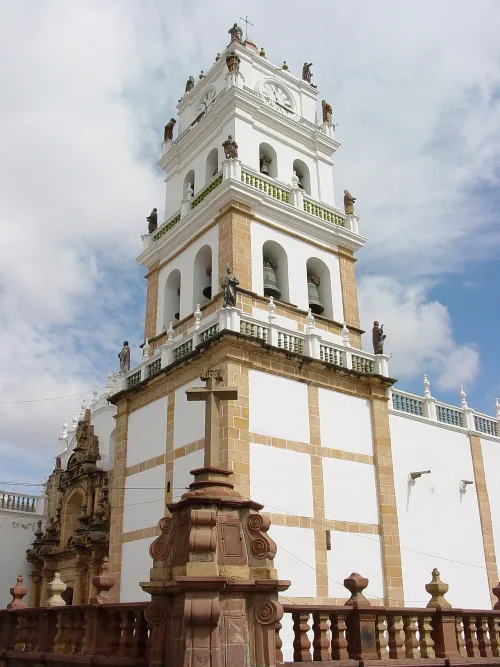
    End where you began, at the plaza, in front of the cathedral that anchors the whole square. The metropolitan cathedral, primate of Bolivia, goes back to the 16th century and was added to the city's cultural heritage in 2018. Entering the church is free. The thing people pay for is the museum, and specifically its prize: the jewel-encrusted icon of the Virgin of Guadalupe, dripping with gold, emeralds and pearls donated over centuries. The museum is Bs 20 for foreigners, or Bs 40 for the full experience. Note the hours close it early and skip Sunday: roughly 9 to 12 and 3 to 6:30 on weekdays, afternoons only on Saturday, closed Sunday. This is a fitting last stop because it puts you right back in the center of Plaza 25 de Mayo, where a bench, a shoeshine and the last of the afternoon light are waiting. Loop complete.

    Hours
    Mon-Fri: 9:00 AM – 12:00 PM, 3:00 – 6:30 PM | Sat: 3:00 – 6:30 PM | Sun: Closed
    Price
    Bs 20 museum (foreigners); Bs 40 full experience; cathedral entry free

How Long Does This Walking Tour Really Take?

Pure walking is a little over an hour and a half for the 3.7 km loop, but Sucre is a city you stop in. With the outdoor viewpoints it runs two to three hours; commit to Casa de la Libertad and the ASUR weaving museum, each worth 45 minutes to an hour, and you have filled a satisfying half day, around four hours in total.

Walking time across the loop is a little over an hour and a half, but you will spend most of an afternoon here once you stop and go inside things, so plan on roughly four hours start to finish. The two stops that deserve real time are Casa de la Libertad and ASUR, each worth 45 minutes to an hour. The churches are quick, 10 to 15 minutes each. La Recoleta is where you should plan your break, not a church.

The natural pause is the top of the hill at La Recoleta, around the halfway mark. The Mirador cafe on the corner of the plaza has the best view in the city from its terrace, though the food and drinks run at European prices, so treat it as a view tax rather than a bargain lunch. If you want the same panorama for free, the public plaza right beside it has benches and the identical sweep over the white city. Sit there, catch your breath after the climb, then start back down.

Full Route, Shorter Walk or Two-Day Version?

The loop is short, but the opening hours are not generous, so here are three ways to walk it depending on how much time you have and which doors you want to find open. Each uses the real stop numbers and the per-leg walking times from the map above.

The short version

Center and one climb, no long detours

Stops 1, 2, 4, 5, 8, 9, dropping the longest side legs, about 2.5 hours

For a tighter afternoon, keep the plaza (1), the San Felipe rooftop (2), the La Recoleta viewpoint and ASUR museum (4 and 5) for the hill's payoff, then head straight to Casa de la Libertad (8) and the cathedral (9). You skip La Merced and the two churches on the way down, cutting the least essential legs while keeping the view, the weavers, and the independence story.

The easy two-part split

Hill one day, center the next

Day one stops 1 to 5, day two stops 6 to 9, split at La Recoleta

If the altitude and the climb are enough for one outing, break the loop at La Recoleta. Do the plaza, the two nearby churches, the hilltop mirador and the ASUR museum first (stops 1 to 5), then save San Lazaro, San Francisco, Casa de la Libertad and the cathedral (stops 6 to 9) for a second, flatter walk. It also lets you match each half to the sights' afternoon-heavy hours.

You can walk it in reverse, starting with Casa de la Libertad and the cathedral and climbing to La Recoleta at the end. We recommend the given direction because it saves the hilltop mirador for the late-afternoon light and puts the hardest climb in the first half, while you still have energy, then eases you back downhill to finish on Plaza 25 de Mayo.

Is This Sucre Walking Tour Right for You?

This is a short, central loop, but it packs a real uphill and depends heavily on when things are open. Here is who it suits and how to bend it to your day, energy, and interests.

A good fit if you…

  • Travelers who want to walk 3.7 km at their own pace rather than join a group or a bus tour
  • Anyone curious about Bolivia's founding, with Casa de la Libertad and the cathedral both on the plaza
  • Culture and craft seekers, thanks to the ASUR museum's Jalq'a and Tarabuco weaving and live looms
  • Photographers chasing the hilltop mirador view over the red roofs and white facades of the old town

Adapt the route if you…

  • The climb to La Recoleta feels steep at altitude: take it slowly, or use the two-part split above
  • You are walking in the morning: several church museums only open in the afternoon, so read the hours first
  • It is a Sunday: San Felipe, La Merced, ASUR, La Recoleta and the cathedral museum are all closed, so lean on the free outdoor stops
  • You only want one rooftop climb: take the free La Recoleta view and skip the paid San Francisco bell tower

Tickets & Skip-the-Line in Sucre

Sucre has no real ticket queues, but the museums and church interiors do have short, awkward hours, so timing matters more than skipping lines. Here is what each paid stop costs and when you can actually get in, with prices in bolivianos (Bs). Only Casa de la Libertad publishes an official website; buy everything else at the door in cash.

House of Freedom (Casa de la Libertad)Bs 30 for foreigners (Bs 20 for Bolivians). Open Mon-Fri 08:30-12:30 and 14:30-18:30, Sat and Sun 09:00-13:00. The most generous hours on the route and the one paid sight worth prioritizing; budget 45 minutes to an hour. Tickets at the door. official ticket site ↗
Museo de Arte Indigena ASUR (Museo de Arte Indígena)Bs 30. Open Mon-Fri 09:00-12:15 and 14:30-18:00, Sat 09:00-12:00 and 14:30-18:00, closed Sunday. Plan at least 45 minutes for the Jalq'a and Tarabuco textiles and the live looms. Pay at the entrance.
Sucre Cathedral (Catedral Metropolitana de Sucre)Cathedral entry is free; the museum is Bs 20 for foreigners, or Bs 40 for the full experience with the jewelled Virgin of Guadalupe icon. Open Mon-Fri 09:00-12:00 and 15:00-18:30, Sat 15:00-18:30, closed Sunday. Pay at the door.
Convento de San Felipe de NeriBs 15 for the rooftop terraces and city views. Open Mon-Fri 15:00-18:00 and Sat 09:00-18:00, closed Sunday. Afternoon-only on weekdays, so plan around it. Cash at the gate.
Iglesia de la MercedBs 10 for the gilded baroque interior. Open Mon-Fri 14:00-17:30 only, no weekends or mornings. An afternoon-only stop; if you pass earlier, just admire the facade from the street. Pay inside.
La Recoleta Monastery (La Recoleta)The public plaza viewpoint is free. The monastery museum is Bs 15 for tourists (Bs 10 residents), by guided visit only. Open Mon-Fri 09:00-11:30 and 14:30-16:30, Sat 09:00-12:00, closed Sunday. Note the midday lunch closure. Cash at the entrance.
Basílica de San Francisco, Sucre, Bolivia (Basílica de San Francisco de Charcas)The church is free to enter; Bs 15 gets you the museum and the bell tower climb for another rooftop view. Open Mon-Fri 09:00-12:00 and 15:00-17:00, Sun 09:00-12:00, closed all day Saturday. Pay on site.
Everything elseThe remaining stops, Plaza 25 de Mayo and Templo de San Lazaro, are free open spaces (San Lazaro appreciates a donation and is best seen outside mass times). No ticket needed.
Optional upgrade
+5
The same 9-stop route,
now with navigation and a guide.
Optional AI experience

You already have the route.
The AI guide brings it to life.

Standing on Plaza 25 de Mayo right now, looking at the cathedral and not sure which way the hill is? Open the AI Tourguide and it will walk you through this exact loop in your ear, pointing you up the right street to La Recoleta and telling you the story of each white church as you reach it. It is free to start, self-guided, and it keeps track of which doors are open while you just walk.

Livenavigation13languagesAnyquestionYourinterests
Open this route with the AI guide

Try it in your browser · No app or download required

Tips for Walking in Sucre

  • Timing: walk this loop in the afternoon, ideally starting around 2:30 PM. Several stops only open in the afternoon (Iglesia de la Merced 2 to 5:30 PM weekdays, San Felipe de Neri 3 to 6 PM), and La Recoleta reopens at 2:30 PM after its lunch break, so an afternoon start hits the most doors open. Avoid Sunday for the interiors, when San Felipe, La Merced, ASUR, La Recoleta and the cathedral museum are all closed.
  • Terrain and shoes: the center is flat but everything is cobblestone and stone slab, uneven in places, and the climb from La Merced up to La Recoleta is a real, steady uphill on rough streets. Wear proper closed shoes with grip, not the flip-flops the shoeshine kids will tease you about. At 2,798 meters the hill will leave you breathing harder than you expect.
  • Restrooms: clean public toilets are scarce, so use the ones inside the paid sights while you have a ticket. Casa de la Libertad and the ASUR museum both have facilities, and the cafes around La Recoleta will let you use theirs if you buy a drink.
  • Food and drink: do your splurge coffee at the Mirador cafe at La Recoleta for the view, but eat cheaper down in the center. For something local and good value, the snack stalls and juice vendors right on Plaza 25 de Mayo are the easy, honest option to refuel between stops.
  • Photo: the single best shot of Sucre is from the stone mirador at La Recoleta, facing northwest over the red roofs and white facades back toward the cathedral towers. Go in the late afternoon when the low sun lights the white city gold. For the classic rooftop-and-domes shot, the terrace at San Felipe de Neri is the other strong option.

Why Walk This Route?

Sucre is the city Bolivians actually call their capital, and once you stand in the middle of it you understand why people fly down from La Paz just to slow down here. Everything is white. The whole historic center is painted and re-painted the same lime-washed white every year by city ordinance, so the place glows in the afternoon and the red-tile roofs and carved wooden balconies pop against it. It sits at 2,798 meters, which is gentle by Bolivian standards, and the old town is compact, flat in the middle, with one hill on the eastern edge. That layout is exactly why a walk beats a taxi or a guided bus here. You can see the country's most important sights on foot in an afternoon without ever feeling rushed.

This route is a tight loop, about 3.7 km, built around one good idea: start and end on Plaza 25 de Mayo, the central square, and use the climb up to La Recoleta on the hill as your high point, both for the views and for the natural break it gives you. You go up the quiet eastern streets to the rooftop terraces and the city's best mirador, then come back down through the older churches and finish at the two sights that matter most for Bolivia's story, Casa de la Libertad and the cathedral, both right on the plaza where you started.

The smart move in Sucre is to walk it in the right direction and at the right pace, because half the sights have short, awkward opening windows. La Recoleta closes for lunch. Several churches only open their museums for a couple of hours in the afternoon. Wander randomly and you will arrive at a locked door. Follow this loop and you hit each place when it is actually open. That is the whole pitch: this is not a list of buildings, it is an order of operations.

Common Questions

Is Sucre safe to walk around?

Sucre is one of the calmer, safer cities in Bolivia, and the historic center on this loop is comfortable to walk by day. Use normal city sense: keep your bag zipped and in front of you in the plaza and busy market areas, where petty pickpocketing is the main risk, and do not flash a phone or camera carelessly. The shoeshine kids and street vendors on Plaza 25 de Mayo are persistent but not a threat. After dark, stick to the lit central streets and take a registered taxi rather than walking the quieter outer blocks.

What if it rains during my Sucre tour?

This loop has enough indoor stops to ride out a shower. Duck into Casa de la Libertad for the full independence museum, the ASUR weaving museum for 45 minutes of textiles and live looms, or the cathedral museum to see the jewelled Virgin of Guadalupe. The churches, La Merced and San Lazaro and San Francisco, are also dry refuges if they are open. Save the two rooftop viewpoints, San Felipe and La Recoleta, for when it clears, since the whole point of those is the view and it is wasted under cloud.

What's the best time of day for this walking tour?

Mid to late afternoon, starting around 2:30 PM. That timing opens the afternoon-only churches and catches La Recoleta after its lunch closure, and it lands you at the hilltop mirador for the late-day light when the white city turns gold, which is the best photo of the trip. It also means you finish back on Plaza 25 de Mayo around sunset, the nicest time to sit on the square. The only thing to avoid is Sunday, when most of the interiors are shut.

Take this route with you

Open this exact tour with navigation and your personal AI guide.

Start GPS Navigation + AI Guide
AI Tourguide
Researched and curated by the AI Tourguide teamWe plan and quality-check every route, then research and verify the opening hours, prices, and practical tips for each stop along it.
▶ Open route with AI guideNavigation, stories and your questions