Things to Do in Ávila - Top Attractions, Hidden Gems & Must-See Sights

Discover the best things to do in Ávila. Complete guide to must-see sights, popular attractions, hidden gems, museums, food markets and parks.

18 Attractions 5 Categories Travel Guide

Table of Contents

Ávila Overview

Ávila is defined by its massive 11th-century granite fortifications, which completely encircle the old town. Walking the length of the Walls of Ávila provides a clear view of how the city evolved as a military and religious stronghold on the high Castilian plateau. The Ávila Cathedral is even built directly into these defenses, its dark apse forming one of the wall's massive towers.

The atmosphere is austere and deeply spiritual, shaped largely by the legacy of Saint Teresa. You can visit the Convent of Santa Teresa, built over her birthplace, or explore the Romanesque Basilica of San Vicente just outside the main gates. The interior is compact and best explored on foot, though you should cross the Adaja River to the Cuatro Postes Viewpoint for the most complete perspective of the stone skyline.

Must-See Attractions in Ávila

  • Walls of Ávila — These remarkably preserved medieval fortifications offer a two-kilometer walkway with views over the Castilian plains.
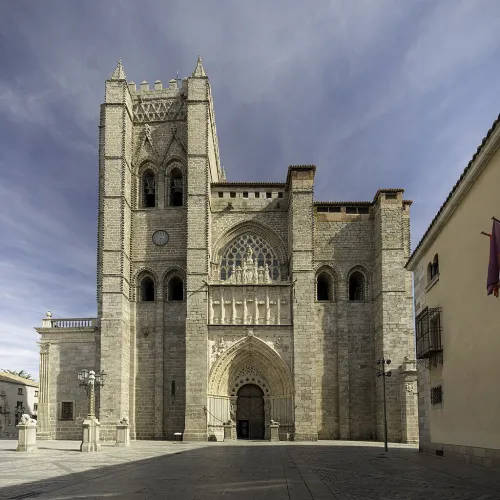
  • Ávila Cathedral — A transition from Romanesque to Gothic architecture that doubles as a defensive bastion integrated into the city walls.
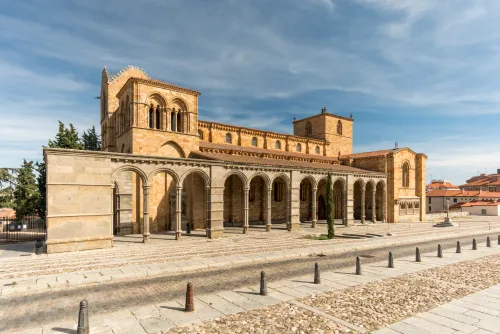
  • Basilica of San Vicente — An elegant Romanesque church located outside the main gate, known for its detailed exterior carvings and light-filled interior.
  • Cuatro Postes Viewpoint — A stone monument across the river that provides the most comprehensive view of the entire walled city.
🏛️ Must-See ⭐ Sights 💎 Hidden Gems 🎨 Museums 🌳 Parks & Views

🏛️ Must-See Attractions in Ávila

These iconic landmarks and must-see sights are essential stops for any visitor to Ávila.

Basilica of San Vicente

1. Basilica of San Vicente

Just outside the city walls, the Basilica of San Vicente often surprises travelers who find it more welcoming than the cathedral. Built from a golden-hued sandstone rather than the sombre grey granite of the fortifications, it glows warmly in the late afternoon sun. The portico is the masterpiece here, a deep, covered entrance protecting a Romanesque portal that is intricately carved but practically devoid of the crowds you fight elsewhere.

Inside, the atmosphere is lighter and airier. The centerpiece is the cenotaph of the three martyrs (Vicente, Sabina, and Cristeta), an elaborate stone sarcophagus under a baldachin that tells their gruesome story in graphic relief. It sits right under the crossing, drawing the eye immediately. The crypt below is accessible and contains the rock where tradition says their bodies were thrown, a raw, unpolished contrast to the elegance above.

While the cathedral dominates the list of religious Ávila attractions, San Vicente offers a purer example of Romanesque architecture. It sits in a quieter square, allowing you to inspect the exterior grotesque figures and mythical beasts carved into the eaves without being jostled by tour groups moving toward the gates.

Hours Mon-Sat: 10:00 AM – 2:00 PM, 4:00 – 7:00 PM | Sun: 4:00 – 6:00 PM
Price 2€
Insider TipWalk around to the south wall to see the 'Cenotaph of the Martyrs' reflected in the windows of the modern buildings opposite for a unique photo.
Convent of Santa Teresa

2. Convent of Santa Teresa

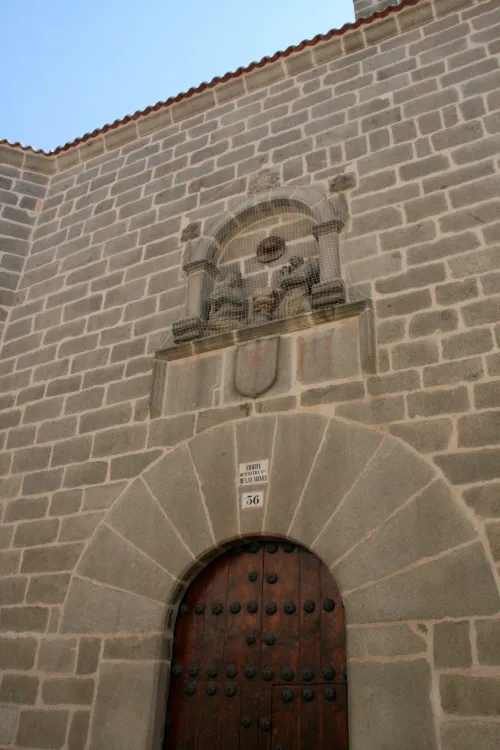
Built directly over the birthplace of the saint, this church is a baroque explosion in a city of Romanesque stone. The facade is complex and rigid, but the interior is where the drama lies. It was constructed to honor Teresa, not to mimic her style, so unlike her humble foundations, this building is grand, ornate, and filled with gold. The crypt is the emotional core, where a chapel marks the exact spot where she was born, now converted into a sanctuary for pilgrims.

The church is oriented strangely to align with the ancestral home, which throws off the traditional east-west axis. Inside, the statue of the saint by Gregorio Fernández is a masterpiece of intensity, capturing her in a moment of ecstasy. The atmosphere here is often thick with devotion; you will see people touching the walls and kneeling in corners, making it a very different experience from the museum-like vibe of other sites.

As one of the most visited Ávila attractions, it can get crowded with bus tours. However, the side chapel dedicated to her birth remains a powerful space regardless of your beliefs. The contrast between the lavish church and the simple garden where she played as a child (recreated in the museum area) tells the story of her life better than any guidebook.

Hours Mon-Tue: 9:30 AM – 1:00 PM | Wed: 9:30 PM – 12:00 AM | Thu: 12:00 AM – 1:00 PM, 9:30 PM – 12:00 AM | Fri: 12:00 AM – 1:00 PM | Sat: 9:30 PM – 12:00 AM | Sun: 12:00 AM – 1:00 PM
Price Free
Insider TipVisit the relic room (Sala de Reliquias) to see her finger and walking stick; it's slightly macabre but fascinatingly medieval.
Walls of Ávila

3. Walls of Ávila

These are not just walls; they are the defining skeleton of the city. Stretching for 2.5 kilometers with 88 towers and 9 gates, they are the best-preserved medieval fortifications in Europe. Walking the ramparts is the essential experience here. From the top, you get a dual perspective: look in, and you see the tiled roofs and hidden patios of the old town; look out, and you see the harsh, empty Castilian landscape that these stones were built to defend against.

The path along the top is uneven and exposed, giving you a real sense of the soldiers' experience (minus the arrows). Accessibility has been improved, but it is still a physical activity involving stairs and wind. The section near the Cathedral is the most dramatic, as the church apse literally forms one of the defensive towers, blurring the line between God and war.

No other entry on the list of Ávila attractions compares to this. It isn't just a monument you look at; it's a platform you walk on. Seeing the walls from the ground is impressive, but walking them gives you the tactical understanding of why this city was impregnable. At sunset, the granite turns a bruised purple, and the view is unforgettable.

Hours Mon: Closed | Tue-Sun: 10:00 AM – 5:15 PM
Price Free
Insider TipThe ticket is valid for two days and allows you to access different sections; keep it safe so you can do the western wall the next morning.
Ávila Cathedral

4. Ávila Cathedral

This building is a strange hybrid, half-church and half-fortress, physically fused into the city walls. The apse, known locally as the 'Cimorro,' bulges out of the defensive line like a granite turret, complete with battlements where soldiers—not priests—would have stood watch. Inside, the transition is abrupt: the heavy, dark Romanesque stone of the entrance gives way to soaring Gothic spaciousness and distinctive red-and-white mottled limestone that adds a surprising warmth to the pillars.

The interior feels ancient and slightly damp, smelling of old wax and stone dust. The choir stalls are carved with an obsessive level of detail, but the real draw is the retrochoir with its elaborate alabaster reliefs. Unlike typical European cathedrals that sit in open squares, this one feels hemmed in by the city it protects, creating a tight, shadowed perimeter that demands you crane your neck to see the bell tower.

Most Ávila attractions are distinct from the fortifications, but the cathedral is the exception, serving as a linchpin for the entire defensive circuit. If you look closely at the outer walls, you can see arrow slits that would have been used to defend the altar itself, a reminder of a time when prayer and warfare were uncomfortably close neighbors.

Hours 10:00-18:00 daily
Price 3€
Insider TipThe audio guide is often included in the ticket price and is surprisingly good; don't skip the section explaining the 'Cimorro' fortification.
Get Your Own Private Tour with AI Guide
AI Guide
  • Personalized tour tailored to your interests
  • Your AI guide tells stories, shares facts, and cracks jokes
  • Turn-by-turn GPS navigation
  • Available in your language — no download needed
Try for Free

💎 Hidden Gems in Ávila - Off the Beaten Path

Beyond the tourist crowds, Ávila hides remarkable treasures waiting to be discovered.

Church of San Pedro

1. Church of San Pedro

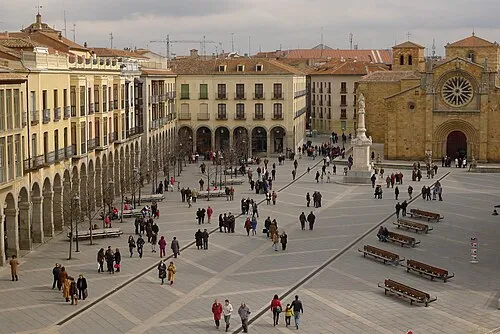
Domineering the Plaza del Mercado Grande, San Pedro acts as the Romanesque counterpart to San Vicente, though it feels heavier and more grounded. Its reddish stone stands out against the grey paving of the square, and the massive rose window on the facade stares out like a great unblinking eye. This is a working church that has stood watch over the city's main market square for centuries, absorbing the noise and chaos of daily commerce.

The interior is often dark, lit mainly by votive candles and the filtered light from the stained glass, creating a solemn, heavy atmosphere. It does not have the museum-like polish of the cathedral; instead, it feels used and worn in a dignified way. The altars are ornate, but the real power of the building comes from its thick walls and squat proportions, which seem to anchor the entire plaza.

As one of the key Ávila attractions outside the walls, it serves as a meeting point for locals. The steps in front are a popular place to sit and watch the world go by, offering a prime view of the Alcázar Gate across the square. It connects the spiritual life of the city with the civic hubbub of the market area.

Hours Daily: 11:00 AM – 12:00 PM, 7:00 – 8:00 PM
Price Free
Website N/A
Insider TipVisit during the golden hour just before sunset; the reddish stone of the façade catches the light intensely, creating the best contrast for photos.
Get Your Own Private Tour with AI Guide
AI Guide
  • Personalized tour tailored to your interests
  • Your AI guide tells stories, shares facts, and cracks jokes
  • Turn-by-turn GPS navigation
  • Available in your language — no download needed
Try for Free

🎨 Best Museums & Galleries in Ávila

World-class museums and galleries that make Ávila a cultural treasure.

Museum of Ávila

1. Museum of Ávila

Split between the Casa de los Deanes and the old church of Santo Tomé el Viejo, this museum offers the deep context that the monuments themselves often lack. The section in Santo Tomé is particularly atmospheric, serving as a 'storage' for stone—Roman steles, medieval sarcophagi, and architectural fragments are piled up in the nave of the deconsecrated church. It feels like an attic of history, dusty and silent.

The main building, the Casa de los Deanes, houses the ethnographic and archaeological collections. Here you can see the Celtic stone boars (verracos) that predate the Romans, reminding you that this hill was fortified long before the current walls went up. The exhibits on rural life in the province are surprisingly engaging, featuring looms, pottery, and tools that explain how people survived in this harsh climate.

Compared to other Ávila attractions, this museum is rarely crowded. It offers a cool, quiet retreat in summer and a dry one in winter. The explanation of the Vetton culture provides the missing backstory to the granite bulls you might see scattered around the region.

Hours Mon: Closed | Tue-Sat: 10:00 AM – 2:00 PM, 4:00 – 7:00 PM | Sun: 10:00 AM – 2:00 PM
Price 1€
Insider TipYour ticket covers both buildings; start with the lapidary section in Santo Tomé for the most visually striking experience.
Get Your Own Private Tour with AI Guide
AI Guide
  • Personalized tour tailored to your interests
  • Your AI guide tells stories, shares facts, and cracks jokes
  • Turn-by-turn GPS navigation
  • Available in your language — no download needed
Try for Free

🌳 Parks & Best Viewpoints in Ávila

Beautiful parks, gardens, and panoramic viewpoints for the best views of Ávila.

Cuatro Postes Viewpoint

1. Cuatro Postes Viewpoint

To understand the scale of Ávila, you must leave it. This shrine, consisting of four Doric columns and a granite cross, sits across the Adaja river and offers the definitive panoramic view of the walled city. It is the spot where every postcard photo is taken, and for good reason: from here, the walls look like a single, unbroken ribbon of stone wrapping the hill, with the cathedral and church spires poking up from the center.

The site itself is simple, an open-air humilladero (roadside shrine) with a history tied to St. Teresa's childhood attempt to run away to martyrdom. It is exposed to the elements, so it can be windy and cold even on sunny days. Unlike the cramped streets inside the walls, here you have space to breathe and take in the geography that made this city a fortress.

While most Ávila attractions require a ticket and a queue, this is open, free, and accessible 24/7. It is the best place to end a day, watching the sun dip below the horizon as the floodlights turn on, transforming the stone walls into a glowing amber ring against the blue twilight.

Hours Open 24/7
Price Free
Website N/A
Insider TipIf you don't have a car, it's a manageable 15-minute walk from the bridge, but the path is uphill—bring water.
Get Your Own Private Tour with AI Guide
AI Guide
  • Personalized tour tailored to your interests
  • Your AI guide tells stories, shares facts, and cracks jokes
  • Turn-by-turn GPS navigation
  • Available in your language — no download needed
Try for Free

Explore with AI Guide

AI Guide App

Get personalized tours with our AI-powered guide. No download needed — works right in your browser.