Things to Do in Burgos - Top Attractions, Hidden Gems & Must-See Sights

Discover the best things to do in Burgos. Complete guide to must-see sights, popular attractions, hidden gems, museums, food markets and parks.

18 Attractions 5 Categories Travel Guide

Table of Contents

Burgos Overview

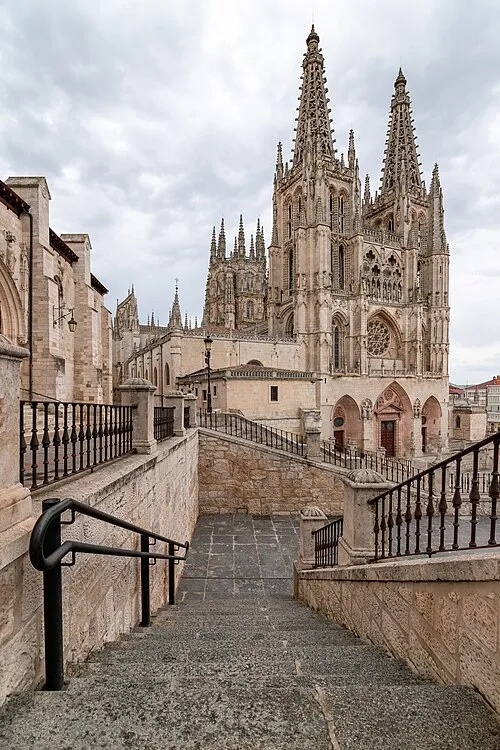
Burgos defines itself through its massive Gothic cathedral, but the city’s identity stretches back even further to the dawn of humanity. As a key stop on the Camino de Santiago, the center feels intentional and sturdy, anchored by the limestone spires of the Cathedral and the medieval Arco de Santa María. It is a place of deep history where the bones of early ancestors at the Museum of Human Evolution share the stage with the tomb of El Cid.

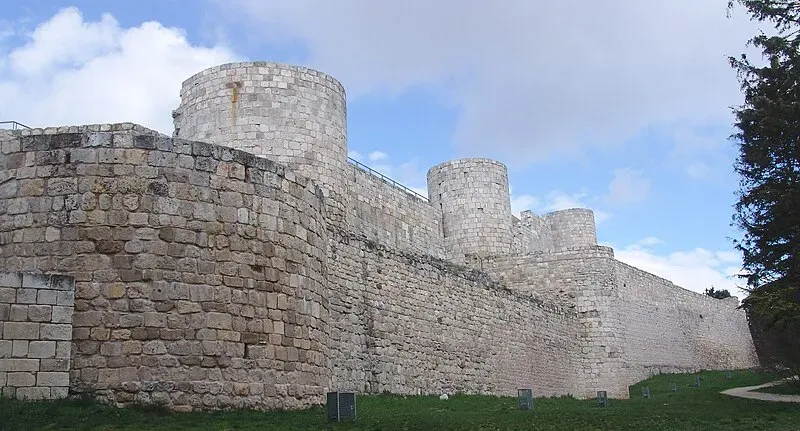
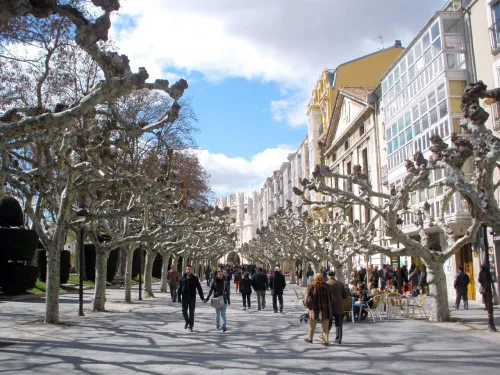
The city is largely walkable, with the tree-lined Paseo del Espolón providing a shady link between the riverside and the old town. While the core is compact, reaching the tranquil Cartuja de Miraflores or the fortified Abbey of Santa María la Real de Las Huelgas requires venturing into the quieter outskirts. Climbing to the Mirador del Castillo offers the best perspective on how the city follows the Arlanzón River through the Castilian plateau.

Must-See Attractions in Burgos

  • Burgos Cathedral — A Gothic masterpiece with intricate openwork spires and the final resting place of the legendary El Cid.
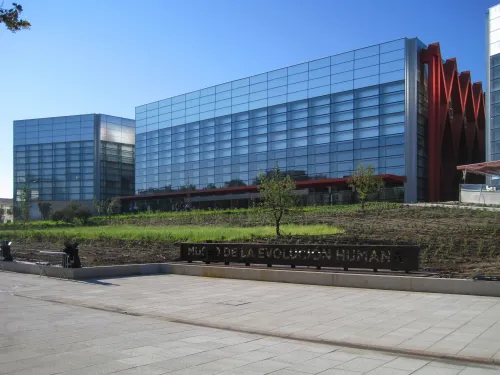
  • Museum of Human Evolution — Modern space showcasing the world-significant archaeological finds from the nearby Atapuerca sites.
  • Cartuja de Miraflores — Quiet monastery outside the center housing some of the finest late-Gothic altarpieces and royal tombs in Spain.
  • Abbey of Santa María la Real de Las Huelgas — Cistercian convent that served as a royal pantheon, known for its unique collection of medieval textiles.
🏛️ Must-See ⭐ Sights 💎 Hidden Gems 🎨 Museums 🌳 Parks & Views

🏛️ Must-See Attractions in Burgos

These iconic landmarks and must-see sights are essential stops for any visitor to Burgos.

Abbey of Santa María la Real de Las Huelgas

1. Abbey of Santa María la Real de Las Huelgas

Silence hangs heavy here, a sharp contrast to the city center just a twenty-minute walk away. Founded in the 12th century as a royal pantheon, this active Cistercian monastery feels less like a tourist site and more like a fortress of solitude. The architecture shifts seamlessly between Romanesque rigidity and Almohad-influenced mudéjar plasterwork, creating a space that feels distinctly Castilian yet undeniably influenced by the south. Inside, the tombs of kings and queens lie in solemn rows, carved with a precision that makes the stone look like lace.

The real shock is the Museum of Medieval Fabrics housed within. While most Burgos attractions focus on stone and gold, this collection preserves the actual clothing worn by royalty nearly a millennium ago. Seeing the preserved tunics and pillows of 13th-century monarchs—stained, faded, but terrifyingly real—strips away the myth of history and leaves you with the human reality of the people who ruled this land. The cloister, known as Las Claustrillas, offers a moment of absolute quiet, broken only by the sound of the fountain.

Visiting requires joining a guided tour, which dictates your pace but unlocks doors you would otherwise miss. The guides move quickly, so pay attention when they point out the articulated arm of Saint James, a bizarre relic that once dubbed knights into nobility. It is a place that demands patience, but the payout is an intimate look at the domestic side of medieval royalty that grand cathedrals often obscure.
Hours Tue-Sat 10:15-13:45, 16:00-18:45; Sun 10:15-13:45
Price €5.00
Location 42.3361, -3.7202
Insider TipThe guided tour is mandatory and runs on a strict schedule. Arrive 20 minutes early to buy tickets, as groups are small and fill up fast, especially on weekends.
Burgos Cathedral

2. Burgos Cathedral

This building is a Gothic monster in the best possible way. It does not just sit in the square; it dominates the entire city with a density of detail that is almost exhausting to look at. The spires, open stonework that looks like filigree against the sky, are German in style, giving the cathedral a sharper, more vertical profile than its French or Spanish counterparts. Inside, the sheer scale of the octagonal lantern tower above the crossing forces your head back; it is a kaleidoscope of light and stone that feels perilously heavy yet weightless.

You will inevitably get lost in the side chapels. The Chapel of the Condestable is essentially a cathedral within a cathedral, packed with so much sculpture and gold that it feels like a distinct ecosystem of art. The tomb of El Cid lies under the crossing, marked simply, grounding the soaring architecture with a heavy dose of local legend. While many Burgos attractions claim historical significance, this is the anchor that holds the city's identity together.

Do not ignore the quirks. High up near the entrance stands the Papamoscas, a grotesque automaton that opens its mouth to chime the hours. It is kitschy, strange, and a favorite of locals who have been watching it since childhood. The cathedral is a paid entry, and the audio guide is actually worth the time—it helps navigate the labyrinth of artistic styles that collided here over five centuries.

Hours Daily: 9:30 AM – 6:00 PM
Price €6.00
Insider TipVisit in the late afternoon, around 4:30 PM. The morning tour groups have dispersed, and the western sun lights up the stained glass rose window in the Sarmental facade.
Museum of Human Evolution

3. Museum of Human Evolution

This glass box of a building looks like it landed from the future. The MEH (Museo de la Evolución Humana) is the architectural antithesis to the stone-heavy old town. It is bright, airy, and filled with ramps and open spaces. Its purpose is to contextualize the massive discoveries made at the nearby Atapuerca archaeological sites. You are not just looking at bones here; you are walking through the timeline of what it means to be human, from the earliest hominids to modern cognitive complexity.

The exhibits are high-tech but grounded by the actual fossils. The 'star' is the skull known as Miguelón (Homo heidelbergensis), preserved so perfectly you can see the infection in his teeth that likely killed him. Seeing a face from 400,000 years ago staring back at you is a humbling check on your ego. The museum does a great job of explaining *why* these things matter without getting bogged down in impenetrable academic jargon.

This is one of the few Burgos attractions that requires a few hours of dedicated focus. It is not a place to breeze through. The layout forces you to descend and then ascend, mimicking the excavation process. It is kid-friendly in a way old churches are not, with plenty of interactive screens and life-sized reconstructions of our ancestors that dwell in the uncanny valley.

Hours Mon: Closed | Tue-Fri: 10:00 AM – 2:30 PM, 4:30 – 8:00 PM | Sat: 10:00 AM – 8:00 PM | Sun: 10:00 AM – 3:00 PM
Price €5.00
Location 42.3392, -3.6972
Insider TipIf you have a full day, book the combo ticket that includes the shuttle bus to the actual Atapuerca excavation site. Seeing the museum is good; seeing the mud where the bones came from is better.
Get Your Own Private Tour with AI Guide
AI Guide
  • Personalized tour tailored to your interests
  • Your AI guide tells stories, shares facts, and cracks jokes
  • Turn-by-turn GPS navigation
  • Available in your language — no download needed
Try for Free

💎 Hidden Gems in Burgos - Off the Beaten Path

Beyond the tourist crowds, Burgos hides remarkable treasures waiting to be discovered.

Calle Fernán González

1. Calle Fernán González

Tracing the slope of the hill just below the castle, this street functions as a high-altitude artery for the Camino de Santiago. It feels older and harder than the polished promenade of the Espolón below. The pavement is stone, the walls are high, and the wind channels through here with purpose. Walking it gives you a linear tour of the city's nobility, passing the back of the cathedral and a series of emblazoned merchant houses that have stood firm against centuries of harsh winters.

The street is defined by its emptiness and its echoes. Pilgrims with backpacks trudge along the asphalt, their walking sticks clicking a rhythm that has not changed much in centuries, even if the gear has. You pass the massive Arch of Fernán González, a triumphal monument that feels oversized for the narrow road, asserting the city's pride in its independent Castilian roots. It is a place of transit, not loitering, but the views down the alleyways connecting to the lower town offer perfectly framed slices of urban life.

Architecture buffs should slow down at the Casa del Cubo. The stark, windowless stretches of stone wall remind you that Burgos was a city built to keep people out as much as let them in. It is not a street for shopping or coffee; it is a street for walking with intent, breathing cool air, and feeling the physical elevation of the old upper burgh.

Hours Open 24/7
Price Free
Website N/A
Insider TipWalk this street from west to east (towards the cathedral) near sunset. The light hits the stone facades, turning the grey limestone a warm gold.
Estatua del Cid

2. Estatua del Cid

This is the definitive meeting point in Burgos. Rodrigo Díaz de Vivar, El Cid, rides high on his horse Babieca, sword raised towards the south and the enemies he spent a lifetime fighting. The bronze sculpture captures a moment of kinetic energy—the cape flying, the beard bristling—that contrasts with the static buildings surrounding it. It sits in the middle of a busy traffic nexus, bridging the gap between the historic center and the modern expansion across the river.

You will cross this plaza inevitably. It functions as a compass; if the sword is pointing to your right, you are heading towards the cathedral. If it points left, you are walking toward the Museum of Human Evolution. The statue is aggressive and martial, a reminder of the city's military past, yet it sits casually among buses and pedestrians. At night, spotlights hit the bronze from below, casting long, dramatic shadows that make the figure look even larger.

While not a site you visit for hours, it is the best place to orient yourself. Stand at the base and look down the Paseo del Espolón. You see the layout of the city as it was meant to be seen: a line of power stretching from the river to the spires. It is the literal and metaphorical pivot point of Burgos.

Hours Open 24/7
Price Free (public monument)
Website N/A
Insider TipTo get the best photo, stand on the San Pablo bridge side. This angle puts the statue in the foreground with the city's chaotic skyline behind it, rather than just the sky.
Puente de San Pablo

3. Puente de San Pablo

This bridge is more than a way to cross the Arlanzón; it is an open-air sculpture gallery. Connecting the statue of El Cid to the southern bank where the Museum of Human Evolution stands, the bridge is lined with statues of figures related to the Cid's life. These stone sentinels stand on pillars, looking stoic and slightly weathered, creating a corridor of honor that you walk through. It is dramatic, especially when the river is high and rushing below.

The bridge offers one of the cleanest sightlines in the city. To the north, the city walls and spires stack up impressively; to the south, the modern glass of the museum reflects the sky. It marks the border between the medieval and the modern city. Crossing it feels like moving between two different eras of Burgos history.

In winter, the wind cutting down the river channel can be brutal here, so brace yourself. But on a calm evening, the reflections in the water are perfect. It is a functional piece of infrastructure that refuses to be boring, turning a two-minute walk into a history lesson. Most Burgos attractions are buildings you enter; this is one you walk over.

Hours Open 24/7
Price Free
Insider TipRead the names on the statues as you cross. It’s a 'Who's Who' of 11th-century Castilian warlords and family members, giving context to the El Cid legend.
Get Your Own Private Tour with AI Guide
AI Guide
  • Personalized tour tailored to your interests
  • Your AI guide tells stories, shares facts, and cracks jokes
  • Turn-by-turn GPS navigation
  • Available in your language — no download needed
Try for Free

🎨 Best Museums & Galleries in Burgos

World-class museums and galleries that make Burgos a cultural treasure.

Marceliano Santa María Museum

1. Marceliano Santa María Museum

Tucked away inside the ruins of the Monastery of San Juan, this museum is often missed by visitors focused solely on medieval history. The setting alone is worth the entry: the roofless nave of the old church creates a semi-outdoor garden space that feels romantic and slightly melancholy. Inside the preserved cloister area, you find the works of Marceliano Santa María, a painter who captured the landscapes and faces of Castile with a brush that felt heavy with the region's earth and light.

His paintings are not the dark, religious dramas of the cathedral. They are filled with wide horizons, brown fields, and the harsh sunlight of the plateau. Seeing them here, in a building that has been battered by the same elements, adds a layer of resonance. The portraits of local peasants are unvarnished and dignified, offering a look at the people who actually lived in this region while the great events of history played out.

It is a quiet, contemplative space. Unlike the frantic energy of major Burgos attractions, this museum is usually empty enough that you can hear your own footsteps on the wooden floors. It offers a break from Gothic intensity, replacing it with the softer, Impressionist-influenced gaze of the early 20th century. Even if you are not an art historian, the combination of ruined architecture and painted landscapes is visually satisfying.

Hours Tue-Sat 10:00-14:00, 16:00-19:00; Sun 10:00-14:00
Price €1.50
Insider TipVisit on a rainy day. The glass-covered cloister lets you watch the rain fall into the ruined church nave while you stay dry with the art.
Museo de Burgos

2. Museo de Burgos

Housed in the Renaissance Casa de Miranda, this museum is a sleeper hit that punches well above its weight. The building itself is a treasure, with a central patio held up by elegant columns and decorated with mythical figures that seem oddly pagan for such a devout city. The collection is split: one section for archaeology and another for fine arts. The archaeology side is the stronger half, featuring Roman mosaics and stelae that prove this region was bustling long before the Gothic architects arrived.

The fine arts section offers a crash course in the Castilian aesthetic—lots of wood, sorrowful saints, and dark backgrounds. However, the unexpected highlight is the section dedicated to the 19th and 20th centuries, which provides a break from the relentless medievalism of the rest of the city. It is rarely crowded, allowing for a leisurely pace that the big cathedral does not permit.

If you are fatigued by the crowds at other Burgos attractions, this is your sanctuary. The rooms are cool, quiet, and smell of old wood and stone. It does not try to dazzle you with gold; instead, it offers a coherent, chronological narrative of the province. You leave with a better grip on how Burgos evolved from a Roman outpost to a medieval powerhouse.

Hours Mon: Closed | Tue-Sat: 10:00 AM – 2:00 PM, 4:00 – 7:00 PM | Sun: 10:00 AM – 2:00 PM
Price €1.50
Location 42.33833, -3.7
Insider TipLook for the Tizona sword (or at least the one traditionally attributed to El Cid). Even if its authenticity is debated, seeing the weapon that myth is built on is chilling.
Retablo Museum

3. Retablo Museum

Located in the Church of San Esteban, this museum is exactly what it says on the tin: a massive collection of altarpieces (retablos). If you think you have seen enough religious art, think again. The sheer density of carved wood, gold leaf, and polychrome statuary crammed into this Gothic space is overwhelming. The church itself is no longer used for worship, which allows you to get uncomfortably close to art that was meant to be seen from a distance by kneeling peasants.

The high choir offers a fantastic elevated view of the nave, letting you look down on the forest of wooden structures. It is not just about religion; it is about the economy of art in rural Castile. These pieces were rescued from abandoned villages and crumbling hermitages across the province, preserving heritage that would have otherwise rotted away. The smell of old wood and polish is thick in the air.

It is located slightly uphill, near the path to the castle, making it a natural stop before or after the climb. Unlike the cathedral, which dazzles with scale, this museum dazzles with repetition and detail. It is a graveyard of altars, beautiful and slightly eerie, preserving the devotion of ghosts.

Hours Mon: Closed | Tue-Sat: 10:00 AM – 2:00 PM, 4:00 – 7:00 PM | Sun: 10:00 AM – 2:00 PM
Price €1.50
Insider TipUse the touchscreens available to zoom in on details of the main altarpiece. You can spot details—demons, animals, hidden jokes—that are invisible to the naked eye from the floor.
Get Your Own Private Tour with AI Guide
AI Guide
  • Personalized tour tailored to your interests
  • Your AI guide tells stories, shares facts, and cracks jokes
  • Turn-by-turn GPS navigation
  • Available in your language — no download needed
Try for Free

🌳 Parks & Best Viewpoints in Burgos

Beautiful parks, gardens, and panoramic viewpoints for the best views of Burgos.

Mirador del Castillo

1. Mirador del Castillo

Distinct from the castle ruins themselves, this paved lookout point sits just below the fortress walls. It is the premier balcony of the city. You come here for the 'postcard shot'—the one where the cathedral spires align perfectly with the chaotic, red-tiled puzzle of the old town roofs. The elevation is just right: high enough to see the horizon, but low enough to still make out individual people walking in the plazas below.

The wind is a permanent resident here. Even on sunny days, a stiff breeze usually sweeps across the lookout, so bring a jacket. There is a large orientation map that helps you identify the church towers and modern landmarks, but the real joy is just watching the light change over the stone. In the evening, the city lights turn on in clusters, transforming the view from a history lesson into a glittering, living organism.

It is accessible by car, but walking up the stairs from the cathedral provides a better sense of scale. The climb forces you to earn the view. It serves as a great spot to eat a sandwich and plan your next move, detached from the noise of the streets but visually connected to everything. If you want to understand the layout of Burgos without looking at a map, stand here for ten minutes.

Hours Open 24/7
Price Free
Website N/A
Location Maps
Insider TipGo at sunset, but stay ten minutes after the sun actually dips. The 'blue hour' light balances the artificial illumination of the cathedral for the best photos.
Get Your Own Private Tour with AI Guide
AI Guide
  • Personalized tour tailored to your interests
  • Your AI guide tells stories, shares facts, and cracks jokes
  • Turn-by-turn GPS navigation
  • Available in your language — no download needed
Try for Free

Explore with AI Guide

AI Guide App

Get personalized tours with our AI-powered guide. No download needed — works right in your browser.