1. Cádiz Cathedral
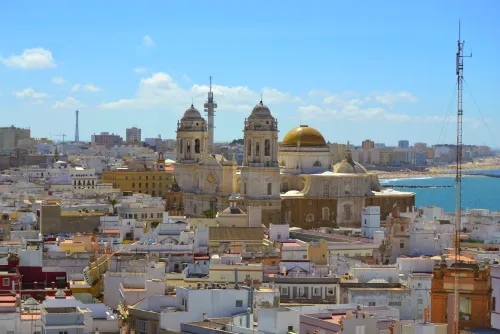
Golden tiles on the dome shimmer in the sunlight, acting as a beacon visible from almost anywhere in the city. Construction took 116 years, resulting in a strange but beautiful hybrid of Baroque curves at the base and Neoclassical restraint near the top. The interior feels cavernous and slightly humid, dominated by massive stone pillars, but the real highlight requires a climb up the Poniente Tower. Unlike the steep steps of other European spires, you ascend via a wide ramp originally designed for horses, making the journey upward surprisingly manageable.
From the bell tower, the city unfolds as a sea of flat white roofs, punctuated by laundry lines and watchtowers. You can trace the coastline and see exactly how the ocean embraces the urban grid. It is the definitive orientation point for understanding the geography of the peninsula. While many Cádiz attractions charge admission, the ticket here includes access to the diocesan museum, though the cathedral's sheer scale is the main draw.
The crypt, sitting below sea level, offers a stark contrast to the airy nave above. Built from oyster stone, it feels heavy and silent, housing the remains of local composer Manuel de Falla. If you touch the walls, you can often feel the moisture of the Atlantic seeping through the porous rock, a reminder of how precarious this city's relationship with the sea truly is.