Things to Do in Cartagena - Top Attractions, Hidden Gems & Must-See Sights

Discover the best things to do in Cartagena. Complete guide to must-see sights, popular attractions, hidden gems, museums, food markets and parks.

17 Attractions 6 Categories Travel Guide

Table of Contents

Cartagena Overview

Cartagena is defined by its deep-water harbor and the layers of history unearthed beneath its modern streets. Unlike many coastal cities, its identity isn't just about the Mediterranean, but the civilizations that fought for this strategic port over three millennia. Walking from the modernist facades of Calle Mayor to the massive Roman Theatre, you feel the city’s transition from a Punic stronghold to a sophisticated naval base.

The city center is compact and walkable, though the climb to Castillo de la Concepción or the viewpoints at Parque Torres requires some effort. Beyond the city walls, the landscape shifts toward the wild, undeveloped coastline of Calblanque Regional Park. It’s a place for travelers who prefer naval history at the Naval Museum and well-preserved ruins like the Barrio del Foro Romano over typical resort crowds.

Must-See Attractions in Cartagena

  • Roman Theatre of Cartagena — A massive 1st-century BC amphitheater hidden under a cathedral until its accidental discovery in 1988.
  • Castillo de la Concepción — Medieval fortress sitting atop one of the city's five hills, offering the best vantage point over the harbor.
  • Calle Mayor — The city's main pedestrian artery, lined with ornate 19th-century buildings like the Gran Hotel and the Casino.
  • Calblanque Regional Park — A protected stretch of wild beaches and fossil dunes located a short drive from the industrial port.
🏛️ Must-See ⭐ Sights 💎 Hidden Gems 🎨 Museums 🍕 Food & Markets 🌳 Parks & Views

🏛️ Must-See Attractions in Cartagena

These iconic landmarks and must-see sights are essential stops for any visitor to Cartagena.

Calle Mayor

1. Calle Mayor

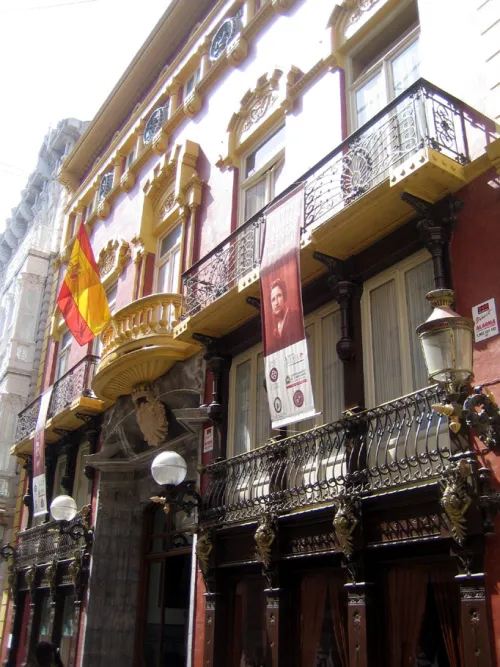
This pedestrian spine connects the port to the Plaza de San Sebastián, lined with polished marble tiles that reflect the midday sun. It is the architectural showroom of the city, where the mining boom of the late 19th and early 20th centuries financed an explosion of Art Nouveau facades. Every few meters, you are compelled to look up at intricate ironwork balconies, floral motifs, and bay windows that seem to compete for attention.

The street functions as the city's living room. In the evenings, the pace slows down as locals participate in the paseo, strolling back and forth to see and be seen. The ground floors are occupied by shops and cafes, but the real drama is above eye level. It is a corridor of bourgeois confidence that explains exactly where the money went when this region was the mining capital of Spain.

Walking here helps orient you among other Cartagena attractions, as many side streets leading to ruins or museums branch off from this main artery. It is loud, lively, and unapologetically commercial, but the sheer quality of the architecture elevates a simple shopping trip into a history lesson on economic booms and busts.
Hours Open 24/7
Price Free
Website N/A
Location Maps
Insider TipStop in front of the Casa Cervantes (number 15); the iron sunflowers on the facade are a masterpiece of the local modernist style.
Castillo de la Concepción

2. Castillo de la Concepción

Perched on the highest point in the city center, this medieval fortress offers the definitive view of the harbor and the Roman Theatre. The castle itself has served as a Moorish alcazaba, a medieval stronghold, and even a siren station, adapting to whoever held power at the time. The walls are a patchwork of reused stones, including Roman pillars and tombstones that were cannibalized from earlier ruins to strengthen the defenses.

Inside, the interpretation center explains the history of the city through the lens of its different conquerors. The cisterns are particularly atmospheric, echoing with the sound of dripping water. However, the real reason to come is the panoramic terrace. From here, the city's layout makes perfect sense: the protective hills, the deep bay, and the strategic pinch points that made it a military prize.

You can walk up through the zigzagging paths of the park, but the panoramic elevator is a valid shortcut if you want to save your energy for exploring the ramparts. Among all Cartagena attractions, this is the one that gives you the 'big picture' geography. It is windy and exposed, so it feels separate from the dense streets below, providing a literal overview of the layers of history you have been walking through.

Hours Mon: Closed | Tue-Sun: 10:00 AM – 5:30 PM
Price Free
Insider TipTake the panoramic elevator up to save your legs, but walk down the winding paths through Parque Torres to see the peacocks and gardens.
Roman Theatre of Cartagena

3. Roman Theatre of Cartagena

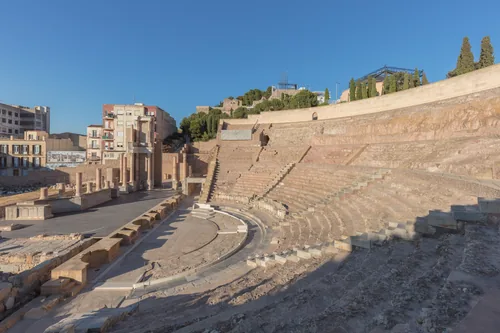
This is the headline act. For centuries, this massive structure was lost, buried beneath a fisherman's neighborhood and the ruins of a cathedral. Its rediscovery and restoration is one of the great archaeological triumphs of modern Spain. You enter through a pink building on the plaza, travel through a tunnel under the hill, and emerge suddenly into the ancient cavea (seating area). The reveal is theatrical and perfectly executed.

The scale is humbling. You can climb the stairs where 6,000 spectators once cheered, look down at the orchestra, and see the original marble columns re-erected on the stage. The museum section leading up to the theater explains how it was buried—layer by layer—showing how the Byzantines and Moors built right on top of the seats. It turns the confusing jumble of history into a clear timeline.

No list of Cartagena attractions is complete without this. It defines the city's Roman identity. The integration of the Old Cathedral ruins into the theater's upper tier is a unique feature, physically fusing two different eras of faith and culture. It is best visited late in the afternoon when the stone turns golden and the shadows lengthen across the seats.

Hours Mon: Closed | Tue-Sat: 10:00 AM – 6:00 PM | Sun: 10:00 AM – 2:00 PM
Price €3.50
Location 37.5995, -0.9841
Insider TipPay attention to the lintels in the museum tunnel; one of them is an inscribed dedication to the grandsons of Augustus, which helped date the entire structure.
Get Your Own Private Tour with AI Guide
AI Guide
  • Personalized tour tailored to your interests
  • Your AI guide tells stories, shares facts, and cracks jokes
  • Turn-by-turn GPS navigation
  • Available in your language — no download needed
Try for Free

💎 Hidden Gems in Cartagena - Off the Beaten Path

Beyond the tourist crowds, Cartagena hides remarkable treasures waiting to be discovered.

Barrio del Foro Romano

1. Barrio del Foro Romano

Walking through this site feels less like visiting a museum and more like intruding on a daily routine from two thousand years ago. The excavation is extensive, revealing an entire city block that includes thermal baths and a banquet hall, all preserved under a modern roof that protects the stones without killing the natural light. You can trace the path of the original Roman road, seeing the ruts worn by cart wheels, and stand in the atrium of what was once a guild headquarters.

The audio guide here does a heavy lifting that placards often miss, reconstructing the noise and social hierarchy of the baths where political deals were cut over steam and oil. It is distinct from the Roman Theatre because it focuses on daily civilian life rather than spectacle. If you are grouping Cartagena attractions by era, this site provides the domestic context that the grand monuments often lack.

The visit concludes with a museum section that displays the smaller artifacts—coins, ceramics, and wall paintings—found in the dirt layers. It connects the physical ruins to the people who actually used them. The transition from the hot, dusty stones outside to the climate-controlled gallery helps you process the sheer scale of what lies beneath the modern street level.

Hours Mon: Closed | Tue-Sun: 10:00 AM – 5:30 PM
Price Free
Insider TipLook for the opus spicatum flooring (bricks laid in a herringbone pattern) in the thermal complex; it is remarkably intact and gives you a clear sense of the original decoration.
Cala Cortina

2. Cala Cortina

This is the city's swimming pool, a sheltered cove just around the headland from the port that locals treat as their backyard. The water here is surprisingly clear given its proximity to a major harbor, protected by a natural amphitheater of rock that blocks the wind and keeps the waves gentle. It is not a sprawling resort beach; it is a compact, social semi-circle of sand where families set up elaborate camps and teenagers dive off the rocks.

Getting here is part of the experience, requiring a walk through a pedestrian tunnel or a winding drive along the cliffs. Once you arrive, the industrial skyline of the port disappears, replaced by the Mediterranean and the smell of grilling seafood from the lone chiringuito (beach bar). It is the perfect antidote to a morning spent absorbing history in the heat.

While many Cartagena attractions demand your intellectual attention, this spot only asks that you bring a towel. It can get crowded on weekends, but the atmosphere is communal rather than chaotic. The netted swimming area ensures you can swim laps without worrying about boat traffic, making it ideal for a quick dip before dinner.

Hours Open 24/7
Price Free
Website N/A
Location Maps
Insider TipWalk here from the port if the weather is mild; the path offers great views of the harbor defenses, but take a taxi back if you stay until dark.
El Batel Auditorium

3. El Batel Auditorium

Sitting on the edge of the harbor like a stack of translucent containers, this auditorium is the face of 21st-century Cartagena. Designed by SelgasCano, it breaks entirely with the stone-and-marble aesthetic of the old city, using synthetic materials and bright colors to reflect the light of the port. The building seems to glow, especially at dusk, with orange and yellow hues that mimic the sunset over the Mediterranean.

Even if you are not attending a concert, the architecture is worth a walk-around. The interior ramp system creates a fluid, underwater feeling, connecting the different levels with a sense of movement. It sits right next to the underwater archaeology museum, creating a modern cultural district that contrasts with the Roman ruins up the hill. The terrace offers a different perspective on the port, looking out towards the open sea.

It is a polarizing structure—some love its boldness, others find it jarring—but it is an essential part of the mix of Cartagena attractions. It represents the city's attempt to reinvent itself as a cultural hub beyond its military past. The surrounding plaza is spacious and often used by skateboarders and strollers, making it a lively, contemporary public space.

Hours Mon-Sat: 10:00 AM – 3:00 PM | Sun: Closed
Price Free
Insider TipWalk down the side ramp towards the sea; the colored panels create a fantastic, surreal light for photos, especially during the 'golden hour'.
Get Your Own Private Tour with AI Guide
AI Guide
  • Personalized tour tailored to your interests
  • Your AI guide tells stories, shares facts, and cracks jokes
  • Turn-by-turn GPS navigation
  • Available in your language — no download needed
Try for Free

🎨 Best Museums & Galleries in Cartagena

World-class museums and galleries that make Cartagena a cultural treasure.

Cartagena Naval Museum

1. Cartagena Naval Museum

Located right on the waterfront, this museum occupies a former prison and training barracks, setting a military tone before you even enter. The collection traces the evolution of Spanish naval power, which is inextricably linked to this city's natural deep-water harbor. You will find detailed models of ships, old diving equipment, and artillery that tell the story of battles won and lost in the Mediterranean.

The undisputed star here is the Isaac Peral submarine, the world's first battery-powered submarine, launched in 1888. Seeing it up close, with its riveted hull and torpedo tube, brings home the terrifying reality of early underwater warfare. The museum does a good job of contextualizing Peral's invention within the broader arms race of the 19th century, moving beyond simple praise to explain the engineering challenges he faced.

It is an easy addition to a walk along the port, especially if you are interested in the technical side of Cartagena attractions. The halls are spacious and usually cooler than the outdoor sites, making it a good midday retreat. The narrative is heavily focused on the Spanish perspective, offering insight into how the navy shaped the city's social structure and economy for centuries.

Hours Mon: Closed | Tue-Fri: 9:00 AM – 2:00 PM | Sat: 10:00 AM – 2:00 PM | Sun: Closed
Price €4
Insider TipThe room housing the Isaac Peral submarine often has a volunteer guide who can explain the specific mechanics of the torpedo system—ask them about the 'apparatus of depths.'
Municipal Archaeological Museum

2. Municipal Archaeological Museum

Built directly over a late Roman necropolis, this museum is a bit further from the center but essential for completing the historical narrative. The site preserves the burial plots in situ, allowing you to walk over the graves and understand the Roman attitude towards death and memory. The collection housed here includes the epigraphy and ceramics that fill in the gaps left by the larger architectural ruins downtown.

The museum is old-school in its presentation—rows of glass cases and silent halls—but the quality of the artifacts is world-class. It covers everything from the first hominids in the region to the height of the mining industry. It is quieter than the port museums, often giving you the space to examine pieces without being jostled by tour groups.

If you are serious about Cartagena attractions, the trek out here is mandatory. It holds the context for everything else you have seen. The collection of Roman funerary inscriptions is particularly moving, giving names and voices to the citizens who built the theater and walked the Decumanus. It anchors the flashy monuments in the reality of human lifespans.

Hours Mon: Closed | Tue-Fri: 9:00 AM – 2:00 PM, 5:00 – 7:00 PM | Sat-Sun: 11:00 AM – 2:00 PM
Price €1.50
Insider TipDon't miss the collection of Roman glassware; the preservation is incredible, with some pieces looking like they were blown yesterday.
Regional Museum of Modern Art

3. Regional Museum of Modern Art

Known locally as MURAM, this museum is a fascinating hybrid. It combines the restored Palacio de Aguirre—a masterpiece of eclectic modernism—with a sleek contemporary annex. You enter through the modern side but eventually cross into the old palace, moving from white-walled abstraction to heavy wooden staircases and stained glass. The contrast is sharp and deliberate, highlighting how the city manages its heritage.

The Palacio de Aguirre section is the highlight, offering a rare look into the domestic life of the wealthy mining families. You can walk through the original office, the ballroom, and the chapel, all preserved with their original decor. It is intimate and opulent. The modern annex hosts temporary exhibitions that can range from Rodin sculptures to avant-garde photography, ensuring there is always something new to see.

This duality makes it unique among Cartagena attractions. It bridges the gap between the historic preservation you see on Calle Mayor and the living art world. It is right next to the Roman Theatre entrance, so it is easy to combine the two, moving from ancient stone to Art Nouveau luxury in a single block. The museum is manageable in size, perfect for an hour of exploration.

Hours Mon: Closed | Tue-Fri: 10:00 AM – 2:00 PM, 5:00 – 7:00 PM | Sat: 11:00 AM – 2:00 PM, 5:00 – 8:00 PM | Sun: 11:00 AM – 2:00 PM
Price €3
Insider TipMake sure your ticket includes the guided visit to the Palacio de Aguirre interiors; the contemporary exhibitions are open, but the palace rooms sometimes require a specific time slot.
Get Your Own Private Tour with AI Guide
AI Guide
  • Personalized tour tailored to your interests
  • Your AI guide tells stories, shares facts, and cracks jokes
  • Turn-by-turn GPS navigation
  • Available in your language — no download needed
Try for Free

🍕 Food Markets & Culinary Spots in Cartagena

The best food markets, food halls, and culinary destinations in Cartagena.

Mercado de Santa Florentina

1. Mercado de Santa Florentina

This is where the city eats. Not a tourist trap food hall, but a functioning municipal market where locals argue over the price of fish and buy vegetables for lunch. The building itself is modest compared to the grand palaces nearby, but the energy inside is undeniable. The stalls are piled high with regional produce—Murcian tomatoes, salted fish, and cheeses that you won't find in the supermarket chains.

The fishmonger section is particularly impressive, displaying the catch from the local fleet you might have seen in the port earlier. It is loud, smells of brine and fresh fruit, and offers a genuine slice of daily life. Grabbing some almonds or fruit here is a great way to fuel up for a day of walking. The vendors are generally friendly, though they are there to work, not to pose for photos.

Among the list of Cartagena attractions, this offers the most sensory experience. It grounds the history and architecture in the present reality of the city. Visiting here provides context to the local menus you will see in restaurants later. It is best visited in the morning when the stock is fresh and the bustle is at its peak.

Hours Mon-Sat: 8:00 AM – 3:00 PM | Sun: Closed
Price Free
Website N/A
Insider TipLook for the 'salazones' (salted fish) stalls; buy some 'hueva de mújol' (mullet roe) to try a quintessential local flavor that dates back to the Phoenicians.
Get Your Own Private Tour with AI Guide
AI Guide
  • Personalized tour tailored to your interests
  • Your AI guide tells stories, shares facts, and cracks jokes
  • Turn-by-turn GPS navigation
  • Available in your language — no download needed
Try for Free

🌳 Parks & Best Viewpoints in Cartagena

Beautiful parks, gardens, and panoramic viewpoints for the best views of Cartagena.

Calblanque Regional Park

1. Calblanque Regional Park

Leave the city behind completely for this stretch of wild, protected coast where the arid mountains drop straight into the sea. There are no hotels, no promenades, and no paved roads leading directly to the sand—just golden dunes, scrubland, and beaches that feel discovered rather than developed. The landscape is stark and beautiful, characterized by fossil dunes and black slate cliffs that contrast sharply with the deep blue water.

This is not a place for a quick photo stop; it requires commitment. You park your car and walk, or take the shuttle bus during high season, carrying everything you need for the day. The reward is silence, broken only by the wind and waves. Unlike the urban beaches, Calblanque feels raw and untamed, offering a glimpse of what this entire coastline looked like before tourism took hold.

If your itinerary of Cartagena attractions feels too focused on stone and mortar, this park provides a necessary biological counterpoint. The swimming is excellent, though the currents can be stronger here than in the sheltered bays. It is a favorite for hikers in the cooler months and serious sun-seekers in summer who want to avoid the umbrella rentals and music of organized beaches.

Hours Open 24/7
Price Free
Website Wikipedia
Location 37.6075, -0.75
Insider TipThere are zero facilities here—no toilets, no water, no shade. Bring a parasol and twice as much water as you think you need.
Parque Torres

2. Parque Torres

Surrounding the castle, this park is the green lung of the old city. It is a botanical garden of sorts, mixing Mediterranean pines with exotic species brought back by naval expeditions. The paths wind around the hill, offering changing angles of the harbor and the city rooftops. It is inhabited by a flock of peacocks that roam freely, adding a surreal splash of color and the occasional loud cry to the walk.

The park serves as a buffer zone between the urban stone and the fortress walls. It is shady and usually catches a breeze, making it a good escape during the hottest part of the day. You will see couples on benches and families picnicking, utilizing the space as a regular park rather than a tourist site. The views down to the naval arsenal are excellent, revealing the sheer scale of the military infrastructure.

Connecting the elevator arrival point to the castle entrance, it is an inevitable part of the route, but it deserves to be enjoyed slowly. Unlike the structured Cartagena attractions below, this space feels organic. It allows you to decompose the city view, spotting the Roman Theatre, the Bullring, and the Town Hall from a bird's eye perspective before you descend back into the grid.

Hours Open 24/7
Price Free
Website N/A
Insider TipKeep an eye out for the duck pond near the top; it is a favorite spot for the peacocks to congregate and display their feathers.
Get Your Own Private Tour with AI Guide
AI Guide
  • Personalized tour tailored to your interests
  • Your AI guide tells stories, shares facts, and cracks jokes
  • Turn-by-turn GPS navigation
  • Available in your language — no download needed
Try for Free

Explore with AI Guide

AI Guide App

Get personalized tours with our AI-powered guide. No download needed — works right in your browser.