Things to Do in Córdoba - Top Attractions, Hidden Gems & Must-See Sights

Discover the best things to do in Córdoba. Complete guide to must-see sights, popular attractions, hidden gems, museums, food markets and parks.

24 Attractions 6 Categories Travel Guide

Table of Contents

Córdoba Overview

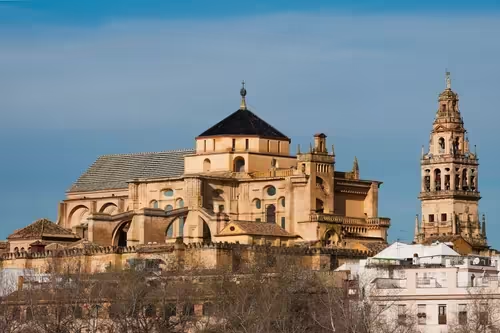
Córdoba's center feels like a labyrinth where Roman foundations support Islamic arches and Christian cathedrals. The city is defined by the Mosque-Cathedral, a massive structure where a forest of jasper and marble columns stands beneath a Gothic nave. Most of the historic core is flat and easily covered on foot, making it simple to move from the Roman Bridge to the Jewish Quarter's narrow alleys.

Beyond the center, the ruins of Medina Azahara provide a glimpse into the 10th-century caliphate, while the Palacio de Viana showcases twelve distinct courtyards. It’s a city that rewards slow exploration rather than a frantic checklist.

Must-See Attractions in Córdoba

  • Mosque-Cathedral of Córdoba — A massive prayer hall of red-and-white arches with a 16th-century cathedral built directly into its center.
  • Medina Azahara — The archaeological remains of a sprawling 10th-century palace city located just outside the modern urban limits.
  • Alcázar de los Reyes Cristianos — A fortified palace featuring terraced gardens, large pools, and Roman mosaics found during excavations.
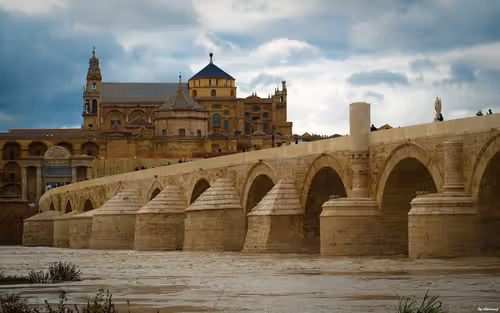
  • Roman Bridge — A sturdy stone span across the Guadalquivir river that offers the best vantage point for viewing the old city skyline.
  • Palacio de Viana — A manor house organized around twelve unique courtyards, documenting five centuries of Andalusian garden design.
🏛️ Must-See ⭐ Sights 💎 Hidden Gems 🎨 Museums 🍕 Food & Markets 🌳 Parks & Views

🏛️ Must-See Attractions in Córdoba

These iconic landmarks and must-see sights are essential stops for any visitor to Córdoba.

Alcázar de los Reyes Cristianos

1. Alcázar de los Reyes Cristianos

Stone walls and military precision define this fortress, which served as a residence for Catholic monarchs and later as the headquarters for the Inquisition. You enter through the defensive towers, where the climb offers a strategic perspective over the river and the city's rooftops. The interior halls are relatively stark compared to the ornate details of the Mezquita, but the Hall of Mosaics compensates with massive Roman floor pieces salvaged from the Plaza de la Corredera, displayed vertically like tapestries to show off their geometric complexity.

History feels heavy here; this is where Columbus pitched his voyage to Queen Isabella and where Boabdil was held prisoner. The architecture is a sober mix of Visigothic remains and Christian reconstruction, lacking the delicate lace-work of the city's Islamic sites but possessing a formidable, blocky strength. It acts as a transitional monument, bridging the gap between the caliphate's fall and the Christian conquest's consolidation.

While many guidebooks list this high among Córdoba attractions, the interior can feel somewhat empty if you are expecting furnished royal chambers. The real draw is the structure itself and the integration with the outdoor spaces. It serves as the heavy, stone anchor to the lighter, water-filled gardens that stretch out behind it, providing context to the power dynamics that shaped the city for centuries.

Hours Tue-Sat 08:30-20:00; Sun 08:30-14:30
Price €4.50
Insider TipVisit an hour before closing in summer; the heat radiates off the stone walls during the day, but the late afternoon light through the arrow slits is dramatic and the crowds thin out.
Jewish Quarter

2. Jewish Quarter

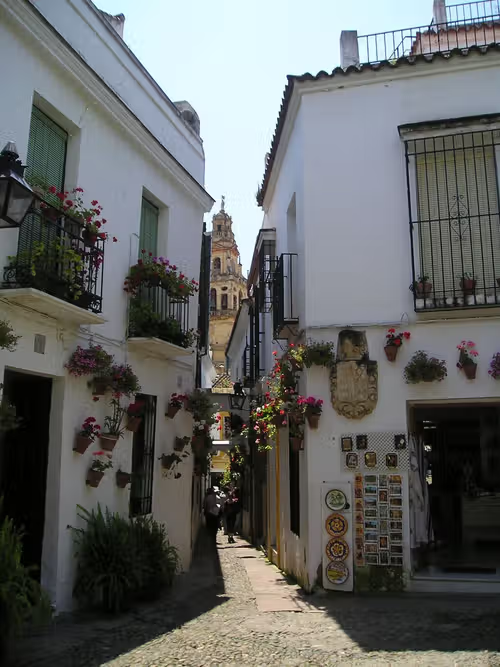
Narrow, winding streets form a labyrinth here, designed intentionally to confuse invaders and provide shade. The Judería is the atmospheric heart of the tourist experience, a whitewashed maze where every turn reveals a new courtyard, archway, or souvenir shop. The pavement is cobbled, and the walls are kept blindingly white, repainted constantly to reflect the brutal Andalusian sun. It is easy to lose your bearings, but that is part of the design.

Shops selling leather goods, silver, and ceramics spill out onto the street, creating a commercial bustle that has existed here for centuries. In the early morning, the delivery trucks navigate the tight corners with impossible precision, a spectacle in itself. The quarter contains significant sites like the Synagogue, but the streetscape itself is the primary exhibit, showcasing the medieval urban fabric that defines the city.

Most lists of Córdoba attractions center on this district, meaning it is rarely empty. However, if you drift just a few streets away from the main arteries surrounding the Mezquita, the noise drops away. The area rewards aimless walking; the dead ends often lead to the most picturesque, silent squares where the only sound is a fountain behind a private gate.

Hours Open 24/7
Price Free
Website Wikipedia
Insider TipLook for the small bronze markers on the ground shaped like the map of the Sephardic peninsula (Spain) that denote the borders of the historic Jewish area.
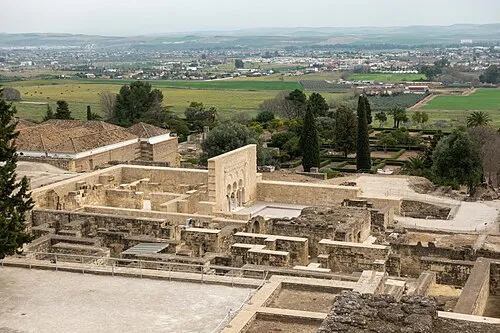
Medina Azahara

3. Medina Azahara

Ruins stretch across the hillside, overlooking the valley in a display of raw ambition that lasted less than a century. This was the 'Shining City' of Abderramán III, built to outshine the caliphs of Baghdad, only to be sacked and looted during the civil wars. Today, you walk through the remains of the Salon Rico, the basilical halls, and the mosques, piecing together the ghost of a metropolis. The site is vast, open to the sky, and silent, a sharp contrast to the dense, noisy center of modern Córdoba.

The restoration has been careful, reassembling the fallen arches and pillars to give a sense of the original scale without creating a fake theme park. The white stone dazzles in the sun, and the geometric gardens are outlined in the dust. It feels isolated and tragic, a monument to the fragility of political power. The separation from the main city emphasizes its role as an exclusive administrative satellite.

While it requires a bus or taxi ride, it is essential among Córdoba attractions for understanding the peak of the Caliphate. The site is large and exposed, so the visit is physically demanding. Walking the ancient sloping streets where ambassadors once waited in awe gives you a visceral understanding of the theater of power that the Umayyads orchestrated.

Hours Mon: Closed | Tue-Sat: 9:00 AM – 6:00 PM | Sun: 9:00 AM – 3:00 PM
Price €3.00
Insider TipThere is absolutely no shade on the site. In summer, visit as soon as it opens at 9:00 AM, or you will be walking on scorching stones in 40-degree heat.
Mosque-Cathedral of Córdoba

4. Mosque-Cathedral of Córdoba

Red and white arches stretch into the darkness, creating a hypnotic forest of stone that defines one of the world's most complex religious buildings. You enter through the Patio de los Naranjos into a space that disorients you with its sheer scale and repetition. The 856 columns are recycled from Roman and Visigothic ruins, supporting a double-arch system that was revolutionary in its time. As you move deeper, the architecture shifts, leading you to the blindingly ornate Mihrab, a masterpiece of gold mosaic sent by the Emperor of Byzantium.

Then, the shock happens: you stumble into a soaring Renaissance cathedral constructed right in the center of the mosque. The transition is violent and fascinating, a physical manifestation of the conquest. The dark, horizontal Islamic prayer hall is suddenly pierced by a vertical, light-filled Christian nave. It is jarring, controversial, and utterly unique, freezing the moment of cultural collision in stone.

This is the anchor of all Córdoba attractions, the reason most people come to the city. The experience is not just visual but spatial; the low ceilings of the older sections press down on you, while the cathedral section pulls your eyes up. It is a building that argues with itself, and walking through it is an exercise in reading the layers of history that have been hacked into the walls.

Hours Mon-Sat 10:00-18:00; Sun 08:30-11:30, 15:00-18:00
Price €10.00
Insider TipVisit between 8:30 AM and 9:30 AM for free entry during the quiet hour (except Sundays/Holidays), but note that the lights might not be fully turned on.
Roman Bridge

5. Roman Bridge

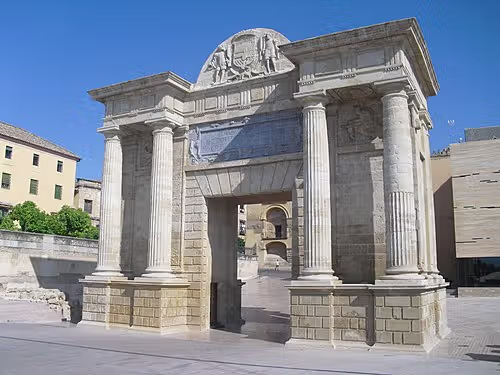
Sixteen arches span the wide Guadalquivir river, creating a pedestrian causeway that has anchored the city for two thousand years. Although the current stones are mostly medieval and modern reconstructions, the foundation and the scale are pure Rome. Walking across it is a ritual; it is wide, exposed to the elements, and offers the definitive panoramic view of the city rising up from the water. Street musicians often play in the alcoves, their guitar music drifting over the river.

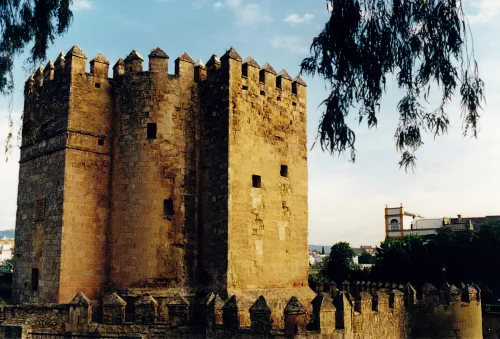
The bridge connects the Calahorra Tower to the Gateway of the Bridge, forming a monumental axis. In the evenings, it becomes a promenade for locals and tourists alike, cooling off near the water. The restoration has smoothed the surface, making it easy to walk, though it lost some of its ancient grit in the process. It appeared in 'Game of Thrones' as the Long Bridge of Volantis, a fact that brings a specific slice of pop-culture tourism to the site.

It is one of the few open, linear spaces in a city of twisting streets, making it an essential breather among Córdoba attractions. The view looking back at the Mezquita from the middle of the bridge, especially when the building is lit up at night, is the single most defining image of Córdoba. It is where you go to see the city as a whole entity.

Hours Open 24/7
Price Free
Insider TipWalk across at dusk. The bats come out to hunt insects over the river, and the changing light on the water and the stone walls is spectacular.
Get Your Own Private Tour with AI Guide
AI Guide
  • Personalized tour tailored to your interests
  • Your AI guide tells stories, shares facts, and cracks jokes
  • Turn-by-turn GPS navigation
  • Available in your language — no download needed
Try for Free

💎 Hidden Gems in Córdoba - Off the Beaten Path

Beyond the tourist crowds, Córdoba hides remarkable treasures waiting to be discovered.

Baños del Alcázar Califal

1. Baños del Alcázar Califal

Star-shaped skylights pierce the vaulted ceilings of these 10th-century baths, creating shifting patterns of light on the cold stone floor. Built for Caliph Al-Hakam II, the space was designed for ritual cleansing and political socializing, structured through a sequence of cold, warm, and hot rooms. The restoration has kept the atmosphere dim and enclosed, simulating the original cavernous feel of the hammam, although the steam and chatter of the Caliph's court are long gone.

You walk through the varying chambers on raised platforms, looking down at the remains of the hypocaust systems and water channels. The masonry is raw and utilitarian compared to the decorative plasterwork of the palaces, showing the engineering behind the luxury. It is a quick visit, but one that offers a tangible sense of the daily life and hygiene rituals of the Islamic ruling class, a sharp contrast to the Christian structures built over them later.

This site is often missed by travelers rushing between larger Córdoba attractions, but it provides a crucial piece of the domestic puzzle. It sits practically underneath the modern street level, feeling like a secret, subterranean world. The silence here is heavy, broken only by the informative audio guide that helps reconstruct the social hierarchy that once dictated who could enter these rooms.

Hours Mon: Closed | Tue-Fri: 8:15 AM – 8:15 PM | Sat: 9:30 AM – 5:30 PM | Sun: 8:15 AM – 2:15 PM
Price €2.00
Insider TipThe entrance is discreet and easy to walk past; look for the glass structure in the Campo Santo de los Mártires gardens. Entry is free for EU citizens.
Capilla de San Bartolomé

2. Capilla de San Bartolomé

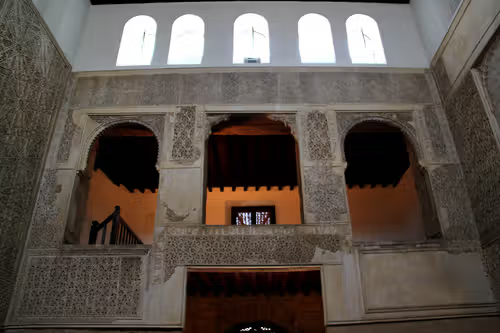
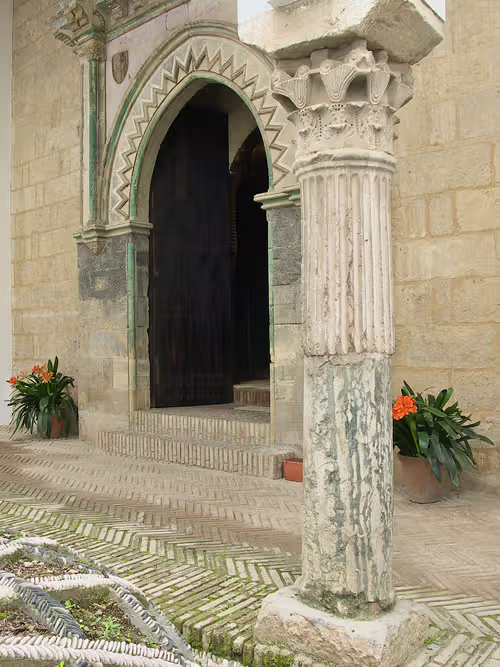
Intricate plasterwork and tiling cover every inch of this small Mudéjar chapel, hidden away inside the Faculty of Philosophy and Letters. It feels like a secret, protected from the street by the university building. The interior is a single nave, but the density of the decoration—geometric tile patterns (alicatado) and delicate stucco carvings—rivals spaces ten times its size. It was built during a time when Jewish converts to Christianity were asserting their new identity, resulting in a fascinating hybrid of aesthetic traditions.

The floor is paved with old bricks, and the light filters in softly, illuminating the blues and greens of the ceramics. It is a quiet, contemplative space, far removed from the grand scale of the cathedral. The craftsmanship shows the persistence of Moorish artistic techniques long after the Christian conquest, preserved here in a capsule of silence.

This chapel is often absent from the standard checklist of Córdoba attractions, which is a mistake for anyone interested in design. It offers an intimate look at the Mudéjar style where you can get close enough to see the individual brushstrokes on the tiles. It is a quick visit, but one that leaves a lasting impression of the city's complex cultural layering.

Hours Mon-Sat: 10:30 AM – 1:30 PM, 3:30 – 6:30 PM | Sun: 10:30 AM – 1:30 PM
Price Free
Insider TipEntry is cheap (around 2 euros), but bring cash. Visiting on a weekday afternoon usually guarantees you'll have the space entirely to yourself.
Casa de Sefarad

3. Casa de Sefarad

Cultural memory is the focus of this private museum located directly opposite the Synagogue. It occupies a restored 14th-century house and dedicates its rooms to the history, domestic life, and music of the Sephardic Jews. The exhibits are modest, relying on replicas and educational texts rather than priceless artifacts, but the narrative is powerful. It fills the silence left by the expulsion of 1492, explaining the traditions that were forced underground or into exile.

The rooms are arranged around a classic courtyard, and the atmosphere is educational and earnest. You will find displays on the role of women in Sephardic culture, the Hebrew language, and the festivals that marked the calendar. It functions more as an interpretive center than a traditional museum, aiming to educate visitors about a community that was systematically erased from the city's physical landscape.

Among Córdoba attractions, this stands out for its storytelling. The guides often sing Sephardic songs or provide detailed explanations that breathe life into the static displays. It complements the visit to the empty Synagogue across the street by providing the human context—the songs, recipes, and rituals—that the stone building cannot convey.

Hours Mon: Closed | Tue-Sat: 11:00 AM – 6:00 PM | Sun: Closed
Price €4.00
Insider TipCheck the schedule for the live Sephardic music concerts held in the courtyard; the acoustics and setting provide a hauntingly beautiful experience that dry exhibits can't match.
Jardines de Colón

4. Jardines de Colón

locals crisscross this central square, using it as a shortcut or a waiting room for the city center. dominated by a large, ornate fountain that acts as a focal point, the park is a rectangle of greenery surrounded by traffic but insulated by tall trees. It sits in front of the baroque Palace of La Merced, providing a grand architectural backdrop to the casual scenes of dog walkers and students studying on benches.

The vibe here is functional and relaxed. It is not a manicured tourist garden but a working lung for the neighborhood. The shade is dense, making it a reliable refuge during the scorching afternoons. You will see elderly residents chatting on the same benches they have occupied for decades, ignoring the rush of the modern city around them.

While rarely a primary destination among Córdoba attractions, it serves as a perfect decompression zone after visiting the northern churches or the Palacio de Viana. It offers a glimpse of the 19th-century bourgeois expansion of the city, distinct from the medieval cramp of the Judería. The contrast between the splashing fountain and the dusty ground creates a specific, recognizable texture of Andalusian urban life.

Hours Open 24/7
Price Free
Location 37.89, -4.77833
Insider TipThere is a small kiosk bar in the park; grab a coffee there and sit by the fountain to watch the city wake up before heading to the nearby Palacio de Viana.
Get Your Own Private Tour with AI Guide
AI Guide
  • Personalized tour tailored to your interests
  • Your AI guide tells stories, shares facts, and cracks jokes
  • Turn-by-turn GPS navigation
  • Available in your language — no download needed
Try for Free

🎨 Best Museums & Galleries in Córdoba

World-class museums and galleries that make Córdoba a cultural treasure.

Archaeological Museum of Córdoba

1. Archaeological Museum of Córdoba

Renaissance architecture meets modern concrete in this surprisingly cohesive museum set within the Palace of Páez de Castillejo. You navigate through layers of history physically as well as visually; the basement houses the excavated remains of the city's Roman theatre, allowing you to walk over the ancient foundations. The collection upstairs is dense with artifacts, ranging from prehistoric tools to intricate Moorish ceramics, all displayed with a clarity that many older regional museums lack.

Light floods the modern extension, highlighting the marble statues and fragments of columns that once supported the city's temples. It is far quieter here than at the major sites, offering a space to digest the timeline of the region without being jostled by tour groups. The contrast between the 16th-century courtyards of the original palace and the sharp angles of the new wing mirrors the city's own architectural eclecticism.

If you are overwhelmed by the crowds at other Córdoba attractions, this museum serves as a sophisticated retreat. It provides the necessary context to understand what you are seeing on the streets, explaining how the Roman Corduba morphed into the Islamic Qurtuba. The collection of Roman mosaics alone rivals those in the Alcázar, yet you can often view them here in total solitude.

Hours Mon: Closed | Tue-Sat: 9:00 AM – 9:00 PM | Sun: 9:00 AM – 3:00 PM
Price €10.00
Insider TipDon't miss the 'Cervatillo' (fawn) bronze sculpture from Medina Azahara; it's small but is considered one of the finest examples of Caliphal metalwork in existence.
Julio Romero de Torres Museum

2. Julio Romero de Torres Museum

Dark symbolism and intense gazes define the portraits in this museum dedicated to Córdoba’s most beloved painter. Located in the Plaza del Potro, the collection focuses on Romero de Torres' obsession with the archetypal Andalusian woman—tragic, beautiful, and steeped in flamenco culture. The paintings are moody, often using a somber palette that contrasts with the bright reality of the city outside. It is a deeply local shrine; the artist is revered here not just as a painter but as a chronicler of the Cordoban soul.

The museum is intimate, housed in a building that shares a courtyard with the Fine Arts Museum. You move through rooms that feel more like a private collection than a public institution. The works mix realism with allegory, featuring backgrounds that often include local monuments like the Mezquita, grounding the mythical subjects in the physical city.

Unlike other Córdoba attractions that celebrate architecture or ancient history, this museum explores the psychological and cultural identity of the city in the early 20th century. It explains the romanticized, somewhat fatalistic image that Córdoba has of itself. To understand the local pride and the aesthetic of the region, spending an hour with these intense, staring portraits is essential.

Hours Mon: Closed | Tue-Fri: 8:15 AM – 8:15 PM | Sat: 9:30 AM – 5:30 PM | Sun: 8:15 AM – 2:15 PM
Price Free
Insider TipEntry is free for EU citizens. Make sure to look at the painting 'La Chiquita Piconera'; it’s his most famous work and appears on everything from stamps to lottery tickets in Spain.
Living Museum of Al-Andalus

3. Living Museum of Al-Andalus

Audio guides and scale models drive the experience at this museum housed within the Calahorra Tower. While the tower provides the shell, the museum inside focuses on the intellectual and cultural achievements of Al-Andalus. You walk through rooms equipped with dioramas of the Alhambra and the Mezquita, listening to a narrative that emphasizes the coexistence of Jewish, Christian, and Muslim cultures during the Caliphate. It is an ideological project as much as a historical one, curated to promote a specific message of tolerance.

The exhibits are somewhat old-fashioned, relying on replicas and heavy voice-over rather than modern interactivity. However, the content is dense, covering philosophy, science, and agriculture. It offers a cerebral counterpoint to the visual splendor of the actual monuments, asking you to imagine the society that built them rather than just admiring the stones.

It sits geographically apart from the main cluster of Córdoba attractions across the bridge. It is best suited for those who want a structured history lesson before or after seeing the real thing. The juxtaposition of the rough defensive walls of the tower with the delicate, small-scale models inside creates a curious contrast between military reality and intellectual ideal.

Hours Daily: 10:00 AM – 6:00 PM
Price €8.00
Insider TipThe audio guide is included in the price and is essential; without it, the models and displays lack context. Allow about an hour to listen to the full narrative.
Medina Azahara Museum

4. Medina Azahara Museum

Modern architecture serves as the gateway to the ancient ruins at this purpose-built museum and visitor center. Located at the base of the hill below the archaeological site, the building is dug into the ground to minimize its visual impact on the landscape. Inside, the spaces are cool, concrete, and vast, housing the most delicate artifacts recovered from the excavations to protect them from the elements. It sets the stage for the visit, explaining the political audacity of building a new capital from scratch.

The exhibition is high-quality, featuring animated projections that reconstruct the city as it looked in the 10th century. This visualization is crucial because the ruins themselves require some imagination to interpret. You see the intricate carvings, the gold dinars, and the ceramics that prove the site's unbelievable wealth before hopping on the shuttle bus that takes you up to the actual stones.

Consider this the prologue to one of the most significant Córdoba attractions. Skipping the museum to go straight to the ruins is a mistake; the context provided here transforms the piles of rocks up the hill into a legible palace city. The building itself won the Aga Khan Award for Architecture, recognized for how respectfully it engages with the history it protects.

Hours Mon: Closed | Tue-Sat: 9:00 AM – 6:00 PM | Sun: 9:00 AM – 3:00 PM
Price €3.00
Insider TipPark your car here and buy your ticket for the shuttle bus. You cannot drive up to the ruins themselves; the museum is the mandatory transit point.
Museum of Fine Arts of Córdoba

5. Museum of Fine Arts of Córdoba

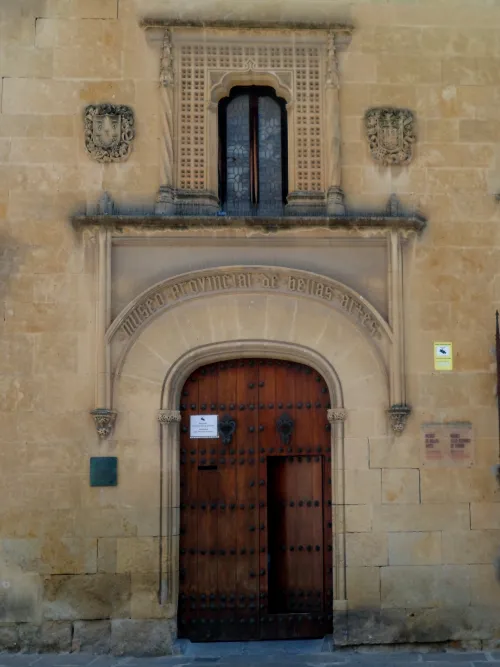
Baroque paintings and local masters fill this museum located in the former Hospital of Charity on the Plaza del Potro. The building itself is a draw, with a serene courtyard centered around a fountain and a staircase with a wooden Mudejar ceiling that hints at the city's past. The collection focuses heavily on Cordoban artists, tracing the shift from religious devotional art to the more secular, realistic styles of the 19th and 20th centuries.

It is quiet here, often empty enough that the floorboards creak echoing through the galleries. The art is competent and historically interesting, particularly the works that depict the city as it looked centuries ago. It lacks the blockbuster fame of the Prado, but it offers a coherent narrative of the region's artistic evolution. The proximity to the Julio Romero de Torres museum allows for a direct comparison between the traditional school and his specific symbolist rebellion.

For travelers exhausted by the crowds at major Córdoba attractions, this is a sanctuary. The bench in the courtyard is one of the most peaceful spots in the city. It allows you to engage with the city's culture at a slower pace, appreciating the details of a Zurbarán or a local baroque altar without fighting for elbow room.

Hours Mon: Closed | Tue-Sat: 9:00 AM – 9:00 PM | Sun: 9:00 AM – 3:00 PM
Price €10.00
Insider TipThe museum is free for EU citizens. Combine it with the Julio Romero de Torres museum across the courtyard, as they form a logical artistic progression.
Get Your Own Private Tour with AI Guide
AI Guide
  • Personalized tour tailored to your interests
  • Your AI guide tells stories, shares facts, and cracks jokes
  • Turn-by-turn GPS navigation
  • Available in your language — no download needed
Try for Free

🍕 Food Markets & Culinary Spots in Córdoba

The best food markets, food halls, and culinary destinations in Córdoba.

Mercado Victoria

1. Mercado Victoria

Iron beams and glass enclose this gourmet market, which occupies a renovated 19th-century fair pavilion in the Jardines de la Victoria. The vibe is social and buzzy, with stalls selling everything from fresh oysters and sushi to traditional Salmorejo and Iberian ham. It functions as a communal dining room where groups split up to grab different foods and reconvene at the high tables in the center. The architecture is airy and industrial, a distinct break from the stone and stucco of the old town.

It is crowded on weekends with locals starting their night out. The noise level is high, the music is loud, and the smell of cooking fills the space. It is not a traditional produce market where grandmothers buy carrots; it is a place to see and be seen, drink wine, and sample a modernized version of Andalusian cuisine. The outdoor terraces are packed when the weather is good.

If you are looking for Córdoba attractions that involve food but want to avoid the tourist trap menus near the Mezquita, this is the solution. It offers a safe, curated variety of high-quality food in a venue that feels historic yet contemporary. It bridges the gap between a quick bite and a sit-down dinner.

Hours Mon-Thu: 9:00 AM – 12:30 AM | Fri-Sat: 9:00 AM – 1:30 AM | Sun: 9:00 AM – 12:30 AM
Price $$
Insider TipLook for the 'flamenquín' stall to try the local deep-fried pork roll specialty, but pair it with a craft beer from the bar to cut through the grease.
Get Your Own Private Tour with AI Guide
AI Guide
  • Personalized tour tailored to your interests
  • Your AI guide tells stories, shares facts, and cracks jokes
  • Turn-by-turn GPS navigation
  • Available in your language — no download needed
Try for Free

🌳 Parks & Best Viewpoints in Córdoba

Beautiful parks, gardens, and panoramic viewpoints for the best views of Córdoba.

Alcázar Gardens

1. Alcázar Gardens

Water dominates this space, arranged in long, rectangular pools that mirror the cypress trees and the sky. The layout is more rigid and spacious than the intimate courtyards of the Jewish Quarter, designed to impress rather than to hide. Fountains chatter constantly, creating a sound barrier against the city traffic outside the walls. It is a place of manicured precision, where orange trees are planted in strict grids and hedges are trimmed into sharp lines, contrasting with the wilder growth found along the riverbanks nearby.

Walkways flank the pools, offering little shade in the midday sun, which makes this an intense experience during July or August. The statues of the Christian monarchs stand at the far end, overseeing the grounds with a stern gaze. In spring, the scent of blossom is overwhelming, hanging thick in the air between the stone basins. The scale here is expansive, meant for royal promenades rather than private reflection.

As you navigate the list of outdoor Córdoba attractions, prioritize this for the golden hour. The low sun reflects off the water and illuminates the fortress walls in a warm ochre, turning a harsh stone backdrop into a glowing canvas. It is the perfect counterpoint to the dark, enclosed spaces of the baths or the dense pillar forests of the mosque nearby.

Hours Tue-Sat 08:30-20:00; Sun 08:30-14:30
Price Free
Insider TipBring a hat and water if visiting between 12 PM and 5 PM; there is almost no roof cover, and the reflection from the pools doubles the sun's intensity.
Jardines de la Agricultura

2. Jardines de la Agricultura

Duck ponds and brick benches characterize this park, known locally as 'Los Patos'. It dates back to the 19th century and retains a slightly faded, romantic atmosphere with its winding paths and varied botanical collection. It feels looser and less formal than the Alcázar gardens, designed for Sunday strolls rather than royal impressiveness. The vegetation is mature, with massive trees creating canopies that block out the surrounding apartment blocks.

Sculptures and monuments are scattered throughout, including a tribute to the painter Julio Romero de Torres. The park is a favorite for families, and the noise of children playing mixes with the sound of birds. It is a slice of daily life, uncurated and genuine, where the maintenance sometimes lags but the charm remains intact.

If you need a break from the stone-heavy list of Córdoba attractions, this green space offers a soft landing. It connects the train station area with the historic center, marking the transition from the modern administrative city to the ancient tourist core. It is a place to eat a sandwich, read a book, and watch the locals interact without the pressure of sightseeing.

Hours Open 24/7
Price Free
Website N/A
Insider TipIf you are arriving by train, walk through this park to get to the center instead of taking the main road; it’s cooler, quieter, and sets a better mood.
Get Your Own Private Tour with AI Guide
AI Guide
  • Personalized tour tailored to your interests
  • Your AI guide tells stories, shares facts, and cracks jokes
  • Turn-by-turn GPS navigation
  • Available in your language — no download needed
Try for Free

Explore with AI Guide

AI Guide App

Get personalized tours with our AI-powered guide. No download needed — works right in your browser.