Things to Do in Cuenca - Top Attractions, Hidden Gems & Must-See Sights

Discover the best things to do in Cuenca. Complete guide to must-see sights, popular attractions, hidden gems, museums, food markets and parks.

15 Attractions 5 Categories Travel Guide

Table of Contents

Cuenca Overview

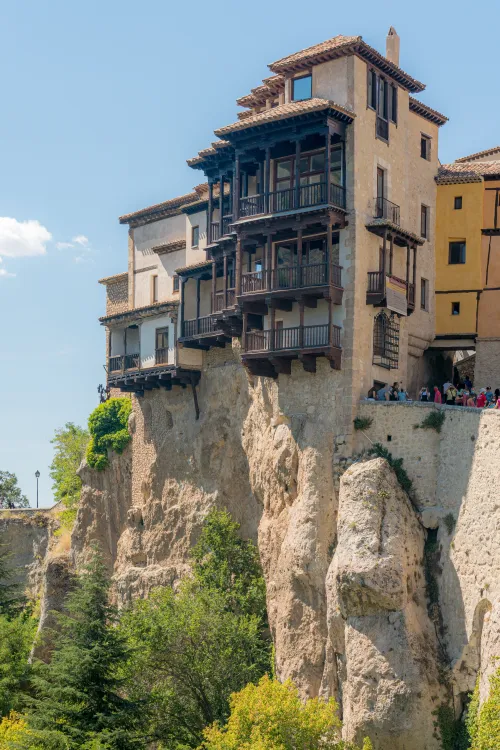
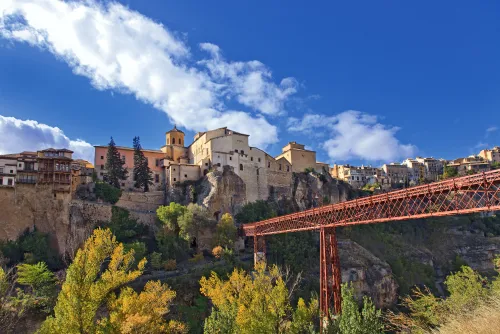
Cuenca exists on a precarious limestone ridge between the Hoz del Huécar and Hoz del Júcar river gorges. The architecture defines the experience, specifically the Casas Colgadas, which appear to grow directly out of the cliff face. Crossing the narrow iron Puente de San Pablo provides the best perspective of this vertical urban landscape before heading into the steep, medieval core.

Inside the 12th-century Cathedral of Cuenca, the atmosphere shifts from rugged nature to early Gothic austerity. Unexpectedly, the city is a hub for contemporary culture, with the Museum of Spanish Abstract Art housed inside one of the medieval cliff-side buildings.

Be prepared for a workout; the upper old town is extremely hilly and best explored on foot. For those with a car, the surrounding Serranía de Cuenca Natural Park offers geological oddities like the Ciudad Encantada, where erosion has carved limestone into shapes resembling animals and human faces.

Must-See Attractions in Cuenca

  • Casas Colgadas — 14th-century wooden balconies that extend directly over the vertical drop of the Huécar gorge.
  • Puente de San Pablo — Iron footbridge connecting the old town to the former San Pablo monastery, offering a vertigo-inducing view of the cliff-side houses.
  • Cathedral of Cuenca — Anglo-Norman Gothic structure that stands out for its unique facade and light-filled interior.
  • Museum of Spanish Abstract Art — Contemporary collection housed in a medieval building, proving that Cuenca's history isn't just about stone and mortar.
  • Ciudad Encantada — Natural park outside the city where karst formations have eroded into shapes resembling animals and human faces.
🏛️ Must-See ⭐ Sights 💎 Hidden Gems 🎨 Museums 🌳 Parks & Views

🏛️ Must-See Attractions in Cuenca

These iconic landmarks and must-see sights are essential stops for any visitor to Cuenca.

Casas Colgadas

1. Casas Colgadas

Wooden balconies jut out over a sheer drop, defying gravity in a way that makes you question the sanity of 15th-century architects. These structures are the visual shorthand for the city, clinging to the rock face of the Huécar Gorge with a tenacity that seems impossible from the ground. While much of the original medieval cluster has been lost to time, the remaining buildings serve as a stark reminder of a time when space inside the city walls was so scarce that building outwards into thin air was a practical necessity, not just an aesthetic choice.

Inside, the creaking floorboards and rough stone walls provide an atmospheric shell for the abstract art museum they now house. Walking through the rooms, you are constantly aware of the precipice just inches away; looking out the small windows offers a vertigo-inducing perspective of the river far below. It is a physical experience of altitude and history combined, far removed from the sterile safety of modern observation decks. Most guides list these as the top Cuenca attractions, but few explain that the best way to understand them is to stand directly underneath them on the walking path, where the engineering feat looks even more precarious.

Seeing them from the inside is essential, but the external view changes dramatically with the light. At midday, the harsh sun flattens the rock face, but late afternoon shadows reveal the texture of the cliff and the fragile-looking supports. At night, golden floodlights turn them into floating lanterns against the black void of the gorge, creating a completely different, almost ghostly presence that dominates the view from the bridge opposite.

Hours Open 24/7
Price $$$
Insider TipDon't just look from the bridge; take the zigzagging path down to the riverbed to see the wooden cantilever beams from below—it’s the only angle where you truly appreciate the engineering.
Cathedral of Cuenca

2. Cathedral of Cuenca

Standing on the Plaza Mayor, the façade presents a curious mix of grandeur and unfinished business. The arches are deep and powerful, hinting at Anglo-Norman Gothic influences that are rare in Spain, allegedly brought by the queen of Alfonso VIII. However, it is not a frozen monument; the exterior has collapsed and been rebuilt, leaving it with a distinct lack of towers that gives it a squat, muscular appearance compared to the soaring spires of Burgos or León. It dominates the square not by height, but by sheer mass and complexity.

Stepping inside, the expected gloom of a medieval cathedral is interrupted by surprising flashes of modern color. The stained glass windows are not the usual biblical scenes but abstract designs added in the 20th century, creating a dialogue between the stone pillars and contemporary light that feels uniquely appropriate for a city so invested in modern art. The light plays across the intricate triforium, highlighting the depth of the carving and the sheer scale of the central nave. It serves as a central anchor for exploring other Cuenca attractions, pulling you back to the main square repeatedly.

Behind the main altar, the spaces become more intimate and cluttered with history. The chapter house and the cloister offer a quieter, cooler counterpoint to the open nave. You can trace the shifts in architectural style from pure Gothic to Renaissance additions, a physical timeline of the city's wealthy patrons. It feels less like a museum and more like a working building that has simply accumulated eight centuries of debris and treasure.

Hours Mon-Fri: 10:00 AM – 5:00 PM | Sat: 10:00 AM – 7:00 PM | Sun: 10:00 AM – 5:00 PM
Price Free
Insider TipPay for the audio guide; it highlights the 'abstract' stained glass windows installed in the 1990s, which most visitors dismiss as generic modern replacements without understanding their significance.
Puente de San Pablo

3. Puente de San Pablo

This iron giant spans the Huécar gorge with a reddish latticework that looks deceptively delicate. Built to replace a collapsed stone bridge, the current structure dates to 1902 and shares the industrial aesthetic of the Eiffel Tower era. It is narrow, high, and unmistakably transparent—you can see the river far below through the wooden planks (or the gaps between them). Crossing it is a rite of passage; the wind picks up in the middle, and there is often a perceptible vibration that tests your nerve.

It serves as the pedestrian artery connecting the old walled city to the Parador and the parking areas. Photographers love it because it offers the frontal view of the Hanging Houses that you see on postcards. However, standing in the middle allows you to look down the throat of the gorge, seeing the terraced gardens and the sheer drop of the cliffs. It is one of the few free Cuenca attractions that delivers such a high-adrenaline return.

For those with vertigo, the crossing can be challenging. The railing is secure but feels low when the wind gusts. Yet, the quick transit is worth it for the view back towards the city walls, which look impenetrable from this angle. In the morning, the bridge is often in shadow while the city glows; in the evening, the roles reverse.

Hours Open 24/7
Price Free
Website cuenca.es/
Insider TipIf the bridge is crowded, wait five minutes. The vibration from heavy foot traffic can be unsettling; it’s much more pleasant to cross when you have a gap in the crowd.
Get Your Own Private Tour with AI Guide
AI Guide
  • Personalized tour tailored to your interests
  • Your AI guide tells stories, shares facts, and cracks jokes
  • Turn-by-turn GPS navigation
  • Available in your language — no download needed
Try for Free

💎 Hidden Gems in Cuenca - Off the Beaten Path

Beyond the tourist crowds, Cuenca hides remarkable treasures waiting to be discovered.

Ventano del Diablo

1. Ventano del Diablo

Before you reach the deeper wilderness, this natural observation deck demands a stop. It is literally a window—a double-arched cave carved into the rock high above the Júcar river canyon. The view is framed by the stone itself, looking down a dizzying drop to the teal-colored water below. It feels like a defensive position or a hermit's lair, but it is purely a freak of erosion. The wind funnels through the arches, cooling you down instantly even on hot days.

It acts as the gateway to the Serranía, sitting right next to the road. You park, walk twenty meters, and suddenly the ground vanishes. The perspective on the canyon is unparalleled; you can see the vultures flying *below* you. It’s a quick stop, not a day trip, but it delivers more visual drama per minute than almost any of the paid Cuenca attractions. The drop is protected by rails, but the exposure is real.

The acoustics inside the cave amplify the sound of the wind and the river. It’s a popular spot, so you might have to wait your turn to stand in the 'window' for a photo. The surrounding rock is smooth and polished by thousands of hands and feet. It sets the tone for the geological weirdness of the Ciudad Encantada further up the road.

Hours Open 24/7
Price Free
Website N/A
Insider TipLook down at the river pools far below; in summer, you might see tiny figures swimming in the freezing water, which gives you a true sense of the immense scale.
Get Your Own Private Tour with AI Guide
AI Guide
  • Personalized tour tailored to your interests
  • Your AI guide tells stories, shares facts, and cracks jokes
  • Turn-by-turn GPS navigation
  • Available in your language — no download needed
Try for Free

🎨 Best Museums & Galleries in Cuenca

World-class museums and galleries that make Cuenca a cultural treasure.

Diocesan Museum of Cuenca

1. Diocesan Museum of Cuenca

Located right next to the cathedral, this collection is often bypassed by crowds rushing to the hanging houses, which is a mistake. The building itself is a complex warren of rooms that served as the Episcopal Palace, with creaky floors and windows that frame unexpected views of the river. The art here is religious, yes, but it includes pieces of startling quality—Medieval panels, intricate goldsmithing, and tapestries that have held their color for centuries. It captures the immense wealth that flowed through this diocese, displayed in a setting that feels dusty and authentic rather than sterile.

One of the standout sections involves the carpets and textiles, which are rarely given this much space in general museums. The texture of the weaving and the specific Islamic influences in the designs speak to the layered history of the region. It’s a quiet space, usually empty enough that you can hear your own footsteps, allowing for a private communion with the objects. Among the louder Cuenca attractions, this museum offers a contemplative silence.

Don't ignore the El Greco paintings. While Toledo claims the artist, the examples here are sharp and characteristic, hanging on walls that feel like they belong in a private residence rather than a public gallery. The layout can be confusing, with stairs leading up and down, but getting lost is part of the charm. It feels like rummaging through the attic of a very wealthy, very old relative.

Hours Mon-Fri: 10:00 AM – 6:30 PM | Sat: 10:00 AM – 7:30 PM | Sun: 10:00 AM – 6:30 PM
Price Free
Location 40.07167, -2.135
Insider TipLook for the 'Byzantine Diptych' (reliquary) of the Despots of Epirus. It’s small, easily missed, and incredibly rare—a survivor from the 14th century.
Fundación Antonio Pérez

2. Fundación Antonio Pérez

This is not your standard white-cube gallery. Housed in a former Carmelite convent, the space is a rambling maze of thirty-odd rooms packed with found objects, pop art, and the personal collection of publisher Antonio Pérez. It feels less like a museum and more like walking inside the brain of an obsessive collector. You might turn a corner to find a wall of crushed soda cans or a series of witty visual puns that require a double-take. The architecture—ancient stone, twisting staircases, and sudden courtyards—fights with the art in a way that makes both more interesting.

It acts as a perfect chaser to the solemnity of the Cathedral. The atmosphere is irreverent and playful. You’ll find works by Millares and Saura, heavyweights of Spanish abstract art, hanging casually next to something Pérez found on the street. It disrupts the idea that Cuenca attractions must be serious or purely historical. The layout forces you to explore, pushing open doors and wandering down corridors without a clear map.

Make sure to find the back patios. The convent's position on the edge of the gorge means that stepping outside for a breath of fresh air puts you face-to-face with a spectacular drop. The contrast between the avant-garde chaos inside and the timeless geological silence outside is jarring and memorable. It is a place that rewards curiosity and punishes those who just want to tick a box.

Hours Mon: Closed | Tue-Sat: 11:00 AM – 2:00 PM, 5:00 – 8:00 PM | Sun: 11:00 AM – 2:00 PM
Price €4
Insider TipAsk specifically to see the 'Objetos Encontrados' (Found Objects) section if you're short on time; Pérez’s wit shines brightest in these small, repurposed everyday items.
Museo de Cuenca

3. Museo de Cuenca

This archaeology museum is a sleeper hit, hiding one of the most significant Roman collections in Spain behind a modest façade. It details the history of the province, which was a powerhouse of the Roman Empire due to the lapis specularis (transparent gypsum) mines. The glass, ceramics, and marble busts dug up from nearby cities like Segóbriga and Valeria are displayed with a clarity that brings the ancient world uncomfortably close. You aren't just looking at broken pots; you're looking at the cosmetic jars and tools of people who lived here two millennia ago.

The progression through the floors takes you from prehistoric tools to Visigothic jewelry, but the Roman era is the undisputed highlight. The statues have a weight and presence that anchor the collection. It provides necessary context for the region, explaining why this rugged landscape was so heavily populated and exploited. Unlike some drier Cuenca attractions, the narrative here is about wealth, trade, and daily life.

It is rarely crowded, meaning you can stand nose-to-glass with a Roman coin hoard or a delicate mosaic without being jostled. The building itself, the Casa del Curato, is a piece of history, with its own quirks and tight spaces. It’s a dense, information-heavy stop that rewards anyone interested in why civilization took root in these difficult mountains.

Hours Mon: Closed | Tue-Sat: 10:00 AM – 2:00 PM, 4:00 – 7:00 PM | Sun: 10:00 AM – 2:00 PM
Price €3
Insider TipFind the marble bust of Lucius Caesar. It is incredibly preserved and gives a human face to the abstract history of the Roman occupation.
Museum of Paleontology of Castilla-La Mancha

4. Museum of Paleontology of Castilla-La Mancha

Perched on a hill facing the old town, this modern structure looks like a bunker but houses a Jurassic wonderland. The star here is 'Pepito' (Concavenator corcovatus), a unique hunchbacked dinosaur found in the province that has baffled paleontologists. The museum doesn't just display bones; it uses life-sized models and interactive exhibits to flesh out the ecosystems that existed here millions of years ago. It’s vivid, colorful, and surprisingly engaging for adults, even if it seems tailored for children.

The outdoor area is arguably as big a draw as the fossils. Life-size dinosaur replicas are scattered around the gardens, which double as one of the best viewpoints in the city. You can frame a photo of a T-Rex with the medieval skyline of Cuenca in the background, a surreal juxtaposition that sums up the span of history here. It stands apart from the medieval theme of most Cuenca attractions, offering a deep-time perspective.

Inside, the flow is logical and the lighting dramatic. It explains the geology that created the famous rock formations you see around the city. Understanding that this high, dry plateau was once a tropical wetland helps contextualize the landscape. It’s a bit of a hike from the center, or a quick taxi ride, but the panoramic views from the cafeteria terrace justify the trip alone.

Hours Mon: Closed | Tue-Sat: 10:00 AM – 2:00 PM, 4:00 – 7:00 PM | Sun: 10:00 AM – 2:00 PM
Price €3
Website mupaclm.es/
Insider TipGo for the dinosaurs, stay for the sunset. The terrace offers the absolute best panoramic photo of the old city skyline, better even than the Parador.
Museum of Spanish Abstract Art

5. Museum of Spanish Abstract Art

This is the cultural jewel of the city, located directly inside the Hanging Houses. The brilliance of this space lies in the contrast: rough, 15th-century plaster walls and heavy wooden beams serving as the backdrop for stark, modernist works by Tàpies, Chillida, and Zóbel. The founder, Fernando Zóbel, saw a connection between the abstract geology of the gorge and the abstract art of his generation, and the museum proves him right. The art doesn't fight the building; they enhance each other.

The main room, with its large window framing the hanging rock and the Parador opposite, is a masterpiece of curation. The light entering from the gorge changes the mood of the paintings throughout the day. It is intimate and human-scaled, lacking the fatigue of massive national galleries. You can see the texture of the canvas and the stroke of the palette knife up close. It elevates the list of Cuenca attractions from merely historic to artistically vital.

Even if you are skeptical of abstract art, the setting converts you. The silence, the creaking floors, and the white spaces allow the works to breathe. It feels like a private residence where the owner has just stepped out. The collection is rotatable, so repeat visits often yield new surprises, but the core dialogue between the medieval container and the modern content remains constant.

Hours Mon: Closed | Tue-Fri: 10:00 AM – 2:00 PM, 4:00 – 6:00 PM | Sat: 10:00 AM – 2:00 PM, 4:00 – 8:00 PM | Sun: 10:00 AM – 2:30 PM
Price €3
Insider TipLook for the white room with the large window overlooking the gorge. The 'artwork' is the view framed by the window, placed intentionally to rival the paintings.
Get Your Own Private Tour with AI Guide
AI Guide
  • Personalized tour tailored to your interests
  • Your AI guide tells stories, shares facts, and cracks jokes
  • Turn-by-turn GPS navigation
  • Available in your language — no download needed
Try for Free

🌳 Parks & Best Viewpoints in Cuenca

Beautiful parks, gardens, and panoramic viewpoints for the best views of Cuenca.

Serranía de Cuenca Natural Park

1. Serranía de Cuenca Natural Park

Beyond the city limits, the landscape explodes into a massive protected area of pine forests, river canyons, and bizarre rock formations. This is not a manicured park but a rugged expanse of high-altitude wilderness. The air is thinner and cleaner, smelling of resin and rosemary. It is a place of deep silence, where the roads wind through narrow gorges and open up onto vast, empty plateaus. The geology is the protagonist, with limestone dissolved into enchanted cities, alleys, and sinkholes.

It is a haven for active travelers who want to escape the stone walls of the capital. Hiking trails range from flat river walks to steep climbs up rocky outcrops. At night, the lack of light pollution reveals a sky dense with stars, making it a prime destination for astronomy. While the city itself is the main draw, the Serranía puts the urban Cuenca attractions into context—the city is just one small outcrop in a region defined by stone.

Wildlife is abundant here; deer and boar are common sights at dusk, and griffon vultures patrol the thermals above the cliffs. The scale of the park means you can drive for twenty minutes without seeing another car. It feels ancient and indifferent to human presence, a raw block of nature that remains surprisingly untamed despite its proximity to Madrid and Valencia.

Hours Open 24/7
Price Free
Insider TipVisit the 'Ventano del Diablo' first to get a sense of the scale, then drive deeper towards Uña for the lagoon walk which is flat and full of birdlife.
Get Your Own Private Tour with AI Guide
AI Guide
  • Personalized tour tailored to your interests
  • Your AI guide tells stories, shares facts, and cracks jokes
  • Turn-by-turn GPS navigation
  • Available in your language — no download needed
Try for Free

Explore with AI Guide

AI Guide App

Get personalized tours with our AI-powered guide. No download needed — works right in your browser.