Things to Do in Granada - Top Attractions, Hidden Gems & Must-See Sights

Discover the best things to do in Granada. Complete guide to must-see sights, popular attractions, hidden gems, museums, food markets and parks.

26 Attractions 5 Categories Travel Guide

Table of Contents

Granada Overview

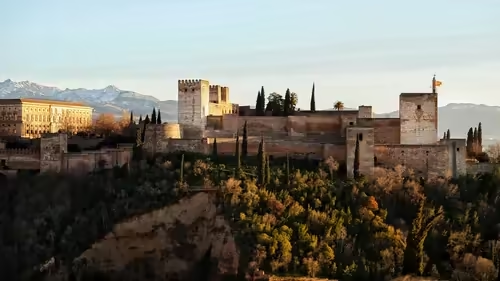
Granada is defined by the heavy weight of its history, where the transition from the Nasrid dynasty to the Catholic Monarchs is visible on every corner. The Alhambra complex dominates the skyline, but the city's true character is found in the steep, whitewashed alleys of the Albayzín. Walking here requires stamina, as the narrow paths climb sharply toward the Mirador de San Nicolás, offering a clear view of the fortress against the Sierra Nevada.

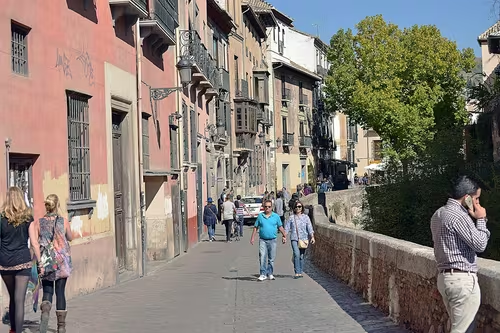
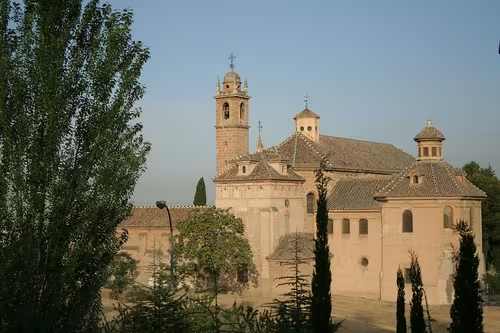
Down in the center, the Royal Chapel holds the tombs of Isabella and Ferdinand, marking the end of the Reconquista. Just a short walk away, the Carrera del Darro follows the river at the foot of the hill, leading toward the cave dwellings of Sacromonte. It is a city that rewards slow exploration on foot, provided you can handle the constant incline.

Must-See Attractions in Granada

  • Alhambra — A massive hilltop fortress and palace complex showcasing the peak of Moorish architecture and garden design.
  • Generalife Gardens — The former summer estate of the Nasrid kings, featuring complex water systems and orchards.
  • Albayzín — The old Moorish quarter characterized by steep, narrow streets and traditional houses with interior gardens.
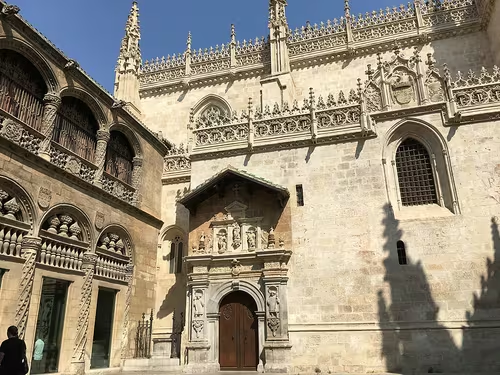
  • Royal Chapel — A late Gothic building housing the elaborate marble tombs of the Catholic Monarchs.
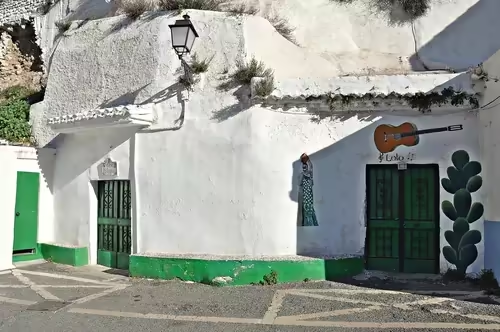
  • Sacromonte — An old neighborhood famous for its traditional cave dwellings carved directly into the hillside.
🏛️ Must-See ⭐ Sights 💎 Hidden Gems 🎨 Museums 🌳 Parks & Views

🏛️ Must-See Attractions in Granada

These iconic landmarks and must-see sights are essential stops for any visitor to Granada.

Albayzín

1. Albayzín

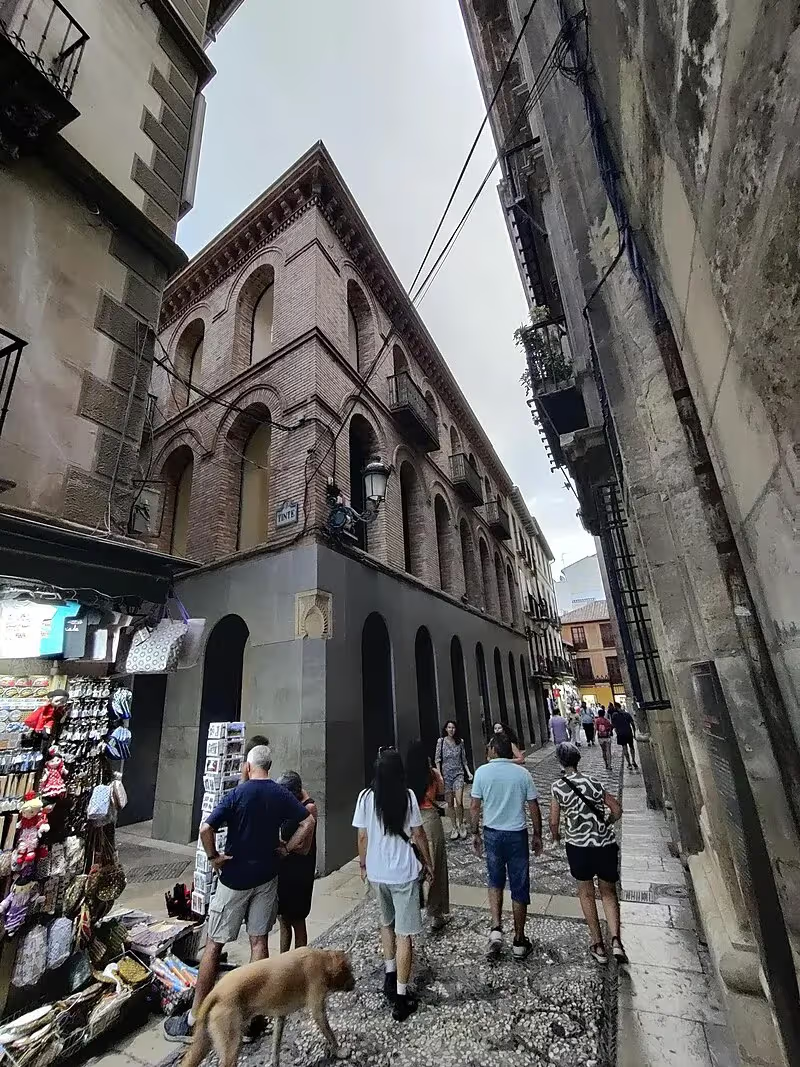
White-washed walls rise steeply from the river valley, creating a tangled mesh of cobblestone lanes that feels more like a North African medina than a European city. This isn't a neighborhood you navigate with a map; you simply commit to getting lost and accept that every turn will likely lead to a dead end or a sudden, framing view of the Alhambra across the gorge. The silence in the upper residential alleys contrasts sharply with the energetic tea shops of Calle Calderería Nueva below, where the scent of mint and leather hangs heavy in the air.

Walking here demands sturdy shoes and strong legs. Cars are largely useless in these narrow arteries, so daily life happens on foot, moving at a slower, more deliberate pace. You'll see residents tending to geraniums in hidden courtyards and locals gathering around cisterns that have watered this hill for centuries. It is an inhabited monument, not just a museum piece, meaning you have to respect the noise levels and privacy of the people who call this UNESCO site home.

While most visitors stick to the main artery leading to the viewpoints, the real character lies in the quiet corners around San Miguel Bajo. If you are looking for Granada attractions that capture the city's Moorish soul without the ticket queues, spending an afternoon aimlessly wandering these slopes is mandatory. Just be prepared for the climb; the best perspectives are always earned with a bit of sweat.
Hours Always open
Price Free
Website Wikipedia
Location 37.1817, -3.5983
Insider TipTake the C32 minibus up to the top and walk down instead of climbing up; your knees will thank you, and you'll catch the sunset light hitting the walls on your descent.
Alhambra

2. Alhambra

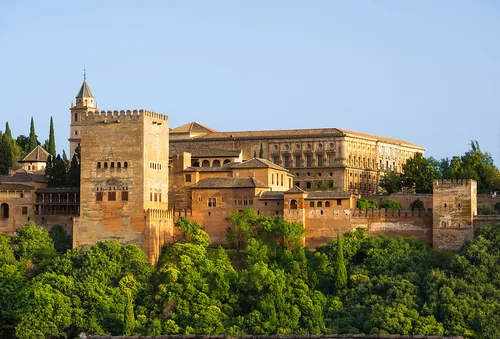
Red clay walls dominate the skyline, concealing a complex of palaces that represents the absolute zenith of Islamic art in Europe. This is not a single building but a sprawling city-within-a-city, comprising the defensive Alcazaba, the residential Nasrid Palaces, and the terraced gardens that fed them. The detailing inside the palaces—where stucco is carved like lace and geometry becomes spiritual—overwhelms the senses, demanding that you stop and stare at ceilings that seem to rotate endlessly.

Getting in requires military-grade planning. Tickets sell out months in advance, and the timed entry to the Nasrid Palaces is strictly enforced; miss your slot by a minute, and you won't get in. Once inside, the flow of people can be intense, but the sheer scale of the grounds allows for moments of solitude if you step away from the main photo spots in the Court of the Lions. The views from the Torre de la Vela offer a strategic understanding of why this fortress was the last stronghold to fall.

Unlike other major Granada attractions, you cannot just turn up and hope for the best here. Dedicate at least four hours to seeing it properly, and bring water, as the walk between the Generalife and the Alcazaba is longer and hotter than it looks on the map. It is an endurance test for your feet, but the payoff is standing in rooms that reshaped architectural history.

Hours Mon-Thu: 8:30 AM – 6:00 PM | Fri-Sat: 8:30 AM – 6:00 PM, 8:00 – 9:30 PM | Sun: 8:30 AM – 6:00 PM
Price €19 (general)
Insider TipIf daytime tickets are sold out, book a night visit to the Nasrid Palaces; the lighting creates a mysterious atmosphere and the crowds are significantly thinner.
Generalife Gardens

3. Generalife Gardens

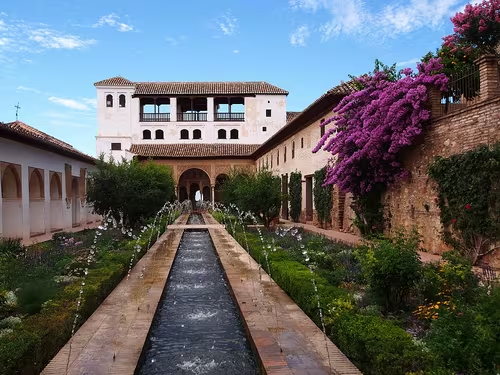
This was the sultan's escape valve, a summer estate situated just above the main palace complex where the rulers went to flee the intrigues of the court. Water is the primary building material here; it flows through channels in the handrails, spurts from fountains, and irrigates the terraced vegetable patches that still produce food today. The Patio de la Acequia is the iconic image, with its long pool and crossing jets of water, but the side gardens offer quieter corners filled with the scent of jasmine and roses.

The architecture is simpler and more rustic than the Nasrid Palaces, reflecting its function as a rural villa. It is designed to engage all senses: the sound of water masks conversations, the flowers provide fragrance, and the elevation catches the breeze. Even in the height of summer, the shade and evaporation create a microclimate that feels degrees cooler than the city below.

While technically part of the Alhambra ticket, it stands as one of the distinct Granada attractions that requires its own energy. Don't leave it for the end when you are exhausted; the uphill walk to the Upper Gardens is steep. It represents the Islamic concept of paradise as a garden, and seeing it in the golden hour before closing time brings out the colors of the flowers against the cypress hedges.

Hours Daily: 8:30 AM – 6:00 PM
Price Free
Insider TipThe Water Stairway (Escalera del Agua) is often skipped by tired groups; climb it to hear the water rushing down the handrails, a unique engineering feature.
Mirador de San Nicolás

4. Mirador de San Nicolás

This is the postcard view, the one Bill Clinton famously visited, and consequently, it is a zoo. The cobblestone plaza offers a direct, head-on view of the Alhambra with the Sierra Nevada mountains rising majestically behind it. The energy is chaotic: street musicians playing flamenco guitar, vendors selling jewelry on blankets, and tourists jostling for the prime selfie spot on the low wall. It is loud, crowded, and absolutely essential.

The best time to be here is a subject of debate. Sunset turns the Alhambra walls a glowing red (hence 'Calat Alhambra'), but the crowds are at their peak. Morning offers a clearer, crisp light and room to actually breathe. The church behind you, San Nicolás, is often ignored, but its tower offers an even higher vantage point for a few euros if the plaza is too intense.

Despite the crush, this remains the king of Granada attractions for a reason. The interplay of the red fortress, the white snow, and the blue sky is the definitive image of the city. Don't just take a photo and leave; sit on the wall, ignore the people, and watch how the light changes on the fortress walls over twenty minutes.

Hours Open 24/7
Price Free
Insider TipSkip the main wall at sunset. Go to the mosque (Mezquita Mayor) right next door; their garden has the exact same view but is quiet and respectful.
Get Your Own Private Tour with AI Guide
AI Guide
  • Personalized tour tailored to your interests
  • Your AI guide tells stories, shares facts, and cracks jokes
  • Turn-by-turn GPS navigation
  • Available in your language — no download needed
Try for Free

💎 Hidden Gems in Granada - Off the Beaten Path

Beyond the tourist crowds, Granada hides remarkable treasures waiting to be discovered.

Carmen de la Victoria

1. Carmen de la Victoria

University property isn't usually on the tourist trail, but this residence offers one of the few chances to enter a traditional 'carmen' without knowing a local. A carmen is a unique Granadian house type defined by its walled garden and orchard, designed for introspection and privacy. Here, the terraced gardens drop down toward the river, framed by cypresses and fruit trees, offering a front-row seat to the Alhambra that rivals the famous viewpoints but with none of the noise.

You ring the bell to enter, and once inside, the roar of the city fades instantly. Students might be studying in the shadows, and the vibe is respectful and hushed. It feels like stepping into a private world, where the sound of fountains replaces the engines of the buses grinding up the hill outside. The perspective on the Albayzín from here is intimate, looking across at the white houses rather than down on them.

If you are hunting for Granada attractions that offer sanctuary, this is your spot. It costs nothing to enter, yet it provides the classic romantic experience of the city—gardens, water, and red walls—in total peace. It’s a perfect example of how the city’s best spaces are often hidden behind unassuming gates.

Hours Mon-Fri: 10:00 AM – 1:00 PM, 5:00 – 7:00 PM | Sat-Sun: Closed
Price Free
Insider TipThe gatekeeper buzzes you in if you ask politely to see the gardens; go during lunch hours (2 PM - 4 PM) when it's practically empty.
Carmen de los Mártires

2. Carmen de los Mártires

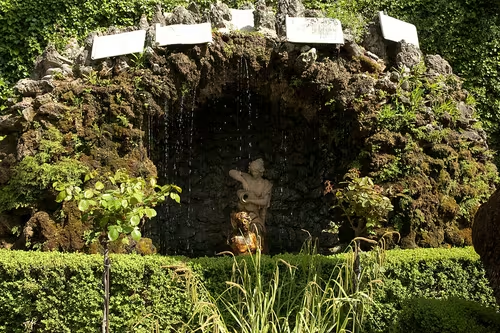
Just a few minutes' walk from the Alhambra's ticket office, this massive estate remains strangely empty, bypassed by the thousands of tourists marching toward the palaces. It is a garden lover's mix of British, French, and Nasrid styles, complete with a lake, a romantic bridge, and peacocks that roam freely and scream from the trees. The property has a darker history as a former prison site, but today it is purely a place of leisure, offering shade and botanical variety.

The views from the terrace overlook the fertile plain (Vega) of Granada, giving you a sense of the landscape that sustains the city. You can wander through bamboo groves, feed ducks in the pond, or sit by a tiled fountain with a book. It lacks the geometric perfection of the Generalife, but it makes up for it with a wilder, more relaxed atmosphere where you can actually walk on the grass in places.

Include this in your list of Granada attractions if you need to decompress after the rigid tour schedules of the Alhambra. It costs nothing to enter and provides a green escape where the air feels cooler and the city feels distant. It is the ideal spot for a picnic before heading back down into the heat of the Realejo district.

Hours Mon-Fri: 10:00 AM – 2:00 PM, 4:00 – 6:00 PM | Sat-Sun: 10:00 AM – 6:00 PM
Price Free
Insider TipFind the small tower in the center of the lake; you can climb it for a 360-degree view of the gardens that most people miss.
Casa de Zafra

3. Casa de Zafra

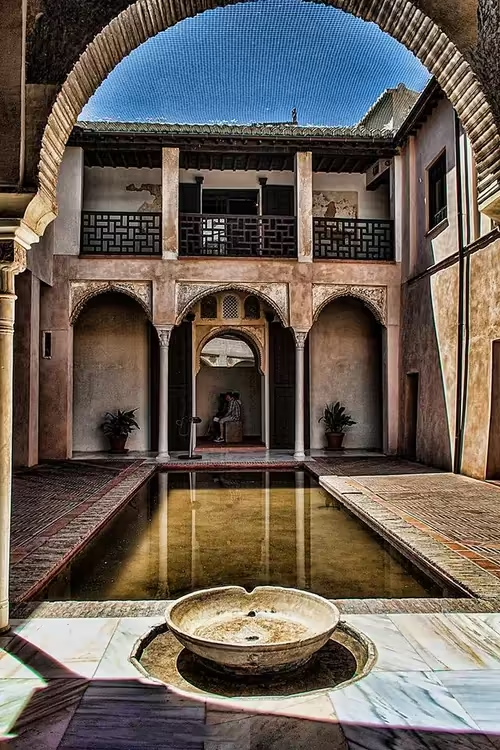
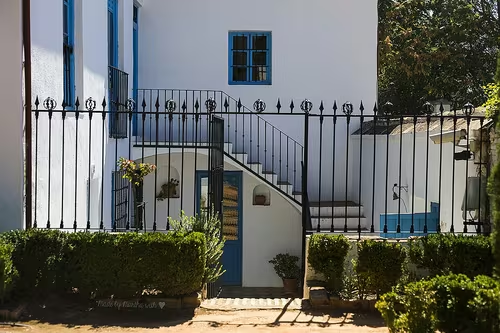
Hidden down a lane near the river, this Nasrid-era house is one of the few domestic buildings from the Moorish period that you can enter freely. Unlike the royal palaces, this was a home for a noble family, and it retains the human scale that the Alhambra lacks. The central pool reflects the porch arches, and original wall paintings still cling to the plaster in the upper rooms, showing how colorful these interiors once were.

It now serves as the interpretive center for the Albayzín, with panels explaining the history and layout of the UNESCO-listed neighborhood. The information is excellent, but the real draw is the architecture itself—the way the house turns its back on the street to focus entirely on the internal courtyard. It is a masterclass in climate control, remaining cool even when the street outside is baking.

Adding this to your itinerary of Granada attractions gives you a blueprint for understanding every other walled house you pass in the quarter. It is rarely crowded, allowing you to sit by the pool and appreciate the silence that these houses were designed to protect. It frames a perfect view of the Alhambra from the second-floor window, framed by a scalloped arch.

Hours Mon: Closed | Tue-Sat: 10:00 AM – 2:00 PM, 4:00 – 7:00 PM | Sun: 10:00 AM – 2:00 PM
Price €3 (free Sun)
Insider TipThe view of the Alhambra from the upper floor window is one of the best 'framed' photo ops in the city, and usually devoid of people.
El Bañuelo

4. El Bañuelo

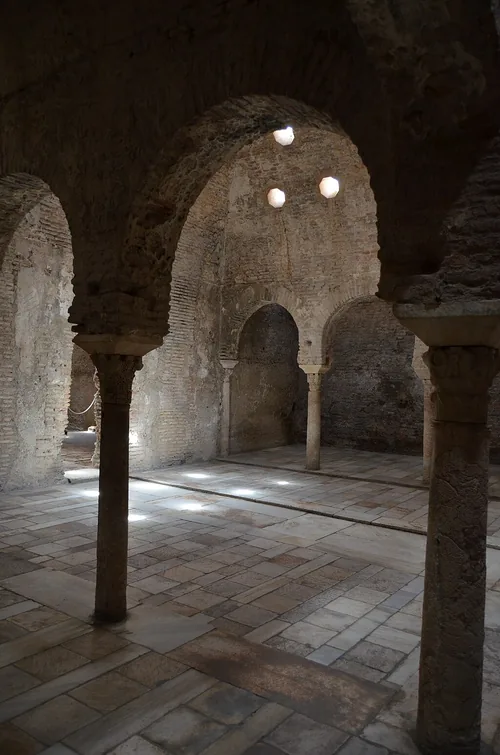
Below the street level of the Carrera del Darro, these 11th-century Arab baths are the oldest and best-preserved in Spain. They survived the Christian conquest because they were hidden beneath a private house, escaping the destruction that claimed most other public bathhouses, which were seen as dens of vice. You enter through a small courtyard into cool, vaulted brick rooms pierced by star-shaped skylights that let in shafts of daylight.

There is no water here anymore, just the bare bones of the architecture—the cold, warm, and hot rooms that formed the social center of the neighborhood. The columns are repurposed Roman and Visigothic capitals, showing the recycling of history typical of the city. It is a raw, unpolished space where you can touch the cold stone and imagine the steam and conversation that once filled the air.

Visiting takes only twenty minutes, but it is one of the most evocative Granada attractions for understanding daily life in the Zirid era. It sits right on the main tourist track but feels subterranean and separate. It is often included in the 'Dobla de Oro' ticket, which encourages you to visit these smaller monuments along with the Alhambra.

Hours Daily: 10:00 AM – 5:00 PM
Price €3
Insider TipLook up at the star-shaped vents in the ceiling; they were designed to be opened and closed to regulate steam, an early form of air conditioning.
Plaza Larga

5. Plaza Larga

If you want to see the Albayzín as a functioning neighborhood rather than a postcard, come here. This small, irregular square is the hub of local life in the upper quarter. In the mornings, a small market sets up selling fruits and vegetables, and locals shout greetings across the tables. It feels intimate and enclosed, protected by the surrounding white houses and the remnant of an old archway.

The cafes here are unpretentious, serving cheap beer and generous tapas to a mix of old residents and wandering students. It lacks the panoramic views of the miradors, which keeps the tour groups away, preserving a gritty, authentic atmosphere. This is where the neighborhood comes to buy bread, gossip, and start the day.

It is one of the Granada attractions that offers a vibe check on the city. Come for breakfast to see the market in swing, or in the evening when the terraces fill up with a younger, bohemian crowd. It is the perfect place to start a walk towards the Sacromonte, fueling up before you hit the dusty road.

Hours Open 24/7
Price Free
Website N/A
Insider TipBuy some 'Pastel de Gloria' from the Casa Pasteles bakery on the corner; they are a traditional local sweet that travels well.
Get Your Own Private Tour with AI Guide
AI Guide
  • Personalized tour tailored to your interests
  • Your AI guide tells stories, shares facts, and cracks jokes
  • Turn-by-turn GPS navigation
  • Available in your language — no download needed
Try for Free

🎨 Best Museums & Galleries in Granada

World-class museums and galleries that make Granada a cultural treasure.

Archaeological Museum of Granada

1. Archaeological Museum of Granada

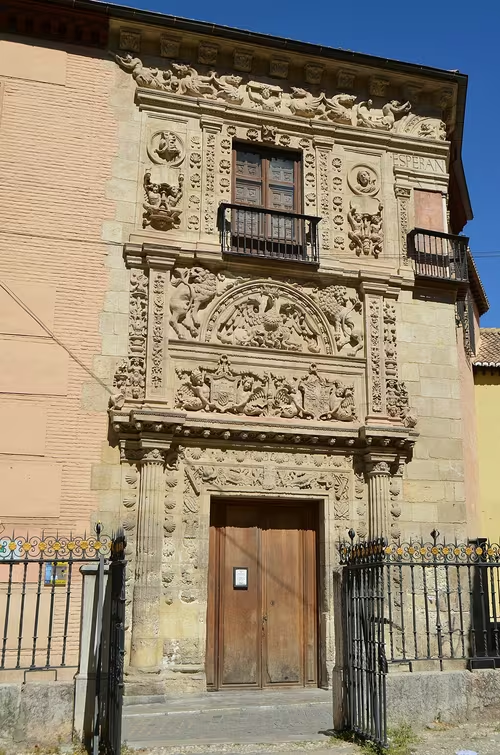
Housed in the Renaissance Casa de Castril, this museum offers a quiet counterpoint to the crowded palaces on the hill opposite. The building itself is a masterpiece, with a plateresque facade that hints at the treasures inside, but the real value is in the collection that traces human presence in the region from prehistory to the end of the Moorish period. It puts the visible history of the city into context, showing the layers of Iberian, Roman, and Visigothic culture that underpin the Islamic monuments.

The exhibits are manageable in size, allowing you to absorb the narrative without the fatigue that sets in at larger institutions. You'll find everything from Paleolithic tools to intricate astrolabes, displayed with enough room to breathe. The central courtyard, cool and shaded, is a lovely place to pause and escape the heat of the Carrera del Darro outside.

While many travelers sprint past it on their way to the Paseo de los Tristes, stopping here adds depth to your understanding of other Granada attractions. It fills in the blanks of the city's timeline, explaining who lived here before the sultans and how daily life evolved over millennia. It is free for EU citizens, making it a low-risk, high-reward stop.

Hours Mon: Closed | Tue-Sat: 9:00 AM – 9:00 PM | Sun: 9:00 AM – 3:00 PM
Price €1.50 (free EU)
Insider TipLook for the Egyptian alabaster jar found in Almuñécar; it's a rare evidence of early trade routes that most visitors walk right past.
Casa Museo Manuel de Falla

2. Casa Museo Manuel de Falla

Perched high on the hill, accessible by a steep climb or a bus ride, sits the modest carmen where composer Manuel de Falla lived and worked. The house has been preserved exactly as he left it when he fled to Argentina in 1939, down to his piano, his glasses on the desk, and the small gifts from friends like Picasso and Lorca. It is an intimate, almost voyeuristic space that feels less like a museum and more like the owner has just stepped out for a cigarette.

The silence here is profound, giving you a sense of the acoustic environment Falla needed to compose. The garden is small and tiered, offering glimpses of the city through the cypress trees. Visiting requires joining a guided tour (often just in Spanish, but visual enough to follow), which keeps the groups tiny and preserves the fragile atmosphere of the small rooms.

Among cultural Granada attractions, this is a specific but deeply moving stop. It connects the city's landscape to its soundscape, explaining the inspiration behind works like 'Nights in the Gardens of Spain.' It’s a bit out of the way, but for music lovers or anyone interested in the generation of artists that defined 20th-century Spain, it is essential.

Hours 10:00–17:00 Tue–Sun
Price €3
Insider TipCombine this with a visit to the Carmen de los Mártires nearby; they are on the same bus route and offer two different visions of the 'carmen' life.
Casa de los Tiros

3. Casa de los Tiros

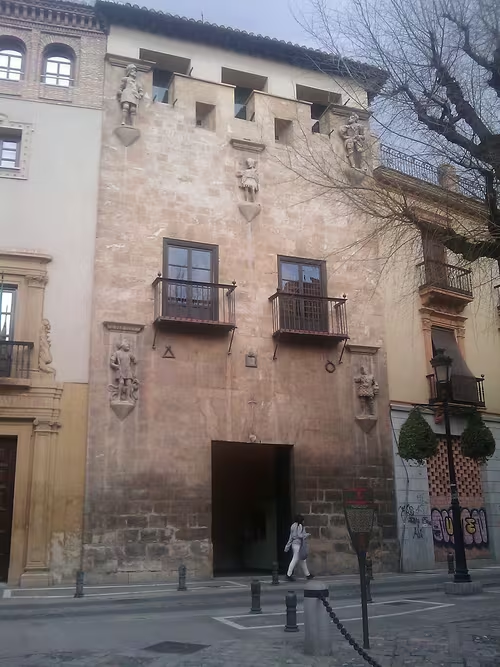
Named for the muskets sticking out of its battlements, this fortress-like palace in the Realejo district feels defensive on the outside and scholarly on the inside. It served as the headquarters for the city's musketeers but now houses a museum dedicated to local history and customs. The building itself is the primary exhibit, with a heavy, masculine architecture that contrasts with the delicate palaces of the Alhambra nearby.

Inside, the Golden Room (Cuadra Dorada) is the standout feature, with a ceiling so intricately painted and carved that it requires several minutes to decipher the figures of heroes and kings. The exhibits focus on 19th-century Granada, covering the Romantic travelers who put the city on the map and the industrial changes that modernized the valley. It is a dusty, quiet sort of museum that feels miles away from the polished audio-guide experiences elsewhere.

While not the most famous of Granada attractions, it anchors the Jewish Quarter and explains the city's transition from a medieval kingdom to a modern provincial capital. It’s a good place to duck into when the afternoon sun hits the Plaza de los Campos, offering cool stone halls and a glimpse into the domestic lives of the Granada aristocracy.

Hours Mon: Closed | Tue-Sat: 9:00 AM – 9:00 PM | Sun: 9:00 AM – 3:00 PM
Price Free (EU)
Insider TipAsk the staff to point out the 'Generalife' painting in the collection; it shows the gardens as they looked before modern restoration.
José Guerrero Centre

4. José Guerrero Centre

Across from the Cathedral stands a narrow, modern building dedicated to Granada's most famous abstract expressionist, José Guerrero. The gallery is a shock of white walls and bold color fields, a sharp break from the intricate geometric patterns and heavy history that define the rest of the city. It houses a rotating selection of Guerrero's work along with contemporary exhibitions that often challenge the conservative artistic tastes of the region.

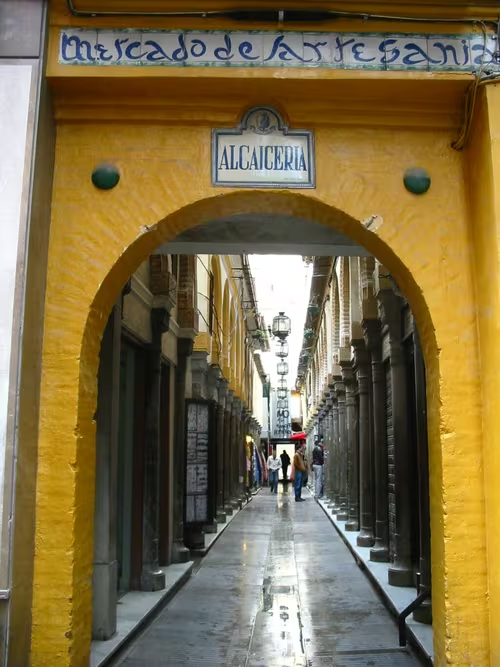
The building itself is an architectural success, squeezing a functional, airy museum into a tight urban plot. The top floor features a window that frames the Cathedral tower perfectly, turning the heritage monument into a piece of art to be viewed from a modern context. It is quiet, air-conditioned, and usually empty, making it a perfect refuge from the crowds in the Alcaicería next door.

If you need a palate cleanser after days of medieval history, this is one of the refreshing Granada attractions to visit. It shows that the city's artistic contribution didn't end in 1492. Entry is often free or very cheap, and you can see the whole collection in under an hour, leaving you refreshed and ready for more tapas.

Hours Mon: Closed | Tue-Sat: 10:30 AM – 2:00 PM, 4:30 – 9:00 PM | Sun: 10:30 AM – 2:00 PM
Price Free
Insider TipGo all the way to the top floor terrace for a unique, eye-level view of the Cathedral's roof details that you can't see from the street.
Museum of Fine Arts

5. Museum of Fine Arts

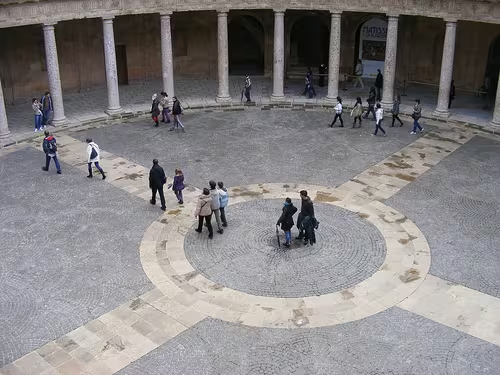
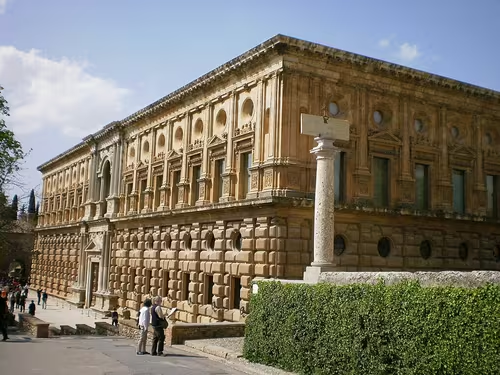
Tucked inside the upper floor of the Palace of Charles V within the Alhambra complex, this gallery is often overlooked by visitors rushing to the Nasrid Palaces. It holds the city's premier collection of religious art, primarily from the 16th and 17th centuries when Granada was reshaping itself as a Christian capital. The star here is the sculpture—polychrome wood carvings that are startlingly realistic, depicting saints in varying states of ecstasy and agony.

The gallery space itself is impressive, utilizing the stark, heavy architecture of the Emperor's unfinished palace. It provides a cool, quiet environment where you can appreciate the technical skill of artists like Alonso Cano, a local hero who was a painter, sculptor, and architect. The themes are heavy—martyrdom and devotion—but they reflect the intense spiritual atmosphere of post-conquest Granada.

Including this in your rotation of Granada attractions is easy since you are likely already at the Alhambra. It is free for EU citizens and offers a chance to see the artistic response to the Islamic beauty outside. Even if you aren't a fan of religious art, the window views over the Albayzín from the gallery are unique.

Hours Mon: Closed | Tue-Sat: 9:00 AM – 6:00 PM | Sun: 9:00 AM – 3:00 PM
Price €1.50 (free EU)
Insider TipFocus on the sculpture 'Virgin of Bethlehem' by Torrigiano; it's a small piece but the realism of the hands and face is incredible.
Museum of the Alhambra

6. Museum of the Alhambra

On the ground floor of the Palace of Charles V, this museum houses the archaeological treasures found within the Alhambra complex. It is the definitive collection of Nasrid art, showcasing the objects that once filled the now-empty palaces. The centerpiece is the Vase of the Gazelles, a massive piece of lusterware pottery that is a miracle of survival and firing technology. Seeing it up close allows you to appreciate the sophistication of the culture that built the fortress.

The collection includes woodwork, architectural fragments, and everyday objects like toys and braziers. It grounds the fantasy of the Alhambra in reality, showing you the doors that people opened and the water jugs they used. The lighting is dim to protect the artifacts, creating a reverent atmosphere that suits the delicate nature of the pieces.

This is one of the most educational Granada attractions and is completely free to enter. You don't need an Alhambra ticket to visit, making it accessible even if the main palaces are sold out. It closes for a siesta in the afternoon, so time your visit for the morning to ensure you get in.

Hours Mon: Closed | Tue: 8:30 AM – 2:00 PM | Wed-Sat: 8:30 AM – 6:00 PM | Sun: 8:30 AM – 2:30 PM
Price Free
Insider TipLook for the wooden 'jamuga' chair; it's the original folding chair design that is still copied in Spanish furniture today.
Parque de las Ciencias

7. Parque de las Ciencias

A short walk from the historic center, this sprawling modern complex is the most visited museum in Andalusia, and for good reason. It is a hands-on science center that covers everything from the human body to astrophysics, designed to be touched and manipulated. The 'BioDomo' is a standout, a climate-controlled biodome recreating tropical environments with free-roaming lemurs, birds, and sloths, which feels miles away from the dry heat of Granada.

It is fantastic for families or anyone suffering from 'old stone fatigue.' You can climb a 50-meter observation tower for views of the Sierra Nevada, watch birds of prey demonstrations, or explore the butterfly pavilion. The museum connects the city's history to science, with exhibits on the astronomical legacy of Al-Andalus, bridging the gap between the astrolabes of the past and the telescopes of the present.

While not one of the traditional historic Granada attractions, it is a world-class facility that commands a half-day easily. It shows the modern, forward-looking face of the city. The planetarium shows are excellent, though often in Spanish, so check the schedule for language options or just enjoy the visuals.

Hours Mon: Closed | Tue-Sat: 10:00 AM – 7:00 PM | Sun: 10:00 AM – 3:00 PM
Price Free
Insider TipThe Bird of Prey demonstration usually happens around 12:00 and 17:00; arrive 15 minutes early to get a seat in the shade.
Sacromonte Cave Museum

8. Sacromonte Cave Museum

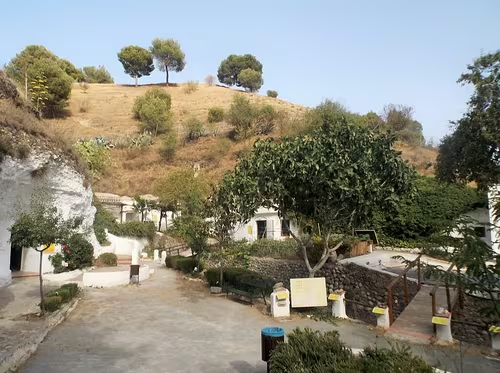
To understand the Sacromonte district, you have to look underground. This ethnographic museum preserves eleven caves in their original state, showing how the Roma population and bohemians lived in these hills for centuries. The caves are whitewashed and surprisingly comfortable, maintaining a constant temperature year-round. Exhibits cover basket weaving, ceramics, and the origins of Flamenco, providing context to the shows you might see later at night.

The location, high up the Barranco de los Negros, offers stunning views of the Alhambra from a fresh angle, framed by cactus and aloe vera. It is an outdoor museum that requires walking between the caves, so bring a hat. The narrative focuses on the symbiotic relationship between the land and the people, explaining a way of life that has largely vanished or been converted into tourist venues.

Visiting here grounds your experience of other Granada attractions. It explains the 'other' Granada, the one of the marginalized and the creative who lived outside the city walls. It is educational without being dry, and the walk up through the prickly pear cactus is an adventure in itself.

Hours Daily: 10:00 AM – 6:00 PM
Price Free
Location 37.1828, -3.5842
Insider TipVisit in the late afternoon when the heat breaks; the walk up is exposed and can be brutal at midday.
Get Your Own Private Tour with AI Guide
AI Guide
  • Personalized tour tailored to your interests
  • Your AI guide tells stories, shares facts, and cracks jokes
  • Turn-by-turn GPS navigation
  • Available in your language — no download needed
Try for Free

🌳 Parks & Best Viewpoints in Granada

Beautiful parks, gardens, and panoramic viewpoints for the best views of Granada.

Parque Federico García Lorca

1. Parque Federico García Lorca

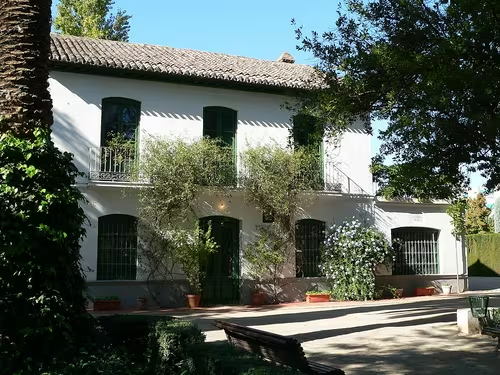
This modern park on the western edge of the city surrounds the Huerta de San Vicente, the summer home of the Garcia Lorca family. The park itself is a grid of leafy avenues, rose gardens, and water features, popular with joggers and families walking dogs. It is a slice of ordinary life, flat and accessible, contrasting with the steep, narrow streets of the old town.

The house museum in the center is the anchor. This is where Lorca wrote some of his most famous works before his execution at the start of the Civil War. The tour is poignant, moving through the rooms where he slept and worked, preserved with original furniture and family photos. It feels fragile and personal, a stark reminder of the tragedy that befell the city's most famous son.

For literary pilgrims, this is the most emotional of all Granada attractions. Even if you don't enter the house, the park is a lovely place to sit and read. It closes late in the summer, making it a perfect spot for a pre-dinner stroll when the heat of the day has dissipated.

Hours Daily: 8:00 AM – 1:00 AM
Price Free
Insider TipCheck the schedule for outdoor cinema nights in the summer; they often screen films in the plaza next to the house.
Get Your Own Private Tour with AI Guide
AI Guide
  • Personalized tour tailored to your interests
  • Your AI guide tells stories, shares facts, and cracks jokes
  • Turn-by-turn GPS navigation
  • Available in your language — no download needed
Try for Free

Explore with AI Guide

AI Guide App

Get personalized tours with our AI-powered guide. No download needed — works right in your browser.