1. Cathedral of Notre-Dame du Puy
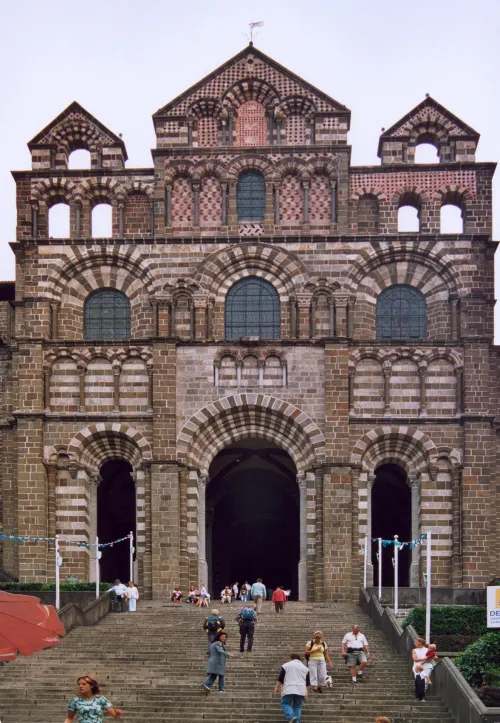
The ascent to this UNESCO World Heritage site is a physical act of pilgrimage that sets the tone for your entire visit. Perched at the highest point of the city, the cathedral is reached by climbing steep, cobbled streets that seem to funnel travelers toward the grand staircase. The façade is a striking mosaic of polychrome lava stone, different from the pale limestone Gothic churches found further north. Inside, the atmosphere is heavy with centuries of devotion, centered on the famous Black Madonna, a small but commanding statue that draws the eye immediately above the altar.
Unlike traditional church layouts, the nave here was built on a void to extend the platform over the hillside, meaning you actually enter through the floor of the nave near the main altar. It is a disorienting and memorable architectural quirk. The Porch of the For gives you a moment to catch your breath before entering the dim, incense-laden interior. Look for the Pierre des Fièvres (Fever Stone) near the entrance, a slab of volcanic rock where pilgrims historically laid down to be cured of ailments, a tradition that locals still observe today.
It serves as the official starting point for the Via Podiensis route to Santiago de Compostela, so you will see hikers with scallop shells on their backpacks receiving blessings at 7:00 AM. While many Le Puy-en-Velay attractions claim historical significance, this cathedral is the living, breathing engine of the town’s identity. The view from the top of the town, looking out over the red tile roofs towards the surrounding volcanic peaks, provides necessary context for why this strange, vertical city exists.