Things to Do in Ronda - Top Attractions, Hidden Gems & Must-See Sights

Discover the best things to do in Ronda. Complete guide to must-see sights, popular attractions, hidden gems, museums, food markets and parks.

15 Attractions 5 Categories Travel Guide

Table of Contents

Ronda Overview

Ronda is defined by its dramatic position on the edge of a 100-meter limestone drop. The El Tajo Gorge splits the city into two, connected by the massive eighteenth-century Puente Nuevo. While the New Town holds the historic Plaza de Toros de Ronda—one of the oldest bullrings in Spain—crossing the bridge leads into the winding, Moorish-era streets of the Old Town.

The city is compact and easily explored on foot, though the best views require navigating the steep paths near the Alameda del Tajo. Beyond the cliffside panoramas, the interior courtyards of the Palacio de Mondragón offer a quiet retreat from the day-trippers. Expect a lot of uphill walking, especially if you descend into the gorge to look back up at the architecture.

Must-See Attractions in Ronda

  • Puente Nuevo — Massive 18th-century bridge spanning the deep gorge that offers the city's most famous views.
  • Plaza de Toros de Ronda — One of Spain's oldest and most architectural bullrings, housing a museum dedicated to the cavalry and bullfighting history.
  • Arab Baths — Well-preserved 13th-century thermal complex located in the old San Miguel quarter.
  • El Tajo Gorge — Dramatic limestone chasm that provides a natural defense and defines the city's unique layout.
🏛️ Must-See ⭐ Sights 💎 Hidden Gems 🎨 Museums 🌳 Parks & Views

🏛️ Must-See Attractions in Ronda

These iconic landmarks and must-see sights are essential stops for any visitor to Ronda.

Arab Baths

1. Arab Baths

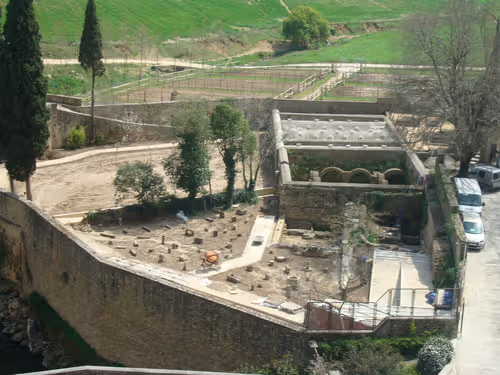
Down by the Las Culebras stream, far below the main tourist circuit, these 13th-century ruins offer the best understanding of Islamic Ronda. While the boiler rooms and reception areas are impressive ruins, the main cold room is nearly intact, with its barrel-vaulted ceiling pierced by star-shaped vents. These openings were designed to let out steam and let in shifting beams of sunlight, creating a geometric light show that moves across the brick floor as the day progresses.

Water management was the lifeblood of the Moorish city, and a video presentation inside explains how the water wheel (still visible outside) lifted liquid from the river to distribute it to the city above. It is a strictly engineering-focused site, stripped of the decorative tiles or plasterwork you might see in Granada, leaving only the raw, functional masonry that has survived floods and neglect for centuries.

If you are organizing your list of Ronda attractions by district, group this with the Puente Viejo and the Arco de Felipe V. The walk down here is steep, which discourages the casual bus crowds, leaving the humid, echoey chambers quiet enough to hear the rushing water outside. It feels damp and subterranean, a stark difference from the windy, sun-blasted heights of the upper town.
Hours Mon: 10:00 AM – 2:00 PM, 3:00 – 6:00 PM | Tue-Fri: 10:00 AM – 6:00 PM | Sat: 10:00 AM – 2:00 PM, 3:00 – 6:00 PM | Sun: 10:00 AM – 3:00 PM
Price €3.50
Website N/A
Insider TipVisit around 1:00 PM when the sun is directly overhead to see the star-shaped light beams at their sharpest intensity on the floor.
Plaza de Toros de Ronda

2. Plaza de Toros de Ronda

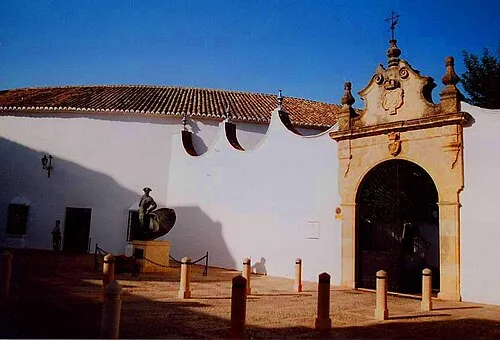
Even if you have no interest in the spectacle of bullfighting, this arena demands attention as a piece of architecture. Built entirely of stone—no wood was used in the stands—it features a double gallery of Tuscan columns that gives it the dignity of a cloister rather than the violence of a fighting pit. The sandy arena itself is massive, one of the largest in diameter in the world, which historically made it incredibly dangerous for matadors who had nowhere to hide.

Underneath the seating tiers, the museum areas smell of old leather and cool stone. They hold a collection of Goya-esque prints, royal harnesses, and suits of lights (trajes de luces) that are heavy with gold thread. The space highlights the connection between the equestrian nobility of Ronda and the development of the modern style of bullfighting. It is a place of ritual and silence when no event is happening.

This is widely considered the spiritual home of the tradition and tops many lists of Ronda attractions. You can walk out into the center of the ring and speak; the acoustics are strange and amplifying, designed to carry the sound of a breath across the vast space. It feels archaic and heavy, a direct link to the 18th century.

Hours Daily: 10:00 AM – 6:00 PM
Price Free
Insider TipDo not skip the stables behind the ring; seeing the heavy wooden stalls gives you a better sense of the backstage reality than the museum cases.
Puente Nuevo

3. Puente Nuevo

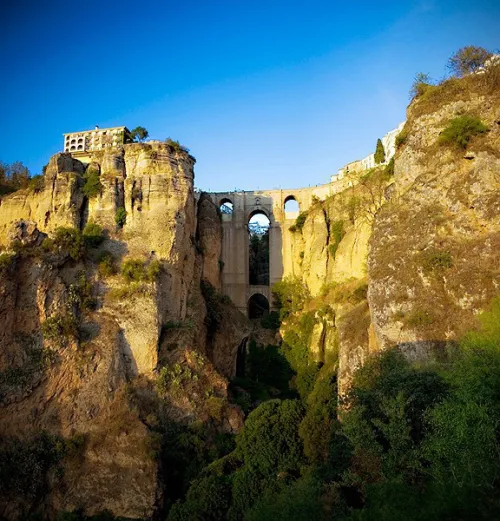
This massive bridge is the anchor of the city, stitching the chaotic market side to the quiet historic side across a 300-foot drop. Completed in 1793 after decades of disastrous attempts, it is a fortress of stone that seems to grow naturally out of the cliff walls. Crossing it is a battle against the wind and the crowds, but leaning over the parapet to see the river reduced to a silver thread below is a mandatory rite of passage here.

Inside the bridge, directly above the central arch, is a small, grim chamber that was once used as a prison. It now houses a modest exhibition about the bridge's construction, but the atmosphere of confinement is what sticks with you. The windows here offer a unique, protected view down into the gorge, shielded from the gale-force winds that often scour the deck above.

While it dominates every list of Ronda attractions, the best way to appreciate it is not to stand on it, but to see it from the surrounding cliffs. The masonry is so seamless that it is hard to tell where the rock ends and the human construction begins. At night, heavy floodlights illuminate the arches, turning the stone a ghostly yellow against the black void of the canyon.

Hours Daily: 9:30 AM – 5:00 PM
Price Free
Website Wikipedia
Insider TipPay the small fee to enter the chamber inside the bridge; it is the only way to see the internal structure and escape the wind on the bridge deck.
Get Your Own Private Tour with AI Guide
AI Guide
  • Personalized tour tailored to your interests
  • Your AI guide tells stories, shares facts, and cracks jokes
  • Turn-by-turn GPS navigation
  • Available in your language — no download needed
Try for Free

💎 Hidden Gems in Ronda - Off the Beaten Path

Beyond the tourist crowds, Ronda hides remarkable treasures waiting to be discovered.

Jardines de Cuenca

1. Jardines de Cuenca

clinging to the vertical walls of the Tajo on the New Town side, these terraced gardens offer a perspective that most day-trippers miss. Instead of looking down into the abyss, you look across it toward the Casa del Rey Moro and the old city walls. The series of platforms is connected by stairs and lined with rose bushes and hardy succulents that can handle the wind tunnel effect of the gorge.

Because of its orientation, this series of terraces is often much quieter than the main bridge viewpoints. You can sit on a bench and watch the flow of tourists on the bridge opposite, seeing the structure in profile. From here, the 'New Bridge' looks incredibly slender, a stone curtain drawn across the gap. The gardens themselves are named after Ronda's sister city, Cuenca, which is famous for its own hanging houses.

This spot serves as a crucial link between the upper commercial district and the lower viewpoints. It is one of the most photogenic Ronda attractions because it places the bridge, the gorge, and the river in a single frame without the obstruction of safety fences found elsewhere. The light here is particularly good in the late morning when the sun hits the opposite cliff face.

Hours Daily: 9:00 AM – 10:00 PM
Price Free
Website N/A
Insider TipThis is the best place to engage in 'bridge watching'—you can see the scale of the Puente Nuevo better here than when you are actually standing on it.
Mirador de Aldehuela

2. Mirador de Aldehuela

Named after the architect who completed the Puente Nuevo, this viewpoint hangs aggressively over the edge of the cliff right next to the bridge itself. It offers the most direct, stomach-churning look straight down the face of the masonry into the 'caldera' (cauldron) below. The railing is sturdy, but the sheer drop often forces visitors to take a half-step back as they approach the edge.

From this vantage point, you can see the Convent of Santo Domingo on the opposite cliff and trace the path of the river as it exits the gorge and widens into the valley. It is a high-traffic spot, often bottled up with people trying to take selfies, so patience is required. The wind here can be fierce, funneling up from the canyon floor and carrying the mist from the waterfall below.

While it is technically just a small paved extension of the street, it is essential among Ronda attractions for appreciating the verticality of the town. You are standing level with the birds that ride the thermals. It connects the parador hotel gardens with the path leading toward the bullring, making it an unavoidable stop on any perimeter walk.

Hours Open 24/7
Price Free
Insider TipIf the main balcony is packed with a tour group, walk ten meters to the left along the wall; the view is 90% the same but usually empty.
Get Your Own Private Tour with AI Guide
AI Guide
  • Personalized tour tailored to your interests
  • Your AI guide tells stories, shares facts, and cracks jokes
  • Turn-by-turn GPS navigation
  • Available in your language — no download needed
Try for Free

🎨 Best Museums & Galleries in Ronda

World-class museums and galleries that make Ronda a cultural treasure.

Museo Joaquín Peinado

1. Museo Joaquín Peinado

Housed in the restored Moctezuma Palace, this gallery focuses on the work of Joaquín Peinado, a Ronda-born painter who succeeded in the shadow of his friend Picasso. The building itself is a marvel of restoration, featuring two mudéjar courtyards that provide a cool, silent counterpoint to the busy street outside. The art is strictly modernist—cubism, geometric abstraction, and figuration—which creates a sharp dialogue with the 16th-century architecture enclosing it.

Visiting here offers a break from the landscape-heavy tourism of the rest of the city. The collection is personal and manageable, not overwhelming, allowing you to trace the artist's evolution from academic drawings to the fractured forms of the Parisian avant-garde. It feels intimate, like walking through a private collector's home rather than a sterile state institution.

For those interested in cultural Ronda attractions, this museum proves the city is not just about cliffs and bandits. It places Ronda within the intellectual map of 20th-century Europe. The upper galleries often have fewer visitors, giving you solitary time with the sketches and the heavy timber-framed ceilings.

Hours Daily: 10:00 AM – 2:00 PM, 4:00 – 7:00 PM
Price €4
Insider TipAsk the staff to point out the 'bodegones' (still lifes); Peinado’s treatment of simple objects like wine and fruit is where his cubist technique really shines.
Museo Lara

2. Museo Lara

This is not your standard municipal museum; it is the eccentric, sprawling private collection of one man, housed in the historic Casa Palacio de los Condes de las Conquistas. The exhibits are a chaotic mix of history and curiosity, ranging from 19th-century romantic clocks and vintage cameras to a room entirely dedicated to witchcraft and the Inquisition. It feels dusty and strange, more like exploring a wealthy hoarder's attic than a curated gallery.

The cellar is where things get grim, housing a collection of torture instruments and displays about witchcraft that are surprisingly graphic. It is sensationalist, certainly, but it also captures the superstitious, darker folklore of rural Andalusia that sanitized guidebooks often ignore. Upstairs, the collections of pistols and scientific instruments are impressive for their mechanical intricacy.

When you tire of the sun and crowds, this is one of the most entertaining indoor Ronda attractions. It sits squarely in the old town, making it an easy diversion after visiting the church. The sheer volume of objects means you can skim past the typewriters to focus on the dueling pistols, or vice versa, depending on your mood.

Hours Daily: 11:00 AM – 6:30 PM
Price €5
Website museolara.org/
Insider TipPay close attention to the cinema section; it contains original magic lantern slides that are rarely seen in working condition.
Wine Museum

3. Wine Museum

Ronda's wine heritage is older than its Roman ruins, and this museum, located in a former palace bodega, connects the dots between the ancient vineyards and the modern resurgence of the Serranía de Ronda D.O. label. The exhibits move through the history of production, from Phoenician amphorae to old wooden presses, explaining how the high altitude and cold nights create wines that are distinct from the sweet sherries usually associated with the south.

The visit is less about staring at display cases and more about the sensory experience. The stone building stays naturally cool, smelling of damp oak and fermentation. It addresses the phylloxera plague that wiped out the region's vines in the 19th century and the recent efforts to replant native grape varieties. It provides context for the rows of vines you see driving into town.

Most visits to Ronda attractions involve walking and looking, but this offers a chance to taste. The entry usually includes a tasting in the courtyard or the old cellar. It is a good introduction before you order wine with dinner, giving you the vocabulary to ask for a local Petit Verdot or Tintilla instead of a generic Rioja.

Hours Mon-Fri: 10:00 AM – 2:00 PM | Sat-Sun: Closed
Price €4
Insider TipYou can buy bottles here that are not distributed in supermarkets; look for small-batch reds from the high-altitude vineyards nearby.
Get Your Own Private Tour with AI Guide
AI Guide
  • Personalized tour tailored to your interests
  • Your AI guide tells stories, shares facts, and cracks jokes
  • Turn-by-turn GPS navigation
  • Available in your language — no download needed
Try for Free

🌳 Parks & Best Viewpoints in Ronda

Beautiful parks, gardens, and panoramic viewpoints for the best views of Ronda.

Alameda del Tajo

1. Alameda del Tajo

Five parallel avenues of Himalayan cedars and pine trees create a ceiling of shade in this 19th-century park, offering a necessary break from the intense Andalusian sun. Unlike the crowded plazas nearby, this space feels designed for local families who promenade here in the evenings, pushing strollers along the wide dirt paths. It ends abruptly at the cliff edge, where balconies hang precariously over the drop, giving you a vertical view of the valley floor hundreds of feet below that feels far more exposed than the main bridge.

While most visitors rush straight to the famous gorge, pausing here allows you to understand the geography of the region. To your left, the sheer rock face curves away toward the mountains; straight ahead, the patchwork of wheat fields and olive groves stretches to the horizon. There is a small botanical garden area that often goes unnoticed, featuring plants native to the Serranía de Ronda that struggle to survive in less protected spots.

Including this park in your circuit of Ronda attractions provides a moment of calm before tackling the busy commercial streets of the New Town. The stone benches near the duck pond are often occupied by reading seniors, creating a heavy silence that contrasts sharply with the tour groups passing on the adjacent street. It serves as the primary lung of the city, filtering the dusty air rising from the valley.

Hours Daily: 9:00 AM – 10:00 PM
Price Free
Website N/A
Insider TipWalk to the specific balcony locals call the 'Balcón del Coño'—it is named for the expletive people involuntarily shout when they look down.
Plaza de María Auxiliadora

2. Plaza de María Auxiliadora

At first glance, this is just a paved square with some benches and shade trees, functioning as a roundabout for pedestrians in the old town. However, its importance lies in what starts here: the Campillo path. This is the trailhead for the hike that takes you down to the base of the bridge and the ruined flour mills. Without this access point, you are stuck looking at the gorge from above with everyone else.

The plaza itself has a relaxed, local atmosphere, often populated by kids playing soccer or residents walking dogs, contrasting with the intense tourism of the nearby Mondragón Palace. A small balcony at the far end offers a preview of the view you get if you commit to the hike down. It faces west, making it a solid, less crowded alternative for sunset watching if the Alameda is full.

As a logistical hub among Ronda attractions, this square is vital. It marks the point where the city stops and the wilder, agricultural valley begins. Stock up on water at the nearby kiosk before you head down the trail, as there are no facilities at the bottom of the gorge.

Hours Open 24/7
Price Free
Website N/A
Insider TipThe path starting here splits; keep right to go under the bridge, or left to head toward the glorious open countryside and the 'Arco del Cristo'.
Get Your Own Private Tour with AI Guide
AI Guide
  • Personalized tour tailored to your interests
  • Your AI guide tells stories, shares facts, and cracks jokes
  • Turn-by-turn GPS navigation
  • Available in your language — no download needed
Try for Free

Explore with AI Guide

AI Guide App

Get personalized tours with our AI-powered guide. No download needed — works right in your browser.