Things to Do in Seville - Top Attractions, Hidden Gems & Must-See Sights

Discover the best things to do in Seville. Complete guide to must-see sights, popular attractions, hidden gems, museums, food markets and parks.

28 Attractions 6 Categories Travel Guide

Table of Contents

Seville Overview

Seville is defined by a heavy afternoon heat and the scent of orange blossoms, where the skyline remains anchored by the 12th-century Giralda bell tower. It functions as an open-air display of Mudéjar architecture, most evident in the intricate tilework of the Royal Alcázar or the immense scale of the Seville Cathedral.

The city center is flat and highly walkable, though the winding alleys of Barrio Santa Cruz require a good map to navigate. Across the Guadalquivir, the Triana neighborhood preserves the city’s ceramic heritage at the Centro Cerámica Triana. For a break from the narrow streets, the sprawling Parque de María Luisa provides essential shade near the grand, semicircular Plaza de España.

Must-See Attractions in Seville

  • La Giralda — A former minaret turned bell tower featuring ramps instead of stairs for a climb with panoramic city views.
  • Royal Alcázar — A royal palace complex where Islamic and Christian architectural styles merge across centuries of history.
  • Plaza de España — A massive tiled pavilion built for the 1929 exhibition, featuring a canal and alcoves for every Spanish province.
  • Metropol Parasol — A modern timber lattice structure that shades Roman ruins and offers a winding rooftop walkway over the old town.
🏛️ Must-See ⭐ Sights 💎 Hidden Gems 🎨 Museums 🍕 Food & Markets 🌳 Parks & Views

🏛️ Must-See Attractions in Seville

These iconic landmarks and must-see sights are essential stops for any visitor to Seville.

La Giralda

1. La Giralda

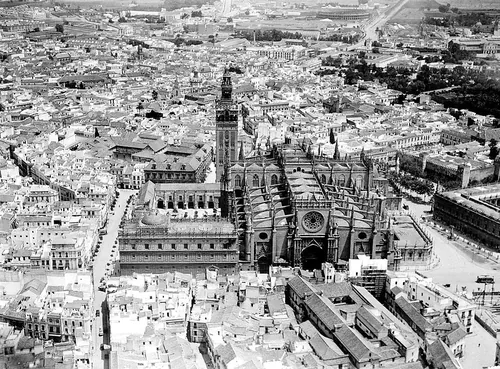
The symbol of the city was once the minaret of the great mosque, a geometric masterpiece of brickwork that now serves as the bell tower for the cathedral. Its beauty lies in the delicate trellis patterns (sebka) that climb the sides, changing appearance as the sun moves across the sky. The Renaissance belfry added to the top integrates surprisingly well, creating a silhouette that has been copied in cities from Kansas to Havana.

Climbing it is a unique experience because there are no stairs—instead, a series of wide, gentle ramps winds upward. This was originally designed so the muezzin could ride a horse to the top to call the faithful to prayer. Today, it means the ascent is less grueling than other towers, though the steady incline still demands some effort. The reward at the top is a bird's-eye view into the cathedral's flying buttresses and the white rooftop landscape of the city.

No tour of Seville attractions is complete without looking up at the bronze weather vane, 'El Giraldillo,' which spins in the wind despite weighing over a ton. It represents the triumph of faith but has become a secular icon of local pride. Whether seen from a rooftop bar or from the base, the tower anchors the skyline with effortless grace.
Hours 10:45–17:00 Mon–Sat, 14:30–18:00 Sun
Price Included with Cathedral (€12)
Insider TipAs you climb the ramps, look out the small balcony windows; the view changes at each level, offering increasingly better angles of the Orange Tree Courtyard below.
Plaza de España

2. Plaza de España

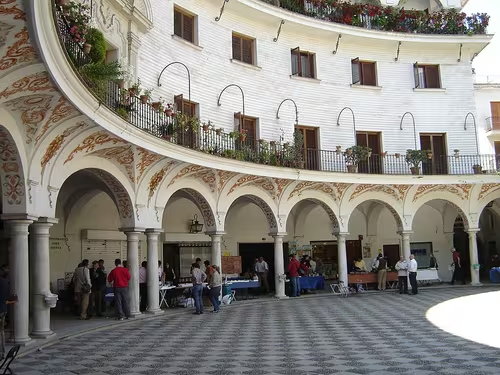
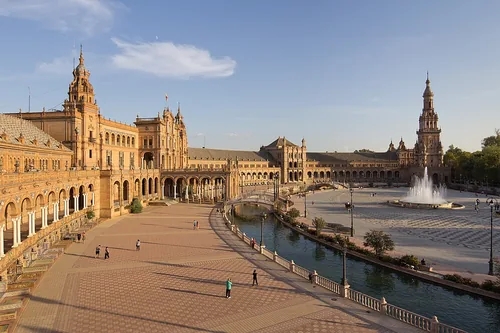
The sheer scale of this semi-circular plaza is difficult to comprehend until you are standing in the center of it. Built for the 1929 Ibero-American Exposition, it was designed to impress, featuring a vast brick building with tall towers at each end, a moat with rowboats, and bridges decorated with bright ceramics. It is a spectacle of Regionalist architecture, embracing every cliché of Andalusian style and amplifying it to operatic levels.

Along the base of the building, tiled alcoves represent every province of Spain, depicting historical scenes and maps. It is a tradition for Spanish domestic tourists to find their home province and take a photo on 'their' bench. The plaza feels like a movie set—indeed, it has been used as one for Star Wars and Lawrence of Arabia—and the light in the late afternoon turns the brick a deep, glowing red.

As one of the most famous Seville attractions, it is constantly busy with street performers, flamenco buskers, and boat rowers. Yet, the vastness absorbs the crowds well. Walking the perimeter gallery offers shade and a chance to admire the coffered wooden ceilings that many people miss while looking at the canal.

Hours Daily: 8:00 AM – 12:00 AM
Price Free
Insider TipGo early in the morning (around 8:30 AM) before the tour buses arrive; you can get a photo of the bridges with absolutely no one on them.
Royal Alcázar

3. Royal Alcázar

This palace complex is not just a building but a conversation between cultures spanning centuries. Originally a fort for Cordoban governors, it was expanded by Peter the Cruel using craftsmen from Granada and Toledo to create the ultimate Mudéjar masterpiece. The result is a stunning array of plaster lacework, golden ceilings, and tiled courtyards that rival the Alhambra. It is the oldest royal palace still in use in Europe, serving as the residence for the Spanish monarchy when they visit.

The Patio de las Doncellas, with its sunken garden and reflecting pool, is the heart of the visit, embodying the Islamic concept of paradise on earth. Every room offers a new texture or pattern, from the Gothic vaults of the lower levels to the tapestries of the grand salons. It was famously used as the Water Gardens of Dorne in Game of Thrones, which has only increased its global fame.

Navigating the lines here is the biggest challenge of visiting Seville attractions. Once inside, the key is to move slowly. Look at the details—the tiny inscriptions in Arabic, the ceramic peacocks, the way the light hits the plaster. It is a place of infinite detail where the architecture itself tells the story of the Christian conquest and the subsequent fascination with Islamic art.

Hours Daily: 9:30 AM – 7:00 PM
Price €14.50
Insider TipBook your tickets online weeks in advance for the first slot of the day. Entering before the groups allows you to hear the fountains, not just the chatter.
Seville Cathedral

4. Seville Cathedral

Everything about this cathedral is designed to overwhelm. It is the largest Gothic cathedral in the world, a mountain of stone built to demonstrate the city's wealth and piety to the world. Inside, the sheer volume of space is disorienting; the central nave soars to dizzying heights, and the gold-leafed main altarpiece is a blinding wall of biblical scenes that took a lifetime to carve. It houses the tomb of Christopher Columbus, carried by four statues representing the kingdoms of Spain.

The cathedral was built on the site of the main mosque, and it retains the Patio de los Naranjos (Orange Tree Courtyard) as its entrance cloister. This grid of irrigation channels and trees provides a moment of order and scent before you enter the dark, cavernous interior. The transition from the bright Andalusian sun to the gloom of the stained-glass-lit nave is dramatic.

As the heavyweight champion of Seville attractions, it demands time. Do not just walk the center aisle; explore the side chapels, which are museums in themselves, filled with Goya paintings and silver monstrances. The Sacristy of the Chalices and the Chapter House are often quieter, showcasing the Renaissance additions that softened the Gothic rigidity.

Hours Mon-Sat: 11:00 AM – 6:00 PM | Sun: 2:30 – 7:00 PM
Price €12
Insider TipBuy a combined ticket at the Church of El Salvador (a 10-minute walk away) to skip the massive line at the Cathedral entrance.
Get Your Own Private Tour with AI Guide
AI Guide
  • Personalized tour tailored to your interests
  • Your AI guide tells stories, shares facts, and cracks jokes
  • Turn-by-turn GPS navigation
  • Available in your language — no download needed
Try for Free

💎 Hidden Gems in Seville - Off the Beaten Path

Beyond the tourist crowds, Seville hides remarkable treasures waiting to be discovered.

Iglesia de San Lorenzo

1. Iglesia de San Lorenzo

Sitting on a quiet, brick-paved plaza, this church is the spiritual center for many locals, largely due to the presence of the Jesús del Gran Poder. This wooden statue of Christ carrying the cross is one of the most revered images in the city, inspiring a devotion that feels intense and personal. The church itself is a fascinating mix of Mudéjar origins and later baroque renovations, but the atmosphere inside is defined by the steady stream of worshippers rather than architectural critics.

The interior is dimly lit and solemn, contrasting with the bright, chatty square outside where children play and neighbors catch up. The artistic heritage here is significant, with works by master sculptors like Juan de Mesa, but the primary experience is observing the living tradition of Andalusian faith. It is a functioning parish, not just a monument, and visitors are guests in a sacred space.

While it may not appear on every list of top Seville attractions, a visit here explains the city's obsession with Holy Week better than any museum. The connection between the neighborhood and this temple is palpable, grounding the spectacle of the processions in daily, quiet acts of reverence.

Hours Mon: 9:00 – 11:00 AM, 6:00 – 9:00 PM | Tue-Fri: 9:00 AM – 1:00 PM, 6:00 – 9:00 PM | Sat: 10:00 AM – 1:00 PM, 6:00 – 9:00 PM | Sun: 10:00 AM – 2:00 PM
Price Free
Website N/A
Insider TipFriday is the day of the Gran Poder; the church will be busier, but the atmosphere of devotion is at its peak. Be respectful and silent.
Iglesia de San Marcos

2. Iglesia de San Marcos

Walking down the bustling Calle San Luis, the reddish stone tower of this church immediately signals that you are looking at something ancient. The tower is visibly a former minaret, retaining its Almohad windows and decoration, topped later with a Christian belfry. It stands as a clear example of the city's layered past, where one culture literally built upon the foundations of another without erasing what came before.

The portal is a Gothic-Mudéjar hybrid, framing an interior that has survived fires and looting throughout turbulent centuries. The church sits slightly raised from the street, giving it a commanding presence in this traditional neighborhood. Inside, the timber roof structure is a reminder of the simpler, airy construction techniques used after the Christian conquest, contrasting with the heavy stone vaults of the cathedral.

This is one of those Seville attractions that rewards the curious walker exploring the Macarena district. It is less polished than the downtown basilicas but feels more authentic to the neighborhood's working-class history. The plaza in front is a small, hardscape island where locals pause, framing the church against the bright blue sky.

Hours Mon-Sat: 7:30 – 9:45 PM | Sun: 11:00 AM – 1:00 PM, 7:30 – 9:45 PM
Price Free
Website N/A
Insider TipWalk around to the side streets to see the tower from different angles; the connection between the Islamic base and the Christian top is clearest from the back.
Iglesia de Santa Marina

3. Iglesia de Santa Marina

With its fortress-like exterior and pointed battlements, this is one of the oldest churches in the city, built shortly after the Christian conquest in the 13th century. It feels solid and defensive, a piece of architecture from a time when a church might also need to be a stronghold. The stone facade is austere, warmed only by the southern sun, and the interior reflects a purity of style that was uncovered after a fire in the 1930s stripped away later baroque additions.

The church is the home of the Hermandad de la Resurrección, creating a direct link to the final moments of Holy Week. The neighborhood around it is quiet and residential, allowing the building to stand with a silent, heavy dignity. The Mudéjar influence is evident in the brickwork and the tower, which again hints at the minaret it likely replaced or imitated.

Often bypassed by those rushing to the main Seville attractions, it offers a look at the 'Fernandine' style—churches founded by King Ferdinand III. It captures a specific moment in history where Gothic structure met local Islamic craftsmanship, resulting in a building that feels uniquely Andalusian: sturdy, mysterious, and enduring.

Hours Mon-Fri: 11:00 AM – 1:00 PM, 7:00 – 9:00 PM | Sat: 11:00 AM – 1:00 PM | Sun: 11:30 AM – 1:30 PM
Price Free
Insider TipCheck the opening hours carefully as they can be sporadic; late afternoon before evening mass is usually your best bet for a look inside.
Get Your Own Private Tour with AI Guide
AI Guide
  • Personalized tour tailored to your interests
  • Your AI guide tells stories, shares facts, and cracks jokes
  • Turn-by-turn GPS navigation
  • Available in your language — no download needed
Try for Free

🎨 Best Museums & Galleries in Seville

World-class museums and galleries that make Seville a cultural treasure.

Antiquarium

1. Antiquarium

Beneath the futuristic wooden waves of the Metropol Parasol lies a subterranean layer of history that was discovered entirely by accident. Construction workers expecting to build a parking lot instead struck Roman mosaics and foundations dating from the first century, freezing a neighborhood of Hispalis in time. The archaeological space has been preserved with glass walkways, allowing you to hover directly over the layout of ancient streets, salt-curing factories, and patrician houses.

The contrast between the ultra-modern structure above and these silent ruins below is striking. The lighting is kept dim to protect the remains and enhance the atmosphere, highlighting the intricacies of the 'House of the Birds' mosaic and the fragments of mural paintings. It is a quiet, cool retreat from the heat of the plaza upstairs, offering a tangible connection to the people who lived here two millennia ago.

Including this stop in your itinerary of Seville attractions provides necessary context to the city's timeline. It bridges the gap between the Roman emperors born nearby and the modern city you see today. Panels and screens explain the layers of history, including Almohad-era structures, making it easier to visualize the domestic lives that once played out exactly where you are standing.

Hours Mon: Closed | Tue-Sat: 10:00 AM – 7:30 PM | Sun: 10:00 AM – 1:30 PM
Price €2
Insider TipYour ticket to the 'Las Setas' walkway often includes entry here, but if you buy them separately, the Antiquarium is much cheaper and rarely has a line.
Archaeological Museum

2. Archaeological Museum

Facing the Plaza de América, the Renaissance-style pavilion that houses this collection is an architectural masterpiece in its own right, originally built for the Ibero-American Exposition of 1929. The facade features elaborate ornamentation that hints at the treasures usually kept inside, including the Treasure of El Carambolo and exceptional statues from the Roman city of Itálica. However, travelers should be aware that the building is currently undergoing a massive, multi-year renovation.

Since early 2020, the doors have been closed to the public to modernize the facilities and protect the collection. While you cannot currently walk through the galleries to see the bust of Hadrian or the mosaics, the exterior remains a key visual anchor in the Parque de María Luisa. It stands opposite the Museum of Popular Arts, creating a grand, formal plaza that is still worth visiting for the architecture and the pigeons that flock to the central fountain.

Even with the interior inaccessible, the building serves as a reminder of the city's depth. When planning to visit Seville attractions, it is worth checking the latest local updates in case temporary exhibitions have been moved elsewhere, but for now, treat this as a scenic landmark on your walk through the park rather than a museum visit.

Hours 9:00–20:30 Tue–Sat, 9:00–14:30 Sun
Price €1.50 (free EU)
Insider TipSince you cannot enter, walk around to the back of the building towards the gardens for a quiet, shaded bench away from the plaza's vendors.
Centro Cerámica Triana

3. Centro Cerámica Triana

Located in the heart of the old potting district, this museum occupies the former Santa Ana ceramics factory, preserving the kilns and workspaces that produced the tiles cladding half the city. The industrial past is palpable here; you walk among the original ovens and drying racks, gaining a visceral understanding of the heat and labor behind the glossy facades of Seville. The layout cleverly integrates the factory's rough brick structure with modern displays.

The collection showcases the evolution of Triana's signature styles, from medieval geometric patterns to advertising plaques from the 20th century. It is not just about pretty tiles; it tells the story of the artisans who lived and worked on this bank of the river, shaping the visual identity of the region. The upper floor displays vibrant masterpieces that prove ceramics were the canvas of the common people.

For those interested in the craftsmanship behind Seville attractions, this stop is essential. It provides the context needed to appreciate the azulejos you see on churches, bars, and park benches throughout town. It is a compact, well-designed space that connects the gritty industrial history of Triana with the artistic legacy that defines it.

Hours Mon: Closed | Tue-Sun: 10:00 AM – 7:00 PM
Price €2.40
Insider TipThe museum shop is excellent for high-quality, authentic ceramics that are actually made in Triana, avoiding the mass-produced imports found in souvenir stalls.
Flamenco Dance Museum

4. Flamenco Dance Museum

Tucked away on a hill in the Santa Cruz neighborhood, this museum was founded by the legendary dancer Cristina Hoyos to explain the complex language of flamenco. It moves beyond the clichés of polka dots and castanets, using interactive screens and costumes to break down the rhythms, the history, and the emotional pillars of the art form. The exhibits explain the roles of the singer, the guitarist, and the dancer, helping novices understand what they are actually watching.

The venue is housed in an 18th-century building with a beautiful central courtyard where performances take place in the evenings. These shows are intimate and raw, focusing on the talent rather than dinner-theater spectacle. Seeing a performance here after walking through the exhibits adds layers of appreciation, as you recognize the movements and styles you just learned about.

While many Seville attractions claim to offer authentic flamenco, this institution is dedicated to education and preservation. It is an excellent starting point for anyone who feels intimidated by the art form or worries about falling into a tourist trap. You leave with a newfound respect for the discipline and passion required to stomp out those complex beats.

Hours Daily: 11:00 AM – 6:00 PM
Price €10
Insider TipBook a combo ticket that includes the museum visit in the afternoon and a show in the early evening to see the theory put into practice immediately.
Museum of Fine Arts

5. Museum of Fine Arts

Housed in a former convent that is a masterpiece of Mannerist architecture, this gallery is widely considered the second most important in Spain after the Prado. The setting is as moving as the art; you wander through cloisters lined with orange trees and tiles before entering halls filled with the works of Murillo, Zurbarán, and Valdés Leal. The collection focuses heavily on the Seville School of the Baroque period, meaning lots of saints, monks, and dramatic religious ecstasy.

The soaring ceilings of the former church now display massive altarpieces that were meant to awe believers. Even if religious art is not your passion, the technical skill and the emotional intensity of the portraits are undeniable. The museum is quiet and contemplative, rarely suffering from the chaotic lines found at the cathedral, allowing for a genuine connection with the pieces.

Among all Seville attractions, this offers the highest cultural value for the lowest cost (often free for EU residents). It captures the soul of the city's Golden Age, where extreme wealth and extreme piety coexisted. The courtyards alone are worth the visit, offering a cool, silent respite from the bustling plaza outside.

Hours Mon: Closed | Tue-Sat: 9:00 AM – 9:00 PM | Sun: 9:00 AM – 3:00 PM
Price Free (EU)
Insider TipDo not miss the 'Sala V', the former church of the convent; the way the Murillo paintings are displayed in the transept is breathtakingly atmospheric.
Get Your Own Private Tour with AI Guide
AI Guide
  • Personalized tour tailored to your interests
  • Your AI guide tells stories, shares facts, and cracks jokes
  • Turn-by-turn GPS navigation
  • Available in your language — no download needed
Try for Free

🍕 Food Markets & Culinary Spots in Seville

The best food markets, food halls, and culinary destinations in Seville.

Mercado de Triana

1. Mercado de Triana

Crossing the bridge into Triana, you immediately encounter this market, which sits physically on top of the ruins of the Castle of San Jorge, the former seat of the Spanish Inquisition. The contrast is jarring and typically Sevillian: a place of dark history has been transformed into a vibrant celebration of food and life. The stalls inside offer everything from glistening piles of fresh fish and hanging jamón legs to spices, cheeses, and local fruit.

It is not just a place to buy ingredients; it is a social hub with small bars and eateries tucked among the vendors. You can grab a freshly shucked oyster with a glass of sherry or sit down for a full meal of traditional stews. The atmosphere is loud, fragrant, and energetic, with merchants shouting orders and locals debating the quality of today's catch.

For a taste of daily life among Seville attractions, this market is unbeatable. Downstairs, you can visit the museum of the castle ruins, but the real draw is the sensory overload of the market floor. It feels less curated for tourists than other markets, retaining a working-class authenticity that defines the Triana neighborhood.

Hours Mon-Sat: 9:00 AM – 3:00 PM | Sun: Closed
Price Free
Insider TipGo to the tiny theater inside the market, 'CasaLa Teatro', which puts on intimate flamenco shows in a space that holds barely 20 people.
Get Your Own Private Tour with AI Guide
AI Guide
  • Personalized tour tailored to your interests
  • Your AI guide tells stories, shares facts, and cracks jokes
  • Turn-by-turn GPS navigation
  • Available in your language — no download needed
Try for Free

🌳 Parks & Best Viewpoints in Seville

Beautiful parks, gardens, and panoramic viewpoints for the best views of Seville.

Gardens of the Royal Alcázar

1. Gardens of the Royal Alcázar

Stepping out of the intricate palaces, the air changes as you enter this vast expanse of greenery that has evolved over a thousand years. The gardens are a stylistic journey, moving from structured Moorish terraces with orange trees and irrigation channels to English-style landscape parks where peacocks roam freely. The sound of water is omnipresent, trickling from fountains like the famous Mercury Pond or running through quiet channels that once cooled the royal courts.

Vegetation here is lush and exotic, with palms towering over mazes of myrtle and walls covered in bougainvillea. It is easy to find a secluded bench away from the main path to listen to the birds and escape the city noise. The Gallery of the Grotesque offers a high vantage point to look out over the geometric patterns of the hedges, a view that emphasizes the sheer scale of the royal grounds.

This green sanctuary is often the highlight of visiting Seville attractions, providing a necessary decompression after the sensory overload of the palace interiors. Whether you are navigating the hedge maze or simply sitting by the Pavilion of Charles V, the gardens offer a sense of timeless leisure that complements the architectural grandeur nearby.

Hours Same as Royal Alcázar
Price Free
Insider TipLook for the 'Hydraulic Organ' near the Fountain of Fame; it plays music using water pressure every hour on the hour, a rare engineering marvel from the 17th century.
Jardines de Murillo

2. Jardines de Murillo

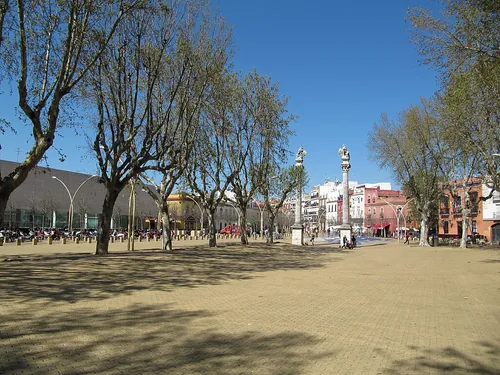
Running along the outer wall of the Alcázar, this promenade is characterized by gigantic ficus trees whose roots spill over the pathways like solidified lava. The gardens were once part of the palace grounds but were gifted to the city, creating a shaded, tiled refuge that separates the tourist-heavy Santa Cruz from the traffic of the ring road. Ceramics benches, fountains, and carefully maintained flower beds give it a classic, romantic atmosphere.

It serves as a calmer alternative to the main parks, a place where locals walk their dogs and students read on the tiled benches dedicated to Spanish painters. The monument to Columbus rises in the center, flanked by two columns and a lion, adding a touch of grandeur to the leafy corridor. The light here is dappled and soft, filtered through the dense canopy of the centuries-old trees.

Connecting the university area with the old Jewish quarter, this path is a functional link between Seville attractions that happens to be beautiful. It is the perfect place to sit for twenty minutes to rest your feet, surrounded by the scent of jasmine and the sound of distant traffic muffled by the thick vegetation.

Hours Daily: 8:00 AM – 10:00 PM
Price Free
Insider TipLook for the monument to the painter José García Ramos; the ceramic tiles reproduce some of his most famous works depicting traditional Seville life.
Parque de María Luisa

3. Parque de María Luisa

This is the city's green heart, a sprawling botanical wonderland that was once the private garden of a palace. It is a sensory delight of tiled fountains, ceramic benches, and avenues of palms and elms that provide critical shade during the sweltering summer months. The design is romantic and loose, encouraging you to wander aimlessly rather than follow a strict path, stumbling upon hidden gazebos and ponds filled with ducks and swans.

The park anchors the southern end of the historic area and serves as the anteroom for the Plaza de España. It is full of literary references, with glorietas (small roundabouts) dedicated to poets and writers, often including ceramic shelves where people leave books. The sound of horse hooves on the gravel paths is constant, as carriages take visitors on loops through the dense foliage.

Among all Seville attractions, this is the best place for a picnic or a siesta. It manages to be grand yet welcoming, a place where the monumental architecture of the 1929 Exposition softens into nature. Renting a four-wheeled pedal cart to explore the outer perimeter is a chaotic but fun rite of passage for many visitors.

Hours 8:00–22:00 (summer), 8:00–20:00 (winter)
Price Free
Website Wikipedia
Insider TipFind the 'Monte Gurugú', a small artificial hill with a waterfall and a gazebo at the top; it's a fun mini-climb and offers a nice view of the surrounding trees.
Parque de los Príncipes

4. Parque de los Príncipes

Across the river in the Los Remedios neighborhood, this park serves as a backyard for the locals living in the surrounding apartment blocks. It was designed in the 1970s and lacks the historic grandeur of Maria Luisa, but it offers a functional, unpretentious green space with a large duck pond and rolling grassy hills. Paths wind through orange groves and open lawns where teenagers play soccer and residents jog.

It is completely off the standard tourist radar, which is its main appeal. Here, the vibe is purely residential. There are no horse carriages or flamenco buskers, just the sound of water and the chatter of families on their evening walk. The 'Vienna' style aesthetic gives it a different feel from the Moorish-inspired gardens across the river.

If your exploration of Seville attractions has left you craving a normal, quiet hour away from the spectacle, this is the place. It is particularly nice in the late afternoon when the sun hits the pond. You can cross into it easily after visiting Triana, extending your walk into the 'new' part of the city.

Hours Daily: 8:00 AM – 8:00 PM
Price Free
Insider TipThere is a small circular structure that often hosts impromptu kids' theater or events; check it out if you are traveling with children.
Parque del Alamillo

5. Parque del Alamillo

Located at the far northern end of the city on the Cartuja island, this massive park is a legacy of Expo 92. It is huge, wilder, and more open than the manicured city gardens, feeling almost like a countryside escape. Large lakes, unpaved tracks, and extensive lawns make it the go-to spot for locals organizing birthday parties, barbecues, or long cycling sessions on the weekend.

It lacks monuments but makes up for it with space. You can find wakeboarding on the lake, a miniature train for kids, and plenty of room to fly a kite or throw a frisbee without hitting a tourist. The vegetation is Mediterranean and hardy, designed to survive the climate with minimal intervention. It connects to the river via relaxed paths.

While it is far from the central Seville attractions, it is worth the trip if you have a bike or want to see how the city utilizes the Expo grounds today. It offers a completely different pace of life, one that is suburban and relaxed. The 'Huevo de Colón' (Egg of Columbus) sculpture nearby marks the entrance, a quirky reminder of the area's history.

Hours 7:00–23:00 (summer), 8:00–20:00 (winter)
Price Free
Website Wikipedia
Insider TipRent a bike in the city center and ride here along the river path; it's a flat, scenic route that takes you past the modern bridges and rowing clubs.
Get Your Own Private Tour with AI Guide
AI Guide
  • Personalized tour tailored to your interests
  • Your AI guide tells stories, shares facts, and cracks jokes
  • Turn-by-turn GPS navigation
  • Available in your language — no download needed
Try for Free

Explore with AI Guide

AI Guide App

Get personalized tours with our AI-powered guide. No download needed — works right in your browser.