Best Time to Visit Belgrade
Month-by-month weather, crowds and prices, plus a full calendar of festivals and events worth planning a trip around.
Best monthsMay, Sep, Oct
CheapestJan, Feb, Nov
AvoidJul, Aug
BusiestJul, Aug

When is the best time to visit Belgrade?
Come in May, September or October: 18-25°C, the rivers and Kalemegdan at their best, and short museum queues. July and August bring 35°C heat and Beer Fest peak prices. January and February are the cheapest and quietest, the trade being grey skies near freezing and the splavovi river clubs shut for winter.
Start our tool and find your best time to visit Belgrade
Your perfect month
Free · ~30 seconds
or tap a month directly
What matters to you?
And this?
Best overall: Sep, May. September and May are the sweet spot: 22-24°C, the splavovi still running, full cultural calendar (BITEF, Pride, then the spring Museum Night), and prices 15-20% under the July peak. Everything is open and the heat is gone.
Best value: Jan, Feb, Nov. January, February and November bring the lowest rates of the year, a free-entry Sunday at the National Museum, and Kalemegdan Fortress, always free, almost to yourself. Pack for the cold and grey, that is the only catch.
Avoid: Jul, Aug. July and August: 35°C-plus afternoons on shadeless bastions, peak hotel prices, and Beer Fest week (15-19 Aug) that books out the centre months ahead. Great for party travellers, miserable for sightseeing.
- January: Good time, 5°C. This is the month you have the National Museum's gold mask almost to yourself. The crowd is overwhelmingly local, the rakija comes out against the cold, and nobody is here for the splavovi. The grey skies are the honest price for the quietest, cheapest Belgrade of the year, and it is a fair one.
- February: Good time, 9°C. February is honest, unperformed Belgrade. No show put on for visitors, no seasonal markup, just a real city in winter mode. The best afternoons are in the city's warm interiors: cinemas during the film festivals, museums with no one in them, and a long lunch in a steamy Skadarlija kafana.
- March: Good time, 13°C. March is the last genuinely quiet month before spring fills the city. Belgrade stretches awake, terrace tables back out and the bastions busy again at sunset, yet you can still walk into a Skadarlija kafana on a Saturday without a booking. That window closes fast, so use it.
- April: Great time, 18°C. April is Belgrade waking up properly: warm light, blossom, terraces full, and the river clubs flickering back to life. It is busier than March but nowhere near summer pressure. Marathon weekend aside, this is one of the prettiest, most relaxed windows of the year to walk the city.
- May: Good time, 22°C. May is the month locals love and visitors are starting to discover. The rivers are alive, the terraces full, and the light long. It is busy, especially around Museum Night and the early-May holidays, but never the summer crush. Bring a light layer for the showers and the weather pays you back in full.
- June: Good time, 26°C. June is the tipping point, when Belgrade shifts from busy-but-easy into full summer mode. By the third week the afternoons are hot, but the long evenings redeem everything: the bastions and the river clubs only really come alive once the sun drops past 20:00.
- July: Tough month, 29°C. July is for people who genuinely don't mind 35°C heat and peak prices in exchange for Belgrade's wildest nightlife. Midday on the bastions is a write-off. But a splav until 04:00 with the river breeze, or an early walk before the heat lands, is a completely different city, and that part is worth it.
- August: Tough month, 29°C. August is not empty-romantic Belgrade, it is festival Belgrade at full volume. If you want the Beer Fest and the wildest splav nights, this is your month. If you want quiet sightseeing, it is the worst time of year: hot, expensive, and packed. Know which trip you are taking before you book.
- September: Good time, 24°C. September is the connoisseur's Belgrade: the heat eased to something lovely, the rivers still alive, and the festival season at full cultural strength. Everything good about summer remains, the worst of it has gone, and the city feels like it belongs to people who live there again.
- October: Great time, 18°C. October is Belgrade's quiet reward: warm enough by day, golden underfoot, and almost free of the summer crush. The kafanas feel cosy again, the museum halls empty out, and the autumn light over the rivers and the Topčider cypresses is the prettiest of the year.
- November: Good time, 12°C. November is for travellers who want Belgrade without the crowds or the markup and don't mind a coat and grey skies. The early-month foliage is the last splash of colour before winter. It is moody, calm, and cheap, the city in its honest off-season mode.
- December: Tough month, 7°C. December is Belgrade's prettiest winter face: lights on the waterfront, mulled wine, and a Christmas market that draws nothing like the Western European crush, and is free to enter. The short days are a small price for the early-dusk fortress views and the run-up to a double New Year's celebration.
Belgrade weather by month
HighLowRainfall
Jan5°
Feb9°
Mar13°
Apr18°
May22°
Jun26°
Jul29°
Aug29°
Sep24°
Oct18°
Nov12°
Dec7°
| Month | Temp | Rain | Sun | Crowds | Prices | Highlight |
|---|---|---|---|---|---|---|
| Jan | 5° / -2° | 52mm · 11 rainy days | 5.1 h/day | ●○○○○ | ●○○○○ | Orthodox New Year |
| Feb | 9° / 1° | 45mm · 9 rainy days | 6.6 h/day | ●○○○○ | ●○○○○ | Belgrade Film Festival |
| Mar | 13° / 3° | 59mm · 10 rainy days | 8.2 h/day | ●●○○○ | ●●○○○ | |
| Apr | 18° / 7° | 54mm · 9 rainy days | 10.0 h/day | ●●●○○ | ●●●○○ | Belgrade Marathon |
| May | 22° / 12° | 90mm · 13 rainy days | 11.0 h/day | ●●●●○ | ●●●○○ | Orthodox Easter |
| Jun | 26° / 17° | 89mm · 12 rainy days | 12.2 h/day | ●●●●○ | ●●●●○ | Saint Vitus Day |
| Jul | 29° / 19° | 77mm · 10 rainy days | 13.1 h/day | ●●●●● | ●●●●● | BELEF (Belgrade Summer Festival) |
| Aug | 29° / 19° | 63mm · 8 rainy days | 12.0 h/day | ●●●●● | ●●●●● | BELEF (Belgrade Summer Festival) |
| Sep | 24° / 15° | 62mm · 9 rainy days | 9.9 h/day | ●●●●○ | ●●●●○ | Belgrade Pride |
| Oct | 18° / 10° | 44mm · 7 rainy days | 8.1 h/day | ●●●○○ | ●●●○○ | Belgrade Jazz Festival |
| Nov | 12° / 5° | 55mm · 9 rainy days | 5.6 h/day | ●●○○○ | ●●○○○ | |
| Dec | 7° / 1° | 57mm · 10 rainy days | 4.7 h/day | ●●●○○ | ●●●○○ | Winter Fairytale Christmas Market |
How we score this: weather = long-run climate normals (Open-Meteo), crowds & prices = relative season read, events checked yearly against official dates.
Best time to visit Belgrade: weather, prices & crowds
Best months for good weather
May, Sep
May and September give Belgrade its most reliable warmth: 22-24°C days, long golden evenings over the Sava-Danube confluence, and enough sun to sit out on the Kalemegdan bastions until past 20:00.
Quietest months to avoid the crowds
Jan, Feb, Nov
From November through February the international visitor pressure drops to almost nothing: empty halls at the National Museum, no queue at the Tesla Museum, and Skadarlija kafanas you can walk into without a booking.
Cheapest time to visit Belgrade
Jan, Feb
January and February are Belgrade's cheapest months: hostel beds from around 5 euros, mid-range hotels from 30 euros, and the year's lowest airfares into Nikola Tesla Airport.
Best time for festivals and events
Aug
Mid-August belongs to the Belgrade Beer Fest in Ušće Park (15-19 Aug 2026): five free nights, 40-plus brands and big Balkan concerts that pull around two million people across the run.
How many days do you need in Belgrade?
Two days suit Belgrade well. The Serbian capital sprawls across the Sava-Danube confluence, but its most rewarding sights cluster tightly enough that one day covers the walkable core and a second opens up the museums and the nightlife the city is famous for. A third day adds real depth, and four or more lets you escape the centre entirely.

One day
The pedestrian spine and the fortress
Start at St. Sava Temple, then walk down through Vračar toward Republic Square and cobbled Skadarlija for lunch. Carry on up Knez Mihailova Street to Kalemegdan Fortress, where the Sava and Danube meet below the medieval ramparts. The self-guided Belgrade walking tour strings together 9 of these stops across 5.5 km in about 2.5 hours, an ideal first-day frame. End the evening at a Skadarlija kafana over grilled meats and rakija.
Two daysRecommended
Museums and the river clubs
Use your second day for Belgrade's indoor highlights. The Nikola Tesla Museum on Krunska Street runs guided tours only, so arrive 30 minutes before opening to secure a spot. The National Museum on Republic Square has one of the Balkans' finest collections, including the 12th-century Miroslav Gospel. Browse the stalls at Bajloni Market in the early afternoon, then walk back through Dorćol. If you visit between May and September, finish the evening at one of the splavovi (floating river clubs) on the Sava.
Three days
Neighbourhood walks and Topčider
A third day earns you the parts of Belgrade that most visitors skip. Zemun, the old Austro-Hungarian town 8 km northwest, has a Gardos Tower viewpoint and a riverside fish-restaurant strip. Alternatively, take a tram to Topčider Park, where the bald cypresses turn gold in autumn and the royal villa museum sits in quiet forest. Round the day off with dinner in the bohemian Savamala district, now Belgrade's arts and bar quarter.
Four days or more
Ada Ciganlija and day trips
Four or more days let you slow down and layer in experiences. Ada Ciganlija, the river island turned city beach (free entry, 7 km of shoreline), is worth a full morning in warmer months. For a day trip, the Guča trumpet festival region and the medieval fortress at Golubac are both within two to three hours by car. Back in the city, the Military Museum inside Kalemegdan and the Ethnographic Museum on Studentski Trg fill any remaining cultural gaps.
Best time to visit Belgrade by traveller type
Same city, different trip. Here's the month that fits how you're travelling.
🧭
Best time to visit Belgrade for the first time
Sep
September is the easiest first visit: 22-25°C, splavovi still open, BITEF and the jazz buzz starting, short queues, and prices well below the summer peak with every main sight accessible.
❤️
Best time to visit Belgrade for couples
AprOct
April for spring bloom on the Kalemegdan ramparts and long romantic river light, or October for the gold-red foliage in Topčider and Košutnjak and cosy kafana evenings with the crowds gone.
💶
Best time to visit Belgrade on a budget
JanFeb
January or February: hostel beds from 5 euros, hotels from 30, the National Museum free on Sundays, and Kalemegdan free year-round. A kafana night runs from about 1,000 RSD.
🍝
Best time to visit Belgrade for food and wine
SepOct
September and October for the ajvar season (roasted-pepper harvest), plums for rakija, mushrooms at Kalenić market, and Skadarlija dinners without the summer crush.
Worst time to visit Belgrade
July and August are the hardest months for sightseeing. Afternoon temperatures routinely hit 35 to 38°C, with heatwaves pushing past 40°C, and the Kalemegdan bastions have almost no shade. Hotel rates peak, mid-range rooms running 100 to 120 euros a night, and Beer Fest week (15 to 19 August) books out the entire centre months in advance. The combination of heat, crowds, and price surcharges makes leisurely sightseeing genuinely unpleasant between noon and 18:00.
Still worth it for If your goal is Belgrade's legendary nightlife and festivals rather than comfortable sightseeing, July and August are exactly the right time: the splavovi run at full pitch, BELEF fills Kalemegdan with open-air concerts, and the Beer Fest is a spectacle you will not find anywhere else in the Balkans.
Go instead in May, September, October, when Belgrade is at its best.
Best time for a tour of Belgrade
Belgrade is a walking city built on hills and open riverbank, which means the month you pick decides how the 5.5 km loop actually feels underfoot. April through early June and again from mid-September into October are the sweet spots: highs of 17 to 24 °C, long daylight, and the wide terraces of Kalemegdan Fortress over the Sava and Danube turn into a genuine pleasure rather than a slog. July and August are the trap, with highs pinned at 28.6 °C and humid afternoons that leave you wilting on the exposed plaza in front of St. Sava Temple and along the shadeless stretch of Knez Mihailova Street, exactly where the crowds also peak. Winter is the opposite problem: January barely scrapes 5 °C with lows below freezing and eleven wet days, so Skadarlija's cobbled slope gets slick and you are indoors long before you finish. May is the wettest month at thirteen rain days, so pack for showers even when it is warm.
The real advantage is that with AI Tourguide the timing is entirely yours, because the walk runs right in your browser with no app to download and no fixed departure to catch, and a voice-first guide leads the whole way, telling you the story of the fortress sieges and asking what you want to see next. On a baking August day you can start your Belgrade tour at first light, climb to Kalemegdan while the ramparts are still cool and empty, then duck into the National Museum once the sun gets fierce. The climate sets your hour, not an operator's schedule, and the guide simply adapts to the pace you set.


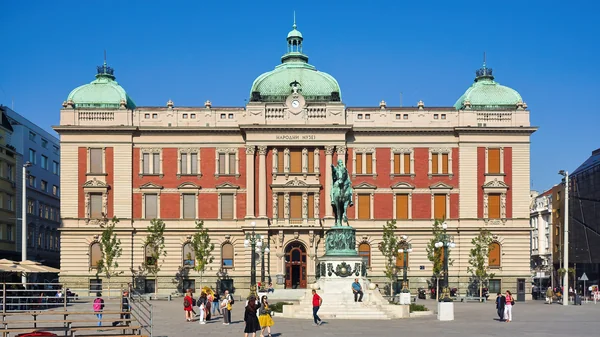 +5
+5All 9 stops are already on the map.
You just press start.
You just press start.
 AI Tourguide
You just read the route.
Now walk it with a guide in your ear.
Press start wherever you are, even hundreds of kilometres from Belgrade, and the guide begins telling its stories right away. In the city, pick any of the 9 stops to start from: it leads you there, then talks with you the whole route, asking, listening, remembering, and shaping the tour around your answers.
9stops5.5km2.5hours11languages
▶Start the tour freeFree to start · Runs in your browser · No app, no download
Belgrade events and festivals calendar
Annual highlights worth timing a trip around, listed month by month.
January
🇮 HolidayOrthodox New Year Srpska Nova Godina
Jan 14
14 January every year (Julian calendar), with the main celebration on the evening of the 13th.
Known as Stara Nova Godina, Serbia's Orthodox New Year is marked with a free public concert and fireworks in front of the Saint Sava church, and family feasts on the evening of 13 January.
🎬 FilmBelgrade Film Festival Beogradski Festival Filma
Jan 31 – Feb 6 ~
Late January into early February at the Kulturni Centar Beograda (KCB).
An international film festival at the KCB blending arthouse and mainstream programming, the best cinema window of Belgrade's winter.
February
🎬 FilmFEST Intro
Feb 25–26 ~
Two days in late February at the Sava Centre, previewing the main FEST.
A two-day preview of the main FEST film festival, held at the Sava Centre for early-bird cinema fans.
April
🏃 SportBelgrade Marathon Beogradski Maraton
Apr 18–19 ~
A weekend in mid-to-late April: half marathon on the Saturday, full marathon on the Sunday at 08:00.
Belgrade's marathon weekend sends 2,000-plus runners on a route crossing the Sava and Danube, with the half marathon on Saturday and the full on Sunday morning.
May
⛪ ReligiousOrthodox Easter Uskrs
May 5 ~
Follows the Julian calendar, so it falls later than Western Easter, typically in late April or May. Dates move each year with the Orthodox Easter calculation.
Orthodox Easter brings midnight church services, egg-painting and family feasts, with the main service at Saint Sava Cathedral, Belgrade's vast Orthodox temple.
🌙 Museum nightMuseum Night Noć muzeja
May 16 ~
One Saturday in May, typically around the third week of the month.
Serbia's Museum Night opens 100-plus museums free until midnight, with queues building at the National Museum and the Tesla Museum and events spilling into the old town.
June
🇮 HolidaySaint Vitus Day Vidovdan
Jun 28
28 June every year, a national day of remembrance.
Vidovdan is a national day of remembrance heavy with Serbian history, marked with flags, church services and commemorations across the city.
July
🎨 Art and cultureBELEF (Belgrade Summer Festival) Beogradski letnji festival
Jul 15 – Aug 15 ~
Mid-July to mid-August: open-air theatre, dance and concerts at Kalemegdan and Ušće Park.
BELEF turns Kalemegdan and Ušće Park into open-air stages for theatre, dance and concerts through the height of summer, with an international program.
August
🎵 MusicGuča Trumpet Festival Dragačevski Sabor Trubača
Aug 7–9 ~
Early August in Guča, about 170 km from Belgrade (a 2-hour drive).
A brass-band competition and folk festival in the village of Guča, one of the loudest festivals in Europe, with Saturday-night revelry and a Sunday competition.
🍷 Food and wineBelgrade Beer Fest Beogradski festival piva
Aug 15–19 ~
Five days in mid-August at Ušće Park.
The biggest event in the Balkans: five free days in Ušće Park with 40-plus beer brands and free concerts spanning rock, pop and Balkan acts, drawing around two million visitors.
September
🏳️🌈 PrideBelgrade Pride Beograd Prajd
Sep 5 ~
Early September; the parade sets off from Manjež Park at 16:00, with a culture week around it.
Belgrade Pride runs a week of cultural events capped by a parade from Manjež Park, held under a heavy police presence in a politically charged but tourist-safe atmosphere.
🎨 Art and cultureBITEF (Belgrade International Theatre Festival) Beogradski internacionalni teatarski festival
Sep 15–27 ~
Mid-to-late September at the Bitef Theatre and guest venues.
One of Europe's oldest theatre festivals, running since 1967, staging avant-garde and international theatre at the Bitef Theatre and venues across the city.
October
🎵 MusicBelgrade Jazz Festival Beogradski džez festival
Oct 8–11 ~
Early October at Dom Omladine and the Sava Centre.
A long-running international jazz festival bringing global stars to Dom Omladine and the Sava Centre over several October nights.
🎬 FilmFEST International Film Festival FEST
Oct 16–26 ~
Around ten days in mid-to-late October at the Sava Centre.
Belgrade's oldest film festival, running since 1971, brings more than 100 films to the Sava Centre over 10-plus days for an arthouse-leaning audience.
December
🎄 Christmas marketWinter Fairytale Christmas Market Zimska Bajka
Dec 5 – Jan 5
From around 5 December through early January at the Sava waterfront (Belgrade Waterfront).
Belgrade's main Christmas market runs about a month at the Sava waterfront, with an ice rink, mulled wine, choirs, concerts and wooden chalets, plus stalls along Knez Mihailova.
💡 LightsNew Year's Eve Concert Doček Nove godine
Dec 31
31 December: open-air concert on Republic Square and fireworks over the Sava promenade.
A free open-air New Year's concert on Republic Square with fireworks over the Sava promenade, drawing hundreds of thousands, many of them regional visitors.
Insider tips for visiting Belgrade
The rules buried in forums, in one place.
- The Nikola Tesla Museum runs by guided tour only, capped at about 60 people per group, cash in dinars only, no online tickets and no card payment. Queue 30 minutes before opening, and go Tuesday to Sunday afternoon for the best chance of an English-language group.
- The National Museum on Trg Republike is free every Sunday, which builds a queue from around 09:30. Come Tuesday or Wednesday morning instead for empty halls and a clear run at the gold mask and the Miroslav Gospel.
- Every Monday the National Museum, the Military Museum and the Museum of Contemporary Art all close. Use Mondays for Kalemegdan Fortress (open 24/7, free), the Knez Mihailova promenade and Skadarlija, none of which keep museum hours.
- Skadarlija's old kafanas, Tri Šešira and Dva Jelena, are packed solid Friday and Saturday from 19:00. Reserve three to four days ahead and aim to sit down by 18:30 for a quiet meal before the live-music rush. Tourist prices, but the atmosphere is one of a kind.
- The splavovi, Belgrade's floating river clubs, run a May-to-end-September season and barely get going before 01:00. Arrive at 23:00 and you will be dancing alone. Outside that window most close or switch to a stripped-back winter operation.
- On Beer Fest nights (15-19 Aug) the area near the Ušće main stage is jammed from 17:00 to 22:00. Arrive around 15:00 to scout the beer zone and claim a good spot, and book accommodation three months ahead, the centre fills up fast.
- Kalemegdan at sunset is the local ritual: people bring wine to the bastions and watch the Sava meet the Danube. No ticket, no tour bus. The best light for photos runs roughly 19:30-20:15 in June and July.
- Marathon weekend (18-19 Apr 2026) closes Bulevar Despota Stefana and Brankov Most and reroutes trams and buses. If your dates overlap, base yourself in Vračar or Zemun rather than the dead centre to skip the worst of it.
Public holidays in Belgrade
On these dates many shops and offices close, transport thins out, and sights can be mobbed or shut. Plan around them.
| Date | Holiday | What closes |
|---|---|---|
| Jan 1 | New Year's Day | Everything closes except convenience stores; public transport runs a reduced timetable. Hotels book out weeks ahead for the New Year period. |
| Jan 7 | Orthodox Christmas | National holiday: museums closed, but churches including Saint Sava are open for services. A family day with almost no tourist activity. |
| Jan 14 | Orthodox New Year | Not an official state holiday, but a second New Year's moment: fireworks and a concert in front of Saint Sava church, with a lively but tourist-light centre. |
| Feb 15 | Statehood Day | A long-weekend holiday (15-16 Feb): domestic tourists fill the city, museums get crowded, and hotels book out for the weekend. |
| May 1 | Labour Day | Public holiday: parks brim with picnic groups (Kalemegdan, Topčider, Ada Ciganlija), kiosks stay open, and many museums close. |
| May 5 | Orthodox Easter (Uskrs) | National holiday: most museums closed. Church services run early morning and at midnight, with the main service at Saint Sava Cathedral. |
| May 9 | Victory Day | Public holiday: the Military Museum at Kalemegdan may run special programming. Otherwise a quiet day with little tourist impact. |
| Jun 28 | Vidovdan | A national day of remembrance with flags and commemorations across the city. Sights stay open and normal. |
| Nov 11 | Armistice Day | Public holiday, quiet and with little effect on a visit. Some offices and shops close for the day. |
Belgrade month by month
January in Belgrade
High5°C / 41°F
Low-2°C
Rain52mm / 11 rainy days
Sun5.1 h/day
Daylight9 h/day
Humidity82%
Crowds●○○○○Prices●○○○○
January is Belgrade at its lowest ebb: cold (a 5°C high, lows near freezing), often grey, and almost free of tourists. Snow is occasional rather than constant, and a warm coat handles it. Museums and monuments are queue-free, and the kafanas of Skadarlija feel like the local living rooms they are. The one burst comes on 14 January, Orthodox New Year, with fireworks in front of Saint Sava.
The vibe This is the month you have the National Museum's gold mask almost to yourself. The crowd is overwhelmingly local, the rakija comes out against the cold, and nobody is here for the splavovi. The grey skies are the honest price for the quietest, cheapest Belgrade of the year, and it is a fair one.
Don't miss Orthodox New Year on 14 January brings a free concert and fireworks in front of Saint Sava church, a second New Year without the tourist crush. The Tesla Museum and an empty National Museum are ideal cold-weather afternoons.
Crowd drivers No festivals beyond Orthodox Christmas (7 Jan) and Orthodox New Year (14 Jan), both primarily domestic. The lowest international visitor pressure of the year.
In season Deep winter is kafana season: slow-cooked sarma (stuffed cabbage rolls) and pasulj (bean stew) with warm rakija are at their best, eaten indoors against the cold.
Heads up 1 January closes nearly everything except convenience stores; the splavovi are shut or on winter operation. The National Museum is closed Mondays year-round.
Cheapest month of the year: hostel beds from about 5 euros, mid-range hotels from 30, and the lowest airfares.
Events this month
🇮 HolidayOrthodox New Year Srpska Nova Godina
Jan 14
14 January every year (Julian calendar), with the main celebration on the evening of the 13th.
Known as Stara Nova Godina, Serbia's Orthodox New Year is marked with a free public concert and fireworks in front of the Saint Sava church, and family feasts on the evening of 13 January.
A second New Year's celebration two weeks after the first, with a buzzing centre but none of the international tourist crush of 31 December.
February in Belgrade
High9°C / 49°F
Low1°C
Rain45mm / 9 rainy days
Sun6.6 h/day
Daylight10 h/day
Humidity75%
Crowds●○○○○Prices●○○○○
February is the quietest tourist month, still cold (a 9°C high) and a little drier than January. Tourists are almost absent, but the cultural calendar wakes up: the Belgrade Film Festival runs late January into early February at the KCB, and the FEST film festival holds a two-day preview at the Sava Centre. Major museums stay empty and ticket prices sit at their yearly floor.
The vibe February is honest, unperformed Belgrade. No show put on for visitors, no seasonal markup, just a real city in winter mode. The best afternoons are in the city's warm interiors: cinemas during the film festivals, museums with no one in them, and a long lunch in a steamy Skadarlija kafana.
Don't miss The Belgrade Film Festival (late Jan to early Feb) at the KCB is the city's best cinema window, a cultural event in the winter lull with no tourist crush. FEST Intro previews the bigger spring festival at the Sava Centre.
Crowd drivers Statehood Day (15-16 Feb) draws domestic weekenders and briefly fills hotels and museums. International pressure stays near zero.
In season Still firmly kafana weather: grilled ćevapi and hearty stews with rakija. Prices are at their gentlest of the year.
Heads up Splavovi remain closed or on winter operation. Museums shut on Mondays as ever; the National Museum is free, and busiest, on Sundays.
Still rock-bottom: prices hold at January levels, hostel beds around 5 euros, private hotels 30-40 euros.
Events this month
🎬 FilmBelgrade Film Festival Beogradski Festival Filma
Jan 31 – Feb 6 ~
Late January into early February at the Kulturni Centar Beograda (KCB).
An international film festival at the KCB blending arthouse and mainstream programming, the best cinema window of Belgrade's winter.
A genuine cultural event in the dead of the off-season, with no tourist crowds and a city otherwise at its quietest.
🎬 FilmFEST Intro
Feb 25–26 ~
Two days in late February at the Sava Centre, previewing the main FEST.
A two-day preview of the main FEST film festival, held at the Sava Centre for early-bird cinema fans.
A first taste of Belgrade's biggest film festival, and a reason for film lovers to come in the quietest month.
March in Belgrade
High13°C / 55°F
Low3°C
Rain59mm / 10 rainy days
Sun8.2 h/day
Daylight12 h/day
Humidity69%
Crowds●●○○○Prices●●○○○
March brings the first thaw: highs climbing toward 13°C, café terraces reopening, and Kalemegdan filling with weekenders out of the region. International visitors are still scarce, so it stays one of the calmer months. Spring rain picks up modestly, but it is showers, not downpours, and the Sava-Danube light gets noticeably longer and softer through the month.
The vibe March is the last genuinely quiet month before spring fills the city. Belgrade stretches awake, terrace tables back out and the bastions busy again at sunset, yet you can still walk into a Skadarlija kafana on a Saturday without a booking. That window closes fast, so use it.
Don't miss The first warm walk along Knez Mihailova and up to the Kalemegdan ramparts after winter is the month's quiet pleasure. Café terraces reopen across Dorćol and Vračar, and the fortress fills with locals at golden hour.
Crowd drivers Mostly weekend day-trippers from the region; long-haul visitors have not yet arrived. No major holidays drive crowds unless Orthodox Easter falls early.
In season Early spring greens and the first outdoor coffees mark the shift. Rakija still flows, but the rhythm moves from indoor stews toward terrace aperitifs.
Prices start nudging up, but early-bird deals run roughly 15% below summer; book ahead if Easter is near.
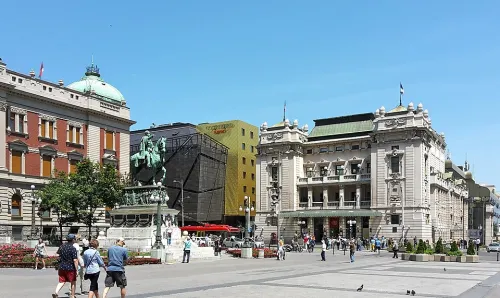
April in Belgrade
High18°C / 64°F
Low7°C
Rain54mm / 9 rainy days
Sun10.0 h/day
Daylight14 h/day
Humidity65%
Crowds●●●○○Prices●●●○○
April is spring in full swing: 18°C highs, blossom on the Kalemegdan ramparts, and the splavovi reopening toward the end of the month. The Belgrade Marathon (18-19 Apr 2026) sends 2,000-plus runners across the Sava and Danube, closing streets but turning the centre into a free street party. Crowds build but stay manageable, and the long river evenings are at their romantic best.
The vibe April is Belgrade waking up properly: warm light, blossom, terraces full, and the river clubs flickering back to life. It is busier than March but nowhere near summer pressure. Marathon weekend aside, this is one of the prettiest, most relaxed windows of the year to walk the city.
Don't miss The splavovi reopen for the season toward the end of April. Marathon weekend (18-19 Apr) turns the riverside route into a free spectator event, and the Kalemegdan gardens are in spring bloom.
Crowd drivers The Belgrade Marathon (18-19 Apr) and Serbian school holidays lift numbers. Marathon weekend closes Bulevar Despota Stefana and Brankov Most, so plan to walk.
In season Terrace-and-grill season begins as the splavovi fire up their barbecues. First market asparagus and spring lamb appear ahead of the Orthodox Easter table.
Heads up On marathon weekend (18-19 Apr) central streets and bridges close and transit reroutes. Museums still shut on Mondays.
Hotels about 20% below high summer; reserve four weeks ahead for marathon weekend (18-19 Apr).
Events this month
🏃 SportBelgrade Marathon Beogradski Maraton
Apr 18–19 ~
A weekend in mid-to-late April: half marathon on the Saturday, full marathon on the Sunday at 08:00.
Belgrade's marathon weekend sends 2,000-plus runners on a route crossing the Sava and Danube, with the half marathon on Saturday and the full on Sunday morning.
Even if you are not running, the riverside route turns into a free street party, though it closes central streets and bridges so plan to walk that weekend.
May in Belgrade
High22°C / 71°F
Low12°C
Rain90mm / 13 rainy days
Sun11.0 h/day
Daylight15 h/day
Humidity69%
Crowds●●●●○Prices●●●○○
May is one of Belgrade's best months: 22°C highs, the splavovi in full swing, and the city in bloom. It is also the wettest month on paper (90mm over about 13 days), but the rain comes as warm showers between long sunny spells. The spring Museum Night (around 16 May) throws open 100-plus museums free until midnight, an unforgettable night walk through the city's collections.
The vibe May is the month locals love and visitors are starting to discover. The rivers are alive, the terraces full, and the light long. It is busy, especially around Museum Night and the early-May holidays, but never the summer crush. Bring a light layer for the showers and the weather pays you back in full.
Don't miss The Museum Night (around 16 May) opens 100-plus museums free until midnight, with queues at the National and Tesla museums. The splavovi are fully open, and Ada Ciganlija's lake beach is about to start its swimming season.
Crowd drivers Orthodox Easter (5 May) and Labour Day (1 May) send locals travelling and fill the parks; Western European May school breaks add visitors. The spring Museum Night packs the centre for one night.
In season Peak terrace season on the splavovi: grilled meats and cold beer over the water. The first market strawberries and spring produce hit Kalenić and Bajloni markets.
Heads up Orthodox Easter (5 May) and Labour Day (1 May) close most museums; parks and kiosks stay open and packed.
Mid-range prices: hotels from about 60 euros. The busiest spring month, though still under July's peak.
Events this month
🌙 Museum nightMuseum Night Noć muzeja
May 16 ~
One Saturday in May, typically around the third week of the month.
Serbia's Museum Night opens 100-plus museums free until midnight, with queues building at the National Museum and the Tesla Museum and events spilling into the old town.
Free access to houses that normally charge, plus a night-walk atmosphere across the city, one of the best-value evenings of the year.
⛪ ReligiousOrthodox Easter Uskrs
May 5 ~
Follows the Julian calendar, so it falls later than Western Easter, typically in late April or May. Dates move each year with the Orthodox Easter calculation.
Orthodox Easter brings midnight church services, egg-painting and family feasts, with the main service at Saint Sava Cathedral, Belgrade's vast Orthodox temple.
A rare cultural window into Serbian Orthodox tradition, with a lively centre but none of the overwhelming tourist masses of Western Easter cities.

June in Belgrade
High26°C / 79°F
Low17°C
Rain89mm / 12 rainy days
Sun12.2 h/day
Daylight16 h/day
Humidity70%
Crowds●●●●○Prices●●●●○
June opens the Belgrade summer: 26°C highs, the longest days of the year (over 15 hours of daylight, golden hour to 20:30), and the splavovi running every night. The BELEF summer festival begins, scattering open-air theatre, dance and concerts across Kalemegdan and Ušće Park. It is the second-wettest month (89mm), but the storms are short and intense, clearing fast over the rivers.
The vibe June is the tipping point, when Belgrade shifts from busy-but-easy into full summer mode. By the third week the afternoons are hot, but the long evenings redeem everything: the bastions and the river clubs only really come alive once the sun drops past 20:00.
Don't miss BELEF brings free and low-cost open-air theatre, dance and concerts to Kalemegdan and Ušće Park through the height of summer. The longest evenings of the year make for unbeatable sunsets over the Sava-Danube confluence.
Crowd drivers Northern and Western European summer holidays begin, the splavovi hit full capacity, and Vidovdan (28 Jun) draws domestic crowds. BELEF kicks off the festival season.
In season Splavovi grill season at full tilt, and the first stone fruit, cherries and apricots, fills the markets. Cold beer and roasted-meat platters by the water are the June default.
Peak-level hotel rates begin (~80-100 euros mid-range), with a 30-40% surcharge on short-notice bookings.
Events this month
🎨 Art and cultureBELEF (Belgrade Summer Festival) Beogradski letnji festival
Jul 15 – Aug 15 ~
Mid-July to mid-August: open-air theatre, dance and concerts at Kalemegdan and Ušće Park.
BELEF turns Kalemegdan and Ušće Park into open-air stages for theatre, dance and concerts through the height of summer, with an international program.
Free or low-cost high culture in the middle of the hot season, the thing that makes a midsummer evening in Belgrade worth staying out for.
🇮 HolidaySaint Vitus Day Vidovdan
Jun 28
28 June every year, a national day of remembrance.
Vidovdan is a national day of remembrance heavy with Serbian history, marked with flags, church services and commemorations across the city. Sights stay open.
A window into the historical and emotional core of Serbian identity, observed quietly but visibly across Belgrade.

July in Belgrade
High29°C / 83°F
Low19°C
Rain77mm / 10 rainy days
Sun13.1 h/day
Daylight15 h/day
Humidity65%
Crowds●●●●●Prices●●●●●
July is Belgrade at full intensity: 29°C average highs with frequent spikes to 35 to 38°C, the nightlife at its peak, and prices at their yearly maximum. The Kalemegdan bastions are nearly shadeless, so sightseeing belongs to 07:00 to 10:00 and after 18:00, with the hot middle of the day best spent in a kafana or an air-conditioned museum. The early-morning walk along Knez Mihailova and up to the fortress, before the heat lands, is a completely different city from the scorched afternoon version.
The vibe July is for people who genuinely don't mind 35°C heat and peak prices in exchange for Belgrade's wildest nightlife. Midday on the bastions is a write-off. But a splav until 04:00 with the river breeze, or an early walk before the heat lands, is a completely different city, and that part is worth it.
Don't miss Ada Ciganlija's free lake beach (water 22-26°C, 7 km of shoreline) is the city's heat escape; come midweek, as weekends fill with regional day-trippers. The splavovi run latest and loudest, filling only after 01:00.
Crowd drivers Every major European school system is on summer break at once, and the splavovi run at full pitch. The nearby Guča trumpet festival (early Aug) starts driving Belgrade bookings.
In season Survival eating: cold beer, grilled fish on the splavovi, and ajvar with fresh bread. Late-night burek from a pekara fuels the after-midnight river-club crowd.
Most expensive month: mid-range hotels ~100-120 euros. Book four to six weeks ahead.
Events this month
🎨 Art and cultureBELEF (Belgrade Summer Festival) Beogradski letnji festival
Jul 15 – Aug 15 ~
Mid-July to mid-August: open-air theatre, dance and concerts at Kalemegdan and Ušće Park.
BELEF turns Kalemegdan and Ušće Park into open-air stages for theatre, dance and concerts through the height of summer, with an international program.
Free or low-cost high culture in the middle of the hot season, the thing that makes a midsummer evening in Belgrade worth staying out for.

August in Belgrade
High29°C / 83°F
Low19°C
Rain63mm / 8 rainy days
Sun12.0 h/day
Daylight14 h/day
Humidity65%
Crowds●●●●●Prices●●●●●
August stays at peak: 29°C highs, hot dry days, and the year's biggest event, the Belgrade Beer Fest (15-19 Aug) in Ušće Park, drawing around two million people over five free nights. The Guča trumpet festival (7-9 Aug) runs as a day trip 170 km away, and the boat carnival closes the month. Heat and crowds make midday sightseeing hard, but the nightlife and festivals are unmatched. Book the centre months ahead.
The vibe August is not empty-romantic Belgrade, it is festival Belgrade at full volume. If you want the Beer Fest and the wildest splav nights, this is your month. If you want quiet sightseeing, it is the worst time of year: hot, expensive, and packed. Know which trip you are taking before you book.
Don't miss The Belgrade Beer Fest in Ušće Park (15-19 Aug) is free, with 40-plus brands and big concerts; arrive by 15:00 to claim a spot before the 17:00-22:00 crush. Guča (7-9 Aug) makes a loud, brass-band day trip.
Crowd drivers The Belgrade Beer Fest (15-19 Aug) is the single biggest crowd driver of the year; Guča (7-9 Aug) and the late-August boat carnival add to it. European summer holidays still in full swing.
In season Beer Fest food stalls aside, late August opens the ajvar season as roasted-pepper smoke drifts from balconies across the city. Splavovi grills run nightly.
Heads up Nothing shuts for the summer, but Beer Fest week (15-19 Aug) jams the Ušće area and books out central hotels well in advance.
Holds at July's peak. Beer Fest week (15-19 Aug) tightens central beds further, with a 20-30% surcharge.
Events this month
🍷 Food and wineBelgrade Beer Fest Beogradski festival piva
Aug 15–19 ~
Five days in mid-August at Ušće Park.
The biggest event in the Balkans: five free days in Ušće Park with 40-plus beer brands and free concerts spanning rock, pop and Balkan acts, drawing around two million visitors.
Five nights of free music and beer on a riverside park, but book accommodation three months ahead and arrive early, the main-stage area jams from 17:00.
🎵 MusicGuča Trumpet Festival Dragačevski Sabor Trubača
Aug 7–9 ~
Early August in Guča, about 170 km from Belgrade (a 2-hour drive).
A brass-band competition and folk festival in the village of Guča, one of the loudest festivals in Europe, with Saturday-night revelry and a Sunday competition.
An easy day or overnight trip from Belgrade for one of the Balkans' most intense, joyously chaotic cultural spectacles.

September in Belgrade
High24°C / 75°F
Low15°C
Rain62mm / 9 rainy days
Sun9.9 h/day
Daylight12 h/day
Humidity68%
Crowds●●●●○Prices●●●●○
September is Belgrade at its most balanced: 24°C highs, gentler heat, and the splavovi running right to the end of the month. The cultural calendar is rich, with the Belgrade Pride Parade (5 Sep) at Manjež Park and BITEF, Europe's oldest theatre festival, getting under way. Crowds thin from the summer peak, queues shorten, and prices begin to fall. For many travellers this is simply the best month to come.
The vibe September is the connoisseur's Belgrade: the heat eased to something lovely, the rivers still alive, and the festival season at full cultural strength. Everything good about summer remains, the worst of it has gone, and the city feels like it belongs to people who live there again.
Don't miss The splavovi run to the end of September, BITEF opens Europe's oldest theatre festival, and the Pride Parade (5 Sep) sets off from Manjež Park. Warm days and shorter queues make every main sight easy.
Crowd drivers Belgrade Pride (5 Sep) brings a lively, heavily policed but tourist-safe crowd; BITEF and the jazz season fill cultural venues. Summer-holiday numbers fade through the month.
In season Harvest abundance arrives: plums for rakija, the start of ajvar season, and mushrooms and peppers piling up at Kalenić market. Splavovi grills run their final warm weeks.
Prices start easing, roughly 15-20% under the July peak. The best value-to-weather ratio of the year.
Events this month
🏳️🌈 PrideBelgrade Pride Beograd Prajd
Sep 5 ~
Early September; the parade sets off from Manjež Park at 16:00, with a culture week around it.
Belgrade Pride runs a week of cultural events capped by a parade from Manjež Park, held under a heavy police presence in a politically charged but tourist-safe atmosphere.
A meaningful and visible expression of LGBTQ+ life in the Balkans, and a vivid slice of contemporary Belgrade's social fault lines.
🎨 Art and cultureBITEF (Belgrade International Theatre Festival) Beogradski internacionalni teatarski festival
Sep 15–27 ~
Mid-to-late September at the Bitef Theatre and guest venues.
One of Europe's oldest theatre festivals, running since 1967, staging avant-garde and international theatre at the Bitef Theatre and venues across the city.
Serious contemporary theatre in the city's most pleasant month; buy tickets two to three weeks ahead for the headline productions.

October in Belgrade
High18°C / 65°F
Low10°C
Rain44mm / 7 rainy days
Sun8.1 h/day
Daylight11 h/day
Humidity73%
Crowds●●●○○Prices●●●○○
October is one of the loveliest, calmest months: 18°C highs, the driest month on the calendar (just 44mm over 7 days), and autumn foliage turning gold and red across Kalemegdan, Topčider and Košutnjak. The splavovi wind down for the season. The Belgrade Jazz Festival and the FEST film festival fill the cultural calendar, and the combination of an autumn lull and a strong festival lineup is top timing.
The vibe October is Belgrade's quiet reward: warm enough by day, golden underfoot, and almost free of the summer crush. The kafanas feel cosy again, the museum halls empty out, and the autumn light over the rivers and the Topčider cypresses is the prettiest of the year.
Don't miss Autumn foliage peaks in Topčider (the bald cypresses turn red-gold), Kalemegdan and Košutnjak. The Belgrade Jazz Festival fills Dom Omladine and the Sava Centre, and FEST brings 100-plus films to town.
Crowd drivers International numbers drop sharply after summer; the Belgrade Jazz Festival (early Oct) and FEST (mid-Oct) draw culture-focused visitors rather than mass tourism.
In season Peak ajvar and rakija season: roasted-pepper relish jarred for winter, fresh plum brandy, and the year's best mushrooms and paprika at Kalenić market.
Heads up The splavovi close for the season through October. Museums keep their usual Monday closures.
About 30-35% below the summer peak: quiet museums, short queues, hostels from around 15 euros.
Events this month
🎵 MusicBelgrade Jazz Festival Beogradski džez festival
Oct 8–11 ~
Early October at Dom Omladine and the Sava Centre.
A long-running international jazz festival bringing global stars to Dom Omladine and the Sava Centre over several October nights.
The perfect pairing of an autumn lull with a strong lineup, top culture without the summer heat or crowds.
🎬 FilmFEST International Film Festival FEST
Oct 16–26 ~
Around ten days in mid-to-late October at the Sava Centre.
Belgrade's oldest film festival, running since 1971, brings more than 100 films to the Sava Centre over 10-plus days for an arthouse-leaning audience.
A serious cinema event in one of the city's best months, paired with golden autumn weather and low crowds.

November in Belgrade
High12°C / 54°F
Low5°C
Rain55mm / 9 rainy days
Sun5.6 h/day
Daylight10 h/day
Humidity80%
Crowds●●○○○Prices●●○○○
November is grey, damp and tourist-light: a 12°C high falling fast through the month, with the rainy season setting in (55mm, often overcast). The last of the autumn colour clings to Kalemegdan and Topčider early on. There are no major events, which is the point: quiet museums, short queues, and the lowest autumn prices. Pack for cold and grey and you get the city almost to yourself.
The vibe November is for travellers who want Belgrade without the crowds or the markup and don't mind a coat and grey skies. The early-month foliage is the last splash of colour before winter. It is moody, calm, and cheap, the city in its honest off-season mode.
Don't miss Catch the last autumn colour in Topčider and on the Kalemegdan ramparts in the first half of the month. Quiet, queue-free museum days are the November speciality, the Tesla and National museums at their calmest.
Crowd drivers No major festivals; the splavovi are on winter operation. The lowest visitor numbers between the summer peak and the December Christmas-market season.
In season The shift back to kafana cooking: sarma, pasulj and warm rakija return as the terraces empty and the cold sets in.
Heads up Splavovi on winter operation or closed. Armistice Day (11 Nov) is a public holiday with some shops and offices shut.
Cheapest autumn month: hotels around 35-50 euros, with occasional flash sales. Tourism is quiet.

December in Belgrade
High7°C / 45°F
Low1°C
Rain57mm / 10 rainy days
Sun4.7 h/day
Daylight9 h/day
Humidity83%
Crowds●●●○○Prices●●●○○
December turns festive: the Zimska Bajka Christmas market opens around 5 December at the Sava waterfront, with an ice rink, mulled wine, choirs and wooden chalets, plus stalls along Knez Mihailova. Days are short (about 8.5 hours of light, dusk by 15:40) and cold (a 7°C high), but the wintry Kalemegdan panorama at early dusk is at its most photogenic. The New Year concert on Republic Square caps the month.
The vibe December is Belgrade's prettiest winter face: lights on the waterfront, mulled wine, and a Christmas market that draws nothing like the Western European crush, and is free to enter. The short days are a small price for the early-dusk fortress views and the run-up to a double New Year's celebration.
Don't miss Zimska Bajka at the Sava waterfront (from around 5 Dec) brings an ice rink, mulled wine and choirs, with extra stalls on Knez Mihailova. The 31 December open-air concert and fireworks light up Republic Square and the Sava promenade.
Crowd drivers The Christmas market and New Year's Eve concert pull regional visitors (Bosnia, North Macedonia) who fill hotels, especially New Year week. Orthodox Christmas (7 Jan) extends the festivities into January.
In season Christmas-market kuhano vino (mulled wine), grilled sausages and winter sweets define the month. Kafana stews and rakija carry the cold evenings between market visits.
Heads up Most things close on 1 January. The splavovi are shut or on winter operation; the National Museum closes Mondays as always.
Early-month rates moderate (~50 euros); the New Year week spikes 30-40%.
Events this month
🎄 Christmas marketWinter Fairytale Christmas Market Zimska Bajka
Dec 5 – Jan 5
From around 5 December through early January at the Sava waterfront (Belgrade Waterfront).
Belgrade's main Christmas market runs about a month at the Sava waterfront, with an ice rink, mulled wine, choirs, concerts and wooden chalets, plus stalls along Knez Mihailova.
One of the prettiest winter photo spots in the city, free to enter, and with nothing like the Western European crowds.
💡 LightsNew Year's Eve Concert Doček Nove godine
Dec 31
31 December: open-air concert on Republic Square and fireworks over the Sava promenade.
A free open-air New Year's concert on Republic Square with fireworks over the Sava promenade, drawing hundreds of thousands, many of them regional visitors.
A huge free street party to ring in the year, though regional tourists fill the hotels so book two-plus months ahead.
Frequently asked questions
What is the best time to visit Belgrade?
May, September and October are the best months: 18-25°C, the rivers and Kalemegdan at their finest, and a full cultural calendar (Museum Night in May, Pride and BITEF in September, jazz and FEST in October). September edges it, with the splavovi still running and prices 15-20% below the July peak.
What are the cheapest months to visit Belgrade?
January and February are the cheapest months. Hostel beds run from around 5 euros, mid-range hotels from 30, and airfares are at their yearly low. The National Museum is free on Sundays and Kalemegdan Fortress is free year-round. The trade-off is cold, grey weather near freezing and the river clubs shut for winter.
When should I avoid visiting Belgrade?
July and August for anyone after relaxed sightseeing: afternoons hit 35-38°C on the shadeless Kalemegdan bastions, hotel prices peak, and Beer Fest week (15-19 Aug) books out the centre months ahead. If you want the wildest nightlife and festivals, though, those same weeks are the best time of year.
How hot does Belgrade get in summer?
July and August average 29°C highs but regularly spike to 35-38°C, with heatwaves topping 40°C (the record is 43.6°C). The Kalemegdan bastions have little shade, so plan sightseeing for 07:00-10:00 and after 18:00, and spend the hot middle of the day in a kafana or an air-conditioned museum.
Is Belgrade worth visiting in winter?
Yes, if you want quiet and low prices. December is festive, with the Zimska Bajka Christmas market on the Sava waterfront from around 5 December and a double New Year (1 and 14 January). January and February are cold (around 5°C) and grey, but museums are empty, hotels cheap, and the wintry Kalemegdan panorama at early dusk is genuinely photogenic.
When is the Belgrade Beer Fest?
The Belgrade Beer Fest runs five days in mid-August (15-19 Aug 2026) in Ušće Park. It is free, with 40-plus beer brands and big concerts, and draws around two million people over the run. Arrive by 15:00 to claim a spot before the 17:00-22:00 crush, and book accommodation three months ahead, the centre fills up fast.
Does it rain a lot in Belgrade?
Belgrade has a moderate continental climate. The wettest months are May (90mm, 13 days) and June (89mm, 12 days), but the rain comes as warm showers between sunny spells, not all-day soakings. October is the driest month (44mm, 7 days). November is the grey, overcast stretch, and summer is hot and relatively dry.
How many days do I need in Belgrade?
Two to three days cover the essentials: Kalemegdan Fortress and the Sava-Danube confluence, Knez Mihailova and the old town, Saint Sava, the Tesla Museum, and a Skadarlija kafana night. Add a fourth day for Ada Ciganlija and the splavovi, or a day trip to Zemun. A long weekend is enough for most first visits.
What is the best month for Belgrade nightlife?
July and August, when the splavovi (floating river clubs) run at full pitch. They barely fill before 01:00, so arrive late, and the season runs May to the end of September. August adds the Belgrade Beer Fest (15-19 Aug). If you want the nightlife without peak heat and prices, late May or September deliver almost the same energy.

Any month, any day: your guide is already there
Whatever date you pick, a private human guide gets pricier and harder to book on weekends, holidays and in peak season. Our live AI guide, the one that walks with you and answers anything you ask out loud, works the opposite way.
One flat price, every day
No holiday, weekend, night or peak-season surcharge. A private guide in Belgrade runs well over 100 euro for a half day, and more on holidays. Ours stays the same.
Available the moment you want it
Start at midnight or at dawn, on Christmas, in the snow, in the August heat. No sold-out high season, no booking weeks ahead.
Your pace, no meter running
Pause for a long lunch, restart after dark, repeat a stop. The tour simply waits for you.
Free to try, a fraction of the cost
Test it for free, then a transparent flat price that undercuts any private guide, in every season.
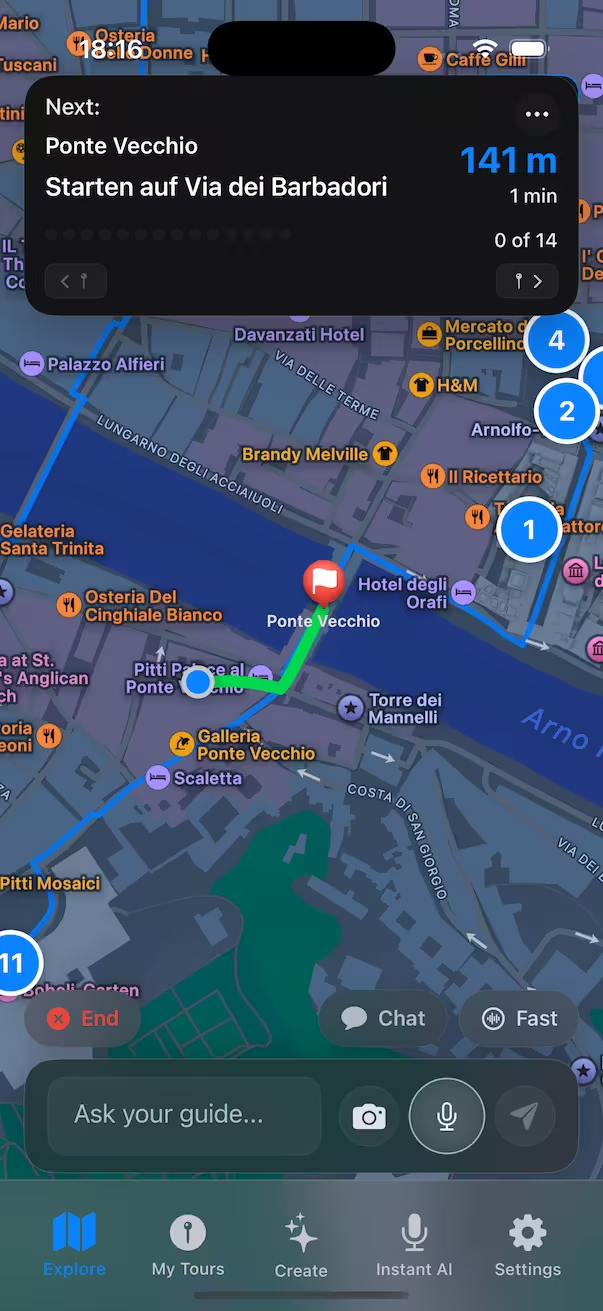
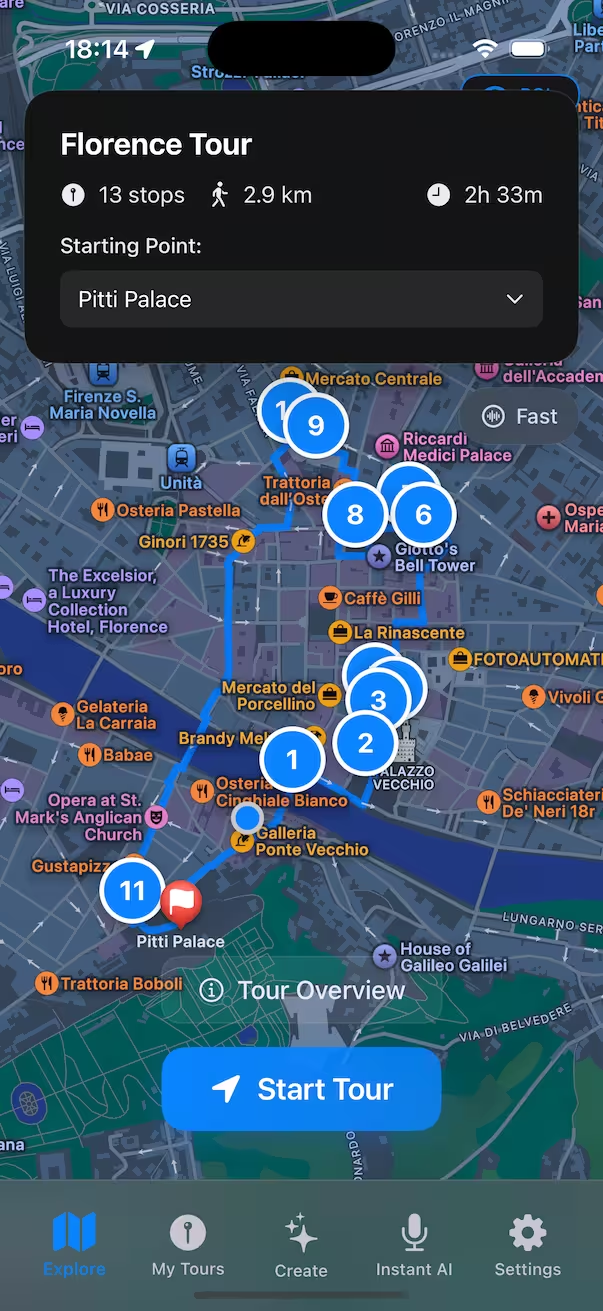
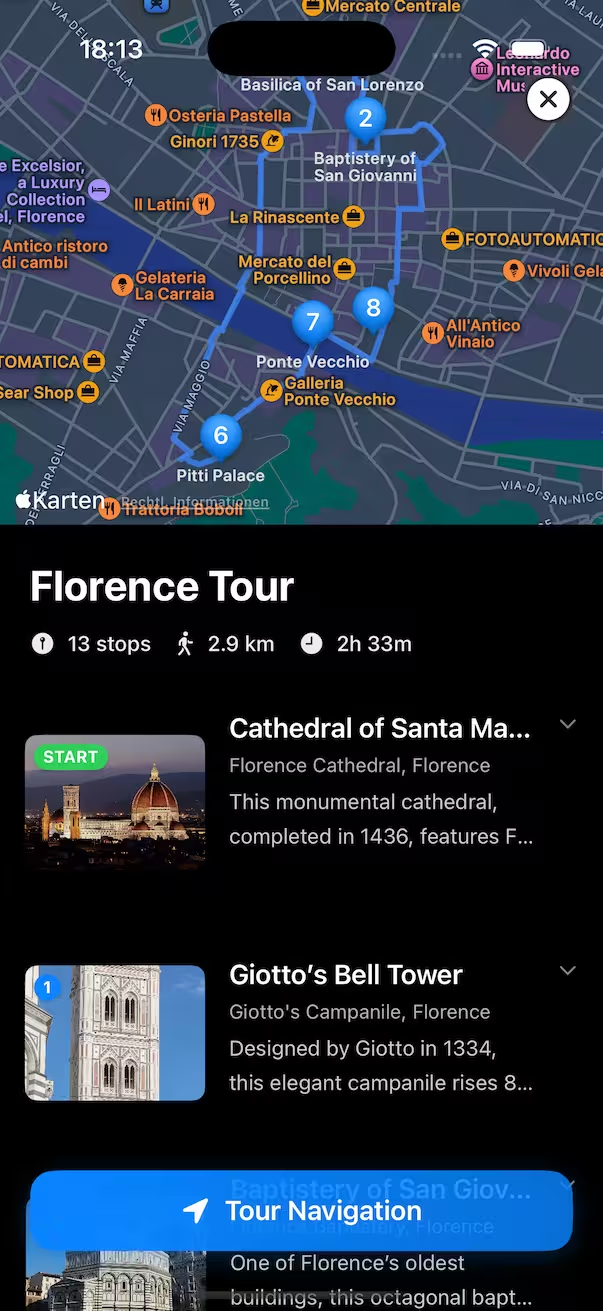
The classic Belgrade tour: 9 stops, 5.5 km, about 2 h on foot
Your live AI guide and the self-guided Belgrade route, together in your browser.