Best Time to Visit Cairo
Month-by-month weather, crowds and prices, plus a full calendar of festivals and events worth planning a trip around.
Best monthsOct, Nov, Mar
CheapestJun, Jul, Aug
AvoidJul, Aug
BusiestDec, Jan

When is the best time to visit Cairo?
Come in October, November or early March: 22 to 28 degrees, the Giza plateau walkable all day, no sandstorms, and prices still under the December peak. July and August hit 38 to 40 degrees and turn midday sightseeing dangerous. June is the cheapest month, near US$126 a night, the trade being relentless heat.
Start our tool and find your best time to visit Cairo
Your perfect month
Free · ~30 seconds
or tap a month directly
What matters to you?
And this?
Best overall: Oct, Nov. October and November are the real answer: 22 to 28 degrees, no Khamsin dust, long cool morning and evening windows on the Giza plateau, Nile cruise season open, and prices still below the December peak. Book ahead anyway, because everyone serious about Egypt knows this.
Best value: Jun, Sep. June and September bring the cheapest beds of the year, near US$126 a night, with the Pyramids practically empty before 9:30 am. The catch is heat: do everything outdoors before 10 am, retreat to the GEM or the Egyptian Museum by noon.
Avoid: Jul, Aug. July and August: 38 to 43 degrees felt, no shade on the Giza plateau from 10 am to 5 pm, and heat exhaustion a genuine risk. Outdoor time shrinks to two or three dawn hours and many small cafes close for the season.
- January: Good time, 19°C. This is prime Egypt weather with prime-season company. You get flawless 19-degree skies for the Pyramids, but you share them with the year's heaviest foreign crowd and pay top rates for the privilege. Genuinely cold after dark, so the desert at sunset bites.
- February: Good time, 21°C. The honest insider's month. Once Ramadan starts mid-month, days at the sights are calmer and the real show is the lantern-lit, kunafa-scented evenings around Al-Hussein after iftar. If you let the city set the pace, this is Cairo at its most atmospheric.
- March: Great time, 25°C. The smart traveller's pick. You get near-perfect warmth without the December crush or the summer furnace, and the first half is especially calm. Just respect the Eid window, when locals, not foreigners, suddenly pack the Pyramids and Khan el-Khalili.
- April: Great time, 29°C. Beautiful one day, blotted out by dust the next. April can deliver glorious 29-degree skies or a Khamsin that turns the Giza plateau into a brown haze. Come willing to flip a Pyramids day for a museum day at 48 hours' notice and you will be fine.
- May: Tough month, 34°C. The shoulder into low season. Foreign crowds are thinning fast and prices are dropping, but the heat is now a real factor by mid-afternoon. A good value pick if you are disciplined about dawn starts and a midday retreat indoors.
- June: Tough month, 36°C. Cairo at its emptiest and cheapest, if you can take the furnace. Do the Pyramids at sunrise with almost no one there, then accept that midday belongs to the GEM's air conditioning. For heat-tolerant budget travellers this is the secret season.
- July: Tough month, 38°C. Survival-mode Cairo. The weather is not photogenic, it is physically punishing, and midday is genuinely off-limits outdoors. Only worth it for travellers who tolerate extreme heat in exchange for rock-bottom prices and empty sights, with strict dawn-only outdoor plans.
- August: Tough month, 37°C. Hot and hushed, but not empty of soul. Tourist numbers are at the floor and many small eateries are shut for the season, yet the Mawlid al-Nabi night near Al-Hussein is one of the most thrilling evenings of the whole Cairo year.
- September: Tough month, 35°C. The turn. The furnace is loosening its grip, prices are still low, and you get most of the summer emptiness without the full summer punishment. Late September is the moment savvy travellers slip in before the autumn price climb begins.
- October: Good time, 31°C. Cairo at its near-best, and people are starting to notice. Warm comfortable days, golden light on the Pyramids, every sight easy and open, and prices still a notch under the November and December peak. This is the window to grab before the crowd fully arrives.
- November: Good time, 26°C. The classic answer for good reason. Golden evening light on the Pyramids, perfect 20-to-28-degree days, Nile-side dinners without summer heat, and the December tourist wave not quite arrived yet. You pay rising prices for it, but the experience earns them.
- December: Tough month, 21°C. Peak everything. The weather is lovely and the atmosphere festive, but you queue, you pay the year's top prices, and the Pyramids are mobbed by mid-morning. Worth it if December is your only window, but go in clear-eyed and book far in advance.
Cairo weather by month
HighLowRainfall
Jan19°
Feb21°
Mar25°
Apr29°
May34°
Jun36°
Jul38°
Aug37°
Sep35°
Oct31°
Nov26°
Dec21°
| Month | Temp | Rain | Sun | Crowds | Prices | Highlight |
|---|---|---|---|---|---|---|
| Jan | 19° / 9° | 6mm · 2 rainy days | 9.3 h/day | ●●●●○ | ●●●●● | Coptic Christmas |
| Feb | 21° / 10° | 6mm · 2 rainy days | 9.4 h/day | ●●●●○ | ●●●●○ | Cairo International Book Fair |
| Mar | 25° / 12° | 8mm · 1 rainy days | 10.8 h/day | ●●●○○ | ●●●○○ | Ramadan |
| Apr | 29° / 15° | 2mm · 0 rainy days | 11.5 h/day | ●●●○○ | ●●●○○ | Khamsin Dust Storm Season |
| May | 34° / 19° | 0mm · 0 rainy days | 12.4 h/day | ●●○○○ | ●●○○○ | Khamsin Dust Storm Season |
| Jun | 36° / 22° | 0mm · 0 rainy days | 13.6 h/day | ●○○○○ | ●○○○○ | Islamic New Year |
| Jul | 38° / 23° | 0mm · 0 rainy days | 13.5 h/day | ●○○○○ | ●○○○○ | Revolution Day |
| Aug | 37° / 24° | 0mm · 0 rainy days | 12.2 h/day | ●○○○○ | ●○○○○ | Wafaa el-Nil (Flooding of the Nile) |
| Sep | 35° / 22° | 0mm · 0 rainy days | 11.7 h/day | ●●○○○ | ●●○○○ | |
| Oct | 31° / 19° | 3mm · 1 rainy days | 10.6 h/day | ●●●○○ | ●●●○○ | Armed Forces Day |
| Nov | 26° / 15° | 3mm · 1 rainy days | 9.7 h/day | ●●●●○ | ●●●●○ | Cairo International Film Festival |
| Dec | 21° / 11° | 6mm · 1 rainy days | 9.1 h/day | ●●●●● | ●●●●● |
How we score this: weather = long-run climate normals (Open-Meteo), crowds & prices = relative season read, events checked yearly against official dates.
Best time to visit Cairo: weather, prices & crowds
Best months for good weather
Oct, Nov, Mar
October and November sit at 22 to 28 degrees with zero rain, so you can be at the Pyramids at 7 am and still wander Islamic Cairo at sunset without the summer furnace.
Quietest months to avoid the crowds
Jun, Jul, Aug
From June to August the foreign crowd vanishes as the heat tops 38 degrees, leaving the Pyramids near empty between 6:30 and 9:30 am and hotel rates at their yearly floor.
Cheapest time to visit Cairo
Jun, Aug, Sep
June through September is the bargain window: hotels around US$126 a night, tours and flights 30 to 40 percent off, and Khan el-Khalili, the Nile Corniche and most of Islamic Cairo cost nothing to walk anyway.
Best time for festivals and events
Feb, Mar
Ramadan evenings (roughly 17 February to 18 March) turn Khan el-Khalili and Al-Hussein Square into lantern-lit feast streets after iftar, with kunafa stalls and music running deep into the night.
How many days do you need in Cairo?
Give Cairo at least three full days. This is a sprawling capital where the historic core, the Citadel district, and the Giza Plateau sit far apart, so one day barely scratches the surface and you will spend real time in traffic between zones. Four days lets you finally slow down for the food, the mosques, and the river.

One day
Islamic Cairo and the medieval core
Start at Khan el-Khalili at 9 am before the stalls fill, then walk north along al-Muizz Street to the Al-Hakim Mosque. Take the self-guided Cairo walking tour, covering 6 stops across 7 km in about 2.5 hours, finishing at the Citadel of Saladin. Spend the evening on a Nile boat as the city cools.
Two days
Citadel, Gayer-Anderson and Old Cairo
Morning at the Citadel of Saladin and the Muhammad Ali Mosque before tour groups arrive after 10 am. After lunch retreat to the Gayer-Anderson Museum and its two interconnected Ottoman houses. End the afternoon in Coptic Cairo around the Hanging Church and the narrow lanes off Mar Girgis.
Three daysRecommended
Pyramids and the museums
The Giza Plateau opens at 7 am: arrive early to see the Great Pyramid of Khufu in near-solitude before the tour buses roll in around 9 am. The Sphinx area gets busy from 11 am, so finish there by mid-morning. Spend the afternoon in the Grand Egyptian Museum, where the Tutankhamun galleries are quietest 9 to 10:30 am or from 5 pm. Book GEM tickets online at visit-gem.com and bring your passport.
Four days or more
River, food, and neighbourhood slow travel
A fourth day belongs to everything you rushed past: a proper Nile felucca ride south of Zamalek, a long lunch at a Nile-side fish house in October or November when the heat allows it, and a deeper wander through al-Muizz Street at dusk. Ramadan evenings in February or March add a fifth dimension, when Al-Hussein Square turns into a lantern-lit feast street after iftar.
Best time to visit Cairo by traveller type
Same city, different trip. Here's the month that fits how you're travelling.
🧭
Best time to visit Cairo for the first time
OctNov
October or November: pleasant 25 to 28 degrees, no sandstorms, every major sight open and easy, and the Pyramids in soft early light just after the 7 am gate opening.
❤️
Best time to visit Cairo for couples
MarNov
March after Ramadan or November for golden evening light on the Pyramids and Nile-side dinners without summer heat or the December tourist crush.
💶
Best time to visit Cairo on a budget
JunSep
June and September for the lowest hotel rates of the year and dawn Pyramid visits with almost no one there, plus free walks through Khan el-Khalili and Islamic Cairo.
🍝
Best time to visit Cairo for food and wine
FebOct
February for Ramadan-eve iftar streets piled with kunafa, qatayef and umm ali, or October when the heat lifts and the Nile fish houses come back into their own.
Worst time to visit Cairo
July and August are the hardest months to visit. Daytime highs of 37 degrees feel like 43 in the heat index, and the Giza Plateau has no shade at all between 10 am and 5 pm, making heat exhaustion a genuine risk rather than a distant concern. Outdoor sightseeing shrinks to two or three dawn hours, and many smaller cafes and restaurants shut for the summer, leaving the food scene thinner than any other month.
Still worth it for Heat-tolerant budget travellers chasing the lowest hotel rates of the year and near-empty Pyramid visits between 6:30 and 9:30 am will find this window hard to beat on price. Culture seekers can catch Mawlid al-Nabi in August, one of the most atmospheric evenings of the entire Cairo year near Al-Hussein Mosque.
Go instead in October, November, March, when Cairo is at its best.
Best time for a tour of Cairo
Cairo on foot is a winter and shoulder-season pleasure, and a summer ordeal. From November through March the highs sit between a gentle 19 and 25 °C, the air is dry with barely a rain day a month, and the seven-kilometre loop through Islamic Cairo and up to the Citadel of Saladin is a joy: you can linger in the lanes of the Khan El-Khalili Bazaar and climb to the Muhammad Ali Mosque without sweating through your shirt. December and January cool to around 9 °C overnight, so an early start needs a layer, but daytime walking is ideal. April warms fast, and from May to September the city becomes punishing, with July and August highs near 37 °C and almost no shade on the open Citadel courtyards or the sun-baked square outside the Al-Hakim Mosque. October eases back to a walkable 31 °C, the sweet spot before the winter crowds arrive.
The upside of Cairo's heat is that the cool hours are reliable: dawn and dusk are calm and golden, the worst of the sun gone. With AI Tourguide that timing is entirely yours, because it runs in your browser with no app and no fixed departure, so you can start your Cairo tour at six on a June morning and wind through the bazaar before the heat lands, then break for mint tea whenever you like. A voice-first guide leads the whole way, telling the story of the Citadel and Saladin's walls, asking what draws you, remembering your answers and adapting the rest of the walk to you. The climate sets your hour, not an operator's schedule.


 +2
+2All 6 stops are already on the map.
You just press start.
You just press start.
 AI Tourguide
You just read the route.
Now walk it with a guide in your ear.
Press start wherever you are, even hundreds of kilometres from Cairo, and the guide begins telling its stories right away. In the city, pick any of the 6 stops to start from: it leads you there, then talks with you the whole route, asking, listening, remembering, and shaping the tour around your answers.
6stops7.0km2.5hours11languages
▶Start the tour freeFree to start · Runs in your browser · No app, no download
Cairo events and festivals calendar
Annual highlights worth timing a trip around, listed month by month.
January
⛪ ReligiousCoptic Christmas عيد الميلاد القبطي
Jan 7
7 January (fixed Julian-calendar date)
Egypt's Coptic Christians, about 10 percent of the population, celebrate Christmas by the Julian calendar with midnight masses at the Hanging Church and St.
🎨 Art and cultureCairo International Book Fair معرض القاهرة الدولي للكتاب
Jan 22 – Feb 3
late January into early February
The world's second-largest book fair, with 1,457 publishers from 83 countries at the Egypt International Exhibitions Center, open daily 10 am to 8 pm and to 9 pm Thursday and Friday.
February
🏃 SportCairo Half Marathon ماراثون القاهرة
Feb 6
early February
The race starts at 6 am in Meryland Park, Heliopolis, with 5, 10 and 21 km races plus a family run and a three-day pre-expo in the days before the race.
⛪ ReligiousRamadan رمضان
Feb 17 – Mar 18 ~
shifts roughly 11 days earlier each year (lunar)
A 30-day fast: many restaurants close during daylight outside tourist hotels, while after iftar Khan el-Khalili and Al-Hussein Square become lantern-lit feast streets with kunafa stalls and music late into the night.
🌸 Seasonal natureAbu Simbel Sun Festival (February) مهرجان أبو سمبل الشمسي
Feb 22
22 February (fixed date)
At sunrise the sun aligns to light three statues deep inside the temple from 5 to 9 am, marking the coronation of Ramesses II, with music and dancing outside.
March
🌸 Seasonal natureKhamsin Dust Storm Season موسم الخماسين
Mar 15 – May 15 ~
mid-March to mid-May, peaking in April
Hot Saharan winds bring 1 to 3 day sandstorms with visibility under 500 metres and temperatures that can rise 20 degrees in two hours.
🇮 HolidayEid al-Fitr عيد الفطر
Mar 20–22 ~
three days at the end of Ramadan (lunar)
A three-day holiday ending Ramadan, with mass prayers in city parks and streets and heavy domestic travel across Egypt.
April
🌸 Seasonal natureSham el-Nessim شم النسيم
Apr 20 ~
Easter Monday (moveable)
A 4,500-year-old spring festival celebrated by Muslims and Christians alike, with families picnicking along the Nile and in parks over fisikh (salted fish), coloured eggs and onions.
🇮 HolidaySinai Liberation Day تحرير سيناء
Apr 25
25 April (fixed date)
A national holiday marking the 1982 return of the Sinai peninsula to Egypt.
May
🇮 HolidayEid al-Adha عيد الأضحى
May 27–31 ~
five days of the Feast of Sacrifice (lunar)
A five-day Feast of Sacrifice when Egyptian families travel to the coast or relatives, leaving parts of Cairo emptier, while many Khan el-Khalili traders close for the first three days.
June
🇮 HolidayIslamic New Year رأس السنة الهجرية
Jun 17 ~
first day of the Islamic year (lunar)
The start of the Islamic year, marked by quiet reflection rather than mass celebration.
July
🇮 HolidayRevolution Day ثورة يوليو
Jul 23
23 July (fixed date)
Commemorating the 1952 Egyptian revolution with military parades, patriotic TV concerts and fireworks.
August
🎉 FestivalWafaa el-Nil (Flooding of the Nile) وفاء النيل
Aug 15
15 August (fixed date)
An ancient festival for the Nile flood, now symbolic since the Aswan Dam, with processions, a flower parade and water sports along the river.
⛪ ReligiousMawlid al-Nabi المولد النبوي
Aug 26 ~
the Prophet's birthday (lunar)
The Prophet Muhammad's birthday, with Sufi groups singing and dancing near Al-Hussein Mosque, Halawet al-Mouled sweets on every market and illuminated mosques.
October
🇮 HolidayArmed Forces Day يوم القوات المسلحة
Oct 6
6 October (fixed date)
Commemorating the 1973 Suez Canal crossing of the October War, with military parades and air shows over Cairo.
🌸 Seasonal natureAbu Simbel Sun Festival (October) مهرجان أبو سمبل الشمسي
Oct 22
22 October (fixed date)
The second annual solar alignment, marking the birthday of Ramesses II, lighting the inner statues at dawn just as in February.
November
🎬 FilmCairo International Film Festival مهرجان القاهرة السينمائي
Nov 11–20
mid-November
The oldest film festival in Africa and the Arab world, with international competition and panorama sections screening across Cairo's cinemas.
Insider tips for visiting Cairo
The rules buried in forums, in one place.
- The Grand Egyptian Museum is quietest in its opening hour, 9 to 10:30 am, when the Tutankhamun galleries and Grand Staircase are free of tour groups. The next calm window is from 5 pm. Groups dominate 10:30 am to 2 pm. Book online at visit-gem.com and bring your passport, there is no on-site ticket counter since December 2025.
- The Pyramids gate opens at 7 am and the first 45 minutes are nearly empty. Tour buses arrive after the hotel breakfast, 9 to 11 am, the real crush. Wednesday and Thursday mornings are the quietest of the week, since Friday is prayer day and the weekend brings Egyptian families.
- Khan el-Khalili is half empty until 11 am. The bazaar truly comes alive from 7 pm when traders are fully set up and the shisha cafes open. During Ramadan the whole quarter only ignites after iftar around sunset.
- Egyptian museums and offices pause for Friday prayers, roughly 11 am to 1 pm. The Muhammad Ali Mosque at the Citadel closes to visitors around 11:30 am on Fridays and reopens at 1:30 pm, so an 8 am start gives you the Citadel almost to yourself.
- Khamsin dust storms (mid-March to mid-May, worst in April) show up 24 to 48 hours ahead on weather apps like Windy. If one is forecast, swap your Giza day for a museum day and carry a scarf, sunglasses and an N95 mask. Visibility can drop below 500 metres.
- Tour groups cluster at the Great Pyramid of Khufu, so the Khafre and Menkaure pyramids stay calmer even on busy days. The Sphinx area jams from 11 am to 1 pm as groups swing over after the main pyramids.
- Cairo museums do not close on Mondays, unlike Europe. The GEM and the Egyptian Museum open daily. Pair the GEM with the older Egyptian Museum on Tahrir Square, which is now the quieter of the two since most visitors switched to the GEM.
- The Giza Sound and Light Show runs nightly from 6:30 pm, English first. Choose seats on the left of the front rows for a straight Sphinx view, and bring a jacket in December and January, when it turns cold fast after sunset.
Public holidays in Cairo
On these dates many shops and offices close, transport thins out, and sights can be mobbed or shut. Plan around them.
| Date | Holiday | What closes |
|---|---|---|
| Jan 1 | New Year's Day | Official holiday: government offices closed, most sights stay open. Falls inside the December to early January peak, so the Pyramids and cruises are at their busiest and priciest. |
| Jan 7 | Coptic Christmas | Public holiday since 2002: government offices closed. Midnight masses at the Hanging Church and St. Sergius, and Coptic families fill Al-Azhar Park. A rare window for unique religious atmosphere in Old Cairo. |
| Jan 25 | Revolution Day / Police Day | Official holiday: government offices closed, sights mostly open. A secular national day with a noticeably more local feel around central Cairo. |
| Mar 20 | Eid al-Fitr (3 days) | Three-day holiday ending Ramadan: government offices shut, and heavy domestic travel packs the Pyramids and Khan el-Khalili unexpectedly. Hotel prices blip up 20 to 30 percent for the week. Date is lunar and shifts yearly. |
| Apr 20 | Sham el-Nessim | A 4,500-year-old spring outing day, celebrated by all Egyptians. Parks and the Nile banks are unwalkable by 11 am and the Pyramids are overrun in the afternoon. Go to the GEM or an Islamic Cairo mosque instead, and avoid all open ground. |
| Apr 25 | Sinai Liberation Day | National holiday: government offices closed, sights open but livelier with Egyptian families. Marks the 1982 return of the Sinai peninsula. |
| May 1 | Labour Day | Official holiday on a Friday, creating a long Thursday to Saturday weekend. Domestic travel rises and sights run moderately busier. |
| May 27 | Eid al-Adha (5 days) | Five-day Feast of Sacrifice: many Khan el-Khalili traders close for the first three days and Egyptians leave the city for the coast or relatives, so streets can feel emptier. A surprisingly good bookable week for foreign visitors. Lunar date, shifts yearly. |
| Jun 17 | Islamic New Year | Quiet official holiday: government offices closed, sights open normally, no mass celebrations. Lunar date, shifts yearly. |
| Jul 23 | Revolution Day | The biggest secular holiday, marking the 1952 revolution with military parades and fireworks. Government offices closed and the Nile Corniche is packed with an emotional, festive crowd. |
| Aug 26 | Mawlid al-Nabi | Prophet Muhammad's birthday: government offices closed. Sufi groups sing and dance near Al-Hussein Mosque and stalls sell Halawet al-Mouled sweets, one of the most atmospheric evenings of the year in an otherwise quiet August. Lunar date, shifts yearly. |
| Oct 6 | Armed Forces Day | National holiday marking the 1973 Suez crossing, with military parades and air shows. Government offices closed, sights open. |
Cairo month by month
January in Cairo
High19°C / 66°F
Low9°C
Rain6mm / 2 rainy days
Sun9.3 h/day
Daylight10 h/day
Humidity57%
Crowds●●●●○Prices●●●●●
January is comfortable and busy. Daytime sits at a near-perfect 19 degrees, but nights drop to 9 degrees and evenings need a jacket. The Christmas tourist wave runs out around the 5th, then the Cairo International Book Fair (22 January to 3 February) fills hotels. The Pyramids are pleasant by day but European winter-break visitors keep queues long, so an early 7 am start matters.
The vibe This is prime Egypt weather with prime-season company. You get flawless 19-degree skies for the Pyramids, but you share them with the year's heaviest foreign crowd and pay top rates for the privilege. Genuinely cold after dark, so the desert at sunset bites.
Don't miss Coptic Christmas (7 January) brings midnight masses to the Hanging Church and St. Sergius and fills Al-Azhar Park with Coptic families. The Book Fair, the world's second largest with 1,457 publishers, is a vast cultural event, though skip the EIEC district by day if you are not after books.
Crowd drivers European winter school breaks, the lingering Christmas and cruise wave until around 5 January, and the Cairo International Book Fair filling central hotels.
Heads up Government offices close on 1 January, 7 January (Coptic Christmas) and 25 January (Revolution Day); sights stay open.
Peak prices: luxury hotels from ~US$163 a night, and the Book Fair week lifts city occupancy another 30 to 50 percent.
Events this month
⛪ ReligiousCoptic Christmas عيد الميلاد القبطي
Jan 7
7 January (fixed Julian-calendar date)
Egypt's Coptic Christians, about 10 percent of the population, celebrate Christmas by the Julian calendar with midnight masses at the Hanging Church and St. Sergius in Old Cairo, and pilgrimages to Holy Family sites.
A genuinely unique religious atmosphere, with Al-Azhar Park filling with Coptic families and fatta and kahk sweets sold on the streets.
🎨 Art and cultureCairo International Book Fair معرض القاهرة الدولي للكتاب
Jan 22 – Feb 3
late January into early February
The world's second-largest book fair, with 1,457 publishers from 83 countries at the Egypt International Exhibitions Center, open daily 10 am to 8 pm and to 9 pm Thursday and Friday.
A mass cultural event drawing millions, though it pushes central hotel occupancy up 30 to 50 percent, so non-readers should avoid the EIEC district by day.
February in Cairo
High21°C / 70°F
Low10°C
Rain6mm / 2 rainy days
Sun9.4 h/day
Daylight11 h/day
Humidity56%
Crowds●●●●○Prices●●●●○
February holds the same fine winter weather, 21 degrees by day and around 10 at night, with the Book Fair running into the 3rd and the Cairo Marathon on the 6th. Ramadan begins near 17 February, which quietly empties daytime restaurants outside hotels but makes Khan el-Khalili magical after dark. A strong sightseeing month if you embrace the Ramadan rhythm.
The vibe The honest insider's month. Once Ramadan starts mid-month, days at the sights are calmer and the real show is the lantern-lit, kunafa-scented evenings around Al-Hussein after iftar. If you let the city set the pace, this is Cairo at its most atmospheric.
Don't miss Ramadan evenings transform Khan el-Khalili and Al-Hussein Square into festival streets of lanterns and sweets stalls. The Cairo Half Marathon (6 February, 6 am start at Meryland Park) suits early-rising runners, and Abu Simbel's sun festival (22 February) lights three statues at dawn for those adding an Aswan trip.
Crowd drivers UK and German half-term breaks, Cairo Marathon weekend road closures in Heliopolis, and the Book Fair tail into early February.
In season Iftar season opens: kunafa, qatayef and umm ali fresh on the streets every evening, with the Naguib Mahfouz Cafe at its atmospheric best.
Heads up From around 17 February most non-hotel restaurants close during daylight for Ramadan, and offices keep shorter hours. Everything reopens lively after sunset.
Slightly cheaper than January; Ramadan's start near 17 February thins evening tourism.
Events this month
🏃 SportCairo Half Marathon ماراثون القاهرة
Feb 6
early February
The race starts at 6 am in Meryland Park, Heliopolis, with 5, 10 and 21 km races plus a family run and a three-day pre-expo in the days before the race.
An early-morning draw for outdoor runners in the cool season, though it closes roads across Heliopolis on race day.
🌸 Seasonal natureAbu Simbel Sun Festival (February) مهرجان أبو سمبل الشمسي
Feb 22
22 February (fixed date)
At sunrise the sun aligns to light three statues deep inside the temple from 5 to 9 am, marking the coronation of Ramesses II, with music and dancing outside.
A twice-yearly phenomenon worth a day trip from Aswan, 280 km away, requiring a very early arrival.
⛪ ReligiousRamadan رمضان
Feb 17 – Mar 18 ~
shifts roughly 11 days earlier each year (lunar)
A 30-day fast: many restaurants close during daylight outside tourist hotels, while after iftar Khan el-Khalili and Al-Hussein Square become lantern-lit feast streets with kunafa stalls and music late into the night.
Uniquely atmospheric for an authentic iftar experience and quieter daytime sights, as long as you adapt to the rhythm.
March in Cairo
High25°C / 77°F
Low12°C
Rain8mm / 1 rainy days
Sun10.8 h/day
Daylight12 h/day
Humidity48%
Crowds●●●○○Prices●●●○○
March is the warm, gentle sweet spot, climbing toward 25 degrees by day with bone-dry air. Ramadan ends near the 18th and Eid al-Fitr (around 20 to 22 March) sends Egyptian domestic tourists flooding the sights for three days. Khamsin dust storms can begin from mid-month. Outside the Eid blip this is the best-value non-summer month, with comfortable weather and manageable crowds.
The vibe The smart traveller's pick. You get near-perfect warmth without the December crush or the summer furnace, and the first half is especially calm. Just respect the Eid window, when locals, not foreigners, suddenly pack the Pyramids and Khan el-Khalili.
Don't miss Spring bird migration crosses the Nile from March, visible from the riverside parks. The early-March window before Eid is ideal for the Pyramids and Islamic Cairo in calm conditions, the last truly quiet stretch before spring fills up.
Crowd drivers Eid al-Fitr domestic travel (around 20 to 22 March) and the European Easter school break if it lands in late March, plus the first Khamsin dust events from mid-month.
In season Final Ramadan iftar streets in the first half of the month, then Eid feasting with kahk cookies on every market stall.
Heads up Government offices shut for the three Eid al-Fitr days (around 20 to 22 March); domestic crowds, not closures, are the real effect.
Cheapest non-summer window, hotels 25 to 35 percent below the January peak; Eid week briefly +20 to 30 percent.
Events this month
⛪ ReligiousRamadan رمضان
Feb 17 – Mar 18 ~
shifts roughly 11 days earlier each year (lunar)
A 30-day fast: many restaurants close during daylight outside tourist hotels, while after iftar Khan el-Khalili and Al-Hussein Square become lantern-lit feast streets with kunafa stalls and music late into the night.
Uniquely atmospheric for an authentic iftar experience and quieter daytime sights, as long as you adapt to the rhythm.
🇮 HolidayEid al-Fitr عيد الفطر
Mar 20–22 ~
three days at the end of Ramadan (lunar)
A three-day holiday ending Ramadan, with mass prayers in city parks and streets and heavy domestic travel across Egypt.
Worth knowing to avoid: domestic tourists pack the Pyramids and Khan el-Khalili unexpectedly, and hotel prices blip up 20 to 30 percent.
🌸 Seasonal natureKhamsin Dust Storm Season موسم الخماسين
Mar 15 – May 15 ~
mid-March to mid-May, peaking in April
Hot Saharan winds bring 1 to 3 day sandstorms with visibility under 500 metres and temperatures that can rise 20 degrees in two hours.
Worth planning around: keep a flexible itinerary, swap a Giza day for a museum day on 24 to 48 hours' warning, and pack a scarf and N95 mask.
April in Cairo
High29°C / 85°F
Low15°C
Rain2mm / 0 rainy days
Sun11.5 h/day
Daylight13 h/day
Humidity42%
Crowds●●●○○Prices●●●○○
April is the Khamsin month: hot Saharan winds drive 1 to 3 day dust storms with visibility under 500 metres and temperatures that can jump 20 degrees in two hours. Days reach a hot 29 degrees. Sham el-Nessim (20 April) puts every Egyptian outdoors, and Easter week brings European groups and cruise crowds. A month that rewards a flexible, swap-ready plan.
The vibe Beautiful one day, blotted out by dust the next. April can deliver glorious 29-degree skies or a Khamsin that turns the Giza plateau into a brown haze. Come willing to flip a Pyramids day for a museum day at 48 hours' notice and you will be fine.
Don't miss Spring migrant birds peak over the Nile parks. On Sham el-Nessim the whole city picnics, so spend that day inside the GEM or Islamic Cairo's mosques rather than on any open ground.
Crowd drivers European Easter school holidays and cruise groups, Sham el-Nessim mass outings (20 April), and the Khamsin season at its worst.
Heads up Sinai Liberation Day (25 April) closes government offices. Sham el-Nessim (20 April) shuts nothing but makes every park and riverbank impassable from late morning.
European school-holiday effect adds 10 to 15 percent to hotel rates; still better value than winter.
Events this month
🌸 Seasonal natureKhamsin Dust Storm Season موسم الخماسين
Mar 15 – May 15 ~
mid-March to mid-May, peaking in April
Hot Saharan winds bring 1 to 3 day sandstorms with visibility under 500 metres and temperatures that can rise 20 degrees in two hours.
Worth planning around: keep a flexible itinerary, swap a Giza day for a museum day on 24 to 48 hours' warning, and pack a scarf and N95 mask.
🌸 Seasonal natureSham el-Nessim شم النسيم
Apr 20 ~
Easter Monday (moveable)
A 4,500-year-old spring festival celebrated by Muslims and Christians alike, with families picnicking along the Nile and in parks over fisikh (salted fish), coloured eggs and onions.
Worth avoiding outdoors: every park and riverbank is overrun from late morning and the Pyramids become unbearably crowded by afternoon.
🇮 HolidaySinai Liberation Day تحرير سيناء
Apr 25
25 April (fixed date)
A national holiday marking the 1982 return of the Sinai peninsula to Egypt.
Government offices close and sights stay open but run livelier with Egyptian families out for the day.

May in Cairo
High34°C / 93°F
Low19°C
Rain0mm / 0 rainy days
Sun12.4 h/day
Daylight14 h/day
Humidity39%
Crowds●●○○○Prices●●○○○
May tips into real heat, with highs of 34 degrees and the first 35-degree afternoons that push foreign visitors away. Eid al-Adha (around 27 to 31 May) empties the city of locals heading to the coast, so streets feel calmer. Bone-dry and bright at over 12 sun hours a day. Sightseeing means early mornings and shaded museums by midday.
The vibe The shoulder into low season. Foreign crowds are thinning fast and prices are dropping, but the heat is now a real factor by mid-afternoon. A good value pick if you are disciplined about dawn starts and a midday retreat indoors.
Don't miss Eid al-Adha week is quietly excellent for foreign visitors as the city empties, though buy domestic train tickets early. The City of Arts and Culture in the New Administrative Capital occasionally hosts major concerts in late May.
Crowd drivers Mostly low: European term time keeps families away, and Eid al-Adha (around 27 to 31 May) actually thins Cairo as locals leave for the coast.
Heads up Many Khan el-Khalili traders close for the first three days of Eid al-Adha (around 27 to 31 May); main sights stay open.
Hotels 30 to 40 percent below winter rates; Eid al-Adha days can fill some sights with domestic visitors.
Events this month
🇮 HolidayEid al-Adha عيد الأضحى
May 27–31 ~
five days of the Feast of Sacrifice (lunar)
A five-day Feast of Sacrifice when Egyptian families travel to the coast or relatives, leaving parts of Cairo emptier, while many Khan el-Khalili traders close for the first three days.
A surprisingly good bookable week for foreign visitors as the city thins, though domestic train tickets sell out early.

June in Cairo
High36°C / 97°F
Low22°C
Rain0mm / 0 rainy days
Sun13.6 h/day
Daylight14 h/day
Humidity42%
Crowds●○○○○Prices●○○○○
June is the bargain floor. Temperatures of 36 to 40 degrees drive foreign visitors away, there is no European school-holiday effect yet, and foreign arrivals hit their yearly low. The reward is the cheapest beds of the year and the Pyramids practically empty from 6:30 to 9:30 am. The price is heat: outdoor time is a few dawn hours, with everything else done indoors.
The vibe Cairo at its emptiest and cheapest, if you can take the furnace. Do the Pyramids at sunrise with almost no one there, then accept that midday belongs to the GEM's air conditioning. For heat-tolerant budget travellers this is the secret season.
Don't miss Dawn at the Pyramids, 6:30 to 9:30 am, with the plateau near deserted, is the signature June experience. Evening Nile boat rides come into their own once the sun drops and the worst heat lifts.
Crowd drivers Almost none: no European school break yet, and 38-degree-plus heat keeps foreign numbers at their annual low. Islamic New Year (around 17 June) passes quietly.
Heads up Islamic New Year (around 17 June) closes government offices for a quiet holiday; sights open normally.
Cheapest month of the year by booking data, averaging around US$126 a night.
Events this month
🇮 HolidayIslamic New Year رأس السنة الهجرية
Jun 17 ~
first day of the Islamic year (lunar)
The start of the Islamic year, marked by quiet reflection rather than mass celebration.
An official holiday that closes government offices, but sights open normally and it barely affects a visit.

July in Cairo
High38°C / 100°F
Low23°C
Rain0mm / 0 rainy days
Sun13.5 h/day
Daylight14 h/day
Humidity46%
Crowds●○○○○Prices●○○○○
July is the heart of the heat, 37-degree highs feeling like 43 with no shade on the Giza plateau from 10 am to 5 pm, where heat exhaustion is a real risk. European school holidays send few visitors to Egypt, who prefer the Mediterranean, so the city stays empty of foreigners. Revolution Day on the 23rd fills the Nile Corniche. Outdoor time shrinks to two or three early hours.
The vibe Survival-mode Cairo. The weather is not photogenic, it is physically punishing, and midday is genuinely off-limits outdoors. Only worth it for travellers who tolerate extreme heat in exchange for rock-bottom prices and empty sights, with strict dawn-only outdoor plans.
Don't miss Revolution Day (23 July) brings military parades, fireworks and a packed, festive Nile Corniche. Beyond that, July is about dawn sightseeing and the evening Sound and Light Show once the air cools.
Crowd drivers Very low for foreigners: European summer holidays favour the Mediterranean coast, not 40-degree Cairo. Domestic Egyptians flee to the sea, not the capital.
Heads up Revolution Day (23 July) closes government offices; many small cafes and restaurants also take a summer break, thinning the food scene.
Hotels 40 to 60 percent under winter prices; tours and flights at their yearly low.
Events this month
🇮 HolidayRevolution Day ثورة يوليو
Jul 23
23 July (fixed date)
Commemorating the 1952 Egyptian revolution with military parades, patriotic TV concerts and fireworks.
The biggest secular holiday of the year, with an emotional, festive mood and a packed Nile Corniche.

August in Cairo
High37°C / 99°F
Low24°C
Rain0mm / 0 rainy days
Sun12.2 h/day
Daylight13 h/day
Humidity48%
Crowds●○○○○Prices●○○○○
August stays brutally hot, 37 degrees by day and humid, with the same dawn-only outdoor rhythm as July. It is among the cheapest months of the year. Mawlid al-Nabi (26 August) lights up Al-Hussein with Sufi celebrations, and Wafaa el-Nil (15 August) brings festive processions to the Nile. A quiet, hot, very affordable month with two cultural highlights.
The vibe Hot and hushed, but not empty of soul. Tourist numbers are at the floor and many small eateries are shut for the season, yet the Mawlid al-Nabi night near Al-Hussein is one of the most thrilling evenings of the whole Cairo year.
Don't miss Mawlid al-Nabi (26 August) fills Khan el-Khalili and Al-Hussein with Sufi singing, illuminated mosques and Halawet al-Mouled sweets, an unmissable night for culture travellers. Wafaa el-Nil (15 August) stages a festive flower and water parade along the Corniche.
Crowd drivers Minimal foreign tourism in the ongoing heatwave. Domestic life centres on Mawlid al-Nabi and Nile celebrations rather than the standard sights.
Heads up Mawlid al-Nabi (26 August) closes government offices. Many smaller cafes and restaurants remain on summer break, so the dining scene is thinner.
Cheapest or second-cheapest month, sometimes around 25 percent below June rates.
Events this month
⛪ ReligiousMawlid al-Nabi المولد النبوي
Aug 26 ~
the Prophet's birthday (lunar)
The Prophet Muhammad's birthday, with Sufi groups singing and dancing near Al-Hussein Mosque, Halawet al-Mouled sweets on every market and illuminated mosques.
One of the most exciting evenings of the year for culture travellers, with a breathtaking atmosphere around Khan el-Khalili and Al-Hussein.
🎉 FestivalWafaa el-Nil (Flooding of the Nile) وفاء النيل
Aug 15
15 August (fixed date)
An ancient festival for the Nile flood, now symbolic since the Aswan Dam, with processions, a flower parade and water sports along the river.
A folkloric highlight along a festive Nile Corniche, a real draw for culture lovers in an otherwise quiet August.

September in Cairo
High35°C / 96°F
Low22°C
Rain0mm / 0 rainy days
Sun11.7 h/day
Daylight12 h/day
Humidity51%
Crowds●●○○○Prices●●○○○
September begins to ease, with highs slipping to 33 to 38 degrees as the worst heat breaks. European schools are back, so foreign numbers stay low and prices remain near the summer floor. It is a strong value window: heat is fading, the Pyramids are still quiet at dawn, and the autumn season has not yet pushed rates up. A smart pick for budget-minded travellers.
The vibe The turn. The furnace is loosening its grip, prices are still low, and you get most of the summer emptiness without the full summer punishment. Late September is the moment savvy travellers slip in before the autumn price climb begins.
Don't miss Autumn bird migration crosses the Nile from September, visible from riverside parks. Early-morning Pyramid visits remain near-empty, and cooler evenings start to make Nile dinners pleasant again.
Crowd drivers Low: European schools have restarted, keeping families away, and prices sit in the summer corridor until bookings rise late in the month.
Still in the summer corridor; bookings climb from late September as autumn approaches.

October in Cairo
High31°C / 88°F
Low19°C
Rain3mm / 1 rainy days
Sun10.6 h/day
Daylight11 h/day
Humidity56%
Crowds●●●○○Prices●●●○○
October is one of the two best months. Temperatures settle to a tolerable 25 to 30 degrees, the Khamsin is gone, and the long cool morning and evening windows on the Giza plateau return. The Nile cruise season opens without December prices. Armed Forces Day falls on the 6th, and Abu Simbel's second sun festival lights the temple on the 22nd for those adding an Aswan trip.
The vibe Cairo at its near-best, and people are starting to notice. Warm comfortable days, golden light on the Pyramids, every sight easy and open, and prices still a notch under the November and December peak. This is the window to grab before the crowd fully arrives.
Don't miss The Abu Simbel Sun Festival (22 October) aligns dawn light through the temple onto the statues, pairable with an October Nile cruise. On the Giza plateau, low autumn sun produces dramatic orange light for the best photo conditions of the year, from October into March.
Crowd drivers European October half-term gap, Armed Forces Day (6 October), comfortable 25 to 30 degree weather, and the opening of the Nile cruise season pulling autumn arrivals.
Heads up Armed Forces Day (6 October) closes government offices with military parades; sights stay open.
Autumn rise: mid-range hotels 15 to 20 percent above the summer low, still well below the November peak.
Events this month
🇮 HolidayArmed Forces Day يوم القوات المسلحة
Oct 6
6 October (fixed date)
Commemorating the 1973 Suez Canal crossing of the October War, with military parades and air shows over Cairo.
A national holiday that closes government offices while sights stay open, with parades adding a patriotic buzz.
🌸 Seasonal natureAbu Simbel Sun Festival (October) مهرجان أبو سمبل الشمسي
Oct 22
22 October (fixed date)
The second annual solar alignment, marking the birthday of Ramesses II, lighting the inner statues at dawn just as in February.
A rare phenomenon ideally combined with an October Nile cruise for travellers heading south.

November in Cairo
High26°C / 79°F
Low15°C
Rain3mm / 1 rainy days
Sun9.7 h/day
Daylight11 h/day
Humidity58%
Crowds●●●●○Prices●●●●○
November is the ideal-weather month, a comfortable 20 to 28 degrees with dry, clear skies. European autumn breaks roll in, the Nile cruise high season begins, and the Cairo International Film Festival (11 to 20 November) draws culture travellers. Prices step up toward the December peak, so this is the moment to book early. The single best all-round month alongside October.
The vibe The classic answer for good reason. Golden evening light on the Pyramids, perfect 20-to-28-degree days, Nile-side dinners without summer heat, and the December tourist wave not quite arrived yet. You pay rising prices for it, but the experience earns them.
Don't miss The Cairo International Film Festival (11 to 20 November), Africa's oldest, screens world premieres across the city's cinemas, with limited tickets film lovers plan around. Evening Nile boat rides are at their most beautiful from October to March, and the low-sun Giza light makes for superb photography.
Crowd drivers European autumn half-term breaks shifting into November, the start of the Nile cruise high season, and the Cairo International Film Festival pulling visitors mid-month.
Entry into peak pricing, hotels 40 to 50 percent above the summer low; book fast.
Events this month
🎬 FilmCairo International Film Festival مهرجان القاهرة السينمائي
Nov 11–20
mid-November
The oldest film festival in Africa and the Arab world, with international competition and panorama sections screening across Cairo's cinemas.
A cultural highlight with limited tickets for world premieres that film lovers plan a trip around.

December in Cairo
High21°C / 71°F
Low11°C
Rain6mm / 1 rainy days
Sun9.1 h/day
Daylight10 h/day
Humidity61%
Crowds●●●●●Prices●●●●●
December is the busiest and priciest month. European and US Christmas holidays (20 December to 5 January) combine with sold-out Nile cruises, and the Pyramids are overcrowded from 9 am to 2 pm. Weather is fine, 21 degrees by day, but nights fall to 11 degrees. Book GEM tickets and cruises well ahead, and start at the 7 am gate to beat the worst of the crush.
The vibe Peak everything. The weather is lovely and the atmosphere festive, but you queue, you pay the year's top prices, and the Pyramids are mobbed by mid-morning. Worth it if December is your only window, but go in clear-eyed and book far in advance.
Don't miss This is peak Nile cruise season, so the classic Cairo-to-Aswan itinerary runs at full swing. Evening Pyramid light and the Sound and Light Show are at their atmospheric best in the cool, clear winter air, jacket essential after dark.
Crowd drivers European and US Christmas and New Year holidays (20 December to 5 January), the cheapest European winter-escape window, and fully booked Nile cruises all stacking together.
Heads up New Year's Day (1 January) closes government offices; the holiday crush, not closures, is the defining factor this month.
The most expensive month: peak surcharges of 20 to 50 percent on tours and cruises, luxury hotels over US$180 a night.
Frequently asked questions
What is the best time to visit Cairo?
October and November are the best months, sitting at 22 to 28 degrees with no Khamsin dust, long cool windows on the Giza plateau morning and evening, and the Nile cruise season open before December prices. Early March is the strong runner-up, warm and gentle before the Eid al-Fitr crowds and the dust-storm season.
What is the cheapest month to visit Cairo?
June is the cheapest, averaging around US$126 a night, with tours and flights 30 to 40 percent off because the 36 to 40 degree heat drives foreign visitors away. August and September are nearly as cheap. The trade is real: outdoor sightseeing only works before 10 am, with the rest of the day spent in air-conditioned museums.
What is the worst time to visit Cairo?
July and August are the hardest, with 37 to 43 degrees felt and no shade on the Giza plateau from 10 am to 5 pm, making heat exhaustion a real risk. Outdoor time shrinks to two or three dawn hours and many small cafes close. Only worth it for heat-tolerant budget travellers chasing the lowest prices.
Is December a good time to visit Cairo?
The weather is lovely, around 21 degrees by day, but December is the busiest and most expensive month. European and US Christmas holidays from 20 December to 5 January combine with sold-out Nile cruises, and the Pyramids are overcrowded from 9 am to 2 pm. Book GEM tickets and cruises far ahead and start at the 7 am gate.
How hot is Cairo in summer?
Brutally hot. June to August highs run 36 to 40 degrees, feeling up to 43 in the heat index, with no shade on the Giza plateau between 11 am and 4 pm. Nights stay above 21 degrees. Heat exhaustion is a genuine risk for the unprepared, so sightseeing is limited to before 10 am and after 6 pm.
When should I avoid the Pyramids being crowded?
Avoid 9 am to 2 pm, when tour buses arrive after hotel breakfasts, especially December to February. The gate opens at 7 am and the first 45 minutes are nearly empty. Wednesday and Thursday mornings are quietest, since Friday is prayer day and weekends bring Egyptian families. In summer, dawn at 6:30 am is almost deserted.
What are the Khamsin dust storms and when do they happen?
Khamsin are hot Saharan winds that bring 1 to 3 day sandstorms from mid-March to mid-May, worst in April, dropping visibility below 500 metres and spiking temperatures 20 degrees in two hours. Watch weather apps 24 to 48 hours ahead, keep a flexible plan, and swap a Giza day for a museum day. Pack a scarf, sunglasses and an N95 mask.
Is it worth visiting Cairo during Ramadan?
Yes, if you embrace the rhythm. Ramadan runs roughly 17 February to 18 March in 2026. Many restaurants close by day outside hotels and offices keep shorter hours, but after iftar at sunset Khan el-Khalili and Al-Hussein Square become lantern-lit feast streets with kunafa, music and crowds until late. Daytime sights are also noticeably quieter.
What is the best month to visit Cairo with kids?
October or the first half of March. October holds a child-safe 27 degrees with no heat danger and lines up with the UK and Ireland mid-October half-term. Early March is warm and gentle before the dust storms and Eid crowds. Avoid June to September, when 38-degree afternoons on the shadeless Giza plateau are unsafe for small children.

Any month, any day: your guide is already there
Whatever date you pick, a private human guide gets pricier and harder to book on weekends, holidays and in peak season. Our live AI guide, the one that walks with you and answers anything you ask out loud, works the opposite way.
One flat price, every day
No holiday, weekend, night or peak-season surcharge. A private guide in Cairo runs well over 100 euro for a half day, and more on holidays. Ours stays the same.
Available the moment you want it
Start at midnight or at dawn, on Christmas, in the snow, in the August heat. No sold-out high season, no booking weeks ahead.
Your pace, no meter running
Pause for a long lunch, restart after dark, repeat a stop. The tour simply waits for you.
Free to try, a fraction of the cost
Test it for free, then a transparent flat price that undercuts any private guide, in every season.
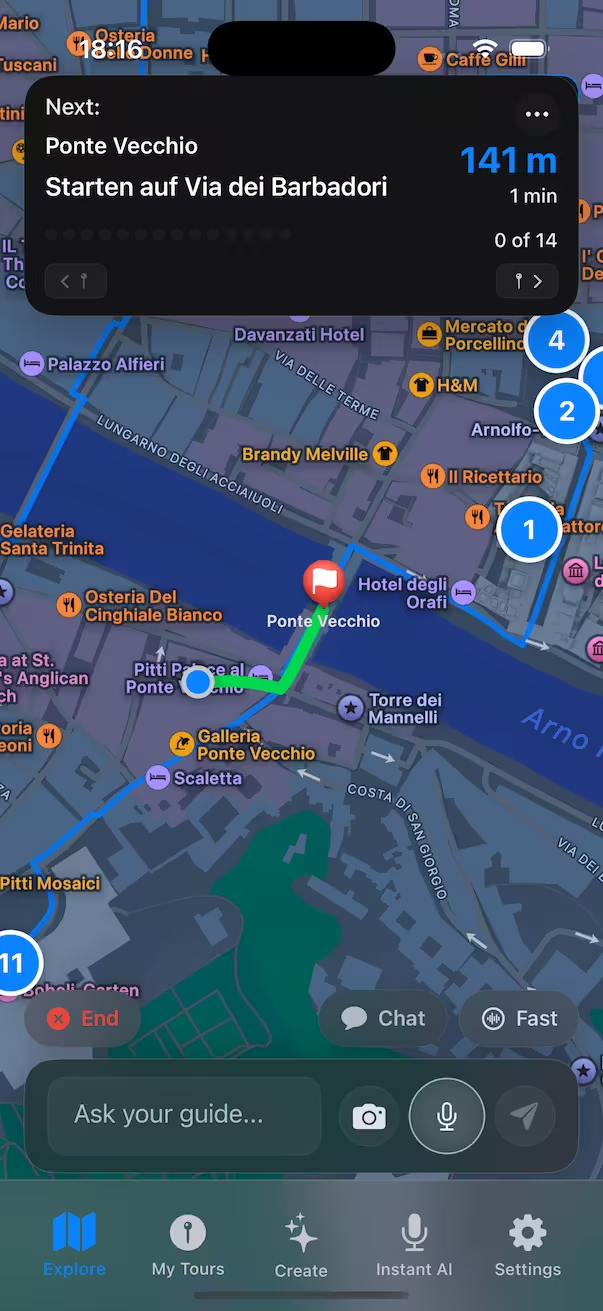
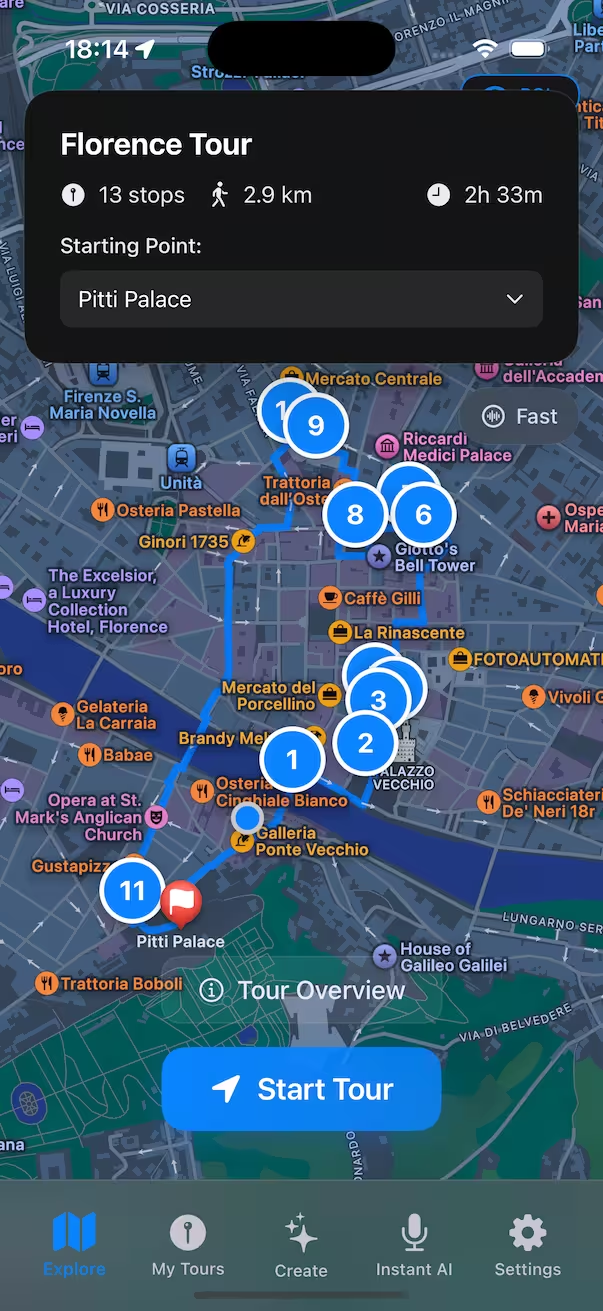
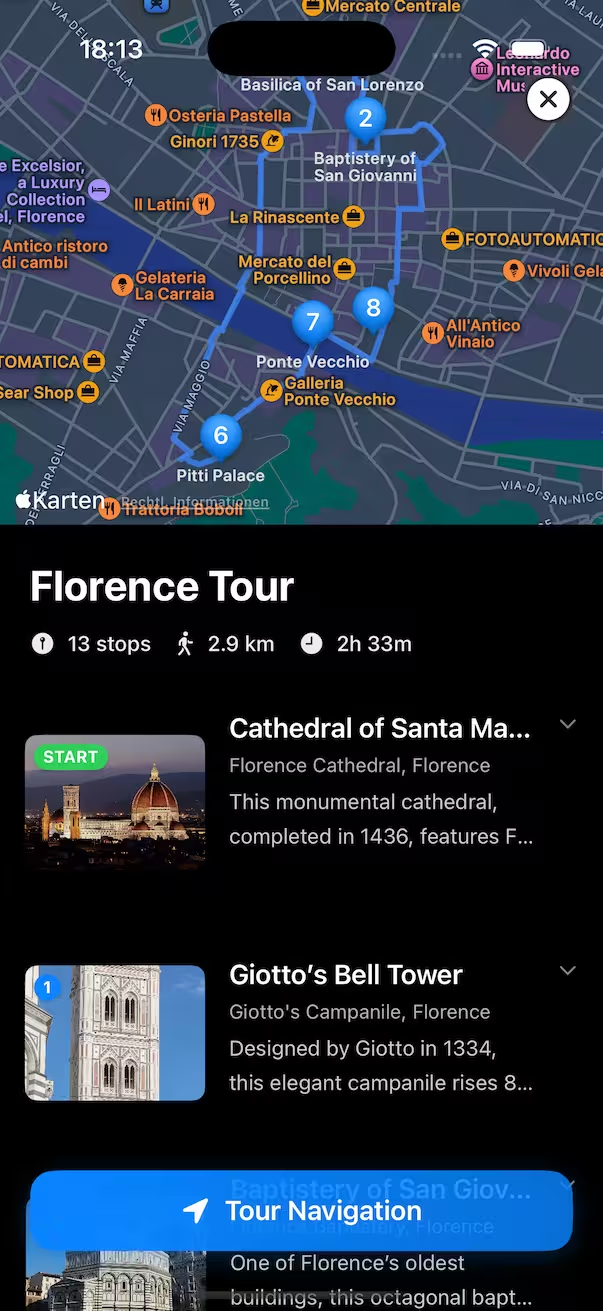
The classic Cairo tour: 6 stops, 7.0 km, about 3 h on foot
Your live AI guide and the self-guided Cairo route, together in your browser.