Best Time to Visit Delhi
Month-by-month weather, crowds and prices, plus a full calendar of festivals and events worth planning a trip around.
Best monthsOct, Feb
CheapestMay, Jun
AvoidMay, Jun, Dec
BusiestOct, Jan

When is the best time to visit Delhi?
Come in October or February. October pairs perfect 22-32°C weather with the year's biggest festivals, Navratri and Dussehra. February is calmer, dry and clear before the heat builds. Skip May and June (45°C heat) and mid-December to January, when smog and dense fog ground flights.
Start our tool and find your best time to visit Delhi
Your perfect month
Free · ~30 seconds
or tap a month directly
What matters to you?
And this?
Best overall: Oct, Feb. October is the sweet spot: 22-32°C, every monument open, and Navratri, Dussehra and the half marathon all landing in one electric week. February is the calmer alternative, clear and dry with the India Art Fair and Surajkund crafts mela, and the best air before the heat arrives.
Best value: Jul, Aug. Monsoon July and August: hotel rates 30-40% below peak, monuments nearly empty, and the cleanest air of the year once the rain washes the sky. You trade dry feet for a green, uncrowded Delhi that few foreign visitors ever see.
Avoid: Dec, Jan, May. Mid-December to January means hazardous smog and fog that cancels flights, while May and June bring lethal 45°C heat. Both windows are cheap for a reason. The discount does not make up for what you lose.
- January: Good time, 19°C. This is postcard Delhi weather, sweaters and chai and golden afternoon light, but do not romanticise it. The same still, cold air that feels crisp at noon traps hazardous smog, and the fog that blankets the city until 10 am can ground your onward flight. Beautiful and complicated in equal measure.
- February: Good time, 24°C. If you want Delhi without the extremes, this is your month. No lethal heat, no smog crisis, no monsoon, just clear blue skies and a city in a good mood. The downside is that everyone knows it, so the Taj Mahal day trip to Agra and the major monuments stay busy. Worth it.
- March: Good time, 29°C. Holi is the most visceral festival experience Delhi offers, and also the messiest. If you join in, your clothes will never be the same and that is the point. If colour and crowds are not your thing, the days after Holi are gloriously calm: warm, quiet monuments and easy restaurant tables before the heat sets in.
- April: Tough month, 36°C. This is the start of the long, hard Delhi summer, and it separates the heat-tolerant from everyone else. The trade-off is real space: Qutub Minar and Humayun's Tomb without the October crush, at noticeably lower prices. Just respect the heat, carry two litres of water, and treat the midday hours as indoor time.
- May: Tough month, 38°C. Let nobody sell you May as a clever off-season hack. The heat is dangerous, not just uncomfortable, and the city is emptied of foreign visitors for a reason. The only honest pitch is budget: the year's lowest prices and monuments you can have almost to yourself, if your body can handle 45°C and you plan every hour around the sun.
- June: Tough month, 38°C. June is a waiting game. The heat is relentless and the humidity climbs as the month goes on, the whole city visibly willing the monsoon to arrive. The payoff, if your timing is lucky, is the first monsoon downpour breaking the heat, a moment of collective relief you can feel on the streets. Cheap, quiet, and only for the heat-hardened.
- July: Tough month, 34°C. Monsoon Delhi is a deliberate choice that most visitors never consider, and the few who do are rewarded. Humayun's Tomb and Lodhi Garden glow a saturated green, peacocks display in the rain, and you share the gardens with almost no one. The catch is the chaos: waterlogging, traffic jams, and storms that can strand you. Pack a poncho, not an umbrella.
- August: Tough month, 33°C. August is Delhi at its greenest and most overlooked. The rain is still heavy and the humidity sticky, but the parks and ridge forests are jungle-lush, peacocks are everywhere, and the monuments are nearly yours alone. It is a slower, more local Delhi. Just build flexibility into your days for the downpours and the waterlogging they bring.
- September: Tough month, 33°C. September is the calm before the October storm. The crowds have not arrived, prices are still soft, and the post-monsoon green lingers on the lawns of Lodhi Garden. The humidity is the price you pay. If you want October's atmosphere without October's prices and queues, the last week of September is the smart play, just before everything fills up.
- October: Tough month, 32°C. This is Delhi at its absolute best, and it knows it. Perfect weather, every monument open and golden in the morning light, and a cultural calendar so packed the city hums after dark. Yes, it is the priciest and most crowded month, and yes you queue. But October is what people mean when they say Delhi is unmissable. Just book everything early.
- November: Good time, 27°C. Early November is romantic Delhi at its peak: warm evenings, Diwali lamps everywhere, the whole city glowing. Then comes the trap. The morning after Diwali the AQI spikes above 350, and by mid-month the smog season sets in for real. Time it for the first half if you can, and have an exit plan if your lungs are sensitive.
- December: Great time, 22°C. December days can be lovely, soft sun and sweater weather, but the month is defined by what you cannot see: the fog that swallows the airport and the smog that hangs over everything. Christmas in Khan Market and Hauz Khas is fun, and New Year's Eve is lively, but the air and the flight delays are a genuine drag. Travel with flexible tickets.
Delhi weather by month
HighLowRainfall
Jan19°
Feb24°
Mar29°
Apr36°
May38°
Jun38°
Jul34°
Aug33°
Sep33°
Oct32°
Nov27°
Dec22°
| Month | Temp | Rain | Sun | Crowds | Prices | Highlight |
|---|---|---|---|---|---|---|
| Jan | 19° / 8° | 37mm · 4 rainy days | 9.0 h/day | ●●●●○ | ●●●●○ | New Delhi World Book Fair |
| Feb | 24° / 11° | 21mm · 4 rainy days | 9.8 h/day | ●●●●○ | ●●●●○ | Surajkund Crafts Mela |
| Mar | 29° / 16° | 35mm · 5 rainy days | 11.0 h/day | ●●●○○ | ●●●○○ | Holi |
| Apr | 36° / 21° | 12mm · 3 rainy days | 11.5 h/day | ●●○○○ | ●●○○○ | Qutub Festival |
| May | 38° / 25° | 36mm · 5 rainy days | 11.4 h/day | ●○○○○ | ●○○○○ | |
| Jun | 38° / 28° | 55mm · 8 rainy days | 11.3 h/day | ●○○○○ | ●○○○○ | International Mango Festival |
| Jul | 34° / 27° | 231mm · 22 rainy days | 9.1 h/day | ●●○○○ | ●●○○○ | International Mango Festival |
| Aug | 33° / 26° | 151mm · 19 rainy days | 9.3 h/day | ●●○○○ | ●●○○○ | Independence Day |
| Sep | 33° / 25° | 94mm · 11 rainy days | 10.3 h/day | ●●○○○ | ●●○○○ | |
| Oct | 32° / 20° | 19mm · 3 rainy days | 10.6 h/day | ●●●●● | ●●●●● | Navratri / Durga Puja |
| Nov | 27° / 15° | 6mm · 1 rainy days | 9.9 h/day | ●●●●○ | ●●●●○ | Diwali |
| Dec | 22° / 10° | 4mm · 1 rainy days | 9.3 h/day | ●●●○○ | ●●●●○ |
How we score this: weather = long-run climate normals (Open-Meteo), crowds & prices = relative season read, events checked yearly against official dates.
Best time to visit Delhi: weather, prices & crowds
Best months for good weather
Oct, Nov, Feb
October to mid-November and February give Delhi its only reliably comfortable days: 22-32°C, low humidity, and crisp mornings around 18-20°C that feel like perfect spring.
Quietest months to avoid the crowds
Jul, Aug
July and August empty the monuments out. Monsoon rain keeps foreign tourists away, hotel rates drop 30-40%, and Humayun's Tomb and Lodhi Garden turn a deep, saturated green.
Cheapest time to visit Delhi
May, Jun
May and June are the cheapest months of the year, with hotel rates 30-50% below the October peak and Paharganj dorm beds from ₹500. The catch is 45°C heat that only the truly heat-adapted should attempt.
Best time for festivals and events
Oct, Nov
October and early November stack Delhi's most spectacular nights: Dussehra's 65-foot Ravana effigy burning at Ramlila Maidan, and Diwali turning the whole city into a sea of lamps and fireworks.
How many days do you need in Delhi?
Delhi needs three days at a minimum, and even that only scratches the surface of a sprawling, layered megacity. The distances are large and the traffic is heavy: the monuments sit far apart and each one swallows time. Four days or more lets you move at a pace that actually fits the city.

One day
Old Delhi essentials
Start at the Red Fort, then dive into the lanes of Chandni Chowk before the 10 am crush. Climb the Jama Masjid's minaret for a rooftop view over the old city, then end the afternoon at the Nizamuddin Dargah for Thursday qawwali. This core is tight, walkable, and intense.
Two days
Mughal monuments and New Delhi
Day two opens with Humayun's Tomb early (foreigners pay ₹600, and the gardens are empty before 9 am), then moves south to the Qutub Minar complex before the midday heat. Afternoon belongs to the ceremonial axis: India Gate, Kartavya Path, and Connaught Place. Take the self-guided Delhi walking tour to link these 6 stops across 12.9 km in roughly 3.8 hours.
Three daysRecommended
Museums, markets, and breathing room
A third day lets you slow down. The National Museum near India Gate holds the world's largest Indus Valley collection and needs two hours minimum. In the afternoon, Khan Market and Hauz Khas Village offer South Delhi's cafe and design scene. Lodhi Garden is a ten-minute walk from the market, good for a late afternoon loop among the scattered 15th-century tombs.
Four days or more
Day trips and deeper neighbourhoods
Four days unlocks the day trips: Agra and the Taj Mahal is 230 km and three hours each way (Gatimaan Express makes it doable in one long day), or Jaipur on the Golden Triangle circuit. Within Delhi, more time means the Mehrauli Archaeological Park, the Mughal-era stepwells of Agrasen Ki Baoli, and a proper evening at Dilli Haat for regional crafts and food. October visitors with four days can also catch Navratri, Dussehra and the half marathon without feeling rushed.
Best time to visit Delhi by traveller type
Same city, different trip. Here's the month that fits how you're travelling.
🧭
Best time to visit Delhi for the first time
OctFeb
October for perfect weather and the city at its most alive with Navratri and Dussehra, or February for clear cool skies, the India Art Fair and shorter queues at the Red Fort and Qutub Minar.
❤️
Best time to visit Delhi for couples
Nov
The first half of November: Diwali ambience and warm evenings at Lodhi Garden and Khan Market, before the smog thickens from mid-month.
💶
Best time to visit Delhi on a budget
MayJul
May for the year's cheapest beds (₹500 dorms in Paharganj) if you can take 45°C, or monsoon July and August for 30-40% off, quiet monuments and the free International Mango Festival.
🍝
Best time to visit Delhi for food and wine
NovMar
November for Diwali mithai season, when Chandni Chowk's halwai shops pile high with barfi and laddoo, or March post-Holi before the heat kills the street-food appetite.
Worst time to visit Delhi
May and June are the primary months to skip, with afternoon temperatures regularly hitting 45-47°C, a hot dry wind called the loo, and a UV index above 11. Midday sightseeing at any unshaded monument between 11 am and 4 pm is genuinely dangerous, not just uncomfortable, and most professional guides refuse to operate at those hours. December and the first half of January bring a different problem: the smog window is at its worst (AQI regularly over 300, hitting 530 on the worst days), and dense fog from 10 December onwards cancels dozens of flights and delays trains by two to six hours at a stretch.
Still worth it for May and June work if you are entirely driven by budget (hotel rates 30-50% below peak, Paharganj dorm beds from ₹500) and can structure every day around the heat, sightseeing only at dawn and dusk with afternoons in air-conditioned museums. December is still viable for the Christmas and New Year atmosphere in Khan Market and Hauz Khas, provided you book fully flexible flights and have no tight onward connections.
Go instead in October, February, when Delhi is at its best.
Best time for a tour of Delhi
Delhi on foot is a tale of two halves, and the calendar is brutally honest about which months reward you. From late October through March the air finally cools into walkable territory, with January highs around 19 °C, December near 21 °C, and almost no rain, just one wet day all month in November and December. That is when you can cross the long, exposed approach to India Gate or stand in the open courtyard of Jama Masjid without melting. April through June is where it breaks down: highs of 36 to nearly 39 °C with lows that never drop below 21 °C, and there is no shade to speak of on the red sandstone ramparts of Red Fort or in the packed alley grid of Chandni Chowk at midday. Then the monsoon lands in July with 22 rain days and August close behind at 19, turning the walk between the Nizamuddin Dargah and Humayun's Tomb into a sweaty, puddle-dodging slog. October draws the heaviest crowds, so the sweet spot is November to February: cool, dry, and quiet enough to actually hear the place.
The real advantage in a city this seasonal is that you control the clock. With AI Tourguide there is no fixed departure and no operator's schedule to obey, so you start when the weather is on your side and go at your own pace. On a hot March morning, start your Delhi tour at first light and reach Red Fort and Chandni Chowk before the heat builds, then break for chai when the sun gets fierce. It runs entirely in your browser, no app and no download, while a voice-first guide leads the whole way, tells you the story of each monument, asks what draws you, and adapts the route to your answers. Self-guided and guided at once, in 13 languages, so the climate sets your hour, not a tour company.


 +2
+2All 6 stops are already on the map.
You just press start.
You just press start.
 AI Tourguide
You just read the route.
Now walk it with a guide in your ear.
Press start wherever you are, even hundreds of kilometres from Delhi, and the guide begins telling its stories right away. In the city, pick any of the 6 stops to start from: it leads you there, then talks with you the whole route, asking, listening, remembering, and shaping the tour around your answers.
6stops12.9km3.8hours11languages
▶Start the tour freeFree to start · Runs in your browser · No app, no download
Delhi events and festivals calendar
Annual highlights worth timing a trip around, listed month by month.
January
🎨 Art and cultureNew Delhi World Book Fair नई दिल्ली विश्व पुस्तक मेला
Jan 10–18
Mid-January, nine days at Bharat Mandapam (Pragati Maidan), usually around the 10th to 18th.
The world's largest business-to-consumer book fair, gathering more than 1,000 publishers from 35-plus nations at Bharat Mandapam, with 600-plus author events, panels and readings across nine days.
🎉 FestivalLohri लोहड़ी
Jan 13
13 January every year, a fixed date in the Punjabi harvest calendar.
A Punjabi harvest festival marked with bonfires in colonies across Delhi, folk songs, and til-gur (sesame and jaggery) sweets shared around the flames after dark.
🌸 Seasonal natureDelhi International Kite Festival दिल्ली अंतर्राष्ट्रीय पतंग महोत्सव
Jan 16–18
Mid-January around Makar Sankranti (typically 14-16 January), at Baansera Park on the Yamuna floodplains.
A Makar Sankranti kite-flying festival at Baansera Park on the Yamuna floodplains, with state teams from across India filling the winter sky with colour.
🇮 HolidayRepublic Day Parade गणतंत्र दिवस परेड
Jan 26
26 January every year on Kartavya Path, roughly 90 minutes from 10:30 am.
India's largest military and cultural parade, marching down Kartavya Path with tableaux from every state, military hardware and air force flypasts before tens of thousands of seated spectators.
🇮 HolidayBeating Retreat Ceremony बीटिंग रिट्रीट
Jan 29
29 January every year at Vijay Chowk, at sunset.
Tri-services and police bands perform at Vijay Chowk at sunset to close the Republic Day season, a tradition with British military roots reworked into an Indian ceremony.
🎨 Art and cultureSurajkund Crafts Mela सूरजकुंड हस्तशिल्प मेला
Jan 31 – Feb 15
Late January to mid-February, a 20-minute drive away in Faridabad, usually running around 31 January to 15 February.
India's largest crafts fair, gathering 50,000-plus craftspeople from every Indian state at Surajkund near Faridabad, with folk performances under open sky each evening.
February
🎨 Art and cultureIndia Art Fair इंडिया आर्ट फेयर
Feb 5–8
Early February at the NSIC Exhibition Grounds, Okhla, typically the first full weekend of the month.
South Asia's largest contemporary art fair, with 123 exhibitors filling the NSIC Exhibition Grounds, drawing collectors, galleries and artists from across the region.
🏳️🌈 PrideDelhi Queer Pride Parade दिल्ली क्वीर प्राइड परेड
Feb 8 ~
Usually November, marching from Barakhamba Road metro to Jantar Mantar, though the date shifts year to year.
One of India's largest Pride events, marching from Barakhamba Road metro along Leo Tolstoy Marg to Jantar Mantar, free and open to all.
March
🎉 FestivalHoli होली
Mar 3–4 ~
Early March, shifting yearly with the Hindu lunar calendar. Holika Dahan bonfires the evening of 3 March, Rangwali colour-throwing on 4 March.
The festival of colours, with Holika Dahan bonfires on the eve and the whole city throwing coloured powder and water the next day.
April
🎵 MusicQutub Festival कुतुब महोत्सव
Apr 6–10
Early-to-mid April, in the Qutub complex by moonlight, typically over five evenings.
Classical Indian music and dance performances staged inside the Qutub Minar complex at night, from Sufi qawwali to Bharatanatyam, set against the floodlit UNESCO monument.
June
🍷 Food and wineInternational Mango Festival अंतर्राष्ट्रीय आम महोत्सव
Jul 5–10 ~
Late June to mid-July at Dilli Haat Janakpuri, dates shifting with the mango harvest each year.
More than 500 mango varieties displayed at Dilli Haat Janakpuri, with chef demonstrations, mango cook-off contests and tastings, free to enter.
August
🇮 HolidayIndependence Day स्वतंत्रता दिवस
Aug 15
15 August every year, flag-hoisting at the Red Fort at 7:30 am.
The Prime Minister hoists the national flag at the Red Fort at 7:30 am and delivers an address broadcast live across the country, with a heavy security perimeter from early morning.
October
🏃 SportVedanta Delhi Half Marathon वेदांता दिल्ली हाफ मैराथन
Oct 18 ~
Mid-October, an AIMS-certified race through central Delhi, typically on a Sunday.
An AIMS-certified half marathon sending 30,000-plus runners past Lodhi Garden, India Gate and Vijay Chowk, with central Delhi roads closed from 5 am to about 11 am.
⛪ ReligiousDussehra / Vijaya Dashami दशहरा
Oct 20 ~
Mid-to-late October, moveable with the Hindu calendar; Ravan Dahan around 7:30 pm at Ramlila Maidan.
Ramlila Maidan hosts India's largest Ravan Dahan, with a 65-foot Ravana effigy burned around 7:30 pm before a vast crowd, the Prime Minister in attendance.
November
🎉 FestivalDiwali दीवाली / दीपावली
Nov 6–10 ~
Late October or November, moveable with the Hindu calendar; Dhanteras opens the season two days before the main puja night.
The festival of lights, with Dhanteras opening the season and the main Lakshmi puja following two evenings later.
⛪ ReligiousGuru Nanak Jayanti गुरु नानक जयंती
Nov 27 ~
Late November on the full moon of Kartik, moveable each year.
The Sikh festival marking Guru Nanak's birth, with massive night processions through Old Delhi from Gurdwara Bangla Sahib and Sis Ganj Sahib, and 24-hour free community meals (langar).
Insider tips for visiting Delhi
The rules buried in forums, in one place.
- Book Red Fort tickets online (ASI portal, BookMyShow or Paytm), never queue at the gate. The gate line runs 45-90 minutes on weekends and public holidays. Foreign entry is ₹600. The Jai Hind sound-and-light show needs a separate ₹60-80 ticket, and timings shift seasonally: 6 pm Hindi and 7:30 pm English from November to January.
- Republic Day parade tickets (₹20-100) sell out within hours of the Aamantran portal opening, roughly six weeks ahead in late November. The Beating Retreat ceremony on 29 January is less known and easier to get, but still needs advance booking.
- From 10 December to 10 February, build buffer days before any onward flight. This is the official DGCA fog window, and a single severe episode cancelled 128 flights at IGI Airport in one day. Book refundable fares and avoid early-morning departures.
- Do Chandni Chowk before 10 am on a weekday. After 10 and on weekends the lanes are impassable. Walk the food trail (Paranthe Wali Gali, Natraj Dahi Bhalle, Karim's by Jama Masjid) on an empty stomach before the lunch crush. The market is closed on Sundays, so skip that day entirely.
- Diwali at dusk is the most atmospheric night of the Delhi year, but the morning after, AQI spikes above 350-450. If you have any respiratory sensitivity, plan to leave the city by the morning after the main puja.
- ASI monuments (Red Fort, Qutub Minar, Humayun's Tomb) and the National Museum close on Mondays. The Red Fort also shuts 20-31 January for Republic Day security and on 14-15 August for Independence Day. On those dates swap in Qutub Minar or Humayun's Tomb.
- Non-Muslims are not admitted to Jama Masjid during the five daily prayer times, and Friday noon prayer (12:30-2 pm) is the strictest. Women must cover head and shoulders; a shawl is loaned at the gate for a ₹50 deposit. Visit 9-11 am on a weekday.
- Skip auto-rickshaws in the October-November peak and ride the Metro. Yellow Line reaches Chandni Chowk, Violet Line serves Humayun's Tomb at Jangpura, and the Airport Express runs terminal to Connaught Place in 22 minutes flat. App cabs (Ola, Uber) are fixed-price; never agree an auto fare without the meter.
Public holidays in Delhi
On these dates many shops and offices close, transport thins out, and sights can be mobbed or shut. Plan around them.
| Date | Holiday | What closes |
|---|---|---|
| Jan 1 | New Year's Day | Government offices closed, but most attractions stay open. Connaught Place sees fireworks and crowds the night before. A low-key day for sightseeing otherwise. |
| Jan 26 | Republic Day | Kartavya Path is fully closed to traffic from 5 am to 2 pm for the parade, and all monuments along the route are inaccessible. The Red Fort is pre-closed 20-31 January for security. Metro service is adjusted and central Delhi is gridlocked. |
| Mar 4 | Holi (Rangwali) | National holiday and the festival of colours. Stay off the streets if you do not want coloured water and powder thrown at you. Most restaurants stay closed until late afternoon, and Old Delhi lanes get rowdy and messy. |
| Aug 15 | Independence Day | The Red Fort is completely closed to visitors (14-15 August), with a security perimeter from early morning as the PM hoists the flag at 7:30 am. Central Delhi transport is disrupted; watch the ceremony on public screens at Connaught Place. |
| Oct 2 | Gandhi Jayanti | National holiday. No alcohol is sold anywhere in Delhi on this day (a dry day), so bars and licensed restaurants stop serving. Most monuments stay open. |
| Oct 20 | Dussehra | National holiday with central Delhi road closures around Ramlila Maidan, where the giant Ravana effigy is burned around 7:30 pm. Arrive by 4 pm for a viewing spot. The whole city is out, so traffic across the centre is heavy. |
| Nov 8 | Diwali | National holiday and Delhi's most atmospheric night, with regulated fireworks 8-10 pm. The morning after, AQI often exceeds 400. Chandni Chowk and Sarojini Nagar are packed for two weeks beforehand for shopping. |
| Nov 27 | Guru Nanak Jayanti | National holiday. Gurdwara Bangla Sahib at Connaught Place and Sis Ganj Sahib in Old Delhi draw massive night processions, and tens of thousands pass through. The free community meal (langar) at Bangla Sahib runs 24 hours. |
Delhi month by month
January in Delhi
High19°C / 67°F
Low8°C
Rain37mm / 4 rainy days
Sun9.0 h/day
Daylight11 h/day
Humidity76%
Crowds●●●●○Prices●●●●○
January is the coldest month and the heart of the tourist peak, with comfortable 19°C afternoons but raw 8°C nights and dense morning fog. The cold and fog keep casual visitors away early in the month, then crowds build toward Republic Day on 26 January. The air is at its worst, with AQI regularly over 300, so pack an N95 mask. Walk the monuments mid-morning once the fog lifts.
The vibe This is postcard Delhi weather, sweaters and chai and golden afternoon light, but do not romanticise it. The same still, cold air that feels crisp at noon traps hazardous smog, and the fog that blankets the city until 10 am can ground your onward flight. Beautiful and complicated in equal measure.
Don't miss The New Delhi World Book Fair at Bharat Mandapam (10-18 January) is the world's largest B2C book fair, with 1,000-plus publishers from 35 nations. On 13 January, wander any Punjabi colony after dark for Lohri bonfires and til-gur sweets, then watch the all-India kite display at Baansera Park (16-18 January).
Crowd drivers European and domestic peak-winter tourism, the New Delhi World Book Fair (10-18 January), and Republic Day spiking the final week.
In season Winter is gajar ka halwa season, the slow-cooked carrot pudding sold hot from Old Delhi sweet shops. Pair it with a glass of hot badam milk against the cold.
Heads up The Red Fort is closed 20-31 January for Republic Day security; visit Qutub Minar or Humayun's Tomb instead. ASI monuments and the National Museum are shut on Mondays.
Peak-winter rates; Republic Day weekend pushes hotels 25-35% above standard peak. The 2-9 January window is the cheapest, kept quiet by fog and cold.
Events this month
🎨 Art and cultureNew Delhi World Book Fair नई दिल्ली विश्व पुस्तक मेला
Jan 10–18
Mid-January, nine days at Bharat Mandapam (Pragati Maidan), usually around the 10th to 18th.
The world's largest business-to-consumer book fair, gathering more than 1,000 publishers from 35-plus nations at Bharat Mandapam, with 600-plus author events, panels and readings across nine days.
A unique literary atmosphere in peak winter comfort, and a window into Indian publishing in every language you can imagine, all under one roof.
🎉 FestivalLohri लोहड़ी
Jan 13
13 January every year, a fixed date in the Punjabi harvest calendar.
A Punjabi harvest festival marked with bonfires in colonies across Delhi, folk songs, and til-gur (sesame and jaggery) sweets shared around the flames after dark.
An authentic neighbourhood experience rather than a staged tourist event: wander any Punjabi colony after sunset and you will be pulled into the warmth.
🌸 Seasonal natureDelhi International Kite Festival दिल्ली अंतर्राष्ट्रीय पतंग महोत्सव
Jan 16–18
Mid-January around Makar Sankranti (typically 14-16 January), at Baansera Park on the Yamuna floodplains.
A Makar Sankranti kite-flying festival at Baansera Park on the Yamuna floodplains, with state teams from across India filling the winter sky with colour.
A spectacular sky display that coincides with the Lohri bonfire season, giving you two winter festivals in one trip.
🇮 HolidayRepublic Day Parade गणतंत्र दिवस परेड
Jan 26
26 January every year on Kartavya Path, roughly 90 minutes from 10:30 am.
India's largest military and cultural parade, marching down Kartavya Path with tableaux from every state, military hardware and air force flypasts before tens of thousands of seated spectators.
A once-in-a-lifetime spectacle of scale, but seats (₹20-100) sell out within a day of the Aamantran portal opening, so book months ahead.
🇮 HolidayBeating Retreat Ceremony बीटिंग रिट्रीट
Jan 29
29 January every year at Vijay Chowk, at sunset.
Tri-services and police bands perform at Vijay Chowk at sunset to close the Republic Day season, a tradition with British military roots reworked into an Indian ceremony.
Atmospheric and undervisited by foreigners, and easier to get tickets for than the parade, though it still requires advance booking.
February in Delhi
High24°C / 74°F
Low11°C
Rain21mm / 4 rainy days
Sun9.8 h/day
Daylight11 h/day
Humidity68%
Crowds●●●●○Prices●●●●○
February is Delhi at its most pleasant: dry, clear, and warming from 23°C highs toward the end of the month, with humidity dropping and the worst of the fog gone. The post-Republic Day tourist wave keeps the city busy but not overwhelming. This is the best air-quality window of the cool season before heat and dust build. Mornings around 11°C still call for a light layer.
The vibe If you want Delhi without the extremes, this is your month. No lethal heat, no smog crisis, no monsoon, just clear blue skies and a city in a good mood. The downside is that everyone knows it, so the Taj Mahal day trip to Agra and the major monuments stay busy. Worth it.
Don't miss The India Art Fair (5-8 February), South Asia's largest contemporary art event with 123 exhibitors at the NSIC grounds, anchors the month. A 20-minute drive away, the Surajkund Crafts Mela (31 January-15 February) gathers 50,000-plus craftspeople from every Indian state with evening folk dances under open sky.
Crowd drivers The continuing post-Republic Day tourist wave, the India Art Fair (5-8 February) filling boutique hotels, and the Surajkund crafts mela drawing day crowds.
In season The last of the winter citrus and gajar ka halwa lingers, while Old Delhi's nihari and kebab stalls are at their best before the heat thins appetites.
Heads up ASI monuments and the National Museum close on Mondays. No major closures otherwise.
Mid-range hotels ₹4,000-8,000 a night. Luxury rates spike 3-5x during major summit windows; the India Art Fair fills boutique South Delhi hotels.
Events this month
🎨 Art and cultureSurajkund Crafts Mela सूरजकुंड हस्तशिल्प मेला
Jan 31 – Feb 15
Late January to mid-February, a 20-minute drive away in Faridabad, usually running around 31 January to 15 February.
India's largest crafts fair, gathering 50,000-plus craftspeople from every Indian state at Surajkund near Faridabad, with folk performances under open sky each evening.
The single best place to see Indian crafts from across the country in one venue, with evening folk dances that turn it into a festival, not just a market.
🎨 Art and cultureIndia Art Fair इंडिया आर्ट फेयर
Feb 5–8
Early February at the NSIC Exhibition Grounds, Okhla, typically the first full weekend of the month.
South Asia's largest contemporary art fair, with 123 exhibitors filling the NSIC Exhibition Grounds, drawing collectors, galleries and artists from across the region.
A required stop for anyone serious about contemporary art, and the reason South Delhi's boutique hotels sell out, so book two months ahead.
🏳️🌈 PrideDelhi Queer Pride Parade दिल्ली क्वीर प्राइड परेड
Feb 8 ~
Usually November, marching from Barakhamba Road metro to Jantar Mantar, though the date shifts year to year.
One of India's largest Pride events, marching from Barakhamba Road metro along Leo Tolstoy Marg to Jantar Mantar, free and open to all.
A joyful, central and free celebration that brings colour to the heart of New Delhi, one of the country's biggest LGBTQ gatherings.
March in Delhi
High29°C / 84°F
Low16°C
Rain35mm / 5 rainy days
Sun11.0 h/day
Daylight12 h/day
Humidity58%
Crowds●●●○○Prices●●●○○
March is the bridge month, starting comfortable around 29°C and warming fast toward the end. Holi (3-4 March) is the headline, a city-wide explosion of colour, after which the crowds retreat quickly. The first two weeks are some of the year's best value-to-weather days. By late March the dust storms (andhi) begin and the first real heat arrives, so plan morning sightseeing.
The vibe Holi is the most visceral festival experience Delhi offers, and also the messiest. If you join in, your clothes will never be the same and that is the point. If colour and crowds are not your thing, the days after Holi are gloriously calm: warm, quiet monuments and easy restaurant tables before the heat sets in.
Don't miss Holi (Holika Dahan bonfires on 3 March, Rangwali colour-throwing on 4 March) takes over the entire city. Mathura and Vrindavan, 150 km and 2.5 hours away, are the epicentre for the most intense Braj Holi. Post-Holi, the gardens of Lodhi and Mehrauli are still green and walkable before the heat.
Crowd drivers Holi (3-4 March) draws domestic and international visitors, then the crowd thins fast as the weather starts to warm.
In season Post-Holi is peak street-food season before the heat kills the appetite: gujiya (sweet fried dumplings) are everywhere around the festival, and Chandni Chowk's chaat stalls are at their liveliest.
Heads up Most shops shut and many restaurants stay closed until late afternoon on Holi (4 March). ASI monuments close on Mondays.
Rates drop 15-20% after Holi; the shoulder-value window opens from 10 March as foreign tourist numbers begin to thin.
Events this month
🎉 FestivalHoli होली
Mar 3–4 ~
Early March, shifting yearly with the Hindu lunar calendar. Holika Dahan bonfires the evening of 3 March, Rangwali colour-throwing on 4 March.
The festival of colours, with Holika Dahan bonfires on the eve and the whole city throwing coloured powder and water the next day. Organised events run ₹500-3,000; the streets are free and chaotic.
The most visceral festival experience in Delhi, and worth timing a trip around if you embrace the colour and crowds. Mathura and Vrindavan, 2.5 hours away, are the epicentre.
April in Delhi
High36°C / 97°F
Low21°C
Rain12mm / 3 rainy days
Sun11.5 h/day
Daylight13 h/day
Humidity36%
Crowds●●○○○Prices●●○○○
April is when the heat takes over, with highs climbing to 36°C and humidity dropping to a parched 36%. Foreign tourist numbers fall away and prices ease 20-25% below peak. Dust storms can cut visibility to near zero for half an hour at a time. The walking window narrows to early morning and after 4:30 pm, when the light turns golden and the monuments empty out.
The vibe This is the start of the long, hard Delhi summer, and it separates the heat-tolerant from everyone else. The trade-off is real space: Qutub Minar and Humayun's Tomb without the October crush, at noticeably lower prices. Just respect the heat, carry two litres of water, and treat the midday hours as indoor time.
Don't miss The Qutub Festival (6-10 April) stages classical Indian music and dance inside the Qutub complex by moonlight, with Sufi qawwali and Bharatanatyam against a UNESCO monument at night. Early-morning walks through Lodhi Garden before the heat are the way to see the city this month.
Crowd drivers Heat builds and foreign tourist numbers fall sharply; the Qutub Festival is a local-focused draw rather than a crowd magnet.
In season Cooling drinks come into their own: shikanji (Indian lemonade), sugarcane juice from roadside presses, and the first aam panna (raw-mango cooler) as mango season approaches.
Heads up Ramadan daytime (around 20 March to 18 April) means reduced hours in the lanes around Jama Masjid and Matia Mahal; the evening iftar there is spectacular. ASI monuments close on Mondays.
20-25% below peak prices, good value for heat-tolerant visitors as foreign arrivals fall sharply.
Events this month
🎵 MusicQutub Festival कुतुब महोत्सव
Apr 6–10
Early-to-mid April, in the Qutub complex by moonlight, typically over five evenings.
Classical Indian music and dance performances staged inside the Qutub Minar complex at night, from Sufi qawwali to Bharatanatyam, set against the floodlit UNESCO monument.
A rare chance to hear Indian classical music against a 12th-century minaret by moonlight, one of Delhi's most atmospheric cultural settings.

May in Delhi
High38°C / 101°F
Low25°C
Rain36mm / 5 rainy days
Sun11.4 h/day
Daylight14 h/day
Humidity39%
Crowds●○○○○Prices●○○○○
May is the cheapest and quietest month, and a genuine heat emergency. Afternoons hit 40-47°C with a hot dry wind (the loo), and the UV index tops 11. Walking any unshaded monument between 11 am and 4 pm is punishing, and most guides refuse to operate midday. If you come, you do it for the rock-bottom prices and the near-empty sights, sightseeing only at dawn and dusk.
The vibe Let nobody sell you May as a clever off-season hack. The heat is dangerous, not just uncomfortable, and the city is emptied of foreign visitors for a reason. The only honest pitch is budget: the year's lowest prices and monuments you can have almost to yourself, if your body can handle 45°C and you plan every hour around the sun.
Don't miss This is when the monuments are emptiest. A 7 am visit to Humayun's Tomb or the Qutub complex, finished before the heat peaks, is the whole strategy. Afternoons belong indoors at the air-conditioned National Museum or the National Gallery of Modern Art.
Crowd drivers Nothing drives crowds. Heatwave conditions of 40-47°C keep nearly all foreign tourists away, which is exactly why it is the quietest month.
In season Mango season arrives: Dasheri, Langra and Chausa varieties pile up at Dilli Haat and the markets, eaten cold, and aam panna becomes a survival drink against the heat.
Heads up No festival closures, but the midday heat effectively closes outdoor sightseeing 11 am to 4 pm. ASI monuments close on Mondays.
The cheapest month of the year: hotel rates 30-50% below October-February, with budget beds from ₹500-800 in Paharganj.

June in Delhi
High38°C / 101°F
Low28°C
Rain55mm / 8 rainy days
Sun11.3 h/day
Daylight14 h/day
Humidity51%
Crowds●○○○○Prices●○○○○
June stays brutally hot at 38°C-plus until the monsoon breaks, usually between 29 June and 5 July, when the air turns heavy and humid. It is one of the two cheapest months, with almost no foreign arrivals. Pre-monsoon dust storms are common. The one local draw is the Mango Festival in late June. Like May, this is dawn-and-dusk sightseeing only, with midday spent indoors.
The vibe June is a waiting game. The heat is relentless and the humidity climbs as the month goes on, the whole city visibly willing the monsoon to arrive. The payoff, if your timing is lucky, is the first monsoon downpour breaking the heat, a moment of collective relief you can feel on the streets. Cheap, quiet, and only for the heat-hardened.
Don't miss The International Mango Festival often opens in late June at Dilli Haat Janakpuri, with 500-plus mango varieties, chef demos and cook-off contests, free to enter. Catching the first monsoon rain turn the dust-grey city green is the unplanned highlight.
Crowd drivers Pre-monsoon heat of 38-45°C means few foreign arrivals. The monsoon arrives mid-to-late June, and the Mango Festival is the one local draw.
In season Peak mango month: the festival showcases hundreds of varieties, and aam ras (mango pulp) with puri appears on Old Delhi menus.
Heads up Midday heat shuts down outdoor sightseeing until the monsoon breaks. ASI monuments close on Mondays.
Tied for the cheapest month for accommodation; rates stay at their annual low until the monsoon arrives mid-to-late month.
Events this month
🍷 Food and wineInternational Mango Festival अंतर्राष्ट्रीय आम महोत्सव
Jul 5–10 ~
Late June to mid-July at Dilli Haat Janakpuri, dates shifting with the mango harvest each year.
More than 500 mango varieties displayed at Dilli Haat Janakpuri, with chef demonstrations, mango cook-off contests and tastings, free to enter.
Quirky, local and free, the one genuine reason to visit in the monsoon, and a delicious way to spend a rainy afternoon.

July in Delhi
High34°C / 93°F
Low27°C
Rain231mm / 22 rainy days
Sun9.1 h/day
Daylight14 h/day
Humidity76%
Crowds●●○○○Prices●●○○○
July is full monsoon: the wettest month at 231mm over 22 rainy days, with highs easing to a muggy 34°C. The rain comes as intense, episodic bursts, a storm dumping 80mm in two hours then stopping, not all-day drizzle. Streets flood fast, and Chandni Chowk's low lanes go ankle-deep. Prices sit 30-40% below peak and the monuments are quiet, which is the trade for wet feet and humidity.
The vibe Monsoon Delhi is a deliberate choice that most visitors never consider, and the few who do are rewarded. Humayun's Tomb and Lodhi Garden glow a saturated green, peacocks display in the rain, and you share the gardens with almost no one. The catch is the chaos: waterlogging, traffic jams, and storms that can strand you. Pack a poncho, not an umbrella.
Don't miss The International Mango Festival at Dilli Haat Janakpuri (around 5-10 July) is free, quirky and very local. Heritage walks at Humayun's Tomb and Lodhi Garden in light rain are genuinely recommended, with the gardens at their lushest and the red sandstone at its moodiest.
Crowd drivers The monsoon is in full swing, so foreign tourists stay away; some domestic visitors come for the International Mango Festival (around 5-10 July).
In season Monsoon street food peaks: hot pakoras and samosas fried fresh against the rain, washed down with masala chai at Old Delhi tea stalls.
Heads up Humayun's Tomb garden has last entry at 5 pm; expect wet grass and mosquitoes, so carry repellent. ASI monuments close on Mondays.
30-40% below peak pricing; monsoon keeps monuments quiet despite the rain.
Events this month
🍷 Food and wineInternational Mango Festival अंतर्राष्ट्रीय आम महोत्सव
Jul 5–10 ~
Late June to mid-July at Dilli Haat Janakpuri, dates shifting with the mango harvest each year.
More than 500 mango varieties displayed at Dilli Haat Janakpuri, with chef demonstrations, mango cook-off contests and tastings, free to enter.
Quirky, local and free, the one genuine reason to visit in the monsoon, and a delicious way to spend a rainy afternoon.

August in Delhi
High33°C / 91°F
Low26°C
Rain151mm / 19 rainy days
Sun9.3 h/day
Daylight13 h/day
Humidity78%
Crowds●●○○○Prices●●○○○
August is the heaviest rainfall month after July and the greenest time in Delhi, with highs around 33°C and humidity near 78%. Independence Day on 15 August closes the Red Fort entirely for security as the PM hoists the flag. The city is lush, with Lodhi Garden, Mehrauli Archaeological Park and the Central Ridge at their most verdant. Domestic visitors come for the holiday; foreign tourists stay rare.
The vibe August is Delhi at its greenest and most overlooked. The rain is still heavy and the humidity sticky, but the parks and ridge forests are jungle-lush, peacocks are everywhere, and the monuments are nearly yours alone. It is a slower, more local Delhi. Just build flexibility into your days for the downpours and the waterlogging they bring.
Don't miss The Red Fort flag-hoisting on 15 August is watched on public screens at Connaught Place since the fort itself is closed. With the city at its greenest, the Mehrauli Archaeological Park and the Central Ridge sanctuaries are the rewarding August walks, ideally between showers.
Crowd drivers Independence Day (15 August) draws domestic visitors for the holiday; the rest of the month stays quiet under heavy monsoon rain.
In season Independence Day brings tricolour-themed sweets to halwai shops, and the rains keep the hot pakora-and-chai street culture going strong.
Heads up The Red Fort is fully closed 14-15 August for Independence Day; central Delhi transport is disrupted. ASI monuments close on Mondays.
Mid-range hotels ₹2,500-5,000 a night; the Independence Day weekend brings a slight bump.
Events this month
🇮 HolidayIndependence Day स्वतंत्रता दिवस
Aug 15
15 August every year, flag-hoisting at the Red Fort at 7:30 am.
The Prime Minister hoists the national flag at the Red Fort at 7:30 am and delivers an address broadcast live across the country, with a heavy security perimeter from early morning.
A charged national moment, though the Red Fort itself is closed to visitors, so the ceremony is best watched on public screens at Connaught Place.

September in Delhi
High33°C / 91°F
Low25°C
Rain94mm / 11 rainy days
Sun10.3 h/day
Daylight12 h/day
Humidity74%
Crowds●●○○○Prices●●○○○
September is the monsoon winding down, still warm at 33°C and humid, with rain easing through the month. The heat is more bearable than summer but the air is sticky until the dry weather returns. From late September the weather and value start to align, and Navratri preparations begin in the Bengali enclaves. The gardens are still green from the rains, making it a quietly rewarding shoulder month before the October rush.
The vibe September is the calm before the October storm. The crowds have not arrived, prices are still soft, and the post-monsoon green lingers on the lawns of Lodhi Garden. The humidity is the price you pay. If you want October's atmosphere without October's prices and queues, the last week of September is the smart play, just before everything fills up.
Don't miss Late September is when the gardens are still rain-green but the rain itself is fading, ideal for unhurried walks at Lodhi Garden and Humayun's Tomb. The first Durga Puja pandals start going up in CR Park toward month-end, a quiet preview of October's full festivities.
Crowd drivers The monsoon is winding down and humidity stays high; Navratri preparations begin in Bengali enclaves toward month-end, hinting at the October surge.
In season The end of mango season overlaps with the first autumn sweets, and CR Park's Bengali sweet shops gear up for Durga Puja with mishti and rosogolla.
Heads up No major closures. ASI monuments close on Mondays.
Shoulder pricing continues; the best value-to-weather ratio of the year starts emerging from late September.
October in Delhi
High32°C / 90°F
Low20°C
Rain19mm / 3 rainy days
Sun10.6 h/day
Daylight12 h/day
Humidity60%
Crowds●●●●●Prices●●●●●
October is the single best and busiest month. Ideal weather (22-32°C) arrives with cool 18-22°C mornings that feel like perfect spring elsewhere, and the air is at its cleanest in the first two weeks before stubble burning starts. Navratri, Dussehra and the half marathon all overlap, so the city buzzes every evening. It is also the most expensive month, with hotels peaking, so book well ahead.
The vibe This is Delhi at its absolute best, and it knows it. Perfect weather, every monument open and golden in the morning light, and a cultural calendar so packed the city hums after dark. Yes, it is the priciest and most crowded month, and yes you queue. But October is what people mean when they say Delhi is unmissable. Just book everything early.
Don't miss Navratri (11-20 October) fills CR Park with Durga Puja pandals that rival Kolkata's. Dussehra (20 October) burns a 65-foot Ravana effigy at Ramlila Maidan around 7:30 pm with the PM in attendance. The Vedanta Delhi Half Marathon (18 October) sends 30,000 runners past Lodhi Garden and India Gate.
Crowd drivers Navratri (11-20 October), Dussehra (20 October) and the Vedanta Delhi Half Marathon (18 October) overlap perfectly as the ideal weather begins, the year's biggest crowd surge.
In season Durga Puja brings Bengali bhog and CR Park's sweet shops to their festive peak, while the cooling weather revives the full sweep of Chandni Chowk street food.
Heads up On 2 October (Gandhi Jayanti) no alcohol is sold city-wide. Central Delhi roads close around Ramlila Maidan for Dussehra (20 October) and along the half-marathon route (18 October, 5-11 am). ASI monuments close on Mondays.
The busiest and most expensive month: mid-range hotels ₹7,000-15,000 a night. Book 8-10 weeks ahead.
Events this month
⛪ ReligiousNavratri / Durga Puja नवरात्रि / दुर्गा पूजा
Oct 11–20 ~
Early-to-mid October, moveable with the Hindu calendar; nine nights of Goddess Durga worship ending on Dussehra.
Nine nights of worship of the Goddess Durga, with pandals across Delhi (above all the Bengali enclave of CR Park), garba dances, and Ramlila performances beginning across the city.
CR Park's Durga Puja pandals rival Kolkata's, and the whole city buzzes every evening with cultural programs, the most alive Delhi gets all year.
🏃 SportVedanta Delhi Half Marathon वेदांता दिल्ली हाफ मैराथन
Oct 18 ~
Mid-October, an AIMS-certified race through central Delhi, typically on a Sunday.
An AIMS-certified half marathon sending 30,000-plus runners past Lodhi Garden, India Gate and Vijay Chowk, with central Delhi roads closed from 5 am to about 11 am.
The best spectator sport event of the year, though it falls in peak tourist week, so avoid driving central Delhi on race morning.
⛪ ReligiousDussehra / Vijaya Dashami दशहरा
Oct 20 ~
Mid-to-late October, moveable with the Hindu calendar; Ravan Dahan around 7:30 pm at Ramlila Maidan.
Ramlila Maidan hosts India's largest Ravan Dahan, with a 65-foot Ravana effigy burned around 7:30 pm before a vast crowd, the Prime Minister in attendance.
An unmissable spectacle of fire and ritual; arrive by 4 pm for a viewing spot, as the whole city turns out.
November in Delhi
High27°C / 81°F
Low15°C
Rain6mm / 1 rainy days
Sun9.9 h/day
Daylight11 h/day
Humidity61%
Crowds●●●●○Prices●●●●○
November is a tale of two halves. The first ten days have ideal weather (27°C highs, crisp evenings) and Diwali (8 November) as the highlight, the most atmospheric night of the Delhi year. Then from mid-month the smog intensifies as crop-burning smoke settles, and AQI climbs into the hazardous range. The post-Diwali window (15-30 November) is quieter and pleasant, but the air is the catch you have to weigh.
The vibe Early November is romantic Delhi at its peak: warm evenings, Diwali lamps everywhere, the whole city glowing. Then comes the trap. The morning after Diwali the AQI spikes above 350, and by mid-month the smog season sets in for real. Time it for the first half if you can, and have an exit plan if your lungs are sensitive.
Don't miss Diwali (Dhanteras opens the season on 6 November, main puja 8 November) turns the city into a sea of lamps, with regulated fireworks 8-10 pm. Chandni Chowk and Sarojini Nagar are packed for two weeks of shopping beforehand. On 27 November, Guru Nanak Jayanti brings huge night processions and 24-hour langar at Gurdwara Bangla Sahib.
Crowd drivers Diwali (8 November) is the highlight, drawing domestic and international visitors; the first ten days have ideal weather before smog intensifies from mid-month.
In season Diwali is mithai season: halwai shops pile high with barfi, laddoo and kaju katli, and Chandni Chowk's Natraj, Old Famous Jalebi and Karim's are at their festive best.
Heads up AQI often exceeds 400 the morning after Diwali (8 November). ASI monuments close on Mondays.
Diwali week runs 20-30% above normal; the post-Diwali window (15-30 November) is the sweet spot, quieter and slightly cheaper.
Events this month
🎉 FestivalDiwali दीवाली / दीपावली
Nov 6–10 ~
Late October or November, moveable with the Hindu calendar; Dhanteras opens the season two days before the main puja night.
The festival of lights, with Dhanteras opening the season and the main Lakshmi puja following two evenings later. Chandni Chowk and Sarojini Nagar are packed for two weeks of shopping beforehand; regulated fireworks run 8-10 pm only.
Delhi's most atmospheric night, a city-wide light show, but be aware the AQI spikes sharply the morning after, so plan accordingly if you are sensitive.
⛪ ReligiousGuru Nanak Jayanti गुरु नानक जयंती
Nov 27 ~
Late November on the full moon of Kartik, moveable each year.
The Sikh festival marking Guru Nanak's birth, with massive night processions through Old Delhi from Gurdwara Bangla Sahib and Sis Ganj Sahib, and 24-hour free community meals (langar).
A moving, open-to-all experience: the langar at Gurdwara Bangla Sahib runs round the clock, and the night processions light up Old Delhi.

December in Delhi
High22°C / 71°F
Low10°C
Rain4mm / 1 rainy days
Sun9.3 h/day
Daylight10 h/day
Humidity69%
Crowds●●●○○Prices●●●●○
December brings Christmas and New Year tourism, cold 7-14°C nights, and the year's worst logistical headache: dense fog from mid-month that grounds flights and delays trains by hours. Highs sit around 21°C, pleasant by day, but the smog window is in full force and the air is hazardous. Families travel over the school holidays. Build buffer days into any onward journey for the fog.
The vibe December days can be lovely, soft sun and sweater weather, but the month is defined by what you cannot see: the fog that swallows the airport and the smog that hangs over everything. Christmas in Khan Market and Hauz Khas is fun, and New Year's Eve is lively, but the air and the flight delays are a genuine drag. Travel with flexible tickets.
Don't miss Christmas Eve and New Year revolve around Khan Market, Hauz Khas and the five-star hotels, which hold events without widespread city closures. Sacred Heart Cathedral near Connaught Place holds midnight mass. The cold, clear early afternoons (once the fog lifts) are the best window for the monuments.
Crowd drivers Christmas and New Year tourism, plus families travelling over the school holidays. Dense fog from mid-December disrupts flights and trains.
In season Winter brings back gajar ka halwa and hot badam milk, and the Old Delhi nihari stalls simmering since dawn are the perfect antidote to the cold mornings.
Heads up Dense fog (the DGCA window runs 10 December to 10 February) cancels flights and delays trains by 2-6 hours. ASI monuments close on Mondays.
The most expensive month overall (average room around £124 a night by UK booking data); book flights with maximum flexibility for fog disruptions.
Frequently asked questions
What is the best time to visit Delhi?
October and February are the best months. October brings perfect 22-32°C weather with the year's biggest festivals (Navratri, Dussehra, the half marathon) but peak crowds and prices. February is calmer and dry, with the India Art Fair, the Surajkund crafts mela and the cleanest air of the cool season before the heat builds from March.
When should I avoid visiting Delhi?
Avoid May and June, when heatwaves hit 45-47°C and midday sightseeing is genuinely dangerous. Also avoid mid-November to January, when smog pushes AQI over 300 (hazardous) and dense fog from 10 December cancels flights and delays trains by hours. Anyone with respiratory issues or tight onward connections should skip this whole winter window.
What are the cheapest months to visit Delhi?
May and June are the cheapest, with hotel rates 30-50% below the October peak and Paharganj dorm beds from ₹500, though you face 45°C heat. Monsoon July and August are the better-value option: rates run 30-40% below peak, monuments are quiet and green, and the air is at its cleanest, with only the rain to contend with.
How bad is air pollution in Delhi, and when?
Delhi's air is worst from 15 November to early February, when thermal inversion traps crop-burning smoke and AQI regularly crosses 300, hitting 530 on the worst December days. The cleanest air is July to September (monsoon rain washes it) and the first two weeks of October before stubble burning starts. Bring an N95 mask regardless of season.
Is October a good time to visit Delhi?
October is the best overall month: ideal 22-32°C weather with cool spring-like mornings, every monument open, and Navratri, Dussehra and the Vedanta Half Marathon all landing within one week. The catch is that it is the busiest and most expensive month, so book hotels 8-10 weeks ahead and expect queues at the Red Fort and Qutub Minar.
What is Delhi like during the monsoon?
Monsoon runs July to September, with July the wettest at 231mm over 22 days. Rain comes as intense two-hour bursts, not all-day drizzle, and streets flood fast. The upside is real: hotels 30-40% cheaper, Humayun's Tomb and Lodhi Garden lush and nearly empty, and the cleanest air of the year. Pack a poncho and accept wet feet.
Can I visit the Red Fort year-round?
Mostly, but the Red Fort closes on Mondays, on 20-31 January for Republic Day security, and on 14-15 August for Independence Day. Book tickets online (ASI portal, BookMyShow or Paytm) to skip the 45-90 minute gate queue. Foreign entry is ₹600. On its closed dates, visit Qutub Minar or Humayun's Tomb instead.
When is Diwali in Delhi and is it worth timing a trip around?
Diwali falls on 8 November in 2026 (the date moves yearly with the Hindu calendar), with Dhanteras opening the season on 6 November. It is Delhi's most atmospheric night, a city-wide festival of lamps and fireworks. The catch: AQI spikes above 400 the morning after, so anyone with respiratory sensitivity should plan to leave the city by then.

Any month, any day: your guide is already there
Whatever date you pick, a private human guide gets pricier and harder to book on weekends, holidays and in peak season. Our live AI guide, the one that walks with you and answers anything you ask out loud, works the opposite way.
One flat price, every day
No holiday, weekend, night or peak-season surcharge. A private guide in Delhi runs well over 100 euro for a half day, and more on holidays. Ours stays the same.
Available the moment you want it
Start at midnight or at dawn, on Christmas, in the snow, in the August heat. No sold-out high season, no booking weeks ahead.
Your pace, no meter running
Pause for a long lunch, restart after dark, repeat a stop. The tour simply waits for you.
Free to try, a fraction of the cost
Test it for free, then a transparent flat price that undercuts any private guide, in every season.
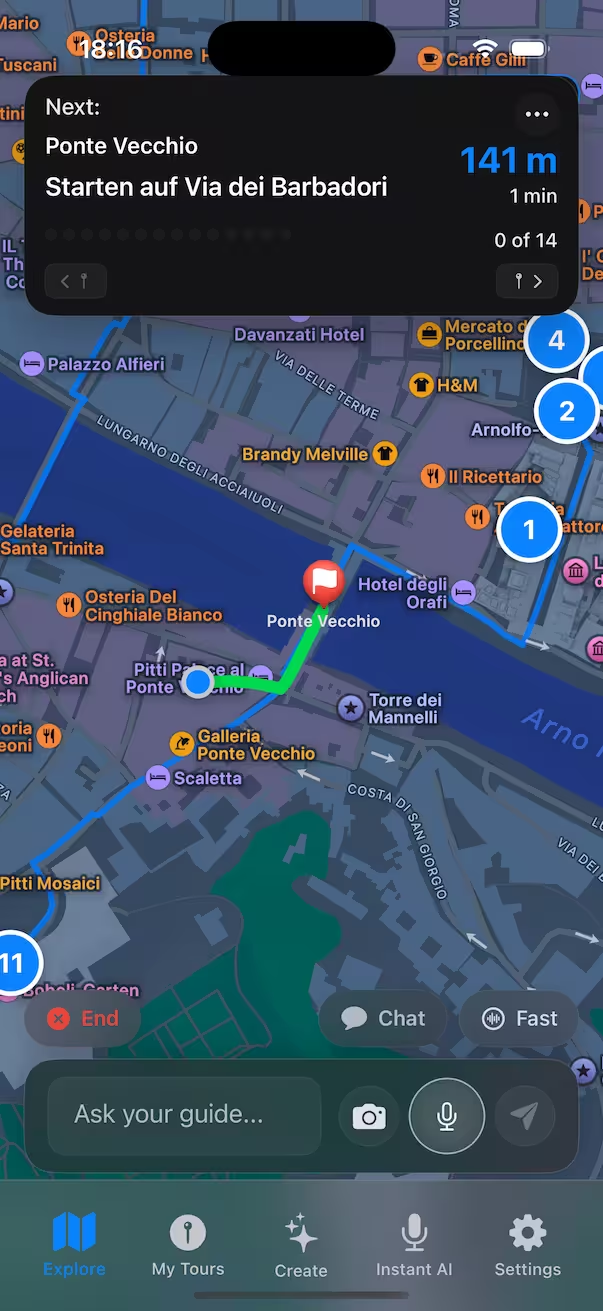
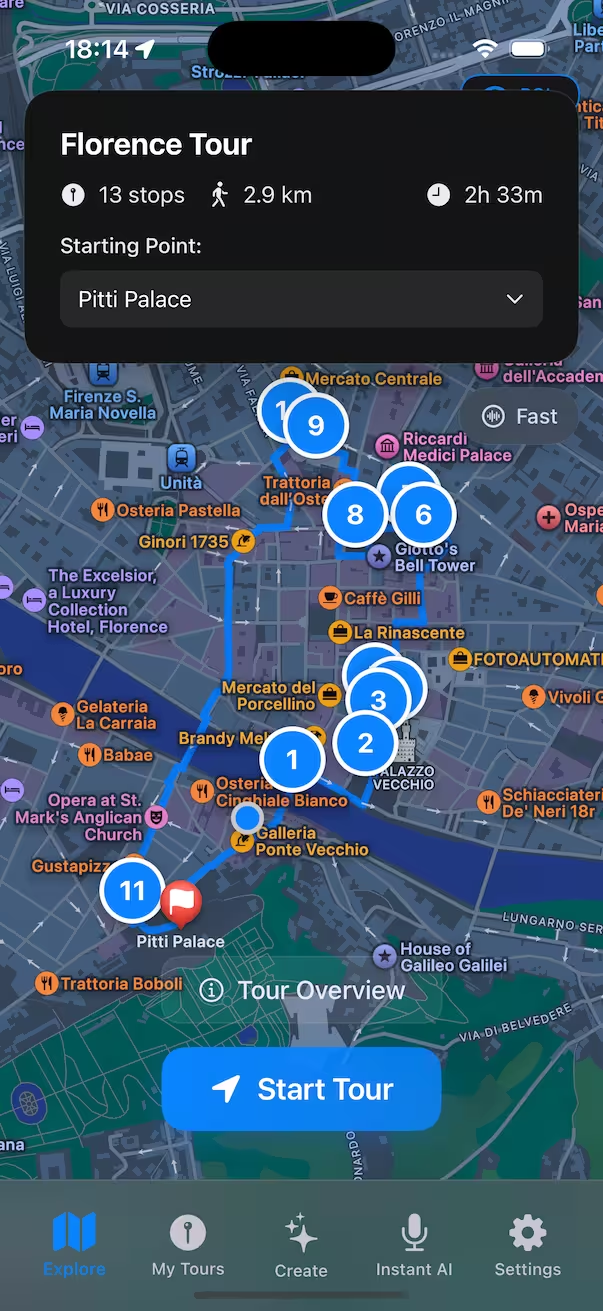
The classic Delhi tour: 6 stops, 12.9 km, about 4 h on foot
Your live AI guide and the self-guided Delhi route, together in your browser.