Best Time to Visit Dijon
Month-by-month weather, crowds and prices, plus a full calendar of festivals and events worth planning a trip around.
Best monthsMay, Sep
CheapestJan, Feb
AvoidJul
BusiestJul, Dec

When is the best time to visit Dijon?
Come in September or May. September gives you 22°C afternoons, golden harvest in the vineyards 20 minutes south, and the full cultural calendar without the July crush. May brings mild weather, long days, and the free L'Extra Festival. January and February are cheapest, with rooms from around 52 euros.
Start our tool and find your best time to visit Dijon
Your perfect month
Free · ~30 seconds
or tap a month directly
What matters to you?
And this?
Best overall: Sep, May. September is the consensus winner: 22°C afternoons, vineyard harvest on the doorstep, everything open, and crowds well below July. May is the value alternative, with the best weather-to-price ratio of the year and the free L'Extra Festival. Both dodge the July heat and the November fair-week scramble.
Best value: Jan, Feb, Mar. January, February and early March bring the lowest rates of the year, rooms from around 52 euros, zero queues, and all six municipal museums free year-round. Pack for 2 to 6°C daytime and you get Dijon almost to yourself.
Avoid: Jul. July is the busiest, priciest and hottest stretch: French summer holidays in full swing, hotel averages above 170 euros, and afternoon spikes past 32°C on shadeless Rue de la Liberté. The Fêtes de la Vigne parade is the upside, the heat and prices are not.
- January: Good time, 6°C. This is the post-holiday lull, the one stretch where Dijon belongs entirely to its residents. Café life is slow, the Halles market is full of winter game and cheese, and you will hear French rather than other tourists. The trade is short, grey days, and it is a fair one for the lowest prices going.
- February: Good time, 8°C. February is honest, unperformed Dijon. No seasonal markup, no crowds to work around, just a real Burgundian town in winter mode. The Saint-Vincent procession on the 7th is the one afternoon you see local wine guilds out in costume, and it is free.
- March: Good time, 12°C. March is the last genuinely empty month before the calendar fills. Spring greenery is starting, the markets are reawakening, and you still walk into any bistro on a Saturday without a reservation. That window shuts quickly once April's holidays land, so use it.
- April: Great time, 15°C. April is lovely and increasingly busy. The spring greenery in the Jardin de l'Arquebuse and the lengthening evenings are the draw, but Easter and the spring school breaks mean you share the city. Book around the holiday weekend and you get the best of the season without the spike.
- May: Great time, 19°C. May is the locals' favourite and the one to beat. Long days, blossom, terrace weather, and nothing like the July heat or crowds. The catch is the cluster of long weekends, so target the weeks between the holidays and you get the season's best conditions almost to yourself.
- June: Good time, 24°C. June is the tipping point, when Dijon shifts from quiet shoulder into full summer. The long light is the magic, with golden hour over the Palais des Ducs stretching past 21:00. Come in the first three weeks, before school lets out, and you get summer warmth without the July prices or crowds.
- July: Tough month, 26°C. July is for visitors who do not mind crowds, peak prices and real midday heat. The centre is hot and shadeless at noon and the prices know it. But the Fêtes de la Vigne parade down Rue de la Liberté and the long, warm evenings are a genuinely different, festive Dijon, and that part is worth it.
- August: Good time, 26°C. August is July's quieter sibling, still warm and summery but with a slight easing of the crush. The catch is the mid-August restaurant closures, when a chunk of the authentic local dining scene shuts for a fortnight. Plan your meals and you get pleasant summer evenings with a bit more breathing room.
- September: Good time, 22°C. September is what people picture when they imagine Burgundy: golden vineyards, harvest smells, comfortable warmth and a city that breathes again after July and August. Wine and gastronomy visitors keep prices firm, but the value-for-crowd ratio is the best all year. This is the one to book.
- October: Good time, 16°C. October is the quieter, golden cousin of September: harvest done, foliage blazing on the Côte, and the centre noticeably calmer until the gastronomy fair fires up at month's end. It is romantic and unhurried, the couples' month, with cellar visits still possible and the year's best autumn colour.
- November: Good time, 10°C. November splits in two. The gastronomy fair and the Beaune auction weekend make the first half a wine-and-food lover's pilgrimage, busy and bookable. After the 15th the city quiets right down into a damp, reflective late autumn, the cheapest pre-Christmas window if you skip the fair.
- December: Tough month, 7°C. December is split between a charming early-month market and a hectic holiday peak. The Dijon Christmas market is genuinely less clichéd than Colmar or Strasbourg, and the first three weeks are the comfortable ones. Come 22 December to 4 January and crowds rival July with rates to match, so aim early.
Dijon weather by month
HighLowRainfall
Jan6°
Feb8°
Mar12°
Apr15°
May19°
Jun24°
Jul26°
Aug26°
Sep22°
Oct16°
Nov10°
Dec7°
| Month | Temp | Rain | Sun | Crowds | Prices | Highlight |
|---|---|---|---|---|---|---|
| Jan | 6° / 1° | 79mm · 15 rainy days | 3.9 h/day | ●○○○○ | ●○○○○ | |
| Feb | 8° / 1° | 61mm · 11 rainy days | 6.1 h/day | ●○○○○ | ●○○○○ | Saint-Vincent de Dijon |
| Mar | 12° / 3° | 60mm · 11 rainy days | 8.3 h/day | ●●○○○ | ●●○○○ | |
| Apr | 15° / 6° | 63mm · 10 rainy days | 9.6 h/day | ●●●○○ | ●●●○○ | |
| May | 19° / 10° | 76mm · 11 rainy days | 10.9 h/day | ●●●○○ | ●●●○○ | L'Extra Festival |
| Jun | 24° / 14° | 84mm · 11 rainy days | 12.2 h/day | ●●●●○ | ●●●●○ | Saint-Bénigne Cathedral Concert Season |
| Jul | 26° / 16° | 61mm · 9 rainy days | 12.4 h/day | ●●●●● | ●●●●● | Fêtes de la Vigne |
| Aug | 26° / 16° | 54mm · 9 rainy days | 11.1 h/day | ●●●●○ | ●●●●○ | Summer Concerts |
| Sep | 22° / 12° | 58mm · 8 rainy days | 9.7 h/day | ●●●●○ | ●●●●○ | Burgundy Grape Harvest |
| Oct | 16° / 9° | 89mm · 12 rainy days | 7.0 h/day | ●●●○○ | ●●●○○ | Burgundy Grape Harvest |
| Nov | 10° / 4° | 84mm · 13 rainy days | 5.1 h/day | ●●●○○ | ●●●○○ | International and Gastronomic Fair |
| Dec | 7° / 2° | 76mm · 13 rainy days | 3.7 h/day | ●●●●○ | ●●●●○ | Dijon Christmas Market |
How we score this: weather = long-run climate normals (Open-Meteo), crowds & prices = relative season read, events checked yearly against official dates.
Best time to visit Dijon: weather, prices & crowds
Best months for good weather
May, Jun, Sep
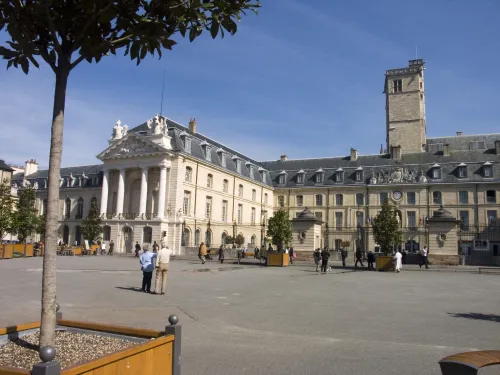
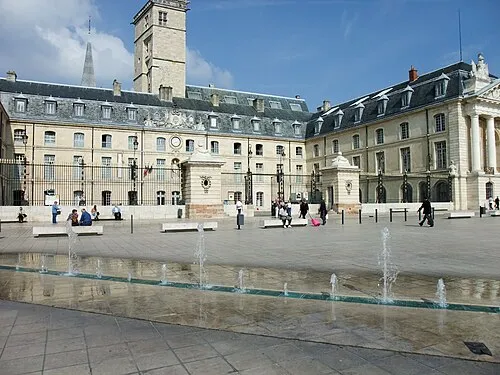
Late May through June and into September is Dijon at its kindest: 18 to 24°C, long evenings on Place de la Libération, and golden light raking across the curved Palais des Ducs façade after the tour groups leave around 18:00.
Quietest months to avoid the crowds
Jan, Feb, Mar
January to early March empties the centre completely. The six free city museums (Beaux-Arts, Archéologique and the rest) are near silent, and a Saturday table at any bistro is yours without a booking.
Cheapest time to visit Dijon
Jan, Feb
January and February are the cheapest months, with hotel rooms from around 52 euros a night, no tourist crowds, and the covered Halles market piled with winter root veg, cheese and game.
Best time for festivals and events
Sep, Oct
Mid-September to early October is the vendange, the grape harvest along the Route des Grands Crus. Gevrey-Chambertin, Vougeot and Nuits-Saint-Georges sit within 20 minutes of Dijon, vines turning gold, cellars opening for tastings.
How many days do you need in Dijon?
Two days is the natural fit for Dijon. One day covers the compact old town thoroughly, and a second gives you time to fold in the Route des Grands Crus vineyards or a TER train run to Beaune, 25 minutes south. The centre is flat and walkable end to end, so nothing feels rushed.
One day
Old Town, Ducal Palace and the Owl Trail
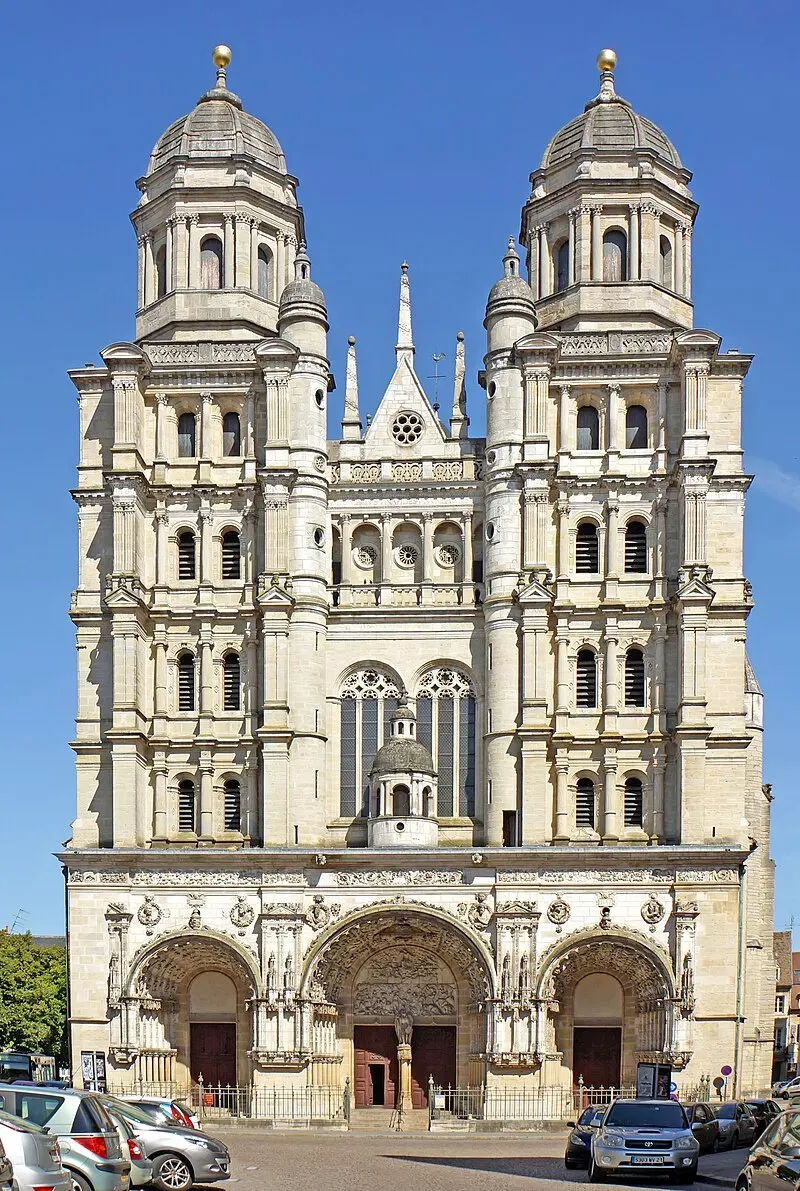
Start in the Jardin Darcy, where a bronze polar bear by sculptor François Pompon marks the entrance, then follow the brass Owl Trail markers south through the historic core. The self-guided Dijon walking tour links 7 stops across 3.0 km in about 1.6 hours, taking you from Jardin Darcy to Saint-Michel Church, Notre-Dame de Dijon, the Hôtel de Vogüé, the Palace of the Dukes, Place François Rude and Cathédrale Saint-Bénigne. Wrap up with a Kir on a terrace at Place de la Libération, watching evening light cross the curved Palais des Ducs façade.
Two daysRecommended
Vineyards and a day trip south
Spend the morning at Les Halles covered market on Rue Quentin (open Tuesday, Thursday, Friday and Saturday until 13:00), tasting pain d'épices and local cheese at an unhurried pace. In the afternoon, follow the Route des Grands Crus 20 minutes south through Gevrey-Chambertin and Vougeot, or take a TER train to Beaune (around 8 euros each way) to visit the Hôtel-Dieu. In September or October this is the vendange window, with pickers in the vines and cellars open for tasting by appointment.
Three days
Museums, markets and Burgundy depth
Use the extra day to visit the six free municipal museums at your own pace: the Musée des Beaux-Arts inside the Palais des Ducs is the anchor, and the smaller Musée Rude and Musée de la Vie Bourguignonne reward a slow morning. Avoid Tuesday, when all six close. Dedicate an evening to a longer dinner in one of the bistros around Place du Bareuzai, where the Aligoté pours freely and boeuf bourguignon is done properly.
Four days or more
Extended Burgundy, Cîteaux and Chablis
Beyond three days you are firmly in regional day-trip territory. The Cistercian abbey of Cîteaux is a 30-minute drive east; the Hautes Côtes de Nuits villages north of Nuits-Saint-Georges are quieter than the grands crus corridor and worth a half-day. Wine lovers with four or more days can reach Chablis (90 minutes north) or the Mâconnais (90 minutes south) and still base themselves in Dijon, which has better hotel rates and more dining variety than any single village.
Best time to visit Dijon by traveller type
Same city, different trip. Here's the month that fits how you're travelling.
🧭
Best time to visit Dijon for the first time
MaySep
May or September: mild weather, every museum and the Cité de la Gastronomie open, and the city walkable end to end without summer crowds or winter grey.
❤️
Best time to visit Dijon for couples
SepOct
Late September or early October for golden vineyard foliage, harvest tastings in Gevrey-Chambertin, and sunset dinners as the light hits the Palais des Ducs.
💶
Best time to visit Dijon on a budget
JanFeb
January or February for the year's lowest rates, free entry to all six city museums, and the Cité de la Gastronomie permanent exhibitions free year-round.
🍝
Best time to visit Dijon for food and wine
OctNov
Late October into November for the Foire Internationale et Gastronomique, 400-plus exhibitors and grand cru tastings under one roof, plus the Hospices de Beaune auction weekend 40 minutes away.
Worst time to visit Dijon
July is the month most worth skipping. French summer holidays push hotel averages above 170 euros, and afternoon highs of 26 to 27°C spike past 32°C during heatwaves (the city recorded 39.5°C in one extreme July). The historic centre has virtually no shade on Place de la Libération and Rue de la Liberté, making midday walking genuinely unpleasant. Prices are at their annual peak and booking lead times stretch to six to eight weeks for anything central.
Still worth it for The Fêtes de la Vigne international folklore festival runs in early July, with a free Sunday parade down Rue de la Liberté that is genuinely spectacular. If you have fixed dates in July, plan your outdoor sightseeing before 10:00 or after 18:00 and use Lac Kir, two kilometres west, to cool off in the afternoon.
Go instead in May, September, when Dijon is at its best.
Best time for a tour of Dijon
Dijon is a compact walk, barely 3 km from Jardin Darcy to Cathédrale Saint-Bénigne, and the month you pick decides whether that loop feels charming or punishing. Late April through June is the sweet spot: highs climb from 15 to 24 °C, the days run long, and the honey-coloured stone around the Palace of the Dukes of Burgundy glows in soft light without baking. May, at 18.6 °C and a comfortable 11 wet days, hits the balance between warmth and the crowds that flood the old town in July, when highs touch 26 °C, rain eases off but visitor numbers peak. September is the quiet connoisseur's pick, still 22 °C, the driest month at eight rain days, and the cobbles around Place François Rude finally breathe again. Winter is honest but hard: January sits near 5.9 °C with 15 rainy days and dark afternoons, so the narrow medieval lanes by Notre-Dame de Dijon turn cold and slick well before you finish.
With AI Tourguide the clock is yours, because the whole walk runs in your browser with nothing to download and no fixed departure, so the climate sets your hour rather than an operator's timetable. On a warm July day you can set off at half past eight, before the heat builds, and have Saint-Michel Church almost to yourself while a voice-first guide greets you, tells the story of the dukes, and asks what you want to linger on. Start your Dijon tour on a still September morning and stretch the 7 stops over a slow, unhurried two hours, or compress them when the rain returns. The guide leads, listens, and adapts to your pace, so the best moment to begin is simply whenever the weather and your mood agree.


 +3
+3All 7 stops are already on the map.
You just press start.
You just press start.
 AI Tourguide
You just read the route.
Now walk it with a guide in your ear.
Press start wherever you are, even hundreds of kilometres from Dijon, and the guide begins telling its stories right away. In the city, pick any of the 7 stops to start from: it leads you there, then talks with you the whole route, asking, listening, remembering, and shaping the tour around your answers.
7stops3.0km1.6hours11languages
▶Start the tour freeFree to start · Runs in your browser · No app, no download
Dijon events and festivals calendar
Annual highlights worth timing a trip around, listed month by month.
February
🍷 Food and wineSaint-Vincent de Dijon
Feb 7 ~
early February, around two weeks after the rotating regional Saint-Vincent Tournante
Dijon's own parish procession for the patron saint of winemakers, with a confrérie parade in guild costume and free wine tastings in the streets.
May
🎨 Art and cultureSaint-Bénigne Cathedral Concert Season Concerts à la Cathédrale Saint-Bénigne
May 1 – Oct 31 ~
year-round, peaking May to October
Regular classical and organ concerts in the 11th-century Romanesque crypt and Gothic cathedral of Saint-Bénigne.
🎵 MusicL'Extra Festival
May 7–10
first weekend of May
A completely free four-day multidisciplinary music and performance-art festival run by La Vapeur, with 24 artists, a 6:15 AM sunrise concert, family workshops and a bike parade.
🌙 Museum nightEuropean Museum Night Nuit européenne des Musées
May 23 ~
third Saturday of May, 20:00 to midnight
Five Dijon museums (Beaux-Arts, Archéologique, Art Sacré, Rude, Vie Bourguignonne) plus the Cité de la Gastronomie open free until midnight, with concerts, theatrical tours and family activities.
July
🎵 MusicSummer Concerts Concerts d'été et Estivales
Jul 1 – Aug 31 ~
July and August, programme released in May
A series of outdoor summer concerts across Dijon's parks and squares, with a programme that varies year to year, some free and some ticketed.
🎉 FestivalFêtes de la Vigne
Jul 4–12
early July
An international folklore festival of dance, music, song and costume from 20-plus countries, one of the longest-running events of its kind in France.
🇮 HolidayBastille Day Fête Nationale
Jul 14
14 July every year
France's national day, marked in Dijon with fireworks over Lac Kir and a military parade.
September
🌸 Seasonal natureBurgundy Grape Harvest Vendange de Bourgogne
Sep 14 – Oct 5 ~
mid-September to early October, dates set by préfectoral decree about two weeks ahead
The grape harvest along the Route des Grands Crus, with tractors and pickers in the vines at Gevrey-Chambertin, Vosne-Romanée and Nuits-Saint-Georges, all within 20 minutes of Dijon, and cellars opening for visits.
October
🍷 Food and wineInternational and Gastronomic Fair Foire Internationale et Gastronomique de Dijon
Oct 31 – Nov 11
late October to mid-November, over the Toussaint holiday
A century-old gastronomy fair with 400-plus exhibitors and around 200,000 visitors at the Parc des Expositions, showcasing Burgundy specialties (mustard, pain d'épices, cassis, snails, grands crus) plus a guest country.
November
🍷 Food and wineHospices de Beaune Auction Weekend Les Trois Glorieuses / Vente des Hospices de Beaune
Nov 13–15
third weekend of November, in Beaune, 40 minutes from Dijon
The world's oldest charity wine auction, held annually at the Halles de Beaune, bracketed by the Confrérie chapter at Clos de Vougeot on Saturday and the Paulée de Meursault on Monday, with Beaune animated all weekend.
🎄 Christmas marketDijon Christmas Market Féeries de Noël / Marché de Noël de Dijon
Nov 28 – Jan 4
opens the last Saturday of November and runs into early January
Thirty-plus white chalets on Place de la République with local artisans, pain d'épices, vin chaud and cassis liqueur, plus an ice rink, Ferris wheel and illuminations, running five-plus weeks.
Insider tips for visiting Dijon
The rules buried in forums, in one place.
- Never plan a museum day on a Tuesday. All six municipal museums (Beaux-Arts, Archéologique, Art Sacré, Rude, Vie Bourguignonne and Magnin) close that day, with no exceptions. Build your gallery day around any other weekday.
- Hit Les Halles market before 09:30 on a Saturday. The covered hall at 16 Rue Quentin draws locals from 07:00, and by 11:00 it is a scrum with the best vendors running low. It opens Tuesday, Thursday, Friday and Saturday mornings only, 07:00 to 13:00, and is shut Monday, Wednesday and Sunday.
- Book the Tour Philippe le Bon climb at least three days ahead in summer. The 316-step tower tops out at a panoramic view but is capped at roughly 20 visitors per slot. Reserve through the Dijon tourist office site. It is free with the Dijon City Pass.
- For the Foire Gastronomique (31 October to 11 November) book your hotel four to six weeks ahead. Around 200,000 visitors crowd the Parc des Expositions and inventory within five kilometres exhausts fast, especially over the Toussaint long weekend on 1 November.
- Going to the Hospices de Beaune wine auction weekend (13 to 15 November)? Beaune hotels sell out months ahead, so stay in Dijon and day-trip. TER trains run Dijon to Beaune in about 25 minutes for roughly 8 euros each way.
- Catch the Palais des Ducs at dusk, 19:30 to 20:30 in summer. Tour groups clear out by 18:00, Place de la Libération empties, and golden light hits the curved façade designed by Jules Hardouin-Mansart of Versailles fame. These are the best photographs of the trip.
- Order a Kir in its birthplace. Bourgogne Aligoté with crème de cassis costs 3 to 4 euros at any Dijon bistro, named after former mayor Canon Félix Kir, versus the 8-euro tourist-trap version in Paris.
- Some traditional Dijon bistros close for one to two weeks around 15 August. If you visit in mid-August, check ahead for specific addresses rather than counting on a spontaneous lunch.
Public holidays in Dijon
On these dates many shops and offices close, transport thins out, and sights can be mobbed or shut. Plan around them.
| Date | Holiday | What closes |
|---|---|---|
| Jan 1 | New Year's Day | Almost everything closes, including shops and most museums. A few restaurants open and the city is very quiet. A slow first day to plan around what is actually running. |
| Apr 4 | Easter Saturday (Easter weekend) | The Easter weekend brings a 10 to 20 percent rate spike and fills the centre with domestic visitors. Some museums run reduced hours and many shops shut on Easter Monday, 6 April. |
| May 1 | Labour Day | A legal closure for shops, and the Musée des Beaux-Arts is closed. Small marches are possible. It chains with the 8 May holiday into a popular long-weekend stretch, so book mid-May early. |
| May 8 | Victory in Europe Day | Official ceremonies and most shops closed. Back to back with 1 May, this creates one of three May long weekends (the Pont de Mai) that drive domestic city-breaks and mini hotel peaks. |
| May 14 | Ascension Day | A Thursday holiday that becomes a four-day weekend when locals take the Friday bridge day. Museum hours can be irregular, so confirm opening times before you set out. |
| May 25 | Whit Monday | Shops closed and museum hours reduced. The last of May's cluster of public holidays, after which the calendar settles before the June run-up to summer. |
| Jul 14 | Bastille Day | Fireworks over Lac Kir and a military parade. The Musée des Beaux-Arts is closed and most shops shut. Falling on a Tuesday in 2026, it creates a long weekend. |
| Aug 15 | Assumption Day | A Saturday holiday with shops closed, creating a long weekend. Some traditional restaurants close for one to two weeks around this date, so check before relying on a particular bistro. |
| Nov 1 | All Saints' Day | Shops closed and a quiet, reflective day with cemetery visits. The Foire Gastronomique is already open (it starts 31 October), and the Toussaint long weekend strains hotel inventory. |
| Nov 11 | Armistice Day | A midweek Wednesday holiday with war-memorial ceremonies. Shops and some museums close. It falls during the closing days of the Foire Gastronomique, which keeps the city busy. |
| Dec 25 | Christmas Day | Everything closes. The Féeries de Noël Christmas market on Place de la République keeps running into early January, so the illuminations stay lit even when shops are shut. |
Dijon month by month
January in Dijon
High6°C / 43°F
Low1°C
Rain79mm / 15 rainy days
Sun3.9 h/day
Daylight9 h/day
Humidity86%
Crowds●○○○○Prices●○○○○
January is Dijon at its quietest and cheapest. Daytime sits around 6°C with grey, damp skies and roughly 15 days of light rain or drizzle, so layer up rather than expecting snow, which is possible but never reliable. Sunset comes by 16:40, but the Féeries de Noël illuminations linger on Place de la République into early January. The centre is yours, with no queues at any of the six free city museums.
The vibe This is the post-holiday lull, the one stretch where Dijon belongs entirely to its residents. Café life is slow, the Halles market is full of winter game and cheese, and you will hear French rather than other tourists. The trade is short, grey days, and it is a fair one for the lowest prices going.
Don't miss All six municipal museums are free and near empty, the perfect month for the Beaux-Arts inside the ducal palace. The Cité de la Gastronomie's permanent exhibitions are free year-round and warm to wander on a cold afternoon.
Crowd drivers Post-holiday quiet with no French school breaks and no events drawing visitors. The lowest tourist pressure of the entire year.
In season Winter root vegetables, game and Burgundy cheeses fill Les Halles. This is the season for a long boeuf bourguignon lunch and a Kir to start, 3 to 4 euros at any bistro.
Heads up New Year's Day shuts almost everything. Remember the Tuesday rule too: all six city museums close every Tuesday regardless of season.
Cheapest month of the year, hotel rooms from around 52 euros a night.
Events this month
🎄 Christmas marketDijon Christmas Market Féeries de Noël / Marché de Noël de Dijon
Nov 28 – Jan 4
opens the last Saturday of November and runs into early January
Thirty-plus white chalets on Place de la République with local artisans, pain d'épices, vin chaud and cassis liqueur, plus an ice rink, Ferris wheel and illuminations, running five-plus weeks.
Genuinely charming and less clichéd than Colmar or Strasbourg; early December gives full programme and good crowds without the holiday-week chaos.
February in Dijon
High8°C / 47°F
Low1°C
Rain61mm / 11 rainy days
Sun6.1 h/day
Daylight10 h/day
Humidity79%
Crowds●○○○○Prices●○○○○
February stays in deep off-season, mild for winter at around 8°C with about 11 rain days and a touch more sun than January. The odd domestic weekend getaway aside, the city is calm and rooms remain cheap. On 7 February the Saint-Vincent de Dijon brings a parish procession and free wine tastings to the streets, a small, authentic burst of Burgundy tradition before spring.
The vibe February is honest, unperformed Dijon. No seasonal markup, no crowds to work around, just a real Burgundian town in winter mode. The Saint-Vincent procession on the 7th is the one afternoon you see local wine guilds out in costume, and it is free.
Don't miss The Saint-Vincent de Dijon (7 February) puts winemakers and confrérie costumes on the street with free tastings. Otherwise it is the quietest moment to climb the Tour Philippe le Bon without booking days ahead.
Crowd drivers Off-season with some domestic weekend getaways, plus the one-day Saint-Vincent de Dijon spike on 7 February. Still nowhere near peak.
In season Pain d'épices and crème de cassis are year-round Dijon staples, best sampled now when the shops are unhurried. Pair a tasting with mustard from a proper moutarderie.
Still very low rates; the Saint-Vincent de Dijon on 7 February is one brief local spike.
Events this month
🍷 Food and wineSaint-Vincent de Dijon
Feb 7 ~
early February, around two weeks after the rotating regional Saint-Vincent Tournante
Dijon's own parish procession for the patron saint of winemakers, with a confrérie parade in guild costume and free wine tastings in the streets. The rotating regional Saint-Vincent Tournante is held in a different Burgundy village each year, typically in late January, about two weeks before Dijon's own celebration.
A small, authentic glimpse of Burgundy's winemaking tradition in deep off-season, free and uncrowded.
March in Dijon
High12°C / 53°F
Low3°C
Rain60mm / 11 rainy days
Sun8.3 h/day
Daylight12 h/day
Humidity74%
Crowds●●○○○Prices●●○○○
March is the quiet shoulder before spring arrives, highs climbing toward 12°C with the Jardin de l'Arquebuse and Parc de la Colombière starting to bloom. French school breaks do not hit until late April, so crowds stay light and rooms reasonable. Days lengthen fast, café terraces tentatively reopen, and the first early-spring explorers appear without filling the centre.
The vibe March is the last genuinely empty month before the calendar fills. Spring greenery is starting, the markets are reawakening, and you still walk into any bistro on a Saturday without a reservation. That window shuts quickly once April's holidays land, so use it.
Don't miss Spring blossom begins in the Jardin de l'Arquebuse and Parc de la Colombière. The Saint-Bénigne cathedral concert season is gearing up, with organ and classical evenings in the 11th-century Romanesque crypt.
Crowd drivers Early-spring visitors only, with no French school break until late April. A clear shoulder-season value pocket.
In season Les Halles shifts toward early spring produce. A Saturday morning before 09:30 still gets you the best stalls without the summer scrum.
Rates begin creeping up; the shoulder-season value window before April school breaks.
April in Dijon
High15°C / 60°F
Low6°C
Rain63mm / 10 rainy days
Sun9.6 h/day
Daylight14 h/day
Humidity69%
Crowds●●●○○Prices●●●○○
April warms to a comfortable 15°C with the parks in full spring bloom and around 10 rain days, mostly passing showers. The late-April Zone A, B and C school holidays and the Easter weekend (4 to 6 April) fill the centre with domestic visitors and lift hotel rates 10 to 20 percent over the holiday. Outside that window it is still strong value, with long days and reliable terrace weather.
The vibe April is lovely and increasingly busy. The spring greenery in the Jardin de l'Arquebuse and the lengthening evenings are the draw, but Easter and the spring school breaks mean you share the city. Book around the holiday weekend and you get the best of the season without the spike.
Don't miss The Jardin de l'Arquebuse and Parc de la Colombière peak for spring walking. The Saint-Bénigne concert season is in full swing, with evening recitals that avoid the daytime visitor flow.
Crowd drivers Zone A, B and C spring school holidays in late April and the Easter weekend (4 to 6 April) stack domestic visitors into the centre.
In season Spring vegetables return to Les Halles. A Kir on a reopened terrace, Aligoté with cassis for 3 to 4 euros, marks the start of the outdoor season.
Heads up Easter Monday (6 April) shuts most shops and some museums. Avoid scheduling your gallery day on the Easter Tuesday after, when the regular Tuesday museum closure compounds it.
Easter weekend (4 to 6 April) spikes rates 10 to 20 percent; otherwise good value.
May in Dijon
High19°C / 65°F
Low10°C
Rain76mm / 11 rainy days
Sun10.9 h/day
Daylight15 h/day
Humidity70%
Crowds●●●○○Prices●●●○○
May is the value pick for the whole year: mild 18°C afternoons, 15-hour days, parks in full bloom, and the best weather-to-crowd-to-price ratio Dijon offers. Three public holidays (1 and 8 May, plus Ascension on the 14th) create long-weekend mini-peaks, so the Pont de Mai weekends book up. Around them, May is gloriously open and walkable, with the free L'Extra Festival and the Museum Night both landing this month.
The vibe May is the locals' favourite and the one to beat. Long days, blossom, terrace weather, and nothing like the July heat or crowds. The catch is the cluster of long weekends, so target the weeks between the holidays and you get the season's best conditions almost to yourself.
Don't miss L'Extra Festival (7 to 10 May) is four free days of music and performance art, including a 6:15 AM sunrise concert. The Nuit européenne des Musées on 23 May opens five Dijon museums and the Cité de la Gastronomie free until midnight, the only night you catch them all after dark.
Crowd drivers The Pont de Mai long weekends around 1, 8 and 14 May drive domestic city-breaks and brief hotel peaks.
In season Terrace season is in full swing. Order a Kir at a Place de la Libération café and watch golden evening light cross the Palais des Ducs façade.
Heads up 1 May shuts shops and closes the Musée des Beaux-Arts; 8 May and Ascension on the 14th bring further closures and reduced museum hours.
Three public holidays in four weeks create mini-peaks; book the mid-May Pont weekends early.
Events this month
🎵 MusicL'Extra Festival
May 7–10
first weekend of May
A completely free four-day multidisciplinary music and performance-art festival run by La Vapeur, with 24 artists, a 6:15 AM sunrise concert, family workshops and a bike parade.
Free entry and unusual programming, from sunrise sets to street parades, with none of the summer crowds.
🌙 Museum nightEuropean Museum Night Nuit européenne des Musées
May 23 ~
third Saturday of May, 20:00 to midnight
Five Dijon museums (Beaux-Arts, Archéologique, Art Sacré, Rude, Vie Bourguignonne) plus the Cité de la Gastronomie open free until midnight, with concerts, theatrical tours and family activities.
The only night of the year to see all five museums at once, free and after dark; arrive by 19:30 for the Cité slot.
June in Dijon
High24°C / 75°F
Low14°C
Rain84mm / 11 rainy days
Sun12.2 h/day
Daylight16 h/day
Humidity66%
Crowds●●●●○Prices●●●●○
June opens the Burgundian summer warm at 24°C, nearly the longest days of the year with sunset around 21:40 in late June, and early European tourists starting to arrive. The Zone A summer holidays do not begin until 4 July, so the first three weeks remain a families' sweet spot before the crush. Rates are climbing toward the 170-euro summer average, but the weather and daylight make this one of the strongest months.
The vibe June is the tipping point, when Dijon shifts from quiet shoulder into full summer. The long light is the magic, with golden hour over the Palais des Ducs stretching past 21:00. Come in the first three weeks, before school lets out, and you get summer warmth without the July prices or crowds.
Don't miss Sunset by 21:40 makes for the year's best golden-hour photography on Place de la Libération. Lac Kir, two kilometres west, becomes swimmable in warm weather, the city's only spot to cool off.
Crowd drivers Early European tourists arrive and the Zone A summer holidays begin 4 July, so crowds build through the month toward the July peak.
In season Outdoor aperitif season peaks. A Kir on a terrace as the long evening light fades is the quintessential June Dijon moment.
Rates climb toward a 170-euro nightly average as the shoulder-season value window ends.

July in Dijon
High26°C / 79°F
Low16°C
Rain61mm / 9 rainy days
Sun12.4 h/day
Daylight16 h/day
Humidity61%
Crowds●●●●●Prices●●●●●
July is Dijon at full pitch: French summer holidays in full swing, hotel averages above 170 euros, and afternoon highs of 26 to 27°C that spike past 32°C in a heatwave (the record is 39.5°C in July 2019). The historic centre has little shade on Place de la Libération and Rue de la Liberté, so walk the 2 to 3 km Owl's Trail before 10:00 or after 18:00. The Fêtes de la Vigne folklore festival is the month's highlight.
The vibe July is for visitors who do not mind crowds, peak prices and real midday heat. The centre is hot and shadeless at noon and the prices know it. But the Fêtes de la Vigne parade down Rue de la Liberté and the long, warm evenings are a genuinely different, festive Dijon, and that part is worth it.
Don't miss The Fêtes de la Vigne (4 to 12 July) is an international folklore festival with its grand parade down Rue de la Liberté on Sunday 12 July, all free. Summer outdoor concerts fill the parks and squares when the heat eases in the evening.
Crowd drivers French summer holidays in full swing plus the Fêtes de la Vigne (4 to 12 July) make this the year's single busiest stretch.
In season July is the rainiest summer month at around 52 mm, but in short afternoon thunderstorms. A cassis sorbet or a cold Kir is the survival move between sights.
Heads up Bastille Day (14 July) closes the Musée des Beaux-Arts and most shops. Avoid driving into the centre on 12 July, when Rue de la Liberté pedestrianises from around 14:00 for the parade.
Busiest month, hotel averages above 170 euros; book six to eight weeks ahead.
Events this month
🎉 FestivalFêtes de la Vigne
Jul 4–12
early July
An international folklore festival of dance, music, song and costume from 20-plus countries, one of the longest-running events of its kind in France. Main stage at Jardin Darcy, Bareuzai stage at Place François-Rude, and a grand Sunday parade down Rue de la Liberté.
The biggest annual event in Dijon proper; the 12 July Sunday parade is unmissable and free.
🇮 HolidayBastille Day Fête Nationale
Jul 14
14 July every year
France's national day, marked in Dijon with fireworks over Lac Kir and a military parade. Depending on the day of the week it falls, it can create a long weekend for domestic city-break travel.
Fireworks at the lake with picnic crowds and lively central bars, though the Musée des Beaux-Arts and most shops close.
🎵 MusicSummer Concerts Concerts d'été et Estivales
Jul 1 – Aug 31 ~
July and August, programme released in May
A series of outdoor summer concerts across Dijon's parks and squares, with a programme that varies year to year, some free and some ticketed.
Adds a cultural layer to a summer visit and gives the evenings something to do once the afternoon heat eases.
August in Dijon
High26°C / 78°F
Low16°C
Rain54mm / 9 rainy days
Sun11.1 h/day
Daylight14 h/day
Humidity64%
Crowds●●●●○Prices●●●●○
August stays warm at around 26°C and a fraction calmer than July, though pricing remains high-season. The Assumption holiday on 15 August creates a long weekend, and some traditional bistros close for one to two weeks around it, so check addresses ahead. Best walking hours are still before 10:00 or after 18:00, and Lac Kir is the place to cool off when the afternoon turns hot.
The vibe August is July's quieter sibling, still warm and summery but with a slight easing of the crush. The catch is the mid-August restaurant closures, when a chunk of the authentic local dining scene shuts for a fortnight. Plan your meals and you get pleasant summer evenings with a bit more breathing room.
Don't miss Long warm evenings still make for late golden-hour walks past the Palais des Ducs. Lac Kir is swimmable, the best way to break up a hot August afternoon with no sea anywhere near.
Crowd drivers Summer continues with the Assumption (15 August) long weekend, though the city is marginally calmer than peak July.
In season Snails, mustard and pain d'épices are easy to find, but plan around the bistros closing mid-month. Tourist-area spots stay open if your favourite local one shuts.
Heads up Assumption (15 August) closes shops. Some traditional Dijon bistros close for one to two weeks around this date, so confirm specific addresses before counting on them.
Slightly calmer than July but still high-season pricing; Assumption (15 August) long weekend.
Events this month
🎵 MusicSummer Concerts Concerts d'été et Estivales
Jul 1 – Aug 31 ~
July and August, programme released in May
A series of outdoor summer concerts across Dijon's parks and squares, with a programme that varies year to year, some free and some ticketed.
Adds a cultural layer to a summer visit and gives the evenings something to do once the afternoon heat eases.

September in Dijon
High22°C / 72°F
Low12°C
Rain58mm / 8 rainy days
Sun9.7 h/day
Daylight13 h/day
Humidity69%
Crowds●●●●○Prices●●●●○
September is the consensus best month: comfortable 22°C afternoons, the lowest rainfall of the year at 58 mm, and no French school holidays. Mid-September brings the vendange, the grape harvest along the Route des Grands Crus, with tractors and pickers in the vines at Gevrey-Chambertin and Nuits-Saint-Georges, all within 20 minutes of the city. It is the most atmospheric wine-country window, and the full cultural calendar still runs.
The vibe September is what people picture when they imagine Burgundy: golden vineyards, harvest smells, comfortable warmth and a city that breathes again after July and August. Wine and gastronomy visitors keep prices firm, but the value-for-crowd ratio is the best all year. This is the one to book.
Don't miss The vendange along the Route des Grands Crus is the year's most photogenic window, golden vines and active harvest 20 minutes south. Some domaines open for cellar tastings, so book ahead for Gevrey-Chambertin or Vosne-Romanée.
Crowd drivers Harvest tourism for the vendange (mid-September to early October) with no school holidays, so the wine crowd is engaged but never overwhelming.
In season Harvest season opens cellars and tasting rooms across the Côte. Pair a domaine visit with the grand crus appearing fresh on local restaurant lists.
Premium sought by wine and gastronomy visitors; the best value-for-crowd ratio of the year.
Events this month
🌸 Seasonal natureBurgundy Grape Harvest Vendange de Bourgogne
Sep 14 – Oct 5 ~
mid-September to early October, dates set by préfectoral decree about two weeks ahead
The grape harvest along the Route des Grands Crus, with tractors and pickers in the vines at Gevrey-Chambertin, Vosne-Romanée and Nuits-Saint-Georges, all within 20 minutes of Dijon, and cellars opening for visits.
The year's most photogenic and atmospheric wine-country window, with golden vineyards and active harvest right on Dijon's doorstep.
October in Dijon
High16°C / 62°F
Low9°C
Rain89mm / 12 rainy days
Sun7.0 h/day
Daylight11 h/day
Humidity80%
Crowds●●●○○Prices●●●○○
October brings autumn foliage and 16°C afternoons, with the vineyards along the Route des Grands Crus turning gold and red, peaking in the third week. Rainfall ticks up to 89 mm, the wettest of this stretch, but in passing showers rather than all-day rain. From 31 October the Foire Internationale et Gastronomique begins, lifting rates 20 to 30 percent into early November. Outside the fair window, October is still good value.
The vibe October is the quieter, golden cousin of September: harvest done, foliage blazing on the Côte, and the centre noticeably calmer until the gastronomy fair fires up at month's end. It is romantic and unhurried, the couples' month, with cellar visits still possible and the year's best autumn colour.
Don't miss Vine foliage along the Route des Grands Crus peaks in the third week of October, gold and red across Gevrey-Chambertin and Vougeot. End-of-harvest cellar visits continue by appointment, the last of the tasting season.
Crowd drivers Autumn foliage visitors plus the Foire Gastronomique opening 31 October, which begins drawing the fair's huge crowds into the city.
In season The Foire Gastronomique (from 31 October) showcases Burgundy specialties, mustard, pain d'épices, cassis, snails and grands crus, with 400-plus exhibitors at the Parc des Expositions.
Still reasonable; the Foire Gastronomique drives a 20 to 30 percent spike from late October into early November.
Events this month
🍷 Food and wineInternational and Gastronomic Fair Foire Internationale et Gastronomique de Dijon
Oct 31 – Nov 11
late October to mid-November, over the Toussaint holiday
A century-old gastronomy fair with 400-plus exhibitors and around 200,000 visitors at the Parc des Expositions, showcasing Burgundy specialties (mustard, pain d'épices, cassis, snails, grands crus) plus a guest country.
The largest regional event and an authentic gastronomic experience you cannot have outside this window; book accommodation four to six weeks ahead.
🌸 Seasonal natureBurgundy Grape Harvest Vendange de Bourgogne
Sep 14 – Oct 5 ~
mid-September to early October, dates set by préfectoral decree about two weeks ahead
The grape harvest along the Route des Grands Crus, with tractors and pickers in the vines at Gevrey-Chambertin, Vosne-Romanée and Nuits-Saint-Georges, all within 20 minutes of Dijon, and cellars opening for visits.
The year's most photogenic and atmospheric wine-country window, with golden vineyards and active harvest right on Dijon's doorstep.

November in Dijon
High10°C / 50°F
Low4°C
Rain84mm / 13 rainy days
Sun5.1 h/day
Daylight9 h/day
Humidity87%
Crowds●●●○○Prices●●●○○
November is grey and damp at 10°C with around 13 rain days, the rainiest autumn month, but the big draws are entirely indoors. The Foire Gastronomique runs to 11 November, pulling some 200,000 visitors to the Parc des Expositions. The Hospices de Beaune auction weekend (13 to 15 November) animates Beaune, 40 minutes away. Book four to six weeks ahead for both, and stay in Dijon for the auction since Beaune sells out months in advance.
The vibe November splits in two. The gastronomy fair and the Beaune auction weekend make the first half a wine-and-food lover's pilgrimage, busy and bookable. After the 15th the city quiets right down into a damp, reflective late autumn, the cheapest pre-Christmas window if you skip the fair.
Don't miss The Hospices de Beaune (15 November) is the world's oldest charity wine auction, 40 minutes by car or a 25-minute TER train. The Confrérie chapter at Clos de Vougeot and the Paulée de Meursault bracket the weekend with street animation across Beaune.
Crowd drivers The Foire Gastronomique (to 11 November) and the Trois Glorieuses around Beaune (13 to 15 November) concentrate crowds and hotel demand in the first half of the month.
In season This is the gastronomic high point, mustard, snails, cassis and grands crus under one roof at the fair, and the most authentic Burgundian eating window of the year.
Heads up All Saints' Day (1 November) and Armistice Day (11 November) close shops and some museums, both falling during the fair's run.
Book four to six weeks ahead for the fair and the Beaune auction weekend; otherwise mid-range.
Events this month
🍷 Food and wineInternational and Gastronomic Fair Foire Internationale et Gastronomique de Dijon
Oct 31 – Nov 11
late October to mid-November, over the Toussaint holiday
A century-old gastronomy fair with 400-plus exhibitors and around 200,000 visitors at the Parc des Expositions, showcasing Burgundy specialties (mustard, pain d'épices, cassis, snails, grands crus) plus a guest country.
The largest regional event and an authentic gastronomic experience you cannot have outside this window; book accommodation four to six weeks ahead.
🍷 Food and wineHospices de Beaune Auction Weekend Les Trois Glorieuses / Vente des Hospices de Beaune
Nov 13–15
third weekend of November, in Beaune, 40 minutes from Dijon
The world's oldest charity wine auction, held annually at the Halles de Beaune, bracketed by the Confrérie chapter at Clos de Vougeot on Saturday and the Paulée de Meursault on Monday, with Beaune animated all weekend.
A must for wine lovers within day-trip range; Beaune hotels sell out months ahead, so stay in Dijon and take the 25-minute TER train.
December in Dijon
High7°C / 45°F
Low2°C
Rain76mm / 13 rainy days
Sun3.7 h/day
Daylight8 h/day
Humidity89%
Crowds●●●●○Prices●●●●○
December is cold and short on light, around 7°C with sunset by 16:40, but the Féeries de Noël more than compensate. Thirty-plus white chalets fill Place de la République with artisans, pain d'épices, vin chaud and cassis, plus an ice rink and Ferris wheel, running from late November into early January. Early December is the sweet spot, full programme and good crowds without the Christmas-week price surge.
The vibe December is split between a charming early-month market and a hectic holiday peak. The Dijon Christmas market is genuinely less clichéd than Colmar or Strasbourg, and the first three weeks are the comfortable ones. Come 22 December to 4 January and crowds rival July with rates to match, so aim early.
Don't miss The Féeries de Noël on Place de la République runs five-plus weeks with an ice rink, Ferris wheel and illuminations. The short winter days are offset by the lights, best enjoyed in the comfortable first three weeks of December.
Crowd drivers The Féeries de Noël and holiday tourism build through the month, peaking 22 December to 4 January when crowds and prices match summer.
In season Vin chaud, pain d'épices and crème de cassis define the market. The artisan chalets are the easiest place to taste and buy Burgundy specialties in one stroll.
Heads up Christmas Day (25 December) closes everything, though the Christmas market and its illuminations run into early January.
Christmas week (22 December to 4 January) is peak with summer-level rates; early December is cheaper.
Events this month
🎄 Christmas marketDijon Christmas Market Féeries de Noël / Marché de Noël de Dijon
Nov 28 – Jan 4
opens the last Saturday of November and runs into early January
Thirty-plus white chalets on Place de la République with local artisans, pain d'épices, vin chaud and cassis liqueur, plus an ice rink, Ferris wheel and illuminations, running five-plus weeks.
Genuinely charming and less clichéd than Colmar or Strasbourg; early December gives full programme and good crowds without the holiday-week chaos.
Frequently asked questions
What is the best time to visit Dijon?
September is the consensus best month: 22°C afternoons, the grape harvest along the Route des Grands Crus 20 minutes south, the lowest rainfall of the year, and the full cultural calendar still running. May is the value alternative, with mild weather, the longest days, and the free L'Extra Festival. Both avoid the July heat and crowds.
What is the cheapest time to visit Dijon?
January and February are the cheapest, with hotel rooms from around 52 euros a night, no tourist crowds, and all six municipal museums free year-round. Early March keeps similar value before April's school breaks. Pack for 2 to 6°C daytime and damp, grey skies, and you get Dijon almost entirely to yourself.
What is the worst time to visit Dijon?
July is the month most worth avoiding: French summer holidays push hotel averages above 170 euros, and afternoon highs of 26 to 27°C spike past 32°C in heatwaves, on a centre with little shade. Christmas week (22 December to 4 January) also peaks, with crowds and prices matching summer while the city focuses on the market.
When is the Dijon Christmas market?
The Féeries de Noël opens the last Saturday of November and runs into early January, around 28 November 2026 to 4 January 2027. Thirty-plus chalets fill Place de la République with pain d'épices, vin chaud and cassis, plus an ice rink and Ferris wheel. The first three weeks of December are calmest and cheapest.
Is Dijon worth visiting in winter?
Yes, if you want it cheap and quiet. December has the charming Féeries de Noël market and illuminations, while January and February bring the year's lowest rates and empty, free museums. Days are short, with sunset by 16:40 in December, and skies are grey and damp, but the Halles market and warm bistros make winter rewarding.
When can I see the Burgundy grape harvest near Dijon?
The vendange runs mid-September to early October, with exact dates set by préfectoral decree about two weeks ahead. Tractors and pickers work the vines at Gevrey-Chambertin, Vosne-Romanée and Nuits-Saint-Georges, all within 20 minutes of Dijon. It is the most photogenic wine-country window of the year, and many domaines open for tastings then.
Which day should I not plan a museum visit in Dijon?
Never plan a museum day on a Tuesday. All six municipal museums (Beaux-Arts, Archéologique, Art Sacré, Rude, Vie Bourguignonne and Magnin) close that day, with no exceptions. The Cité de la Gastronomie also closes Mondays. Build your gallery day around any other weekday to avoid arriving at locked doors.
When is the Foire Gastronomique in Dijon?
The Foire Internationale et Gastronomique runs 31 October to 11 November 2026 at the Parc des Expositions, drawing around 200,000 visitors and 400-plus exhibitors of Burgundy specialties. Book accommodation four to six weeks ahead, as hotel inventory within five kilometres exhausts fast, especially over the Toussaint long weekend on 1 November.
How many days do you need in Dijon?
Two days covers the city well: one for the historic centre, the Owl's Trail (22 stops, 2 to 3 km), the Palais des Ducs and the free museums, and a second for the Route des Grands Crus vineyards or a day-trip to Beaune (25 minutes by TER train). Add a third day in harvest season or during the gastronomy fair.

Any month, any day: your guide is already there
Whatever date you pick, a private human guide gets pricier and harder to book on weekends, holidays and in peak season. Our live AI guide, the one that walks with you and answers anything you ask out loud, works the opposite way.
One flat price, every day
No holiday, weekend, night or peak-season surcharge. A private guide in Dijon runs well over 100 euro for a half day, and more on holidays. Ours stays the same.
Available the moment you want it
Start at midnight or at dawn, on Christmas, in the snow, in the August heat. No sold-out high season, no booking weeks ahead.
Your pace, no meter running
Pause for a long lunch, restart after dark, repeat a stop. The tour simply waits for you.
Free to try, a fraction of the cost
Test it for free, then a transparent flat price that undercuts any private guide, in every season.
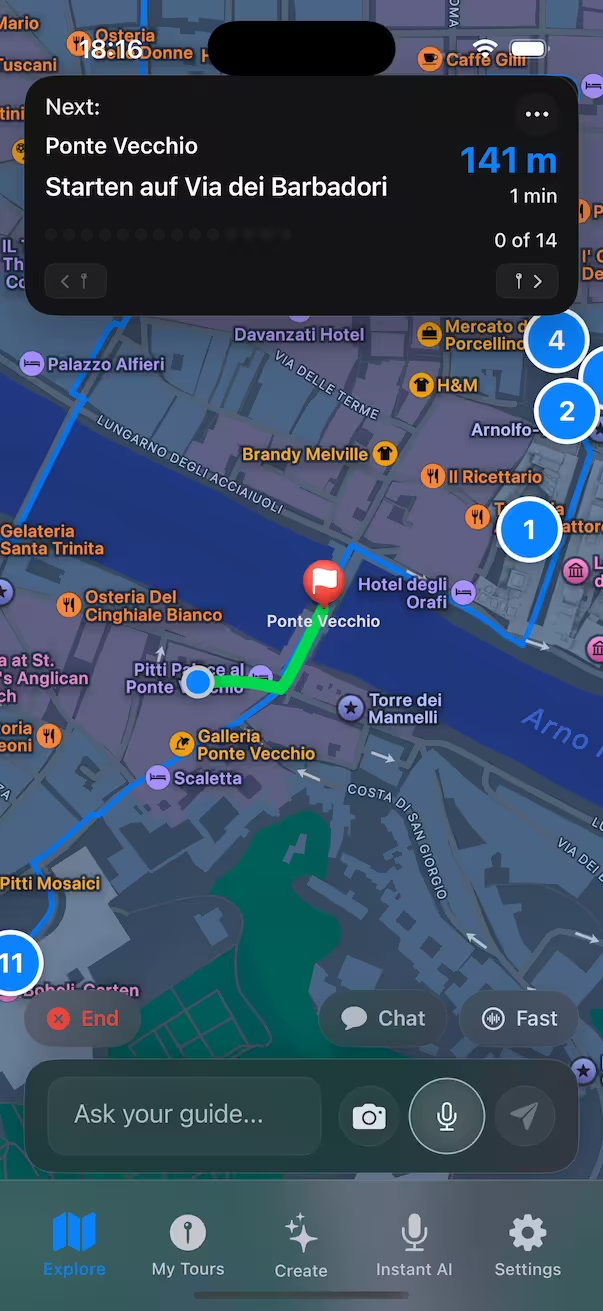
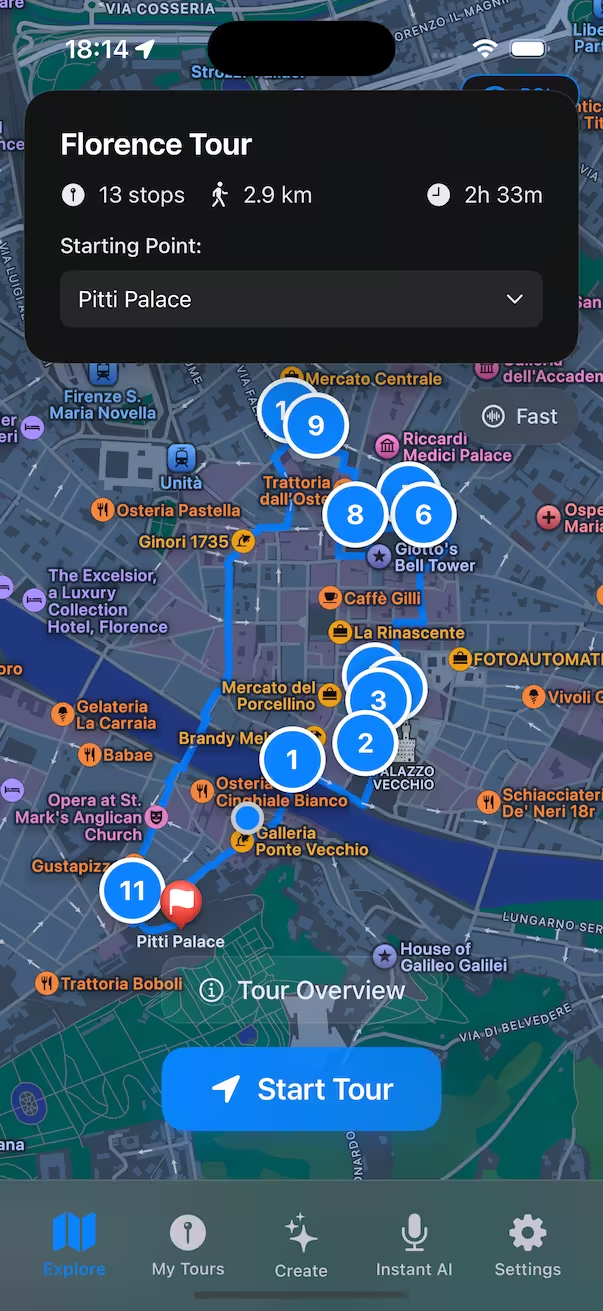
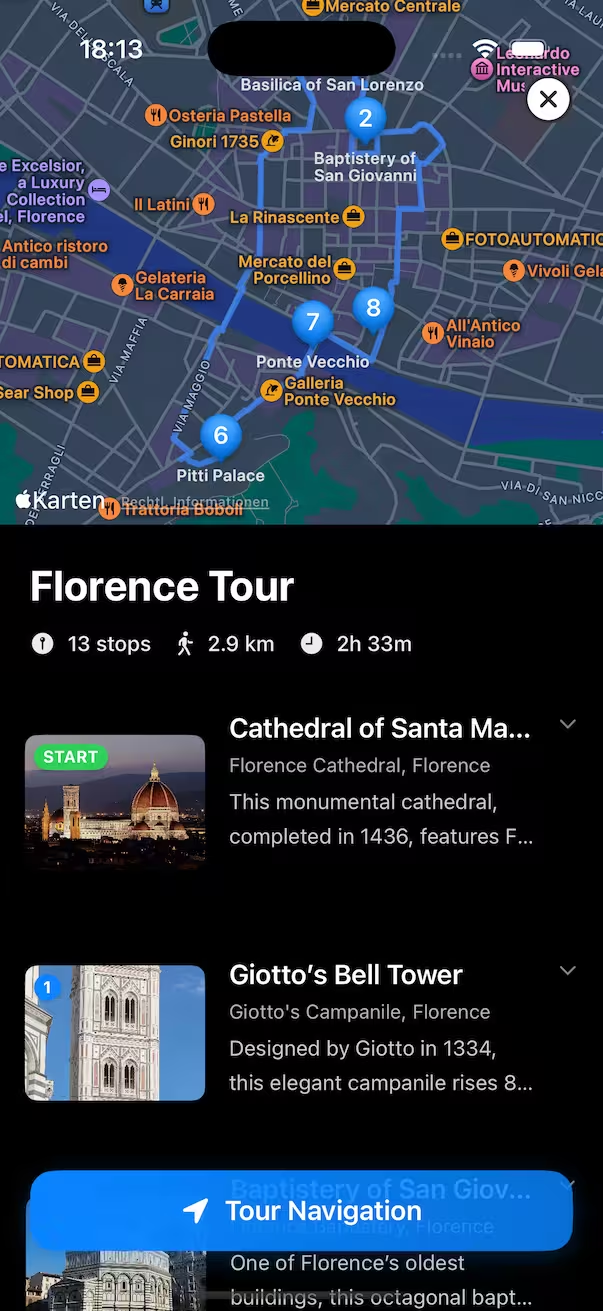
The classic Dijon tour: 7 stops, 3.0 km, about 2 h on foot
Your live AI guide and the self-guided Dijon route, together in your browser.