Best Time to Visit Dresden
Month-by-month weather, crowds and prices, plus a full calendar of festivals and events worth planning a trip around.
Best monthsMay, Sep, Oct
CheapestJan, Feb, Mar
AvoidAug
BusiestJul, Aug
When is the best time to visit Dresden?
Come in May, September or October. May brings the Dixieland Festival and 18°C, September the wine harvest with hotel rates 20 to 30% below August, and October golden foliage along the Elbe. August is the busiest and dearest month, especially the CANALETTO weekend. January is empty and cheapest.
Start our tool and find your best time to visit Dresden
Your perfect month
Free · ~30 seconds
or tap a month directly
What matters to you?
And this?
Best overall: May, Sep. May and September are the real answer. May gives you the Dixieland Festival, 18°C and every museum open. September brings the Radebeul wine harvest, golden light over the Elbe and hotel prices 20 to 30% below the August peak. October delivers too, just with shorter days and cooler air.
Best value: Jan, Feb, Mar. January, February and March bring 3-star doubles from around 60 euro, no queue at the Green Vault or the Old Masters Gallery, and a free Zwinger courtyard you can have almost to yourself on a crisp morning.
Avoid: Aug. Mid-August, the CANALETTO weekend (14 to 16 August): over a million visitors, every central hotel sold out, and Altstadt streets you can barely move through. Peak prices for the most crowded experience of the year.
- January: Tough month, 4°C. This is the month you walk straight into the Green Vault with a walk-in ticket and stand alone in the Zwinger arcades. The Saxons are home, the cafés are unhurried, and the Frauenkirche is yours for a quiet sit. Short, grey days are the honest trade-off, and a fair one.
- February: Good time, 6°C. February is honest, off-stage Dresden. No festival show, no seasonal markup, just a real Saxon city in winter mode and better for it. It is the last stretch before spring fills the Elbe slopes, so use the quiet while it lasts.
- March: Good time, 10°C. March is the last properly quiet month before spring crowds build. The city wakes up, terraces open, and you can still walk into a Neustadt restaurant on a Saturday without booking. That window shuts fast, so take it.
- April: Good time, 14°C. April is the couple's month: blossom on the Loschwitz hillside, long evenings, Semperoper season in full swing, and crowds still thin before the summer rush. Pack a layer though, April can turn showery without warning.
- May: Great time, 18°C. May is the first-timer's answer: comfortable weather, every museum open, festival buzz, and crowds you can still navigate. It is busy on the two long weekends, but the Dixieland Riverboat Shuffle on a historic Elbe paddle steamer is the kind of thing you remember for years.
- June: Great time, 24°C. June is when the city tips fully into summer: hot and lively by day, glorious in the long light until 9:30 pm. The single best evening of the month is Museumsnacht, when the Green Vault and Old Masters Gallery open late without advance timed booking. Pack a compact umbrella for the afternoon storms.
- July: Good time, 25°C. July is busy and warm but rarely brutal, and the long evenings carry it. Watching an open-air Filmnächte screening with the lit Baroque skyline behind you is a Dresden signature. Just plan the heavy sightseeing for the cooler early hours and keep the exposed plazas for the morning.
- August: Tough month, 25°C. August is for people who want the festival, not the quiet city. CANALETTO turns the whole Old Town into a stage with fireworks over the Elbe, and it is genuinely spectacular, but every hotel within 2 km sells out and the Altstadt is hard to move through. Outside that weekend the heat and the crowds are the trade-off for full summer energy.
- September: Great time, 20°C. September is the connoisseur's pick: the comfort of summer weather without the summer crowds or prices. The Saxon wine region flanking the Elbe is tiny and underknown, and harvest-fresh Riesling at a Radebeul vineyard 15 minutes from the centre is the kind of detail most visitors never discover.
- October: Great time, 15°C. October is intimate Dresden: amber light, cool air, and the Old Town without summer noise. It is the couple's autumn answer, a candlelit Neustadt dinner and a Semperoper standing-room ticket for under 20 euro all in. Bring a warm layer; the river turns cold quickly after dark.
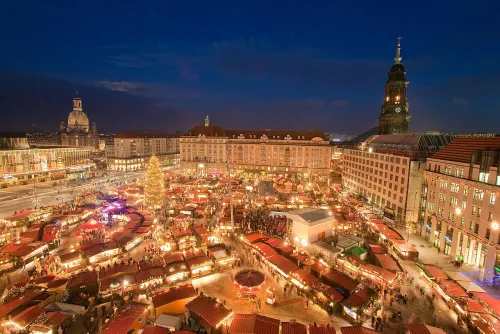
- November: Good time, 9°C. Early November is the year's overlooked lull, quiet and cheap before Advent. Then the Striezelmarkt opens on the 25th and everything changes overnight. The first market weekend is the most photogenic of all, with fresh stalls and the 14-metre wooden pyramid newly lit.
- December: Tough month, 6°C. December is the most atmospheric Dresden experience there is, the stone Baroque Old Town plus a lit Striezelmarkt is hard to beat in Germany. The market is mobbed every weekend though, so visit on a weekday afternoon (Tuesday to Thursday, 2 to 5 pm) for half the crowds. The last weekend before Christmas is genuine chaos.
Dresden weather by month
HighLowRainfall
Jan4°
Feb6°
Mar10°
Apr14°
May18°
Jun24°
Jul25°
Aug25°
Sep20°
Oct15°
Nov9°
Dec6°
| Month | Temp | Rain | Sun | Crowds | Prices | Highlight |
|---|---|---|---|---|---|---|
| Jan | 4° / -1° | 66mm · 15 rainy days | 3.3 h/day | ●○○○○ | ●○○○○ | |
| Feb | 6° / -1° | 50mm · 10 rainy days | 5.7 h/day | ●○○○○ | ●○○○○ | |
| Mar | 10° / 2° | 52mm · 12 rainy days | 7.3 h/day | ●●○○○ | ●●○○○ | |
| Apr | 14° / 4° | 48mm · 10 rainy days | 9.7 h/day | ●●●○○ | ●●●○○ | Filmfest Dresden |
| May | 18° / 9° | 52mm · 10 rainy days | 10.9 h/day | ●●●○○ | ●●●○○ | International Dixieland Festival |
| Jun | 24° / 14° | 62mm · 11 rainy days | 12.3 h/day | ●●●○○ | ●●●○○ | Dresden Pride (CSD) |
| Jul | 25° / 15° | 69mm · 12 rainy days | 12.1 h/day | ●●●●○ | ●●●●○ | Film Nights on the Elbe |
| Aug | 25° / 15° | 76mm · 11 rainy days | 10.4 h/day | ●●●●● | ●●●●● | Film Nights on the Elbe |
| Sep | 20° / 12° | 63mm · 11 rainy days | 9.0 h/day | ●●●○○ | ●●●○○ | Radebeul Autumn and Wine Festival |
| Oct | 15° / 8° | 67mm · 12 rainy days | 6.2 h/day | ●●○○○ | ●●○○○ | |
| Nov | 9° / 4° | 48mm · 11 rainy days | 4.4 h/day | ●●○○○ | ●●●○○ | Striezelmarkt Christmas Market |
| Dec | 6° / 1° | 62mm · 14 rainy days | 3.4 h/day | ●●●●○ | ●●●●○ | Dresden Stollen Festival |
How we score this: weather = long-run climate normals (Open-Meteo), crowds & prices = relative season read, events checked yearly against official dates.
Best time to visit Dresden: weather, prices & crowds
Best months for good weather
May, Jun, Sep
May and September give Dresden its most reliable mix: 18 to 22°C, long bright evenings, and afternoon showers rather than all-day grey, so you can sit out on Brühl's Terrace until late.
Quietest months to avoid the crowds
Jan, Feb, Mar
January through March the city is genuinely quiet. You can stand under the Zwinger arcades or in the Frauenkirche without a tour group in sight, and Green Vault timed tickets are walk-in available with no advance booking.
Cheapest time to visit Dresden
Jan, Feb
January is the cheapest month of the year, with 3-star doubles from around 60 euro and zero museum queues. February holds those low-season rates even through the Saxon Winterferien.
Best time for festivals and events
Nov, Dec
Late November into December is Dresden at its most iconic: the 592nd Striezelmarkt on the Altmarkt, the smell of Stollen and Glühwein, and a lit Baroque Old Town that few Christmas markets in Germany can match.
How many days do you need in Dresden?
Two full days suit Dresden well. The Baroque historic core is walkable and compact, but the collections inside it are world-class enough to slow any itinerary down. A focused visitor can cover the essential skyline in a single day, and three days open up day-trip territory along the Elbe.

One day
The Baroque skyline in a single loop
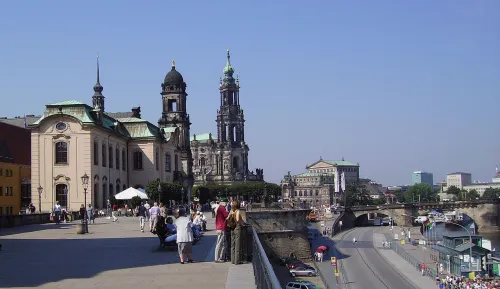
Start at the Altmarkt and walk to the rebuilt Frauenkirche, then follow the riverside Brühlsche Terrasse for the classic Elbe panorama. From there a self-guided Dresden walking tour links 8 stops across 6.7 km in about 2.6 hours, taking in the Zwinger, the Semperoper on Theaterplatz and the Residenzschloss with its Green Vault treasury. Book your Green Vault timed ticket before you travel, as slots sell out weeks ahead in summer.
Two daysRecommended
Art, Neustadt and the river
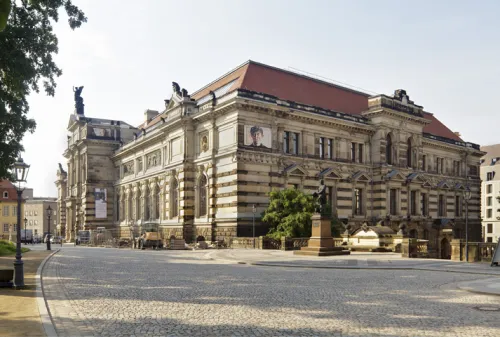
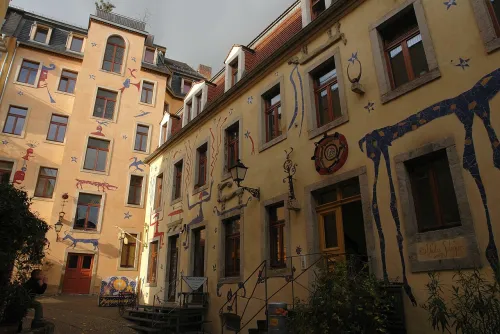
Use day two for the galleries: the Albertinum's New Masters collection on the Brühlsche Terrasse and the Old Masters Gallery inside the Zwinger, home to Raphael's Sistine Madonna. Cross the Augustusbrücke into the Neustadt and explore the Kunsthofpassage, a series of whimsical sculpted courtyards off Alaunstrasse. End the evening on the Louisenstrasse for dinner in a Neustadt restaurant without the Altstadt prices.
Three days
Out along the Elbe
A third day earns a paddle-steamer trip from the Old Town landing to Pillnitz Castle and its park, roughly 45 minutes each way for about 15 euro. In September and October the Radebeul vineyards are 15 minutes by S-Bahn in the other direction, with harvest-fresh Saxon Riesling at the Weingüter. Moritzburg Castle, a Baroque hunting palace in the woods north of the city, makes a half-day detour on any day.
Four days or more
Meissen, the Elbsandsteingebirge and slow living
Four or more days allow a day trip to Meissen, 30 minutes by S-Bahn, for the Albrechtsburg castle and Europe's oldest porcelain manufactory with tours from around 9 euro. The Saxon Switzerland national park, an hour by S-Bahn toward Pirna and Bad Schandau, is a world apart from Baroque Dresden: sandstone pillars, river gorges and the Bastei bridge viewpoint. Back in the city, the Großer Garten and the Loschwitz hillside vineyards reward an unhurried afternoon.
Best time to visit Dresden by traveller type
Same city, different trip. Here's the month that fits how you're travelling.
🧭
Best time to visit Dresden for the first time
MaySep
May or September: comfortable 18 to 22°C, every sight open, and crowds you can work around. Both months still leave Green Vault timed tickets available if you book a week or two ahead.
❤️
Best time to visit Dresden for couples
AprOct
Late April for cherry blossom on the Loschwitz slopes and long evenings, or October for autumn foliage along the Elbe and a candlelit Neustadt dinner without the summer noise. A 8-euro Semperoper standing-room ticket makes a Thursday evening romantic for under 20 euro total.
💶
Best time to visit Dresden on a budget
JanFeb
January or February: the lowest hotel rates of the year, no booking needed for the Green Vault, and a full day in the historic centre, free Zwinger courtyard, free church interiors and the Neumarkt, for under 15 euro.
🍝
Best time to visit Dresden for food and wine
SepDec
September for the Radebeul Herbst- und Weinfest and fresh Saxon Riesling 15 minutes from the centre, or December for Striezelmarkt Stollen, Quarkkeulchen and Pfefferkuchen at the source.
Worst time to visit Dresden
Mid-August is the month most worth skipping. The CANALETTO city festival pulls more than a million day-visitors into a city of 560,000 across a single weekend (14 to 16 August), the Altstadt becomes genuinely hard to walk through, and hotel rates within 2 km of the Old Town peak at roughly 40% above January. The Sommerferien family crowds run to 14 August anyway, so the full month carries high prices and heavy visitor pressure even outside the festival weekend.
Still worth it for August works well if CANALETTO itself is the reason to come: the whole Baroque centre transforms into a festival stage with fireworks over the Elbe, and the Moritzburg Festival brings world-class chamber music to the nearby hunting palace at the same time.
Go instead in May, September, October, when Dresden is at its best.
Best time for a tour of Dresden
Dresden's baroque core is a walking city, and the calendar swings hard between glorious and grim. The sweet spot runs May through September, when highs climb from a comfortable 18 °C into the mid-20s and the long evenings let you linger on the Brühlsche Terrasse as the light softens over the Elbe. June and September are the connoisseur's picks: warm enough at 23 to 20 °C, dry-ish, and far calmer than the August peak when the crowd around the Frauenkirche and the Zwinger thickens to its busiest of the year. Avoid July and August midday if you wilt in heat, because the open sandstone courtyards at the Zwinger and the Theaterplatz outside the Semperoper throw back the sun with almost no shade. Winter is honestly tough on foot: January barely scrapes 4 °C with lows below freezing, dark by mid-afternoon, and 15 wet days, though the Striezelmarkt on the Altmarkt is worth the cold if you bundle up. March and November are the in-between months, cool and grey but quiet.
The beauty of going at your own rhythm is that the weather, not a schedule, sets your hour. With AI Tourguide running straight in your browser, no app and no download, a voice-first guide leads you stop to stop, tells the stories behind the Residenzschloss and the Semperoper, asks what you want to see next, and adapts as you go. On a warm August day you can start your Dresden tour at eight in the morning, walking the cool empty squares before the heat and the crowds arrive, then break for coffee whenever you like. You keep full control of route and pace while a real conversation carries you the whole way, in any of 13 languages.

 +4
+4All 8 stops are already on the map.
You just press start.
You just press start.
 AI Tourguide
You just read the route.
Now walk it with a guide in your ear.
Press start wherever you are, even hundreds of kilometres from Dresden, and the guide begins telling its stories right away. In the city, pick any of the 8 stops to start from: it leads you there, then talks with you the whole route, asking, listening, remembering, and shaping the tour around your answers.
8stops6.7km2.6hours11languages
▶Start the tour freeFree to start · Runs in your browser · No app, no download
Dresden events and festivals calendar
Annual highlights worth timing a trip around, listed month by month.
April
🎬 FilmFilmfest Dresden
Apr 14–19
Mid-April, six days, usually the second or third week of the month.
An international short-film festival drawing around 20,000 visitors, with screenings across cinema venues throughout the city.
May
🎵 MusicInternational Dixieland Festival Internationales Dixieland Festival Dresden
May 10–17
Mid-May, one week, typically the second full week of the month.
The world's largest traditional jazz festival, with 33 ensembles from 9 countries and over 250 hours of music.
June
🏳️🌈 PrideDresden Pride (CSD) Christopher Street Day Dresden
Jun 4–6 ~
Early June, with the main parade on the Saturday, usually the first full weekend of the month.
An LGBTQ+ political street festival and parade, with more than 10,000 people on the march and an Altmarkt stage programme from Friday to Sunday.
🌙 Museum nightDresden Museum Night Museumsnacht Dresden
Jun 20 ~
One Saturday in June, 6 pm to midnight, typically mid-to-late June.
Forty-two museums open simultaneously from 6 pm to midnight on a single ticket, with special programmes, performances and late access.
🎬 FilmFilm Nights on the Elbe Filmnächte am Elbufer
Jun 25 – Aug 30
Late June through end of August, roughly 60 nights.
Germany's largest open-air cinema and concert festival, in its 36th edition: 60 days, around 200,000 visitors and 55-plus film events, all set against the panoramic backdrop of the Baroque Old Town across the river.
🎉 FestivalElbe Slopes Festival Elbhangfest
Jun 26–28 ~
Last weekend of June, running from Friday to Sunday.
A largely free village festival strung along the Elbe slopes between Loschwitz, Wachwitz and Pillnitz, with live music and street theatre.
August
🎵 MusicMoritzburg Festival
Aug 7–23
Mid-to-late August, around two weeks, typically the second and third weeks of the month.
An elite chamber-music festival held in Moritzburg Castle near Dresden, in its 34th edition, bringing internationally renowned soloists together with young artists.
🎉 FestivalCANALETTO City Festival CANALETTO: Das Dresdner Stadtfest
Aug 14–16
Mid-August, one weekend, fixed to the weekend of 14 to 16 August each year.
The biggest city festival in Germany, drawing more than a million visitors to eight stages between Theaterplatz, the Kulturpalast and the Goldener Reiter, with over 1,000 artists.
September
🍷 Food and wineRadebeul Autumn and Wine Festival Herbst- und Weinfest Radebeul
Sep 18–20 ~
Third weekend of September.
Forty-plus wine taverns and courtyards open in Altkötzschenbroda, pouring Saxon Riesling and Müller-Thurgau, alongside the international travelling theatre festival.
November
🎄 Christmas marketStriezelmarkt Christmas Market Dresdner Striezelmarkt
Nov 25 – Dec 24
Late November to 24 December, opening on the Wednesday before the first Advent Sunday.
Germany's oldest documented Christmas market, running since 1434, with 200-plus traders on the Altmarkt, 80% of them Saxon, and a 14-metre wooden Christmas pyramid.
December
🍷 Food and wineDresden Stollen Festival Dresdner Stollenfest
Dec 5 ~
Saturday before the second Advent Sunday, typically the first week of December.
A giant Christstollen of over 1,800 kilos is paraded through the Old Town on a horse-drawn carriage, with hundreds of bakers taking part, then sliced and sold at the Striezelmarkt.
🎨 Art and cultureNew Year's Eve at the Semperoper Silvesterkonzert der Sächsischen Staatskapelle
Dec 31
31 December every year.
The New Year's concert by the Sächsische Staatskapelle at the Semperoper, in the Die Fledermaus and Neujahrskonzert tradition.
Insider tips for visiting Dresden
The rules buried in forums, in one place.
- Book Green Vault timed tickets the moment your dates are set. The Historisches Grünes Gewölbe is closed Tuesdays and sells out 4 to 8 weeks ahead in summer. The Neues Grünes Gewölbe (closed Mondays) is walk-in and absorbs the overflow. If both are full, the 10 am weekday slot is the least crowded.
- Plan museum days around the closed days: the Old Masters Gallery, the Albertinum and the New Green Vault all close Mondays; the Historic Green Vault closes Tuesdays. To see both Green Vaults you need a Monday for one and a Tuesday-or-later visit for the other.
- The free Baroque Zwinger courtyard and fountains are worth 30 minutes at any hour, but school groups fill the Old Masters Gallery from 10 am to noon on weekdays. Arrive at the 10 am opening (Tuesday to Sunday) or after 2 pm to reach the Sistine Madonna without the crush.
- Semperoper guided tours (16 euro) run daily but are suspended on performance days, so check the schedule at semperoper.de before you go. To see the auditorium on a performance night, a standing-room (Stehplatz) ticket from around 8 euro is the insider route.
- The Striezelmarkt is mobbed every weekend from late November. Weekday afternoons (Tuesday to Thursday, 2 to 5 pm) run at roughly half the crowds. The first weekend is the most photogenic with fresh stalls and the tree freshly lit; the last weekend before 24 December is chaos.
- Book accommodation 4 to 6 months ahead for the CANALETTO festival (14 to 16 August). Every hotel within 2 km of the Old Town sells out, but Neustadt hotels across the Augustus Bridge are slightly cheaper and still walkable.
- In late March and early April the Elbe-slope cherry blossom at Loschwitz and the 230-year-old Pillnitz camellia bloom at the same time. Combine them in one day by taking a paddle steamer from the Old Town to Pillnitz (around 45 minutes, roughly 15 euro), the peak spring value trip.
- The Elbe paddle steamers (Sächsische Dampfschiffahrt) only run April to October. Same-day tickets are fine in the shoulder months, but in July and August book online 2 to 3 days ahead as the boats fill. Pillnitz Castle park is also seasonal, late March to early November only.
Public holidays in Dresden
On these dates many shops and offices close, transport thins out, and sights can be mobbed or shut. Plan around them.
| Date | Holiday | What closes |
|---|---|---|
| Jan 1 | New Year's Day | Almost everything closes: shops, offices and most restaurants. The Semperoper plays its New Year's concert in the afternoon. Public transport runs a reduced holiday timetable. |
| Apr 10 | Good Friday | All shops closed and the city is notably quiet. Most museums stay open, and the Frauenkirche holds major services in a strongly Protestant city. |
| Apr 13 | Easter Monday | Shops closed but museums open. Falls within the Saxon Osterferien school break (3 to 10 April), so families are about; the Frauenkirche Easter services are packed. |
| May 1 | Labour Day | Shops closed and political demonstrations are possible in the inner city. Museums and the Old Town stay open and lively. |
| May 14 | Ascension Day | Shops closed. The long weekend is popular with domestic travellers, so hotels fill and the Altstadt gets busier than a normal May day. |
| May 25 | Whit Monday | Shops closed and the city is busy with domestic day-trippers. Museums open; expect more weekend-style crowds at the Zwinger and Frauenkirche. |
| Oct 3 | German Unity Day | National holiday falling on a Saturday in 2026, so no extra day off. Shops closed; museums and sights open as on a normal Saturday. |
| Oct 31 | Reformation Day | A Saxony-exclusive public holiday: all shops closed. Dresden is a Protestant stronghold and the Frauenkirche holds major services, so the church is busy. |
| Nov 18 | Day of Repentance and Prayer | A Saxony-only public holiday observed by no other German state. Offices close though shops may open; a quiet day in the run-up to the Christmas market. |
| Dec 25 | Christmas Day | Everything closed. The Striezelmarkt has already wound down, closing on 24 December at 2 pm, so the Old Town is calm again. |
| Dec 26 | Boxing Day | Shops closed, falling on a Sunday in 2026. Some museums reopen; the city is quiet between Christmas and the sold-out Semperoper New Year's Eve. |
Dresden month by month
January in Dresden
High4°C / 40°F
Low-1°C
Rain66mm / 15 rainy days
Sun3.3 h/day
Daylight8 h/day
Humidity83%
Crowds●○○○○Prices●○○○○
January is Dresden at its emptiest and cheapest. Daytime highs sit around 4°C with the Old Town dusting toward darkness by 4:30 pm, and grey, damp skies are the norm with roughly 15 days of light rain or snow. But the Baroque centre under low winter light is atmospheric, and the museums are close to queue-free. Once New Year passes, the city settles into a slow, local winter rhythm with no school holidays and no tour buses.
The vibe This is the month you walk straight into the Green Vault with a walk-in ticket and stand alone in the Zwinger arcades. The Saxons are home, the cafés are unhurried, and the Frauenkirche is yours for a quiet sit. Short, grey days are the honest trade-off, and a fair one.
Don't miss The Old Masters Gallery and the Sistine Madonna feel almost private on a Tuesday morning. The Striezelmarkt is gone, but the Baroque Old Town under bare winter light is the photographer's quiet season.
Crowd drivers No school holidays after New Year, no festivals, and the cold deters casual visitors. The lowest tourist pressure of the entire year.
In season Saxon comfort food is the point in January: Sauerbraten, Kartoffelsuppe and a Feuerzangenbowle in a Neustadt bar after dark.
Heads up 1 January is a public holiday with shops and most museums shut and transport on a reduced timetable. Pillnitz Castle park is closed for the winter until late March.
Cheapest month of the year; 3-star doubles from around 60 euro a night.
February in Dresden
High6°C / 44°F
Low-1°C
Rain50mm / 10 rainy days
Sun5.7 h/day
Daylight10 h/day
Humidity78%
Crowds●○○○○Prices●○○○○
February stays quiet and cheap, mild for winter at around 6°C but still damp and short on daylight. The Saxon Winterferien (9 to 21 February) bring some domestic families, yet the city never feels busy. Toward month's end the Pillnitz camellia, a 230-year-old tree, begins to flower in its greenhouse, drawing the first small wave of botanical visitors. Museums stay uncrowded and low-season rates hold.
The vibe February is honest, off-stage Dresden. No festival show, no seasonal markup, just a real Saxon city in winter mode and better for it. It is the last stretch before spring fills the Elbe slopes, so use the quiet while it lasts.
Don't miss The Pillnitz camellia opens late February: the protective glass house is dismantled as the single tree flowers, and it alone draws thousands. A quiet day for the Green Vault before any spring crowd arrives.
Crowd drivers The Saxon Winterferien (9 to 21 February) add some domestic families, but nothing close to peak. International visitor pressure stays near its annual low.
In season Eierschecke, the Saxon layered cheesecake, is a year-round café staple, best paired with a winter afternoon coffee on the Neumarkt.
Low-season rates, 20 to 30% below the summer average; the Winterferien barely move them.
March in Dresden
High10°C / 50°F
Low2°C
Rain52mm / 12 rainy days
Sun7.3 h/day
Daylight12 h/day
Humidity74%
Crowds●●○○○Prices●●○○○
March brings Dresden back to life. Daylight lengthens fast, highs climb toward 10°C, and café terraces start to reappear on the Neumarkt. Crowds stay moderate, with cultural visitors returning ahead of Easter. From late March the Elbe slopes at Loschwitz and Wachwitz begin to turn pink with cherry and almond blossom, a genuinely spectacular and underknown display that overlaps with the flowering Pillnitz camellia.
The vibe March is the last properly quiet month before spring crowds build. The city wakes up, terraces open, and you can still walk into a Neustadt restaurant on a Saturday without booking. That window shuts fast, so take it.
Don't miss Late March is the start of the Elbe cherry blossom on the Loschwitz and Wachwitz slopes, still flowering alongside the Pillnitz camellia. Crisp, clear March light makes it the photographer's favourite month for the Baroque skyline.
Crowd drivers Pre-Easter shoulder season; cultural visitors return as daylight improves, but no major festival or holiday spikes yet unless Easter falls in late March.
In season Spring asparagus (Spargel) starts appearing on Saxon menus from late March, served simply with butter and new potatoes.
Rates rising slightly but still good value; well below the summer and Advent peaks.
April in Dresden
High14°C / 57°F
Low4°C
Rain48mm / 10 rainy days
Sun9.7 h/day
Daylight14 h/day
Humidity70%
Crowds●●●○○Prices●●●○○
April is one of Dresden's loveliest months and still affordable. Highs reach a comfortable 14°C, the Elbe slopes are in full cherry blossom, and the days stretch past 14 hours of light. The Saxon Osterferien (3 to 10 April) bring families, and Filmfest Dresden (14 to 19 April) draws 20,000 short-film visitors to cinemas across the city. Crowds are noticeable but nowhere near summer pitch.
The vibe April is the couple's month: blossom on the Loschwitz hillside, long evenings, Semperoper season in full swing, and crowds still thin before the summer rush. Pack a layer though, April can turn showery without warning.
Don't miss Cherry and almond blossom peak on the Elbe slopes in the first half of April. Filmfest Dresden, the best short-film programme in Germany, fills the city's cinemas with most screenings affordable.
Crowd drivers The Saxon Osterferien (3 to 10 April) and Filmfest Dresden (14 to 19 April) both add visitors; the Filmfest weekend in particular tightens central hotels.
In season Saxon Spargel season is in full flow through April, the white asparagus served with hollandaise and ham at every traditional Gaststätte.
Heads up Good Friday (10 April) and Easter Monday (13 April) close shops, though museums stay open. The Frauenkirche Easter services pack out.
Mid-range pricing; the Filmfest weekend pushes hotel rates up around 15%.
Events this month
🎬 FilmFilmfest Dresden
Apr 14–19
Mid-April, six days, usually the second or third week of the month.
An international short-film festival drawing around 20,000 visitors, with screenings across cinema venues throughout the city. It is the best short-film programme in Germany and runs a competitive international and national selection.
The city buzzes with a film crowd for a week and most screenings stay affordable, an easy festival to drop into without a full pass.
May in Dresden
High18°C / 65°F
Low9°C
Rain52mm / 10 rainy days
Sun10.9 h/day
Daylight16 h/day
Humidity69%
Crowds●●●○○Prices●●●○○
May is the month most people name as Dresden's sweet spot: 18°C, long bright evenings, and the city in full bloom. The 54th International Dixieland Festival (10 to 17 May), the world's largest traditional jazz festival, fills the centre with 33 ensembles and roughly half the programme free. Two public-holiday long weekends, Ascension on 14 May and Whit Monday on 25 May, draw domestic crowds, but the weather and energy more than repay it.
The vibe May is the first-timer's answer: comfortable weather, every museum open, festival buzz, and crowds you can still navigate. It is busy on the two long weekends, but the Dixieland Riverboat Shuffle on a historic Elbe paddle steamer is the kind of thing you remember for years.
Don't miss The Dixieland Festival runs 250-plus hours of music with a free Jazz Mile and the unrepeatable Riverboat Shuffle on Elbe paddle steamers (13 May). Long evenings open up Brühl's Terrace and the Elbe meadows for outdoor dinners.
Crowd drivers The Dixieland Festival week (10 to 17 May) plus the Ascension (14 May) and Whit Monday (25 May) long weekends stack domestic visitors on top of the festival crowd.
In season Last of the Saxon Spargel season, plus the first strawberries from the fields around Dresden appearing at the Sachsenmarkt.
Heads up Ascension Day (14 May) and Whit Monday (25 May) close shops. Museums and the Old Town stay open and busy with day-trippers.
Shoulder weeks are normal; the Dixieland Festival week pushes 3-star rates to 100 to 120 euro.
Events this month
🎵 MusicInternational Dixieland Festival Internationales Dixieland Festival Dresden
May 10–17
Mid-May, one week, typically the second full week of the month.
The world's largest traditional jazz festival, with 33 ensembles from 9 countries and over 250 hours of music. Roughly half the programme is free, including the outdoor Jazz Mile, and the Riverboat Shuffle on historic Elbe paddle steamers runs on 13 May.
A unique global event where half the programme costs nothing, and the Riverboat Shuffle on a paddle steamer is the kind of experience you cannot repeat anywhere else.

June in Dresden
High24°C / 74°F
Low14°C
Rain62mm / 11 rainy days
Sun12.3 h/day
Daylight16 h/day
Humidity68%
Crowds●●●○○Prices●●●○○
June opens Dresden's summer with 24°C highs, the year's longest days, and a packed event calendar. The CSD Dresden parade (6 June) brings over 10,000 marchers to the Altmarkt, Museumsnacht (20 June) opens 42 museums until midnight on one ticket, and Elbhangfest (26 to 28 June) celebrates the Elbe villages. Filmnächte am Elbufer, Germany's largest open-air cinema, begins on 25 June. Showers come as short afternoon thunderstorms, not all-day rain.
The vibe June is when the city tips fully into summer: hot and lively by day, glorious in the long light until 9:30 pm. The single best evening of the month is Museumsnacht, when the Green Vault and Old Masters Gallery open late without advance timed booking. Pack a compact umbrella for the afternoon storms.
Don't miss Museumsnacht (20 June, 6 pm to midnight, one ticket for 42 museums) is unique evening access to the Green Vault without a timed slot. Filmnächte am Elbufer starts on 25 June, screening films with the Frauenkirche silhouette behind the screen at dusk.
Crowd drivers Event-driven weekends: CSD Dresden (6 June), Museumsnacht (20 June) and Elbhangfest (26 to 28 June) each tighten central hotels, while the long days pull in casual summer visitors.
In season Strawberry season is at its peak and the first cherries from the Elbe-slope orchards arrive at the markets.
Regular weeks still shoulder; event weekends like CSD, Museumsnacht and Elbhangfest spike hotels.
Events this month
🏳️🌈 PrideDresden Pride (CSD) Christopher Street Day Dresden
Jun 4–6 ~
Early June, with the main parade on the Saturday, usually the first full weekend of the month.
An LGBTQ+ political street festival and parade, with more than 10,000 people on the march and an Altmarkt stage programme from Friday to Sunday. The parade leaves the Altmarkt around noon and returns by roughly 4 pm.
Dresden's biggest celebration of queer life, with a lively free street festival and Old Town streets briefly given over to the march.
🌙 Museum nightDresden Museum Night Museumsnacht Dresden
Jun 20 ~
One Saturday in June, 6 pm to midnight, typically mid-to-late June.
Forty-two museums open simultaneously from 6 pm to midnight on a single ticket, with special programmes, performances and late access. The Green Vault and Old Masters Gallery are reachable without an advance timed booking.
The one night you reach the Green Vault and the Old Masters Gallery without the usual timed-ticket scramble, museum-hopping a Baroque city after dark.
🎉 FestivalElbe Slopes Festival Elbhangfest
Jun 26–28 ~
Last weekend of June, running from Friday to Sunday.
A largely free village festival strung along the Elbe slopes between Loschwitz, Wachwitz and Pillnitz, with live music and street theatre. The 33rd edition is themed around the Romantic era.
A chance to discover the Elbe villages of Loschwitz and Blasewitz well beyond the tourist centre, with music and theatre in a riverside setting.
🎬 FilmFilm Nights on the Elbe Filmnächte am Elbufer
Jun 25 – Aug 30
Late June through end of August, roughly 60 nights.
Germany's largest open-air cinema and concert festival, in its 36th edition: 60 days, around 200,000 visitors and 55-plus film events, all set against the panoramic backdrop of the Baroque Old Town across the river.
Watching a film with the Frauenkirche silhouette behind the screen at dusk is a true Dresden signature, blockbusters and concerts on the same riverside stage.

July in Dresden
High25°C / 77°F
Low15°C
Rain69mm / 12 rainy days
Sun12.1 h/day
Daylight16 h/day
Humidity65%
Crowds●●●●○Prices●●●●○
July is high summer in Dresden: 25°C average highs, occasional heatwaves to 35°C, and the Saxon Sommerferien (4 July to 14 August) flooding the city with domestic and European families. Filmnächte am Elbufer is in full swing along the river. The stone plazas of Theaterplatz and Altmarkt have zero shade, so midday can be exhausting; mornings before 10 am and the Elbe meadows in the evening are the comfortable windows.
The vibe July is busy and warm but rarely brutal, and the long evenings carry it. Watching an open-air Filmnächte screening with the lit Baroque skyline behind you is a Dresden signature. Just plan the heavy sightseeing for the cooler early hours and keep the exposed plazas for the morning.
Don't miss Filmnächte am Elbufer runs nightly: blockbusters and concerts on Germany's largest open-air screen, with the Frauenkirche behind it. Elbe paddle steamers to Pirna and Pillnitz are in peak season, so book online 2 to 3 days ahead.
Crowd drivers The Saxon Sommerferien (4 July to 14 August) bring domestic and European families at the same time, the year's heaviest family-travel period.
In season Saxon Quarkkeulchen and fresh-fruit Eierschecke pair with riverside ice cream as the standard summer treats on the Elbe meadows.
Summer peak; 3-star doubles 100 to 150 euro, book 2 to 3 months ahead.
Events this month
🎬 FilmFilm Nights on the Elbe Filmnächte am Elbufer
Jun 25 – Aug 30
Late June through end of August, roughly 60 nights.
Germany's largest open-air cinema and concert festival, in its 36th edition: 60 days, around 200,000 visitors and 55-plus film events, all set against the panoramic backdrop of the Baroque Old Town across the river.
Watching a film with the Frauenkirche silhouette behind the screen at dusk is a true Dresden signature, blockbusters and concerts on the same riverside stage.
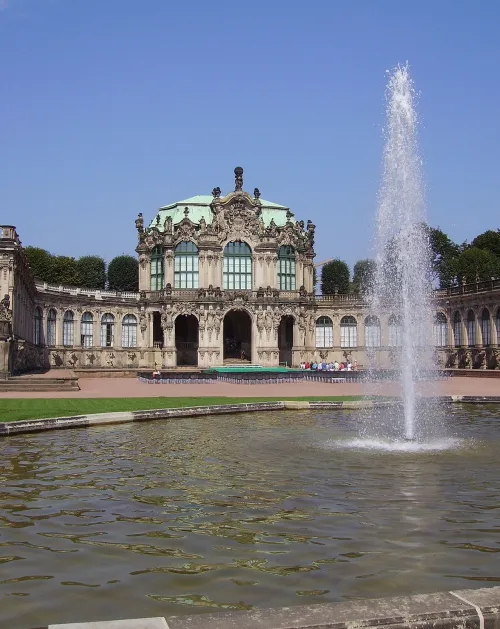
August in Dresden
High25°C / 77°F
Low15°C
Rain76mm / 11 rainy days
Sun10.4 h/day
Daylight14 h/day
Humidity68%
Crowds●●●●●Prices●●●●●
August is Dresden's busiest and dearest month. The Sommerferien run to 14 August, the Moritzburg Festival (7 to 23 August) draws chamber-music crowds to the nearby Baroque palace, and CANALETTO, the Dresden city festival (14 to 16 August), pulls more than a million visitors to Theaterplatz across eight stages. Heatwaves can push past 35°C on the shadeless plazas. It is exhilarating if the festival is your goal, overwhelming if it is not.
The vibe August is for people who want the festival, not the quiet city. CANALETTO turns the whole Old Town into a stage with fireworks over the Elbe, and it is genuinely spectacular, but every hotel within 2 km sells out and the Altstadt is hard to move through. Outside that weekend the heat and the crowds are the trade-off for full summer energy.
Don't miss CANALETTO is the biggest city festival in Germany, with 1,000-plus artists and fireworks over the Elbe. The Moritzburg Festival brings world-class chamber music to a Baroque hunting palace 30 minutes out by S-Bahn.
Crowd drivers The tail of the Sommerferien plus CANALETTO (14 to 16 August), 1 million-plus visitors, and the Moritzburg Festival all land in the same fortnight.
In season CANALETTO fills the Old Town with food stalls; for something quieter, the Neustadt beer gardens around Louisenstraße serve a 3 to 4 euro beer versus 5-plus on the Altmarkt.
Heads up No major closures, but book accommodation 4 to 6 months ahead for the CANALETTO weekend (14 to 16 August) or you will not find a central room.
Most expensive month; CANALETTO weekend sells out central hotels, average rates up around 40% on January.
Events this month
🎉 FestivalCANALETTO City Festival CANALETTO: Das Dresdner Stadtfest
Aug 14–16
Mid-August, one weekend, fixed to the weekend of 14 to 16 August each year.
The biggest city festival in Germany, drawing more than a million visitors to eight stages between Theaterplatz, the Kulturpalast and the Goldener Reiter, with over 1,000 artists. The whole Old Town transforms and fireworks close it over the Elbe.
The entire Baroque centre becomes one festival with spectacular fireworks over the river, but book accommodation 4 to 6 months ahead or skip the weekend entirely.
🎵 MusicMoritzburg Festival
Aug 7–23
Mid-to-late August, around two weeks, typically the second and third weeks of the month.
An elite chamber-music festival held in Moritzburg Castle near Dresden, in its 34th edition, bringing internationally renowned soloists together with young artists. The Baroque hunting palace is 30 minutes from the city by S-Bahn.
World-class chamber music in a Baroque hunting palace, an easy half-day trip from the city for a very different side of Saxon culture.
🎬 FilmFilm Nights on the Elbe Filmnächte am Elbufer
Jun 25 – Aug 30
Late June through end of August, roughly 60 nights.
Germany's largest open-air cinema and concert festival, in its 36th edition: 60 days, around 200,000 visitors and 55-plus film events, all set against the panoramic backdrop of the Baroque Old Town across the river.
Watching a film with the Frauenkirche silhouette behind the screen at dusk is a true Dresden signature, blockbusters and concerts on the same riverside stage.
September in Dresden
High20°C / 69°F
Low12°C
Rain63mm / 11 rainy days
Sun9.0 h/day
Daylight13 h/day
Humidity74%
Crowds●●●○○Prices●●●○○
September is arguably Dresden's single best value window. The Sommerferien end and the city quietens fast, while highs hold a comfortable 20°C and the light turns golden over the Elbe. The Saxon wine harvest begins, marked by the Radebeul Herbst- und Weinfest (18 to 20 September) just 15 minutes out by S-Bahn. Hotel prices fall 20 to 30% from the August peak and queues shorten everywhere.
The vibe September is the connoisseur's pick: the comfort of summer weather without the summer crowds or prices. The Saxon wine region flanking the Elbe is tiny and underknown, and harvest-fresh Riesling at a Radebeul vineyard 15 minutes from the centre is the kind of detail most visitors never discover.
Don't miss The Radebeul Herbst- und Weinfest opens 40-plus wine taverns in Altkötzschenbroda, pouring Saxon Riesling and Müller-Thurgau. The vineyard harvest along the Elbe to Meißen is at its start, with many Weingüter offering free tastings.
Crowd drivers Crowds fall sharply once the Sommerferien finish in mid-August; the Radebeul Weinfest weekend (18 to 20 September) is the only notable local spike.
In season New-vintage Saxon Riesling and Müller-Thurgau are pouring fresh from the harvest, best tasted at the Radebeul Weingüter or an Altmarkt wine bar.
Sweet spot: prices drop 20 to 30% versus August as the Sommerferien end.
Events this month
🍷 Food and wineRadebeul Autumn and Wine Festival Herbst- und Weinfest Radebeul
Sep 18–20 ~
Third weekend of September.
Forty-plus wine taverns and courtyards open in Altkötzschenbroda, pouring Saxon Riesling and Müller-Thurgau, alongside the international travelling theatre festival. Radebeul is 15 minutes from the centre by S-Bahn.
The Saxon wine region is tiny and barely known abroad, and harvest-fresh Riesling 15 minutes from Dresden's centre is a discovery most visitors miss.
October in Dresden
High15°C / 59°F
Low8°C
Rain67mm / 12 rainy days
Sun6.2 h/day
Daylight11 h/day
Humidity80%
Crowds●●○○○Prices●●○○○
October is the quiet, golden month. Foliage peaks mid-month across the Großer Garten, the Elbe meadows and the Loschwitz hillside vineyards, with the Blue Wonder bridge framed by autumn trees as the postcard shot. Highs cool to 15°C and the Saxon Herbstferien (12 to 24 October) bring some families. The Pillnitz camellia greenhouse season begins, and 3-star doubles drop to 70 to 90 euro.
The vibe October is intimate Dresden: amber light, cool air, and the Old Town without summer noise. It is the couple's autumn answer, a candlelit Neustadt dinner and a Semperoper standing-room ticket for under 20 euro all in. Bring a warm layer; the river turns cold quickly after dark.
Don't miss Autumn foliage peaks mid-October along the Elbe and the Loschwitz vineyards, with the Blue Wonder bridge at its most photogenic. Paddle steamers still run until the end of the month, and Pillnitz park closes for winter in early November.
Crowd drivers The Saxon Herbstferien (12 to 24 October) bring families and the occasional leaf-peeper weekend, but pressure stays low overall.
In season Saxon Zwiebelkuchen (onion tart) with Federweißer, the cloudy young wine, is the seasonal pairing through October at the Elbe-valley Weingüter.
Value month; 3-star doubles 70 to 90 euro, with occasional leaf-peeper spikes.
November in Dresden
High9°C / 48°F
Low4°C
Rain48mm / 11 rainy days
Sun4.4 h/day
Daylight9 h/day
Humidity84%
Crowds●●○○○Prices●●●○○
November is grey and damp without big showers, with highs around 9°C and short days. It is Dresden's transition month: the foliage fades and the city prepares for Advent. The Saxony-only Buß- und Bettag (18 November) closes offices. Then on 25 November the 592nd Striezelmarkt, Germany's oldest documented Christmas market, opens on the Altmarkt and the city tips into its most atmospheric season.
The vibe Early November is the year's overlooked lull, quiet and cheap before Advent. Then the Striezelmarkt opens on the 25th and everything changes overnight. The first market weekend is the most photogenic of all, with fresh stalls and the 14-metre wooden pyramid newly lit.
Don't miss The Striezelmarkt opens 25 November on the Altmarkt: 200-plus traders, 80% of them Saxon, the original Striezel pastry, and a 14-metre wooden Christmas pyramid. The first weekend is the calmest and the most photogenic.
Crowd drivers Quiet until late month, then the Striezelmarkt opening (25 November) starts the Advent build-up, with weekend hotel prices climbing as the first market visitors arrive.
In season Dresdner Stollen, the genuine article, goes on sale at the Striezelmarkt from opening day, alongside Pfefferkuchen and the first Glühwein of the season.
Heads up Buß- und Bettag (18 November), a Saxony-only holiday, closes offices though many shops stay open. Pillnitz park closes for the winter in early November.
Weekend hotel prices rise as the Striezelmarkt approaches its 25 November opening.
Events this month
🎄 Christmas marketStriezelmarkt Christmas Market Dresdner Striezelmarkt
Nov 25 – Dec 24
Late November to 24 December, opening on the Wednesday before the first Advent Sunday.
Germany's oldest documented Christmas market, running since 1434, with 200-plus traders on the Altmarkt, 80% of them Saxon, and a 14-metre wooden Christmas pyramid. It draws around 2 million visitors, open daily 10 am to 9 pm (the opening day 4 to 9 pm, 24 December until 2 pm).
The single biggest reason to visit Dresden in December, with the original Striezel pastry still sold and Saxon crafts that few markets can match.
December in Dresden
High6°C / 43°F
Low1°C
Rain62mm / 14 rainy days
Sun3.4 h/day
Daylight8 h/day
Humidity84%
Crowds●●●●○Prices●●●●○
December is Dresden at its most iconic. The Striezelmarkt runs daily on the Altmarkt to 24 December, drawing some 2 million visitors, and the Stollenfest parade (around 5 December) carries a 1,800-kilo giant Stollen through the Old Town on a horse-drawn carriage. Days are short and cold, around 6°C, but the lit Baroque centre, the smell of Stollen and Glühwein, and the sold-out Semperoper New Year's Eve concert make it the city's signature season.
The vibe December is the most atmospheric Dresden experience there is, the stone Baroque Old Town plus a lit Striezelmarkt is hard to beat in Germany. The market is mobbed every weekend though, so visit on a weekday afternoon (Tuesday to Thursday, 2 to 5 pm) for half the crowds. The last weekend before Christmas is genuine chaos.
Don't miss The Stollenfest parade (around 5 December) is the most visual single-day Christmas event, with a 1,800-kilo Stollen sliced and sold afterward. New Year's Eve at the Semperoper is Saxony's most prestigious night, but tickets sell out by October.
Crowd drivers The Striezelmarkt (25 November to 24 December) drives the crowds, heaviest every weekend and on the Stollenfest day (around 5 December); the city empties again after the market closes on 24 December.
In season Peak Saxon food season: the original Dresdner Stollen, Quarkkeulchen, Pfefferkuchen and Feuerzangenbowle, most concentrated at the Striezelmarkt and the Stollenfest.
Heads up Christmas Day (25 December) and Boxing Day (26 December) close everything. The Striezelmarkt itself shuts on 24 December at 2 pm, so the Old Town is quiet again over Christmas.
Christmas-market weeks: 3-star doubles 120 to 180 euro, best weeks book out 3 to 4 months ahead.
Events this month
🎄 Christmas marketStriezelmarkt Christmas Market Dresdner Striezelmarkt
Nov 25 – Dec 24
Late November to 24 December, opening on the Wednesday before the first Advent Sunday.
Germany's oldest documented Christmas market, running since 1434, with 200-plus traders on the Altmarkt, 80% of them Saxon, and a 14-metre wooden Christmas pyramid. It draws around 2 million visitors, open daily 10 am to 9 pm (the opening day 4 to 9 pm, 24 December until 2 pm).
The single biggest reason to visit Dresden in December, with the original Striezel pastry still sold and Saxon crafts that few markets can match.
🍷 Food and wineDresden Stollen Festival Dresdner Stollenfest
Dec 5 ~
Saturday before the second Advent Sunday, typically the first week of December.
A giant Christstollen of over 1,800 kilos is paraded through the Old Town on a horse-drawn carriage, with hundreds of bakers taking part, then sliced and sold at the Striezelmarkt. The tradition dates to the 1560s and falls just days after the market opens.
The most visual single-day Christmas event in Dresden and the one time you can buy competition-quality Stollen directly from the master bakers.
🎨 Art and cultureNew Year's Eve at the Semperoper Silvesterkonzert der Sächsischen Staatskapelle
Dec 31
31 December every year.
The New Year's concert by the Sächsische Staatskapelle at the Semperoper, in the Die Fledermaus and Neujahrskonzert tradition. It is the most prestigious New Year's night in Saxony and tickets sell out months ahead.
The grandest way to see in the new year in Saxony, but the tickets are gone by October, so book the moment they are released.
Frequently asked questions
What is the best time to visit Dresden?
May and September are the best months to visit Dresden. May brings the Dixieland Festival, 18°C and every museum open, while September offers the Saxon wine harvest, golden light over the Elbe and hotel prices 20 to 30% below August. October works too, with peak autumn foliage and even lower crowds, just shorter, cooler days.
What are the cheapest months to visit Dresden?
January is the cheapest month in Dresden, with 3-star doubles from around 60 euro and no museum queues. February and March hold those low-season rates, roughly 20 to 30% below the summer average. The trade-off is short, grey days and cold weather, but the Baroque Old Town under low winter light is genuinely atmospheric.
When is the Striezelmarkt Christmas market in Dresden?
The Dresden Striezelmarkt runs from 25 November to 24 December 2026, its 592nd edition, open daily 10 am to 9 pm on the Altmarkt. It is Germany's oldest documented Christmas market and draws around 2 million visitors. For half the crowds, go on a weekday afternoon between 2 and 5 pm; the first weekend is the most photogenic.
What is the worst time to visit Dresden?
Mid-August, specifically the CANALETTO weekend (14 to 16 August), is the time most worth avoiding. Over a million visitors flood a city of 560,000, central hotels sell out, and the Altstadt is genuinely difficult to walk through. Hotel rates peak at roughly 40% above January. It is only worth it if CANALETTO itself is your goal.
Is Dresden worth visiting in winter?
Yes, especially in December for the Striezelmarkt, when the lit Baroque Old Town, the smell of Stollen and Glühwein, and a 14-metre wooden pyramid make one of Germany's most atmospheric Christmas markets. January and February are the opposite: empty, cheap and queue-free, with 3-star doubles from 60 euro and the Green Vault available walk-in.
How many days do you need in Dresden?
Two full days cover the essentials: the Zwinger and Old Masters Gallery, both Green Vaults, the Frauenkirche, the Semperoper and Brühl's Terrace. A third day lets you add a paddle-steamer trip to Pillnitz Castle, the Radebeul vineyards, or Moritzburg. Note the Green Vault closes Tuesdays and the Old Masters Gallery closes Mondays, so plan museum days around them.
What is the weather like in Dresden in summer?
Dresden summers are warm but rarely brutal, with July and August averaging around 25°C and heatwaves to 35°C for a handful of days. Rain comes as short afternoon thunderstorms, not all-day drizzle, so carry a compact umbrella. Theaterplatz and Altmarkt are shadeless stone plazas, so sightsee early and use the Elbe meadows for shade and river breeze at midday.
When can you see the cherry blossom in Dresden?
The Elbe-slope cherry and almond blossom at Loschwitz and Wachwitz runs from late March to mid-April, a spectacular and underknown display. It overlaps with the flowering of the 230-year-old Pillnitz camellia. Combine both in one day with a paddle steamer from the Old Town to Pillnitz, around 45 minutes for roughly 15 euro, the peak spring value trip.

Any month, any day: your guide is already there
Whatever date you pick, a private human guide gets pricier and harder to book on weekends, holidays and in peak season. Our live AI guide, the one that walks with you and answers anything you ask out loud, works the opposite way.
One flat price, every day
No holiday, weekend, night or peak-season surcharge. A private guide in Dresden runs well over 100 euro for a half day, and more on holidays. Ours stays the same.
Available the moment you want it
Start at midnight or at dawn, on Christmas, in the snow, in the August heat. No sold-out high season, no booking weeks ahead.
Your pace, no meter running
Pause for a long lunch, restart after dark, repeat a stop. The tour simply waits for you.
Free to try, a fraction of the cost
Test it for free, then a transparent flat price that undercuts any private guide, in every season.
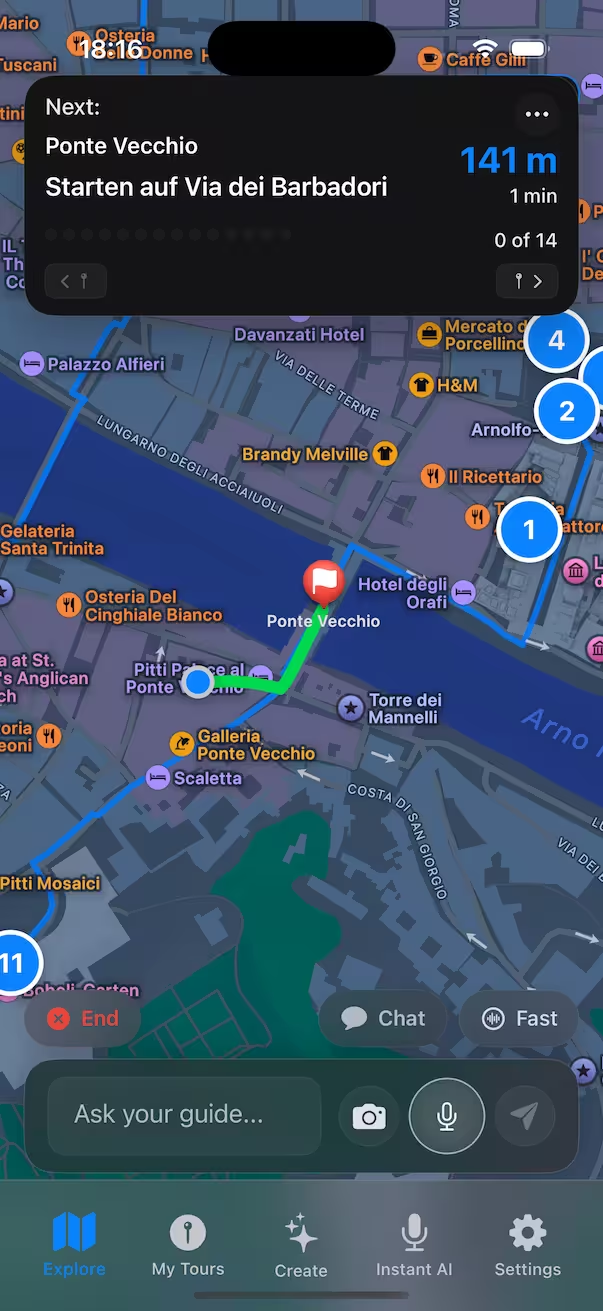
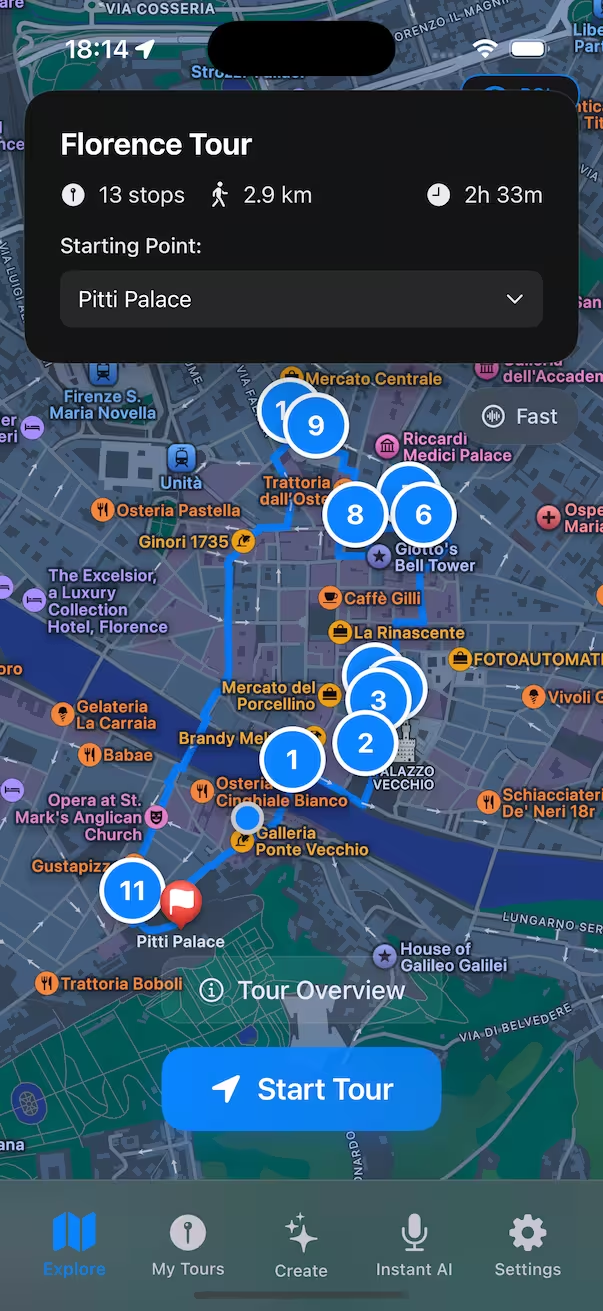
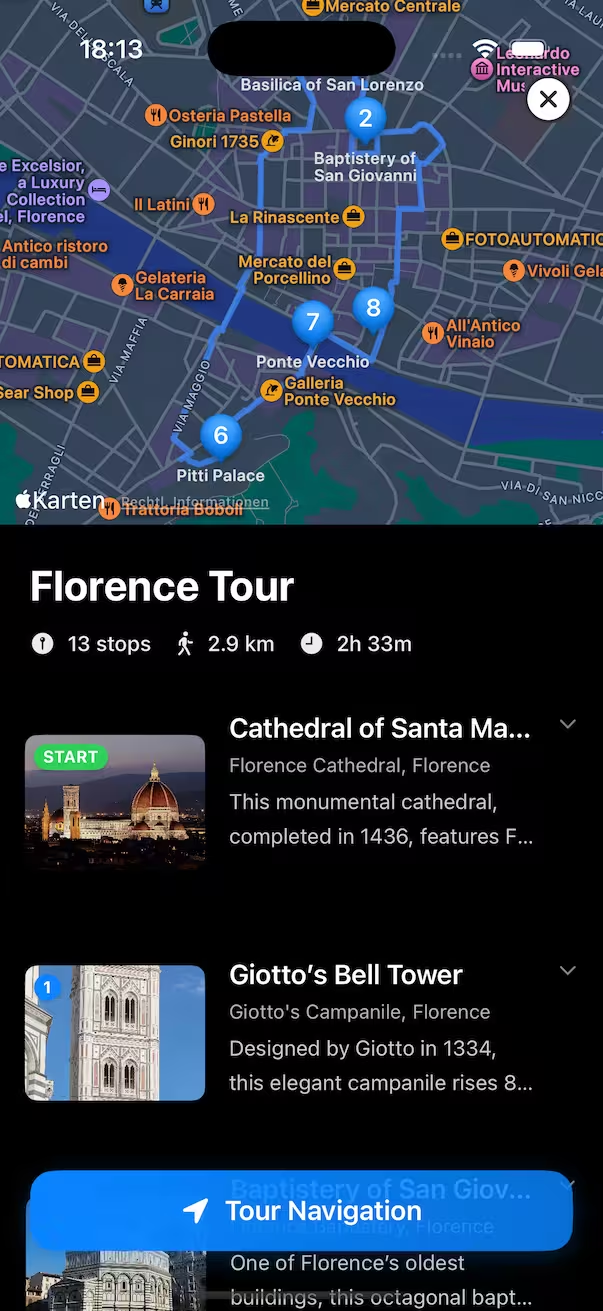
The classic Dresden tour: 8 stops, 6.7 km, about 3 h on foot
Your live AI guide and the self-guided Dresden route, together in your browser.