Best Time to Visit Berlin
Month-by-month weather, crowds and prices, plus a full calendar of festivals and events worth planning a trip around.
Best monthsMay, Sep
CheapestJan, Nov
Avoid–
BusiestJul, Aug

When is the best time to visit Berlin?
Come in May or early September. May brings 19°C, long light evenings and the Carnival of Cultures, while early September has summer warmth without July's crowds. January is the cheapest and emptiest month with hotels from about 60 euro. The one week to dodge is the first of September, when IFA and the Basketball World Cup book the city out.
Start our tool and find your best time to visit Berlin
Your perfect month
Free · ~30 seconds
or tap a month directly
What matters to you?
And this?
Best overall: May, Sep. Late May (after Whitsun) and the first half of September are the real sweet spot: 19 to 24°C, long evenings, parks in full green or late-summer gold, and crowds you can work around. Just steer clear of the IFA week (4 to 8 September) when hotels spike.
Best value: Jan, Nov. January (outside the Berlinale week) and November bring the lowest hotel rates of the year, hotels from about 60 euro, zero queues at the Reichstag dome, and museums you have almost to yourself.
Avoid: Sep. The first week of September for anyone without a hotel booked: IFA (4 to 8 Sep) and the FIBA Women's World Cup (4 to 13 Sep) double-book the city, pushing rates above high summer. The Marathon Sunday (27 Sep) then shuts central streets from 8 am to 3 pm.
- January: Tough month, 4°C. This is the one month Berlin belongs to Berliners again. Cafes in Prenzlauer Berg are slow and local, the clubs run their quietest stretch before the spring season, and you can stand alone in a Museum Island gallery. The grey skies and short days are the trade, and for the prices and the calm it is a fair one.
- February: Good time, 6°C. Berlinale fortnight is the one time winter Berlin feels electric: queues outside the Berlinale Palast, talk of films in every cafe, the whole city in a cinematic mood. Either ride that wave or come in the cheaper, calmer weeks around it. There is no in-between, and both versions are good.
- March: Good time, 10°C. March is the last properly quiet month before spring fills Berlin. The city shakes off winter, terrace tables and asparagus stands appear, and yet you can still walk into most places without a booking. That calm closes fast once April brings the first day-trippers, so use it while it lasts.
- April: Great time, 14°C. April is the locals' favourite secret: the city green and reawakening, terraces busy, blossom everywhere, yet without the summer prices or crowds. It can still turn cold and showery in a heartbeat, but catch a clear spring day here and Berlin feels at its most liveable.
- May: Great time, 19°C. May is Berlin firing on all cylinders: warm enough for the parks, light late into the evening, and humming with open-air life from Tempelhofer Feld to the canals. The Carnival of Cultures is the one weekend the city visibly lets loose, a genuinely joyful 5,000-strong parade through Kreuzberg. Come after the 25th and you get the weather with the long weekends behind you.
- June: Great time, 24°C. June is when Berlin's outdoor life truly takes over. The light barely fades before 10 pm, the Fete de la Musique turns 300 stages across the city into one free street party on the 21st, and the beer gardens and lakes stay busy till dark. The afternoon storms pass fast and the washed evening light afterward is the best of the summer.
- July: Good time, 25°C. July is Berlin in full festival flood: Lollapalooza, Pride, classical open-airs and long lake afternoons. It is hot, busy and pricey, and midday in the treeless centre is a slog. But the Tiergarten and Treptower Park stay measurably cooler, and a late swim at Wannsee or Schlachtensee is the proper Berlin answer to the heat.
- August: Good time, 25°C. August is long, warm Berlin evenings and a city that never really stops in summer. Rave the Planet rolls the Love Parade spirit back through the Tiergarten, the Long Night of Museums turns 70-plus collections into one all-night crawl, and the lakes stay warm into September. The heat-island nights in Mitte are the real catch, so pick accommodation with a fan or a quieter, greener district.
- September: Good time, 21°C. Early September is the connoisseur's Berlin: summer warmth without the July crush, the Musikfest filling the Philharmonie, and the city open and easy before Marathon Sunday locks down the centre. The catch is the calendar. Time it for 1 to 12 September but dodge the IFA and FIBA hotel spike, and avoid arriving the Marathon weekend if you want to move freely.
- October: Good time, 15°C. October is romantic, unhurried Berlin. Golden foliage in the Tiergarten, the Festival of Lights throwing colour onto the Brandenburg Gate after dark, and the heat and summer crowds both gone. Days shorten fast, but the early dusk is exactly what makes the light festival and the first Gluhwein of the year feel right.
- November: Good time, 9°C. November is Berlin stripped back and introspective: short grey days, cosy Kneipen, and the city to yourself before the festive rush. It is not the month for sunshine, but it is the one for cheap hotels, empty museums and the first Gluhwein stands appearing as the markets quietly set up at month's end.
- December: Tough month, 5°C. December is the Christmas-market Berlin people picture: Gluhwein steam, fairy lights, roasting chestnuts and the markets at their best in the early dark. Come before the 17th and you get all the atmosphere at off-peak prices. From Christmas week on it turns crowded and dear, with European short-break visitors flooding in for the markets and New Year.
Berlin weather by month
HighLowRainfall
Jan4°
Feb6°
Mar10°
Apr14°
May19°
Jun24°
Jul25°
Aug25°
Sep21°
Oct15°
Nov9°
Dec5°
| Month | Temp | Rain | Sun | Crowds | Prices | Highlight |
|---|---|---|---|---|---|---|
| Jan | 4° / 0° | 54mm · 13 rainy days | 3.0 h/day | ●○○○○ | ●○○○○ | |
| Feb | 6° / 0° | 41mm · 10 rainy days | 5.5 h/day | ●●○○○ | ●●○○○ | Berlinale (Berlin International Film Festival) |
| Mar | 10° / 1° | 44mm · 12 rainy days | 7.1 h/day | ●●○○○ | ●●○○○ | ITB Berlin (International Travel Trade Show) |
| Apr | 14° / 4° | 34mm · 9 rainy days | 10.0 h/day | ●●○○○ | ●●○○○ | Cherry Blossom Festival |
| May | 19° / 9° | 42mm · 9 rainy days | 11.3 h/day | ●●●○○ | ●●●○○ | Carnival of Cultures |
| Jun | 24° / 14° | 70mm · 10 rainy days | 12.4 h/day | ●●●○○ | ●●●○○ | Long Night of Sciences |
| Jul | 25° / 15° | 70mm · 11 rainy days | 12.1 h/day | ●●●●○ | ●●●●○ | Classic Open Air |
| Aug | 25° / 16° | 52mm · 10 rainy days | 11.1 h/day | ●●●●○ | ●●●●○ | Rave the Planet Parade |
| Sep | 21° / 12° | 40mm · 8 rainy days | 9.2 h/day | ●●●●○ | ●●●●○ | Musikfest Berlin |
| Oct | 15° / 8° | 56mm · 11 rainy days | 5.9 h/day | ●●●○○ | ●●●○○ | Festival of Lights |
| Nov | 9° / 4° | 44mm · 10 rainy days | 4.0 h/day | ●●○○○ | ●●○○○ | Berlin Christmas Markets |
| Dec | 5° / 1° | 53mm · 13 rainy days | 2.7 h/day | ●●●○○ | ●●●○○ | Berlin Christmas Markets |
How we score this: weather = long-run climate normals (Open-Meteo), crowds & prices = relative season read, events checked yearly against official dates.
Best time to visit Berlin: weather, prices & crowds
Best months for good weather
May, Jun, Sep
May and early September give Berlin its most reliable run of warm, dry days: 19 to 24°C, light until nearly 9:30 pm at midsummer, and far fewer of the thundery afternoons that hit July.
Quietest months to avoid the crowds
Jan, Nov
January and November are the quiet months. International visitors thin right out, the Reichstag dome and Museum Island have no real queues, and you can get a Saturday table in Prenzlauer Berg without booking.
Cheapest time to visit Berlin
Jan, Apr, Nov
January is Berlin's cheapest month, with midrange hotels from around 60 euro a night and museums near empty. November and the April shoulder run a close second, well below the July to September peak.
Best time for festivals and events
Oct, Dec
Mid-October the Festival of Lights throws projections onto the Brandenburg Gate, Berliner Dom and TV Tower for ten free nights, and from late November over 80 Christmas markets light up, led by the historic Gendarmenmarkt.
How many days do you need in Berlin?
Berlin needs at least three days to do justice to its history and scale. Four or five days let you add the neighbourhoods and galleries that make the city so hard to summarise. A weekend pass is possible but leaves half the story untold.

One day
The essential core
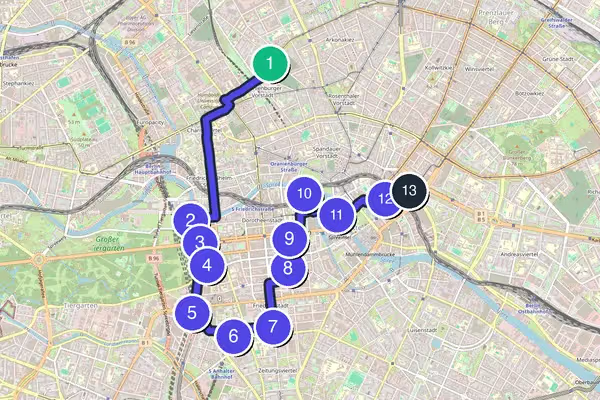
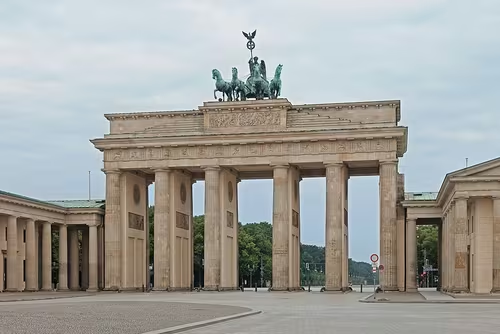
One day means the historic heart: Brandenburg Gate, the Reichstag dome (book three months ahead), the Memorial to the Murdered Jews of Europe and the elegant Gendarmenmarkt. Tie these together on a self-guided Berlin walking tour covering 13 stops across 9.5 km in about 3.9 hours, a strong spine for a single-day visit.
Two days
Add the divided city
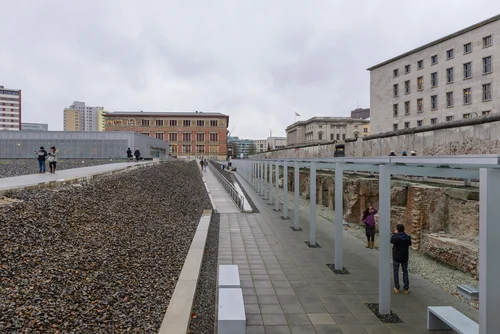
Day two turns to the Cold War layer: the Berlin Wall Memorial on Bernauer Strasse, the sobering Topography of Terror, Checkpoint Charlie and Potsdamer Platz, where the Wall once ran. End the afternoon in Prenzlauer Berg or Kreuzberg and you have a full two-day picture of Berlin's two defining stories.
Three daysRecommended
Museum Island and beyond
Three days is the sweet spot for most visitors. Reserve day three for Museum Island, the UNESCO-listed cluster of five museums on the Spree, where the Neues Museum alone can fill a morning with Queen Nefertiti and the Berlin Gold Hat. A late afternoon walk along the Spree back toward Mitte rounds off the day neatly.
Four days or more
Districts, palaces and nightlife
A fourth day opens up Charlottenburg Palace, a Tempelhofer Feld afternoon on the former airport runways, and the distinct character of Neukolln or the canal-side bars of Kreuzberg. Five or more days reveal the Berlin that locals live in: Markthalle Neun on a Thursday, the Hamburger Bahnhof contemporary collection, and the clubs that earned the city its reputation.
Best time to visit Berlin by traveller type
Same city, different trip. Here's the month that fits how you're travelling.
🧭
Best time to visit Berlin for the first time
MaySep
May or 1 to 12 September: pleasant temperatures, long days, everything open, and you slip in before the Marathon weekend and around the costly IFA week. The classic best-overall answer.
❤️
Best time to visit Berlin for couples
OctFeb
Early October for the Festival of Lights and golden foliage in the Tiergarten, or Berlinale week in February for cinema-charged evenings and low off-season hotel prices.
💶
Best time to visit Berlin on a budget
JanNov
January (outside the Berlinale) or November: hotels from around 60 euro, near-empty state museums at 10 to 14 euro, and free highlights like the Festival of Lights and Fete de la Musique to time around.
🍝
Best time to visit Berlin for food and wine
SepJun
September after IFA, when the restaurant scene is back at full tilt and Grunewald mushroom season starts, or June for white-asparagus end-of-season and Markthalle Neun's Thursday street-food market.
Best time for a tour of Berlin
Berlin is a flat, sprawling walk, and at 9.5 km from the Berlin Wall Memorial down to Alexanderplatz the season really sets the mood. Late April through June is the sweet spot: highs climb from 14 to 24 °C, daylight stretches past 9 pm, and the long open stretch from the Brandenburg Gate across to Potsdamer Platz, with no trees and full sun, is comfortable rather than punishing. September is the connoisseur's month, around 20 °C with the fewest wet days of the year (just 8) and golden light on Museum Island. July and August push to 25 °C and bring the heaviest crowds, so the exposed plaza in front of the Reichstag bakes by midday. Winter is the hard sell: January barely reaches 4 °C, drops below freezing at night, rains or sleets on 13 days, and goes dark by 5 pm, which makes the somber walk past Checkpoint Charlie and the Memorial to the Murdered Jews of Europe a cold, grey slog.
The good news is that with AI Tourguide the clock is yours. It runs entirely in your browser, no app, no download, no login, so on a hot August day you can start your Berlin tour at 8 am while the square in front of the Brandenburg Gate is still cool and empty, then break for coffee whenever you like. A voice-first guide leads the whole way, tells the real stories behind the Wall and Bebelplatz, asks you questions, remembers your answers, and adapts as you go, in 13 languages. You keep full control of route, pace, and breaks, and the climate decides your hour instead of a tour operator's fixed departure time.
 +9
+9All 13 stops are already on the map.
You just press start.
You just press start.
 AI Tourguide
You just read the route.
Now walk it with a guide in your ear.
Press start wherever you are, even hundreds of kilometres from Berlin, and the guide begins telling its stories right away. In the city, pick any of the 13 stops to start from: it leads you there, then talks with you the whole route, asking, listening, remembering, and shaping the tour around your answers.
13stops9.5km3.9hours11languages
▶Start the tour freeFree to start · Runs in your browser · No app, no download
Berlin events and festivals calendar
Annual highlights worth timing a trip around, listed month by month.
February
🎬 FilmBerlinale (Berlin International Film Festival) Internationale Filmfestspiele Berlin
Feb 12–22 ~
Mid-February, eleven days, with the Golden Bear awarded on the closing night. Dates shift slightly each year within the February window.
The Berlinale is the world's largest publicly attended film festival, screening over 400 films across more than 300 cinemas, from the flagship Berlinale Palast at Potsdamer Platz to the Zoo Palast and Delphi.
March
🎉 FestivalITB Berlin (International Travel Trade Show) ITB Berlin
Mar 3–5 ~
Early March, three days. The show runs annually in the first week of March at Messe Berlin, with a public day on Saturday.
ITB is the world's largest travel trade fair, with over 5,800 exhibitors filling the Messe Berlin grounds.
April
🌸 Seasonal natureCherry Blossom Festival Kirschbluetenfest Gaerten der Welt
Apr 11–12 ~
Bloom window late March to mid-April; the festival weekend falls on the peak blossom weekend in April, which varies by year.
The Gardens of the World in Marzahn celebrate over 80 cherry trees in their Japanese Garden with ikebana demonstrations and tea ceremonies on the festival weekend.
May
🎭 CarnivalCarnival of Cultures Karneval der Kulturen
May 22–25 ~
Whitsun weekend each year; the parade falls on the Sunday, with the street festival running across the long weekend.
Berlin's biggest street festival, with a parade of 5,000 performers in 150-plus groups winding through Kreuzberg and a four-day street party around Blucherplatz.
June
🎨 Art and cultureLong Night of Sciences Lange Nacht der Wissenschaften
Jun 6 ~
One Saturday in early summer, from 5 pm to midnight.
For one evening, 60 research institutions across Berlin, from university labs to observatories, open their doors from 5 pm to midnight with experiments, demonstrations and behind-the-scenes tours.
🎨 Art and cultureFederal Government Open Day Tag der offenen Tuer der Bundesregierung
Jun 20–21 ~
Usually one weekend in summer, typically in June or August, when the Chancellery and federal ministries open to the public.
The Chancellery and federal ministries open to the public for two days, with stage talks and a chance to walk through normally sealed government buildings.
🎵 MusicFete de la Musique Fete de la Musique Berlin
Jun 21
Summer solstice, 21 June every year.
On the longest day, over 300 free stages spring up across 12 districts, playing outdoors from 2 to 10 pm and moving indoors after, covering every genre from techno to classical.
🎵 MusicState Opera for Everyone Staatsoper für alle
Jun 24 ~
One evening in late June on Bebelplatz, with the programme and conductor announced each season.
The Staatsoper gives a free open-air concert on Bebelplatz, drawing up to 25,000 people, with a world-class programme screened large for the crowd.
July
🎵 MusicClassic Open Air Classic Open Air Gendarmenmarkt
Jul 9–14 ~
Mid-July, six concert nights at the Gendarmenmarkt.
Seven evenings of classical and crossover concerts on the Gendarmenmarkt, set between the twin domes of the French and German cathedrals, Berlin's most elegant square turned into a night-time stage.
🎵 MusicLollapalooza Berlin
Jul 18–19 ~
Mid-to-late July, two days at the Olympiastadion and Olympiapark.
Berlin's biggest music festival draws over 60,000 people a day to the Olympiastadion and surrounding Olympiapark in the Westend, with major international headliners across multiple stages.
🏳️🌈 PrideBerlin Pride (CSD) Christopher Street Day Berlin
Jul 25 ~
Late July; Pride month runs late June to late July, with the parade on the last Saturday of July.
Germany's largest Pride parade marches from Leipziger Strasse to the Brandenburg Gate, the climax of a Pride season that runs from late June.
August
🎵 MusicRave the Planet Parade Rave the Planet
Aug 15 ~
One Saturday in August, from around 2 to 10 pm along the Strasse des 17. Juni.
The successor to the legendary Love Parade rolls floats down the Strasse des 17.
🎵 MusicMusikfest Berlin
Aug 28 – Sep 23 ~
Late August to late September, nearly four weeks of programming at the Philharmonie and other concert halls.
Berlin's flagship classical-music festival brings the world's leading orchestras and soloists to the Philharmonie and other concert halls across nearly four weeks of programming.
🌙 Museum nightLong Night of Museums Lange Nacht der Museen
Aug 29 ~
Late August, from 6 pm to 2 am, with shuttle buses linking participating museums.
Over 70 museums open from 6 pm to 2 am for a single combined ticket of about 18 euro, with shuttle buses linking them and special after-dark tours, performances and talks throughout the night.
🏃 SportISTAF Athletics Meeting ISTAF Berlin
Aug 30 ~
Late August or early September at the Olympiastadion, often on the same weekend as the Long Night of Museums.
One of the world's oldest athletics meetings draws around 30,000 spectators to the Olympiastadion for a single afternoon of top-tier track and field, often falling on the same weekend as the Long Night of Museums.
September
🎨 Art and cultureIFA (Innovation For All) IFA Berlin
Sep 4–8 ~
Early September, five days at the Messe Berlin grounds.
The world's largest consumer-electronics trade show fills the Messe Berlin grounds with 1,900-plus exhibitors.
🏃 SportFIBA Women's Basketball World Cup
Sep 4–13 ~
Early to mid-September; Berlin hosts rotating editions of the tournament, typically at the Uber Arena and Max-Schmeling-Halle.
Sixteen nations compete across the Uber Arena and Max-Schmeling-Halle, with up to 17,000 spectators in the main arena.
🎨 Art and cultureOpen Monument Day Tag des offenen Denkmals
Sep 13 ~
Second Sunday of September every year, as part of the Germany-wide European Heritage Days.
Historic buildings normally closed to the public open their doors across the whole city for one day, from private apartment blocks to working government offices, part of a Germany-wide heritage day.
🏃 SportBerlin Marathon BMW Berlin-Marathon
Sep 27 ~
Last Sunday of September every year.
Over 40,000 runners take on the world's fastest marathon course, a flat 42.195 km route past the Brandenburg Gate that has produced multiple world records.
October
💡 LightsFestival of Lights
Oct 9–18 ~
Ten nights in mid-October after sunset, with a new theme announced each year.
For ten evenings, landmarks including the Brandenburg Gate, Berliner Dom and TV Tower are lit with large-scale projections and installations, shown free every night after sunset across Mitte and beyond.
November
🎄 Christmas marketBerlin Christmas Markets Berliner Weihnachtsmaerkte
Nov 23 – Dec 31
Late November to New Year, with most markets opening in the week before the first Advent Sunday and running to 26 to 31 December.
Over 80 Christmas markets run across the city, from the upscale Gendarmenmarkt (23 Nov to 31 Dec) to Charlottenburg Palace and the family-friendly Alexanderplatz.
Insider tips for visiting Berlin
The rules buried in forums, in one place.
- Book the Reichstag dome exactly three months ahead. The online portal at visite.bundestag.de opens the slot window precisely three months before your date at midnight, and in July and August the popular 10 am to 2 pm slots go within the first hour of the first available week. If you miss it, register in person at the visitor centre at least two hours before, if there is leftover capacity.
- Avoid the state museums on Mondays. The Staatliche Museen on Museum Island (Altes Museum, Neues Museum, Bode, Alte Nationalgalerie) close Mondays, and the Bode also closes Tuesdays. The Pergamon has been shut completely since October 2023, with a partial reopening not before June 2027. Monday alternatives that stay open: Humboldt Forum (closed Tuesdays instead), DDR Museum, Tranenpalast and the always-open Holocaust Memorial.
- For the September IFA and FIBA weeks, book your hotel at least four months ahead. The first week of September is double-booked by IFA (4 to 8 Sep) at Messe Berlin and the Basketball World Cup (4 to 13 Sep) at the Uber Arena, so two major events run at once. Play the east to west price gap: Messedamm hotels spike with IFA, while the Ostbahnhof side near the arena can be cheaper.
- For the Carnival of Cultures parade on Sunday 24 May, be in place by 11 am. The parade starts at 1:30 pm on Frankfurter Allee, but security barriers go up from 11 am, and Kreuzberg and Neukolln streets close. Skip the overloaded U-Bahn Schonleinstrasse and take the S-Bahn to Treptower Park, then walk in.
- Tempelhofer Feld is best on a weekday before 11 am. Berlin's favourite green space, a former airport, fills up from 11 am on July and August weekends. There is bike hire on site and grilling zones to the north and south, while kitesurfers take the eastern runway. Do not walk barefoot on the asphalt at midday, it gets genuinely hot.
- For the Berlinale in February, buy public screening tickets, not press ones. Tickets for all competition films go on sale to the public from around 1 February at berlinale.de/tickets from about 10 euro. The Berlinale Palast at Potsdamer Platz is the flagship, with the Zoo Palast, Delphi and CinemaxX as alternatives. The Panorama strand has the widest, most accessible programme.
- See the Festival of Lights after 9 pm on a Monday or Tuesday. The best projection spots are the Brandenburg Gate, Berliner Dom, TV Tower and Potsdamer Platz, but weekends draw crushes. Monday and Tuesday are noticeably calmer. Parking is restricted and traffic snarls, so arrive by S-Bahn.
- Skip the Marathon weekend if you want to move around the city. On Sunday 27 September, road closures hit Mitte from 8 am: the Brandenburg Gate, Unter den Linden, the Tiergarten and Kurfurstendamm are shut until about 3 pm, and the S- and U-Bahn run overloaded. If you are there anyway, base yourself on Museum Island (reachable via Hackescher Markt) or in Prenzlauer Berg.
Public holidays in Berlin
On these dates many shops and offices close, transport thins out, and sights can be mobbed or shut. Plan around them.
| Date | Holiday | What closes |
|---|---|---|
| Jan 1 | New Year's Day | Everything closed: shops, offices and most restaurants. Night-bus services still run from New Year's Eve into the morning, and public transport is on a Sunday timetable. |
| Mar 8 | International Women's Day (Berlin only) | A public holiday only in Berlin: offices and parts of retail close, but museums keep normal hours. A quiet, low-key day in the city. |
| Apr 3 | Good Friday | A 'silent holiday': alcohol service is restricted in many places, clubs and dance events are legally banned, and shops close. Churches are full; most museums stay open. |
| Apr 6 | Easter Monday | Shops closed, museums open, public transport on a Sunday timetable. Falls inside the Berlin Easter school holidays (30 March to 10 April), a tourism high point. |
| May 1 | Labour Day | Shops shut and political demonstrations fill Kreuzberg and Neukolln. The MyFest street party runs around Lausitzer Platz; expect transport restrictions in those districts and many bars staying open. |
| May 14 | Ascension Day | Shops closed. With the 15th taken as a bridge day, this is a long weekend that pulls day-trippers into Berlin. Father's Day grilling crowds fill the Tiergarten and Treptower Park. |
| May 25 | Whit Monday | Shops closed. The Carnival of Cultures weekend (22 to 25 May) packs Kreuzberg; expect closed streets, an overloaded U-Bahn and big crowds across the southern districts. |
| Oct 3 | German Unity Day | Falls on a Saturday in 2026. Open-air celebrations fill the Brandenburg Gate and Strasse des 17. Juni; shops close and central Mitte gets busy. |
| Dec 25 | Christmas Day | Everything closed. Most Christmas markets are shut or on shortened hours, and public transport runs a holiday timetable. Plan an indoor day or a long walk. |
| Dec 26 | Boxing Day | Falls on a Saturday in 2026. Some Christmas markets reopen, restaurants are booked out, and the week to New Year is one of the busiest and priciest of the year. |
Berlin month by month
January in Berlin
High4°C / 39°F
Low0°C
Rain54mm / 13 rainy days
Sun3.0 h/day
Daylight8 h/day
Humidity85%
Crowds●○○○○Prices●○○○○
January is Berlin at its emptiest and cheapest, the post-Christmas lull before the Berlinale wakes the city in February. Daytime highs hover around 4°C and the light is short and grey, with sunset near 4 pm and only about 3 hours of sun a day, so dress for raw cold rather than deep snow. Museums and the Reichstag dome are close to queue-free. This is the month to see Berlin without a single tour group in the way.
The vibe This is the one month Berlin belongs to Berliners again. Cafes in Prenzlauer Berg are slow and local, the clubs run their quietest stretch before the spring season, and you can stand alone in a Museum Island gallery. The grey skies and short days are the trade, and for the prices and the calm it is a fair one.
Don't miss The state museums on a quiet Tuesday feel almost private, and the warming huts and Gluhwein stands of the last winter markets linger into the first days of the month. Ice skating runs at the Neukolln and Lankwitz rinks all month.
Crowd drivers No trade fairs, no international visitor wave, and Berlin school holidays only at the very start. The lowest tourist pressure of the entire year.
In season Deep winter is Gruenkohl (kale) and Kassler season, and a steaming bowl of pea soup at a traditional Eckkneipe is the classic Berlin antidote to the cold.
Heads up 1 January is a public holiday with shops and museums shut and transport on a Sunday timetable. State museums also close Mondays year-round.
The cheapest month of the year; midrange hotels from around 60 euro a night.
February in Berlin
High6°C / 43°F
Low0°C
Rain41mm / 10 rainy days
Sun5.5 h/day
Daylight10 h/day
Humidity80%
Crowds●●○○○Prices●●○○○
February is still deep winter, around 6°C and damp, but the Berlinale lights it up. For eleven days the world's biggest public film festival takes over, with 400-plus films across 300 cinemas and the Golden Bear awarded on the 22nd. Outside that week the city stays quiet and cheap. Berlin school holidays (2 to 7 Feb) add a little local demand at the start, then it settles back into off-season calm.
The vibe Berlinale fortnight is the one time winter Berlin feels electric: queues outside the Berlinale Palast, talk of films in every cafe, the whole city in a cinematic mood. Either ride that wave or come in the cheaper, calmer weeks around it. There is no in-between, and both versions are good.
Don't miss Buy a public Berlinale ticket from about 10 euro and watch a competition film at the Zoo Palast or Delphi. Indoor culture comes into its own: the Gemaldegalerie and the Hamburger Bahnhof contemporary collection reward a long grey afternoon.
Crowd drivers The Berlinale (12 to 22 Feb) drives local and industry demand and books out central cinemas and hotels; the rest of the month stays firmly low season.
In season Berlinale aside, February is comfort-food season: Currywurst from a heated Imbiss and rich Eisbein (pork knuckle) with sauerkraut in the old Berlin Kneipen.
Heads up State museums closed Mondays (Bode also Tuesdays); the Pergamon stays fully shut until at least June 2027.
Low season overall, but Berlinale week (12 to 22 Feb) pushes Mitte and Prenzlauer Berg hotels up 30 to 100%.
Events this month
🎬 FilmBerlinale (Berlin International Film Festival) Internationale Filmfestspiele Berlin
Feb 12–22 ~
Mid-February, eleven days, with the Golden Bear awarded on the closing night. Dates shift slightly each year within the February window.
The Berlinale is the world's largest publicly attended film festival, screening over 400 films across more than 300 cinemas, from the flagship Berlinale Palast at Potsdamer Platz to the Zoo Palast and Delphi. The Golden Bear is awarded on the closing night, 22 February.
It is the one stretch of deep winter when Berlin feels electric, and unlike Cannes or Venice the public can actually buy tickets to the competition films from about 10 euro.
March in Berlin
High10°C / 49°F
Low1°C
Rain44mm / 12 rainy days
Sun7.1 h/day
Daylight12 h/day
Humidity76%
Crowds●●○○○Prices●●○○○
March is the first stirring of spring: highs climbing toward 9 to 10°C, the first cafe terraces reopening, and daylight stretching back past 12 hours by month's end. Crowds stay moderate apart from ITB week, when the world's largest travel trade fair fills the convention hotels. Evenings are still cold, dropping to 8 to 10°C, so keep a jacket close. A genuinely quiet, good-value window before the spring rush.
The vibe March is the last properly quiet month before spring fills Berlin. The city shakes off winter, terrace tables and asparagus stands appear, and yet you can still walk into most places without a booking. That calm closes fast once April brings the first day-trippers, so use it while it lasts.
Don't miss The first warm days bring Berliners out onto Tempelhofer Feld and along the canals. Indoor highlights stay strong, and the Botanical Garden's glasshouses are at their lush best before the outdoor blooms arrive.
Crowd drivers The ITB Berlin travel fair (3 to 5 Mar, 60th edition in 2026) spikes convention hotels for one week; otherwise low spring demand.
In season Bear's garlic (Barlauch) appears in March, turning up as pesto and soup on seasonal menus across the city's bistros.
Still a shoulder month, but the ITB travel fair (3 to 5 Mar) lifts city hotels 40 to 60% that week.
Events this month
🎉 FestivalITB Berlin (International Travel Trade Show) ITB Berlin
Mar 3–5 ~
Early March, three days. The show runs annually in the first week of March at Messe Berlin, with a public day on Saturday.
ITB is the world's largest travel trade fair, with over 5,800 exhibitors filling the Messe Berlin grounds. It is primarily a trade event, though the Saturday public day opens it to ordinary travellers hunting destination ideas and deals.
For most visitors it matters mainly as a warning: ITB week pushes city hotels 40 to 60% above the surrounding weeks, so non-attendees should book around it or come another time.
April in Berlin
High14°C / 57°F
Low4°C
Rain34mm / 9 rainy days
Sun10.0 h/day
Daylight14 h/day
Humidity69%
Crowds●●○○○Prices●●○○○
April is Berlin's quietest overall month and a real sweet spot for value, with highs reaching a pleasant 14°C, the least rain of the year (34mm over 9 days) and 14 hours of daylight by month's end. Cherry blossom draws day-trippers to the Gardens of the World and Bornholmer Strasse. The Berlin Easter holidays (30 March to 10 April) nudge prices up over the Easter weekend, but the rest of the month is calm and cheap.
The vibe April is the locals' favourite secret: the city green and reawakening, terraces busy, blossom everywhere, yet without the summer prices or crowds. It can still turn cold and showery in a heartbeat, but catch a clear spring day here and Berlin feels at its most liveable.
Don't miss Cherry blossom peaks late March to mid-April at the Gardens of the World, Britzer Garten and the old Wall line on Bornholmer Strasse. The Cherry Blossom Festival (11 to 12 April) brings a 2 to 3 hour queue on its peak weekend, while a weekday visit is near empty.
Crowd drivers Easter holidays (30 March to 10 April) and the cherry-blossom weekends bring day-trippers; weekday April stays the calmest of the year.
In season White asparagus (Spargel) season opens in April and runs to late June, the single most celebrated seasonal dish on every German menu.
Heads up Good Friday (3 April) is a silent holiday: clubs and dance events banned, alcohol service restricted, shops shut. Easter Monday shops close, museums open.
One of the best-value months; hotel average around 75 euro, with only a slight Easter weekend bump.
Events this month
🌸 Seasonal natureCherry Blossom Festival Kirschbluetenfest Gaerten der Welt
Apr 11–12 ~
Bloom window late March to mid-April; the festival weekend falls on the peak blossom weekend in April, which varies by year.
The Gardens of the World in Marzahn celebrate over 80 cherry trees in their Japanese Garden with ikebana demonstrations and tea ceremonies on the festival weekend. Berlin's wider blossom, much of it planted along the former Wall, also peaks at Bornholmer Strasse and the Britzer Garten.
The peak weekend means a 2 to 3 hour queue, but a weekday visit to the blossom spots is near deserted, a free and quietly beautiful sign that the long winter is finally over.

May in Berlin
High19°C / 66°F
Low9°C
Rain42mm / 9 rainy days
Sun11.3 h/day
Daylight16 h/day
Humidity66%
Crowds●●●○○Prices●●●○○
May is the month most Berliners name as the best time to visit: highs around 19°C, light until nearly 9:30 pm, parks in full green and the city out on every terrace and lawn. Long-weekend travel around 1 May, Ascension (14 May) and Whitsun (25 May) lifts demand, and the Carnival of Cultures over Whitsun weekend (22 to 25 May) fills Kreuzberg. Crowds are real but not yet at summer pitch. The standout month for weather and value combined.
The vibe May is Berlin firing on all cylinders: warm enough for the parks, light late into the evening, and humming with open-air life from Tempelhofer Feld to the canals. The Carnival of Cultures is the one weekend the city visibly lets loose, a genuinely joyful 5,000-strong parade through Kreuzberg. Come after the 25th and you get the weather with the long weekends behind you.
Don't miss The Carnival of Cultures parade (24 May, 30th anniversary in 2026) sends 5,000 performers through Kreuzberg. Open-air swimming opens at Wannsee around late May, and the beer gardens along the Spree and at Prater in Prenzlauer Berg hit full swing.
Crowd drivers Three long weekends (1 May, Ascension 14 May, Whitsun 25 May) and the Carnival of Cultures (22 to 25 May) drive German domestic travel and pack the southern districts.
In season Peak white-asparagus month: order it classic with hollandaise and new potatoes, the dish every Berlin restaurant builds a special menu around in May.
Shoulder turning busy; the 1 May and Whitsun long weekends warrant booking three to four weeks ahead.
Events this month
🎭 CarnivalCarnival of Cultures Karneval der Kulturen
May 22–25 ~
Whitsun weekend each year; the parade falls on the Sunday, with the street festival running across the long weekend.
Berlin's biggest street festival, with a parade of 5,000 performers in 150-plus groups winding through Kreuzberg and a four-day street party around Blucherplatz. The parade starts at 1:30 pm on the Sunday of Whitsun weekend.
It is the one weekend Berlin visibly lets loose, a joyous, multicultural carnival that takes over Kreuzberg completely, free and unmissable if your trip lands on Whitsun.
June in Berlin
High24°C / 75°F
Low14°C
Rain70mm / 10 rainy days
Sun12.4 h/day
Daylight17 h/day
Humidity63%
Crowds●●●○○Prices●●●○○
June opens the Berlin summer warm and very long on light: highs around 24°C, sunset near 9:30 pm and roughly 17 hours of daylight at the solstice. It is the wettest month on paper (70mm), but that falls as short, sharp thunderstorms of 30 to 60 minutes, not all-day rain. The free open-air festival calendar kicks off, and the city is out late every evening. A strong, energetic month before the July peak.
The vibe June is when Berlin's outdoor life truly takes over. The light barely fades before 10 pm, the Fete de la Musique turns 300 stages across the city into one free street party on the 21st, and the beer gardens and lakes stay busy till dark. The afternoon storms pass fast and the washed evening light afterward is the best of the summer.
Don't miss Fete de la Musique (21 June) puts 300-plus free stages across 12 districts. The Long Night of Sciences (6 June) opens 60 research institutions until midnight, and Staatsoper fur alle (24 June) gives a free open-air concert for up to 25,000 on Bebelplatz.
Crowd drivers Summer arrivals from the UK, Netherlands and Scandinavia ramp up, plus walking-tour season and a packed weekend events calendar.
In season Last call for white asparagus before the season closes, and the start of the Treptower Park and Tiergarten grilling culture that runs all summer.
Prices climb into summer; flights from the UK, Netherlands and Scandinavia rise, midrange hotels 85 to 110 euro.
Events this month
🎵 MusicFete de la Musique Fete de la Musique Berlin
Jun 21
Summer solstice, 21 June every year.
On the longest day, over 300 free stages spring up across 12 districts, playing outdoors from 2 to 10 pm and moving indoors after, covering every genre from techno to classical. Each year a featured district takes the spotlight.
It is the best free music night of the year, the whole city turned into one open-air concert under nearly 17 hours of solstice daylight.
🎨 Art and cultureLong Night of Sciences Lange Nacht der Wissenschaften
Jun 6 ~
One Saturday in early summer, from 5 pm to midnight.
For one evening, 60 research institutions across Berlin, from university labs to observatories, open their doors from 5 pm to midnight with experiments, demonstrations and behind-the-scenes tours. Entry is 7.50 euro, free for under-sixes.
It is a rare chance to get inside normally off-limits labs and research halls, genuinely family-friendly and one of the most curious-minded nights on the city calendar.
🎵 MusicState Opera for Everyone Staatsoper für alle
Jun 24 ~
One evening in late June on Bebelplatz, with the programme and conductor announced each season.
The Staatsoper gives a free open-air concert on Bebelplatz, drawing up to 25,000 people, with a world-class programme screened large for the crowd.
A world-class orchestra for free on one of Berlin's grandest squares is hard to beat, though you need to claim a spot early in the afternoon.
🎨 Art and cultureFederal Government Open Day Tag der offenen Tuer der Bundesregierung
Jun 20–21 ~
Usually one weekend in summer, typically in June or August, when the Chancellery and federal ministries open to the public.
The Chancellery and federal ministries open to the public for two days, with stage talks and a chance to walk through normally sealed government buildings.
Getting inside the Chancellery is a once-a-year opportunity, and it pairs naturally with the free Reichstag dome a short walk away for a full day of political Berlin.
🎵 MusicClassic Open Air Classic Open Air Gendarmenmarkt
Jul 9–14 ~
Mid-July, six concert nights at the Gendarmenmarkt.
Seven evenings of classical and crossover concerts on the Gendarmenmarkt, set between the twin domes of the French and German cathedrals, Berlin's most elegant square turned into a night-time stage.
The setting is the draw: classical music under the floodlit cathedrals on arguably the prettiest square in the city. Tickets sell early, so book well ahead.

July in Berlin
High25°C / 76°F
Low15°C
Rain70mm / 11 rainy days
Sun12.1 h/day
Daylight16 h/day
Humidity65%
Crowds●●●●○Prices●●●●○
July is peak international tourism in Berlin, with the Berlin summer holidays running from 9 July and the city at its busiest and most expensive. Highs sit around 25°C but heatwaves can push 35 to 38°C, and Mitte and Prenzlauer Berg run 3 to 4°C hotter than the leafy outskirts as an urban heat island. Best walking is early (7 to 10 am) or after 6 pm. This is the month for festivals and lake days, less so for queue-free sightseeing.
The vibe July is Berlin in full festival flood: Lollapalooza, Pride, classical open-airs and long lake afternoons. It is hot, busy and pricey, and midday in the treeless centre is a slog. But the Tiergarten and Treptower Park stay measurably cooler, and a late swim at Wannsee or Schlachtensee is the proper Berlin answer to the heat.
Don't miss Lollapalooza (18 to 19 July) draws 60,000-plus a day to the Olympiastadion, and Berlin Pride / CSD (25 July) sends Germany's largest parade to the Brandenburg Gate. Cool off at Wannsee, Schlachtensee or Mueggelsee, swimmable at 22 to 25°C in a hot summer.
Crowd drivers Every major European school system on summer break at once, the Berlin summer holidays from 9 July, Lollapalooza (18 to 19 July) and CSD Pride (25 July).
In season High summer is Berlin street-food season: the Thursday street-food market at Markthalle Neun in Kreuzberg, Doner and Currywurst at any hour, and ice cream as a survival strategy.
Heads up Heat note rather than closure: book the Reichstag dome three months ahead, as the cool early and late slots vanish first in July.
Demand near its yearly high; midrange hotels 120 to 160 euro, and the Lollapalooza weekend sells out.
Events this month
🎵 MusicLollapalooza Berlin
Jul 18–19 ~
Mid-to-late July, two days at the Olympiastadion and Olympiapark.
Berlin's biggest music festival draws over 60,000 people a day to the Olympiastadion and surrounding Olympiapark in the Westend, with major international headliners across multiple stages.
If your taste runs to a big international line-up it is the summer's marquee event, but plan transport into the Westend and book a hotel by spring, as the festival weekend sells out.
🏳️🌈 PrideBerlin Pride (CSD) Christopher Street Day Berlin
Jul 25 ~
Late July; Pride month runs late June to late July, with the parade on the last Saturday of July.
Germany's largest Pride parade marches from Leipziger Strasse to the Brandenburg Gate, the climax of a Pride season that runs from late June. The streets of central Mitte close for the day.
It is one of Europe's biggest and most exuberant Pride celebrations; stake out a spot on the route early, as central Mitte is sealed off and packed.
🎵 MusicClassic Open Air Classic Open Air Gendarmenmarkt
Jul 9–14 ~
Mid-July, six concert nights at the Gendarmenmarkt.
Seven evenings of classical and crossover concerts on the Gendarmenmarkt, set between the twin domes of the French and German cathedrals, Berlin's most elegant square turned into a night-time stage.
The setting is the draw: classical music under the floodlit cathedrals on arguably the prettiest square in the city. Tickets sell early, so book well ahead.

August in Berlin
High25°C / 77°F
Low16°C
Rain52mm / 10 rainy days
Sun11.1 h/day
Daylight15 h/day
Humidity66%
Crowds●●●●○Prices●●●●○
August stays warm and busy, highs around 25°C with the Berlin school holidays running to the 22nd. Heatwaves and tropical nights (lows above 20°C) hit the inner city, which sees roughly 15 such nights a year and can mean sleeping with heat and street noise both. Rain eases off (52mm), the sun lingers, and the festival rhythm keeps going. A strong month for nightlife and the open-air calendar, hot but not as crowded as July's absolute peak.
The vibe August is long, warm Berlin evenings and a city that never really stops in summer. Rave the Planet rolls the Love Parade spirit back through the Tiergarten, the Long Night of Museums turns 70-plus collections into one all-night crawl, and the lakes stay warm into September. The heat-island nights in Mitte are the real catch, so pick accommodation with a fan or a quieter, greener district.
Don't miss The Long Night of Museums (29 August, about 18 euro) opens 70-plus museums from 6 pm to 2 am with shuttle buses, the cheapest culture binge of the year. Rave the Planet (15 August) parades from the Strasse des 17. Juni, and ISTAF athletics fills the Olympiastadion on the 30th.
Crowd drivers Berlin summer holidays running to 22 August, peak European travel season, and the Rave the Planet parade (15 August) drawing a techno mass into the centre.
In season Late summer brings Pfifferlinge (chanterelles) onto menus and the first plums for Zwetschgenkuchen, alongside the all-summer Spree and park grilling culture.
The second most expensive month; the Berlin summer holidays run to 22 August, so book hostels 6 weeks ahead.
Events this month
🎵 MusicRave the Planet Parade Rave the Planet
Aug 15 ~
One Saturday in August, from around 2 to 10 pm along the Strasse des 17. Juni.
The successor to the legendary Love Parade rolls floats down the Strasse des 17. Juni past the Brandenburg Gate, a mass techno procession through the Tiergarten that blocks the surrounding streets for the afternoon.
It is the closest thing Berlin still has to the old Love Parade, a vast free street rave at the heart of techno's spiritual home, though the afternoon gets hot and crowded.
🌙 Museum nightLong Night of Museums Lange Nacht der Museen
Aug 29 ~
Late August, from 6 pm to 2 am, with shuttle buses linking participating museums.
Over 70 museums open from 6 pm to 2 am for a single combined ticket of about 18 euro, with shuttle buses linking them and special after-dark tours, performances and talks throughout the night.
It is the cheapest culture binge of the year: 70-plus museums for 18 euro. Queues build from 8 pm, so start at a smaller venue and work toward the headline collections.
🏃 SportISTAF Athletics Meeting ISTAF Berlin
Aug 30 ~
Late August or early September at the Olympiastadion, often on the same weekend as the Long Night of Museums.
One of the world's oldest athletics meetings draws around 30,000 spectators to the Olympiastadion for a single afternoon of top-tier track and field, often falling on the same weekend as the Long Night of Museums.
Watching world-class athletics in the historic 1936 Olympiastadion is a great Berlin afternoon, and it pairs neatly with the museum night the night before.
🎵 MusicMusikfest Berlin
Aug 28 – Sep 23 ~
Late August to late September, nearly four weeks of programming at the Philharmonie and other concert halls.
Berlin's flagship classical-music festival brings the world's leading orchestras and soloists to the Philharmonie and other concert halls across nearly four weeks of programming.
It is the reason early September is the most musically rich window of the year, with the Berliner Philharmoniker and visiting orchestras back from the summer break.

September in Berlin
High21°C / 69°F
Low12°C
Rain40mm / 8 rainy days
Sun9.2 h/day
Daylight13 h/day
Humidity72%
Crowds●●●●○Prices●●●●○
September is Berlin's busiest month for events, even if July tops it for sheer tourist mass. Highs of 21°C, the lowest rain of autumn (40mm over 8 days) and still-long evenings make the weather lovely, but four big events stack up: IFA (4 to 8 Sep), the FIBA Women's World Cup (4 to 13 Sep), Musikfest Berlin to the 23rd, and the Marathon on the 27th. The first half before the Marathon is the city at its golden, late-summer best.
The vibe Early September is the connoisseur's Berlin: summer warmth without the July crush, the Musikfest filling the Philharmonie, and the city open and easy before Marathon Sunday locks down the centre. The catch is the calendar. Time it for 1 to 12 September but dodge the IFA and FIBA hotel spike, and avoid arriving the Marathon weekend if you want to move freely.
Don't miss Musikfest Berlin runs world-class orchestras at the Philharmonie to the 23rd, Open Monument Day (13 Sep) unlocks normally closed historic buildings citywide, and the BMW Berlin Marathon (27 Sep) runs its world-record course past the Brandenburg Gate.
Crowd drivers Two major trade-and-sport events at once, IFA (4 to 8 Sep) and the FIBA Women's World Cup (4 to 13 Sep), plus the Berlin Marathon (27 Sep) closing central streets.
In season Grunewald mushroom season starts mid-September, and the restaurant scene is at full power again once IFA clears, the foodie's favourite Berlin window.
The tightest month: IFA plus FIBA double-book the first week, so book the Marathon weekend and early September 4 months ahead.
Events this month
🎨 Art and cultureIFA (Innovation For All) IFA Berlin
Sep 4–8 ~
Early September, five days at the Messe Berlin grounds.
The world's largest consumer-electronics trade show fills the Messe Berlin grounds with 1,900-plus exhibitors. Consumer tickets are sold, but for most travellers its real effect is on the hotel market.
IFA week sends hotel prices soaring, and combined with the FIBA World Cup it makes the first week of September the city's tightest and most expensive: book four months ahead or avoid.
🏃 SportFIBA Women's Basketball World Cup
Sep 4–13 ~
Early to mid-September; Berlin hosts rotating editions of the tournament, typically at the Uber Arena and Max-Schmeling-Halle.
Sixteen nations compete across the Uber Arena and Max-Schmeling-Halle, with up to 17,000 spectators in the main arena. When the event overlaps with IFA, it doubles the strain on hotels.
A great event for sports fans, but its overlap with IFA is the single biggest reason to lock in September accommodation early or shift your dates to mid-month.
🎵 MusicMusikfest Berlin
Aug 28 – Sep 23 ~
Late August to late September, nearly four weeks of programming at the Philharmonie and other concert halls.
Berlin's flagship classical-music festival brings the world's leading orchestras and soloists to the Philharmonie and other concert halls across nearly four weeks of programming.
It is the reason early September is the most musically rich window of the year, with the Berliner Philharmoniker and visiting orchestras back from the summer break.
🎨 Art and cultureOpen Monument Day Tag des offenen Denkmals
Sep 13 ~
Second Sunday of September every year, as part of the Germany-wide European Heritage Days.
Historic buildings normally closed to the public open their doors across the whole city for one day, from private apartment blocks to working government offices, part of a Germany-wide heritage day.
It is a once-a-year chance to get inside buildings you can otherwise only admire from the street, free and especially rewarding in a city as layered with history as Berlin.
🏃 SportBerlin Marathon BMW Berlin-Marathon
Sep 27 ~
Last Sunday of September every year.
Over 40,000 runners take on the world's fastest marathon course, a flat 42.195 km route past the Brandenburg Gate that has produced multiple world records. Road closures across central Berlin run all morning.
Spectating is free and electric, but the closures shut Mitte and the Tiergarten from 8 am to 3 pm and overload the transit system, so plan to watch the race or stay out of the centre that day.

October in Berlin
High15°C / 58°F
Low8°C
Rain56mm / 11 rainy days
Sun5.9 h/day
Daylight11 h/day
Humidity82%
Crowds●●●○○Prices●●●○○
October is Berlin slowing into autumn: highs of 15°C, falling light (sunset back to around 6 pm) and the foliage turning gold across the Tiergarten and Grunewald. After the September Marathon the city relaxes, and the Festival of Lights (9 to 18 Oct) makes the early-dark evenings a free spectacle. The German autumn holidays (19 to 31 Oct) bring domestic families, then prices drop again toward month's end. A calm, characterful, value-friendly month.
The vibe October is romantic, unhurried Berlin. Golden foliage in the Tiergarten, the Festival of Lights throwing colour onto the Brandenburg Gate after dark, and the heat and summer crowds both gone. Days shorten fast, but the early dusk is exactly what makes the light festival and the first Gluhwein of the year feel right.
Don't miss The Festival of Lights (9 to 18 Oct) projects onto the Brandenburg Gate, Berliner Dom and TV Tower nightly after dusk. Autumn foliage peaks mid to late October in the Tiergarten, Grunewald and Volkspark Friedrichshain, and Grunewald mushroom season runs on.
Crowd drivers The Festival of Lights (9 to 18 Oct) draws evening crowds to Mitte, and the German autumn school holidays (19 to 31 Oct) bring domestic families.
In season Autumn brings Pilze (wild mushrooms), Federweisser (new wine) and the first Kohl dishes, with mushroom menus across the city's bistros.
Prices ease after the Marathon; German autumn school holidays (19 to 31 Oct) bring families, then rates fall late month.
Events this month
💡 LightsFestival of Lights
Oct 9–18 ~
Ten nights in mid-October after sunset, with a new theme announced each year.
For ten evenings, landmarks including the Brandenburg Gate, Berliner Dom and TV Tower are lit with large-scale projections and installations, shown free every night after sunset across Mitte and beyond.
It is a spectacular free show that turns Berlin's early autumn darkness into an asset; go after 9 pm on a Monday or Tuesday to dodge the weekend crush.

November in Berlin
High9°C / 47°F
Low4°C
Rain44mm / 10 rainy days
Sun4.0 h/day
Daylight9 h/day
Humidity87%
Crowds●●○○○Prices●●○○○
November is the quiet bridge between autumn and Christmas, often grey with drizzle, highs around 9°C and barely 4 hours of sun a day. There is little to draw crowds until the Christmas markets begin from the 18th to 23rd, so for most of the month Berlin is calm and cheap. Days are short, with sunset before 4:30 pm by month's end. The best-value month after January, if you do not mind the muted light.
The vibe November is Berlin stripped back and introspective: short grey days, cosy Kneipen, and the city to yourself before the festive rush. It is not the month for sunshine, but it is the one for cheap hotels, empty museums and the first Gluhwein stands appearing as the markets quietly set up at month's end.
Don't miss Indoor culture is the draw: the Gemaldegalerie, Hamburger Bahnhof and the Humboldt Forum reward grey afternoons. The first Christmas markets light up from the 18th to 23rd, led by the historic Gendarmenmarkt, before the December crowds arrive.
Crowd drivers Almost nothing until the Christmas markets open (18 to 23 Nov); the rest of the month is among the quietest of the year.
In season Game season (Wild) peaks in November, with venison and wild boar on traditional menus, and the first Gluhwein and roasted almonds as the markets open.
A genuine value window: hotels 65 to 85 euro and almost no international visitor wave before the markets open.
Events this month
🎄 Christmas marketBerlin Christmas Markets Berliner Weihnachtsmaerkte
Nov 23 – Dec 31
Late November to New Year, with most markets opening in the week before the first Advent Sunday and running to 26 to 31 December.
Over 80 Christmas markets run across the city, from the upscale Gendarmenmarkt (23 Nov to 31 Dec) to Charlottenburg Palace and the family-friendly Alexanderplatz. The Gendarmenmarkt is Berlin's only paid market, at 1 to 2 euro entry.
Berlin has the widest spread of Christmas markets of any German city, and visiting before 17 December gets you the full atmosphere before the Christmas-week crowds and price spikes.

December in Berlin
High5°C / 42°F
Low1°C
Rain53mm / 13 rainy days
Sun2.7 h/day
Daylight8 h/day
Humidity87%
Crowds●●●○○Prices●●●○○
December is Berlin at its most festive and its darkest: highs around 5°C, sunset near 3:50 pm and under 8 hours of daylight, all of which actually flatters the Christmas markets and Festival glow. Over 80 markets run, led by the historic Gendarmenmarkt (the city's only paid one, at 1 to 2 euro). The month splits in two: quiet and affordable to mid-month, then crowds and prices spiking hard from Christmas week into New Year.
The vibe December is the Christmas-market Berlin people picture: Gluhwein steam, fairy lights, roasting chestnuts and the markets at their best in the early dark. Come before the 17th and you get all the atmosphere at off-peak prices. From Christmas week on it turns crowded and dear, with European short-break visitors flooding in for the markets and New Year.
Don't miss Over 80 Christmas markets run, including Gendarmenmarkt (23 Nov to 31 Dec), Charlottenburg Palace and Alexanderplatz. The quality Gendarmenmarkt charges 1 to 2 euro entry; the best light atmosphere is 5 to 7 pm on a weekday.
Crowd drivers Christmas markets pull short-break visitors from the UK, Netherlands and Scandinavia; the 23rd to 31st books out, while the first half stays calm.
In season Full Christmas-market fare: Gluhwein, roasted almonds, Bratwurst, Stollen and Lebkuchen, plus roast goose (Gans) as the classic festive dinner.
Heads up Christmas Day (25 Dec) closes everything, most markets included; Boxing Day (26 Dec, a Saturday in 2026) reopens some markets but restaurants book out.
A split month: calm and cheap from the 1st to 17th, then Christmas-week hotels jump to 130 euro-plus and the 23rd to 31st books out.
Events this month
🎄 Christmas marketBerlin Christmas Markets Berliner Weihnachtsmaerkte
Nov 23 – Dec 31
Late November to New Year, with most markets opening in the week before the first Advent Sunday and running to 26 to 31 December.
Over 80 Christmas markets run across the city, from the upscale Gendarmenmarkt (23 Nov to 31 Dec) to Charlottenburg Palace and the family-friendly Alexanderplatz. The Gendarmenmarkt is Berlin's only paid market, at 1 to 2 euro entry.
Berlin has the widest spread of Christmas markets of any German city, and visiting before 17 December gets you the full atmosphere before the Christmas-week crowds and price spikes.
Frequently asked questions
What is the best time to visit Berlin?
May and early September are the consensus best time to visit Berlin. May brings 19°C, long evenings light until nearly 9:30 pm, blossom and the Carnival of Cultures, while 1 to 12 September delivers late-summer warmth, the Musikfest and fewer crowds. Both sit just outside the priciest weeks, so book a few weeks ahead and you get the weather without the peak.
What is the cheapest month to visit Berlin?
January is Berlin's cheapest month, with midrange hotels from around 60 euro a night and museums close to empty. November runs a close second before the Christmas markets open, and the April shoulder is good value too. The trade-off in January is short, grey days, highs near 4°C and only about 3 hours of sun, but the calm and the prices make up for it.
When should I avoid visiting Berlin?
Avoid the first week of September if you have not booked a hotel. IFA (4 to 8 Sep) and the FIBA Women's Basketball World Cup (4 to 13 Sep) double-book the city and push rates above high summer. Then skip the Marathon Sunday (27 Sep) if you want to move freely, as road closures shut Mitte and the Tiergarten from 8 am to 3 pm.
What is Berlin like in December?
December Berlin is festive and dark, with highs around 5°C and sunset near 3:50 pm, which actually flatters the Christmas-market glow. Over 80 markets run, led by the historic Gendarmenmarkt at 1 to 2 euro entry. The month splits in two: calm and affordable to the 17th, then crowds and prices spiking from Christmas week into New Year, when hotels top 130 euro.
Does it get hot in Berlin in summer?
Berlin is continental, not Mediterranean. July and August average highs of about 25°C, but heatwaves can hit 35 to 38°C, and Mitte and Prenzlauer Berg run 3 to 4°C hotter than the leafy outskirts as an urban heat island. The inner city sees roughly 15 tropical nights a year above 20°C. Walk early or after 6 pm, and cool off at Wannsee or Schlachtensee.
Does it rain a lot in Berlin?
Rainfall is fairly even across the year, around 9 to 13 wet days a month. June and July are wettest at 70mm each, but that falls as short summer thunderstorms of 30 to 60 minutes, not all-day rain. November and December are the greyest, with drizzle and barely 3 to 4 hours of sun a day. April is the driest month at 34mm over 9 days.
How is Berlin in October?
October is a calm, characterful month: highs of 15°C, golden foliage in the Tiergarten and Grunewald, and the summer crowds gone after the September Marathon. The Festival of Lights (9 to 18 Oct) makes the early-dark evenings a free spectacle. German autumn school holidays (19 to 31 Oct) bring domestic families, then prices ease again toward month's end.
Is the Pergamon Museum open?
No. The Pergamon Museum has been fully closed since October 2023 for renovation, with a partial reopening not expected before June 2027. Plan around it whenever you visit. Strong alternatives on Museum Island include the Neues Museum (Nefertiti bust), the Alte Nationalgalerie and the Humboldt Forum. Note the state museums close Mondays, and the Bode also closes Tuesdays.
How many days do I need in Berlin?
Three days cover the essentials: the Brandenburg Gate and Reichstag, Museum Island, and the East Side Gallery with Checkpoint Charlie and the Holocaust Memorial. Four to five days let you add Charlottenburg Palace, a Tempelhofer Feld afternoon and the Kreuzberg or Prenzlauer Berg scene. A week starts to reveal the distinct district character that makes Berlin so hard to sum up.
When are Berlin's Christmas markets open?
Most of Berlin's 80-plus Christmas markets open between 18 and 23 November and run to around 26 to 31 December, with some lasting into early January. The historic Gendarmenmarkt (23 Nov to 31 Dec) is the only paid one, at 1 to 2 euro. Visit before 17 December for the full atmosphere without the Christmas-week crowds; the best light is 5 to 7 pm on a weekday.

Any month, any day: your guide is already there
Whatever date you pick, a private human guide gets pricier and harder to book on weekends, holidays and in peak season. Our live AI guide, the one that walks with you and answers anything you ask out loud, works the opposite way.
One flat price, every day
No holiday, weekend, night or peak-season surcharge. A private guide in Berlin runs well over 100 euro for a half day, and more on holidays. Ours stays the same.
Available the moment you want it
Start at midnight or at dawn, on Christmas, in the snow, in the August heat. No sold-out high season, no booking weeks ahead.
Your pace, no meter running
Pause for a long lunch, restart after dark, repeat a stop. The tour simply waits for you.
Free to try, a fraction of the cost
Test it for free, then a transparent flat price that undercuts any private guide, in every season.
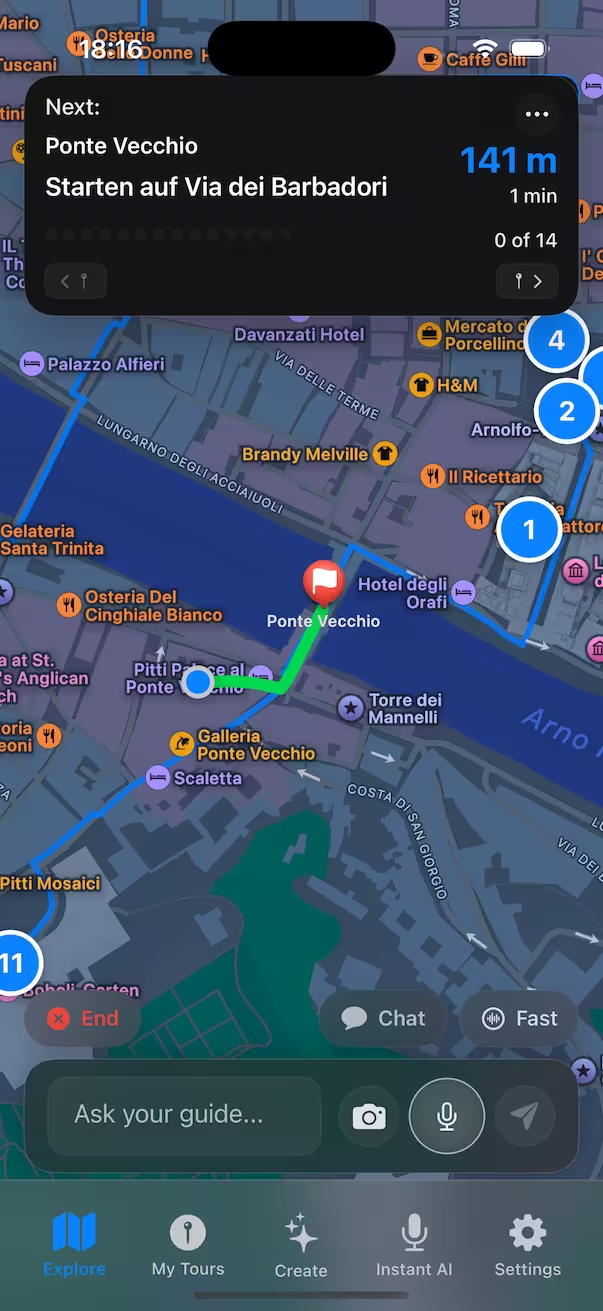
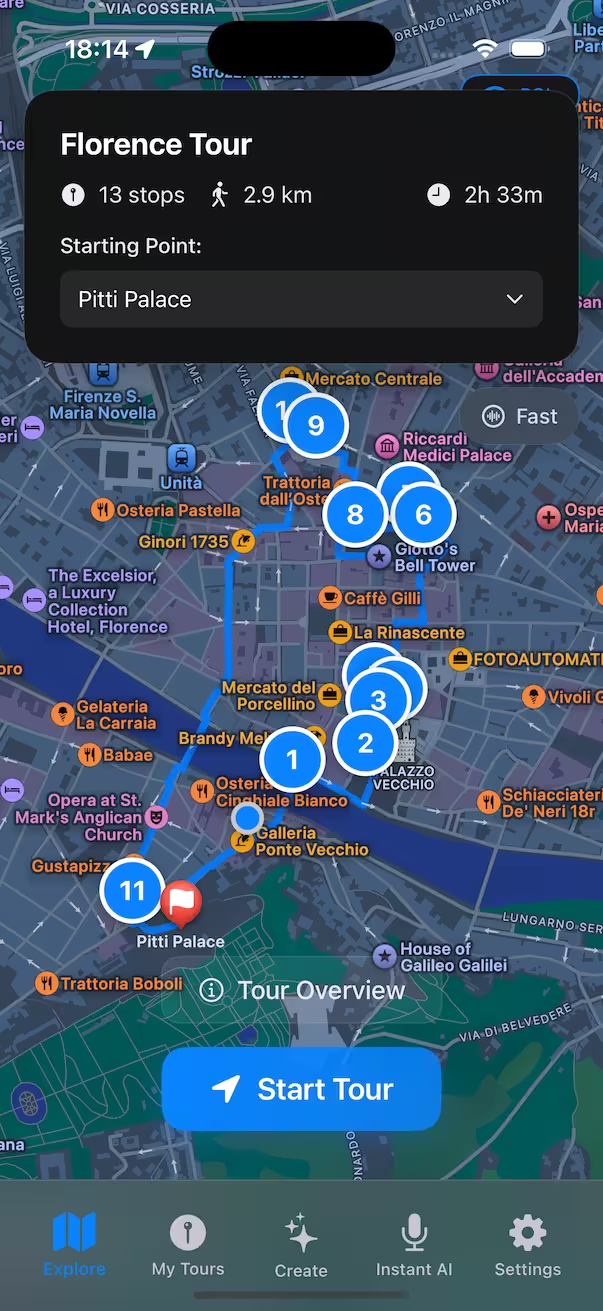
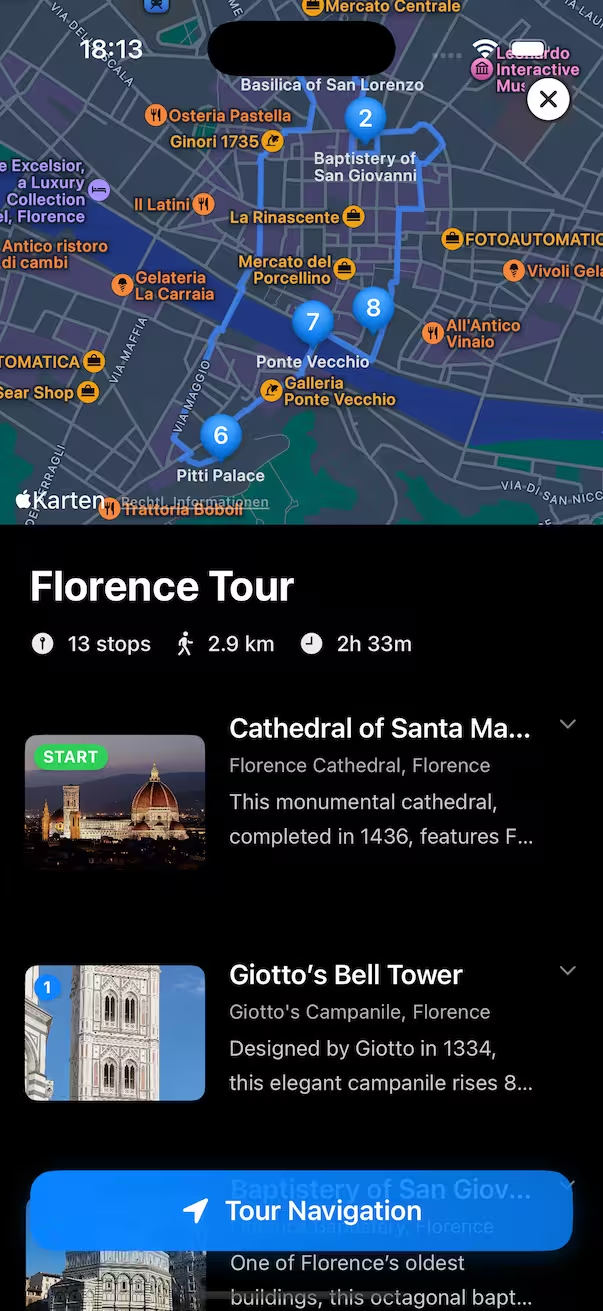
The classic Berlin tour: 13 stops, 9.5 km, about 4 h on foot
Your live AI guide and the self-guided Berlin route, together in your browser.