Best Time to Visit Linz
Month-by-month weather, crowds and prices, plus a full calendar of festivals and events worth planning a trip around.
Best monthsMay, Jun, Sep
CheapestJan, Feb, Nov
AvoidSep
BusiestSep, Dec
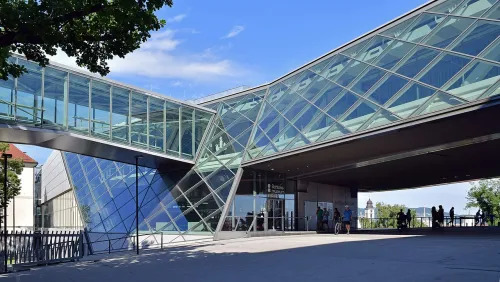
When is the best time to visit Linz?
Come in late September (the 14th to the 30th) for warm 19-23°C days, the Brucknerfest classical programme and the first autumn gold on the Pöstlingberg, all after the Ars Electronica festival peak has eased. Late May to mid-June is the best-value alternative: ideal walking weather and no festival pressure. Dodge 9-13 September, the Ars Electronica window, when central hotels double to 130-200 euros and book out months ahead. January and February are dead cheap at 60-85 euros a night, the trade being cold, grey, often foggy days.
Start our tool and find your best time to visit Linz
Your perfect month
Free · ~30 seconds
or tap a month directly
What matters to you?
And this?
Best overall: Sep, Jun. Late September (the 14th to the 30th) is the real sweet spot: 19-23°C, the Brucknerfest classical festival running at the Brucknerhaus, the first gold appearing on the Pöstlingberg, and hotels easing off the Ars Electronica peak of the 9th to 13th. Late May to mid-June is the equal-best value pick, with ideal walking weather and no festival crush.
Best value: Jan, Feb, Nov. January, February and November bring 3-star centre rooms at 60-90 euros a night, 35-40% under September, with no queues anywhere. The only major paid sight is the Ars Electronica Center (14 euros); the New Cathedral is free, and Lentos (6 euros) and the Castle Museum (6.50 euros) are cheap. The catch is short, cold, often foggy days.
Avoid: Sep. The 9th to 13th of September, the Ars Electronica festival window, unless that festival is exactly why you came. Hotels hit their annual maximum of 130-200 euros and sell out, rooms under 150 euros vanish, and even the Pöstlingberg tram has queues. It is glorious for new-media-art fans and stressful for everyone else.
- January: Tough month, 4°C. This is the one month you have the baroque Hauptplatz and the riverside almost to yourself. Morning fog is the honest price, but it usually lifts by lunchtime, and the museums are warm, uncrowded and cheap. Slow, calm and unhurried, the real Linz winter.
- February: Good time, 7°C. February is honest, unperformed Linz: no festival, no seasonal markup, no crowds. The grey is real, but so is the value, and the indoor culture circuit is yours without a queue. This is the city stripped back to its winter self.
- March: Good time, 11°C. March is the last genuinely quiet month before spring fills the city. Linz wakes up, the Botanical Garden bursts into blossom, and you still get a café table without a fight. That window closes fast once April's marathon and Easter crowds arrive, so use it.
- April: Great time, 15°C. April is spring proper: blossom on the Pöstlingberg, terraces open, and the city shaking off winter. The marathon Sunday brings a big race-day buzz and road closures along the Danube, glorious if you love the atmosphere, awkward if you do not. Plan around the 11th and 12th if road closures are not your thing.
- May: Great time, 19°C. May is the quietly excellent month, especially on the non-holiday midweeks. No festival pressure, no summer heat, just a green city at ease with itself. Pack a rain layer for the showers and you get Linz close to its best for spring-shoulder prices, the best-value weather window of the year.
- June: Good time, 25°C. June is the tipping point into full summer, and the long light evenings are the payoff. The Donaupromenade glows until well after nine, the riverbanks are green and the city feels alive without the high-summer heat or the September festival crush. This is Linz breathing easy.
- July: Good time, 26°C. July is hot, lively and river-focused. The Altstadt has little shade, so walk it before 10:00 or after 18:00 and save midday for the water or the air-conditioned museums. When the heat or the price of a private guide climbs, our in-browser AI tour guide is a flexible, flat-priced alternative at 5 euros an hour or 20 euros all-in, leading you stop to stop and telling the story of each place as you walk in the cooler early hours, with no app to download.
- August: Good time, 26°C. August is busy and warm rather than festival-frantic. The Pöstlingberg and the riverside hum with holidaymakers, and the lake is the place to be. It is the city in full summer-leisure mode: pleasant, sun-soaked and a touch crowded, but without September's price shock.
- September: Tough month, 21°C. September is Linz at maximum cultural intensity. The first half (the 9th to the 13th) is electric but overwhelming, with the city full and prices at their ceiling. The second half is the magic window: warm evenings, world-class Brucknerfest concerts, the first autumn gold appearing, and hotels easing off the peak. Time your visit for the 14th onward.
- October: Great time, 16°C. October is the couples' and colour month: gold-amber foliage on the Pöstlingberg, cool clear walking days, and the festival rush behind you. After the 11th the city settles into a calm, atmospheric, well-priced autumn, with the bonus of free museums on National Day. Cool, romantic and quiet.
- November: Good time, 9°C. November is Linz at its most introverted: grey, foggy mornings and almost no tourists, but cheap and calm. The reward comes late, when the Christmas market arrives on the 21st to brighten the final week and a half. Bring warm layers and patience for the short days, and you get the city for next to nothing.
- December: Tough month, 5°C. December trades January's emptiness for full festive bustle: lights, Glühwein, handmade crafts and crowds on the baroque Hauptplatz. It is genuinely beautiful, the market setting exceptional, but it is the second-busiest stretch of the year. Go on a weekday evening for the markets, and slip to the Volksgarten market when the main square fills up.
Linz weather by month
HighLowRainfall
Jan4°
Feb7°
Mar11°
Apr15°
May19°
Jun25°
Jul26°
Aug26°
Sep21°
Oct16°
Nov9°
Dec5°
| Month | Temp | Rain | Sun | Crowds | Prices | Highlight |
|---|---|---|---|---|---|---|
| Jan | 4° / -2° | 60mm · 13 rainy days | 4.2 h/day | ●○○○○ | ●○○○○ | |
| Feb | 7° / -1° | 47mm · 9 rainy days | 6.6 h/day | ●○○○○ | ●○○○○ | |
| Mar | 11° / 2° | 48mm · 10 rainy days | 8.1 h/day | ●●○○○ | ●●○○○ | |
| Apr | 15° / 5° | 56mm · 11 rainy days | 9.8 h/day | ●●○○○ | ●●○○○ | Linz Danube Marathon |
| May | 19° / 10° | 106mm · 16 rainy days | 9.6 h/day | ●●○○○ | ●●○○○ | Urfahr Spring Market |
| Jun | 25° / 15° | 81mm · 13 rainy days | 12.2 h/day | ●●●○○ | ●●○○○ | Long Night of the Stages |
| Jul | 26° / 16° | 85mm · 13 rainy days | 12.0 h/day | ●●●○○ | ●●●○○ | Pflasterspektakel Street Arts Festival |
| Aug | 26° / 16° | 93mm · 12 rainy days | 10.6 h/day | ●●●○○ | ●●●○○ | |
| Sep | 21° / 12° | 70mm · 10 rainy days | 8.9 h/day | ●●●●● | ●●●●● | Ars Electronica Festival |
| Oct | 16° / 8° | 57mm · 10 rainy days | 6.9 h/day | ●●●○○ | ●●●○○ | International Brucknerfest Linz |
| Nov | 9° / 3° | 59mm · 10 rainy days | 5.1 h/day | ●●○○○ | ●●○○○ | Linz Christmas Market on the Hauptplatz |
| Dec | 5° / 0° | 67mm · 12 rainy days | 4.2 h/day | ●●●●○ | ●●●●○ | Linz Christmas Market on the Hauptplatz |
How we score this: weather = long-run climate normals (Open-Meteo), crowds & prices = relative season read, events checked yearly against official dates.
Best time to visit Linz: weather, prices & crowds
Best months for good weather
Jun, Sep
June and September are Linz at its most comfortable: highs of 21-25°C, long golden evenings on the Donaupromenade with sunset near 21:00 in June, and far fewer of July's punishing 32°C-plus heat spikes. September keeps summer warmth while the air starts to soften.
Quietest months to avoid the crowds
Jan, Feb, Nov
January, February and November are when leisure visitors all but vanish. You walk into the Lentos or the Ars Electronica Center without a queue and have the baroque Hauptplatz, all 13,140 square metres of it, nearly to yourself.
Cheapest time to visit Linz
Jan, Feb, Nov
January and February are Linz's cheapest months: a 3-star centre hotel runs 60-85 euros a night, roughly 35-40% below the September peak of 130-200 euros. November (65-90 euros) is the last cheap window before the Christmas market opens on 21 November.
Best time for festivals and events
Sep, Jul, Dec
The free Linzer Klangwolke turns the Donaupark riverbank into an open-air spectacle for up to 100,000 people on the second weekend of September, the Pflasterspektakel fills the whole Altstadt with street artists in late July, and the Hauptplatz Christkindlmarkt lights up Austria's largest town-square Christmas market through December. Each is free to enter and unmistakably Linz.
How many days do you need in Linz?
Two days is the sweet spot for Linz. The riverside centre is compact enough to cover on foot, but the city spreads its highlights across different elevations and eras, so a single day leaves the Pöstlingberg and the modern Danube museums undone. A third day rewards those who want the outer reaches: the Mural Harbor, the Pleschinger See in summer, or a Mühlviertel day trip.
One day
Old town, cathedral and the Danube banks
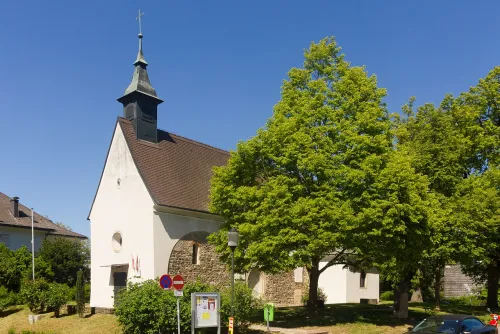
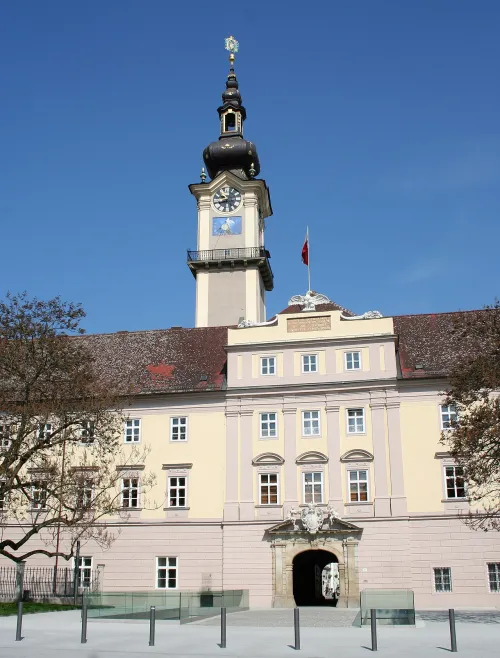
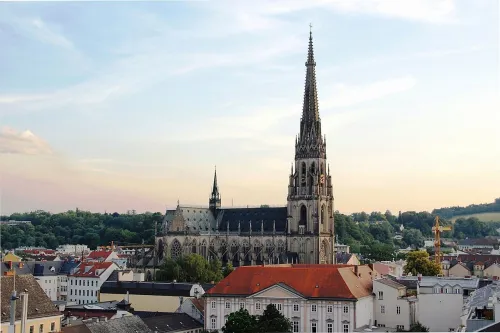
Start at the baroque Hauptplatz, one of the largest enclosed squares in Austria at 13,140 square metres, then walk up to Linz Castle and the Carolingian St. Martin's Church below it. The neo-Gothic New Cathedral (free entry, Austria's largest by capacity) anchors the south end of the historic core, and the Landhaus with its arcaded Planet Fountain courtyard connects everything. End the afternoon on the Donaupromenade, where the Lentos Art Museum glows against the river.
Two daysRecommended
Pöstlingberg, Ars Electronica Center and the river crossing
Ride the historic Pöstlingbergbahn tram to the 539-metre hilltop basilica for the city panorama, ideally before 09:00 when the morning fog has lifted. Cross the Nibelungenbrücke to the Ars Electronica Center, the LED-clad Museum of the Future facing the Danube. A self-guided Linz walking tour links all nine core stops across 7.2 km in about 3.1 hours and covers both banks. Leave early afternoon free for the Pleschinger See lake in summer, or for a Brucknerfest concert in September.
Three days
Markets, outer galleries and Mühlviertel
A third day opens up the city's quirkier side. The Mural Harbor guided tour (29.90 euros, book 2-4 weeks ahead in summer) takes you through the largest open-air street-art gallery in Austria in the old harbour district. The Saturday Südbahnhofmarkt Bauernmarkt (08:00-12:00) carries Mühlviertel cheeses and smoked Danube fish, with the best items gone by 11:00. Or head into the nearby Mühlviertel hills for the Sturm new-wine season in October.
Four days or more
Festival deep-dive or regional day trips
Four-plus days makes sense if you align with a major event. The Ars Electronica festival (five days in early September) spreads across three city zones, and the Brucknerfest runs three weeks of classical concerts at the Brucknerhaus. Beyond the city, Mauthausen and the Danube valley are under an hour away, and the Steyr old town is a 45-minute drive. September and October give the richest programme stacked against the most comfortable walking weather.
Best time to visit Linz by traveller type
Same city, different trip. Here's the month that fits how you're travelling.
🧭
Best time to visit Linz for the first time
MayJun
May or early June: the full museum circuit (Ars Electronica Center, Lentos, Castle Museum, Nordico, OK Linz) runs without September's triple-festival pressure, the Pöstlingbergbahn tram ride is at its best in mild weather, and hotel rates sit 30-40% below September.
❤️
Best time to visit Linz for couples
SepOct
Late September, after Ars Electronica and inside Brucknerfest: warm 19-23°C evenings, the first hints of autumn gold on the Pöstlingberg, world-class concerts at the Brucknerhaus, and long warm Donaupromenade sunsets, all without the extreme festival crowds of the 9th to 13th. October stretches the golden-hill window further.
💶
Best time to visit Linz on a budget
JanFeb
January or February: 3-star centre rooms at 60-85 euros a night. Lentos costs 6 euros, the Castle Museum 6.50 euros and the New Cathedral is free. For one cheap evening, the ORF Lange Nacht der Museen (3 October, around 15 euros) unlocks 7-plus Linz venues, and National Day (26 October) brings free or reduced state-museum entry.
🍝
Best time to visit Linz for food and wine
OctMay
October for Sturm (partially fermented new wine) season in the nearby Mühlviertel and Mauthausen wineries, and the Urfahraner Herbstmarkt with the best Linzer Torte stalls (the pastry was born here). May to June and October are peak Südbahnhofmarkt season, where the Saturday Bauernmarkt carries Mühlviertel cheeses and smoked Danube fish, with premium items gone by 11:00.
Worst time to visit Linz
The five days of Ars Electronica in early September are the single hardest stretch to visit Linz as a general tourist. Every central hotel sells out, rates jump to 130-200 euros a night and rooms under 150 euros disappear entirely. Even the Pöstlingbergbahn tram queues, and the three festival zones bring dense crowds to the OK Quarter, the Med Campus and the Danube Triangle. The Linz Danube Marathon weekend in mid-April is a secondary pinch point, spiking rooms 40-60% and closing Danube roads for the race course.
Still worth it for Both windows are excellent if the event itself is your reason for coming. Ars Electronica is Austria's most internationally visible new-media-art festival, and the marathon finish on the Hauptplatz is a free, dramatic spectator event worth planning around.
Go instead in May, June, September, when Linz is at its best.
Best time for a tour of Linz
The 7.2-kilometre loop through Linz rewards walkers most generously in May and October. May brings highs of around 19 °C with the trees fully leafed out along the Danube promenade, and while it is the rainiest spring month with up to 16 wet days, the showers are short and the light is long. The climb up to Pöstlingberg is comfortable, and the Hauptplatz sits open and pleasant rather than baking. October dials it back to a crisp 15 °C with clear skies and only ten days of rain, and footfall is thin enough that the courtyards of Linz Castle feel genuinely quiet. June through August is warm and genuinely summery, with highs touching 26 °C in July, but the New Cathedral and the Ars Electronica Center see noticeably busier queues and the Hauptplatz fills up through midday. September is particularly crowded, shoulder to shoulder on the riverside walk during the Ars Electronica Festival, so if you visit then, an early-morning start is non-negotiable. January and February are the leanest months for crowds, but highs hover around 4 to 7 °C and the days are short, which makes a three-hour walking tour feel longer than it is.
With AI Tourguide running in your browser, no download or booking required, the timing is entirely yours. On a warm June morning you can set off before the Hauptplatz fills up, take a long coffee break in the shade, and let the guide pick the conversation back up when you are ready to climb toward Linz Castle. The guide leads the whole way: greeting you at the first stop, telling stories about St. Martin's Church, asking what you noticed, and adapting what comes next based on what you say. Start your Linz tour whenever the forecast looks right, move at your own pace, and let the climate decide your hour rather than a fixed departure time.

 +5
+5All 9 stops are already on the map.
You just press start.
You just press start.
 AI Tourguide
You just read the route.
Now walk it with a guide in your ear.
Press start wherever you are, even hundreds of kilometres from Linz, and the guide begins telling its stories right away. In the city, pick any of the 9 stops to start from: it leads you there, then talks with you the whole route, asking, listening, remembering, and shaping the tour around your answers.
9stops7.2km3.1hours11languages
▶Start the tour freeFree to start · Runs in your browser · No app, no download
Linz events and festivals calendar
Annual highlights worth timing a trip around, listed month by month.
April
🏃 SportLinz Danube Marathon Oberbank Linz Donau Marathon
Apr 11–12 ~
the second weekend of April, marathon on the Sunday
Upper Austria's largest sports event, with more than 21,000 registered runners across nine formats (full, half, relay, 5K, juniors, Special Olympics).
May
🎉 FestivalUrfahr Spring Market Urfahraner Frühlingsmarkt
May 1–10 ~
the last Saturday of April plus nine days into May
The spring edition of the Urfahraner Jahrmarkt on the left Danube bank in Urfahr: rides, market stalls, food and regional crafts in the same format as the bigger autumn fair, opening on Labour Day, 1 May.
June
🎨 Art and cultureLong Night of the Stages Lange Nacht der Bühnen Linz
Jun 20 ~
a Saturday in mid-June
A one-night combined-ticket pass to theatres, performance venues and stages across Linz, now in its 12th edition.
July
🎉 FestivalPflasterspektakel Street Arts Festival Pflasterspektakel
Jul 23–25 ~
three days in late July
A three-day international street-art and performing-arts festival with 100-plus artists from 30-plus countries: juggling, acrobatics, theatre and music on stages across the entire Altstadt, from the Hauptplatz down the Landstraße and through the side streets.
September
🎨 Art and cultureArs Electronica Festival
Sep 9–13
five days in early September
A five-day new-media-art festival spread across three city zones (the OK Quarter, the Med Campus and the Danube Triangle), with a different theme each year, featuring exhibitions, performances, concerts and AI and tech talks.
🌸 Seasonal natureLinz Cloud of Sound Linzer Klangwolke
Sep 12 ~
the second weekend of September, main show at 20:30
An annual outdoor musical-theatrical spectacle in the Donaupark on the Danube, with a new title and concept each year, drawing up to 100,000 spectators to the riverbank.
🎵 MusicInternational Brucknerfest Linz Internationales Brucknerfest Linz
Sep 13–30
mid-to-late September into early October
A three-week classical-music festival at the Brucknerhaus concert hall, centred on Anton Bruckner's symphonies with international orchestras.
🎉 FestivalUrfahr Autumn Market Urfahraner Herbstmarkt
Sep 26 – Oct 4 ~
the last Saturday of September plus nine days
Austria's biggest traditional folk fair, a nine-day Jahrmarkt on the left Danube bank in Urfahr with rides, market stalls, food and regional crafts, drawing more than 500,000 visitors.
October
🌙 Museum nightLong Night of the Museums ORF Lange Nacht der Museen
Oct 3 ~
the first Saturday of October, 18:00 to 01:00
An Austria-wide museum night running 18:00 to 01:00, with Linz venues including the Ars Electronica Center, Lentos, the Castle Museum, Nordico and OK Linz.
🇮 HolidayAustrian National Day Nationalfeiertag
Oct 26
26 October
Austria's national day, commemorating the 1955 Declaration of Neutrality, with military ceremonies and free or reduced state-museum admission.
November
🎄 Christmas marketLinz Christmas Market on the Hauptplatz Christkindlmarkt am Hauptplatz
Nov 21 – Dec 24
21 November to Christmas Eve
Austria's largest town-square Christmas market: 160-plus stalls on the 13,140 square-metre baroque Hauptplatz framed by the Trinity Column, selling handmade pottery, glassware, jewellery and Glühwein.
🎄 Christmas marketVolksgarten Christmas Market Weihnachtsmarkt im Volksgarten
Nov 21 – Dec 24
21 November to Christmas Eve
A second, smaller market in the Volksgarten park, more local and less tourist-facing than the Hauptplatz, a good alternative when the main square gets crowded.
Insider tips for visiting Linz
The rules buried in forums, in one place.
- Skip the museum Monday trap. The Ars Electronica Center, Lentos, Castle Museum, Nordico and OK Linz are all closed Mondays. A visitor arriving Monday and leaving Wednesday gets one full museum day, not two, so plan the cultural day Tuesday to Sunday.
- Book Ars Electronica hotels by June. The five-day festival (9-13 September) fills every central hotel, and the Brucknerfest then holds demand through the 30th. September is a blackout month for last-minute deals: prices double versus January and rooms under 150 euros disappear.
- The Pflasterspektakel is calm and free on its Thursday preview. The street-art festival opens Thursday evening for artist warm-ups with low crowds, before 80,000-plus people descend Friday to Sunday (23-25 July). Thursday evening is the connoisseur's entry point.
- For the Donaupark Klangwolke (12 September, 20:30), arrive 90 minutes early. Up to 100,000 people fill the riverbank, and the best viewing patch on the slight rise near the central lawn is gone by 19:00. Bring a blanket; no seating is provided, and entry is free.
- Pöstlingberg golden hour is at sunrise. The 539 m hill gives the best panorama around 06:30 in summer and 07:45 in December, and the historic Pöstlingbergbahn tram leaves every 30 minutes from the Urfahr terminus. The last tram down varies seasonally, so check linzlinien.at before planning a sunset trip.
- See the New Cathedral (Mariendom) before 09:00. Austria's largest church (free entry) is empty before nine and packed with tour groups from 10:00 to 17:00. The rare Linz Window, which depicts the city itself, reads best in morning light from the western end of the nave.
- Mural Harbor tours book out. The open-air street-art gallery in the old harbour (29.90 euros guided) runs only specific evenings (Wed-Fri 17:00-18:30, Sat 15:00-18:30) and Sunday mornings, with about 30 slots per tour, so book 2-4 weeks ahead in summer.
- Go to the Südbahnhofmarkt on Saturday for the full market. The Bauernmarkt of regional farmers runs Tuesday, Friday and Saturday only (08:00-12:00); Saturday morning combines the permanent stalls with the fullest Upper Austrian range. Arrive by 09:00, as premium items sell out by 11:00.
- Visit the Urfahraner Markt midweek for half the crowds. Both the spring (1-10 May) and autumn (26 September to 4 October) editions run nine to ten days across two weekends; Tuesday to Thursday means far shorter ride queues and more room at the food stalls.
- The May holiday cluster is an Austrian domestic surge. Labour Day (1 May), Ascension (14 May) and Whit Monday (25 May) create three long weekends in five weeks, lifting central hotel rates 15-20% on those specific weekends. The non-holiday midweeks in May are Linz's best-value spring window.
Public holidays in Linz
On these dates many shops and offices close, transport thins out, and sights can be mobbed or shut. Plan around them.
| Date | Holiday | What closes |
|---|---|---|
| Jan 1 | New Year's Day | Everything closed: shops, offices, most restaurants. The Hauptplatz is quiet in the morning and livelier in the afternoon. A slow, still start to the year. |
| Jan 6 | Epiphany | Public holiday: shops closed. Churches including the New Cathedral hold services. A calm winter day across the city. |
| Apr 5 | Easter Sunday | Most sights open and the Hauptplatz is festive, but the Mariendom is packed for services and many restaurants close as on a normal Sunday. |
| Apr 6 | Easter Monday | Public holiday: shops and all banks closed, though museums typically stay open. Riverside and Altstadt walks get busy with domestic day-trippers. |
| May 1 | Labour Day | Full closure: shops, banks and most restaurants shut. This is the day the Urfahraner Frühlingsmarkt funfair opens on the left Danube bank, so the riverside is busy. |
| May 14 | Ascension Day | Public holiday and a classic long-weekend trigger, so many Austrians take a bridge day and domestic tourism briefly rises. Shops closed. |
| May 25 | Whit Monday | Full public holiday: some restaurants closed, a popular domestic excursion day. Central hotels fill with Austrian weekenders, lifting rates 15-20%. |
| Jun 4 | Corpus Christi | Public holiday: a religious procession winds through the Altstadt and shops are closed by law. Restaurants are mostly open. |
| Aug 15 | Assumption Day | Public holiday: the Marian churches, the Mariendom above all, hold solemn masses. Shops closed; tourist sights open through the summer peak. |
| Oct 26 | Austrian National Day | Several Linz museums (Lentos, the Castle Museum) offer free or reduced entry, with official ceremonies around the city. An excellent free-museum day; most shops closed, tourist infrastructure open. |
| Nov 1 | All Saints' Day | Full closure: nearly everything shut, with cemetery visits the local tradition. The quietest, most muted day of the autumn for visitors. |
| Dec 8 | Immaculate Conception | Full closure: shops shut, though the outdoor Christmas-market stalls stay open. A busy market day despite the closures. |
| Dec 25 | Christmas Day | Everything closed; restaurants that open generally need a reservation. The Christkindlmarkt has wound down by now. A still day across the city. |
| Dec 26 | St. Stephen's Day | Public holiday (a Saturday in 2026): some sights reopen, but most shops stay shut. A quiet post-Christmas day. |
Linz month by month
January in Linz
High4°C / 39°F
Low-2°C
Rain60mm / 13 rainy days
Sun4.2 h/day
Daylight9 h/day
Humidity84%
Crowds●○○○○Prices●○○○○
January is Linz at its quietest and cheapest. Daytime highs sit near 4°C and dip below freezing overnight, with grey skies and frequent morning fog that usually clears by midday. Snow is sporadic, mostly falling in January and February over the 12-15 snow days a year. The post-holiday lull empties the city out and there are no major events, so the Lentos and the Ars Electronica Center are close to queue-free. Cold and grey, but genuinely affordable.
The vibe This is the one month you have the baroque Hauptplatz and the riverside almost to yourself. Morning fog is the honest price, but it usually lifts by lunchtime, and the museums are warm, uncrowded and cheap. Slow, calm and unhurried, the real Linz winter.
Don't miss A perfect month for the indoor heavyweights: the Ars Electronica Center (14 euros) and the Lentos (6 euros) are at their emptiest. Catch the New Cathedral (free) before 09:00 when it stands empty, and ride the Pöstlingbergbahn up the 539 m hill for a clear-air panorama once the morning fog has burned off.
Crowd drivers The post-holiday lull, with Austrian domestic tourism minimal and no major events on the calendar. The lowest visitor pressure of the year.
Heads up New Year's Day (1 January) and Epiphany (6 January) close shops and offices. Every major museum is shut on Mondays, so plan the cultural day Tuesday to Sunday.
Cheapest month of the year: a 3-star centre hotel runs 60-80 euros a night, roughly 35-40% below the September peak.
February in Linz
High7°C / 45°F
Low-1°C
Rain47mm / 9 rainy days
Sun6.6 h/day
Daylight10 h/day
Humidity77%
Crowds●○○○○Prices●○○○○
February is Linz's other dead-quiet month. Highs creep toward 7°C but the cold and the grey deter leisure visitors, and snow is still possible. Linz does not throw a big Fasching like other Austrian towns, so the small local Carnival parades make no dent on hotels. Museums stay uncrowded and prices sit at their floor, making this the budget traveller's month.
The vibe February is honest, unperformed Linz: no festival, no seasonal markup, no crowds. The grey is real, but so is the value, and the indoor culture circuit is yours without a queue. This is the city stripped back to its winter self.
Don't miss The month for the museum circuit without crowds: the Ars Electronica Center (14 euros), Lentos (6 euros), the Castle Museum (6.50 euros) and Nordico (7 euros) are all quiet. The New Cathedral, free and Austria's largest, is empty before 09:00, when the Linz Window reads best in morning light.
Crowd drivers No large events, and the cold keeps leisure visitors away. The small Fasching parades are minor local affairs with no hotel impact. International tourism is at its annual low.
Heads up All major museums are closed Mondays, so do not plan a museum-heavy Monday. Otherwise February runs without public-holiday closures.
Prices at their annual floor alongside January, 60-85 euros a night; the best hotel value of the year.
March in Linz
High11°C / 52°F
Low2°C
Rain48mm / 10 rainy days
Sun8.1 h/day
Daylight12 h/day
Humidity71%
Crowds●●○○○Prices●●○○○
March brings the first signs of spring, with highs climbing toward 11°C and the Botanical Garden reopening to draw day-trippers from across Upper Austria. Crowds stay light. The cherry blossom and magnolias begin their show in the Botanical Garden (4.60 euros) from late March, and the worst of the winter grey is behind. It is still cool and changeable, but the terraces start to come back.
The vibe March is the last genuinely quiet month before spring fills the city. Linz wakes up, the Botanical Garden bursts into blossom, and you still get a café table without a fight. That window closes fast once April's marathon and Easter crowds arrive, so use it.
Don't miss Cherry blossom and magnolias peak from late March into mid-April in the Botanical Garden (4.60 euros). It is also a fine month for the indoor circuit before the spring crowds, and for a Pöstlingbergbahn ride up the hill as the first green returns.
Crowd drivers A pre-Easter shoulder, with the Botanical Garden reopening pulling day-trippers from Upper Austria. Rates only begin to firm in the second half as Easter nears.
Heads up All major museums are closed Mondays. Otherwise March is free of public-holiday closures until Easter at the start of April.
Rooms at 70-95 euros; rates begin rising in the second half as Easter approaches.
April in Linz
High15°C / 60°F
Low5°C
Rain56mm / 11 rainy days
Sun9.8 h/day
Daylight14 h/day
Humidity68%
Crowds●●○○○Prices●●○○○
April is Linz warming into walking-pleasant 10-17°C weather, with the Pöstlingberg hillside blanketed in spring flowers and the Botanical Garden blossom at its peak. Two brief spikes punctuate an otherwise quiet month: Easter weekend (5-6 April) and the Linz Danube Marathon (11-12 April), which finishes dramatically on the Hauptplatz before 100,000-plus spectators. Showers are common but tend to be passing rather than all-day.
The vibe April is spring proper: blossom on the Pöstlingberg, terraces open, and the city shaking off winter. The marathon Sunday brings a big race-day buzz and road closures along the Danube, glorious if you love the atmosphere, awkward if you do not. Plan around the 11th and 12th if road closures are not your thing.
Don't miss Cherry blossom and magnolias peak in the Botanical Garden (4.60 euros) and the Pöstlingberg hillside is full of spring flowers, best reached on the historic Pöstlingbergbahn tram. The marathon's Hauptplatz finish is a free, dramatic spectator event if you enjoy the race buzz.
Crowd drivers Easter weekend (5-6 April) and the Linz Danube Marathon (11-12 April) cause brief spikes; the marathon weekend pushes rooms up 40-60%. Otherwise the month stays quiet.
Heads up Easter Sunday and Monday (5-6 April) are public holidays: shops and all banks close on the Monday, though museums typically stay open. All major museums are closed every Monday.
Rooms at 70-110 euros, but the marathon weekend (11-12 April) spikes to 130-160 euros, so book 8-plus weeks ahead.
Events this month
🏃 SportLinz Danube Marathon Oberbank Linz Donau Marathon
Apr 11–12 ~
the second weekend of April, marathon on the Sunday
Upper Austria's largest sports event, with more than 21,000 registered runners across nine formats (full, half, relay, 5K, juniors, Special Olympics). The course starts at the Voest bridge and finishes dramatically on the Hauptplatz before 100,000-plus spectators.
A great spectator-city weekend if you enjoy a race atmosphere, but hotel rates spike 40-60% that weekend, so book 8-plus weeks ahead, and expect road closures along the Danube if you would rather avoid them.
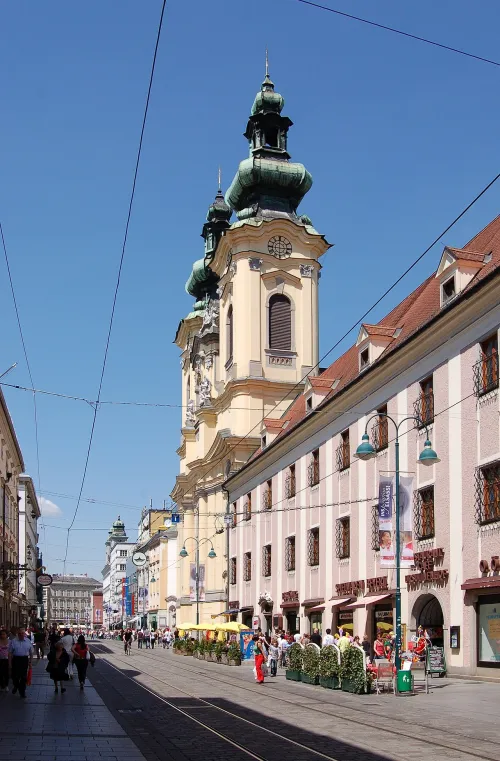
May in Linz
High19°C / 66°F
Low10°C
Rain106mm / 16 rainy days
Sun9.6 h/day
Daylight15 h/day
Humidity72%
Crowds●●○○○Prices●●○○○
May is one of Linz's sweet spots: highs near 19°C, the city in full leaf and the Donaupark at its lushest. It is the wettest month on the calendar (around 106mm over 16 rain days), but rain tends to come as passing showers. The Urfahraner Frühlingsmarkt funfair (1-10 May) draws 500,000-plus mostly day-trippers, and three public holidays in five weeks send Austrians touring domestically. Mild weather, full museums and green riverbanks without a real crush.
The vibe May is the quietly excellent month, especially on the non-holiday midweeks. No festival pressure, no summer heat, just a green city at ease with itself. Pack a rain layer for the showers and you get Linz close to its best for spring-shoulder prices, the best-value weather window of the year.
Don't miss The Donaupark and green Danube banks are at their most lush, ideal for long riverside walks. The Urfahraner Frühlingsmarkt funfair is a family favourite, best midweek for short ride queues. The Südbahnhofmarkt on Saturday morning carries the first full spread of Upper Austrian produce, with premium items gone by 11:00.
Crowd drivers The Urfahraner Frühlingsmarkt (1-10 May) brings domestic crowds, and the holiday cluster (Labour Day 1 May, Ascension 14 May, Whit Monday 25 May) drives long-weekend domestic tourism that lifts rates 15-20% on those specific weekends. The midweeks between stay cheap and quiet.
Heads up Labour Day (1 May) is a full closure of shops, banks and most restaurants. Ascension (14 May), Whit Monday (25 May) and the Monday museum closures all apply, so time the cultural days carefully.
Good value at 75-100 euros, though the May holiday weekends lift central rates 15-20%.
Events this month
🎉 FestivalUrfahr Spring Market Urfahraner Frühlingsmarkt
May 1–10 ~
the last Saturday of April plus nine days into May
The spring edition of the Urfahraner Jahrmarkt on the left Danube bank in Urfahr: rides, market stalls, food and regional crafts in the same format as the bigger autumn fair, opening on Labour Day, 1 May.
A family-friendly funfair and a good pairing with the spring shoulder season. Go Tuesday to Thursday for far shorter ride queues; it draws mostly day-trippers, so the hotel impact is modest.
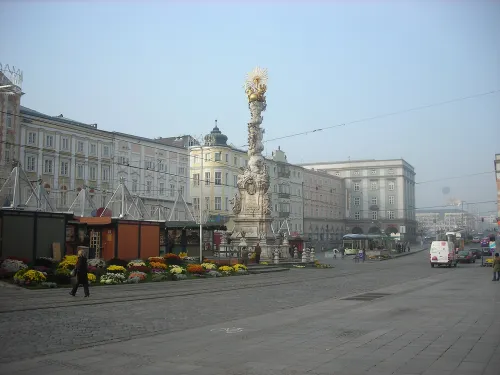
June in Linz
High25°C / 77°F
Low15°C
Rain81mm / 13 rainy days
Sun12.2 h/day
Daylight16 h/day
Humidity68%
Crowds●●●○○Prices●●○○○
June opens the Danube summer with ideal walking weather of 18-24°C, the longest days of the year (nearly 16 hours of light) and golden Donaupromenade evenings with sunset near 21:00. The Lange Nacht der Bühnen (20 June) gives a one-night taster of the city's stages, and Corpus Christi (4 June) brings a procession through the Altstadt. School holidays have not started, so June stays comfortable, a moderate, good-value shoulder month.
The vibe June is the tipping point into full summer, and the long light evenings are the payoff. The Donaupromenade glows until well after nine, the riverbanks are green and the city feels alive without the high-summer heat or the September festival crush. This is Linz breathing easy.
Don't miss Long golden evenings on the Donaupromenade, the Donaupark at its greenest, and the first warm river days. The Lange Nacht der Bühnen (20 June) samples the city's theatres on one ticket. The Pleschinger See lake, 8 km east, starts to warm for swimming.
Crowd drivers The start of the Danube summer brings the first proper riverside crowds, and the Lange Nacht der Bühnen (20 June) draws a one-night cultural audience. Austrian school holidays begin only in mid-July, so June stays short of peak.
Heads up Corpus Christi (4 June) is a public holiday with a procession through the Altstadt and shops closed by law. All major museums are closed Mondays.
Still good value at 80-105 euros, below the high-summer and September peaks.
Events this month
🎨 Art and cultureLong Night of the Stages Lange Nacht der Bühnen Linz
Jun 20 ~
a Saturday in mid-June
A one-night combined-ticket pass to theatres, performance venues and stages across Linz, now in its 12th edition. A single evening sampler of the city's whole performing-arts scene.
A relaxed summer-evening taster, good for first-timers who want a flavour of Linz's stages in one night without committing to a full season programme.
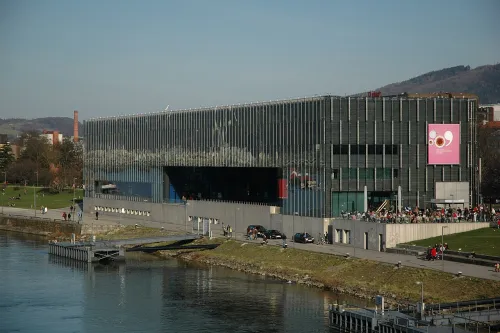
July in Linz
High26°C / 79°F
Low16°C
Rain85mm / 13 rainy days
Sun12.0 h/day
Daylight16 h/day
Humidity67%
Crowds●●●○○Prices●●●○○
July is hot, lively and river-focused. The Altstadt has little shade, so walk it before 10:00 or after 18:00 and save midday for the water or the air-conditioned museums. The Pflasterspektakel fills the whole Old Town with free open-air performances on its main three days, and the long evenings keep the Donaupromenade golden well past 21:00.
The vibe July is hot, lively and river-focused. The Altstadt has little shade, so walk it before 10:00 or after 18:00 and save midday for the water or the air-conditioned museums. When the heat or the price of a private guide climbs, our in-browser AI tour guide is a flexible, flat-priced alternative at 5 euros an hour or 20 euros all-in, leading you stop to stop and telling the story of each place as you walk in the cooler early hours, with no app to download.
Don't miss The Pflasterspektakel turns the whole Old Town into a free open-air stage; come on its Thursday preview for the calmest, low-crowd entry. The Pleschinger See lake (8 km east) is at its warmest for swimming, and long evenings keep the Donaupromenade golden past 21:00.
Crowd drivers The Pflasterspektakel (23-25 July) is the main driver, with 80,000-plus visitors and rates up 20-30% that weekend. Domestic summer tourists fill the Donaupark and riverside, and Austrian school holidays begin mid-month.
In season The Pflasterspektakel fills the Altstadt with food stalls, but note that some owner-operated Linz restaurants take a two-week Urlaub in early August, so a favourite spot may already be winding down by late July.
Heads up No public holidays fall in July, but all major museums are closed Mondays. The Pflasterspektakel closes parts of the Altstadt to traffic over its weekend.
Summer pricing at 90-120 euros; the Pflasterspektakel weekend (23-25 July) jumps rates 20-30%.
Events this month
🎉 FestivalPflasterspektakel Street Arts Festival Pflasterspektakel
Jul 23–25 ~
three days in late July
A three-day international street-art and performing-arts festival with 100-plus artists from 30-plus countries: juggling, acrobatics, theatre and music on stages across the entire Altstadt, from the Hauptplatz down the Landstraße and through the side streets. Free admission for every show, around 80,000 visitors.
It turns the Old Town into one giant free open-air stage. Book a hotel 6-8 weeks ahead as rooms near the Hauptplatz sell out, and come on the Thursday preview evening for the calmest, free, low-crowd entry point.
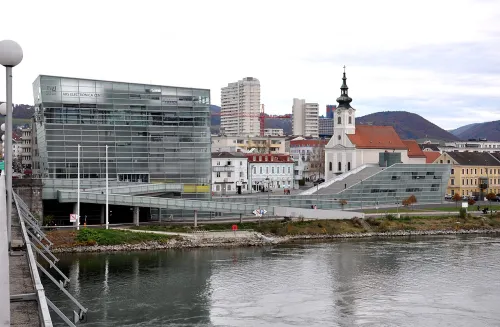
August in Linz
High26°C / 78°F
Low16°C
Rain93mm / 12 rainy days
Sun10.6 h/day
Daylight14 h/day
Humidity71%
Crowds●●●○○Prices●●●○○
August is peak Austrian summer-holiday month, the busiest for leisure travel even without a single dominant event. Highs near 26°C, with the same heat spikes as July, send visitors to the Donaupark, the Pöstlingberg and the Pleschinger See lake at their busiest. European leisure tourism is in full flow. Some owner-run restaurants close for a two-week Urlaub in early August, so check ahead for a specific venue.
The vibe August is busy and warm rather than festival-frantic. The Pöstlingberg and the riverside hum with holidaymakers, and the lake is the place to be. It is the city in full summer-leisure mode: pleasant, sun-soaked and a touch crowded, but without September's price shock.
Don't miss The Pleschinger See lake is at its warmest for swimming, and the Pöstlingbergbahn tram up the 539 m hill is the classic summer outing, though it queues on holiday weekends. Long evenings keep the Donaupromenade golden, and the shaded Altstadt lanes offer midday relief from the heat.
Crowd drivers Peak Austrian summer holidays plus European leisure tourism make this the busiest leisure month. The Pöstlingberg and Donaupark are at their fullest, especially on warm weekends.
In season A handful of family-run Linz restaurants take a two-week Urlaub in early August, so check ahead for a specific Beisl before you build an evening around it.
Heads up Assumption Day (15 August) is a public holiday: the Mariendom holds solemn masses and shops close. All major museums are closed Mondays.
Peak summer leisure pricing at 90-125 euros, driven by domestic and European holiday travel.
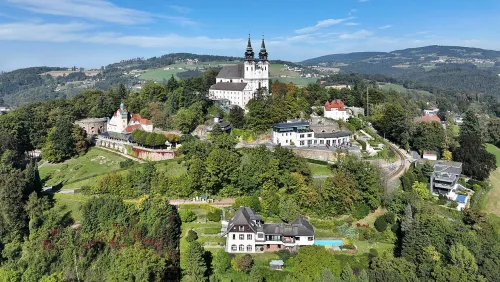
September in Linz
High21°C / 70°F
Low12°C
Rain70mm / 10 rainy days
Sun8.9 h/day
Daylight13 h/day
Humidity75%
Crowds●●●●●Prices●●●●●
September is Linz's dominant spike, the busiest and most expensive month of the year, when Ars Electronica (9-13 September), the Linzer Klangwolke (12 September) and the Brucknerfest (from 13 September) stack on top of one another. Highs near 21°C keep summer warmth in the air while the cultural calendar runs flat-out. The Ars Electronica window doubles hotel prices and fills the city, with many visitors commuting in from Vienna and Salzburg. After the 13th the pressure eases, opening the year's best travel window.
The vibe September is Linz at maximum cultural intensity. The first half (the 9th to the 13th) is electric but overwhelming, with the city full and prices at their ceiling. The second half is the magic window: warm evenings, world-class Brucknerfest concerts, the first autumn gold appearing, and hotels easing off the peak. Time your visit for the 14th onward.
Don't miss The free Linzer Klangwolke fills the Donaupark riverbank for up to 100,000 people on the 12th (arrive 90-plus minutes early). Ars Electronica spreads new-media art across three city zones with a free opening ceremony at the New Cathedral, and the Brucknerfest opens its three-week classical programme at the Brucknerhaus.
Crowd drivers Ars Electronica (9-13 September), the Linzer Klangwolke (12 September) and the Brucknerfest (from 13 September) stack into the year's single dominant spike, with the Urfahraner Herbstmarkt opening on the 26th. Ars Electronica alone fills every central hotel.
Heads up No public holidays fall in September, but all major museums are closed Mondays, and Ars Electronica brings heavy crowding across its three festival zones from the 9th to the 13th.
The year's most expensive month at 130-200 euros, with Ars Electronica (9-13 September) filling every central hotel; book 3-4 months ahead.
Events this month
🎨 Art and cultureArs Electronica Festival
Sep 9–13
five days in early September
A five-day new-media-art festival spread across three city zones (the OK Quarter, the Med Campus and the Danube Triangle), with a different theme each year, featuring exhibitions, performances, concerts and AI and tech talks. Austria's single most internationally visible cultural festival, drawing around 110,000 visitors. The free opening ceremony is held at the New Cathedral.
The unmissable Linz event if new-media art is your thing, but it is also the year's price and crowd peak. Hotels double to 130-200 euros and book out, rooms under 150 euros vanish, and even the Pöstlingberg tram queues, so reserve by June or plan around the week.
🌸 Seasonal natureLinz Cloud of Sound Linzer Klangwolke
Sep 12 ~
the second weekend of September, main show at 20:30
An annual outdoor musical-theatrical spectacle in the Donaupark on the Danube, with a new title and concept each year, drawing up to 100,000 spectators to the riverbank. A shorter Classical Klangwolke typically runs a week earlier and a Children's Klangwolke follows on the Sunday afternoon.
Entirely free and genuinely spectacular, and it falls inside the Ars Electronica window. Arrive 90-plus minutes early for a good spot near the central lawn and bring a blanket, as no seating is provided.
🎵 MusicInternational Brucknerfest Linz Internationales Brucknerfest Linz
Sep 13–30
mid-to-late September into early October
A three-week classical-music festival at the Brucknerhaus concert hall, centred on Anton Bruckner's symphonies with international orchestras. Each edition carries a themed title and is bookended by leading conductors, with a closing concert near the Bruckner death anniversary in mid-October.
The best classical calendar in Upper Austria. It overlaps the last days of Ars Electronica (13 September is shared), so plan the 13th to the 30th for a cultural deep-dive once the festival peak crowds have eased.
🎉 FestivalUrfahr Autumn Market Urfahraner Herbstmarkt
Sep 26 – Oct 4 ~
the last Saturday of September plus nine days
Austria's biggest traditional folk fair, a nine-day Jahrmarkt on the left Danube bank in Urfahr with rides, market stalls, food and regional crafts, drawing more than 500,000 visitors. The autumn edition has the best Linzer Torte stalls.
Authentic Austrian fairground culture at Europe scale, and it stacks neatly with the end of Brucknerfest. Go Tuesday to Thursday for half the crowds and shorter ride queues.
October in Linz
High16°C / 60°F
Low8°C
Rain57mm / 10 rainy days
Sun6.9 h/day
Daylight11 h/day
Humidity81%
Crowds●●●○○Prices●●●○○
October is golden-autumn Linz. Highs near 16°C, the Pöstlingberg hill forest turning gold-amber from mid-month, and the tourist crowds thinning fast once the Brucknerfest finishes on the 11th and the Urfahraner Herbstmarkt wraps on the 4th. Rainfall increases over 10-14 rain days, but the colour peak makes a Pöstlingbergbahn ride plus a hillside walk the standout autumn outing. National Day (26 October) brings free museums.
The vibe October is the couples' and colour month: gold-amber foliage on the Pöstlingberg, cool clear walking days, and the festival rush behind you. After the 11th the city settles into a calm, atmospheric, well-priced autumn, with the bonus of free museums on National Day. Cool, romantic and quiet.
Don't miss Autumn foliage peaks mid-to-late October on the Pöstlingberg (reached by the historic Pöstlingbergbahn tram). The ORF Lange Nacht der Museen (3 October, around 15 euros) unlocks seven-plus Linz venues in one evening, and National Day (26 October) brings free or reduced state-museum entry. It is also Sturm new-wine season in the nearby Mühlviertel wineries.
Crowd drivers Brucknerfest's closing days and the Urfahraner Herbstmarkt (to 4 October) bring early-month demand, but rates drop sharply after the 11th. National Day (26 October) draws a free-museum crowd. The 12th onward is calm and low-pressure.
Heads up National Day (26 October) closes most businesses but keeps tourist sights open, with several museums free. All major museums are otherwise closed Mondays.
Rates drop sharply after Brucknerfest ends (11 October) to 85-115 euros; the 12th to the 31st is a good-value shoulder window.
Events this month
🎵 MusicInternational Brucknerfest Linz Internationales Brucknerfest Linz
Sep 13–30
mid-to-late September into early October
A three-week classical-music festival at the Brucknerhaus concert hall, centred on Anton Bruckner's symphonies with international orchestras. Each edition carries a themed title and is bookended by leading conductors, with a closing concert near the Bruckner death anniversary in mid-October.
The best classical calendar in Upper Austria. It overlaps the last days of Ars Electronica (13 September is shared), so plan the 13th to the 30th for a cultural deep-dive once the festival peak crowds have eased.
🎉 FestivalUrfahr Autumn Market Urfahraner Herbstmarkt
Sep 26 – Oct 4 ~
the last Saturday of September plus nine days
Austria's biggest traditional folk fair, a nine-day Jahrmarkt on the left Danube bank in Urfahr with rides, market stalls, food and regional crafts, drawing more than 500,000 visitors. The autumn edition has the best Linzer Torte stalls.
Authentic Austrian fairground culture at Europe scale, and it stacks neatly with the end of Brucknerfest. Go Tuesday to Thursday for half the crowds and shorter ride queues.
🌙 Museum nightLong Night of the Museums ORF Lange Nacht der Museen
Oct 3 ~
the first Saturday of October, 18:00 to 01:00
An Austria-wide museum night running 18:00 to 01:00, with Linz venues including the Ars Electronica Center, Lentos, the Castle Museum, Nordico and OK Linz. One ticket of around 15 euros covers all of them.
The best-value evening in Linz's museum calendar: a single ticket unlocks seven-plus venues in one night, ideal for a budget-minded culture run.
🇮 HolidayAustrian National Day Nationalfeiertag
Oct 26
26 October
Austria's national day, commemorating the 1955 Declaration of Neutrality, with military ceremonies and free or reduced state-museum admission. Linz museums such as Lentos and the Castle Museum typically offer free entry.
An excellent free-museum day. Most businesses are closed, but the tourist infrastructure stays open, so it pays to plan the cultural visits around it.
November in Linz
High9°C / 49°F
Low3°C
Rain59mm / 10 rainy days
Sun5.1 h/day
Daylight9 h/day
Humidity85%
Crowds●●○○○Prices●●○○○
November is a quiet, grey shoulder month, with highs near 9°C and frequent morning fog in the Upper Austrian basin that usually clears by midday. The grey keeps tourists away and pushes prices to a near-annual low, the best budget window of the year before Christmas. Then, on 21 November, the Hauptplatz Christkindlmarkt opens and brings a first burst of light and Glühwein to the baroque square as the month closes.
The vibe November is Linz at its most introverted: grey, foggy mornings and almost no tourists, but cheap and calm. The reward comes late, when the Christmas market arrives on the 21st to brighten the final week and a half. Bring warm layers and patience for the short days, and you get the city for next to nothing.
Don't miss The quiet museum circuit is at budget value, and the New Cathedral is empty before 09:00. From 21 November the Hauptplatz Christkindlmarkt, Austria's largest town-square market with 160-plus stalls, brings Glühwein and handmade crafts to the baroque square, with the smaller, quieter Volksgarten market as a more local alternative.
Crowd drivers A quiet shoulder for most of the month, with leisure tourism low. The Christkindlmarkt opening on 21 November brings the first uptick toward month-end.
Heads up All Saints' Day (1 November) is a full closure, with nearly everything shut and cemetery visits the local tradition. All major museums are closed Mondays.
The best budget window before Christmas, 65-90 euros a night, until the Christkindlmarkt opens on 21 November.
Events this month
🎄 Christmas marketLinz Christmas Market on the Hauptplatz Christkindlmarkt am Hauptplatz
Nov 21 – Dec 24
21 November to Christmas Eve
Austria's largest town-square Christmas market: 160-plus stalls on the 13,140 square-metre baroque Hauptplatz framed by the Trinity Column, selling handmade pottery, glassware, jewellery and Glühwein. Open 10:00-21:00, and 09:00-16:00 on Christmas Eve.
One of Austria's most beautiful Christmas markets, with an exceptional baroque setting. Go on a weekday evening for calm; weekends and the first two weeks are heavily Austrian and Czech day-trippers.
🎄 Christmas marketVolksgarten Christmas Market Weihnachtsmarkt im Volksgarten
Nov 21 – Dec 24
21 November to Christmas Eve
A second, smaller market in the Volksgarten park, more local and less tourist-facing than the Hauptplatz, a good alternative when the main square gets crowded.
Quieter and more authentic in feel. Combine it with a Hauptplatz visit for the full picture of the Linz Christmas-market scene.
December in Linz
High5°C / 42°F
Low0°C
Rain67mm / 12 rainy days
Sun4.2 h/day
Daylight8 h/day
Humidity85%
Crowds●●●●○Prices●●●●○
December is Christkindlmarkt Linz, with the Hauptplatz hosting Austria's largest town-square Christmas market (160-plus stalls) through 24 December. Highs near 5°C and the shortest days of the year (about 8.4 hours of light, sunset near 16:00) are offset by the market's lights and Glühwein. It draws Austrian, German and Czech day-trippers, busiest on weekends and in the first two weeks, with the Christmas week itself quiet again. Festive and atmospheric, but crowded and pricier.
The vibe December trades January's emptiness for full festive bustle: lights, Glühwein, handmade crafts and crowds on the baroque Hauptplatz. It is genuinely beautiful, the market setting exceptional, but it is the second-busiest stretch of the year. Go on a weekday evening for the markets, and slip to the Volksgarten market when the main square fills up.
Don't miss Austria's largest town-square Christmas market fills the Hauptplatz with 160-plus stalls of pottery, glassware, jewellery and Glühwein, open 10:00-21:00. The smaller Volksgarten market is the quieter, more local alternative. The Pöstlingberg gives its best winter panorama at the late 07:45 sunrise once the morning fog clears.
Crowd drivers The Hauptplatz Christkindlmarkt (to 24 December) is the main draw, packing Austrian, German and Czech day-trippers onto the square, busiest on weekends and in the first two weeks. Overnight stays cluster 5-23 December; Christmas week goes quiet again.
In season Glühwein, roasted chestnuts and Linzer Torte, the lattice-topped pastry that was born here, are everywhere at the markets, alongside regional crafts and food stalls on the Hauptplatz.
Heads up Immaculate Conception (8 December) closes shops but the outdoor market stalls stay open. Christmas Day (25 December) shuts nearly everything; St. Stephen's Day (26 December) keeps most shops closed. All major museums are closed Mondays.
Christmas-market demand lifts rooms to 95-150 euros; overnight stays cluster 5-23 December, with Christmas week quieter.
Events this month
🎄 Christmas marketLinz Christmas Market on the Hauptplatz Christkindlmarkt am Hauptplatz
Nov 21 – Dec 24
21 November to Christmas Eve
Austria's largest town-square Christmas market: 160-plus stalls on the 13,140 square-metre baroque Hauptplatz framed by the Trinity Column, selling handmade pottery, glassware, jewellery and Glühwein. Open 10:00-21:00, and 09:00-16:00 on Christmas Eve.
One of Austria's most beautiful Christmas markets, with an exceptional baroque setting. Go on a weekday evening for calm; weekends and the first two weeks are heavily Austrian and Czech day-trippers.
🎄 Christmas marketVolksgarten Christmas Market Weihnachtsmarkt im Volksgarten
Nov 21 – Dec 24
21 November to Christmas Eve
A second, smaller market in the Volksgarten park, more local and less tourist-facing than the Hauptplatz, a good alternative when the main square gets crowded.
Quieter and more authentic in feel. Combine it with a Hauptplatz visit for the full picture of the Linz Christmas-market scene.
Frequently asked questions
What is the best time to visit Linz?
Late September, the 14th to the 30th, is the best overall. You get warm 19-23°C days, the Brucknerfest classical programme at the Brucknerhaus, the first autumn gold on the Pöstlingberg and long Donaupromenade sunsets, all after the Ars Electronica festival peak (9-13 September) has eased and hotels have come off their ceiling. Late May to mid-June is the equal-best value alternative, with ideal walking weather and no festival pressure.
What is the cheapest time to visit Linz?
January and February are the cheapest, with a 3-star centre hotel at 60-85 euros a night, roughly 35-40% below the September peak of 130-200 euros. November (65-90 euros) is the last cheap window before the Christkindlmarkt opens on 21 November. The trade in all three is cold, grey, often foggy days, though the fog usually clears by midday.
What is the worst time to visit Linz?
The 9th to 13th of September, the Ars Electronica festival window, unless that festival is exactly why you came. Hotels hit their annual maximum of 130-200 euros and sell out, rooms under 150 euros vanish, and even the Pöstlingberg tram queues. The Linz Danube Marathon weekend (11-12 April), which spikes rooms 40-60% and closes Danube roads, is the other one to plan around.
When can you swim near Linz?
July and August are the prime swimming months. The Danube does not reach swimming temperature until mid-July, so the main local spot is the Pleschinger See, a lake 8 km east of the centre, warmest in July and August. June starts to warm enough for the hardy, and early September can still work while the summer heat holds.
What is the weather like in Linz in winter?
Cold, grey and often foggy rather than deeply snowy. December and January highs sit near 4-5°C and dip below freezing overnight, with morning fog a recurring Upper Austrian basin phenomenon from November to February that usually clears by midday. Snow is sporadic, mostly on the 12-15 snow days a year in January and February. Days are short, with sunset near 16:00 in December.
Is Linz worth visiting in December?
Yes, if you come for the Christmas market. From 21 November to 24 December the Hauptplatz hosts Austria's largest town-square Christmas market, 160-plus stalls of pottery, glassware, jewellery and Glühwein on the 13,140 square-metre baroque square (open 10:00-21:00). Expect short 8.4-hour days, rooms at 95-150 euros and weekend crowds of Austrian, German and Czech day-trippers. Go on a weekday evening for the calmest visit, and try the quieter Volksgarten market too.
How many days do you need in Linz?
Two days cover the essentials: the baroque Hauptplatz and the Altstadt, the New Cathedral (Mariendom) with its Linz Window, the Ars Electronica Center and the Lentos by the Danube, and a Pöstlingbergbahn tram ride up the 539 m hill for the panorama. Add a day in summer for the Pleschinger See lake, or in September for the festival calendar. Remember the major museums close Mondays, so plan the cultural day Tuesday to Sunday.
When is Ars Electronica and the Pflasterspektakel in Linz?
Ars Electronica, Austria's most internationally visible new-media-art festival, runs 9-13 September 2026 and brings the year's price and crowd peak, so book hotels by June. The Pflasterspektakel street-art festival fills the whole Altstadt over three days in late July (23-25 July 2026), with free admission to every show; come on its Thursday preview evening for the calmest entry. The free Linzer Klangwolke spectacle in the Donaupark falls on 12 September, inside the Ars Electronica window.

Any month, any day: your guide is already there
Whatever date you pick, a private human guide gets pricier and harder to book on weekends, holidays and in peak season. Our live AI guide, the one that walks with you and answers anything you ask out loud, works the opposite way.
One flat price, every day
No holiday, weekend, night or peak-season surcharge. A private guide in Linz runs well over 100 euro for a half day, and more on holidays. Ours stays the same.
Available the moment you want it
Start at midnight or at dawn, on Christmas, in the snow, in the August heat. No sold-out high season, no booking weeks ahead.
Your pace, no meter running
Pause for a long lunch, restart after dark, repeat a stop. The tour simply waits for you.
Free to try, a fraction of the cost
Test it for free, then a transparent flat price that undercuts any private guide, in every season.
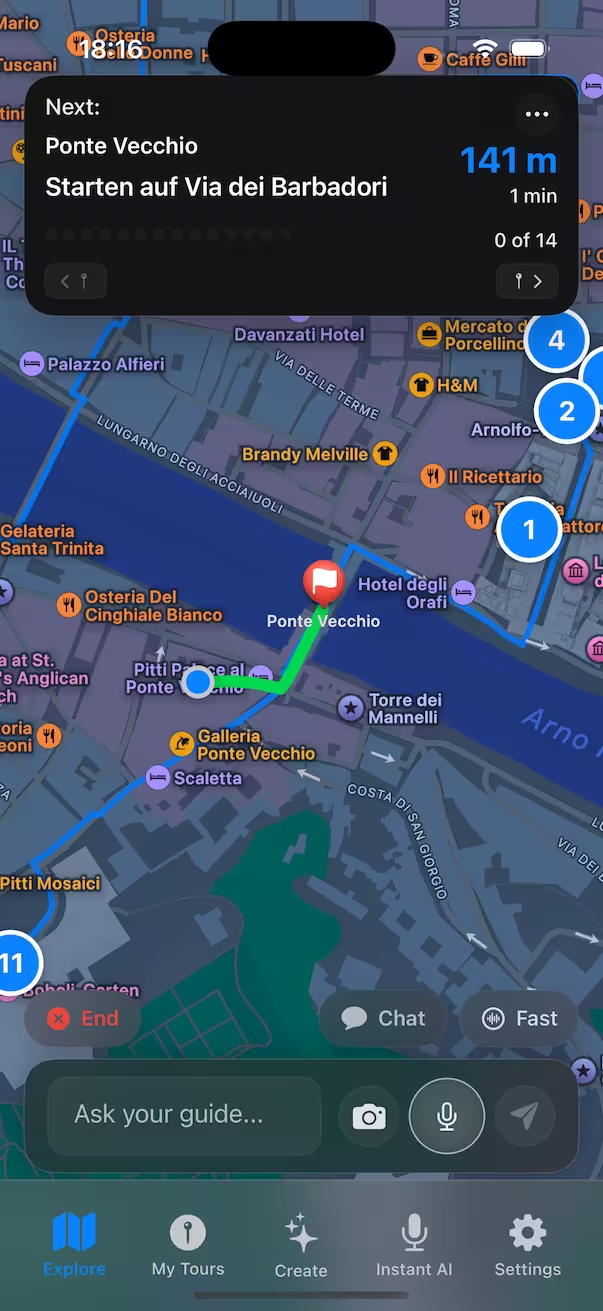
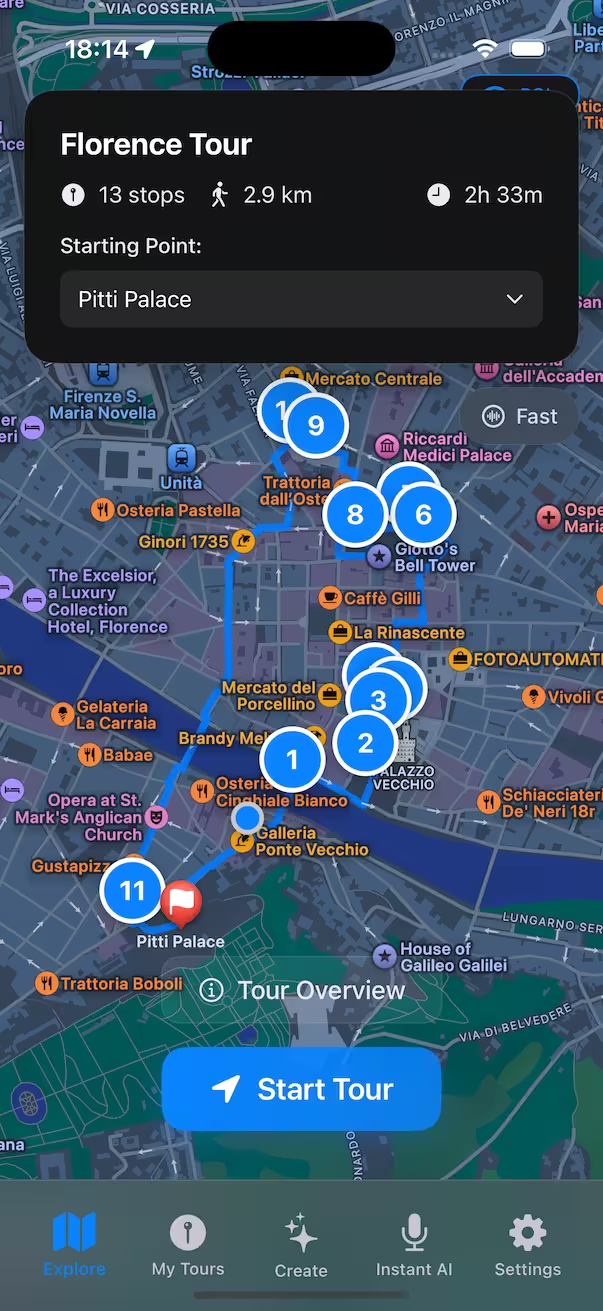
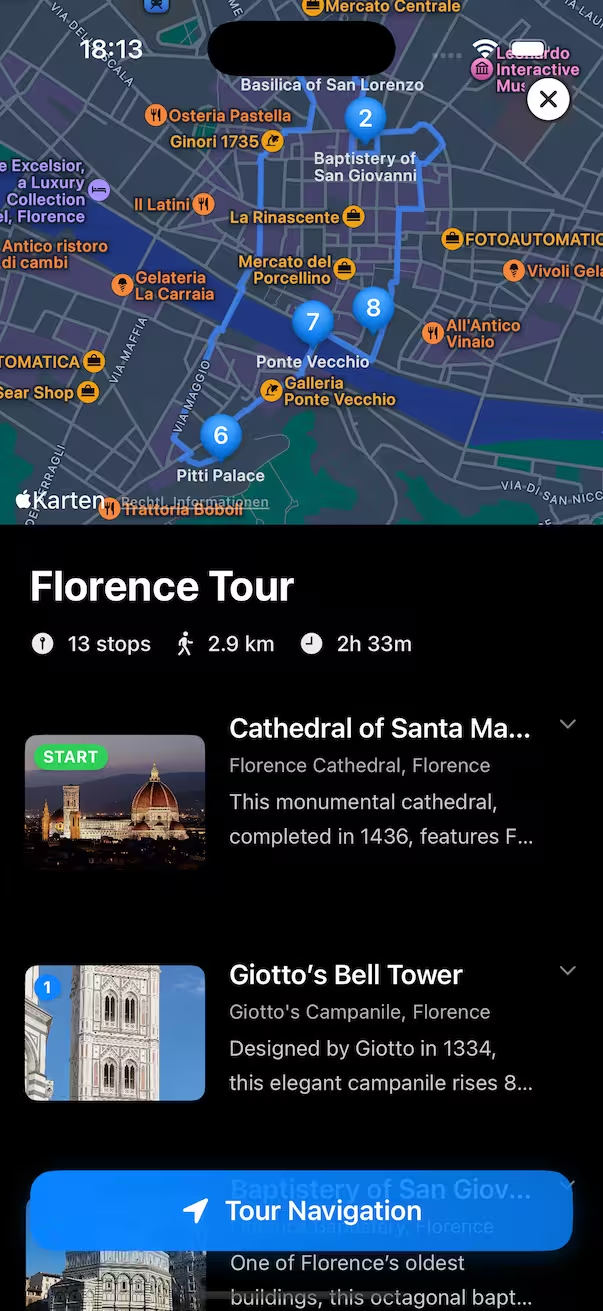
The classic Linz tour: 9 stops, 7.2 km, about 3 h on foot
Your live AI guide and the self-guided Linz route, together in your browser.