Best Time to Visit Krems
Month-by-month weather, crowds and prices, plus a full calendar of festivals and events worth planning a trip around.
Best monthsApr, May, Oct
CheapestJan, Feb
AvoidSep
BusiestAug, Sep
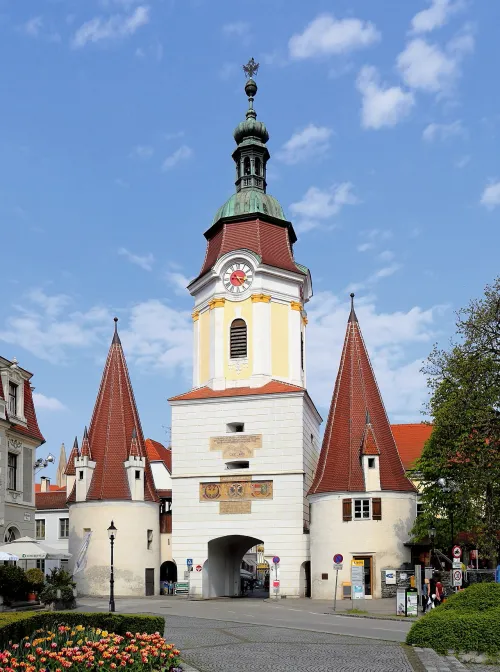
When is the best time to visit Krems?
Come in late April, May (skipping the Donaufestival weekends) or October: 15-19°C walking weather, the terraced Wachau vineyards either in apricot blossom or autumn gold, and hotels at 75-130 € rather than the 130-200 € of high summer. August is the dearest month thanks to the Grafenegg Festival, but the single worst dates are the Wachaumarathon weekend (12-13 September) and the Starnacht weekend right after it, when the whole valley sells out. January and February are cheapest and quietest at 55-85 € a night.
Start our tool and find your best time to visit Krems
Your perfect month
Free · ~30 seconds
or tap a month directly
What matters to you?
And this?
Best overall: Apr, May, Oct. Late April into May and again in October are the real sweet spots. Spring brings 15-19°C, the apricot blossom or fresh green terraces, the full Kunstmeile open, and prices 30-40% below August. October delivers golden vineyard foliage, Sturm and Grüner Veltliner in the Heurige, and thin crowds once the marathon and Grafenegg seasons are over. Just plan May around the two Donaufestival weekends (1-3 and 8-10 May), when rates spike to 140-160 €.
Best value: Jan, Feb, Jun. January and February bring rock-bottom 55-85 € hotels with no queues anywhere, the trade being short, cool days and the odd restaurant on its annual break. June is the warm-weather value pick: 22-26°C, the Austrian and German school year still running, and good 80-130 € rates before the July-August crush and the Grafenegg price surge arrive.
Avoid: Sep. Mid-September is the year's worst value in a thin-supply town. The Wachaumarathon (12-13 September) is an absolute valley-wide sellout, immediately followed by the televised Starnacht weekend (18-19 September), so the third week of September is the hardest accommodation window of the year. Whatever is left runs 180-200 € a night. Glorious if you came to run; expensive and packed otherwise.
- January: Good time, 4°C. This is the one month you have the Kunsthalle Krems and the medieval Steiner Tor almost to yourself. It is cold and the days are short, but the town is honest and uncluttered, and a winter walk through the empty Altstadt with a stop in a warm Heuriger has a quiet charm that summer never offers.
- February: Good time, 7°C. February is unperformed Krems, no festival, no seasonal markup, just a small Danube town going about its winter. If you want the Wachau without the crowds or the cost, this is the cheapest, calmest window of all, and the gathering sunshine hints that spring is not far off.
- March: Great time, 11°C. March is the last genuinely quiet month before the blossom and the festivals fill the valley. The town is waking up, the Heurige are reopening, and you can still get a table and a hotel room without a fight. That window closes fast once April arrives, so use it.
- April: Good time, 16°C. April is the month locals quietly wait for all year. The blanket of apricot blossom over the terraces is a genuine spectacle, and the temperatures are perfect for walking the Altstadt and cycling to Stift Göttweig. It is busier than March but the crowds stay manageable, nothing like the August or September peak.
- May: Good time, 19°C. May is split in two. On the Donaufestival weekends Krems is an international avant-garde arts hub, packed and pricey; in between, it is a calm green Wachau town with mild weather and reasonable rates. Know which you want and time your visit accordingly, and keep a rain layer handy for the showers.
- June: Good time, 25°C. June is the month to come for warmth without the crush. The long light evenings are made for late Altstadt strolls and riverside dinners, the terraces are deep green, and you still get a hotel room at a fair price. It is the families' and value-seekers' window before July fills the boats and August fills the concerts.
- July: Good time, 27°C. July is hot, busy and harvest-scented. The old town bakes by midday, so the rhythm shifts to early mornings and long evenings. It is the apricot season's heart, when Krems lives and breathes its signature fruit, but it is also when boats, terraces and hotels are all near capacity.
- August: Tough month, 26°C. August is full-throttle Wachau: hot, busy and booked out. If you have come for the Grafenegg Festival and the great orchestras under the open sky, it is glorious. If you have not, the heat, the crowds and the year's highest prices make it the month to plan around rather than into.
- September: Tough month, 21°C. September is a paradox: the weather and the harvest light are gorgeous, but the calendar is brutal on hotels. The marathon and Starnacht weekends are an absolute valley-wide sellout back to back, making the third week the single worst time to arrive without a booking. Time it right and it is glorious; time it wrong and it is a 200 € scramble.
- October: Great time, 16°C. October is the couples' month and many locals' favourite. The terraces glow gold and orange, the Heurige pour Sturm, and the Altstadt is quiet enough for unhurried evening strolls at shoulder prices. Stift Göttweig in the late-afternoon golden hour, looking over the Danube bend, is the most romantic the Wachau gets.
- November: Good time, 10°C. November is introverted Krems: grey, quiet and cheap for most of the month, then suddenly aglow when the Adventzauber lights up the old town from late in the month. Come early for the lowest prices and the empty museums, or late for the first mulled wine and choir performances on the Pfarrplatz.
- December: Good time, 6°C. December splits cleanly: festive and atmospheric while the Adventzauber runs, then hushed and almost empty once it closes on 23 December. The intimate, candle-lit market is the draw, a calmer, more local alternative to Vienna, and the post-market quiet is for those who want the Wachau utterly to themselves.
Krems weather by month
HighLowRainfall
Jan4°
Feb7°
Mar11°
Apr16°
May19°
Jun25°
Jul27°
Aug26°
Sep21°
Oct16°
Nov10°
Dec6°
| Month | Temp | Rain | Sun | Crowds | Prices | Highlight |
|---|---|---|---|---|---|---|
| Jan | 4° / -1° | 37mm · 10 rainy days | 4.5 h/day | ●○○○○ | ●○○○○ | |
| Feb | 7° / 0° | 31mm · 8 rainy days | 6.6 h/day | ●○○○○ | ●○○○○ | |
| Mar | 11° / 2° | 30mm · 7 rainy days | 8.5 h/day | ●●○○○ | ●●○○○ | Wachau Gourmet Festival |
| Apr | 16° / 6° | 60mm · 12 rainy days | 9.9 h/day | ●●●○○ | ●●○○○ | Apricot Blossom Market |
| May | 19° / 10° | 94mm · 15 rainy days | 10.0 h/day | ●●●●○ | ●●●○○ | Donaufestival |
| Jun | 25° / 15° | 90mm · 13 rainy days | 12.4 h/day | ●●●○○ | ●●○○○ | Grafenegg Summer Night Gala |
| Jul | 27° / 17° | 87mm · 13 rainy days | 12.3 h/day | ●●●●○ | ●●●●○ | Grafenegg Summer Sounds |
| Aug | 26° / 17° | 81mm · 13 rainy days | 10.8 h/day | ●●●●● | ●●●●● | Grafenegg Summer Sounds |
| Sep | 21° / 13° | 68mm · 10 rainy days | 9.1 h/day | ●●●●● | ●●●●● | Grafenegg Festival |
| Oct | 16° / 8° | 53mm · 9 rainy days | 7.1 h/day | ●●●○○ | ●●●○○ | |
| Nov | 10° / 4° | 43mm · 9 rainy days | 5.0 h/day | ●●○○○ | ●●○○○ | Krems Advent Market |
| Dec | 6° / 1° | 46mm · 9 rainy days | 4.4 h/day | ●●○○○ | ●●○○○ | Krems Advent Market |
How we score this: weather = long-run climate normals (Open-Meteo), crowds & prices = relative season read, events checked yearly against official dates.
Best time to visit Krems: weather, prices & crowds
Best months for good weather
May, Jun, Sep
May, June and September give the most comfortable conditions: 19-25°C, long bright days, and none of the July-August heat that lets the Danube basin trap 30-35°C with almost no shade in the Altstadt. Early September keeps the warmth while crowds ease.
Quietest months to avoid the crowds
Jan, Feb, Nov
January, February and the quiet weekdays of November empty the town right out. You walk into the Kunsthalle Krems and the Landesgalerie with no queue and have the Steiner Tor and the Altstadt lanes almost to yourself.
Cheapest time to visit Krems
Jan, Feb
January and February are the cheapest by far: 3-star town-centre hotels run 55-85 € a night, less than half the 130-200 € of the August and September peak. The catch is short days and a few restaurants taking their annual late-January closure.
Best time for festivals and events
Apr, Oct, Dec
Three signature moments: the apricot blossom turning the terraces between Krems and Spitz pink-white in early-to-mid April, the vineyards going gold for the grape harvest and Sturm new-wine season in October, and the candle-lit Kremser Adventzauber transforming the Altstadt from 4 pm through December.
How many days do you need in Krems?
Two days is the right amount of time for Krems an der Donau. One full day covers the medieval Altstadt and the Kunstmeile galleries in Stein, and a second day frees you up for a Danube river-cruise to Melk, a cycle along the valley to Weißenkirchen, or the hilltop climb to Stift Göttweig with its panoramic view over the river bend.
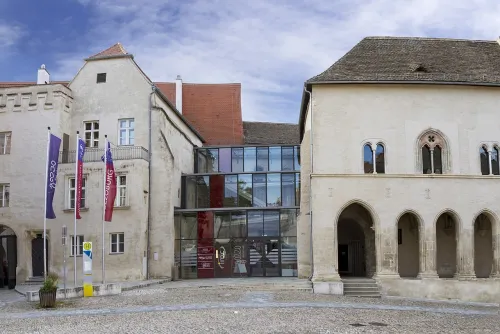
One day
Altstadt to Kunstmeile in a day
Start at the Steiner Tor, the medieval town gate that anchors the old town, and work east through the Hoher Markt past the Gothic Gozzoburg. Stop into Museum Krems in the 13th-century Dominikanerkloster on the Körnermarkt for the Kremser Schmidt Baroque collection, then follow the Stadtpark south toward the Danube. The self-guided Krems walking tour links these six stops across 2.2 km in about 1.3 hours, leaving the afternoon free for the Kunsthalle Krems and the Landesgalerie Niederösterreich in Stein an der Donau, both a short stroll along the riverside path.
Two daysRecommended
Wachau day trip: river, vineyards, abbey
On your second day, take the Danube river-bus west to Melk, one of Europe's great Baroque abbeys perched on a cliff above the water, then return by bike or boat through the terraced vineyards past Spitz and Weißenkirchen. Alternatively, cross the bridge to Mautern and drive or cycle the 4 km to Furth bei Göttweig station, then walk up to Stift Göttweig (UNESCO) in time for the late-afternoon golden hour before the 18:00 closing.
Three days
Full Wachau immersion
A third day lets you slow down and sink into the region. Walk the Wachau terrace paths between Krems and Dürnstein at your own pace, stopping at a Heuriger for Grüner Veltliner and Sturm in season. The Kremser Bauernmarkt on the Südtiroler Platz runs Monday to Saturday until noon and supplies an excellent picnic of apricot jam, smoked Danube fish and fresh bread. An evening concert at Grafenegg (20 km, pre-booked transport essential) rounds out a full cultural day.
Four days or more
Slow Wachau: wine, cycling and culture
Four or more days suits cyclists and wine enthusiasts who want to cover the full 36 km valley cycle route from Krems to Melk, visit multiple Heurige along the way and spend an evening at the Grafenegg Festival in high season. Day-trips from Krems also reach Dürnstein Castle ruin (30 minutes by river-bus), the apricot orchards and distilleries around Spitz, and the Schallaburg Renaissance castle south of Melk.
Best time to visit Krems by traveller type
Same city, different trip. Here's the month that fits how you're travelling.
🧭
Best time to visit Krems for the first time
AprMay
Late April or early May, outside the Donaufestival weekends. The blossom may still be lingering on the terraces, temperatures are ideal for walking the Altstadt and cycling to Stift Göttweig, the whole Kunstmeile is open without heat stress, and prices sit 30-40% below August.
❤️
Best time to visit Krems for couples
Oct
October. Golden light on the terraced Wachau vineyards, Sturm and Grüner Veltliner in near-empty Heurige, and quiet Altstadt lanes for evening strolls at shoulder prices of 85-130 €. Stift Göttweig in the late-afternoon golden hour, with its view over the Danube bend, is genuinely romantic and uncrowded.
💶
Best time to visit Krems on a budget
JanFeb
January and February: hotels at 55-85 €, the Kunsthalle and Landesgalerie never sold out, and the Kremser Bauernmarkt (Mon-Sat until noon) supplying cheap, excellent picnic lunches of apricot jam, Wachau wine, smoked Danube fish and fresh bread. The 26 October National Day brings free or reduced museum entry if a late-autumn trip fits.
🍝
Best time to visit Krems for food and wine
MarOct
March for the Wachau GOURMETfestival (12-29 March), with curated wine-and-food dinners in the quiet pre-season and far less crowding than summer. Or October for Sturm and the grape harvest in the Heurige. The late-July apricot harvest, the Alles Marille season in Krems, is the local specialty for Marillenschnaps and apricot pastries at the Bauernmarkt.
Worst time to visit Krems
The third week of September is the single worst window in Krems. The Wachaumarathon fills the entire valley on its race weekend, and the televised Starnacht open-air concert follows immediately the next weekend in Rossatz, 30 km west. Together they create two consecutive sold-out weekends: whatever hotel rooms remain run 180 to 200 euros a night. July and August add a second reason to hesitate: the Danube basin traps heat to 30 to 35°C on the hottest afternoons, and the narrow Altstadt lanes offer almost no shade.
Still worth it for September remains beautiful for anyone who books six or more months ahead, and the harvest atmosphere on the terraces is genuinely special. July and August work well for river-cruise passengers and families comfortable with early-morning or evening walks.
Go instead in April, May, October, when Krems is at its best.
Best time for a tour of Krems
Krems rewards walkers who time it right. The 2.2-kilometre route through the old town is compact but richly layered, and conditions shift enough across the year to matter. September and October are the ideal months: temperatures settle between 16 and 21 °C, rain drops to around 9 to 10 days per month, and the light turns golden over the Steiner Tor and the vine-covered hills behind it. By contrast, May looks tempting on paper at 19 °C but brings 15 rainy days, meaning at least half the week you are navigating wet cobblestones with an umbrella. July and August push highs to 26 to 27 °C, and August in particular is when the town is at its most packed: the Kunsthalle Krems and the Landesgalerie Niederösterreich draw visitors from across the Wachau, and the lanes around the Gozzoburg feel shoulder to shoulder by midday. January and February sit at barely 4 to 7 °C with near-empty streets, which has its own quiet charm, but short days and raw cold make the walk more of an endurance test than a pleasure.
What works in Krems's favour is that a 2.2-kilometre walk can be timed to the hour, not the season. With AI Tourguide running in your browser, no download needed, you start your Krems tour the moment the morning haze lifts off the Danube in October, or slip out just after the midday heat breaks on a July day when the old town briefly empties. A voice-first guide leads you from the Steiner Tor onward, telling stories, asking what catches your eye, and adapting the conversation to what you actually want to know. No fixed departure, no group to keep pace with: the Wachau autumn light decides when you set off, and the guide follows you.

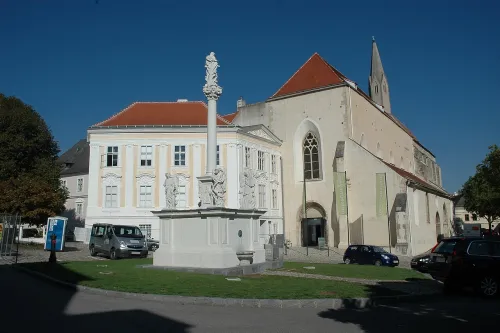
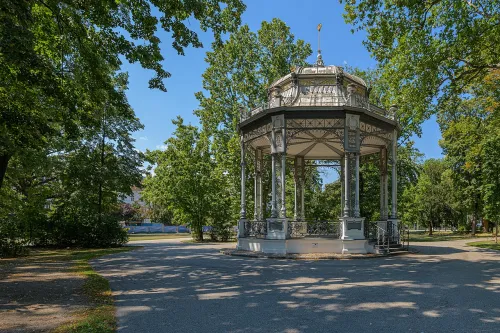 +2
+2All 6 stops are already on the map.
You just press start.
You just press start.
 AI Tourguide
You just read the route.
Now walk it with a guide in your ear.
Press start wherever you are, even hundreds of kilometres from Krems, and the guide begins telling its stories right away. In the city, pick any of the 6 stops to start from: it leads you there, then talks with you the whole route, asking, listening, remembering, and shaping the tour around your answers.
6stops2.2km1.3hours11languages
▶Start the tour freeFree to start · Runs in your browser · No app, no download
Krems events and festivals calendar
Annual highlights worth timing a trip around, listed month by month.
March
🍷 Food and wineWachau Gourmet Festival wachau GOURMETfestival
Mar 12–29
across the second half of March
A multi-week festival across Wachau restaurants and wineries pairing regional wine with gourmet cuisine, with some dinners staged in Krems itself.
April
🌸 Seasonal natureApricot Blossom Market Kremser Marillenblütenmarkt
Apr 2–4 ~
late March to early April, weather-dependent
The old-town pedestrian zone fills with a market of Wachau apricot products (jams, spirits, strudel), local wine, folk dancing and barrel-organ music.
May
🎨 Art and cultureDonaufestival donaufestival
May 1–10
two early-May weekends (1-3 and 8-10 May)
An avant-garde, cross-genre festival of music, performance, installations, film and talks across around 60 events at multiple Krems venues.
🍷 Food and wineWachau Wine Spring Wachauer Weinfrühling
May 2–3
first weekend of May
An open-cellar wine weekend across the Wachau, where dozens of vintners open their cellars and Krems is the eastern anchor.
June
🎵 MusicGrafenegg Summer Night Gala Sommernachtsgala Grafenegg
Jun 11–12
mid-June
An outdoor classical concert at Schloss Grafenegg, about 20 km from Krems, opening the summer season: the Tonkünstler Orchestra under Fabien Gabel with soprano Angel Blue, tenor Bogdan Volkov and cellist Julia Hagen.
🌸 Seasonal natureWachau Summer Solstice Wachauer Sommersonnenwende
Jun 20
20 June
A centuries-old midsummer tradition the length of the valley: bonfires along the Danube, illuminated vineyard displays and a ship parade after dark.
🎵 MusicGrafenegg Summer Sounds Sommerklänge Grafenegg
Jun 27 – Aug 8
Saturday evenings, late June to early August
A series of six themed outdoor Saturday evenings at Schloss Grafenegg, ranging across jazz, Latin and the European Union Youth Orchestra.
July
🍷 Food and wineWachau Folk Fair Wachauer Kirtag
Jul 10–12
mid-July
A traditional wine and folk festival at the Teisenhoferhof in Weißenkirchen, 25 km west of Krems, with local vintners' wine, folk music and food.
August
🎵 MusicGrafenegg Festival
Aug 14 – Sep 6
mid-August to early September
The 20th-anniversary edition of Austria's premier outdoor classical festival at Schloss Grafenegg, with the Vienna Philharmonic, Royal Concertgebouw and Munich Philharmonic, plus Martha Argerich, Yuja Wang and Daniil Trifonov.
September
🏃 SportWachau Marathon weinmalig WACHAUmarathon
Sep 12–13
race weekend in mid-September (main races Sunday)
An international marathon, half and quarter through the UNESCO Wachau valley, with the junior marathon on the Saturday and the full distances on the Sunday.
🎵 MusicStarnacht from the Wachau Starnacht aus der Wachau
Sep 18–19
third weekend of September
A large open-air German-language schlager and pop concert broadcast live on ORF from Rossatz, 30 km west of Krems, drawing 30,000-plus people.
November
🎄 Christmas marketKrems Advent Market Kremser Adventzauber
Nov 20 – Dec 23 ~
from the third or fourth weekend of November to 23 December
A Christmas market in the Altstadt on the Pfarrplatz and the surrounding lanes, with crafts, mulled wine, roasted chestnuts and choir performances.
Insider tips for visiting Krems
The rules buried in forums, in one place.
- Book the Wachaumarathon weekend (12-13 September) six months out or forget it. The race produces an absolute hotel sellout across Krems and the entire Wachau valley. Non-runners who land that weekend pay 180-200 € for whatever scraps remain, or commute in from Tulln or St. Pölten.
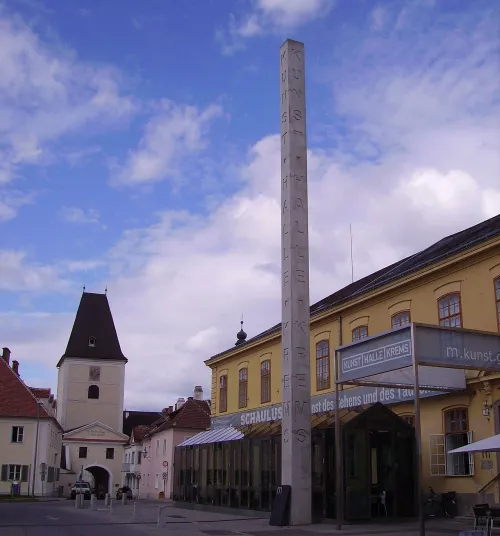
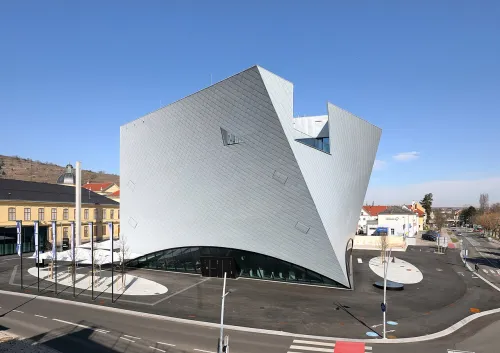
- The Kunstmeile cluster in Stein an der Donau (Kunsthalle Krems, Landesgalerie Niederösterreich, Forum Frohner) is all within a 5-minute walk, and all of it closes on Monday. The one exception is the Karikaturmuseum, open daily, making it the Monday safety net. Plan culture days for Tuesday to Sunday, 10:00 to 17:00.
- Donaufestival sells day passes only, with no single-act tickets. If you want one specific artist you buy the whole day. Capacity at some venues is managed by numbered entry cards, so arrive early even with a pass in hand.
- Grafenegg is 20 km away and there is no public transport back on concert evenings. Either drive, pre-book a taxi, or take one of the festival's organised coach transfers from Krems Bahnhof. Do not assume a taxi will be waiting at 23:00 after a sold-out concert.
- The Wachau Spring Ticket (mid-March to late April) gives a flat 14 €/adult day of Danube river-bus access on Fridays, Saturdays, Sundays and public holidays. It is the cheapest way to make the blossom-season boat trip down to Melk and back.
- Stift Göttweig (UNESCO) sits on a hilltop south of the Danube with no direct bus in 2026: it needs a car or a roughly 4 km walk or cycle from Furth bei Göttweig station. Time it for the golden hour before the 18:00 closing, when the view over the Danube bend is at its best.
- Museum Krems in the 13th-century Dominikanerkloster holds major Baroque works by Kremser Schmidt and, unlike the Kunstmeile, opens daily 10:00-18:00 with no Monday closure. Arrive at 10:00 to have the cloister courtyard to yourself.
- In July and August the Danube basin traps heat to 30-35°C with little shade in the old town, so walk before 09:00 or after 18:00. The Kremser Bauernmarkt closes sharply at noon, so it is a morning-only stop, and the shaded Altstadt lanes and the Stadtpark are your midday relief.
- Autumn Heurige follow Buschenschank custom: a pine branch over the door (the Busch) means open. Most open Thursday to Sunday only in October, so a midweek October visit can find them shut. Several in the Krems Altstadt stay open into November.
Public holidays in Krems
On these dates many shops and offices close, transport thins out, and sights can be mobbed or shut. Plan around them.
| Date | Holiday | What closes |
|---|---|---|
| Jan 1 | New Year's Day | Nearly all shops and most restaurants closed; the Kunstmeile museums are shut. A very quiet day in the Altstadt. |
| Jan 6 | Epiphany | Public holiday: shops shut, churches open. The deep-winter lull continues with very few visitors. |
| Apr 5 | Easter Sunday | All shops closed; masses in the Piaristenkirche and the Stadtpfarrkirche. The Easter weekend can push hotel rates to the top of the April range. |
| Apr 6 | Easter Monday | Public holiday: most shops closed, but museums typically open. Cruise season is opening, so the riverfront sees its first crowds. |
| May 1 | National Day (Labour Day) | Shops and many services closed. It coincides with the first Donaufestival weekend, so the town is busy and central hotels are pricey. |
| May 14 | Ascension Day | Public holiday: shops closed. A popular bridge day, so expect more Austrian day-trippers along the Danube. |
| May 25 | Whit Monday | Public holiday: shops closed. A calm long weekend before the summer season builds. |
| Jun 4 | Corpus Christi | Public holiday: a procession winds through the Altstadt and shops are closed. |
| Aug 15 | Assumption Day | Public holiday during the Grafenegg Festival peak: shops closed, regional hotels near capacity, and the Wachauer Hauermarkt running in nearby Weißenkirchen. |
| Oct 26 | Austrian National Day | Public holiday with flag ceremonies; many museums offer free or reduced entry. A good budget day to visit the Kunstmeile. |
| Nov 1 | All Saints' Day | Public holiday: cemeteries are busy and many attractions are closed. The town is quiet ahead of the Advent season. |
| Dec 8 | Immaculate Conception | Public holiday: shops shut, but the Kremser Adventzauber market is in full swing in the Altstadt. |
| Dec 25 | Christmas Day | Everything closed. The Adventzauber market has wound down after 23 December and several museums are shut. |
| Dec 26 | St. Stephen's Day | Public holiday: most businesses closed. A still, quiet day in town between Christmas and New Year. |
Krems month by month
January in Krems
High4°C / 40°F
Low-1°C
Rain37mm / 10 rainy days
Sun4.5 h/day
Daylight9 h/day
Humidity82%
Crowds●○○○○Prices●○○○○
January is Krems at its quietest and cheapest. Daytime highs sit near 5°C and nights drop below freezing, with short 8.8-hour days and grey skies. The deep off-season empties the town out, yet the full Kunstmeile stays open and Stift Göttweig is at its most peaceful. Some Altstadt restaurants take a 2 to 4 week annual closure in late January, so check ahead, but the museums are queue-free and the hotel value is unbeatable.
The vibe This is the one month you have the Kunsthalle Krems and the medieval Steiner Tor almost to yourself. It is cold and the days are short, but the town is honest and uncluttered, and a winter walk through the empty Altstadt with a stop in a warm Heuriger has a quiet charm that summer never offers.
Don't miss A perfect month for the indoor heavyweights: the Kunsthalle Krems, the Landesgalerie Niederösterreich and Forum Frohner, all closed Monday but open Tuesday to Sunday 10:00-17:00, with no queues. Museum Krems in the Dominikanerkloster opens daily, the Monday safety net for Baroque art by Kremser Schmidt.
Crowd drivers Deep off-season with no events and no school holidays once Epiphany on 6 January passes. The lowest visitor pressure of the year.
In season Deep-winter wine-cellar weather: the Krems Heurige serve Grüner Veltliner and hearty regional plates without any booking trouble. The Kremser Bauernmarkt runs Monday to Saturday until noon for cheap picnic supplies.
Heads up New Year's Day (1 January) and Epiphany (6 January) close nearly all shops and the Kunstmeile museums. Several Altstadt restaurants also take their own 2 to 4 week annual holiday in late January or early February.
Cheapest month of the year: 3-star town-centre hotels run 55-80 € a night, less than half the August-September peak.
February in Krems
High7°C / 45°F
Low0°C
Rain31mm / 8 rainy days
Sun6.6 h/day
Daylight10 h/day
Humidity76%
Crowds●○○○○Prices●○○○○
February is Krems's other rock-bottom month. Highs creep toward 7°C with the year's driest stretch (around 31mm of rain) and noticeably more sun than January. There is little event pull, so international visitors are scarce and the museums stay empty. It is the ideal month for queue-free Kunsthalle visits at the lowest prices, with the trade being short days and a few restaurants still on their winter break.
The vibe February is unperformed Krems, no festival, no seasonal markup, just a small Danube town going about its winter. If you want the Wachau without the crowds or the cost, this is the cheapest, calmest window of all, and the gathering sunshine hints that spring is not far off.
Don't miss Cover the Kunstmeile in comfort: the Karikaturmuseum (open daily 10:00-17:00) and the Klangraum Minoritenkirche (Tuesday to Sunday 11:00-18:00, closed Monday) are atmospheric wet-weather picks. The Gozzoburg, open evenings Monday to Wednesday and Friday to Saturday, is a rare medieval interior worth timing a visit around.
Crowd drivers Winter lull with the occasional wine-cellar event but no major draw. International tourism is at its annual low.
In season Still wine-cellar and Heuriger season for Grüner Veltliner and Wachau plates. The Kremser Bauernmarkt's apricot jam, Wachau wine and smoked Danube fish make a cheap, excellent lunch, but it closes sharply at noon.
Heads up A handful of Altstadt restaurants stay closed for their annual late-January or early-February break, so confirm before counting on a specific Beisl.
Prices at their annual floor alongside January: 55-85 € a night, the best hotel value of the year.
March in Krems
High11°C / 52°F
Low2°C
Rain30mm / 7 rainy days
Sun8.5 h/day
Daylight12 h/day
Humidity70%
Crowds●●○○○Prices●●○○○
March brings the first real signs of spring, with highs climbing toward 11°C and the apricot-blossom watch starting late in the month, in Krems first before it spreads west. The Wachau GOURMETfestival (12-29 March) pulls in food and wine travellers and lifts weekend demand a touch. It is still cool and changeable, but the worst of winter is behind and the terraces start to wake up.
The vibe March is the last genuinely quiet month before the blossom and the festivals fill the valley. The town is waking up, the Heurige are reopening, and you can still get a table and a hotel room without a fight. That window closes fast once April arrives, so use it.
Don't miss The GOURMETfestival is the month's highlight for foodies, with curated wine-and-food dinners across Wachau wineries and restaurants in the quiet pre-season. From mid-March the Wachau Spring Ticket (14 €/adult) opens cheap Danube river-bus day trips toward Melk on weekends and holidays.
Crowd drivers The Wachau GOURMETfestival weekends draw food and wine visitors, and the late-March blossom watch begins, but nothing approaches a mass crowd. Austrian school holidays have not started.
In season The GOURMETfestival is the local food calendar's first big moment, pairing regional Grüner Veltliner and Riesling with gourmet cooking. Book the dinner events well in advance, as the better ones sell out.
Prices recover gently to 70-110 €, with slight spikes on the Wachau GOURMETfestival weekends; school holidays have not started.
Events this month
🍷 Food and wineWachau Gourmet Festival wachau GOURMETfestival
Mar 12–29
across the second half of March
A multi-week festival across Wachau restaurants and wineries pairing regional wine with gourmet cuisine, with some dinners staged in Krems itself.
Ideal for food and wine travellers in the quiet pre-blossom season, when restaurants are far less crowded than in summer. Book the dinner events well in advance.
April in Krems
High16°C / 60°F
Low6°C
Rain60mm / 12 rainy days
Sun9.9 h/day
Daylight14 h/day
Humidity67%
Crowds●●●○○Prices●●○○○
April is when the Wachau puts on its finest spring show. Highs reach 15-16°C, the best walking temperatures of the year, and the apricot blossom turns the terraced vineyards between Krems and Spitz pink-white for 10 to 21 days. The Apricot Blossom Market (2-4 April) fills the old-town pedestrian zone, the cruise season opens, and Easter can lift hotel rates. Showers are common, so pack a light layer, but this is the Wachau at its most photogenic.
The vibe April is the month locals quietly wait for all year. The blanket of apricot blossom over the terraces is a genuine spectacle, and the temperatures are perfect for walking the Altstadt and cycling to Stift Göttweig. It is busier than March but the crowds stay manageable, nothing like the August or September peak.
Don't miss The apricot blossom peaks early-to-mid April; cycle or walk the terraces between Krems and Spitz, or ride the Danube river-bus past them on the 14 € Wachau Spring Ticket. The Blossom Market brings Wachau apricot products, local wine, folk dancing and barrel-organ music to the pedestrian zone.
Crowd drivers The Apricot Blossom Market (2-4 April) and the blossom itself draw spring visitors, the river-cruise season opens, and the Easter weekend (5-6 April) adds domestic travel and pushes the top of the price range.
In season Apricot everything at the Blossom Market: Marillenmarmelade, Marillenschnaps and apricot strudel, alongside the new vintage from local vintners. The Heurige are back in full swing for spring wine.
Heads up Easter Sunday (5 April) closes all shops, with masses in the Piaristenkirche and Stadtpfarrkirche; Easter Monday (6 April) keeps most shops shut but museums generally open.
Rates rise to 75-130 €, with the Easter weekend pushing the top end; otherwise good value before May.
Events this month
🌸 Seasonal natureApricot Blossom Market Kremser Marillenblütenmarkt
Apr 2–4 ~
late March to early April, weather-dependent
The old-town pedestrian zone fills with a market of Wachau apricot products (jams, spirits, strudel), local wine, folk dancing and barrel-organ music. The blossom itself spreads from Krems westward over 10 to 21 days.
The single most photogenic spring moment in the Wachau, with a pink-white blanket draped over the terraced vineyards. Crowds stay manageable, nothing like Vienna scale. The blossom timing varies by around two to three weeks year to year depending on the winter, so check the local forecast before fixing travel dates.
May in Krems
High19°C / 67°F
Low10°C
Rain94mm / 15 rainy days
Sun10.0 h/day
Daylight15 h/day
Humidity71%
Crowds●●●●○Prices●●●○○
May is fine walking weather, with highs near 19°C and the terraces in full green leaf, but it is the wettest month on the calendar (around 94mm) with afternoon thunderstorms a real risk. The Donaufestival takes over Krems on two weekends (1-3 and 8-10 May) and the Wachauer Weinfrühling open-cellar weekend (2-3 May) runs alongside the first. Outside those festival weekends, May is a lovely shoulder month before the summer crush and the Grafenegg surge.
The vibe May is split in two. On the Donaufestival weekends Krems is an international avant-garde arts hub, packed and pricey; in between, it is a calm green Wachau town with mild weather and reasonable rates. Know which you want and time your visit accordingly, and keep a rain layer handy for the showers.
Don't miss Donaufestival fills around 60 avant-garde music, performance and film events across multiple Krems venues, sold by day pass only. On the first weekend the Wachauer Weinfrühling opens dozens of cellars across the valley, mostly free, to taste the new vintage. Between the weekends, the terraces and Danube cycle paths are at their fresh-green best.
Crowd drivers The Donaufestival (1-3 and 8-10 May) sells out and spikes hotels to 140-160 € on its two weekends, with the Wachauer Weinfrühling adding wine visitors to the first. The river-cruise season is also opening into its peak.
In season The Wachauer Weinfrühling is the wine-lover's weekend: dozens of vintners open their cellars across the Wachau, with Krems as the eastern anchor. The Heurige are in full spring stride.
Heads up National Day (1 May) closes shops and services, and it falls on the first Donaufestival weekend, so the town is busy and central rooms are dear.
Rates run 90-160 €, spiking to 140-160 € on the two Donaufestival weekends; mid-range the rest of the month.
Events this month
🎨 Art and cultureDonaufestival donaufestival
May 1–10
two early-May weekends (1-3 and 8-10 May)
An avant-garde, cross-genre festival of music, performance, installations, film and talks across around 60 events at multiple Krems venues. The programme changes each year and typically features international experimental and electronic artists alongside dance and visual-art installations.
Europe's most ambitious small-city experimental arts festival, drawing international audiences. Hotel prices spike to 140-160 € on these two weekends, so non-festival visitors should either avoid them or book 3-plus months ahead. Day passes are the only ticket; there are no single-act tickets.
🍷 Food and wineWachau Wine Spring Wachauer Weinfrühling
May 2–3
first weekend of May
An open-cellar wine weekend across the Wachau, where dozens of vintners open their cellars and Krems is the eastern anchor. Most events are free to enter.
A great way to taste the new vintage before the summer crowds. It coincides with the second Donaufestival weekend, so book your room early.
June in Krems
High25°C / 77°F
Low15°C
Rain90mm / 13 rainy days
Sun12.4 h/day
Daylight16 h/day
Humidity68%
Crowds●●●○○Prices●●○○○
June is the warm-weather value sweet spot. Highs near 25°C, the longest days of the year (16 hours of light), and the Austrian and German school year still running, so crowds stay light. The Grafenegg Sommernachtsgala (11-12 June) opens the classical season 20 km away, and the Wachau Summer Solstice (20 June) lights bonfires along the Danube. Comfortable, long-evening weather before the heat and prices of high summer arrive.
The vibe June is the month to come for warmth without the crush. The long light evenings are made for late Altstadt strolls and riverside dinners, the terraces are deep green, and you still get a hotel room at a fair price. It is the families' and value-seekers' window before July fills the boats and August fills the concerts.
Don't miss The Grafenegg Sommernachtsgala (11-12 June) opens the outdoor classical season at Schloss Grafenegg; pair it with a Krems evening but pre-book transport back. On 20 June the Wachau Summer Solstice strings bonfires and illuminated vineyards along the Danube, best seen from a boat or the Braunsdorferberg viewpoint.
Crowd drivers Shoulder crowds only: the Austrian and German school year still runs, so June stays short of peak. The Grafenegg Sommernachtsgala and the Summer Solstice add evening visitors but no mass pressure.
In season Early summer brings the first stone fruit and the riverside Heuriger and Gastgarten season in full swing. The Kremser Platzkonzerte open-air concerts run through to September.
One of the better-value warm months at 80-130 €, before the July-August crush and the Grafenegg surge.
Events this month
🎵 MusicGrafenegg Summer Night Gala Sommernachtsgala Grafenegg
Jun 11–12
mid-June
An outdoor classical concert at Schloss Grafenegg, about 20 km from Krems, opening the summer season: the Tonkünstler Orchestra under Fabien Gabel with soprano Angel Blue, tenor Bogdan Volkov and cellist Julia Hagen.
A major classical draw that pairs well with a Krems Altstadt evening. Book tickets early, as it sells out, and arrange transport in advance since there is no public service back after the concert.
🌸 Seasonal natureWachau Summer Solstice Wachauer Sommersonnenwende
Jun 20
20 June
A centuries-old midsummer tradition the length of the valley: bonfires along the Danube, illuminated vineyard displays and a ship parade after dark.
An atmospheric free evening visible from the Krems riverbank, though it is best seen from a boat or the Donauausblick viewpoint at Braunsdorferberg.
🎵 MusicGrafenegg Summer Sounds Sommerklänge Grafenegg
Jun 27 – Aug 8
Saturday evenings, late June to early August
A series of six themed outdoor Saturday evenings at Schloss Grafenegg, ranging across jazz, Latin and the European Union Youth Orchestra.
A flexible, single-night way into the Grafenegg season for visitors already based in Krems for other reasons. Sort out transport back before you go.
July in Krems
High27°C / 80°F
Low17°C
Rain87mm / 13 rainy days
Sun12.3 h/day
Daylight16 h/day
Humidity65%
Crowds●●●●○Prices●●●●○
July is high summer and one of Krems's busiest months. Highs near 27°C, with the Danube basin trapping heat to 30-35°C on the hottest afternoons and little shade in the old town. German school holidays drive the crush and the river cruises run full. The Wachauer Kirtag (10-12 July) fills nearby Weißenkirchen, the Grafenegg Sommerklänge Saturdays continue, and the Alles Marille apricot-harvest season gets going in Krems.
The vibe July is hot, busy and harvest-scented. The old town bakes by midday, so the rhythm shifts to early mornings and long evenings. It is the apricot season's heart, when Krems lives and breathes its signature fruit, but it is also when boats, terraces and hotels are all near capacity.
Don't miss The Alles Marille apricot-harvest season is the month's specialty, with fresh apricots, Marillenschnaps and apricot pastries at the Bauernmarkt. With the heat at its worst and pre-booked guided tours expensive, our in-browser AI guide is the flexible, flat-priced alternative to a private guide: it tells you the story of each Altstadt landmark and answers your questions as you walk the cooler early hours, and you tap from one stop to the next at your own pace.
Crowd drivers German school holidays and the river-cruise peak fill the town, and the Wachauer Kirtag (10-12 July) in Weißenkirchen pulls Krems-based day-trippers, so accommodation fills.
In season Apricot harvest peaks: the Bauernmarkt overflows with Wachau apricots and Marillenschnaps. Cool off with Sturm's predecessor, a chilled Grüner Veltliner, in the shaded Heurige courtyards.
Busy summer pricing of 110-175 €, driven by German school holidays and peak river cruises.
Events this month
🍷 Food and wineWachau Folk Fair Wachauer Kirtag
Jul 10–12
mid-July
A traditional wine and folk festival at the Teisenhoferhof in Weißenkirchen, 25 km west of Krems, with local vintners' wine, folk music and food.
It draws visitors who base themselves in Krems and day-trip into the valley, so Krems accommodation fills around the date in an already busy July.
August in Krems
High26°C / 78°F
Low17°C
Rain81mm / 13 rainy days
Sun10.8 h/day
Daylight14 h/day
Humidity70%
Crowds●●●●●Prices●●●●●
August is Krems's peak and priciest month. Highs near 26°C with the same heat-trapping Danube basin, Austrian and German school holidays, and the river-cruise season at its height. The real driver is the Grafenegg Festival (14 August to 6 September), Austria's premier outdoor classical festival, which fills regional hotels for three weeks with Krems as the base. The Wachauer Hauermarkt (15-16 August) adds harvest wine to the mix.
The vibe August is full-throttle Wachau: hot, busy and booked out. If you have come for the Grafenegg Festival and the great orchestras under the open sky, it is glorious. If you have not, the heat, the crowds and the year's highest prices make it the month to plan around rather than into.
Don't miss The Grafenegg Festival brings the Vienna Philharmonic, Royal Concertgebouw and soloists like Yuja Wang and Daniil Trifonov to Schloss Grafenegg; book tickets and transport months ahead. The Wachauer Hauermarkt (15-16 August) in Weißenkirchen pairs early-harvest wine with regional food.
Crowd drivers The Grafenegg Festival (14 August to 6 September) is the single biggest regional price driver, with Krems the base for concert-goers. School holidays and the cruise peak stack on top, and the Wachauer Hauermarkt adds a wine-market crowd on 15-16 August.
In season Harvest-season wine arrives with the Wachauer Hauermarkt; the apricot pastries linger from July. Walk and eat in the cooler evenings, as the midday heat makes the shadeless Altstadt hard work.
Heads up Assumption Day (15 August) closes shops, falling right in the Grafenegg Festival peak when regional hotels are near capacity.
The year's most expensive month at 130-200 €: the Grafenegg Festival alone fills regional hotels, so book 3-plus months ahead.
Events this month
🎵 MusicGrafenegg Festival
Aug 14 – Sep 6
mid-August to early September
The 20th-anniversary edition of Austria's premier outdoor classical festival at Schloss Grafenegg, with the Vienna Philharmonic, Royal Concertgebouw and Munich Philharmonic, plus Martha Argerich, Yuja Wang and Daniil Trifonov.
The single biggest hotel-price driver in the region across three weeks, with Krems the base for many concert-goers. Book accommodation 4 to 6 months ahead, and arrange transport back from Grafenegg in advance.
September in Krems
High21°C / 70°F
Low13°C
Rain68mm / 10 rainy days
Sun9.1 h/day
Daylight13 h/day
Humidity74%
Crowds●●●●●Prices●●●●●
September stays at peak prices, with highs near 21°C and the grape harvest beginning on the terraces. It is the hardest accommodation month of the year. The Grafenegg Festival runs through 6 September, then the Wachaumarathon (12-13 September) sells out the entire valley, followed immediately by the televised Starnacht weekend (18-19 September). Lovely weather and harvest atmosphere, but you must book the mid-September weekends 6-plus months ahead or stay away.
The vibe September is a paradox: the weather and the harvest light are gorgeous, but the calendar is brutal on hotels. The marathon and Starnacht weekends are an absolute valley-wide sellout back to back, making the third week the single worst time to arrive without a booking. Time it right and it is glorious; time it wrong and it is a 200 € scramble.
Don't miss The grape harvest on the steep Wachau terraces is one of Austria's most scenic, with must aromas drifting near the Heurige. If you are not running the marathon, the Sturm new-wine season and the harvest light reward a visit, but only with a room locked in well ahead.
Crowd drivers The Grafenegg Festival closing days, then the Wachaumarathon (12-13 September) and the Starnacht (18-19 September) make two back-to-back sold-out weekends, the hardest accommodation window of the year. The grape harvest also begins, drawing wine tourism.
In season Harvest season opens Sturm, the fermenting young wine, in the Heurige alongside the first new Grüner Veltliner. The Wachau valley is at its most wine-focused now.
Still peak at 120-200 €: the Wachaumarathon weekend (12-13 September) sells out the whole valley and is the single most-booked point of the year.
Events this month
🎵 MusicGrafenegg Festival
Aug 14 – Sep 6
mid-August to early September
The 20th-anniversary edition of Austria's premier outdoor classical festival at Schloss Grafenegg, with the Vienna Philharmonic, Royal Concertgebouw and Munich Philharmonic, plus Martha Argerich, Yuja Wang and Daniil Trifonov.
The single biggest hotel-price driver in the region across three weeks, with Krems the base for many concert-goers. Book accommodation 4 to 6 months ahead, and arrange transport back from Grafenegg in advance.
🏃 SportWachau Marathon weinmalig WACHAUmarathon
Sep 12–13
race weekend in mid-September (main races Sunday)
An international marathon, half and quarter through the UNESCO Wachau valley, with the junior marathon on the Saturday and the full distances on the Sunday. Around 6,000-plus runners plus spectators, with routes through Krems and along the Danube.
The single most-booked Krems weekend of the year, an absolute valley-wide hotel sellout. Non-runners should avoid it or book 6-plus months ahead at a significant premium of 180-200 € a night.
🎵 MusicStarnacht from the Wachau Starnacht aus der Wachau
Sep 18–19
third weekend of September
A large open-air German-language schlager and pop concert broadcast live on ORF from Rossatz, 30 km west of Krems, drawing 30,000-plus people. One of Austria's major TV events of the year.
Coming straight after the marathon, it makes the third week of September the hardest accommodation window of the year, with the whole valley under pressure across two back-to-back sold-out weekends.
October in Krems
High16°C / 61°F
Low8°C
Rain53mm / 9 rainy days
Sun7.1 h/day
Daylight11 h/day
Humidity80%
Crowds●●●○○Prices●●●○○
October is golden-autumn Krems and the second-best window of the year. Highs near 16°C, the terraced vineyards turning yellow and orange in mid-to-late October, and the crowds thinning out after the marathon and Grafenegg seasons. The Sturmtage new-wine events (3-4 October) and the Heurige with their Sturm and Grüner Veltliner are the local autumn ritual. Cool, romantic and well-priced, with golden light for photography.
The vibe October is the couples' month and many locals' favourite. The terraces glow gold and orange, the Heurige pour Sturm, and the Altstadt is quiet enough for unhurried evening strolls at shoulder prices. Stift Göttweig in the late-afternoon golden hour, looking over the Danube bend, is the most romantic the Wachau gets.
Don't miss Autumn foliage peaks mid-to-late October on the terraced vineyards; combine it with Sturm and Grüner Veltliner in the Heurige (most open Thursday to Sunday only, so check midweek). Stift Göttweig in the golden hour before its 18:00 close is the standout autumn trip, by car or a 4 km walk from Furth bei Göttweig station.
Crowd drivers The grape harvest wraps and the post-September rush fades, so October is mostly quiet. The Sturmtage new-wine events and autumn foliage draw a gentle wine-and-photography crowd, and the Austrian National Day (26 October) adds a domestic day.
In season Sturm, the fermenting new wine, is the October ritual in the Heurige, served with hearty harvest-season plates. The Sturmtage (3-4 October) make it the centrepiece.
Heads up Austrian National Day (26 October) is a public holiday with flag ceremonies, and many museums offer free or reduced entry, making it a good budget culture day.
Shoulder pricing returns to 85-130 € as the harvest and Grafenegg rush ends; a sweet-value window.
November in Krems
High10°C / 49°F
Low4°C
Rain43mm / 9 rainy days
Sun5.0 h/day
Daylight9 h/day
Humidity85%
Crowds●●○○○Prices●●○○○
November is one of the quietest months, with highs near 10°C, short 9-hour days and grey skies. The wine-cellar season carries the early weeks, and weekday rates sit low. Then, around the third or fourth weekend, the Kremser Adventzauber opens on the Pfarrplatz and brings the first festive light and life into the Altstadt for the run toward Christmas. Calm and affordable, with a warm finish as Advent arrives.
The vibe November is introverted Krems: grey, quiet and cheap for most of the month, then suddenly aglow when the Adventzauber lights up the old town from late in the month. Come early for the lowest prices and the empty museums, or late for the first mulled wine and choir performances on the Pfarrplatz.
Don't miss The early weeks are made for the wine cellars and the empty Kunstmeile. Once the Adventzauber opens, the Altstadt lanes around the Pfarrplatz fill with crafts, mulled wine, roasted chestnuts and choir performances, far calmer than Vienna and virtually tourist-free on midweek evenings.
Crowd drivers Deep autumn quiet for the first three weeks, then the Kremser Adventzauber opening late in the month brings the first weekend uptick toward December.
In season Wine-cellar season continues with Grüner Veltliner and hearty plates; as the Adventzauber opens, Glühwein and roasted chestnuts appear on the Pfarrplatz.
Heads up All Saints' Day (1 November) is a public holiday: cemeteries are busy and many attractions are closed for the day.
Quiet weekdays at 65-100 €, with Advent-market weekends pushing toward 90-100 € once the Adventzauber opens late in the month.
Events this month
🎄 Christmas marketKrems Advent Market Kremser Adventzauber
Nov 20 – Dec 23 ~
from the third or fourth weekend of November to 23 December
A Christmas market in the Altstadt on the Pfarrplatz and the surrounding lanes, with crafts, mulled wine, roasted chestnuts and choir performances. Smaller and more intimate than Vienna.
One of Lower Austria's best-loved Advent markets, with far fewer crowds than Vienna and the same quality of local crafts. Midweek evenings are virtually tourist-free, while the candle and lantern light makes it the best after-dark version of the old town.
December in Krems
High6°C / 43°F
Low1°C
Rain46mm / 9 rainy days
Sun4.4 h/day
Daylight8 h/day
Humidity83%
Crowds●●○○○Prices●●○○○
December is Advent-market Krems. Highs near 6°C, the shortest days of the year (about 8.4 hours of light), and the Kremser Adventzauber in full swing on the Pfarrplatz through 23 December. It transforms the candle-lit Altstadt from 4 pm, the best after-dark version of the old town. After the market closes, Christmas week and the days around New Year go very quiet, with several museums and many restaurants shut from 24 to 26 December.
The vibe December splits cleanly: festive and atmospheric while the Adventzauber runs, then hushed and almost empty once it closes on 23 December. The intimate, candle-lit market is the draw, a calmer, more local alternative to Vienna, and the post-market quiet is for those who want the Wachau utterly to themselves.
Don't miss The Adventzauber turns the Altstadt into a candle and lantern-lit market with crafts, mulled wine, roasted chestnuts and choir performances, intimate and far less crowded than Vienna. Go on a midweek evening for a near tourist-free visit, and pair it with the well-lit, uncrowded Kunstmeile galleries.
Crowd drivers The Kremser Adventzauber (to 23 December) is the main draw, packing the Pfarrplatz on weekends. After it closes, Christmas week and New Year are very quiet.
In season Glühwein, roasted chestnuts and Wachau wine carry the market; the Heurige and Altstadt restaurants serve festive plates until the 24-26 December closures.
Heads up The Adventzauber closes on 23 December; Christmas Eve (24 December) runs a skeleton restaurant schedule from 18:00, and Christmas Day (25 December) and St. Stephen's Day (26 December) close nearly everything, with several museums shut.
Advent-market weekends run 70-105 €; the town goes very quiet and cheap after the market closes on 23 December.
Events this month
🎄 Christmas marketKrems Advent Market Kremser Adventzauber
Nov 20 – Dec 23 ~
from the third or fourth weekend of November to 23 December
A Christmas market in the Altstadt on the Pfarrplatz and the surrounding lanes, with crafts, mulled wine, roasted chestnuts and choir performances. Smaller and more intimate than Vienna.
One of Lower Austria's best-loved Advent markets, with far fewer crowds than Vienna and the same quality of local crafts. Midweek evenings are virtually tourist-free, while the candle and lantern light makes it the best after-dark version of the old town.
Frequently asked questions
What is the best time to visit Krems an der Donau?
Late April and May (outside the Donaufestival weekends) and October are the best overall. Spring brings 15-19°C walking weather, the apricot blossom or fresh green terraces, the full Kunstmeile open, and prices 30-40% below August. October delivers golden vineyard foliage, Sturm and Grüner Veltliner in the Heurige, and thin crowds once the marathon and Grafenegg seasons are over.
What is the cheapest time to visit Krems?
January and February are the cheapest by far, with 3-star town-centre hotels at 55-85 € a night, less than half the 130-200 € of the August and September peak. The trade is short, cool days and a few Altstadt restaurants taking their annual late-January closure, but the Kunsthalle and Landesgalerie are queue-free and the Bauernmarkt keeps lunches cheap.
What is the worst time to visit Krems?
The mid-September stretch, unless you came to run. The Wachaumarathon weekend (12-13 September) sells out the entire Wachau valley, and the televised Starnacht weekend (18-19 September) follows immediately, making the third week of September the hardest accommodation window of the year at 180-200 € a night. The rest of August also commands the year's highest prices thanks to the Grafenegg Festival.
When is the apricot blossom in the Wachau near Krems?
Usually early-to-mid April, though it can begin in late March in warm years. The blossom starts in Krems and spreads west toward Spitz over 10 to 21 days, depending on late-frost risk. The Apricot Blossom Market in the old-town pedestrian zone marks the peak; in 2026 the late-March dates were cancelled by frost and the main market ran 2-4 April. Cycle or walk the terraces, or ride the Danube river-bus on the 14 € Wachau Spring Ticket.
What is the weather like in Krems in summer?
Hot. Krems sits in a Danube basin that traps heat, so July and August afternoons regularly reach 30-35°C with full sun and little shade in the old town. Highs average 26-27°C. Walk before 09:00 or after 18:00, carry water, and use the shaded Altstadt lanes and the Stadtpark for midday relief. The nearest river bathing is the Donau-Strandbad Mautern across the bridge, open June to August.
Is Krems worth visiting in winter?
Yes, in two ways. December's Kremser Adventzauber on the Pfarrplatz is an intimate, candle-lit Advent market, calmer and more local than Vienna's, transforming the Altstadt from 4 pm through 23 December. January and February are the cheapest, quietest months for queue-free visits to the Kunsthalle Krems and the Landesgalerie at 55-85 € a night, with the trade being short days and a few restaurants on their annual break.
How do you get to Grafenegg for the festival from Krems?
Grafenegg is about 20 km from Krems and there is no public transport back after concerts. Drive, pre-book a taxi, or take one of the festival's organised coach transfers from Krems Bahnhof on main concert nights. Do not assume a taxi will be waiting at 23:00 after a sold-out Grafenegg Festival or Sommernachtsgala concert. Book accommodation 4 to 6 months ahead for the August festival peak.
How many days do you need in Krems?
Two to three days cover Krems and the Wachau. One day for the Altstadt, the Steiner Tor, the Gozzoburg and the Kunstmeile in Stein; a second for Stift Göttweig and a Heuriger; a third for a Danube cruise or a cycle to Weißenkirchen and Spitz. Add a day in spring for the apricot blossom or in autumn for the harvest. Remember most of the Kunstmeile closes Monday, so save Mondays for the Karikaturmuseum or Museum Krems, which open daily.
When is the grape harvest and Sturm season in Krems?
The Wachau grape harvest runs from mid-September to mid-October on the steep terraces, and Sturm, the fermenting young wine, appears in the Heurige through October, with the Sturmtage events on 3-4 October as a centrepiece. October is the best time to enjoy it, with golden foliage, thin crowds and shoulder prices of 85-130 €. Note many autumn Heurige open Thursday to Sunday only, so a midweek visit can find them shut.

Any month, any day: your guide is already there
Whatever date you pick, a private human guide gets pricier and harder to book on weekends, holidays and in peak season. Our live AI guide, the one that walks with you and answers anything you ask out loud, works the opposite way.
One flat price, every day
No holiday, weekend, night or peak-season surcharge. A private guide in Krems runs well over 100 euro for a half day, and more on holidays. Ours stays the same.
Available the moment you want it
Start at midnight or at dawn, on Christmas, in the snow, in the August heat. No sold-out high season, no booking weeks ahead.
Your pace, no meter running
Pause for a long lunch, restart after dark, repeat a stop. The tour simply waits for you.
Free to try, a fraction of the cost
Test it for free, then a transparent flat price that undercuts any private guide, in every season.
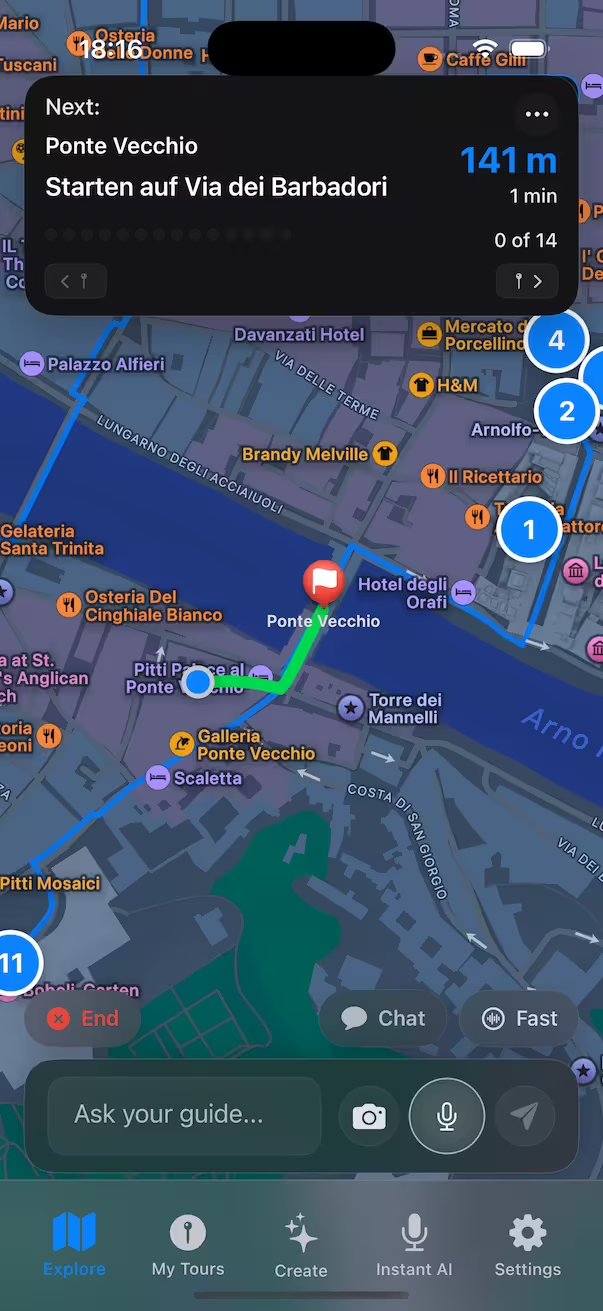
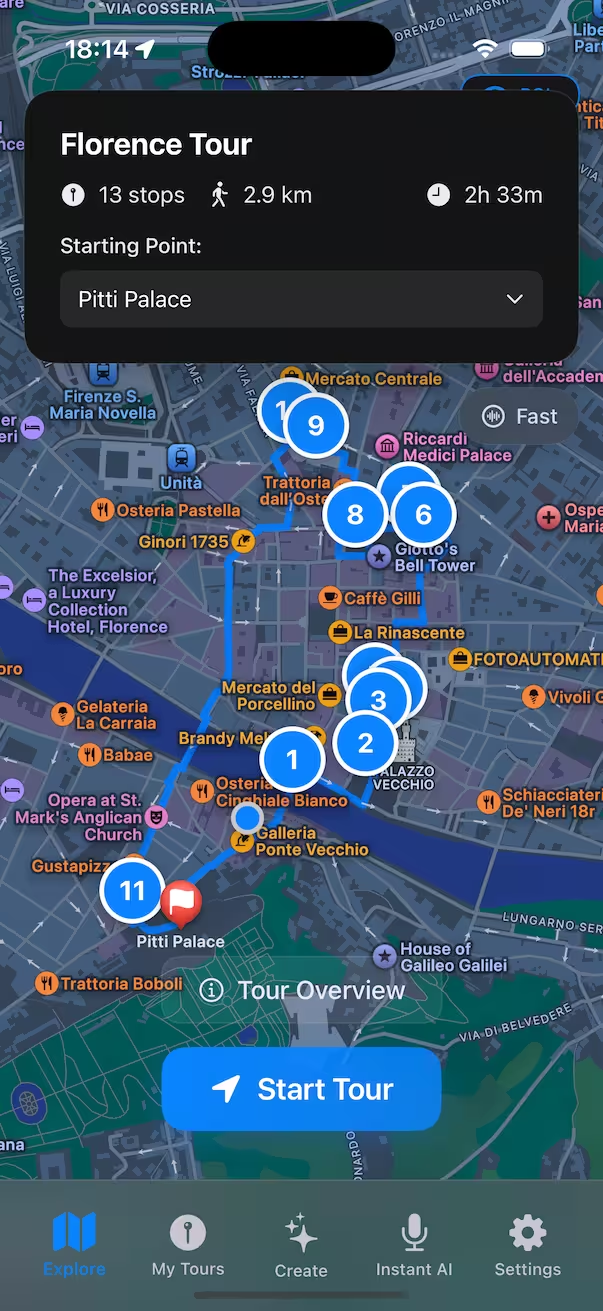
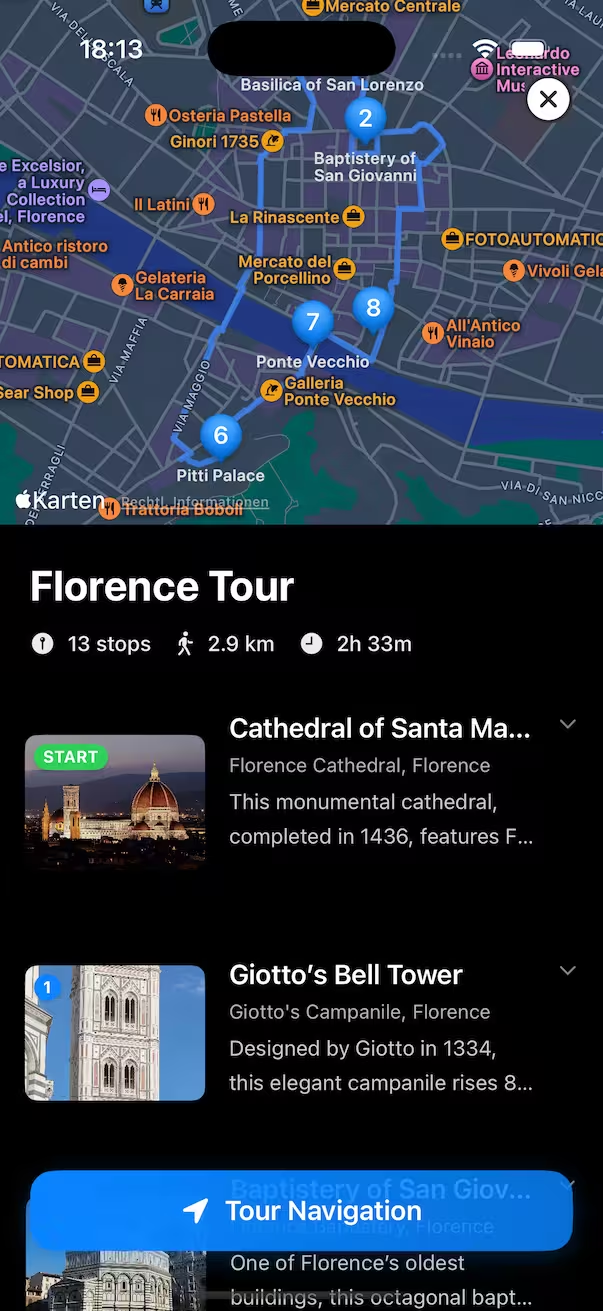
The classic Krems tour: 6 stops, 2.2 km, about 1 h on foot
Your live AI guide and the self-guided Krems route, together in your browser.