Best Time to Visit Lübeck
Month-by-month weather, crowds and prices, plus a full calendar of festivals and events worth planning a trip around.
Best monthsMay, Sep
CheapestJan, Feb
AvoidDec
BusiestJul, Dec
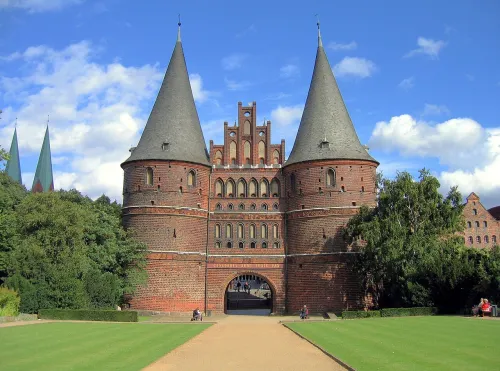
When is the best time to visit Lübeck?
Come in May or September. May gives you 12-17°C walking weather, the Brahms Festival in the concert halls and 80-115 EUR hotels with no real crowd pressure; September drops July's prices by 25-35%, adds the Travejazz festival and keeps the Baltic evenings warm. December is the busiest and dearest month: the Christmas markets push central hotels to 140-220 EUR and the first two Advent weekends are shoulder-to-shoulder. February is the cheapest of all (50-75 EUR), the trade being short, grey, 6°C days.
Start our tool and find your best time to visit Lübeck
Your perfect month
Free · ~30 seconds
or tap a month directly
What matters to you?
And this?
Best overall: May, Sep. May and September are the real sweet spot. May brings 12-17°C walking weather, the 34th Brahms Festival (2-10 May) in the Musikhochschule halls, full museum access and hotels at 80-115 EUR with no major crowd pressure. September delivers the Travejazz festival (3-6 Sept), warm Baltic evenings, school holidays over, and rates 25-35% below the July-August peak.
Best value: Jan, Feb, Oct. February is the cheapest month of the year, with 3-star centre hotels at 50-75 EUR (about 29% below average), zero queues for tickets and full access to everything open. October still runs 70-100 EUR with autumn foliage on the Wakenitz. Early November (before the markets open on 23 Nov) adds the Nordic Film Days as a value-season cultural bonus.
Avoid: Dec, Jul. The first and second Advent weekends in December are the year's worst value: hotels hit 140-220 EUR, the Altstadt is shoulder-to-shoulder on Saturday afternoons and Niederegger has hour-long queues. The Travemünder Woche sailing week (17-26 July) is the other trap, selling out Lübeck and Travemünde months ahead. If you want the markets, come on a December weekday instead.
- January: Tough month, 4°C. This is the month you have the UNESCO old town almost to yourself. The brick churches catch soft low light from 09:00 to 11:00, and the Gänge and Höfe are silent. Bundle up for the damp and the early dusk, and enjoy a Café Niederegger marzipan torte without anyone in front of you in the queue.
- February: Good time, 6°C. February is honest, unperformed Lübeck: no markup, no crowds, just a quiet brick-Gothic city going about its winter. If your priority is cost and calm over weather, this is the month, with the whole Altstadt and the combined Lübecker Museen card to yourself.
- March: Good time, 9°C. March is the last genuinely quiet month before the Easter day-trippers arrive. The light returns, the Trave promenade reopens to evening strolls, and you can still wander the Gänge and Höfe before 10:00 with nobody around. Use the window, because it closes the moment Easter lands.
- April: Good time, 12°C. Late April is one of Lübeck's loveliest quiet stretches: blossom along the river, long light evenings, and romantic empty courtyards once the Easter crowds have gone home. It is the couples' month before summer, with moderate prices and the city at its spring best.
- May: Great time, 17°C. May is the quietly perfect month nobody hypes. No mass event, no summer heat, no holiday markup, just a green Hanseatic city at ease with itself and a serious classical festival to give the evenings depth. Bring a light layer for the cool and you have Lübeck close to its best.
- June: Great time, 22°C. June is the tipping point into full summer, and the long Baltic light is the payoff. Light until well past 21:00 means late riverside dinners on the Untertrave and beach evenings at Travemünde. It is getting busier, but the main school holidays have not hit, so the city still breathes.
- July: Good time, 22°C. July is hot, busy and beach-focused. The Altstadt offers welcome shade from its Gothic church walls when the sun beats down, but the real July action is out at Travemünde and along the Untertrave, where the city eats and drinks outdoors until late. Time your trip around the sailing week unless you came for it.
- August: Good time, 23°C. August is full-summer Lübeck: warm evenings on the Trave, the beach busy at Travemünde and the city at one of its two yearly peaks. It is enjoyable but not quiet or cheap. The Museumsnacht at the end of the month is the highlight, turning the whole museum quarter into a single late-night event.
- September: Great time, 19°C. September feels like Lübeck exhaling: warm enough for the river terraces and a last beach day, alive with jazz, but without August's crowds or prices. This is the month to come if you want everything open, mild weather and the locals back in their normal rhythm rather than on holiday.
- October: Good time, 14°C. October is the quiet, atmospheric off-season before the Christmas machine starts. Red and gold foliage frames the Wakenitz, the Gänge and Höfe are empty again, and prices are back down. Cool and often wet, but romantic and uncrowded, with the year's best canoe-corridor colour.
- November: Tough month, 8°C. Early November is the last cheap, calm window of the year, and the Nordic Film Days give it real cultural pull. By month-end everything changes: the markets open, the lights go up and the Lübecker Nächte launches the most crowded night of the whole festive run. Time your visit to which Lübeck you want.
- December: Tough month, 6°C. December trades the year's emptiness for full festive bustle: lights, Glühwein, marzipan and crowds. It is genuinely magical, especially as the early dusk turns the brick churches golden, but it is the busiest and dearest stretch. Go on a Tuesday or Wednesday for the same atmosphere with 50-60% fewer people, and book a weekday stay months ahead.
Lübeck weather by month
HighLowRainfall
Jan4°
Feb6°
Mar9°
Apr12°
May17°
Jun22°
Jul22°
Aug23°
Sep19°
Oct14°
Nov8°
Dec6°
| Month | Temp | Rain | Sun | Crowds | Prices | Highlight |
|---|---|---|---|---|---|---|
| Jan | 4° / 0° | 66mm · 14 rainy days | 3.0 h/day | ●○○○○ | ●○○○○ | |
| Feb | 6° / 0° | 55mm · 12 rainy days | 5.2 h/day | ●○○○○ | ●○○○○ | |
| Mar | 9° / 2° | 53mm · 11 rainy days | 6.9 h/day | ●●○○○ | ●●○○○ | |
| Apr | 12° / 4° | 44mm · 10 rainy days | 10.5 h/day | ●●○○○ | ●●○○○ | |
| May | 17° / 8° | 54mm · 10 rainy days | 11.4 h/day | ●●○○○ | ●●○○○ | Brahms Festival Lübeck |
| Jun | 22° / 13° | 65mm · 9 rainy days | 12.3 h/day | ●●●○○ | ●●●○○ | HanseKulturFestival Lübeck |
| Jul | 22° / 14° | 79mm · 13 rainy days | 11.7 h/day | ●●●●○ | ●●●●○ | Travemünde Week |
| Aug | 23° / 14° | 63mm · 13 rainy days | 10.9 h/day | ●●●●○ | ●●●●○ | Schleswig-Holstein Music Festival |
| Sep | 19° / 12° | 48mm · 10 rainy days | 8.8 h/day | ●●●○○ | ●●●○○ | Travejazz Festival |
| Oct | 14° / 8° | 65mm · 13 rainy days | 5.5 h/day | ●●○○○ | ●●○○○ | |
| Nov | 8° / 4° | 49mm · 12 rainy days | 3.3 h/day | ●●●○○ | ●●●○○ | Nordic Film Days Lübeck |
| Dec | 6° / 2° | 69mm · 14 rainy days | 2.3 h/day | ●●●●● | ●●●●● | Lübeck Christmas Markets |
How we score this: weather = long-run climate normals (Open-Meteo), crowds & prices = relative season read, events checked yearly against official dates.
Best time to visit Lübeck: weather, prices & crowds
Best months for good weather
May, Jun, Sep
May, June and early September are Lübeck's most reliable stretch: 17-22°C, the longest daylight of the year in June (17 hours), dry walking days through the Altstadt lanes, and Travemünde beach warm enough for the Baltic from late June. September keeps the warmth without July's afternoon thunderstorms.
Quietest months to avoid the crowds
Jan, Feb, Oct
January, February and October empty the UNESCO Altstadt right out. You walk into the Holstentor museum and up the St.-Petri tower with no queue, and the Gänge and Höfe courtyards are yours alone before 10 am. October adds Wakenitz foliage before the Christmas rush begins.
Cheapest time to visit Lübeck
Jan, Feb, Oct
January and February are the cheapest months by a clear margin: 3-star centre hotels run 50-80 EUR a night, roughly 29% below the annual average per Momondo and Kayak data. October still sits at 70-100 EUR before the Christmas-market premium lands in late November.
Best time for festivals and events
Nov, Dec
From late November Lübeck becomes the self-styled Christmas Capital of the North: five separate markets in the medieval Altstadt, the maritime market out at Travemünde, and the whole brick-Gothic quarter glowing from 15:30 as dusk falls early. Niederegger marzipan is in full seasonal production. Go on a weekday to skip the Advent-weekend crush.
How many days do you need in Lübeck?
Two days is the sweet spot for Lübeck. The UNESCO Altstadt is a compact island you can walk end to end in under thirty minutes, so one focused day covers the core highlights without rushing, and a second day lets you go deeper into the museums, courtyards and the Baltic coast at Travemünde.
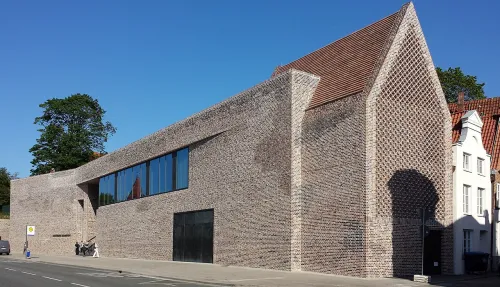
One day
The seven spires in a single loop
Start at the Holstentor, cross into the Altstadt and follow the self-guided Lübeck walking tour, ten stops across 4.4 km in about 2.4 hours, taking in the Marienkirche, Rathaus Lübeck, Café Niederegger and the Lübecker Dom. Climb the St. Petri tower before 10:30 for the best rooftop panorama of the seven spires, then end the afternoon with a marzipan torte at Niederegger on Breite Straße.
Two daysRecommended
Museums, courtyards and Hanseatic depth
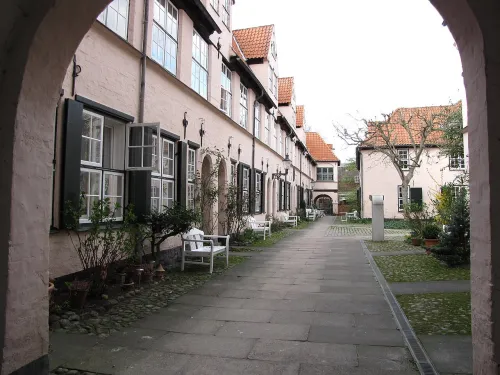
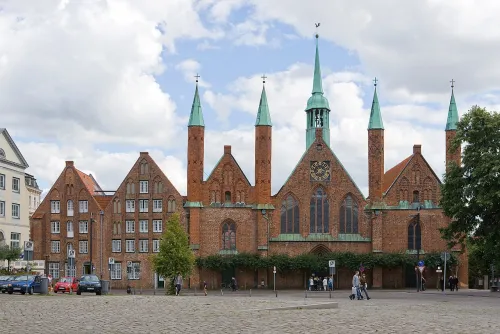
Dedicate the second day to the Europäisches Hansemuseum by the Burgtor, the world's largest museum on the Hanseatic League, where 90 minutes is the minimum. Then slow down at the Füchtingshof almshouse courtyard and the Heiligen-Geist-Hospital at the Koberg, both free and usually quiet before 10:00. Round off at the Günter-Grass-Haus or the Behnhaus Drägerhaus with its Buddenbrooks substitute exhibition.
Three days
Travemünde, the Wakenitz and the wider coastline
A third day earns the Baltic. Take the bus or S-Bahn to Travemünde for the beach or the Brodtener Ufer cliff path, which runs above the shore for around 4 km and rewards any season. In autumn, rent a kayak on the Wakenitz, called the Amazon of the North for its reed-fringed banks. In December, this is the day to do a weekday tour of the Christmas markets without the Advent-weekend crush.
Four days or more
Day trips to Hamburg, Lüneburg and the Holsteinische Schweiz
Four days opens the region. Hamburg is 50 minutes by train and pairs well with a Lübeck base, especially during the Travemünder Woche when Lübeck hotels are fully booked. Lüneburg, another Hanseatic city with a perfectly preserved medieval centre, is 45 minutes south. The Holsteinische Schweiz lake district, with cycling routes between the kettle lakes, is under an hour east. Come back to the Altstadt each evening for dinner on the Untertrave waterfront.
Best time to visit Lübeck by traveller type
Same city, different trip. Here's the month that fits how you're travelling.
🧭
Best time to visit Lübeck for the first time
MaySep
May or September for the full UNESCO Altstadt without the December price premium or the July sailing-week crunch. May adds the Brahms Festival and pleasant 15°C walking; September brings Travejazz, summer heat gone, school holidays ended and hotels 25-35% below the July peak. Both keep the Holstentor, Hansemuseum and all churches fully accessible.
❤️
Best time to visit Lübeck for couples
AprSep
Late April for cherry blossom on the Trave promenade, long evening light and romantic empty Gänge at moderate prices, or late September for the Brodtener Ufer coastal cliff walk in autumn colour, jazz-festival ambience and rates 20-30% below summer.
💶
Best time to visit Lübeck on a budget
FebNov
February for the cheapest hotels of the year (50-75 EUR), no competition for museum tickets and the combined Lübecker Museen card for multi-museum days. Early November (before 23 Nov) runs 35-45% below December, with the Nordic Film Days (4-8 Nov) as added-value cinema. Hamburg is 50 minutes by train if you want to day-trip in even cheaper.
🍝
Best time to visit Lübeck for food and wine
DecJun
December weekdays for Niederegger marzipan in full seasonal production with its widest range of Christmas shapes and liqueur fillings, plus Glühwein stalls and smoked fish at the Travemünde maritime market. Late June for the Monday and Thursday Marktplatz market with northern German strawberries and regional cheeses, and restaurant terraces open along the Untertrave.
Worst time to visit Lübeck
December, specifically the first and second Advent weekends in late November and early December, is when Lübeck is at its most punishing on budget and patience. Central hotels jump to 140-220 EUR, the Altstadt is shoulder-to-shoulder on Saturday afternoons and Niederegger has queues stretching around the corner. The Travemünder Woche sailing week in mid-to-late July is the other trap: it sells out all accommodation in both Lübeck and Travemünde four to six months ahead at 150-200 EUR plus, and the promenade is overwhelmed by crowds for the entire ten days.
Still worth it for December weekdays from mid-month onwards have the same festive atmosphere with 50-60% fewer visitors, and the markets are still fully running. The Travemünder Woche is free and spectacular for spectators who base themselves in Hamburg and day-trip instead.
Go instead in May, September, when Lübeck is at its best.
Best time for a tour of Lübeck
Lübeck's 4.4-kilometre loop through the Altstadt rewards walkers most in May and June, when highs settle between 17 and 22 °C, rain falls on only 9 to 10 days a month, and the light stays long enough to linger at the Holstentor without feeling rushed. The brick lanes between Marienkirche and the Rathaus are narrow and largely shadeless, which makes the shoulder months genuinely comfortable and July or August, when temperatures nudge 22 to 23 °C and visitors pack the old town, considerably more tiring. September is the quiet exception to summer: the crowds thin, the air drops to a pleasant 19 °C, and an afternoon walk past Heiligen-Geist-Hospital to Lübecker Dom stays easy the whole way round. Winter is honest: January and February bring barely 4 to 6 °C, 12 to 14 rain days, and darkness before 4 pm, which makes the cobblestones feel long. December is the only month when the town is truly heaving again, pulled in by Christmas markets around the Rathaus, so expect shoulder-to-shoulder foot traffic if you come then.
With AI Tourguide you set your own clock entirely, which matters in a city where morning and afternoon behave so differently. On a warm July day you can start your Lübeck tour at 8 am, before the Holstentor crowds arrive and while the brick gables along the waterfront still catch the low light. On a grey October morning you can take it slow through Café Niederegger, warm up, and carry on when ready. The guide runs in your browser with no download needed: a voice-first AI leads the walk, tells you the stories behind each stop, asks what catches your eye, and adjusts the conversation to what you say. No fixed departure time, no group pace to match.

 +6
+6All 10 stops are already on the map.
You just press start.
You just press start.
 AI Tourguide
You just read the route.
Now walk it with a guide in your ear.
Press start wherever you are, even hundreds of kilometres from Lübeck, and the guide begins telling its stories right away. In the city, pick any of the 10 stops to start from: it leads you there, then talks with you the whole route, asking, listening, remembering, and shaping the tour around your answers.
10stops4.4km2.4hours11languages
▶Start the tour freeFree to start · Runs in your browser · No app, no download
Lübeck events and festivals calendar
Annual highlights worth timing a trip around, listed month by month.
May
🎵 MusicBrahms Festival Lübeck 34. Lübecker Brahms-Festival
May 2–10
early May, around ten days
More than 30 concerts by faculty and students of the Musikhochschule Lübeck, running over roughly ten days in early May.
June
🎉 FestivalHanseKulturFestival Lübeck
Jun 5–7 ~
a weekend in early June, biennial in even years
Music, acrobatics and street performance fill the Seafarers' Quarter (Schifferquartier) around St.
🎉 FestivalLübeck Folk and Remembrance Festival Lübecker Volks- und Erinnerungsfest
Jun 19–28
ten days in late June, with a festive parade on the Sunday of the opening weekend
A ten-day traditional folk festival and funfair in and around the Altstadt, with rides, food, live music and a festive parade on the opening Sunday.
July
🎵 MusicSchleswig-Holstein Music Festival Schleswig-Holstein Musik Festival
Jul 4 – Aug 30
early July to end of August
A summer festival of 205 concerts across 120 venues in northern Germany and Denmark.
🏃 SportTravemünde Week 137. Travemünder Woche
Jul 17–26
ten days in mid-to-late July
The 137th edition of the sailing regatta and maritime festival: around 900 boats and over 1,500 sailors, 28 title decisions including 16 world and European championships, plus the RS Games.
August
🌙 Museum nightLübeck Museum Night 24. Lübecker Museumsnacht
Aug 29
the last Saturday of August
All of the Lübecker Museen open late on one evening ticket: the Holstentor, the Hansemuseum, Behnhaus Drägerhaus, the Günter-Grass-Haus and more, with live music and special programming.
September
🎵 MusicTravejazz Festival
Sep 3–6
first weekend of September
An international jazz festival running since 2014, with four days of concerts across clubs, courtyards and the Altstadt on indoor and outdoor stages, with NDR as cultural partner.
November
🎬 FilmNordic Film Days Lübeck 68. Nordische Filmtage Lübeck
Nov 4–8
first week of November
The oldest and most important Scandinavian and Nordic film festival in the German-speaking world, with around 120 films from Nordic and Baltic countries shown in historic cinemas across the first week of November.
🎄 Christmas marketLübeck Christmas Markets Lübecker Weihnachtsmarkt
Nov 23 – Dec 30
late November to 30 December
Five separate markets across the UNESCO Altstadt: the Traditional and Historical markets, the Sternenzauber at the Schrangen, the Märchenwald and the maritime market at Travemünde, with iconic Niederegger marzipan stalls.
💡 LightsLübeck Nights Lübecker Nächte
Nov 29 ~
the Christmas-market opening weekend
An evening light and atmosphere event across the Altstadt on the Christmas-market opening weekend, with the brick-Gothic quarter staged in lights as dusk falls.
Insider tips for visiting Lübeck
The rules buried in forums, in one place.
- Climb the St.-Petri church tower before 10:30. It is the best free panoramic view of the Altstadt and the Seven Spires, takes under 20 minutes, but it is closed on Mondays. Tower hours are 10:00-19:00 March to December, 11:00-17:00 in January and February.
- The classic Holstentor photo, the two towers reflected in the mill pond on the west side, works best in the hour before sunset, not at dawn. In June that means after 21:30; in December the light is gone by 15:30, so shoot at 14:00-15:00 instead.
- During Travemünder Woche (17-26 July 2026) hotels in both Lübeck and Travemünde sell out months in advance and prices spike to 150-200 EUR plus. Base yourself in Hamburg (50 minutes by train) and day-trip, or book Campingplatz Travemünde or a hostel before April.
- The Buddenbrookhaus at Mengstraße 4 is scaffolded and shut for renovation until roughly 2029-2030; any guide that lists it as visitable is outdated. The substitute exhibition Buddenbrooks im Behnhaus is at Behnhaus Drägerhaus (Königstraße 9, Tue-Sun 10:00-17:00, 8 EUR, closed Mondays).
- The historic Gänge and Höfe courtyards (Füchtingshof, Glandorpshof, Höveln-Gang, Petersilienstraße) are free public rights of way open every day, with no Monday closure, and usually empty before 10:00. Guided groups pass through between 11:00 and 14:00, so go early or after 17:00.
- For the Christmas markets, book a Monday-to-Thursday stay, not a weekend. The first and second Advent weekends in late November are the most crowded days of the entire year, busier than summer. A Tuesday or Wednesday in mid-December has 50-60% fewer visitors, shorter Niederegger queues and the same atmosphere.
- The Wochenmarkt on the Marktplatz runs only on Monday and Thursday, 10:00-17:00. Arrive on a Saturday or Sunday looking for it and you find an empty square. The Thursday market is generally better stocked than the Monday one.
- For 3 or more museums in a day, buy the combined Lübecker Museen card at the first museum you enter. It covers Museum Holstentor, Behnhaus Drägerhaus, Günter-Grass-Haus, Willy-Brandt-Haus and others, and is significantly cheaper than separate tickets.
- The Europäisches Hansemuseum is Lübeck's priciest single sight at 16 EUR and rewards a weekday morning when it is least crowded; allow at least 90 minutes. Its rooftop terrace over the Burgtor, included in the ticket, has one of the best Altstadt panoramas in the city.
Public holidays in Lübeck
On these dates many shops and offices close, transport thins out, and sights can be mobbed or shut. Plan around them.
| Date | Holiday | What closes |
|---|---|---|
| Jan 1 | New Year's Day (Neujahr) | Almost everything closed: shops, most restaurants, the Holstentor museum. The Christmas markets have already ended on 30 December, so there is no crossover. A very quiet day in the Altstadt. |
| Apr 6 | Good Friday (Karfreitag) | Shops and most museums closed; churches open. A strong surge of German day-trippers arrives, and the Niederegger marzipan shop is busy over the Easter weekend. |
| Apr 8 | Easter Monday (Ostermontag) | Public transport runs reduced; restaurants and many cafes stay open. Strolling the Altstadt is popular, and hotel rates over the Easter weekend can reach 130 EUR. |
| May 1 | Labour Day (Tag der Arbeit) | Shops closed. The Brahms Festival usually begins the next day (2 May), and the city is lively with domestic visitors over the long weekend. |
| May 21 | Ascension Day (Christi Himmelfahrt) | Falls on a Thursday and triggers a long weekend; day-trips to the Travemünde beach surge. Shops closed. |
| Jun 1 | Whit Monday (Pfingstmontag) | Shops closed. A popular domestic short-trip weekend, so the Altstadt and the coast fill with German visitors. |
| Oct 3 | German Unity Day (Tag der Deutschen Einheit) | Shops and banks closed; museums typically open. Day-trippers come over from Hamburg. Note Schleswig-Holstein has no public holiday at all between Whit Monday and this date, an unusually long gap. |
| Dec 25 | Christmas Day (1. Weihnachtstag) | Most shops closed and the Holstentor museum shut, but the Christmas markets are typically still running. A festive but quieter day in the lit Altstadt. |
| Dec 26 | Boxing Day (2. Weihnachtstag) | Restaurants and the Christmas markets run on reduced services. Tourism stays high in the run to year-end, with hotel prices near their annual peak. |
Lübeck month by month
January in Lübeck
High4°C / 40°F
Low0°C
Rain66mm / 14 rainy days
Sun3.0 h/day
Daylight8 h/day
Humidity86%
Crowds●○○○○Prices●○○○○
January is Lübeck at its quietest. Highs sit near 4-5°C with short 8-hour days, frequent grey and damp, though heavy snow is rare in this maritime city. The post-Christmas lull empties the Altstadt completely: the Holstentor and Hansemuseum are fully accessible with no queues, and prices are at their lowest. It is cold and dark, but uncluttered and genuinely cheap.
The vibe This is the month you have the UNESCO old town almost to yourself. The brick churches catch soft low light from 09:00 to 11:00, and the Gänge and Höfe are silent. Bundle up for the damp and the early dusk, and enjoy a Café Niederegger marzipan torte without anyone in front of you in the queue.
Don't miss Indoor Lübeck comes into its own: the Europäisches Hansemuseum (16 EUR, allow 90 minutes), the Günter-Grass-Haus and the Willy-Brandt-Haus, all queue-free. The St.-Petri tower keeps shorter winter hours (11:00-17:00 in January and February) and is closed Mondays, but the Altstadt panorama is yours alone on a clear day.
Crowd drivers The deepest off-season. Schools are in, the Christmas markets are over and there is no event pull, so visitor pressure is at its annual low.
In season Niederegger on Breite Straße produces fresh marzipan year-round, and a winter afternoon in the Café Niederegger over a marzipan torte is the classic indoor treat.
Heads up New Year's Day (1 January) closes nearly everything, including the Holstentor museum. Several museums (Heiligen-Geist-Hospital, Behnhaus Drägerhaus, St.-Petri tower) are closed every Monday year-round.
Deep off-season: 3-star centre hotels run 55-80 EUR a night, near the annual floor.
February in Lübeck
High6°C / 43°F
Low0°C
Rain55mm / 12 rainy days
Sun5.2 h/day
Daylight10 h/day
Humidity82%
Crowds●○○○○Prices●○○○○
February is the cheapest, quietest month in Lübeck. Highs creep toward 6°C, it stays damp and often grey, and days are still short. There is no big carnival pull this far north, so international visitors are scarce and museums stay empty. The occasional northern-German half-term brings a few families, but otherwise prices sit at their floor and ticket queues simply do not exist.
The vibe February is honest, unperformed Lübeck: no markup, no crowds, just a quiet brick-Gothic city going about its winter. If your priority is cost and calm over weather, this is the month, with the whole Altstadt and the combined Lübecker Museen card to yourself.
Don't miss A perfect month for the indoor heavyweights: the Hansemuseum, the Holstentor museum and the St. Mary's church (Marienkirche). For 3 or more museums, the combined Lübecker Museen card pays off; buy it at the first one you enter.
Crowd drivers The cheapest month by the data. Only an occasional school half-term from the northern states lifts numbers; international tourism is at its annual low.
In season Still marzipan and warming-cafe season; the Café Niederegger is the obvious refuge from a grey afternoon, and Lübeck's traditional restaurants serve hearty northern fare without any wait for a table.
Heads up Monday closures apply at the Heiligen-Geist-Hospital, Behnhaus Drägerhaus and the St.-Petri tower (whose winter hours are 11:00-17:00). The Wochenmarkt runs Monday and Thursday only.
Cheapest month of the year: hotels 50-75 EUR, around 29% below the annual average per Momondo and Kayak.
March in Lübeck
High9°C / 48°F
Low2°C
Rain53mm / 11 rainy days
Sun6.9 h/day
Daylight12 h/day
Humidity79%
Crowds●●○○○Prices●●○○○
March brings the first signs of spring, with highs climbing toward 9°C and daylight recovering fast. Crowds stay light. The Schleswig-Holstein spring half-term lands late in the month and lifts numbers a little, but on dry days the Altstadt walks are pleasant and the worst of the dark is behind you. It is still cool and changeable, so pack a layer.
The vibe March is the last genuinely quiet month before the Easter day-trippers arrive. The light returns, the Trave promenade reopens to evening strolls, and you can still wander the Gänge and Höfe before 10:00 with nobody around. Use the window, because it closes the moment Easter lands.
Don't miss Good photography weather: the low golden light on the Holstentor from the west bank is best at 07:00-09:30 before any groups arrive. The St.-Petri tower switches to longer hours (10:00-19:00) from March, the best free vantage point over the Seven Spires.
Crowd drivers Mostly calm, with only the late-March Schleswig-Holstein spring half-term adding a modest lift in family travel.
In season The Monday and Thursday Marktplatz market starts to carry more regional Schleswig-Holstein produce as spring arrives; marzipan, of course, is available all year at Niederegger.
Prices recover gently to 65-95 EUR as daylight returns; school holidays have not started yet.
April in Lübeck
High12°C / 54°F
Low4°C
Rain44mm / 10 rainy days
Sun10.5 h/day
Daylight14 h/day
Humidity74%
Crowds●●○○○Prices●●○○○
April is mild and increasingly bright, with highs near 12-13°C and the driest month of the year on average (around 44mm). The moveable Easter weekend (Good Friday 6 April, Easter Monday 8 April) brings a surge of German day-trippers and the only real price bump of the month. Cherry blossom appears on the Trave promenade and in the Stadtpark around mid-month, and the long evening light returns.
The vibe Late April is one of Lübeck's loveliest quiet stretches: blossom along the river, long light evenings, and romantic empty courtyards once the Easter crowds have gone home. It is the couples' month before summer, with moderate prices and the city at its spring best.
Don't miss Cherry blossom typically peaks mid-April along the Trave promenade and in the Stadtpark. Long evenings make the Untertrave riverside the place to be, and the Gänge and Höfe courtyards reward an early-morning or after-17:00 visit when the tour groups have cleared.
Crowd drivers The moveable Easter weekend is the spike, bringing day-trippers and the busiest Niederegger queues of spring. Outside it, April stays quiet.
In season Niederegger marzipan does brisk Easter business with seasonal egg and figure shapes; the Marktplatz market (Monday and Thursday) starts to show the first spring produce.
Heads up Good Friday (6 April) closes shops and most museums, with churches open; Easter Monday (8 April) runs reduced transport with restaurants and cafes open. Monday-closure museums may shift their schedule around the holiday, so check ahead.
Generally 75-110 EUR, but the Easter weekend can push rates to 130 EUR.
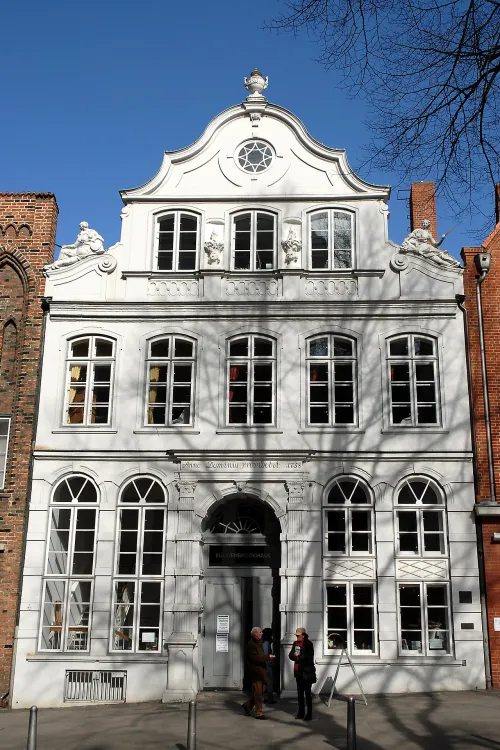
May in Lübeck
High17°C / 63°F
Low8°C
Rain54mm / 10 rainy days
Sun11.4 h/day
Daylight16 h/day
Humidity72%
Crowds●●○○○Prices●●○○○
May is one of Lübeck's two sweet spots: highs near 17°C, the warmest reliable walking month before the summer crowds, and 16 hours of daylight by month-end. The 34th Brahms Festival (2-10 May) fills the concert halls, and the Ascension and Whitsun long weekends lift domestic demand briefly. It stays comfortable, dry-ish and crowd-light, with hotels still well below the July peak.
The vibe May is the quietly perfect month nobody hypes. No mass event, no summer heat, no holiday markup, just a green Hanseatic city at ease with itself and a serious classical festival to give the evenings depth. Bring a light layer for the cool and you have Lübeck close to its best.
Don't miss The Brahms Festival is the cultural anchor: 30-plus concerts at the Musikhochschule, with the mid-week ones quieter and easier to get into. The warmest reliable walking weather makes this the month to do the full Altstadt circuit, the seven brick churches and the medieval courtyards at leisure.
Crowd drivers A calm month overall. The Brahms Festival draws a classical audience, and the Ascension (21 May) and Whit Monday (1 June) bridge weekends bring domestic short-trippers, but international pressure stays low.
In season Restaurant terraces along the Untertrave set tables outside from late May; the Marktplatz market (Monday and Thursday) carries the early northern-German season.
Heads up Labour Day (1 May) closes shops, and Ascension (21 May) is a public holiday. The standing Monday closures (Behnhaus Drägerhaus, Heiligen-Geist-Hospital, St.-Petri tower) still apply.
A genuine value window at 80-115 EUR, below the summer peak; the Ascension and Whitsun long weekends nudge demand up.
Events this month
🎵 MusicBrahms Festival Lübeck 34. Lübecker Brahms-Festival
May 2–10
early May, around ten days
More than 30 concerts by faculty and students of the Musikhochschule Lübeck, running over roughly ten days in early May. The programme includes chamber music, recitals and orchestral concerts in the MHL Großer Saal and smaller hall venues.
Excellent classical music at reasonable ticket prices, and the cultural anchor of one of Lübeck's best-value months. Concerts sell out weeks ahead, so book early; the mid-week ones are quieter.

June in Lübeck
High22°C / 71°F
Low13°C
Rain65mm / 9 rainy days
Sun12.3 h/day
Daylight17 h/day
Humidity72%
Crowds●●●○○Prices●●●○○
June opens the Lübeck summer, with highs near 22°C, the longest days of the year (17 hours of light) and the Travemünde beach warming for the first Baltic swims from mid-month. The biennial HanseKulturFestival (5-7 June) fills the Schifferquartier, and the ten-day Lübecker Volksfest (19-28 June, parade on 21 June) brings a funfair to the Altstadt. The Pfingstferien add families, but it is not yet full peak.
The vibe June is the tipping point into full summer, and the long Baltic light is the payoff. Light until well past 21:00 means late riverside dinners on the Untertrave and beach evenings at Travemünde. It is getting busier, but the main school holidays have not hit, so the city still breathes.
Don't miss Travemünde beach opens for swimming as the Baltic reaches 17-20°C. The HanseKulturFestival brings free street performance to the medieval lanes (even years only, so 2026 counts), and the Volksfest funfair runs through late June. Long light evenings make the Brodtener Ufer cliff path and the Wakenitz especially rewarding.
Crowd drivers The HanseKulturFestival (in even years), the Lübecker Volksfest parade weekend and the Schleswig-Holstein Pfingstferien all add demand, plus the first warm beach weekends at Travemünde.
In season Late June is strawberry season at the Monday and Thursday Marktplatz market, alongside northern German cheeses; restaurant terraces along the Untertrave are in full swing for the long evenings.
Heads up Whit Monday (1 June) closes shops. After this the Schleswig-Holstein calendar has no public holiday until German Unity Day on 3 October, an unusually long gap.
Prices climb to 90-130 EUR as summer begins, still below the July maximum.
Events this month
🎉 FestivalHanseKulturFestival Lübeck
Jun 5–7 ~
a weekend in early June, biennial in even years
Music, acrobatics and street performance fill the Seafarers' Quarter (Schifferquartier) around St. Jakobi, with a festival mile of regional food stalls running through the Altstadt lanes.
A rare atmosphere in the medieval streets with no entry barrier for wandering. It is biennial, running only in even years, so odd-year visitors will not find it. Check the official site for the next edition's dates.
🎉 FestivalLübeck Folk and Remembrance Festival Lübecker Volks- und Erinnerungsfest
Jun 19–28
ten days in late June, with a festive parade on the Sunday of the opening weekend
A ten-day traditional folk festival and funfair in and around the Altstadt, with rides, food, live music and a festive parade on the opening Sunday. Entry is free; the rides are paid.
A family event that fills central accommodation on the parade weekend but costs little otherwise. A good reason to time a family trip to late June, before the Travemünder Woche price spike.
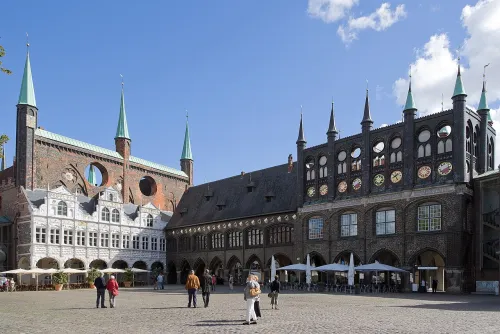
July in Lübeck
High22°C / 72°F
Low14°C
Rain79mm / 13 rainy days
Sun11.7 h/day
Daylight16 h/day
Humidity73%
Crowds●●●●○Prices●●●●○
July is high summer and one of Lübeck's two busiest months. Highs average 22°C but heatwaves can push 32°C on the Travemünde beach strip, and it is the wettest month for rainfall (around 79mm), mostly as afternoon thunderstorms. School holidays run across all northern states, and the Travemünder Woche sailing week in mid-to-late July is the single biggest hotel spike of the year. The Schleswig-Holstein Music Festival also opens in Lübeck with the NDR Elbphilharmonie concerts at the Musik- und Kongresshalle. July is hot, busy and beach-focused. The Altstadt offers welcome shade from its Gothic church walls when the sun beats down, but the real July action is out at Travemünde and along the Untertrave, where the city eats and drinks outdoors until late. Plan your Altstadt walking for the morning; the Baltic is at its warmest (17-20°C) and the Travemünde beach season is at its peak. Spectating at Travemünder Woche is free and spectacular from the promenade, with around 900 boats on the water.
The vibe July is hot, busy and beach-focused. The Altstadt offers welcome shade from its Gothic church walls when the sun beats down, but the real July action is out at Travemünde and along the Untertrave, where the city eats and drinks outdoors until late. Time your trip around the sailing week unless you came for it.
Don't miss The Baltic is at its warmest (17-20°C) and the Travemünde beach season is at its peak. Spectating at Travemünder Woche is free and spectacular from the promenade, with around 900 boats on the water. When the heat builds or a private guide looks expensive, our in-browser AI tour guide is the flexible, flat-priced alternative: it walks the Altstadt with you, tells the story at each church and gate and answers your questions as you go, for 5 EUR an hour with 100 free credits to start, and you pick where to begin and tap on to the next stop.
Crowd drivers School holidays across the northern states plus the Travemünder Woche regatta (17-26 July), which packs both Lübeck and Travemünde, compounded by the overlapping Schleswig-Holstein Music Festival.
In season Riverside terraces along the Untertrave are the social spine of summer evenings; smoked Baltic fish at Travemünde and ice cream on the promenade are the seasonal staples.
Heads up No public holidays fall in July in Schleswig-Holstein. The usual Monday museum closures (Behnhaus Drägerhaus, Heiligen-Geist-Hospital, St.-Petri tower) still apply year-round.
Peak summer at 110-165 EUR; the Travemünder Woche week (17-26 July) pushes rooms to 150-200 EUR plus and books out months ahead.
Events this month
🏃 SportTravemünde Week 137. Travemünder Woche
Jul 17–26
ten days in mid-to-late July
The 137th edition of the sailing regatta and maritime festival: around 900 boats and over 1,500 sailors, 28 title decisions including 16 world and European championships, plus the RS Games. A festival on the Travemünde promenade runs alongside the races.
The biggest single hotel price spike of the year across Lübeck and Travemünde, with rooms gone 4-6 months ahead and prices at 150-200 EUR plus. Spectating is free and spectacular from the Travemünde promenade, but book very early or base in Hamburg and day-trip.
🎵 MusicSchleswig-Holstein Music Festival Schleswig-Holstein Musik Festival
Jul 4 – Aug 30
early July to end of August
A summer festival of 205 concerts across 120 venues in northern Germany and Denmark. In Lübeck the NDR Elbphilharmonie plays the opening concerts at the Musik- und Kongresshalle (4-5 July), and the atmospheric Kulturwerft Gollan hosts a summer venue from 24 July to 6 August.
World-class summer classical music, though its July overlap with Travemünder Woche compounds the hotel pressure. The Kulturwerft Gollan setting is the standout for an atmospheric warm-evening concert.

August in Lübeck
High23°C / 73°F
Low14°C
Rain63mm / 13 rainy days
Sun10.9 h/day
Daylight15 h/day
Humidity74%
Crowds●●●●○Prices●●●●○
August keeps the summer pressure on, with highs near 23°C and the Baltic beach season at its height. School holidays continue across Germany, so Travemünde stays packed and the Altstadt is lively into the warm evenings. The Schleswig-Holstein Music Festival runs through the month, the Kulturwerft Gollan hosts atmospheric summer concerts, and the Lübecker Museumsnacht (29 August) opens every museum on one late-evening ticket.
The vibe August is full-summer Lübeck: warm evenings on the Trave, the beach busy at Travemünde and the city at one of its two yearly peaks. It is enjoyable but not quiet or cheap. The Museumsnacht at the end of the month is the highlight, turning the whole museum quarter into a single late-night event.
Don't miss The Lübecker Museumsnacht (29 August) is great value: one ticket for the Holstentor, Hansemuseum, Behnhaus Drägerhaus, Günter-Grass-Haus and more in one evening, with live music. Buy the early-bird ticket (10 EUR) before 31 July to save 5 EUR. The Kulturwerft Gollan summer venue stages standout warm-evening concerts.
Crowd drivers German-wide school holidays and the peak Baltic beach season keep numbers high, with the Museumsnacht (last Saturday) drawing a big local crowd.
In season Warm evenings on the Untertrave continue; the Travemünde beach kiosks and the Maritime Market run smoked fish and northern fare through the high season.
Heads up No August public holidays in Schleswig-Holstein. Afternoon thunderstorms are common mid-July through August, so carry a compact umbrella; the standing Monday museum closures apply.
Still busy at 110-155 EUR, with school holidays and the Baltic beach season at their peak.
Events this month
🌙 Museum nightLübeck Museum Night 24. Lübecker Museumsnacht
Aug 29
the last Saturday of August
All of the Lübecker Museen open late on one evening ticket: the Holstentor, the Hansemuseum, Behnhaus Drägerhaus, the Günter-Grass-Haus and more, with live music and special programming.
Great value: one ticket for every museum in a single evening, and popular with locals. Buy the early-bird ticket (10 EUR) before 31 July to save 5 EUR over the regular 15 EUR.
🎵 MusicSchleswig-Holstein Music Festival Schleswig-Holstein Musik Festival
Jul 4 – Aug 30
early July to end of August
A summer festival of 205 concerts across 120 venues in northern Germany and Denmark. In Lübeck the NDR Elbphilharmonie plays the opening concerts at the Musik- und Kongresshalle (4-5 July), and the atmospheric Kulturwerft Gollan hosts a summer venue from 24 July to 6 August.
World-class summer classical music, though its July overlap with Travemünder Woche compounds the hotel pressure. The Kulturwerft Gollan setting is the standout for an atmospheric warm-evening concert.
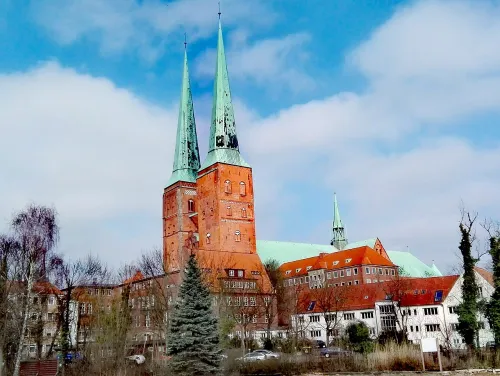
September in Lübeck
High19°C / 67°F
Low12°C
Rain48mm / 10 rainy days
Sun8.8 h/day
Daylight13 h/day
Humidity78%
Crowds●●●○○Prices●●●○○
September is the other sweet spot, often the best month for adults. Highs near 19°C, the Baltic still mild enough for a late swim early in the month, and the summer crush gone now that school holidays have ended. The Travejazz Festival (3-6 September) brings jazz to clubs, courtyards and outdoor stages across the Altstadt, and hotel rates drop sharply while the weather stays pleasant.
The vibe September feels like Lübeck exhaling: warm enough for the river terraces and a last beach day, alive with jazz, but without August's crowds or prices. This is the month to come if you want everything open, mild weather and the locals back in their normal rhythm rather than on holiday.
Don't miss The Travejazz Festival fills the early-September evenings, some stages free. The Baltic at Travemünde holds 17-18°C for an early-month swim before dropping by late September, and the Brodtener Ufer coastal cliff path is at its most dramatic as autumn weather sets in.
Crowd drivers School holidays are over, so families thin out and general pressure eases. The Travejazz Festival on the first weekend adds atmosphere without overwhelming the city.
In season Warm enough still for the Untertrave terraces; the Monday and Thursday Marktplatz market carries the late-summer and early-autumn northern German harvest.
Shoulder pricing returns at 85-120 EUR, 25-35% below the July-August peak.
Events this month
🎵 MusicTravejazz Festival
Sep 3–6
first weekend of September
An international jazz festival running since 2014, with four days of concerts across clubs, courtyards and the Altstadt on indoor and outdoor stages, with NDR as cultural partner. Some outdoor stages are free.
The best shoulder-season event in Lübeck: warm early-September evenings, lively atmosphere across the old town and hotel prices well below the July-August peak.
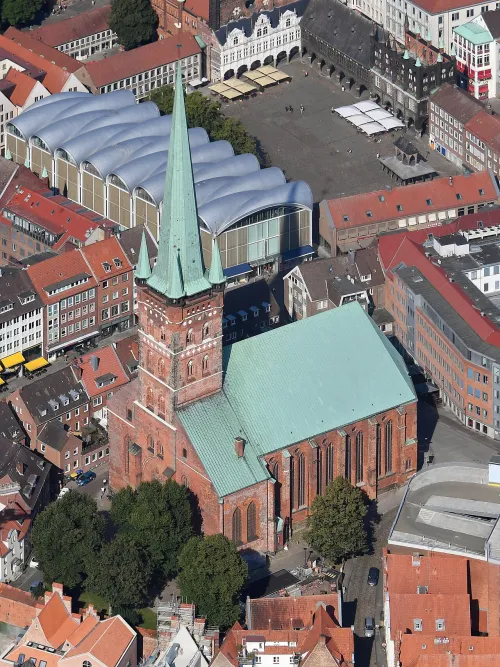
October in Lübeck
High14°C / 57°F
Low8°C
Rain65mm / 13 rainy days
Sun5.5 h/day
Daylight10 h/day
Humidity84%
Crowds●●○○○Prices●●○○○
October is golden-autumn Lübeck. Highs near 14°C, the foliage peaking mid-month on the Wakenitz and in the Stadtpark, and the tourist crowds thinning out. The Schleswig-Holstein autumn half-term (mid-October) brings a brief family lift, but otherwise it is calm and well-priced. Daylight shrinks fast at this latitude, with sunset before 17:00 by late month, and the rain picks up, so pack waterproofs.
The vibe October is the quiet, atmospheric off-season before the Christmas machine starts. Red and gold foliage frames the Wakenitz, the Gänge and Höfe are empty again, and prices are back down. Cool and often wet, but romantic and uncrowded, with the year's best canoe-corridor colour.
Don't miss The Wakenitz, the so-called Amazon of the North, is at peak foliage colour mid-October, with guided kayak tours running until the end of the month. The Brodtener Ufer cliff path is dramatic in autumn storms. With early sunsets, the Holstentor golden-hour photo shifts to the late afternoon.
Crowd drivers Mostly low pressure, with only the mid-October Schleswig-Holstein autumn half-term adding a modest family bump. The pre-Christmas build-up has not started yet.
In season Autumn produce arrives at the Monday and Thursday Marktplatz market; warming cafe culture returns, and Niederegger begins the lead-in to its big seasonal Christmas range.
Good-value autumn at 70-100 EUR, before the Christmas-market run-up begins in late November.
November in Lübeck
High8°C / 47°F
Low4°C
Rain49mm / 12 rainy days
Sun3.3 h/day
Daylight9 h/day
Humidity88%
Crowds●●●○○Prices●●●○○
November is a month of two halves. Early on it is quiet, grey and good value, with highs near 8°C and short days; the Nordic Film Days (4-8 November) fill the historic cinemas and central hotels for a few nights. Then, from 23 November, the Christmas markets open and the city flips into its busiest, most expensive season as the self-styled Christmas Capital of the North, with strong domestic and Scandinavian demand.
The vibe Early November is the last cheap, calm window of the year, and the Nordic Film Days give it real cultural pull. By month-end everything changes: the markets open, the lights go up and the Lübecker Nächte launches the most crowded night of the whole festive run. Time your visit to which Lübeck you want.
Don't miss The Nordic Film Days screen around 120 Nordic and Baltic films in historic cinemas, with the 2026 edition marking the 125th anniversary of Buddenbrooks. From 23 November the five Christmas markets and the Lübecker Nächte light event (29 November) open the festive season, with the brick Altstadt glowing as dusk falls by 15:30.
Crowd drivers The Nordic Film Days lift central hotels on opening and gala nights early in the month. From 23 November the Christmas markets bring a sharp, strong rise in domestic and Scandinavian visitors.
In season As the markets open, Glühwein and roasted-almond stalls appear across the Altstadt, and Niederegger marzipan enters its full seasonal-production mode with the widest Christmas range.
Early November is 75-110 EUR and 35-45% below December; the market opening weekend (around 23 Nov) can reach 140 EUR.
Events this month
🎬 FilmNordic Film Days Lübeck 68. Nordische Filmtage Lübeck
Nov 4–8
first week of November
The oldest and most important Scandinavian and Nordic film festival in the German-speaking world, with around 120 films from Nordic and Baltic countries shown in historic cinemas across the first week of November.
Strong travel value if you like Nordic cinema, with the markets not yet open and prices 35-45% below December. It does fill central hotels noticeably on the opening and gala nights.
🎄 Christmas marketLübeck Christmas Markets Lübecker Weihnachtsmarkt
Nov 23 – Dec 30
late November to 30 December
Five separate markets across the UNESCO Altstadt: the Traditional and Historical markets, the Sternenzauber at the Schrangen, the Märchenwald and the maritime market at Travemünde, with iconic Niederegger marzipan stalls. Hours are Mon-Thu 11:00-21:00, Fri-Sat 11:00-22:00, Sun 11:30-21:00.
Lübeck's single most visited and most atmospheric event, marketed as the Christmas Capital of the North, but also its most expensive. The first and second Advent weekends are the busiest and dearest of the year; come on a weekday and book hotels 3-4 months ahead.
💡 LightsLübeck Nights Lübecker Nächte
Nov 29 ~
the Christmas-market opening weekend
An evening light and atmosphere event across the Altstadt on the Christmas-market opening weekend, with the brick-Gothic quarter staged in lights as dusk falls.
A magical first night of the market season, but combined with the market opening it is also the most crowded night of the whole period. Come for the spectacle, not for a calm visit.
December in Lübeck
High6°C / 42°F
Low2°C
Rain69mm / 14 rainy days
Sun2.3 h/day
Daylight8 h/day
Humidity89%
Crowds●●●●●Prices●●●●●
December is Christmas-market Lübeck and the single busiest month of the year. Highs near 6°C, the shortest days (7.5 hours of light), with dusk by 15:30-16:00, which is exactly when the markets light up and the whole UNESCO Altstadt begins to glow. Five markets run through to 30 December, Niederegger does its biggest marzipan trade of the year, and the first two Advent weekends are shoulder-to-shoulder and the most expensive of all.
The vibe December trades the year's emptiness for full festive bustle: lights, Glühwein, marzipan and crowds. It is genuinely magical, especially as the early dusk turns the brick churches golden, but it is the busiest and dearest stretch. Go on a Tuesday or Wednesday for the same atmosphere with 50-60% fewer people, and book a weekday stay months ahead.
Don't miss Five separate markets fill the Altstadt, from the Historical market and the Sternenzauber at the Schrangen to the maritime market out at Travemünde, all centred on Niederegger marzipan. The short days mean the genuine golden hour is the market dusk from 15:30; the soft morning light on the brick churches is best 09:00-11:00.
Crowd drivers The Christmas markets (to 30 December) are the year's biggest draw, packing the Altstadt, with peak domestic and Scandinavian tourism. The first and second Advent weekends are the most crowded days of the entire year, busier than summer.
In season Niederegger marzipan peaks with its widest range of Christmas shapes and liqueur fillings; the markets pour Glühwein and grill smoked fish, with the Travemünde maritime market the spot for northern seafood.
Heads up Christmas Day (25 December) closes most shops and the Holstentor museum, though the markets typically still run; Boxing Day (26 December) is on reduced services. The markets close on 30 December, with everything shut on New Year's Day.
The busiest, priciest month: hotels 140-220 EUR, 40-60% above the summer average, with the first and second Advent weekends the dearest.
Events this month
🎄 Christmas marketLübeck Christmas Markets Lübecker Weihnachtsmarkt
Nov 23 – Dec 30
late November to 30 December
Five separate markets across the UNESCO Altstadt: the Traditional and Historical markets, the Sternenzauber at the Schrangen, the Märchenwald and the maritime market at Travemünde, with iconic Niederegger marzipan stalls. Hours are Mon-Thu 11:00-21:00, Fri-Sat 11:00-22:00, Sun 11:30-21:00.
Lübeck's single most visited and most atmospheric event, marketed as the Christmas Capital of the North, but also its most expensive. The first and second Advent weekends are the busiest and dearest of the year; come on a weekday and book hotels 3-4 months ahead.
Frequently asked questions
What is the best time to visit Lübeck?
May and September are the best overall. May gives you 12-17°C walking weather, the Brahms Festival in the concert halls, full museum access and hotels at 80-115 EUR with no major crowd pressure. September drops July's prices by 25-35%, adds the Travejazz festival, keeps the Baltic evenings warm and has the school-holiday crowds gone. Both let you see the whole UNESCO Altstadt without the December premium or the July sailing-week crunch.
What is the cheapest time to visit Lübeck?
February is the cheapest, with 3-star centre hotels around 50-75 EUR a night, roughly 29% below the annual average. January (55-80 EUR) and October (70-100 EUR) are close behind. The trade in winter is short, grey, 6°C days. Avoid December despite the festive look: Christmas-market demand pushes hotels to 140-220 EUR, 40-60% above the summer average.
What is the worst time to visit Lübeck for crowds and cost?
The first and second Advent weekends in December are the busiest and most expensive, with hotels at 140-220 EUR, the Altstadt shoulder-to-shoulder and hour-long Niederegger queues. The Travemünder Woche sailing week (17-26 July) is the other trap, selling out Lübeck and Travemünde months ahead at 150-200 EUR plus. If you want the markets, come on a December weekday instead.
When is the Lübeck Christmas market in 2026?
The markets run from 23 November to 30 December 2026, with five separate markets across the UNESCO Altstadt plus a maritime market at Travemünde. Hours are Mon-Thu 11:00-21:00, Fri-Sat 11:00-22:00, Sun 11:30-21:00. The first and second Advent weekends are the most crowded; a Tuesday or Wednesday in mid-December has 50-60% fewer visitors and the same atmosphere. Book hotels 3-4 months ahead for December weekends.
Can you swim at Travemünde beach, and when?
Yes. Travemünde, Lübeck's Baltic coast annex, reaches swim temperature (17-20°C) from late June through August, and the beach season peaks in July and August. By late September the water drops to 14-15°C, marginal for swimming. Mid-June is the start of the warm-enough window, and it coincides with lower prices than the July peak, before the school holidays fully begin.
What is the weather like in Lübeck in winter?
Cold, grey and damp rather than deeply snowy. January and December highs sit near 4-6°C and can dip below freezing, with short days, just 7.5 hours of light in December. Snow is rare in this maritime city (8-12 days of snow cover a year on average) and the Trave only freezes in hard winters. The upside is the early December dusk by 15:30, which is exactly when the Christmas markets light the Altstadt up.
Is the Buddenbrookhaus open?
No. The Buddenbrookhaus at Mengstraße 4 is closed for renovation until roughly 2029-2030 and is currently scaffolded, so any guide listing it as visitable is outdated. The substitute is the Buddenbrooks im Behnhaus exhibition at Behnhaus Drägerhaus (Königstraße 9, Tue-Sun 10:00-17:00, 8 EUR, closed Mondays). Factor this into any Thomas Mann itinerary.
How many days do you need in Lübeck?
Two days cover the essentials: the Holstentor and its museum, the Europäisches Hansemuseum (allow 90 minutes), the seven brick-Gothic churches with the St.-Petri tower view, the marzipan at Niederegger, and a wander through the free Gänge and Höfe courtyards. Add a third day for a Travemünde beach trip in summer, a Wakenitz kayak in autumn, or the Christmas markets in December. The compact UNESCO Altstadt is easily walkable.

Any month, any day: your guide is already there
Whatever date you pick, a private human guide gets pricier and harder to book on weekends, holidays and in peak season. Our live AI guide, the one that walks with you and answers anything you ask out loud, works the opposite way.
One flat price, every day
No holiday, weekend, night or peak-season surcharge. A private guide in Lübeck runs well over 100 euro for a half day, and more on holidays. Ours stays the same.
Available the moment you want it
Start at midnight or at dawn, on Christmas, in the snow, in the August heat. No sold-out high season, no booking weeks ahead.
Your pace, no meter running
Pause for a long lunch, restart after dark, repeat a stop. The tour simply waits for you.
Free to try, a fraction of the cost
Test it for free, then a transparent flat price that undercuts any private guide, in every season.
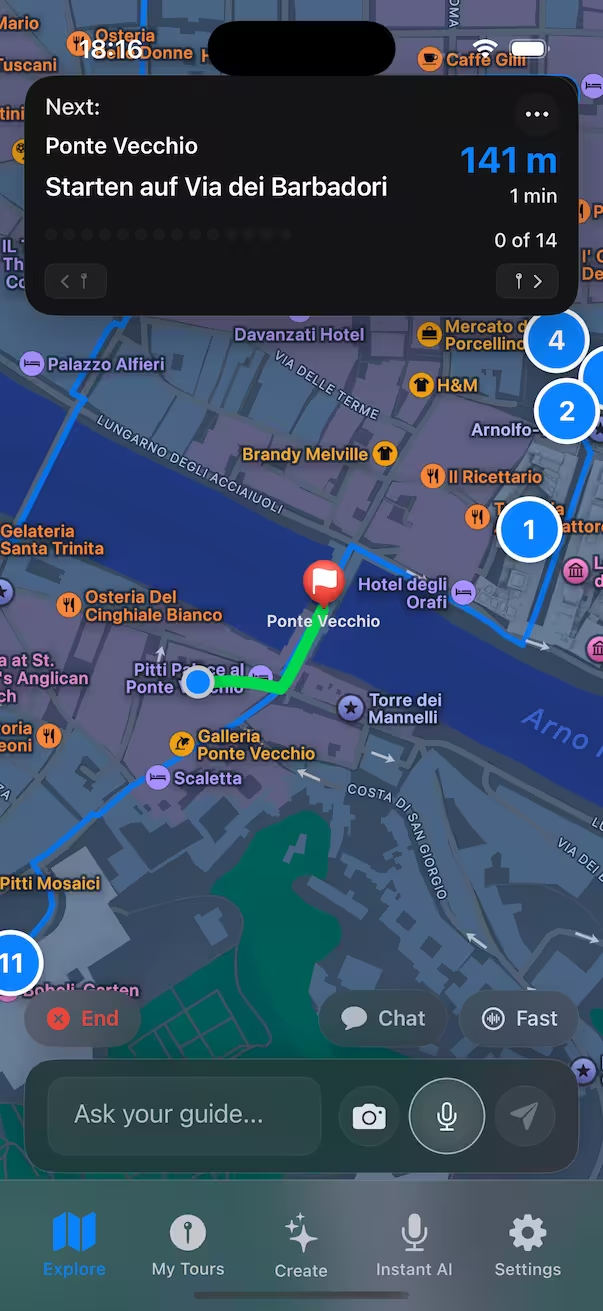
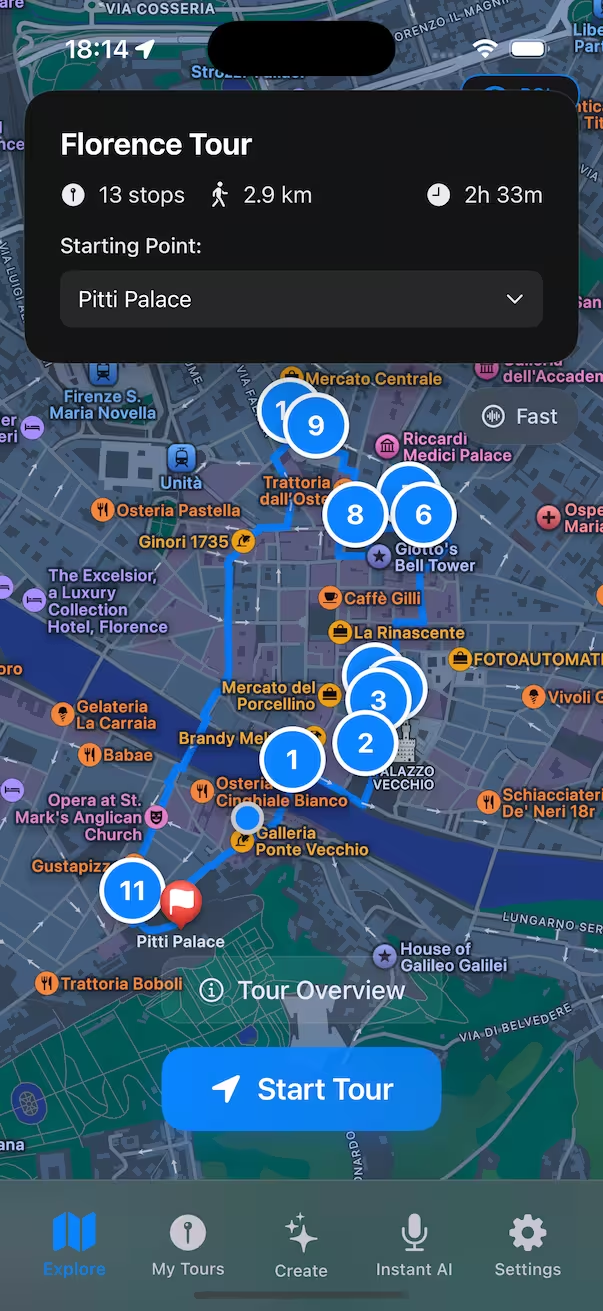
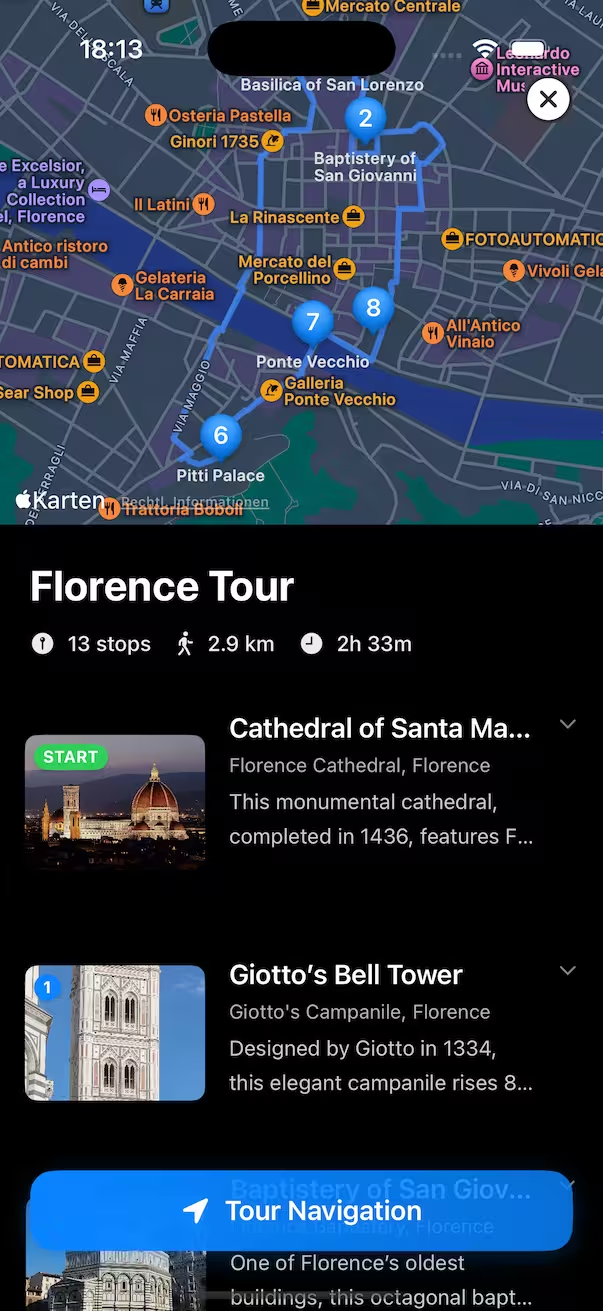
The classic Lübeck tour: 10 stops, 4.4 km, about 2 h on foot
Your live AI guide and the self-guided Lübeck route, together in your browser.