Best Time to Visit Brunswick
Month-by-month weather, crowds and prices, plus a full calendar of festivals and events worth planning a trip around.
Best monthsMay, Sep
CheapestJan, Mar, Nov
Avoid–
BusiestSep, Dec

When is the best time to visit Brunswick?
Come in May or September. May gives you 18°C, blossoming parks and every museum open without summer prices, while September stacks the Magnifest street party and the Burgplatz Open Air into still-warm evenings. January is the cheapest and emptiest month, the trade being 4°C days and short light.
Start our tool and find your best time to visit Brunswick
Your perfect month
Free · ~30 seconds
or tap a month directly
What matters to you?
And this?
Best overall: May, Sep. May and September are the real answer. May gives you blossoming parks, 18°C and every museum open at off-peak prices, September the Magnifest and Burgplatz Open Air under still-warm evenings. Both skip the July school-holiday price spike.
Best value: Jan, Mar, Nov. January, March and November bring hotel rates 20 to 30 percent below summer, central budget rooms from about 40 euro, no queues at the Dom or Burg Dankwarderode, and the city in its honest everyday rhythm rather than a festival show.
Avoid: Dec. December weekends if you dislike crowds: the Weihnachtsmarkt around the Dom is beautiful but shoulder to shoulder Friday to Sunday afternoon, and hotel prices sit near their annual peak. Go on a weekday morning instead, or skip the weekend entirely.
- January: Tough month, 5°C. This is the one month the city is genuinely just itself, no festival, no market, no crowd. For experience-seekers it can feel dead-quiet and the short 4°C days are a real trade. For anyone who wants the medieval Burgplatz, the Dom and Burg Dankwarderode without another visitor in frame, January is unbeatable and properly cheap.
- February: Tough month, 7°C. February is honest winter Braunschweig with one wild afternoon bolted on. The Schoduvel is the one day a year you see Braunschweigers visibly let loose, floats and candy and costume through closed streets. Skip the parade if you hate crowds, since the centre is impassable 13-16h, but the rest of the month is calm and genuinely local.
- March: Good time, 10°C. March is the bargain hunter's month and the last of the true quiet. The city is waking from winter but the calendar is still bare, so you get spring-leaning light, near-empty sights and the lowest hotel prices alongside January. Use it before the April fair and festival season fills the streets, because that window shuts fast.
- April: Great time, 14°C. April is the quiet romantic's window. After Easter and before the school holidays, late April gives you cherry blossom in the Bürgerpark, silent golden-hour Burgplatz mornings and the low-key Stadtfrühling weekend, all at off-peak prices. It is one of the prettiest, least-pressured stretches of the Braunschweig year, and almost nobody outside the region notices.
- May: Great time, 18°C. May is Braunschweig at its easiest and most underrated. The weather is reliably mild, the parks have shrugged off winter, and you get all of it without the July prices or the September festival crush. This is the first-timer's safe answer: everything open, nothing overwhelming, evenings long enough to eat outside in the Magniviertel.
- June: Good time, 23°C. June is the high-energy month, and in 2026 it is exceptional. Tag der Niedersachsen transforms the whole city for one weekend, ten themed miles and seven stages, the kind of state-festival buzz Braunschweig rarely hosts. It is thrilling if you plan ahead and a logistical nightmare if you do not, with a 4,000-room city swallowing up to 300,000 visitors.
- July: Good time, 24°C. July is the priciest month, driven by school holidays rather than crowds at the sights, which stay moderate. The heat is warm but rarely punishing for a North German city, so the Altstadt loop is comfortable until about 30°C. The real draw is the BRAWO OPEN tennis, top-150 players in a compact, accessible park setting most cities cannot offer.
- August: Good time, 24°C. August is the open-air month, when the city plays to its medieval backdrop. The Burgplatz Open Air, with the Dom and Burg Dankwarderode as a stage set under a summer sky, is genuinely unique to Braunschweig. Daytime is comfortably warm rather than oppressive, evenings reliably mild, and the summer-holiday prices are the only real downside.
- September: Good time, 20°C. September is Braunschweig at its most festive, and the single best month if you want the city alive. The Magnifest in the Magniviertel, the most intact historic quarter, packs food, music and a medieval market into one free weekend, while the Burgplatz Open Air closes its season. Still-warm evenings and local buzz, without the full-summer prices, make it hard to beat.
- October: Great time, 15°C. October is the quiet foliage month, a calm exhale after the September festival rush. The Bürgerpark and the reed-fringed Riddagshäuser Teiche turn properly golden from mid-month, and the Herbstmesse gives families a funfair fallback when the drizzle sets in. Prices have dropped, crowds have thinned, and the autumn light, on the clear days, is the best of the season.
- November: Good time, 9°C. November is the year's most honest off-season, low light, low prices, low crowds, right up until the Christmas market flicks the city back on. The Film Festival gives the month a cultural pulse for one week, the 40th edition in 2026. Otherwise it is museum weather, a Braunkohl-and-Mumme month, and the calm before the December rush.
- December: Tough month, 6°C. December is the city dressed up, and its Weihnachtsmarkt has one of Germany's most atmospheric settings, a lit medieval ensemble of cathedral and castle. The catch is the weekend crush: Friday to Sunday afternoon it is shoulder to shoulder and hotel prices sit near their annual peak. Come on a weekday, ideally at dusk, and it is genuinely magical instead of overwhelming.
Brunswick weather by month
HighLowRainfall
Jan5°
Feb7°
Mar10°
Apr14°
May18°
Jun23°
Jul24°
Aug24°
Sep20°
Oct15°
Nov9°
Dec6°
| Month | Temp | Rain | Sun | Crowds | Prices | Highlight |
|---|---|---|---|---|---|---|
| Jan | 5° / 0° | 62mm · 15 rainy days | 3.0 h/day | ●○○○○ | ●○○○○ | |
| Feb | 7° / 0° | 56mm · 11 rainy days | 5.3 h/day | ●●●○○ | ●●○○○ | Schoduvel Carnival Parade |
| Mar | 10° / 2° | 51mm · 12 rainy days | 6.9 h/day | ●○○○○ | ●○○○○ | |
| Apr | 14° / 4° | 40mm · 9 rainy days | 9.9 h/day | ●●○○○ | ●●○○○ | Spring Fair |
| May | 18° / 9° | 50mm · 11 rainy days | 10.7 h/day | ●●○○○ | ●●○○○ | Spring Fair |
| Jun | 23° / 13° | 68mm · 10 rainy days | 11.8 h/day | ●●●●○ | ●●●○○ | Lokpark Open Airs |
| Jul | 24° / 15° | 74mm · 12 rainy days | 11.3 h/day | ●●●○○ | ●●●●○ | BRAWO OPEN (ATP Challenger) |
| Aug | 24° / 15° | 62mm · 12 rainy days | 10.6 h/day | ●●●○○ | ●●●●○ | Raffteichbad Open Airs |
| Sep | 20° / 12° | 51mm · 10 rainy days | 8.9 h/day | ●●●●○ | ●●●○○ | Burgplatz Open Air |
| Oct | 15° / 9° | 67mm · 14 rainy days | 5.7 h/day | ●●○○○ | ●●○○○ | Autumn Fair |
| Nov | 9° / 4° | 54mm · 12 rainy days | 4.0 h/day | ●●○○○ | ●●○○○ | Braunschweig International Film Festival |
| Dec | 6° / 2° | 68mm · 15 rainy days | 2.6 h/day | ●●●●○ | ●●●●○ | Braunschweig Christmas Market |
How we score this: weather = long-run climate normals (Open-Meteo), crowds & prices = relative season read, events checked yearly against official dates.
Best time to visit Brunswick: weather, prices & crowds
Best months for good weather
May, Jun, Jul, Aug
May through August is Braunschweig's reliable warm window: 18°C in May climbing to a 24°C July high, with the longest stretch of usable evenings for outdoor dining in the Magniviertel.
Quietest months to avoid the crowds
Jan, Mar, Nov
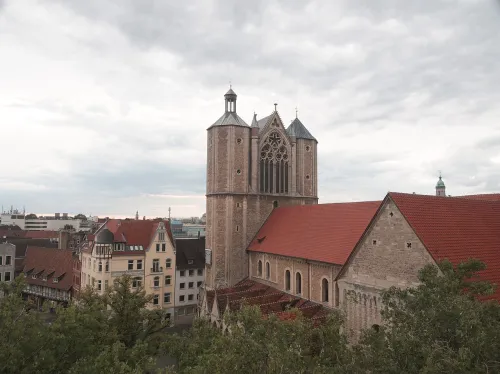
January, March and November are the quiet months. The Burgplatz with its bronze lion, the Dom and Burg Dankwarderode are close to empty, and you walk the full Altstadt loop without a single tour group.
Cheapest time to visit Brunswick
Jan, Mar
January and March bring the year's lowest hotel rates, with budget central rooms from around 40 euro a night, 20 to 30 percent under the summer level, and every museum still open.
Best time for festivals and events
Sep
The first weekend of September the Magnifest fills the medieval Magniviertel with 100-plus bands, a medieval market and an international street-food mile for roughly 100,000 people, the single best free street party of the Braunschweig year.
How many days do you need in Brunswick?
Two days cover Braunschweig comfortably. The historic core is compact and flat, so one unhurried day handles the medieval landmarks, and a second lets you dig into a major museum or the Riddagshausen nature reserve without rushing.
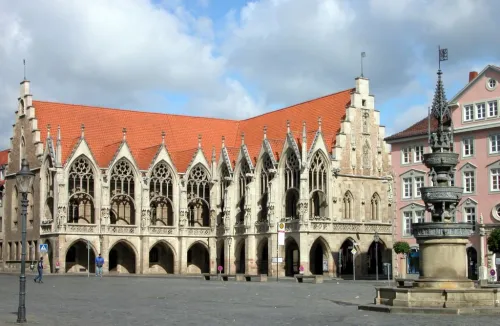
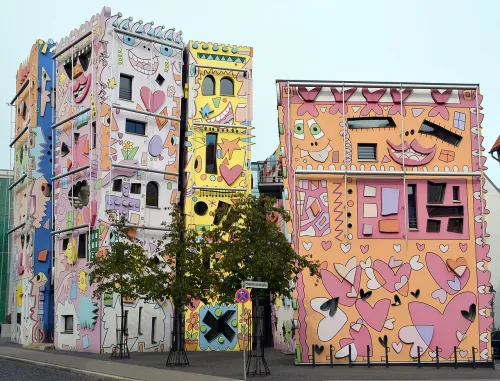
One day
The medieval core in a single sweep
Start at Burgplatz before 9h to have the bronze Löwe, Dom St. Blasii and Burg Dankwarderode to yourself. The self-guided Braunschweig walking tour links all 7 stops across 3.0 km in about 1.6 hours, taking in the Gothic Altstadtrathaus, the pop-art Happy Rizzi House, the cobbled Magniviertel around Magnikirche and the quadriga-crowned Schloss-Arkaden facade. End the afternoon with a Braunkohl stew and a Mumme in a Magniviertel Gaststätte.
Two daysRecommended
Museums, parks and the broader city
Spend day two inside the Herzog Anton Ulrich-Museum, one of Germany's oldest public art collections with Rembrandt, Vermeer and Rubens, then walk the 6 km circular trail through the Riddagshausen nature reserve, where herons and kingfishers are visible year-round. In the evening, try the Magniviertel restaurant terraces for outdoor dining, especially pleasant from May through September.
Three days
Deeper dives and a day trip
A third day opens up the Naturhistorisches Museum's dinosaur halls, the Lokpark with its historic locomotives, and a proper circuit of the Bürgerpark, where cherry blossom peaks in mid-April and autumn foliage turns golden from mid-October. Wolfsburg is 30 minutes by train and adds the Autostadt if cars or modern architecture interest you.
Four days or more
Festival timing and regional exploration
Four days or more only makes sense if you are timing a major event: the Magnifest on the first September weekend, the Burgplatz Open Air opera in late August, or the Christmas market around the Dom from late November. Beyond that, use Braunschweig as a base for Hildesheim (30 minutes, UNESCO cathedral), Wolfenbüttel (15 minutes, a beautifully preserved ducal residence town) or the Harz mountains within an hour.
Best time to visit Brunswick by traveller type
Same city, different trip. Here's the month that fits how you're travelling.
🧭
Best time to visit Brunswick for the first time
MaySep
May or September: mild 18°C weather, all museums open, the photogenic Burgplatz lion-Dom-Burg trio uncrowded in May, or the full festive buzz of Magnifest and Burgplatz Open Air in September, all without the July price premium.
❤️
Best time to visit Brunswick for couples
AprSep
Late April for cherry blossom in the Bürgerpark and quiet golden-hour Burgplatz mornings, or late September once the Open Air season ends and the Magniviertel restaurants are back to a calm pace with hotel rates 25 percent below summer.
💶
Best time to visit Brunswick on a budget
JanFebMar
January to March for the cheapest beds of the year, central rooms from around 40 euro, every museum open, the free Burgplatz, Magniviertel and Riddagshausen circuit, and Burg Dankwarderode at 5 euro the only must-pay indoor sight.
🍝
Best time to visit Brunswick for food and wine
SepOct
September for the Magnifest street-food mile, then October once Braunkohl, the local kale-and-sausage stew, comes into its October-to-February season, washed down with Mumme, Braunschweig's dark syrupy beer specialty.
Best time for a tour of Brunswick
Brunswick is a compact, flat city built for walking, and the three-kilometre loop through its medieval core rewards the right weather. May through September is the sweet spot: highs climb from a fresh 18 °C in May to a comfortable 24 °C in July and August, the evenings stay light past nine, and crossing the cobbled Burgplatz to the lion statue or pausing under the brick gables of the Altstadtrathaus feels easy rather than endured. The shoulder months of April and October are quieter and still walkable at 14 to 15 °C, though October brings fourteen rainy days, so pack for showers around the Magnikirche and the Dom St. Blasii. Winter is the hard season here: January barely scrapes 5 °C, sits dark by mid-afternoon, and counts fifteen wet days, leaving the open square in front of the Happy Rizzi House cold and exposed. June and December also draw the biggest crowds, so a mild weekday in spring gives you the colourful facades almost to yourself.
The beauty of walking Brunswick with AI Tourguide is that the climate sets your hour, not a tour operator. There are no fixed departure times and no group to keep pace with, so you can wait out a grey October morning and set off the moment the sun reaches the Burgplatz, or start a warm August walk early before the lunchtime crowds reach the Schloss-Arkaden. It all runs in your browser, no app and no download, with a voice-first guide that greets you, tells the story of the cathedral and the medieval lion as you stand before them, asks what catches your eye, and shapes the rest of the route around your answers. Pick your own perfect window and start your Brunswick tour whenever the weather turns kind.

 +3
+3All 7 stops are already on the map.
You just press start.
You just press start.
 AI Tourguide
You just read the route.
Now walk it with a guide in your ear.
Press start wherever you are, even hundreds of kilometres from Brunswick, and the guide begins telling its stories right away. In the city, pick any of the 7 stops to start from: it leads you there, then talks with you the whole route, asking, listening, remembering, and shaping the tour around your answers.
7stops3.0km1.6hours11languages
▶Start the tour freeFree to start · Runs in your browser · No app, no download
Brunswick events and festivals calendar
Annual highlights worth timing a trip around, listed month by month.
February
🎭 CarnivalSchoduvel Carnival Parade Braunschweiger Schoduvel
Feb 15 ~
Carnival Sunday, mid-to-late February
Northern Germany's largest carnival parade, in its 48th edition, sends floats and costumed groups with candy-throwing from Europaplatz through the city centre 13-16h, broadcast live on NDR.
April
🎉 FestivalSpring Fair Frühjahrsmesse
Apr 17 – May 3
mid-April into early May
A traditional funfair at Schützenplatz with rides, food stalls and a fireworks finale around 21:30 on 2 May, plus an Eintracht football day on 19 April.
🎉 FestivalStadtfrühling Spring Festival Stadtfrühling Braunschweig
Apr 25–26 ~
a weekend in late April
A city-centre spring street festival on Schlossplatz with mobility and fashion themes, live music and Sunday shopping (shops open 13-18h), with quiet-hour sessions for neurodivergent visitors.
May
🎵 MusicLokpark Open Airs
May 29 – Jun 6 ~
late May into early June
Outdoor concerts among historic locomotives at the old Lokpark depot, with a line-up of German and international acts spanning rock, pop and indie; headline dates sell out fast, so check and book early.
June
🎉 FestivalLower Saxony State Festival Tag der Niedersachsen
Jun 12–14 ~
a weekend in June, host city rotates yearly
The 39th state festival, hosted by Braunschweig for the first time under the theme Land und Löwen, with ten themed miles and seven stages and 200,000 to 300,000 visitors expected.
🎨 Art and cultureTheaterformen Festival Festival Theaterformen
Jun 18–28
late June, biennial
A biennial international festival of contemporary theatre, dance and performance art staged across multiple city venues, funded by the state and city, mixing free and ticketed shows.
July
🏃 SportBRAWO OPEN (ATP Challenger) BRAWO OPEN
Jul 2–12
first half of July
The 32nd edition of Germany's oldest and largest ATP Challenger (ATP 125, prize money 203,900 euro) at the Bürgerpark tennis club, with tennis from 5 July and live-music evenings.
August
🎵 MusicRaffteichbad Open Airs Raffteichbad Konzerte
Aug 13–23
mid-to-late August
Open-air concerts at the outdoor pool venue, with a line-up of established German pop acts performing warm-summer evenings by the water.
🎨 Art and cultureBurgplatz Open Air
Aug 22 – Sep 9
late August into early September
Around 18 performances of opera and musical theatre under the open sky between the Dom St.
September
🎉 FestivalMagnifest
Sep 4–6 ~
first weekend of September
A street festival in the Magniviertel old town since 1974, with 100-plus bands, a medieval market, a wine alley, an international street-food mile and a children's area at Löwenwall, drawing around 100,000 people.
October
🎉 FestivalAutumn Fair Herbstmesse Braunschweig
Oct 2–11
early-to-mid October
The autumn counterpart to the Frühjahrsmesse, a ten-day funfair at Schützenplatz with rides, food and family programming.
November
🎬 FilmBraunschweig International Film Festival
Nov 9–15
early-to-mid November
The 40th edition, a six-day festival screening around 70 European long and short films across city venues.
🎄 Christmas marketBraunschweig Christmas Market Braunschweiger Weihnachtsmarkt
Nov 25 – Dec 29 ~
late November to late December
Around 130 decorated stalls around the Dom St.
Insider tips for visiting Brunswick
The rules buried in forums, in one place.
- Most state museums close on Monday: Burg Dankwarderode, the Herzog Anton Ulrich-Museum, the Landesmuseum, the Städtisches Museum and the Naturhistorisches Museum are all shut. Keep Monday for the open-air Burgplatz, a Magniviertel walk, the Riddagshausen lakes, or Lokpark, which opens only Monday 18-22h.
- For an empty Burgplatz, go 07-09h. The Braunschweiger Löwe, the Dom and Burg Dankwarderode form one of North Germany's most photogenic medieval ensembles, but groups arrive by 10h and tour buses by 11h. The pre-breakfast golden-hour light gives you the square to yourself.
- The Weihnachtsmarkt sweet spot is a weekday 10-12h. After 17h on weekdays and all day Saturday and Sunday it is shoulder to shoulder. A 16h arrival on a Tuesday or Wednesday in December catches both the lit market and the floodlit Dom without the weekend crush.
- For the Schoduvel carnival parade (15 February), arrive by 12:30h and leave early. The parade runs 13-16h but viewing spots along Bohlweg and Schlossplatz fill by 13h, streets around Europaplatz close from 11h, and the centre stays packed until 18h. Eat in the Magniviertel afterwards.
- The Dom St. Blasii crypt costs 1 euro extra and is rarely crowded, yet it holds the tomb of Heinrich der Löwe and his wife Mathilde of England, historically more important than the nave above. The Dom opens daily 10-17h, but Sunday services limit access 9-11h.
- Tag der Niedersachsen (12-14 June) brings 200,000 to 300,000 people to a city with only about 4,000 hotel rooms, so book 4-plus months ahead or base yourself in Hildesheim or Wolfsburg, both 30 minutes by train. City-centre rates roughly double over normal June.
- For Riddagshausen birdwatching, go before 08h or after 17h, since school groups fill the reserve 10-14h. The 6 km circular trail from Haus Entenfang passes two observation platforms; the Kreuzteich north bank is the best spot for herons. Kingfishers are visible year-round.
- The Braunschweigisches Landesmuseum Vieweg-Haus on Burgplatz is closed for renovation until at least 2027, so do not build a visit around it. The Museum für Photographie opens only Tue-Fri 13-18h and Sat-Sun 11-18h, so a morning-only itinerary will miss it entirely.
Public holidays in Brunswick
On these dates many shops and offices close, transport thins out, and sights can be mobbed or shut. Plan around them.
| Date | Holiday | What closes |
|---|---|---|
| Jan 1 | New Year's Day | Virtually everything closes: shops, museums and most restaurants. Some restaurants open in the evening. A quiet, slow start to the city's emptiest month. |
| Apr 3 | Good Friday | Museums closed and no concerts run, as it is a statutory day of rest in Lower Saxony. Restaurants stay open. Plan outdoor sights or a Magniviertel walk for this day. |
| Apr 5 | Easter Sunday | Public holiday with most museums closed. The Dom holds Easter services. A good day for the Bürgerpark, where cherry blossom usually peaks in mid-April, or the Riddagshausen circuit. |
| Apr 6 | Easter Monday | Public holiday: most attractions closed and restaurants fill up with families. The Frühjahrsmesse funfair at Schützenplatz is open and makes a reliable holiday outing. |
| May 1 | Labour Day | Shops and most museums closed. The Frühjahrsmesse stays open from noon and ends its run with a fireworks finale around 21:30 on 2 May, the day after. |
| May 14 | Ascension Day | Public holiday that Germans turn into a long weekend, producing a mini crowd spike and busier trains. Many use it for day trips, so book any restaurant table ahead. |
| May 25 | Whit Monday | Public holiday in Lower Saxony, falling as the Lokpark Open Airs season starts. Check individual venue and concert times, as some attractions keep holiday hours. |
| Oct 3 | German Unity Day | National holiday, but it falls on a Saturday in 2026, so there is no extra day off and few closures beyond the usual weekend pattern. |
| Oct 31 | Reformation Day | Regional holiday in Lower Saxony, but it lands on a Saturday in 2026, so it brings no extra day off and little disruption for visitors. |
| Dec 25 | Christmas Day | All shops and the Weihnachtsmarkt are closed, though the Dom holds services. One of two fully shut days at the end of December; plan around it. |
| Dec 26 | Boxing Day | Public holiday with most attractions closed; it falls on a Saturday in 2026. The Weihnachtsmarkt reopens and runs until 29 December. |
Brunswick month by month
January in Brunswick
High5°C / 40°F
Low0°C
Rain62mm / 15 rainy days
Sun3.0 h/day
Daylight8 h/day
Humidity85%
Crowds●○○○○Prices●○○○○
January is Braunschweig at its emptiest and cheapest. Daytime highs hover around 4-5°C with grey, often drizzly skies and only 8.3 hours of daylight, so outdoor sightseeing is short and brisk. There are no events once the Christmas market clears, which makes this the quietest tourist month. Bring a proper winter coat, plan museum days, and enjoy a Burgplatz you have entirely to yourself.
The vibe This is the one month the city is genuinely just itself, no festival, no market, no crowd. For experience-seekers it can feel dead-quiet and the short 4°C days are a real trade. For anyone who wants the medieval Burgplatz, the Dom and Burg Dankwarderode without another visitor in frame, January is unbeatable and properly cheap.
Don't miss The state museums are near-empty: the Herzog Anton Ulrich-Museum's Old Masters and the Naturhistorisches Museum's dinosaur halls feel almost private on a quiet weekday. Outdoor, the Riddagshausen reserve still offers winter birdlife, great crested grebe and tufted duck on the open lakes.
Crowd drivers Post-Christmas lull and no school holidays in Lower Saxony, so the lowest visitor pressure of the entire year.
In season Braunkohl, the local kale-and-sausage stew, is in full season from October to February, and January is the right time to order it in a traditional Magniviertel Gaststätte.
Heads up 1 January is a public holiday with nearly everything shut. State museums also close every Monday all year, so plan indoor days around Tuesday to Sunday.
Cheapest hotel month of the year; central budget rooms from around 40 euro a night.
February in Brunswick
High7°C / 44°F
Low0°C
Rain56mm / 11 rainy days
Sun5.3 h/day
Daylight10 h/day
Humidity79%
Crowds●●●○○Prices●●○○○
February stays cold, with 6-7°C highs and 11 rainy days, but it lifts out of the January quiet for one big day. The Schoduvel carnival parade, northern Germany's largest, draws up to 300,000 spectators into the city centre on a single Sunday. Outside that weekend the city is back to off-season calm, with the cheapest beds of the year still available and every museum open and uncrowded.
The vibe February is honest winter Braunschweig with one wild afternoon bolted on. The Schoduvel is the one day a year you see Braunschweigers visibly let loose, floats and candy and costume through closed streets. Skip the parade if you hate crowds, since the centre is impassable 13-16h, but the rest of the month is calm and genuinely local.
Don't miss The Schoduvel (15 February, 13-16h) sends floats and costumed groups from Europaplatz through the centre, broadcast live on NDR. On any other February day the Old Masters at the Herzog Anton Ulrich-Museum are a warm, uncrowded refuge from the cold.
Crowd drivers The Schoduvel carnival parade on 15 February draws up to 300,000 for one day; the rest of the month stays quiet with no school holidays.
In season Braunkohl season runs through February, the last reliable weeks to order the kale-and-sausage stew before it disappears from spring menus.
Heads up State museums close Mondays as always. On Schoduvel Sunday, streets around Europaplatz, Bohlweg and Schlossplatz close from about 11h and stay packed until 18h.
Low rates most of the month; hotels spike only on the Schoduvel carnival weekend.
Events this month
🎭 CarnivalSchoduvel Carnival Parade Braunschweiger Schoduvel
Feb 15 ~
Carnival Sunday, mid-to-late February
Northern Germany's largest carnival parade, in its 48th edition, sends floats and costumed groups with candy-throwing from Europaplatz through the city centre 13-16h, broadcast live on NDR.
Up to 300,000 spectators and the one day a year you see Braunschweigers fully let loose, though the closed centre is best avoided if you dislike dense crowds.
March in Brunswick
High10°C / 49°F
Low2°C
Rain51mm / 12 rainy days
Sun6.9 h/day
Daylight12 h/day
Humidity75%
Crowds●○○○○Prices●○○○○
March is the quietest tourist month, with 9-10°C highs, lengthening days toward 12 hours of light and the cheapest rates outside January. Lower Saxony's Easter school break starts only at the very end, on 30 March, so most of the month stays calm. It is the last genuinely empty window before the spring events begin in April, ideal for unhurried museum visits and an Altstadt walk without a tour group in sight.
The vibe March is the bargain hunter's month and the last of the true quiet. The city is waking from winter but the calendar is still bare, so you get spring-leaning light, near-empty sights and the lowest hotel prices alongside January. Use it before the April fair and festival season fills the streets, because that window shuts fast.
Don't miss With the calendar empty, this is prime time for the indoor heavyweights at off-peak prices: the Herzog Anton Ulrich-Museum, the Landesmuseum and the Naturhistorisches Museum, none of them queued. Riddagshausen sees early spring bird migration build through the month, waders and herons best at dawn.
Crowd drivers The quietest tourist month all year; only the Lower Saxony Easter break starting 30 March nudges the final days busier.
Heads up State museums shut Mondays. Late March can bring Good Friday-adjacent restrictions only in early April, so March itself is largely free of holiday closures.
Lowest prices of the year outside January; good shoulder-season hotel deals.
April in Brunswick
High14°C / 57°F
Low4°C
Rain40mm / 9 rainy days
Sun9.9 h/day
Daylight14 h/day
Humidity70%
Crowds●●○○○Prices●●○○○
April warms to a pleasant 14°C with the year's driest weather, just 40mm of rain and nearly 10 hours of sun a day. Cherry blossom peaks in the Bürgerpark and along the Inselwall green belt around 10-20 April. The Frühjahrsmesse funfair runs at Schützenplatz from the 17th, and the Stadtfrühling street festival fills Schlossplatz on 25-26 April. Crowds stay moderate, weighted toward the Lower Saxony Easter holidays early in the month.
The vibe April is the quiet romantic's window. After Easter and before the school holidays, late April gives you cherry blossom in the Bürgerpark, silent golden-hour Burgplatz mornings and the low-key Stadtfrühling weekend, all at off-peak prices. It is one of the prettiest, least-pressured stretches of the Braunschweig year, and almost nobody outside the region notices.
Don't miss Cherry blossom peaks 10-20 April in the Bürgerpark and along Inselwall, gone by the 25th in a warm year. The Frühjahrsmesse (17 April to 3 May) ends with fireworks around 21:30 on 2 May, and Stadtfrühling (25-26 April) brings live music and Sunday shopping to Schlossplatz.
Crowd drivers The Lower Saxony Osterferien (30 March to 10 April) bring local families, and the Frühjahrsmesse adds regional day-trippers, but no major out-of-town tourist surge.
Heads up Good Friday (3 April) closes museums; Easter Sunday and Monday (5-6 April) close most attractions. State museums shut Mondays year-round.
Mid-range rates; the Frühjahrsmesse draws local families but not out-of-town tourists.
Events this month
🎉 FestivalSpring Fair Frühjahrsmesse
Apr 17 – May 3
mid-April into early May
A traditional funfair at Schützenplatz with rides, food stalls and a fireworks finale around 21:30 on 2 May, plus an Eintracht football day on 19 April.
A reliable family outing and a lively local atmosphere in the shoulder season, with the May 2 fireworks worth timing.
🎉 FestivalStadtfrühling Spring Festival Stadtfrühling Braunschweig
Apr 25–26 ~
a weekend in late April
A city-centre spring street festival on Schlossplatz with mobility and fashion themes, live music and Sunday shopping (shops open 13-18h), with quiet-hour sessions for neurodivergent visitors.
A pleasant, low-key local weekend that pairs naturally with museum visits during the calm shoulder season.

May in Brunswick
High18°C / 64°F
Low9°C
Rain50mm / 11 rainy days
Sun10.7 h/day
Daylight16 h/day
Humidity69%
Crowds●●○○○Prices●●○○○
May is one of the two consensus best months. Highs reach a comfortable 18°C, the parks are in full green and the long evenings stretch past 21h at this northern latitude. There is no school-holiday price premium yet, every museum is open, and crowds stay manageable. Late in the month the Lokpark Open Airs bring outdoor concerts to the historic locomotive depot, a uniquely industrial setting for live music.
The vibe May is Braunschweig at its easiest and most underrated. The weather is reliably mild, the parks have shrugged off winter, and you get all of it without the July prices or the September festival crush. This is the first-timer's safe answer: everything open, nothing overwhelming, evenings long enough to eat outside in the Magniviertel.
Don't miss The Lokpark Open Airs (29 May to 6 June) stage concerts among historic locomotives at the old depot, with Sportfreunde Stiller and Nena on the 2026 bill; the Sportfreunde date sold half its tickets a year early, so book at once. Parks and the Riddagshausen reserve are at their lushest for walking.
Crowd drivers The Pfingstferien (26 May to 5 June) and the Ascension long weekend nudge crowds up late in the month, but rates stay well below summer.
Heads up Labour Day (1 May) and Whit Monday (25 May) close shops and most museums. State museums also shut every Monday.
Hotel rates 15 to 20 percent below the July peak; strong value for warm weather.
Events this month
🎵 MusicLokpark Open Airs
May 29 – Jun 6 ~
late May into early June
Outdoor concerts among historic locomotives at the old Lokpark depot, with a line-up of German and international acts spanning rock, pop and indie; headline dates sell out fast, so check and book early.
A uniquely industrial venue you find almost nowhere else; the Sportfreunde Stiller date sold half its tickets a year early, so book at once.

June in Brunswick
High23°C / 73°F
Low13°C
Rain68mm / 10 rainy days
Sun11.8 h/day
Daylight17 h/day
Humidity68%
Crowds●●●●○Prices●●●○○
June is warm at 22-23°C with the longest days of the year, around 16.7 hours of light and sunsets near 21:30. The month peaks with Tag der Niedersachsen, the state festival coming to Braunschweig for the first time, on a June weekend in mid-month, and is expected to draw 200,000 to 300,000 people. The Festival Theaterformen brings international contemporary theatre in the second half of June. Hotels in and around the city fill fast, so book months ahead.
The vibe June is the high-energy month, and in 2026 it is exceptional. Tag der Niedersachsen transforms the whole city for one weekend, ten themed miles and seven stages, the kind of state-festival buzz Braunschweig rarely hosts. It is thrilling if you plan ahead and a logistical nightmare if you do not, with a 4,000-room city swallowing up to 300,000 visitors.
Don't miss Tag der Niedersachsen (12-14 June) turns the centre into ten themed miles and seven stages, free to attend. Festival Theaterformen (18-28 June) brings international theatre and dance to venues across the city, with free open-air formats alongside the ticketed headliners. Use the 15-17 June gap to arrive cheaply between the two.
Crowd drivers Tag der Niedersachsen (12-14 June) and the start of European summer holidays drive the surge; Festival Theaterformen adds a culture crowd from 18-28 June.
Heads up State museums close Mondays. Expect partial street closures across the centre over the Tag der Niedersachsen weekend (12-14 June).
Rates rise with the state festival; book early for the 12-14 June Tag der Niedersachsen weekend.
Events this month
🎉 FestivalLower Saxony State Festival Tag der Niedersachsen
Jun 12–14 ~
a weekend in June, host city rotates yearly
The 39th state festival, hosted by Braunschweig for the first time under the theme Land und Löwen, with ten themed miles and seven stages and 200,000 to 300,000 visitors expected.
Braunschweig's biggest state-festival event by far when it comes to town; the city transforms, so book hotels months ahead and expect partial street closures.
🎨 Art and cultureTheaterformen Festival Festival Theaterformen
Jun 18–28
late June, biennial
A biennial international festival of contemporary theatre, dance and performance art staged across multiple city venues, funded by the state and city, mixing free and ticketed shows.
Braunschweig's premier cultural festival; headline tickets sell out, and it is strong counter-programming during the Tag der Niedersachsen week.
July in Brunswick
High24°C / 75°F
Low15°C
Rain74mm / 12 rainy days
Sun11.3 h/day
Daylight16 h/day
Humidity68%
Crowds●●●○○Prices●●●●○
July brings the warmest weather, a 24°C average high with occasional spikes to 32-34°C during the two to four hot days a typical summer sees. Showers are short and convective, usually afternoon thunderstorms with clear mornings. The Lower Saxony Sommerferien begin on 23 July, pushing hotel prices to their annual peak. The BRAWO OPEN, Germany's oldest and largest ATP Challenger, runs at the Bürgerpark from 2-12 July.
The vibe July is the priciest month, driven by school holidays rather than crowds at the sights, which stay moderate. The heat is warm but rarely punishing for a North German city, so the Altstadt loop is comfortable until about 30°C. The real draw is the BRAWO OPEN tennis, top-150 players in a compact, accessible park setting most cities cannot offer.
Don't miss The BRAWO OPEN (2-12 July, tennis from 5 July) puts ATP 125 players in the Bürgerpark; the semifinal and final weekend (11-12 July) is the best value for top matches, and practice rounds early in the week are free to watch. On hot days, start the Burgplatz and Dom before 11h while the exposed square is still cool.
Crowd drivers The Lower Saxony Sommerferien start 23 July and lift prices, while warm-weather city tourism and the BRAWO OPEN keep the centre lively.
Heads up State museums shut Mondays. Some Magniviertel restaurants and independent shops close for a two-week summer break in late July or early August, so check individually.
Peak hotel prices; July rates run 25 to 35 percent above the annual average.
Events this month
🏃 SportBRAWO OPEN (ATP Challenger) BRAWO OPEN
Jul 2–12
first half of July
The 32nd edition of Germany's oldest and largest ATP Challenger (ATP 125, prize money 203,900 euro) at the Bürgerpark tennis club, with tennis from 5 July and live-music evenings.
Top-level tennis in a compact, accessible park setting; the semifinal and final weekend (11-12 July) is the best value, and practice rounds early in the week are free to watch.
August in Brunswick
High24°C / 75°F
Low15°C
Rain62mm / 12 rainy days
Sun10.6 h/day
Daylight15 h/day
Humidity69%
Crowds●●●○○Prices●●●●○
August holds the summer warmth at a 24°C high while the Lower Saxony Sommerferien continue through 2 September. Evenings stay reliably mild at 17-20°C, ideal for open-air culture. The Raffteichbad concerts run by the outdoor pool from 13-23 August, and the Burgplatz Open Air opens on 22 August, staging opera under the floodlit medieval ensemble of the Dom and Burg Dankwarderode. It is the second most expensive month after July.
The vibe August is the open-air month, when the city plays to its medieval backdrop. The Burgplatz Open Air, with the Dom and Burg Dankwarderode as a stage set under a summer sky, is genuinely unique to Braunschweig. Daytime is comfortably warm rather than oppressive, evenings reliably mild, and the summer-holiday prices are the only real downside.
Don't miss The Raffteichbad Open Airs (13-23 August) bring German pop acts like Sarah Connor and Mark Forster to a poolside stage. The Burgplatz Open Air opens 22 August with Weber's Der Freischütz between the Dom and Burg Dankwarderode; August evenings of 17-20°C are warm enough, though a light jacket helps after sunset.
Crowd drivers The Sommerferien run through 2 September, and the Raffteichbad concerts plus the opening of Burgplatz Open Air keep evening events busy.
Heads up State museums close Mondays. The late-July to early-August Magniviertel restaurant break can spill into early August, so confirm openings.
Second most expensive month; advance booking recommended around the open-air events.
Events this month
🎵 MusicRaffteichbad Open Airs Raffteichbad Konzerte
Aug 13–23
mid-to-late August
Open-air concerts at the outdoor pool venue, with a line-up of established German pop acts performing warm-summer evenings by the water.
Warm summer evenings by the water with names you know; a warm-weather must if the line-up fits your taste.
🎨 Art and cultureBurgplatz Open Air
Aug 22 – Sep 9
late August into early September
Around 18 performances of opera and musical theatre under the open sky between the Dom St. Blasii and Burg Dankwarderode, staging a different production each season.
A genuinely unique setting, a medieval castle and cathedral as the stage backdrop, with reliably warm 17-20°C August evenings.
September in Brunswick
High20°C / 68°F
Low12°C
Rain51mm / 10 rainy days
Sun8.9 h/day
Daylight13 h/day
Humidity74%
Crowds●●●●○Prices●●●○○
September is the other consensus best month and the busiest by event density. Weather stays summer-warm at 18-20°C with long, golden evenings. The Magnifest takes over the medieval Magniviertel on the first weekend, roughly 4-6 September, with 100-plus bands, a medieval market and a street-food mile for around 100,000 people, while the Burgplatz Open Air runs its final performances until 9 September. Prices ease once Magnifest is over.
The vibe September is Braunschweig at its most festive, and the single best month if you want the city alive. The Magnifest in the Magniviertel, the most intact historic quarter, packs food, music and a medieval market into one free weekend, while the Burgplatz Open Air closes its season. Still-warm evenings and local buzz, without the full-summer prices, make it hard to beat.
Don't miss The Magnifest (first weekend, around 4-6 September) fills the Magniviertel with bands, a medieval market and an international street-food mile; go Friday evening or Sunday morning, since Saturday 14-20h is the densest. The Burgplatz Open Air plays its last Der Freischütz performances until 9 September under the floodlit Dom.
Crowd drivers The Magnifest on the first weekend (around 4-6 September) draws roughly 100,000, overlapping with the closing Burgplatz Open Air performances.
In season The Magnifest street-food mile is the year's best eating event, regional specialties beside international cuisines, alongside the Magniviertel's permanent Gaststätten.
Heads up State museums close Mondays. Around Magnifest the Magniviertel streets are crowd-restricted Saturday afternoon, so plan an early or Sunday visit.
Busiest tourist month by event density; rates ease once Magnifest passes.
Events this month
🎉 FestivalMagnifest
Sep 4–6 ~
first weekend of September
A street festival in the Magniviertel old town since 1974, with 100-plus bands, a medieval market, a wine alley, an international street-food mile and a children's area at Löwenwall, drawing around 100,000 people.
The single best free street party of the year, combining food, music and a medieval market in Braunschweig's most intact historic quarter.
🎨 Art and cultureBurgplatz Open Air
Aug 22 – Sep 9
late August into early September
Around 18 performances of opera and musical theatre under the open sky between the Dom St. Blasii and Burg Dankwarderode, staging a different production each season.
A genuinely unique setting, a medieval castle and cathedral as the stage backdrop, with reliably warm 17-20°C August evenings.
October in Brunswick
High15°C / 59°F
Low9°C
Rain67mm / 14 rainy days
Sun5.7 h/day
Daylight11 h/day
Humidity81%
Crowds●●○○○Prices●●○○○
October cools to a mild 15°C high and turns grey and drizzly, the start of the year's dampest stretch with 14 rainy days. It is also peak autumn foliage, mid-October to early November, best in the Bürgerpark and around the Riddagshäuser Teiche. The Herbstmesse funfair runs at Schützenplatz from 2-11 October. With summer crowds gone and prices down 20 to 30 percent, it is solid shoulder-season value, especially for a foliage walk.
The vibe October is the quiet foliage month, a calm exhale after the September festival rush. The Bürgerpark and the reed-fringed Riddagshäuser Teiche turn properly golden from mid-month, and the Herbstmesse gives families a funfair fallback when the drizzle sets in. Prices have dropped, crowds have thinned, and the autumn light, on the clear days, is the best of the season.
Don't miss Autumn foliage peaks 15-31 October in the Bürgerpark, the Riddagshäuser Teiche and Prinz-Albrecht-Park. The Herbstmesse (2-11 October) brings ten days of funfair rides to Schützenplatz, a reliable family day in early autumn. Riddagshausen sees autumn bird migration, geese, ducks and raptors, best at dawn or dusk.
Crowd drivers Mostly quiet shoulder season; the Herbstmesse (2-11 October) adds local families but no major tourist surge.
In season Braunkohl, the local kale-and-sausage stew, comes back into season in October and runs through February, the right time to order it again.
Heads up State museums shut Mondays. German Unity Day (3 October) and Reformation Day (31 October) both fall on Saturdays in 2026, so neither adds extra closures.
Rates drop 20 to 30 percent versus summer; good shoulder-season value.
Events this month
🎉 FestivalAutumn Fair Herbstmesse Braunschweig
Oct 2–11
early-to-mid October
The autumn counterpart to the Frühjahrsmesse, a ten-day funfair at Schützenplatz with rides, food and family programming.
A dependable family day out in the early-October shoulder season, a good fallback when the autumn drizzle sets in.
November in Brunswick
High9°C / 48°F
Low4°C
Rain54mm / 12 rainy days
Sun4.0 h/day
Daylight9 h/day
Humidity85%
Crowds●●○○○Prices●●○○○
November is the greyest, drizzliest month, with 9°C highs, just 4 hours of sun a day and daylight back under 9 hours. Tourism is low until the Braunschweig International Film Festival fills boutique hotels from 9-15 November. The Weihnachtsmarkt opens around 25 November and pulls in regional visitors for the final week. Outside the festival, it is a genuine budget month and a quiet time for the museums.
The vibe November is the year's most honest off-season, low light, low prices, low crowds, right up until the Christmas market flicks the city back on. The Film Festival gives the month a cultural pulse for one week, the 40th edition in 2026. Otherwise it is museum weather, a Braunkohl-and-Mumme month, and the calm before the December rush.
Don't miss The Braunschweig International Film Festival (9-15 November, 40th edition) screens around 70 European films across city venues; book hotels two-plus months ahead for that week. A late-November weekday is the calmest time to taste the opening Weihnachtsmarkt with full stalls but without the December weekend crush.
Crowd drivers Low tourism overall; the Film Festival (9-15 November) fills boutique hotels for its week, and the late-November Weihnachtsmarkt opening draws regional day-trippers.
In season Mumme, Braunschweig's dark, syrupy beer specialty, appears at the opening Weihnachtsmarkt stalls and in traditional pubs alongside in-season Braunkohl.
Heads up State museums close Mondays. No public holidays disrupt November in Lower Saxony, so the month runs on normal opening hours.
Budget month outside film-festival week; the late-November Weihnachtsmarkt opening lifts regional demand.
Events this month
🎬 FilmBraunschweig International Film Festival
Nov 9–15
early-to-mid November
The 40th edition, a six-day festival screening around 70 European long and short films across city venues.
A milestone 40th-anniversary edition; the film crowd fills boutique hotels, so book two-plus months ahead for that week.
🎄 Christmas marketBraunschweig Christmas Market Braunschweiger Weihnachtsmarkt
Nov 25 – Dec 29 ~
late November to late December
Around 130 decorated stalls around the Dom St. Blasii and Burg Dankwarderode selling handcraft, Braunkohl sausage and Mumme, open Mon-Sat 10-21h and Sun 11-21h, closed 24-25 December.
One of Germany's most atmospherically sited markets, a lit medieval ensemble; weekday mornings 10-11h are quiet, weekend afternoons packed.
December in Brunswick
High6°C / 43°F
Low2°C
Rain68mm / 15 rainy days
Sun2.6 h/day
Daylight8 h/day
Humidity86%
Crowds●●●●○Prices●●●●○
December is cold and dark, 6°C highs and only 7.8 hours of daylight, so outdoor sightseeing is limited and the Weihnachtsmarkt is the draw. Around 130 stalls fill the square around the Dom and Burg Dankwarderode from about 25 November to 29 December, unusually open Sundays until 8 PM. It is the second most expensive and second busiest month, a regional day-trip magnet. The market closes 24-25 December.
The vibe December is the city dressed up, and its Weihnachtsmarkt has one of Germany's most atmospheric settings, a lit medieval ensemble of cathedral and castle. The catch is the weekend crush: Friday to Sunday afternoon it is shoulder to shoulder and hotel prices sit near their annual peak. Come on a weekday, ideally at dusk, and it is genuinely magical instead of overwhelming.
Don't miss The Weihnachtsmarkt (around 25 November to 29 December, roughly 130 stalls) wraps the Dom and Burg Dankwarderode, open Mon-Sat 10-21h and Sun 11-21h. The lit market against the floodlit Dom is best at dusk on a Tuesday or Wednesday; weekday mornings 10-11h are the quietest. Short December days make this the indoor-and-market month.
Crowd drivers The Weihnachtsmarkt drives a region-wide day-trip peak, with weekends before Christmas fully booked across the city.
In season Weihnachtsmarkt stalls serve Braunkohl sausage and Mumme, the local dark beer, the most concentrated taste of Braunschweig's winter specialties in one place.
Heads up The market closes 24-25 December, and Christmas Day shuts almost everything. Boxing Day (26 December, a Saturday) closes most attractions, though the market reopens through 29 December. State museums shut Mondays.
Second highest hotel prices; weekends before Christmas book out fully.
Events this month
🎄 Christmas marketBraunschweig Christmas Market Braunschweiger Weihnachtsmarkt
Nov 25 – Dec 29 ~
late November to late December
Around 130 decorated stalls around the Dom St. Blasii and Burg Dankwarderode selling handcraft, Braunkohl sausage and Mumme, open Mon-Sat 10-21h and Sun 11-21h, closed 24-25 December.
One of Germany's most atmospherically sited markets, a lit medieval ensemble; weekday mornings 10-11h are quiet, weekend afternoons packed.
Frequently asked questions
What is the best time to visit Braunschweig?
May and September are the two best months. May gives you mild 18°C weather, blossoming parks and every museum open without summer prices. September stacks the Magnifest street festival on the first weekend and the closing Burgplatz Open Air into still-warm, golden evenings, the city at its most festive without full-summer rates.
What is the cheapest time to visit Braunschweig?
January and March are the cheapest months, with central budget hotel rooms from around 40 euro a night, 20 to 30 percent below the summer level. Every museum stays open, outdoor sights like the Burgplatz and Magniviertel are free, and Burg Dankwarderode at 5 euro is the only must-pay indoor sight.
What is the worst time to visit Braunschweig?
January is hardest for experience-seekers, a dead-quiet city with 4°C days, short 8-hour light and no events. December weekends are the other one to weigh: the Weihnachtsmarkt is beautiful but shoulder to shoulder Friday to Sunday afternoon, with hotel prices near their annual peak. Visit on a weekday instead.
When is the Braunschweig Christmas market?
The Weihnachtsmarkt runs from around 25 November to 29 December, with roughly 130 stalls around the Dom and Burg Dankwarderode. It opens Mon-Sat 10-21h and Sun 11-21h, unusually including Sundays, and closes on 24-25 December. For the quietest visit, come on a weekday between 10 and 12h, or at dusk on a Tuesday for the best light.
Is Braunschweig worth visiting in winter?
Yes, with the right expectations. December centres on the atmospheric Weihnachtsmarkt around the floodlit Dom, best on a weekday. January and February are cold at 4-7°C with short days, but they are the cheapest and quietest months, ideal for the Old Masters at the Herzog Anton Ulrich-Museum and a Braunkohl stew in a traditional Gaststätte. Snow is not guaranteed.
What is the weather like in Braunschweig in summer?
Summer is warm but rarely punishing, with July and August highs around 24°C and occasional spikes to 32-34°C on two to four days a year. Showers tend to be short afternoon thunderstorms rather than all-day rain, with clear mornings. The full Altstadt loop stays comfortable until about 30°C; above that, start by 9h and finish by noon.
When is the Magnifest in Braunschweig?
The Magnifest takes over the Magniviertel old town on the first weekend of September, around 4-6 September in 2026, with 100-plus bands, a medieval market and an international street-food mile for roughly 100,000 visitors. It is free. Go Friday evening or Sunday morning to dodge the densest Saturday-afternoon crowds between 14 and 20h.
How many days do you need in Braunschweig?
Two days cover Braunschweig comfortably. One day handles the Burgplatz with its bronze lion, the Dom St. Blasii crypt holding Heinrich der Löwe's tomb, Burg Dankwarderode and a Magniviertel walk. A second day adds a major museum, the Riddagshausen nature reserve or the Bürgerpark, ideally timed to a festival weekend in May, June or September.
When should I visit Braunschweig with kids?
Early July suits families, with the BRAWO OPEN tennis beside the Bürgerpark and warm 24°C days, or April for the Frühjahrsmesse funfair at Schützenplatz. The Naturhistorisches Museum's dinosaurs and the Lokpark locomotives are excellent all-weather backups. Avoid the late-running Burgplatz Open Air and the dense Schoduvel carnival crush with very small children.

Any month, any day: your guide is already there
Whatever date you pick, a private human guide gets pricier and harder to book on weekends, holidays and in peak season. Our live AI guide, the one that walks with you and answers anything you ask out loud, works the opposite way.
One flat price, every day
No holiday, weekend, night or peak-season surcharge. A private guide in Brunswick runs well over 100 euro for a half day, and more on holidays. Ours stays the same.
Available the moment you want it
Start at midnight or at dawn, on Christmas, in the snow, in the August heat. No sold-out high season, no booking weeks ahead.
Your pace, no meter running
Pause for a long lunch, restart after dark, repeat a stop. The tour simply waits for you.
Free to try, a fraction of the cost
Test it for free, then a transparent flat price that undercuts any private guide, in every season.
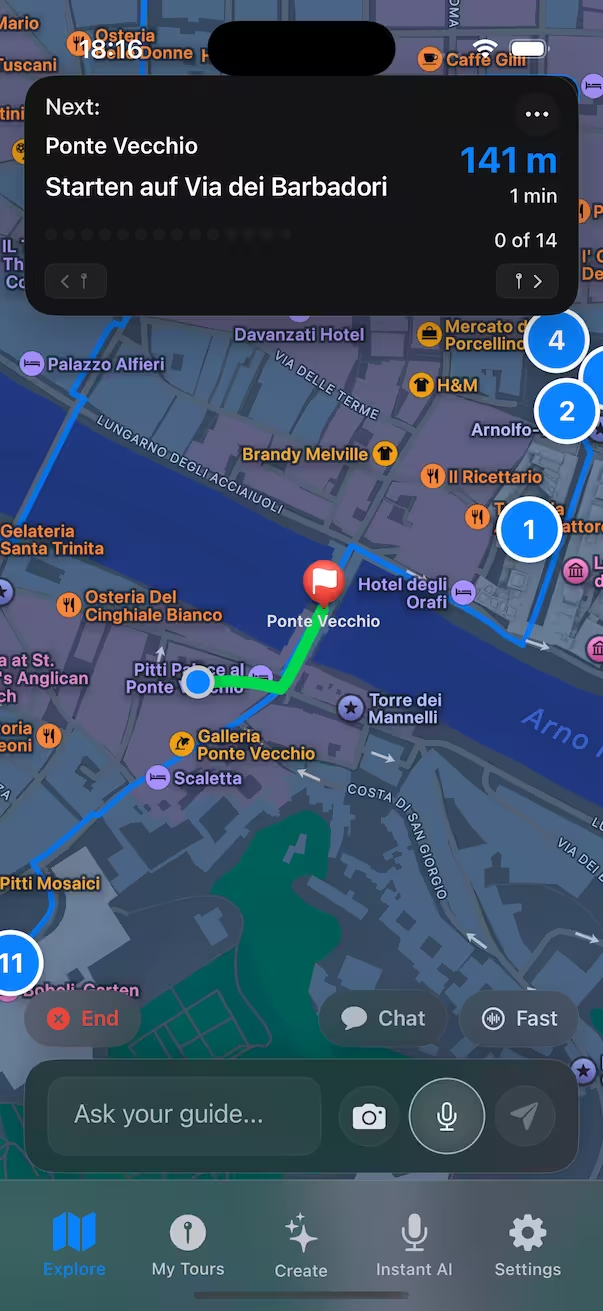
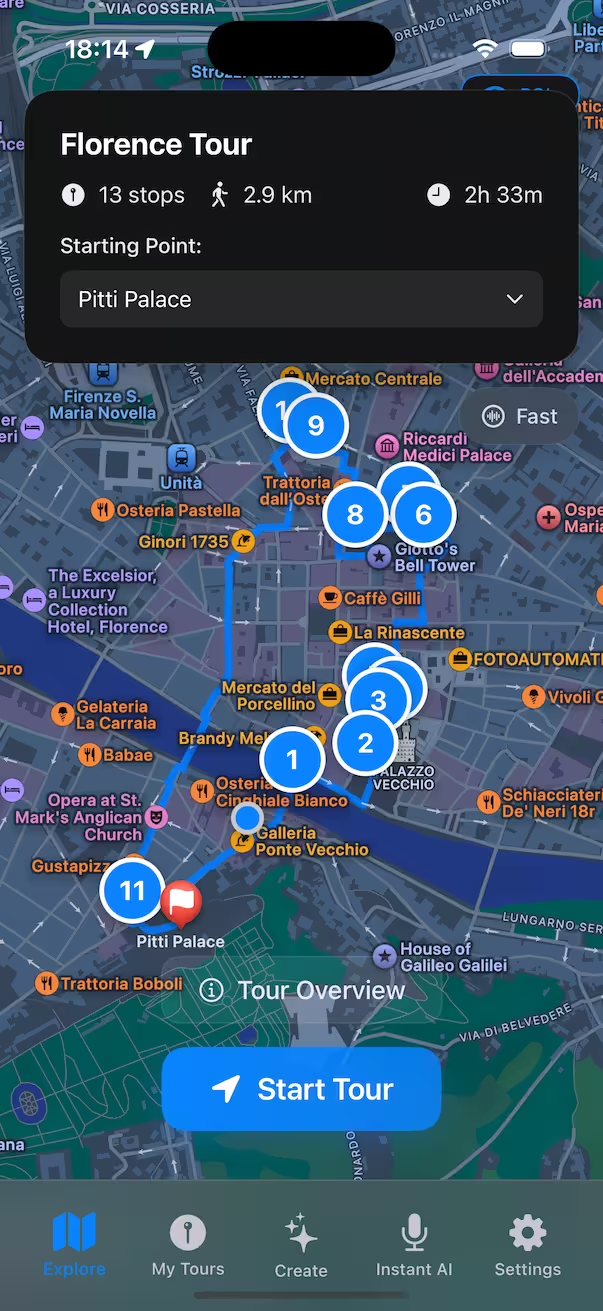
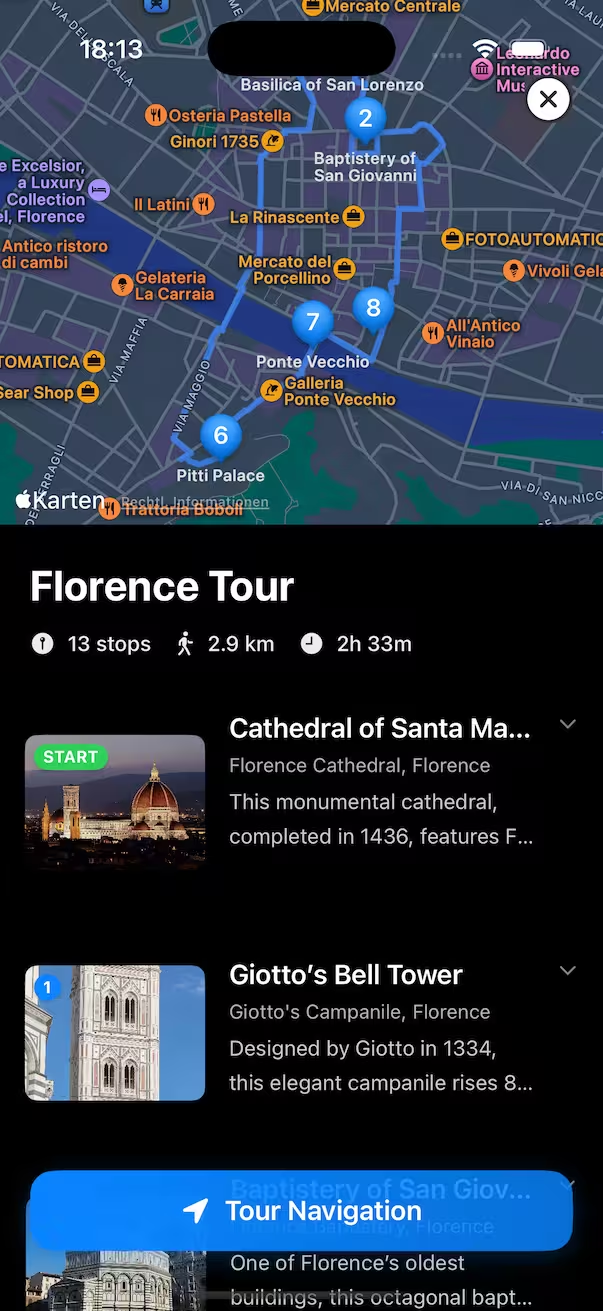
The classic Brunswick tour: 7 stops, 3.0 km, about 2 h on foot
Your live AI guide and the self-guided Brunswick route, together in your browser.