Best Time to Visit Weimar
Month-by-month weather, crowds and prices, plus a full calendar of festivals and events worth planning a trip around.
Best monthsMay, Sep
CheapestJan, Feb, Nov
AvoidOct
BusiestJul, Aug

When is the best time to visit Weimar?
Come in May or September. May gives you full summer opening hours at every Goethe and Bauhaus site, a blooming Ilmpark and mild walking weather without the crowds. September adds the free Genius Loci light festival (11-13 Sep) and golden light over Theaterplatz. Skip the Zwiebelmarkt weekend (9-11 Oct): 350,000 people pour into a town of 65,000 and every room within 30km sells out at triple the price. January and February are cheapest (55-80€ a night) but several sites run winter hours or close entirely.
Start our tool and find your best time to visit Weimar
Your perfect month
Free · ~30 seconds
or tap a month directly
What matters to you?
And this?
Best overall: May, Sep. May and September are the joint sweet spot. May runs full seasonal opening hours at all Klassik Stiftung sites, the Ilmpark in blossom and comfortable 12-18°C walking weather with only moderate crowds. September delivers the free Genius Loci festival, lingering warmth, golden light and the cultural charge of the closing Kunstfest, all without October's Zwiebelmarkt chaos.
Best value: Jan, Feb, Nov. January, February and November (outside the late-November Christmas-market weekends) bring central 3-star rooms at 55-90€ a night, no queues anywhere, and free entry to the Buchenwald Memorial exhibition. The catch is short grey days and several garden houses and parks closed entirely from 2 November to 20 March.
Avoid: Oct. The Zwiebelmarkt weekend (9-11 October) is the year's worst value for a calm visit: 350,000 people in a town of 65,000, the old-town lanes impassable, and every room within 30km sold out months ahead at triple or quadruple the usual rate. Glorious if you came for the onion festival, miserable otherwise.
- January: Tough month, 4°C. Cold, dark and uncluttered, the real Weimar winter. You can stand alone in the Goethe-Nationalmuseum and walk Goethestrasse without another tourist in sight. It is not the month for the parks, but it is the month for the indoor museums and a quiet, slow look at the town for half the summer price.
- February: Good time, 6°C. Honest, unperformed Weimar with no markup and no crowds. The indoor museums are yours alone, the cafés on the Marktplatz are calm, and the only company on Theaterplatz is the Goethe-Schiller monument. Bring warm layers and patience for the short daylight.
- March: Good time, 9°C. March is the last genuinely quiet month before spring fills the town, and the moment Weimar reopens properly. From 21 March the sites that were shut all winter come back online, so a late-March trip suddenly has the full menu without the crowds. Use that window, it closes fast once May arrives.
- April: Good time, 13°C. April is the couples' quiet season: the Ilmpark in blossom, the lanes near empty midweek and the full set of sites open again. Late April, just after Easter, is the loveliest stretch, mild enough for long park walks and still well short of the summer crowds and prices.
- May: Great time, 17°C. May is the quietly perfect month nobody markets hard. No mass crowd-event, no summer heat, no Zwiebelmarkt chaos, just a green town with everything open at comfortable walking temperatures. Time your visit midweek and you get Weimar close to its best for noticeably less than July or August.
- June: Great time, 22°C. June is the tipping point into full summer, and the long evenings are the payoff. Light until past 21:00 means late strolls through the Ilmpark and open-air music in the squares. The German school holidays have not hit yet, so the town still breathes while the festival season cranks up.
- July: Good time, 24°C. July is warm, busy and outdoors-focused. The old town is comfortable to walk at any hour, but the museums and the Anna Amalia Library are at their fullest, so book ahead and start early. Long light evenings make the Ilmpark and the open-air concerts the real pleasure of the month.
- August: Good time, 24°C. August is full-throttle cultural Weimar. The town runs one festival into the next, so there is always something on, but the museums and the Anna Amalia Library are at their busiest and rooms are dear. If you love a packed cultural calendar this is your month; if you want calm, wait for September.
- September: Good time, 20°C. September feels like Weimar at its best: warm afternoons, golden light on Goethestrasse and Theaterplatz, and a calendar still rich with festivals once the August school-holiday crush has eased. The free Genius Loci nights make it the standout month for first-timers and couples alike.
- October: Tough month, 15°C. October is a tale of two towns. The Zwiebelmarkt weekend is a 350,000-strong onion festival that takes the old town over entirely, glorious if you came for it and impossible if you did not. Either side of it, October is golden, foliage-rich and calm, with the parks at their colour peak and prices back to normal.
- November: Good time, 9°C. November is Weimar at its most introverted: grey, cold and almost touristless, but cheap and calm. The first three weeks are bare-bones off-season, then the Christmas market arrives on 24 November and lights up the historic squares for the run into December. Bring warm layers for the short days.
- December: Tough month, 6°C. December trades the deep autumn quiet for a soft festive glow: mulled wine, crafts and lights in the Marktplatz, Herderplatz and Theaterplatz, all within a ten-minute walk. It is atmospheric without the crush or the markup of a big-city market, and weekday evenings let you have the stalls almost to yourself.
Weimar weather by month
HighLowRainfall
Jan4°
Feb6°
Mar9°
Apr13°
May17°
Jun22°
Jul24°
Aug24°
Sep20°
Oct15°
Nov9°
Dec6°
| Month | Temp | Rain | Sun | Crowds | Prices | Highlight |
|---|---|---|---|---|---|---|
| Jan | 4° / -1° | 56mm · 14 rainy days | 3.4 h/day | ●○○○○ | ●○○○○ | |
| Feb | 6° / 0° | 42mm · 10 rainy days | 5.6 h/day | ●○○○○ | ●○○○○ | |
| Mar | 9° / 1° | 49mm · 12 rainy days | 7.2 h/day | ●●○○○ | ●●○○○ | |
| Apr | 13° / 4° | 43mm · 11 rainy days | 10.0 h/day | ●●○○○ | ●●○○○ | |
| May | 17° / 8° | 57mm · 10 rainy days | 11.0 h/day | ●●●○○ | ●●●○○ | |
| Jun | 22° / 13° | 56mm · 10 rainy days | 11.9 h/day | ●●●○○ | ●●●○○ | Fête de la Musique |
| Jul | 24° / 15° | 64mm · 10 rainy days | 11.9 h/day | ●●●●○ | ●●●●○ | Weimar Summer Open-Air Concerts |
| Aug | 24° / 15° | 69mm · 11 rainy days | 10.7 h/day | ●●●●○ | ●●●●○ | Weimar Summer Open-Air Concerts |
| Sep | 20° / 11° | 51mm · 8 rainy days | 9.0 h/day | ●●●●○ | ●●●●○ | Kunstfest Weimar |
| Oct | 15° / 8° | 60mm · 11 rainy days | 6.2 h/day | ●●●●● | ●●●●● | Weimar Onion Market |
| Nov | 9° / 3° | 44mm · 9 rainy days | 4.4 h/day | ●●○○○ | ●●○○○ | Long Night of the Sciences |
| Dec | 6° / 1° | 51mm · 13 rainy days | 3.0 h/day | ●●○○○ | ●●○○○ | Weimar Christmas Market |
How we score this: weather = long-run climate normals (Open-Meteo), crowds & prices = relative season read, events checked yearly against official dates.
Best time to visit Weimar: weather, prices & crowds
Best months for good weather
Jun, Jul, Sep
June through early September gives Weimar its warmest, most reliable days, 20-28°C, long evenings light until past 21:00, and only brief afternoon thunderstorms rather than all-day rain. September holds the warmth with the best stable light for the historic streetscapes.
Quietest months to avoid the crowds
Jan, Feb, Nov
January, February and mid-November empty the town right out. You walk into the Bauhaus-Museum without a queue and have Goethestrasse and Theaterplatz almost to yourself, the trade being short, cold grey days and some sites on reduced winter hours.
Cheapest time to visit Weimar
Jan, Feb, Nov
Deep off-season is genuinely cheap: a central 3-star room runs 55-80€ a night in January and February, roughly half the July-August level of 110-165€. November sits at 60-90€ before the Christmas market opens on 24 November.
Best time for festivals and events
Sep
Genius Loci Weimar (11-13 September) turns the old town's historic facades, including UNESCO World Heritage buildings, into vast video-mapped light canvases for three free nights. No tickets, no queue, just turn up after dark. It is the single best free event of the Weimar year.
How many days do you need in Weimar?
Two days is the right length for Weimar. The old town is compact enough to walk in a single day, but the concentration of UNESCO-listed museums, parks and literary houses genuinely rewards slowing down, and trying to squeeze Goethe, Bauhaus and the Anna Amalia Library into one sprint leaves every site underserved.

One day
The literary and Bauhaus core
Start at Goethe's House on Frauenplan, then walk north to Schiller's Residence on Schillerstrasse and the Goethe-Schiller Monument on Theaterplatz. The self-guided Weimar walking tour covers 14 stops across 5.1 km in about 3 hours, looping through the Market Square, the Cranach House, the Bauhaus-Museum and the Park an der Ilm. Finish at the Historic Cemetery and Grand Ducal Vault, where Goethe and Schiller are buried.
Two daysRecommended
The museums, the library and the park
Use the second day for the sites that deserve more than a passing glance. Book the Duchess Anna Amalia Library's Rococo Hall well in advance, only 290 visitors a day are admitted. Then give proper time to the Bauhaus-Museum on Steubenstrasse and the Weimar City Palace on the Ilm bank. End with a slow walk through the UNESCO-listed Park an der Ilm before the museums close.
Three days
Add Buchenwald and Belvedere
On day three, take bus line 6 from Goetheplatz up to the Buchenwald Memorial, 8 km from the centre: allow at least three hours for the permanent exhibition, which is free and dense with historical material. In the afternoon, head south to the Belvedere Park and its Baroque palace. Both are open from late March and closed entirely from 2 November.
Four days or more
Festival time and day trips
A longer stay makes sense if you arrive during the Kunstfest (late August to early September) or plan your evenings around Genius Loci (mid-September), which projects free light art onto historic facades for three nights. Erfurt is 25 minutes by regional train, making a strong day-trip pairing for anyone who has exhausted Weimar's central sights.
Best time to visit Weimar by traveller type
Same city, different trip. Here's the month that fits how you're travelling.
🧭
Best time to visit Weimar for the first time
MaySep
May or September. May gives full opening hours for every Goethe, Schiller and Bauhaus site plus the Ilmpark at its greenest. September adds the free Genius Loci light festival and post-Kunstfest energy without the Zwiebelmarkt crush. Both avoid the winter closures that shut several sites from November.
❤️
Best time to visit Weimar for couples
SepApr
September for the golden afternoon light on Goethestrasse and Theaterplatz, cool evenings for lingering over Thuringian dinners, and Genius Loci as a free romantic night out. Late April catches the Ilmpark cherry and magnolia blossom with the lanes near empty midweek.
💶
Best time to visit Weimar on a budget
JanFebNov
January, February or November outside the Christmas-market weekends: central 3-star rooms at 55-90€. The Buchenwald Memorial, Park an der Ilm and the Goethe-Schiller monument are free, and Genius Loci in September costs nothing. There is no free-Sunday museum scheme in Weimar, but students pay 8€ rather than 11€ at the Bauhaus-Museum.
🍝
Best time to visit Weimar for food and wine
OctSep
October for the Zwiebelmarkt (9-11 Oct), Thuringia's definitive food festival: Zwiebelkuchen onion cake, Thüringer Bratwurst, braided Zwiebelzöpfe and local wine across 600 stands. September is the calmer alternative, with the Töpfermarkt (5-6 Sep) and the Weinfest by Goethe's residence (27-30 Aug) just before.
Worst time to visit Weimar
The Zwiebelmarkt weekend, the second weekend of October, is the year's worst timing for a calm cultural visit. The festival draws 350,000 people into a town of 65,000, making the old-town lanes essentially impassable, and every room within 30 km sells out months in advance at triple or quadruple the standard rate. Beyond that single weekend, January and February bring very short, cold grey days, several outdoor sites closed entirely until 20 March, and reduced winter hours at the Bauhaus-Museum and Neues Museum.
Still worth it for The Zwiebelmarkt is genuinely spectacular if you came for it, with 600 food and craft stands, live music and a Saturday city run. January and February suit travellers who want the indoor museums near-empty and prices at their annual floor.
Go instead in May, September, when Weimar is at its best.
Best time for a tour of Weimar
The 5.1-kilometre walk through Weimar lives and dies by temperature and daylight, and the data here makes the sweet spot unusually clear. May and June hit highs of 17 to 22 °C with around 10 rain days each, and the trees in the Park an der Ilm are fully leafed but the paths not yet crowded. That is when the walk breathes: you can stand in front of Goethe's House without pressing against a tour group, and the Duchess Anna Amalia Library courtyard feels unhurried. July and August stay warm at 23.9 °C, which is pleasant enough, but visitor numbers climb noticeably and the Market Square gets busy by mid-morning. September is worth a second look: only 8 rain days, highs of nearly 20 °C, and a quality of afternoon light that suits the neoclassical facades beautifully. Resist October despite its mild 14.7 °C: it draws the highest visitor numbers of the year, and shoulder-to-shoulder queues at the Goethe-Schiller Monument take the edge off the experience. Winter is another matter entirely. January averages barely 3.9 °C and brings 14 rain days, with dusk arriving before 4 pm. The route is walkable, but the park stretch is raw and the light flat.
The honest advantage of walking Weimar with AI Tourguide is that no one dictates your hour. In June you can start your Weimar tour at 8 am and reach Goethe's House before the first coach arrives, letting the guide tell you the story of the garden through an open window while the square below is still quiet. In September you might push the start to late afternoon and finish as the lamps come on in the park. The guide runs entirely in your browser, no download or login needed: it greets you, tells you the stories, asks you questions, listens, and adjusts the rest of the walk to what you want to hear. You set the pace, take the detours, stop for coffee. The climate shapes your hour; the guide shapes the rest.


 +10
+10All 14 stops are already on the map.
You just press start.
You just press start.
 AI Tourguide
You just read the route.
Now walk it with a guide in your ear.
Press start wherever you are, even hundreds of kilometres from Weimar, and the guide begins telling its stories right away. In the city, pick any of the 14 stops to start from: it leads you there, then talks with you the whole route, asking, listening, remembering, and shaping the tour around your answers.
14stops5.1km3.0hours11languages
▶Start the tour freeFree to start · Runs in your browser · No app, no download
Weimar events and festivals calendar
Annual highlights worth timing a trip around, listed month by month.
June
🎵 MusicFête de la Musique
Jun 21
always 21 June
Free outdoor music across the old town, with diverse genres playing on street stages through the longest evening of the year.
July
🎵 MusicWeimar Summer Open-Air Concerts Konzerte im Weimarhallenpark
Jul 4 – Aug 1
selected dates across July into early August
Open-air pop and classical concerts on the lake stage in Weimarhallenpark, typically featuring the Staatskapelle Weimar alongside pop and international acts across selected July and early-August dates.
🎨 Art and cultureSummaery, Bauhaus University Exhibition summaery2026
Jul 9–12 ~
four days in mid-July
The annual public showcase of student and faculty work at the Bauhaus-Universität Weimar, with installations and performances spread across the campus and the city.
August
🎵 MusicYiddish Summer Weimar
Aug 1–8 ~
festival week in early August
International workshops, language courses, concerts and music projects celebrating Yiddish culture, with the festival week following an intensive language programme.
🎨 Art and cultureJedermann
Aug 11–16 ~
six days in mid-August
An outdoor theatrical production on mortality and spirituality, staged across Weimar's historic spaces in the days before the Kunstfest opens.
🎉 FestivalKunstfest Weimar
Aug 21 – Sep 6 ~
late August into early September
Thuringia's largest contemporary arts festival, founded in 1990: theatre, dance, performance, music, visual art and literature across multiple venues including the Herderkirche, the ACC Galerie and the DNT, with its festival centre at the Lichthaus.
September
🎨 Art and culturePottery Market Töpfermarkt Weimar
Sep 5–6 ~
a weekend in early September
An artisan ceramics and pottery market in the city centre, overlapping the final days of the Kunstfest.
💡 LightsGenius Loci Weimar
Sep 11–13 ~
three nights in mid-September
A Europe-leading video-mapping and light-art festival that transforms historic facades across the old town, including UNESCO World Heritage buildings, into large projection surfaces.
🎨 Art and cultureTheatre Festival, DNT Season Opening Theaterfest / Spielzeiteröffnung DNT
Sep 12 ~
a Saturday in mid-September
The German National Theatre opens its new season with opera galas and new formats in and around the historic Grosses Haus.
October
🎉 FestivalWeimar Onion Market Weimarer Zwiebelmarkt
Oct 9–11 ~
the second weekend of October
Thuringia's largest folk festival, running since 1653 and now in its 373rd edition: 350,000 visitors over three days, around 600 stands across the entire old town, braided Zwiebelzöpfe onion wreaths, Weimarer Zwiebelkuchen, multiple stages, a fairground, a Saturday city run, a children's onion market and some 500 performing artists.
🎨 Art and cultureWeimar Rendezvous with History Weimarer Rendez-vous mit der Geschichte
Oct 29–31 ~
three days in late October
A festival of history, democracy and migration with talks, readings and film, held once the Zwiebelmarkt crowds have gone and the city is quiet again.
November
🎨 Art and cultureLong Night of the Sciences Lange Nacht der Wissenschaften
Nov 13 ~
a Friday evening in mid-November
A Thuringian university research open-night at the Bauhaus-Universität and partner institutions, with labs, demonstrations and talks.
🎬 FilmTeleVisionale
Nov 23–27 ~
five days in late November
A film and television series festival with jury discussions and talks featuring prominent film guests.
🎄 Christmas marketWeimar Christmas Market Weimarer Weihnacht
Nov 24 – Dec 23
24 November to early January
Markets on Marktplatz, Herderplatz and Theaterplatz, plus a separate Bauhaus Christmas market at the university and a German Bee Museum market: stalls, mulled wine and crafts in the historic squares, running into early January.
Insider tips for visiting Weimar
The rules buried in forums, in one place.
- Book the Anna Amalia Library three months ahead, or queue at 9:30. Only 290 visitors a day are allowed into the Rococo hall, and just 50 walk-in tickets go on sale at 9:30. Arrive by 09:00 in July and August, by 09:20 the rest of the year. Online booking opens exactly three months in advance, so set a reminder.
- Book a room three to six months ahead for the Zwiebelmarkt weekend (9-11 October), or avoid it entirely. The festival draws 350,000 people to a town of 65,000; every room within 25-30km sells out and prices triple or quadruple. If you are attending, Friday arrival and Sunday departure is the standard pattern.
- Mind the Monday versus Tuesday closures. The Goethe-Nationalmuseum (Goethes Wohnhaus) and the Gartenhaus close on Mondays, while the Bauhaus-Museum and Neues Museum close on Tuesdays. Never plan both halves on back-to-back days in the wrong order. Buchenwald is also closed Mondays.
- The Bauhaus-Museum is the priciest Klassik Stiftung ticket at 11€ (8€ for students). If you are doing three or more sites in a day, ask for the combined Kombiticket at the first site you enter, it pays for itself quickly.
- Goethe's Garden House and several outdoor sites close completely from 2 November to 20 March, along with the Belvedere park and castle and Haus Am Horn. The Bauhaus-Museum and Neues Museum switch to reduced winter hours (11:00-17:00), and the Goethe-Nationalmuseum to 9:30-16:00. Check the Klassik Stiftung seasonal calendar before you build a winter itinerary.
- Genius Loci (11-13 September) is entirely free. Three nights of large-scale facade projections light up historic buildings across the old town with no tickets and no queue, just show up after dark. It is the best free event in Weimar for first-timers.
- Park an der Ilm is free, UNESCO-listed and often overlooked in favour of Goethe's house. A morning walk before the museums open costs nothing and links the Goethe Gartenhaus, the Roman House and Schiller's statue area. It is one of the finest things in Weimar and best in the quiet first hour.
- Buchenwald Memorial is 8km uphill from the centre with no practical walk, reached by bus line 6 from Goetheplatz in about 15 minutes (Tuesday to Sunday). Allow at least three hours; the permanent exhibition is dense and free, with a public guided tour at 7€ (3€ concession). It is closed on Mondays.
- The Weimarer Weihnacht Christmas market (24 November to 3 January) is genuinely quieter on weekday evenings, Tuesday to Thursday, when domestic visitors are not driving in. The three main clusters at Marktplatz, Herderplatz and Theaterplatz are all within a ten-minute walk of each other.
Public holidays in Weimar
On these dates many shops and offices close, transport thins out, and sights can be mobbed or shut. Plan around them.
| Date | Holiday | What closes |
|---|---|---|
| Jan 1 | New Year's Day | Most shops and many restaurants closed; museums may open on reduced hours. The quietest actual tourism day of the year, with the town near empty. |
| Apr 3 | Good Friday | Shops closed, but most Klassik Stiftung museums stay open (they open on public holidays even when it is their usual closing day). A solemn, observed atmosphere across the town. |
| Apr 6 | Easter Monday | Shops closed; museums open. The town fills with German domestic day-trippers over the long Easter weekend. |
| May 1 | Labour Day | Shops closed; museums open. Creates a long weekend that brings the first proper spring-walking crowds into the Ilmpark. |
| May 14 | Ascension Day | Shops closed; museums open. Doubles as Father's Day, so hiking and beer-cart groups are out and about in the parks. |
| May 25 | Whit Monday | Shops closed; museums open. Spring holiday crowds give the town a busy late-May weekend before the summer season builds. |
| Jun 4 | Corpus Christi | Shops closed; museums open. Religious processions pass through the centre and the day has a quiet, observed feel. |
| Oct 3 | German Unity Day | Falls on a Saturday in 2026, so no extra day off. Museums open and a moderate visitor increase in the week before the Zwiebelmarkt. |
| Oct 31 | Reformation Day | A Thuringia statutory holiday, falling on a Saturday in 2026, just after the Zwiebelmarkt period. Shops may close or reduce hours; museums open. |
| Dec 25 | Christmas Day | Most sites closed; reduced transport. The Weimarer Weihnacht Christmas market keeps running for festive atmosphere in the historic squares. |
| Dec 26 | Second Christmas Day | Similar to Christmas Day: most sites closed, reduced transport, the Christmas market still open. |
Weimar month by month
January in Weimar
High4°C / 39°F
Low-1°C
Rain56mm / 14 rainy days
Sun3.4 h/day
Daylight8 h/day
Humidity84%
Crowds●○○○○Prices●○○○○
January is Weimar at its quietest and cheapest. Highs sit near 2-4°C with frequent frost, grey skies and very short days, the sun gone by about 16:30. The post-Christmas lull empties the university town out and tourism is at its annual low. The flip side is that several outdoor sites and garden houses are closed for winter (2 November to 20 March), and the Bauhaus-Museum and Neues Museum run reduced 11:00-17:00 hours.
The vibe Cold, dark and uncluttered, the real Weimar winter. You can stand alone in the Goethe-Nationalmuseum and walk Goethestrasse without another tourist in sight. It is not the month for the parks, but it is the month for the indoor museums and a quiet, slow look at the town for half the summer price.
Don't miss A perfect month for the indoor heavyweights: the Bauhaus-Museum (11€, on winter hours) and the Neues Museum, both near empty. The Anna Amalia Library's Rococo hall is at its easiest to get into, with the 09:20 walk-in queue rarely a problem this time of year.
Crowd drivers The deep post-Christmas off-season with the university quiet and almost no tourists. The lowest visitor pressure of the year.
Heads up Goethe's Garden House, Haus Am Horn, the Belvedere park and castle and the Liszt-Haus are all closed for winter until 20 March. New Year's Day shuts most shops and many restaurants.
Cheapest month of the year, alongside February: a central 3-star room runs 55-80€ a night, roughly half the summer level.
February in Weimar
High6°C / 43°F
Low0°C
Rain42mm / 10 rainy days
Sun5.6 h/day
Daylight10 h/day
Humidity78%
Crowds●○○○○Prices●○○○○
February is the deepest off-season and Weimar's quietest tourist month. Highs creep toward 5°C but frost is still common and the days short. There are no major events, several museums remain on reduced winter hours, and the garden houses and Belvedere park stay shut. International visitors are essentially absent and prices sit at the floor. It is a town to have to yourself if you can take the grey.
The vibe Honest, unperformed Weimar with no markup and no crowds. The indoor museums are yours alone, the cafés on the Marktplatz are calm, and the only company on Theaterplatz is the Goethe-Schiller monument. Bring warm layers and patience for the short daylight.
Don't miss Indoor culture is the play: the Bauhaus-Museum and Neues Museum quiet and queue-free, and the Anna Amalia Library easy to enter without booking three months ahead. The free Park an der Ilm is bare but atmospheric on a crisp, frosty morning.
Crowd drivers The deepest point of the off-season, with no events and minimal tourism. International pressure is at its annual low.
Heads up Winter closures continue: Goethe's Garden House, Haus Am Horn, the Belvedere park and castle and the Liszt-Haus shut until 20 March; the Bauhaus-Museum and Neues Museum on 11:00-17:00 winter hours.
Prices at their annual floor with January: central 3-star rooms 55-80€ a night, the best value of the year.
March in Weimar
High9°C / 49°F
Low1°C
Rain49mm / 12 rainy days
Sun7.2 h/day
Daylight12 h/day
Humidity75%
Crowds●●○○○Prices●●○○○
March is the turn of the season. Highs climb toward 10°C, and the crucial date is 21 March, when the Klassik Stiftung's winter schedule ends and the garden houses, Belvedere Park and full opening hours return. Spring school-holiday visitors start to appear, and Easter can fall late in the month. Still cool and changeable, but the worst of the grey is behind.
The vibe March is the last genuinely quiet month before spring fills the town, and the moment Weimar reopens properly. From 21 March the sites that were shut all winter come back online, so a late-March trip suddenly has the full menu without the crowds. Use that window, it closes fast once May arrives.
Don't miss After 21 March, Goethe's Garden House and the Ilmpark walks reopen for the season and the Bauhaus-Museum returns to full hours. Catch the first blossom beginning in the Ilmpark late in the month before the spring crowds arrive.
Crowd drivers Spring school-holiday visitors begin and a late Easter can add domestic day-trippers, but crowds stay moderate. The reopening on 21 March nudges interest upward.
Heads up Winter closures end on 20 March; before that, the garden houses and Belvedere park remain shut and museums run reduced winter hours.
Prices recover gently to 65-95€ a night as spring visitors begin; school-holiday and Easter demand can lift late-month rates.
April in Weimar
High13°C / 56°F
Low4°C
Rain43mm / 11 rainy days
Sun10.0 h/day
Daylight14 h/day
Humidity69%
Crowds●●○○○Prices●●○○○
April is Weimar waking fully up. Highs reach 14-16°C, the Park an der Ilm and Belvedere Park come into bloom from mid-month with cherry and magnolia blossom, and the parks are fully open again. Easter brings German domestic day-trippers and a long-weekend lift, but midweek the town stays calm. Showers come and go, but the spring colour is at its best.
The vibe April is the couples' quiet season: the Ilmpark in blossom, the lanes near empty midweek and the full set of sites open again. Late April, just after Easter, is the loveliest stretch, mild enough for long park walks and still well short of the summer crowds and prices.
Don't miss Cherry and magnolia blossom peak around mid-April in the Park an der Ilm and Belvedere Park, both free and UNESCO-listed. With the winter closures over, a morning walk linking the Goethe Gartenhaus, the Roman House and Schiller's statue area is at its spring best.
Crowd drivers Easter week (3-6 April) brings domestic day-trippers and a busy long weekend; the parks reopening fully draws spring walkers. Midweek pressure stays low.
Heads up Good Friday (3 April) and Easter Monday (6 April) close shops, but the Klassik Stiftung museums stay open on these public holidays even when it is their usual closing day.
Rates around 70-100€ a night; Easter week (3-6 April in 2026) lifts demand, but midweek stays quiet.

May in Weimar
High17°C / 63°F
Low8°C
Rain57mm / 10 rainy days
Sun11.0 h/day
Daylight16 h/day
Humidity69%
Crowds●●●○○Prices●●●○○
May is one of Weimar's two best months. Highs near 18°C, every Klassik Stiftung site on full summer hours, the Ilmpark green and the weather settled enough for long walks. Three German public holidays cluster in the month (1, 14 and 25 May) along with Thuringian school holidays, so weekends fill, but the cultural calendar is full and the heavy summer crowds are still weeks away.
The vibe May is the quietly perfect month nobody markets hard. No mass crowd-event, no summer heat, no Zwiebelmarkt chaos, just a green town with everything open at comfortable walking temperatures. Time your visit midweek and you get Weimar close to its best for noticeably less than July or August.
Don't miss Full summer opening hours mean you can do Goethe's Wohnhaus, the Gartenhaus, the Bauhaus-Museum and the Anna Amalia Library all in their proper season. The Ilmpark and Belvedere woods are at their greenest, and the long evenings open up after-dinner strolls through the old town.
Crowd drivers Three public holidays (1, 14 and 25 May) plus Thuringian school holidays lift the weekends with domestic travellers, though midweek stays manageable and international pressure is moderate.
Heads up Labour Day (1 May), Ascension (14 May) and Whit Monday (25 May) close shops, but museums stay open.
Rates climb to 85-120€ a night as walking season peaks and German public holidays cluster (1, 14 and 25 May).
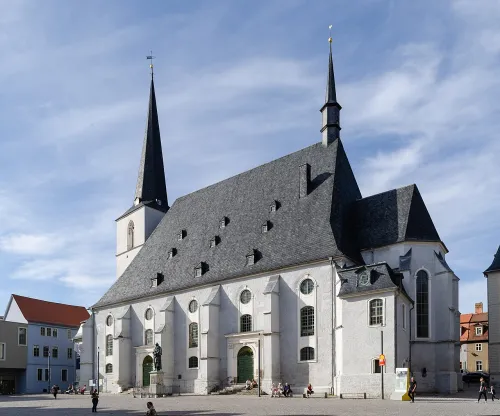
June in Weimar
High22°C / 72°F
Low13°C
Rain56mm / 10 rainy days
Sun11.9 h/day
Daylight16 h/day
Humidity68%
Crowds●●●○○Prices●●●○○
June opens the Weimarer Sommer season. Highs reach 20-24°C, the days are at their longest with light past 21:00, and the cultural calendar fills with Sommertheater premieres and the free Fête de la Musique on 21 June. It is warm and generally sunny, with only the odd afternoon thunderstorm. A strong month, busier than May but still short of the July-August peak.
The vibe June is the tipping point into full summer, and the long evenings are the payoff. Light until past 21:00 means late strolls through the Ilmpark and open-air music in the squares. The German school holidays have not hit yet, so the town still breathes while the festival season cranks up.
Don't miss Fête de la Musique on 21 June fills the old town with free street-stage music on the longest evening of the year. The Ilmpark and Belvedere Park are lush, and the long daylight makes evening walks along the river Ilm a highlight. Sommertheater premieres begin the open-air season.
Crowd drivers The Weimarer Sommer season opening and the free Fête de la Musique draw crowds, but the main German school holidays only start in late July, so June stays short of peak.
Summer pricing settles in at 85-125€ a night as the Weimarer Sommer season opens and concerts sell in advance.
Events this month
🎵 MusicFête de la Musique
Jun 21
always 21 June
Free outdoor music across the old town, with diverse genres playing on street stages through the longest evening of the year.
A lively, free midsummer evening with no ticket needed, and it makes the most of Weimar's long 21:00 daylight.

July in Weimar
High24°C / 75°F
Low15°C
Rain64mm / 10 rainy days
Sun11.9 h/day
Daylight16 h/day
Humidity64%
Crowds●●●●○Prices●●●●○
July is high summer and one of Weimar's two busiest, priciest months. Highs of 20-28°C with the odd brief thunderstorm, long golden evenings, and the German school holidays beginning in Thuringia in late July. The open-air concerts at Weimarhallenpark run on selected dates, the Summaery campus show fills the Bauhaus-Universität (9-12 July), and the Anna Amalia Library day-tickets sell out early.
The vibe July is warm, busy and outdoors-focused. The old town is comfortable to walk at any hour, but the museums and the Anna Amalia Library are at their fullest, so book ahead and start early. Long light evenings make the Ilmpark and the open-air concerts the real pleasure of the month.
Don't miss Open-air concerts on the lake stage at Weimarhallenpark (Staatskapelle Weimar, Milow, Schiller, Asaf Avidan among the 2026 names) are the summer signature; capacity is limited, so book early. The free Summaery show (9-12 July) opens the Bauhaus-Universität campus. For the Anna Amalia Library, queue by 09:00 for one of the 50 daily walk-in tickets.
Crowd drivers German school holidays begin in Thuringia from late July, and the Weimarhallenpark concert series plus the Summaery campus show pull in steady crowds. The Anna Amalia Library books out.
In season Peak terrace season for Thuringian classics: Thüringer Bratwurst from the grill, Klöße and Rostbratwurst, eaten outdoors on the Marktplatz on the long evenings.
High-summer pricing at 110-160€ a night, driven by school holidays and the Weimarhallenpark concert series.
Events this month
🎵 MusicWeimar Summer Open-Air Concerts Konzerte im Weimarhallenpark
Jul 4 – Aug 1
selected dates across July into early August
Open-air pop and classical concerts on the lake stage in Weimarhallenpark, typically featuring the Staatskapelle Weimar alongside pop and international acts across selected July and early-August dates. Capacity is limited, so book early.
An atmospheric lakeside setting in the heart of summer. Capacity is limited, so book early; this is a background lift to July-August prices rather than a single spike.
🎨 Art and cultureSummaery, Bauhaus University Exhibition summaery2026
Jul 9–12 ~
four days in mid-July
The annual public showcase of student and faculty work at the Bauhaus-Universität Weimar, with installations and performances spread across the campus and the city.
A genuine Bauhaus-legacy experience that is free and off the usual tourist trail, with participatory elements that families enjoy.
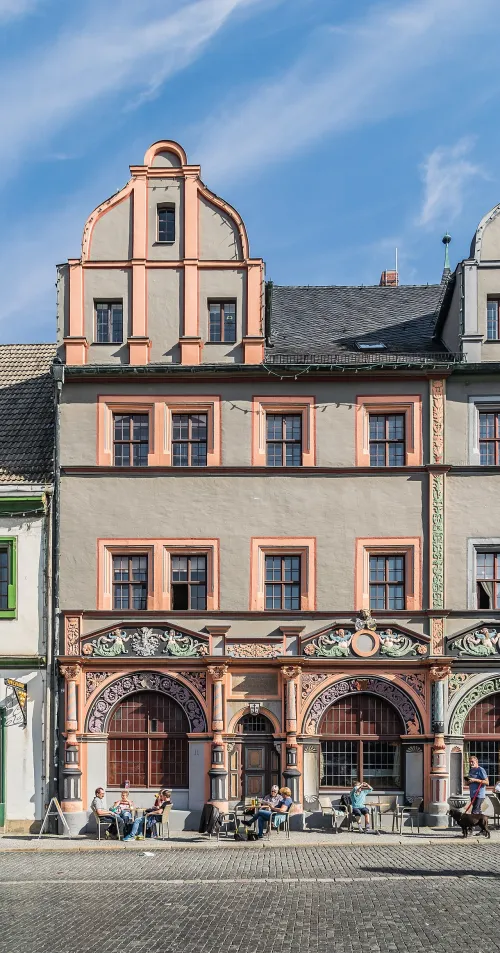
August in Weimar
High24°C / 75°F
Low15°C
Rain69mm / 11 rainy days
Sun10.7 h/day
Daylight14 h/day
Humidity67%
Crowds●●●●○Prices●●●●○
August keeps the summer peak going, with highs of 22-28°C and a dense festival run. Yiddish Summer Weimar (1-8 Aug), Jedermann (11-16 Aug) and the start of the Kunstfest (from 21 Aug) stack the calendar, and Anna Amalia day-tickets sell out early. German school holidays run into the month. It is the festival heart of the Weimar year, busy and full but rich with programme.
The vibe August is full-throttle cultural Weimar. The town runs one festival into the next, so there is always something on, but the museums and the Anna Amalia Library are at their busiest and rooms are dear. If you love a packed cultural calendar this is your month; if you want calm, wait for September.
Don't miss Yiddish Summer Weimar (1-8 Aug) brings its anniversary concerts, Jedermann (11-16 Aug) plays in the historic open-air spaces, and the Kunstfest opens on 21 August across the Herderkirche, the ACC Galerie and the DNT. Many fringe events at the Lichthaus are free, so the festival is worth walking even without a ticket.
Crowd drivers Three overlapping festivals (Yiddish Summer, Jedermann and the opening of the Kunstfest) plus the tail of the German school holidays keep crowds and prices at their summer peak.
In season The Weinfest by Goethe's residence (27-30 August) pairs regional wine with the UNESCO setting, a relaxed late-summer food highlight.
Peak summer rates at 115-165€ a night, sustained by Yiddish Summer, Jedermann and the opening of the Kunstfest.
Events this month
🎵 MusicYiddish Summer Weimar
Aug 1–8 ~
festival week in early August
International workshops, language courses, concerts and music projects celebrating Yiddish culture, with the festival week following an intensive language programme. The festival marks a milestone anniversary edition in recent years.
Niche but deeply atmospheric, and uniquely tied to Weimar's layered post-war heritage. Concerts are ticketed; many are sold in advance.
🎨 Art and cultureJedermann
Aug 11–16 ~
six days in mid-August
An outdoor theatrical production on mortality and spirituality, staged across Weimar's historic spaces in the days before the Kunstfest opens.
A theatrical highlight that bridges the gap into the Kunstfest, played out in atmospheric open-air settings.
🎉 FestivalKunstfest Weimar
Aug 21 – Sep 6 ~
late August into early September
Thuringia's largest contemporary arts festival, founded in 1990: theatre, dance, performance, music, visual art and literature across multiple venues including the Herderkirche, the ACC Galerie and the DNT, with its festival centre at the Lichthaus.
Two and a half weeks of international programme that form the city's cultural centrepiece. Individual events are ticketed and fill noticeably, but many fringe events in public squares and at the Lichthaus are free, so walking the city during the festival is rewarding even without a ticket.

September in Weimar
High20°C / 67°F
Low11°C
Rain51mm / 8 rainy days
Sun9.0 h/day
Daylight13 h/day
Humidity72%
Crowds●●●●○Prices●●●●○
September is the other sweet spot, often the best month of all. Highs near 18-22°C give the most stable warm days and the finest light for the historic streetscapes. The Kunstfest runs to 6 September, the Töpfermarkt falls on 5-6 September, the free Genius Loci light festival lights up the facades (11-13 Sep) and the DNT opens its season (12 Sep). Full, cultured and warm, without October's onion-market chaos.
The vibe September feels like Weimar at its best: warm afternoons, golden light on Goethestrasse and Theaterplatz, and a calendar still rich with festivals once the August school-holiday crush has eased. The free Genius Loci nights make it the standout month for first-timers and couples alike.
Don't miss Genius Loci (11-13 September) projects large-scale light art onto historic facades for three free nights, the best free event of the year. The Kunstfest runs its final stretch to 6 September, the Töpfermarkt (5-6 Sep) brings artisan ceramics, and the DNT opens its season on 12 September. The light over the old town is at its annual best.
Crowd drivers The closing Kunstfest, the Töpfermarkt and especially the free Genius Loci festival keep the town busy, though schools are back so the general pressure eases through the month.
Still strong at 110-155€ a night while the Kunstfest runs and Genius Loci draws visitors, easing toward month-end.
Events this month
🎉 FestivalKunstfest Weimar
Aug 21 – Sep 6 ~
late August into early September
Thuringia's largest contemporary arts festival, founded in 1990: theatre, dance, performance, music, visual art and literature across multiple venues including the Herderkirche, the ACC Galerie and the DNT, with its festival centre at the Lichthaus.
Two and a half weeks of international programme that form the city's cultural centrepiece. Individual events are ticketed and fill noticeably, but many fringe events in public squares and at the Lichthaus are free, so walking the city during the festival is rewarding even without a ticket.
🎨 Art and culturePottery Market Töpfermarkt Weimar
Sep 5–6 ~
a weekend in early September
An artisan ceramics and pottery market in the city centre, overlapping the final days of the Kunstfest.
Low-key but charming, and a relaxed way to spend an early-September day among the festival energy.
💡 LightsGenius Loci Weimar
Sep 11–13 ~
three nights in mid-September
A Europe-leading video-mapping and light-art festival that transforms historic facades across the old town, including UNESCO World Heritage buildings, into large projection surfaces. Each edition carries a distinct cultural theme.
Three free nights of spectacular facade projections with no tickets and no queue. September evenings are mild, and this is the best free event of the Weimar year for first-timers.
🎨 Art and cultureTheatre Festival, DNT Season Opening Theaterfest / Spielzeiteröffnung DNT
Sep 12 ~
a Saturday in mid-September
The German National Theatre opens its new season with opera galas and new formats in and around the historic Grosses Haus.
A good excuse to step inside the historic Großes Haus even if you are not attending a regular performance.
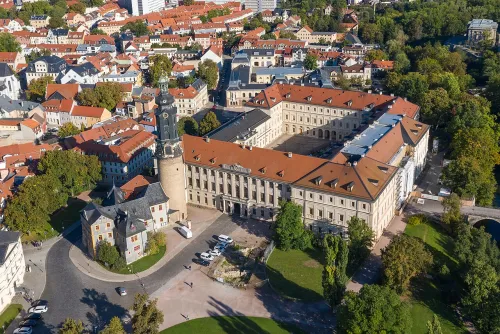
October in Weimar
High15°C / 58°F
Low8°C
Rain60mm / 11 rainy days
Sun6.2 h/day
Daylight11 h/day
Humidity80%
Crowds●●●●●Prices●●●●●
October is dominated by one weekend. The Zwiebelmarkt (9-11 Oct) draws 350,000 people to a town of 65,000, the single busiest and most expensive weekend of the year. Outside it, highs cool to 10-16°C, the Ilmpark and Belvedere woods turn strong autumn colour from mid-month, and the town quiets down. The Rendezvous mit der Geschichte (29-31 Oct) draws a calmer, thoughtful crowd at month-end.
The vibe October is a tale of two towns. The Zwiebelmarkt weekend is a 350,000-strong onion festival that takes the old town over entirely, glorious if you came for it and impossible if you did not. Either side of it, October is golden, foliage-rich and calm, with the parks at their colour peak and prices back to normal.
Don't miss If you came for the Zwiebelmarkt, expect 600 stands, Zwiebelkuchen, braided onion wreaths and 500 performers across the old town. If you came for calm, target the first days or the last week, when the foliage in the Park an der Ilm and Belvedere woods peaks and the streets are quiet. The Rendezvous mit der Geschichte (29-31 Oct) closes the month with talks and readings.
Crowd drivers The Zwiebelmarkt (9-11 Oct) is the dominant price spike, selling out every room within 30km. Swiss-style autumn school holidays and the late-month Rendezvous mit der Geschichte add smaller lifts.
In season The Zwiebelmarkt is Thuringia's definitive food festival: Zwiebelkuchen onion cake, Thüringer Bratwurst, braided Zwiebelzöpfe and local wine across hundreds of stands.
Heads up Reformation Day (31 October) is a Thuringia statutory holiday, falling on a Saturday in 2026, so shops may close or reduce hours; museums stay open.
Normal rates 90-140€ a night, but the Zwiebelmarkt weekend (9-11 Oct) spikes to 200-300€+ with every room within 30km sold out.
Events this month
🎉 FestivalWeimar Onion Market Weimarer Zwiebelmarkt
Oct 9–11 ~
the second weekend of October
Thuringia's largest folk festival, running since 1653 and now in its 373rd edition: 350,000 visitors over three days, around 600 stands across the entire old town, braided Zwiebelzöpfe onion wreaths, Weimarer Zwiebelkuchen, multiple stages, a fairground, a Saturday city run, a children's onion market and some 500 performing artists.
Unmissable if you came for it, but it makes the busiest and most expensive weekend of the year. Book three to six months ahead to attend, as every room within 30km sells out. If you want a quiet cultural visit, avoid the whole long weekend.
🎨 Art and cultureWeimar Rendezvous with History Weimarer Rendez-vous mit der Geschichte
Oct 29–31 ~
three days in late October
A festival of history, democracy and migration with talks, readings and film, held once the Zwiebelmarkt crowds have gone and the city is quiet again.
Draws a thoughtful, intellectual travel crowd into a calm late-October town, a strong contrast to the onion-market frenzy a fortnight earlier.

November in Weimar
High9°C / 47°F
Low3°C
Rain44mm / 9 rainy days
Sun4.4 h/day
Daylight9 h/day
Humidity84%
Crowds●●○○○Prices●●○○○
November is the quiet aftermath. Highs near 6°C, frost arriving, short grey days with sunset around 16:00, and the winter closures resuming from 2 November as the garden houses and Belvedere park shut again. The Lange Nacht der Wissenschaften (13 Nov) and the TeleVisionale film festival (23-27 Nov) add modest life, and the Weimarer Weihnacht Christmas market opens on 24 November to brighten the final week.
The vibe November is Weimar at its most introverted: grey, cold and almost touristless, but cheap and calm. The first three weeks are bare-bones off-season, then the Christmas market arrives on 24 November and lights up the historic squares for the run into December. Bring warm layers for the short days.
Don't miss Early November is for the indoor museums, quiet and queue-free, on their winter schedule. From 24 November the Weimarer Weihnacht fills Marktplatz, Herderplatz and Theaterplatz with mulled wine and crafts; weekday evenings are the calmest time to wander all three clusters.
Crowd drivers Most of the month is deep off-season, with the TeleVisionale and the Lange Nacht der Wissenschaften adding small lifts. The Christmas market opening on 24 November brings the first real uptick toward month-end.
Heads up Winter closures resume from 2 November: Goethe's Garden House, Haus Am Horn, the Belvedere park and castle and the Liszt-Haus shut until 20 March, and the Bauhaus-Museum and Neues Museum move to 11:00-17:00 winter hours.
Back down to 60-90€ a night for most of the month, until the Christmas market opens on 24 November and lifts rates a little.
Events this month
🎨 Art and cultureLong Night of the Sciences Lange Nacht der Wissenschaften
Nov 13 ~
a Friday evening in mid-November
A Thuringian university research open-night at the Bauhaus-Universität and partner institutions, with labs, demonstrations and talks.
Niche but good for families, and a welcome flicker of life in an otherwise quiet November.
🎬 FilmTeleVisionale
Nov 23–27 ~
five days in late November
A film and television series festival with jury discussions and talks featuring prominent film guests.
Adds a modest crowd to an otherwise quiet November, just as the Christmas market is opening.
🎄 Christmas marketWeimar Christmas Market Weimarer Weihnacht
Nov 24 – Dec 23
24 November to early January
Markets on Marktplatz, Herderplatz and Theaterplatz, plus a separate Bauhaus Christmas market at the university and a German Bee Museum market: stalls, mulled wine and crafts in the historic squares, running into early January.
Atmospheric in the historic surroundings and only a modest price lift. Weekday evenings stay calm; December weekends fill with domestic visitors.

December in Weimar
High6°C / 42°F
Low1°C
Rain51mm / 13 rainy days
Sun3.0 h/day
Daylight8 h/day
Humidity85%
Crowds●●○○○Prices●●○○○
December is gentle Christmas-market Weimar. Highs near 4°C, frost common, the shortest days of the year with sunset around 16:00, and the Weimarer Weihnacht running across the historic squares into early January. Unlike the big-city markets, it adds only a modest price lift, and weekday evenings stay genuinely calm. Sites may reduce hours around 25-26 December, and the quietest tourism week of all is the turn of the year.
The vibe December trades the deep autumn quiet for a soft festive glow: mulled wine, crafts and lights in the Marktplatz, Herderplatz and Theaterplatz, all within a ten-minute walk. It is atmospheric without the crush or the markup of a big-city market, and weekday evenings let you have the stalls almost to yourself.
Don't miss The Weimarer Weihnacht spreads across Marktplatz, Herderplatz and Theaterplatz, with a separate Bauhaus Christmas market at the university and a German Bee Museum market. Go Tuesday to Thursday evening for the calmest visit; the indoor museums stay quiet on their winter hours.
Crowd drivers The Weimarer Weihnacht Christmas market is the main draw, busiest on December weekends when domestic visitors drive in. Weekday evenings stay calm, and the turn-of-the-year week is the quietest of all.
In season Glühwein, roasted almonds and Thüringer Bratwurst on the markets, with hearty Thuringian Klöße and Sauerbraten in the warming restaurants.
Heads up Sites may reduce hours on Christmas Day (25 December) and Second Christmas Day (26 December), with reduced transport; the Christmas market keeps running.
Rates 65-95€ a night, lifting modestly to 80-115€ over the Christmas-market period; far below the summer peak.
Events this month
🎄 Christmas marketWeimar Christmas Market Weimarer Weihnacht
Nov 24 – Dec 23
24 November to early January
Markets on Marktplatz, Herderplatz and Theaterplatz, plus a separate Bauhaus Christmas market at the university and a German Bee Museum market: stalls, mulled wine and crafts in the historic squares, running into early January.
Atmospheric in the historic surroundings and only a modest price lift. Weekday evenings stay calm; December weekends fill with domestic visitors.
Frequently asked questions
What is the best time to visit Weimar?
May and September are the joint best. Both give you full summer opening hours at every Goethe, Schiller and Bauhaus site, mild walking weather and a rich cultural calendar. May has the Ilmpark in blossom and moderate crowds, while September adds the free Genius Loci light festival (11-13 Sep) and the finest golden light of the year, all without October's Zwiebelmarkt crush.
What is the cheapest time to visit Weimar?
January and February are the cheapest, with a central 3-star room around 55-80€ a night, roughly half the July-August level of 110-165€. November sits at 60-90€ before the Christmas market opens. The trade is short, cold grey days, and several garden houses, parks and the Belvedere are closed entirely from 2 November to 20 March.
What is the worst time to visit Weimar?
The Zwiebelmarkt weekend, the second weekend of October (9-11 Oct in 2026), unless the onion festival is exactly why you came. 350,000 people pour into a town of 65,000, the old-town lanes are impassable, and every room within 30km sells out months ahead at triple or quadruple the price. For a calm cultural visit, avoid the whole long weekend.
When is the Weimar Zwiebelmarkt and should I plan around it?
The Weimarer Zwiebelmarkt falls on the second weekend of October (9-11 Oct in 2026), the 373rd edition of Thuringia's largest folk festival since 1653. If you want to attend, book a room three to six months ahead, as everything within 25-30km sells out; Friday arrival and Sunday departure is the standard pattern. If you want a quiet trip, plan your visit for any other weekend in October instead.
Which museums are closed on which days in Weimar?
Goethe's Wohnhaus (Goethe-Nationalmuseum) and the Gartenhaus close on Mondays, while the Bauhaus-Museum and Neues Museum close on Tuesdays, so never plan both halves on back-to-back days in the wrong order. Buchenwald is also closed Mondays. Helpfully, all Klassik Stiftung museums stay open on public holidays even when it is their usual closing day.
How do I get into the Anna Amalia Library?
The Rococo hall of the Herzogin Anna Amalia Bibliothek admits only 290 visitors a day, with just 50 walk-in tickets sold from 9:30. Book online exactly three months ahead, or queue early, by 09:00 in July and August and by 09:20 the rest of the year. Groups of up to 15 must pre-register.
Is Weimar worth visiting in winter?
Yes, if you come for the indoor museums or the Christmas market rather than the parks. The Weimarer Weihnacht (24 November to early January) fills the historic squares with a calm, atmospheric market at a modest price lift, and the Bauhaus and Goethe museums are near empty. Note that Goethe's Garden House, the Belvedere park and several outdoor sites close entirely from 2 November to 20 March, and the main museums run reduced winter hours.
How many days do you need in Weimar?
Two to three days cover the essentials: Goethe's Wohnhaus and the Gartenhaus, the Schiller house, the Bauhaus-Museum and Neues Museum, the Anna Amalia Library and a walk through the free, UNESCO-listed Park an der Ilm. Add a half-day, about three hours, for the Buchenwald Memorial, 8km uphill by bus line 6 from Goetheplatz. Weimar's compact centre means you see a great deal on foot in a short stay.

Any month, any day: your guide is already there
Whatever date you pick, a private human guide gets pricier and harder to book on weekends, holidays and in peak season. Our live AI guide, the one that walks with you and answers anything you ask out loud, works the opposite way.
One flat price, every day
No holiday, weekend, night or peak-season surcharge. A private guide in Weimar runs well over 100 euro for a half day, and more on holidays. Ours stays the same.
Available the moment you want it
Start at midnight or at dawn, on Christmas, in the snow, in the August heat. No sold-out high season, no booking weeks ahead.
Your pace, no meter running
Pause for a long lunch, restart after dark, repeat a stop. The tour simply waits for you.
Free to try, a fraction of the cost
Test it for free, then a transparent flat price that undercuts any private guide, in every season.
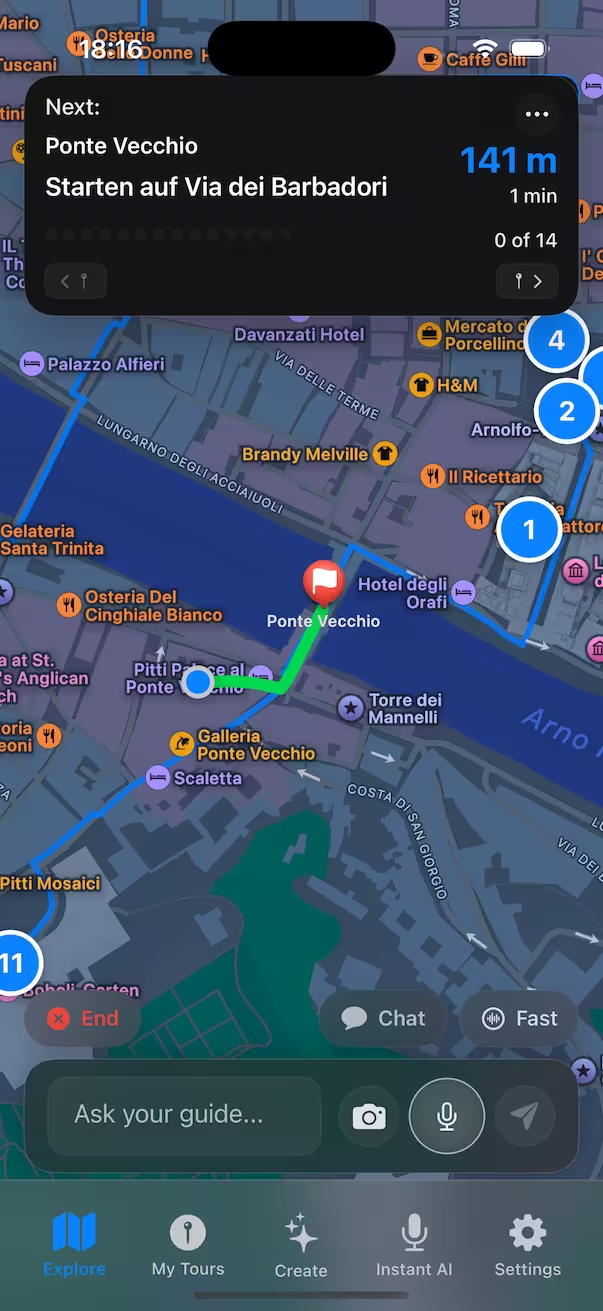
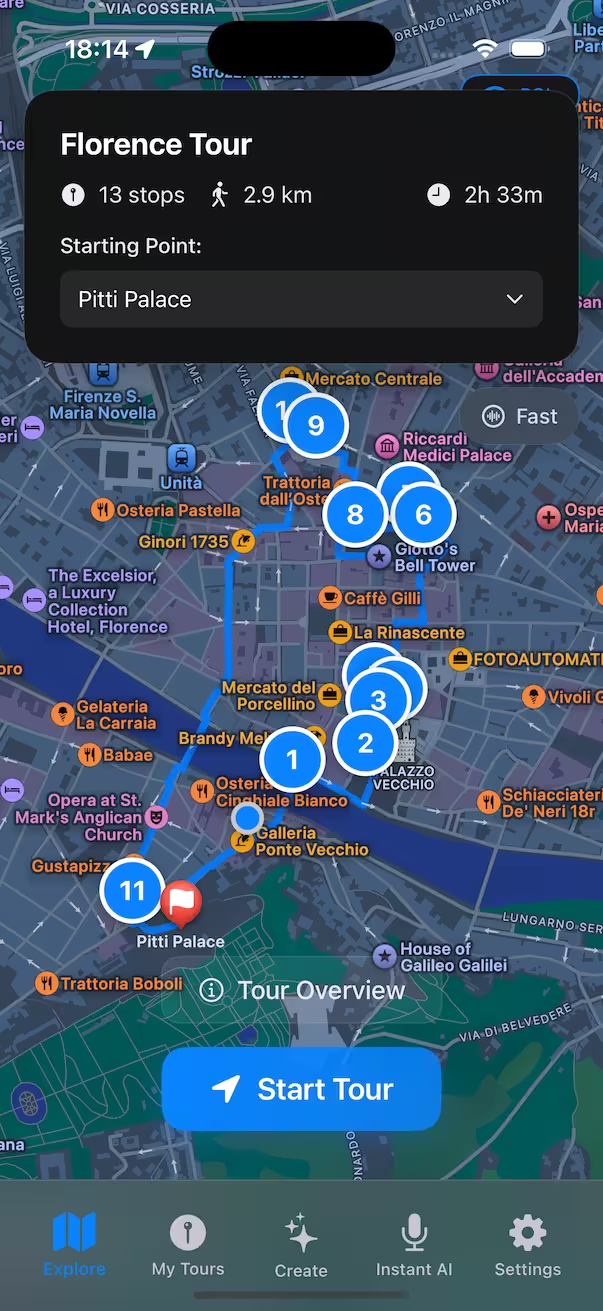
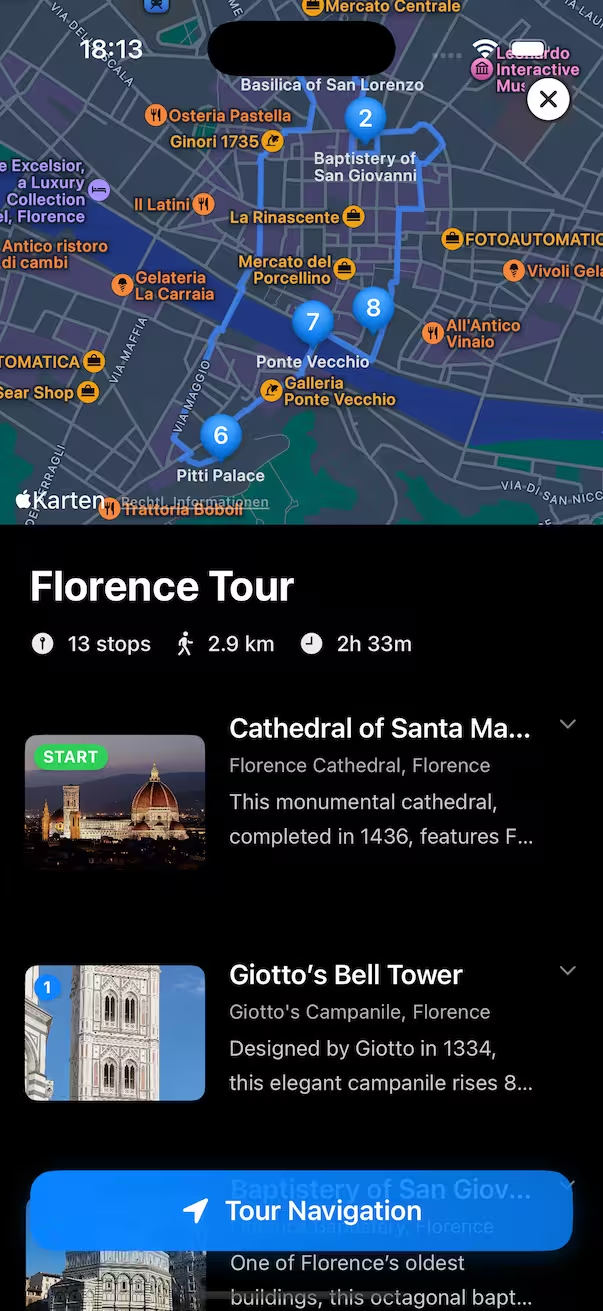
The classic Weimar tour: 14 stops, 5.1 km, about 3 h on foot
Your live AI guide and the self-guided Weimar route, together in your browser.