Best Time to Visit Kassel
Month-by-month weather, crowds and prices, plus a full calendar of festivals and events worth planning a trip around.
Best monthsMay, Jun, Sep
CheapestJan, Feb, Nov
AvoidJan
BusiestJul, Sep

When is the best time to visit Kassel?
Come in May, June or September. The Wasserspiele run in the UNESCO Bergpark (Wednesdays and Sundays only, 1 May to 3 October), the weather sits at 18-23°C, and hotels stay a manageable 75-130 euro a night. September is the richest stretch, with the Museumsnacht, Beleuchtete Wasserspiele and the marathon all packed in. January is the one to skip: the fountains are off, the Bergpark is leafless, every museum closes Mondays, and nothing is programmed, though that floor of 55-80 euro a night does make it the cheapest month.
Start our tool and find your best time to visit Kassel
Your perfect month
Free · ~30 seconds
or tap a month directly
What matters to you?
And this?
Best overall: May, Sep. May and September are the sweet spot. May opens the Wasserspiele season (1 May), launches the Rembrandt 1632 exhibition at Schloss Wilhelmshöhe (from 8 May) and the KulturSommer Nordhessen, with the Bergpark at its freshest, 15-21°C, and weekday hotels around 75-110 euro. September stacks the Museumsnacht (5 Sep), Beleuchtete Wasserspiele (11-12 Sep) and the marathon into the year's densest cultural fortnight, with the fountains still running and autumn colour starting.
Best value: Jan, Feb, Nov. January, February and mid-November bring the lowest rates of the year (55-95 euro a night), no queues, and a city that is mostly local. The catch is that the Wasserspiele are off (the season ends 3 October), the Bergpark is bare, and every major museum closes Mondays. Pair it with the indoor heavyweights: the Neue Galerie in its 50th-anniversary year, the Grimmwelt and the unusual Museum für Sepulkralkultur.
Avoid: Jan. January is the weakest month. The fountains are switched off until 1 May, the Bergpark is leafless, nothing is programmed beyond the late-month start of the JazzFrühling, and the days are short and grey. The only reason to come is the price: at 55-80 euro a night it is the cheapest the city gets.
- January: Tough month, 4°C. This is the off-season floor: post-Christmas, post-market, almost entirely local. If you want the Neue Galerie, Grimmwelt and Schloss Wilhelmshöhe galleries to yourself for next to nothing, this is the month, just bring proper shoes for the icy Herkules path and accept that the fountains are dry.
- February: Tough month, 6°C. An honest, unhurried winter month. Kassel does not throw a big Carnival, so the city stays calm and businesslike, and that is its charm if you want the museums uncrowded and the rooms cheap, with a jazz concert to round off the evening.
- March: Good time, 10°C. The last genuinely quiet month before the outdoor season opens. Prices are still low, the museums uncrowded, and the JazzFrühling gives the evenings a pulse, all before the April festivals start to fill the centre.
- April: Good time, 14°C. Spring energy returns and the centre fills for the Frühlings-Freyheit, a vibrant kick-off with crafts, street food and fairground rides. It is busier and pricier than March, but the blossom in the Karlsaue and the longer light earn it.
- May: Great time, 18°C. This is the month the city steps outdoors. The fountains are running, the Bergpark is at its freshest, and the cultural season is opening, all before the summer crowds and prices arrive. Weekdays are the quiet, value-rich window before the holiday weekends fill the park.
- June: Good time, 22°C. The romantic, high-energy peak of the year: floodlit cascades, riverside concerts on the Fulda, open-air shows on Friedrichsplatz and impossibly long golden evenings in the Bergpark. It is the priciest stretch of early summer, but the light and the programme make it the standout month for couples.
- July: Good time, 24°C. High summer on the river. The upper Wasserspiele walk from the Herkules is exposed and hot, so bring water and go on a Wednesday rather than a packed Sunday. The city's outdoor energy peaks, and the centenary Zissel turns the final days into the biggest party of the year.
- August: Good time, 24°C. The post-Zissel breather. The big festival is done, the weather is still warm, and the fountains are still running, so it is a relaxed, good-value time to do the Bergpark and the galleries without the high-summer scrum, especially after the first weekend.
- September: Good time, 20°C. Peak cultural intensity with the weather still kind. One night you can do 50 museums, the next weekend the cascades are floodlit, the weekend after the city turns out for the marathon. Book early, especially the marathon weekend, and watch the Sunday road closures.
- October: Good time, 15°C. Quiet, atmospheric and undervisited, with exceptional autumn colour. Once the fountains stop on 3 October, the Bergpark belongs to the foliage and the few who come for it. A calm, well-priced month, with a lively Halloween market to close it out.
- November: Good time, 9°C. Kassel at its most low-key: grey, calm and almost tourist-free, but cheap, with the Dokfest's café and bar scene around the Kulturbahnhof giving the centre a cinephile buzz, and the fairy-tale market arriving to light up the last days of the month.
- December: Tough month, 6°C. Festive and family-friendly, but never as overrun or as expensive as the big-city markets. The Grimm fairy-tale theme makes it genuinely distinctive, and the long run to 30 December means you can catch it well after most German markets have closed.
Kassel weather by month
HighLowRainfall
Jan4°
Feb6°
Mar10°
Apr14°
May18°
Jun22°
Jul24°
Aug24°
Sep20°
Oct15°
Nov9°
Dec6°
| Month | Temp | Rain | Sun | Crowds | Prices | Highlight |
|---|---|---|---|---|---|---|
| Jan | 4° / 0° | 68mm · 16 rainy days | 3.0 h/day | ●○○○○ | ●○○○○ | |
| Feb | 6° / 0° | 55mm · 11 rainy days | 5.3 h/day | ●●○○○ | ●●○○○ | Kassel Jazz Spring |
| Mar | 10° / 2° | 55mm · 13 rainy days | 7.2 h/day | ●●○○○ | ●●○○○ | Neue Galerie 50th Anniversary |
| Apr | 14° / 4° | 49mm · 10 rainy days | 9.9 h/day | ●●●○○ | ●●●○○ | Neue Galerie 50th Anniversary |
| May | 18° / 8° | 57mm · 11 rainy days | 10.9 h/day | ●●●○○ | ●●●○○ | Neue Galerie 50th Anniversary |
| Jun | 22° / 13° | 66mm · 12 rainy days | 11.7 h/day | ●●●●○ | ●●●●○ | Neue Galerie 50th Anniversary |
| Jul | 24° / 14° | 81mm · 13 rainy days | 11.6 h/day | ●●●●○ | ●●●●○ | Neue Galerie 50th Anniversary |
| Aug | 24° / 14° | 73mm · 12 rainy days | 10.9 h/day | ●●●○○ | ●●●○○ | Neue Galerie 50th Anniversary |
| Sep | 20° / 11° | 49mm · 10 rainy days | 9.0 h/day | ●●●●○ | ●●●●○ | Neue Galerie 50th Anniversary |
| Oct | 15° / 8° | 63mm · 12 rainy days | 5.8 h/day | ●●●○○ | ●●●○○ | Neue Galerie 50th Anniversary |
| Nov | 9° / 4° | 53mm · 12 rainy days | 4.0 h/day | ●●○○○ | ●●○○○ | Neue Galerie 50th Anniversary |
| Dec | 6° / 2° | 63mm · 15 rainy days | 2.6 h/day | ●●●○○ | ●●○○○ | Neue Galerie 50th Anniversary |
How we score this: weather = long-run climate normals (Open-Meteo), crowds & prices = relative season read, events checked yearly against official dates.
Best time to visit Kassel: weather, prices & crowds
Best months for good weather
May, Jun, Sep
May, June and early September give Kassel its kindest weather: highs of 18-23°C, the Bergpark freshly green or still in leaf, and the showers that do fall arriving as short, sharp afternoon thunderstorms rather than all-day rain. June has the longest days of the year at 16.5 hours, with golden hour lasting until nearly 22:00 over the Bergpark.
Quietest months to avoid the crowds
Jan, Feb, Nov
January, February and mid-November (before the Dokfest) are the emptiest. Kassel is not a major tourism city to begin with, so out of season the Neue Galerie, Grimmwelt and Schloss Wilhelmshöhe galleries are genuinely quiet, and you will not queue for the Herkules tower.
Cheapest time to visit Kassel
Jan, Feb, Nov
January is the cheapest month outright, with three-star city-centre rooms at 55-80 euro a night, roughly 30-40% below summer. February and mid-November (outside the Dokfest week) run 60-95 euro. Avoid December's last days, when the 22-23 December market crush nudges rates up.
Best time for festivals and events
Jun, Sep
The Beleuchtete Wasserspiele, when the UNESCO Bergpark is floodlit at dusk and coloured light traces the cascades from the Herkules down to the palace, runs only on two weekends a year: early June (5-6 June) and mid-September (11-12 September). There is no ticket, but the best spot at the main Kaskade fills up 45 minutes before dark.
How many days do you need in Kassel?
Two days suits Kassel well. The first covers the city-centre core and the Karlsaue parkland; the second gives you the Bergpark Wilhelmshöhe and its UNESCO-listed water features, which alone deserve a half-day. One day is workable if you focus tightly, but the spread between the Friedrichsplatz museums and the hilltop Herkules means you will feel rushed.
One day
documenta, Grimm and the Karlsaue in one sweep
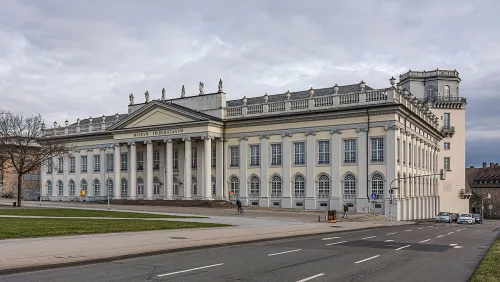
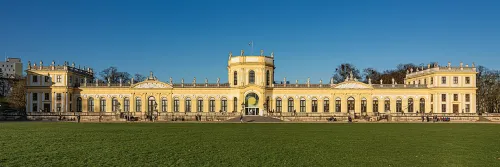
Start at Königsplatz and walk south to the Museum Fridericianum, the spiritual home of documenta, then cross to the documenta-Halle. Continue through the Staatspark Karlsaue to the Baroque Orangerie and the delicate Marmorbad. The self-guided Kassel walking tour strings 11 landmarks across a compact 5.4 km route taking roughly 2.7 hours on foot, leaving afternoon time for the Grimmwelt or the Neue Galerie before dinner along the Fuldaufer.
Two daysRecommended
Bergpark and the Wasserspiele
Devote the second day to the Bergpark Wilhelmshöhe. If it is a Wednesday or Sunday between May and early October, time your arrival at the Herkules for 14:15 to watch the Wasserspiele cascade 515 metres downhill for free. Schloss Wilhelmshöhe and its Old Masters gallery sit at the base; pair them with the Rembrandt exhibition if it is running. Evenings back in the centre reward a table at a Fuldaufer terrace.
Three days
The museum circuit complete
A third day clears the remaining museums without rushing: the Neue Galerie for painting from Romanticism to contemporary art, the Museum für Sepulkralkultur (open Wednesdays until 20:00) for its singular focus on death culture, and the Brüder-Grimm-Museum in the Palais Bellevue to complement the Grimmwelt. The Habichtswald forest above the city adds a good morning walk if the weather holds.
Four days or more
Events, surroundings and slow travel
Four or more days make sense only around a specific event: the Museumsnacht in early September unlocks around 50 venues on one ticket, the Beleuchtete Wasserspiele in June or September illuminates the entire Bergpark at dusk for free, and the Zissel folk festival fills the Fuldaufer and the Karlswiese fairground for several days. Day-trip distance from Kassel includes Bad Hersfeld, Marburg and the Reinhardswald forest, each under an hour by train.
Best time to visit Kassel by traveller type
Same city, different trip. Here's the month that fits how you're travelling.
🧭
Best time to visit Kassel for the first time
MaySep
May or September: the Wasserspiele are running (Wednesdays and Sundays only), the Bergpark is in leaf, and the museums are open. September adds the Museumsnacht and Beleuchtete Wasserspiele, but watch the marathon road closures on the third Sunday.
❤️
Best time to visit Kassel for couples
Jun
June is the romantic pick: the Beleuchtete Wasserspiele evening (5-6 June), riverside Kulturzelt concerts on the Fulda, StadtSommer open-air shows on Friedrichsplatz, and golden-hour Bergpark walks lasting until nearly 22:00. Avoid the Zissel weekend (31 July to 3 August), where the festival is fun but the crowds are intense.
💶
Best time to visit Kassel on a budget
JanFebNov
January (the absolute cheapest at 55-80 euro) or mid-November before the Dokfest. Free Kassel is substantial: the Bergpark is open and free around the clock, the Karlsaue is free, and the Wasserspiele cost nothing to watch (only the Herkules tower charges 8 euro). The Museumsnacht combo ticket (around 12 euro) covers about 50 venues in one night.
🍝
Best time to visit Kassel for food and wine
JulAug
July and August for the Zissel wine village beside the Orangerie, with regional Hessian wines and North Hessian specialities, and full terrace season along the Fuldaufer. The covered Markthalle (Tue-Sat, year-round) is the best spot for local cheeses and sausages whenever you come.
Worst time to visit Kassel
January is the weakest month by some distance. The Wasserspiele are switched off from early October until 1 May, the Bergpark is leafless, the days are short and grey with only 3 hours of sun and highs near 4 to 5°C, and nothing is programmed until the JazzFrühling stirs in the final days of the month. Every major museum closes on Mondays, so arriving on a Monday in January can mean an entirely locked city. The one genuine peak to avoid in the active season is the Zissel's centenary Saturday, when the Fuldaufer and Karlswiese fairground reach maximum capacity and rooms book out weeks in advance.
Still worth it for January's low prices (55 to 80 euro a night, roughly 30 to 40 percent below summer) make it worth considering for travellers who care only about the indoor museums. The Grimmwelt, Neue Galerie and Museum für Sepulkralkultur are all genuinely quiet, and the Bergpark remains open and free around the clock for a frosty walk.
Go instead in May, June, September, when Kassel is at its best.
Best time for a tour of Kassel
The 5.4-kilometre loop through Kassel rewards you most in May and September. May brings highs of 17 to 18 °C, just 11 rain days, and crowds that are present but comfortable, so you can linger in the Staatspark Karlsaue without feeling rushed and read the Grimmwelt exhibits without elbowing past groups. By September temperatures sit between 11 and 20 °C, rain days drop to 10, and the light turns golden and long, making the open stretches around Koenigsplatz genuinely enjoyable on foot. June and July are warm, topping out at 23 to 24 °C, but both months draw heaving visitor numbers and 12 to 13 rain days, so the route feels crowded and the afternoon showers can catch you without shelter. January is the opposite problem: at 0 to 4 °C with 16 rain days, the walk becomes a cold, wet slog and the city is near-empty in a way that can feel bleak rather than peaceful. If you do come in winter, February is the gentler pick at 6 °C and only 11 rain days.
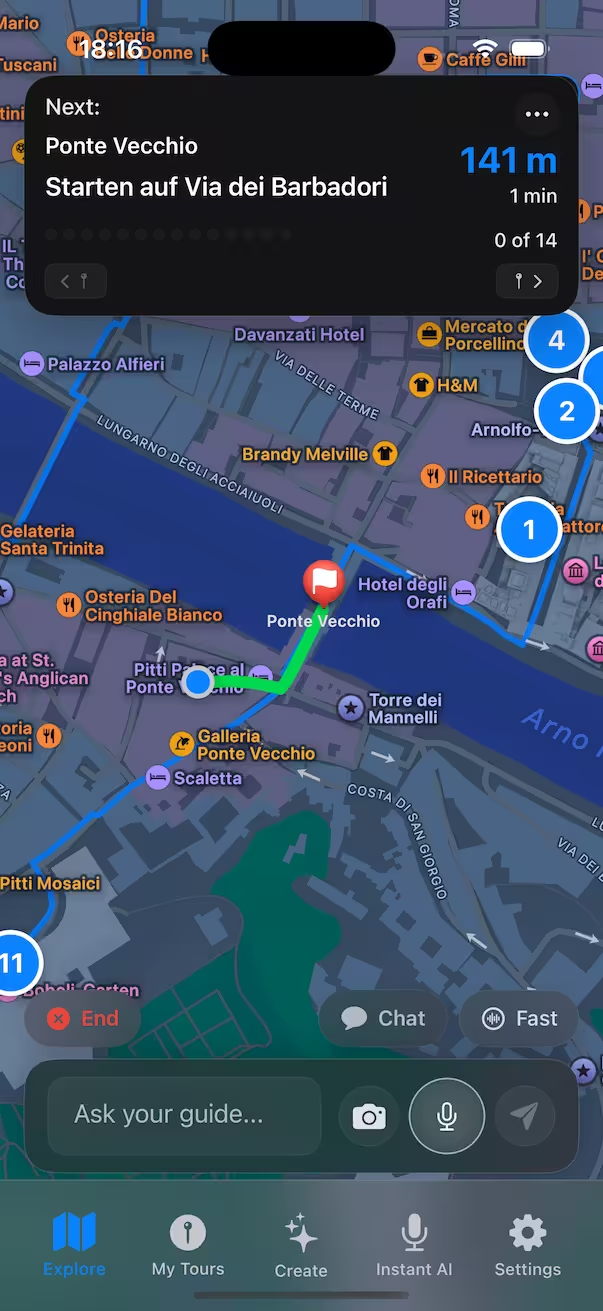
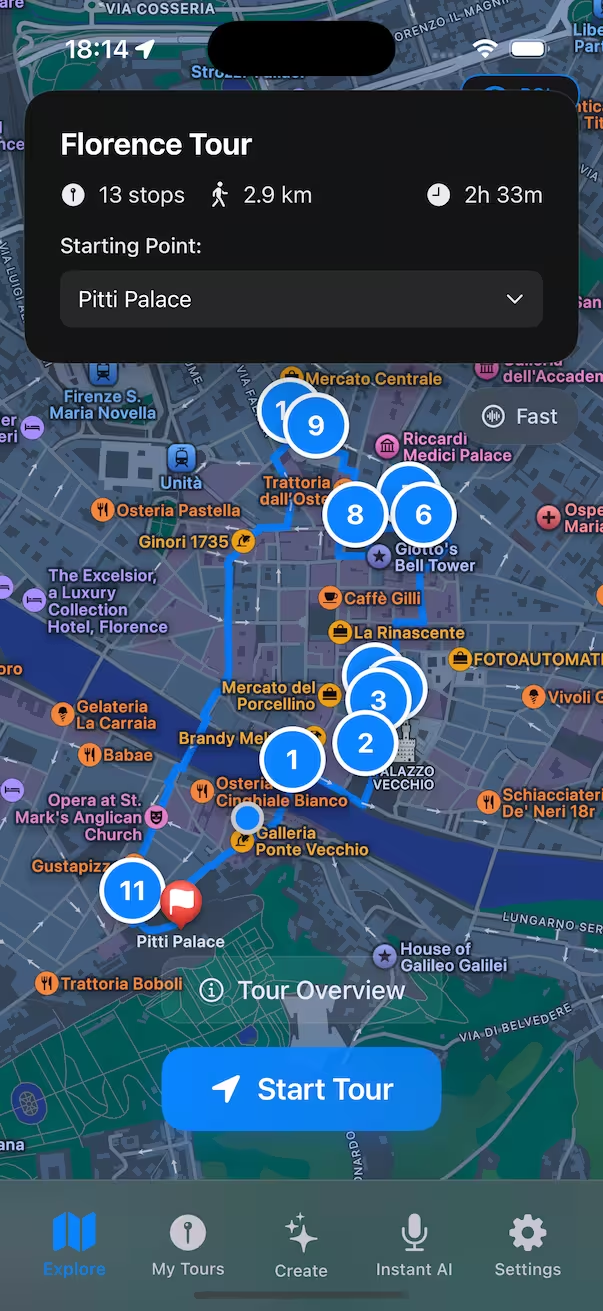
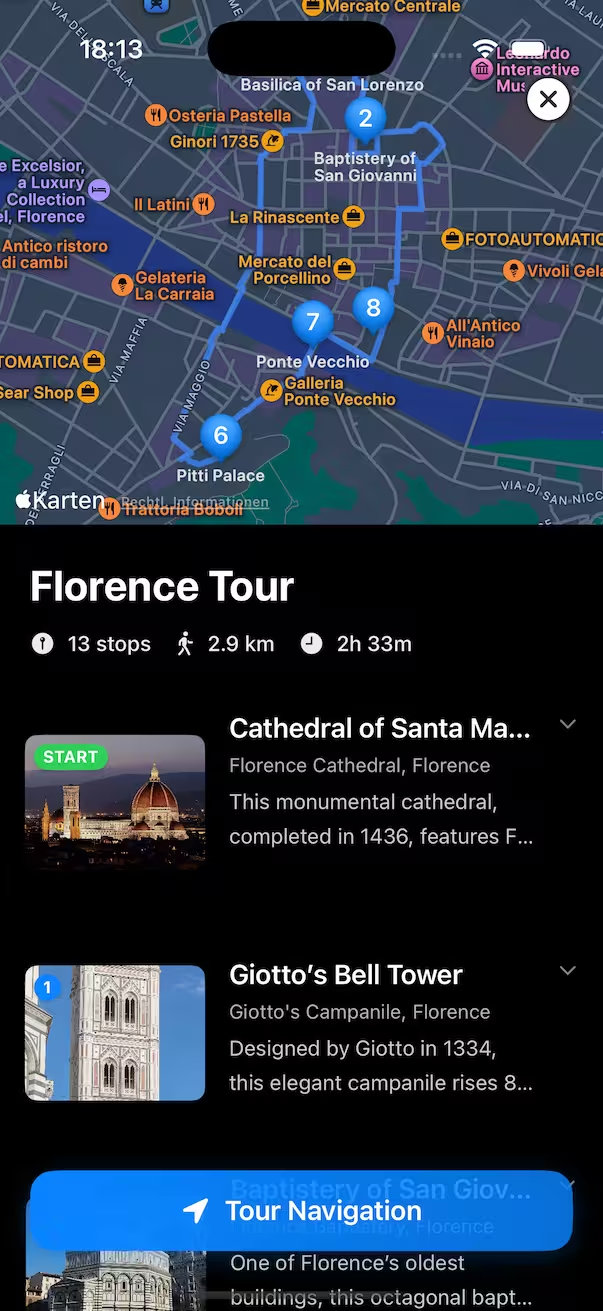
With AI Tourguide running in your browser, no operator decides when your walk begins or how fast you move. On a warm September morning, when the air is still cool and Koenigsplatz is quiet before the day tours arrive, you can start your Kassel tour the moment the light suits you. The guide greets you, tells you the story of the square, and keeps talking and listening all the way through to the Grimmwelt, adapting to what catches your attention. If the clouds roll in, you take a café break, and the guide picks up exactly where you paused. In 13 languages, no download, no fixed departure time, and free to begin.


 +7
+7All 11 stops are already on the map.
You just press start.
You just press start.
 AI Tourguide
You just read the route.
Now walk it with a guide in your ear.
Press start wherever you are, even hundreds of kilometres from Kassel, and the guide begins telling its stories right away. In the city, pick any of the 11 stops to start from: it leads you there, then talks with you the whole route, asking, listening, remembering, and shaping the tour around your answers.
11stops5.4km2.7hours11languages
▶Start the tour freeFree to start · Runs in your browser · No app, no download
Kassel events and festivals calendar
Annual highlights worth timing a trip around, listed month by month.
February
🎵 MusicKassel Jazz Spring Kasseler JazzFrühling
Feb 27 – Mar 28 ~
late February into late March
A month-long jazz festival spanning multiple Kassel venues, typically in its mid-to-late teens edition and growing each year.
March
🎨 Art and cultureNeue Galerie 50th Anniversary 50 Jahre Neue Galerie Kassel
Mar 6 – Dec 31
all year from early March
A year-long anniversary survey of the Neue Galerie's collection from Romanticism to contemporary art, marking 50 years since the gallery opened in its current form in 1976.
April
🎉 FestivalCasseler Spring Freyheit Casseler Frühlings-Freyheit
Apr 9–12 ~
a long weekend in April, around Easter
A medieval market meets family funfair across the city-centre streets: crafts, street food and fairground rides, with central streets closed to traffic from Thursday to Sunday.
May
🌸 Seasonal natureBergpark Water Features Wasserspiele im Bergpark Wilhelmshöhe
May 1 – Oct 3
1 May to 3 October, Wednesdays, Sundays and Hessian holidays only, 14:30-16:00
Water released at the Herkules flows 515 metres downhill through cascades, the Teufelsbrücke and the Aquädukt to the 52-metre Große Fontäne, a UNESCO World Heritage spectacle that runs on its own gravity.
🎨 Art and cultureRembrandt 1632 Exhibition Rembrandt 1632
May 8 – Aug 9
early May to early August
An exhibition on Rembrandt's breakthrough year 1632, hosted in the Old Masters gallery at Schloss Wilhelmshöhe.
🎨 Art and cultureKulturSommer Nordhessen
May 24 – Aug 12 ~
late May to mid-August
More than 85 events at around 35 venues across northern Hesse: music, theatre and readings, with flagship dates in the Bergpark, at Schloss Wilhelmshöhe and in the Orangerie.
June
🌸 Seasonal natureIlluminated Water Features (June) Beleuchtete Wasserspiele
Jun 5–6 ~
a weekend in early June
The UNESCO Bergpark floodlit at dusk, with coloured light tracing the water cascades and fountains from the Herkules down to the palace.
🎵 MusicKulturzelt Kassel
Jun 12 – Jul 11 ~
mid-June to mid-July
A big-tent riverside venue on the Fulda hosting jazz, rock, world music, readings and electronic nights, with Rainbirds on the 2026 bill (21 June).
🎵 MusicStadtSommer Kassel StadtSommerKassel
Jun 19–21 ~
a weekend in late June
Open-air concerts on Friedrichsplatz: a weekend of pop and crossover headliners in late June, typically spread across three consecutive evenings.
July
🎉 FestivalZissel Folk and Water Festival Zissel
Jul 31 – Aug 3 ~
the last weekend of July into early August
A century-old folk and water festival along the Fulda: a historic procession, an open-air stage, a fairground on the Karlswiese, a wine village by the Orangerie and the Zisselmeile.
September
🌙 Museum nightKassel Museum Night Kasseler Museumsnacht
Sep 5 ~
the first Saturday of September
Around 50 museums, galleries and cultural venues open from afternoon into the small hours, with shuttle buses, performances and guided tours.
🌸 Seasonal natureIlluminated Water Features (September) Beleuchtete Wasserspiele
Sep 11–12 ~
the second weekend of September
The second illuminated water weekend of the season, the same Bergpark spectacle as June but on cooler evenings with an earlier sunset.
🏃 SportKassel Marathon
Sep 18–20 ~
the third weekend of September
North Hesse's biggest sporting event: a full marathon, half marathon, relay, company run and children's race, with the main race on Sunday 20 September through the city centre and the Auepark.
October
🎉 FestivalCasseler Autumn Freyheit Casseler Herbst-Freyheit
Oct 29 – Nov 1 ~
the Halloween and All Saints' window
The autumn counterpart to the spring market: seasonal crafts, a funfair and street food in the city centre, with a lively Halloween atmosphere.
November
🎬 FilmKassel Documentary Film and Video Festival Kasseler Dokfest
Nov 17–22 ~
six days in mid-November, with an online tail to 29 November
One of Germany's leading documentary and video-art festivals, running since 1982 and now in its 43rd edition: six days across multiple city venues, short film, and the Goldener Herkules award.
🎄 Christmas marketKassel Fairy-Tale Christmas Market Märchenweihnachtsmarkt Kassel
Nov 23 – Dec 30
late November to 30 December, daily 11:00-20:00 (closed 24-26 December)
A Brothers Grimm fairy-tale-themed market stretching between Königsplatz and Friedrichsplatz, with a Ferris wheel, a fairy-tale forest, a giant pyramid and more than 200 stalls.
Insider tips for visiting Kassel
The rules buried in forums, in one place.
- The Wasserspiele run ONLY on Wednesdays, Sundays and Hessian public holidays, 14:30 to 16:00, from 1 May to 3 October. Do not show up on a Tuesday expecting fountains. Wednesday beats Sunday: Sunday draws coachloads from Frankfurt and the Rhein-Main area, while the same cascade walk is serene midweek. Arrive at the Herkules by 14:15 for a cascade-side spot.
- Nearly every major Kassel museum closes on Mondays: Schloss Wilhelmshöhe, the Herkules, the Neue Galerie, Grimmwelt and the Museum Fridericianum all shut at once. Plan a Monday as a Bergpark or Karlsaue walk, not a museum day.
- The Herkules tower rooms (the Oktogon staircase and viewing platform, 8 euro) have a visitor-flow cap. On summer Sunday Wasserspiele days, capacity sells out by 13:00, so buy online at heritage-kassel.de the day before.
- For the Beleuchtete Wasserspiele there is no ticket or reserved entry, and the prime viewpoint at the main Kaskade fills up 45 minutes before dark. At the June edition (5-6 June) sunset is around 21:30, so be in position by 20:45; at the September edition (11-12 September) sunset is around 20:15, so be there by 19:30.
- The Märchenweihnachtsmarkt runs unusually late, to 30 December (most German markets close on 24 December). Weekday visits in the first two weeks of December are uncrowded; the main crush hits Saturday afternoons in mid-December from 15:00 to 19:00. The Ferris-wheel queue is shortest before noon.
- On marathon Sunday (20 September), Wilhelmshöher Allee, Königsstraße and the Auedamm close to traffic from roughly 07:00 to 14:00. Hotel check-outs and car-park access near the route are disrupted, so factor it into your departure. Spectating from Wilhelmshöher Allee is free.
- The Museum Fridericianum opens Thursdays until 20:00 and the Museum für Sepulkralkultur, the world's only museum of death culture, opens Wednesdays until 20:00. Wednesday evening is the quietest time to see the latter, and it pairs neatly with the Grimmwelt next door.
- The Grimmwelt's rooftop terrace gives a panorama over the Fulda valley and the city. The light is best from 18:00 to 21:00 in summer; the terrace is free once you are inside (entry around 10 euro).
Public holidays in Kassel
On these dates many shops and offices close, transport thins out, and sights can be mobbed or shut. Plan around them.
| Date | Holiday | What closes |
|---|---|---|
| Jan 1 | New Year's Day | Almost everything closed: shops, most restaurants, offices. The Bergpark stays open and free. Restaurant options are very limited. |
| Apr 3 | Good Friday | Museums and most shops closed; some restaurants too. The Bergpark stays open, but the Wasserspiele season has not started yet (it begins 1 May). |
| Apr 6 | Easter Monday | A major domestic travel day; many shops closed and hotels 20-30% above normal April rates. Note it is a Monday, so the major museums are closed anyway. |
| May 1 | Labour Day | The first day of the Wasserspiele season, so the fountains run. Many shops are closed and marches or rallies are possible in the city centre. |
| May 14 | Ascension Day | A Hessian public holiday, so the Wasserspiele run and the Bergpark sees a day-trip peak. Often bridged into a long weekend, so the city briefly fills with domestic visitors. |
| May 25 | Whit Monday | Domestic travel spike; the museums and Bergpark are busy. The Wasserspiele run on the preceding Sunday (24 May). |
| Jun 4 | Corpus Christi | A Hesse public holiday, so the Wasserspiele run; shops are closed and Catholic processions move through the city. |
| Oct 3 | German Unity Day | The last Wasserspiele day of the season and a public holiday, so the Bergpark is very busy as the last chance to see the fountains. Most shops are closed. |
| Dec 25 | Christmas Day | Nearly everything closed; the Märchenweihnachtsmarkt is shut 24-26 December. The Bergpark stays open. Restaurants that do open generally need a reservation. |
| Dec 26 | St. Stephen's Day | Most shops still closed and the Christmas market remains shut. A quiet day; the Bergpark is the reliable open option. |
Kassel month by month
January in Kassel
High4°C / 40°F
Low0°C
Rain68mm / 16 rainy days
Sun3.0 h/day
Daylight8 h/day
Humidity88%
Crowds●○○○○Prices●○○○○
January is Kassel at its quietest and cheapest. Highs hover near 4-5°C with frost possible, short 8.5-hour days and a lot of grey, and light snow on the Bergpark heights can make the Herkules access path icy. The Wasserspiele are off until 1 May, the Bergpark is leafless, and nothing is programmed until the JazzFrühling starts in the last days of the month. It is bleak, but at 55-80 euro a night it is the best-value the city ever gets.
The vibe This is the off-season floor: post-Christmas, post-market, almost entirely local. If you want the Neue Galerie, Grimmwelt and Schloss Wilhelmshöhe galleries to yourself for next to nothing, this is the month, just bring proper shoes for the icy Herkules path and accept that the fountains are dry.
Don't miss An indoor month: the Neue Galerie in its 50th-anniversary year, the Grimmwelt, and the unusual Museum für Sepulkralkultur (open Wednesdays to 20:00). The Bergpark is still worth a frosty walk, open and free around the clock, but plan it for a Monday when the museums are shut anyway.
Crowd drivers Deep off-season. Post-Christmas demand collapses, there are no major events, and domestic tourism is minimal. The lowest visitor pressure of the year.
In season The covered Markthalle (Tue-Sat) is the warm refuge for local cheeses, North Hessian sausages and regional produce, the best food stop when the terraces are all shut.
Heads up New Year's Day (1 January) closes nearly everything, with very limited restaurants; the Bergpark stays open. The major museums close every Monday.
The cheapest month of the year: three-star city-centre rooms at 55-80 euro a night, roughly 30-40% below summer.
Events this month
🎨 Art and cultureNeue Galerie 50th Anniversary 50 Jahre Neue Galerie Kassel
Mar 6 – Dec 31
all year from early March
A year-long anniversary survey of the Neue Galerie's collection from Romanticism to contemporary art, marking 50 years since the gallery opened in its current form in 1976.
A reason to make the Neue Galerie a priority on any visit, not just a rainy-day fallback. Note it closes on Mondays.
February in Kassel
High6°C / 44°F
Low0°C
Rain55mm / 11 rainy days
Sun5.3 h/day
Daylight10 h/day
Humidity82%
Crowds●●○○○Prices●●○○○
February stays quiet, with highs near 6°C and the occasional frost, but the calendar finally stirs: the Kasseler JazzFrühling opens in the last days of the month and runs through March, bringing the year's first real cultural draw. A Carnival weekend gives a brief spike. The Wasserspiele are still off and the Bergpark still bare, so this remains an indoor-museum month with low prices.
The vibe An honest, unhurried winter month. Kassel does not throw a big Carnival, so the city stays calm and businesslike, and that is its charm if you want the museums uncrowded and the rooms cheap, with a jazz concert to round off the evening.
Don't miss The JazzFrühling spreads concerts across multiple venues from late February (15-45 euro). Otherwise it is the indoor heavyweights: the Neue Galerie, the Grimmwelt and the Museum Fridericianum (open Thursdays to 20:00), all close to empty.
Crowd drivers Mostly quiet shoulder, with a short Carnival-weekend spike and the JazzFrühling beginning in the final days. International tourism stays at its annual low.
In season Still hearty winter fare and the year-round Markthalle for regional produce; the festival weekends bring a bit of life back to the bars around the Kulturbahnhof district.
Still near the floor at 60-85 euro, rising to 80-100 euro on the JazzFrühling weekend at the end of the month.
Events this month
🎵 MusicKassel Jazz Spring Kasseler JazzFrühling
Feb 27 – Mar 28 ~
late February into late March
A month-long jazz festival spanning multiple Kassel venues, typically in its mid-to-late teens edition and growing each year. The programme crosses jazz, world music and classical crossover, with international headliners and a European Jazz Night among the regular highlights. Concerts run 15 to 45 euro.
Essentially the only major reason to visit Kassel in late winter. Concerts run 15-45 euro; book the Al Di Meola night early.
🎨 Art and cultureNeue Galerie 50th Anniversary 50 Jahre Neue Galerie Kassel
Mar 6 – Dec 31
all year from early March
A year-long anniversary survey of the Neue Galerie's collection from Romanticism to contemporary art, marking 50 years since the gallery opened in its current form in 1976.
A reason to make the Neue Galerie a priority on any visit, not just a rainy-day fallback. Note it closes on Mondays.
March in Kassel
High10°C / 50°F
Low2°C
Rain55mm / 13 rainy days
Sun7.2 h/day
Daylight12 h/day
Humidity77%
Crowds●●○○○Prices●●○○○
March brings the first real spring signs, with highs climbing toward 10°C and the sunniest stretch since autumn beginning. The Kasseler JazzFrühling runs through late March, with Al Di Meola a headline act during the festival run, and the Neue Galerie's 50th-anniversary survey is open. The Wasserspiele are still off until 1 May, but magnolias and cherry blossom start to show in the Karlsaue late in the month.
The vibe The last genuinely quiet month before the outdoor season opens. Prices are still low, the museums uncrowded, and the JazzFrühling gives the evenings a pulse, all before the April festivals start to fill the centre.
Don't miss The JazzFrühling's final weeks, with Al Di Meola on 14 March, and the Neue Galerie's anniversary year now open. Early magnolias and cherry blossom appear in the Staatspark Karlsaue and the lower Bergpark gardens, typically from the first week of April but sometimes late March.
Crowd drivers The JazzFrühling pulls a jazz audience rather than a mass crowd, and shoulder-season demand is gentle. Hesse school holidays have not started.
In season A transitional month; the Markthalle and the city's restaurants carry it while the terraces wait for warmer weeks. Regional Hessian wines pair with the JazzFrühling evenings.
Shoulder-season value at 60-90 euro a night; the JazzFrühling is a niche draw, not a mass crowd.
Events this month
🎵 MusicKassel Jazz Spring Kasseler JazzFrühling
Feb 27 – Mar 28 ~
late February into late March
A month-long jazz festival spanning multiple Kassel venues, typically in its mid-to-late teens edition and growing each year. The programme crosses jazz, world music and classical crossover, with international headliners and a European Jazz Night among the regular highlights. Concerts run 15 to 45 euro.
Essentially the only major reason to visit Kassel in late winter. Concerts run 15-45 euro; book the Al Di Meola night early.
🎨 Art and cultureNeue Galerie 50th Anniversary 50 Jahre Neue Galerie Kassel
Mar 6 – Dec 31
all year from early March
A year-long anniversary survey of the Neue Galerie's collection from Romanticism to contemporary art, marking 50 years since the gallery opened in its current form in 1976.
A reason to make the Neue Galerie a priority on any visit, not just a rainy-day fallback. Note it closes on Mondays.
April in Kassel
High14°C / 57°F
Low4°C
Rain49mm / 10 rainy days
Sun9.9 h/day
Daylight14 h/day
Humidity72%
Crowds●●●○○Prices●●●○○
April is Kassel waking up. Highs reach 14°C, the Bergpark turns green, and magnolias and cherry blossom peak in the Karlsaue around 5-15 April, with the Blumeninsel Siebenbergen the most concentrated display. The Casseler Frühlings-Freyheit (9-12 April) closes city-centre streets for a medieval market and funfair, and the Easter weekend adds visitors. The Wasserspiele still do not run until 1 May, so this is the last pre-season window.
The vibe Spring energy returns and the centre fills for the Frühlings-Freyheit, a vibrant kick-off with crafts, street food and fairground rides. It is busier and pricier than March, but the blossom in the Karlsaue and the longer light earn it.
Don't miss Cherry blossom and magnolias peak around 5-15 April in the Staatspark Karlsaue and the lower Bergpark, best on the Blumeninsel Siebenbergen. The Frühlings-Freyheit fills the centre Thursday to Sunday with a medieval market and funfair, free to wander.
Crowd drivers The Casseler Frühlings-Freyheit (9-12 April) packs the city centre, and the Easter weekend (5-6 April) is a major domestic travel window that lifts hotel rates.
In season The Frühlings-Freyheit brings street food to the centre, and the first warm afternoons reopen café terraces. The Markthalle stays the reliable spot for regional produce.
Heads up Good Friday (3 April) closes museums and most shops; Easter Monday (6 April) closes many shops and, being a Monday, the major museums are shut anyway. The Bergpark stays open throughout.
Rates rise to 70-100 euro, with the Frühlings-Freyheit weekend at 90-120 euro and Easter lifting hotels 20-30%.
Events this month
🎉 FestivalCasseler Spring Freyheit Casseler Frühlings-Freyheit
Apr 9–12 ~
a long weekend in April, around Easter
A medieval market meets family funfair across the city-centre streets: crafts, street food and fairground rides, with central streets closed to traffic from Thursday to Sunday.
A vibrant spring kick-off for the city centre. Free to wander (rides are paid). Book a hotel six-plus weeks ahead, as the weekend lifts central rates to 90-120 euro.
🎨 Art and cultureNeue Galerie 50th Anniversary 50 Jahre Neue Galerie Kassel
Mar 6 – Dec 31
all year from early March
A year-long anniversary survey of the Neue Galerie's collection from Romanticism to contemporary art, marking 50 years since the gallery opened in its current form in 1976.
A reason to make the Neue Galerie a priority on any visit, not just a rainy-day fallback. Note it closes on Mondays.

May in Kassel
High18°C / 64°F
Low8°C
Rain57mm / 11 rainy days
Sun10.9 h/day
Daylight16 h/day
Humidity72%
Crowds●●●○○Prices●●●○○
May is one of Kassel's two sweet spots. The Wasserspiele season opens on 1 May, so the fountains finally run (Wednesdays and Sundays only), the Bergpark is freshly green, and highs sit at a pleasant 15 to 21°C. The Rembrandt 1632 exhibition at Schloss Wilhelmshöhe and the KulturSommer Nordhessen are both open by late May. Three public holidays bring day-trippers but the city stays comfortable midweek.
The vibe This is the month the city steps outdoors. The fountains are running, the Bergpark is at its freshest, and the cultural season is opening, all before the summer crowds and prices arrive. Weekdays are the quiet, value-rich window before the holiday weekends fill the park.
Don't miss The Wasserspiele return on 1 May, running 14:30-16:00 on Wednesdays and Sundays. The Rembrandt 1632 exhibition opens 8 May at Schloss Wilhelmshöhe (8 euro), pairing perfectly with a fountain Sunday, and the KulturSommer Nordhessen launches outdoor music and theatre across the region.
Crowd drivers Three Hessian public holidays (Labour Day, Ascension, Whit Monday) drive day-trip peaks to the Bergpark and the freshly opened Wasserspiele. Outside those, weekdays stay calm.
In season Terrace season is properly open along the Fuldaufer, and the KulturSommer brings food to its park venues. The Markthalle stays the year-round source for regional cheeses and sausages.
Moderate at 75-110 euro a night; weekdays are noticeably cheaper than the holiday weekends.
Events this month
🌸 Seasonal natureBergpark Water Features Wasserspiele im Bergpark Wilhelmshöhe
May 1 – Oct 3
1 May to 3 October, Wednesdays, Sundays and Hessian holidays only, 14:30-16:00
Water released at the Herkules flows 515 metres downhill through cascades, the Teufelsbrücke and the Aquädukt to the 52-metre Große Fontäne, a UNESCO World Heritage spectacle that runs on its own gravity.
The single unmissable Kassel experience, and free to watch (only the Herkules monument costs 8 euro). Go on a Wednesday rather than a Sunday to avoid the coach crowds. Note the 2026 season has partial cascade restrictions due to works.
🎨 Art and cultureRembrandt 1632 Exhibition Rembrandt 1632
May 8 – Aug 9
early May to early August
An exhibition on Rembrandt's breakthrough year 1632, hosted in the Old Masters gallery at Schloss Wilhelmshöhe.
It pairs perfectly with a Wasserspiele Sunday, since both are at the Bergpark. Museum entry is 8 euro; the gallery closes Mondays.
🎨 Art and cultureKulturSommer Nordhessen
May 24 – Aug 12 ~
late May to mid-August
More than 85 events at around 35 venues across northern Hesse: music, theatre and readings, with flagship dates in the Bergpark, at Schloss Wilhelmshöhe and in the Orangerie.
The richest outdoor culture programme of the year, and many park events are free or low-cost. Ticketed events start from about 15 euro.
🎨 Art and cultureNeue Galerie 50th Anniversary 50 Jahre Neue Galerie Kassel
Mar 6 – Dec 31
all year from early March
A year-long anniversary survey of the Neue Galerie's collection from Romanticism to contemporary art, marking 50 years since the gallery opened in its current form in 1976.
A reason to make the Neue Galerie a priority on any visit, not just a rainy-day fallback. Note it closes on Mondays.

June in Kassel
High22°C / 72°F
Low13°C
Rain66mm / 12 rainy days
Sun11.7 h/day
Daylight16 h/day
Humidity71%
Crowds●●●●○Prices●●●●○
June is the busiest culture month and Kassel near its best. Highs reach 22°C, and the longest days of the year (16.5 hours, golden hour lasting until nearly 22:00) make the Bergpark glorious for evening photography. The Beleuchtete Wasserspiele light the park at dusk (5-6 June), the Kulturzelt opens its riverside tent on 12 June, and the StadtSommer brings Mark Forster, Roland Kaiser and David Garrett to Friedrichsplatz (19-21 June). Brief, intense afternoon thunderstorms are common.
The vibe The romantic, high-energy peak of the year: floodlit cascades, riverside concerts on the Fulda, open-air shows on Friedrichsplatz and impossibly long golden evenings in the Bergpark. It is the priciest stretch of early summer, but the light and the programme make it the standout month for couples.
Don't miss The Beleuchtete Wasserspiele on 5-6 June floodlight the Bergpark at dusk (sunset around 21:30, be in position by 20:45). The Kulturzelt runs jazz, rock and world music on the Fulda from 12 June, and the StadtSommer puts big open-air names on Friedrichsplatz. The Wasserspiele run as usual on Wednesdays and Sundays.
Crowd drivers A dense cluster: the Beleuchtete Wasserspiele (5-6 June), the Kulturzelt opening (12 June) and the StadtSommer concerts (19-21 June), the last being the biggest hotel-price spike of the month.
In season Full terrace season along the Fuldaufer, the Kulturzelt's riverside bar, and early stone fruit at the Markthalle. The long evenings make this prime outdoor-dining month.
Climbing to 85-130 euro, with the StadtSommer and Beleuchtete Wasserspiele weekends spiking to 120-150 euro.
Events this month
🌸 Seasonal natureIlluminated Water Features (June) Beleuchtete Wasserspiele
Jun 5–6 ~
a weekend in early June
The UNESCO Bergpark floodlit at dusk, with coloured light tracing the water cascades and fountains from the Herkules down to the palace. Crowds reach 8,000-12,000.
A spectacular free evening event. Sunset is around 21:30 in June, so arrive at the main cascade by 20:45 for a good position.
🎵 MusicKulturzelt Kassel
Jun 12 – Jul 11 ~
mid-June to mid-July
A big-tent riverside venue on the Fulda hosting jazz, rock, world music, readings and electronic nights, with Rainbirds on the 2026 bill (21 June).
The best all-genre summer music programme in the city. Tickets run 12-60 euro; book weekend shows three to four weeks ahead.
🎵 MusicStadtSommer Kassel StadtSommerKassel
Jun 19–21 ~
a weekend in late June
Open-air concerts on Friedrichsplatz: a weekend of pop and crossover headliners in late June, typically spread across three consecutive evenings. Tickets run about 45 to 75 euro; book months ahead as the StadtSommer reliably triggers the biggest hotel-price spike of June.
A major commercial pop and crossover draw, and the biggest hotel-price spike of June (weekend rooms 120-150 euro). Book months ahead. Tickets run about 45-75 euro.
🌸 Seasonal natureBergpark Water Features Wasserspiele im Bergpark Wilhelmshöhe
May 1 – Oct 3
1 May to 3 October, Wednesdays, Sundays and Hessian holidays only, 14:30-16:00
Water released at the Herkules flows 515 metres downhill through cascades, the Teufelsbrücke and the Aquädukt to the 52-metre Große Fontäne, a UNESCO World Heritage spectacle that runs on its own gravity.
The single unmissable Kassel experience, and free to watch (only the Herkules monument costs 8 euro). Go on a Wednesday rather than a Sunday to avoid the coach crowds. Note the 2026 season has partial cascade restrictions due to works.
🎨 Art and cultureKulturSommer Nordhessen
May 24 – Aug 12 ~
late May to mid-August
More than 85 events at around 35 venues across northern Hesse: music, theatre and readings, with flagship dates in the Bergpark, at Schloss Wilhelmshöhe and in the Orangerie.
The richest outdoor culture programme of the year, and many park events are free or low-cost. Ticketed events start from about 15 euro.
🎨 Art and cultureRembrandt 1632 Exhibition Rembrandt 1632
May 8 – Aug 9
early May to early August
An exhibition on Rembrandt's breakthrough year 1632, hosted in the Old Masters gallery at Schloss Wilhelmshöhe.
It pairs perfectly with a Wasserspiele Sunday, since both are at the Bergpark. Museum entry is 8 euro; the gallery closes Mondays.
🎨 Art and cultureNeue Galerie 50th Anniversary 50 Jahre Neue Galerie Kassel
Mar 6 – Dec 31
all year from early March
A year-long anniversary survey of the Neue Galerie's collection from Romanticism to contemporary art, marking 50 years since the gallery opened in its current form in 1976.
A reason to make the Neue Galerie a priority on any visit, not just a rainy-day fallback. Note it closes on Mondays.
July in Kassel
High24°C / 74°F
Low14°C
Rain81mm / 13 rainy days
Sun11.6 h/day
Daylight16 h/day
Humidity70%
Crowds●●●●○Prices●●●●○
July is the warmest month, with highs around 23-24°C and the wettest statistics on the calendar (81mm), though the rain comes as short, sharp afternoon thunderstorms, not all-day drizzle. The Kulturzelt runs to 11 July, the Hesse summer school holidays begin, and the month ends with the Zissel (from 31 July), the 100-year-old folk and water festival that draws 100,000-plus to the Fuldaufer. The Wasserspiele keep running on Wednesdays and Sundays.
The vibe High summer on the river. The upper Wasserspiele walk from the Herkules is exposed and hot, so bring water and go on a Wednesday rather than a packed Sunday. The city's outdoor energy peaks, and the centenary Zissel turns the final days into the biggest party of the year.
Don't miss The Wasserspiele are at their summer best, but the upper cascade fills shoulder-to-shoulder on sunny Sundays, so go on a Wednesday and reach the Herkules by 14:15. The Kulturzelt's final shows run to 11 July, and the Zissel's historic procession, open-air stage and wine village open as the month closes.
Crowd drivers Hesse summer school holidays plus the Kulturzelt's closing shows, building to the centenary Zissel from 31 July, which fills the Fuldaufer and the Karlswiese fairground.
In season The Zissel wine village by the Orangerie pours regional Hessian wines and North Hessian specialities; terrace season along the Fuldaufer is in full swing. The Markthalle stocks the local produce year-round.
Busy summer pricing at 90-130 euro, with the Zissel weekend (from 31 July) at 110-150 euro and booked far ahead.
Events this month
🎉 FestivalZissel Folk and Water Festival Zissel
Jul 31 – Aug 3 ~
the last weekend of July into early August
A century-old folk and water festival along the Fulda: a historic procession, an open-air stage, a fairground on the Karlswiese, a wine village by the Orangerie and the Zisselmeile. The centenary edition marks a milestone for the city's biggest annual street festival.
Kassel's biggest local street festival, and the 100th anniversary will draw exceptional crowds. Rooms vanish weeks ahead, so book ten to twelve weeks out or arrive midweek on 31 July. Free entry; fairground rides are paid.
🎵 MusicKulturzelt Kassel
Jun 12 – Jul 11 ~
mid-June to mid-July
A big-tent riverside venue on the Fulda hosting jazz, rock, world music, readings and electronic nights, with Rainbirds on the 2026 bill (21 June).
The best all-genre summer music programme in the city. Tickets run 12-60 euro; book weekend shows three to four weeks ahead.
🌸 Seasonal natureBergpark Water Features Wasserspiele im Bergpark Wilhelmshöhe
May 1 – Oct 3
1 May to 3 October, Wednesdays, Sundays and Hessian holidays only, 14:30-16:00
Water released at the Herkules flows 515 metres downhill through cascades, the Teufelsbrücke and the Aquädukt to the 52-metre Große Fontäne, a UNESCO World Heritage spectacle that runs on its own gravity.
The single unmissable Kassel experience, and free to watch (only the Herkules monument costs 8 euro). Go on a Wednesday rather than a Sunday to avoid the coach crowds. Note the 2026 season has partial cascade restrictions due to works.
🎨 Art and cultureKulturSommer Nordhessen
May 24 – Aug 12 ~
late May to mid-August
More than 85 events at around 35 venues across northern Hesse: music, theatre and readings, with flagship dates in the Bergpark, at Schloss Wilhelmshöhe and in the Orangerie.
The richest outdoor culture programme of the year, and many park events are free or low-cost. Ticketed events start from about 15 euro.
🎨 Art and cultureRembrandt 1632 Exhibition Rembrandt 1632
May 8 – Aug 9
early May to early August
An exhibition on Rembrandt's breakthrough year 1632, hosted in the Old Masters gallery at Schloss Wilhelmshöhe.
It pairs perfectly with a Wasserspiele Sunday, since both are at the Bergpark. Museum entry is 8 euro; the gallery closes Mondays.
🎨 Art and cultureNeue Galerie 50th Anniversary 50 Jahre Neue Galerie Kassel
Mar 6 – Dec 31
all year from early March
A year-long anniversary survey of the Neue Galerie's collection from Romanticism to contemporary art, marking 50 years since the gallery opened in its current form in 1976.
A reason to make the Neue Galerie a priority on any visit, not just a rainy-day fallback. Note it closes on Mondays.

August in Kassel
High24°C / 74°F
Low14°C
Rain73mm / 12 rainy days
Sun10.9 h/day
Daylight14 h/day
Humidity72%
Crowds●●●○○Prices●●●○○
August opens with the Zissel's final days (1-3 August) and then settles into a calmer late-summer lull. Highs stay near 24°C, the KulturSommer Nordhessen wraps on 12 August, and the Wasserspiele keep running on Wednesdays and Sundays. Once the centenary Zissel crowds clear, the city is warm, programmed and noticeably cheaper than July, with the Rembrandt exhibition open until 9 August.
The vibe The post-Zissel breather. The big festival is done, the weather is still warm, and the fountains are still running, so it is a relaxed, good-value time to do the Bergpark and the galleries without the high-summer scrum, especially after the first weekend.
Don't miss Catch the last days of the Rembrandt 1632 exhibition (to 9 August) at Schloss Wilhelmshöhe, pair it with a Wasserspiele Sunday, and enjoy the closing KulturSommer events. After the first weekend, the Bergpark cascade walk is far calmer than in July.
Crowd drivers The Zissel's closing days (1-3 August) front-load the month; after that the KulturSommer winds down and the post-festival lull sets in, with school holidays tailing off.
In season The Zissel wine village runs into the first days of August, then terrace season carries the month. The Markthalle remains the go-to for regional cheeses and sausages.
Easing to 80-115 euro after the Zissel weekend; a quieter, better-value stretch once the festival ends.
Events this month
🎉 FestivalZissel Folk and Water Festival Zissel
Jul 31 – Aug 3 ~
the last weekend of July into early August
A century-old folk and water festival along the Fulda: a historic procession, an open-air stage, a fairground on the Karlswiese, a wine village by the Orangerie and the Zisselmeile. The centenary edition marks a milestone for the city's biggest annual street festival.
Kassel's biggest local street festival, and the 100th anniversary will draw exceptional crowds. Rooms vanish weeks ahead, so book ten to twelve weeks out or arrive midweek on 31 July. Free entry; fairground rides are paid.
🎨 Art and cultureKulturSommer Nordhessen
May 24 – Aug 12 ~
late May to mid-August
More than 85 events at around 35 venues across northern Hesse: music, theatre and readings, with flagship dates in the Bergpark, at Schloss Wilhelmshöhe and in the Orangerie.
The richest outdoor culture programme of the year, and many park events are free or low-cost. Ticketed events start from about 15 euro.
🌸 Seasonal natureBergpark Water Features Wasserspiele im Bergpark Wilhelmshöhe
May 1 – Oct 3
1 May to 3 October, Wednesdays, Sundays and Hessian holidays only, 14:30-16:00
Water released at the Herkules flows 515 metres downhill through cascades, the Teufelsbrücke and the Aquädukt to the 52-metre Große Fontäne, a UNESCO World Heritage spectacle that runs on its own gravity.
The single unmissable Kassel experience, and free to watch (only the Herkules monument costs 8 euro). Go on a Wednesday rather than a Sunday to avoid the coach crowds. Note the 2026 season has partial cascade restrictions due to works.
🎨 Art and cultureRembrandt 1632 Exhibition Rembrandt 1632
May 8 – Aug 9
early May to early August
An exhibition on Rembrandt's breakthrough year 1632, hosted in the Old Masters gallery at Schloss Wilhelmshöhe.
It pairs perfectly with a Wasserspiele Sunday, since both are at the Bergpark. Museum entry is 8 euro; the gallery closes Mondays.
🎨 Art and cultureNeue Galerie 50th Anniversary 50 Jahre Neue Galerie Kassel
Mar 6 – Dec 31
all year from early March
A year-long anniversary survey of the Neue Galerie's collection from Romanticism to contemporary art, marking 50 years since the gallery opened in its current form in 1976.
A reason to make the Neue Galerie a priority on any visit, not just a rainy-day fallback. Note it closes on Mondays.
September in Kassel
High20°C / 67°F
Low11°C
Rain49mm / 10 rainy days
Sun9.0 h/day
Daylight13 h/day
Humidity77%
Crowds●●●●○Prices●●●●○
September is the other sweet spot, and the densest event cluster of the year. Highs near 20°C, the fountains still running until 3 October, and autumn colour just beginning. The Museumsnacht opens around 50 venues on one ticket (5 September), the Beleuchtete Wasserspiele light the park again (11-12 September), and the Kassel Marathon closes city-centre streets on its third weekend (18-20 September). It is the richest fortnight Kassel offers.
The vibe Peak cultural intensity with the weather still kind. One night you can do 50 museums, the next weekend the cascades are floodlit, the weekend after the city turns out for the marathon. Book early, especially the marathon weekend, and watch the Sunday road closures.
Don't miss The Museumsnacht (around 12 euro) opens about 50 venues with shuttle buses on the first Saturday. The Beleuchtete Wasserspiele return on 11-12 September (sunset around 20:15, be there by 19:30). The Wasserspiele keep running on Wednesdays and Sundays right up to the season's last days.
Crowd drivers Three big draws stack up: the Museumsnacht (5 Sep), the Beleuchtete Wasserspiele (11-12 Sep) and the Kassel Marathon (18-20 Sep), the marathon being the biggest hotel-price spike and road-closure event.
In season Early autumn produce arrives at the Markthalle, and the riverside terraces stay open through the mild evenings. The Museumsnacht venues often add their own food and drink.
Heads up On marathon Sunday (20 September), Wilhelmshöher Allee, Königsstraße and the Auedamm close to traffic from roughly 07:00 to 14:00, disrupting check-outs and car-park access near the route.
The busiest event cluster pushes rates to 90-140 euro, with the marathon weekend at 120-160 euro.
Events this month
🌙 Museum nightKassel Museum Night Kasseler Museumsnacht
Sep 5 ~
the first Saturday of September
Around 50 museums, galleries and cultural venues open from afternoon into the small hours, with shuttle buses, performances and guided tours. One combo ticket (around 12 euro) covers everything, including Schloss Wilhelmshöhe, the Grimmwelt and the Neue Galerie.
The best-value cultural event of the year: one ticket, 50 venues, one night. Family-friendly into the late evening.
🌸 Seasonal natureIlluminated Water Features (September) Beleuchtete Wasserspiele
Sep 11–12 ~
the second weekend of September
The second illuminated water weekend of the season, the same Bergpark spectacle as June but on cooler evenings with an earlier sunset.
It combines well with the marathon weekend nearby, giving September two separate special-event weekends. Sunset is around 20:15, so be in position by 19:30.
🏃 SportKassel Marathon
Sep 18–20 ~
the third weekend of September
North Hesse's biggest sporting event: a full marathon, half marathon, relay, company run and children's race, with the main race on Sunday 20 September through the city centre and the Auepark.
Even if you are not running, city-centre roads close from 07:00 to 14:00 on the Sunday and hotels book out months ahead. Spectating from Wilhelmshöher Allee is free.
🌸 Seasonal natureBergpark Water Features Wasserspiele im Bergpark Wilhelmshöhe
May 1 – Oct 3
1 May to 3 October, Wednesdays, Sundays and Hessian holidays only, 14:30-16:00
Water released at the Herkules flows 515 metres downhill through cascades, the Teufelsbrücke and the Aquädukt to the 52-metre Große Fontäne, a UNESCO World Heritage spectacle that runs on its own gravity.
The single unmissable Kassel experience, and free to watch (only the Herkules monument costs 8 euro). Go on a Wednesday rather than a Sunday to avoid the coach crowds. Note the 2026 season has partial cascade restrictions due to works.
🎨 Art and cultureNeue Galerie 50th Anniversary 50 Jahre Neue Galerie Kassel
Mar 6 – Dec 31
all year from early March
A year-long anniversary survey of the Neue Galerie's collection from Romanticism to contemporary art, marking 50 years since the gallery opened in its current form in 1976.
A reason to make the Neue Galerie a priority on any visit, not just a rainy-day fallback. Note it closes on Mondays.

October in Kassel
High15°C / 58°F
Low8°C
Rain63mm / 12 rainy days
Sun5.8 h/day
Daylight11 h/day
Humidity84%
Crowds●●●○○Prices●●●○○
October is golden-autumn Kassel. Highs near 15°C, often misty, and the Bergpark and Habichtswald forest turn golden-orange, with peak colour typically 15-25 October across Europe's largest mountain park. The Wasserspiele run their final days, ending 3 October (German Unity Day is the last fountain day and very busy). The Hesse autumn school holidays draw families, and the Casseler Herbst-Freyheit closes the month (29 October to 1 November).
The vibe Quiet, atmospheric and undervisited, with exceptional autumn colour. Once the fountains stop on 3 October, the Bergpark belongs to the foliage and the few who come for it. A calm, well-priced month, with a lively Halloween market to close it out.
Don't miss Autumn colour peaks roughly 15-25 October across the 2.4-square-kilometre Bergpark and the Habichtswald, one of the most undervisited foliage spots in Germany. Catch the last Wasserspiele on 3 October, and the Herbst-Freyheit funfair and market from 29 October.
Crowd drivers German Unity Day (3 October) brings a final fountain-day crush to the Bergpark, the Hesse autumn half-term draws families, and the Herbst-Freyheit fills the centre at month's end.
In season Game and pumpkin season arrives in the restaurants, and the Markthalle stocks the autumn regional produce. Misty leaf-strewn Bergpark walks pair well with a warming meal afterwards.
Falling back to 70-105 euro, with the Herbst-Freyheit weekend (from 29 October) at 90-120 euro.
Events this month
🎉 FestivalCasseler Autumn Freyheit Casseler Herbst-Freyheit
Oct 29 – Nov 1 ~
the Halloween and All Saints' window
The autumn counterpart to the spring market: seasonal crafts, a funfair and street food in the city centre, with a lively Halloween atmosphere.
Free to enter, and it overlaps the Hesse autumn school holidays, so the centre is busy. A good family weekend if you time it with the half-term.
🌸 Seasonal natureBergpark Water Features Wasserspiele im Bergpark Wilhelmshöhe
May 1 – Oct 3
1 May to 3 October, Wednesdays, Sundays and Hessian holidays only, 14:30-16:00
Water released at the Herkules flows 515 metres downhill through cascades, the Teufelsbrücke and the Aquädukt to the 52-metre Große Fontäne, a UNESCO World Heritage spectacle that runs on its own gravity.
The single unmissable Kassel experience, and free to watch (only the Herkules monument costs 8 euro). Go on a Wednesday rather than a Sunday to avoid the coach crowds. Note the 2026 season has partial cascade restrictions due to works.
🎨 Art and cultureNeue Galerie 50th Anniversary 50 Jahre Neue Galerie Kassel
Mar 6 – Dec 31
all year from early March
A year-long anniversary survey of the Neue Galerie's collection from Romanticism to contemporary art, marking 50 years since the gallery opened in its current form in 1976.
A reason to make the Neue Galerie a priority on any visit, not just a rainy-day fallback. Note it closes on Mondays.

November in Kassel
High9°C / 48°F
Low4°C
Rain53mm / 12 rainy days
Sun4.0 h/day
Daylight9 h/day
Humidity88%
Crowds●●○○○Prices●●○○○
November is the quiet pre-Christmas shoulder, with highs near 9°C and grey, damp days. The Kasseler Dokfest (17-22 November), one of Germany's leading documentary festivals, gives cinephiles a reason to come, and the Märchenweihnachtsmarkt opens on 23 November to brighten the final week. The fountains are off, the Bergpark is bare, and outside those two events the city is at its emptiest and cheapest.
The vibe Kassel at its most low-key: grey, calm and almost tourist-free, but cheap, with the Dokfest's café and bar scene around the Kulturbahnhof giving the centre a cinephile buzz, and the fairy-tale market arriving to light up the last days of the month.
Don't miss The Dokfest runs six days across multiple venues (single tickets around 7 euro, passes around 40 euro); book a pass if you want more than two screenings. From 23 November the Märchenweihnachtsmarkt opens between Königsplatz and Friedrichsplatz, with its Ferris wheel and fairy-tale forest.
Crowd drivers Mostly a quiet shoulder, with the Dokfest (17-22 November) bringing a niche film crowd and the Märchenweihnachtsmarkt opening on 23 November lifting the final week.
In season Glühwein and roasted chestnuts arrive with the market in the last week, and the Dokfest crowd fills the bars around the Kulturbahnhof district. The Markthalle covers the regional produce.
Back near the floor at 65-95 euro, with the Dokfest and the market-opening weekend at 80-110 euro.
Events this month
🎬 FilmKassel Documentary Film and Video Festival Kasseler Dokfest
Nov 17–22 ~
six days in mid-November, with an online tail to 29 November
One of Germany's leading documentary and video-art festivals, running since 1982 and now in its 43rd edition: six days across multiple city venues, short film, and the Goldener Herkules award.
The reason for cinephiles to visit Kassel in an otherwise slow November. Popular competition screenings sell out, so book a pass (around 40 euro) if you plan more than two screenings; single tickets are about 7 euro.
🎄 Christmas marketKassel Fairy-Tale Christmas Market Märchenweihnachtsmarkt Kassel
Nov 23 – Dec 30
late November to 30 December, daily 11:00-20:00 (closed 24-26 December)
A Brothers Grimm fairy-tale-themed market stretching between Königsplatz and Friedrichsplatz, with a Ferris wheel, a fairy-tale forest, a giant pyramid and more than 200 stalls. Each year carries a different Grimm story as its theme, making it one of Germany's most distinctive Christmas markets.
One of Germany's longer-running markets, open all the way to 30 December (rare), and the Grimm theme makes it genuinely distinctive and family-friendly. Go on a weekday in the first two weeks of December for the calmest visit.
🎉 FestivalCasseler Autumn Freyheit Casseler Herbst-Freyheit
Oct 29 – Nov 1 ~
the Halloween and All Saints' window
The autumn counterpart to the spring market: seasonal crafts, a funfair and street food in the city centre, with a lively Halloween atmosphere.
Free to enter, and it overlaps the Hesse autumn school holidays, so the centre is busy. A good family weekend if you time it with the half-term.
🎨 Art and cultureNeue Galerie 50th Anniversary 50 Jahre Neue Galerie Kassel
Mar 6 – Dec 31
all year from early March
A year-long anniversary survey of the Neue Galerie's collection from Romanticism to contemporary art, marking 50 years since the gallery opened in its current form in 1976.
A reason to make the Neue Galerie a priority on any visit, not just a rainy-day fallback. Note it closes on Mondays.
December in Kassel
High6°C / 43°F
Low2°C
Rain63mm / 15 rainy days
Sun2.6 h/day
Daylight8 h/day
Humidity89%
Crowds●●●○○Prices●●○○○
December is Christmas-market Kassel, with strong regional crowds drawn to the Märchenweihnachtsmarkt between Königsplatz and Friedrichsplatz. Highs sit near 6°C, the days are the shortest of the year (about 8 hours), and the mild glühwein weather suits the market well. The fairy-tale market runs unusually late, to 30 December (closed 24 to 26 December), and because Kassel is not a tourism hotspot, rates stay moderate.
The vibe Festive and family-friendly, but never as overrun or as expensive as the big-city markets. The Grimm fairy-tale theme makes it genuinely distinctive, and the long run to 30 December means you can catch it well after most German markets have closed.
Don't miss The Märchenweihnachtsmarkt (200-plus stalls, Ferris wheel, fairy-tale forest, giant pyramid, 2026 theme 'Das tapfere Schneiderlein') is best on a weekday in the first two weeks; the Ferris-wheel queue is shortest before noon. The Bergpark, open and free, is a crisp winter walk on Christmas Day when the market is shut.
Crowd drivers The Märchenweihnachtsmarkt draws strong regional crowds to the centre, heaviest on Saturday afternoons in mid-December and around 22-23 December. Once it closes on 30 December, the city goes quiet.
In season Glühwein, roasted chestnuts and regional market food dominate; the mild December weather makes the open-air stalls genuinely pleasant. The Markthalle stays open Tue-Sat for festive regional produce.
Heads up The Märchenweihnachtsmarkt is closed 24-26 December and most everything shuts on Christmas Day (25 December) and St. Stephen's Day (26 December). The Bergpark stays open and free throughout.
Moderate at 65-95 euro because Kassel is not a major tourism city, with a 22-23 December spike to 90-120 euro.
Events this month
🎄 Christmas marketKassel Fairy-Tale Christmas Market Märchenweihnachtsmarkt Kassel
Nov 23 – Dec 30
late November to 30 December, daily 11:00-20:00 (closed 24-26 December)
A Brothers Grimm fairy-tale-themed market stretching between Königsplatz and Friedrichsplatz, with a Ferris wheel, a fairy-tale forest, a giant pyramid and more than 200 stalls. Each year carries a different Grimm story as its theme, making it one of Germany's most distinctive Christmas markets.
One of Germany's longer-running markets, open all the way to 30 December (rare), and the Grimm theme makes it genuinely distinctive and family-friendly. Go on a weekday in the first two weeks of December for the calmest visit.
🎨 Art and cultureNeue Galerie 50th Anniversary 50 Jahre Neue Galerie Kassel
Mar 6 – Dec 31
all year from early March
A year-long anniversary survey of the Neue Galerie's collection from Romanticism to contemporary art, marking 50 years since the gallery opened in its current form in 1976.
A reason to make the Neue Galerie a priority on any visit, not just a rainy-day fallback. Note it closes on Mondays.
Frequently asked questions
What is the best time to visit Kassel?
May, June and September are the best overall. The Wasserspiele run in the UNESCO Bergpark from 1 May to 3 October (Wednesdays and Sundays only), the weather sits at 18-23°C, and the cultural calendar is full. September is the densest stretch, layering the Museumsnacht (5 Sep), the Beleuchtete Wasserspiele (11-12 Sep) and the marathon (18-20 Sep) while the fountains still run and autumn colour begins. May has the freshest Bergpark and the Rembrandt exhibition, June the longest days and the floodlit cascades.
What is the cheapest time to visit Kassel?
January is the cheapest outright, with three-star city-centre rooms at 55-80 euro a night, roughly 30-40% below summer. February and mid-November (outside the Dokfest week) run 60-95 euro. The trade-off is that the Wasserspiele are off (the season ends 3 October), the Bergpark is bare, and the days are short and grey. Free Kassel is substantial year-round: the Bergpark and Karlsaue are free, and the Wasserspiele cost nothing to watch.
What is the worst time to visit Kassel?
January, unless price is your only concern. The fountains are switched off until 1 May, the Bergpark is leafless, the days are short and grey, and nothing is programmed until the JazzFrühling starts in the last days of the month. The major museums all close on Mondays year-round, so a Monday in January can mean an entirely shut city. It is the cheapest month, which is the one good reason to come.
When can you see the Wasserspiele in Kassel?
The Bergpark Wasserspiele run from 1 May to 3 October, and ONLY on Wednesdays, Sundays and Hessian public holidays, 14:30-16:00. Do not turn up on a Tuesday expecting fountains. Wednesday is far quieter than Sunday, when coachloads arrive from Frankfurt and the Rhein-Main area. Arrive at the Herkules by 14:15 for a cascade-side spot. Watching is free; the Herkules tower costs 8 euro. Note the 2026 season has partial cascade restrictions due to works.
What is the weather like in Kassel?
Kassel sits inland at about 165 metres, so summers are warm but rarely punishing, with June-to-August highs of 23-27°C and the forested Bergpark slopes noticeably cooler than the centre. Rain falls fairly evenly across the year (around 600-650mm), with June and July the wettest as brief, intense afternoon thunderstorms rather than all-day drizzle. Winters hover near 0-4°C with occasional frost and light snow on the Bergpark heights, where the Herkules access path can turn icy.
Is Kassel worth visiting in December?
Yes, for the Märchenweihnachtsmarkt. The Brothers Grimm fairy-tale-themed market between Königsplatz and Friedrichsplatz has 200-plus stalls, a Ferris wheel and a fairy-tale forest, and it runs unusually late, to 30 December (closed 24-26 December), well after most German markets end. Because Kassel is not a tourism hotspot, hotel rates stay moderate at 65-95 euro. Go on a weekday in the first two weeks for the calmest visit, with the Ferris-wheel queue shortest before noon.
Why do Kassel museums close on Mondays?
Like most German state museums, nearly every major Kassel venue takes Monday as its weekly closing day: Schloss Wilhelmshöhe, the Herkules, the Neue Galerie, the Grimmwelt and the Museum Fridericianum all shut at once. A first-timer who plans a Monday as a museum day will find everything locked. Use a Monday for a Bergpark or Karlsaue walk instead, and note the Museum Fridericianum opens Thursdays to 20:00 and the Museum für Sepulkralkultur Wednesdays to 20:00 for late visits.
When is the Zissel festival in Kassel?
The Zissel, Kassel's 100-year-old folk and water festival along the Fulda, runs 31 July to 3 August 2026, which is its centenary edition. Expect a historic procession, an open-air stage, a fairground on the Karlswiese and a wine village by the Orangerie, plus crowds well above normal for the 100th anniversary. Free to enter (rides are paid), but rooms vanish weeks ahead, so book ten to twelve weeks out or arrive midweek on 31 July, when it is far less congested than the Saturday.

Any month, any day: your guide is already there
Whatever date you pick, a private human guide gets pricier and harder to book on weekends, holidays and in peak season. Our live AI guide, the one that walks with you and answers anything you ask out loud, works the opposite way.
One flat price, every day
No holiday, weekend, night or peak-season surcharge. A private guide in Kassel runs well over 100 euro for a half day, and more on holidays. Ours stays the same.
Available the moment you want it
Start at midnight or at dawn, on Christmas, in the snow, in the August heat. No sold-out high season, no booking weeks ahead.
Your pace, no meter running
Pause for a long lunch, restart after dark, repeat a stop. The tour simply waits for you.
Free to try, a fraction of the cost
Test it for free, then a transparent flat price that undercuts any private guide, in every season.
The classic Kassel tour: 11 stops, 5.4 km, about 3 h on foot
Your live AI guide and the self-guided Kassel route, together in your browser.