Best Time to Visit Melbourne
Month-by-month weather, crowds and prices, plus a full calendar of festivals and events worth planning a trip around.
Best monthsMar, Apr, Oct
CheapestMay, Jun
AvoidJan
BusiestJan, Dec

When is the best time to visit Melbourne?
Come in March, April or October. You get stable 19-24°C autumn or spring days, the city's richest festival run (F1, Moomba, the Comedy Festival), and hotel rates 20-25% below summer. January is the worst month: Australian Open crowds, 40°C heatwaves, and the year's highest prices.
Start our tool and find your best time to visit Melbourne
Your perfect month
Free · ~30 seconds
or tap a month directly
What matters to you?
And this?
Best overall: Mar, Apr. March and April are early autumn at its best: 19-26°C, stable compared to spring's wild swings, summer crowds gone, and the year's richest event run with the F1 Grand Prix, Moomba and the Comedy Festival all packed in. Hotel rates sit 20-25% below January peak.
Best value: May, Jun. May and June bring hotel rates 35-40% below summer, an uncrowded city, and free anchors like the NGV, State Library and Queen Victoria Market. The RISING winter arts festival in late May adds free outdoor events. The trade is cool 10-16°C days and the odd grey drizzle.
Avoid: Jan. January: the Australian Open jams the city, hotels hit their AU$208 average peak, and 40°C heatwaves make midday sightseeing miserable. You pay the most for the hottest, most crowded version of Melbourne.
- January: Tough month, 27°C. This is not relaxed-summer Melbourne. It is heat-and-tennis Melbourne, expensive and crowded, with the whole city orbiting Melbourne Park for three weeks. The energy is real if you love the Open, but the 40°C afternoons are physically draining and the prices are the worst of the year.
- February: Good time, 26°C. February is summer Melbourne without the January frenzy: warm, dry, and increasingly relaxed once the Open ends. This is when the beaches, the laneway bars and the free outdoor festivals feel like the genuine local summer, not a tourist crush.
- March: Good time, 24°C. March is when Melbourne shows off. The weather is settled, the festival calendar is stacked, and the city feels alive without the summer heat or the summer prices. If you only get one month, this is the one most locals would point you to.
- April: Great time, 20°C. April is Melbourne at its most liveable: cool enough for long walks, warm enough for a terrace coffee, and busy with comedy and Easter without feeling crushed. The Fitzroy and Carlton café scene is at its most relaxed here.
- May: Great time, 16°C. May is honest, unhurried winter Melbourne. No festival crush, no peak markup, just a city in its quiet season and better for it. If you want short queues and real value, this is the month, as long as you pack a jacket and accept the grey.
- June: Good time, 14°C. June is for people who lean into winter: warm wine bars, the RISING festival's glow against the dark, and a city that belongs to locals. The short days are real, but Melbourne's indoor culture is built for exactly this.
- July: Good time, 13°C. July is family-and-culture Melbourne: museums busy with school-holiday kids, then Open House weekend giving you rooftops and private laneways you can never normally reach. Cold and grey, but the indoor experiences make it worth it.
- August: Good time, 14°C. August is film-festival Melbourne: cinemas buzzing, the international crowd back, and the long winter starting to lift. Still grey and damp, but the cultural energy makes it one of winter's better months for a city visit.
- September: Good time, 17°C. September is football-and-spring Melbourne, and the most weather-unpredictable month of the year. Grand Final week is electric if you love the game, gridlocked if you don't. Pack for four seasons in a single afternoon, because you will get them.
- October: Good time, 20°C. October is spring Melbourne hitting its stride: blossoms, warm walking weather, and racing glamour building toward Cup week. Time it early for value and quiet, or late for the Flemington spectacle and the prices that come with it.
- November: Good time, 22°C. November is racing-and-jacaranda Melbourne: the city dresses up for Cup week, and the purple canopy over Parkville is the year's prettiest moment. Glamorous and busy, with a public holiday surcharge on Cup Day to match.
- December: Tough month, 24°C. December is festive, warm summer Melbourne, gorgeous long evenings and a blockbuster art opening, but at peak prices and peak crowds. Time a trip around the NGV Triennial opening for world premieres with smaller crowds than the January wave.
Melbourne weather by month
HighLowRainfall
Jan27°
Feb26°
Mar24°
Apr20°
May16°
Jun14°
Jul13°
Aug14°
Sep17°
Oct20°
Nov22°
Dec24°
| Month | Temp | Rain | Sun | Crowds | Prices | Highlight |
|---|---|---|---|---|---|---|
| Jan | 27° / 15° | 60mm · 7 rainy days | 11.3 h/day | ●●●●● | ●●●●● | Australian Open |
| Feb | 26° / 15° | 33mm · 6 rainy days | 11.0 h/day | ●●●●○ | ●●●●○ | Australian Open |
| Mar | 24° / 14° | 43mm · 7 rainy days | 9.7 h/day | ●●●●○ | ●●●●○ | Formula 1 Australian Grand Prix |
| Apr | 20° / 11° | 63mm · 8 rainy days | 8.3 h/day | ●●●○○ | ●●●○○ | Melbourne International Comedy Festival |
| May | 16° / 9° | 62mm · 11 rainy days | 7.4 h/day | ●●○○○ | ●●○○○ | RISING Festival |
| Jun | 14° / 7° | 62mm · 11 rainy days | 6.9 h/day | ●●○○○ | ●●○○○ | RISING Festival |
| Jul | 13° / 6° | 50mm · 12 rainy days | 7.1 h/day | ●●○○○ | ●●○○○ | Open House Melbourne |
| Aug | 14° / 7° | 58mm · 13 rainy days | 7.9 h/day | ●●●○○ | ●●●○○ | Melbourne International Film Festival |
| Sep | 17° / 8° | 67mm · 12 rainy days | 9.3 h/day | ●●●○○ | ●●●○○ | AFL Grand Final |
| Oct | 20° / 9° | 77mm · 11 rainy days | 9.9 h/day | ●●●●○ | ●●●●○ | Spring Racing Carnival |
| Nov | 22° / 11° | 79mm · 11 rainy days | 10.8 h/day | ●●●●○ | ●●●●○ | Spring Racing Carnival |
| Dec | 24° / 13° | 66mm · 8 rainy days | 11.5 h/day | ●●●●● | ●●●●● | Boxing Day Test |
How we score this: weather = long-run climate normals (Open-Meteo), crowds & prices = relative season read, events checked yearly against official dates.
Best time to visit Melbourne: weather, prices & crowds
Best months for good weather
Mar, Nov
March delivers Melbourne's most stable warmth: 24°C highs, low autumn rainfall at 43mm, and the calm before spring's volatility. November is the spring counterpart, warming toward 22°C with long 14-hour days.
Quietest months to avoid the crowds
May, Jun
May and June are the quietest months. Post-Easter the domestic crowd thins right out, the CBD is uncrowded, and you can wander Hosier Lane or the Queen Victoria Market on a Tuesday with room to breathe.
Cheapest time to visit Melbourne
May, Jun
May is Melbourne's cheapest month: hotel rates run 35-40% below the January peak and flights from Asia and Europe follow suit. Pack layers though, as highs sit at 10-16°C.
Best time for festivals and events
Sep, Nov
Late September means AFL Grand Final fever at the 100,024-seat MCG, while late November brings the jacaranda bloom in full purple at the University of Melbourne's Parkville campus and Spring Racing Carnival glamour at Flemington.
How many days do you need in Melbourne?
Give Melbourne three full days to do it justice. It is a large, layered city of arcades, galleries, laneways, and gardens, and while the central grid is walkable, the experiences pile up faster than a single day allows. Three days covers the walkable heart, the south bank arts precinct, and at least one green escape.

One day
The central grid, laneways, and the market
Start at the Queen Victoria Market on Elizabeth Street, open since 1878 across 7 hectares, then walk south to the State Library Victoria on Swanston Street and the Royal Arcade, Melbourne's oldest surviving shopping arcade from 1870. Cross the Yarra to Hosier Lane for the ever-changing street art, then finish at Federation Square. For a clean loop through all of this, the self-guided Melbourne walking tour covers 9 stops across 5.3 km in about 2.5 hours, linking every landmark without backtracking.
Two days
South bank, galleries, and the river
A second day belongs to the cultural spine along St Kilda Road and the Yarra's south bank. The National Gallery of Victoria on St Kilda Road is Australia's oldest and most visited art museum, free entry to the permanent collection. Walk north along the Yarra to Flinders Street Station, the 1910 Edwardian Baroque landmark where 'meeting under the clocks' has been Melbourne's default for over a century. In the afternoon, ride the free City Circle tram to Fitzroy for coffee and the neighbourhood's distinctly independent café culture.
Three daysRecommended
Gardens, the Shrine, and the inner suburbs
The third day is for breathing room. Walk south from the city to the Shrine of Remembrance on St Kilda Road, then continue into the 38-hectare Royal Botanic Gardens, established in 1846, where the Ornamental Lake and the grey-headed flying fox colony are worth the unhurried time. In the afternoon, tram to St Kilda for the foreshore and the painted bathing boxes at Brighton Beach. March, April, and October give the steadiest weather for this kind of day.
Four days or more
Day trips: Yarra Valley, Phillip Island, or the Great Ocean Road
From day four, Melbourne works as a base for Victoria's best day trips. The Yarra Valley wine region is 45 minutes east by car, with cellar doors open through harvest season from March to May. Phillip Island's penguin parade is a 90-minute drive south. The Great Ocean Road to the Twelve Apostles is a full day with an early start. Allow at least five days if you want to do one of these properly alongside the city.
Best time to visit Melbourne by traveller type
Same city, different trip. Here's the month that fits how you're travelling.
🧭
Best time to visit Melbourne for the first time
MarOct
March for the best overall balance: warm 24°C autumn days, the F1 and Moomba buzz, and crowds far below summer. October works too for spring colour and good walking weather, just before late-month racing prices kick in.
❤️
Best time to visit Melbourne for couples
AprSep
April or September: autumn café culture in Fitzroy and Carlton, foliage in the Fitzroy Gardens, and Yarra Valley winery day trips, or spring evenings lengthening with rooftop bar season just opening.
💶
Best time to visit Melbourne on a budget
MayJun
May or June for the year's lowest hotel rates, free entry to the NGV, State Library and QVM, and the RISING festival's free outdoor events. Bring layers for 10-16°C days.
🍝
Best time to visit Melbourne for food and wine
MarOct
March to April for Yarra Valley harvest season and the autumn produce at Queen Victoria Market, or October for Mornington Peninsula cellar doors and terrace dining without heaters.
Worst time to visit Melbourne
January is the month most worth skipping. The Australian Open (12 January to 1 February) pulls 1.2 million people into the city over three weeks, pushing hotel rates to an average of AU$208 a night with rooms near Melbourne Park doubling on tournament weekends. Heatwaves above 40°C are routine, making outdoor sightseeing viable only before 10am or after 5pm, and the UV index regularly hits extreme levels (11 and above). You pay the highest prices of the year for the hottest, most crowded version of the city.
Still worth it for If you love tennis, qualifying week (12 to 17 January) gets you practice courts and Kids Tennis Day on a roughly AU$30 ground pass with a fraction of the tournament-week crowd. The beaches at St Kilda, Elwood, and Brighton are at their best with Port Phillip Bay at 20 to 21°C.
Go instead in March, April, October, when Melbourne is at its best.
Best time for a tour of Melbourne
Melbourne rewards walkers most generously from late March through May, when temperatures settle in the 16 to 24 °C range, the summer crowds have thinned, and the light turns that particular soft gold that makes Federation Square's sandstone glow in the afternoon. April is the sweet spot: cool enough to climb the steps of the Shrine of Remembrance without breaking a sweat, dry enough (8 rain days) to linger in the Royal Botanic Gardens without watching the sky. October and November bring a similar reprieve on the way back up, though the city fills noticeably as spring events pack the calendar. The core of summer, January through February, is workable but demanding: highs nudge 26 °C, the sun is fierce, and Hosier Lane at midday offers no shade whatsoever. Winter (June to August) trades heat for grey and wet: 11 to 13 rain days per month, highs barely clearing 13 °C, and Royal Arcade's covered glass canopy suddenly feels like the most sensible place on the route. If you visit in winter, plan to finish the outdoor stretches by late morning before the chill stiffens.
The good news is that with AI Tourguide, the timing decision belongs entirely to you, not to a tour operator's departure board. You start when the day is right: early on a cool April morning before Queen Victoria Market fills with Saturday browsers, or at dusk on a still autumn evening when the Yarra light is low and Federation Square nearly empty. Start your Melbourne tour whenever you're ready, set the pace yourself, and let the guide lead the conversation the whole way around. It runs entirely in your browser, no download, no login, just open and go.


 +5
+5All 9 stops are already on the map.
You just press start.
You just press start.
 AI Tourguide
You just read the route.
Now walk it with a guide in your ear.
Press start wherever you are, even hundreds of kilometres from Melbourne, and the guide begins telling its stories right away. In the city, pick any of the 9 stops to start from: it leads you there, then talks with you the whole route, asking, listening, remembering, and shaping the tour around your answers.
9stops5.3km2.5hours11languages
▶Start the tour freeFree to start · Runs in your browser · No app, no download
Melbourne events and festivals calendar
Annual highlights worth timing a trip around, listed month by month.
January
🏃 SportAustralian Open
Jan 12 – Feb 1
Always January into early February, three weeks at Melbourne Park. Qualifying week (12-17 Jan) is the cheapest, lightest-crowd entry.
The first Grand Slam of the tennis year draws 1.2 million-plus fans across three weeks at Melbourne Park.
🏳️🌈 PrideMidsumma Festival
Jan 18 – Feb 8 ~
Late January into early February; 22 days of LGBTQIA+ arts and culture, with the Pride March on 1 February.
A 22-day LGBTQIA+ arts and culture festival with 250-plus events across theatre, comedy and film, anchored by the free Pride March down Fitzroy Street, St Kilda on 1 February.
February
🎵 MusicSt Kilda Festival
Feb 14–15 ~
Mid-February over two days at the St Kilda foreshore. First Peoples First on the 14th, Big Festival Sunday on the 15th.
Australia's largest free all-ages music festival, two days on the St Kilda foreshore drawing 100,000-plus with free headline acts across multiple stages.
🎉 FestivalChinese Lunar New Year (Chinatown Festival) 農曆新年 / 唐人街節
Feb 17–22 ~
Late January or February, following the lunar calendar; the main Chinatown street festival falls on the day of the lantern festival, roughly two weeks after New Year's Day.
Australia's biggest Lunar New Year street event draws 200,000-plus to Little Bourke Street's Chinatown for lion dances, a dragon parade, market stalls and fireworks.
March
🏃 SportFormula 1 Australian Grand Prix Australian Grand Prix
Mar 5–8
Early March, opening the Formula 1 World Championship at the 5.278km Albert Park circuit.
The race that opens the Formula 1 World Championship, run on the 5.278km Albert Park street circuit around the lake.
🎉 FestivalMoomba Festival
Mar 5–9 ~
The Labour Day long weekend, always the first weekend of March, along the Yarra.
Australia's largest free community festival, five days on the Yarra with fairground rides, the Birdman Rally (8 March), a St Kilda Road parade (9 March) and nightly 9pm fireworks.
🎉 FestivalMelbourne International Comedy Festival Melbourne International Comedy Festival (MICF)
Mar 25 – Apr 19 ~
Late March to mid-April, running approximately four weeks; one of the world's three largest comedy festivals.
The world's third-largest comedy festival, with 500-plus shows across 100-plus venues citywide.
May
🎨 Art and cultureRISING Festival RISING
May 27 – Jun 8 ~
Late May into early June, 13 days; Melbourne's signature winter arts festival.
Melbourne's signature winter arts festival, 100-plus events of theatre, music, art and performance in city venues and outdoors, with 376 artists, seven world premieres and an inaugural Australian Dance Biennale.
July
🎨 Art and cultureOpen House Melbourne
Jul 24–26 ~
Late July, one weekend; free access to around 200 normally-closed buildings.
A free weekend of access to roughly 200 normally-closed buildings, from heritage sites and rooftops to private offices and hidden laneways.
August
🎬 FilmMelbourne International Film Festival MIFF
Aug 6–23 ~
Early to late August; the 74th edition, the Southern Hemisphere's largest film festival.
The Southern Hemisphere's largest film festival, with 275-plus features, shorts and immersive works screening citywide and across regional Victoria.
September
🏃 SportAFL Grand Final
Sep 26
The last Saturday of September at the MCG, with a Grand Final Eve public holiday and parade the day before.
The Australian rules football premiership decider fills the 100,024-capacity MCG, preceded by the Grand Final Eve parade on the Friday (25 September) and a Victoria-only public holiday.
October
🏃 SportSpring Racing Carnival
Oct 31 – Nov 7
Late October to early November at Flemington: Derby Day (31 Oct), Melbourne Cup Day (3 Nov), Oaks Day (5 Nov), Stakes Day (7 Nov).
Four major race days at Flemington Racecourse, headlined by the Melbourne Cup on 3 November, a metropolitan public holiday.
December
🎨 Art and cultureNGV Triennial
Dec 13 – Apr 11
Opens mid-December and runs into the following April; the NGV's free summer blockbuster.
The fourth edition of the NGV's blockbuster triennial: 80-plus projects, 100 artists from 35 countries and 25 world premieres, free to enter at NGV International.
🏃 SportBoxing Day Test
Dec 26–30
Starts 26 December every year at the MCG, running up to five days.
The traditional Boxing Day cricket Test at the MCG, which fills with 90,000-plus on the opening day and gridlocks the Richmond and Jolimont train stations from 9am.
Insider tips for visiting Melbourne
The rules buried in forums, in one place.
- Never shop the Queen Victoria Market on a Monday or Wednesday: it is closed both days. It trades Tuesday, Thursday and Friday 6am to 3pm, Saturday to 4pm and Sunday 9am to 4pm. Tuesday morning is the quietest, Sunday from 9:15am the most atmospheric but busiest. The Wednesday Summer Night Market (November to March, 5pm to 10pm) is the one exception.
- If you want AFL Grand Final tickets (26 September), it is the public ballot or nothing, opened about four months ahead. There are no face-value walk-ups. Without a ticket, watch from the free Federation Square fan zone, and book any late-September room by April, because anything within 3km of the MCG is gone by June.
- On ANZAC Day (25 April) Victorian law bans alcohol service before noon. The Shrine of Remembrance dawn service at 6am draws over 100,000, so arrive by 5:30am for a spot, or watch the 9:30am CBD march instead. The NGV and Melbourne Museum stay open all day.
- Pack peelable layers year-round. Melbourne's 'southerly buster' can drop the temperature 12-15°C in 20 minutes, especially in spring and autumn. A T-shirt afternoon can turn jacket-mandatory within the hour, so never trust the morning forecast for the evening.
- Shoot the laneways before 9am. Hosier Lane's street art is most photogenic before the coffee crowd fills the cobblestones, and Degraves Street sets out its café chairs around 7am. From noon to 2pm and on weekend afternoons both are gridlocked.
- During the F1 Grand Prix weekend (5-8 March) the Albert Park lake loop and gardens stay publicly accessible without a ticket. You can watch and hear the cars from the Lakeside Drive zones for free, which beats a AU$229-plus grandstand seat for pure atmosphere.
- For Melbourne Cup week (3 November), book Flemington-area hotels six-plus months out, as rooms within 2km sell out by May. Cup Day is a public holiday for metropolitan Melbourne only, and almost every hospitality venue adds a 15-20% surcharge that day.
- Skip the Australian Open's second Saturday (around 24 January), its single busiest day. Qualifying week (12-17 January) offers practice courts and Kids Tennis Day on a roughly AU$30 ground pass with a fraction of the crowd. Enter via the City Entrance (tram 70/75 stop) rather than Garden Square to dodge the main bottleneck.
Public holidays in Melbourne
On these dates many shops and offices close, transport thins out, and sights can be mobbed or shut. Plan around them.
| Date | Holiday | What closes |
|---|---|---|
| Jan 1 | New Year's Day | Most attractions closed or on reduced hours; restaurants mostly open with a public-holiday surcharge. |
| Jan 26 | Australia Day | Queen Victoria Market closed; most cultural institutions open; celebrations and protests in the CBD, with some transport changes. |
| Mar 9 | Labour Day | Coincides with Moomba Monday; Queen Victoria Market closed; most restaurants open with a surcharge. |
| Apr 3 | Good Friday | Queen Victoria Market closed; alcohol sales restricted until noon; many restaurants closed; the NGV and major sights stay open. |
| Apr 6 | Easter Monday | Queen Victoria Market closed; some café and restaurant closures; this is the busiest week of the Comedy Festival. |
| Apr 25 | ANZAC Day | Dawn service at the Shrine of Remembrance from 6am draws over 100,000; bars and pubs closed until noon by law; major parades in the CBD. |
| Jun 8 | King's Birthday | Long weekend; some businesses closed; the RISING festival usually overlaps. Many Melburnians leave the city. |
| Sep 25 | AFL Grand Final Eve | Victoria-only public holiday; the Grand Final parade fills the CBD; transport disrupted; book restaurants weeks ahead. |
| Nov 3 | Melbourne Cup Day | Public holiday for metropolitan Melbourne only; hospitality mostly open with 15-20% surcharges; Flemington racecourse packed. |
| Dec 25 | Christmas Day | Most attractions closed; Queen Victoria Market closed; the MCG tours and Skydeck on reduced hours. |
| Dec 26 | Boxing Day | Shopping centres open; the Boxing Day Test fills the MCG with 90,000-plus, gridlocking Richmond and Jolimont stations from 9am. |
| Dec 28 | Boxing Day (observed) | Additional public holiday because 26 December falls on a Saturday; reduced trading at some venues. |
Melbourne month by month
January in Melbourne
High27°C / 80°F
Low15°C
Rain60mm / 7 rainy days
Sun11.3 h/day
Daylight14 h/day
Humidity64%
Crowds●●●●●Prices●●●●●
January is Melbourne at full intensity: 26.6°C average highs but recurring 40°C heatwaves, with a record 42.3°C at nearby Point Cook in late January 2026. The Australian Open (12 January to 1 February) and domestic summer holidays pack the city, and hotel demand runs 12% above non-tournament weeks. Outdoor sightseeing only works before 10am or after 5pm, and the UV index regularly hits 'extreme' (11+), so SPF50+ is non-negotiable.
The vibe This is not relaxed-summer Melbourne. It is heat-and-tennis Melbourne, expensive and crowded, with the whole city orbiting Melbourne Park for three weeks. The energy is real if you love the Open, but the 40°C afternoons are physically draining and the prices are the worst of the year.
Don't miss The Australian Open qualifying week (12-17 January) gives you practice courts and Kids Tennis Day for a roughly AU$30 ground pass. Port Phillip Bay sits at a swimmable 20-21°C, so St Kilda, Elwood and Brighton beaches with their famous bathing boxes are at their best.
Crowd drivers The Australian Open plus domestic summer school holidays; hotel demand 12% above normal, and AO weekends double rates near Melbourne Park.
In season Peak stone-fruit season at the Queen Victoria Market: cherries, apricots and peaches at their cheapest and sweetest.
Heads up New Year's Day (1 January) and Australia Day (26 January) close the QVM and reduce hours at many attractions.
Year's highest prices: hotels average AU$208 a night, with Australian Open weekends doubling rates near Melbourne Park.
Events this month
🏃 SportAustralian Open
Jan 12 – Feb 1
Always January into early February, three weeks at Melbourne Park. Qualifying week (12-17 Jan) is the cheapest, lightest-crowd entry.
The first Grand Slam of the tennis year draws 1.2 million-plus fans across three weeks at Melbourne Park. Ground passes run AU$30-50 a day, Rod Laver Arena seats AU$80-400-plus.
It is the biggest tennis event in the Southern Hemisphere, and the whole city buzzes for three weeks, though it also makes January the most crowded and expensive time to visit.
🏳️🌈 PrideMidsumma Festival
Jan 18 – Feb 8 ~
Late January into early February; 22 days of LGBTQIA+ arts and culture, with the Pride March on 1 February.
A 22-day LGBTQIA+ arts and culture festival with 250-plus events across theatre, comedy and film, anchored by the free Pride March down Fitzroy Street, St Kilda on 1 February.
It is Melbourne's biggest queer-culture celebration, and the Pride March draws tens of thousands to St Kilda for one of the city's most joyful free days.
February in Melbourne
High26°C / 78°F
Low15°C
Rain33mm / 6 rainy days
Sun11.0 h/day
Daylight14 h/day
Humidity65%
Crowds●●●●○Prices●●●●○
February stays warm at 25.6°C and is the driest month of the year at just 33mm of rain, so beach days and rooftop evenings are reliable. The Australian Open finishes on 1 February, then the city's festival run keeps going with Midsumma to 8 February, the free St Kilda Festival (14-15) and Lunar New Year from 17 February. Heat spikes still happen, but they ease as the month goes on.
The vibe February is summer Melbourne without the January frenzy: warm, dry, and increasingly relaxed once the Open ends. This is when the beaches, the laneway bars and the free outdoor festivals feel like the genuine local summer, not a tourist crush.
Don't miss The St Kilda Festival (14-15 February) is Australia's largest free all-ages music festival, drawing 100,000-plus to the foreshore. Port Phillip Bay peaks at 20-21°C, the best swimming of the year.
Crowd drivers Australian Open finals first days, then St Kilda Festival (100,000-plus) and the start of Lunar New Year crowds in Chinatown.
In season Lunar New Year from 17 February turns Little Bourke Street's Chinatown into a street-food run of dumplings and roast duck.
Heads up No major public-holiday closures; the QVM keeps its usual Monday and Wednesday closed days.
Rates ease slightly after the AO finals on 1 February; the St Kilda Festival weekend (14-15) spikes accommodation in the St Kilda precinct.
Events this month
🏳️🌈 PrideMidsumma Festival
Jan 18 – Feb 8 ~
Late January into early February; 22 days of LGBTQIA+ arts and culture, with the Pride March on 1 February.
A 22-day LGBTQIA+ arts and culture festival with 250-plus events across theatre, comedy and film, anchored by the free Pride March down Fitzroy Street, St Kilda on 1 February.
It is Melbourne's biggest queer-culture celebration, and the Pride March draws tens of thousands to St Kilda for one of the city's most joyful free days.
🎵 MusicSt Kilda Festival
Feb 14–15 ~
Mid-February over two days at the St Kilda foreshore. First Peoples First on the 14th, Big Festival Sunday on the 15th.
Australia's largest free all-ages music festival, two days on the St Kilda foreshore drawing 100,000-plus with free headline acts across multiple stages.
A massive free beachside music weekend is the most quintessential Melbourne summer experience you can have without spending a cent.
🎉 FestivalChinese Lunar New Year (Chinatown Festival) 農曆新年 / 唐人街節
Feb 17–22 ~
Late January or February, following the lunar calendar; the main Chinatown street festival falls on the day of the lantern festival, roughly two weeks after New Year's Day.
Australia's biggest Lunar New Year street event draws 200,000-plus to Little Bourke Street's Chinatown for lion dances, a dragon parade, market stalls and fireworks. Little Bourke Street closes from midnight on 22 February.
It is the largest Lunar New Year celebration in Australia, and Melbourne's historic Chinatown is the perfect backdrop, just expect dense crowds from 10am to 10pm.
March in Melbourne
High24°C / 75°F
Low14°C
Rain43mm / 7 rainy days
Sun9.7 h/day
Daylight12 h/day
Humidity68%
Crowds●●●●○Prices●●●●○
March is the sweet spot: stable autumn warmth at 24°C, low rainfall (43mm), and the year's densest event run. The F1 Australian Grand Prix (5-8 March) opens the world championship at Albert Park, Moomba (5-9 March) fills the Yarra with free fairground rides and fireworks, and the Comedy Festival kicks off on 25 March. Crowds are heavy but nowhere near the January extreme, and the weather is the most reliable of the year.
The vibe March is when Melbourne shows off. The weather is settled, the festival calendar is stacked, and the city feels alive without the summer heat or the summer prices. If you only get one month, this is the one most locals would point you to.
Don't miss Moomba (5-9 March) is Australia's largest free community festival: the Birdman Rally on the Yarra (8 March), a St Kilda Road parade (9 March) and nightly 9pm fireworks. The Albert Park lake loop is free to walk during the Grand Prix.
Crowd drivers The F1 Grand Prix, Moomba, and the Labour Day long weekend (9 March) all land in the first ten days.
In season Yarra Valley harvest season runs March to May; the QVM swings from stone fruit to autumn figs, grapes and game.
Heads up Labour Day (9 March) closes the QVM; most restaurants open with a surcharge.
Grand Prix weekend pushes CBD hotels to a 40-60% premium; the Labour Day long weekend (9 March) lifts rates city-wide.
Events this month
🏃 SportFormula 1 Australian Grand Prix Australian Grand Prix
Mar 5–8
Early March, opening the Formula 1 World Championship at the 5.278km Albert Park circuit.
The race that opens the Formula 1 World Championship, run on the 5.278km Albert Park street circuit around the lake. Three-day passes from AU$229; paddock club AU$3,500-plus.
It is the only F1 race on a public road in Australia, and you can soak up the atmosphere for free, as the Albert Park lake loop stays open to walk outside the gate.
🎉 FestivalMoomba Festival
Mar 5–9 ~
The Labour Day long weekend, always the first weekend of March, along the Yarra.
Australia's largest free community festival, five days on the Yarra with fairground rides, the Birdman Rally (8 March), a St Kilda Road parade (9 March) and nightly 9pm fireworks.
Five days of free riverside festival in perfect autumn weather is Melbourne at its most welcoming, and it costs nothing.
🎉 FestivalMelbourne International Comedy Festival Melbourne International Comedy Festival (MICF)
Mar 25 – Apr 19 ~
Late March to mid-April, running approximately four weeks; one of the world's three largest comedy festivals.
The world's third-largest comedy festival, with 500-plus shows across 100-plus venues citywide. Tickets run AU$15-45, with AU$10 Cheap Tuesday deals.
Four weeks of comedy in nearly every theatre and pub in town turns the whole city into a venue, and the Easter overlap is its busiest, best week.
April in Melbourne
High20°C / 68°F
Low11°C
Rain63mm / 8 rainy days
Sun8.3 h/day
Daylight11 h/day
Humidity72%
Crowds●●●○○Prices●●●○○
April is cooling, calm and excellent for walking, with 20°C highs and softening autumn light. The Comedy Festival runs to 19 April across 100-plus venues, and Easter (3-6 April) plus the Victorian autumn school holidays bring a brief crowd bump. ANZAC Day on 25 April fills the Shrine of Remembrance for the dawn service. This is one of the best-value months that still has the city fully alive.
The vibe April is Melbourne at its most liveable: cool enough for long walks, warm enough for a terrace coffee, and busy with comedy and Easter without feeling crushed. The Fitzroy and Carlton café scene is at its most relaxed here.
Don't miss The Melbourne International Comedy Festival packs 500-plus shows into venues citywide, with AU$10 Cheap Tuesday tickets. Autumn foliage colours the Fitzroy Gardens and Royal Park mid-month.
Crowd drivers Easter and the Victorian autumn school holidays (3-19 April), plus the Comedy Festival's busiest week over the Easter weekend.
In season Truffle festivals begin in the high country around the Macedon Ranges; Yarra Valley harvest is in full swing.
Heads up Good Friday (3 April) and Easter Monday (6 April) close the QVM and restrict alcohol; ANZAC Day (25 April) bans alcohol before noon, though the NGV and Melbourne Museum stay open.
Shoulder season: hotel rates drop 20-25% versus summer, with Easter (3-6 April) the one short spike.
Events this month
🎉 FestivalMelbourne International Comedy Festival Melbourne International Comedy Festival (MICF)
Mar 25 – Apr 19 ~
Late March to mid-April, running approximately four weeks; one of the world's three largest comedy festivals.
The world's third-largest comedy festival, with 500-plus shows across 100-plus venues citywide. Tickets run AU$15-45, with AU$10 Cheap Tuesday deals.
Four weeks of comedy in nearly every theatre and pub in town turns the whole city into a venue, and the Easter overlap is its busiest, best week.

May in Melbourne
High16°C / 61°F
Low9°C
Rain62mm / 11 rainy days
Sun7.4 h/day
Daylight10 h/day
Humidity76%
Crowds●●○○○Prices●●○○○
May is the quietest and cheapest month, with the post-Easter lull and no major events for most of the month. Highs drop to 16°C and rain days climb to 11, mostly grey drizzle rather than downpours. The RISING winter arts festival opens late in the month (27 May). The CBD is genuinely uncrowded, so the markets, laneways and galleries are yours with room to breathe.
The vibe May is honest, unhurried winter Melbourne. No festival crush, no peak markup, just a city in its quiet season and better for it. If you want short queues and real value, this is the month, as long as you pack a jacket and accept the grey.
Don't miss RISING, Melbourne's signature winter arts festival, opens 27 May with theatre, music and outdoor light works, many of them free. The free anchors (NGV, State Library, Birrarung Marr) are uncrowded all month.
Crowd drivers Almost none for most of the month; only the very end picks up as RISING opens on 27 May.
In season Citrus and game come into season at the QVM; laneway wine bars lean into the cold-weather menus.
Heads up No public holidays in May; the QVM keeps its usual Monday and Wednesday closures.
Cheapest month of the year: hotel rates 35-40% below the January peak, and flights from Asia and the UK 30-40% lower.
Events this month
🎨 Art and cultureRISING Festival RISING
May 27 – Jun 8 ~
Late May into early June, 13 days; Melbourne's signature winter arts festival.
Melbourne's signature winter arts festival, 100-plus events of theatre, music, art and performance in city venues and outdoors, with 376 artists, seven world premieres and an inaugural Australian Dance Biennale.
It is the best cultural immersion the city offers, and it lights up the cold, dark heart of winter when prices are at their lowest.

June in Melbourne
High14°C / 57°F
Low7°C
Rain62mm / 11 rainy days
Sun6.9 h/day
Daylight10 h/day
Humidity81%
Crowds●●○○○Prices●●○○○
June is deep, quiet winter: 13.7°C highs, short 9.6-hour days, and sunset as early as 5:10pm around the solstice. The RISING festival runs to 8 June and the King's Birthday long weekend (8 June) empties the city as locals head away. Rain is persistent grey drizzle rather than heavy downpours. It is cold and dark, but the laneway culture, indoor markets and arts season are in full swing.
The vibe June is for people who lean into winter: warm wine bars, the RISING festival's glow against the dark, and a city that belongs to locals. The short days are real, but Melbourne's indoor culture is built for exactly this.
Don't miss The Queen Victoria Winter Night Market (Wednesdays, June to August, 5pm to 10pm) brings fire pits, mulled wine and global street food. RISING's world premieres run in smaller venues like the Malthouse through 8 June.
Crowd drivers The King's Birthday long weekend (8 June) and the closing days of RISING; otherwise one of the quietest months.
In season Winter Night Market street food and mulled wine; QVM game and root vegetables at their seasonal best.
Heads up King's Birthday (8 June) closes some businesses; a few CBD restaurants and shops shut on the Sunday evening.
Rates stay 35-40% below summer; the King's Birthday long weekend (8 June) brings only a modest bump.
Events this month
🎨 Art and cultureRISING Festival RISING
May 27 – Jun 8 ~
Late May into early June, 13 days; Melbourne's signature winter arts festival.
Melbourne's signature winter arts festival, 100-plus events of theatre, music, art and performance in city venues and outdoors, with 376 artists, seven world premieres and an inaugural Australian Dance Biennale.
It is the best cultural immersion the city offers, and it lights up the cold, dark heart of winter when prices are at their lowest.

July in Melbourne
High13°C / 56°F
Low6°C
Rain50mm / 12 rainy days
Sun7.1 h/day
Daylight10 h/day
Humidity79%
Crowds●●○○○Prices●●○○○
July is the coldest month at 13.2°C, with the most overcast days and the shortest stretch of the year behind it. The Victorian winter school holidays (27 June to 12 July) fill the museums with families, and Open House Melbourne (24-26 July) opens around 200 normally-closed buildings for free. The CBD is quiet mid-month. It is cold but rarely an all-day downpour, so a packable rain layer handles it.
The vibe July is family-and-culture Melbourne: museums busy with school-holiday kids, then Open House weekend giving you rooftops and private laneways you can never normally reach. Cold and grey, but the indoor experiences make it worth it.
Don't miss Open House Melbourne (24-26 July) gives free access to around 200 buildings, including the Parliament House rooftop and private laneways. Book the guided tours early, as they fill within hours of release.
Crowd drivers Victorian winter school holidays (27 June to 12 July) drive family domestic travel and busy museums.
In season Winter Night Market continues on Wednesdays; hearty laneway dining and single-origin coffee are at their cosiest.
Heads up No public holidays in July; the QVM keeps its standard Monday and Wednesday closures.
Low-season rates continue; the Victorian winter school holidays drive family domestic travel rather than price spikes.
Events this month
🎨 Art and cultureOpen House Melbourne
Jul 24–26 ~
Late July, one weekend; free access to around 200 normally-closed buildings.
A free weekend of access to roughly 200 normally-closed buildings, from heritage sites and rooftops to private offices and hidden laneways.
It is the only time you can stand on the Parliament House rooftop or walk private laneways, so book the guided tours the hour they release, as they fill fast.

August in Melbourne
High14°C / 57°F
Low7°C
Rain58mm / 13 rainy days
Sun7.9 h/day
Daylight11 h/day
Humidity77%
Crowds●●●○○Prices●●●○○
August is late winter, still cold at 14°C and the wettest by rain days (13), but with the first hints of the season turning. The Melbourne International Film Festival (6-23 August), the largest in the Southern Hemisphere, fills CBD cinemas with 275-plus features and an international crowd. Cultural tourism picks up and hotel rates begin recovering, though the city stays comfortably uncrowded by summer standards.
The vibe August is film-festival Melbourne: cinemas buzzing, the international crowd back, and the long winter starting to lift. Still grey and damp, but the cultural energy makes it one of winter's better months for a city visit.
Don't miss MIFF screens 275-plus features, shorts and immersive works across the city, with sessions from AU$22. It is the Southern Hemisphere's largest film festival and the highlight of the cultural calendar.
Crowd drivers The Melbourne International Film Festival (6-23 August) brings the international film crowd into CBD cinemas.
In season Late-winter citrus and the final Winter Night Markets; cosy laneway restaurants still in their cold-weather rhythm.
Heads up No public holidays; the QVM keeps its usual closed days.
Rates begin recovering with MIFF but stay 20-25% below summer.
Events this month
🎬 FilmMelbourne International Film Festival MIFF
Aug 6–23 ~
Early to late August; the 74th edition, the Southern Hemisphere's largest film festival.
The Southern Hemisphere's largest film festival, with 275-plus features, shorts and immersive works screening citywide and across regional Victoria. Sessions from AU$22; passes from AU$100.
It brings Australian and international premieres to the city's cinemas in the depths of winter, the cultural highlight of the cold season.

September in Melbourne
High17°C / 62°F
Low8°C
Rain67mm / 12 rainy days
Sun9.3 h/day
Daylight12 h/day
Humidity73%
Crowds●●●○○Prices●●●○○
September starts spring, with highs climbing to 16-17°C but Melbourne's most volatile weather of the year: a 28°C morning can swing to a 14°C afternoon in 30 minutes. The AFL Grand Final (26 September) packs the 100,024-seat MCG for the Southern Hemisphere's biggest single-day sporting event, with a Grand Final Eve public holiday and CBD parade on 25 September. Spring school holidays (19 September to 4 October) bring family crowds.
The vibe September is football-and-spring Melbourne, and the most weather-unpredictable month of the year. Grand Final week is electric if you love the game, gridlocked if you don't. Pack for four seasons in a single afternoon, because you will get them.
Don't miss AFL finals fever fills the MCG; without a ticket, the Federation Square fan zone is free. Spring wildflowers and rhododendrons bloom in the Dandenong Ranges and Sherbrooke Forest.
Crowd drivers The AFL Grand Final (26 September) plus the Grand Final Eve public holiday, and Victorian spring school holidays from 19 September.
In season Spring produce returns to the QVM; asparagus and early stone fruit appear on menus.
Heads up AFL Grand Final Eve (25 September) is a Victoria-only public holiday: CBD parade, disrupted transport, restaurants booked out.
AFL Grand Final weekend (25-26 September) pushes hotels to summer-level rates; book six-plus months out.
Events this month
🏃 SportAFL Grand Final
Sep 26
The last Saturday of September at the MCG, with a Grand Final Eve public holiday and parade the day before.
The Australian rules football premiership decider fills the 100,024-capacity MCG, preceded by the Grand Final Eve parade on the Friday (25 September) and a Victoria-only public holiday.
It is the biggest single-day attended sporting event in the Southern Hemisphere, and even without a ticket the Federation Square fan zone delivers the atmosphere for free.

October in Melbourne
High20°C / 67°F
Low9°C
Rain77mm / 11 rainy days
Sun9.9 h/day
Daylight13 h/day
Humidity70%
Crowds●●●●○Prices●●●●○
October has the year's best walking weather warming toward 20°C, but it is also the wettest month by rain days (around 11). Spring school holidays run to 4 October, the jacarandas start their bloom, and the Spring Racing Carnival build-up begins late in the month with Derby Day on 31 October. Early October is genuine shoulder-season value; the final week slides into racing-season pricing.
The vibe October is spring Melbourne hitting its stride: blossoms, warm walking weather, and racing glamour building toward Cup week. Time it early for value and quiet, or late for the Flemington spectacle and the prices that come with it.
Don't miss Wisteria peaks across CBD streets and local parks, and the jacaranda bloom begins late in the month at the University of Melbourne's Parkville campus and the Royal Botanic Gardens. Mornington Peninsula cellar doors are at their spring best.
Crowd drivers Victorian spring school holidays (to 4 October) early, then the Spring Racing Carnival build-up and Derby Day (31 October) late.
In season Spring produce and Mornington Peninsula wine; terrace dining becomes comfortable again without heaters.
Heads up No public holidays in October; the QVM keeps its usual closed days.
Shoulder value in early October gives way to a Spring Racing Carnival premium late in the month.
Events this month
🏃 SportSpring Racing Carnival
Oct 31 – Nov 7
Late October to early November at Flemington: Derby Day (31 Oct), Melbourne Cup Day (3 Nov), Oaks Day (5 Nov), Stakes Day (7 Nov).
Four major race days at Flemington Racecourse, headlined by the Melbourne Cup on 3 November, a metropolitan public holiday. Lawn tickets from AU$59; Members stand from AU$130-plus.
The Melbourne Cup is the 'race that stops the nation', and the carnival's fashion, celebrities and spectacle make it the city's biggest social event, just book Flemington-area hotels months ahead.

November in Melbourne
High22°C / 71°F
Low11°C
Rain79mm / 11 rainy days
Sun10.8 h/day
Daylight14 h/day
Humidity68%
Crowds●●●●○Prices●●●●○
November is warm, long-day spring (21.6°C, 14 hours of daylight) and dominated by the Spring Racing Carnival: Derby Day (31 October), Melbourne Cup Day (3 November, a metro public holiday), Oaks Day (5 November) and Stakes Day (7 November) at Flemington. The jacarandas reach peak purple late in the month at the University of Melbourne and the Royal Botanic Gardens. Fashion, celebrities and international visitors fill the city.
The vibe November is racing-and-jacaranda Melbourne: the city dresses up for Cup week, and the purple canopy over Parkville is the year's prettiest moment. Glamorous and busy, with a public holiday surcharge on Cup Day to match.
Don't miss The Melbourne Cup, the 'race that stops the nation', runs at Flemington on 3 November. The jacaranda bloom peaks around late November at Parkville, Melbourne's cooler climate delaying it about four weeks behind Sydney.
Crowd drivers The Spring Racing Carnival, peaking with Melbourne Cup Day on 3 November, plus international visitors flying in for it.
In season Summer Night Market returns to the QVM on Wednesdays; spring berries and asparagus at the market stalls.
Heads up Melbourne Cup Day (3 November) is a public holiday for metropolitan Melbourne only: shops mostly open with 15-20% surcharges.
Melbourne Cup week pushes Flemington-area hotels to a 50-80% premium; book six-plus months out.
Events this month
🏃 SportSpring Racing Carnival
Oct 31 – Nov 7
Late October to early November at Flemington: Derby Day (31 Oct), Melbourne Cup Day (3 Nov), Oaks Day (5 Nov), Stakes Day (7 Nov).
Four major race days at Flemington Racecourse, headlined by the Melbourne Cup on 3 November, a metropolitan public holiday. Lawn tickets from AU$59; Members stand from AU$130-plus.
The Melbourne Cup is the 'race that stops the nation', and the carnival's fashion, celebrities and spectacle make it the city's biggest social event, just book Flemington-area hotels months ahead.

December in Melbourne
High24°C / 76°F
Low13°C
Rain66mm / 8 rainy days
Sun11.5 h/day
Daylight15 h/day
Humidity66%
Crowds●●●●●Prices●●●●●
December brings summer back at 24°C with long 14.7-hour days and sunsets after 8:30pm, ideal for rooftop bars and al-fresco dining. Summer school holidays start around 19 December, the free NGV Triennial opens on 13 December, and Christmas and New Year drive peak international tourism. It is the busiest and priciest month alongside January, with hotels averaging AU$207-208. Christmas Day and Boxing Day reduce or close many attractions.
The vibe December is festive, warm summer Melbourne, gorgeous long evenings and a blockbuster art opening, but at peak prices and peak crowds. Time a trip around the NGV Triennial opening for world premieres with smaller crowds than the January wave.
Don't miss The NGV Triennial opens 13 December: free entry, 80-plus projects, 100 artists and 25 world premieres. Port Phillip Bay is back to swimmable temperatures at St Kilda and Brighton beaches.
Crowd drivers Summer school holidays from 19 December, Christmas and New Year peak, and international tourism flooding in.
In season Summer Night Market and peak stone-fruit season at the QVM; cherries everywhere for Christmas.
Heads up Christmas Day (25 December) closes most attractions and the QVM; the Boxing Day Test fills the MCG with 90,000-plus and gridlocks Richmond and Jolimont stations.
Busiest and most expensive month alongside January: hotels average AU$207-208 a night.
Events this month
🎨 Art and cultureNGV Triennial
Dec 13 – Apr 11
Opens mid-December and runs into the following April; the NGV's free summer blockbuster.
The fourth edition of the NGV's blockbuster triennial: 80-plus projects, 100 artists from 35 countries and 25 world premieres, free to enter at NGV International.
A free, family-friendly summer blockbuster, and timing a December trip around the opening gives you world premieres with smaller crowds than the January wave.
🏃 SportBoxing Day Test
Dec 26–30
Starts 26 December every year at the MCG, running up to five days.
The traditional Boxing Day cricket Test at the MCG, which fills with 90,000-plus on the opening day and gridlocks the Richmond and Jolimont train stations from 9am.
A 90,000-strong crowd for the first day of a Test is a quintessential Australian summer ritual, and one of the great atmospheres in world cricket.
Frequently asked questions
What is the best time to visit Melbourne?
March and April are the best months. Early autumn brings stable 19-26°C days, far more reliable than spring's wild swings, the summer crowds are gone, and the event calendar is packed with the F1 Grand Prix (5-8 March), the free Moomba festival and the Comedy Festival. Hotel rates sit 20-25% below the January peak. October is a strong spring alternative.
What are the cheapest months to visit Melbourne?
May and June are the cheapest months. May is the lowest, with hotel rates 35-40% below the January peak and flights from Asia and the UK 30-40% down. The city is uncrowded, and free anchors like the NGV, State Library and Queen Victoria Market cost nothing. The trade-off is cool 10-16°C days and occasional grey drizzle, so pack layers.
When should I avoid visiting Melbourne?
January is the month most worth avoiding. The Australian Open (12 January to 1 February) pulls 1.2 million people in, hotels peak near AU$208 a night, and 40°C heatwaves are common, with Point Cook hitting a record 42.3°C in late January 2026. Above 38°C you can only sightsee before 10am or after 5pm. December is similarly hot, crowded and expensive.
What is the weather like in Melbourne?
Melbourne is the original 'four seasons in one day' city. A 28°C spring morning can drop to 14°C in 30 minutes with a southerly change. Summer (December to February) is hot at 25-27°C with 40°C heatwave spikes; winter (June to August) is cold and grey at 13-14°C. October is the wettest month by rain days (around 11), though totals stay moderate at about 650mm a year. Always carry a layer.
Is Melbourne good in winter?
Winter (June to August) is cold at 13-14°C and grey, but it is Melbourne's value season and rich in indoor culture. The RISING arts festival runs late May into June, the Queen Victoria Winter Night Market warms Wednesday evenings, MIFF fills CBD cinemas in August, and Open House Melbourne opens 200 buildings in late July. Hotel rates run 35-40% below summer. Pack a packable rain layer.
When is the best time to swim in Melbourne?
December to February is the swimming window. Port Phillip Bay reaches a comfortable 20-21°C in January and February, warm enough without a wetsuit at St Kilda, Elwood and Brighton beaches, the last famous for its painted bathing boxes. By April the water drops to 15-17°C and a wetsuit helps; through winter (June to September) it sits at 12-14°C and is for the hardy only.
How many days do I need in Melbourne?
Three days cover the essentials: the laneways and arcades, the Queen Victoria Market, the NGV and the MCG or Royal Botanic Gardens. Four to five days let you add a Yarra Valley wine day, Phillip Island penguins or the Great Ocean Road, plus time for St Kilda and the inner-city café neighbourhoods of Fitzroy and Carlton. A week lets Melbourne's coffee-and-laneway rhythm properly sink in.
What is Melbourne like in December?
December is warm summer (24°C) with long evenings, sunsets after 8:30pm and a festive buzz. The free NGV Triennial opens on 13 December, and the beaches are swimmable. But it is the busiest and most expensive month alongside January, with hotels around AU$207-208 a night, and Christmas Day closes most attractions. The Boxing Day Test packs 90,000 into the MCG on 26 December.
When is the Australian Open and should I plan around it?
The Australian Open runs 12 January to 1 February at Melbourne Park. If you love tennis, qualifying week (12-17 January) gives practice courts and Kids Tennis Day on a roughly AU$30 ground pass with the lightest crowds; skip the second Saturday (around 24 January), the busiest day. If tennis isn't your thing, avoid January entirely: it is the most crowded, hottest and priciest time to visit.

Any month, any day: your guide is already there
Whatever date you pick, a private human guide gets pricier and harder to book on weekends, holidays and in peak season. Our live AI guide, the one that walks with you and answers anything you ask out loud, works the opposite way.
One flat price, every day
No holiday, weekend, night or peak-season surcharge. A private guide in Melbourne runs well over 100 euro for a half day, and more on holidays. Ours stays the same.
Available the moment you want it
Start at midnight or at dawn, on Christmas, in the snow, in the August heat. No sold-out high season, no booking weeks ahead.
Your pace, no meter running
Pause for a long lunch, restart after dark, repeat a stop. The tour simply waits for you.
Free to try, a fraction of the cost
Test it for free, then a transparent flat price that undercuts any private guide, in every season.
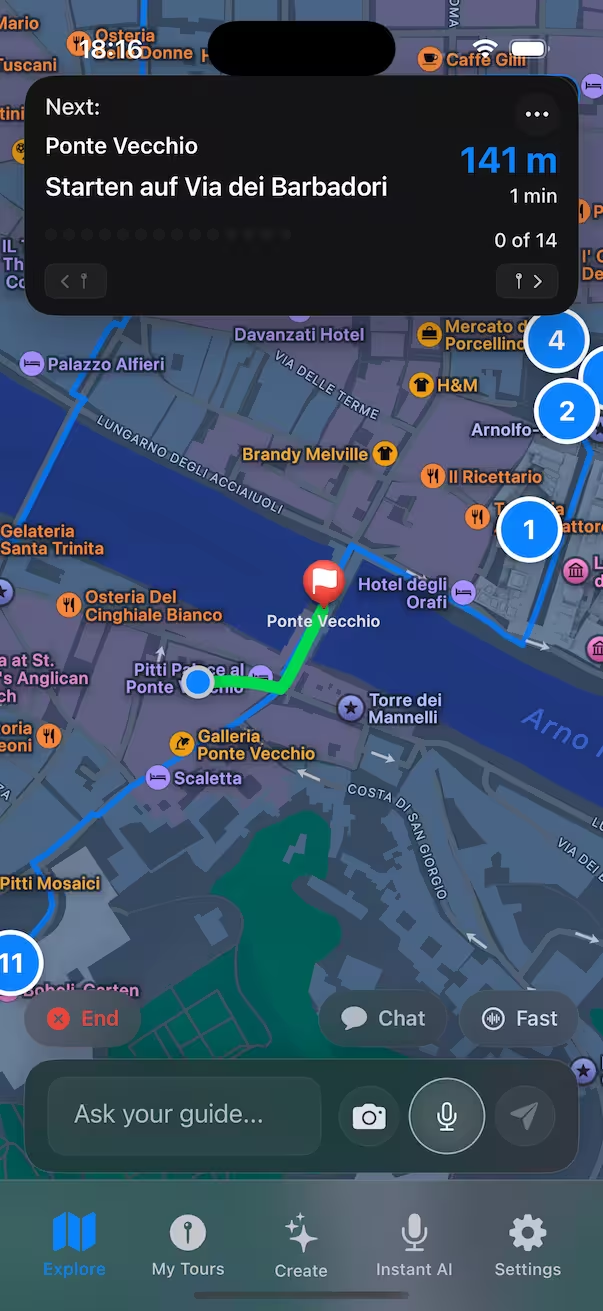
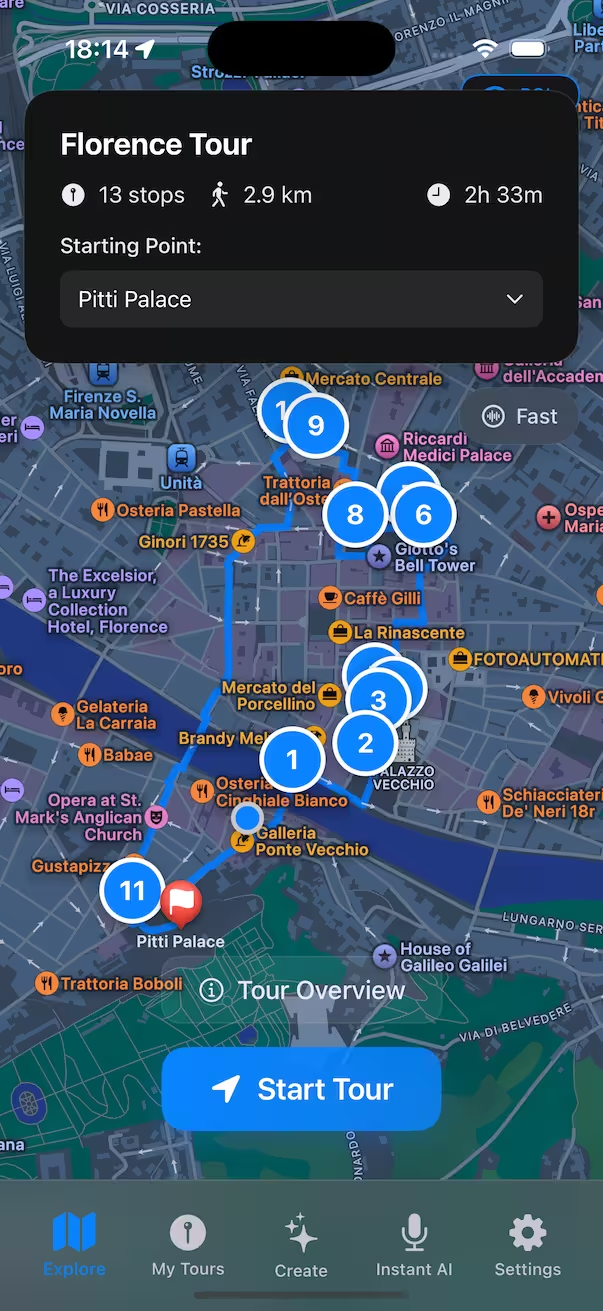
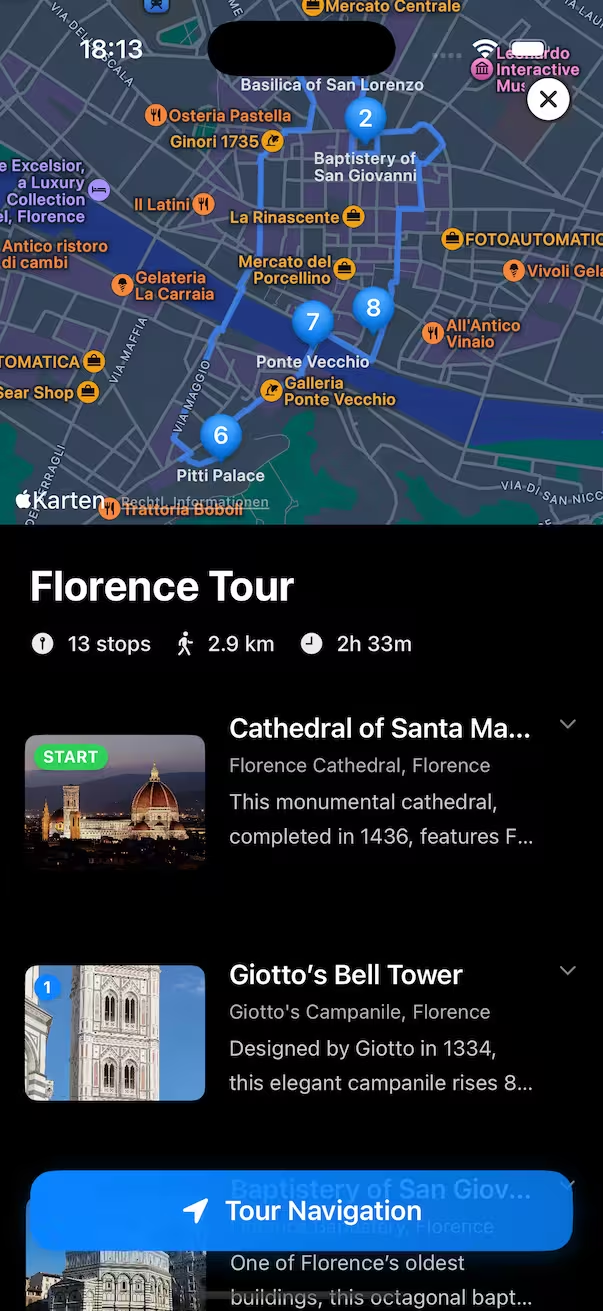
The classic Melbourne tour: 9 stops, 5.3 km, about 2 h on foot
Your live AI guide and the self-guided Melbourne route, together in your browser.