Best Time to Visit Singapore
Month-by-month weather, crowds and prices, plus a full calendar of festivals and events worth planning a trip around.
Best monthsFeb, Mar, Nov
CheapestNov
AvoidDec
BusiestDec, Feb

When is the best time to visit Singapore?
Come in February for the festival explosion of Chinese New Year, Thaipusam and Chingay, or March for the same Chinatown buzz at lower prices and the year's driest skies. November is the cheapest, quietest month, with Deepavali lighting Little India. December is the priciest and most crowded.
Start our tool and find your best time to visit Singapore
Your perfect month
Free · ~30 seconds
or tap a month directly
What matters to you?
And this?
Best overall: Feb, Mar. Late February into mid-March is the consensus window: the full Chinese New Year and Chinatown spectacle in February, then March eases into the driest, least crowded stretch with post-festival energy and rates already dropping 20 to 25%. Events, weather and value all line up.
Best value: Nov. November is the clear value pick: hotels 20 to 35% under the annual average, no major event creating pricing pressure, short queues everywhere, and Deepavali lighting Little India for free. Late July and mid-August are the budget backups.
Avoid: Dec. December: highest prices of the year at SGD 400 to 800 a night, Marina Bay gridlocked for the countdown, attractions rammed with year-end holidaymakers. October's F1 week is the runner-up to skip if you are not attending the race.
- January: Tough month, 29°C. January feels like the calm before February's festival storm, but it is not a quiet month. The Chinatown light-up flicks on at the end of the month and the whole district starts buzzing toward Chinese New Year. The rain is the real character here, so do not expect dry sightseeing days.
- February: Tough month, 30°C. This is Singapore at its most spectacular and its most expensive. Chinatown has never glowed brighter, and the festival density is unmatched anywhere in Southeast Asia. The trade-off is real: hotels peak, Chinese New Year Day 1 shuts much of the food scene, and you are sharing it all with the year's biggest crowds.
- March: Tough month, 30°C. March is the quiet winner: you get the tail of the festival energy without the February prices or crush. The Ramadan Bazaar at Geylang Serai is the standout, an authentic food-and-atmosphere experience most tourists miss. This is when Singapore is most pleasant to walk and easiest on the wallet at the same time.
- April: Tough month, 30°C. April is a low-key, festival-free month, which has its own appeal: no crush, mid-range prices, and the city humming at its everyday pace. The catch is the rain. This is genuinely the wettest month, but the showers are short and predictable, so a flexible itinerary built around indoor anchors beats the weather easily.
- May: Tough month, 30°C. May is one of Singapore's better-kept secrets for culture travellers: SIFA brings 16 days of world-class theatre and dance, the holidays add atmosphere, and prices stay low. The downside is the rain and the start of the haze season, so keep an eye on the air-quality index toward the end of the month.
- June: Tough month, 29°C. June is when the attractions get crowded and the queues get long, driven by local school holidays rather than overseas tourists. For families it works if you go early in the month before the 20th. For everyone else, it is a busier, pricier month with a strong events line-up to make up for it.
- July: Good time, 29°C. Late July is one of the smartest times to come: the families have gone home, the sales are on, and the weather is warm and mostly dry. The one caveat hanging over July to September is the haze, which depends entirely on Indonesia's fire season and can turn a clear day grey, so build in indoor backups.
- August: Good time, 29°C. August is a quietly good-value month wrapped around one unmissable event. National Day is the best free fireworks spectacle outside December, and the patriotic energy across the island is genuinely infectious. Outside that weekend, the city is calm and affordable, with the haze the only thing to watch.
- September: Good time, 29°C. September is a genuinely good month if you avoid the F1 pricing creep that starts mid-month. The Mid-Autumn lantern displays give you Chinese-New-Year-style spectacle without February prices, and the weather is drier than most. Just book your bed before the F1 premium spreads out from Marina Bay.
- October: Tough month, 30°C. October hinges entirely on whether you are here for F1. If you are, the night race on the Marina Bay street circuit is Singapore's definitive bucket-list event and the whole downtown buzzes for three days. If you are not, that same weekend is the worst-value week of the year, while the rest of October is calm, cheap and easy.
- November: Good time, 29°C. November is the sleeper pick of the Singapore calendar: cheapest beds, shortest queues, and Deepavali lighting Little India for free without a single big-event crowd to fight. The trade-off is the monsoon rain, the heaviest of the year, but it comes in waves you can plan around rather than all-day gloom.
- December: Tough month, 29°C. December is dazzling and exhausting in equal measure. The whole city is decked out, Christmas Wonderland is genuinely magical, and the Marina Bay countdown is the grandest New Year's Eve in Southeast Asia. But you pay top dollar for all of it, every attraction is rammed, and the monsoon rain is at its heaviest. Come for the spectacle, not the value.
Singapore weather by month
HighLowRainfall
Jan29°
Feb30°
Mar30°
Apr30°
May30°
Jun29°
Jul29°
Aug29°
Sep29°
Oct30°
Nov29°
Dec29°
| Month | Temp | Rain | Sun | Crowds | Prices | Highlight |
|---|---|---|---|---|---|---|
| Jan | 29° / 24° | 222mm · 23 rainy days | 9.4 h/day | ●●●●○ | ●●●●○ | Thaipusam |
| Feb | 30° / 24° | 107mm · 17 rainy days | 10.2 h/day | ●●●●● | ●●●●● | Thaipusam |
| Mar | 30° / 24° | 195mm · 24 rainy days | 10.7 h/day | ●●●○○ | ●●●○○ | Chinese New Year and Chinatown Light-Up |
| Apr | 30° / 25° | 279mm · 27 rainy days | 10.2 h/day | ●●●○○ | ●●●○○ | |
| May | 30° / 25° | 300mm · 29 rainy days | 9.8 h/day | ●●●○○ | ●●●○○ | Singapore International Festival of Arts (SIFA) |
| Jun | 29° / 25° | 277mm · 25 rainy days | 9.4 h/day | ●●●●○ | ●●●●○ | Vesak Day |
| Jul | 29° / 25° | 204mm · 24 rainy days | 10.0 h/day | ●●●○○ | ●●●○○ | Great Singapore Sale |
| Aug | 29° / 25° | 228mm · 26 rainy days | 9.9 h/day | ●●●○○ | ●●●○○ | National Day |
| Sep | 29° / 25° | 194mm · 23 rainy days | 9.8 h/day | ●●●○○ | ●●●○○ | Mid-Autumn Festival |
| Oct | 30° / 24° | 289mm · 26 rainy days | 9.2 h/day | ●●●●○ | ●●●●● | Mid-Autumn Festival |
| Nov | 29° / 24° | 366mm · 28 rainy days | 8.1 h/day | ●●○○○ | ●●○○○ | Deepavali |
| Dec | 29° / 24° | 336mm · 29 rainy days | 8.7 h/day | ●●●●● | ●●●●● | Christmas Wonderland at Gardens by the Bay |
How we score this: weather = long-run climate normals (Open-Meteo), crowds & prices = relative season read, events checked yearly against official dates.
Best time to visit Singapore: weather, prices & crowds
Best months for good weather
Feb, Mar
February and March are the driest months Singapore gets: roughly 17 to 24 rain days instead of the year-round 25-plus, with the northeast monsoon easing and the punishing afternoon downpours shorter.
Quietest months to avoid the crowds
Nov
November is the quietest month of the year: no major event drives crowds, queues at Gardens by the Bay and the Marina Bay Sands SkyPark thin right out, and Deepavali lights Little India without the February crush.
Cheapest time to visit Singapore
Nov
November runs 20 to 35% below the annual hotel average, the clearest value window of the year. Late July, after school holidays end on the 19th, and mid-August before National Day are the runners-up.
Best time for festivals and events
Feb
February stacks four festivals into four weeks: Thaipusam's kavadi procession, Chinese New Year, the Chingay street parade and River Hongbao at Gardens by the Bay. Chinatown is more spectacular than at any other point in the year.
How many days do you need in Singapore?
Singapore rewards at least three full days. The city packs Chinatown, the colonial civic quarter, the futuristic Marina Bay waterfront, and an entire island of theme parks into a geography small enough to navigate by MRT, but rushing any of those worlds means missing what makes each one distinct. A fourth day or more opens up neighbourhood time, the Botanic Gardens, and proper hawker-centre exploration.

One day
The historic spine in a single push
Start at the Buddha Tooth Relic Temple on South Bridge Road before the tour groups arrive, then walk the riverside through Clarke Quay to the Asian Civilisations Museum and National Gallery Singapore on St Andrew's Road. A self-guided Singapore walking tour links all 10 stops across 8.6 km in roughly 3.3 hours, covering Raffles Hotel, the Esplanade, Merlion Park, Marina Bay Sands, the ArtScience Museum, and Gardens by the Bay in one clean route. End with the Supertree light show at 7:45pm or 8:45pm.
Two days
Add the cultural quarters
A second day opens up the neighbourhoods the first-day walk only skirts. Spend the morning in Little India around Serangoon Road and Tekka Market, then cross to Kampong Glam for the Sultan Mosque and the Haji Lane shophouses. An afternoon at the National Museum of Singapore (free Fridays 6 to 9pm) rounds out the cultural picture without doubling back.
Three daysRecommended
Sentosa or a full hawker crawl
Day three is the one to spend on Sentosa: Universal Studios opens at 10am, and going on a weekday keeps ride waits well under an hour. Alternatively, skip the resort island and do a proper hawker crawl from the Chinatown Complex Food Centre at lunch through Lau Pa Sat's satay street on Boon Tat Street in the evening. The Singapore Botanic Gardens on Cluny Road are genuinely empty before 8am on weekdays.
Four days or more
Slower pace, deeper neighbourhoods
Four or more days lets you stop rushing. Take the bumboat to Pulau Ubin for a cycle through mangroves, spend a morning at the Cloud Forest dome in Gardens by the Bay, or use the extra time to book the Marina Bay Sands SkyPark (SGD 32) for the 6pm to 8pm slot when the city lights come on. Singapore is also a strong base for a day trip to Johor Bahru or the Riau Islands.
Best time to visit Singapore by traveller type
Same city, different trip. Here's the month that fits how you're travelling.
🧭
Best time to visit Singapore for the first time
FebMar
February for the festival peak, or March for the same Chinatown buzz with smaller crowds, better weather and lower prices. March gives first-timers the best balance of festivals, dry-ish skies and value.
❤️
Best time to visit Singapore for couples
Nov
November is the sleeper romantic pick: Deepavali lights in Little India, the cheapest hotels of the year, and the Supertree light show on a quiet Tuesday evening without the weekend crush.
💶
Best time to visit Singapore on a budget
Nov
November wins outright: hotel rates 20 to 35% below average, no event premium, hawker centres uncrowded, Sentosa manageable midweek. Late July after school holidays end is the second-cheapest stretch.
🍝
Best time to visit Singapore for food and wine
FebMar
March and April for the Geylang Serai Ramadan Bazaar's 500 stalls of Malay and Indonesian food, plus post-Chinese-New-Year hawker variety once stalls restock. June adds the Cocktail Crossover festival.
Worst time to visit Singapore
December is the month least worth visiting on value. Year-end school holidays, Christmas Wonderland at Gardens by the Bay, and the Marina Bay New Year's Eve countdown stack on top of Australian and European summer holidays to push hotel rates to SGD 400 to 800 a night, with the Marina Bay precinct gridlocked on the 31st and every major attraction running at capacity. October's F1 Grand Prix weekend is the close second: circuit-view rooms hit SGD 600 to 1,200 a night, a painful premium if you are not actually at the race, and the entire Marina Bay Street Circuit perimeter is sealed for three days.
Still worth it for December is still worth it if the spectacle is the point: Christmas Wonderland is genuinely magical, the Orchard Road light-up is dazzling, and the Marina Bay countdown is the grandest New Year's Eve in Southeast Asia. For F1 fans, the night race on the street circuit is a bucket-list event that justifies every dollar.
Go instead in February, March, November, when Singapore is at its best.
Best time for a tour of Singapore
Singapore sits just one degree north of the equator, which means the walking question is never about cold, it is always about heat, humidity, and rain. Temperatures hold stubbornly between 28 and 30 °C every month, with lows rarely dropping below 24 °C even at dawn, so the calendar cannot give you a mild stroll in the European sense. What it can give you is a relatively dry window: February stands out with only 17 rain days, making it the most walkable month despite the crowds that pack in for Chinese New Year. September and January are the next-best bets at 23 rain days each, with more manageable visitor numbers. The real trap months are May, August, and December, each averaging 28 to 29 days of rain, which means afternoon downpours are almost guaranteed. The 8.6-kilometre route from Chinatown and Buddha Tooth Relic Temple all the way to Gardens by the Bay crosses long stretches of open Marina Bay waterfront with little shelter, and the Merlion Park esplanade in particular turns brutal between 11 am and 3 pm in any month. The practical answer: whatever month you visit, start early, before 9 am, and plan to be under shade or indoors through the midday heat.
With AI Tourguide running directly in your browser, no download needed, you set off whenever the thermometer suits you. On a February morning when the air is still relatively dry and the walk along the Singapore River past the Asian Civilisations Museum feels almost breezy, start your Singapore tour at first light and let the AI guide lead you through the stories of each stop at exactly your pace. The guide talks with you the whole way, telling the history of Raffles Hotel, asking what catches your eye at Marina Bay Sands, and adapting what it shares based on what you find interesting, so a slow dawn walk and a brisk evening circuit feel like two entirely different tours of the same city.


 +6
+6All 10 stops are already on the map.
You just press start.
You just press start.
 AI Tourguide
You just read the route.
Now walk it with a guide in your ear.
Press start wherever you are, even hundreds of kilometres from Singapore, and the guide begins telling its stories right away. In the city, pick any of the 10 stops to start from: it leads you there, then talks with you the whole route, asking, listening, remembering, and shaping the tour around your answers.
10stops8.6km3.3hours11languages
▶Start the tour freeFree to start · Runs in your browser · No app, no download
Singapore events and festivals calendar
Annual highlights worth timing a trip around, listed month by month.
January
⛪ ReligiousThaipusam தைப்பூசம்
Jan 31 – Feb 1 ~
Late January or early February, set by the Tamil calendar. The date shifts each year with the lunar cycle.
A Hindu festival where devotees carry kavadis, steel frames pierced through the skin, on a 4km procession from Sri Srinivasa Perumal Temple on Serangoon Road to Sri Thendayuthapani Temple on Tank Road.
🎉 FestivalChinese New Year and Chinatown Light-Up 农历新年
Feb 17–18 ~
Lunar new year, falling in late January or February. The Chinatown light-up typically runs from around 30 January to mid-March; the two public holidays fall on the first two days of the lunar new year.
Chinatown transforms with horse-themed lanterns and installations from 30 January, with a countdown party at Kreta Ayer Square and nightly light-ups from 7pm to midnight.
February
🍷 Food and wineGeylang Serai Ramadan Bazaar Bazar Ramadan Geylang Serai
Feb 14 – Mar 21 ~
Throughout Ramadan, roughly mid-February to the eve of Hari Raya Puasa. The bazaar opens daily 10am to midnight, with an all-night closing session on the final eve.
A Ramadan market of around 500 stalls, 150 food and 350 retail, beside Wisma Geylang Serai, serving traditional Malay and Indonesian food, kueh and Hari Raya fashion.
🎉 FestivalRiver Hongbao 滨海湾新春嘉年华
Feb 15–24 ~
Around Chinese New Year, roughly ten days in February. Dates shift each year with the lunar calendar.
A Chinese New Year carnival at Gardens by the Bay with giant lantern displays, fireworks and multicultural performances, set against the Marina Bay skyline.
🎨 Art and cultureChingay Parade 妆艺大游行
Feb 27–28 ~
The Friday and Saturday after Chinese New Year, 8pm to 9:30pm.
Asia's largest street parade, an annual multi-community spectacle with thousands of performers, elaborate floats and acrobatics across an evening show.
March
🇮 HolidayHari Raya Puasa (Aidilfitri) Hari Raya Aidilfitri
Mar 21 ~
End of Ramadan, set by the lunar calendar. The date moves each year by around 11 days.
The end of Ramadan, marked by the Geylang Serai Bazaar hitting its 4am-closing maximum on the eve and an open-house tradition across the Malay community.
May
🎨 Art and cultureSingapore International Festival of Arts (SIFA) Singapore International Festival of Arts
May 15–30
Roughly the second half of May, running for about 16 days. Outdoor events at the Esplanade and Fort Canning are free.
Singapore's premier performing-arts festival, with theatre, dance, music and large-scale installations across city venues over 16 days.
⛪ ReligiousVesak Day 卫塞节
May 31 ~
May or June by the lunar calendar; a substitute public holiday follows on the next Monday when the date falls on a Sunday.
The Buddhist celebration of Buddha's birth, enlightenment and nirvana, with a candlelight procession at Kong Meng San Phor Kark See Monastery, a Buddha-bathing ritual at the Buddha Tooth Relic Temple in Chinatown, and a free community fair near Serangoon MRT.
June
🎉 FestivalGreat Singapore Sale
Jun 1 – Jul 31
Roughly June through July, citywide across Orchard Road and the malls, with discounts of 20 to 70%.
Singapore's annual shopping festival, with discounts of 20 to 70% across Orchard Road and the malls.
🍷 Food and wineSingapore Cocktail Crossover (SGCX) Singapore Cocktail Crossover
Jun 9–14
Six days in mid-June, typically running from a Tuesday to a Sunday with the main festival closing the weekend.
A six-day cocktail festival of pop-ups, guest bars and takeovers across heritage neighbourhoods, ending with a two-day main festival at METT Singapore.
🏃 SportDragon Boat Festival Races 端午节龙舟赛
Jun 27–28 ~
Late June, around the Dragon Boat Festival. Races are held at Bedok Reservoir over a weekend.
The Singapore Dragon Boat Festival, with 500m racing at Bedok Reservoir alongside cultural performances and lion dances.
🏳️🌈 PridePink Dot (LGBTQ+ Pride) Pink Dot SG
Jun 27 ~
June or July annually, on a Saturday at Hong Lim Park. Community tents open from around 4pm, with the iconic pink formation visible from 7:30pm.
Singapore's annual Pride event at Hong Lim Park, with community tents from 4pm, a concert from 7pm, and the iconic illuminated pink dot formation around 7:30pm.
August
🇮 HolidayNational Day Hari Kebangsaan
Aug 9
9 August every year, with a substitute public holiday on 10 August when the 9th falls on a Sunday.
Singapore's birthday, with a parade at the National Stadium featuring a 300-plus drone show, the State Flag Flypast and a Presidential Gun Salute, plus fireworks around 7:30pm visible across Marina Bay.
September
🎉 FestivalMid-Autumn Festival 中秋节
Sep 25 ~
The 15th day of the 8th lunar month, with the Chinatown light-up running from mid-September into October. The exact date shifts each year with the lunar calendar.
Chinatown streets light up with giant lanterns, the centrepiece up to 8m tall, along New Bridge Road and Upper Cross Street, with a festive fair of handcrafted lanterns and mooncakes.
October
🏃 SportF1 Singapore Airlines Grand Prix F1新加坡大奖赛
Oct 9–11
October annually, across a three-day weekend. The race is held on the Marina Bay Street Circuit.
The world's only F1 night race, run on the 5.063km, 23-corner Marina Bay Street Circuit.
🎉 FestivalDeepavali தீபாவளி
Nov 8 ~
October or November by the Hindu lunar calendar, with the Little India light-up active for several weeks before the main day. A substitute public holiday follows.
The Festival of Lights, with Little India along Serangoon Road lit by elaborate street installations, a Deepavali Bazaar selling Indian fashion, jewellery and snacks, and cultural performances at the Deepavali Festival Village.
November
💡 LightsChristmas Wonderland at Gardens by the Bay Christmas Wonderland
Nov 28 – Jan 1
Late November to early January, running through the Christmas and New Year period at Gardens by the Bay.
Singapore's biggest Christmas event, with an illuminated grotto, carnival rides, a Christmas market and light shows at Gardens by the Bay.
December
🎉 FestivalMarina Bay Countdown (New Year's Eve) Marina Bay Singapore Countdown
Dec 31
31 December every year into 1 January, with fireworks and light projections over Marina Bay.
Fireworks synchronised to music over Marina Bay, with light projections on the Fullerton Hotel and multiple entertainment zones along the waterfront.
Insider tips for visiting Singapore
The rules buried in forums, in one place.
- Skip the Gardens by the Bay Supertree show on Friday and Saturday nights. The free OCBC Garden Rhapsody runs nightly at 7:45pm and 8:45pm, but weekends are shoulder-to-shoulder. Go Monday or Tuesday and arrive at the Supertree Grove base by 7:30pm.
- Book the Marina Bay Sands SkyPark (SGD 32) for the 6pm to 8pm slot, when the city lights come on and visibility is best. Midday haze or heat shimmer leaves the view grey. The Infinity Pool is for hotel guests only, a rule visitors perennially misunderstand.
- The National Museum of Singapore is free on Fridays from 6 to 9pm, last entry 8pm, with around 80% fewer visitors than a daytime Saturday. The Singapore Botanic Gardens are genuinely empty before 8am on weekdays, when the birdlife is most active.
- Eat at the Chinatown Complex Food Centre between 11:30am and 12:30pm for the widest choice before stalls sell out. The char kway teow and Hainanese chicken rice stalls often close by 1pm. Friday lunch is busiest, so go Tuesday to Thursday.
- Do Sentosa midweek, Tuesday to Thursday. Weekend afternoons from 2 to 5pm pack Palawan and Siloso beaches with day-trippers from Johor Bahru, and the cable cars queue. Universal Studios plus a beach combo works best as a single midweek day.
- Check the NEA haze index at haze.gov.sg daily from July to September. A PSI above 100 makes outdoor walks unpleasant, above 150 inadvisable. If your only outdoor day spikes, pivot indoors to the ArtScience Museum, National Gallery or the Cloud Forest dome.
- For the F1 Grand Prix in October, book a hotel within 2km of the Marina Bay circuit by April at the latest, or rates hit SGD 600 to 1,200 a night. Staying in Tanjong Pagar or Bugis, a 15-minute MRT ride away, cuts that by 50 to 60%.
- Singapore's near-equatorial sun is punishing from 10am to 3pm, with the humidity pushing the feel past 38°C. The only comfortable walking windows are 6 to 9am and after 6pm. Plan the major outdoor sight before 9:30am and an air-conditioned museum for midday.
Public holidays in Singapore
On these dates many shops and offices close, transport thins out, and sights can be mobbed or shut. Plan around them.
| Date | Holiday | What closes |
|---|---|---|
| Jan 1 | New Year's Day | Most malls stay open, but offices and banks close. The Gardens by the Bay year-end fireworks have already passed by the morning of 1 January. |
| Feb 17 | Chinese New Year (Day 1) | Major closures: most Chinese-owned restaurants and shops shut on Day 1, with some reopening Day 2 (18 Feb). Hawker centres run partially closed. The MRT runs but is packed, and the Chinatown area is impassable without planning from 9pm on 16 February. |
| Feb 18 | Chinese New Year (Day 2) | Second public holiday of Chinese New Year. Some Chinese-owned businesses reopen, but many stay shut. Attractions and Chinatown remain extremely busy through the two-day holiday. |
| Mar 21 | Hari Raya Puasa (Aidilfitri) | End of Ramadan. The Geylang Serai bazaar runs until 4am on the eve (20 March). Malay-owned restaurants close for the day, mosques are packed, and grocery stores get hectic the day before. |
| Apr 3 | Good Friday | Public holiday creating a three-day weekend (3 to 5 April). Many Singaporeans travel regionally, so flights and hotels out of Singapore run at a premium while domestic attractions are quieter than expected. Churches are full; malls and tourist sights stay open. |
| May 1 | Labour Day | Public holiday and a three-day weekend. The Botanic Gardens and Sentosa fill with locals, but no attractions close. A minor crowd spike with no major event behind it. |
| May 27 | Hari Raya Haji (Aidiladha) | Festival of Sacrifice. Mosques are packed from 7am, the Sultan Mosque area is atmospheric in the morning, and most Malay-Muslim restaurants close. A quieter holiday than Aidilfitri, falling the same week as Vesak Day. |
| May 31 | Vesak Day | Buddhist holiday (substitute holiday Monday 1 June). Temples open extra hours, and Kong Meng San Phor Kark See Monastery on Bright Hill is very busy all day with traffic on Bright Hill Road. The candlelight procession runs that evening. |
| Aug 9 | National Day | Singapore's 61st birthday (substitute holiday Monday 10 August). The Padang and National Stadium are fenced off from 1 August for rehearsals, with CBD road closures the morning of the 9th. Free fireworks are visible from Marina Bay, the Helix Bridge and the Esplanade around 7:30pm. |
| Nov 8 | Deepavali | Hindu Festival of Lights (substitute holiday Monday 9 November). Little India along Serangoon Road is very busy from 6 to 10pm, with managed traffic but no transit disruption. Most shops stay open. The light installations are at their best from 7 to 9pm. |
| Dec 25 | Christmas Day | Orchard Road malls stay open, as Christmas is mainly a commercial event here. Some restaurants run fixed-price menus from SGD 80 to 200, so book four to six weeks ahead for Christmas dinner. The festive light-up along Orchard Road is the draw. |
Singapore month by month
January in Singapore
High29°C / 84°F
Low24°C
Rain222mm / 23 rainy days
Sun9.4 h/day
Daylight12 h/day
Humidity85%
Crowds●●●●○Prices●●●●○
January is hot, sticky and wet: 29°C highs but 222mm of rain across 23 days as the northeast monsoon sits over the city. Expect prolonged afternoon downpours rather than quick bursts, so plan indoor anchors at midday. Crowds run high on the post-New-Year glow, regional visitors and European winter-sun seekers. From 30 January the Chinatown light-up switches on for Chinese New Year, drawing big evening crowds.
The vibe January feels like the calm before February's festival storm, but it is not a quiet month. The Chinatown light-up flicks on at the end of the month and the whole district starts buzzing toward Chinese New Year. The rain is the real character here, so do not expect dry sightseeing days.
Don't miss Catch the Chinatown light-up from 30 January, when New Bridge Road and Eu Tong Sen Street glow with horse-themed lanterns for the Year of the Horse. The Flower Dome at Gardens by the Bay runs its rotating seasonal display indoors, dry whatever the monsoon does.
Crowd drivers Post-New-Year glow, regional visitors from Malaysia and Indonesia, European winter-sun travellers, and the Chinatown light-up kicking off late in the month.
In season Bak kwa (barbecued sweet pork) queues form outside Chinatown shops like Lim Chee Guan as families stock up for Chinese New Year, sometimes for over an hour.
Heads up 1 January is a public holiday: offices and banks close, though most malls stay open.
Hotels run 20 to 30% above the annual median on the post-New-Year glow and early Chinese New Year demand.
Events this month
🎉 FestivalChinese New Year and Chinatown Light-Up 农历新年
Feb 17–18 ~
Lunar new year, falling in late January or February. The Chinatown light-up typically runs from around 30 January to mid-March; the two public holidays fall on the first two days of the lunar new year.
Chinatown transforms with horse-themed lanterns and installations from 30 January, with a countdown party at Kreta Ayer Square and nightly light-ups from 7pm to midnight. The two public holidays on 17 and 18 February are the heart of the celebration.
The seven-week Chinatown light-up is free and the city's most spectacular festival display, though the two-day holiday leaves attractions extra-packed, so arrive before 9am.
⛪ ReligiousThaipusam தைப்பூசம்
Jan 31 – Feb 1 ~
Late January or early February, set by the Tamil calendar. The date shifts each year with the lunar cycle.
A Hindu festival where devotees carry kavadis, steel frames pierced through the skin, on a 4km procession from Sri Srinivasa Perumal Temple on Serangoon Road to Sri Thendayuthapani Temple on Tank Road. The procession starts at 11:30pm and returns by 5pm the next day.
One of the most extraordinary spectacles in Southeast Asia, raw religious devotion you cannot see anywhere else in a city this modern.
February in Singapore
High30°C / 85°F
Low24°C
Rain107mm / 17 rainy days
Sun10.2 h/day
Daylight12 h/day
Humidity82%
Crowds●●●●●Prices●●●●●
February is Singapore's festival peak and one of its driest months: 29°C, 107mm of rain over about 17 days, the most outdoor-friendly weather of the year. Four festivals stack into four weeks, so the city is electric and prices peak with it. Thaipusam opens it on the 1st, Chinese New Year (17 to 18 Feb) is the centre of gravity, then Chingay and River Hongbao close the month. Book accommodation two months ahead.
The vibe This is Singapore at its most spectacular and its most expensive. Chinatown has never glowed brighter, and the festival density is unmatched anywhere in Southeast Asia. The trade-off is real: hotels peak, Chinese New Year Day 1 shuts much of the food scene, and you are sharing it all with the year's biggest crowds.
Don't miss Watch the Thaipusam kavadi procession from the corner of Serangoon Road and Race Course Road between midnight and 3am on the 1st. River Hongbao lights up Gardens by the Bay from 15 to 24 February with nightly 9pm fireworks against the skyline.
Crowd drivers Chinese New Year (17 to 18 Feb) is the peak, stacked with Thaipusam (1 Feb), Chingay (27 to 28 Feb) and River Hongbao (15 to 24 Feb) in a single month.
In season Yusheng, the toss-for-prosperity raw fish salad, appears on every Chinese restaurant menu through the Chinese New Year period. Most Chinese-owned hawker stalls close on Day 1 (17 Feb), so plan around it.
Heads up Chinese New Year on 17 to 18 February shuts most Chinese-owned restaurants and shops on Day 1, with hawker centres partially closed and Chinatown impassable from 9pm on the 16th.
Peak of the year: Marina Bay hotels hit SGD 300 to 500-plus a night; book two months out and expect indoor events sold out.
Events this month
⛪ ReligiousThaipusam தைப்பூசம்
Jan 31 – Feb 1 ~
Late January or early February, set by the Tamil calendar. The date shifts each year with the lunar cycle.
A Hindu festival where devotees carry kavadis, steel frames pierced through the skin, on a 4km procession from Sri Srinivasa Perumal Temple on Serangoon Road to Sri Thendayuthapani Temple on Tank Road. The procession starts at 11:30pm and returns by 5pm the next day.
One of the most extraordinary spectacles in Southeast Asia, raw religious devotion you cannot see anywhere else in a city this modern.
🎉 FestivalChinese New Year and Chinatown Light-Up 农历新年
Feb 17–18 ~
Lunar new year, falling in late January or February. The Chinatown light-up typically runs from around 30 January to mid-March; the two public holidays fall on the first two days of the lunar new year.
Chinatown transforms with horse-themed lanterns and installations from 30 January, with a countdown party at Kreta Ayer Square and nightly light-ups from 7pm to midnight. The two public holidays on 17 and 18 February are the heart of the celebration.
The seven-week Chinatown light-up is free and the city's most spectacular festival display, though the two-day holiday leaves attractions extra-packed, so arrive before 9am.
🎉 FestivalRiver Hongbao 滨海湾新春嘉年华
Feb 15–24 ~
Around Chinese New Year, roughly ten days in February. Dates shift each year with the lunar calendar.
A Chinese New Year carnival at Gardens by the Bay with giant lantern displays, fireworks and multicultural performances, set against the Marina Bay skyline.
The best evening skyline backdrop of the Chinese New Year period, with free fireworks nightly at 9pm.
🎨 Art and cultureChingay Parade 妆艺大游行
Feb 27–28 ~
The Friday and Saturday after Chinese New Year, 8pm to 9:30pm.
Asia's largest street parade, an annual multi-community spectacle with thousands of performers, elaborate floats and acrobatics across an evening show.
A rare cultural spectacle that sells out early, so plan well ahead or watch the free broadcast.
🍷 Food and wineGeylang Serai Ramadan Bazaar Bazar Ramadan Geylang Serai
Feb 14 – Mar 21 ~
Throughout Ramadan, roughly mid-February to the eve of Hari Raya Puasa. The bazaar opens daily 10am to midnight, with an all-night closing session on the final eve.
A Ramadan market of around 500 stalls, 150 food and 350 retail, beside Wisma Geylang Serai, serving traditional Malay and Indonesian food, kueh and Hari Raya fashion. On the eve of Hari Raya it stays open until 4am.
The best food atmosphere in Singapore during Ramadan, at its peak after 7pm when the crowd and energy build.
March in Singapore
High30°C / 86°F
Low24°C
Rain195mm / 24 rainy days
Sun10.7 h/day
Daylight12 h/day
Humidity83%
Crowds●●●○○Prices●●●○○
March is the shoulder-season sweet spot: the Chinese New Year crowds fade but the Chinatown buzz lingers, and at 30°C with around 195mm of rain it is one of the drier, more comfortable months. Hari Raya Puasa (21 Mar) brings Geylang Serai to life, and the Ramadan Bazaar runs through to the 21st. Hotel rates have fallen 20 to 25% off February, making this one of the best value-to-weather windows of the year.
The vibe March is the quiet winner: you get the tail of the festival energy without the February prices or crush. The Ramadan Bazaar at Geylang Serai is the standout, an authentic food-and-atmosphere experience most tourists miss. This is when Singapore is most pleasant to walk and easiest on the wallet at the same time.
Don't miss The Geylang Serai Ramadan Bazaar peaks in March: 500 stalls beside Wisma Geylang Serai, best after 7pm when the crowd and energy hit their height, and open until 4am on the eve of Hari Raya (20 March).
Crowd drivers The Chinese New Year tail winds down, while Hari Raya Puasa on 21 March pulls crowds to Geylang Serai for the Ramadan Bazaar finale.
In season Ramadan bazaar street food is at its best: kueh, Ramly burgers, dendeng and rainbow-coloured kueh lapis at Geylang Serai, eaten standing among the crowd after sunset.
Heads up On Hari Raya Puasa (21 March), Malay-owned restaurants close for the day and mosques are packed.
One of the best crowd-to-weather ratios of the year; hotel rates drop 20 to 25% from the February peak.
Events this month
🍷 Food and wineGeylang Serai Ramadan Bazaar Bazar Ramadan Geylang Serai
Feb 14 – Mar 21 ~
Throughout Ramadan, roughly mid-February to the eve of Hari Raya Puasa. The bazaar opens daily 10am to midnight, with an all-night closing session on the final eve.
A Ramadan market of around 500 stalls, 150 food and 350 retail, beside Wisma Geylang Serai, serving traditional Malay and Indonesian food, kueh and Hari Raya fashion. On the eve of Hari Raya it stays open until 4am.
The best food atmosphere in Singapore during Ramadan, at its peak after 7pm when the crowd and energy build.
🇮 HolidayHari Raya Puasa (Aidilfitri) Hari Raya Aidilfitri
Mar 21 ~
End of Ramadan, set by the lunar calendar. The date moves each year by around 11 days.
The end of Ramadan, marked by the Geylang Serai Bazaar hitting its 4am-closing maximum on the eve and an open-house tradition across the Malay community.
On the night of 20 to 21 March the bazaar is electrifying, though most Singaporean Muslim-owned restaurants close on the day itself.
🎉 FestivalChinese New Year and Chinatown Light-Up 农历新年
Feb 17–18 ~
Lunar new year, falling in late January or February. The Chinatown light-up typically runs from around 30 January to mid-March; the two public holidays fall on the first two days of the lunar new year.
Chinatown transforms with horse-themed lanterns and installations from 30 January, with a countdown party at Kreta Ayer Square and nightly light-ups from 7pm to midnight. The two public holidays on 17 and 18 February are the heart of the celebration.
The seven-week Chinatown light-up is free and the city's most spectacular festival display, though the two-day holiday leaves attractions extra-packed, so arrive before 9am.
April in Singapore
High30°C / 86°F
Low25°C
Rain279mm / 27 rainy days
Sun10.2 h/day
Daylight12 h/day
Humidity86%
Crowds●●●○○Prices●●●○○
April is the wettest stretch of the inter-monsoon: 279mm of rain over 27 days, with intense but brief thunderstorms, usually 30 to 60 minutes in the late afternoon, that are easy to work around. At 30°C it is hot and humid. There are no major festivals, so the city is calm apart from the Good Friday long weekend (3 to 5 April), when Singaporeans travel regionally and outbound flights and hotels run at a premium.
The vibe April is a low-key, festival-free month, which has its own appeal: no crush, mid-range prices, and the city humming at its everyday pace. The catch is the rain. This is genuinely the wettest month, but the showers are short and predictable, so a flexible itinerary built around indoor anchors beats the weather easily.
Don't miss With no festival pulling crowds, April is ideal for the big indoor attractions: the National Gallery, the ArtScience Museum and the Cloud Forest dome shrug off the afternoon downpours entirely. Firefly tours at Pulau Ubin are still possible in the dry-season tail.
Crowd drivers The Good Friday long weekend (3 to 5 April) drives a regional getaway surge, pushing outbound flights and hotels up while domestic attractions stay quiet.
In season Post-Chinese-New-Year hawker variety is fully back: stalls that closed for the festival are restocked and competitive, so this is a strong month for chasing the city's best chicken rice and laksa.
Heads up Good Friday on 3 April is a public holiday, though malls and tourist sights stay open.
Mid-range rates, with some availability pressure over the Good Friday weekend (3 to 5 April).
May in Singapore
High30°C / 85°F
Low25°C
Rain300mm / 29 rainy days
Sun9.8 h/day
Daylight12 h/day
Humidity87%
Crowds●●●○○Prices●●●○○
May is wet but quiet and good value: 29°C, 300mm of rain over about 29 days, with the southwest monsoon beginning to bring the first haze risk. The Singapore International Festival of Arts (15 to 30 May) draws a cultural crowd, and three holidays cluster late in the month, Vesak Day (31 May), Hari Raya Haji (27 May) and the 1 May Labour Day weekend. Rates stay calm, making this a cheap stretch for a culture-led trip.
The vibe May is one of Singapore's better-kept secrets for culture travellers: SIFA brings 16 days of world-class theatre and dance, the holidays add atmosphere, and prices stay low. The downside is the rain and the start of the haze season, so keep an eye on the air-quality index toward the end of the month.
Don't miss The Singapore International Festival of Arts runs 15 to 30 May, with free outdoor performances at the Esplanade and Fort Canning alongside ticketed indoor shows. On the evening of 31 May, the Vesak Day candlelight procession at Kong Meng San Monastery is open to the public.
Crowd drivers The SIFA arts festival (15 to 30 May) draws a cultural crowd, and the Labour Day long weekend on 1 May brings a minor local spike.
In season Hari Raya Haji on 27 May brings korban-season Malay cooking, though most halal restaurants close that day, so plan your Malay food for the day before or after.
Heads up Hari Raya Haji (27 May) closes halal restaurants; Vesak Day (31 May) packs the temples. The 1 June substitute holiday extends the Vesak weekend.
Rates stay calm; one of the cheapest stretches of the year for a culture-focused trip.
Events this month
🎨 Art and cultureSingapore International Festival of Arts (SIFA) Singapore International Festival of Arts
May 15–30
Roughly the second half of May, running for about 16 days. Outdoor events at the Esplanade and Fort Canning are free.
Singapore's premier performing-arts festival, with theatre, dance, music and large-scale installations across city venues over 16 days. Outdoor events at the Esplanade and Fort Canning are free.
Sixteen days of world-class arts rarely seen in Southeast Asia, with free outdoor programming alongside ticketed indoor shows.
⛪ ReligiousVesak Day 卫塞节
May 31 ~
May or June by the lunar calendar; a substitute public holiday follows on the next Monday when the date falls on a Sunday.
The Buddhist celebration of Buddha's birth, enlightenment and nirvana, with a candlelight procession at Kong Meng San Phor Kark See Monastery, a Buddha-bathing ritual at the Buddha Tooth Relic Temple in Chinatown, and a free community fair near Serangoon MRT.
The atmospheric night processions at Kong Meng San on the evening of 31 May are open to the public.

June in Singapore
High29°C / 85°F
Low25°C
Rain277mm / 25 rainy days
Sun9.4 h/day
Daylight12 h/day
Humidity86%
Crowds●●●●○Prices●●●●○
June is family season: Singapore school holidays (20 Jun to 19 Jul) flood Sentosa and Universal Studios, where queue times hit 60 to 120 minutes. At 29°C with 277mm of rain it is hot and showery, and the haze risk is climbing. Pink Dot fills Hong Lim Park on the 27th, the Dragon Boat races run 27 to 28 June at Bedok Reservoir, and the inaugural Cocktail Crossover takes over heritage neighbourhoods 9 to 14 June.
The vibe June is when the attractions get crowded and the queues get long, driven by local school holidays rather than overseas tourists. For families it works if you go early in the month before the 20th. For everyone else, it is a busier, pricier month with a strong events line-up to make up for it.
Don't miss Pink Dot fills Hong Lim Park on 27 June, with the illuminated pink formation around 7:30pm. The Singapore Dragon Boat Festival races run 27 to 28 June at Bedok Reservoir, a free spectator event you can pair with a Bedok hawker lunch.
Crowd drivers Singapore school holidays (20 Jun to 19 Jul) flood Sentosa and Universal Studios, with Pink Dot (27 Jun) and the Dragon Boat races (27 to 28 Jun) adding weekend crowds.
In season The inaugural Singapore Cocktail Crossover (9 to 14 June) puts World's 50 Best bars across heritage neighbourhoods, a once-a-year draw in a city with Asia's densest concentration of top bars.
Heads up No festival closures, but Universal Studios and Sentosa run at school-holiday capacity all month, with midday ride waits over 90 minutes.
Orchard Road hotel rates climb 15 to 25% on school holidays; book mid-month for marginally better prices.
Events this month
🏳️🌈 PridePink Dot (LGBTQ+ Pride) Pink Dot SG
Jun 27 ~
June or July annually, on a Saturday at Hong Lim Park. Community tents open from around 4pm, with the iconic pink formation visible from 7:30pm.
Singapore's annual Pride event at Hong Lim Park, with community tents from 4pm, a concert from 7pm, and the iconic illuminated pink dot formation around 7:30pm.
A significant cultural moment, with respectful observation welcome and a buzzy bar scene on the Chinatown and Keong Saik strip nearby.
🏃 SportDragon Boat Festival Races 端午节龙舟赛
Jun 27–28 ~
Late June, around the Dragon Boat Festival. Races are held at Bedok Reservoir over a weekend.
The Singapore Dragon Boat Festival, with 500m racing at Bedok Reservoir alongside cultural performances and lion dances.
A free spectator event you can pair with a Bedok hawker lunch nearby.
🍷 Food and wineSingapore Cocktail Crossover (SGCX) Singapore Cocktail Crossover
Jun 9–14
Six days in mid-June, typically running from a Tuesday to a Sunday with the main festival closing the weekend.
A six-day cocktail festival of pop-ups, guest bars and takeovers across heritage neighbourhoods, ending with a two-day main festival at METT Singapore. The line-up includes bars from the World's 50 Best list.
Niche but unmissable for bar lovers, in a city that already has Asia's densest concentration of 50-Best bars.

July in Singapore
High29°C / 84°F
Low25°C
Rain204mm / 24 rainy days
Sun10.0 h/day
Daylight12 h/day
Humidity85%
Crowds●●●○○Prices●●●○○
July splits in two. Through the 19th, school holidays keep Sentosa and Universal Studios busy, then crowds thin fast and late July becomes a value sweet spot: rates drop 10 to 20% and the Great Singapore Sale runs 20 to 70% off. At 29°C with 204mm of rain it is one of the drier monsoon months, but the haze risk peaks now, so check the air-quality index daily.
The vibe Late July is one of the smartest times to come: the families have gone home, the sales are on, and the weather is warm and mostly dry. The one caveat hanging over July to September is the haze, which depends entirely on Indonesia's fire season and can turn a clear day grey, so build in indoor backups.
Don't miss The Great Singapore Sale runs through July with 20 to 70% discounts across Orchard Road and the malls. Late July, after the school holidays end, is the quietest time to ride Universal Studios with minimal queues.
Crowd drivers School holidays run through 19 July, then crowds thin sharply. The Great Singapore Sale keeps Orchard Road busy with shoppers all month.
In season Lau Pa Sat's satay street on Boon Tat Street turns into an open-air barbecue lane from 6pm on weekday evenings, with satay from around SGD 0.80 a stick.
Heads up No festival closures. Haze can technically keep outdoor attractions open but ruin the experience if the PSI climbs above 100.
Late July is the sweet spot: school holidays end on the 19th, rates drop 10 to 20%, and the Great Singapore Sale runs 20 to 70% off.
Events this month
🎉 FestivalGreat Singapore Sale
Jun 1 – Jul 31
Roughly June through July, citywide across Orchard Road and the malls, with discounts of 20 to 70%.
Singapore's annual shopping festival, with discounts of 20 to 70% across Orchard Road and the malls. Late July, after school holidays end, is the quietest time to shop the sale.
The best window for retail therapy in a city built around shopping, with the deepest discounts of the year.

August in Singapore
High29°C / 84°F
Low25°C
Rain228mm / 26 rainy days
Sun9.9 h/day
Daylight12 h/day
Humidity85%
Crowds●●●○○Prices●●●○○
August is one of the cheaper months and a strong budget pick if booked mid-month. At 29°C with 228mm of rain it is humid and showery, and the haze season is still at its peak. National Day on the 9th is the centrepiece: a parade at the National Stadium with a 300-drone show and free fireworks visible across Marina Bay. Rooms near the Padang and National Stadium fill fast for that weekend.
The vibe August is a quietly good-value month wrapped around one unmissable event. National Day is the best free fireworks spectacle outside December, and the patriotic energy across the island is genuinely infectious. Outside that weekend, the city is calm and affordable, with the haze the only thing to watch.
Don't miss National Day on 9 August is the year's best free fireworks outside December: watch from the Marina Bay Promontory, the Helix Bridge or the Esplanade waterfront around 7:30pm. Free rehearsal fireworks light up the island on the preview weekends in late July and early August.
Crowd drivers National Day on 9 August drives the one big spike, with regional summer holidays winding down and haze season still at its peak.
In season National Day brings limited-edition local dishes and Singapore-flag-themed treats across hawker centres and cafes through the first half of the month.
Heads up The Padang and National Stadium are fenced off from 1 August for rehearsals, with CBD road closures the morning of the 9th. The 10 August substitute holiday extends the weekend.
One of the cheaper months overall if booked mid-August; National Day weekend rooms near the Padang fill fast.
Events this month
🇮 HolidayNational Day Hari Kebangsaan
Aug 9
9 August every year, with a substitute public holiday on 10 August when the 9th falls on a Sunday.
Singapore's birthday, with a parade at the National Stadium featuring a 300-plus drone show, the State Flag Flypast and a Presidential Gun Salute, plus fireworks around 7:30pm visible across Marina Bay.
The best free fireworks spectacle outside December, watched from the Marina Bay Promontory, the Helix Bridge or the Esplanade waterfront.

September in Singapore
High29°C / 85°F
Low25°C
Rain194mm / 23 rainy days
Sun9.8 h/day
Daylight12 h/day
Humidity84%
Crowds●●●○○Prices●●●○○
September is solid value with one drawback: F1 fever begins. At 29°C with 194mm of rain it is one of the drier months, and early September can still carry haze. The Mid-Autumn Festival lights Chinatown around the 25th, and Gardens by the Bay joins in. But hotels near the Marina Bay circuit already command a 50 to 100% premium as F1 bookings start, so lock in early or stay away from the bay.
The vibe September is a genuinely good month if you avoid the F1 pricing creep that starts mid-month. The Mid-Autumn lantern displays give you Chinese-New-Year-style spectacle without February prices, and the weather is drier than most. Just book your bed before the F1 premium spreads out from Marina Bay.
Don't miss The Mid-Autumn Festival lights up Chinatown's New Bridge Road and Upper Cross Street with giant lanterns up to 8m tall, peaking around 25 September. Golden-hour photos on South Bridge Road are stunning, and Gardens by the Bay runs its own lantern displays.
Crowd drivers F1 Grand Prix bookings (race 9 to 11 Oct) start pushing Marina Bay hotel demand, while the Mid-Autumn Festival around the 25th adds Chinatown crowds.
In season Mooncake season is at its height: snowskin, baked lotus-paste and durian mooncakes fill Takashimaya's basement fair and the Chinatown festive stalls through September.
Heads up No festival closures, though hotels near the Marina Bay circuit begin selling out for the October F1 weekend.
Solid value outside the F1 build-up; Marina Bay circuit hotels start commanding a 50 to 100% premium for the October race.
Events this month
🎉 FestivalMid-Autumn Festival 中秋节
Sep 25 ~
The 15th day of the 8th lunar month, with the Chinatown light-up running from mid-September into October. The exact date shifts each year with the lunar calendar.
Chinatown streets light up with giant lanterns, the centrepiece up to 8m tall, along New Bridge Road and Upper Cross Street, with a festive fair of handcrafted lanterns and mooncakes. Gardens by the Bay hosts its own displays.
The energy of Chinese New Year without the February prices, free to attend, with stunning golden-hour photos on South Bridge Road.

October in Singapore
High30°C / 85°F
Low24°C
Rain289mm / 26 rainy days
Sun9.2 h/day
Daylight12 h/day
Humidity86%
Crowds●●●●○Prices●●●●●
October is two months in one. The F1 Grand Prix weekend (9 to 11 Oct) is the busiest single event week of the year, with circuit-view hotels at SGD 600 to 1,200 a night and the Marina Bay perimeter sealed off. Outside that weekend, October is one of the quietest, best-value months. At 29°C with 289mm it is wet, as the inter-monsoon brings sharp late-afternoon thunderstorms.
The vibe October hinges entirely on whether you are here for F1. If you are, the night race on the Marina Bay street circuit is Singapore's definitive bucket-list event and the whole downtown buzzes for three days. If you are not, that same weekend is the worst-value week of the year, while the rest of October is calm, cheap and easy.
Don't miss The F1 night race on the 5.063km Marina Bay Street Circuit (9 to 11 Oct) is the only F1 run after dark, with headline concerts at the circuit. The 2026 edition is Singapore's first Sprint weekend, adding Saturday Sprint racing.
Crowd drivers The F1 Singapore Grand Prix (9 to 11 Oct) is the year's single busiest event week, with the Mid-Autumn tail still running into early October.
In season F1 weekend turns the bars and rooftops around Marina Bay and Boat Quay into a three-day party; book any waterfront table well ahead.
Heads up The entire Marina Bay Street Circuit perimeter is sealed 9 to 11 October, closing CBD roads around Raffles Place, Marina Boulevard and Bayfront Avenue. Use the Bayfront or Promenade MRT stations outside the cordon.
F1 circuit-view hotels hit SGD 600 to 1,200-plus a night; even off-circuit midrange rooms are up 40 to 60% that weekend, while the rest of October is one of the quietest months.
Events this month
🏃 SportF1 Singapore Airlines Grand Prix F1新加坡大奖赛
Oct 9–11
October annually, across a three-day weekend. The race is held on the Marina Bay Street Circuit.
The world's only F1 night race, run on the 5.063km, 23-corner Marina Bay Street Circuit. The weekend format includes qualifying, a Grand Prix race, and headline concerts across the three days.
The definitive bucket-list event in Singapore, with the entire downtown buzzing for three days. Book hotel and tickets six to nine months out.
🎉 FestivalMid-Autumn Festival 中秋节
Sep 25 ~
The 15th day of the 8th lunar month, with the Chinatown light-up running from mid-September into October. The exact date shifts each year with the lunar calendar.
Chinatown streets light up with giant lanterns, the centrepiece up to 8m tall, along New Bridge Road and Upper Cross Street, with a festive fair of handcrafted lanterns and mooncakes. Gardens by the Bay hosts its own displays.
The energy of Chinese New Year without the February prices, free to attend, with stunning golden-hour photos on South Bridge Road.

November in Singapore
High29°C / 84°F
Low24°C
Rain366mm / 28 rainy days
Sun8.1 h/day
Daylight12 h/day
Humidity89%
Crowds●●○○○Prices●●○○○
November is the cheapest and quietest month, with hotels 20 to 35% below the annual average and few queues at Gardens by the Bay or the SkyPark. The northeast monsoon arrives, so it is the wettest stretch (366mm over 28 days), but the showers are manageable. Deepavali on the 8th lights Little India with the year's most photogenic free festival, far less crowded than Chinese New Year or F1.
The vibe November is the sleeper pick of the Singapore calendar: cheapest beds, shortest queues, and Deepavali lighting Little India for free without a single big-event crowd to fight. The trade-off is the monsoon rain, the heaviest of the year, but it comes in waves you can plan around rather than all-day gloom.
Don't miss Deepavali lights Serangoon Road in Little India with elaborate street installations from early November, peaking on the 8th. The ideal photography window is 7 to 9pm, and the Deepavali Bazaar fills with Indian fashion, jewellery and traditional snacks.
Crowd drivers No major event drives crowds, the only month of the year with no headline draw. Deepavali on 8 November adds colour to Little India without a citywide crush.
In season Deepavali brings sweet shops along Serangoon Road piling high with murukku, jalebi and laddu, and Little India's banana-leaf restaurants run at full tilt.
Heads up Deepavali on 8 November keeps most shops open, with Little India busy from 6 to 10pm and managed traffic. The 9 November substitute holiday follows.
The cheapest month of the year: hotels run 20 to 35% below the annual average with the best value window anywhere on the calendar.
Events this month
🎉 FestivalDeepavali தீபாவளி
Nov 8 ~
October or November by the Hindu lunar calendar, with the Little India light-up active for several weeks before the main day. A substitute public holiday follows.
The Festival of Lights, with Little India along Serangoon Road lit by elaborate street installations, a Deepavali Bazaar selling Indian fashion, jewellery and snacks, and cultural performances at the Deepavali Festival Village.
November's highlight: free, beautiful and far less crowded than Chinese New Year or F1, with an ideal photography window from 7 to 9pm.
December in Singapore
High29°C / 84°F
Low24°C
Rain336mm / 29 rainy days
Sun8.7 h/day
Daylight12 h/day
Humidity88%
Crowds●●●●●Prices●●●●●
December is Singapore's busiest and priciest month. Christmas Wonderland at Gardens by the Bay, the Marina Bay Christmas light-up and the New Year's Eve countdown stack on top of year-end school holidays and Australian and European summer travel. At 29°C with 336mm of rain it is firmly in the monsoon, but the showers do not slow the crowds. Marina Bay is gridlocked on the 31st, so book three to four months ahead.
The vibe December is dazzling and exhausting in equal measure. The whole city is decked out, Christmas Wonderland is genuinely magical, and the Marina Bay countdown is the grandest New Year's Eve in Southeast Asia. But you pay top dollar for all of it, every attraction is rammed, and the monsoon rain is at its heaviest. Come for the spectacle, not the value.
Don't miss Christmas Wonderland at Gardens by the Bay runs late November to 1 January with an illuminated grotto, carnival rides and a Christmas market. Go on a Tuesday or Wednesday and enter at the 6:30pm opening to skip the 30 to 60 minute weekend queues.
Crowd drivers Year-end school holidays from 12 December, Australian and European summer holidays, Christmas Wonderland, and the New Year's Eve countdown all hit at once.
In season Christmas fixed-price menus run SGD 80 to 200 across the hotels and Orchard Road restaurants; book four to six weeks ahead for Christmas dinner.
Heads up Christmas Day on 25 December keeps Orchard Road malls open. On 31 December, Marina Bay roads close, so walk or take the MRT, which runs free until 3am for the countdown.
The busiest and priciest month: hotels are fully booked or SGD 400 to 800-plus a night, with 26 Dec to 2 Jan at Marina Bay running two to three times normal rates.
Events this month
💡 LightsChristmas Wonderland at Gardens by the Bay Christmas Wonderland
Nov 28 – Jan 1
Late November to early January, running through the Christmas and New Year period at Gardens by the Bay.
Singapore's biggest Christmas event, with an illuminated grotto, carnival rides, a Christmas market and light shows at Gardens by the Bay. Marina Bay hotels join in with champagne-gold light projections along the 3.6km waterfront.
The city transforms, but queues run 30 to 60 minutes at the gate on weekends, so go on a Tuesday or Wednesday and enter at the 6:30pm opening.
🎉 FestivalMarina Bay Countdown (New Year's Eve) Marina Bay Singapore Countdown
Dec 31
31 December every year into 1 January, with fireworks and light projections over Marina Bay.
Fireworks synchronised to music over Marina Bay, with light projections on the Fullerton Hotel and multiple entertainment zones along the waterfront.
The grandest New Year's Eve in Southeast Asia. Arrive at the Marina Bay Promontory by 9pm for a spot, with the MRT running free until 3am and roads closed.
Frequently asked questions
What is the best time to visit Singapore?
Late February to mid-March is the consensus best time. February stacks Chinese New Year, Thaipusam, Chingay and River Hongbao into four weeks, with Chinatown at its most spectacular. March eases into the driest, least-crowded stretch as hotel rates drop 20 to 25%, giving you festival energy, comfortable weather and better value all at once.
What is the cheapest month to visit Singapore?
November is the cheapest and quietest month, with hotels 20 to 35% below the annual average and no major event driving prices up. Queues at Gardens by the Bay and the Marina Bay Sands SkyPark thin right out, and Deepavali lights Little India for free. Late July, after school holidays end on the 19th, is the runner-up.
When should I avoid visiting Singapore?
December is the month to avoid on value: year-end holidays, Christmas Wonderland and the New Year countdown push hotels to SGD 400 to 800 a night with Marina Bay gridlocked. October's F1 weekend (9 to 11 Oct) is a close second if you are not at the race, with circuit-view rooms at SGD 600 to 1,200 and road closures across the CBD.
Does it rain all the time in Singapore?
Singapore has no dry season, but the rain pattern shifts. November and December are wettest (366mm and 336mm), with prolonged afternoon downpours during the northeast monsoon. February and March are driest at around 107mm and 195mm. April and May bring brief, intense thunderstorms of 30 to 60 minutes, usually late afternoon, which are easy to plan around.
Is there a haze season in Singapore?
Yes, from July to September, when smoke from Indonesian peat fires can drift over Singapore. The PSI index can spike from 100 to 200, making outdoor walks unpleasant above 100 and inadvisable above 150. It does not happen dangerously every year, but check haze.gov.sg daily in those months and keep indoor options like the National Gallery or Cloud Forest ready.
When is Chinese New Year in Singapore?
In 2026 the Chinese New Year public holidays fall on 17 and 18 February, the Year of the Horse. The Chinatown light-up runs from 30 January to mid-March. Expect the city's most spectacular festival display, but book hotels two months ahead, as Marina Bay rooms hit SGD 300 to 500 a night and most Chinese-owned restaurants close on Day 1.
When is the F1 Grand Prix in Singapore?
The 2026 F1 Singapore Grand Prix runs 9 to 11 October on the Marina Bay Street Circuit, the world's only F1 night race and Singapore's first Sprint weekend. It is the busiest event week of the year. Book a hotel by April, since circuit-view rooms hit SGD 600 to 1,200 a night, or stay in Tanjong Pagar or Bugis to cut that by 50 to 60%.
What is the best time to visit Singapore with kids?
Early June, before Singapore school holidays start on 20 June, or early August around National Day are the best family windows. Hit Universal Studios at the 10am gate opening on a weekday to beat the 120-minute queues. National Day on 9 August thrills children with free island-wide fireworks. Always do outdoor sights before 9:30am to beat the heat.
How many days do I need in Singapore?
Three days cover the essentials: Marina Bay Sands and Gardens by the Bay, the cultural quarters of Chinatown, Little India and Kampong Glam, and a day on Sentosa or at Universal Studios. Four to five days let you add the Botanic Gardens, the National Gallery and a proper hawker-centre crawl. The compact, efficient MRT means you see a lot in little time.

Any month, any day: your guide is already there
Whatever date you pick, a private human guide gets pricier and harder to book on weekends, holidays and in peak season. Our live AI guide, the one that walks with you and answers anything you ask out loud, works the opposite way.
One flat price, every day
No holiday, weekend, night or peak-season surcharge. A private guide in Singapore runs well over 100 euro for a half day, and more on holidays. Ours stays the same.
Available the moment you want it
Start at midnight or at dawn, on Christmas, in the snow, in the August heat. No sold-out high season, no booking weeks ahead.
Your pace, no meter running
Pause for a long lunch, restart after dark, repeat a stop. The tour simply waits for you.
Free to try, a fraction of the cost
Test it for free, then a transparent flat price that undercuts any private guide, in every season.
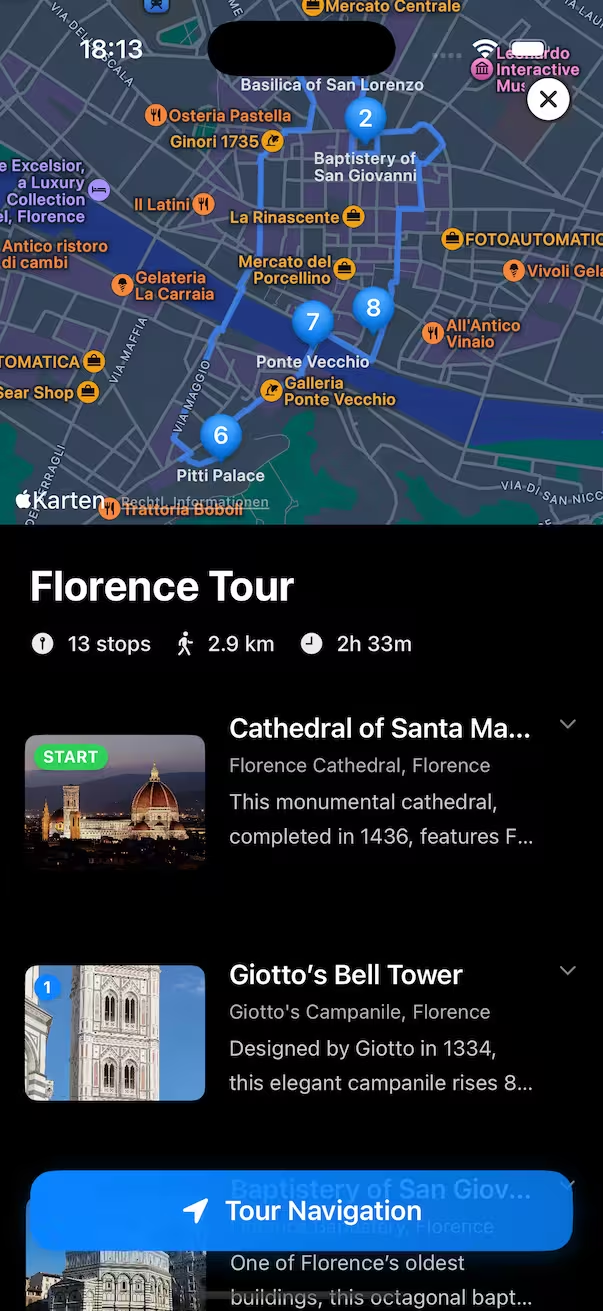
The classic Singapore tour: 10 stops, 8.6 km, about 3 h on foot
Your live AI guide and the self-guided Singapore route, together in your browser.