Best Time to Visit Stuttgart
Month-by-month weather, crowds and prices, plus a full calendar of festivals and events worth planning a trip around.
Best monthsMay, Oct
CheapestJan, Feb, Nov
AvoidSep
BusiestSep, Dec
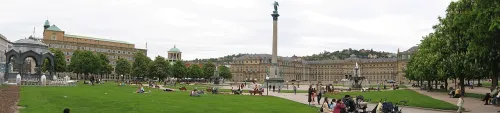
When is the best time to visit Stuttgart?
Come in May or mid-October: 15-22°C days, spring blossom or golden vineyard foliage, every museum open and hotel rates back to normal. The whole second half of September is the trap, when the AMB metalworking fair (15-19 Sep) and the Cannstatter Volksfest (from 25 Sep) stack hotel prices to 2-3 times normal. January, February and November are cheapest and quietest, the trade being grey, damp, short days.
Start our tool and find your best time to visit Stuttgart
Your perfect month
Free · ~30 seconds
or tap a month directly
What matters to you?
And this?
Best overall: May, Oct. May and mid-October are the real sweet spots. May brings the Frühlingsfest on the Cannstatter Wasen, tulips peaking at Höhenpark Killesberg, 18°C days and a trade-fair gap mid-month. Mid-October (from about 12 Oct, after the Volksfest ends on the 11th) gives golden vineyard foliage, 12-18°C, every museum open and hotel rates reset to normal after the September spike.
Best value: Aug, Jan. August is the year's best value: 3-star hotels at 80-120 € while everyone is on holiday, the Weindorf wine festival opening on 20 August, and long warm evenings in the Schlossgarten. January after CMT (from 26 Jan) is nearly as cheap at 70-110 €, with the Staatsgalerie free on Wednesdays. Skip December, when the Christmas market lifts rates back up.
Avoid: Sep. The entire second half of September is the year's worst value. The AMB metalworking fair (15-19 Sep, 50,000+ trade visitors) and the Cannstatter Volksfest opening (from 25 Sep, 4 million visitors over its run) stack hotel prices to 2-3 times normal, and rooms vanish months ahead. Unless you came for the Volksfest, book elsewhere on the calendar.
- January: Tough month, 5°C. This is Stuttgart at its calmest and most affordable. The Königstraße and Schlossplatz belong to locals, the automotive museums and the Staatsgalerie are close to queue-free, and the fix for a grey fogged-in day is the Fernsehturm, which often stands in sunshine above the cloud.
- February: Good time, 8°C. February is honest, unhurried Stuttgart with no seasonal markup. The automotive museums and the Staatsgalerie are at their emptiest, and on a foggy day the Fernsehturm above the cloud turns a grey afternoon spectacular. Cold and damp, but cheap and calm.
- March: Good time, 11°C. March is the last genuinely quiet month before spring fills the city. The café terraces start to reopen and you can still get a table without a fight, but mind that trade fairs keep hotel averages high even when the streets feel calm.
- April: Good time, 15°C. April is when Stuttgart shakes off winter and shows off. The Frühlingsfest atmosphere on the Wasen, tulips at Killesberg and blossom in Rosensteinpark make it one of the most photogenic windows of the year, busier and pricier than March but worth it for the spring energy.
- May: Good time, 18°C. May is the quietly ideal month: spring blossom still lingering, the Frühlingsfest atmosphere on the Wasen, good weather and a genuine trade-fair gap mid-month. Bring a rain layer for the showers and you get Stuttgart close to its best, before the deep-summer heat and the September spike.
- June: Good time, 24°C. June is the tipping point into full summer, and the long evenings are the payoff. Light past 21:00 means late strolls in the Schlossgarten and outdoor dinners, and the vineyard districts glow in golden-hour light. It is getting busier, but the summer school holidays have not hit, so it still breathes.
- July: Good time, 25°C. July is hot, busy and outdoor-focused. Walking the steep vineyard districts in the 13:00-16:00 heat is punishing, so go before 10:00 or after 17:00. The real July Stuttgart is on the Schlossplatz for JazzOpen and in the shaded Schlossgarten and Rosensteinpark, where locals decamp on hot evenings.
- August: Good time, 25°C. August is the best-value month and surprisingly relaxed: cheap hotels, long warm evenings and a city emptied of its commuters. The Weindorf from 20 August is the highlight, and the golden-hour vineyard walks east of the centre are at their most romantic before the autumn rush.
- September: Tough month, 21°C. September is glorious if you came for the Volksfest and brutal on the wallet if you did not. The second half of the month is the year's accommodation peak, with AMB and the Volksfest opening stacking together, so plan around it and book five-plus months ahead, or pick another month entirely.
- October: Good time, 16°C. October's back half is the second sweet spot and the couples' window: golden foliage on the Neckar hillsides, quieter museums and cosy wine taverns with the season's new wine. Cool, romantic and reset to normal prices, the reward for waiting out the Volksfest crowds until after the 11th.
- November: Good time, 10°C. November is Stuttgart at its most introverted: grey, foggy and almost touristless, but cheap and calm. The escape from the fog is the Fernsehturm above the cloud, and the consolation is the Christmas market arriving to brighten the final week. Bring warm layers and patience for the light.
- December: Tough month, 7°C. December trades November's emptiness for full festive bustle: lights, choirs, Glühwein and crowds. It is genuinely magical, especially the Altes Schloss courtyard, but it is busy and the most expensive leisure stretch outside September. Go midweek for the market and book early if you want the heart of December.
Stuttgart weather by month
HighLowRainfall
Jan5°
Feb8°
Mar11°
Apr15°
May18°
Jun24°
Jul25°
Aug25°
Sep21°
Oct16°
Nov10°
Dec7°
| Month | Temp | Rain | Sun | Crowds | Prices | Highlight |
|---|---|---|---|---|---|---|
| Jan | 5° / 0° | 70mm · 14 rainy days | 4.1 h/day | ●●○○○ | ●●○○○ | CMT Caravan, Motor und Touristik Fair |
| Feb | 8° / 0° | 58mm · 10 rainy days | 6.2 h/day | ●●○○○ | ●●○○○ | |
| Mar | 11° / 2° | 55mm · 11 rainy days | 8.1 h/day | ●●○○○ | ●●●○○ | |
| Apr | 15° / 5° | 57mm · 10 rainy days | 9.9 h/day | ●●●○○ | ●●●○○ | Stuttgart Spring Festival |
| May | 18° / 9° | 83mm · 14 rainy days | 10.6 h/day | ●●●●○ | ●●●●○ | Stuttgart Spring Festival |
| Jun | 24° / 14° | 75mm · 12 rainy days | 11.8 h/day | ●●●○○ | ●●●○○ | |
| Jul | 25° / 15° | 70mm · 11 rainy days | 12.2 h/day | ●●●●○ | ●●●●○ | JazzOpen Stuttgart |
| Aug | 25° / 15° | 89mm · 13 rainy days | 10.8 h/day | ●●●○○ | ●●○○○ | Stuttgart Wine Village |
| Sep | 21° / 11° | 55mm · 10 rainy days | 9.5 h/day | ●●●●● | ●●●●● | Stuttgart Wine Village |
| Oct | 16° / 8° | 65mm · 12 rainy days | 6.6 h/day | ●●●●● | ●●●●○ | Cannstatter Volksfest |
| Nov | 10° / 3° | 65mm · 12 rainy days | 4.8 h/day | ●●○○○ | ●●○○○ | Stuttgart Autumn Foliage |
| Dec | 7° / 1° | 73mm · 14 rainy days | 3.7 h/day | ●●●●○ | ●●●●○ | Stuttgart Christmas Market |
How we score this: weather = long-run climate normals (Open-Meteo), crowds & prices = relative season read, events checked yearly against official dates.
Best time to visit Stuttgart: weather, prices & crowds
Best months for good weather
May, Jun, Sep
May, June and early September give Stuttgart its most reliable comfort: 18-23°C, long evenings light past 21:00 thanks to its 48.8°N latitude, and the Schlossgarten and vineyard slopes at their greenest, without July and August's heat spells that the Kessel valley traps overnight.
Quietest months to avoid the crowds
Jan, Feb, Nov
January, February and November empty right out. You walk into the Staatsgalerie and the Mercedes-Benz Museum with no queue, and the Schlossplatz and Königstraße belong to locals rather than tour groups. The honest price is grey high fog and damp drizzle.
Cheapest time to visit Stuttgart
Aug, Jan, Feb
August is the statistically cheapest month, with 3-star centre hotels around 80-120 € a night (aggregator average near 111 USD), as business travel drops away. January after CMT (from about 26 Jan) and February match it at 70-110 €, roughly half the September peak.
Best time for festivals and events
Nov, Jan, Feb
When the Kessel valley fills with cold winter fog (Hochnebel) from November to February, the Fernsehturm (the world's first TV tower, observation deck at 150 m) often pokes above the cloud into bright sunshine while the city stays grey below. Check the tower webcam at fernsehturm-stuttgart.de first; open daily 10:00-22:00, 12.50 €.
How many days do you need in Stuttgart?
Stuttgart rewards two days. The city centre is compact enough to cover on foot in a single day, but the Swabian capital's car museums, vineyard slopes and galleries justify a second, and the green Schlossgarten and Neckar paths invite lingering.
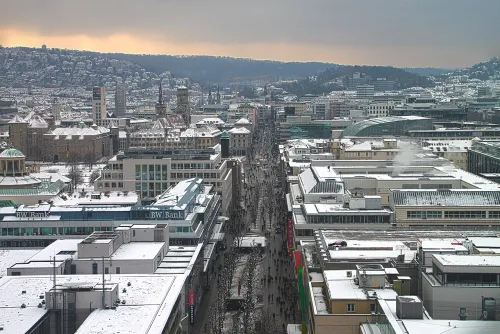
One day
Schlossplatz to Schillerplatz: the historic core
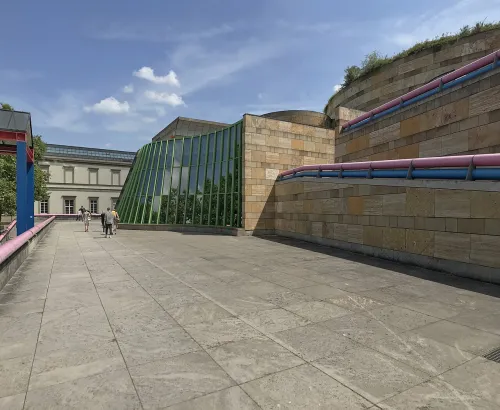
Start at Schlossplatz, framed by the Baroque Neues Schloss and the Renaissance Altes Schloss, then walk Königstraße, Stuttgart's pedestrianised spine, south to the Stiftskirche and the Art Nouveau Markthalle on Dorotheenstraße. Finish at the Staatsgalerie, a five-minute walk east, for one of Germany's finest art collections. The self-guided Stuttgart walking tour links all eleven stops across 5.8 km in about 3 hours and covers this core in full.
Two daysRecommended
Parks, libraries and the car museums
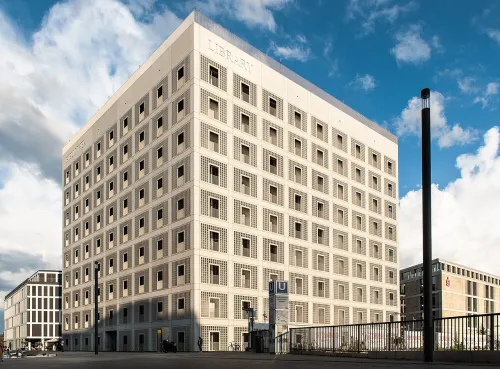
A second day stretches north through the Schlossgarten parkland to the striking white cube of the Stadtbibliothek am Mailänder Platz, then east to Eugensplatz for the view over the Kessel valley. In the afternoon, take the S-Bahn to the Mercedes-Benz Museum in Untertürkheim (16 €, evening ticket 8 €) or the Porsche Museum in Zuffenhausen (12 €). Both museums offer a 25% cross-discount on the other's ticket.
Three days
Vineyards, Wilhelma and the Fernsehturm
Day three goes green and high. Walk the Württemberg and Rotenberg vineyard slopes east of Bad Cannstatt in the cooler morning hours, then visit the Wilhelma, Germany's only combined zoological-botanical garden, in Rosensteinpark. Book Wilhelma tickets online and arrive at its 08:15 opening for the quietest visit (summer ticket 23 €). On a foggy winter day, swap the vineyards for the Fernsehturm: at 150 m, the observation deck often sits above the cloud in sunshine (10:00-22:00, 12.50 €).
Four days or more
Day trips, festivals and the Swabian hinterland
With four days you can time a visit around Stuttgart's major events: the Frühlingsfest on the Cannstatter Wasen in April and May, the Stuttgarter Weindorf on Marktplatz from late August, or the Cannstatter Volksfest in late September and early October (book tent tables four to eight weeks ahead for evenings). A day trip by S-Bahn reaches Tübingen's medieval Altstadt or Ludwigsburg's Baroque palace in 30 minutes.
Best time to visit Stuttgart by traveller type
Same city, different trip. Here's the month that fits how you're travelling.
🧭
Best time to visit Stuttgart for the first time
MayOct
May or mid-October: mild 15-22°C weather, the Frühlingsfest atmosphere or autumn vineyard colour, all the automotive museums and the Staatsgalerie open, Schlossplatz at its best, and hotel rates below the September maximum.
❤️
Best time to visit Stuttgart for couples
AugOct
Late August for the Weindorf wine village on Marktplatz and golden-hour walks through the Württemberg and Rotenberg vineyards, with hotels at their cheapest, or mid-October for foliage on the Neckar hillsides and cosier, quieter wine taverns before the Christmas crowds.
💶
Best time to visit Stuttgart on a budget
AugJan
August (cheapest hotels of the year, around 111 USD average) or January after CMT (70-110 € from 26 Jan into February). The Staatsgalerie is free on Wednesdays, Porsche and Mercedes museums give a 25% cross-discount, and the Schlossgarten, Killesberg and all public spaces cost nothing.
🍝
Best time to visit Stuttgart for food and wine
AugSep
Late August for the Stuttgarter Weindorf (opening 20 August, its 50th-anniversary edition) showcasing 500-plus Württemberg wines, or late September for the actual Stuttgart vineyard harvest. The Markthalle on a weekday morning has the freshest regional Swabian produce.
Worst time to visit Stuttgart
The entire second half of September is the year's worst time for anyone not attending the Cannstatter Volksfest. The AMB metalworking trade fair (five days in mid-September, 50,000-plus professional visitors) and the Volksfest opening weekend stack on top of each other, pushing city-centre hotel rates to two to three times normal. Rooms vanish months in advance and near-Messe hotels can hit 220-350 € a night during the AMB alone. The first eleven days of October stay expensive for the same reason: the Volksfest finale and the Motek, VISION and Bondexpo trade-fair cluster keep the pressure on until around 12 October.
Still worth it for If you came specifically for the Volksfest, the world's second-largest beer festival, September is exactly the right month. Book at least five to six months ahead and reserve tent tables four to eight weeks out for evening visits.
Go instead in May, October, when Stuttgart is at its best.
Best time for a tour of Stuttgart
Stuttgart rewards walkers most in June and early July, when highs sit around 23 to 25 °C and the Schlossgarten stays shaded enough to stay comfortable for a three-hour loop. April and May are genuinely pleasant too, temperatures climbing from 15 to 18 °C, though May brings 14 rain days so pack accordingly. The real trap is September and October: the weather is still mild at 16 to 21 °C, but both months are shoulder-to-shoulder with visitors drawn by the Cannstatter Volksfest and autumn breaks, and Schlossplatz can feel heaving at peak afternoon hours. December looks tempting on paper but delivers barely 7 °C highs, 14 wet days, and Christmas-market crowds that pack the Neues Schloss esplanade tight. January is the quietest month of the year, though 5 °C highs and a low that dips below freezing make the long straight of Königstraße a brisk trudge rather than a stroll. If you can only come in summer, arrive at the Markthalle Stuttgart when it opens and get the urban core walked before noon.
The clean advantage of doing Stuttgart with AI Tourguide is that no fixed departure time dictates your window. On a warm June morning, you can start your Stuttgart tour at 7 am, reach Schlossplatz while it is still quiet, and let the guide's stories about the Württemberg royal residences fill the cool air before the day heats up. In October, you walk whenever the Volksfest crowds thin rather than when a booked group slot forces you out. The guide runs entirely in your browser, speaks with you in a real back-and-forth conversation the whole route, and remembers what you found interesting at the Stiftskirche when it picks up the thread at Altes Schloss ten minutes later. Climate sets the hour; the tour waits for you.

 +7
+7All 11 stops are already on the map.
You just press start.
You just press start.
 AI Tourguide
You just read the route.
Now walk it with a guide in your ear.
Press start wherever you are, even hundreds of kilometres from Stuttgart, and the guide begins telling its stories right away. In the city, pick any of the 11 stops to start from: it leads you there, then talks with you the whole route, asking, listening, remembering, and shaping the tour around your answers.
11stops5.8km2.9hours11languages
▶Start the tour freeFree to start · Runs in your browser · No app, no download
Stuttgart events and festivals calendar
Annual highlights worth timing a trip around, listed month by month.
January
🎨 Art and cultureCMT Caravan, Motor und Touristik Fair CMT
Jan 17–25
mid-to-late January
Europe's largest holiday and outdoor-leisure fair at Messe Stuttgart, drawing more than 200,000 visitors for caravans, motorhomes, outdoor gear and travel destinations.
April
🌸 Seasonal natureKillesberg Tulip Bloom Killesbergpark Frühjahrsblüte
Apr 15 – May 5 ~
mid-April to early May, peaking with the spring warmth
The 50-hectare Höhenpark Killesberg fills with thousands of tulips and spring flowers, free to enter, peaking in the same window as the Frühlingsfest.
🎉 FestivalStuttgart Spring Festival Stuttgarter Frühlingsfest
Apr 18 – May 10
mid-April to mid-May, about three weeks
The world's largest spring festival on the Cannstatter Wasen: 220 rides, four beer tents, a craft market and an opening-day balloon race, drawing about 2.2 million visitors over three weeks.
July
🎵 MusicJazzOpen Stuttgart Jazzopen Stuttgart
Jul 1–12
first twelve days of July
A twelve-day jazz-and-beyond festival on Schlossplatz, at the Altes Schloss and in club venues, drawing about 50,000 visitors.
🏳️🌈 PrideStuttgart Pride / CSD Stuttgart PRIDE, CSD Stuttgart
Jul 10–26 ~
culture weeks 10-26 July, parade on the last Saturday, 25 July
A Christopher Street Day political demonstration and parade plus a two-week culture programme, with thousands of participants and 100-plus groups marching, and the CSD-Hocketse on Markt- and Schillerplatz over the parade weekend.
August
🍷 Food and wineStuttgart Wine Village Stuttgarter Weindorf
Aug 20 – Sep 5 ~
late August to early September, about 17 days
A wine village across Marktplatz, Schillerplatz and Kirchstraße with 30 innkeepers, 500-plus Baden-Württemberg wines (Trollinger, Spätburgunder, Riesling) and Swabian food.
September
🌸 Seasonal natureAMB International Metalworking Fair AMB
Sep 15–19
five days in mid-September, biennial in even years
One of Europe's largest metalworking trade fairs at Messe Stuttgart: 1,000-plus exhibitors from 30-plus nations and 50,000-plus professional visitors over five days.
🎉 FestivalCannstatter Volksfest
Sep 25 – Oct 11
last Friday of September through 11 October, 17 days
The world's second-largest beer festival after Munich's Oktoberfest: a 25-hectare site on the Neckar banks in Bad Cannstatt with eight large beer tents, Stuttgart-brewed beers and fairground rides, drawing about 4 million visitors.
October
🌸 Seasonal natureMotek, VISION and Bondexpo Cluster Motek, VISION, Bondexpo
Oct 6–8
early October, immediately after the Volksfest
Three simultaneous B2B trade fairs at Messe Stuttgart in the days right after the Volksfest ends, keeping hotels above normal rates from 6 to 8 October even as the festival winds down.
🌸 Seasonal natureStuttgart Autumn Foliage Herbstfärbung
Oct 12 – Nov 5 ~
mid-October to the first week of November
Rosensteinpark, Höhenpark Killesberg and the Württemberg-Rotenberg vineyard slopes turn orange and gold, with pleasant walking paths along the Neckar.
🍷 Food and wineSüdback Bakery and Confectionery Fair Südback
Oct 24–27
late October, biennial in even years
A biennial European bakery and confectionery trade fair at Messe Stuttgart, with public days on the weekend that often feature tastings and demonstrations.
November
🎄 Christmas marketStuttgart Christmas Market Stuttgarter Weihnachtsmarkt
Nov 25 – Dec 23
late November to 23 December
One of Germany's oldest, documented from 1692, and largest Christmas markets: about 300 stalls across Schlossplatz, Schillerplatz and Marktplatz, run on green electricity, with 60-plus choirs and an opening ceremony in the Altes Schloss courtyard.
Insider tips for visiting Stuttgart
The rules buried in forums, in one place.
- Anyone visiting in the second half of September who is not attending the AMB fair (15-19 Sep) or the Cannstatter Volksfest (from 25 Sep) should book at least four to five months ahead or pay 2-3 times normal rates. If you want Stuttgart in September but not the spike, base yourself a short S-Bahn ride out and commute into the centre.
- Volksfest tent reservations are effectively mandatory for evening visits. Walk-ins to the main beer tents on Friday and Saturday after 18:00 are near-impossible once they fill. Reserve through individual tent websites four to eight weeks ahead, with a minimum spend per person. Weekday lunchtime (12:00-15:00) you can usually walk in.
- The Staatsgalerie is free on Wednesdays, but a queue forms by 09:45 before the 10:00 opening. If paying 10 € bothers you less than a 45-minute wait, come Tuesday or Thursday instead. Thursday evening, open until 20:00, is the least crowded paid slot. It is closed Mondays.
- The Mercedes-Benz Museum evening ticket (8 €) is the strongest value in town: the full collection for half the 16 € day price, in the last hours before close. The Porsche Museum (12 €) gives 25% off if you show a Mercedes ticket, and vice versa. Both close on Mondays, so a Monday-morning arrival meets a locked door.
- At the Stuttgarter Weindorf on Marktplatz, the golden hour is from 18:00 before it gets packed, and weekdays beat weekends easily. Tuesday and Wednesday evenings (18:00-21:00) have seating without long waits; locals come Monday to Thursday and the tourist mass arrives Friday and Saturday.
- The Christmas market draws 3.5-4 million people across four weeks, and Saturday afternoons are suffocating. Monday to Wednesday mornings (11:00-13:00) are the most manageable, and the Altes Schloss courtyard sub-market is always calmer than the main Schlossplatz area.
- On a foggy winter day check the Fernsehturm webcam: when the Kessel valley is fogged in, the tower deck at about 150 m is often in sunshine above the cloud layer, which makes a January or February visit unexpectedly spectacular. Open daily 10:00-22:00, 12.50 € adults.
- Buy Wilhelma tickets online to skip the physical queue, which is long on public holidays and sunny weekends (summer day ticket 23 €). It opens at 08:15 and the first 90 minutes are the quietest. Note that Stuttgart 21 construction around the Hauptbahnhof can divert the station-side park entrances, so allow ten extra minutes on foot.
Public holidays in Stuttgart
On these dates many shops and offices close, transport thins out, and sights can be mobbed or shut. Plan around them.
| Date | Holiday | What closes |
|---|---|---|
| Jan 1 | New Year's Day | Almost all shops and museums closed; public transport runs a reduced holiday timetable. The city is quiet after New Year's Eve. |
| Jan 6 | Epiphany | A Baden-Württemberg public holiday: most shops closed, though many museums stay open. Check individual museum schedules before you go. |
| Apr 3 | Good Friday | Shops closed and a quiet, observed mood across the city, but many museums stay open. Services at the Stiftskirche. |
| Apr 5 | Easter Sunday | Markets and most shops closed; churches packed. The Schlossgarten and Killesberg fill with families on a fine day. |
| Apr 6 | Easter Monday | Public holiday: most shops closed. The Schlossgarten and Höhenpark Killesberg are popular, and the Frühlingsfest is in full swing on the Wasen. |
| May 1 | Labour Day | All shops closed and union rallies on Schlossplatz. The Frühlingsfest opens at 11:00, an earlier-than-usual start for the holiday. |
| May 14 | Ascension Day | Public holiday that creates a popular Friday bridge day on 15 May, so domestic travel surges. The Mercedes-Benz and Porsche museums stay open; shops closed. |
| May 25 | Whit Monday | Public holiday with schools off until 5 June, so leisure travel surges and the Schlossgarten gets crowded. Shops closed. |
| Jun 4 | Corpus Christi | A Baden-Württemberg public holiday with processions in the city centre. Shops closed, museums open. |
| Oct 3 | German Unity Day | National holiday with festive events in the centre. Shops closed, museums open, and the Cannstatter Volksfest is still running on the Wasen. |
| Dec 25 | Christmas Day | Everything closed and public transport on a holiday schedule. The Christmas market has already ended on 23 December. |
| Dec 26 | Boxing Day | Second Christmas holiday: everything closed. The Christmas market season is over, and the city is quiet through to New Year. |
Stuttgart month by month
January in Stuttgart
High5°C / 42°F
Low0°C
Rain70mm / 14 rainy days
Sun4.1 h/day
Daylight9 h/day
Humidity82%
Crowds●●○○○Prices●●○○○
January is Stuttgart's post-Christmas lull, cold and short on daylight (sunrise around 08:18, sunset near 16:13). The CMT travel fair (17-25 Jan) draws trade visitors and lifts hotel prices that week, but once it clears the city is quiet and genuinely cheap. The Kessel valley fills with high fog, which is the month's quiet trick rather than its drawback.
The vibe This is Stuttgart at its calmest and most affordable. The Königstraße and Schlossplatz belong to locals, the automotive museums and the Staatsgalerie are close to queue-free, and the fix for a grey fogged-in day is the Fernsehturm, which often stands in sunshine above the cloud.
Don't miss On a fogged-in day, check the Fernsehturm webcam and ride up: the deck at 150 m is often above the cloud in bright sun (10:00-22:00, 12.50 €). The Staatsgalerie is free on Wednesdays, and the Mercedes-Benz and Porsche museums are near-empty on weekday mornings.
Crowd drivers The post-Christmas lull keeps leisure tourism low. The CMT fair (17-25 Jan) is the only real pull, and it is trade visitors, not sightseers, who fill the hotels.
In season Deep-winter Swabian comfort food season: Maultaschen, Linsen mit Spätzle and hearty Trollinger reds in the old wine taverns (Weinstuben), with no trouble getting a table.
Heads up New Year's Day (1 Jan) closes almost everything, and Epiphany (6 Jan), a Baden-Württemberg holiday, shuts most shops though many museums stay open.
Cheap once CMT clears: 3-star centre hotels 70-110 € a night from about 26 January, though the CMT week (17-25 Jan) lifts rates to 140-180 €.
Events this month
🎨 Art and cultureCMT Caravan, Motor und Touristik Fair CMT
Jan 17–25
mid-to-late January
Europe's largest holiday and outdoor-leisure fair at Messe Stuttgart, drawing more than 200,000 visitors for caravans, motorhomes, outdoor gear and travel destinations.
Little impact on city sightseeing, but it is January's hotel-price spike, lifting centre rates to 140-180 € that week. Worth knowing for accommodation planning.
February in Stuttgart
High8°C / 46°F
Low0°C
Rain58mm / 10 rainy days
Sun6.2 h/day
Daylight10 h/day
Humidity76%
Crowds●●○○○Prices●●○○○
February is one of Stuttgart's quietest months. Highs stay low and the days are short and often grey, with the Kessel valley fog at its most persistent. There is a minor uptick over the moveable Fasching carnival weekend, but domestic tourism is low and prices sit at their floor. It is a month for the indoor heavyweights, the museums and the wine taverns.
The vibe February is honest, unhurried Stuttgart with no seasonal markup. The automotive museums and the Staatsgalerie are at their emptiest, and on a foggy day the Fernsehturm above the cloud turns a grey afternoon spectacular. Cold and damp, but cheap and calm.
Don't miss A perfect month for the Mercedes-Benz Museum (16 €, evening ticket 8 €) and the Porsche Museum (12 €, both closed Mondays), and the Staatsgalerie free on Wednesdays or open until 20:00 on Thursdays. On a Hochnebel day, the Fernsehturm above the fog is the standout.
Crowd drivers Domestic tourism is at its annual low. The moveable Fasching carnival weekend brings a small, brief uptick, but nothing like a crowd.
In season Still Maultaschen and Linsen mit Spätzle weather; the Markthalle (Mon-Fri 7:30-18:30, Sat 7:00-17:00) is at its best for regional Swabian provisions on a quiet weekday morning.
At the annual floor with January: 3-star centre hotels 70-110 €, with the Fasching carnival weekend edging rates toward 120 €.
March in Stuttgart
High11°C / 52°F
Low2°C
Rain55mm / 11 rainy days
Sun8.1 h/day
Daylight12 h/day
Humidity72%
Crowds●●○○○Prices●●●○○
March brings the first signs of spring, with magnolias and cherry trees starting to colour in Rosensteinpark from late month and the daylight stretching out. It is still cool and changeable, but the early convention season at Messe Stuttgart picks up business travel, which makes March the statistically most expensive month on average from the aggregators. Leisure crowds, though, stay light.
The vibe March is the last genuinely quiet month before spring fills the city. The café terraces start to reopen and you can still get a table without a fight, but mind that trade fairs keep hotel averages high even when the streets feel calm.
Don't miss Late-March magnolias and cherry blossom begin in Rosensteinpark, the lead-in to the photogenic spring window. The automotive museums and Staatsgalerie are still uncrowded, and the Wilhelma's spring tariff is better value than summer.
Crowd drivers Early-season conventions at Messe Stuttgart drive business travel and lift average hotel prices, but there is no leisure mass and no school holidays yet.
In season The transitional season for the Swabian kitchen; the Markthalle and the Wochenmarkt on Schillerplatz (Tuesdays and Fridays) bring the first spring produce to the city centre.
Statistically the priciest month on average (aggregators near 260 USD) as the convention season starts; off-fair 3-star rates run 90-150 €.
April in Stuttgart
High15°C / 59°F
Low5°C
Rain57mm / 10 rainy days
Sun9.9 h/day
Daylight14 h/day
Humidity69%
Crowds●●●○○Prices●●●○○
April is Stuttgart coming alive. The Frühlingsfest opens on the Cannstatter Wasen (18 April) and Höhenpark Killesberg fills with tulips, while Rosensteinpark cherry blossom peaks in the first half of the month. The Easter long weekend (3-6 April) packs the Schlossplatz and Schlossgarten. Showers are common, so pack a light layer, but the city is at its spring best.
The vibe April is when Stuttgart shakes off winter and shows off. The Frühlingsfest atmosphere on the Wasen, tulips at Killesberg and blossom in Rosensteinpark make it one of the most photogenic windows of the year, busier and pricier than March but worth it for the spring energy.
Don't miss The Frühlingsfest brings 220 rides and four beer tents to the Wasen, with discounted family Wednesdays. Killesberg tulips and Rosensteinpark blossom peak now, the city's single most photogenic green window. The Wilhelma is at its spring best, so book online and arrive at its 08:15 opening.
Crowd drivers The Frühlingsfest (from 18 Apr) and the Easter long weekend (3-6 Apr) draw the crowds, with the Schlossgarten and Killesberg busy on fine days.
In season Spring Spargel (white asparagus) arrives on Swabian menus from April, served with new potatoes and local ham, and the Markthalle stocks the first of the season.
Heads up Good Friday (3 Apr) and Easter Monday (6 Apr) close shops, though many museums stay open. The Frühlingsfest runs through the Easter weekend on the Wasen.
Rising demand: off-fair 3-star rates 100-160 €, with the Easter weekend (3-6 Apr) up about 20% and near-Wasen hotels busier as the Frühlingsfest opens.
Events this month
🎉 FestivalStuttgart Spring Festival Stuttgarter Frühlingsfest
Apr 18 – May 10
mid-April to mid-May, about three weeks
The world's largest spring festival on the Cannstatter Wasen: 220 rides, four beer tents, a craft market and an opening-day balloon race, drawing about 2.2 million visitors over three weeks.
All the colour and atmosphere of a Volksfest without the autumn crowds, capped by a musical fireworks finale on 10 May at 21:30. Arrive early on the opening weekend (18 April) and the finale. Family Wednesdays offer discounted ride passes.
🌸 Seasonal natureKillesberg Tulip Bloom Killesbergpark Frühjahrsblüte
Apr 15 – May 5 ~
mid-April to early May, peaking with the spring warmth
The 50-hectare Höhenpark Killesberg fills with thousands of tulips and spring flowers, free to enter, peaking in the same window as the Frühlingsfest.
The city's single most photogenic green-season moment, and it pairs perfectly with the Frühlingsfest. Best on a midweek morning before families arrive at the weekend.
May in Stuttgart
High18°C / 65°F
Low9°C
Rain83mm / 14 rainy days
Sun10.6 h/day
Daylight15 h/day
Humidity71%
Crowds●●●●○Prices●●●●○
May is one of Stuttgart's two sweet spots. The Frühlingsfest runs to its musical fireworks finale on 10 May, the city is in full leaf and the weather turns reliably mild around 18°C. It is the wettest month on average, but the rain tends to come as short showers. Ascension Day (14 May) and Whit Monday (25 May) bring school holidays and a domestic-travel surge, so weekends fill, but the overall balance is excellent.
The vibe May is the quietly ideal month: spring blossom still lingering, the Frühlingsfest atmosphere on the Wasen, good weather and a genuine trade-fair gap mid-month. Bring a rain layer for the showers and you get Stuttgart close to its best, before the deep-summer heat and the September spike.
Don't miss Catch the Frühlingsfest musical fireworks finale on 10 May at 21:30, and the last of the Killesberg tulips. With 18°C days and long light evenings, the Schlossgarten, the Württemberg vineyards and the Neckar paths at Bad Cannstatt are at their walking best.
Crowd drivers The Frühlingsfest finale (9-10 May), the Ascension and Whit Monday bridge days, and the GrindingHub and UNITI trade fairs at Messe all add demand, though leisure crowds stay manageable midweek.
In season Peak Spargel season: Swabian kitchens build whole menus around white asparagus, paired with crisp local Riesling from the Württemberg slopes.
Heads up Labour Day (1 May) closes all shops, with the Frühlingsfest opening at 11:00 and union rallies on Schlossplatz. Ascension (14 May) and Whit Monday (25 May) also close shops.
Higher leisure demand: off-fair 3-star rates 110-170 €, with the Frühlingsfest finale weekend (9-10 May) and trade-fair weeks pushing 140-190 €.
Events this month
🎉 FestivalStuttgart Spring Festival Stuttgarter Frühlingsfest
Apr 18 – May 10
mid-April to mid-May, about three weeks
The world's largest spring festival on the Cannstatter Wasen: 220 rides, four beer tents, a craft market and an opening-day balloon race, drawing about 2.2 million visitors over three weeks.
All the colour and atmosphere of a Volksfest without the autumn crowds, capped by a musical fireworks finale on 10 May at 21:30. Arrive early on the opening weekend (18 April) and the finale. Family Wednesdays offer discounted ride passes.

June in Stuttgart
High24°C / 74°F
Low14°C
Rain75mm / 12 rainy days
Sun11.8 h/day
Daylight16 h/day
Humidity69%
Crowds●●●○○Prices●●●○○
June opens Stuttgart's summer, with pleasantly warm days, the longest daylight of the year (light past 21:00) and the Schlossgarten and vineyard slopes at their greenest. Corpus Christi (4 June) brings a long weekend, and B2B automotive-cluster fairs at Messe spike near-fairground hotels on their dates. Afternoon thunderstorms can build after 14:00, but the long light evenings make June one of the best months to be here.
The vibe June is the tipping point into full summer, and the long evenings are the payoff. Light past 21:00 means late strolls in the Schlossgarten and outdoor dinners, and the vineyard districts glow in golden-hour light. It is getting busier, but the summer school holidays have not hit, so it still breathes.
Don't miss Walk the Württemberg and Rotenberg vineyards in the cooler golden hour, or the Neckar paths at Bad Cannstatt. The Schlossgarten and Rosensteinpark are at their leafy best, and the long evenings carry the neighbourhood street festivals like the Heusteigviertelfest.
Crowd drivers The Corpus Christi long weekend (4 Jun) and automotive-cluster trade fairs at Messe (9-11 and 23-25 Jun) drive demand near the fairground; general leisure pressure is moderate.
In season Early summer terrace and Biergarten season opens; the Markthalle's regional cheeses, sausages and first stone fruit make easy picnic provisions for the parks.
Shoulder pricing: off-fair 3-star rates 90-140 €, with the automotive Messe clusters (9-11 and 23-25 Jun) spiking near-fairground hotels to 150-200 €.
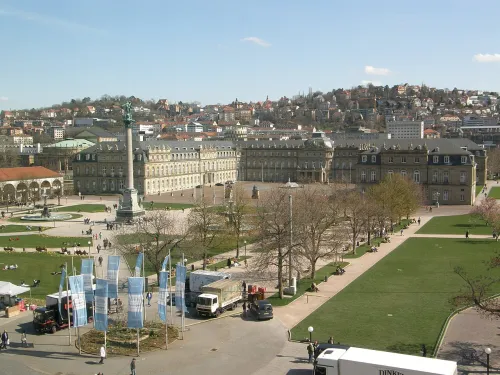
July in Stuttgart
High25°C / 77°F
Low15°C
Rain70mm / 11 rainy days
Sun12.2 h/day
Daylight16 h/day
Humidity65%
Crowds●●●●○Prices●●●●○
July is high summer and one of Stuttgart's busiest leisure months. Hot spells of 28-32°C are common, and the Kessel valley traps the heat overnight, so the city centre stays warm after dark. JazzOpen takes over Schlossplatz (1-12 July) and Stuttgart Pride culminates in its 25 July parade. Afternoon thunderstorms build after 14:00 and usually clear by 17:00. Walk the steep vineyard districts before 10:00 or after 17:00 to avoid the midday heat.
The vibe July is hot, busy and outdoor-focused. Walking the steep vineyard districts in the 13:00-16:00 heat is punishing, so go before 10:00 or after 17:00. The real July Stuttgart is on the Schlossplatz for JazzOpen and in the shaded Schlossgarten and Rosensteinpark, where locals decamp on hot evenings.
Don't miss JazzOpen turns the Schlossplatz into an extraordinary open-air concert setting, with some free Open Stage sets. Stuttgart Pride brings a two-week culture programme and its 25 July parade. When midday heat or pricey pre-booked tours put you off, our live in-browser AI guide is the always-available, flat-priced alternative to an expensive human guide, telling you the story of each sight as you walk the cooler early hours, with no app to download and you choosing where to begin.
Crowd drivers JazzOpen (1-12 Jul) and the Stuttgart Pride parade weekend (25 Jul) are the big draws, both selling out central hotels, on top of peak summer leisure travel.
In season Biergarten and terrace season peaks; the neighbourhood summer street festivals (Bohnenviertelfest, Feuerseefest) add open-air food, and long evenings make outdoor dining a pleasure.
Peak leisure pricing: off-fair 3-star rates 120-180 €, rising to 180-220 € over JazzOpen weekends and the CSD parade weekend (25 Jul).
Events this month
🎵 MusicJazzOpen Stuttgart Jazzopen Stuttgart
Jul 1–12
first twelve days of July
A twelve-day jazz-and-beyond festival on Schlossplatz, at the Altes Schloss and in club venues, drawing about 50,000 visitors. Founded in 1994, with headliners spanning Nick Cave, Katy Perry, Jamiroquai and Diana Krall.
The most prestigious outdoor music event in Stuttgart, and the Schlossplatz setting is extraordinary. Book headliner nights three to four months ahead; some Open Stage sets are free.
🏳️🌈 PrideStuttgart Pride / CSD Stuttgart PRIDE, CSD Stuttgart
Jul 10–26 ~
culture weeks 10-26 July, parade on the last Saturday, 25 July
A Christopher Street Day political demonstration and parade plus a two-week culture programme, with thousands of participants and 100-plus groups marching, and the CSD-Hocketse on Markt- and Schillerplatz over the parade weekend.
July's biggest street event, and it overlaps JazzOpen for a productive double-header. City-centre hotels sell out over the 25 July parade weekend, so book early.

August in Stuttgart
High25°C / 76°F
Low15°C
Rain89mm / 13 rainy days
Sun10.8 h/day
Daylight14 h/day
Humidity70%
Crowds●●●○○Prices●●○○○
August is the statistically cheapest month, with many Germans away on holiday and business travel low. Hot days are possible but the evenings are pleasant, and the Schlossgarten is at its greenest. The Stuttgarter Weindorf opens on Marktplatz on 20 August, its 50th-anniversary edition, beginning the late-summer wine season and a gentle uptick in demand as the month ends.
The vibe August is the best-value month and surprisingly relaxed: cheap hotels, long warm evenings and a city emptied of its commuters. The Weindorf from 20 August is the highlight, and the golden-hour vineyard walks east of the centre are at their most romantic before the autumn rush.
Don't miss The Stuttgarter Weindorf brings 500-plus Württemberg wines and Swabian food to Marktplatz, Schillerplatz and Kirchstraße. Go for the 18:00 golden hour and a weekday evening to dodge the weekend crush. The vineyard slopes are warm and ripe for late-afternoon walks.
Crowd drivers Business travel is at its annual low and many locals are away, which is why hotels are cheapest. The Weindorf opening (20 Aug) starts a shoulder uptick toward month-end.
In season The Weindorf is the month's centrepiece for Trollinger, Spätburgunder and Riesling; pair it with Swabian Maultaschen and Zwiebelrostbraten from the wine-village stands.
The cheapest month of the year: 3-star centre hotels 80-120 € (aggregator average near 111 USD), with a shoulder uptick once the Weindorf opens on 20 August.
Events this month
🍷 Food and wineStuttgart Wine Village Stuttgarter Weindorf
Aug 20 – Sep 5 ~
late August to early September, about 17 days
A wine village across Marktplatz, Schillerplatz and Kirchstraße with 30 innkeepers, 500-plus Baden-Württemberg wines (Trollinger, Spätburgunder, Riesling) and Swabian food.
The best showcase of Württemberg viticulture, and entry is free. Early evening from 18:00 is the golden hour before it fills, and weekday evenings beat the weekend crush easily.
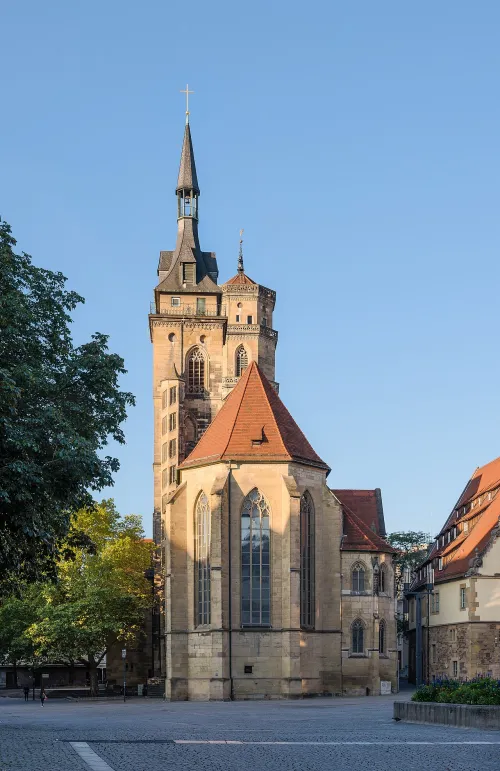
September in Stuttgart
High21°C / 69°F
Low11°C
Rain55mm / 10 rainy days
Sun9.5 h/day
Daylight13 h/day
Humidity74%
Crowds●●●●●Prices●●●●●
September is Stuttgart's single busiest and most expensive month. The Weindorf runs until 5 September, then the AMB metalworking fair (15-19 Sep) and the Cannstatter Volksfest opening (from 25 Sep) stack one spike onto another, with the four-yearly agricultural fair running alongside the Volksfest in 2026. The early-autumn weather is pleasant, but accommodation is either unavailable or 2-3 times normal price.
The vibe September is glorious if you came for the Volksfest and brutal on the wallet if you did not. The second half of the month is the year's accommodation peak, with AMB and the Volksfest opening stacking together, so plan around it and book five-plus months ahead, or pick another month entirely.
Don't miss The Cannstatter Volksfest, the world's second-largest beer festival, fills the Wasen with eight beer tents and fairground rides; reserve a tent table four to eight weeks ahead for evenings. Late September is also the Stuttgart vineyard harvest, the slopes at their most beautiful with ripe grapes on the vines.
Crowd drivers The AMB fair (15-19 Sep, 50,000+ trade visitors) and the Cannstatter Volksfest opening weekend (25-27 Sep, 4 million over the run) are the dominant drivers, with the Weindorf tail end adding to early-month demand.
In season The Volksfest puts Stuttgart-brewed beer and Swabian fairground food centre stage, while the vineyard harvest (Lese) brings the first new wine into the region's taverns.
Heads up No public holidays this month, but Volksfest beer-tent walk-ins are near-impossible on Friday and Saturday evenings without a reservation. Lunchtime weekdays you can usually walk in.
The year's most expensive stretch: AMB week (15-19 Sep) lifts near-Messe hotels to 220-350 € and the Volksfest opening pushes city-centre rates 2-3 times normal.
Events this month
🍷 Food and wineStuttgart Wine Village Stuttgarter Weindorf
Aug 20 – Sep 5 ~
late August to early September, about 17 days
A wine village across Marktplatz, Schillerplatz and Kirchstraße with 30 innkeepers, 500-plus Baden-Württemberg wines (Trollinger, Spätburgunder, Riesling) and Swabian food.
The best showcase of Württemberg viticulture, and entry is free. Early evening from 18:00 is the golden hour before it fills, and weekday evenings beat the weekend crush easily.
🌸 Seasonal natureAMB International Metalworking Fair AMB
Sep 15–19
five days in mid-September, biennial in even years
One of Europe's largest metalworking trade fairs at Messe Stuttgart: 1,000-plus exhibitors from 30-plus nations and 50,000-plus professional visitors over five days. It runs every two years in even years.
The dominant hotel-price spike of the year alongside the Volksfest, pushing near-Messe rates to 220-350 € a night. Avoid staying near the fairground during 15-19 September unless you are attending, or book the city centre early.
🎉 FestivalCannstatter Volksfest
Sep 25 – Oct 11
last Friday of September through 11 October, 17 days
The world's second-largest beer festival after Munich's Oktoberfest: a 25-hectare site on the Neckar banks in Bad Cannstatt with eight large beer tents, Stuttgart-brewed beers and fairground rides, drawing about 4 million visitors. Every four years it runs alongside the agricultural fair (Landwirtschaftliches Hauptfest, LWH).
Plan the whole trip around it or book well outside these dates. The opening weekend (25-27 Sep) and the final weekend (9-11 Oct) are most crowded, with city-wide hotel rates 2-3 times normal. Book six-plus months ahead for the Volksfest period.

October in Stuttgart
High16°C / 61°F
Low8°C
Rain65mm / 12 rainy days
Sun6.6 h/day
Daylight11 h/day
Humidity80%
Crowds●●●●●Prices●●●●○
October is a month of two halves. Through the 11th the Cannstatter Volksfest finale and the Motek, VISION and Bondexpo trade-fair cluster (6-8 Oct) keep prices at their annual peak, with German Unity Day (3 Oct) adding a long weekend. From the 12th the spike collapses, the foliage peaks on the Uetliberg-like slopes of Rosensteinpark, Killesberg and the vineyards, and the city settles into a calm, well-priced golden autumn.
The vibe October's back half is the second sweet spot and the couples' window: golden foliage on the Neckar hillsides, quieter museums and cosy wine taverns with the season's new wine. Cool, romantic and reset to normal prices, the reward for waiting out the Volksfest crowds until after the 11th.
Don't miss After the Volksfest ends, autumn foliage peaks in Rosensteinpark, Höhenpark Killesberg and the Württemberg vineyards, with 12-16°C days for walking the Neckar paths. The natural history museums at Rosenstein pair well with the park, and the late-October new wine (Federweißer) fills the region's taverns.
Crowd drivers The Volksfest finale (9-11 Oct), the Motek cluster (6-8 Oct) and German Unity Day (3 Oct) hold the first eleven days crowded and pricey. After 11 October the pressure falls away sharply.
In season Federweißer (new wine) and the season's harvest appear in the wine taverns, and the biennial Südback fair (24-27 Oct) brings artisan baking with public tasting days.
Heads up German Unity Day (3 Oct) closes shops, though museums stay open and the Volksfest runs on. The Markthalle is closed Sundays and public holidays.
Two halves: the Volksfest finale and Motek cluster (to 8 Oct) hold rates at 200-320 € near the Wasen and Messe, then post-Volksfest (from 12 Oct) they drop to 110-150 €.
Events this month
🎉 FestivalCannstatter Volksfest
Sep 25 – Oct 11
last Friday of September through 11 October, 17 days
The world's second-largest beer festival after Munich's Oktoberfest: a 25-hectare site on the Neckar banks in Bad Cannstatt with eight large beer tents, Stuttgart-brewed beers and fairground rides, drawing about 4 million visitors. Every four years it runs alongside the agricultural fair (Landwirtschaftliches Hauptfest, LWH).
Plan the whole trip around it or book well outside these dates. The opening weekend (25-27 Sep) and the final weekend (9-11 Oct) are most crowded, with city-wide hotel rates 2-3 times normal. Book six-plus months ahead for the Volksfest period.
🌸 Seasonal natureMotek, VISION and Bondexpo Cluster Motek, VISION, Bondexpo
Oct 6–8
early October, immediately after the Volksfest
Three simultaneous B2B trade fairs at Messe Stuttgart in the days right after the Volksfest ends, keeping hotels above normal rates from 6 to 8 October even as the festival winds down.
Avoid near-Messe hotels in this window unless attending. Stacked onto the tail of the Volksfest, it makes early October the most expensive accommodation stretch of the year.
🌸 Seasonal natureStuttgart Autumn Foliage Herbstfärbung
Oct 12 – Nov 5 ~
mid-October to the first week of November
Rosensteinpark, Höhenpark Killesberg and the Württemberg-Rotenberg vineyard slopes turn orange and gold, with pleasant walking paths along the Neckar.
The sweet spot is after the Volksfest ends (post 11 October), when the crowds thin, the foliage peaks and daytime temperatures hold around 12-16°C. The vineyard hillsides are at their most beautiful in this stretch.
🍷 Food and wineSüdback Bakery and Confectionery Fair Südback
Oct 24–27
late October, biennial in even years
A biennial European bakery and confectionery trade fair at Messe Stuttgart, with public days on the weekend that often feature tastings and demonstrations. It runs every two years in even years.
Niche, but the public weekend days are worth noting for food lovers and pair well with the region's late-October new-wine taverns.
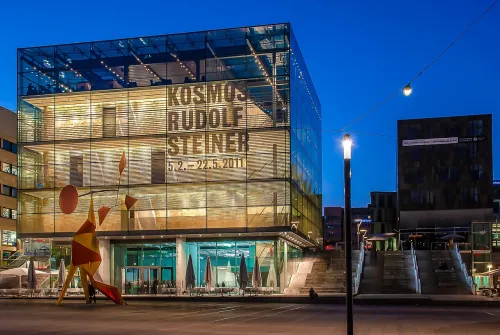
November in Stuttgart
High10°C / 49°F
Low3°C
Rain65mm / 12 rainy days
Sun4.8 h/day
Daylight9 h/day
Humidity84%
Crowds●●○○○Prices●●○○○
November is quiet, grey and damp, with persistent drizzle and the Kessel valley fog at its thickest. It is the off-season, with prices at their annual floor for most of the month. Then on 25 November the Stuttgart Christmas market opens across Schlossplatz, Schillerplatz and Marktplatz, bringing a first burst of light and life into the centre as the month ends.
The vibe November is Stuttgart at its most introverted: grey, foggy and almost touristless, but cheap and calm. The escape from the fog is the Fernsehturm above the cloud, and the consolation is the Christmas market arriving to brighten the final week. Bring warm layers and patience for the light.
Don't miss On a fogged-in day the Fernsehturm above the cloud is the signature November experience, often in sunshine while the valley stays grey (webcam first, 12.50 €). From 25 November the Christmas market opens with its ceremony in the Altes Schloss courtyard and about 300 stalls of Glühwein and Swabian Weihnachtsgebäck.
Crowd drivers High-fog season and damp weather keep tourists away for most of the month. The Christmas market opening on 25 November brings the first uptick toward month-end.
In season Glühwein and roasted chestnuts arrive on street corners as the market opens, alongside the deep-Swabian winter dishes returning to the wine taverns.
Annual price low alongside January: 3-star centre hotels 70-110 €, until the Christmas market opening weekend (from 25 Nov) lifts rates to 130-160 €.
Events this month
🌸 Seasonal natureStuttgart Autumn Foliage Herbstfärbung
Oct 12 – Nov 5 ~
mid-October to the first week of November
Rosensteinpark, Höhenpark Killesberg and the Württemberg-Rotenberg vineyard slopes turn orange and gold, with pleasant walking paths along the Neckar.
The sweet spot is after the Volksfest ends (post 11 October), when the crowds thin, the foliage peaks and daytime temperatures hold around 12-16°C. The vineyard hillsides are at their most beautiful in this stretch.
🎄 Christmas marketStuttgart Christmas Market Stuttgarter Weihnachtsmarkt
Nov 25 – Dec 23
late November to 23 December
One of Germany's oldest, documented from 1692, and largest Christmas markets: about 300 stalls across Schlossplatz, Schillerplatz and Marktplatz, run on green electricity, with 60-plus choirs and an opening ceremony in the Altes Schloss courtyard. 3.5-4 million visitors.
A genuine tradition of beautiful architecture, real Swabian Weihnachtsgebäck and Glühwein. Weekdays are far less crowded than weekends, so avoid December weekends if you dislike density. Book hotels three-plus months ahead.
December in Stuttgart
High7°C / 44°F
Low1°C
Rain73mm / 14 rainy days
Sun3.7 h/day
Daylight8 h/day
Humidity84%
Crowds●●●●○Prices●●●●○
December is Christmas-market Stuttgart, one of the busiest leisure months. The market, one of Germany's oldest and largest, runs across Schlossplatz, Schillerplatz and Marktplatz through 23 December, drawing 3.5-4 million visitors. The days are at their shortest (around 7.9 hours of light) and grey, but the market gives the centre its most festive, atmospheric stretch of the year. After the 24th the city empties and prices drop.
The vibe December trades November's emptiness for full festive bustle: lights, choirs, Glühwein and crowds. It is genuinely magical, especially the Altes Schloss courtyard, but it is busy and the most expensive leisure stretch outside September. Go midweek for the market and book early if you want the heart of December.
Don't miss The Stuttgarter Weihnachtsmarkt, documented from 1692, spreads about 300 stalls and 60-plus choirs across the central squares. Go Monday to Wednesday mornings (11:00-13:00) for the calmest visit, and seek out the Altes Schloss courtyard sub-market, always quieter than the main Schlossplatz.
Crowd drivers The Christmas market (to 23 December) is the main draw, packing Schlossplatz and Marktplatz, especially on weekends. After 24 December the crowds and prices fall away.
In season Glühwein, roasted chestnuts and Swabian Weihnachtsgebäck dominate the market, while the wine taverns serve festive Maultaschen and game through the holidays.
Heads up Christmas Day (25 Dec) closes nearly everything, with transport on a holiday schedule, and Boxing Day (26 Dec) keeps shops shut. The Christmas market has already ended on 23 December.
Christmas-market peak: 3-star centre hotels 130-200 € from 1 to 23 December (book three to four months ahead), dropping back to 90-130 € from 24 to 31 December.
Events this month
🎄 Christmas marketStuttgart Christmas Market Stuttgarter Weihnachtsmarkt
Nov 25 – Dec 23
late November to 23 December
One of Germany's oldest, documented from 1692, and largest Christmas markets: about 300 stalls across Schlossplatz, Schillerplatz and Marktplatz, run on green electricity, with 60-plus choirs and an opening ceremony in the Altes Schloss courtyard. 3.5-4 million visitors.
A genuine tradition of beautiful architecture, real Swabian Weihnachtsgebäck and Glühwein. Weekdays are far less crowded than weekends, so avoid December weekends if you dislike density. Book hotels three-plus months ahead.
Frequently asked questions
What is the best time to visit Stuttgart?
May and mid-October are the best overall. May brings the Frühlingsfest on the Cannstatter Wasen, tulips at Höhenpark Killesberg, mild 18°C days and a trade-fair gap mid-month. Mid-October, once the Cannstatter Volksfest ends on the 11th, gives golden vineyard foliage, 12-18°C days, every museum open and hotel rates reset to normal after the September peak.
What is the cheapest time to visit Stuttgart?
August is the statistically cheapest month, with 3-star centre hotels around 80-120 € a night while everyone is on holiday and business travel is low. January after the CMT fair (from about 26 January) and February match it at 70-110 €, roughly half the September peak. The Staatsgalerie is free on Wednesdays, and Porsche and Mercedes museums share a 25% cross-discount.
What is the worst time to visit Stuttgart?
The whole second half of September, unless you came for the Volksfest. The AMB metalworking fair (15-19 Sep) and the Cannstatter Volksfest opening (from 25 Sep) stack hotel prices to 2-3 times normal, and rooms vanish months ahead. The first eleven days of October stay expensive too, until the Volksfest ends and the Motek trade-fair cluster finishes on 8 October.
When is the Cannstatter Volksfest in Stuttgart?
The Cannstatter Volksfest, the world's second-largest beer festival after Munich's Oktoberfest, runs 25 September to 11 October 2026 on the Neckar banks in Bad Cannstatt, with eight beer tents and fairground rides drawing about 4 million visitors. The opening weekend (25-27 Sep) and final weekend (9-11 Oct) are busiest. Reserve a tent table four to eight weeks ahead for evenings, and book hotels six-plus months out.
What is the weather like in Stuttgart in summer?
Warm to hot, with July and August hot spells of 28-32°C and occasional peaks near 35°C. Stuttgart sits in a valley (the Kessel), which traps heat and holds it overnight, so the city centre stays warm after dark. Afternoon thunderstorms are common June through August, usually building after 14:00 and clearing by 17:00. Long days, with light past 21:00, make summer evenings in the Schlossgarten very pleasant.
Is Stuttgart worth visiting in December?
Yes, if you come for the Christmas market. From 25 November to 23 December the Stuttgarter Weihnachtsmarkt, documented from 1692 and one of Germany's largest, spreads about 300 stalls across Schlossplatz, Schillerplatz and Marktplatz, drawing 3.5-4 million visitors. Expect short, grey days (about 7.9 hours of light), hotel rates of 130-200 €, and heavy weekend crowds. Go Monday to Wednesday mornings for the calmest visit.
When is the best time for Stuttgart's wine and vineyards?
Late August for the Stuttgarter Weindorf, opening 20 August on Marktplatz with 500-plus Württemberg wines and Swabian food, its 50th-anniversary edition in 2026. Late September is the actual vineyard harvest, when the Württemberg and Rotenberg slopes east of the centre are at their most beautiful with ripe grapes on the vines. Stuttgart is Germany's largest city by vineyard area, so the wine season here is genuine, not staged.
How many days do you need in Stuttgart?
Two to three days cover the essentials: the Mercedes-Benz and Porsche museums, the Staatsgalerie, Schlossplatz and the Schlossgarten, the Markthalle, and a walk up into the Württemberg vineyards or the Fernsehturm. Add a day in spring for the Killesberg blossom and Wilhelma, or in autumn for the vineyard foliage along the Neckar. The compact centre means you cover a lot on foot in a short stay.
Can you see above the winter fog in Stuttgart?
Yes, and it is one of the city's best winter tricks. From November to February the Kessel valley traps cold high fog (Hochnebel) at street level while hilltops stay in sunshine. The Fernsehturm, the world's first TV tower, has an observation deck at about 150 m that often pokes above the cloud into bright sun. Check the webcam at fernsehturm-stuttgart.de before you go; it is open daily 10:00-22:00, 12.50 € adults.

Any month, any day: your guide is already there
Whatever date you pick, a private human guide gets pricier and harder to book on weekends, holidays and in peak season. Our live AI guide, the one that walks with you and answers anything you ask out loud, works the opposite way.
One flat price, every day
No holiday, weekend, night or peak-season surcharge. A private guide in Stuttgart runs well over 100 euro for a half day, and more on holidays. Ours stays the same.
Available the moment you want it
Start at midnight or at dawn, on Christmas, in the snow, in the August heat. No sold-out high season, no booking weeks ahead.
Your pace, no meter running
Pause for a long lunch, restart after dark, repeat a stop. The tour simply waits for you.
Free to try, a fraction of the cost
Test it for free, then a transparent flat price that undercuts any private guide, in every season.
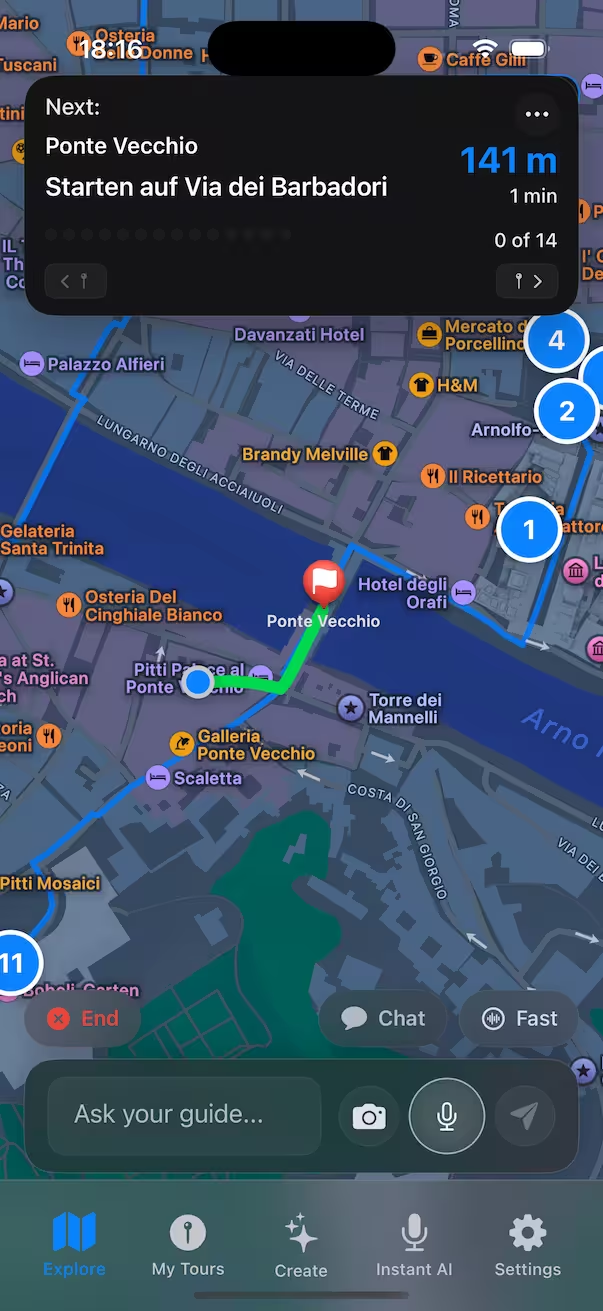
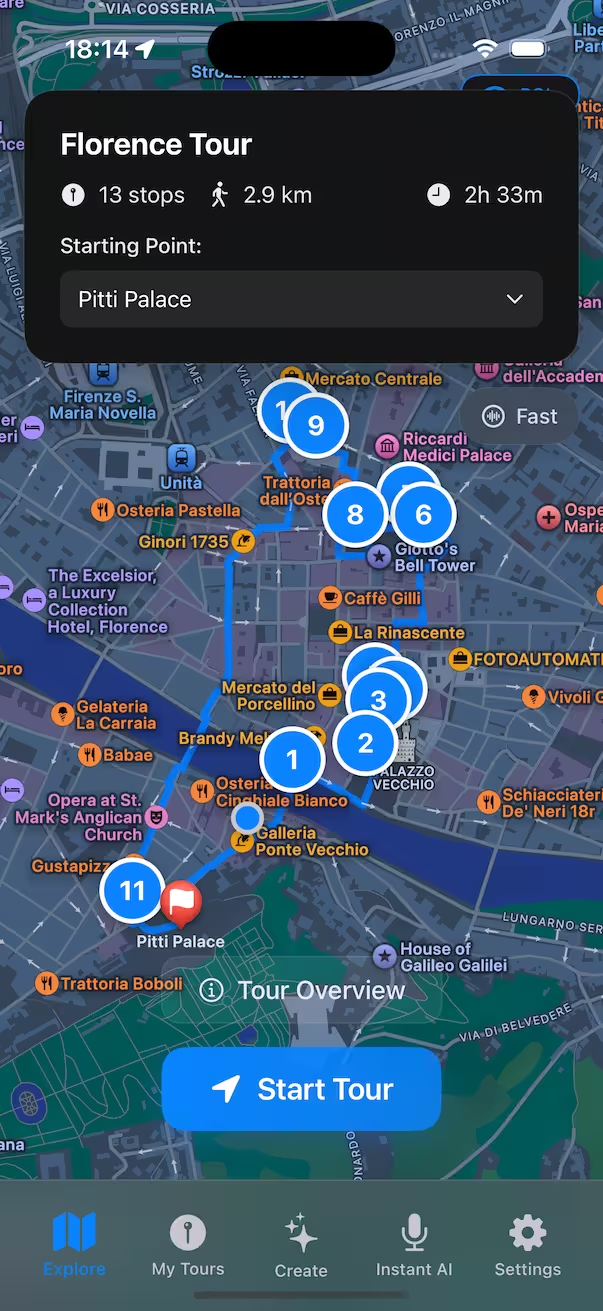
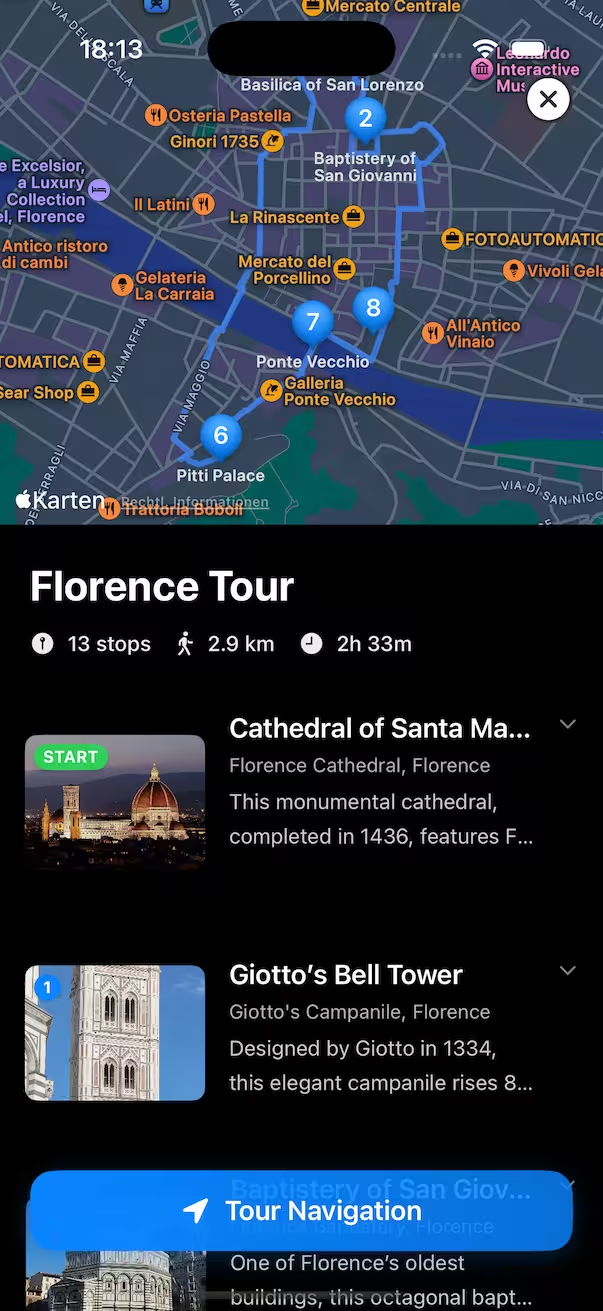
The classic Stuttgart tour: 11 stops, 5.8 km, about 3 h on foot
Your live AI guide and the self-guided Stuttgart route, together in your browser.