Best Time to Visit Tel Aviv
Month-by-month weather, crowds and prices, plus a full calendar of festivals and events worth planning a trip around.
Best monthsOct, Mar, Apr
CheapestJan, Feb, Dec
AvoidJul, Aug
BusiestJul, Aug

When is the best time to visit Tel Aviv?
Come in October or March to early April (before Passover): warm 24-27°C days, a sea still around 23-24°C, the Jewish-holiday calendar quiet, and 3-star hotels at a fair $160-260 a night. July and August are the year's worst value: 32-36°C with 65-70% humidity that feels like 40°C+, and hotels at $340-560. One hard caveat: as of 2026 most Western governments have elevated travel advisories for Israel, with several airlines suspending routes, so check the advisories and airline operations before you book anything.
Start our tool and find your best time to visit Tel Aviv
Your perfect month
Free · ~30 seconds
or tap a month directly
What matters to you?
And this?
Best overall: Oct, Mar. October is the consensus best month: 24-27°C walking weather, the sea still warm at 23-24°C and swimmable, the Jewish holidays just wound down, Jaffa in beautiful autumn light, and rates back to $160-260. March is the close runner-up, with spring freshness, low crowds, second-cheapest pricing and the full Bauhaus, Jaffa and beach experience without the heat.
Best value: Jan, Nov, Mar. January is the cheapest month of the year at $95-160 for a 3-star, with everything open, while November ($100-175) adds warm-enough evening promenade walks and beautiful winter light on Jaffa's stone. March gives you spring weather at near-floor prices, the best value-for-weather window on the calendar.
Avoid: Jul, Aug. July and August if you are heat-sensitive: 32-36°C with 65-70% humidity that pushes the feels-like temperature past 40°C, plus the year's highest prices at $340-560 a night. Also plan around Yom Kippur (20-21 September), a total service blackout, unless you specifically want that profound experience.
- January: Great time, 17°C. This is the budget traveller's month: museums, markets and restaurants all run normally while foreign tourists stay away. A light rain jacket is all you need, and between showers the Bauhaus streets and the Jaffa flea market are yours. Cool, calm and genuinely affordable.
- February: Great time, 18°C. An honest, low-key month that flips at the end. For most of February you get a calm, cheap, locals' city; then the marathon and the run-up to Purim bring a sudden jolt of energy and costume crowds. Good value either side of the marathon weekend.
- March: Great time, 20°C. March is the value-for-weather sweet spot nobody markets: spring freshness, low crowds and near-floor pricing, with the full Bauhaus, Jaffa and beach experience minus the heat. Purim adds the best nightlife week of the year if you want it, and the calm returns right after.
- April: Great time, 23°C. April is the holiday month: beautiful weather wrapped around Passover crowds and the back-to-back memorial and independence days. Come in the first week for the holiday spectacle and packed beaches, or from around the 23rd for perfect spring weather with the boulevards at their most photogenic and prices easing.
- May: Great time, 27°C. May is comfortable and uncrowded, the last easy month before the summer heat and prices land. Rothschild's terraces and the Neve Tzedek alleys are at their most pleasant, the beach is warm enough, and you get good value before June's Pride Week tips the city into high season.
- June: Good time, 29°C. June is Pride city. For LGBTQ+ travellers and allies it is the perfect week, a vast, colourful celebration centred on the promenade; if you dislike crowds and noise, plan around it. Either way it lifts prices and fills the beaches, marking the real start of high season.
- July: Tough month, 31°C. July is full-throttle, lake-of-people Tel Aviv, all beach and heat. The honest play is to flip your day: golden-hour mornings and late evenings outdoors, with the punishing 11 am to 4 pm window reserved for the sea, the museums and the malls. Universal air conditioning is a necessity here, not a luxury.
- August: Tough month, 32°C. August is relentless heat and full prices, redeemed by the bathwater-warm sea and one magical night. Same survival rhythm as July: early and late outdoors, midday in the air conditioning. If you can only come now, time it to White Night and stay out until sunrise.
- September: Good time, 31°C. September is warm and busy but holiday-shaped: the weather is still beach-perfect, yet the city pauses hard for the High Holidays. Plan around Rosh Hashanah and Sukkot rather than during them, and treat Yom Kippur not as a lost day but as the most extraordinary one on the calendar.
- October: Great time, 28°C. October is the complete Tel Aviv picture in one easy month: warm sea, walkable temperatures, the holidays finished, Jaffa in beautiful autumn light, and rates back to fair. If you only get one window a year, this is it, the first three weeks especially.
- November: Great time, 24°C. November is the quiet couples' and budget month: warm enough for evening promenade walks, cheap, and nearly tourist-free. Pack a light rain jacket for the short showers and you have the city's loveliest light and lowest prices, the cafés and boulevards at their most photogenic without the peak.
- December: Great time, 20°C. December trades summer's heat for cool, calm value with a festive glow. Hanukkah brings lights and doughnuts without closing the city or raising prices, so you get a working, atmospheric Tel Aviv for the second-cheapest rates of the year. Bring a rain layer for the Mediterranean showers.
Tel Aviv weather by month
HighLowRainfall
Jan17°
Feb18°
Mar20°
Apr23°
May27°
Jun29°
Jul31°
Aug32°
Sep31°
Oct28°
Nov24°
Dec20°
| Month | Temp | Rain | Sun | Crowds | Prices | Highlight |
|---|---|---|---|---|---|---|
| Jan | 17° / 10° | 108mm · 11 rainy days | 8.9 h/day | ●●○○○ | ●○○○○ | Nahalat Binyamin Arts Fair |
| Feb | 18° / 10° | 83mm · 8 rainy days | 9.4 h/day | ●●○○○ | ●●○○○ | Tel Aviv Marathon |
| Mar | 20° / 12° | 56mm · 8 rainy days | 10.3 h/day | ●●○○○ | ●●○○○ | Purim Festival |
| Apr | 23° / 14° | 33mm · 3 rainy days | 11.8 h/day | ●●●○○ | ●●●○○ | Passover (Pesach) |
| May | 27° / 18° | 10mm · 2 rainy days | 12.6 h/day | ●●●○○ | ●●●○○ | DocAviv International Documentary Film Festival |
| Jun | 29° / 21° | 4mm · 1 rainy days | 13.2 h/day | ●●●●○ | ●●●●○ | DocAviv International Documentary Film Festival |
| Jul | 31° / 23° | 1mm · 0 rainy days | 13.2 h/day | ●●●●● | ●●●●● | Nahalat Binyamin Arts Fair |
| Aug | 32° / 24° | 1mm · 0 rainy days | 12.5 h/day | ●●●●● | ●●●●● | White Night (Layla Lavan) |
| Sep | 31° / 23° | 2mm · 0 rainy days | 11.5 h/day | ●●●●○ | ●●●●○ | Rosh Hashanah |
| Oct | 28° / 20° | 19mm · 4 rainy days | 10.5 h/day | ●●●○○ | ●●●○○ | Sukkot |
| Nov | 24° / 16° | 60mm · 8 rainy days | 9.4 h/day | ●●○○○ | ●●○○○ | Nahalat Binyamin Arts Fair |
| Dec | 20° / 12° | 96mm · 10 rainy days | 8.3 h/day | ●●○○○ | ●●○○○ | Hanukkah |
How we score this: weather = long-run climate normals (Open-Meteo), crowds & prices = relative season read, events checked yearly against official dates.
Best time to visit Tel Aviv: weather, prices & crowds
Best months for good weather
Mar, Apr, Oct
March to May and October give Tel Aviv its finest walking weather: 20-27°C, low humidity and clear skies. Rothschild Boulevard's café terraces and the Neve Tzedek alleys are at their most enjoyable, and the sea warms from 18°C in March to a swimmable 23-24°C by October.
Quietest months to avoid the crowds
Jan, Nov, Feb
January, February and November see the fewest foreign tourists. Carmel Market is walkable, Gordon and Frishman beaches are empty on weekday mornings, and you can wander the Jaffa flea market and the White City Bauhaus streets without the summer crush.
Cheapest time to visit Tel Aviv
Jan, Nov, Dec
January is the absolute cheapest, with 3-star central hotels at $95-160 a night, with November ($100-175) and December ($110-180) close behind. All museums, restaurants and beaches run at full operation, so the low season costs you almost nothing in what is open.
Best time for festivals and events
Sep, Jun, Aug
Yom Kippur (sunset 20 to nightfall 21 September) is the most dramatic day on the Israeli calendar: every car comes off the roads, the airport closes, and children and adults cycle freely on the empty highways in a profound citywide silence. Rent a bike the day before and stock up on food, since nothing at all opens.
How many days do you need in Tel Aviv?
Two days is the natural fit for Tel Aviv. The centre is flat, compact, and made for walking, so you can cover the White City architecture, the markets, Neve Tzedek, and the Old City of Jaffa without rushing. Add a third day if you want beach time or a day trip to Jerusalem.
One day
White City to the sea
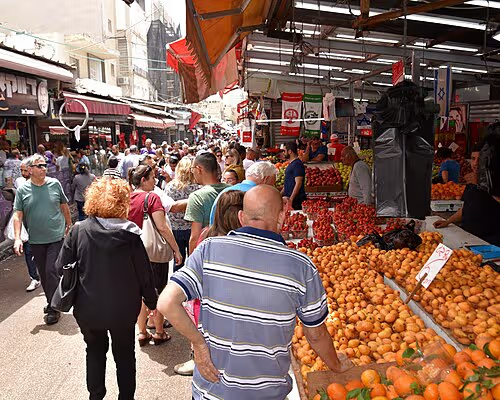
Start at the Bauhaus Museum on Bialik Street at 9 am for the 1930s furniture and International Style context, then work north through Carmel Market and the artisan stalls of Nahalat Binyamin Street. A self-guided Tel Aviv walking tour strings together 9 stops across 4.9 km in about 2.4 hours, reaching Old Jaffa and the Ilana Goor Museum before looping back for a late afternoon on the beach.
Two daysRecommended
History, Neve Tzedek, and Jaffa
Devote the morning to Independence Hall on Rothschild Boulevard, where the State of Israel was declared in 1948, and the surrounding Bauhaus streetscape. After lunch, drop into the boutique alleys of Neve Tzedek and the Nahum Gutman Museum in its 1887 Writers' House. End the afternoon in the stone lanes of Old Jaffa, watching the sunset over the port from Abrasha Park by 5 pm in winter or 6 pm in summer.
Three days
Beach days and the Hatikva quarter
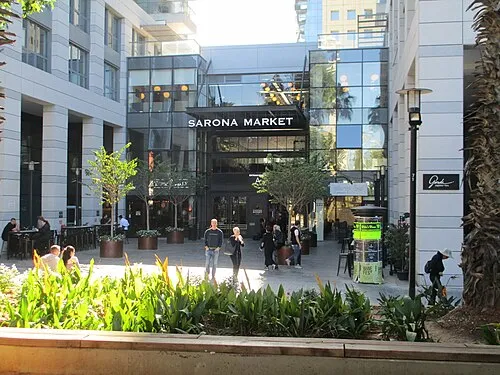
With two full days already behind you, a third works best as a slower day: a weekday morning at Gordon or Frishman beach before 11 am, a wander through the Hatikva Market on a Sunday morning, and an evening at Sarona Market for dinner on a weekday until 11 pm. In October or March this is the perfect day to simply sit on Rothschild's terrace cafes and watch the city go about its business.
Four days or more
Day trips and deeper dives
Jerusalem is a compelling full-day excursion by train from Tel Aviv HaShalom station, under an hour each way. Caesarea's Roman amphitheatre and aqueduct beach make a half-day by car. Back in the city, the Tel Aviv Museum of Art needs a dedicated morning, with late openings on Tuesday and Thursday until 9 pm making it the best summer slot. The Eretz Israel Museum in the north of the city adds another half-day for archaeology and ethnography.
Best time to visit Tel Aviv by traveller type
Same city, different trip. Here's the month that fits how you're travelling.
🧭
Best time to visit Tel Aviv for the first time
OctMar
October or March-April (skipping Passover week) give the complete Tel Aviv picture: warm swimmable sea, walkable temperatures, the holidays quiet and rates at $160-260. Avoid a first visit in July or August unless you are genuinely heat-tolerant.
❤️
Best time to visit Tel Aviv for couples
NovApr
November is dramatically underrated: warm enough for evening promenade walks, gorgeous winter sea light on Jaffa, hotels at $100-175 and almost no crowds. Late April (post-Passover, roughly the 23rd onward) gives perfect spring weather with the boulevards at their most photogenic, minus the peak pricing.
💶
Best time to visit Tel Aviv on a budget
JanNovMar
January is the absolute cheapest at $95-160, with November and early March close behind, and all attractions fully open. Free year-round: Rothschild Boulevard, Carmel Market entry, the Old City of Jaffa, every public beach, the Bauhaus Museum on Bialik Street and Hayarkon Park.
🍝
Best time to visit Tel Aviv for food and wine
NovOct
November and October make outdoor shuk dining comfortable, when Sarona Market on a weekday evening and the Hatikva Market on a Sunday morning are at their best. Purim (around 2-3 March) explodes the street-food scene, and Passover (1-8 April) is worth it for the traditional matzah brei, charoset and lamb menus appearing across the city.
Worst time to visit Tel Aviv
July and August are the year's worst combination of weather and price. Air temperatures of 32-36°C lock arms with 65-70% humidity to push the feels-like past 40°C, shade is scarce on the promenade, and hotels charge $340-560 a night with seafront properties reaching $600-plus. Even experienced Mediterranean travellers underestimate it: the midday hours are genuinely hard work outdoors, and the beaches are at their most crowded.
Still worth it for If your dates are fixed, the survival strategy is simple: golden-hour mornings and late evenings outdoors, midday at the sea or in air-conditioned museums. White Night (Layla Lavan) in late August is a genuine only-in-Tel-Aviv all-night cultural festival worth planning around.
Go instead in October, March, April, when Tel Aviv is at its best.
Best time for a tour of Tel Aviv
March through May is the sweet spot for walking Tel Aviv. Temperatures sit between 20 and 27 °C, the Mediterranean light is soft rather than brutal, and you can spend two and a half hours covering the 4.9 km from Rothschild Boulevard down through Neve Tzedek to the Old City of Jaffa without once needing to hunt for shade. April is the pick: only three rainy days on average, crowds are moderate, and the jacarandas along the boulevard are often in flower. Come July or August and the picture changes sharply: highs of 31 °C with humidity that turns the open limestone lanes of Old Jaffa into a slow-motion sauna and makes every exposed stretch on Nahalat Binyamin Street genuinely unpleasant by 10 am. Those months also bring the biggest summer crowds to Carmel Market, packing the narrow alleys shoulder to shoulder. If you do travel in July or August, the only sensible strategy is to start no later than 7:30 am. November and December bring 8 to 10 rainy days each and highs that drop to 17 to 24 °C: pleasant temperatures but you may lose an hour standing under an awning waiting out a shower.
With AI Tourguide you set the clock entirely yourself, which matters here more than in most cities. On a humid August day you can start your Tel Aviv tour before the sun clears the rooftops, let the guide's voice lead you from Rothschild Boulevard through the cool courtyard gardens of Neve Tzedek, and be done with the Jaffa seafront stretch well before noon. The guide runs live in your browser with no download, greets you when you arrive at each stop, tells you the real story behind the place, and then asks you something: what you notice, what surprises you. It listens and adjusts the rest of the walk to what you say. No fixed departure time, no keeping pace with a group. The Mediterranean climate decides your hour; the guide does the rest.

 +5
+5All 9 stops are already on the map.
You just press start.
You just press start.
 AI Tourguide
You just read the route.
Now walk it with a guide in your ear.
Press start wherever you are, even hundreds of kilometres from Tel Aviv, and the guide begins telling its stories right away. In the city, pick any of the 9 stops to start from: it leads you there, then talks with you the whole route, asking, listening, remembering, and shaping the tour around your answers.
9stops4.9km2.4hours11languages
▶Start the tour freeFree to start · Runs in your browser · No app, no download
Tel Aviv events and festivals calendar
Annual highlights worth timing a trip around, listed month by month.
January
🎨 Art and cultureNahalat Binyamin Arts Fair יריד נחלת בנימין
Jan–Dec
every Tuesday and Friday, year-round
An outdoor artisan and craft market with around 200 stalls on the pedestrian section of Nahalat Binyamin Street, between Carmel Market and the Rothschild area, open Tuesday and Friday only.
February
🏃 SportTel Aviv Marathon מרתון תל אביב
Feb 27 ~
a Friday in late February
The Bank Leumi Tel Aviv Marathon, with 50,000-plus runners on a seafront route along the promenade, including full, half and 10K races that close main roads on race morning.
⛪ ReligiousPurim Festival פורים
Mar 2–3 ~
early March, with street parties building from late February
Israel's carnival equivalent: citywide costume parties, outdoor stages and alcohol-fuelled street celebrations on Dizengoff Square and across Florentin, with free street parties and ticketed club events.
April
⛪ ReligiousPassover (Pesach) פסח
Apr 1–8 ~
early April, around eight days
Israel's most important domestic holiday.
🇮 HolidayYom HaZikaron and Yom HaAtzmaut יום הזיכרון ויום העצמאות
Apr 21–22 ~
late April, back to back
Memorial Day (Yom HaZikaron) is solemn, with sirens that stop traffic and entertainment venues closed, then Independence Day (Yom HaAtzmaut) flips to celebrations with fireworks, street festivals and an air-force flyover.
May
🎬 FilmDocAviv International Documentary Film Festival דוקאביב
May 28 – Jun 6 ~
late May into early June
Israel's major documentary film festival, running for several weeks in late spring, with screenings at the Tel Aviv Cinematheque, the Tel Aviv Museum of Art and outdoor locations across the city.
June
⛪ ReligiousShavuot שבועות
Jun 1–2 ~
early June, a single public holiday
The Festival of Weeks, a public holiday when museums and most shops close and dairy food, especially cheesecake and blintzes, is served citywide by tradition.
🏳️🌈 PrideTel Aviv Pride Parade מצעד הגאווה תל אביב
Jun 7–13 ~
Pride Week in mid-June, parade on the second Friday
The largest Pride event in the Middle East and Asia, with around 250,000 attendees.
August
🎨 Art and cultureWhite Night (Layla Lavan) לילה לבן תל אביב
Aug 27 ~
late August, typically the last Thursday or Friday
An annual all-night cultural festival celebrating the city's UNESCO White City Bauhaus heritage: free performances, tours, open galleries and outdoor stages across the city until sunrise, centred on the promenade and Rothschild area.
September
⛪ ReligiousRosh Hashanah ראש השנה
Sep 11–13 ~
mid-September, a two-day public holiday
The Jewish New Year, a two-day public holiday when the city goes quiet and most shops and restaurants close on the holiday days, with festive dinners and honey and apples in the markets beforehand.
⛪ ReligiousYom Kippur יום כיפור
Sep 20–21 ~
late September, sunset to nightfall
The holiest day in Judaism and a total city shutdown: all cars off the roads, Ben Gurion Airport closed, zero public transport, every restaurant and shop shut, TV and radio off.
⛪ ReligiousSukkot סוכות
Sep 25 – Oct 2 ~
late September into early October, a week long
A week-long harvest festival when sukkah booths appear on every balcony and in the parks.
October
🎬 FilmTLVFest International LGBTQ+ Film Festival פסטיבל הסרטים הגאה
Oct 22 ~
late October, roughly ten days
A ten-day LGBTQ+ film festival at the Tel Aviv Cinematheque with premieres and directors' Q&As, part of the city's year-round LGBTQ+ cultural calendar.
December
⛪ ReligiousHanukkah חנוכה
Dec 4–12 ~
early to mid-December, eight nights
The eight-night festival of lights, with giant menorahs lit in Rabin Square and the city centre and sufganiyot (jelly doughnuts) in every bakery.
Insider tips for visiting Tel Aviv
The rules buried in forums, in one place.
- Go to Carmel Market on a Tuesday morning around 9:30, not on Friday. Friday draws the biggest pre-Shabbat crowds and by 1 pm the market is nearly impassable with vendors packing up. Tuesday mid-morning is walkable and full, and you can combine it with the Nahalat Binyamin arts fair next door, which only runs Tuesday and Friday.
- Book Pride Week hotels by March or accept paying double on the promenade. The central Hayarkon Street hotels facing the beach sell out for 7-13 June, so consider the Florentin neighbourhood about 20 minutes' walk south, which stays cheaper.
- Treat Yom Kippur (20-21 September) as a must-see, not an inconvenience. Rent a bicycle from a private shop the day before (the official bike-share stations shut for the day), bring all your food and water in advance, and by nightfall on the 20th the roads belong to cyclists and children. It is genuinely magical.
- Never fly in on the eve of a major holiday. Ben Gurion Airport is heavily congested the day before Rosh Hashanah, Passover and Yom Kippur. Build in a three-hour buffer or arrive two-plus days ahead.
- The Tel Aviv Museum of Art is closed both Sunday and Monday. Its late openings on Tuesday and Thursday until 9 pm are the best summer slots, cooler and less crowded in the contemporary galleries.
- Walk the Bauhaus White City as a morning activity year-round. Rothschild Boulevard's café terraces fill with locals from 8 to 10 am, and for architecture photography you want to be out before 9 am for empty streets and golden light on the curved balconies. After 10 am in summer you are walking in full heat.
- Jaffa Old City on a Friday afternoon is a different place. The alleys empty briefly around 1 pm prayer at the Al-Bahr mosque, then fill with families from late afternoon. Sunset over the port from Abrasha Park is one of the city's best experiences: aim to be there by 6 pm in summer, 5 pm in winter.
- Don't swim at Gordon or Frishman beaches on a Shabbat afternoon in summer, the most crowded beaches in Israel on a Saturday, literally shoulder to shoulder. Midweek mornings before 11 am are far better, and Hilton Beach to the north is less dense.
Public holidays in Tel Aviv
On these dates many shops and offices close, transport thins out, and sights can be mobbed or shut. Plan around them.
| Date | Holiday | What closes |
|---|---|---|
| Mar 3 | Purim | Not an official public holiday, but a de facto citywide street party, with costume crowds across Dizengoff Square and Florentin. Some businesses close or shorten hours; clubs run paid events. |
| Apr 1 | Passover (Pesach) | Full public holiday on the first two days (evening 1 to 3 April) and the last day (8 April): flights disrupted, shops and museums closed. The intermediate Hol HaMoed days are semi-working with beaches and attractions packed. Leavened bread is restricted in public, so cafe pita may be unavailable or served discreetly. |
| Apr 21 | Yom HaZikaron and Yom HaAtzmaut | A powerful contrast: Memorial Day is solemn with sirens at 8 pm and 11 am and entertainment venues shut, then Independence Day flips to fireworks, street festivals and an air-force flyover. Beaches are packed and hotels run about 30% higher that weekend. |
| Jun 2 | Shavuot | A quiet public holiday: most shops and museums close and dairy food (cheesecake, blintzes) is served citywide. Carmel Market closes; Sarona Market typically keeps Shabbat-style hours. |
| Sep 12 | Rosh Hashanah | A two-day full public holiday (evening 11 to evening 13 September): the city goes quiet, most shops and restaurants close on the holiday days, and the airport is very busy the day before. Plan around it rather than during it, unless you want the tranquillity. |
| Sep 20 | Yom Kippur | A total citywide shutdown: every business, Ben Gurion Airport, all public transport and even TV and radio go off, and no cars are on the roads. There is no food or restaurant service anywhere, so stock up the night before. The empty highways fill with cyclists, an eerie and profound experience. |
| Sep 26 | Sukkot | Public holiday on the first and last days, with a week-long festive atmosphere as sukkah booths appear on balconies and in parks. Domestic holiday tourism peaks, beaches are busy and hotels run 20-30% higher; the intermediate Hol HaMoed days are popular family-outing days. |
| Oct 3 | Shemini Atzeret and Simchat Torah | A public holiday closing the autumn festival season (evening 2 to 3 October): synagogues celebrate with Torah-scroll dancing, and most shops and museums keep holiday hours. |
| Dec 4 | Hanukkah | Not a public holiday, so it is business as usual with a festive overlay: giant menorahs are lit in Rabin Square and the centre over eight nights, and sufganiyot (jelly doughnuts) fill every bakery. No major hotel price hike. |
Tel Aviv month by month
January in Tel Aviv
High17°C / 63°F
Low10°C
Rain108mm / 11 rainy days
Sun8.9 h/day
Daylight10 h/day
Humidity73%
Crowds●●○○○Prices●○○○○
January is Tel Aviv at its quietest and cheapest. It is the wettest month, around 130mm over roughly 14 rain days, but the rain comes in short intense Mediterranean showers with sunny spells between fronts rather than all-day grey. Highs sit near 18°C, the Jewish holidays are absent, and the lowest hotel rates of the year leave the city walkable and uncrowded.
The vibe This is the budget traveller's month: museums, markets and restaurants all run normally while foreign tourists stay away. A light rain jacket is all you need, and between showers the Bauhaus streets and the Jaffa flea market are yours. Cool, calm and genuinely affordable.
Don't miss The best month for the indoor and architectural highlights: the Tel Aviv Museum of Art (closed Sunday and Monday) and the free Bauhaus Museum on Bialik Street with its original 1930s furniture. Walk the White City between showers, when Rothschild Boulevard is at its emptiest.
Crowd drivers Low season with Israeli schools in session and Jewish holidays largely absent, so the city runs on locals. The lowest visitor pressure of the year.
In season Cool weather makes the indoor restaurant scene shine; Florentin and Rothschild Boulevard stay reliably open, and the Hatikva Market is best on a Sunday morning.
Cheapest month of the year: 3-star central hotels $95-160 a night, with everything still fully open.
Events this month
🎨 Art and cultureNahalat Binyamin Arts Fair יריד נחלת בנימין
Jan–Dec
every Tuesday and Friday, year-round
An outdoor artisan and craft market with around 200 stalls on the pedestrian section of Nahalat Binyamin Street, between Carmel Market and the Rothschild area, open Tuesday and Friday only.
Time a Tuesday or Friday visit to the Carmel Market area to catch both markets at once, the most efficient half-day in central Tel Aviv. Free to enter.
February in Tel Aviv
High18°C / 65°F
Low10°C
Rain83mm / 8 rainy days
Sun9.4 h/day
Daylight11 h/day
Humidity73%
Crowds●●○○○Prices●●○○○
February stays quiet and good value, with highs creeping up and the rainy season tapering. Late in the month the city wakes up: Purim street parties build from late February and the Tel Aviv Marathon (27 February) closes the seafront roads and briefly spikes hotels. The sea is at its coldest of the year, 17-18°C, for hardy swimmers only.
The vibe An honest, low-key month that flips at the end. For most of February you get a calm, cheap, locals' city; then the marathon and the run-up to Purim bring a sudden jolt of energy and costume crowds. Good value either side of the marathon weekend.
Don't miss If you run, the seafront marathon is the draw; if you don't, expect road closures along the promenade on race morning. The cooler weather suits long Jaffa Old City walks, with sunset over the port from Abrasha Park best reached by 5 pm in winter.
Crowd drivers A short Israeli winter school break and the late-February start of Purim party season lift activity, while the marathon on 27 February causes a brief one-night demand spike.
In season Purim's run-up brings hamantaschen and themed stalls to the street-food scene. Cooler evenings still favour the indoor Florentin and Sarona Market spots.
Near the annual floor at $110-180, with a one-night marathon-weekend spike to $220-280 on 26-27 February.
Events this month
🏃 SportTel Aviv Marathon מרתון תל אביב
Feb 27 ~
a Friday in late February
The Bank Leumi Tel Aviv Marathon, with 50,000-plus runners on a seafront route along the promenade, including full, half and 10K races that close main roads on race morning.
Even if you are not running, the promenade and centre roads shut for the morning. Hotels spike to $220-280 for that one night, so book six-plus weeks ahead.
March in Tel Aviv
High20°C / 69°F
Low12°C
Rain56mm / 8 rainy days
Sun10.3 h/day
Daylight12 h/day
Humidity72%
Crowds●●○○○Prices●●○○○
March is one of the year's best months: the finest walking weather is beginning, with 20-25°C, low humidity and clear skies as the rainy season tapers. Purim (around 2-3 March) brings citywide costume parties, and crowds otherwise stay light. The sea is warming from 18°C, and spring street life on Rothschild Boulevard and in Neve Tzedek is at its most enjoyable.
The vibe March is the value-for-weather sweet spot nobody markets: spring freshness, low crowds and near-floor pricing, with the full Bauhaus, Jaffa and beach experience minus the heat. Purim adds the best nightlife week of the year if you want it, and the calm returns right after.
Don't miss Prime Bauhaus White City walking weather: be out before 9 am for empty streets and golden light on the curved balconies. Purim turns Dizengoff Square into a full street party. The Nahalat Binyamin arts fair pairs with Carmel Market on Tuesday and Friday.
Crowd drivers Purim week draws costume crowds citywide, especially around Dizengoff and Florentin, but otherwise March is a quiet shoulder month with no domestic-holiday pressure.
In season Purim explodes the street-food scene with hamantaschen and themed stalls, and the comfortable temperatures make outdoor shuk dining a pleasure again.
Second-cheapest period at $110-180; Purim's Friday-Saturday can add a 20-25% bump.
Events this month
⛪ ReligiousPurim Festival פורים
Mar 2–3 ~
early March, with street parties building from late February
Israel's carnival equivalent: citywide costume parties, outdoor stages and alcohol-fuelled street celebrations on Dizengoff Square and across Florentin, with free street parties and ticketed club events.
The best week of the year for nightlife tourism, when Dizengoff goes full street party and costume crowds fill the city. The hotel impact is modest, a 20-25% bump over the Friday-Saturday.
🎨 Art and cultureNahalat Binyamin Arts Fair יריד נחלת בנימין
Jan–Dec
every Tuesday and Friday, year-round
An outdoor artisan and craft market with around 200 stalls on the pedestrian section of Nahalat Binyamin Street, between Carmel Market and the Rothschild area, open Tuesday and Friday only.
Time a Tuesday or Friday visit to the Carmel Market area to catch both markets at once, the most efficient half-day in central Tel Aviv. Free to enter.
April in Tel Aviv
High23°C / 74°F
Low14°C
Rain33mm / 3 rainy days
Sun11.8 h/day
Daylight13 h/day
Humidity70%
Crowds●●●○○Prices●●●○○
April has ideal weather, 22-26°C, but it is dominated by holidays. Passover (1-8 April) is Israel's busiest domestic holiday and floods the beach hotels, then Yom HaZikaron and Yom HaAtzmaut (21-22 April) bring one more spike. The late-April window after Passover is a quieter, photogenic sweet spot before the summer prices arrive.
The vibe April is the holiday month: beautiful weather wrapped around Passover crowds and the back-to-back memorial and independence days. Come in the first week for the holiday spectacle and packed beaches, or from around the 23rd for perfect spring weather with the boulevards at their most photogenic and prices easing.
Don't miss Passover Hol HaMoed (3-7 April) is built for family outings at Hayarkon Park, with the sea a kid-friendly 20-22°C. Independence Day delivers fireworks visible from the beaches and an air-force flyover, the day after the solemn Memorial Day sirens.
Crowd drivers Passover (1-8 April) is the biggest domestic-tourism driver of the spring, packing beach hotels, followed by the Independence Day weekend. Leavened bread is restricted in public during Passover week.
In season Passover is worth it for the traditional menus appearing across the city, matzah brei, charoset and lamb dishes, though bread and pita may be unavailable or served discreetly.
Heads up Passover's first two days (1-3 April) and last day (8 April) are full public holidays with shops and museums closed and flights disrupted; the intermediate days are semi-working. Yom HaZikaron (evening 20 April) closes entertainment venues.
Passover week spikes hotels 40-60% to $280-380; Independence Day weekend adds about 30%. Book eight-plus weeks ahead for Passover.
Events this month
⛪ ReligiousPassover (Pesach) פסח
Apr 1–8 ~
early April, around eight days
Israel's most important domestic holiday. The first two and last days are public holidays with airport and transport slowdowns, while the middle Hol HaMoed days are semi-working, with attractions and beaches packed.
Hotel prices spike 40-60% for the full week, so book eight-plus weeks ahead, and beaches are extremely crowded. The upside is special Passover menus across the city; the catch is leavened bread restricted in public spaces.
🇮 HolidayYom HaZikaron and Yom HaAtzmaut יום הזיכרון ויום העצמאות
Apr 21–22 ~
late April, back to back
Memorial Day (Yom HaZikaron) is solemn, with sirens that stop traffic and entertainment venues closed, then Independence Day (Yom HaAtzmaut) flips to celebrations with fireworks, street festivals and an air-force flyover.
A powerful contrast of morning grief and evening joy, with fireworks visible from the beaches. Expect hotels about 30% higher over that weekend.

May in Tel Aviv
High27°C / 81°F
Low18°C
Rain10mm / 2 rainy days
Sun12.6 h/day
Daylight14 h/day
Humidity68%
Crowds●●●○○Prices●●●○○
May is a post-holiday shoulder month with excellent weather, 24-28°C, and the European Easter groups mostly gone. The sea warms to a swimmable 22°C, and the DocAviv documentary festival (28 May to 6 June) gives a cultural anchor. Watch for the occasional sharav, a hot easterly wind that can briefly spike temperatures past 42°C even in May.
The vibe May is comfortable and uncrowded, the last easy month before the summer heat and prices land. Rothschild's terraces and the Neve Tzedek alleys are at their most pleasant, the beach is warm enough, and you get good value before June's Pride Week tips the city into high season.
Don't miss Prime walking weather for the White City and Jaffa, with clear skies and low humidity. DocAviv screens documentaries at the Cinematheque and the Tel Aviv Museum of Art, a good culture-led excuse in mild weather.
Crowd drivers A genuine lull between the April holidays and June Pride, with European Easter groups departed and Israeli school still in session. International pressure stays low.
In season The outdoor shuk season is at its comfortable best; Sarona Market on a weekday evening (Thursday until 11 pm) is ideal before the summer humidity sets in.
Good value for the weather at $150-240; DocAviv has negligible hotel impact.
Events this month
🎬 FilmDocAviv International Documentary Film Festival דוקאביב
May 28 – Jun 6 ~
late May into early June
Israel's major documentary film festival, running for several weeks in late spring, with screenings at the Tel Aviv Cinematheque, the Tel Aviv Museum of Art and outdoor locations across the city.
A good excuse for a culture-led visit in comfortable shoulder weather, with negligible impact on hotel prices. Screenings run ILS 40-60 each.

June in Tel Aviv
High29°C / 84°F
Low21°C
Rain4mm / 1 rainy days
Sun13.2 h/day
Daylight14 h/day
Humidity72%
Crowds●●●●○Prices●●●●○
June is dominated by Pride Week (7-13 June, parade on the 12th), the city's biggest annual event, drawing around 250,000 to the parade and booking out beach hotels months ahead. DocAviv overlaps in early June. The sea is a swimmable 23-25°C, and the heat is climbing but not yet at its August worst.
The vibe June is Pride city. For LGBTQ+ travellers and allies it is the perfect week, a vast, colourful celebration centred on the promenade; if you dislike crowds and noise, plan around it. Either way it lifts prices and fills the beaches, marking the real start of high season.
Don't miss The Pride parade departs Shalag Street near Gordon Beach at 1 pm and ends at Charles Clore Park, with a week of beach parties and club events. The sea is properly swimmable now, with lifeguards stationed on all main beaches through the season.
Crowd drivers Tel Aviv Pride (parade 12 June, week of 7-13 June) is the single biggest event of the year, with around 250,000 attendees packing the beach area. Shavuot (1-2 June) adds a quiet public-holiday day.
In season Shavuot brings the dairy tradition, cheesecake and blintzes citywide, while Pride week fills the beach bars and Florentin's nightlife to capacity.
Pride Week hotels jump 50-80% to $320-450 for beach and centre properties; book by March. Otherwise $220-340.
Events this month
🏳️🌈 PrideTel Aviv Pride Parade מצעד הגאווה תל אביב
Jun 7–13 ~
Pride Week in mid-June, parade on the second Friday
The largest Pride event in the Middle East and Asia, with around 250,000 attendees. The parade departs Shalag Street near Gordon Beach at 1 pm and ends at Charles Clore Park, wrapped in a week of club events and beach parties.
The perfect week for LGBTQ+ travellers and allies, but avoid it if you dislike crowds and noise. Beach-area hotels run 50-80% higher and sell out, so book three-plus months ahead.
🎬 FilmDocAviv International Documentary Film Festival דוקאביב
May 28 – Jun 6 ~
late May into early June
Israel's major documentary film festival, running for several weeks in late spring, with screenings at the Tel Aviv Cinematheque, the Tel Aviv Museum of Art and outdoor locations across the city.
A good excuse for a culture-led visit in comfortable shoulder weather, with negligible impact on hotel prices. Screenings run ILS 40-60 each.
⛪ ReligiousShavuot שבועות
Jun 1–2 ~
early June, a single public holiday
The Festival of Weeks, a public holiday when museums and most shops close and dairy food, especially cheesecake and blintzes, is served citywide by tradition.
A quiet public-holiday atmosphere that makes a peaceful day, though Carmel Market closes; Sarona Market typically keeps Shabbat hours.

July in Tel Aviv
High31°C / 87°F
Low23°C
Rain1mm / 0 rainy days
Sun13.2 h/day
Daylight14 h/day
Humidity74%
Crowds●●●●●Prices●●●●●
The sea peaks toward 28°C and the beaches are the whole point, best midweek before 11 am. The cooler early hours are also prime time for the White City and Jaffa walks, when Rothschild Boulevard and the curved Bauhaus balconies catch the golden morning light before the heat sets in.
The vibe July is full-throttle, lake-of-people Tel Aviv, all beach and heat. The honest play is to flip your day: golden-hour mornings and late evenings outdoors, with the punishing 11 am to 4 pm window reserved for the sea, the museums and the malls. Universal air conditioning is a necessity here, not a luxury.
Don't miss The sea peaks toward 28°C and the beaches are the whole point, best midweek before 11 am. When the heat or a pricey pre-booked human guide put you off, our live in-browser AI guide is the always-available, flat-priced alternative, telling you the story of the White City and Jaffa as you walk in the cooler early hours, at 5 euro an hour or 20 all-in with 100 free credits to start.
Crowd drivers Structural peak demand: school out across Israel and Europe, peak North American arrivals, and summer beach demand all stacking onto the hottest, most expensive month.
In season Beachfront kiosks and late-evening rooftop dining carry the season; the Tel Aviv Museum of Art's late Tuesday and Thursday openings make a cool, cultured early-evening before a late dinner.
Busiest and most expensive month: $320-520, reaching $600-plus in seafront properties.

August in Tel Aviv
High32°C / 89°F
Low24°C
Rain1mm / 0 rainy days
Sun12.5 h/day
Daylight13 h/day
Humidity73%
Crowds●●●●●Prices●●●●●
August continues peak beach season and is the hottest month, with feels-like temperatures reaching 38-42°C and heat waves that can push past 40°C with no rain for months. The sea peaks at 28-29°C, warm as a bath. The cultural highlight is White Night (Layla Lavan, late August), an all-night festival across the city celebrating its Bauhaus heritage.
The vibe August is relentless heat and full prices, redeemed by the bathwater-warm sea and one magical night. Same survival rhythm as July: early and late outdoors, midday in the air conditioning. If you can only come now, time it to White Night and stay out until sunrise.
Don't miss White Night fills the promenade and Rothschild area with free performances, tours and open galleries until sunrise, a genuine only-in-Tel-Aviv experience. Otherwise the sea, at its 28-29°C peak, and the air-conditioned museums carry the daylight hours.
Crowd drivers Continued peak European and North American tourism plus domestic beach demand keep August at maximum, with White Night adding a one-night surge late in the month.
In season Late-night eating comes into its own as the heat finally drops; White Night keeps food stalls and bars running until dawn across the centre.
Most expensive month overall, $340-560 with seafront averages near $612; a possible one-night White Night spike.
Events this month
🎨 Art and cultureWhite Night (Layla Lavan) לילה לבן תל אביב
Aug 27 ~
late August, typically the last Thursday or Friday
An annual all-night cultural festival celebrating the city's UNESCO White City Bauhaus heritage: free performances, tours, open galleries and outdoor stages across the city until sunrise, centred on the promenade and Rothschild area.
A genuine only-in-Tel-Aviv experience worth planning to stay out until 4 or 5 am for. A possible one-night hotel spike, but mostly a free street experience.

September in Tel Aviv
High31°C / 87°F
Low23°C
Rain2mm / 0 rainy days
Sun11.5 h/day
Daylight12 h/day
Humidity71%
Crowds●●●●○Prices●●●●○
September stays warm, 27-30°C with the sea still 25-26°C, but the calendar is dense with holidays. Rosh Hashanah (11-13 September) and Sukkot (from 25 September) drive domestic tourism, and Yom Kippur (20-21 September) shuts the entire city for a day. Excellent beach weather continues for those who plan around the holiday closures.
The vibe September is warm and busy but holiday-shaped: the weather is still beach-perfect, yet the city pauses hard for the High Holidays. Plan around Rosh Hashanah and Sukkot rather than during them, and treat Yom Kippur not as a lost day but as the most extraordinary one on the calendar.
Don't miss Yom Kippur is the standout: from sunset on the 20th the roads belong to cyclists and children in total silence, so rent a bike the day before and stock up on food. Either side, the sea is still a swimmable 25-26°C for warm beach days.
Crowd drivers The High Holidays cluster, Rosh Hashanah (11-13 September), Yom Kippur (20-21 September) and Sukkot (from the 25th), peak domestic tourism and lift hotel demand 30-40%.
In season Festive dinners and honey-and-apples appear in the markets before Rosh Hashanah. Crucially, nothing at all opens on Yom Kippur, so buy all your food the night before.
Heads up Rosh Hashanah (evening 11 to 13 September) closes most shops and restaurants for two days. Yom Kippur (20-21 September) is a total shutdown of every business, transport and the airport. Sukkot's first day (26 September) is a public holiday.
High Holidays drive demand up 30-40% to $240-360, concentrated around Rosh Hashanah and Sukkot.
Events this month
⛪ ReligiousRosh Hashanah ראש השנה
Sep 11–13 ~
mid-September, a two-day public holiday
The Jewish New Year, a two-day public holiday when the city goes quiet and most shops and restaurants close on the holiday days, with festive dinners and honey and apples in the markets beforehand.
The unusual two-day public-holiday effect means you plan around it, not during it, unless you want the tranquillity. The airport is very busy the day before.
⛪ ReligiousYom Kippur יום כיפור
Sep 20–21 ~
late September, sunset to nightfall
The holiest day in Judaism and a total city shutdown: all cars off the roads, Ben Gurion Airport closed, zero public transport, every restaurant and shop shut, TV and radio off. Children and adults bicycle freely on the empty highways in profound silence.
A unique, unmissable experience for the curious traveller and the most dramatic day on the Israeli calendar. Bring food and water the night before and rent a bike from a private shop in advance.
⛪ ReligiousSukkot סוכות
Sep 25 – Oct 2 ~
late September into early October, a week long
A week-long harvest festival when sukkah booths appear on every balcony and in the parks. Domestic holiday tourism peaks, the beaches are busy, and Shemini Atzeret and Simchat Torah on 3 October close the season.
A very lively, festive atmosphere, with the intermediate Hol HaMoed days popular for family outings. Hotels run 20-30% higher during the week.
October in Tel Aviv
High28°C / 83°F
Low20°C
Rain19mm / 4 rainy days
Sun10.5 h/day
Daylight11 h/day
Humidity71%
Crowds●●●○○Prices●●●○○
October is the consensus best month. The High Holidays have wound down, the summer crowds are gone, and the weather is comfortable at 24-27°C with the sea still warm at 23-24°C and swimmable. Rain stays away until late in the month. Sukkot ends with Shemini Atzeret and Simchat Torah (3 October), and the TLVFest LGBTQ+ film festival fills the late-October calendar.
The vibe October is the complete Tel Aviv picture in one easy month: warm sea, walkable temperatures, the holidays finished, Jaffa in beautiful autumn light, and rates back to fair. If you only get one window a year, this is it, the first three weeks especially.
Don't miss The last of the warm-sea beach days meets ideal walking weather for the White City and Jaffa, the stone glowing in autumn light. TLVFest screens LGBTQ+ premieres at the Cinematheque in pleasant weather toward month-end.
Crowd drivers A post-High-Holidays lull, with summer crowds gone. Shemini Atzeret and Simchat Torah (3 October) close the Sukkot season, then the city settles into a calm, comfortable autumn.
In season Cooler evenings make outdoor shuk dining a pleasure again; Sarona Market on a weekday evening and the Hatikva Market on a Sunday morning are at their best.
Good-value shoulder month at $160-260 once the High Holidays end; TLVFest has minimal hotel impact.
Events this month
⛪ ReligiousSukkot סוכות
Sep 25 – Oct 2 ~
late September into early October, a week long
A week-long harvest festival when sukkah booths appear on every balcony and in the parks. Domestic holiday tourism peaks, the beaches are busy, and Shemini Atzeret and Simchat Torah on 3 October close the season.
A very lively, festive atmosphere, with the intermediate Hol HaMoed days popular for family outings. Hotels run 20-30% higher during the week.
🎬 FilmTLVFest International LGBTQ+ Film Festival פסטיבל הסרטים הגאה
Oct 22 ~
late October, roughly ten days
A ten-day LGBTQ+ film festival at the Tel Aviv Cinematheque with premieres and directors' Q&As, part of the city's year-round LGBTQ+ cultural calendar. Screenings run ILS 40-55.
Niche but excellent for film and LGBTQ+ travellers, set in pleasant October weather, with minimal impact on hotel prices.
🎨 Art and cultureNahalat Binyamin Arts Fair יריד נחלת בנימין
Jan–Dec
every Tuesday and Friday, year-round
An outdoor artisan and craft market with around 200 stalls on the pedestrian section of Nahalat Binyamin Street, between Carmel Market and the Rothschild area, open Tuesday and Friday only.
Time a Tuesday or Friday visit to the Carmel Market area to catch both markets at once, the most efficient half-day in central Tel Aviv. Free to enter.

November in Tel Aviv
High24°C / 75°F
Low16°C
Rain60mm / 8 rainy days
Sun9.4 h/day
Daylight10 h/day
Humidity68%
Crowds●●○○○Prices●●○○○
November is the cool shoulder season and dramatically underrated. The rainy season starts in earnest, 7-10 rain days, with highs of 18-23°C and the sea cooling to 22-23°C, still swimmable for the hardy. Few foreign tourists mean low prices and uncrowded streets, with beautiful winter light on Jaffa's stone.
The vibe November is the quiet couples' and budget month: warm enough for evening promenade walks, cheap, and nearly tourist-free. Pack a light rain jacket for the short showers and you have the city's loveliest light and lowest prices, the cafés and boulevards at their most photogenic without the peak.
Don't miss Evening promenade walks and winter sea light on Jaffa, best caught at sunset from Abrasha Park by 5 pm. The White City and the indoor museums shine on cooler days, with Rothschild's terraces calm and uncrowded.
Crowd drivers The cool shoulder season with the rainy period beginning keeps foreign tourists away, making November one of the quietest and cheapest months of the year.
In season The cooler months make Tel Aviv's restaurant scene a focus in itself; this is the month for serious dining exploration across Florentin, Rothschild and Sarona Market without summer crowds.
One of the cheapest months at $100-175, with few foreign tourists and good value.
Events this month
🎨 Art and cultureNahalat Binyamin Arts Fair יריד נחלת בנימין
Jan–Dec
every Tuesday and Friday, year-round
An outdoor artisan and craft market with around 200 stalls on the pedestrian section of Nahalat Binyamin Street, between Carmel Market and the Rothschild area, open Tuesday and Friday only.
Time a Tuesday or Friday visit to the Carmel Market area to catch both markets at once, the most efficient half-day in central Tel Aviv. Free to enter.

December in Tel Aviv
High20°C / 67°F
Low12°C
Rain96mm / 10 rainy days
Sun8.3 h/day
Daylight10 h/day
Humidity73%
Crowds●●○○○Prices●●○○○
December is the wettest period beginning and cool, 15-19°C, but it carries a festive overlay. Hanukkah (4-12 December) lights giant menorahs in Rabin Square and fills bakeries with sufganiyot, without a major hotel spike. It is not a full public holiday, so the city runs as normal, making December a quiet, atmospheric and affordable choice.
The vibe December trades summer's heat for cool, calm value with a festive glow. Hanukkah brings lights and doughnuts without closing the city or raising prices, so you get a working, atmospheric Tel Aviv for the second-cheapest rates of the year. Bring a rain layer for the Mediterranean showers.
Don't miss Giant menorahs are lit nightly in Rabin Square and the city centre through the eight nights of Hanukkah, and every bakery sells sufganiyot. The cool weather suits long White City and Jaffa walks, with the indoor museums an easy rainy-day fallback.
Crowd drivers Cool, wet shoulder season with few tourists, though airport Christmas traffic can briefly tighten hotel availability in the last two weeks. Hanukkah adds atmosphere without a price hike.
In season Sufganiyot (jelly doughnuts) appear in every bakery for Hanukkah, and the cooler evenings keep the indoor Florentin and Sarona Market dining scene busy with locals.
Heads up Hanukkah is not a public holiday, so shops and restaurants stay open throughout, business as usual with a festive atmosphere only.
Second-cheapest period at $110-180; airport Christmas traffic can briefly tighten availability the last two weeks.
Events this month
⛪ ReligiousHanukkah חנוכה
Dec 4–12 ~
early to mid-December, eight nights
The eight-night festival of lights, with giant menorahs lit in Rabin Square and the city centre and sufganiyot (jelly doughnuts) in every bakery. Not a full public holiday, so shops and restaurants stay open.
A great festive atmosphere without a major hotel price hike, which makes it a strong reason to visit in an otherwise quiet December.
🎨 Art and cultureNahalat Binyamin Arts Fair יריד נחלת בנימין
Jan–Dec
every Tuesday and Friday, year-round
An outdoor artisan and craft market with around 200 stalls on the pedestrian section of Nahalat Binyamin Street, between Carmel Market and the Rothschild area, open Tuesday and Friday only.
Time a Tuesday or Friday visit to the Carmel Market area to catch both markets at once, the most efficient half-day in central Tel Aviv. Free to enter.
Frequently asked questions
What is the best time to visit Tel Aviv?
October and March to early April (before Passover) are the best overall. October gives you 24-27°C walking weather, a sea still warm at 23-24°C and swimmable, the Jewish holidays just wound down, Jaffa in beautiful autumn light and fair rates around $160-260 a night. March offers spring freshness, low crowds and near-cheapest pricing, with the full Bauhaus, Jaffa and beach experience minus the punishing summer heat.
What is the cheapest time to visit Tel Aviv?
January is the absolute cheapest, with 3-star central hotels at $95-160 a night and everything fully open. November ($100-175) and December ($110-180) are close behind. The trade-off is the rainy season, but Tel Aviv's rain comes in short intense showers with sunny spells between, not all-day grey, so a light jacket is enough.
What is the worst time to visit Tel Aviv?
July and August if you are sensitive to heat. Temperatures of 32-36°C combine with 65-70% humidity to feel like 38-42°C, shade is limited on the promenade, and prices peak at $340-560 a night. Also plan carefully around Yom Kippur (20-21 September), which is a total service blackout, though the day itself is a profound experience if you embrace it.
When can you swim at the beach in Tel Aviv?
Comfortable swimming runs from about April through December, with the best months June to October at 23-29°C. The sea peaks at 28-29°C in August and bottoms out at 17-18°C in February for the hardy only. Lifeguards staff all main beaches from May to October. Avoid Gordon and Frishman on a Shabbat afternoon in summer, the most crowded beaches in Israel; go midweek mornings before 11 am instead.
How hot does Tel Aviv get in summer?
Genuinely punishing. July and August air temperatures of 32-36°C combine with 65-70% humidity to create a feels-like of 38-42°C and higher, and heat waves can push past 40°C with no rain for months. Even experienced Mediterranean travellers underestimate it: Athens at 34°C feels drier than Tel Aviv at 30°C. Walk before 9 am or after 5:30 pm and spend midday in air conditioning.
What happens in Tel Aviv on Yom Kippur and Shabbat?
Yom Kippur (20-21 September) is a total shutdown: every business, the airport and all transport stop, no cars are on the roads, and the empty highways fill with cyclists in profound silence, so bring food and water the night before. Shabbat (Friday afternoon to Saturday night) is milder in secular Tel Aviv, where 60-70% of restaurants stay open, especially in Florentin and on Rothschild, though Carmel Market, the Jaffa flea market and inter-city transport all close.
Is Tel Aviv worth visiting in winter?
Yes, especially November to December and January for value and calm. Highs run 15-23°C, the sea stays swimmable into November for the hardy, foreign tourists are scarce, and 3-star hotels drop to $95-180 with everything open. December adds Hanukkah's menorahs and sufganiyot without a price hike. The rain is short and Mediterranean rather than relentless, so a light jacket suffices.
When is Tel Aviv Pride and how far ahead should I book?
Tel Aviv Pride is in mid-June, with Pride Week 7-13 June in 2026 and the parade on Friday the 12th, departing Shalag Street near Gordon Beach at 1 pm. As the largest Pride event in the Middle East and Asia, it draws around 250,000 people and sells out the beach-area hotels, which run 50-80% higher. Book by March, or base yourself in Florentin, about 20 minutes' walk south, for cheaper rooms.
Is it safe to travel to Tel Aviv right now?
Check before you book. As of 2026, the US State Department, the UK FCDO and most Western governments have elevated travel advisories for Israel citing regional conflict, and several airlines have suspended routes, with Ben Gurion Airport experiencing operational interruptions. All the seasonal advice here describes Tel Aviv under normal peacetime conditions, so verify the current government advisories and airline operations before making any plans.

Any month, any day: your guide is already there
Whatever date you pick, a private human guide gets pricier and harder to book on weekends, holidays and in peak season. Our live AI guide, the one that walks with you and answers anything you ask out loud, works the opposite way.
One flat price, every day
No holiday, weekend, night or peak-season surcharge. A private guide in Tel Aviv runs well over 100 euro for a half day, and more on holidays. Ours stays the same.
Available the moment you want it
Start at midnight or at dawn, on Christmas, in the snow, in the August heat. No sold-out high season, no booking weeks ahead.
Your pace, no meter running
Pause for a long lunch, restart after dark, repeat a stop. The tour simply waits for you.
Free to try, a fraction of the cost
Test it for free, then a transparent flat price that undercuts any private guide, in every season.
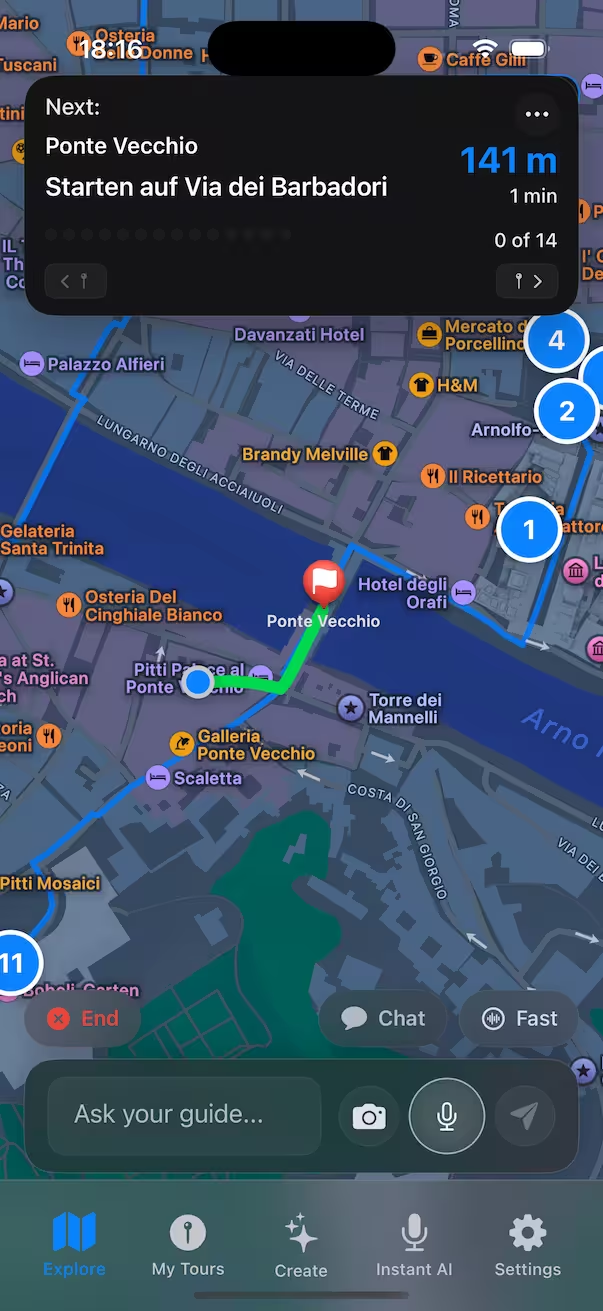
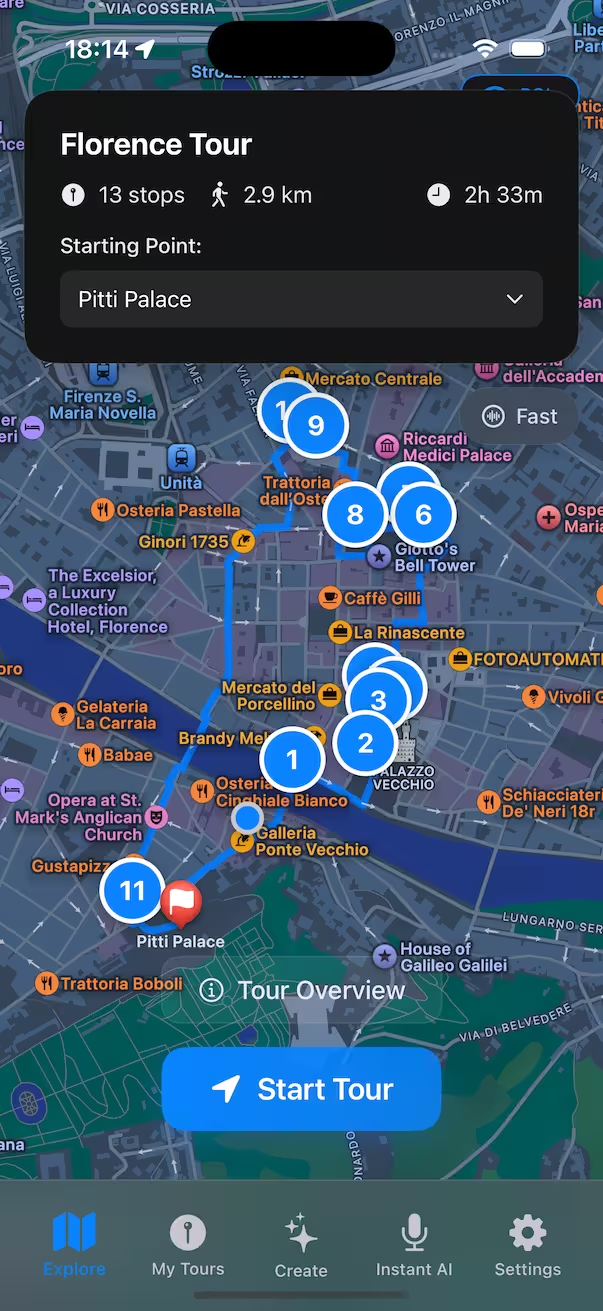
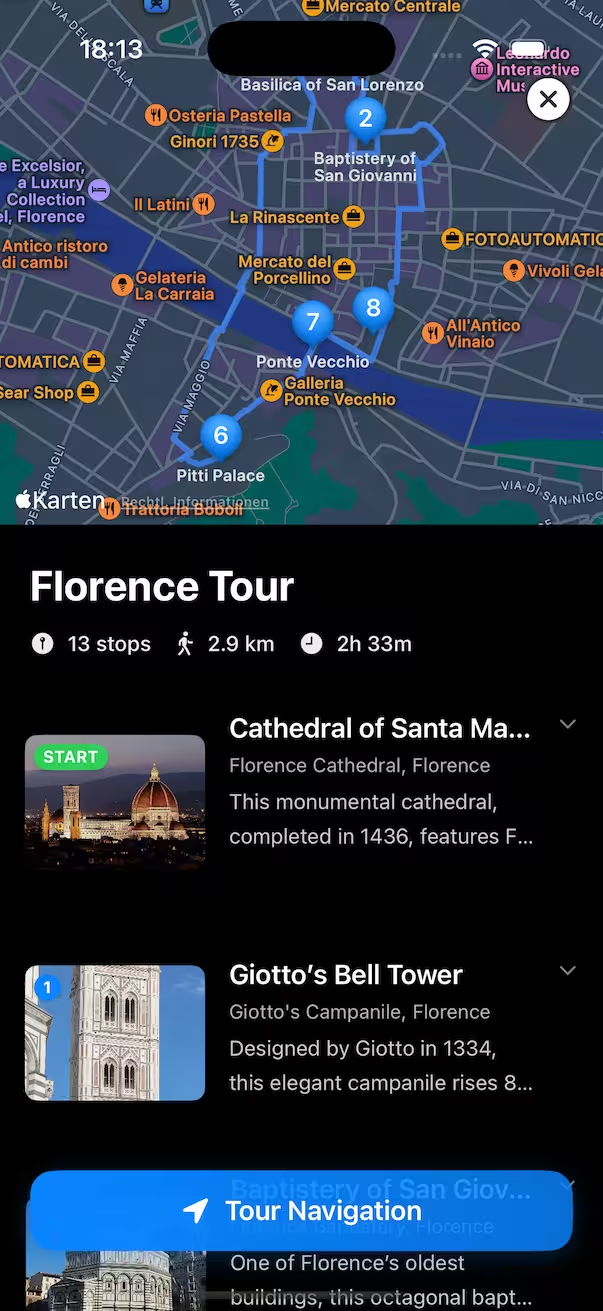
The classic Tel Aviv tour: 9 stops, 4.9 km, about 2 h on foot
Your live AI guide and the self-guided Tel Aviv route, together in your browser.