
Florence to Siena Day Trip: Why the Bus Beats the Train
The bus beats the train on this route, dropping you six minutes from Piazza del Campo while the train strands you 2 km below the walls. Here is the honest day plan, plus a free, self-guided walking tour for the hours on the ground.
The Quick Answer: Florence to Siena
The smart way from Florence to Siena is the bus, not the train, and that surprises almost everyone. The 131R Rapida express runs from Firenze Autostazione (right next to Santa Maria Novella station) to Siena in about 1 hour 15 minutes, leaves roughly hourly from early morning to mid-evening, and costs €7.80 bought at the station. Crucially, it sets you down at Piazza Gramsci or Via Tozzi, a flat 6-to-10-minute walk into the historic center. The train, by contrast, dumps you 2 km below the old city and leaves you a long uphill walk, a local bus, or a taxi to finish the job. As a day trip Siena is very doable, though one day is honestly not quite enough for a city this good.
| Question | Answer |
|---|---|
| Fastest journey time | ~1h15 by the 131R Rapida bus. ~1h30 by the Ordinaria (131O) bus or by direct train |
| Frequency | Hourly bus, roughly 6:10 a.m. to ~9:15 p.m. Train also hourly (16 to 26 a day) |
| Price from | €7.80 bus at the station (€10 if bought onboard); Itabus from €6.90. Train €9.10 to 12 one way |
| Operators / how | Autolinee Toscane 131R bus (also FlixBus, Itabus). Train is Trenitalia regional |
| First / last | First bus ~6:10 a.m., last ~9:15 p.m. Do not rely on the very last departure |
| Worth it as a day trip? | Yes. The bus puts you 6 minutes from Piazza del Campo. One day covers the highlights |
Is the Florence to Siena Day Trip Worth It?
Here is the honest verdict first: yes, Siena makes one of the best day trips in all of Tuscany, and yes, the people who love it most are also the ones who will tell you a single day shortchanges it. Both are true. Siena is special, an "open-air museum" with more architectural masterpieces packed into its walls than cities ten times its size, and it never feels heavy-handed about it. The only real question is how long you give it.
The best of Siena, stop by stop


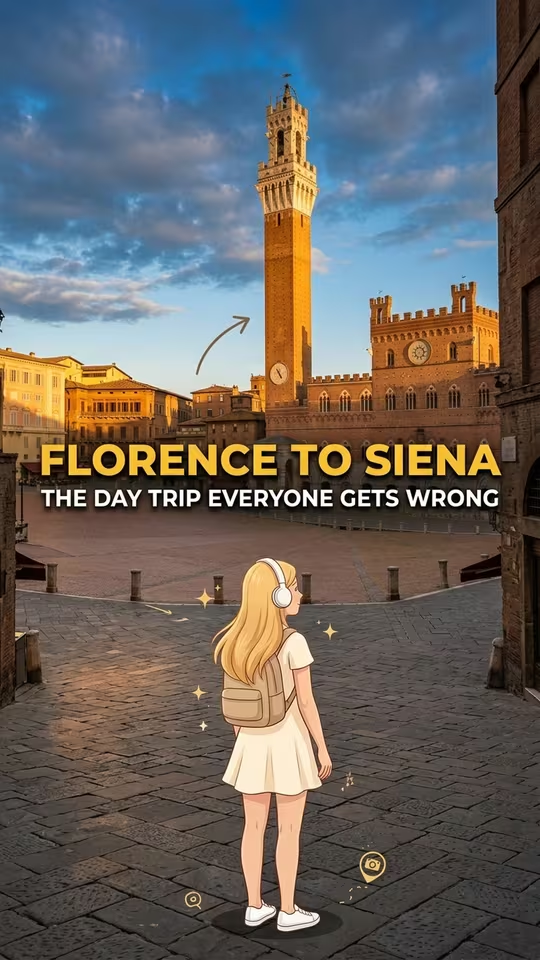
The "absolutely go" case is simple: the city is compact, the walk in from the bus is short, and Siena is a genuine relief after the crush of Florence. It is busy but never heaving the way the Uffizi queue is. You can see a photo of the shell-shaped Campo and still be unprepared for how it opens up beneath you in person.
Compact, calmer than Florence, and the core sights sit a ten-minute walk apart. A focused day delivers it.
The "give it more time" camp is not arguing against visiting, only against rushing. Siena rewards discovery, the hidden medieval corners, the contrade, the unassuming streets that feel more local the farther you drift from the Duomo. A day skims the surface of all that.
If you can spare a night, stay over. The day-trippers drain out at dusk and the city becomes yours.
Our call: if you have a spare day in Florence and you get an early start, go. The highlights, Piazza del Campo, the Duomo, the Torre del Mangia, sit within a ten-minute walk of each other, so a focused day genuinely delivers the city. If you can spare a night, do that instead and watch the day-trippers drain out at dusk, because Siena after dark belongs to the locals. But nobody should skip Siena waiting for a "proper" trip that may never come.
Good fit if you...
- Have a free day in Florence and can leave early
- Want a medieval city that is calmer than Florence
- Love the core: the Campo, the Duomo, the tower view
- Want a short, cheap, easy ride downtown to downtown
Skip it (stay overnight instead) if you...
- Want to linger over every museum and the contrade
- Can spare a night to see Siena empty out after dusk
- Get carsick easily (the road to Siena is winding)
- Are building a Chianti road trip and want to drive it
How to Get from Florence to Siena by Bus or Train
You can reach Siena from Florence five realistic ways, and the surprise is that the obvious one, the train, is the wrong answer for a day trip. The bus wins, decisively.

| Mode | Time | Price | Verdict |
|---|---|---|---|
| Bus 131R Rapida (Autolinee Toscane) | ~1h15 | €7.80 station / €10 onboard | WINNER. Drops you 6 to 10 min from Piazza del Campo |
| Bus 131O Ordinaria | ~1h30 | €7.80 | Same route, but adds village stops. Take the Rapida instead |
| FlixBus / Itabus | ~1h15 to 1h30 | from €6.90 | Cheap, but FlixBus uses Villa Costanza and the Siena train station, less central |
| Train (Trenitalia regional) | ~1h30 direct | €9.10 to 12 | Scenic, but the station is 2 km below the center, uphill |
| Car (via Chianti or the Raccordo) | ~1h to 1h30 | fuel + parking | Only worth it for a countryside road trip. ZTL and parking are a headache |
| Private transfer / taxi | ~1h20 | from €209 | Not practical for a day trip |
The reason the bus wins is geography, not just speed, though it is also faster (75 minutes against the train's 90). The bus sets you down at Piazza Gramsci or Via Tozzi, just inside or beside the old city walls, and it is a flat six-to-ten-minute stroll to Piazza del Campo. The train station sits 2 km outside the walls and well below the hilltop center, so you finish with a 20-to-30-minute uphill walk along a busy road, a local bus, or a taxi queue. That is the whole case in one sentence: the bus is cheaper, a touch quicker, and ends in the center, while the train ends at the bottom of a hill. The one catch: take the Rapida (131R), not the Ordinaria (131O), because the Ordinaria stops in villages and adds about 20 minutes.
The bus drops you in the center. The train drops you at the bottom of a hill. That is the whole decision.

The Bus in Detail
The workhorse is the 131R Rapida, run by Autolinee Toscane (the regional operator that absorbed the old SITA and Tiemme lines). It leaves from Firenze Autostazione, Via Santa Caterina da Siena 15/17, immediately next to Santa Maria Novella train station, so if you arrive in Florence by rail you barely have to move. It arrives at Siena, Via Tozzi or Piazza Gramsci, both at the northern edge of the historic center.
A few things make this easy. The 131R is non-stop, around 1 hour 15 minutes; the 131O Ordinaria covers the same ground in about 1h30 with village stops, so check the bus code before you board. Seats are comfortable and there is luggage space underneath. The road is winding and mountainous, which is glorious to look at but not ideal if you get motion sick, so take a window seat and something for your stomach if you are prone to it.
On pricing, it is straightforward: €7.80 bought at the station, but €10 if you buy onboard, so buy before you board. Itabus advertises fares from €6.90. Best of all, tickets are not tied to a specific departure time, which is the day-tripper's dream. Buy a return first thing in the morning, including the ride home, and you stay flexible about when you head back to Florence.
131R or FlixBus, which to book?
Take the 131R. FlixBus and Itabus run the corridor and can be a euro or two cheaper, but FlixBus picks up at Villa Costanza (farther out, on the Florence tram line) and drops near the Siena train station rather than the center, which throws away the bus's whole advantage. The 131R is the one that puts you minutes from the Campo.
| Compare | 131R Rapida (Autolinee Toscane) | FlixBus / Itabus |
|---|---|---|
| Departs Florence | Firenze Autostazione (beside SMN) | Villa Costanza (tram out from center) |
| Arrives Siena | Via Tozzi / Piazza Gramsci (by the walls) | Near the Siena train station |
| Time | ~1h15 | ~1h15 to 1h30 |
| Price from | €7.80 station | €6.90 |
| Verdict | Best. Central both ends | Cheaper, but less convenient in Siena |
Booking Strategy
There is not much to overthink here, which is part of the appeal, but a few moves save money and stress.
Buy at the station, not onboard. It is €7.80 at the counter versus €10 on the bus, so the difference is real even on a single ride.
Buy a round trip in the morning. Bus tickets are not time-specific, so a return bought first thing gives you total flexibility on when you head back. You can take any bus home.
Where to buy. At the Firenze Autostazione counter, on the AT Bus app (iPhone and Android), or at a tobacco shop or newsstand. Itabus and FlixBus sell through their own apps.
Do not gamble on the last bus. A ticket does not guarantee a seat if the bus is full, and the late departures can fill. Treat the second-to-last bus as your real last bus.
Booking checklist
- Walk to Firenze Autostazione, beside Santa Maria Novella station.
- Buy a round-trip 131R ticket at the counter (€7.80 each way).
- Confirm the bus code is 131R Rapida, not 131O Ordinaria.
- Take a window seat; the Chianti scenery is the bonus.
- On the way back, aim for the second-to-last bus, never the very last.
Siena in One Day
Here is the part most day-trip guides bury, and it is the whole point: you do not need to plan a route. You step off the bus at Via Tozzi / Piazza Gramsci, on the northern rim of the old city, open our free self-guided Siena tour, and start it from wherever you are standing. The voice guide takes the planning off your hands and walks the city with you, stop by stop, so the short stroll in from the bus becomes the first beat of the day rather than a logistics problem. No transfer, no uphill slog, no taxi. That short walk in is exactly why the bus beats the train, and it is the reason a day here actually works.

The time math
Catch an early 131R and you can be standing in the Campo before the tour groups arrive, ideally by 9:00 to 10:00 a.m. The last bus leaves Siena around 9:15 p.m., but you should plan around the second-to-last, so figure on a long day with roughly five to six genuinely useful hours once you subtract the ride, lunch, and ticket queues. The trick is not to wander aimlessly at the start. Lock in the timed things first, the tower and the Duomo, then let yourself drift.
What you'll see
Here is what a day-tripper should not miss, with the practical reality attached:
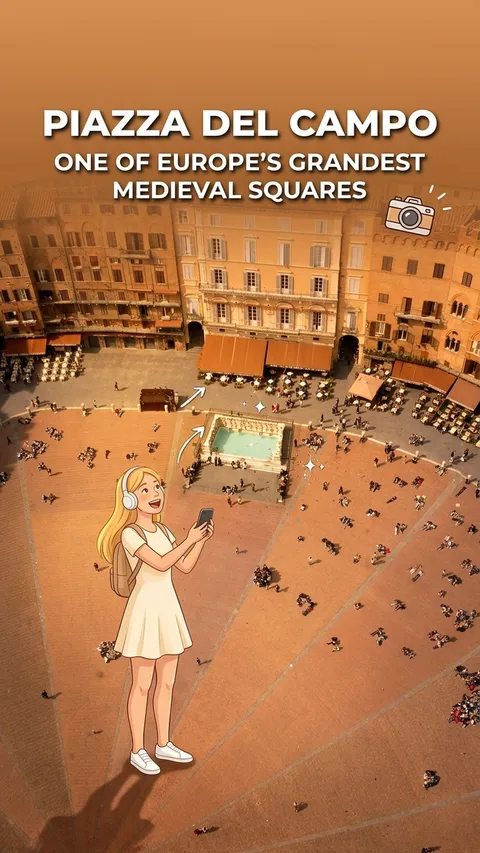
- Piazza del Campo (free, open 24/7): Siena's shell-shaped main square, one of the largest medieval piazzas in Europe, with nine brick sections fanning out from the Palazzo Pubblico. The social heart of the city. Get here early and it is briefly yours.
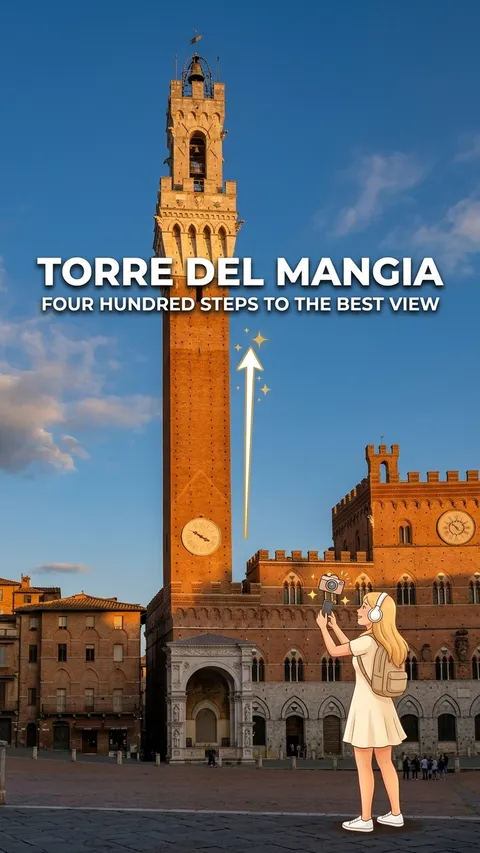
- Torre del Mangia (€10; opens 10:00 a.m.): the 88-meter tower over the Palazzo Pubblico, 400-plus steps to the best view in Siena. Entry is capped to small groups and the online slots sell out fastest May to September, so book or buy first thing.
- Duomo di Siena (from €5; complex passes €14 to €23): the striped Gothic cathedral many travelers rate above Florence's. Plan 2 to 3 hours for the full complex. Shoulders and knees must be covered.
- Palazzo Pubblico & Museo Civico (€9): the town hall, still in use, holding the "Allegory of Good and Bad Government" frescoes.
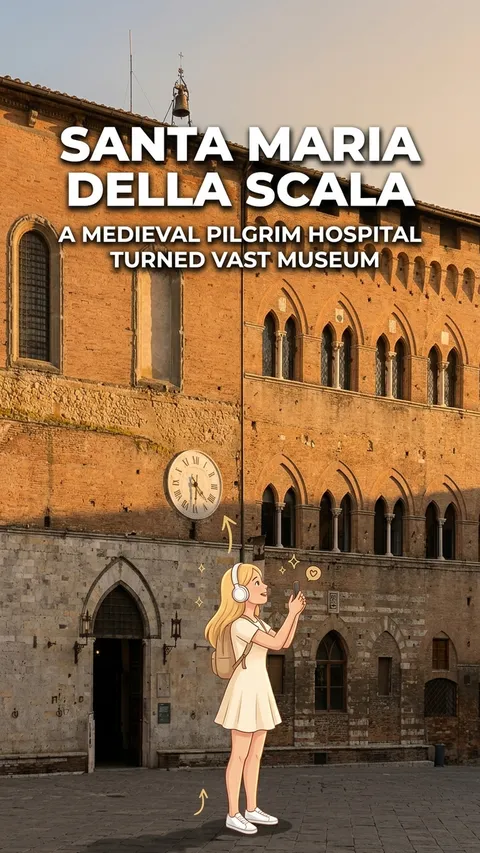
- Santa Maria della Scala (€9): a vast former hospital, now a museum complex of frescoes and underground tunnels, right opposite the Duomo.
The route the tour walks with you
Instead of a generic "see the Campo, then the Duomo" list, you walk one efficient loop and the tour walks it with you. This is the nine-stop order, starting at the Campo (the heart, and where the tower tickets must be bought early) and ending at San Domenico on the northwest ridge, pointing you back toward your bus:
- 1Piazza del Campo Free · your start
Walk in from Via Tozzi and the square opens below you, a shallow shell of red brick fanning out from the Palazzo Pubblico, one of the largest medieval piazzas in Europe. Arrive early and it is briefly, almost eerily, yours.
- 2Palazzo Pubblico & Museo Civico Museo Civico €9
The Gothic town hall along the lower edge of the Campo, still the seat of city government. Step inside the Museo Civico for Lorenzetti's "Allegory of Good and Bad Government," the most famous secular fresco of the Middle Ages.
- 3Torre del Mangia Climb · €10
The slender 88-meter tower rising from the Palazzo, built to match the cathedral's campanile. Climb the 400-plus steps for the best view in Siena. Entry is capped to small groups and slots sell out fastest in summer, so do this first.
- 4Piazza del Mercato Free
The broad square directly behind the Palazzo Pubblico, with a terrace that drops away onto the green valley below. The natural hinge between the Campo and the Duomo cluster.
- 5Facciatone €6 · OPA Si Pass
Climb the wall of the "Duomo Nuovo," the colossal cathedral Siena began before the Black Death stopped it cold. Its terrace gives the finest rooftop panorama over the old town.
- 6Santa Maria della Scala €9
One of Europe's oldest hospitals, facing the cathedral across the Piazza del Duomo. The frescoed Pellegrinaio hall shows daily life when it was a working hospital, and the original Fonte Gaia panels live here.
- 7Siena Cathedral From €5 · passes to €23
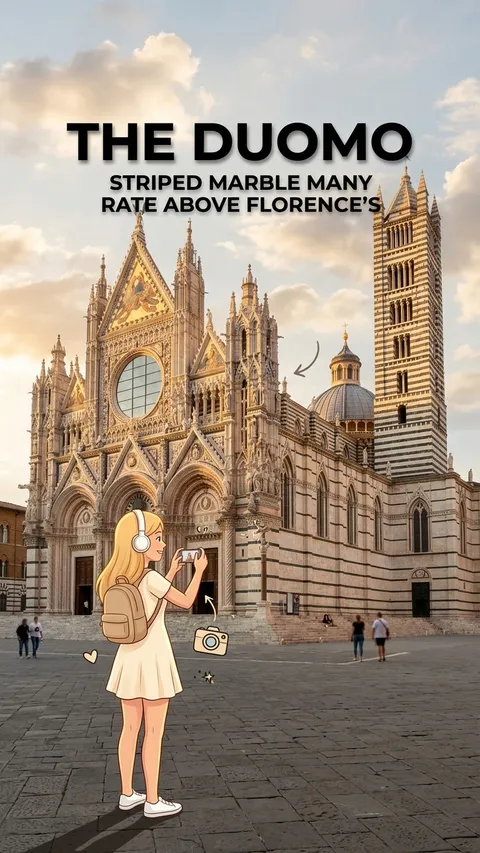
The striped Romanesque-Gothic Duomo many travelers rate above Florence's, with an inlaid marble floor (covered part of the year), the Piccolomini Library's Pinturicchio frescoes, and a Gate of Heaven rooftop walk. Allow two to three hours for the full complex.
- 8Baptistery of San Giovanni €4
Tucked beneath the cathedral choir at the foot of the San Giovanni stairs, holding a Renaissance font with panels by Donatello and Ghiberti.
- 9Basilica of San Domenico Free
The vast 13th-century brick basilica on the northwest ridge, holding the head-relic of Saint Catherine of Siena and the best long view back to the Duomo. It points you straight back toward your bus.
It runs in your browser, no app and no download. A voice guide walks the loop with you and leads a real conversation as you go: it greets you, tells the story between stops, asks what you actually want to see, and adapts. It is not a recording and not an audioguide. The map and step-by-step navigation get you from each stop to the next.
That whole loop is our free, self-guided Siena walking tour, and because it can be launched from any of its stops, you do not backtrack to find an official start, you just begin where you are. You open it the moment you walk in from Via Tozzi and enter the loop at the Campo. It runs in your browser, with no app and no download. A voice guide walks the route with you and leads a real conversation as you go: it greets you, tells the story between stops, asks what you actually want to see, and adapts to your answers. It is not a recording and not an audioguide. The map and step-by-step navigation get you from the Campo to the Duomo to San Domenico without squinting at Google Maps. See the full route on the Siena walking tour page, and you get 100 free credits to try it.
Insider Tips for the Siena Day Trip
The single biggest rookie error on this route is taking the train because it feels more obvious, then losing 30 minutes and a lot of sweat on the uphill walk from the station. The bus is the move. After that, the mistakes are about timing and tickets.
Do
- Take the 131R Rapida bus, station-to-center both ends
- Buy your round-trip bus ticket at the station (€7.80)
- Buy Torre del Mangia tickets at the 10:00 a.m. opening
- Buy a combo or the Gate of Heaven Pass for the best value
- Dress modestly for the Duomo (shoulders and knees)
- Wander off the main streets for lunch and quiet
Don't
- Don't default to the train. The station is 2 km below the city, uphill
- Don't buy onboard (€10) or rely on the very last bus
- Don't leave the tower for the afternoon; the slots go fastest by midday
- Don't count on walk-up Duomo tickets in summer; reserve ahead May to September
- Don't drive into the historic center; it's a ZTL with mailed fines
- Don't try to "do everything"; one day is for the highlights
Move a few streets off the Campo and the Duomo for lunch and you trade the markup and the crowds for something cheaper, quieter, and closer to how Siena actually eats. The best corners of the city are the ones nobody photographs.
Avoid the Palio dates (July 2 and August 16) unless you are going specifically for the horse race; they make the city impossibly crowded and accommodation vanishes. And remember the Duomo dress code, shoulders and knees covered, or you will be turned away at the door.
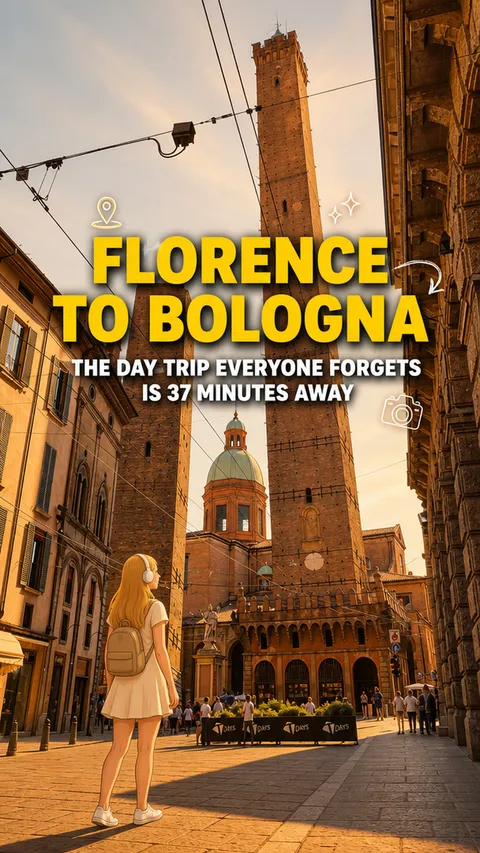
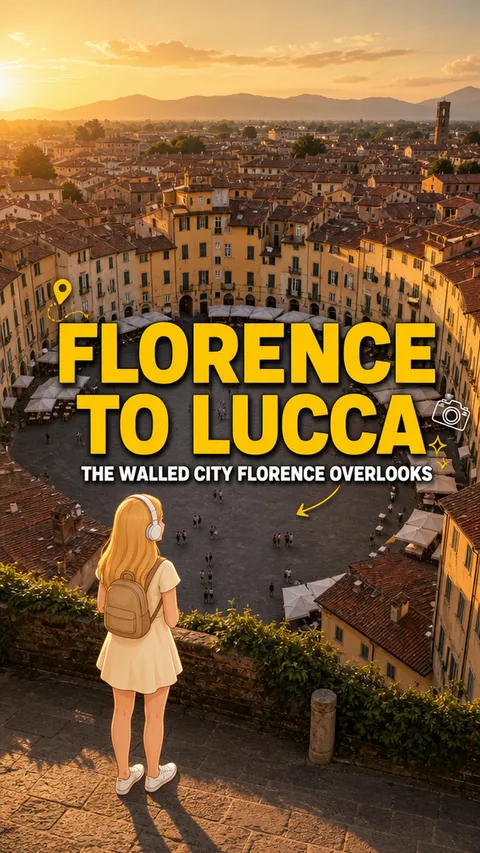
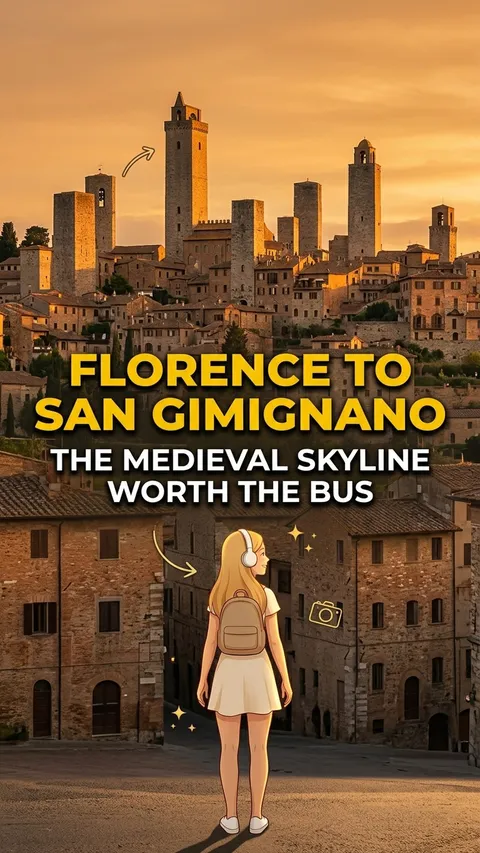
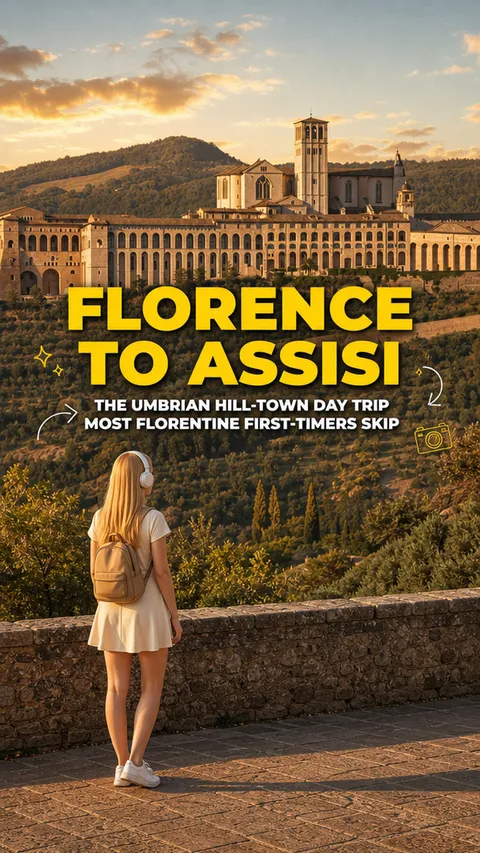
More day trips from Florence
Out in the morning, back in time for dinner. Every route here fits in one full day.
What the Florence to Siena Journey Feels Like
This is the part no timetable can give you. Siena is a city people come back from genuinely moved, and the texture of the day is half the point. You almost certainly already know the shell-shaped Campo from a photo, but the photo does not prepare you for standing at the rim and watching the brick fan out and tilt down toward the Palazzo Pubblico.
The Duomo is the moment most people do not expect, even those who think they are tired of churches. The green-and-white-striped interior outdoes Florence's cathedral for sheer drama, and the facade is one of the most detailed in Italy. Every surface inside is worked into something intricate and dazzling: the inlaid marble floor, the Piccolomini Library's frescoes, the carved pulpit. It is the kind of interior you have genuinely not seen before.
Then there are the odd, human details that stick. Across the square in Santa Maria della Scala, the frescoes in the old pilgrim hospital show daily life when it was a working ward, including a surgeon tending an infected wound and, memorably, a patient handing over a urine sample for diagnosis. Bracing stuff for just after lunch, and exactly the sort of specific, lived-in scene that makes Siena feel real rather than staged.
After the big sights, the best move is to wander off the main streets with no plan: a quiet little church, a workshop, a trattoria that has nothing to do with tourists. And whatever else you do, have a glass of the local Chianti while you are at it. You are in Tuscany, after all.
Florence to Siena: Your Questions Answered
Can you do Siena as a day trip from Florence?
Yes, easily. The 131R bus is about 1h15 each way and drops you a six-minute walk from Piazza del Campo. With an early start you get the highlights, the Campo, the Duomo, the Torre del Mangia, comfortably in a day. Just know that almost everyone wishes they had longer.
Is the bus or the train better from Florence to Siena?
The bus, clearly. The 131R Rapida is faster (about 75 minutes versus 90), cheaper (€7.80 versus €9.10 to 12), and sets you down by the city walls. The train station is 2 km below the center and leaves you a 20-to-30-minute uphill walk, a local bus, or a taxi. It is the clearest call on this whole route.
How long does it take to get from Florence to Siena?
About 1 hour 15 minutes on the 131R Rapida express bus. The 131O Ordinaria bus and the direct train are both around 1 hour 30 minutes.
How much does it cost?
The 131R bus is €7.80 bought at the station, or €10 if you buy onboard, so buy first. Itabus advertises fares from €6.90. The regional train is €9.10 to 12 one way.
Where does the bus leave from and arrive?
It leaves Firenze Autostazione on Via Santa Caterina da Siena, right next to Santa Maria Novella train station, and arrives at Via Tozzi or Piazza Gramsci on the northern edge of Siena's old city.
Do I need to book the bus in advance?
No. The 131R is not time-specific, so buy a round trip at the station in the morning and take whichever bus you like back. Just do not count on the very last departure, because a ticket does not guarantee a seat if it is full.
What should I not miss in one day?
Piazza del Campo, the Torre del Mangia climb (book or buy first thing, since the slots sell out fastest), the Duomo complex, and Santa Maria della Scala. Buy a combo ticket to save money, and dress modestly for the cathedral.
Should I drive instead?
Only if you are building a Chianti road trip and want to stop in villages like Panzano or Greve along the SR 222. For a straight day trip, skip the car: Siena's center is a ZTL with camera-enforced fines, and parking near the center is nearly impossible.
When is the best time to visit?
Spring (April to May) and fall (September to October) for pleasant weather and thinner crowds. Summer is hot and busy, and the Palio dates (July 2 and August 16) make the city extremely crowded unless you are going for the race.
Plan Your Siena Day Trip
You have the bus sorted, and that is the part most people get wrong. Now make the hours on the ground count. The nine-stop loop above is our free, self-guided Siena walking tour, and because it starts from any stop, you launch it the second you walk in from the bus. Open it and start walking with 100 free credits.
