Things to Do in Edinburgh - Top Attractions, Hidden Gems & Must-See Sights

Discover the best things to do in Edinburgh. Complete guide to must-see sights, popular attractions, hidden gems, museums, food markets and parks.

31 Attractions 6 Categories Travel Guide

Table of Contents

Edinburgh Overview

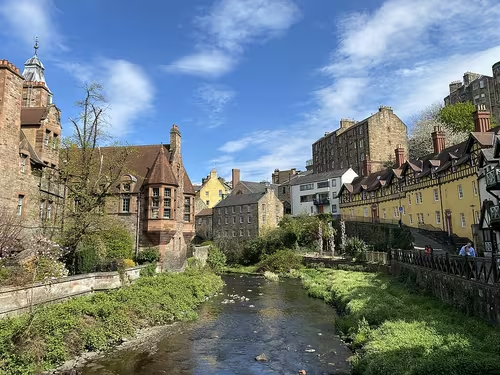
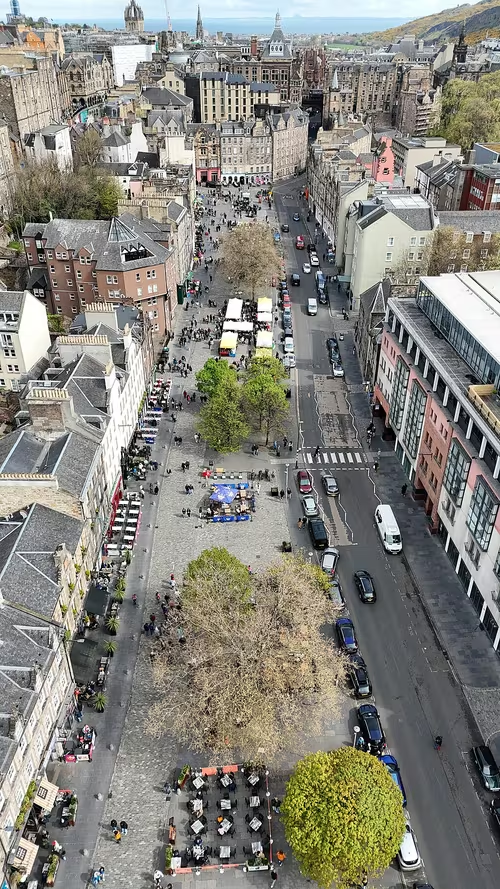
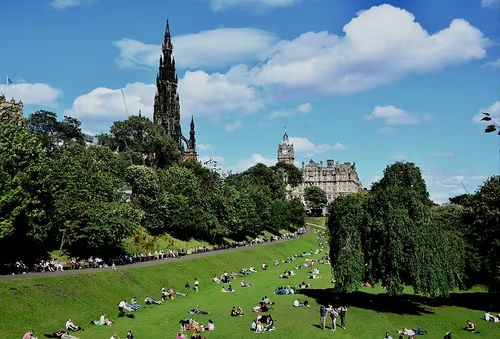
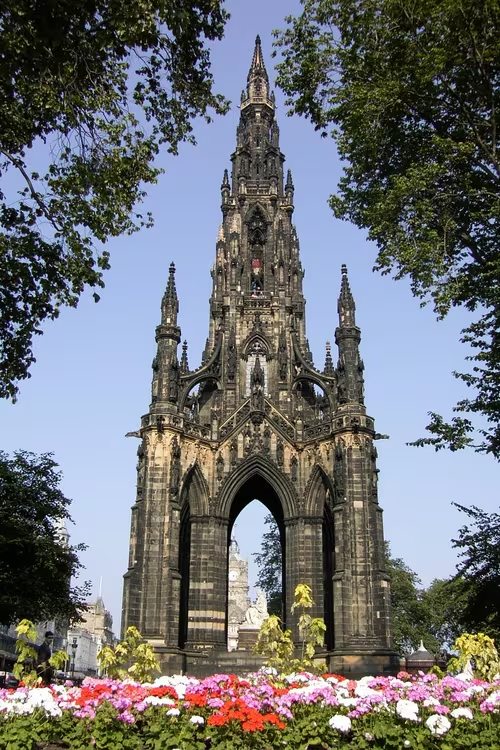
Edinburgh, Scotland's historic capital, is a city of dramatic contrasts where ancient and modern coexist in perfect harmony. Perched on volcanic rock between the Firth of Forth and the Pentland Hills, the city is defined by its stunning skyline dominated by Edinburgh Castle. The UNESCO World Heritage-listed Old Town preserves one of Europe's most complete medieval street plans, centered on the Royal Mile that runs from the castle to the Palace of Holyroodhouse. Below Arthur's Seat, an extinct volcano offering panoramic city views, Edinburgh reveals layer upon layer of history – from the Reformation at St Giles' Cathedral to the Scottish Enlightenment that shaped the elegant Georgian New Town. The city is a cultural powerhouse, home to world-class museums including the National Museum of Scotland, the Scottish National Gallery, and countless hidden gems. Beyond the famous sights, Edinburgh rewards explorers with secret gardens, charming neighborhoods like Stockbridge and Dean Village, and the wild landscapes of Holyrood Park. Whether experiencing the world's largest arts festival, climbing Calton Hill at sunset, or discovering a quiet close off the Royal Mile, Edinburgh offers an unforgettable journey through Scottish history, culture, and natural beauty.

Must-See Attractions in Edinburgh

  • Arthur's Seat
  • Calton Hill
  • Edinburgh Castle
  • Palace of Holyroodhouse
  • Royal Mile
  • St Giles' Cathedral
🏛️ Must-See ⭐ Sights 💎 Hidden Gems 🎨 Museums 🍕 Food & Markets 🌳 Parks & Views

🏛️ Must-See Attractions in Edinburgh

These iconic landmarks and must-see sights are essential stops for any visitor to Edinburgh.

Arthur's Seat

1. Arthur's Seat

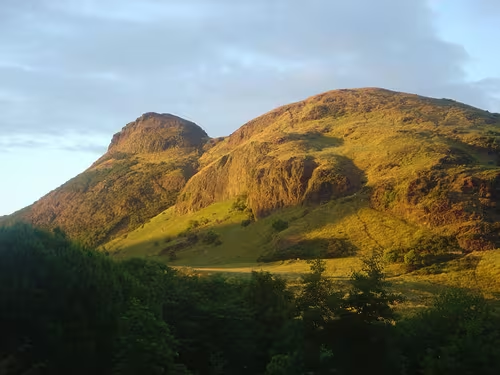
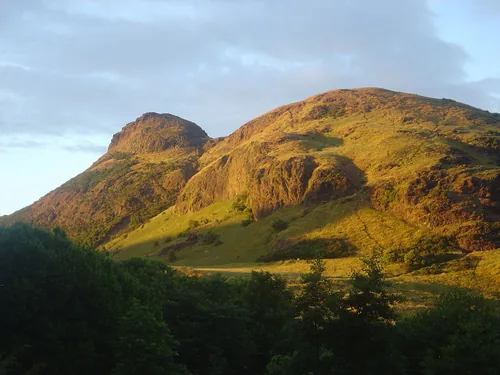
Arthur's Seat is an ancient extinct volcano rising 250.5 metres (822 ft) above Edinburgh, forming the highest point of Holyrood Park. Robert Louis Stevenson called it "a hill for magnitude, a mountain in virtue of its bold design." It sits about a mile east of Edinburgh Castle and is geologically around 340 million years old — the remnant of a volcano active during the Carboniferous period. The name has nothing to do with the legendary king; most historians trace it to a corruption of Gaelic meaning roughly "Height of Archers."

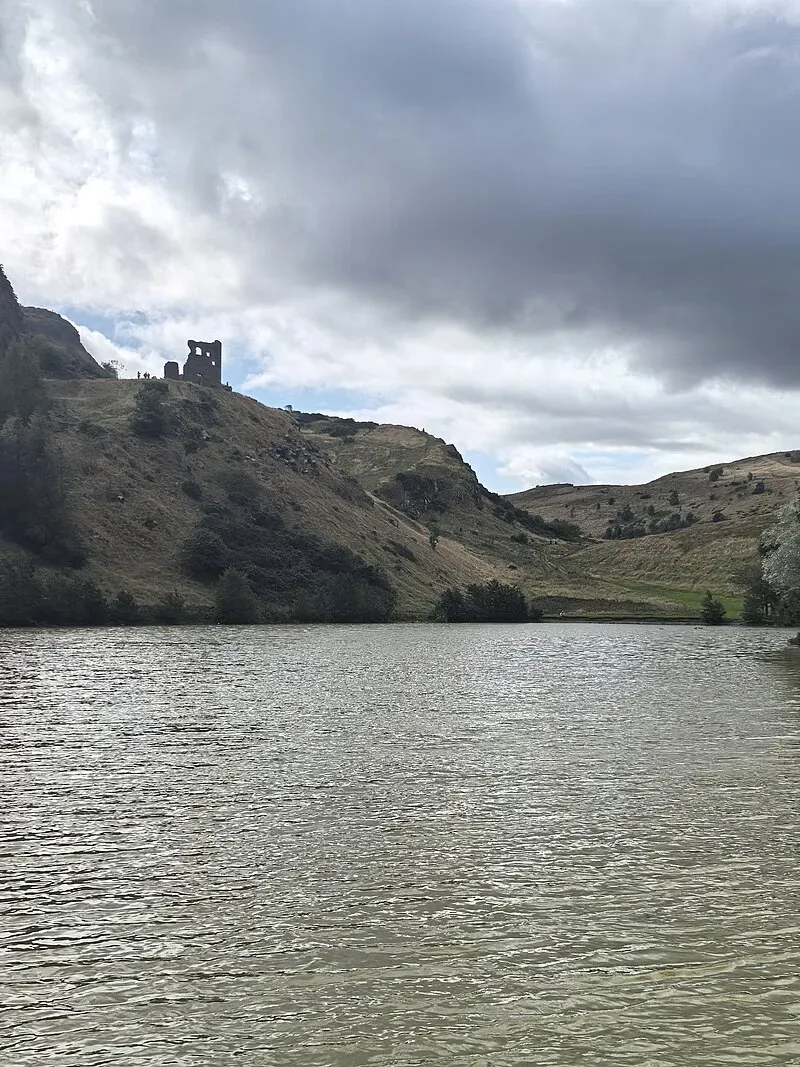
The summit gives a full 360-degree panorama: the Firth of Forth to the north, the Pentland Hills to the south, and the Old Town skyline directly west. Several routes lead to the top, from a gentle grassy slope from Dunsapie Loch on the east side to the more demanding scramble up via Salisbury Crags. The climb from the Palace of Holyroodhouse takes about 45 minutes at a moderate pace, passing St Margaret's Loch and the ruined St Anthony's Chapel on the way.

This is genuinely one of the best places to visit in Edinburgh, partly because it's free and partly because it's the real thing — a proper hill walk with weather, boggy ground, and views that put the whole city in context.
Hours Open 24/7
Price Free
Website Wikipedia
Insider TipGo early on a weekday morning — before 9 AM in summer — and you'll often have the summit entirely to yourself. Sunset visits are popular but the path down in the dark is genuinely tricky; bring a torch or phone torch if you're staying late.
Calton Hill

2. Calton Hill

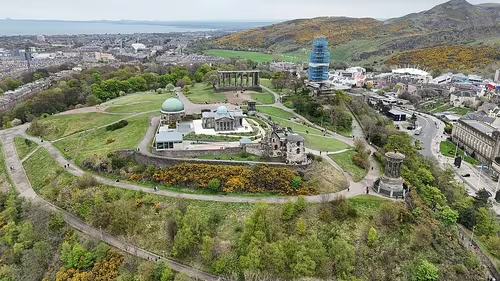
Calton Hill sits at the east end of Princes Street, a 100-metre rise that gives you arguably the best view of Edinburgh Castle and the Old Town skyline in the whole city. The hill is part of the UNESCO World Heritage Site and has been the headquarters of the Scottish Government since the 1930s — St Andrew's House is built into its steep southern slope. At the top, a cluster of monuments has earned Edinburgh comparisons to Athens: the National Monument, modelled on the Parthenon but left unfinished in 1829 when funds ran out, has been nicknamed "Edinburgh's Disgrace" ever since. Also up here are the Nelson Monument (a telescope-shaped tower from 1816), the Dugald Stewart Monument, the Robert Burns Monument, and the old City Observatory.

The views from the summit are legitimately extraordinary in every direction — the castle and Old Town to the west, the Firth of Forth and the hills of Fife to the north, Arthur's Seat to the east. The climb from the east takes about ten minutes and is far less strenuous than Arthur's Seat, making this the most accessible panoramic viewpoint in the city.

Calton Hill is one of those attractions in Edinburgh that rewards both the architecture-minded (the monuments are genuinely strange and fascinating) and people who just want to sit on a bench with a view and eat a sandwich.

Hours Open 24/7
Price Free
Website Wikipedia
Insider TipCome at sunset on a clear evening — the light on the castle and the Forth is exceptional. The hill has no closing time and is free to visit, so this is easily one of Edinburgh's best free experiences at any hour.
Edinburgh Castle

3. Edinburgh Castle

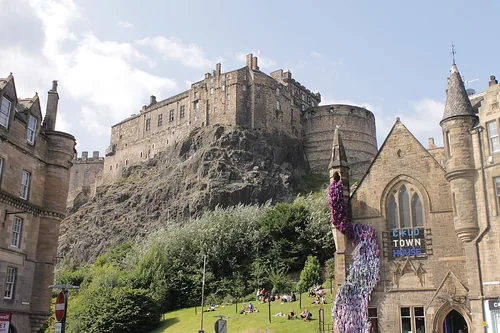
Edinburgh Castle sits on Castle Rock, a volcanic plug that humans have occupied since at least the Iron Age. There has been a royal castle here since the reign of Malcolm III in the 11th century, and it served as a royal residence until 1633. Research in 2014 counted 26 sieges in its 1,100-year history — a record that earns it the title of the most besieged place in Britain. Few buildings survive from before the devastating 1573 Lang Siege; the main exceptions are St Margaret's Chapel from the early 12th century (the oldest building in Edinburgh), the Royal Palace, and the 16th-century Great Hall.

Inside, the castle houses the Honours of Scotland — the crown, sceptre, and sword that form the oldest surviving royal regalia in Britain. The Stone of Destiny, on which Scottish kings were crowned, sits nearby. The National War Museum occupies an 18th-century ordnance storehouse within the grounds, and the One O'Clock Gun fires from the Half Moon Battery every weekday. With over 2.2 million visitors in 2019, it's Scotland's most visited paid attraction.

For anyone thinking about things to do in Edinburgh, the castle demands at least half a day. The queues at the main gate can be brutal in July and August — up to an hour — especially during the Fringe festival season when the Esplanade hosts the Royal Edinburgh Military Tattoo nightly.

Hours Daily: 9:30 AM – 4:00 PM
Price £19.50
Insider TipBook tickets online in advance — the ticket office queue can add 40 minutes to your wait. The One O'Clock Gun fires Monday to Saturday (not Sunday), and you can hear it clearly from Princes Street Gardens for free without paying castle admission.
Palace of Holyroodhouse

4. Palace of Holyroodhouse

The Palace of Holyroodhouse is the official residence of the British monarch in Scotland, used by the King for a week each summer during Holyrood Week. It grew from a guesthouse attached to Holyrood Abbey — founded in 1128 by King David I — into a full palace during the 16th century under James IV and James V. Mary Queen of Scots spent six turbulent years here between 1561 and 1567, and her private apartments in the northwest tower are among the most atmospheric rooms in Scotland. It was here that her Italian secretary David Rizzio was stabbed 56 times in front of her by a group of Protestant nobles — an event that turned the course of Scottish history.

The State Apartments display royal portraits, tapestries, and furniture accumulated over four centuries. The ruins of Holyrood Abbey, dating from the 12th century, are accessible from the palace grounds and make a hauntingly beautiful addition. Behind the palace, Holyrood Park and Arthur's Seat rise dramatically — one of the most unexpected urban landscapes in Europe.

For what to see in Edinburgh that combines genuine royal history with living royal function, Holyroodhouse is the answer. It's not a museum — it's a working palace that still closes its doors when the King is in residence.

Hours Mon: 9:30 AM – 4:30 PM | Tue-Wed: Closed | Thu-Sun: 9:30 AM – 4:30 PM
Price Free
Insider TipThe palace closes for several weeks each year, typically in late June and early July during Holyrood Week, plus other royal events. Always check the Royal Collection Trust website before visiting — turning up to locked gates is a surprisingly common tourist disappointment.
Royal Mile

5. Royal Mile

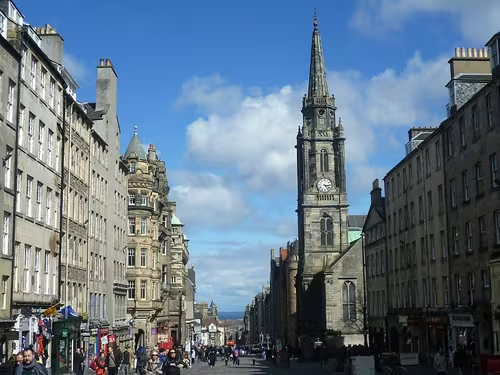
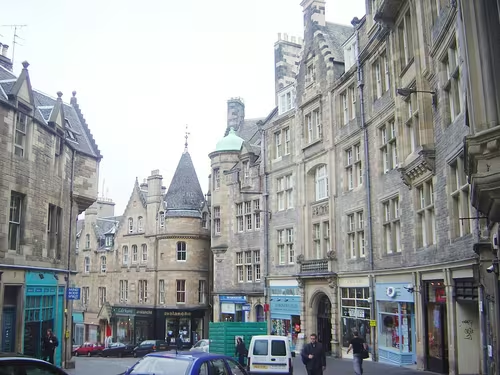
The Royal Mile is the main spine of Edinburgh's Old Town, running almost exactly one mile downhill from Edinburgh Castle to the Palace of Holyroodhouse. It's not a single street but a chain of six — the Castle Esplanade, Castlehill, the Lawnmarket, the High Street, the Canongate, and Abbey Strand — each with its own character. The term only entered common usage in the early 20th century. Along the way, closes (narrow alleyways) dart off on either side, hiding courtyards, museums, and surviving fragments of medieval Edinburgh that most tourists walk straight past.

At the centre is Parliament Square, home to both Scotland's supreme courts, St Giles' Cathedral, and a bronze equestrian statue of Charles II. During the Edinburgh Fringe in August, the High Street becomes a wall-to-wall spectacle of street performers, flyerers, and queuing audiences — electric for some, overwhelming for others. The rest of the year it's busy but manageable, with mornings and late evenings the calmest times.

The Royal Mile has its share of tartan-and-fudge shops, but the best sights in Edinburgh are literally hiding in its closes — Riddle's Court, Brodie's Close, White Horse Close near the bottom. Wander through as many as you can; they're where the actual history lives.

Hours Open 24/7
Price Free
Insider TipWalk the Mile from bottom to top (Holyrood to the Castle) rather than the other way. You get better light on the castle, the uphill gradient feels more manageable psychologically, and the closes on the south side are easier to spot heading uphill.
St Giles' Cathedral

6. St Giles' Cathedral

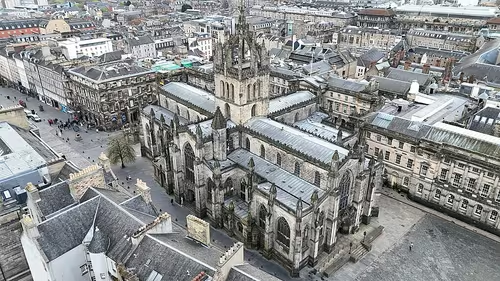
St Giles' Cathedral — properly the High Kirk of Edinburgh — has stood on the Royal Mile since the 14th century, though a church has occupied this site since at least the 12th. It was at the centre of the Scottish Reformation: John Knox served as its minister from 1559, and his influence from this pulpit reshaped not just Scottish religion but Presbyterian Christianity worldwide. In 1637, an attempt to impose a new prayer book on the congregation triggered a riot here that helped set off the Wars of the Three Kingdoms. The building was partitioned multiple times over the centuries — used as a prison, a court, a marketplace — before being restored to a single church in 1929.

The most extraordinary space inside is the Thistle Chapel, added between 1909 and 1911 to designs by Robert Lorimer. It's Scotland's equivalent of the Garter Chapel at Windsor — an intimate room where the Order of the Thistle, Scotland's highest order of chivalry, holds its ceremonies. The carved woodwork is extraordinary: look for the angel playing bagpipes above the organ. The stained glass throughout includes work by James Ballantine and a window by Edward Burne-Jones.

Admission is free, though donations are encouraged. It attracted over a million visitors in 2018, making it one of the top attractions in Edinburgh, but weekday mornings are reliably quieter than the tourist surge of afternoon.

Hours Mon-Fri: 10:00 AM – 6:00 PM | Sat: 9:00 AM – 5:00 PM | Sun: 1:00 – 5:00 PM
Price Free
Insider TipThe Thistle Chapel is easy to miss — it's tucked into the southeast corner behind a heavy wooden screen. Ask a steward to point it out; the carved details are some of the finest decorative work in Scotland and most visitors walk straight past them.
Get Your Own Private Tour with AI Guide
AI Guide
  • Personalized tour tailored to your interests
  • Your AI guide tells stories, shares facts, and cracks jokes
  • Turn-by-turn GPS navigation
  • Available in your language — no download needed
Try for Free

💎 Hidden Gems in Edinburgh - Off the Beaten Path

Beyond the tourist crowds, Edinburgh hides remarkable treasures waiting to be discovered.

Dunbar's Close Garden

1. Dunbar's Close Garden

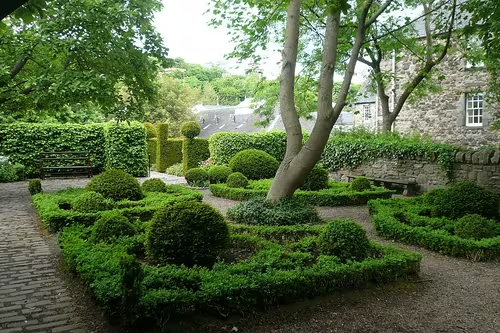
Dunbar's Close Garden is a formal garden hidden down a close on the Canongate section of the Royal Mile, created in 1978 by the Mushroom Trust as a gift to the city. It's designed in the style of a 17th-century Scottish garden — the kind of enclosed formal garden that would have been attached to a wealthy merchant's tenement in this period. The close itself is narrow and unpromising, which makes the garden's sudden opening all the more effective. Inside: gravel paths, clipped box hedges, stone walls, and plantings that include old rose varieties, herbs, and perennials chosen for period appropriateness.

The garden is small — you can walk around it in five minutes — but it's maintained with care and offers a genuinely peaceful pause in the middle of one of the busiest tourist streets in Scotland. Benches along the walls make it a good stop for a sit-down. The opening hours are limited (roughly 7 AM to 4:30 PM daily), and it closes entirely in winter.

Most of the thousands of people who pass the close entrance each day have no idea what's behind the stone walls.

Hours Daily: 7:00 AM – 4:30 PM
Price Free
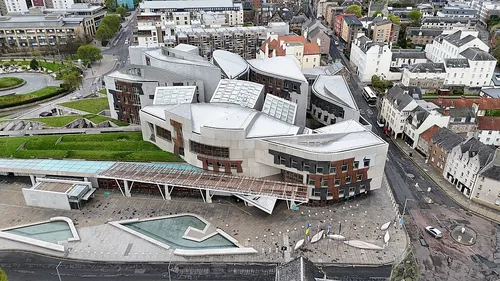
Insider TipThe close entrance is easy to miss — it's on the north side of the Canongate, roughly opposite the Museum of Edinburgh. Look for a narrow gap with a small sign. If you reach the Scottish Parliament you've gone too far south.
Hermitage of Braid

2. Hermitage of Braid

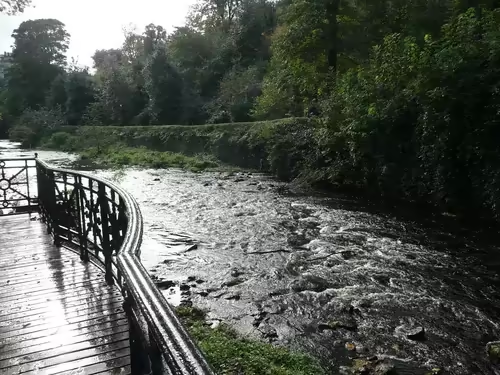
The Hermitage of Braid is a Local Nature Reserve of 60.3 hectares (149 acres) in south Edinburgh, set between the Braid Hills and Blackford Hill. The Braid Burn runs through the centre, flanked by sections of mature woodland — mostly beech, oak, and ash — with open paths and several steep-sided valleys. Within the reserve is the former Braid estate, including Hermitage House, an 18th-century country house that now serves as a visitor centre. A small community garden, restored in 2014 and managed by the Friends of the Hermitage, grows medicinal and culinary plants on the site of the original estate garden.

The reserve connects directly to Blackford Hill to the northeast, which has open summit views over the city and houses the Royal Observatory Edinburgh (not open to the public but visible on the ridge). Together, the Hermitage and Blackford Hill make a longer walk of 2–3 hours that takes you well south of the city's tourist infrastructure into genuinely countryside-feeling terrain.

It's accessible by bus from the city centre and takes about 30 minutes to reach.

Hours Dawn-dusk
Price Free
Website Wikipedia
Location 55.9199, -3.2009
Insider TipThe Hermitage is at its best in autumn — the beech woodland turns a deep copper-gold in October, and the path along the Braid Burn is carpeted with fallen leaves. Less crowded than Holyrood Park at any time of year, but almost empty in autumn except for dog walkers.
Stockbridge

3. Stockbridge

Stockbridge is a neighbourhood in north Edinburgh that was originally a separate village before being absorbed into the city in the 19th century. The name is straightforward Scots: "stock brig," meaning timber bridge, referring to the bridge over the Water of Leith — the current stone version dates from 1801. The painter Henry Raeburn (1756–1823) owned the two adjoining estates here — Deanhaugh and St Bernard's — and developed them with architect James Milne. Ann Street, which Raeburn designed and named after his wife, is one of the few New Town streets with private front gardens on both sides, and is quietly one of the most desirable addresses in Edinburgh.

The neighbourhood today has a strong independent character: the main street (Raeburn Place and St Stephen Street) is lined with good coffee shops, a solid selection of secondhand bookshops, a fine cheese shop, several delis, and independent restaurants. St Stephen Street in particular has kept a slight bohemian edge. Sunday mornings bring Stockbridge Market, held in St Stephen Place, which is the best-attended regular market in the city.

Stockbridge is worth half a day for anyone interested in how Edinburgh actually lives day-to-day, rather than how it presents itself to tourists. The Water of Leith walkway connects it to Dean Village and the Gallery of Modern Art. For things to do in Edinburgh off the main tourist drag, Stockbridge is the obvious answer.

Hours Open 24/7
Price Free
Website Wikipedia
Insider TipCircus Lane, a curved cobbled mews about five minutes' walk from the main street, is the most photographed residential street in Edinburgh — particularly in spring and summer when the window boxes are in flower. Go early in the morning before the photographers arrive.
Water of Leith Walkway

4. Water of Leith Walkway

The Water of Leith Walkway is a 12-mile public footpath and cycleway following the Water of Leith from Balerno on the city's southwestern edge to the harbour at Leith. The river runs through Edinburgh's geography in a way that shaped the city: it powered the mills of Dean Village for eight centuries, it defined the boundary of medieval settlements, and it carved the gorge that makes Dean Village so hidden. The walkway threads through all of this, passing the Gallery of Modern Art, Dean Village, Stockbridge, the Royal Botanic Garden, and a stretch of surprisingly wild riverbank through Canonmills.

Most visitors walk sections rather than the full 12 miles. The most rewarding urban stretch runs from the Gallery of Modern Art through Dean Village to Stockbridge — about 2 miles, roughly 45 minutes, through the most scenically varied part of the route. The path is well-maintained with signage throughout. In several places the river runs through narrow wooded gorges that feel far removed from any city; you occasionally see herons and, in the right season, kingfishers.

For what to see in Edinburgh beyond the central tourist corridor, the Water of Leith is the best linear route. It connects multiple neighbourhoods and sights in sequence, uses no public transport, and is free.

Hours Open 24/7
Price Free
Location 55.886, -3.33981
Insider TipThe section from the Gallery of Modern Art down to Dean Village involves a steep descent on a narrow path that can be slippery when wet. Wear shoes with grip, especially if you visit in autumn or after rain. The path improves significantly once you reach the valley floor.
Get Your Own Private Tour with AI Guide
AI Guide
  • Personalized tour tailored to your interests
  • Your AI guide tells stories, shares facts, and cracks jokes
  • Turn-by-turn GPS navigation
  • Available in your language — no download needed
Try for Free

🎨 Best Museums & Galleries in Edinburgh

World-class museums and galleries that make Edinburgh a cultural treasure.

Museum of Edinburgh

1. Museum of Edinburgh

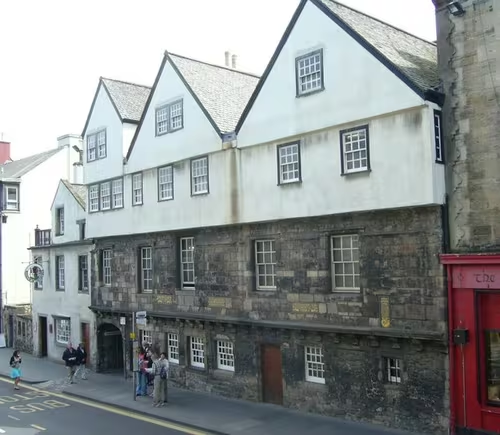
The Museum of Edinburgh, still widely known as Huntly House after the building it occupies, sits at 142–146 Canongate on the lower section of the Royal Mile. The building is a 16th-century townhouse with a distinctive yellow-painted facade and crow-stepped gables, built around 1570 for members of Clan Gordon. It was purchased by the Incorporation of Hammermen (a guild of metalsmiths) in 1647, expanded by architect Robert Mylne, and acquired by the City of Edinburgh in 1924 when it was threatened with demolition.

Inside, the museum tells Edinburgh's local story through a maze of connected rooms across three floors: rooms covering the city's craft guilds, an original copy of the National Covenant signed at Greyfriars in 1638, Field Marshal Earl Haig's desk from his First World War headquarters, James Craig's original 1767 plans for the New Town, and a collection of Scottish decorative arts including silver, glass, pottery, and longcase clocks. The overall collection totals around 220,000 items across all City of Edinburgh venues.

Admission is free and it's open Wednesday to Sunday. For visitors who want to understand Edinburgh as a city rather than just a collection of historic buildings, this is the place — and it tends to be much quieter than the National Museum on Chambers Street. Finding it is half the experience; it blends into the Royal Mile's tenements almost invisibly.

Hours Mon-Tue: Closed | Wed-Sun: 10:00 AM – 5:00 PM
Price Free
Location 55.9514, -3.1796
Insider TipThe collar and feeding bowl of Greyfriars Bobby — the famous loyal dog — are in this museum, not at Greyfriars Kirk. If that's what you're after, come here rather than the kirkyard.
National Museum of Scotland

2. National Museum of Scotland

The National Museum of Scotland on Chambers Street is Scotland's most popular visitor attraction, pulling in over 2.2 million visitors in 2019 — more than Edinburgh Castle. It was formed in 2006 from the merger of two buildings with very different personalities: the modern Museum of Scotland (opened 1998) covers Scottish history and culture, while the adjoining Victorian building — begun in 1861, with a soaring cast-iron central hall — handles natural history, science, technology, and world cultures. Together they have space for a remarkable range of objects, from a full-scale Spitfire to Egyptian mummies.

The highlights people talk about most: Dolly the sheep, the first mammal cloned from an adult cell, stands in a glass case looking quite unfazed by her historical significance. The Millennium Clock, a four-metre kinetic sculpture, chimes every hour on the hour. The Scottish Maiden — an early beheading machine that predates the French guillotine — has been scarring schoolchildren for generations. Elton John's suit is also here, for reasons Scotland has made entirely its own. Admission is free across the whole complex.

For places to visit in Edinburgh with children, the museum is the single best option — at least three hours and genuinely engaging throughout. The rooftop terrace, accessed via the Tower Restaurant, gives unexpectedly good views over the Old Town.

Hours Daily: 10:00 AM – 5:00 PM
Price Free
Location 55.94694, -3.19
Insider TipThe Victorian Grand Gallery (the central hall with the cast-iron roof) is busiest on weekends. Go straight up to the top floors of the Scottish galleries first, then work your way down — fewer people do it this way and the flow is much better.
National War Museum

3. National War Museum

The National War Museum sits inside Edinburgh Castle, housed in an 18th-century ordnance storehouse that was converted to museum use in 1933. It was previously called the Scottish United Services Museum and the Scottish Naval and Military Museum before its current name, and is run by National Museums Scotland. The collection covers 400 years of Scotland at war — from the 17th century through both World Wars and beyond — using weapons, uniforms, medals, personal letters, and equipment to tell individual stories rather than just strategic overviews.

Unlike many military museums that focus on campaigns and maps, this one is oriented toward what it was actually like: the kit soldiers carried, the medals they received and what they meant, the home front experience. Particularly strong sections cover the Highland regiments and their distinctive culture within the British Army — the significance of the kilt, the pipes, the regimental traditions. The museum also houses regimental collections for the Royal Regiment of Scotland and the Royal Scots Dragoon Guards.

Entry is included in your Edinburgh Castle ticket, which makes it easy to overlook as an afterthought. Don't — it's worth an hour of dedicated attention. For best sights in Edinburgh within the castle complex itself, this is the most rewarding room that most visitors rush through.

Hours Daily: 9:45 AM – 4:45 PM
Price Included with Edinburgh Castle
Insider TipThe museum is inside the castle grounds, so you need a castle ticket to enter. If you're running low on time at the castle, prioritise the Crown Jewels and St Margaret's Chapel first — but the War Museum is worth returning to if you have spare time at the end.
Surgeons' Hall Museums

6. Surgeons' Hall Museums

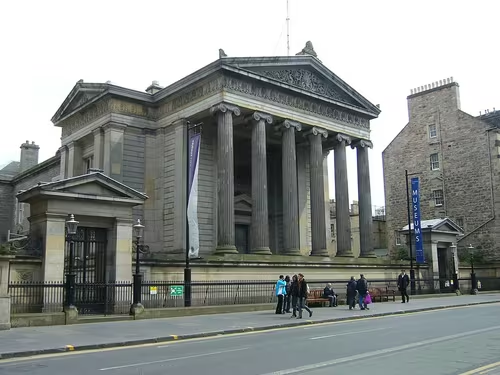
Surgeons' Hall is the headquarters of the Royal College of Surgeons of Edinburgh, one of the oldest surgical corporations in the world — its charter dates from 1505. The current building was designed by William Henry Playfair and completed in 1832, a handsome Greek Revival structure on Nicolson Street. The museum attached to it is Scotland's largest medical museum and has been recognised by the Scottish Government as a collection of national significance. It reopened after a major redevelopment in September 2015.

The collection is not for everyone — it contains anatomical specimens, pathological exhibits, and surgical instruments going back several centuries — but it's presented thoughtfully rather than sensationally. Edinburgh has a particular claim on medical history: the city's anatomists and surgeons drove major advances in the 18th and 19th centuries, and the Burke and Hare murders of 1828, in which 16 people were killed to supply the anatomy school with bodies, are part of the context the museum addresses directly. The History of Surgery Museum and the Wohl Pathology Museum make up the main exhibition spaces.

Recommended for anyone with a tolerance for the genuinely strange and a curiosity about how modern surgery was invented.

Hours Daily: 10:00 AM – 5:00 PM
Price £7
Insider TipWilliam Burke's death mask and a pocketbook made from his skin (following his execution) are on display — this sounds sensational but is presented with genuine historical context. It's disturbing and important in equal measure, and something you won't find explained this clearly anywhere else.
Get Your Own Private Tour with AI Guide
AI Guide
  • Personalized tour tailored to your interests
  • Your AI guide tells stories, shares facts, and cracks jokes
  • Turn-by-turn GPS navigation
  • Available in your language — no download needed
Try for Free

🍕 Food Markets & Culinary Spots in Edinburgh

The best food markets, food halls, and culinary destinations in Edinburgh.

Stockbridge Market

1. Stockbridge Market

Stockbridge Market runs every Sunday in St Stephen Place, a small square tucked just off the main Stockbridge street. It's been running since around 2006 and has become the most consistently good regular market in Edinburgh — around 40–50 stalls, mostly food, with a scattering of crafts and plants. The producers are almost entirely Scottish: cheeses from the islands, smoked fish, venison, charcuterie, sourdough, organic vegetables, and pastries that regularly cause a queue. Street food stalls rotate but the quality is reliably high.

The market draws an almost entirely local crowd on a typical Sunday morning, which gives it a different atmosphere from the tourist-oriented Edinburgh Farmers' Market on Castle Terrace. People do their actual weekly shopping here, which means the stalls sell serious quantities and the producers are the real thing rather than boutique operations. It runs from 10 AM to 4 PM regardless of weather — the regulars are committed.

That route hits three of the city's best free experiences in sequence.

Hours Mon-Sat: Closed | Sun: 10:00 AM – 4:00 PM
Price Free
Insider TipThe market gets very busy between 11 AM and 1 PM. If you want to browse without being jostled, arrive at 10 AM when it opens or after 2 PM when the crowd thins — but some stalls sell out of the best items by early afternoon.
Get Your Own Private Tour with AI Guide
AI Guide
  • Personalized tour tailored to your interests
  • Your AI guide tells stories, shares facts, and cracks jokes
  • Turn-by-turn GPS navigation
  • Available in your language — no download needed
Try for Free

🌳 Parks & Best Viewpoints in Edinburgh

Beautiful parks, gardens, and panoramic viewpoints for the best views of Edinburgh.

Holyrood Park

1. Holyrood Park

Holyrood Park is a 650-acre (260 ha) public park sitting immediately east of Edinburgh's Old Town, surrounding Arthur's Seat and the cliffs of Salisbury Crags. It was created in 1541 when James V had the ground "circulit about Arthurs Sett, Salisborie and Duddingston craggis" enclosed by a stone wall — a hunting estate for the royal court at Holyroodhouse. The park contains hills, lochs, basalt cliffs, patches of gorse, and wide areas of open moorland. Three lochs dot the landscape: St Margaret's Loch (with the ruins of St Anthony's Chapel above it), Dunsapie Loch, and Duddingston Loch, which is a bird sanctuary.

The whole park was designated a scheduled monument in 2013, recognising its extraordinary density of archaeological remains — hut circles, field systems, and terracing from prehistoric and medieval settlement. Queen's Drive loops through the park by car and bicycle, but most people explore on foot. Routes range from flat lochside walks to the full ascent of Arthur's Seat at 250.5 metres.

Holyrood Park is the wild heart of the city — and genuinely wild, with real weather, boggy ground, and wildlife that includes peregrine falcons. It's free, open 24 hours, and sits five minutes' walk from the Palace of Holyroodhouse. For what to see in Edinburgh that requires no planning and no money, this is the answer.

Hours Open 24/7
Price Free
Insider TipDuddingston Loch on the park's eastern side is much less visited than the main Arthur's Seat area. The path around the loch leads to Duddingston Village, which has the Sheep Heid Inn — one of Edinburgh's oldest pubs — and feels genuinely removed from the tourist centre.
Inverleith Park

2. Inverleith Park

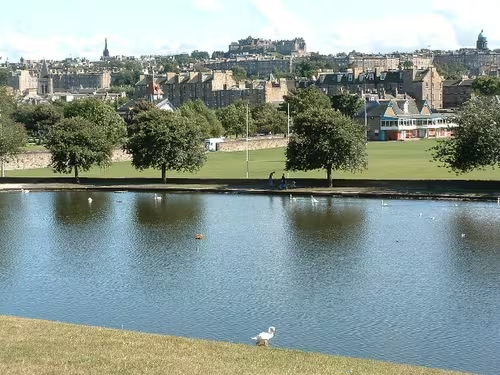
Inverleith Park is a 53-acre public park in north Edinburgh, sitting immediately north of the Royal Botanic Garden and sharing the same elevated ground above the city. The park is large, open, and mostly given over to sports — rugby pitches, football pitches, and a bowling green occupy much of the interior — but it has a central pond that draws model boat enthusiasts and waterfowl in about equal measure, and a children's play area near the south entrance. The park is set on slightly higher ground than the city centre to the south, which creates the most consistent and unobstructed south-facing panorama of the Edinburgh skyline in the city.

From the park's raised central ground, you can see Arthur's Seat, the Old Town ridge, Edinburgh Castle, and the Pentland Hills in one view. This is not a famous viewpoint and has no entry charge, which is exactly the point — it's where local families and dog walkers come for a Sunday afternoon rather than where visitors come for photographs. The absence of tourist infrastructure is refreshing.

Inverleith Park works well in combination with the Royal Botanic Garden next door — enter the Botanic Garden from the east, walk through the formal gardens, and exit at the north gate into the park for a longer loop. For what to see in Edinburgh on the north side of the city, this combination is the best free afternoon in that area.

Hours Open 24/7
Price Free
Website Wikipedia
Insider TipThe south edge of Inverleith Park, just inside the gate on Arboretum Place, gives one of the cleanest direct views of the Edinburgh Castle and Old Town skyline you'll find anywhere. It's unobstructed, faces south, and has benches — bring a coffee from the Botanic Garden café.
Royal Botanic Garden Edinburgh

3. Royal Botanic Garden Edinburgh

The Royal Botanic Garden Edinburgh was founded in 1670 as a physic garden to grow medicinal plants near Holyrood Abbey — making it one of the oldest botanical gardens in Britain. It moved to its current site in Inverleith in 1820 and now covers 70 acres with a living collection of more than 13,302 plant species (34,422 individual accessions). The herbarium holds over 3 million preserved specimens. Beyond the numbers, the garden is a genuine scientific centre involved in plant conservation research worldwide, with additional sites at Dawyck, Logan, and Benmore across Scotland.

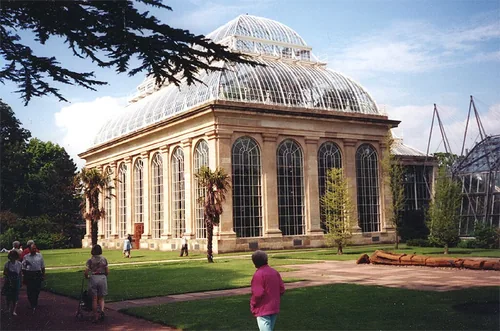
The most visited structure is the Temperate Palm House — a Victorian iron and glass glasshouse dating from 1858, the tallest in Britain — along with the adjoining glasshouse range that takes you from arid desert conditions to tropical humidity in a few steps. Outside, the Rock Garden, Chinese Hillside, and Demonstration Garden are consistently well-maintained. The north-facing views from the terrace near the John Hope Gateway take in the whole Edinburgh skyline: Arthur's Seat, the Old Town ridge, and the Castle.

Admission to the garden itself is free; the glasshouses charge a small entry fee.

Hours Daily: 10:00 AM – 5:00 PM
Price Free
Insider TipThe café in the John Hope Gateway building has a terrace with a direct view of Edinburgh Castle across the rooftops — easily the best free castle view north of the Old Town. On a clear day it's better than anything you pay for.
The Meadows

4. The Meadows

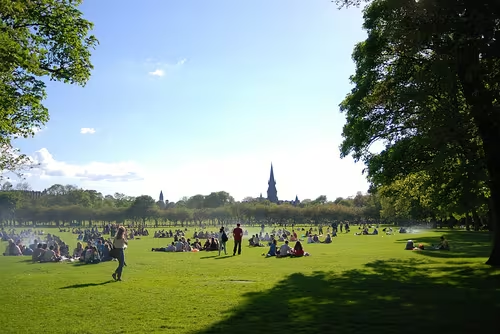
The Meadows is a large public park immediately south of Edinburgh's Old Town, bordered by the University of Edinburgh's George Square campus to the north and the residential streets of Marchmont and Sciennes to the south. It was created in the early 18th century by draining a marshy lake called Burgh Loch, and is criss-crossed by a grid of tree-lined paths — the main avenue, Jawbone Walk, is named after a pair of whale jawbones that frame one of its entrances, gifts from the Scots-built whaling fleet. At its southwest corner, the Meadows blends into Bruntsfield Links, where a free public short-hole golf course (pitch and putt) has been operating for centuries.

The park is almost entirely open grassland, which makes it one of the most useful social spaces in the city — frisbee, football, cricket, sunbathing, and picnicking coexist in busy seasons. Tennis courts and a children's playground are at the east end. The park hosts the Meadows Festival each June and parts of the Fringe spill here in August. The student population from the adjacent university gives the Meadows its distinctive demographic in term time.

For locals, this is one of the most genuinely beloved places to visit in Edinburgh — not dramatic or photogenic, but exactly what a city park should be. It's completely free, open 24 hours, and 10 minutes' walk from the Royal Mile.

Hours Open 24/7
Price Free
Website Wikipedia
Location 55.9414, -3.1947
Insider TipIn April and early May, the cherry blossom trees along the central avenue create one of the city's most spectacular natural displays. Timing is everything — peak blossom lasts about two weeks and depends on the year's weather — but when it's right, it's genuinely extraordinary.
Get Your Own Private Tour with AI Guide
AI Guide
  • Personalized tour tailored to your interests
  • Your AI guide tells stories, shares facts, and cracks jokes
  • Turn-by-turn GPS navigation
  • Available in your language — no download needed
Try for Free

Explore with AI Guide

AI Guide App

Get personalized tours with our AI-powered guide. No download needed — works right in your browser.