Best Time to Visit Bolzano
Month-by-month weather, crowds and prices, plus a full calendar of festivals and events worth planning a trip around.
Best monthsMay, Sep, Oct
CheapestJan, Feb
AvoidAug
BusiestJul, Dec
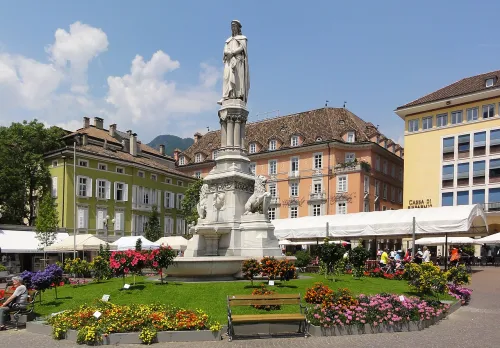
When is the best time to visit Bolzano?
Come in May, September or October: apple blossom or golden larches, daytime highs around 19-24°C, and crowds you can still walk through. July hits 29°C in a closed alpine valley and December is mobbed by the Christmas market. January is cheapest and emptiest, the trade being cold, short days.
Start our tool and find your best time to visit Bolzano
Your perfect month
Free · ~30 seconds
or tap a month directly
What matters to you?
And this?
Best overall: May, Sep. May and September are the real sweet spot: apple blossom and wildflowers in May, warm days with cool evenings and the first autumn colour in September, everything open and crowds you can work around. October is a close third for the larch foliage and lower rates.
Best value: Jan, Oct. January brings the year's lowest hotel rates (150-200 euro), an authentic locals-only feel and museums with no queue. October pairs spectacular larch foliage with rates around 170-240 euro, before the Christmas market doubles prices from late November.
Avoid: Aug. Mid-August (10-25 August) stacks the worst of everything: 33-35°C trapped in the valley, peak crowds carried over from July, and Ferragosto on 15 August shutting family trattorias and shops for one to two weeks. You pay peak prices for a thinned-out city.
- January: Good time, 8°C. This is the reset month, the one time the porticoes belong to people who actually live here. Cafe life is slow, the snow-capped peaks ring a near-empty Old Town, and you hear South Tyrolean German and Italian instead of tour groups. Cold and short days are the price, and for the authenticity it is a fair one.
- February: Good time, 11°C. February is honest, off-season Bolzano with one outburst of colour. The Carnival masquerade balls and the Narrische Zeit are the one stretch when the reserved South Tyrolean mood lets loose. The rest of the month is calm and genuinely local, with no tourist markup to pay.
- March: Great time, 14°C. March is the last calm breath before spring fills the valley. The city stretches awake with café terraces and the first market produce, yet you can still walk into a trattoria on a Saturday without booking. That window slams shut the moment Easter prep kicks in late month, so use the early weeks.
- April: Great time, 18°C. April is gorgeous and no longer a secret, at least over Easter. The apple and cherry blossom drifting across the valley is the real reward, and outside the Easter peak the city stays pleasant and walkable. Go in clear-eyed about the holiday week: full hotels, an Easter-market crowd and pricier rooms.
- May: Good time, 21°C. May genuinely earns its reputation, with the valley in full bloom and the longest evenings of the year for dinner outdoors. Just do not picture wall-to-wall sunshine: this is the wettest month, so plan around the afternoon storm pattern and you get the best of spring. Mornings are reliably bright.
- June: Good time, 27°C. June is the tipping point, when Bolzano shifts from spring-calm into full summer. The first half still feels open and breathable; by the third week the families are in and the heat is building. The huge daylight is the gift here, with long, soft evenings on Piazza Walther that the deep-summer crowds never quite ruin.
- July: Tough month, 29°C. July is for people who do not mind heat and crowds and pay top rates for them. Midday in the valley is genuinely punishing, so the day splits in two: an early start, a long lunch in the shade, then everything reopens at golden hour. Handle it that way and July works; fight it and you cook.
- August: Tough month, 28°C. Mid-August is the single worst window to visit. Italians flee the heat, so the family-run side of the city shutters around Ferragosto, yet the streets stay packed with tourists at peak prices. It is the awkward combination of a thinned-out city and a full one. Come 1 September instead and everything changes.
- September: Great time, 24°C. September is the quiet payoff after the August crush: warm enough for everything, empty enough to enjoy it, and lit by that low golden Alpine light. Piazza Walther at the 6-7pm magic hour, glass in hand, with the peaks turning pink, is exactly the Bolzano people imagine and rarely get in summer.
- October: Great time, 19°C. October might be the most underrated month here. The larch turning gold above the valley is genuinely breathtaking, the weather is comfortable, the prices are soft, and the crowds have gone. If you want the Dolomites at their most photogenic without the summer crush, this is the quiet insider answer.
- November: Good time, 13°C. Early November is the year's best-kept value window: low rates, no crowds, and the last of the autumn colour. Then everything flips on 28 November when the Christmas market arrives and the city transforms. Decide which Bolzano you want, because the same month delivers two completely different experiences.
- December: Good time, 9°C. December is Bolzano at its most magical and its most crowded at once. The market on Piazza Walther is the defining experience, but 1-15 December is the peak crush, so shop at 8-9am or after 5pm to actually enjoy it. The lit Old Town, mulled wine in the cold air and snowy peaks are the whole point.
Bolzano weather by month
HighLowRainfall
Jan8°
Feb11°
Mar14°
Apr18°
May21°
Jun27°
Jul29°
Aug28°
Sep24°
Oct19°
Nov13°
Dec9°
| Month | Temp | Rain | Sun | Crowds | Prices | Highlight |
|---|---|---|---|---|---|---|
| Jan | 8° / -1° | 56mm · 8 rainy days | 7.1 h/day | ●○○○○ | ●○○○○ | Christmas Market |
| Feb | 11° / 1° | 63mm · 8 rainy days | 7.9 h/day | ●●○○○ | ●●○○○ | Bolzano Carnival |
| Mar | 14° / 4° | 59mm · 10 rainy days | 9.5 h/day | ●●○○○ | ●●○○○ | Easter & Holy Week |
| Apr | 18° / 7° | 88mm · 11 rainy days | 10.7 h/day | ●●●○○ | ●●○○○ | Easter & Holy Week |
| May | 21° / 12° | 120mm · 16 rainy days | 10.9 h/day | ●●●○○ | ●●○○○ | Flower Festival (May Day) |
| Jun | 27° / 16° | 89mm · 13 rainy days | 12.9 h/day | ●●●●○ | ●●●○○ | Musical Summer Concert Series |
| Jul | 29° / 18° | 108mm · 13 rainy days | 12.9 h/day | ●●●●● | ●●●●○ | Musical Summer Concert Series |
| Aug | 28° / 18° | 126mm · 12 rainy days | 11.6 h/day | ●●●●● | ●●●●○ | Musical Summer Concert Series |
| Sep | 24° / 14° | 77mm · 11 rainy days | 10.4 h/day | ●●●○○ | ●●○○○ | Musical Summer Concert Series |
| Oct | 19° / 10° | 121mm · 11 rainy days | 8.3 h/day | ●●○○○ | ●●○○○ | |
| Nov | 13° / 4° | 114mm · 10 rainy days | 6.3 h/day | ●●○○○ | ●●●●○ | Merano WineFestival |
| Dec | 9° / 1° | 64mm · 7 rainy days | 6.3 h/day | ●●●●○ | ●●●●○ | Christmas Market |
How we score this: weather = long-run climate normals (Open-Meteo), crowds & prices = relative season read, events checked yearly against official dates.
Best time to visit Bolzano: weather, prices & crowds
Best months for good weather
Jun, Jul, Sep
June, July and September give Bolzano its most reliable warmth and sun, with highs of 24-29°C and long evenings for outdoor dinners on Piazza Walther until well after 9pm.
Quietest months to avoid the crowds
Jan, Sep, Oct
January is the locals-only reset month with museums you have almost to yourself, while September and October empty out once German and Austrian schools go back mid-September.
Cheapest time to visit Bolzano
Jan, Feb, Oct
January (around 150-200 euro a night), February and October are the cheapest months, with rates 40-60% below the July and Christmas-market peaks of 280-400 euro.
Best time for festivals and events
Oct, Nov, Dec
Golden larches set the Dolomite slopes alight from 5 to 20 October, the Merano WineFestival pours 500-plus wines on 1-5 November, and Italy's oldest Christmas market lights up Piazza Walther from 28 November.
How many days do you need in Bolzano?
Two days gives you time to cover central Bolzano properly and still ride a cable car up to the surrounding plateaus. The historic core is compact enough to walk in a single unhurried afternoon, but a second day opens the Dolomites, Castel Roncolo, and the valley wine villages that most visitors miss.
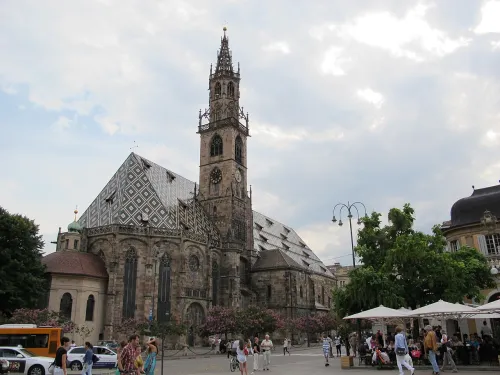
One day
Old Town, Otzi, and Piazza Walther at golden hour
Start at Piazza Walther with the Gothic Bolzano Cathedral, then follow the Lauben arcades north to the fruit stalls of Piazza delle Erbe Market. Leave a solid two hours for the South Tyrol Museum of Archaeology, home to Otzi the Iceman. That compact route is covered by the self-guided Bolzano walking tour, 6 stops across 3.3 km in about 1.7 hours, which also takes you along the Talvera Promenade and up to Castel Roncolo for its medieval frescoes. End the day on Piazza Walther between 6 and 7pm, when the peaks turn pink and the aperitivo crowd arrives.
Two daysRecommended
Renon plateau and wine country
Ride the cable car from Via Renon up to the Renon plateau first thing in the morning for panoramic Dolomites views before afternoon clouds build. Back in the city, spend the afternoon exploring the Guncina Promenade above the old town or visiting Museion, the contemporary art museum on the Talvera riverbank. In the evening, try a Törggele dinner of new wine, roasted chestnuts and canederli at one of the valley trattorias on the road toward Santa Maddalena.
Three days
Merano, vineyards, and the Dolomites on foot
Take the 30-minute regional train to Merano for its thermal baths, Promenade along the Passer river, and the formal Trauttmansdorff Gardens. On a third morning, ride the Funivia del Salto cable car or catch a bus up to the Alpe di Siusi for a half-day hike on the Dolomites plateau. September and October give the most reliable weather for both trips, and October adds golden larch foliage to every view.
Four days or more
Dolomites deep dive and South Tyrolean wine trail
With four or more days, base yourself in Bolzano and day-trip to the Val Gardena, Lago di Carezza, or the Tre Cime di Lavaredo. A half-day drive or bus ride through the wine villages of Santa Maddalena and Caldaro takes you through the vineyards that produce the region's signature red wines, with tastings at small producers who rarely see passing tourists. The wine route is quietest in October, when you can pull over at any cantina and taste the harvest without a booking.
Best time to visit Bolzano by traveller type
Same city, different trip. Here's the month that fits how you're travelling.
🧭
Best time to visit Bolzano for the first time
MaySep
May or September: the safe best-overall answer. Mild 19-24°C, every museum and cable car running, blossoms or early foliage, and crowds light enough to enjoy the porticoed Old Town without a crush.
❤️
Best time to visit Bolzano for couples
MaySepOct
May for wildflowers and 15-hour daylight, or September and October for golden light, cool wine-tasting evenings and intimate dinners on a near-empty Piazza Walther at the 6-7pm magic hour.
💶
Best time to visit Bolzano on a budget
JanFebOct
January and February for the year's lowest rates (150-210 euro) and easy restaurant tables, or October for free larch-foliage views with hotels still around 170-240 euro.
🍝
Best time to visit Bolzano for food and wine
SepOctNov
September and October for the grape and apple harvest and porcini season, then November for the Merano WineFestival (1-5 Nov) and the first white truffles arriving in restaurants.
Worst time to visit Bolzano
Mid-August, roughly 10 to 25 August, stacks the worst of everything Bolzano can throw at a visitor. The closed alpine valley traps afternoon heat at 33 to 35°C, the July crowds carry straight through, and Ferragosto on 15 August triggers one-to-two-week shutdowns at many family-run trattorias and shops. The cruel irony is that rates stay at the year's peak: you pay 280 to 380 euro a night for a city that has lost its local character.
Still worth it for Bolzano in August works if you are coming specifically for the Bolzano Festival Bozen classical concerts, which run nightly through the centre from early August to early September. Start each day before 9am, retreat indoors midday, and you can manage the heat.
Go instead in May, September, October, when Bolzano is at its best.
Best time for a tour of Bolzano
Bolzano sits in a sun-trap basin where the Alps meet the Mediterranean, and that climate decides how the walk feels. The sweet spots are late April through early June and again all of September into October, when highs sit around 18 to 24 °C, the light stays long, and you can stand on Piazza Walther or browse the Piazza delle Erbe market without sweating through your shirt. July and August are the trap: highs of 29 °C with the basin holding the heat, so the open arcades give some relief but the unshaded Talvera Promenade and the climb up to Castel Roncolo turn punishing by midday, and these are the most packed weeks of the year. May is the wettest month at sixteen rain days, so pack a layer even in spring. Winter is crisp and quiet, often just 8 to 11 °C by day and below freezing at dawn, dark by late afternoon, but the Christmas market in December swells the crowds again and the Cathedral and Museum of Archaeology, home of Ötzi, make perfect warm refuges.
The beauty of doing this on foot with AI Tourguide is that the calendar bends to you, not to a fixed departure board. On a hot August day you simply start your Bolzano tour at first light, loop Piazza Walther and the market while the air is still cool, and duck into the Cathedral before the sun climbs over the basin. On a still December morning you set off whenever the market crowds thin, pausing as long as you like in the warm museum halls. Everything runs in your browser, a voice-first guide walking the route with you, telling the stories, asking what you want to see next, so your only scheduling decision is the hour the weather suggests.

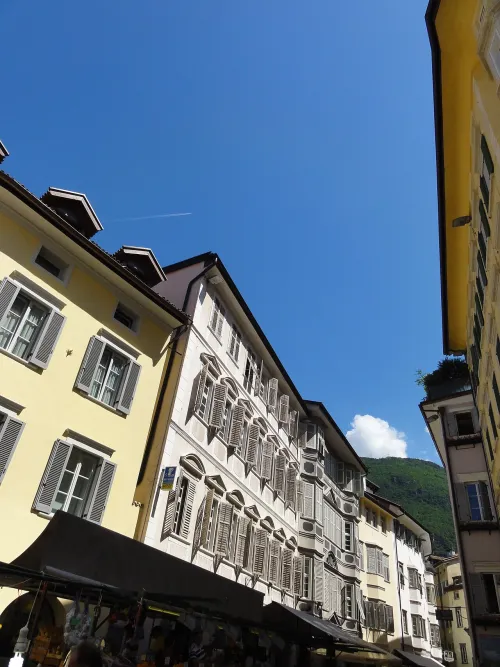
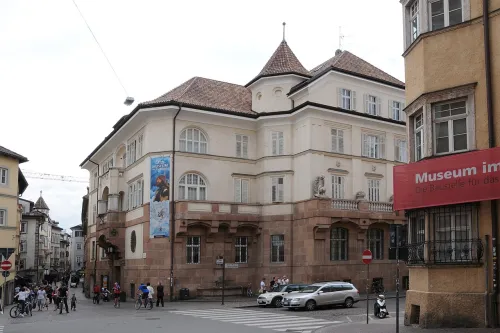 +2
+2All 6 stops are already on the map.
You just press start.
You just press start.
 AI Tourguide
You just read the route.
Now walk it with a guide in your ear.
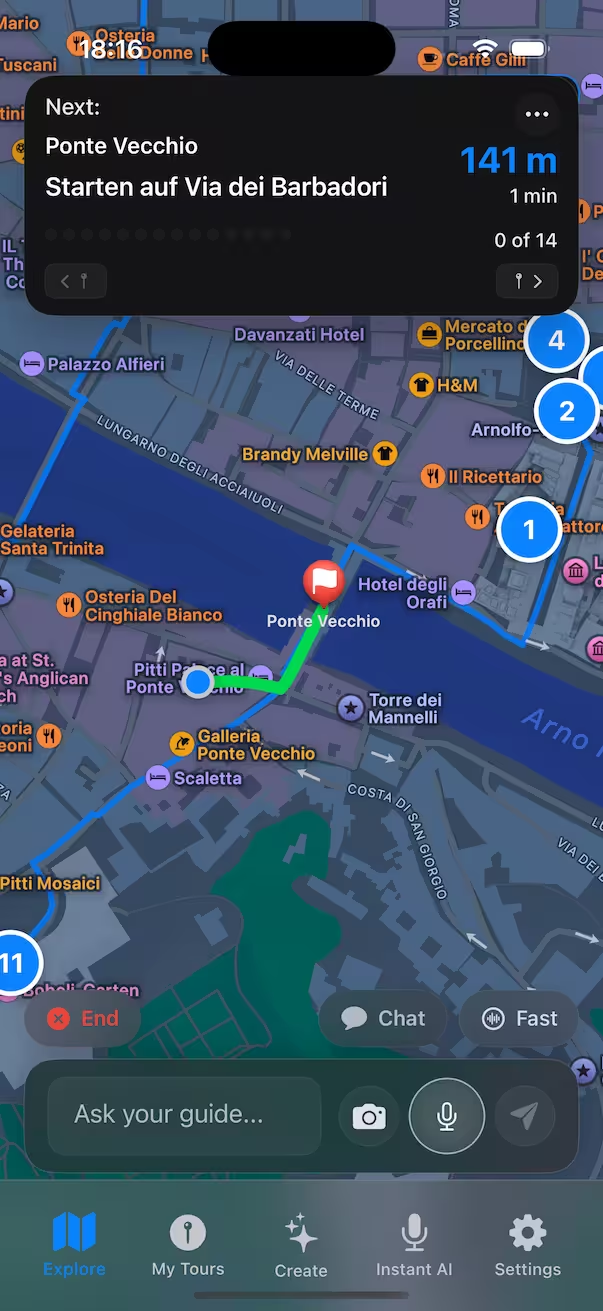
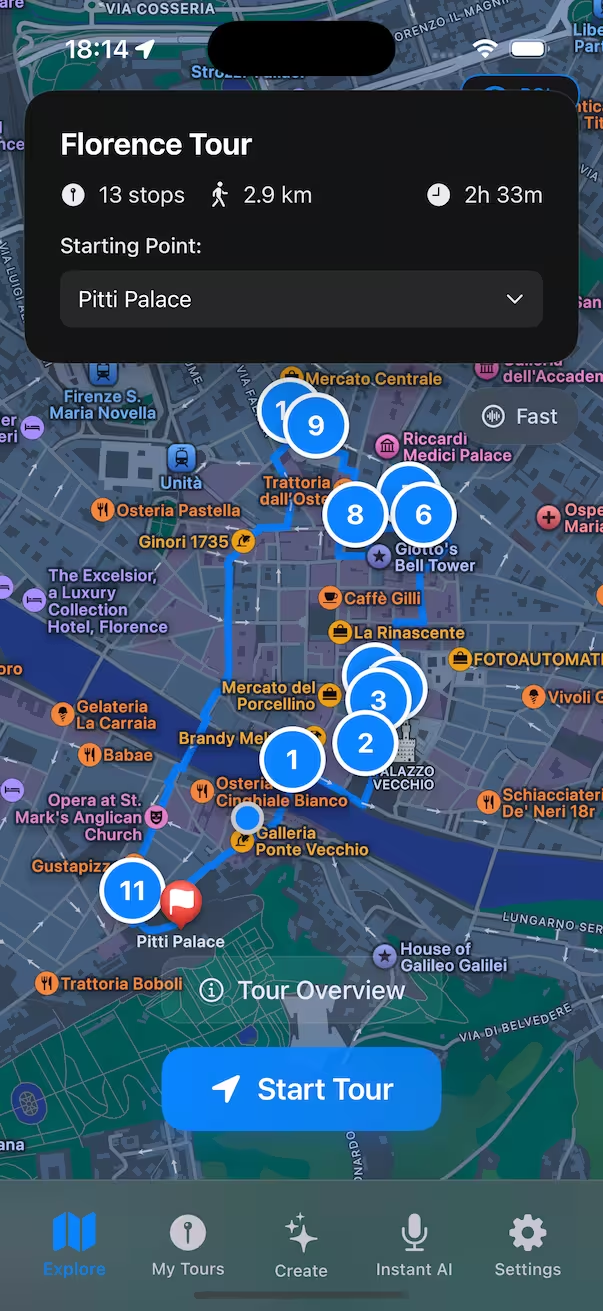
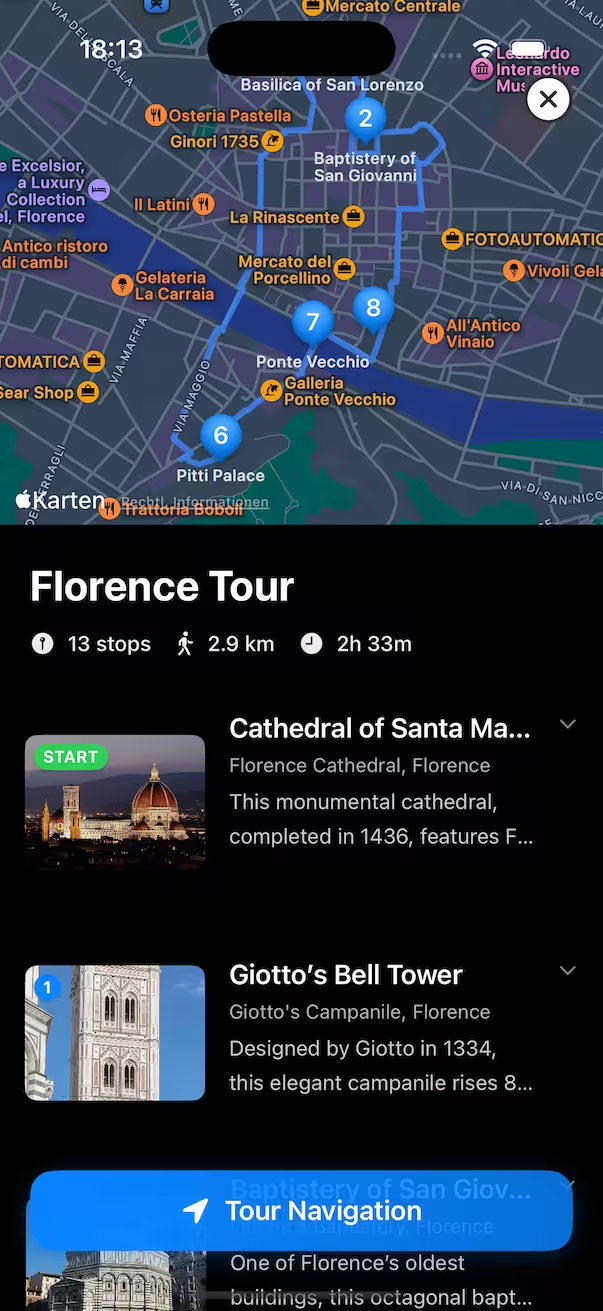
Press start wherever you are, even hundreds of kilometres from Bolzano, and the guide begins telling its stories right away. In the city, pick any of the 6 stops to start from: it leads you there, then talks with you the whole route, asking, listening, remembering, and shaping the tour around your answers.
6stops3.3km1.7hours11languages
▶Start the tour freeFree to start · Runs in your browser · No app, no download
Bolzano events and festivals calendar
Annual highlights worth timing a trip around, listed month by month.
February
🎭 CarnivalBolzano Carnival Fasching / Carnevale di Bolzano
Feb 12–17 ~
the week before Lent, mid-February
Six days of parades, masked balls and Shrove festivities blending Alpine Fasching with Italian Carnevale, peaking with the Rose Monday street parade on 16 February (the Narrische Zeit, or 'crazy season').
March
⛪ ReligiousEaster & Holy Week Pasqua
Mar 29 – Apr 6 ~
Holy Week into Easter Monday, late March to early April
Holy Week religious processions in the Cathedral on Good Friday, an Easter market on Piazza Walther, and family gatherings around Easter Sunday and Easter Monday picnics.
April
🍷 Food and wineStreetwood Food & Music Festival
Apr 16
mid-April
Street-food vendors and live music in the Bolzano city centre, a casual spring weekend showcasing the South Tyrolean food scene.
🍷 Food and wineSouth Tyrol Craft Beer Festival
Apr 17
mid-April
Local craft breweries and artisan food gather in the centre to showcase South Tyrol's emerging beer culture.
🌸 Seasonal natureFlower Festival (May Day) Festa dei Fiori
Apr 30 – May 1
the 30 April to 1 May May Day weekend
The annual Flower Festival on Piazza Walther, a spring celebration of apple blossoms and wildflowers with a traditional craft market held each year on the May Day weekend.
May
🎵 MusicMusical Summer Concert Series Estate Musicale
May 1 – Sep 30
weekly through the summer, May to September
Weekly outdoor concerts in Piazza Walther and the city parks across classical, jazz and world music, free to 30 euro depending on the night.
🌙 Museum nightLong Night of Museums La Lunga Notte dei Musei
May 23
a Saturday in late May
Nine Bolzano museums (Archaeology, Runkelstein, Museion, Mercantile, Natural History, City and School museums) open until midnight with special programmes and live performances, for a 1-5 euro ticket.
July
🏃 SportAlpe di Siusi Half Marathon Maratona Alpe di Siusi
Jul 5
early July
A 21 km half marathon across the Alpe di Siusi (Seiser Alm) Dolomites plateau, drawing a few hundred runners against a high-mountain backdrop.
August
🎵 MusicBolzano Festival Bozen (Classical Music) Bolzano Festival Bozen
Aug 4 – Sep 4
early August to early September
A month-long classical music festival across the city centre: the Gustav Mahler Youth Orchestra, the EU Youth Orchestra, the Busoni Piano Competition finals, chamber music and organ recitals, plus open-air concerts.
September
🍷 Food and wineSanta Maddalena Wine Tasting Degustazione Santa Maddalena
Sep 4–5
early September
A tasting of Santa Maddalena, South Tyrol's signature red wine, on Piazza Walther with 20-plus local producers and live music.
November
🍷 Food and wineMerano WineFestival
Nov 1–5
early November
A five-day exclusive wine event 30 km south in Merano, featuring 500-plus wines from producers worldwide with culinary pairings.
🎄 Christmas marketChristmas Market Mercatino di Natale / Christkindlmarkt
Nov 28 – Jan 6
late November to Epiphany
Italy's oldest and most renowned Alpine Christmas market: 100-plus wooden stalls on Piazza Walther, open daily 10am to 7pm, with Gluhwein, gingerbread, crafts and nativity scenes.
Insider tips for visiting Bolzano
The rules buried in forums, in one place.
- The Ferragosto trap is real. Peak July crowds plus the 15 August holiday is the worst possible week: Italians flee to the mountains and coast, and restaurants and shops shut for one to two weeks. Arrive 1-14 July, or wait until 1 September.
- The Christmas market officially opens at 10am, but stalls are setting up from 6am. Arrive 8-9am to shop without the 30-minute queues. Chaos peaks 11am-4pm and the market empties out from 5-7pm once families head home.
- Cable cars up to Renon and Salten are shut down by afternoon thunderstorms in May and June (wind and lightning are a safety stop). Ride up in the morning. October is the most reliable month, with clear, cool, stable air.
- Most museums close on Mondays, including the South Tyrol Museum of Archaeology that houses Otzi the Iceman, Runkelstein Castle, Museion and the Mercantile Museum. Plan your big museum day for Tuesday to Sunday and verify hours per museum.
- The Piazza delle Erbe market runs Monday to Saturday, 8am to 7pm, and is closed Sundays. It is busiest on Saturdays 10am-1pm when locals shop; come Tuesday to Thursday for the quiet version.
- Book hotels for Easter week (29 March to 6 April) by 1 February. South Tyrolean and German school holidays converge and the city hits 95%-plus occupancy. The same goes for the Christmas market, where rooms go two to three months ahead.
- Piazza Walther at the 6-7pm golden hour, weather permitting year-round, is the best light and the quietest window before dinner. It is the photo and aperitivo moment the midday crowds never see.
- For the Merano WineFestival (1-5 November) the 120-350 euro tickets sell out six to eight weeks ahead and Merano rooms get tight. Base yourself in Bolzano and ride the 30-minute train down each day instead.
Public holidays in Bolzano
On these dates many shops and offices close, transport thins out, and sights can be mobbed or shut. Plan around them.
| Date | Holiday | What closes |
|---|---|---|
| Jan 1 | New Year's Day | Government offices and most shops and restaurants closed; transport on a reduced timetable. The Christmas market on Piazza Walther is still running toward its 6 January close. |
| Jan 6 | Epiphany | Regional public holiday and the final day of the Christmas market. Shops mostly closed; the market draws its last festive crowds before the city sinks into its quiet January lull. |
| Apr 6 | Easter Monday (Pasquetta) | Public holiday for outdoor family gatherings; restaurants are packed and museums stay open but busy. Hotels book out three to four weeks ahead across the whole Easter week. |
| Apr 25 | Liberation Day | National holiday marking Italy's liberation; many shops closed and schools out. Often forms a long weekend (ponte) that fills hotels and the Old Town. |
| May 1 | Labour Day | Public holiday: government offices closed and some shops and restaurants shut. It lands right after the Flower Festival weekend on Piazza Walther (30 April to 1 May). |
| Jun 1 | Whit Monday (Pentecost) | A South Tyrol-only public holiday not observed in the rest of Italy: regional offices, schools and banks close. German and Austrian Pentecost holidays push up crowds and rates this week. |
| Aug 15 | Ferragosto (Assumption) | The big August shutdown: offices closed and many family-run restaurants and shops shut for one to two weeks. Sights stay open but understaffed, transport thins, and the local fabric of the city largely vanishes. |
| Oct 4 | St. Francis of Assisi | New national holiday from 2026 as Italy adds a 13th public holiday. Minimal impact on Bolzano, falling during the prime larch-foliage window. |
| Nov 1 | All Saints' Day | Regional public holiday with some closures and busy cemeteries. It coincides with the Merano WineFestival crowds (1-5 November) just 30 km south. |
| Dec 8 | Immaculate Conception | National public holiday with most shops and offices closed, falling right inside the busiest first half of the Christmas market. Expect peak crowds on Piazza Walther. |
| Dec 25 | Christmas Day | National holiday: the Christmas market is closed all day and most restaurants are shut or by reservation only. A family-and-home day with the city at its quietest. |
| Dec 26 | St. Stephen's Day | South Tyrol public holiday: shops closed and the market and restaurants on limited hours as the festive period winds down toward New Year. |
Bolzano month by month
January in Bolzano
High8°C / 47°F
Low-1°C
Rain56mm / 8 rainy days
Sun7.1 h/day
Daylight9 h/day
Humidity63%
Crowds●○○○○Prices●○○○○
January is Bolzano stripped back to its locals: quiet, properly cheap, and unhurried once the Christmas market shuts on 6 January. Highs sit around 8°C with frosty nights near freezing, but it is one of the driest and sunniest winter spells, with about seven hours of sun a day. Museums are close to queue-free and you can book a restaurant table on the night. Days are short, dark by 5pm.
The vibe This is the reset month, the one time the porticoes belong to people who actually live here. Cafe life is slow, the snow-capped peaks ring a near-empty Old Town, and you hear South Tyrolean German and Italian instead of tour groups. Cold and short days are the price, and for the authenticity it is a fair one.
Don't miss The South Tyrol Museum of Archaeology, home to Otzi the 5,300-year-old Iceman, is calm enough to study every detail without a crowd. Clear, dry air makes January one of the best months for the cable car up to the Renon plateau and its snowy panoramas.
Crowd drivers Post-holiday lull with no school holidays once Epiphany passes on 6 January. The lowest visitor pressure of the whole year.
In season Deep winter is canederli (Knodel) and speck season: order the bread dumplings in broth and the local cured ham in a wood-panelled stube to warm up after a frosty walk.
Heads up 1 and 6 January are public holidays with shops and museums shut and reduced transport. Many alpine rifugios and some restaurants stay closed for their winter break.
The year's cheapest month, around 150-200 euro a night, once the market closes on 6 January.
Events this month
🎄 Christmas marketChristmas Market Mercatino di Natale / Christkindlmarkt
Nov 28 – Jan 6
late November to Epiphany
Italy's oldest and most renowned Alpine Christmas market: 100-plus wooden stalls on Piazza Walther, open daily 10am to 7pm, with Gluhwein, gingerbread, crafts and nativity scenes.
The defining Bolzano experience, drawing more than three million visitors; book hotels two to three months ahead and shop at 8-9am or after 5pm to dodge the crush.
February in Bolzano
High11°C / 51°F
Low1°C
Rain63mm / 8 rainy days
Sun7.9 h/day
Daylight10 h/day
Humidity64%
Crowds●●○○○Prices●●○○○
February stays quiet and cold, with highs near 11°C and crisp, often sunny days that are kind to walking. Carnival takes over 12-17 February with parades, masked balls and the Rose Monday procession on the 16th, a distinctive blend of Alpine Fasching and Italian Carnevale. Outside that week the city is calm, hotel rates sit near their floor, and the nearby ski resorts pull most day-trippers away.
The vibe February is honest, off-season Bolzano with one outburst of colour. The Carnival masquerade balls and the Narrische Zeit are the one stretch when the reserved South Tyrolean mood lets loose. The rest of the month is calm and genuinely local, with no tourist markup to pay.
Don't miss Rose Monday (16 February) sends a masked street parade through the centre, with daytime family events and evening masquerade balls. It is a centuries-old tradition you will not see staged for tourists anywhere else in Italy.
Crowd drivers Carnival week (12-17 February) brings a short bump; winter-sports visitors fill the surrounding resorts rather than the city itself.
In season Carnival means fried sweets: krapfen and tirtlan turn up in bakeries, best eaten warm with a cup of South Tyrolean coffee.
Still low season at roughly 160-210 euro a night, with a small spike during Carnival week (12-17 February).
Events this month
🎭 CarnivalBolzano Carnival Fasching / Carnevale di Bolzano
Feb 12–17 ~
the week before Lent, mid-February
Six days of parades, masked balls and Shrove festivities blending Alpine Fasching with Italian Carnevale, peaking with the Rose Monday street parade on 16 February (the Narrische Zeit, or 'crazy season').
A centuries-old Alpine-Italian carnival you will not find staged for tourists anywhere else, with family-friendly daytime events and atmospheric evening masquerade balls.
March in Bolzano
High14°C / 58°F
Low4°C
Rain59mm / 10 rainy days
Sun9.5 h/day
Daylight12 h/day
Humidity61%
Crowds●●○○○Prices●●○○○
March wakes Bolzano up: highs climb toward 14°C, terrace tables reappear, and the surrounding apple orchards edge toward bloom. Crowds stay moderate through most of the month, then build sharply in the final week as Easter and the spring-break waves from Germany and Austria arrive. It is one of the last genuinely quiet windows before the spring rush, and rates are still close to winter levels until late March.
The vibe March is the last calm breath before spring fills the valley. The city stretches awake with café terraces and the first market produce, yet you can still walk into a trattoria on a Saturday without booking. That window slams shut the moment Easter prep kicks in late month, so use the early weeks.
Don't miss The apple orchards ringing the valley begin to blossom toward late March, a free, unticketed spectacle best seen on a morning walk or the Guncina Promenade above town. Cable cars to Renon run reliably before the May storm season starts.
Crowd drivers Pre-Easter prep from 25 March, South Tyrolean and German spring-break waves, and Holy Week building toward Easter Sunday on 5 April.
In season Spring asparagus and wild herbs start appearing on menus toward month's end, a first taste of the South Tyrolean spring kitchen.
Prices rise 20-30% over February, especially from 25 March as Easter (5 April) approaches.
Events this month
⛪ ReligiousEaster & Holy Week Pasqua
Mar 29 – Apr 6 ~
Holy Week into Easter Monday, late March to early April
Holy Week religious processions in the Cathedral on Good Friday, an Easter market on Piazza Walther, and family gatherings around Easter Sunday and Easter Monday picnics. Exact dates shift each year with the lunar calendar.
Worth timing for the processions and spring-blossom backdrop, but book accommodation three to four weeks ahead because hotels hit 95%-plus occupancy.
April in Bolzano
High18°C / 64°F
Low7°C
Rain88mm / 11 rainy days
Sun10.7 h/day
Daylight14 h/day
Humidity62%
Crowds●●●○○Prices●●○○○
April is lovely and the orchards are at their peak: apple blossom carpets the valley in mid-month, highs reach a comfortable 18°C, and there are up to 11 rainy days as spring showers arrive. Easter on 5 April and the South Tyrolean school holidays (2-7 April) pack the centre, with an Easter market on Piazza Walther. Book accommodation early for Easter week; the rest of the month is calmer and milder.
The vibe April is gorgeous and no longer a secret, at least over Easter. The apple and cherry blossom drifting across the valley is the real reward, and outside the Easter peak the city stays pleasant and walkable. Go in clear-eyed about the holiday week: full hotels, an Easter-market crowd and pricier rooms.
Don't miss Apple orchards are at full bloom around mid-April, the valley's signature spring sight. The Streetwood food-and-music festival (16 April) and a South Tyrol craft beer festival (17 April) bring the local food scene into the centre on consecutive April weekends.
Crowd drivers Easter on 5 April, South Tyrolean school holidays (2-7 April), German and Austrian spring breaks, and the Liberation Day long weekend on 25 April all overlap.
In season Asparagus season is in full swing: South Tyrolean white asparagus appears on menus across the centre through April and into May.
Easter week (5 April) hits 180-280 euro a night and books out three to four weeks ahead; rates ease afterward.
Events this month
⛪ ReligiousEaster & Holy Week Pasqua
Mar 29 – Apr 6 ~
Holy Week into Easter Monday, late March to early April
Holy Week religious processions in the Cathedral on Good Friday, an Easter market on Piazza Walther, and family gatherings around Easter Sunday and Easter Monday picnics. Exact dates shift each year with the lunar calendar.
Worth timing for the processions and spring-blossom backdrop, but book accommodation three to four weeks ahead because hotels hit 95%-plus occupancy.
🍷 Food and wineStreetwood Food & Music Festival
Apr 16
mid-April
Street-food vendors and live music in the Bolzano city centre, a casual spring weekend showcasing the South Tyrolean food scene.
A relaxed, free introduction to local cuisine and the city's spring atmosphere, easy to fold into an Easter-season trip.
🍷 Food and wineSouth Tyrol Craft Beer Festival
Apr 17
mid-April
Local craft breweries and artisan food gather in the centre to showcase South Tyrol's emerging beer culture.
A free taste of the region's growing craft-beer scene, ideal alongside the Streetwood festival the day before in spring weather.
May in Bolzano
High21°C / 71°F
Low12°C
Rain120mm / 16 rainy days
Sun10.9 h/day
Daylight15 h/day
Humidity67%
Crowds●●●○○Prices●●○○○
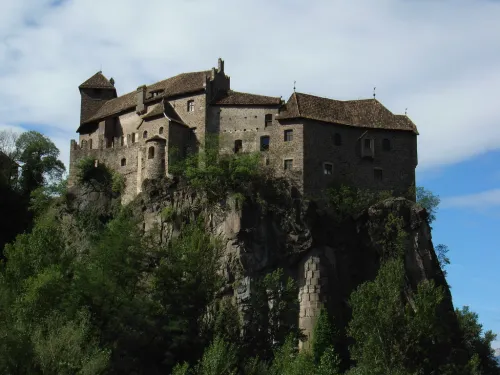
May is one of the two months everyone names as Bolzano's best: highs around 21°C, wildflowers in the alpine meadows, and the tail end of apple blossom. The catch is rain, with about 16 wet days, the most of any month, as warm afternoons build into short, intense thunderstorms. Daylight stretches to 15 hours. Crowds are present but manageable, and the Flower Festival opens the month on Piazza Walther.
The vibe May genuinely earns its reputation, with the valley in full bloom and the longest evenings of the year for dinner outdoors. Just do not picture wall-to-wall sunshine: this is the wettest month, so plan around the afternoon storm pattern and you get the best of spring. Mornings are reliably bright.
Don't miss The 135th Flower Festival fills Piazza Walther on 30 April to 1 May with a craft market and spring celebration. On 23 May the Long Night of Museums opens nine Bolzano museums until midnight for 1-5 euro, with live performances and 5,000-plus visitors.
Crowd drivers German and Austrian Pentecost holidays (23-25 May), the Flower Festival weekend, and the start of the Dolomites hiking season pulling weekend visitors.
In season Peak asparagus and wild-herb season: look for asparagus menus and spring-herb canederli at trattorias around the centre.
Heads up Afternoon thunderstorms regularly close the cable cars to Renon and Salten on safety grounds, so ride up in the morning.
Moderate at roughly 190-260 euro a night, with a Pentecost bump (German and Austrian holidays, 23-25 May).
Events this month
🌸 Seasonal natureFlower Festival (May Day) Festa dei Fiori
Apr 30 – May 1
the 30 April to 1 May May Day weekend
The annual Flower Festival on Piazza Walther, a spring celebration of apple blossoms and wildflowers with a traditional craft market held each year on the May Day weekend.
Thousands of locals gather for a springtime ritual when the apple orchards are in full bloom, a free, atmospheric start to May.
🌙 Museum nightLong Night of Museums La Lunga Notte dei Musei
May 23
a Saturday in late May
Nine Bolzano museums (Archaeology, Runkelstein, Museion, Mercantile, Natural History, City and School museums) open until midnight with special programmes and live performances, for a 1-5 euro ticket.
See all the major museums in one night at reduced admission, with a festival atmosphere that typically draws 5,000-plus visitors.
🎵 MusicMusical Summer Concert Series Estate Musicale
May 1 – Sep 30
weekly through the summer, May to September
Weekly outdoor concerts in Piazza Walther and the city parks across classical, jazz and world music, free to 30 euro depending on the night.
Free or cheap open-air evenings where locals gather, picnic-friendly and the easiest way to feel the city's warm-season rhythm.
June in Bolzano
High27°C / 81°F
Low16°C
Rain89mm / 13 rainy days
Sun12.9 h/day
Daylight16 h/day
Humidity64%
Crowds●●●●○Prices●●●○○
June opens the Bolzano summer warm and long: highs near 27°C, the longest daylight of the year at almost 16 hours, and golden light from 5:30am to 9:30pm. The summer holiday rush begins as German and Austrian schools break up mid-month and families arrive. It is hot but not yet scorching, the orchards are green and the Dolomites hiking season is in full swing, making June a strong window before the July peak.
The vibe June is the tipping point, when Bolzano shifts from spring-calm into full summer. The first half still feels open and breathable; by the third week the families are in and the heat is building. The huge daylight is the gift here, with long, soft evenings on Piazza Walther that the deep-summer crowds never quite ruin.
Don't miss The Estate Musicale concert series scatters free and low-cost outdoor classical and jazz evenings across Piazza Walther and the parks through summer. Long days make June ideal for full Dolomites hiking days reached by the morning cable cars.
Crowd drivers German and Austrian schools breaking up mid-June, the Dolomites hiking season peaking, and the South Tyrol-only Whit Monday holiday on 1 June.
In season Strawberries from the Martell Valley and the first alpine cheeses appear at the Piazza delle Erbe market, a taste of early South Tyrolean summer.
Rates climb to 220-320 euro a night, 30-40% above spring, as the summer rush begins.
Events this month
🎵 MusicMusical Summer Concert Series Estate Musicale
May 1 – Sep 30
weekly through the summer, May to September
Weekly outdoor concerts in Piazza Walther and the city parks across classical, jazz and world music, free to 30 euro depending on the night.
Free or cheap open-air evenings where locals gather, picnic-friendly and the easiest way to feel the city's warm-season rhythm.
July in Bolzano
High29°C / 84°F
Low18°C
Rain108mm / 13 rainy days
Sun12.9 h/day
Daylight15 h/day
Humidity64%
Crowds●●●●●Prices●●●●○
July is Bolzano at full intensity. Highs hit 29°C, but the closed alpine valley (the Talkessel) traps the heat and high-pressure spells push it to 33-35°C in the afternoons. German, Austrian and Swiss school holidays all overlap, crowds form at the main sights by 9am, and rates peak. Walk the porticoed Via dei Portici for shade and save big sights for 6-9:30am or evening, when the city is bearable and beautiful.
The vibe July is for people who do not mind heat and crowds and pay top rates for them. Midday in the valley is genuinely punishing, so the day splits in two: an early start, a long lunch in the shade, then everything reopens at golden hour. Handle it that way and July works; fight it and you cook.
Don't miss The Alpe di Siusi Half Marathon (5 July) runs 21 km across the Dolomites plateau and closes some streets in Bolzano that weekend. The Bolzano Festival Bozen classical season opens on 4 August, but ticketed run-up concerts and the Estate Musicale evenings fill July nights.
Crowd drivers Every German, Austrian and Swiss school system on summer break at once, families on vacation, and the Dolomites at peak hiking season.
In season Gelato is a survival strategy in July; step off the main squares to a proper artisan gelateria. Apricots and the first plums from the valley are at the market stalls.
The year's highest summer rates at 280-400 euro a night, with the early-July marathon weekend tightening rooms further.
Events this month
🏃 SportAlpe di Siusi Half Marathon Maratona Alpe di Siusi
Jul 5
early July
A 21 km half marathon across the Alpe di Siusi (Seiser Alm) Dolomites plateau, drawing a few hundred runners against a high-mountain backdrop.
A scenic mountain-running event that closes some Bolzano streets that weekend and tightens nearby accommodation, worth knowing if you arrive in early July.
🎵 MusicMusical Summer Concert Series Estate Musicale
May 1 – Sep 30
weekly through the summer, May to September
Weekly outdoor concerts in Piazza Walther and the city parks across classical, jazz and world music, free to 30 euro depending on the night.
Free or cheap open-air evenings where locals gather, picnic-friendly and the easiest way to feel the city's warm-season rhythm.
August in Bolzano
High28°C / 83°F
Low18°C
Rain126mm / 12 rainy days
Sun11.6 h/day
Daylight14 h/day
Humidity66%
Crowds●●●●●Prices●●●●○
August stays hot and crowded through mid-month, with highs around 28°C and afternoons spiking past 33°C in the valley. It is also the wettest summer month at 126mm. Ferragosto on 15 August is the Italian August shutdown: many family trattorias and shops close for one to two weeks while tourist numbers stay high. The Bolzano Festival Bozen classical season runs all month. Crowds finally ease in the last week.
The vibe Mid-August is the single worst window to visit. Italians flee the heat, so the family-run side of the city shutters around Ferragosto, yet the streets stay packed with tourists at peak prices. It is the awkward combination of a thinned-out city and a full one. Come 1 September instead and everything changes.
Don't miss The Bolzano Festival Bozen brings nightly classical concerts across the centre through 4 September, including the Gustav Mahler Youth Orchestra and the Busoni Piano Competition finals. Big concerts sell out three to four weeks ahead.
Crowd drivers Continuing summer holidays, the Ferragosto (15 August) Italian vacation peak, and perfect-weather expectations keeping tourist numbers high.
In season A frustrating month for food: many of the best family-run restaurants close for the Ferragosto break, so book ahead or expect tourist-trap menus near the main sights.
Heads up Ferragosto (15 August) triggers one-to-two-week closures of family trattorias, small shops and some restaurants from mid-August.
Remains 280-380 euro a night through mid-month, with Ferragosto (15 August) closing local businesses while tourist prices hold.
Events this month
🎵 MusicBolzano Festival Bozen (Classical Music) Bolzano Festival Bozen
Aug 4 – Sep 4
early August to early September
A month-long classical music festival across the city centre: the Gustav Mahler Youth Orchestra, the EU Youth Orchestra, the Busoni Piano Competition finals, chamber music and organ recitals, plus open-air concerts.
One of South Tyrol's premier cultural events with nightly concerts and international artists, though hotels sit at peak rates and big events sell out three to four weeks ahead.
🎵 MusicMusical Summer Concert Series Estate Musicale
May 1 – Sep 30
weekly through the summer, May to September
Weekly outdoor concerts in Piazza Walther and the city parks across classical, jazz and world music, free to 30 euro depending on the night.
Free or cheap open-air evenings where locals gather, picnic-friendly and the easiest way to feel the city's warm-season rhythm.
September in Bolzano
High24°C / 75°F
Low14°C
Rain77mm / 11 rainy days
Sun10.4 h/day
Daylight12 h/day
Humidity68%
Crowds●●●○○Prices●●○○○
September is the other month everyone names as Bolzano's best. Highs around 24°C, warm days and cool evenings, and the air is drier than the summer storms. German schools return mid-month and the crowds thin fast, while the city stays fully alive and the first autumn colour creeps in. The Bolzano Festival Bozen runs to 4 September, and prices fall back from their summer high. It is the easiest month to love the place.
The vibe September is the quiet payoff after the August crush: warm enough for everything, empty enough to enjoy it, and lit by that low golden Alpine light. Piazza Walther at the 6-7pm magic hour, glass in hand, with the peaks turning pink, is exactly the Bolzano people imagine and rarely get in summer.
Don't miss The new Santa Maddalena wine tasting (4-5 September) pours South Tyrol's signature red on Piazza Walther with 20-plus local producers and live music. The Bolzano Festival Bozen plays its final concerts through 4 September, and autumn foliage begins late month.
Crowd drivers German schools returning mid-September drops crowds quickly; only the first week or two retains a holiday feel.
In season Harvest season opens: grapes ripen across the valley, the first porcini mushrooms appear, and Tornlfest-style new-wine and chestnut menus start in the trattorias.
The shoulder-season sweet spot at 200-280 euro a night, dropping 15-30% as the summer peak ends.
Events this month
🍷 Food and wineSanta Maddalena Wine Tasting Degustazione Santa Maddalena
Sep 4–5
early September
A tasting of Santa Maddalena, South Tyrol's signature red wine, on Piazza Walther with 20-plus local producers and live music.
A casual, local, native-wine event in warm September weather, a relaxed counterpoint to the high-ticket Merano festival in November.
🎵 MusicBolzano Festival Bozen (Classical Music) Bolzano Festival Bozen
Aug 4 – Sep 4
early August to early September
A month-long classical music festival across the city centre: the Gustav Mahler Youth Orchestra, the EU Youth Orchestra, the Busoni Piano Competition finals, chamber music and organ recitals, plus open-air concerts.
One of South Tyrol's premier cultural events with nightly concerts and international artists, though hotels sit at peak rates and big events sell out three to four weeks ahead.
October in Bolzano
High19°C / 66°F
Low10°C
Rain121mm / 11 rainy days
Sun8.3 h/day
Daylight11 h/day
Humidity71%
Crowds●●○○○Prices●●○○○
October is the foliage month and a quiet bargain. The golden larches set the Dolomite slopes alight from 5 to 20 October, a deciduous-conifer spectacle unique to the Alps, with comfortable 19°C days and cool nights. Crowds are light apart from UK and German half-term breaks, rates are among the year's lowest, and the air is at its most stable for the cable cars up to the plateaus. Some high rifugios begin closing late month.
The vibe October might be the most underrated month here. The larch turning gold above the valley is genuinely breathtaking, the weather is comfortable, the prices are soft, and the crowds have gone. If you want the Dolomites at their most photogenic without the summer crush, this is the quiet insider answer.
Don't miss Peak larch foliage runs 5-20 October, best viewed from the Renon plateau cable car on a clear, stable October morning. The new St. Francis holiday on 4 October and harvest sagre in the valley round out the month.
Crowd drivers UK and German autumn half-term breaks bring a mild mid-month bump; otherwise crowds are light and falling.
In season Prime harvest eating: porcini mushrooms, ripe grapes, freshly pressed apple juice and the first chestnuts at the Piazza delle Erbe market.
Heads up Some high-altitude rifugios and seasonal mountain restaurants begin closing for the year toward late October.
Lower-season value at 170-240 euro a night, the cheapest stretch before the Christmas market opens.
November in Bolzano
High13°C / 55°F
Low4°C
Rain114mm / 10 rainy days
Sun6.3 h/day
Daylight9 h/day
Humidity73%
Crowds●●○○○Prices●●●●○
November is two months in one. The first three weeks are grey, cool and the quietest, cheapest stretch of late autumn, with highs near 13°C and few visitors. Then the Merano WineFestival (1-5 November) draws wine crowds 30 km south, and from 28 November the Christmas market opens on Piazza Walther and rates leap to the year's highest. Time it right and you get either bargain calm or the festive opening, but not both.
The vibe Early November is the year's best-kept value window: low rates, no crowds, and the last of the autumn colour. Then everything flips on 28 November when the Christmas market arrives and the city transforms. Decide which Bolzano you want, because the same month delivers two completely different experiences.
Don't miss The Merano WineFestival (1-5 November, tickets 120-350 euro) pours 500-plus wines from world producers 30 km south. From 28 November, Italy's oldest Christmas market lights up Piazza Walther with 100-plus wooden stalls, Gluhwein and gingerbread.
Crowd drivers The Merano WineFestival (1-5 November) spikes early-month demand, then the Christmas market opening on 28 November launches the busiest, priciest season of the year.
In season Truffle and wine season: white truffles arrive from Piedmont and feature in restaurants, paired with the Merano festival's South Tyrolean wines.
A split month: rooms run 170-220 euro until the market opens on 28 November, then jump to the year's-highest 280-350 euro.
Events this month
🍷 Food and wineMerano WineFestival
Nov 1–5
early November
A five-day exclusive wine event 30 km south in Merano, featuring 500-plus wines from producers worldwide with culinary pairings.
World-class tasting worth a day trip, though the 120-350 euro tickets sell out six to eight weeks ahead; base in Bolzano and take the 30-minute train.
🎄 Christmas marketChristmas Market Mercatino di Natale / Christkindlmarkt
Nov 28 – Jan 6
late November to Epiphany
Italy's oldest and most renowned Alpine Christmas market: 100-plus wooden stalls on Piazza Walther, open daily 10am to 7pm, with Gluhwein, gingerbread, crafts and nativity scenes.
The defining Bolzano experience, drawing more than three million visitors; book hotels two to three months ahead and shop at 8-9am or after 5pm to dodge the crush.
December in Bolzano
High9°C / 48°F
Low1°C
Rain64mm / 7 rainy days
Sun6.3 h/day
Daylight9 h/day
Humidity67%
Crowds●●●●○Prices●●●●○
December belongs to the Christmas market: Italy's oldest and most renowned Alpine market, with 100-plus wooden stalls on Piazza Walther daily from 10am to 7pm and more than three million annual visitors. Highs sit near 9°C and it is dark by 5:30pm, which only deepens the glow of the lights and Gluhwein. School holidays (23 December to 6 January) and year-end travel keep the city packed and rates near their peak. Book two to three months ahead.
The vibe December is Bolzano at its most magical and its most crowded at once. The market on Piazza Walther is the defining experience, but 1-15 December is the peak crush, so shop at 8-9am or after 5pm to actually enjoy it. The lit Old Town, mulled wine in the cold air and snowy peaks are the whole point.
Don't miss The Christmas market runs daily 10am-7pm with stalls of crafts, nativity scenes, Gluhwein and gingerbread. Quietest 1 January to 6 January; peak chaos 1-15 December. The market closes at 4pm on 24 December and is shut all day on 25 December.
Crowd drivers The Christmas market in full swing, school holidays from 23 December, and year-end holiday travel filling the city and the surrounding region.
In season Market food season: Gluhwein, zelten (the South Tyrolean Christmas fruit bread), gingerbread and roasted chestnuts at the stalls; canederli and goulash in the stube.
Heads up The market closes at 4pm on 24 December and all day on 25 December; 26 December runs limited hours. Shops shut on 8, 25 and 26 December public holidays.
Christmas-market peak at 250-380 euro a night, the second-most expensive after November's late surge.
Events this month
🎄 Christmas marketChristmas Market Mercatino di Natale / Christkindlmarkt
Nov 28 – Jan 6
late November to Epiphany
Italy's oldest and most renowned Alpine Christmas market: 100-plus wooden stalls on Piazza Walther, open daily 10am to 7pm, with Gluhwein, gingerbread, crafts and nativity scenes.
The defining Bolzano experience, drawing more than three million visitors; book hotels two to three months ahead and shop at 8-9am or after 5pm to dodge the crush.
Frequently asked questions
What is the best time to visit Bolzano?
May and September are the consensus best months. May brings apple blossom, wildflowers and 21°C days, though it is the rainiest month. September offers warm 24°C days, cool evenings, early autumn colour and summer prices dropping 15-30% once the schools go back. October is a close third for the golden larch foliage and low rates.
What is the cheapest month to visit Bolzano?
January is the cheapest, with hotel rates around 150-200 euro a night once the Christmas market closes on 6 January. February (160-210 euro) and October (170-240 euro) follow. Early November is also a bargain at 170-220 euro, but rates leap to 280-350 euro the moment the Christmas market opens on 28 November.
What is the worst time to visit Bolzano?
Mid-August, roughly 10-25 August. The closed alpine valley traps the heat at 33-35°C, July crowds carry over, and Ferragosto on 15 August shuts many family trattorias and shops for one to two weeks. You pay peak prices for a city emptied of locals but still packed with tourists.
When is the Bolzano Christmas market open in 2026?
The Christmas market runs from 28 November 2026 to 6 January 2027 on Piazza Walther, open daily 10am to 7pm. It is the oldest in Italy, with 100-plus stalls and over three million visitors. It closes at 4pm on 24 December and all day on 25 December. Visit 8-9am or after 5pm to avoid the 11am-4pm crush.
Is Bolzano good to visit in winter?
Yes, for two very different reasons. December delivers Italy's oldest Christmas market, but the city is packed and rates peak at 250-380 euro. January is the opposite: empty, calm and cheap (150-200 euro), with crisp, sunny days, near-freezing nights and museums you have almost to yourself. Days are short, dark by around 5:30pm.
When can you see the autumn foliage near Bolzano?
The golden larches peak from 5 to 20 October on the Dolomite slopes around Bolzano. The larch is a deciduous conifer unique to the Alps, turning brilliant gold before dropping. October pairs this free spectacle with comfortable 19°C days, low crowds and stable air, the most reliable month for the cable cars up to the Renon plateau.
How many days do you need in Bolzano?
Two to three days suit the city itself: the porticoed Old Town, Piazza Walther, the Otzi Iceman at the South Tyrol Museum of Archaeology, and a cable car up to the Renon plateau. Add two or three more if you want to hike the Dolomites or day-trip to Merano, especially in the June-to-September hiking season.
Does it rain a lot in Bolzano?
May is the wettest month with about 16 rainy days, followed by June, August, October and November. The pattern is classic Alpine: morning sun, afternoon cumulus build-up, then a short, intense thunderstorm of 30 to 90 minutes that clears. January, February and late summer are the driest. Heavy rain can shut the cable cars to the plateaus.
When is the best time to visit Bolzano with kids?
Early June, September and October. June is warm but not scorching with fewer crowds than peak July, September keeps a holiday feel after schools return around 6 September, and October adds comfortable temperatures and the larch foliage with no heat risk. Avoid mid-July to mid-August, when the valley heat hits 33-35°C and Ferragosto closures around 15 August make finding lunch a scramble.

Any month, any day: your guide is already there
Whatever date you pick, a private human guide gets pricier and harder to book on weekends, holidays and in peak season. Our live AI guide, the one that walks with you and answers anything you ask out loud, works the opposite way.
One flat price, every day
No holiday, weekend, night or peak-season surcharge. A private guide in Bolzano runs well over 100 euro for a half day, and more on holidays. Ours stays the same.
Available the moment you want it
Start at midnight or at dawn, on Christmas, in the snow, in the August heat. No sold-out high season, no booking weeks ahead.
Your pace, no meter running
Pause for a long lunch, restart after dark, repeat a stop. The tour simply waits for you.
Free to try, a fraction of the cost
Test it for free, then a transparent flat price that undercuts any private guide, in every season.
The classic Bolzano tour: 6 stops, 3.3 km, about 2 h on foot
Your live AI guide and the self-guided Bolzano route, together in your browser.