Best Time to Visit Venice
Month-by-month weather, crowds and prices, plus a full calendar of festivals and events worth planning a trip around.
Best monthsSep, Oct
CheapestJan, Nov
AvoidJul, Aug
BusiestJul, Aug
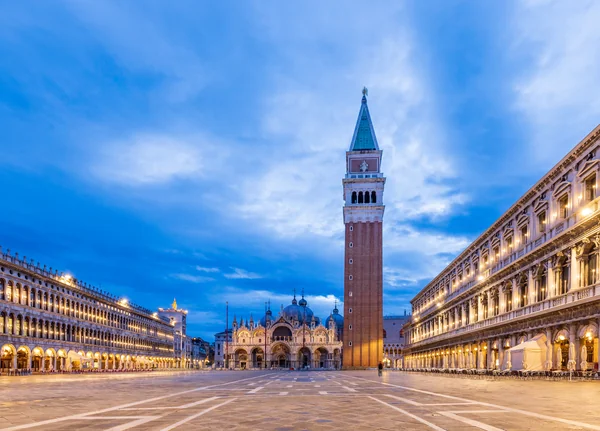
When is the best time to visit Venice?
Come in mid-September or October: 19-24°C, the summer heat broken, the Art Biennale still open, and crowds 30-40% below the August peak. July and August mean 30-35°C with lagoon humidity, cruise-ship surges and hotels at 320-550 euros. November is the cheapest month, with acqua alta the only real catch.
Start our tool and find your best time to visit Venice
Your perfect month
Free · ~30 seconds
or tap a month directly
What matters to you?
And this?
Best overall: Sep, Oct. Mid-September to mid-October is the real sweet spot: heat broken at 19-24°C, the Art Biennale still running until 22 November, the free Regata Storica on 6 September, and prices well under summer. Book early, because this is the answer everyone is now reaching.
Best value: Nov. November brings hotels around 90-130 euros, roughly a third below the rest of the year, plus the candlelit Festa della Salute on 21 November and a near-empty city. The trade is acqua alta risk, easily managed with the city's five-day tide forecast.
Avoid: Jul, Aug. July and August: 30-35°C with 75%-plus lagoon humidity, 50,000-plus day-trippers at the peak, cruise ships funnelling crowds onto St Mark's Square, and hotels at 320-550 euros. The worst value and the least pleasant heat of the year.
- January: Good time, 8°C. This is 'the other Venice', fog rolling over the Grand Canal and weekday squares almost empty outside the Carnival window. It is genuinely romantic in a melancholy way, not a tourist performance. The grey damp is the price, and for the silence it buys, a fair one.
- February: Good time, 10°C. Carnival is pure baroque spectacle, costumed figures posing in St Mark's Square in the morning mist, and it is unforgettable. Be honest about the crush, though: the last weekend is shoulder-to-shoulder. Want the costumes without the mob? Come 1-2 February, when the masks are out but the city still breathes.
- March: Great time, 13°C. Post-Carnival March is Venice exhaling: quiet again, wisteria beginning to climb the canal walls, long evenings starting. You can still get a Saturday table without booking. This window shuts fast as Easter nears, so it rewards the early-in-month traveller most.
- April: Good time, 16°C. April is lovely and no longer a secret. Easter pilgrims and the new access fee mean queues at the big sights and a busy centre. But the wisteria over the canals and the soft spring light earn it back. Go in clear-eyed: this is shoulder season tipping into peak, with prices to match on holiday weekends.
- May: Good time, 21°C. Everyone calls May a shoulder-season secret. It stopped being one years ago. The Biennale opening, the Vogalonga and warm weather make this a genuinely busy, expensive month. The weather and the events really are superb, so come, but with no illusions: book early and expect queues.
- June: Good time, 26°C. June is the tipping point, when Venice shifts from busy-but-workable into full summer mode. By the third week midday is hot and the main routes are packed, but the long light evenings redeem it. Golden hour after 8 pm on a quiet back canal is when the city is at its most beautiful, and emptiest.
- July: Tough month, 28°C. July is for people who genuinely don't mind heat, humidity and summer-maximum prices. Midday on St Mark's Square is a sweatbox and the main routes are a slow shuffle. But the Redentore fireworks night, and a slow walk along a quiet Dorsoduro canal after dark, are a completely different Venice that almost makes up for it.
- August: Tough month, 28°C. August is not romantic-empty Venice, it is survival-mode Venice. The locals are gone, their place taken by a sea of international visitors in the St Mark's queues. The humidity is physically draining, not photogenic. If you must come, do your sights before 9 am and retreat indoors or to the Lido by noon.
- September: Good time, 24°C. September is the relief everyone waits for. The crush thins, the light turns golden, and the city feels human again. The first half still carries Film Festival glamour and Biennale crowds; from the 15th onward it visibly calms. The single best two-week window starts here.
- October: Great time, 19°C. October is the romantic's month: autumn mist drifting over the Grand Canal, soft golden light, hardly any crowds, and hotels at a fraction of summer. The trade is the first acqua alta and shortening days. For couples and photographers, this is the most atmospheric Venice there is.
- November: Good time, 13°C. November is Venice at its most local and least touristy, candlelit Salute pilgrims, foggy canals, and hotels at their cheapest. Acqua alta is the genuine catch, but it is manageable and rarely lasts more than a couple of hours. For atmosphere per euro, no month beats it.
- December: Good time, 9°C. December away from Christmas and New Year is empty, foggy, romantic Venice for low-season prices. The little Santo Stefano market will not rival Frankfurt, but a glass of mulled wine with a canal view and almost no crowd is the point. The holiday days themselves are the one pricey, busy window.
Venice weather by month
HighLowRainfall
Jan8°
Feb10°
Mar13°
Apr16°
May21°
Jun26°
Jul28°
Aug28°
Sep24°
Oct19°
Nov13°
Dec9°
| Month | Temp | Rain | Sun | Crowds | Prices | Highlight |
|---|---|---|---|---|---|---|
| Jan | 8° / 1° | 68mm · 7 rainy days | 6.0 h/day | ●●○○○ | ●○○○○ | Carnival of Venice |
| Feb | 10° / 3° | 80mm · 8 rainy days | 6.8 h/day | ●●●●○ | ●●●○○ | Carnival of Venice |
| Mar | 13° / 5° | 57mm · 6 rainy days | 9.3 h/day | ●●○○○ | ●●○○○ | |
| Apr | 16° / 9° | 76mm · 9 rainy days | 10.5 h/day | ●●●●○ | ●●●○○ | Su e Zo per i Ponti |
| May | 21° / 14° | 109mm · 14 rainy days | 11.0 h/day | ●●●●○ | ●●●●○ | Feast of the Ascension |
| Jun | 26° / 19° | 70mm · 8 rainy days | 13.2 h/day | ●●●●○ | ●●●●○ | Venice Art Biennale |
| Jul | 28° / 21° | 70mm · 9 rainy days | 13.1 h/day | ●●●●● | ●●●●● | Venice Art Biennale |
| Aug | 28° / 20° | 81mm · 8 rainy days | 12.2 h/day | ●●●●● | ●●●●● | Venice Art Biennale |
| Sep | 24° / 17° | 103mm · 10 rainy days | 10.4 h/day | ●●●●○ | ●●●●○ | Venice Art Biennale |
| Oct | 19° / 12° | 79mm · 9 rainy days | 8.1 h/day | ●●●○○ | ●●●○○ | Venice Art Biennale |
| Nov | 13° / 7° | 121mm · 11 rainy days | 5.8 h/day | ●●○○○ | ●○○○○ | Venice Art Biennale |
| Dec | 9° / 3° | 67mm · 8 rainy days | 5.2 h/day | ●●○○○ | ●●○○○ | Christmas Market |
How we score this: weather = long-run climate normals (Open-Meteo), crowds & prices = relative season read, events checked yearly against official dates.
Best time to visit Venice: weather, prices & crowds
Best months for good weather
May, Sep
Mid-May and September give you Venice's kindest light and air: 20-24°C, long evenings, and the lagoon at its most photogenic before the autumn rains set in around mid-October.
Quietest months to avoid the crowds
Jan, Nov
January (outside the late-month Carnival run-up) and November empty the city out. Weekday queues at the Doge's Palace drop under 10 minutes and Trattorie take walk-in tables again.
Cheapest time to visit Venice
Nov, Jan
November is Venice's cheapest month, with hotels from about 90 euros, roughly 34% below the rest of the year. Early January matches it once Carnival demand has not yet kicked in.
Best time for festivals and events
Feb
Carnevale (31 January to 17 February) turns the whole city into a masked baroque theatre, with the Festa delle Marie procession and a candlelit flotilla on the Grand Canal that exists nowhere else on earth.
How many days do you need in Venice?
Venice rewards three days. The compact San Marco quarter packs the city's headline sights within easy walking distance of each other, but the real Venice, Dorsoduro's quiet canals, the Rialto market at dawn, a vaporetto run to Murano or Burano, takes another day or two to breathe in properly. Two days is workable for a first visit; a third unlocks the slower, more local city that most visitors never find.
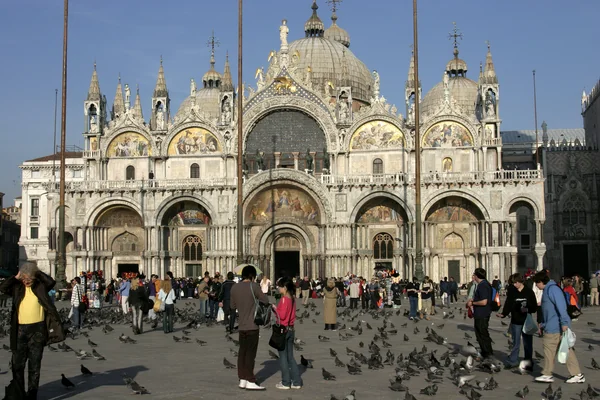
One day
San Marco, the Rialto and the Grand Canal
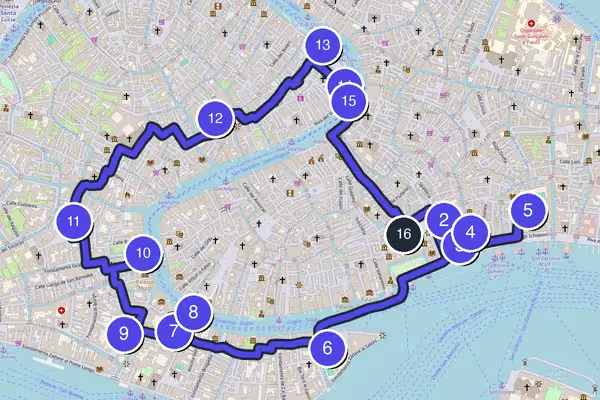
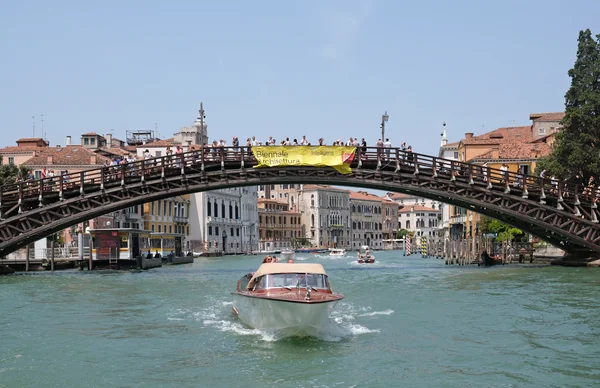
Start at Piazza San Marco before 9 am, when the square is genuinely quiet. Book your St Mark's Basilica reservation for the 9:30 slot, then work through the Doge's Palace and the Bridge of Sighs. A self-guided Venice walking tour links all 16 stops across 4.2 km in about 3.5 hours, threading south through Dorsoduro to the Accademia and back north to the Rialto Bridge. Finish with an early evening spritz on Campo Santa Margherita before the day-trippers clear.
Two days
Dorsoduro, lagoon light and the back canals
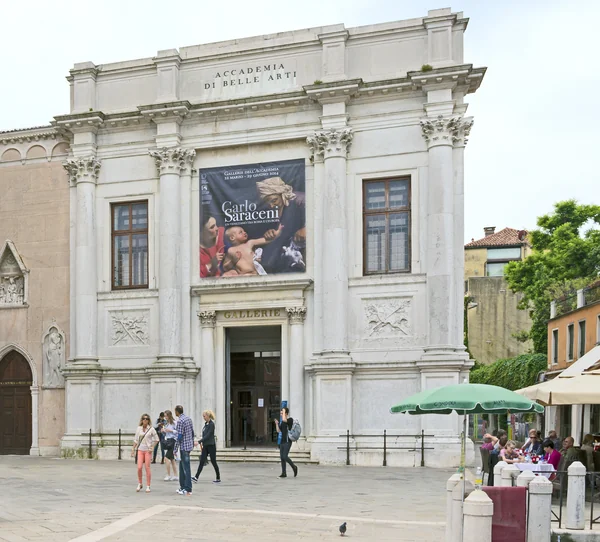
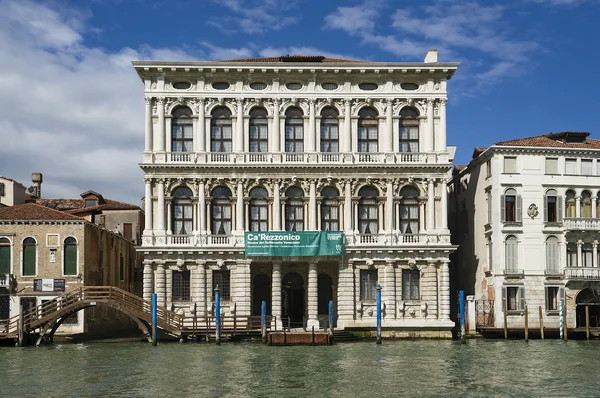
Cross to Dorsoduro first thing and take your time at Santa Maria della Salute, built on a million wooden piles, and the Gallerie dell'Accademia, which holds the world's largest collection of Venetian painting. Walk west to Ca' Rezzonico for Tiepolo's frescoes, then loop through Campo Santa Margherita for lunch. In the afternoon, ride the vaporetto to Murano to watch the glass blowers before the furnaces cool for the day.
Three daysRecommended
Lagoon islands and the quiet sestieri
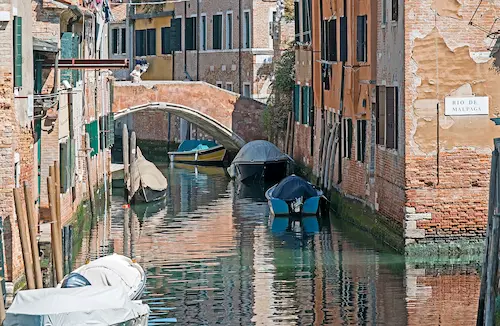
Day three is for getting deliberately lost. Wander north into Cannaregio, the city's most lived-in quarter, where the original Jewish Ghetto and the broad Fondamenta della Misericordia hold none of the San Marco crowds. Take the vaporetto to Burano in the afternoon for the brightly painted houses and the best fresh-fish lunch on the lagoon. Return via Torcello if the day is long enough.
Four days or more
The Biennale, the Lido and slow time
A fourth day earns you a full morning at the Art Biennale across the Giardini and the Arsenale (30 euros combined), which very few visitors see properly in under three hours. In summer, catch the vaporetto lines 5 or 6 from San Marco to the Lido beach, still uncrowded before 10 am. With five or more days, add San Giorgio Maggiore for the view from the bell tower and the island of San Michele, Venice's cemetery island, where Stravinsky and Diaghilev are buried.
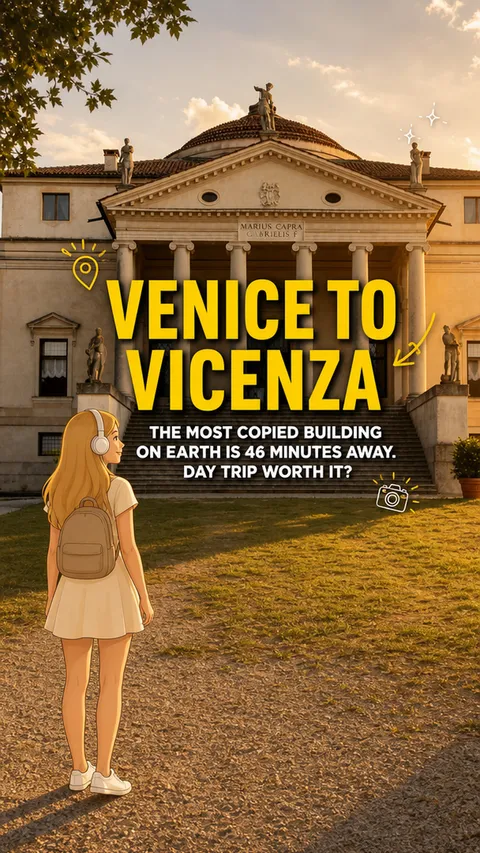
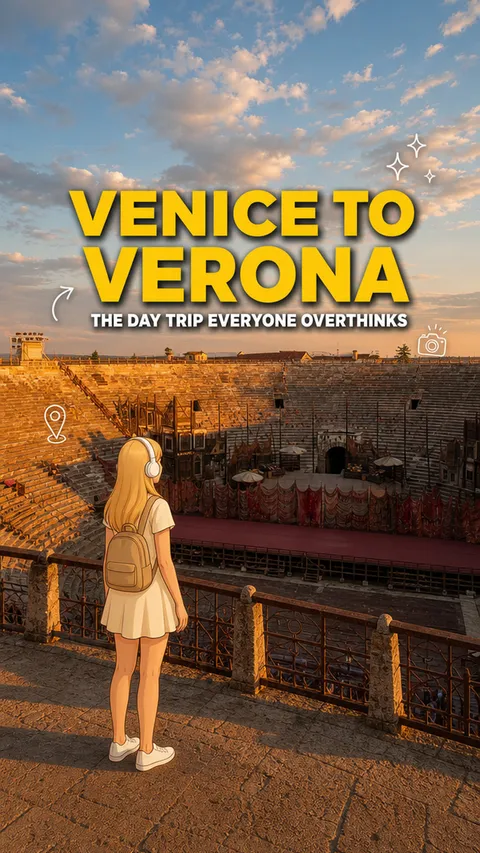
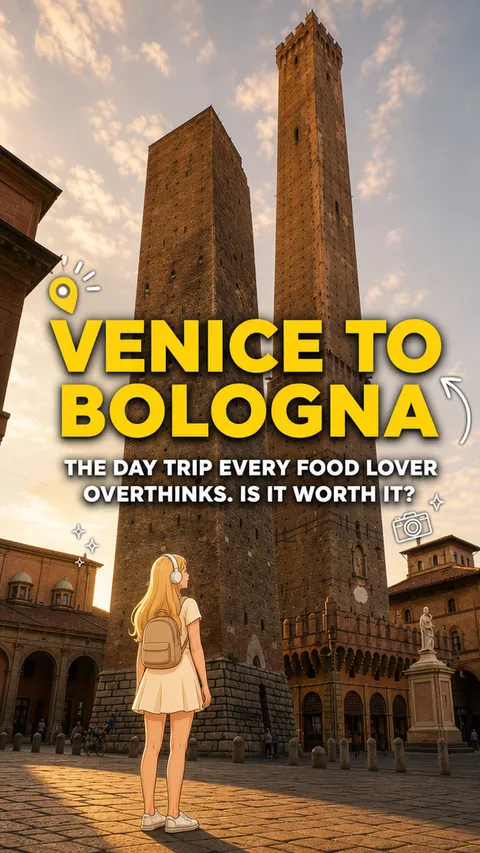
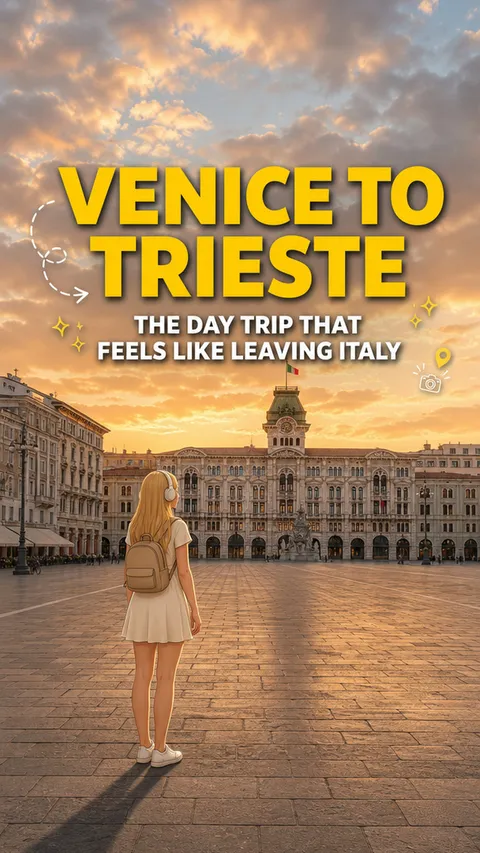
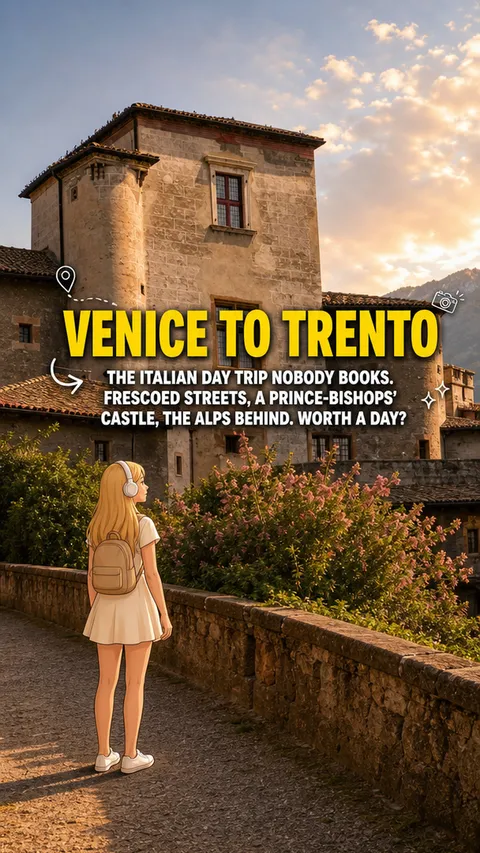
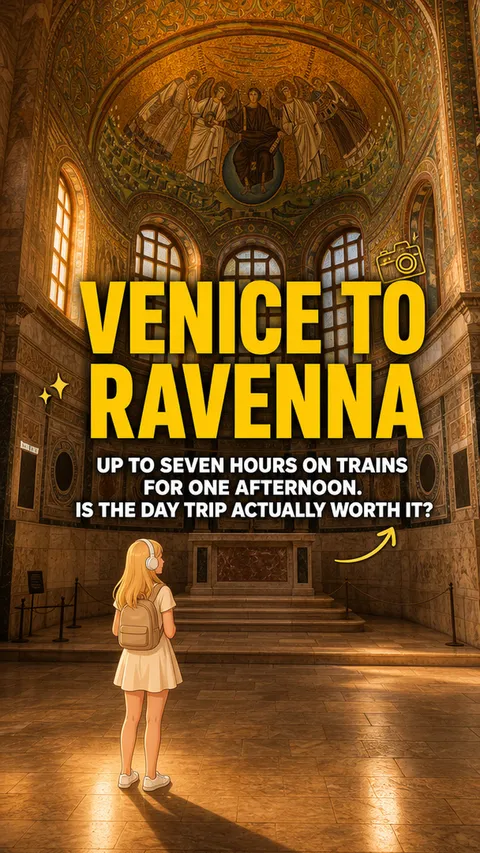
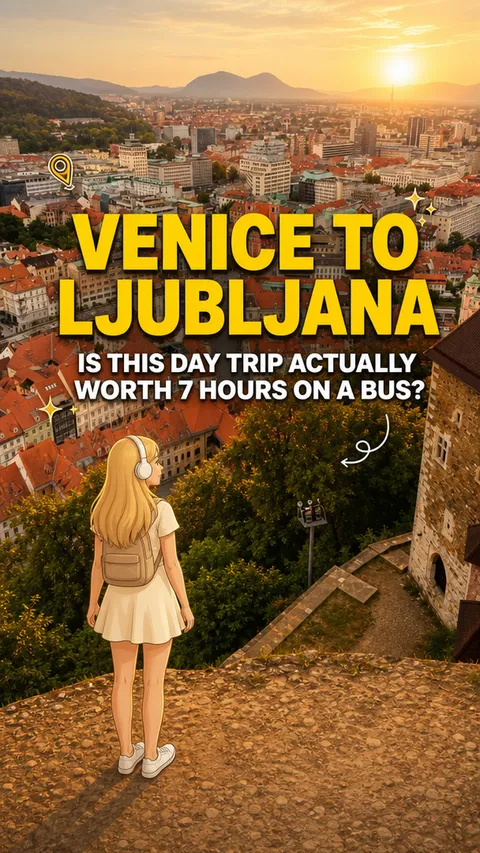
Day trips from Venice
Out in the morning, back in time for dinner. Every route here fits in one full day.

Best time to visit Venice by traveller type
Same city, different trip. Here's the month that fits how you're travelling.
🧭
Best time to visit Venice for the first time
SepOct
September or October dodges the August crush, keeps the Art Biennale open, throws in the free Regata Storica on 6 September, and runs a comfortable 20-24°C at prices 25-35% under peak.
❤️
Best time to visit Venice for couples
MarOct
October for golden light and the famous lagoon nebbia drifting over the Grand Canal, or late March before Carnival's successor crowds arrive, with wisteria starting to climb the canal walls.
💶
Best time to visit Venice on a budget
NovJan
November (skip the Salute weekend of 21 November) or January for hotels from 90 euros, a 2-euro traghetto stand-up gondola crossing instead of the 90-euro tourist ride, and a 2-euro spritz on Campo Santa Margherita.
🍝
Best time to visit Venice for food and wine
OctMay
October for moleche soft-shell crabs, lagoon radicchio and fresh porcini, or May for the first Sant'Erasmo violet artichokes and the Rialto market at its spring peak.
Worst time to visit Venice
July and August are the two months worth skipping if you can. Temperatures climb to 30-35°C, but the heat feels heavier than those numbers suggest because lagoon humidity sits above 75%, trapping the warmth in air that barely moves. Peak days bring more than 50,000 day-trippers, cruise ships funnel crowds directly onto St Mark's Square, and mid-range hotels run 320-550 euros. Around Ferragosto (15 August) many local trattorias and Murano glass studios close for up to two weeks, so the authentic side of the city thins out just as tourist numbers peak.
Still worth it for If July or August is your only option, the Redentore fireworks weekend in mid-July is genuinely spectacular and the Lido beach is an easy vaporetto ride from San Marco. Stick to the 7-10 am window for sightseeing and retreat indoors or to the water by noon.
Go instead in September, October, when Venice is at its best.
Best time for a tour of Venice
October and November are the quiet revelation most visitors never experience: highs of 19 to 13 °C, thin crowds, and the calli cooling to a gentle chill that makes the 4.2-kilometre loop from Piazza San Marco to the Rialto Bridge genuinely pleasant to walk. March is equally good, reaching only 13 °C but dry enough at six rain days and nearly empty, so you can linger at Santa Maria della Salute without being swept along by a current of bodies. June tilts the balance: temperatures climb to 26 °C and the sestieri grow busy, but it is still walkable in the early morning before the day-trip boats arrive. July and August push to 28 °C and the city turns shoulder-to-shoulder heaving, with Piazza San Marco so packed at midday that it stops feeling like a place and starts feeling like a queue. February, despite single-digit highs, brings Carnival and the crowds that come with it. If you must visit in summer, leave before nine in the morning and use the cooler Dorsoduro backstreets rather than the main tourist arteries. January and December are the calmest months of all, cold and occasionally foggy, but the lagoon light is extraordinary and Campo Santa Margherita belongs to local regulars rather than tourists.
The beauty of walking Venice on your own schedule is that you decide when you move, not a tour operator herding twenty people across a narrow bridge. With AI Tourguide running in your browser, no download and no fixed departure time, you can start your Venice tour on a still January morning when Piazza San Marco holds barely a handful of visitors, or slip out at seven on a July day and reach the Mercato di Rialto before the stalls are mobbed. Your AI guide leads the walk, tells the stories, asks you questions, and adapts the conversation as you go. The climate picks your hour; the guide does the rest.
+16
All 16 stops are already on the map.
You just press start.
You just press start.
 AI Tourguide
You just read the route.
Now walk it with a guide in your ear.
Press start wherever you are, even hundreds of kilometres from Venice, and the guide begins telling its stories right away. In the city, pick any of the 16 stops to start from: it leads you there, then talks with you the whole route, asking, listening, remembering, and shaping the tour around your answers.
16stops4.2km3.5hours11languages
▶Start the tour freeFree to start · Runs in your browser · No app, no download
Venice events and festivals calendar
Annual highlights worth timing a trip around, listed month by month.
January
🎉 FestivalBefana Regatta Regata delle Befane
Jan 6
6 January (Epiphany) every year.
On Epiphany morning, rowers dressed as the Befana witch race down the Grand Canal to the Rialto Bridge, where a giant stocking is hung.
🎭 CarnivalCarnival of Venice Carnevale di Venezia
Jan 31 – Feb 17 ~
Roughly the 18 days before Lent, ending on Shrove Tuesday (Martedì Grasso). Dates move each year with the Easter calendar: it typically falls between late January and late February.
Eighteen days of masked balls, costumed processions and street theatre across the whole city.
April
🎉 FestivalSu e Zo per i Ponti
Apr 12
A Sunday in April, typically the second or third weekend of the month.
A mass solidarity walk 'up and down the bridges' over dozens of Venice's bridges.
May
🎨 Art and cultureVenice Art Biennale Biennale Arte
May 9 – Nov 22
May to November in even-numbered years (Architecture Biennale runs in odd years). Dates and editions vary; check the official site for the current year's run.
The world's largest art exhibition: 90 national pavilions across the Giardini and the Arsenale.
⛪ ReligiousFeast of the Ascension Festa della Sensa
May 17 ~
Ascension Sunday in May, which moves each year with Easter.
Venice's ancient 'marriage to the sea' ceremony: the mayor casts a ring into the water off the Lido, with a Bucintoro procession and a flotilla setting out from the Bacino di San Marco.
🏃 SportVogalonga
May 24
A Sunday in late May, typically the fourth Sunday of the month.
A 30km non-competitive rowing regatta through the lagoon with thousands of boats, from gondolas and kayaks to dragon boats.
June
🎨 Art and cultureInternational Theatre Festival Biennale Teatro
Jun 7–21
Two weeks in June, typically the second and third weeks of the month.
International theatre productions staged across the Arsenale's performance venues over two weeks in June.
July
🎨 Art and cultureContemporary Dance Biennale Biennale Danza
Jul 17 – Aug 1
Mid-July into early August, typically running about two weeks.
A contemporary dance festival of around 150-160 events staged through the height of summer.
⛪ ReligiousFeast of the Redeemer Festa del Redentore
Jul 18–19 ~
Third weekend of July, with fireworks on the Saturday night from around 11:30 pm.
A votive pontoon bridge links the Zattere to the Giudecca, and a midnight fireworks display lights the Bacino di San Marco, followed by a gondola regatta on the Sunday.
September
🎬 FilmVenice International Film Festival Mostra Internazionale d'Arte Cinematografica
Sep 2–12
The first ten to twelve days of September on the Lido di Venezia.
The world's oldest film festival, held on the Lido di Venezia with global premieres and a red carpet.
🎉 FestivalHistoric Regatta Regata Storica
Sep 6
First Sunday of September.
A historic procession re-enacting the 1489 arrival of Caterina Cornaro, with costumed gondoliers, followed by four races down the Grand Canal.
October
🎵 MusicContemporary Music Biennale Biennale Musica
Oct 10–24
Two weeks in October, typically the second and third weeks of the month.
A two-week festival of avant-garde and contemporary classical music staged in Venetian venues.
🏃 SportVenice Marathon Maratona di Venezia
Oct 25
Last Sunday of October.
A marathon from the Brenta Riviera finishing in Piazza San Marco, crossing the Ponte della Libertà on a unique course onto the islands.
November
⛪ ReligiousFeast of the Salute Festa della Salute
Nov 21
21 November every year.
A temporary pontoon bridge spans the Grand Canal from Zattere to the Salute basilica, and Venetians make a candlelit pilgrimage to give thanks for deliverance from the 1631 plague.
December
🎄 Christmas marketChristmas Market Mercatini di Natale
Dec 7 – Jan 6
Early December to Epiphany, on Campo Santo Stefano.
A small but atmospheric Christmas market on Campo Santo Stefano, with stalls, decorations and mulled wine in a quintessentially Venetian setting.
Insider tips for visiting Venice
The rules buried in forums, in one place.
- St Mark's Basilica is closed to ordinary visitors on Sundays and feast days until services finish around 11 am. The best window is Monday to Friday, 9:30-10:30 am. The mandatory 3-euro timed reservation is not a skip-the-line pass: security checks still take 10-20 minutes.
- The Rialto market is liveliest before 9 am and the fish stalls start clearing from noon. Saturday brings the widest choice; Sunday it is shut completely. See it early or not at all.
- From October through March, check the city's five-day tide forecast on venezia.maree.it each morning for acqua alta. When alarms sound, raised walkways (passerelle) go up in St Mark's Square at 80cm, and a 10-15 euro pair of rubber boots from a pharmacy beats any souvenir-shop overshoe.
- Gondola fares are fixed for 2026 at 90 euros per 30 minutes (up to 5 people) by day, 110 euros after 7 pm. Skip the Grand Canal, the dull tourist artery, and agree a route through the quiet Dorsoduro or San Polo back canals instead. A short loop costs exactly the same as the full one.
- The day-tripper access fee runs Friday to Sunday, 8:30 am to 4 pm, from 3 April to 26 July, plus the full weeks of 27 April to 1 May and 1-7 June. It costs 5 euros if booked by the Wednesday before, 10 euros after. No QR code means a 50-300 euro fine; staying overnight in the old town is free but still needs registration.
- Vaporetto line 1 stops everywhere and is scenic; line 2 is the express that skips most Grand Canal stops. In summer both are packed from 10 am, so take an early departure or ride line 5 toward Murano to avoid the sardine-tin crush.
- Visit the Art Biennale midweek, not on opening weekend. The 9-11 May vernissage and the two to three weeks after are mobbed; the calmest visits are September and October, Tuesday or Wednesday morning. The Giardini-plus-Arsenale combo ticket is 30 euros, cheapest booked online.
- During the Film Festival (2-12 September) Lido hotels run 400-1,000 euros and sell out, but Venice itself is about 20% quieter than August. Stay in Venice and vaporetto over to the Lido. The red carpet and Lido beach are free to watch from outside.
- From 10 to 20 August many local restaurants close for ferie (look for the 'Chiuso per ferie' sign). A handful stay open right through Ferragosto, but book a table weeks ahead because everyone else is fighting for the same few seats.
Public holidays in Venice
On these dates many shops and offices close, transport thins out, and sights can be mobbed or shut. Plan around them.
| Date | Holiday | What closes |
|---|---|---|
| Jan 1 | New Year's Day | Almost everything closes: shops, museums, most restaurants. Vaporetti run an emergency timetable. Restaurants that open serve a fixed New Year menu at a premium. |
| Jan 6 | Epiphany | National holiday: schools shut, most shops closed, and Venice traditionally holds the Regata della Befana, with rowers in witch costume racing down the Grand Canal. |
| Apr 5 | Easter Sunday | St Mark's Basilica is overwhelmed and restaurants book out; some museums keep reduced hours. The day-tripper access fee applies on this Easter weekend, so register ahead. |
| Apr 6 | Easter Monday | Treated like Sunday: many restaurants close or run a set menu, and vaporetti thin out. Hotel rates stay at Easter-weekend peak. |
| Apr 25 | Liberation Day and Feast of St Mark | A double holiday: national Liberation Day plus Venice's own patron saint, St Mark. The centre is very busy, gondoliers hand out rosebuds in the local 'bocolo' tradition, and the access fee applies on this weekend. |
| May 1 | Labour Day | Many shops close while museums generally stay open (check ahead). The 27 April to 1 May bridge (ponte) is a high-traffic week with the access fee in force all seven days. |
| Jun 2 | Republic Day | National holiday falling on a Tuesday in 2026, often bridged into a long weekend. The access fee applies across the 1-7 June week. |
| Aug 15 | Ferragosto | Venice empties of locals. Many family trattorie and Murano glass studios shut for up to two weeks; tourist restaurants stay open. This coincides with the year's heat peak and the cruise high season. |
| Nov 1 | All Saints' Day | National holiday: Venetians take the boat to the cemetery island of San Michele to visit family graves. Most museums stay open and tourists are scarce, giving the city a quiet, local feel. |
| Dec 8 | Immaculate Conception | Shops mostly close and Advent begins (check museum hours). The small Campo Santo Stefano Christmas market is in full swing by now. |
| Dec 25 | Christmas Day | All museums close and vaporetti run an emergency timetable. The city falls almost silent, an atmospheric, near-empty Venice for those already there. |
| Dec 26 | St Stephen's Day | Similar to Christmas Day with limited openings. Visitor numbers climb between Christmas and New Year as the festive crowd arrives. |
Venice month by month
January in Venice
High8°C / 46°F
Low1°C
Rain68mm / 7 rainy days
Sun6.0 h/day
Daylight9 h/day
Humidity79%
Crowds●●○○○Prices●○○○○
January is the cheapest, quietest Venice of the year, with daytime highs around 8°C, frequent lagoon fog, and a damp chill that cuts deeper than the thermometer suggests. Snow is rare but morning frost is not. Museums and monuments are close to queue-free, and Venetians have the calli to themselves. Only at the very end of the month does the Carnival run-up start to lift crowds and prices.
The vibe This is 'the other Venice', fog rolling over the Grand Canal and weekday squares almost empty outside the Carnival window. It is genuinely romantic in a melancholy way, not a tourist performance. The grey damp is the price, and for the silence it buys, a fair one.
Don't miss The Doge's Palace queue runs under 10 minutes and a St Mark's reservation is often available for the next day. Fog over the lagoon at dawn is a photographer's dream, the islands dissolving into 'nebbia'.
Crowd drivers No cruise ships and, once Epiphany passes on 6 January, no school holidays. The lowest visitor pressure of the year until Carnival builds in the final days.
In season Peak season for radicchio di Treviso IGP and risotto al nero di seppia, both on every good trattoria menu, plus warming bowls of pasta e fagioli against the cold.
Heads up 1 and 6 January are holidays: museums and most shops shut, vaporetti on a reduced timetable. The Rialto market is closed Sundays year-round.
Year's lowest base rates; hotels from about 80 euros, 40-50% below the summer peak, until Carnival demand builds at month's end.
Events this month
🎉 FestivalBefana Regatta Regata delle Befane
Jan 6
6 January (Epiphany) every year.
On Epiphany morning, rowers dressed as the Befana witch race down the Grand Canal to the Rialto Bridge, where a giant stocking is hung.
A charming, almost entirely local way to close the Christmas season, and a free spectacle in the year's quietest week.
🎭 CarnivalCarnival of Venice Carnevale di Venezia
Jan 31 – Feb 17 ~
Roughly the 18 days before Lent, ending on Shrove Tuesday (Martedì Grasso). Dates move each year with the Easter calendar: it typically falls between late January and late February.
Eighteen days of masked balls, costumed processions and street theatre across the whole city. Highlights are the opening Festa Veneziana on the water, the Festa delle Marie procession, and the Martedì Grasso finale.
A one-of-a-kind world event: come 1-2 February for the costumes without the worst crush, and avoid the shoulder-to-shoulder final weekend of 14-17 February unless the chaos is the point.
February in Venice
High10°C / 49°F
Low3°C
Rain80mm / 8 rainy days
Sun6.8 h/day
Daylight10 h/day
Humidity79%
Crowds●●●●○Prices●●●○○
February is dominated by Carnevale, which draws 2-3 million visitors across 18 days into a cold, often foggy city of around 10°C highs. Outside the festival the base price drops straight back to January levels, but the masked crowds make the Carnival weekends, especially the 14-17 February finale, the most intense of the whole winter. Expect packed vaporetti and a fully booked centre on those dates.
The vibe Carnival is pure baroque spectacle, costumed figures posing in St Mark's Square in the morning mist, and it is unforgettable. Be honest about the crush, though: the last weekend is shoulder-to-shoulder. Want the costumes without the mob? Come 1-2 February, when the masks are out but the city still breathes.
Don't miss The Festa delle Marie procession (7 February) and the candlelit opening-night flotilla on the Cannaregio canal are the signature free spectacles. Masked balls run 150-600 euros; the street carnival is free.
Crowd drivers Carnevale, building from the opening Festa Veneziana to the Martedì Grasso finale on 17 February. The closing weekend is the single busiest stretch of the Venetian winter.
In season Bakery windows fill with frìtole and galàni, the fried Carnival sweets you only find in these weeks. Still prime radicchio and cuttlefish-ink risotto season.
Heads up The Rialto fish market is closed Sundays; the Peggy Guggenheim Collection is closed every Tuesday year-round, easy to forget in a packed Carnival schedule.
Carnival week pushes hotels 80-120% above the January base; rates fall back to winter level immediately after. Book up to six months ahead for the final weekend.
Events this month
🎭 CarnivalCarnival of Venice Carnevale di Venezia
Jan 31 – Feb 17 ~
Roughly the 18 days before Lent, ending on Shrove Tuesday (Martedì Grasso). Dates move each year with the Easter calendar: it typically falls between late January and late February.
Eighteen days of masked balls, costumed processions and street theatre across the whole city. Highlights are the opening Festa Veneziana on the water, the Festa delle Marie procession, and the Martedì Grasso finale.
A one-of-a-kind world event: come 1-2 February for the costumes without the worst crush, and avoid the shoulder-to-shoulder final weekend of 14-17 February unless the chaos is the point.
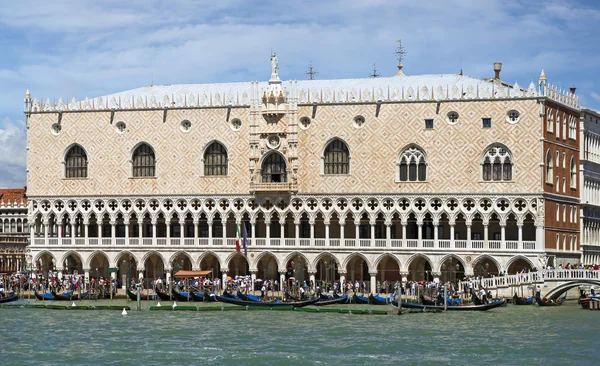
March in Venice
High13°C / 55°F
Low5°C
Rain57mm / 6 rainy days
Sun9.3 h/day
Daylight12 h/day
Humidity74%
Crowds●●○○○Prices●●○○○
March is still low season, with highs climbing toward 13°C, the year's lowest rainfall, and the first city-break tourists arriving from the UK, Germany and the Netherlands after Carnival. Skies brighten and café terraces reopen along the canals. Crowds stay moderate until the very end of the month, when the approach to an early April Easter starts to fill hotels. It is the last genuinely calm window before spring.
The vibe Post-Carnival March is Venice exhaling: quiet again, wisteria beginning to climb the canal walls, long evenings starting. You can still get a Saturday table without booking. This window shuts fast as Easter nears, so it rewards the early-in-month traveller most.
Don't miss Wisteria starts flowering along the canal walls and magnolias open on Campo Santa Margherita. Spring light makes Burano and Murano day trips a pleasure without the summer vaporetto crush.
Crowd drivers Early city-break visitors after Carnival, building toward the Easter weekend at the start of April. Weekdays stay quiet; the final days lift as the holiday approaches.
In season The last of the winter radicchio overlaps with the first spring castraure, the tiny prized artichokes from Sant'Erasmo island, on Rialto market stalls.
Prices run roughly 25-30% above January; the Easter weekend (3-6 April) spikes to summer level, but the weekdays before it stay cheap.
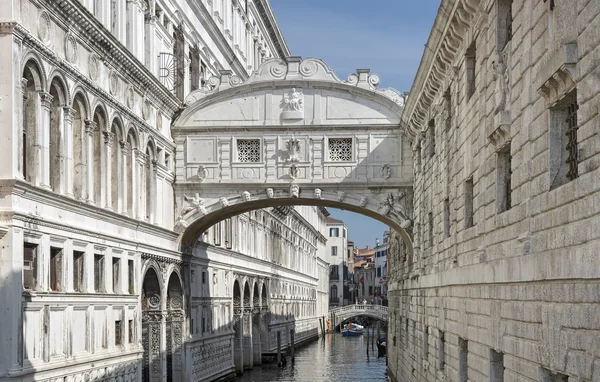
April in Venice
High16°C / 62°F
Low9°C
Rain76mm / 9 rainy days
Sun10.5 h/day
Daylight14 h/day
Humidity74%
Crowds●●●●○Prices●●●○○
April is warm and busy, highs reaching a pleasant 16-17°C with up to 9 rainy days. Easter (5-6 April) packs St Mark's and books out restaurants, and from 3 April the Friday-to-Sunday access fee begins (5-10 euros per day, 8:30 am to 4 pm). Liberation Day and St Mark's feast on 25 April make for a busy double holiday. After mid-month the crowds ease back to a manageable spring rhythm.
The vibe April is lovely and no longer a secret. Easter pilgrims and the new access fee mean queues at the big sights and a busy centre. But the wisteria over the canals and the soft spring light earn it back. Go in clear-eyed: this is shoulder season tipping into peak, with prices to match on holiday weekends.
Don't miss The Su e Zo per i Ponti solidarity walk (12 April) crosses dozens of bridges off the main tourist routes, a rare authentically local festival. Gardens at the Giardini della Biennale come into bloom before the art opens in May.
Crowd drivers Easter weekend, the 25 April Liberation Day and St Mark's double holiday, and the access fee's full-week run from 27 April. Cruise ships are calling regularly by now.
In season Castraure and the first violet Sant'Erasmo artichokes are at their peak, and the spring run of moleche soft-shell crabs begins on Rialto stalls.
Heads up Easter Sunday and Monday close many shops and cut vaporetto frequency. The Peggy Guggenheim stays shut on Tuesdays as always.
Easter week hotels run about 200-320 euros; mid-April settles back to normal. The day-tripper access fee starts on 3 April.
Events this month
🎉 FestivalSu e Zo per i Ponti
Apr 12
A Sunday in April, typically the second or third weekend of the month.
A mass solidarity walk 'up and down the bridges' over dozens of Venice's bridges. It threads through quiet quarters most visitors never reach.
An authentically Venetian community festival rather than a tourist show, and a great way to discover the city off its main routes.
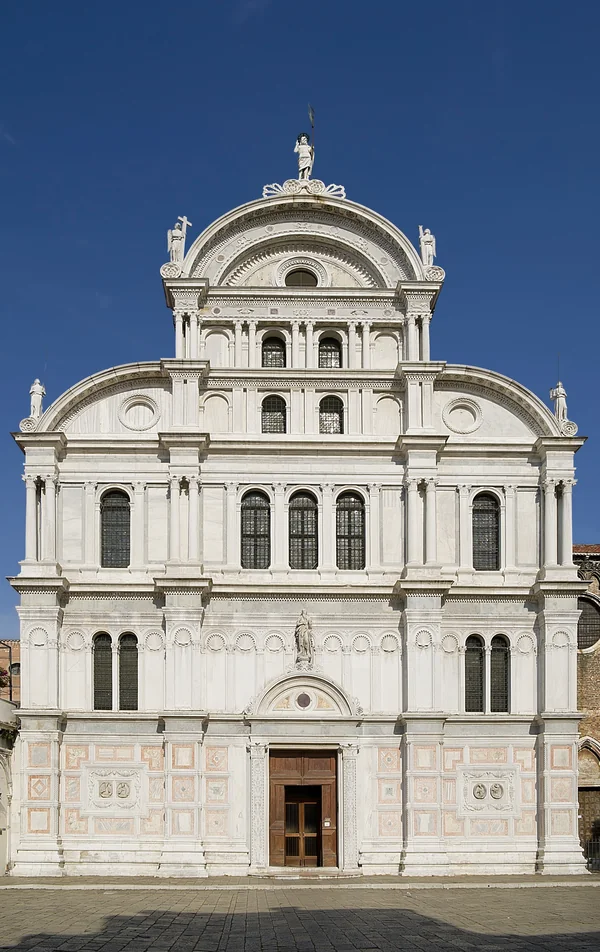
May in Venice
High21°C / 69°F
Low14°C
Rain109mm / 14 rainy days
Sun11.0 h/day
Daylight15 h/day
Humidity75%
Crowds●●●●○Prices●●●●○
May is one of Venice's best-looking months, with 20-21°C highs and long evenings, though it is also the rainiest on average at 14 wet days, usually short showers. The Art Biennale opens on 9 May and vaporetto pressure becomes intense. The Festa della Sensa (17 May) and the spectacular Vogalonga rowing regatta (24 May) fill the lagoon with boats. Crowds are heavy but not yet at the summer pitch.
The vibe Everyone calls May a shoulder-season secret. It stopped being one years ago. The Biennale opening, the Vogalonga and warm weather make this a genuinely busy, expensive month. The weather and the events really are superb, so come, but with no illusions: book early and expect queues.
Don't miss The Vogalonga (24 May) clogs the Grand Canal with thousands of rowing boats from 8 am to 1 pm, an unmissable spectacle. The Festa della Sensa sees the mayor cast a ring into the sea off the Lido in a centuries-old marriage-to-the-sea ceremony.
Crowd drivers The Art Biennale opening, the Vogalonga and Festa della Sensa weekends, the Salone Nautico boat show (27-31 May), and the start of the European travel season all stack up.
In season The Rialto market hits its spring peak: violet Sant'Erasmo artichokes, fresh peas for risi e bisi, and the soft-shell moleche crabs that define a Venetian spring.
Biennale opening week (6-11 May) pushes hotels to 280-400 euros; rates stay high through the second half of the month.
Events this month
🎨 Art and cultureVenice Art Biennale Biennale Arte
May 9 – Nov 22
May to November in even-numbered years (Architecture Biennale runs in odd years). Dates and editions vary; check the official site for the current year's run.
The world's largest art exhibition: 90 national pavilions across the Giardini and the Arsenale. The vernissage week in early May is the art world's elite gathering; after that it settles into regular running through November.
If you care about contemporary art, visit midweek in September or October when crowds thin and you can actually see the work; the combo ticket is 30 euros.
⛪ ReligiousFeast of the Ascension Festa della Sensa
May 17 ~
Ascension Sunday in May, which moves each year with Easter.
Venice's ancient 'marriage to the sea' ceremony: the mayor casts a ring into the water off the Lido, with a Bucintoro procession and a flotilla setting out from the Bacino di San Marco.
A centuries-old ritual that is spectacular to photograph and pairs naturally with a Murano or Burano day trip.
🏃 SportVogalonga
May 24
A Sunday in late May, typically the fourth Sunday of the month.
A 30km non-competitive rowing regatta through the lagoon with thousands of boats, from gondolas and kayaks to dragon boats. It fills the Grand Canal from roughly 8 am to 1 pm.
The Grand Canal jammed with rowing boats is a spectacular free show, born from a 1970s protest against motorboat wash on the lagoon.
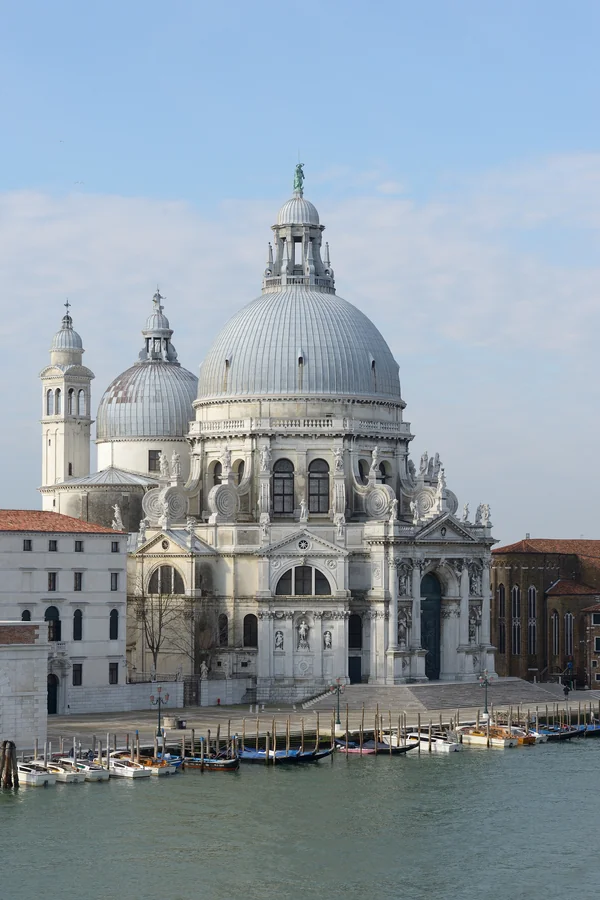
June in Venice
High26°C / 78°F
Low19°C
Rain70mm / 8 rainy days
Sun13.2 h/day
Daylight16 h/day
Humidity73%
Crowds●●●●○Prices●●●●○
June opens the Venetian summer warm at 26°C highs and long on daylight at over 15 hours, with short but heavy thunderstorms the main weather risk. The Biennale runs on and the Biennale Teatro (7-21 June) adds evening performances in the Arsenale. European school holidays begin and day-tripper numbers climb steadily. The access fee still applies across the first week. By late June the heat and the cruise-driven crowds are arriving in earnest.
The vibe June is the tipping point, when Venice shifts from busy-but-workable into full summer mode. By the third week midday is hot and the main routes are packed, but the long light evenings redeem it. Golden hour after 8 pm on a quiet back canal is when the city is at its most beautiful, and emptiest.
Don't miss The Biennale Teatro brings international theatre to the Arsenale playhouses through 21 June. Long daylight means golden-hour photography on the Grand Canal well after 8 pm, with the light gone soft and the day-trippers departed.
Crowd drivers The Art Biennale, the start of European school holidays, growing cruise-ship traffic, and the access fee's 1-7 June week.
In season Lagoon fish is at its summer best, and chilled local Soave or a spritz on Campo Santa Margherita becomes the evening ritual as the terraces fill.
Hotels run 220-350 euros, with weekdays around 15% cheaper than weekends. The access fee applies on the 1-7 June week.
Events this month
🎨 Art and cultureVenice Art Biennale Biennale Arte
May 9 – Nov 22
May to November in even-numbered years (Architecture Biennale runs in odd years). Dates and editions vary; check the official site for the current year's run.
The world's largest art exhibition: 90 national pavilions across the Giardini and the Arsenale. The vernissage week in early May is the art world's elite gathering; after that it settles into regular running through November.
If you care about contemporary art, visit midweek in September or October when crowds thin and you can actually see the work; the combo ticket is 30 euros.
🎨 Art and cultureInternational Theatre Festival Biennale Teatro
Jun 7–21
Two weeks in June, typically the second and third weeks of the month.
International theatre productions staged across the Arsenale's performance venues over two weeks in June.
It gives June a cultural pulse beyond the art exhibition; book tickets early as runs are short.
July in Venice
High28°C / 82°F
Low21°C
Rain70mm / 9 rainy days
Sun13.1 h/day
Daylight15 h/day
Humidity70%
Crowds●●●●●Prices●●●●●
July is Venice at full intensity: 28-35°C highs, lagoon humidity over 75%, daily cruise ships, and 50,000-plus day-trippers on peak days. The heat feels heavier here than in Florence or Rome because the humidity hangs in the still lagoon air, and St Mark's Square is a shadeless sun trap. The Festa del Redentore (18-19 July) is the highlight, with midnight fireworks over the Bacino di San Marco. Sightsee at 7-10 am or after 6 pm, or not at all.
The vibe July is for people who genuinely don't mind heat, humidity and summer-maximum prices. Midday on St Mark's Square is a sweatbox and the main routes are a slow shuffle. But the Redentore fireworks night, and a slow walk along a quiet Dorsoduro canal after dark, are a completely different Venice that almost makes up for it.
Don't miss Festa del Redentore (Saturday 18 July, fireworks from 11:30 pm) strings a votive pontoon bridge to the Giudecca and lights the Bacino di San Marco with the year's best fireworks. Rent a boat for the view from the water; a gondola regatta follows on Sunday 19 July.
Crowd drivers Every European school system on summer break at once, daily cruise-ship calls, the Biennale Danza (17 July to 1 August), and the Redentore weekend.
In season Gelato becomes a survival strategy. Walk a few calli off the main routes to a proper artisan gelateria for half the price and twice the quality of the tourist-route stands.
The year's priciest month: mid-range hotels run 320-500 euros. The access fee runs Friday to Sunday until 26 July.
Events this month
⛪ ReligiousFeast of the Redeemer Festa del Redentore
Jul 18–19 ~
Third weekend of July, with fireworks on the Saturday night from around 11:30 pm.
A votive pontoon bridge links the Zattere to the Giudecca, and a midnight fireworks display lights the Bacino di San Marco, followed by a gondola regatta on the Sunday.
The most beautiful fireworks night of the Venetian year; rent a boat for the view from the water, but expect it folded into peak-summer crowds.
🎨 Art and cultureContemporary Dance Biennale Biennale Danza
Jul 17 – Aug 1
Mid-July into early August, typically running about two weeks.
A contemporary dance festival of around 150-160 events staged through the height of summer.
It gives the hottest weeks a serious cultural draw; popular performances sell out early, so book ahead.
August in Venice
High28°C / 82°F
Low20°C
Rain81mm / 8 rainy days
Sun12.2 h/day
Daylight14 h/day
Humidity69%
Crowds●●●●●Prices●●●●●
August is Venice's hottest and most crowded month, 28°C-plus highs with oppressive humidity, cruise high season, and tourist numbers at their absolute peak. Around Ferragosto (15 August) the Venetians clear out and many local restaurants and Murano glass studios close for up to two weeks, so the authentic local fabric thins right out while tourist-zone places stay open and pricey. The Lido beach and air-conditioned vaporetti are your only real relief from the heat.
The vibe August is not romantic-empty Venice, it is survival-mode Venice. The locals are gone, their place taken by a sea of international visitors in the St Mark's queues. The humidity is physically draining, not photogenic. If you must come, do your sights before 9 am and retreat indoors or to the Lido by noon.
Don't miss The Lido beach is in full swing, reached by vaporetto lines 5 and 6 from San Marco. The Biennale Danza's contemporary programme runs into the first day of the month, a cooler indoor refuge from the heat.
Crowd drivers Peak cruise season, Ferragosto, the back end of the European summer holidays, and the run-up to the Film Festival all converge. The mid-month Ferragosto week is the most extreme.
In season Plan around the closures: Osteria alle Testiere and Trattoria alla Rivetta in Castello stay open through Ferragosto, but reserve weeks ahead as the few open kitchens fill fast.
Heads up From roughly 10 to 20 August many family trattorie and Murano glass studios shut for ferie. Tourist restaurants remain open at full summer prices.
Hotels sit at the annual high of 350-550 euros, with the Ferragosto week (around 15 August) especially extreme.
Events this month
🎨 Art and cultureContemporary Dance Biennale Biennale Danza
Jul 17 – Aug 1
Mid-July into early August, typically running about two weeks.
A contemporary dance festival of around 150-160 events staged through the height of summer.
It gives the hottest weeks a serious cultural draw; popular performances sell out early, so book ahead.
September in Venice
High24°C / 75°F
Low17°C
Rain103mm / 10 rainy days
Sun10.4 h/day
Daylight12 h/day
Humidity73%
Crowds●●●●○Prices●●●●○
September is when Venice becomes itself again: highs easing to 24°C, the worst heat broken, and the Art Biennale still running. The Film Festival (2-12 September) on the Lido packs that island's hotels but leaves Venice proper noticeably quieter than August. The free Regata Storica on 6 September is the year's most spectacular costumed event. From mid-month the city empties further and prices soften. This is the start of the best travel window of the year.
The vibe September is the relief everyone waits for. The crush thins, the light turns golden, and the city feels human again. The first half still carries Film Festival glamour and Biennale crowds; from the 15th onward it visibly calms. The single best two-week window starts here.
Don't miss The Regata Storica (6 September) recreates a 1489 procession with costumed gondoliers and four races down the Grand Canal, Venice's most spectacular free event. The Film Festival red carpet on the Lido is free to watch from outside the screening venues.
Crowd drivers The Venice Film Festival (2-12 September) on the Lido, the still-open Art Biennale, and the Regata Storica. From mid-month, crowds drop sharply.
In season Lagoon fish stays excellent and the first autumn moleche return. The grape harvest brings new wine to the bàcari, the city's traditional cicchetti wine bars.
Hotels run 170-260 euros, 20-25% below August; Lido rates spike during the Film Festival but the city itself eases from 15 September.
Events this month
🎨 Art and cultureVenice Art Biennale Biennale Arte
May 9 – Nov 22
May to November in even-numbered years (Architecture Biennale runs in odd years). Dates and editions vary; check the official site for the current year's run.
The world's largest art exhibition: 90 national pavilions across the Giardini and the Arsenale. The vernissage week in early May is the art world's elite gathering; after that it settles into regular running through November.
If you care about contemporary art, visit midweek in September or October when crowds thin and you can actually see the work; the combo ticket is 30 euros.
🎬 FilmVenice International Film Festival Mostra Internazionale d'Arte Cinematografica
Sep 2–12
The first ten to twelve days of September on the Lido di Venezia.
The world's oldest film festival, held on the Lido di Venezia with global premieres and a red carpet. Lido hotels sell out one to two weeks ahead at 400-1,000 euros and up.
Pure glamour, and a quirk worth knowing: Venice itself is about 20% quieter than August this week, so stay in the city and vaporetto over to the Lido.
🎉 FestivalHistoric Regatta Regata Storica
Sep 6
First Sunday of September.
A historic procession re-enacting the 1489 arrival of Caterina Cornaro, with costumed gondoliers, followed by four races down the Grand Canal. The best viewing is from the canal banks, 2-6 pm.
Venice's most spectacular free event, and a perfect reason to time a September trip when the heat has just broken.
October in Venice
High19°C / 66°F
Low12°C
Rain79mm / 9 rainy days
Sun8.1 h/day
Daylight11 h/day
Humidity79%
Crowds●●●○○Prices●●●○○
October is the connoisseur's Venice: 19°C highs, golden light, the famous lagoon nebbia, and crowds well down from summer. Rain picks up from mid-month and the first acqua alta events appear, so pack a waterproof and check the tide forecast. The Biennale Musica (10-24 October) and the Venice Marathon (25 October) liven the calendar, while the Biennale Arte runs on toward its November close. The best value of the whole year sits in the first three weeks.
The vibe October is the romantic's month: autumn mist drifting over the Grand Canal, soft golden light, hardly any crowds, and hotels at a fraction of summer. The trade is the first acqua alta and shortening days. For couples and photographers, this is the most atmospheric Venice there is.
Don't miss The Venice Marathon (25 October) finishes in Piazza San Marco over a course crossing the Ponte della Libertà; watch from the square. Autumn 'nebbia' over the lagoon islands gives the year's softest, most golden photographic light.
Crowd drivers Italian 'Ponte' school breaks, the Biennale Musica, and the Venice Marathon weekend (25 October). Otherwise crowds are well below summer levels.
In season Peak food month: moleche soft-shell crabs, radicchio di Treviso IGP at harvest, fresh porcini, and cuttlefish-ink risotto in every trattoria.
Heads up Acqua alta can briefly flood St Mark's Square; raised walkways go up at 80cm. The Peggy Guggenheim stays closed Tuesdays.
The best price-to-quality window: hotels 150-230 euros, 30-40% below summer, with the marathon weekend adding about 20%.
Events this month
🎨 Art and cultureVenice Art Biennale Biennale Arte
May 9 – Nov 22
May to November in even-numbered years (Architecture Biennale runs in odd years). Dates and editions vary; check the official site for the current year's run.
The world's largest art exhibition: 90 national pavilions across the Giardini and the Arsenale. The vernissage week in early May is the art world's elite gathering; after that it settles into regular running through November.
If you care about contemporary art, visit midweek in September or October when crowds thin and you can actually see the work; the combo ticket is 30 euros.
🎵 MusicContemporary Music Biennale Biennale Musica
Oct 10–24
Two weeks in October, typically the second and third weeks of the month.
A two-week festival of avant-garde and contemporary classical music staged in Venetian venues.
A rare programme of cutting-edge music that gives culture travellers a strong reason to choose October.
🏃 SportVenice Marathon Maratona di Venezia
Oct 25
Last Sunday of October.
A marathon from the Brenta Riviera finishing in Piazza San Marco, crossing the Ponte della Libertà on a unique course onto the islands.
Spectators gather at the Piazza San Marco finish; if you are not running, note the Sunday-morning closures across the centre.
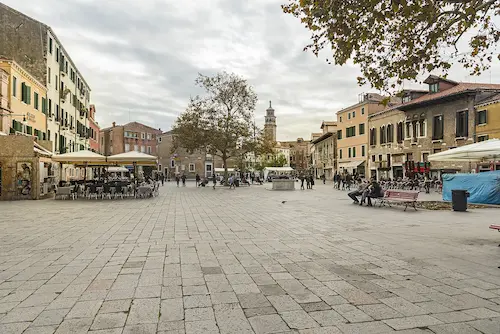
November in Venice
High13°C / 56°F
Low7°C
Rain121mm / 11 rainy days
Sun5.8 h/day
Daylight10 h/day
Humidity80%
Crowds●●○○○Prices●○○○○
November is Venice's quietest and cheapest month, with highs around 13°C, the year's heaviest rainfall, and acqua alta at its annual peak. The Festa della Salute (21 November) is the most authentic local festival of the year, with a temporary pontoon bridge across the Grand Canal to the basilica. The Art Biennale closes on 22 November. Bring waterproof boots and check the morning tide alarm, and you get an almost tourist-free city for a third less.
The vibe November is Venice at its most local and least touristy, candlelit Salute pilgrims, foggy canals, and hotels at their cheapest. Acqua alta is the genuine catch, but it is manageable and rarely lasts more than a couple of hours. For atmosphere per euro, no month beats it.
Don't miss The Festa della Salute (21 November) sees Venetians cross a temporary pontoon bridge from Zattere to the Salute basilica by candlelight, the most atmospheric and authentic local festival of the year.
Crowd drivers Only the Festa della Salute weekend (21 November) brings any real crowd, and it is almost entirely local. Otherwise the lowest visitor numbers of the year.
In season Castradina, a smoked-mutton soup eaten only around the Salute feast, appears on bàcaro menus, alongside the return of winter radicchio and cuttlefish-ink risotto.
Heads up 1 November (All Saints') closes most shops. Acqua alta peaks this month; walkways go up in St Mark's at 80cm and a pharmacy boot pair beats a souvenir overshoe.
The cheapest month: hotels from about 90 euros, roughly 34% below the rest of the season. The Salute weekend (21 November) is the one local exception.
Events this month
⛪ ReligiousFeast of the Salute Festa della Salute
Nov 21
21 November every year.
A temporary pontoon bridge spans the Grand Canal from Zattere to the Salute basilica, and Venetians make a candlelit pilgrimage to give thanks for deliverance from the 1631 plague.
The most authentic local festival of the year, barely touristy, and the most atmospheric way to experience the Salute basilica.
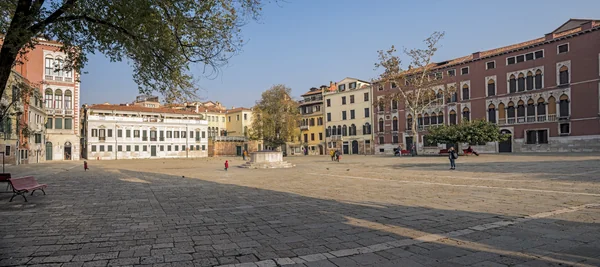
December in Venice
High9°C / 47°F
Low3°C
Rain67mm / 8 rainy days
Sun5.2 h/day
Daylight9 h/day
Humidity83%
Crowds●●○○○Prices●●○○○
December is quiet winter Venice with a festive overlay: highs around 9°C, frequent fog, and acqua alta still active. The small Campo Santo Stefano Christmas market and canal-side mulled wine give it a romantic, uncrowded glow, nothing like the scale of a German market but almost tourist-free by comparison. New Year brings a brief surge and a fireworks crowd in St Mark's. Outside the holiday spikes, this is low-season Venice at its most atmospheric.
The vibe December away from Christmas and New Year is empty, foggy, romantic Venice for low-season prices. The little Santo Stefano market will not rival Frankfurt, but a glass of mulled wine with a canal view and almost no crowd is the point. The holiday days themselves are the one pricey, busy window.
Don't miss The Campo Santo Stefano Christmas market runs from early December, small but atmospheric. Winter fog over the Grand Canal and an almost-empty city on weekdays make this the most evocative low-season Venice.
Crowd drivers Christmas week and New Year's Eve are the only busy, expensive stretches; a fireworks crowd fills St Mark's on the 31st. The rest of the month is firmly low season.
In season Hearty winter cooking takes over: radicchio risotto, baccalà mantecato on grilled polenta, and warming bowls of pasta e fagioli in the bàcari.
Heads up 25 and 26 December close all museums and run vaporetti on an emergency timetable; 8 December (Immacolata) closes most shops. Acqua alta remains a risk.
Base December runs 100-160 euros, but Christmas and New Year spike 50-80% above November levels.
Events this month
🎭 CarnivalCarnival of Venice Carnevale di Venezia
Jan 31 – Feb 17 ~
Roughly the 18 days before Lent, ending on Shrove Tuesday (Martedì Grasso). Dates move each year with the Easter calendar: it typically falls between late January and late February.
Eighteen days of masked balls, costumed processions and street theatre across the whole city. Highlights are the opening Festa Veneziana on the water, the Festa delle Marie procession, and the Martedì Grasso finale.
A one-of-a-kind world event: come 1-2 February for the costumes without the worst crush, and avoid the shoulder-to-shoulder final weekend of 14-17 February unless the chaos is the point.
Frequently asked questions
What is the best time to visit Venice?
Mid-September to mid-October is best for most travellers: 19-24°C, the summer heat broken, crowds 30-40% below the August peak, the Art Biennale still open until 22 November, and the free Regata Storica on 6 September. Hotels run 150-260 euros, well under the 320-550 euros of July and August.
What is the cheapest time to visit Venice?
November is the cheapest month, with hotels from about 90 euros, roughly 34% below the rest of the year. Early January is nearly as low before Carnival demand builds. The trade in both cases is the chance of acqua alta and cold, foggy days, easily planned around with the city's five-day tide forecast.
What is the worst time to visit Venice?
July and August. Temperatures hit 30-35°C with over 75% lagoon humidity, peak days bring 50,000-plus day-trippers, cruise ships funnel crowds onto St Mark's Square, and hotels run 320-550 euros. Around Ferragosto (15 August) many local restaurants also close for up to two weeks, thinning out the authentic side of the city.
When is Carnival in Venice in 2026?
Carnevale runs 31 January to 17 February 2026, drawing 2-3 million visitors over 18 days. Come 1-2 February for the costumes without the worst crush, and avoid the 14-17 February final weekend if you dislike crowds. Hotels in Carnival week jump 80-120% above the January base, so book up to six months ahead.
What is the weather like in Venice in winter?
Winter highs sit around 8-9°C in January and December, with frequent lagoon fog and a damp chill that feels colder than the numbers. Snow is rare. Acqua alta peaks in November and stays a risk through December. The upside is the cheapest, quietest Venice of the year, with sub-10-minute queues at the Doge's Palace.
Is October a good time to visit Venice?
October is one of the best months: 19°C highs, golden light, the famous lagoon nebbia, and crowds well down from summer. Hotels run 150-230 euros, 30-40% below peak. The catch is rising rain from mid-month and the first acqua alta, so pack a waterproof. The Biennale Arte runs on and the Venice Marathon falls on 25 October.
What is acqua alta and when does it happen?
Acqua alta is high tide pushed up by wind, not rain, flooding low areas like St Mark's Square when the level passes about 110cm. The season is October to March, peaking in November and December. The MOSE barriers now block the worst events; smaller ones still occur. Check venezia.maree.it each morning and keep pharmacy rubber boots handy.
Do I have to pay an entry fee to visit Venice?
Day-trippers pay an access fee on Fridays to Sundays, 8:30 am to 4 pm, from 3 April to 26 July 2026, plus the full weeks of 27 April to 1 May and 1-7 June. It is 5 euros booked by the Wednesday before, 10 euros after. Staying overnight in the old town is free but still requires registration. No QR code risks a 50-300 euro fine.
How many days do you need in Venice?
Two to three days covers the main city and one lagoon island trip to Murano or Burano comfortably. Allow a fourth day if you want the Biennale, the Lido beach in summer, or a slower pace through the quiet Cannaregio and Castello quarters. A single day is enough only for St Mark's, the Rialto and a vaporetto down the Grand Canal.
When is the best time to ride a gondola in Venice?
Early morning (before 9 am) or golden hour after 7 pm give the calmest canals and best light, away from the midday crush. Fares are fixed at 90 euros per 30 minutes by day and 110 euros after 7 pm, for up to five people. Ask for a route through the quiet Dorsoduro or San Polo back canals rather than the busy Grand Canal.

Any month, any day: your guide is already there
Whatever date you pick, a private human guide gets pricier and harder to book on weekends, holidays and in peak season. Our live AI guide, the one that walks with you and answers anything you ask out loud, works the opposite way.
One flat price, every day
No holiday, weekend, night or peak-season surcharge. A private guide in Venice runs well over 100 euro for a half day, and more on holidays. Ours stays the same.
Available the moment you want it
Start at midnight or at dawn, on Christmas, in the snow, in the August heat. No sold-out high season, no booking weeks ahead.
Your pace, no meter running
Pause for a long lunch, restart after dark, repeat a stop. The tour simply waits for you.
Free to try, a fraction of the cost
Test it for free, then a transparent flat price that undercuts any private guide, in every season.
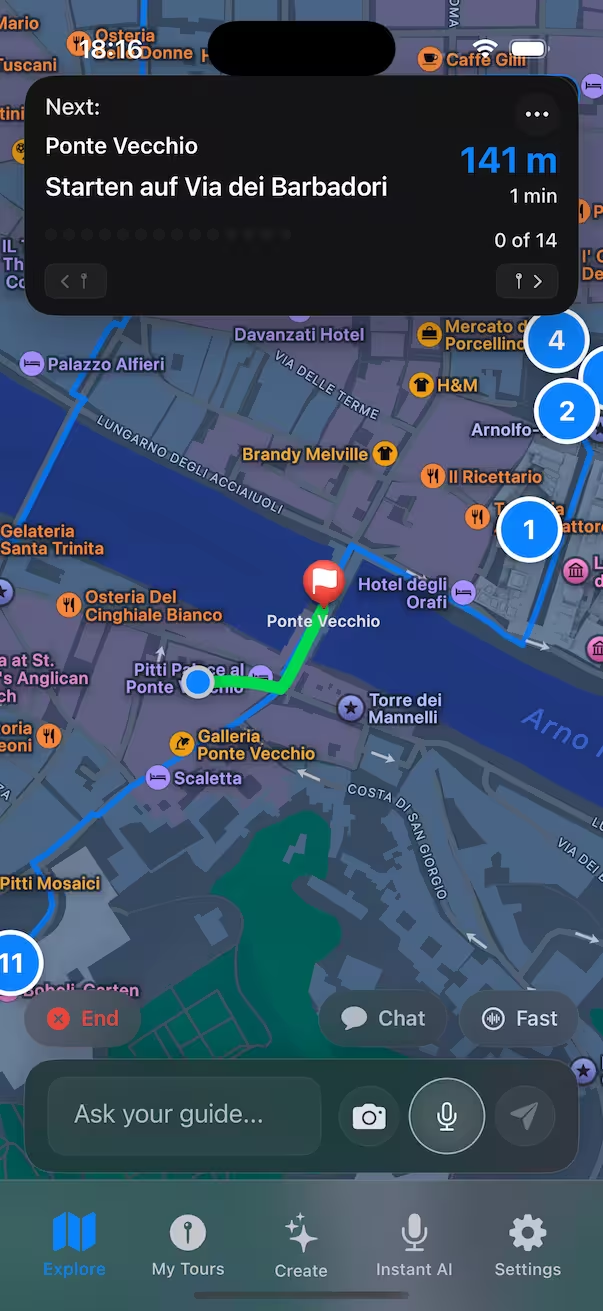
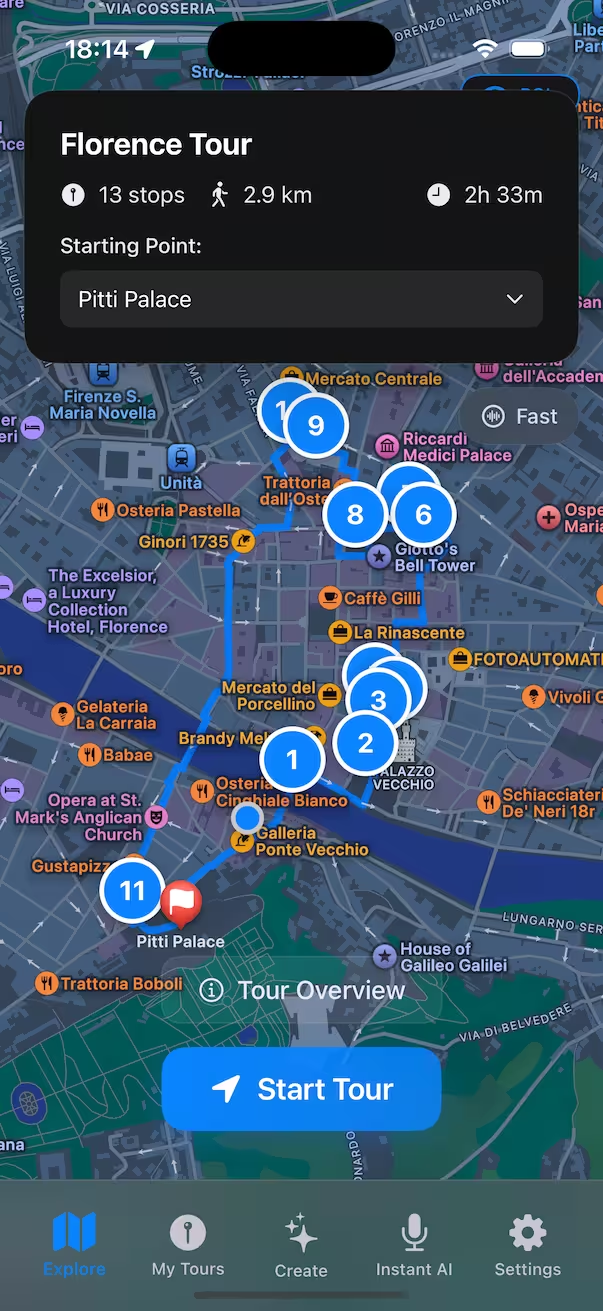
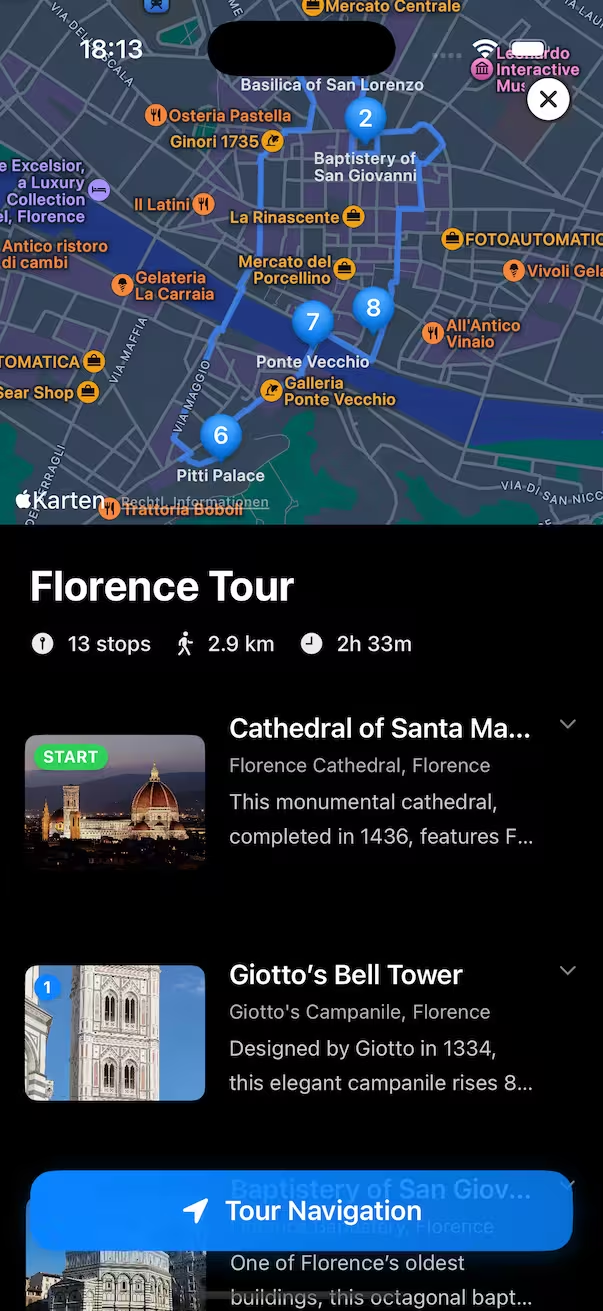
The classic Venice tour: 16 stops, 4.2 km, about 4 h on foot
Your live AI guide and the self-guided Venice route, together in your browser.