
Venice to Trieste Day Trip: Train, Times & Day Plan
The direct train is the clear winner here, trading canals for Habsburg cafés and a sea-facing square in about two hours, and leaving you a flat 10-minute walk from Piazza Unità d'Italia. Here is the honest day plan, with fares, and a free, self-guided walking tour for the hours on the ground.
The Quick Answer: Venice to Trieste
The smart way from Venice to Trieste is the direct train, and on this route the choice barely needs making. A single Regionale Veloce runs from Venezia Santa Lucia to Trieste Centrale in about two hours five to two hours ten, with no changes, roughly hourly across the day, for somewhere between €10 and €20 one-way. From Trieste Centrale it is a flat 10-minute walk south along the waterfront into Piazza Unità d'Italia, the great sea-facing square where our tour begins. Trieste is the longest of the classic Venice day trips and also the most different: this is a former Habsburg port where the coffee is more Vienna than Venice and the whole feel changes the moment you step off the train. It is worth it if you want a change of world, not just a change of city. Just start early, because the two hours each way are real.
| Question | Answer |
|---|---|
| Fastest journey time | About 2h5 to 2h10 direct, no changes, on the Regionale Veloce. Watch out for the slow 3h route via Udine |
| Frequency | Roughly hourly, 11 to 14 direct trains a day, from about 5 a.m. to 8 p.m. |
| Price from | About €10 to €20 one-way on the Regionale Veloce, a fixed regional fare, no advance booking needed |
| Operators / how | Trenitalia. The direct trains from Santa Lucia are all Regionale Veloce; the Frecce leave only from Mestre |
| First / last | First direct trains from ~5 a.m.; a generous window, with the last useful return around 8 p.m. from Trieste |
| Worth it as a day trip? | Yes, for the culturally curious. Trieste Centrale is a 10-min walk to Piazza Unità, and the old core is tiny |
Is the Venice to Trieste Day Trip Worth It?
Here is the honest verdict first: yes, but Trieste asks more of you than Verona or Padua, and it pays you back in a different currency. Two hours each way is a real commitment, so this is not the trip for a lazy start. What you get for the travel is a city that does not feel Italian in the usual way at all. Trieste spent decades as the great seaport of the Austro-Hungarian empire, and it still wears that history: monumental stone squares that open straight onto the Adriatic, grand literary cafés where people sit for an hour over a tiny cappuccino, a canal cutting into a neoclassical grid, and a Roman theatre wedged between apartment blocks. It reads like a slice of Mitteleuropa that someone parked next to the sea.
The best of Trieste, stop by stop


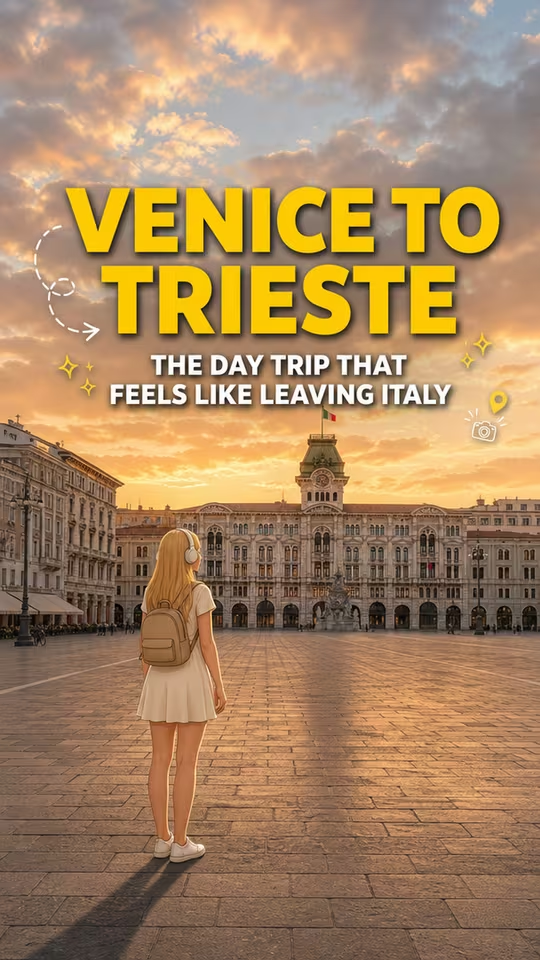
The "absolutely go" case is about atmosphere. The old core is genuinely tiny, squeezed on a flat strip between the water and a steep karst hill, so you can walk the whole thing in an afternoon without a bus or tram. Piazza Unità d'Italia alone justifies the ride, the largest sea-facing square in Europe, ringed by heavy Habsburg palaces on three sides with the open gulf on the fourth. Locals call it the salotto, the living room of Trieste, and after one visit you understand why.
A café culture more Viennese than Italian, a square that opens onto the sea, and a Roman theatre hidden in the old town. Nowhere else in Italy feels quite like this.
The "give it more time" camp is not arguing against going, only against pretending two hours each way is nothing. Trieste rewards a slow sit as much as a walk: a coffee that turns into two, the wind coming off the karst, the sense of a place that is really about lingering. If you only have two or three days in Venice, the closer trips punch harder per hour, and plenty of seasoned travellers will tell you to stay in Venice rather than spend four hours on trains.
If a two-hour train each way sounds like most of your day, save Trieste for an overnight. It is a slow-sit city, not a checklist.
Our call: if you have a full free day and you can catch a train by about 8 a.m., go. The sights sit within a ten-minute walk of one another, so the compact core delivers even on limited hours. The one group that should hesitate is anyone still short on time in Venice itself, or anyone who wants an easy half-day. For those, Verona, Padua, or the lagoon islands are closer and lighter. But if you are curious about the strange, wonderful crossroads where Italy, the Balkans, and old Austria meet, nothing else on the Venice day-trip list comes close.
Good fit if you...
- Have a full free day and can leave Venice by mid-morning
- Have already seen Venice and want somewhere that feels like a different country
- Love café culture, sea views, and quiet old towns
- Are happy to trade two closer trips for one distinctive one
Skip it (save it for an overnight) if you...
- Still need more time in Venice itself
- Want a quick, light half-day trip
- Would rather not spend four hours on trains
- Are chasing big-hitter museums or nightlife
How to Get from Venice to Trieste by Train
You can reach Trieste from Venice a few realistic ways, and here the obvious pick is also the right one. The direct train wins on almost every count: no changes, city centre to city centre, and a flat walk into the old town at the far end. The car is faster on paper but you cannot drive onto the Venice islands at all, and the bus is a false economy that lands you on the wrong island.

| Mode | Time | Price | Verdict |
|---|---|---|---|
| Direct train (Regionale Veloce) | 2h5 to 2h10 | €10 to €20 | WINNER. Direct Santa Lucia to Trieste Centrale, no changes, 10-min flat walk to Piazza Unità |
| Frecce (from Venezia Mestre) | ~2h, plus getting to Mestre | €20 to €40+, reserved | Only leave from Mestre, not Santa Lucia. Save maybe 10 min but add the trek out to Mestre first. Not worth it here |
| Car | 1h35 to 1h40 / 160km | fuel + A4 tolls | Fast in theory, but you cannot drive into Venice. Park at Mestre and you may as well take the train |
| FlixBus / coach | ~2h | €40 to €80 | Every 3 to 4 hours, and arrives at Tronchetto, not Santa Lucia, so you still need a vaporetto into town |
| BlaBlaCar rideshare | ~2h10 | about €18 | The cheapest option, but infrequent and dependent on a driver being posted for your day |
The reason the train wins is geography as much as speed. The Regionale Veloce runs Venezia Santa Lucia, in the heart of Venice, to Trieste Centrale, with no changes, and the last stretch runs prettily along the top of the Adriatic near the coast into Trieste. Trieste Centrale is a terminus on Piazza della Libertà, a flat ten-minute stroll from Piazza Unità along the seafront, so you step off the train and walk straight into the city. No parking, no ZTL fine, no transfer from an out-of-town bus island. The catch worth knowing up front: the express Frecce do not serve Santa Lucia at all, they only leave from Venezia Mestre on the mainland, so the direct trains from the island are all Regionale Veloce.
Direct, downtown to downtown, and scenic along the coast at the end. On this route the train is not just the best option, it is barely a contest.

The Train in Detail
One train type does the real work on this corridor: the Regionale Veloce, Trenitalia's fast regional service. It runs Venezia Santa Lucia to Trieste Centrale direct in about two hours five to two hours ten, roughly hourly across the day, with 11 to 14 departures from around 5 a.m. to about 8 p.m. The fare is a fixed regional price, generally €10 to €20 one-way depending on the exact service, with no reservation and no assigned seat. That is the whole pitch: turn up, buy a ticket, sit where you like, and enjoy the same coast view whichever seat you grab. There is no food car, so bring a coffee and a snack for the ride. Toilets are on board.
The one thing to get right is which Regionale you board. Two different regional routes connect the cities. The fast one runs down toward the coast (passing Trieste Airport) in about two hours. The slow one loops inland via Udine and takes about three hours for the same €-range ticket. They can look almost identical on the departure board, so the tell is the journey time: a roughly 2-hour service is the fast one, a roughly 3-hour service is the Udine detour. Always check the duration before you buy, because an accidental three-hour ride eats a chunk of your day at both ends.
The express Frecce are a red herring on this route. They only depart from Venezia Mestre, the mainland station, not from Santa Lucia on the island, and they require a reservation and cost more. To use one you would first have to get yourself out to Mestre, and the time saved over the direct Regionale Veloce is only around ten minutes. For a day-tripper starting in central Venice, that maths does not work. Stick with the direct Regionale Veloce from Santa Lucia.
The fast route or the slow one, which to take?
There is really only one right answer, but it is worth spelling out because the two trains share the same fare and can be confused at a glance. The fast Regionale Veloce is the one every day-tripper wants. The slow route via Udine exists mainly for people actually going to Udine, and it costs you a full extra hour each way for nothing.
| Compare | Fast Regionale Veloce | Slow regional (via Udine) |
|---|---|---|
| Route | Down toward the coast, via Trieste Airport | Inland loop via Udine |
| Time | about 2h5 | about 3h |
| Price | €10 to €20, fixed | Similar fixed fare |
| How to spot it | ~2h journey time on the board | ~3h journey time on the board |
| Best for | Every day-tripper | Nobody heading straight to Trieste |
Two things trip up first-timers on the regional train. First, if you buy a paper ticket, validate it in the small green or white machines on the platform before boarding; the fine for an unstamped regional ticket is large. A digital ticket bought through the Trenitalia or Trainline app validates automatically for your chosen departure, so a phone ticket saves the worry. Second, some trains stop at Venezia Mestre on the mainland one stop before the island, so on the way out leave from Santa Lucia, and on the way home make sure you board a train that terminates at Santa Lucia, not one that stops short at Mestre.
Booking Strategy
There is refreshingly little to overthink here, because the Regionale Veloce has no reservations and a fixed fare, but a few moves still save time and money.
Just buy the Regionale Veloce, but buy the fast one. The fixed regional fare does not spike with demand, so there is no advantage to booking weeks ahead. The single decision that matters is picking the roughly 2-hour service over the roughly 3-hour Udine route. Check the journey time, not just the departure time.
Buy in the right place. Use the official Trenitalia app or the Trainline app, which holds your ticket as a QR code on your phone and, for the regional fare, validates it automatically for your chosen train. You can also buy at the ticket machines and windows in Santa Lucia. The cruise-and-day-trip crowd buys at the station without trouble.
Look for a day-return. Trenitalia sometimes sells same-day round trips at a small saving, which is exactly the structure a day-tripper wants. Check for it when you book.
Stack a profile discount if you qualify. Trenitalia runs youth, senior, and family fares that can shave a little off. Worth a glance before you settle, though on an already-cheap regional fare the saving is modest.
Booking checklist
- Pick your date and aim for a morning departure, ideally a train that leaves Santa Lucia by about 8 a.m.
- On the timetable, choose a direct Regionale Veloce with a roughly 2-hour journey time, not a roughly 3-hour one via Udine.
- Buy a digital ticket so it auto-validates, or buy paper and stamp it on the platform before boarding.
- Add any youth, senior, family, or day-return discount you qualify for.
- Save the QR-code ticket to your phone, and on the way back aim for the second-to-last direct train, not the very last.
Trieste in One Day
Here is the part most day-trip guides bury, and it is the whole point: you do not need to plan a route. You step off at Trieste Centrale, walk the flat ten minutes south along the waterfront into Piazza Unità d'Italia, and the moment the sea opens up in front of that huge Habsburg square, you open our free self-guided Trieste tour and start it right there. The voice guide takes the planning off your hands and walks the city with you, stop by stop, so you are never standing on a corner wondering which way the canal is. No transfer, no map-squinting, no logistics. That short, flat walk in is exactly why the train beats every other option, and it is the reason a two-hour ride still leaves you a genuinely full day.

The time math
Catch a direct train around 8 a.m. and you are standing in Piazza Unità by about 10, coffee time. The window is generous at both ends, with direct trains from around 5 a.m. and the last useful return leaving Trieste in the 8 p.m. range, so you can stay for an early dinner and watch the square's pavement lights come on. After you subtract the two rides, a proper lunch, and a coffee that will inevitably run long, you have roughly six to eight useful hours on the ground with an 8 a.m. start. That is plenty for a city whose historic core you can cross on foot in twenty minutes. The trick is not to rush the coffee. Trieste is small enough that one loop covers everything without a single backtrack, so the walking is easy and the sitting is the point.
What you'll see
Here is what a day-tripper should not miss, with the practical reality attached:
- Piazza Unità d'Italia (free, open 24/7): the largest sea-facing square in Europe, 12,280 square metres, ringed by the town hall and grand 19th-century palaces with the open gulf on the fourth side. Skip the overpriced terrace cafés here; better coffee waits up the route. Note the bronze studs in the pavement that light up blue after dark.
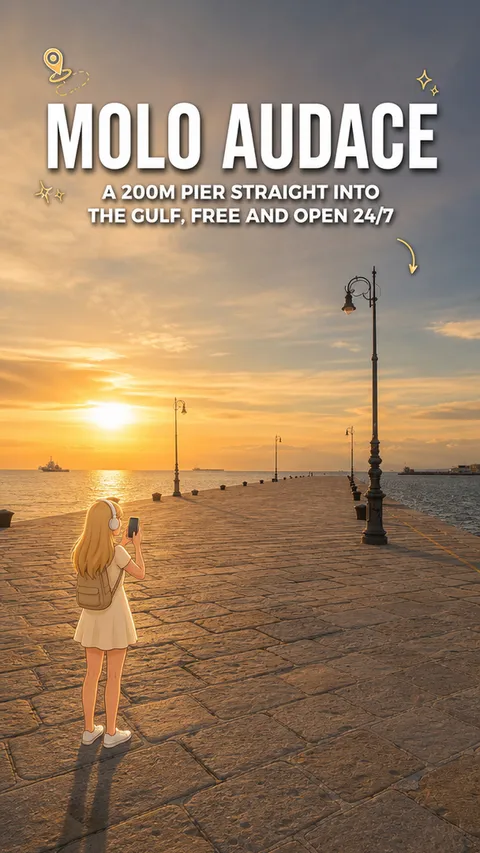
- Molo Audace (free, open 24/7): a stone pier reaching roughly 200 metres straight into the harbour, the single best free thing in Trieste. Walk to the tip, turn around, and the whole waterfront skyline lines up with San Giusto hill above it. Come at sunset if you can.
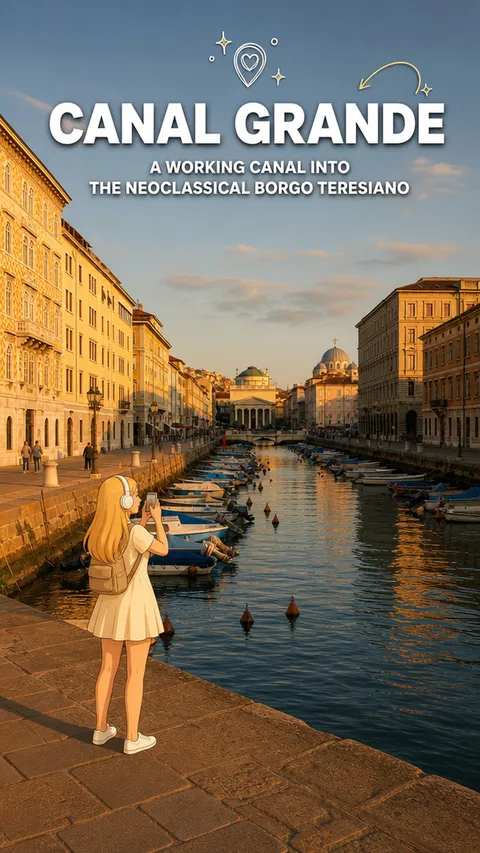
- Canal Grande & the Joyce statue (free): a working canal cut into the neoclassical Borgo Teresiano, closed at its inland end by the columned church of Sant'Antonio Nuovo, with James Joyce cast in bronze mid-stride on the Ponterosso bridge. The postcard shot is from the Ponte Rosso facing the church, best mid-morning.
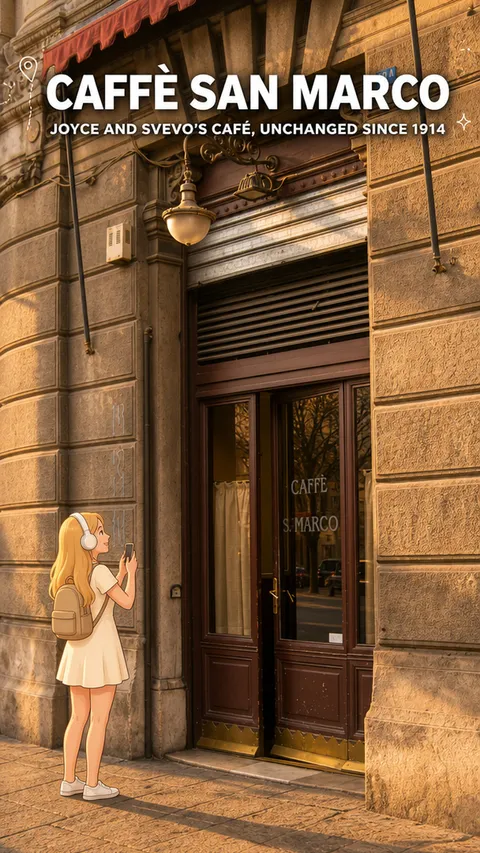
- Caffè San Marco (coffee a few euros, Via Battisti 18, roughly 8:30 to 22:30): a literary café unchanged since 1914, all painted ceilings and marble tables, once the meeting room of Italo Svevo and James Joyce. Sit down, order at the table, and pay for the atmosphere. This is the right place to splurge, not the square.
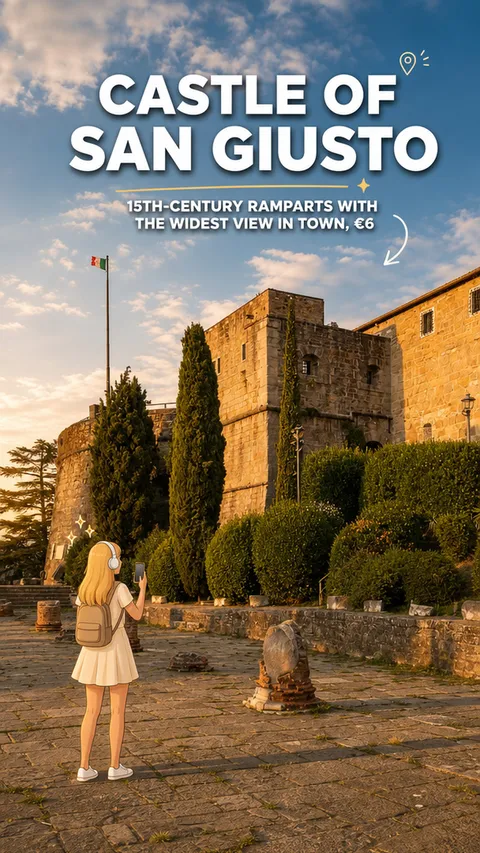
- Castle of San Giusto (€6, daily 9:00 to 18:00): the 15th-century hilltop fortress whose Lalio bastion ramparts give the widest panorama in Trieste, the whole city stacked below with the gulf beyond. The Lapidario Tergestino inside holds the Roman carvings dug out of the city.
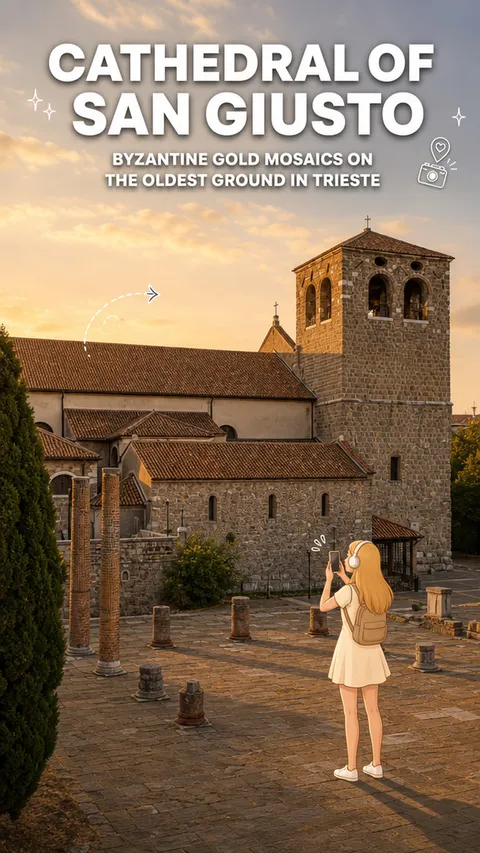
- Cathedral of San Giusto (free, 7:30 to 18:30 Mon to Sat, Sun from 12:30): right beside the castle on the oldest ground in town, with Byzantine-style gold mosaics in the apses that are easy to miss from the street and are the reason to step inside. Cover your shoulders.
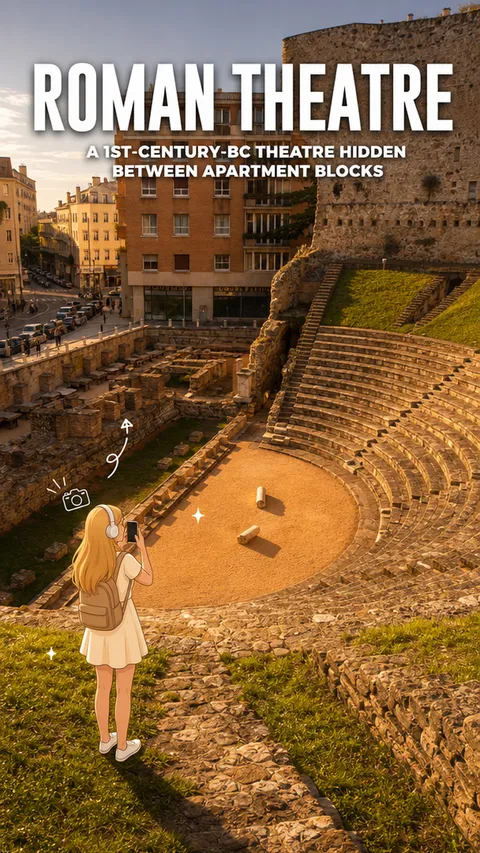
- Roman Theatre (free, viewed from the railings): a 1st-century-BC theatre wedged between apartment blocks at the foot of the hill, once holding 3,500 to 6,000 spectators, lost under later houses until 1938. You view it from Via del Teatro Romano above; five minutes is plenty.
- Revoltella Museum (€8, 10:00 to 19:00, closed Tuesdays): Italy's oldest gallery of modern art, in a baron's sumptuous palazzo on Piazza Venezia. Skippable on a fast loop, but the best indoor stop if it rains.
The route the tour walks with you
Instead of a generic "see the square, then the castle" list, you walk one efficient loop and the tour walks it with you. This is the real eight-stop route, a clean circle that front-loads the flat waterfront and saves the short climb for the second half, then drops you back at the square. Because the tour can be launched from any of its stops, you never backtrack to find an official start, you simply begin where you are standing:
- 1Piazza Unità d'Italia Your entry point · Free
The great sea-facing square where you arrive from the station, opening straight onto the gulf. Stand with your back to the palaces and the water is right there, no railing. Then head inland toward Piazza Venezia.
- 2Revoltella Museum €8 · closed Tue
A block inland, the palazzo Baron Revoltella left to the city in 1869, now Italy's oldest modern-art gallery. Go in for an hour, or admire the facade and move on if time is tight, then turn back toward the seafront.
- 3Molo Audace Free · open 24/7
The 200-metre pier out into the harbour. Walk to the tip for the classic gulf-and-skyline view, then follow the riva east to where the water cuts inland.
- 4Canal Grande Free
The working canal into the Borgo Teresiano, boats still moored, the Joyce statue on the Ponterosso bridge and Sant'Antonio Nuovo closing the view. Grab a quick espresso standing at a bar counter, then head to the literary café.
- 5Caffè San Marco Coffee stop
Push through the door at Via Battisti 18 and you step into 1914. Sit at a marble table, order a coffee, and rest your legs, because the next stop is the climb.
- 6Castle of San Giusto €6
The streets steepen to the 15th-century fortress on the hilltop. Go up onto the Lalio bastion ramparts for the widest view in the city, the whole town below and the gulf beyond.
- 7Cathedral of San Giusto Free
A few steps away on the same hilltop, the cathedral marks the oldest ground in Trieste. Step inside for the Byzantine gold mosaics in the apses, then start back down the hill.
- 8Roman Theatre Free
The last stop is a surprise: a Roman theatre built into the lower slope, wedged among later buildings. View it from the railings above, then it is a short downhill walk back to Piazza Unità, closing the loop where you began.

It runs in your browser, no app and no download. A voice guide walks the loop with you and leads a real conversation as you go: it greets you, tells the story between stops, asks what you actually want to see, and adapts. It is not a recording and not an audioguide. The map and step-by-step navigation get you from each stop to the next.
That whole loop is our free, self-guided Trieste walking tour, and because it can be launched from any of its stops, you do not backtrack to find an official start, you just begin where you are. You open it the moment you reach Piazza Unità and start the loop at the square. It runs in your browser, with no app and no download. A voice guide walks the route with you and holds a real conversation as you go: it greets you, tells the story between stops, asks what you actually want to see, and adapts to your answers. It is not a recording and not an audioguide. The map and step-by-step navigation get you from the pier to the canal up to the castle without squinting at Google Maps. See the full route on the Trieste walking tour page, and you get 100 free credits to try it.
Insider Tips for the Trieste Day Trip
The single biggest rookie error on this route is a boarding mix-up, not a sightseeing one. On the way out, leave from Venezia Santa Lucia, the station on the Grand Canal, and on the way back make sure you board a train that terminates at Santa Lucia, not one that stops short at Venezia Mestre on the mainland. The second trap is the slow 3-hour Regionale via Udine, when the fast 2-hour one is sitting a few slots away on the board. After those, the mistakes are small and easy to dodge.
Do
- Take the direct Regionale Veloce from Santa Lucia, and check it is the ~2h service, not the ~3h Udine one
- Leave from Venezia Santa Lucia, on the island, not Mestre
- Validate a paper regional ticket before boarding, or buy a digital one that auto-validates
- Drink your coffee the Trieste way: a "capo in b" at a bar counter, standing
- Save the sit-down coffee splurge for Caffè San Marco, before the hill climb
- Start early; the two-hour ride each way is real
Don't
- Don't board a train that terminates at Venezia Mestre on the way home
- Don't trek out to Mestre for a Frecce that only saves about ten minutes
- Don't sit for coffee on Piazza Unità unless you accept the location markup
- Don't try to cram Trieste and a second town into one day
- Don't wear sandals for the stepped lanes up to San Giusto
- Don't skip the cathedral mosaics; they are easy to miss from the street
If you want the city's postcard, add Miramare Castle, the fairy-tale white palace on a cliff over the sea about 5 km up the coast. It is not on the walking loop and needs a short hop out: bus 6 from Trieste Centrale (roughly 20 minutes, a €1.45 city ticket), or a taxi. The 22-hectare botanical park is free; the castle interior runs about €10 (reduced fares for over-65s and children, under-6s free), open into the early evening in summer, and a visit with the park takes 1.5 to 2 hours. It is a beautiful add-on if you have the hours, but on a tight day it is the first thing to cut, since the round trip eats a good chunk of the afternoon.
Trieste's signature weather hazard is the bora, a fierce northeast wind that can gust hard along the open seafront and out on Molo Audace. On bora days hold onto loose items, watch your footing on the pier, and expect the exposed waterfront to feel much colder than the sheltered lanes. The climb to San Giusto is on stone lanes and a few stepped sections that get slippery when wet, so wear shoes with grip.
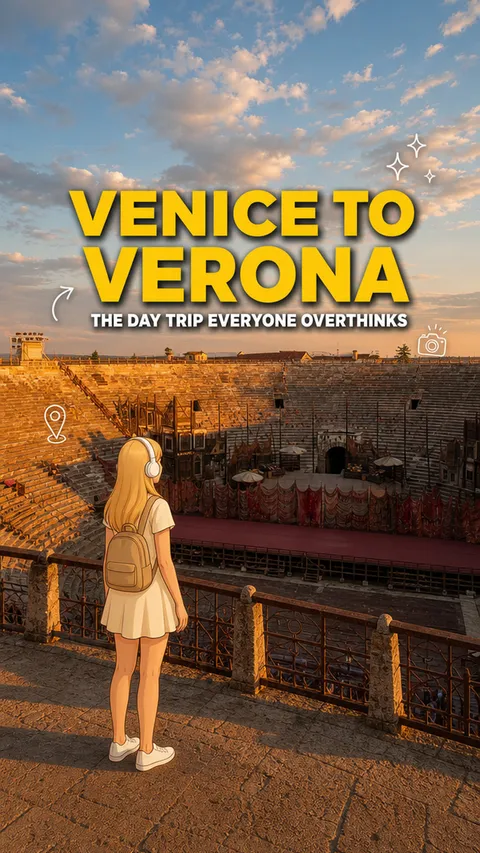
More day trips from Venice
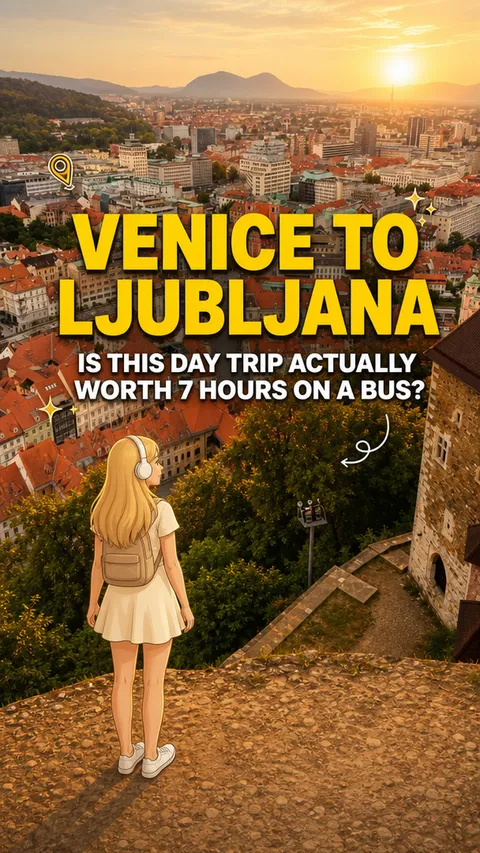
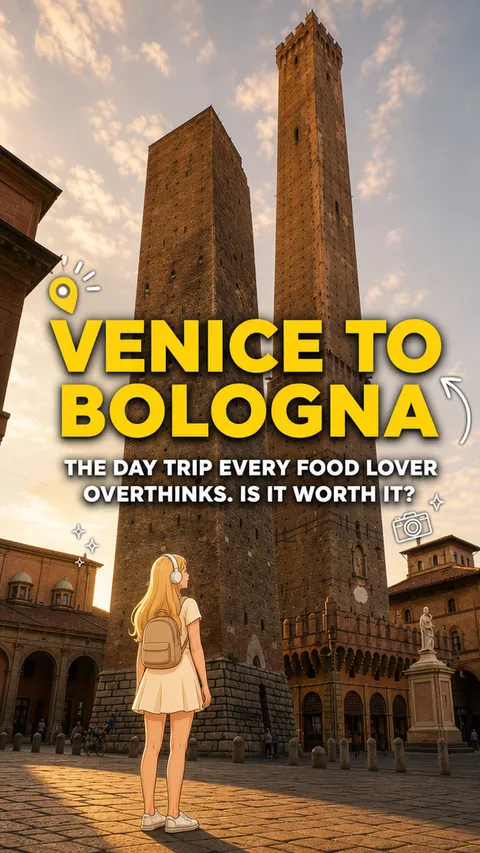
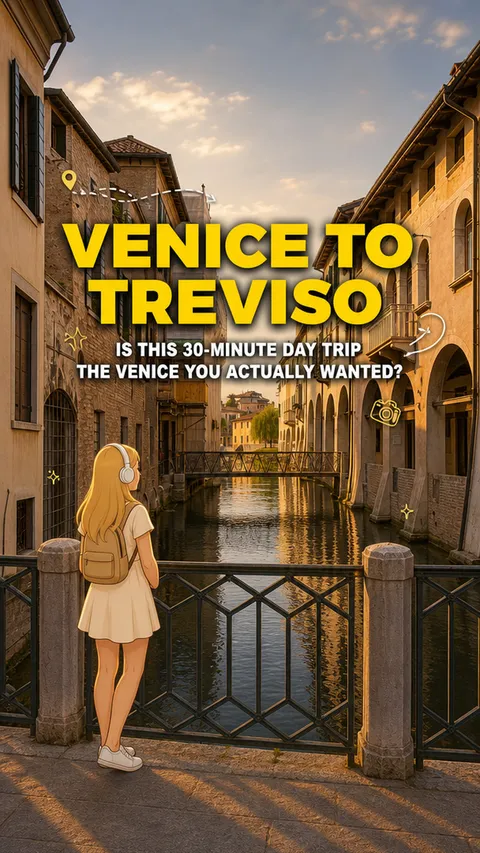
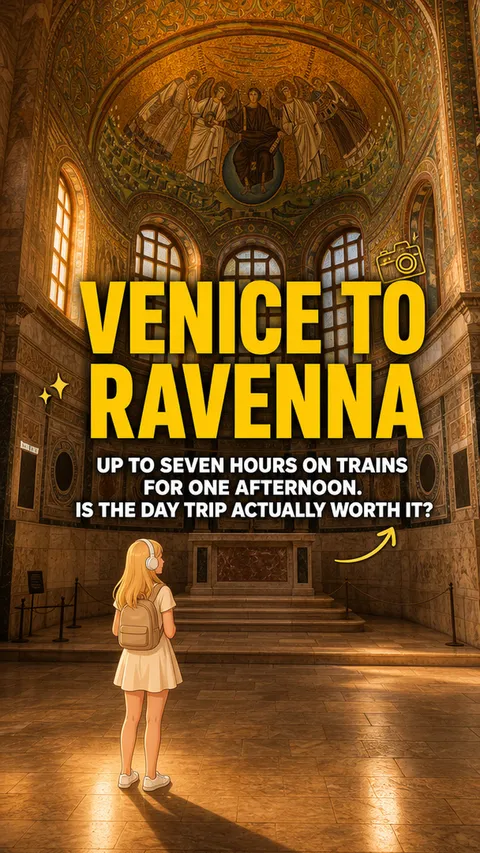
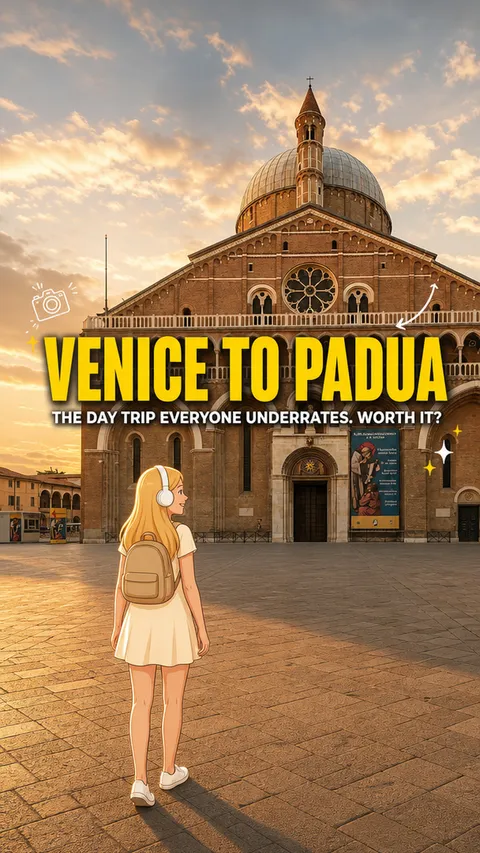
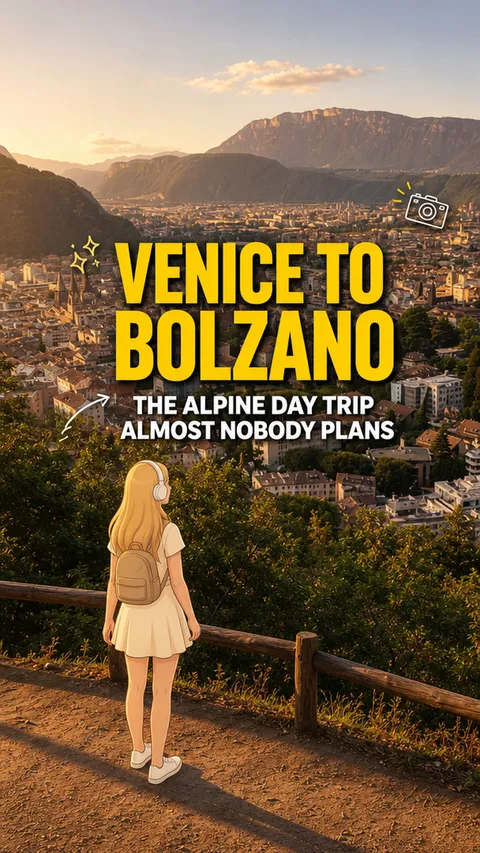
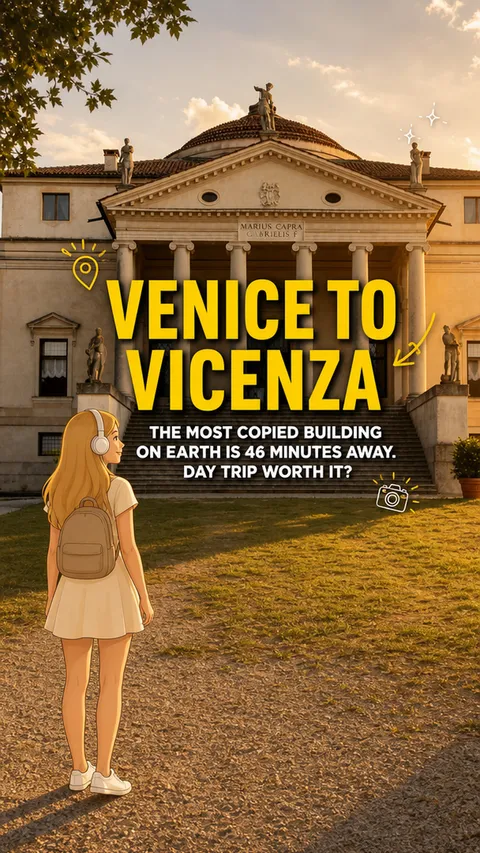
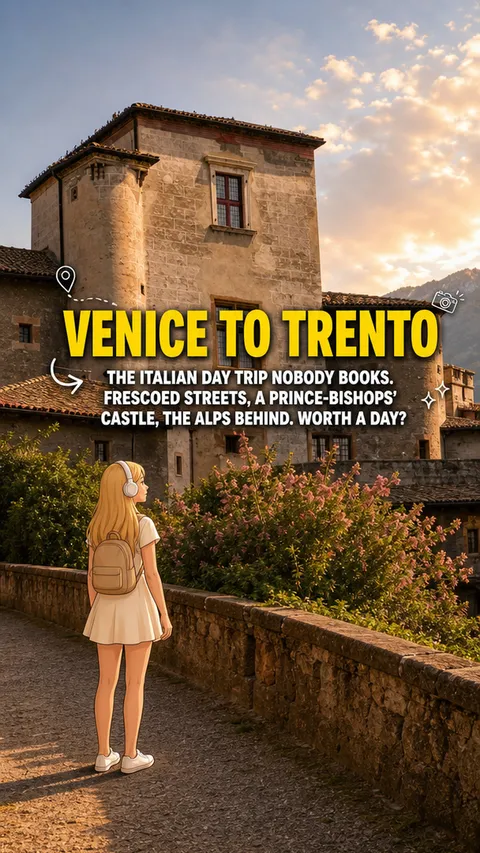
Out in the morning, back in time for dinner. Every route here fits in one full day.
What the Venice to Trieste Journey Feels Like
This is the part no timetable can give you. The thing people remember about Trieste is that it does not feel like the rest of Italy at all. You leave the canals and the crush of Venice and, two hours later, step into a city of monumental stone squares, coffee-house calm, and sea wind that feels like it belongs to another country. It half does. This was the empire's great southern port for over sixty years, and the Austro-Hungarian grandeur is still everywhere in the architecture, the café rituals, and the mix of Italian, Slovenian, and German you catch on the street. Walk out of the station and the first impression is not Mediterranean chaos but a kind of stately, wind-swept order.
The coffee is the moment most people do not expect. Here you do not down an espresso standing at the bar and leave. People sit with a newspaper and make a small cappuccino last. Order a "capo in b", a macchiato served in a little glass, and you are already speaking the local dialect of coffee. Do it once at a bar counter for the price of a euro or so, then do it properly at Caffè San Marco, where the painted ceilings and marble tables have not changed since 1914 and Joyce and Svevo once held court. The city was a genuine literary hub, and it still moves at reading-a-book speed.
Then there are the details that stick. Piazza Unità opening straight onto the water with no railing between you and the Adriatic, the bronze studs in its pavement glowing blue once night falls. The end of Molo Audace at sunset, when half the city walks out to watch the sun drop into the gulf and the bora, on a good day, holds off. The bronze James Joyce mid-stride on the little bridge over the canal, as if he might keep walking home. Trieste, the beautiful, faces the sea, city of the wind and the literary cafés, and on a clear evening it feels exactly like that.
After the square and the pier, the best move is the oldest one: climb the lanes to San Giusto, walk the castle ramparts, and take in the whole city from above with the gulf spread out beyond. Duck into the cathedral for the gold mosaics, find the Roman theatre hidden among the houses below, then drop back to the square for one last coffee before the train. You came to Italy, and Trieste is the corner of it that will surprise you most.
Venice to Trieste: Your Questions Answered
Can you do Trieste as a day trip from Venice?
Yes, though it is the longest of the classic Venice day trips. The direct Regionale Veloce is about two hours each way, Venezia Santa Lucia to Trieste Centrale, and the station is a flat ten-minute walk from Piazza Unità. With an early start you cover the square, the pier, the canal, a historic café, and the castle hill comfortably in a day. Many people just wish they had stayed a night.
How long does the train take from Venice to Trieste?
About two hours five to two hours ten on the direct Regionale Veloce, with no changes. Be careful to pick that fast route: a second regional service loops inland via Udine and takes around three hours for a similar fare, so check the journey time before you buy.
How much does the train cost?
The Regionale Veloce is a fixed regional fare, generally in the €10 to €20 range one-way depending on the exact service, with no advance booking and no reserved seat. Prices change, so check Trenitalia or Trainline for your date, but there is no demand-based spike to beat by booking early.
Should I take the regional train or a Frecciarossa?
Take the Regionale Veloce. On this route the express Frecce only leave from Venezia Mestre on the mainland, not from Santa Lucia, they need a reservation and cost more, and they save only around ten minutes once you factor in getting out to Mestre. For a day trip starting in central Venice, the direct Regionale Veloce from Santa Lucia is the clear pick.
Where does the train leave from and arrive?
It leaves Venezia Santa Lucia, the station on the Grand Canal on the island itself, and arrives at Trieste Centrale on Piazza della Libertà, a flat ten-minute walk north of Piazza Unità along the waterfront. On the way home, board a train that terminates at Santa Lucia, not one that stops at Venezia Mestre, the mainland station one stop before the island.
Do I need to book in advance?
No. The Regionale Veloce needs no reservation: buy it on the day at the station or in the app, validate it, and ride. Because the fare is fixed rather than dynamic, booking ahead does not save money on this train.
What should I not miss in one day?
Piazza Unità d'Italia and the walk out to the end of Molo Audace, the Canal Grande with the Joyce statue, a coffee at Caffè San Marco, and the climb to the Castle of San Giusto for the view, with the cathedral mosaics and the hidden Roman theatre right beside it. Miramare Castle is a beautiful add-on if you have the hours, but it needs a short bus or taxi ride out of the centre.
Is Trieste worth visiting, or is it just a long train ride?
It is genuinely worth it, as long as you know what it is. Trieste does not have Verona's Roman arena or Padua's Giotto frescoes. Its appeal is atmosphere: the Habsburg squares, the café culture, the sea light, the sense of standing at a crossroads of Europe. If that sounds like your kind of day, nothing else near Venice feels like it. If you only have two or three days in Venice, though, save it for a longer trip.
When is the best time to go?
Late spring and early autumn are ideal for mild weather and calmer seas. Summer is warm and good for the waterfront, though it can be busy. Winter brings the bora, which can howl along the seafront and make the exposed pier bracing, so check the forecast and dress for it. The café-and-museum core works year-round whatever the weather.
Plan Your Trieste Day Trip
You have the train sorted, and that is the easy part on this route. Now make the hours on the ground count. The eight-stop loop above is our free, self-guided Trieste walking tour, and because it starts from any stop, you launch it the second you reach Piazza Unità from the station. Open it and start walking with 100 free credits.
Before you go, two more things worth a look:
- When to visit Trieste: the best months, the sea season, and how the bora wind shapes the year, so you pick the right day for your trip.
- More day trips from Venice: if you have a second free day, the Veneto is full of easy rail day trips, from Verona and Padua to the quiet canals of Treviso.
---
