
Venice to Verona Day Trip: Train, Times & Day Plan
The fast train is the easy winner here, swapping canals for Roman ruins in just over an hour and leaving you a 15-minute walk from the Arena. Here is the honest day plan, with fares, and a free, self-guided walking tour for the hours on the ground.
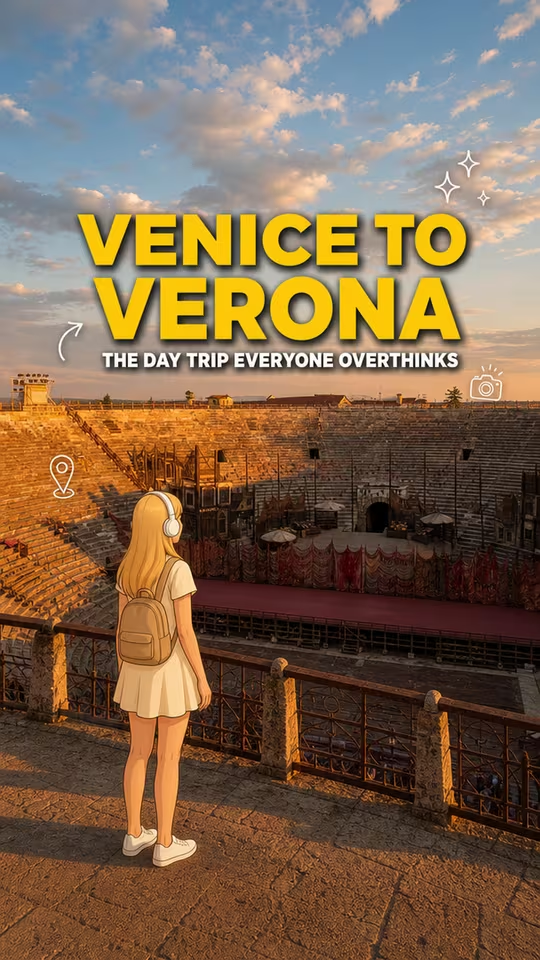
The Quick Answer: Venice to Verona
The smart way from Venice to Verona is the fast train, and on this route there is barely an argument to be had. A Frecciarossa or Italo high-speed service runs from Venezia Santa Lucia to Verona Porta Nuova in about 1 hour 10 minutes, with no changes, leaving roughly every 20 to 30 minutes through the day, for around €10 to €40 one way depending on how far ahead you book. From Porta Nuova it is a flat 15-to-20-minute walk (or a short taxi) into Piazza Bra and the Arena. As a day trip Verona is genuinely easy, compact, and worth it. The only catch most people hit is overthinking the logistics when there is almost nothing to overthink.
| Question | Answer |
|---|---|
| Fastest journey time | ~1h10 to 1h13 by Frecciarossa or Italo high-speed, direct. ~1h28 by Regionale Veloce |
| Frequency | Every 20 to 30 min on the high-speed line all day. Regionale Veloce roughly hourly |
| Price from | High-speed €10 to €40 (book ahead for the floor). Regionale Veloce about €10 flat |
| Operators / how | Trenitalia (Frecciarossa) and Italo, plus Trenitalia Regionale Veloce. All run Santa Lucia to Porta Nuova |
| First / last | First fast trains from ~7 a.m.; last sensible return around 8 to 9 p.m. from Verona |
| Worth it as a day trip? | Yes. Porta Nuova is a 15-min walk to the Arena, and the whole old town is walkable in one day |
Is the Venice to Verona Day Trip Worth It?
Here is the honest verdict first: yes, Verona is one of the best day trips you can do from Venice, and the people who love it most are the same ones who will tell you a single day leaves you wanting one more. Both are true. The swap is the whole appeal. In just over an hour you trade the canals, the crush, and the Byzantine glitter of Venice for Roman ruins, wide piazzas, and hilltop views over a green bend of the Adige River. Verona is smaller, calmer, more relaxed, and noticeably cheaper than Venice, and it never feels like it is trying too hard.
The best of Verona, stop by stop


The "absolutely go" case is simple. The train is fast and frequent, the station is a short walk from the center, and the old town packs four thousand years of history into a space you can cross on foot in half an hour. The Arena alone justifies the ticket, a first-century Roman amphitheater so intact it still seats fifteen thousand people for summer opera.
Just over an hour each way, a flat walk into the center, and a Roman arena that still hosts opera. A focused day delivers it.
The "give it more time" camp is not arguing against going, only against rushing. Verona rewards lingering: a coffee in a frescoed square, an aperitivo by the river, the quiet streets behind the Duomo, the marble that shimmers under the lights at night when the day-trippers have gone. A day skims the top of all that.
If you can spare a night, stay over. The light on the marble after dark is a different city.
Our call: if you have a spare day in Venice and you get a reasonably early start, go. The headline sights, the Arena, Piazza delle Erbe, Juliet's balcony, the Torre dei Lamberti, and the river bridges, all sit a short walk from one another, so a single day genuinely delivers the city. The one camp that should hesitate is the one still short on time in Venice itself. If Venice is the trip and you have only a few days, give Venice those days. But nobody should skip Verona waiting for a perfect future trip that may never come.
Good fit if you...
- Have a free day in Venice and can leave by mid-morning
- Want a different, Roman side of northern Italy
- Love compact, pedestrian-friendly historic centers
- Want a fast, cheap, no-fuss ride downtown to downtown
Skip it (save it for an overnight) if you...
- Still need more time in Venice itself
- Want to linger over every church, museum, and aperitivo
- Are chasing nightlife (Verona is quiet after dark)
- Want a Lake Garda or Valpolicella road trip instead
How to Get from Venice to Verona by Train
You can reach Verona from Venice six realistic ways, and unlike most routes the obvious choice is also the right one. The high-speed train wins, and the cheaper Regionale Veloce is a strong budget runner-up. Almost everything else is a downgrade.

| Mode | Time | Price | Verdict |
|---|---|---|---|
| High-speed train (Frecciarossa / Italo) | ~1h10 to 1h13 | €10 to €40, book ahead | WINNER. Direct, Santa Lucia to Porta Nuova, 15 min to the Arena |
| Regionale Veloce (fast regional) | ~1h28 | about €10 flat | The budget pick. Only ~15 min slower, no advance booking needed |
| Regionale (slow regional) | 2h16 to 2h22 | about €10 | Avoid. Same price as the Veloce and far slower |
| FlixBus | ~1h40 | €35 to €60 | Leaves from Tronchetto, not Santa Lucia. Slower and dearer than the train |
| Itabus | ~2h10 | from €1.59 | The cheapest seat going, but slow and only twice a day, from Tronchetto |
| Car / BlaBlaCar | ~1h14 to 1h40 | tolls + parking, or ~€26 rideshare | Only worth it if you are adding Lake Garda or Valpolicella |
The reason the train wins is not just speed, it is geography. The high-speed service runs direct from Venezia Santa Lucia, in the heart of Venice, to Verona Porta Nuova, with no changes, and from Porta Nuova you walk a flat fifteen to twenty minutes straight up Corso Porta Nuova into Piazza Bra. No parking, no ZTL fines, no transfer from an out-of-town bus station. The buses, by contrast, leave from Tronchetto island, which means first getting yourself out to Tronchetto before you even start, and they are both slower and, in FlixBus's case, more expensive than the train. The car only earns its keep if you are turning the day into a Lake Garda or wine-country loop.
Direct, downtown to downtown, hourly and then some. The train is not just the best option here, it is barely a contest.

The Train in Detail
Two kinds of train cover this corridor and both are good. The high-speed services, Trenitalia's Frecciarossa and Italo's NTV trains, run Venezia Santa Lucia to Verona Porta Nuova direct in about 1 hour 10 to 1 hour 13 minutes. Frecciarossa runs frequently through the day; Italo runs less often but is just as quick and comfortable. Both drop you at Porta Nuova, the main station a quarter-hour walk south of the Arena, with a taxi rank right outside if you would rather not walk.
The budget alternative is the Regionale Veloce, Trenitalia's fast regional train. It takes about 1 hour 28 minutes, runs roughly hourly, and costs around €10 flat with no advance booking and no assigned seat. That is the whole pitch: for a flat ten-euro fare you give up barely fifteen minutes against the high-speed train. Many of these regional trains are double-deckers, so climb to the upper level for the view across the Veneto plain. One firm rule: take the Veloce, not the plain Regionale, which crawls the same route in well over two hours for the same money.
The honest note on price is that high-speed fares are dynamic. The €10 floor is a book-ahead price; leave it to the same week and you can pay €25 to €40 or more at peak times. That is exactly why the Regionale Veloce is such a useful backstop. If the fast fares have climbed, the flat regional ticket wins on value, and you lose almost no time.
Frecciarossa or Regionale Veloce, which to book?
It comes down to how far ahead you are planning. Booking early, the Frecciarossa or Italo is barely more than the regional and saves you fifteen minutes each way, so take it. Deciding the night before, or on the morning itself, the Regionale Veloce is the smarter buy: a fixed ten-euro fare, no booking, hop on the next one. Both end at Porta Nuova, so the walk into town is identical.
| Compare | Frecciarossa / Italo (high-speed) | Regionale Veloce |
|---|---|---|
| Departs Venice | Venezia Santa Lucia | Venezia Santa Lucia |
| Arrives Verona | Verona Porta Nuova | Verona Porta Nuova |
| Time | ~1h10 to 1h13 | ~1h28 |
| Price | €10 to €40, dynamic, book ahead | about €10 flat |
| Booking | Assigned seat, sells out cheap fares early | No booking, no reserved seat |
| Best for | Planners who book ahead | Same-day flexibility and budget |
If you take the Regionale Veloce on a paper ticket, you must validate it in the small yellow or green machines on the platform before boarding. The fines for an unstamped ticket are large. Trenitalia's digital regional tickets bought through the app validate automatically for your chosen departure, so a phone ticket saves you the worry.
Booking Strategy
There is not much to overthink, which is part of the appeal, but a few moves save real money on the high-speed fares.
Book ahead for the floor fare. High-speed pricing is dynamic and the cheap buckets sell out. The €10 to €19 fares are advance prices. Booked the same week, expect €25 to €40 or more, so book as early as you reasonably can.
Use the day-return discount. Both Trenitalia and Italo sell same-day round trips (andata e ritorno in giornata) at a discount, which is precisely the structure a day-tripper wants. Look for it first.
Stack a profile discount if you qualify. Trenitalia runs FrecciaYOUNG (big discounts for ages 14 to 29), FrecciaSENIOR for over-60s, and free travel for children under 14 with FrecciaFAMILY. Italo has its own youth, group, and advance fares. These can beat even the regional ticket.
Keep the Regionale Veloce in your back pocket. If the fast fares have climbed on your date, the flat ten-euro regional fare is the better value, and you only lose about fifteen minutes.
Buy in the right place. Use the official Trenitalia and Italo apps, or the Trainline app, which holds your ticket as a QR code on your phone. You can also buy at the kiosks in Santa Lucia.
Booking checklist
- Pick your date and a rough morning departure window.
- Compare Frecciarossa, Italo, and the Regionale Veloce for that slot.
- If booking ahead, grab the high-speed day-return fare, then add any youth, senior, or family discount.
- If deciding last minute, buy a Regionale Veloce ticket and validate it (or buy a digital one that auto-validates).
- Save the QR-code ticket to your phone, and on the way back aim for the second-to-last train, not the very last.
Verona in One Day
Here is the part most day-trip guides bury, and it is the whole point: you do not need to plan a route. You step off at Verona Porta Nuova, walk the flat fifteen minutes up Corso Porta Nuova (or take a two-minute taxi) into Piazza Bra, and the moment the Arena fills the square in front of you, you open our free self-guided Verona tour and start it right there. The voice guide takes the planning off your hands and walks the city with you, stop by stop, so you are never standing in a piazza wondering which alley to take next. No transfer, no map-squinting, no logistics. That short, easy walk in is exactly why the train beats every other option, and it is the reason a single day here genuinely works.

The time math
Catch a fast train around 8 a.m. and you are standing under the Arena walls by about 9:30, before the tour buses unload. The last sensible high-speed return leaves Verona in the 8-to-9 p.m. window, and the regional trains run later still, so you can stay for an early dinner and an evening light on the marble. After you subtract the rides, a proper lunch, and the odd ticket queue, you have roughly six to eight genuinely useful hours on the ground. That is plenty for a city you can cross on foot in thirty minutes. The trick is not to rush. Verona is compact enough that a focused loop covers everything without a single backtrack.
What you'll see
Here is what a day-tripper should not miss, with the practical reality attached:
- Arena di Verona (interior about €10; opera season June to September): the first-century Roman amphitheater on Piazza Bra, the third-largest in Italy, still hosting summer opera for crowds of fifteen thousand. The exterior alone is often enough for a quick visit; the ticket line builds by mid-morning.
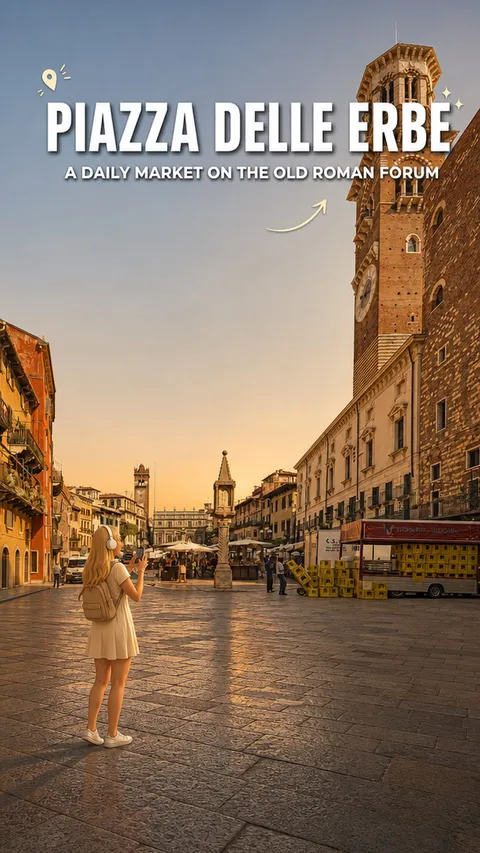
- Piazza delle Erbe (free, daily market): the lively market square built over the ancient Roman forum, ringed by frescoed palaces and medieval towers, with the Madonna Verona fountain at its heart. Watch your bag in the crowds.
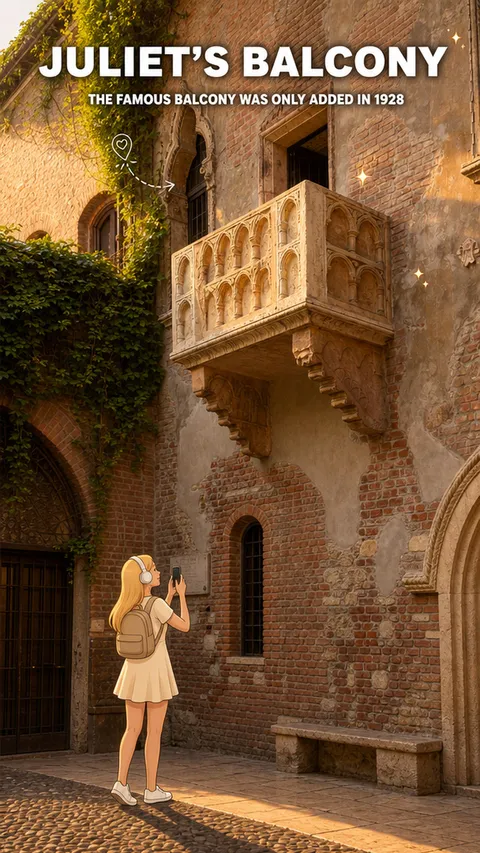
- Casa di Giulietta (courtyard free; house museum around €12, Tue to Sun 9:00 to 19:00, closed Mondays): the thirteenth-century palazzo with the famous balcony, which was actually added in 1928. The courtyard is free and jammed; book the house online if you want to go up.
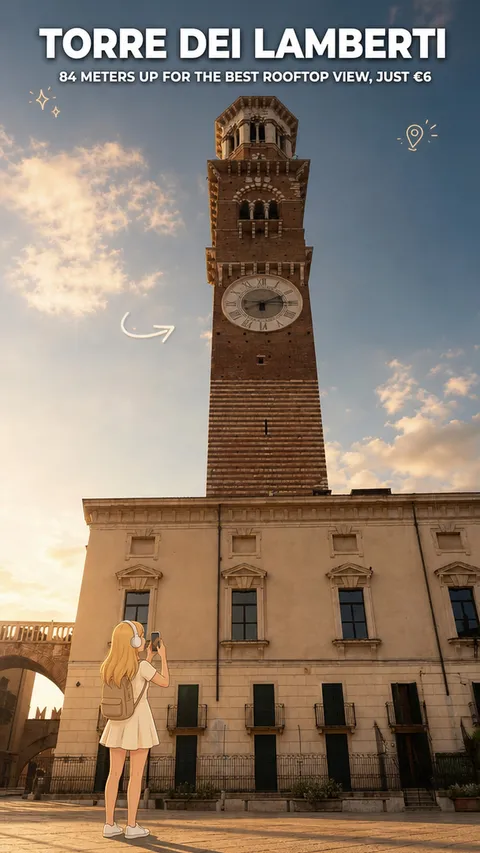
- Torre dei Lamberti (€6, Mon to Fri 10:00 to 18:00, weekends 11:00 to 19:00): the 84-meter medieval tower over Piazza delle Erbe, with a lift most of the way to a 360-degree view over the red rooftops. Online slots can sell out, so check on site too.
- Castelvecchio & Ponte Scaligero (museum ticket; closed Mondays): the red-brick Scaliger fortress on the Adige, with a celebrated museum restored by the architect Carlo Scarpa and a striking fortified bridge you can cross for free.
- Castel San Pietro viewpoint (funicular about €3; summer 10:00 to 21:00): cross Ponte Pietra and ride the short funicular up the hill for the single best panorama over Verona, the river, and the Roman theater below.
The route the tour walks with you
Instead of a generic "see the Arena, then the balcony" list, you walk one efficient loop and the tour walks it with you. This is the real fourteen-stop route, a clean circle that starts and ends at the Arena, so it points you straight back toward your train at the finish. Because the tour can be launched from any of its stops, you never backtrack to find an official start, you simply begin where you are standing:
- 1Piazza Bra & Arena di Verona Arena interior ~€10 · your start
The wide-open square where you arrive from the station, dominated by the pink-stone Roman amphitheater. Snap the Arena from the square, then head northeast down Via Roma toward the river.
- 2San Fermo Maggiore Church Church
An unusual complex of two churches stacked one atop the other, Romanesque below and Gothic above, with a Pisanello fresco and a ship's-keel ceiling inside. A quiet plaza out front to catch your breath.
- 3Casa di Giulietta (Juliet's House) Courtyard free · house ~€12
You will hear the crowd before you see the gum-and-letter-covered passage into the courtyard. The balcony is the photo; the courtyard is free, the house museum a paid extra.
- 4Torre dei Lamberti Climb · €6
The 84-meter striped tower over Piazza delle Erbe, with a lift and a few stairs to the best rooftop panorama in the center. Step through its base straight into the next square.
- 5Piazza delle Erbe Free
Verona's oldest square, built over the Roman forum, busy with market stalls under frescoed facades and the winged Lion of St Mark on its column. Walk slowly through, then duck out under the Arco della Costa.
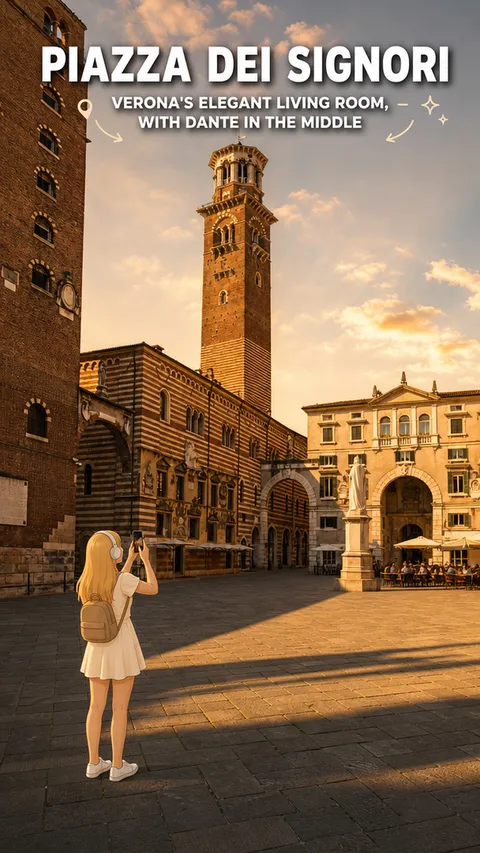
- 6Piazza dei Signori Free
The elegant, quieter square next door, also called Piazza Dante for the poet's statue in the middle, ringed by Renaissance palaces and the frescoed Loggia del Consiglio.
- 7Arche Scaligere (Scaliger Tombs) Free from the street
Five elaborate Gothic funerary monuments to the family who ruled medieval Verona, their spires topped with equestrian statues, all visible through the wrought-iron fence without a ticket.
- 8Basilica di Sant'Anastasia Church · small fee
Verona's largest church, Italian Gothic, holding Pisanello's "St George and the Princess" and the famous carved hunchback holy-water fonts. Then drop down toward the riverbank.
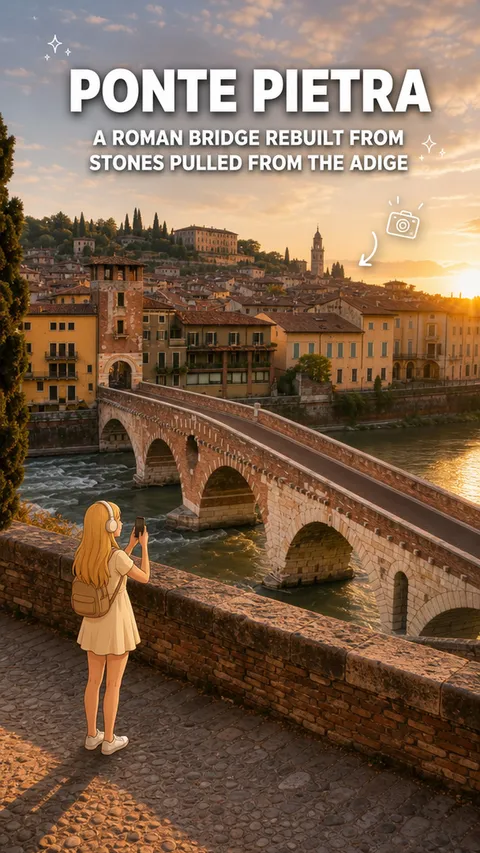
- 9Ponte Pietra Free
The city's oldest bridge, Roman in origin, rebuilt after WWII from its own stones pulled from the Adige. Stop halfway for the view up to the green hills and the Roman theater.
- 10Teatro Romano & Museo Archeologico Museum ticket
The well-preserved first-century-BC Roman theater built into the hillside, with an archaeological museum in the convent above and sweeping views back over the city. Cross back over Ponte Pietra to continue.
- 11Duomo di Verona (Cathedral) Cathedral · small fee
The cathedral of Santa Maria Matricolare, mixing Romanesque and Gothic, with a pink-marble double porch, guardian griffins, and Titian's "Assumption of the Virgin" inside.
- 12Porta Borsari (Roman Gate) Free
A first-century white-limestone Roman gate stranded in a modern street, once the main entrance to the city, its arches still open to passing traffic and pedestrians.
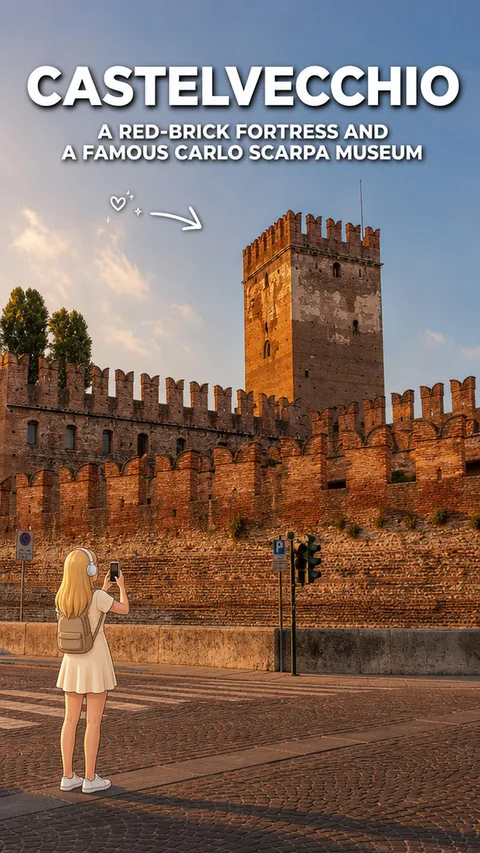
- 13Castelvecchio Museum Museum · closed Mon
The fourteenth-century Scaliger fortress on the river, now a civic museum restored by Carlo Scarpa, with its crenellated towers and the fortified Ponte Scaligero you can cross for free.
- 14Piazza Bra & Arena di Verona Loop closes
Back into the wide square where you started, the Arena now catching the late-afternoon light. A bench under the trees, a last look, then the short walk down to Porta Nuova for the train home.

It runs in your browser, no app and no download. A voice guide walks the loop with you and leads a real conversation as you go: it greets you, tells the story between stops, asks what you actually want to see, and adapts. It is not a recording and not an audioguide. The map and step-by-step navigation get you from each stop to the next.
That whole loop is our free, self-guided Verona walking tour, and because it can be launched from any of its stops, you do not backtrack to find an official start, you just begin where you are. You open it the moment you reach Piazza Bra and start the loop at the Arena. It runs in your browser, with no app and no download. A voice guide walks the route with you and leads a real conversation as you go: it greets you, tells the story between stops, asks what you actually want to see, and adapts to your answers. It is not a recording and not an audioguide. The map and step-by-step navigation get you from the Arena to the river to Castelvecchio without squinting at Google Maps. See the full route on the Verona walking tour page, and you get 100 free credits to try it.
Insider Tips for the Verona Day Trip
The single biggest rookie error on this route is a boarding mix-up, not a sightseeing one. Make sure you leave from Venezia Santa Lucia, the station on the Grand Canal, and on the way back do not jump off at Venezia Mestre thinking you have arrived. Mestre is on the mainland, one stop before the island, and first-timers get caught out by it constantly. After that, the mistakes are small and easy to dodge.
Do
- Take a Frecciarossa or Italo, or the flat-fare Regionale Veloce
- Leave from Venezia Santa Lucia, on the island, not Mestre
- Validate a paper regional ticket before boarding, or buy a digital one
- Walk the flat 15 to 20 min from Porta Nuova, or grab a taxi
- Book Juliet's House online if you actually want to go up
- Start early to beat the tour buses to Piazza Bra
Don't
- Don't get off at Venezia Mestre on the way home; ride one more stop
- Don't board a Regionale Veloce on an unstamped paper ticket
- Don't drive into the center; it is a ZTL with mailed fines
- Don't take the slow plain Regionale; it doubles your travel time
- Don't sit for coffee in Piazza Bra unless you accept the location markup
- Don't try to "do everything"; one day is for the highlights
Move a few streets off Piazza delle Erbe for lunch and you trade the markup and the crowds for somewhere cheaper and closer to how Verona actually eats. This is wine country, so a glass of Valpolicella or a risotto cooked in Amarone is the local move, and the best corners are the ones nobody photographs.
In summer the walk from Porta Nuova is fully exposed and can be a sweaty fifteen minutes in the August heat, so carry water or take the short taxi. And keep your bag zipped and close in the crowds around Juliet's House and Piazza delle Erbe, where pickpockets work the bottlenecks.
More day trips from Venice
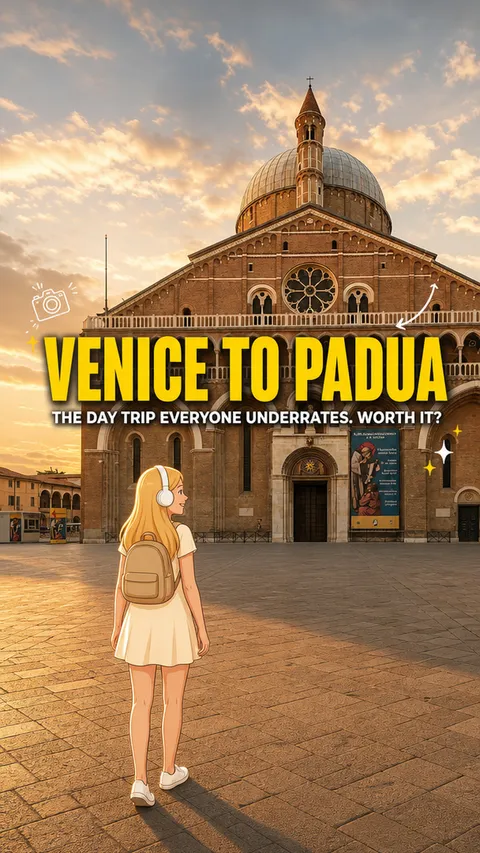
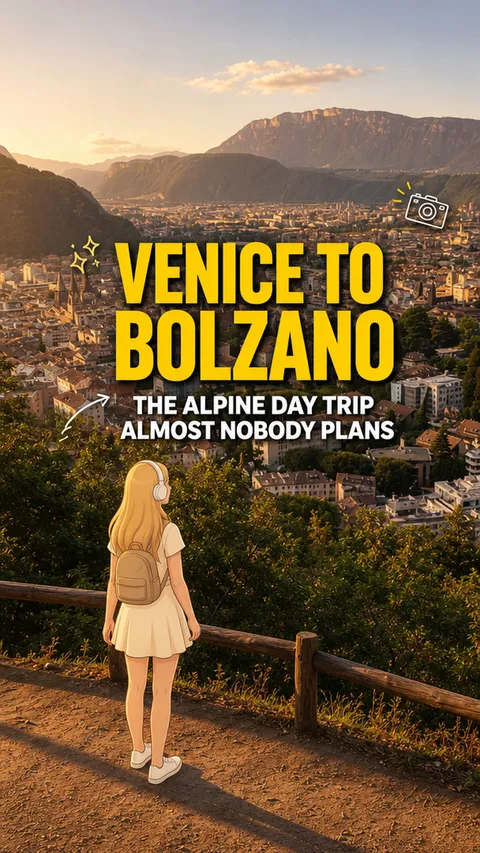
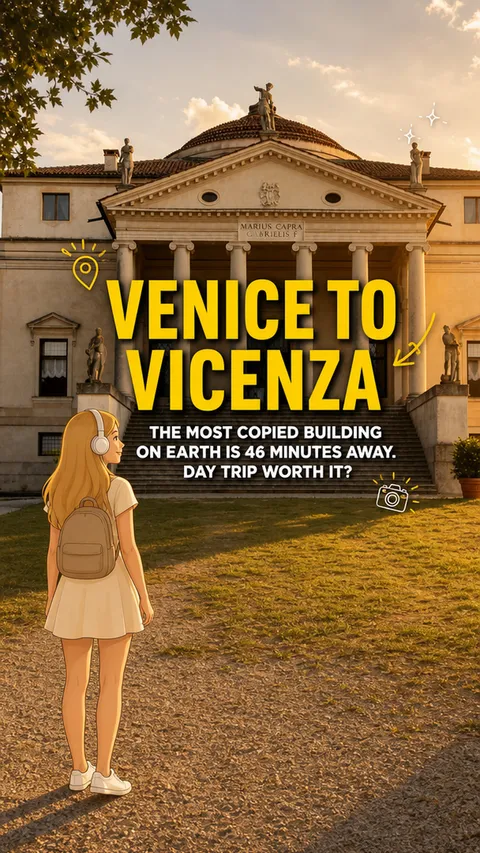
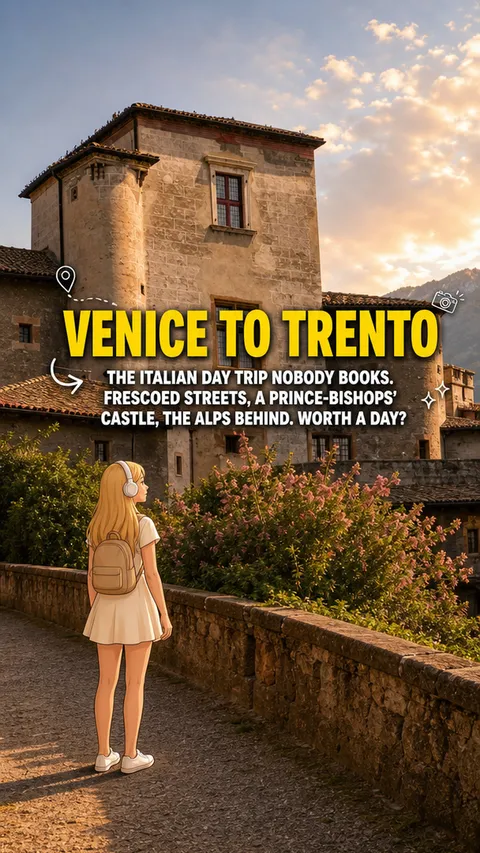
Out in the morning, back in time for dinner. Every route here fits in one full day.
What the Venice to Verona Journey Feels Like
This is the part no timetable can give you. The thing people remember is the swap itself. You leave the canals and the crowds of Venice and, just over an hour later, step into a wide Roman square where the air feels lighter and the pace drops by half. Verona is a small town, and it knows it, and that is exactly why it works as a day. Four thousand years of history sit layered one on top of the other, all packaged in a format you can walk in an afternoon.
The Arena is the moment most people do not expect, even those who think they are tired of ruins. Sit in one of the worn stone tiers and close your eyes and it is genuinely easy to picture it full, fifteen thousand people, gladiators or a modern opera under the lights. It is one of the most atmospheric venues in northern Italy, and it is still in daily use, which is the difference between a monument and a ruin.
Then there are the human details that stick. The handwritten love notes layered on the wall into Juliet's courtyard, fiction and all. The double-decker regional train where you climb to the top deck for the view. The frescoed market square that has been selling produce on the same spot since it was a Roman forum. The marble that, if you do stay into the evening, starts to shimmer under the lights once the day-trippers have drained out.
After the big sights, the best move is the oldest one: cross Ponte Pietra, ride the little funicular up to Castel San Pietro, and take in the whole city from above with the river curling beneath you. Have an Aperol Spritz up there if the timing is right. Then walk back down for a plate of bigoli or a glass of Valpolicella before the train. You came for Italy, and Verona is about as effortlessly Italian as a day trip gets.
Venice to Verona: Your Questions Answered
Can you do Verona as a day trip from Venice?
Yes, easily. The fast train is about 1h10 each way, direct from Venezia Santa Lucia to Verona Porta Nuova, and the station is a 15-to-20-minute walk from the Arena. With an early start you cover the Arena, the squares, Juliet's balcony, and the river bridges comfortably in a day. Most people just wish they had stayed for the evening.
How long does the train take from Venice to Verona?
About 1 hour 10 to 1 hour 13 minutes on a Frecciarossa or Italo high-speed train, with no changes. The cheaper Regionale Veloce takes about 1 hour 28 minutes. Avoid the slow plain Regionale, which takes well over two hours for the same fare.
How much does the train cost?
High-speed fares are dynamic, from about €10 booked well ahead up to €40 or more the same week. The Regionale Veloce is a flat fare of around €10 with no booking, which makes it the better value if the fast fares have climbed.
Should I take the high-speed train or the regional?
Booking ahead, take the Frecciarossa or Italo: it is barely more than the regional and saves about fifteen minutes each way. Deciding last minute, take the Regionale Veloce for its flat €10 fare and same-day flexibility. Both arrive at Porta Nuova, so the walk into town is identical.
Where does the train leave from and arrive?
It leaves Venezia Santa Lucia, the station on the Grand Canal on the island itself, and arrives at Verona Porta Nuova, the main station a flat 15-to-20-minute walk south of Piazza Bra and the Arena. Do not leave from, or return to, Venezia Mestre by mistake; that is the mainland station one stop before the island.
Do I need to book in advance?
For the cheapest high-speed fares, yes, because the cheap buckets sell out and same-week prices run much higher. The Regionale Veloce needs no booking at all: buy it on the day, validate it, and ride. So you can plan ahead for the floor fare or stay fully flexible with the regional train.
What should I not miss in one day?
The Arena di Verona, Piazza delle Erbe and the market, Juliet's balcony, the climb up the Torre dei Lamberti, Ponte Pietra, and the funicular up to Castel San Pietro for the view. Castelvecchio's museum is worth it if you have the time, but note it closes on Mondays.
Is Verona worth visiting, or is it just a tourist trap?
It is genuinely worth it. Juliet's House is the one stop that divides people, since the Shakespeare link is invented and the balcony is modern, but the Roman Arena, the squares, the river bridges, and the hilltop views are the real thing. Skip the balcony if it is not your thing and the day still pays off easily.
When is the best time to go?
Spring and autumn for mild weather and thinner crowds. Summer is hot and busy but brings the Arena opera season, which is a magical evening if you build a late return around it. December adds Christmas markets around the Arena. Verona genuinely works as a day trip in any season.
Plan Your Verona Day Trip
You have the train sorted, and that is the easy part on this route. Now make the hours on the ground count. The fourteen-stop loop above is our free, self-guided Verona walking tour, and because it starts from any stop, you launch it the second you reach Piazza Bra from the station. Open it and start walking with 100 free credits.
Before you go, two more things worth a look:
- When to visit Verona: the best months, the crowd patterns, and the opera season, so you pick the right day for your trip.
- More day trips from Venice: if you have a second free day, the Veneto is full of easy rail day trips, from Padua to the Palladian villas of the plain.
---
