Best Time to Visit Ravenna
Month-by-month weather, crowds and prices, plus a full calendar of festivals and events worth planning a trip around.
Best monthsMay, Sep
CheapestJan, Feb, Dec
AvoidAug
BusiestJul, Aug
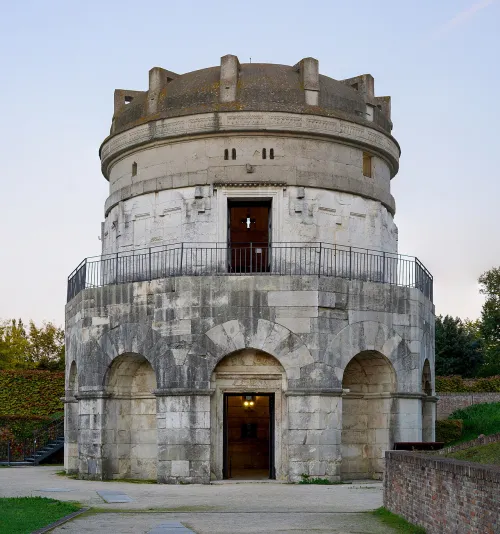
When is the best time to visit Ravenna?
Come in May or September: mild 18-26°C days, all eight UNESCO mosaic sites open with full hours, and hotel rates around 80-130€ instead of summer's 130-190€. May brings Ravenna Jazz and the opening fortnight of the Ravenna Festival; September adds the centuries-old Dante Oil Ceremony and the gentlest light for photographing the golden tesserae. Skip late July and August, when the heat hits 32-35°C with Po Delta humidity, the Galla Placidia queues are at their worst and beach overflow floods the mosaics every afternoon.
Start our tool and find your best time to visit Ravenna
Your perfect month
Free · ~30 seconds
or tap a month directly
What matters to you?
And this?
Best overall: May, Sep. May and September are the real sweet spot: 18-26°C, every site open with full hours, manageable queues and hotels 25-30% below the summer peak. May overlaps Ravenna Jazz and the Ravenna Festival opening; September stacks the Dante Oil Ceremony and the Ammutinamenti dance festival into still-warm 25°C days with the year's most photogenic light.
Best value: Jan, Feb, Dec. January, February and December bring hotel rates at their annual floor (55-80€), no queues anywhere and the first Sunday of each month free at several state sites (Mausoleo di Teodorico, Battistero degli Ariani, Sant'Apollinare in Classe). The trade is short damp grey days and Po Delta fog, but the mosaics are indoors and empty.
Avoid: Aug. August is the year's worst value: 32-35°C with humidity, Galla Placidia on timed entry, beach overflow flooding the sites from midday, the highest hotel prices (130-190€) and the Ferragosto restaurant gap, when many family trattorie close for one to three weeks around 15 August. Worth it only for a specific Mosaico di Notte tour or Festival concert.
- January: Great time, 9°C. Hushed and local, with the post-Christmas lull settling over a city that barely registers tourists. Low winter light on the brick basilicas, and Galla Placidia's vault all to yourself.
- February: Great time, 12°C. Still and grey, an off-season city going about its own business. The penetrating damp cold is more wearing than the actual temperature, but the indoor mosaics make it a non-issue.
- March: Great time, 14°C. Awakening but unhurried, with the first day-trippers from Bologna appearing for the FAI weekend and a literary pulse around Dantedì on 25 March.
- April: Great time, 18°C. Fresh and floral, the Giardini Pubblici near the station in bloom and the Pineta di San Vitale pine forest lush for a walk or a bike ride.
- May: Good time, 22°C. Energised and pleasant, the city buzzing with Ravenna Jazz, the Festival opening fortnight and the Coconino comics festival, yet without the summer heat or crowds.
- June: Good time, 28°C. Lively and warm, with coastal overflow from the Adriatic resorts and the riviera-wide Pink Night packing Marina di Ravenna on the third weekend.
- July: Tough month, 30°C. Hot, humid and crowded, with beach-goers day-tripping in and a sharp afternoon wave at the sites between noon and 5. Evenings stay warm and the Festival closes around 11 July.
- August: Tough month, 30°C. Sweltering and beach-driven, with Marina di Ravenna and Porto Corsini at maximum and an afternoon flood of day-trippers at the city sites. The town itself can feel oddly quiet during Ferragosto.
- September: Great time, 25°C. Warm but calm, with German and Swiss families extending the season and a cultured, unhurried mood around Dante September and the Ammutinamenti dance festival.
- October: Great time, 20°C. Mellow and golden, an autumn city of wine festivals and museum nights with the crowds long gone and prices dropping 25-30% from the summer peak.
- November: Great time, 15°C. Low-key off-season, save for the Maratona di Ravenna weekend, when runners and crowds take over and rates spike. Otherwise the sites are near-empty.
- December: Great time, 10°C. Festive yet calm, with Christmas markets and nativity displays around the squares and quiet weekdays at the basilicas. The low winter light on the brick is at its most atmospheric.
Ravenna weather by month
HighLowRainfall
Jan9°
Feb12°
Mar14°
Apr18°
May22°
Jun28°
Jul30°
Aug30°
Sep25°
Oct20°
Nov15°
Dec10°
| Month | Temp | Rain | Sun | Crowds | Prices | Highlight |
|---|---|---|---|---|---|---|
| Jan | 9° / 2° | 44mm · 7 rainy days | 5.9 h/day | ●○○○○ | ●○○○○ | Theodoric Celebrations |
| Feb | 12° / 3° | 71mm · 10 rainy days | 7.2 h/day | ●○○○○ | ●○○○○ | Theodoric Celebrations |
| Mar | 14° / 5° | 55mm · 8 rainy days | 9.4 h/day | ●●○○○ | ●○○○○ | FAI Spring Days |
| Apr | 18° / 9° | 56mm · 8 rainy days | 10.7 h/day | ●●○○○ | ●●○○○ | Ravenna in Bloom |
| May | 22° / 13° | 91mm · 12 rainy days | 11.3 h/day | ●●●○○ | ●●●○○ | Ravenna Jazz |
| Jun | 28° / 18° | 48mm · 8 rainy days | 13.2 h/day | ●●●●○ | ●●●●○ | Ravenna Festival |
| Jul | 30° / 21° | 57mm · 7 rainy days | 13.4 h/day | ●●●●● | ●●●●● | Ravenna Jazz |
| Aug | 30° / 20° | 50mm · 7 rainy days | 12.3 h/day | ●●●●● | ●●●●● | Mosaics by Night |
| Sep | 25° / 17° | 70mm · 8 rainy days | 10.5 h/day | ●●●○○ | ●●●○○ | Mosaics by Night |
| Oct | 20° / 13° | 59mm · 9 rainy days | 8.3 h/day | ●●○○○ | ●●○○○ | Golden Night |
| Nov | 15° / 8° | 86mm · 10 rainy days | 5.9 h/day | ●●○○○ | ●●○○○ | Ravenna Marathon |
| Dec | 10° / 3° | 57mm · 8 rainy days | 5.3 h/day | ●○○○○ | ●○○○○ | Theodoric Celebrations |
How we score this: weather = long-run climate normals (Open-Meteo), crowds & prices = relative season read, events checked yearly against official dates.
Best time to visit Ravenna: weather, prices & crowds
Best months for good weather
May, Jun, Sep
May, June and September give Ravenna its best balance: 18-28°C, long dry windows and the morning light raking through San Vitale's clerestory windows onto the gold tesserae between about 9:30 and 11. You dodge the July-August furnace, when midday mosaic-hopping at 32-35°C with Delta humidity is genuinely exhausting.
Quietest months to avoid the crowds
Jan, Feb, Dec
January, February and December are deep off-season. There are no school holidays, Italian domestic travel dips and the mosaic sites are almost empty. You can stand alone under Galla Placidia's starry vault, and the low winter sun on the brick basilica exteriors is quietly beautiful.
Cheapest time to visit Ravenna
Jan, Feb, Dec
January, February and December are the annual floor for hotels: a 3-star room in the centre runs 55-80€ a night, against 130-190€ in July and August. Add the free Tomba di Dante and the 1€ Battistero degli Ariani and a winter visit costs almost nothing.
Best time for festivals and events
Jul, Aug, Sep
From late June to early September the Mosaico di Notte runs evening guided tours of the UNESCO monuments by candle and special lighting. Seeing Galla Placidia's blue starry vault glow by candlelight is the single best insider experience in Ravenna. Groups are capped, so the July and August slots sell out in May, book the moment the program goes live at visitravenna.it.
How many days do you need in Ravenna?
One full day is enough to cover Ravenna's core, and a second is a comfortable luxury rather than a necessity. The city is small and flat, and its eight UNESCO mosaic monuments sit close together, making it easy to see the essentials without rushing. A second day lets you linger and add the outliers without feeling hurried.
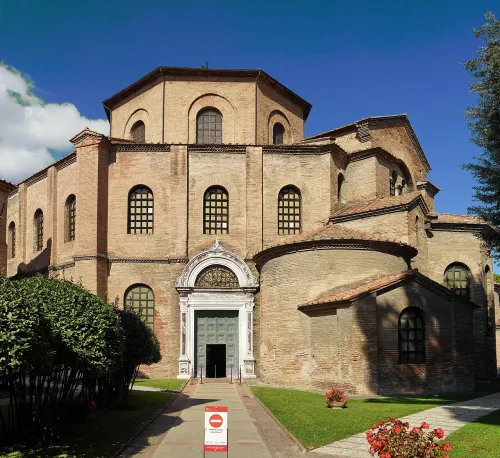
One day
The mosaic circuit in a day
Start at 09:00 at the Basilica di San Vitale, where the clerestory light rakes across the gold tesserae at its most photogenic in the first two hours. Pre-book the 2-euro timed slot at the adjacent Mausoleo di Galla Placidia and go straight after San Vitale. Walk to the Battistero Neoniano near the Duomo, then pause on Piazza del Popolo before finishing at Dante's tomb and the Basilica di Sant'Apollinare Nuovo. The self-guided Ravenna walking tour strings all 9 stops across 5.5 km in about 2.5 hours, covering the Byzantine circuit without backtracking.
Two daysRecommended
Outliers and slow mornings
A second day adds the Mausoleo di Teodorico near the station, the Museo Arcivescovile with its ivory Throne of Maximian, and the Battistero degli Ariani on Via degli Ariani. Go on a weekday morning to the Battistero degli Ariani and you may have the octagonal interior to yourself at 1 euro. In the afternoon, bike the flat 8 km cycle path to Sant'Apollinare in Classe, one of the most scenic rides in Romagna.
Three days
Romagna day trips and Mosaico di Notte
Three days makes sense if you are visiting between late June and early September, when Mosaico di Notte evening tours run. Book the 19:45 San Vitale and Galla Placidia itinerary for a candlelit experience that is the single best insider moment in Ravenna. Use the third day to cycle into the Pineta di San Vitale pine forest or drive to the Po Delta nature reserve, roughly 30 km north, for a complete contrast to the mosaic circuit.
Four days or more
Festival season or a Romagna base
Four or more days works best as a Romagna base: the Adriatic beaches at Marina di Ravenna are 15 minutes east, Faenza's ceramics museum is 30 km west and Bologna is under an hour by train. If you are visiting during the Ravenna Festival (late May to mid-July), extra days let you catch concerts at the Rocca Brancaleone arena on warm evenings without the pressure of fitting everything into a single itinerary.
Best time to visit Ravenna by traveller type
Same city, different trip. Here's the month that fits how you're travelling.
🧭
Best time to visit Ravenna for the first time
MaySep
May or September: mild 18-26°C, all eight UNESCO sites open full hours, shoulder prices (90-130€ in May, 80-120€ in September) and short queues. May adds Ravenna Jazz and the Festival opening week; September adds the free Dante Oil Ceremony on the second Sunday.
❤️
Best time to visit Ravenna for couples
OctMay
Early October for the Notte d'Oro free-museum night, Giovinbacco's Sangiovese festival and the most beautiful low-angle autumn light on the brick basilicas, or late May for long golden-hour mosaic evenings, the Festival opening and intimate dinners in uncrowded restaurants. October hotels drop 25-30% from the summer peak.
💶
Best time to visit Ravenna on a budget
JanFebDec
January, February or December, outside the November marathon weekend: hotel rates at their 55-80€ floor, the Tomba di Dante free, the Battistero degli Ariani Italy's best 1€ mosaic, and the prima domenica gratuita scheme opening several state sites free on the first Sunday of the month.
🍝
Best time to visit Ravenna for food and wine
OctMay
October is the prime month: Giovinbacco is Romagna's big Sangiovese celebration and Caplèt & Friends showcases the local stuffed-pasta cappelletti. Year-round, eat piadina romagnola at the Mercato Coperto and passatelli in brodo; May to September is peak season for brodetto di pesce at Marina di Ravenna.
Worst time to visit Ravenna
August is the year's worst value for Ravenna. Heat reaches 32 to 35 degrees Celsius with Po Delta humidity that makes midday mosaic-hopping genuinely exhausting. Galla Placidia runs on timed entry with groups of just 15, and walk-up tickets are regularly refused. Beach-goers from Marina di Ravenna flood the city sites every afternoon from noon, creating the longest queues of the year. Hotel prices peak at 130 to 190 euros for a 3-star room in the centre, and the Ferragosto closure around 15 August shuts many central trattorie for one to three weeks.
Still worth it for August is worth considering only for a specific Mosaico di Notte tour, which runs to early September and is the single best evening experience in the city, or for a Ravenna Festival concert. Going early, before 11:00, avoids the worst of both the heat and the beach crowd.
Go instead in May, September, when Ravenna is at its best.
Best time for a tour of Ravenna
Ravenna rewards walkers most generously from late March through May and again in September and October, when temperatures sit between 14 and 22 °C, the Adriatic light is long and golden, and the mosaics inside the Basilica di San Vitale glow without the stuffiness of a mid-summer crowd. April and early May bring 8 rain days each, so keep a light jacket to hand, but showers pass quickly and the streets dry fast on Emilian stone. July and August push highs to 30 °C and the city fills shoulder-to-shoulder with visitors, particularly around the Mausoleo di Galla Placidia and the Battistero Neoniano, where queues form before 10 am and the air inside can feel thick with heat and bodies. January is near-empty and cold, barely reaching 9 °C, with darkness falling early; the mosaics are still luminous but the 5.5 km route feels austere. Winter also brings 7 to 10 rain days per month, and walking the open stretch past the Tomba di Dante in February rain is genuinely grim. The sweet spots are clear: the shoulder months deliver mild walking, thinner crowds, and the best light for mosaic photography.
What makes Ravenna particularly well-suited to AI Tourguide is that the whole 9-stop route fits within a relaxed two and a half hours, so you can let the weather dictate your start time rather than a tour operator's fixed departure. On a warm June morning, set off at 8 am when Piazza del Popolo is still quiet and the guide's voice is the only narration you hear inside the baptisteries. The AI guide runs entirely in your browser, no download needed, and it leads the walk properly: it tells you the story of Galla Placidia's life before you step through her mausoleum door, asks what surprises you about the Byzantine colour palette, and shapes what comes next around your answers. When you're ready, start your Ravenna tour and pick the hour that fits the sky outside.

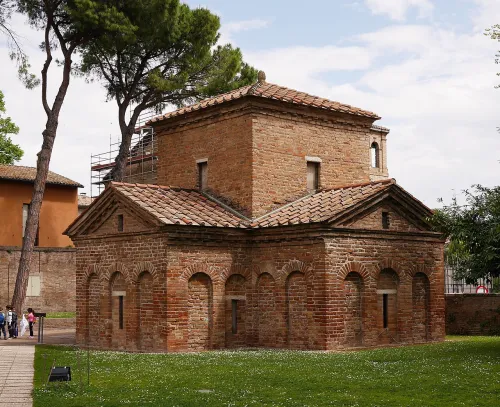
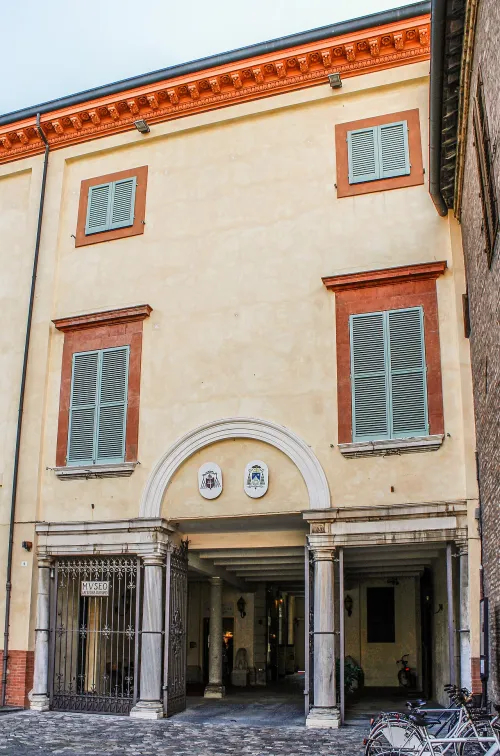 +5
+5All 9 stops are already on the map.
You just press start.
You just press start.
 AI Tourguide
You just read the route.
Now walk it with a guide in your ear.
Press start wherever you are, even hundreds of kilometres from Ravenna, and the guide begins telling its stories right away. In the city, pick any of the 9 stops to start from: it leads you there, then talks with you the whole route, asking, listening, remembering, and shaping the tour around your answers.
9stops5.5km2.5hours11languages
▶Start the tour freeFree to start · Runs in your browser · No app, no download
Ravenna events and festivals calendar
Annual highlights worth timing a trip around, listed month by month.
January
🎨 Art and cultureTheodoric Celebrations Celebrazioni Teodoriciane
Jan–Dec
all year long
Exhibitions, cultural events and symposia honouring the legacy of the Ostrogoth king Theodoric, with enhanced interpretation at the Mausoleo di Teodorico.
March
🎨 Art and cultureFAI Spring Days Giornate FAI di Primavera
Mar 21–22 ~
third weekend of March
Italy's National Trust (FAI) opens normally closed or restricted heritage sites for free, including parts of Ravenna's Byzantine complex over one weekend.
🎨 Art and cultureDante Day Dantedì
Mar 25
25 March every year
The national day for Dante Alighieri, who is buried in Ravenna.
April
🌸 Seasonal natureRavenna in Bloom Ravenna in Fiore
Apr 4–6
first weekend of April
Piazza del Popolo and Piazza XX Settembre fill with florists from across Italy alongside quality crafts and regional food products.
May
🎵 MusicRavenna Jazz
May 2–10
early May, with summer concerts in July
An annual jazz festival across the Rocca Brancaleone and city venues, typically with a core season in early May and summer dates in July, including headline international acts and workshops.
🎵 MusicRavenna Festival
May 21 – Jul 11
late May to mid-July
One of Italy's leading classical music festivals, typically running from late May to mid-July with more than 100 events, world premieres and international orchestras.
🎨 Art and cultureCoconino Fest
May 29 – Jun 2
late May into early June
A comics festival celebrating Coconino Press and international graphic-novel culture: exhibitions, talks, signings and markets.
June
🎉 FestivalPink Night La Notte Rosa
Jun 19–21 ~
third weekend of June
The riviera-wide Pink Night, with fireworks, concerts and DJ sets at Marina di Ravenna and inland villages lit up, coordinated along the Romagna coast from Ravenna to Rimini.
🎨 Art and cultureMosaics by Night Mosaico di Notte
Jun 28 – Sep 6
late June to early September
Evening guided tours of the UNESCO monuments by candlelight and special lighting, running from late June to early September.
July
🍷 Food and wineMarina di Ravenna Mussel Festival La Cozza di Marina di Ravenna in Festa
Jul 10–19
two mid-July weekends
A mussel festival on the beach at Marina di Ravenna over two weekends, with local Adriatic mussels cooked fresh, free live music and a relaxed seafront atmosphere.
September
🎨 Art and cultureAmmutinamenti Dance Festival Ammutinamenti
Sep 5–12
first full week of September
An urban and contemporary dance festival across outdoor and indoor spaces in Ravenna and the surrounding Romagna, mixing free street performances with paid ticketed shows.
🎨 Art and cultureDante September and the Oil Ceremony Settembre Dantesco e Cerimonia dell'Olio
Sep 13 ~
the Oil Ceremony falls on the second Sunday of September
A month of literary exhibitions and performances honouring Dante.
October
🌙 Museum nightGolden Night Notte d'Oro
Oct 17 ~
third Saturday of October
One evening of free museum access across Ravenna, including the MAR, Classis and Museo Nazionale, with live shows, concerts and events in the public squares.
🍷 Food and wineGiovinbacco Wine Festival Giovinbacco
Oct 23–25
late October
The largest Sangiovese celebration in Romagna, with wine producers from across the region, food pairings and piazza events.
November
🏃 SportRavenna Marathon Maratona di Ravenna Città d'Arte
Nov 7–8 ~
a weekend in early November
A full marathon routed past eight UNESCO sites, plus a half, a 10 km and a family run.
🎵 MusicTransmissions Festival Transmissions
Nov 9–21
mid-November
A music festival spread across city venues through mid-November, adding live nights to the otherwise very quiet late-autumn calendar.
🎵 MusicAutumn Trilogy Trilogia d'Autunno
Nov 13–17
mid-November
Part of the Ravenna Festival: three Mozart works, La clemenza di Tito, L'ultimo incanto and the Requiem, directed by Chiara Muti and conducted by Ottavio Dantone at the Teatro Dante Alighieri.
Insider tips for visiting Ravenna
The rules buried in forums, in one place.
- Galla Placidia's timed entry is non-negotiable from March to August. The mausoleum caps simultaneous visitors at about 15 and the 2€ supplement must be pre-booked at ravennamosaici.it; walk-up entry is regularly refused in June, July and August. Book the first slot at 09:00 for zero queue and the best light on the starry vault.
- Buy the combined ticket (5 sites, 12.50€) at the first site you visit, not at the tourist office. Start at the Basilica di San Vitale, the anchor of any visit, where the desk sells the same combo that covers Sant'Apollinare Nuovo, the Battistero Neoniano, the Museo Arcivescovile and the Cappella Arcivescovile.
- The Museo Nazionale closes at 14:00 on Tuesday, Wednesday, Saturday and Sunday and is shut Mondays. Thursday and Friday are the only full-opening days, to 19:30, so plan it for a Thursday or Friday morning or you will find a locked door after lunch.
- Sant'Apollinare in Classe is closed Sunday mornings and opens only at 13:30, when combined city and Classe crowds can mean a 40-minute wait for the single bus back. Far better to bike the flat 8 km cycle path on a weekday, one of the most scenic rides in Romagna, or take a car.
- The Battistero degli Ariani is the most undervisited UNESCO site in Ravenna: a Baptism of Christ mosaic as stunning as the Battistero Neoniano, a fraction of the visitors, and entry just 1€. Go on a weekday between 09:00 and 11:00 and you may have the octagonal interior to yourself.
- In July and August beach-goers from Marina di Ravenna day-trip into the city, creating a sharp afternoon wave at the mosaic sites between about 12:00 and 17:00. Morning visits from the 09:00 openings avoid this crowd entirely, and the heat is far gentler before 11.
- Mosaico di Notte evening tours sell out weeks ahead, and the July and August slots go in May. Book via visitravenna.it the moment the program is published, usually in April, especially for the 19:45 San Vitale and Galla Placidia itinerary.
- Do not drive into the historic centre: it is a camera-enforced limited-traffic zone (ZTL) with fines of 100€ and up. Park outside it at Piazzale Aldo Moro by the station and walk in, about 10 minutes, which is cheaper and stress-free. Rental bikes from around 10€ a day at the station are the fastest way to link the scattered sites on the flat streets.
- Want the story behind every mosaic without a fixed tour? Our in-browser AI tour guide walks the Byzantine circuit with you like a human guide would: it tells you what you are looking at, the history of San Vitale and the Mausoleo di Teodorico, and answers your questions as you go, no app and no download. You pick where to start and tap onward at your own pace. It runs 5€ an hour or 20€ all-in, with 100 free credits to try, a cheap and fully flexible alternative to a private guide.
Public holidays in Ravenna
On these dates many shops and offices close, transport thins out, and sights can be mobbed or shut. Plan around them.
| Date | Holiday | What closes |
|---|---|---|
| Jan 1 | New Year's Day (Capodanno) | Nearly all shops and most restaurants closed; the combined-ticket mosaic sites may be closed, so verify on ravennamosaici.it before you set out. A very quiet day in the city. |
| Jan 6 | Epiphany (Epifania) | Banks and offices closed; the major mosaic sites are generally open but worth verifying. Tourist crowds remain low this deep in the off-season. |
| Apr 6 | Easter Monday (Pasquetta) | Shops closed; the mosaic sites stay largely open with short queues. A popular day for regional day-trippers, so expect a modest weekday-style bump around the centre. |
| Apr 25 | Liberation Day (Festa della Liberazione) | National holiday: many shops closed, sites open, and civic events in Piazza del Popolo. A lively but uncrowded spring day. |
| May 1 | Labour Day (Festa dei Lavoratori) | National holiday: most shops closed, the mosaic sites open. Falls within the Ravenna Festival and Ravenna Jazz windows, so the cultural calendar runs regardless. |
| Jun 2 | Republic Day (Festa della Repubblica) | National holiday with a military ceremony in Piazza del Popolo; shops largely closed. The sites stay open and the Ravenna Festival is in full swing. |
| Aug 15 | Ferragosto | The most disruptive Italian holiday. Many restaurants and shops close from around 10 to 20 August, some for the full fortnight, so keep a short list of places that stay open (Osteria del Tempo Perso and Ca' de Vèn tend to). Sites stay open with reduced staffing; the beaches are at absolute maximum. |
| Nov 1 | All Saints' Day (Ognissanti) | Shops closed and cemetery visits traditional; the mosaic sites are generally open. The Maratona di Ravenna weekend usually falls just after, filling city hotels. |
| Dec 8 | Immaculate Conception (Immacolata) | National holiday: some shops closed, and the Christmas-decoration season kicks off with markets and nativity displays appearing around the centre. |
| Dec 25 | Christmas Day (Natale) | Everything closed, including the mosaic sites in most cases, so verify on the official site. A still day across the city. |
| Dec 26 | St Stephen's Day (Santo Stefano) | Everything closed. The quiet continues through the post-Christmas lull, when the mosaic sites are almost empty if they reopen. |
Ravenna month by month
January in Ravenna
High9°C / 49°F
Low2°C
Rain44mm / 7 rainy days
Sun5.9 h/day
Daylight9 h/day
Humidity82%
Crowds●○○○○Prices●○○○○
Deep off-season and the quietest, cheapest stretch of the year. Highs sit around 9°C with damp grey skies and occasional Po Delta fog, but the mosaic sites are almost empty and a 3-star room runs just 55-80€.
The vibe Hushed and local, with the post-Christmas lull settling over a city that barely registers tourists. Low winter light on the brick basilicas, and Galla Placidia's vault all to yourself.
Don't miss Stand alone under the starry mosaics, visit the free Tomba di Dante and the 1€ Battistero degli Ariani, and use the first Sunday's free state-site openings. The Theodoric Celebrations run year-round at the Mausoleo di Teodorico.
Crowd drivers No school holidays and a dip in Italian domestic travel keep numbers at their lowest all year.
Heads up On 1 January nearly all shops and most restaurants close, and the combined-ticket sites may shut, so verify on ravennamosaici.it. The Museo Nazionale is closed Mondays.
The annual floor: 3-star centre hotels 55-80€ a night, roughly half the July-August rate of 130-190€.
Events this month
🎨 Art and cultureTheodoric Celebrations Celebrazioni Teodoriciane
Jan–Dec
all year long
Exhibitions, cultural events and symposia honouring the legacy of the Ostrogoth king Theodoric, with enhanced interpretation at the Mausoleo di Teodorico.
It adds value to a visit at any point in the year, and makes the often-overlooked Mausoleo di Teodorico worth adding to any itinerary.
February in Ravenna
High12°C / 53°F
Low3°C
Rain71mm / 10 rainy days
Sun7.2 h/day
Daylight10 h/day
Humidity80%
Crowds●○○○○Prices●○○○○
The quietest month: no school holidays and cold, damp Po Delta weather, with highs near 12°C. Hotels stay at their 55-80€ floor and you can wander the Byzantine circuit with barely another soul.
The vibe Still and grey, an off-season city going about its own business. The penetrating damp cold is more wearing than the actual temperature, but the indoor mosaics make it a non-issue.
Don't miss Linger over the mosaics without crowds or queues, then warm up over passatelli in brodo and a glass of Sangiovese. The first Sunday brings free entry at several state sites, so arrive early.
Crowd drivers The lowest visitor numbers of the year, with no holidays and minimal domestic travel.
Still at the annual floor, 55-80€ for a 3-star room in the centre.
Events this month
🎨 Art and cultureTheodoric Celebrations Celebrazioni Teodoriciane
Jan–Dec
all year long
Exhibitions, cultural events and symposia honouring the legacy of the Ostrogoth king Theodoric, with enhanced interpretation at the Mausoleo di Teodorico.
It adds value to a visit at any point in the year, and makes the often-overlooked Mausoleo di Teodorico worth adding to any itinerary.
March in Ravenna
High14°C / 58°F
Low5°C
Rain55mm / 8 rainy days
Sun9.4 h/day
Daylight12 h/day
Humidity73%
Crowds●●○○○Prices●○○○○
The spring shoulder begins. Highs climb to about 14°C with long dry windows and the year's best rain balance starting to show. Domestic numbers stay very low and prices are still near the floor.
The vibe Awakening but unhurried, with the first day-trippers from Bologna appearing for the FAI weekend and a literary pulse around Dantedì on 25 March.
Don't miss Use the FAI Spring Days to slip into normally closed heritage spaces for free, and join the Dante Day readings and free access to Dante's tomb. The light is clear and the sites uncrowded.
Crowd drivers The FAI Spring Days (third weekend) and Dantedì draw educated day-trippers, which can mean short queues at small sites.
Still low: 60-90€ for a 3-star room in the centre.
Events this month
🎨 Art and cultureFAI Spring Days Giornate FAI di Primavera
Mar 21–22 ~
third weekend of March
Italy's National Trust (FAI) opens normally closed or restricted heritage sites for free, including parts of Ravenna's Byzantine complex over one weekend.
Rare access to off-limits spaces and a low-key way to see more for nothing. It draws educated day-trippers from Bologna, so small sites can build short queues.
🎨 Art and cultureDante Day Dantedì
Mar 25
25 March every year
The national day for Dante Alighieri, who is buried in Ravenna. The city hosts readings, performances and special guided visits to the Tomba di Dante and the Zona Dantesca.
A literary pilgrimage with free access to Dante's tomb. Short but significant, and a fitting reason for a quiet spring visit before the season builds.
🎨 Art and cultureTheodoric Celebrations Celebrazioni Teodoriciane
Jan–Dec
all year long
Exhibitions, cultural events and symposia honouring the legacy of the Ostrogoth king Theodoric, with enhanced interpretation at the Mausoleo di Teodorico.
It adds value to a visit at any point in the year, and makes the often-overlooked Mausoleo di Teodorico worth adding to any itinerary.
April in Ravenna
High18°C / 64°F
Low9°C
Rain56mm / 8 rainy days
Sun10.7 h/day
Daylight14 h/day
Humidity71%
Crowds●●○○○Prices●●○○○
Proper spring warmth arrives, with highs near 18°C and some of the year's best rain balance, plenty of dry hours between showers. The moveable Italian Easter holiday brings a regional bump when it falls in April, as it does most years.
The vibe Fresh and floral, the Giardini Pubblici near the station in bloom and the Pineta di San Vitale pine forest lush for a walk or a bike ride.
Don't miss Catch Ravenna in Bloom on the first weekend, when Piazza del Popolo becomes a flower and food market. Bike the flat Byzantine circuit in shirtsleeve weather without the summer queues.
Crowd drivers The moveable Italian Easter school holiday and Ravenna in Bloom draw regional visitors; Easter falls 5-6 April in 2026.
Heads up Easter Monday (6 April) closes shops, though the sites stay largely open with short queues. From 1 March, Galla Placidia switches to timed entry, so pre-book the 2€ slot.
Edging up with Easter demand: 75-110€ for a 3-star centre room.
Events this month
🌸 Seasonal natureRavenna in Bloom Ravenna in Fiore
Apr 4–6
first weekend of April
Piazza del Popolo and Piazza XX Settembre fill with florists from across Italy alongside quality crafts and regional food products.
A colourful, photogenic spring market with a very local feel and a strong food component, a pleasant add-on to an Easter-window visit.
🎨 Art and cultureTheodoric Celebrations Celebrazioni Teodoriciane
Jan–Dec
all year long
Exhibitions, cultural events and symposia honouring the legacy of the Ostrogoth king Theodoric, with enhanced interpretation at the Mausoleo di Teodorico.
It adds value to a visit at any point in the year, and makes the often-overlooked Mausoleo di Teodorico worth adding to any itinerary.
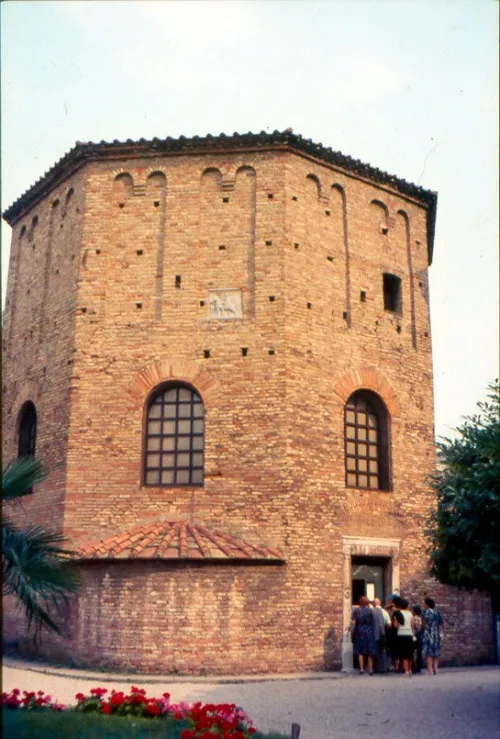
May in Ravenna
High22°C / 71°F
Low13°C
Rain91mm / 12 rainy days
Sun11.3 h/day
Daylight15 h/day
Humidity71%
Crowds●●●○○Prices●●●○○
The best all-round month. Highs around 22°C, blooming gardens and the gold tesserae lit beautifully in the mid-morning hours, all at shoulder prices and with the cultural calendar in full flow.
The vibe Energised and pleasant, the city buzzing with Ravenna Jazz, the Festival opening fortnight and the Coconino comics festival, yet without the summer heat or crowds.
Don't miss See San Vitale's clerestory light rake the gold between 9:30 and 11, catch a Festival opening concert at the Rocca Brancaleone, and bike the lush Pineta di San Vitale. May is widely rated Ravenna's best month.
Crowd drivers Ravenna Jazz, the Ravenna Festival opening (from 21 May), Coconino Fest and domestic long weekends bring day-trippers without overwhelming the city.
Shoulder rates: 90-130€ for a 3-star centre room, well below the summer peak.
Events this month
🎵 MusicRavenna Jazz
May 2–10
early May, with summer concerts in July
An annual jazz festival across the Rocca Brancaleone and city venues, typically with a core season in early May and summer dates in July, including headline international acts and workshops.
An excellent shoulder-season trip driver: pleasant temperatures, no summer crowds and a strong international line-up that brings the city alive in early May.
🎵 MusicRavenna Festival
May 21 – Jul 11
late May to mid-July
One of Italy's leading classical music festivals, typically running from late May to mid-July with more than 100 events, world premieres and international orchestras. Concerts take place at the Rocca Brancaleone arena and various city venues.
The biggest cultural spike of the year and the main driver of June-July hotel demand, so book three or more months ahead. Outdoor concerts at the Rocca Brancaleone arena run on still-warm, atmospheric evenings.
🎨 Art and cultureCoconino Fest
May 29 – Jun 2
late May into early June
A comics festival celebrating Coconino Press and international graphic-novel culture: exhibitions, talks, signings and markets.
Niche but vibrant, and it overlaps the Ravenna Festival opening, so the city feels especially energised with two events running at once.
🎨 Art and cultureTheodoric Celebrations Celebrazioni Teodoriciane
Jan–Dec
all year long
Exhibitions, cultural events and symposia honouring the legacy of the Ostrogoth king Theodoric, with enhanced interpretation at the Mausoleo di Teodorico.
It adds value to a visit at any point in the year, and makes the often-overlooked Mausoleo di Teodorico worth adding to any itinerary.
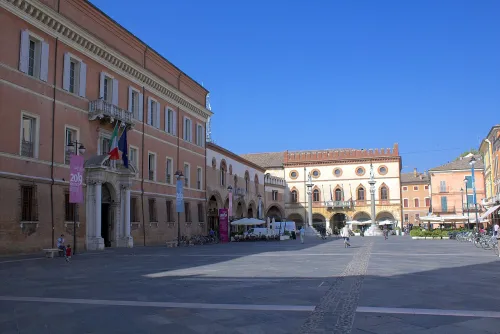
June in Ravenna
High28°C / 82°F
Low18°C
Rain48mm / 8 rainy days
Sun13.2 h/day
Daylight16 h/day
Humidity65%
Crowds●●●●○Prices●●●●○
Early summer heats up to about 28°C, dry and bright with 15.5 hours of daylight at the solstice. The Festival hits its peak and, from around 28 June, the Mosaico di Notte begins its candlelit evening tours.
The vibe Lively and warm, with coastal overflow from the Adriatic resorts and the riviera-wide Pink Night packing Marina di Ravenna on the third weekend.
Don't miss Book the first Mosaico di Notte tours of the season and see Galla Placidia by candlelight, walk the sites before 11 to beat the heat, and combine cool mornings under the mosaics with afternoons at the beach.
Crowd drivers Ravenna Festival peak, the Pink Night (19-21 June), the Mosaico di Notte launch and the start of Italian school holidays in late June all push numbers up.
Heads up Republic Day (2 June) closes most shops. Galla Placidia stays on timed entry through June, so pre-book your slot at ravennamosaici.it.
Climbing into peak territory: 110-160€ for a 3-star centre room.
Events this month
🎵 MusicRavenna Festival
May 21 – Jul 11
late May to mid-July
One of Italy's leading classical music festivals, typically running from late May to mid-July with more than 100 events, world premieres and international orchestras. Concerts take place at the Rocca Brancaleone arena and various city venues.
The biggest cultural spike of the year and the main driver of June-July hotel demand, so book three or more months ahead. Outdoor concerts at the Rocca Brancaleone arena run on still-warm, atmospheric evenings.
🎨 Art and cultureCoconino Fest
May 29 – Jun 2
late May into early June
A comics festival celebrating Coconino Press and international graphic-novel culture: exhibitions, talks, signings and markets.
Niche but vibrant, and it overlaps the Ravenna Festival opening, so the city feels especially energised with two events running at once.
🎉 FestivalPink Night La Notte Rosa
Jun 19–21 ~
third weekend of June
The riviera-wide Pink Night, with fireworks, concerts and DJ sets at Marina di Ravenna and inland villages lit up, coordinated along the Romagna coast from Ravenna to Rimini.
Marina di Ravenna fills completely and gets very loud that weekend. Book a city-centre room to escape the beach party, or plan explicitly around the seafront atmosphere.
🎨 Art and cultureMosaics by Night Mosaico di Notte
Jun 28 – Sep 6
late June to early September
Evening guided tours of the UNESCO monuments by candlelight and special lighting, running from late June to early September. Itineraries include San Vitale, Galla Placidia and the Museo Nazionale at 19:45, and Sant'Apollinare in Classe at 21:00.
The single best insider experience in Ravenna: Galla Placidia's starry vault by candle glow is transformative. Groups are capped, so July and August dates sell out in May, book early.
🎨 Art and cultureTheodoric Celebrations Celebrazioni Teodoriciane
Jan–Dec
all year long
Exhibitions, cultural events and symposia honouring the legacy of the Ostrogoth king Theodoric, with enhanced interpretation at the Mausoleo di Teodorico.
It adds value to a visit at any point in the year, and makes the often-overlooked Mausoleo di Teodorico worth adding to any itinerary.
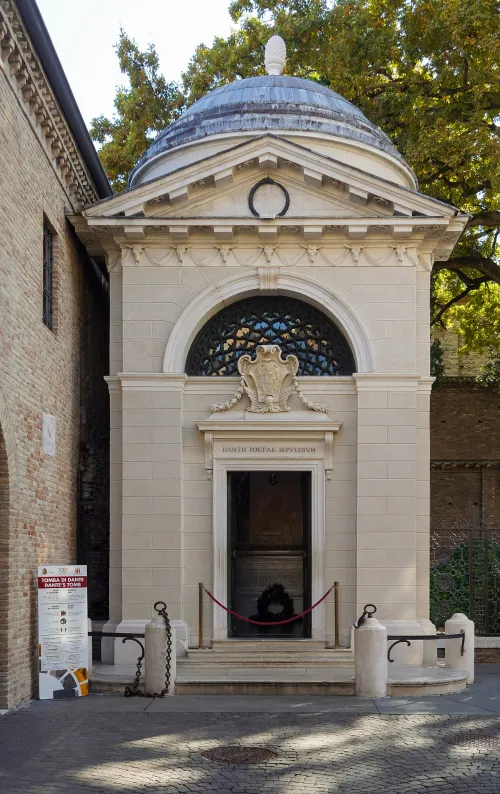
July in Ravenna
High30°C / 86°F
Low21°C
Rain57mm / 7 rainy days
Sun13.4 h/day
Daylight15 h/day
Humidity63%
Crowds●●●●●Prices●●●●●
The single busiest month, tied with August at peak. Highs hit 30°C with Po Delta humidity, the mosaic queues are at their longest and hotels reach 130-190€. Mornings are the only comfortable walking window.
The vibe Hot, humid and crowded, with beach-goers day-tripping in and a sharp afternoon wave at the sites between noon and 5. Evenings stay warm and the Festival closes around 11 July.
Don't miss Visit from the 09:00 openings to dodge the heat and the beach crowd, then save the mosaics for the cool of a Mosaico di Notte evening tour. The Marina mussel festival pairs city culture with the seafront over two weekends.
Crowd drivers Peak summer with Italian, German and French school holidays, the Festival close, the Mosaico di Notte in full swing and the Marina mussel festival at maximum demand.
Annual peak: 130-190€ for a 3-star centre room.
Events this month
🎵 MusicRavenna Jazz
May 2–10
early May, with summer concerts in July
An annual jazz festival across the Rocca Brancaleone and city venues, typically with a core season in early May and summer dates in July, including headline international acts and workshops.
An excellent shoulder-season trip driver: pleasant temperatures, no summer crowds and a strong international line-up that brings the city alive in early May.
🎵 MusicRavenna Festival
May 21 – Jul 11
late May to mid-July
One of Italy's leading classical music festivals, typically running from late May to mid-July with more than 100 events, world premieres and international orchestras. Concerts take place at the Rocca Brancaleone arena and various city venues.
The biggest cultural spike of the year and the main driver of June-July hotel demand, so book three or more months ahead. Outdoor concerts at the Rocca Brancaleone arena run on still-warm, atmospheric evenings.
🎨 Art and cultureMosaics by Night Mosaico di Notte
Jun 28 – Sep 6
late June to early September
Evening guided tours of the UNESCO monuments by candlelight and special lighting, running from late June to early September. Itineraries include San Vitale, Galla Placidia and the Museo Nazionale at 19:45, and Sant'Apollinare in Classe at 21:00.
The single best insider experience in Ravenna: Galla Placidia's starry vault by candle glow is transformative. Groups are capped, so July and August dates sell out in May, book early.
🍷 Food and wineMarina di Ravenna Mussel Festival La Cozza di Marina di Ravenna in Festa
Jul 10–19
two mid-July weekends
A mussel festival on the beach at Marina di Ravenna over two weekends, with local Adriatic mussels cooked fresh, free live music and a relaxed seafront atmosphere.
A quintessential Romagna beach experience to pair with the city mosaics, though it adds to the already tight July accommodation pressure at Marina.
🎨 Art and cultureTheodoric Celebrations Celebrazioni Teodoriciane
Jan–Dec
all year long
Exhibitions, cultural events and symposia honouring the legacy of the Ostrogoth king Theodoric, with enhanced interpretation at the Mausoleo di Teodorico.
It adds value to a visit at any point in the year, and makes the often-overlooked Mausoleo di Teodorico worth adding to any itinerary.
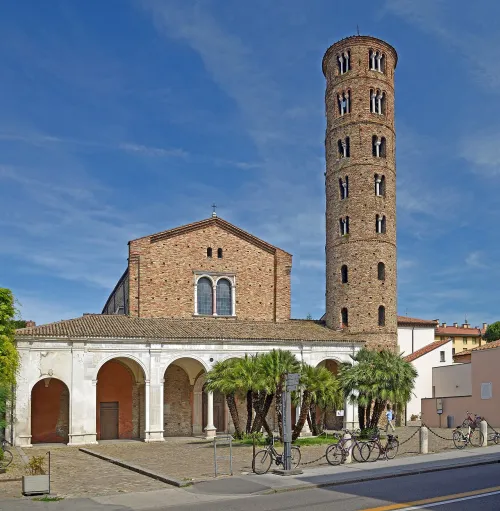
August in Ravenna
High30°C / 85°F
Low20°C
Rain50mm / 7 rainy days
Sun12.3 h/day
Daylight14 h/day
Humidity66%
Crowds●●●●●Prices●●●●●
Peak heat and peak prices, the year's worst value. Highs near 30°C with humidity make midday mosaic-hopping genuinely exhausting, Galla Placidia runs on timed entry, and the Ferragosto restaurant gap thins out dining.
The vibe Sweltering and beach-driven, with Marina di Ravenna and Porto Corsini at maximum and an afternoon flood of day-trippers at the city sites. The town itself can feel oddly quiet during Ferragosto.
Don't miss Go early or come for a Mosaico di Notte evening, which runs to around 6 September. The Galla Placidia interior has no air conditioning, so the 09:00 slot is far more pleasant and photographic than an August afternoon.
Crowd drivers Ferragosto domestic travel and beach overflow from the Adriatic resorts put the coast at its absolute maximum, with the city sites busiest in the afternoons.
Heads up Around Ferragosto (15 August) many central trattorie close for one to three weeks (roughly 10-25 August); Osteria del Tempo Perso and Ca' de Vèn tend to stay open. Sites remain open with reduced staffing.
Annual peak: 130-190€ for a 3-star centre room.
Events this month
🎨 Art and cultureMosaics by Night Mosaico di Notte
Jun 28 – Sep 6
late June to early September
Evening guided tours of the UNESCO monuments by candlelight and special lighting, running from late June to early September. Itineraries include San Vitale, Galla Placidia and the Museo Nazionale at 19:45, and Sant'Apollinare in Classe at 21:00.
The single best insider experience in Ravenna: Galla Placidia's starry vault by candle glow is transformative. Groups are capped, so July and August dates sell out in May, book early.
🎨 Art and cultureTheodoric Celebrations Celebrazioni Teodoriciane
Jan–Dec
all year long
Exhibitions, cultural events and symposia honouring the legacy of the Ostrogoth king Theodoric, with enhanced interpretation at the Mausoleo di Teodorico.
It adds value to a visit at any point in the year, and makes the often-overlooked Mausoleo di Teodorico worth adding to any itinerary.
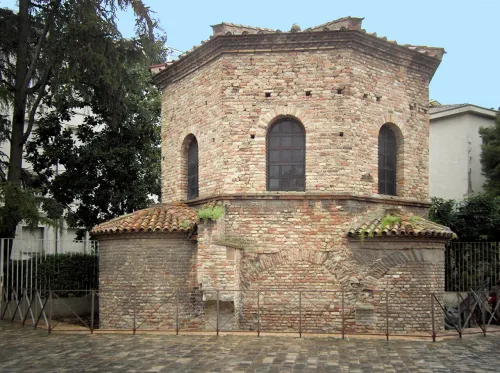
September in Ravenna
High25°C / 77°F
Low17°C
Rain70mm / 8 rainy days
Sun10.5 h/day
Daylight12 h/day
Humidity71%
Crowds●●●○○Prices●●●○○
The other best month. Highs ease to about 25°C, crowds thin sharply after August and the late-afternoon light is the finest of the year for mosaic photography, all at shoulder prices.
The vibe Warm but calm, with German and Swiss families extending the season and a cultured, unhurried mood around Dante September and the Ammutinamenti dance festival.
Don't miss Witness the solemn Oil Ceremony at Dante's tomb on the second Sunday, catch free Ammutinamenti street dance, and shoot the golden tesserae in the long late light. The sea is still around 24°C for a beach afternoon.
Crowd drivers Settembre Dantesco, the Ammutinamenti dance festival and lingering foreign families keep things gently busy without the summer crush.
Back to shoulder rates: 80-120€ for a 3-star centre room.
Events this month
🎨 Art and cultureMosaics by Night Mosaico di Notte
Jun 28 – Sep 6
late June to early September
Evening guided tours of the UNESCO monuments by candlelight and special lighting, running from late June to early September. Itineraries include San Vitale, Galla Placidia and the Museo Nazionale at 19:45, and Sant'Apollinare in Classe at 21:00.
The single best insider experience in Ravenna: Galla Placidia's starry vault by candle glow is transformative. Groups are capped, so July and August dates sell out in May, book early.
🎨 Art and cultureAmmutinamenti Dance Festival Ammutinamenti
Sep 5–12
first full week of September
An urban and contemporary dance festival across outdoor and indoor spaces in Ravenna and the surrounding Romagna, mixing free street performances with paid ticketed shows.
An excellent September trip driver: the city is quiet after August but still warm around 25°C, and the free street performances suit families.
🎨 Art and cultureDante September and the Oil Ceremony Settembre Dantesco e Cerimonia dell'Olio
Sep 13 ~
the Oil Ceremony falls on the second Sunday of September
A month of literary exhibitions and performances honouring Dante. On the second Sunday, Florence sends oil to keep the lamp burning at Dante's tomb in a centuries-old solemn civic ritual.
A unique ceremony with minimal crowds compared to summer, and September light is ideal for photographing the mosaics and the tomb.
🎨 Art and cultureTheodoric Celebrations Celebrazioni Teodoriciane
Jan–Dec
all year long
Exhibitions, cultural events and symposia honouring the legacy of the Ostrogoth king Theodoric, with enhanced interpretation at the Mausoleo di Teodorico.
It adds value to a visit at any point in the year, and makes the often-overlooked Mausoleo di Teodorico worth adding to any itinerary.
October in Ravenna
High20°C / 69°F
Low13°C
Rain59mm / 9 rainy days
Sun8.3 h/day
Daylight11 h/day
Humidity79%
Crowds●●○○○Prices●●○○○
The cheapest comfortable-weather month. Highs around 20°C with quiet weekdays, beautiful low-angle light on the brick basilicas, and a strong food-and-wine calendar.
The vibe Mellow and golden, an autumn city of wine festivals and museum nights with the crowds long gone and prices dropping 25-30% from the summer peak.
Don't miss Use the Golden Night to tour several museums free in one evening, taste Romagna's Sangiovese at Giovinbacco, and enjoy the empty sites in the loveliest autumn light.
Crowd drivers The Notte d'Oro (third Saturday) and Giovinbacco wine festival draw weekend visitors, but weekdays stay very quiet.
Excellent value: 65-95€ for a 3-star centre room.
Events this month
🌙 Museum nightGolden Night Notte d'Oro
Oct 17 ~
third Saturday of October
One evening of free museum access across Ravenna, including the MAR, Classis and Museo Nazionale, with live shows, concerts and events in the public squares.
The single best day to see several museums at zero cost, in a festive city atmosphere on a mild October evening.
🍷 Food and wineGiovinbacco Wine Festival Giovinbacco
Oct 23–25
late October
The largest Sangiovese celebration in Romagna, with wine producers from across the region, food pairings and piazza events.
An excellent autumn pairing with a mosaic visit: Sangiovese is the key regional grape, and the mild evenings make the piazza tastings a pleasure.
🎨 Art and cultureTheodoric Celebrations Celebrazioni Teodoriciane
Jan–Dec
all year long
Exhibitions, cultural events and symposia honouring the legacy of the Ostrogoth king Theodoric, with enhanced interpretation at the Mausoleo di Teodorico.
It adds value to a visit at any point in the year, and makes the often-overlooked Mausoleo di Teodorico worth adding to any itinerary.
November in Ravenna
High15°C / 58°F
Low8°C
Rain86mm / 10 rainy days
Sun5.9 h/day
Daylight10 h/day
Humidity83%
Crowds●●○○○Prices●●○○○
Quiet and damp, one of the wettest months with grey overcast and Po Delta fog. Highs near 15°C, but the marathon weekend briefly fills the city and the Autumn Trilogy brings chamber opera to the Teatro Dante Alighieri.
The vibe Low-key off-season, save for the Maratona di Ravenna weekend, when runners and crowds take over and rates spike. Otherwise the sites are near-empty.
Don't miss Run or watch the marathon past eight UNESCO sites, see the chamber-scale Mozart of the Autumn Trilogy, and catch live nights at the Transmissions festival. The 1€ Battistero degli Ariani may be all yours on a weekday morning.
Crowd drivers The Maratona di Ravenna fills city hotels that weekend; the rest of the month is very quiet despite the music and opera festivals.
Heads up All Saints' Day (1 November) closes shops, with the mosaic sites generally open. The Museo Nazionale closes at 14:00 on Tuesday, Wednesday, Saturday and Sunday.
Low at 60-90€, but the marathon weekend (7-8 November) spikes to 100-150€.
Events this month
🏃 SportRavenna Marathon Maratona di Ravenna Città d'Arte
Nov 7–8 ~
a weekend in early November
A full marathon routed past eight UNESCO sites, plus a half, a 10 km and a family run. Finishers get a handmade mosaic medal, and the race bib grants free museum entry on race day.
Rooms fill city-wide that weekend and rates spike to 100-150€, so either book months ahead or avoid the dates. The route is arguably the most scenic in Italy, with the monuments at dawn.
🎵 MusicTransmissions Festival Transmissions
Nov 9–21
mid-November
A music festival spread across city venues through mid-November, adding live nights to the otherwise very quiet late-autumn calendar.
A reason to brave the damp November greyness: nights out and culture without any tourist crowd, and hotels back at off-season rates once the marathon weekend has passed.
🎵 MusicAutumn Trilogy Trilogia d'Autunno
Nov 13–17
mid-November
Part of the Ravenna Festival: three Mozart works, La clemenza di Tito, L'ultimo incanto and the Requiem, directed by Chiara Muti and conducted by Ottavio Dantone at the Teatro Dante Alighieri.
Chamber-scale opera in an intimate 18th-century theatre, an exceptional acoustic and artistic experience well outside the summer peak. Demand is high, so book early.
🎨 Art and cultureTheodoric Celebrations Celebrazioni Teodoriciane
Jan–Dec
all year long
Exhibitions, cultural events and symposia honouring the legacy of the Ostrogoth king Theodoric, with enhanced interpretation at the Mausoleo di Teodorico.
It adds value to a visit at any point in the year, and makes the often-overlooked Mausoleo di Teodorico worth adding to any itinerary.
December in Ravenna
High10°C / 50°F
Low3°C
Rain57mm / 8 rainy days
Sun5.3 h/day
Daylight9 h/day
Humidity86%
Crowds●○○○○Prices●○○○○
The cheapest month overall and almost crowd-free. Short days under 9 hours and damp grey weather with highs near 10°C, but the mosaic sites are practically empty and the centre dresses up for Christmas.
The vibe Festive yet calm, with Christmas markets and nativity displays around the squares and quiet weekdays at the basilicas. The low winter light on the brick is at its most atmospheric.
Don't miss Have Galla Placidia's vault nearly to yourself, browse the Christmas markets, and pair the free Tomba di Dante with the 1€ Battistero degli Ariani for an almost-free cultural day.
Crowd drivers Quiet city weekdays and minimal travel keep numbers low, with a small literary draw to Dante's tomb.
Heads up Immacolata (8 December) closes some shops; on 25 and 26 December everything closes, including the mosaic sites in most cases, so verify on the official site.
Back at the annual floor: 55-80€ for a 3-star centre room.
Events this month
🎨 Art and cultureTheodoric Celebrations Celebrazioni Teodoriciane
Jan–Dec
all year long
Exhibitions, cultural events and symposia honouring the legacy of the Ostrogoth king Theodoric, with enhanced interpretation at the Mausoleo di Teodorico.
It adds value to a visit at any point in the year, and makes the often-overlooked Mausoleo di Teodorico worth adding to any itinerary.
Frequently asked questions
What is the best time of year to visit Ravenna?
May and September. Both give mild 18-26°C days, all eight UNESCO mosaic sites open with full hours, manageable queues and shoulder-season hotel rates (90-130€ in May, 80-120€ in September) rather than the 130-190€ of high summer. May adds Ravenna Jazz and the Ravenna Festival opening fortnight; September brings the Dante Oil Ceremony, the Ammutinamenti dance festival and the year's best light for photographing the mosaics.
When is the worst time to visit Ravenna?
Late July to mid-August. You get peak heat of 32-35°C with Po Delta humidity, the longest queues at the mosaic sites, beach overflow flooding the city every afternoon, the Ferragosto restaurant gap when many trattorie close for one to three weeks, and the highest hotel prices of the year. Unless a specific Mosaico di Notte tour or Festival concert is the goal, every condition is worse and more expensive than any other window.
How hot does Ravenna get in summer?
June to August regularly reaches 32-35°C, and the high Po Delta humidity makes midday mosaic-hopping genuinely exhausting. The best walking hours are 08:00 to 11:00 and 18:00 to 21:00. Galla Placidia has no air conditioning, so its August afternoons feel stuffy and the timed five-minute visit feels rushed; the 09:00 opening slot is dramatically more pleasant and photographic.
Do I need to book Galla Placidia in advance?
Yes, from March through August. The Mausoleo di Galla Placidia caps simultaneous visitors at about 15 and requires a timed-entry supplement of 2€ that you must pre-book online at ravennamosaici.it. Walk-up tickets are regularly refused in June, July and August. Book the first slot at 09:00 for the best light and zero queue.
When is the cheapest time to visit Ravenna?
January, February and December, when 3-star centre hotels sit at their annual floor of 55-80€ a night, against 130-190€ in July and August. Add the free Tomba di Dante, the 1€ Battistero degli Ariani and the first-Sunday free openings at several state sites, and a winter visit costs very little. Just avoid the Maratona di Ravenna weekend in early November, when rates spike to 100-150€.
Is the Adriatic swimmable, and when?
Yes. The beaches at Marina di Ravenna and Porto Corsini, about 15 km east, are swimmable from mid-June to mid-September, with sea temperatures reaching 25-26°C in July and August. Outside that window the lidos are closed and the coast is empty. The classic summer plan is a cool mosaic morning in the city followed by a beach afternoon at Marina.
What is the Mosaico di Notte and is it worth it?
It is the standout insider experience in Ravenna: from late June to early September, evening guided tours show the UNESCO monuments by candlelight and special lighting. Seeing Galla Placidia's blue starry vault glow by candle is transformative. Groups are capped, so the July and August slots sell out in May. Book via visitravenna.it the moment the program is published, usually in April, especially for the 19:45 San Vitale and Galla Placidia itinerary.
Which days are awkward for the mosaic museums?
The Museo Nazionale is closed Mondays and shuts at 14:00 on Tuesday, Wednesday, Saturday and Sunday, so visit it on a Thursday or Friday morning when it stays open to 19:30. Sant'Apollinare in Classe is closed Sunday mornings and opens only at 13:30, which can mean a long wait for the single bus back, so bike the flat 8 km path on a weekday instead. The Battistero degli Ariani opens mornings only Monday to Thursday.

Any month, any day: your guide is already there
Whatever date you pick, a private human guide gets pricier and harder to book on weekends, holidays and in peak season. Our live AI guide, the one that walks with you and answers anything you ask out loud, works the opposite way.
One flat price, every day
No holiday, weekend, night or peak-season surcharge. A private guide in Ravenna runs well over 100 euro for a half day, and more on holidays. Ours stays the same.
Available the moment you want it
Start at midnight or at dawn, on Christmas, in the snow, in the August heat. No sold-out high season, no booking weeks ahead.
Your pace, no meter running
Pause for a long lunch, restart after dark, repeat a stop. The tour simply waits for you.
Free to try, a fraction of the cost
Test it for free, then a transparent flat price that undercuts any private guide, in every season.
The classic Ravenna tour: 9 stops, 5.5 km, about 2 h on foot
Your live AI guide and the self-guided Ravenna route, together in your browser.