Best Time to Visit Rimini
Month-by-month weather, crowds and prices, plus a full calendar of festivals and events worth planning a trip around.
Best monthsJun, Sep
CheapestFeb, Nov, Dec
AvoidAug
BusiestJul, Aug
When is the best time to visit Rimini?
Come the first half of June or the first three weeks of September: warm sea (22-25°C), beaches that breathe, full city life, and hotel rates 35-55% below August. Avoid 13-26 August, the Ferragosto peak, when crowds, heat (32-35°C) and prices all max out and the Meeting per l'Amicizia adds another 800,000 people. February, November and December are the cheapest and quietest, the trade being a cold, off-season sea.
Start our tool and find your best time to visit Rimini
Your perfect month
Free · ~30 seconds
or tap a month directly
What matters to you?
And this?
Best overall: Jun, Sep. Early June (1-18) and the first three weeks of September are the real sweet spot: sea at 22-25°C, beaches uncrowded by Rimini standards, every Roman monument and the Fellini Museum quiet, and hotel rates 35-55% below August. June adds the longest days of the year with sunset at 21:00; September adds Sagra Musicale concerts and the Romagna grape harvest.
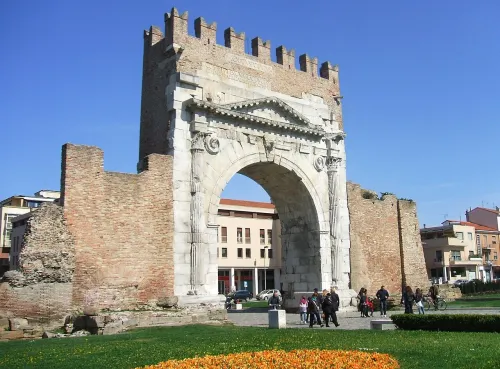
Best value: Feb, Nov, Dec. February, November and December bring 3-star seafront hotels at 40-65 €/night, no queues anywhere, and the free Roman sights (Arch of Augustus, Tiberius Bridge, Tempio Malatestiano) to yourself. The catch is a cold, off-season sea and the occasional bora wind, so this is a culture-and-budget trip, not a beach one. Dodge the fair weeks (SIGEP, Ecomondo) when rates triple.
Avoid: Aug. 13-26 August is the year's worst value: Ferragosto (15 Aug) maxes out crowds, heat (32-35°C) and prices, then the Meeting per l'Amicizia (21-26 Aug) brings 800,000 more and sells out Fiera-side hotels at 160-250 €/night. Glorious if you live for Italian summer chaos, miserable for everyone else.
- January: Good time, 10°C. January is a tale of two cities: a gridlocked food-trade circus around the Fiera for five days, and a quiet, low-priced Roman town the rest of the month. Unless you have SIGEP business, come for the empty Borgo San Giuliano lanes and the Domus del Chirurgo without a queue, and base yourself well away from the expo.
- February: Great time, 11°C. February is Rimini at its most introverted: cold, off-season and almost touristless, but cheap and calm. It is a culture trip, not a beach one, so lean into the museums and the empty Borgo, and pack layers against the wind off the Adriatic.
- March: Great time, 14°C. March is the last of the cheap, quiet winter before the season stirs. The light is softening and the days lengthening, but the beach scene has not woken up. Come for the empty Roman monuments and floor-level hotel prices, dodging the two short fair windows.
- April: Great time, 17°C. April is Rimini waking up: cafe terraces reopen, the seafront parks turn green, and the first day-trippers appear over Easter, but the beach season proper has not started. A good month to combine culture with mild walking weather, before the prices climb.
- May: Great time, 21°C. May is Rimini's quietly lovely shoulder: warm enough for a beach aperitivo and long enough evenings to linger, but without summer's heat, crowds or prices. Late May in particular is one of the most aesthetically pleasing times to wander the Borgo and the seafront.
- June: Good time, 26°C. June is the tipping point into full summer, and the long light evenings are the payoff: dinner on the beach at 20:30 in full daylight is the defining experience. The first three weeks breathe, with warm sea and open beaches; then the Notte Rosa weekend turns the seafront into a pink, fireworks-lit party that sells the Riviera out.
- July: Tough month, 29°C. July is hot, busy and beach-focused. The Roman old town has almost no shade, so walk it before 10:00 or after 17:30; the lungomare, with its 3-5°C sea breeze, stays walkable all day. This is full Italian summer, brilliant if you want the buzz, exhausting if you came for quiet culture.
- August: Tough month, 28°C. August is full-throttle Rimini: maximum crowds, maximum heat, maximum prices. Ferragosto is glorious if you love the chaos and miserable if you do not. The saving grace is that the Meeting's 800,000 visitors concentrate around the Fiera 3 km north, so the historic centre stays surprisingly navigable.
- September: Great time, 24°C. September feels like Rimini exhaling: warm sea, long evenings and full city life, but without August's crush or prices. The first three weeks are the sweet spot, with the beach pleasant and the old town calm. This is the connoisseur's month for couples and culture.
- October: Great time, 20°C. October is the couples' and culture-lovers' month: warm enough for a last sea swim, calm enough to have the Borgo and the Roman monuments to yourself, and cheap once the TTG fair clears. Book around 14-16 October, but 17-19 October is the year's best calm-and-cheap window.
- November: Great time, 15°C. November is Rimini stripped back to its quiet, Roman self: grey, cheap and almost touristless between the fairs. It is a culture trip, not a beach one, but the empty monuments, the Sagra Musicale concerts and the floor-level prices make it the connoisseur's budget month.
- December: Great time, 11°C. December is Rimini at rest: no fairs, no crowds, just a small, warm Christmas-market glow in the old town and the cheapest rooms of the year. Come for the empty Roman monuments and the festive lights around Piazza Cavour, and accept that the sea and the bora wind are firmly winter.
Rimini weather by month
HighLowRainfall
Jan10°
Feb11°
Mar14°
Apr17°
May21°
Jun26°
Jul29°
Aug28°
Sep24°
Oct20°
Nov15°
Dec11°
| Month | Temp | Rain | Sun | Crowds | Prices | Highlight |
|---|---|---|---|---|---|---|
| Jan | 10° / 3° | 64mm · 10 rainy days | 6.2 h/day | ●●○○○ | ●●○○○ | SIGEP World |
| Feb | 11° / 4° | 85mm · 10 rainy days | 7.4 h/day | ●○○○○ | ●○○○○ | Beer & Food Attraction |
| Mar | 14° / 6° | 67mm · 8 rainy days | 9.3 h/day | ●○○○○ | ●○○○○ | KEY Energy Expo |
| Apr | 17° / 9° | 58mm · 9 rainy days | 10.8 h/day | ●●○○○ | ●●○○○ | Macfrut |
| May | 21° / 14° | 95mm · 10 rainy days | 11.4 h/day | ●●○○○ | ●●○○○ | RiminiWellness |
| Jun | 26° / 18° | 49mm · 7 rainy days | 13.1 h/day | ●●●●○ | ●●●●○ | The Pink Night |
| Jul | 29° / 21° | 43mm · 6 rainy days | 13.5 h/day | ●●●●● | ●●●●● | Italian Dancesport Championships |
| Aug | 28° / 20° | 52mm · 7 rainy days | 12.4 h/day | ●●●●● | ●●●●● | Ferragosto |
| Sep | 24° / 17° | 88mm · 9 rainy days | 10.5 h/day | ●●●○○ | ●●●○○ | Malatesta Music Festival |
| Oct | 20° / 13° | 76mm · 9 rainy days | 8.5 h/day | ●●○○○ | ●●○○○ | Malatesta Music Festival |
| Nov | 15° / 9° | 98mm · 12 rainy days | 6.1 h/day | ●○○○○ | ●○○○○ | Malatesta Music Festival |
| Dec | 11° / 5° | 65mm · 9 rainy days | 5.9 h/day | ●○○○○ | ●○○○○ |
How we score this: weather = long-run climate normals (Open-Meteo), crowds & prices = relative season read, events checked yearly against official dates.
Best time to visit Rimini: weather, prices & crowds
Best months for good weather
Jun, Sep
June and September give Rimini its kindest weather: 25-28°C days warm enough for the Adriatic (22-25°C) but short of July and August's punishing 32-35°C midday heat. The sea breeze keeps the lungomare walkable all day, and long light evenings let you eat on the beach at 20:30 in full daylight in June.
Quietest months to avoid the crowds
Feb, Nov, Dec
From November through February the beach empties right out and the Roman old town is yours alone. You walk into the Fellini Museum or the Domus del Chirurgo with no queue, and the Borgo San Giuliano murals are tourist-free, the trade being a cold sea and the occasional bora wind.
Cheapest time to visit Rimini
Feb, Nov, Dec
February, November and December are Rimini's cheapest: 3-star seafront hotels run 40-65 €/night, less than half the July-August 130-240 €/night peak. Watch the fair weeks though, Ecomondo (3-6 Nov) triples rates citywide, so target the 7-16 November lull instead.
Best time for festivals and events
Oct
October is the insider's swim window: the Adriatic still holds about 21°C while the beaches stand nearly empty. Right after the TTG travel fair (14-16 Oct) hotels drop 40-50% overnight, the Sagra Musicale Malatestiana puts world-class orchestras in the Renaissance Teatro Galli, and the Romagna hills 30 km inland turn golden with the grape harvest.
How many days do you need in Rimini?
Rimini rewards three full days: one for the beach and lungomare, one for the Roman and Renaissance old town, and one for the Fellini cultural pole and the Borgo San Giuliano. Two days covers the essentials but leaves the Domus del Chirurgo and the Borgo feeling rushed, while a fourth day opens up a half-day excursion into the Romagna hills.
One day
The Roman core in a morning, the sea in the afternoon
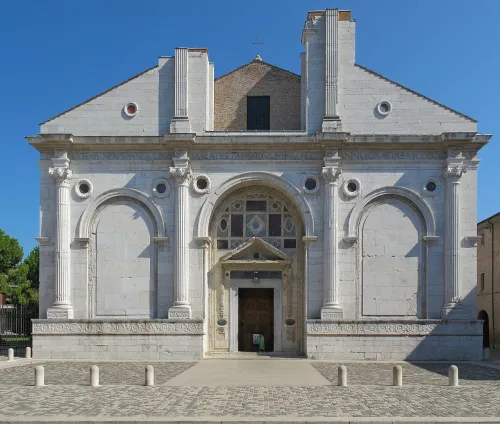
Start at the Arch of Augustus, walk north along Corso d'Augusto to the Tempio Malatestiano, then cut west to the Domus del Chirurgo and Piazza Cavour. Take the self-guided Rimini walking tour to link all 9 stops, covering 3.0 km in roughly 2 hours, from the Arch of Augustus through the Fellini Museum and Tiberius Bridge to Borgo San Giuliano. In the afternoon, head to the seafront for the lungomare and a swim.
Two days
Old town depth, then the Borgo and the sea
Day one follows the Roman core as above and ends with sunset drinks at La Vecchia Pescheria. Day two starts at Castel Sismondo for the Fellini Museum (allow 90 minutes), crosses the Tiberius Bridge for a slow wander through the Borgo San Giuliano murals, and finishes with a long beach afternoon. The covered Mercato Coperto on Piazza Cavour is the best lunch stop on either day.
Three daysRecommended
Full city rhythm, plus a Romagna excursion
Add a third morning at the Museo della Città (7 €, closed Mondays) for the Roman collections, then spend an afternoon in the Parco Federico Fellini. If you visit in September or October, a day trip 30 km inland to the Romagna vineyards and Santarcangelo di Romagna pairs perfectly with the city programme. Three days lets you eat unhurried at the old-town trattorie and catch an evening Sagra Musicale concert in the Teatro Galli if the season runs.
Four days or more
Day trips, slower pace, and Adriatic villages
A fourth day opens up the Republic of San Marino (30 minutes by bus), the clifftop town of Gradara, or the spa village of Riccione just 10 km south. Longer stays suit anyone who wants to combine beach mornings with proper museum time, attend multiple Sagra Musicale concerts, or use Rimini as a base for the Romagna hinterland. Hotel rates for stays of four-plus nights often drop 10-15% below the nightly rack rate.
Day trips from Rimini
Out in the morning, back in time for dinner. Every route here fits in one full day.
Best time to visit Rimini by traveller type
Same city, different trip. Here's the month that fits how you're travelling.
🧭
Best time to visit Rimini for the first time
JunSep
Early June (1-18) or September: open beaches, warm sea (22-25°C), full city life, and hotel rates 30-40% below August, with the Roman monuments and Fellini Museum uncrowded. Skip August unless you actively want extreme crowds and a beach party.
❤️
Best time to visit Rimini for couples
MaySep
Late May or late September, when Rimini is at its most beautiful: long evenings warm enough for a beach aperitivo, the Sagra Musicale Malatestiana playing the Teatro Galli in September, hotel rates 50-60% below the summer peak, and the Borgo San Giuliano murals and Parco Fellini calm and uncrowded.
💶
Best time to visit Rimini on a budget
FebNov
February, March or November, avoiding the fair dates: 3-star seafront hotels at 40-65 €/night. The best free sights run 24/7 (Arch of Augustus, Tiberius Bridge, Borgo San Giuliano murals, Tempio Malatestiano), and the Domus del Chirurgo and Museo della Città cost just 7 € each. The pick of the year is 7-16 November between the fairs.
🍝
Best time to visit Rimini for food and wine
SepJan
September-October for peak Romagna produce: piadina, passatelli in brodo, fresh Apennine porcini and the Sangiovese grape harvest, with the Mercato Coperto on Piazza Cavour at its richest. Or January if you have trade access and can afford SIGEP rates (16-20 Jan), the world summit for artisan gelato, pastry and coffee.
Worst time to visit Rimini
The 13 to 26 August stretch is the worst value of the year by a wide margin. Ferragosto on 15 August brings the beach to its absolute maximum: 32 to 35°C midday heat on sand and concrete, seafront hotels at 140 to 240 €/night, and every bagno sold out. Then the Meeting per l'Amicizia from 21 to 26 August adds over 800,000 congress visitors, surging Fiera-side hotels to 160 to 250 €/night and filling the entire city. Heat, crowds and prices all peak simultaneously, and many family-run old-town restaurants close the last week of August for staff holidays.
Still worth it for August still works if you love full-throttle Italian summer energy: the Adriatic is at its warmest (25 to 26°C), every beach bar is open until late, and the Sagra Musicale Malatestiana opens on 30 August with world-class orchestras at the Teatro Galli. The historic centre, Borgo San Giuliano and Tempio Malatestiano also stay surprisingly navigable during the Meeting, as the congress crowds concentrate around the Fiera district 3 km north.
Go instead in June, September, when Rimini is at its best.
Best time for a tour of Rimini
Rimini's 3-kilometre loop links Roman stones to the Adriatic port, and the month you choose shapes every step of it. April and May are the walk's sweet spot: temperatures settle between 17 and 21 °C, the sea breeze carries without bite, and the piazzas are quiet enough that you can stand at the Arch of Augustus without a tour group massing behind you. October is a close second, still reaching 20 °C by afternoon, with the Borgo San Giuliano alleyways holding that warm-stone smell that disappears once the rains thicken in November. June tips things: 26 °C is manageable in the morning, but the Adriatic resort crowd arrives fast and Piazza Cavour fills early. July and August are genuinely hard going, with highs of 28 to 29 °C and the streets shoulder to shoulder from mid-morning onward; the Tempio Malatestiano offers a few cool minutes of shade, but most of the route is open and exposed. February is the opposite extreme, barely 11 °C with ten rain days, and the old town nearly empty in a way that feels more bleak than charming.
With AI Tourguide you set the clock, which matters in a city this seasonal. On a scorching August morning you can start your Rimini tour at 7:30 am, reach the Tiberius Bridge before the heat builds, and pause wherever the shade is good, because no operator's schedule is pulling you forward. The guide runs entirely in your browser, no download required, and a voice-led AI leads you through each stop, tells you the real story of the Malatesta family at the Tempio, asks what you noticed, listens, and adjusts the rest of the walk to what caught your interest. In April, when the town is calm and the light is soft, that kind of unhurried conversation with a guide is exactly what the route deserves.

 +5
+5All 9 stops are already on the map.
You just press start.
You just press start.
 AI Tourguide
You just read the route.
Now walk it with a guide in your ear.
Press start wherever you are, even hundreds of kilometres from Rimini, and the guide begins telling its stories right away. In the city, pick any of the 9 stops to start from: it leads you there, then talks with you the whole route, asking, listening, remembering, and shaping the tour around your answers.
9stops3.0km1.9hours11languages
▶Start the tour freeFree to start · Runs in your browser · No app, no download
Rimini events and festivals calendar
Annual highlights worth timing a trip around, listed month by month.
January
🍷 Food and wineSIGEP World
Jan 16–20
five days in mid-January
The 47th edition of the world's leading artisan gelato, pastry, coffee and bakery trade show at the Rimini Expo Centre, with 205,000-plus visitors, 1,300-plus exhibitors and the Ice Cream World Cup.
February
🍷 Food and wineBeer & Food Attraction
Feb 15–17
three days in mid-February
Concurrent craft-beer, food-service and bar-tech trade fairs (with BBTech Expo) at the Rimini Expo Centre, the main mid-month draw in the deep off-season.
March
🎨 Art and cultureKEY Energy Expo KEY - The Energy Transition Expo
Mar 4–6
three days in early March
An international renewable-energy and energy-transition expo at the Rimini Expo Centre, the first of two March fairs in an otherwise empty off-season month.
April
🍷 Food and wineMacfrut
Apr 21–23
three days in late April
An international fruit, vegetable and horticulture trade fair at the Rimini Expo Centre, drawing growers, buyers and supply-chain exhibitors from around the world.
May
🎉 FestivalRiminiWellness
May 28–31
the last weekend of May
The 20th edition of this four-day fitness, wellness and sport expo at the Rimini Fiera, with 130,000-plus visitors for live classes, demos and competitions.
June
🎉 FestivalThe Pink Night La Notte Rosa
Jun 19–21 ~
the summer-solstice weekend, usually the third weekend of June
The 21st edition of the Adriatic Riviera's signature festival, three nights of landmarks lit pink, beach concerts, fireworks, a Frecce Tricolori air display and dawn concerts, spanning 30-plus municipalities from Rimini to Ferrara.
🎵 MusicRDS Summer Festival
Jun 19–20 ~
two days coinciding with the Notte Rosa opening weekend
A two-day pop and radio concert festival on the Rimini seafront, programmed to coincide with the opening of the Notte Rosa.
🏃 SportGinnastica in Festa
Jun 20–28
nine days in late June
A national gymnastics championship at the Rimini Fiera over nine days, drawing thousands of athletes and their families.
July
🏃 SportItalian Dancesport Championships Campionati Italiani Danza Sportiva
Jul 4–12
nine days in early July
Italy's national competitive dance championships at the Rimini Fiera over nine days, with thousands of participants.
August
🇮 HolidayFerragosto
Aug 15
15 August
Italy's mid-August national holiday, the absolute peak of the beach season.
⛪ ReligiousMeeting for Friendship Among Peoples Meeting per l'Amicizia fra i Popoli
Aug 21–26
six days in late August
The annual Catholic congress of Comunione e Liberazione at the Rimini Fiera, drawing 800,000-plus visitors over six days, with occasional papal visits that sell out the Fiera district weeks ahead.
🎵 MusicMalatesta Music Festival Sagra Musicale Malatestiana
Aug 30 – Nov 9
symphonic concerts from late August through November
The 77th edition of this international classical-music festival at the Teatro Galli, with the Munich Philharmonic under Lahav Shani (30 Aug), the Filarmonica della Scala under Riccardo Chailly (11 Oct) and the Chamber Orchestra of Europe under Antonio Pappano (9 Nov).
September
🎨 Art and cultureTecna + BEX
Sep 22–25
four days in late September
Trade fairs for ceramics and building technology at the Rimini Expo Centre, the main fair blip of an otherwise good-value September.
October
🎨 Art and cultureTTG Travel Experience
Oct 14–16
three days in mid-October
Italy's leading travel trade fair, with the parallel hospitality expo InOut, both at the Rimini Expo Centre, drawing 45,000-plus trade visitors.
November
🎨 Art and cultureEcomondo
Nov 3–6
four days in early November
Europe's most important green-economy and circular-economy expo at the Rimini Expo Centre, with 103,000-plus visitors and 1,700-plus exhibitors.
Insider tips for visiting Rimini
The rules buried in forums, in one place.
- On the Notte Rosa weekend (19-21 June), book a hotel at least ten streets back from the sea so you can sleep. The beach boulevard and main clubs become impenetrable from midnight to 4 am on the Saturday night; front-row hotels are for party people only that weekend.
- If you are not a food professional, avoid 16-20 January entirely. SIGEP triples hotel rates, gridlocks the Fiera district and fills even nearby restaurants with trade visitors. The Roman old town is enjoyable precisely because it sits away from the fair.
- Visit the Fellini Museum on a Tuesday or Wednesday morning. Weekend afternoons queue at the Castel Sismondo entrance, while Tuesday-Wednesday 10:00-12:00 is near-empty. It is closed Mondays; hours are Tue-Sun 10:00-19:00, admission 10 €.
- For the Tiberius Bridge golden-hour shot, stand on the south bank looking north at 18:30-19:30 in summer. The low light picks out the ancient travertine and the Borgo San Giuliano murals behind it in one frame. Never shoot midday, when harsh shadows and face-on eastern sun flatten everything.
- After the TTG travel fair ends (14-16 Oct), the best value window is 17-19 October: hotels drop 40-50% overnight, the city goes calm, the sea still holds 21°C, and the Sagra Musicale concerts are running. The week of the fair itself needs a 130-200 €/night budget and booking months ahead.
- During the Meeting per l'Amicizia (21-26 Aug) the historic centre stays calm. The 800,000 congress visitors concentrate around the Fiera district 3 km north, so the Borgo San Giuliano, Tempio Malatestiano and Piazza Cavour remain navigable. Only accommodation citywide is affected, so base yourself away from the Fiera or book very early.
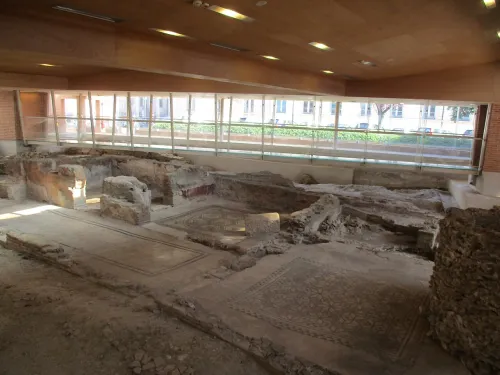
- Buy the combined Domus del Chirurgo and Museo della Città ticket at either venue. The Roman surgical-instruments collection, one of the most complete known, deserves a full 45 minutes. Go right at the 10:00 opening, before groups arrive; both are closed Mondays, with a midday break 13:00-16:00.
- July and August beach umbrella-and-sunbed sets (ombrellone plus lettini) are cheaper and easier to negotiate Monday to Thursday. Weekend demand on the seafront between Marina Centro and Bellariva is relentless, so go midweek or arrive early.
- At the Tempio Malatestiano, shorts and bare shoulders are forbidden as at all Italian cathedrals, so carry a light scarf or shawl even in July; the door steward applies the rule consistently. Entry is free, open daily 08:30-12:00 and 15:30-18:30, with access restricted during Mass.
Public holidays in Rimini
On these dates many shops and offices close, transport thins out, and sights can be mobbed or shut. Plan around them.
| Date | Holiday | What closes |
|---|---|---|
| Jan 1 | New Year's Day | Everything shut, and most hotels run on skeleton staff. A very quiet day across the city before the SIGEP fair build-up. |
| Jan 6 | Epiphany | Shops shut and the Fiera area is quiet. A calm winter day; civic museums keep their normal Tuesday-Sunday hours, so the Fellini Museum stays open. |
| Apr 5 | Easter Sunday | The Tempio Malatestiano opens limited hours and most civic museums close, while restaurants run full. Italian day-trippers fill the beach towns. Moveable; falls on 5 April in 2026. |
| Apr 6 | Easter Monday | Public transport runs reduced and museums close, while the beach towns fill with Italian day-trippers. Moveable; falls on 6 April in 2026. |
| Apr 25 | Liberation Day | National holiday with mixed openings, some museums and shops closed, others open. The beach promenade gets busy with the first warm-weekend strollers. |
| May 1 | Labour Day | Shops shut and the Fiera complex is closed. A quiet city day, though seafront bars and restaurants stay open as the season warms up. |
| Jun 2 | Republic Day | National holiday: government buildings shut but the beach is open and busy. A popular early-summer long weekend for Italian domestic travellers. |
| Aug 15 | Ferragosto | The absolute beach peak. Supermarkets shut, but every restaurant is open and packed, and transport outside Rimini thins to skeletal. Hotels have been full since July, with prices at their annual high. |
| Nov 1 | All Saints' Day | Many shops close, but the Ecomondo trade fair runs this day, so Fiera-side hotels stay full and expensive while the old town is calm. |
| Dec 8 | Immaculate Conception | Shops are mixed and civic museums often close. The modest Christmas-market atmosphere around Piazza Cavour and the old town begins to build. |
| Dec 25 | Christmas Day | Everything shut. The quietest day of the quietest month; the few restaurants that open need a reservation. |
| Dec 26 | St. Stephen's Day | Most shops closed, with only light tourist activity. A calm day before any New Year movement, hotels at their cheapest outside fair weeks. |
Rimini month by month
January in Rimini
High10°C / 49°F
Low3°C
Rain64mm / 10 rainy days
Sun6.2 h/day
Daylight9 h/day
Humidity80%
Crowds●●○○○Prices●●○○○
January is deep winter on the Adriatic, with short days (sunset around 16:45) and a cold, empty sea. For five days mid-month the city transforms as SIGEP World (16-20 Jan), the global artisan gelato and pastry fair, draws 205,000-plus visitors and sells out the Fiera district. Either side of it, hotels sit at their off-season floor and the Roman old town is calm and tourist-free.
The vibe January is a tale of two cities: a gridlocked food-trade circus around the Fiera for five days, and a quiet, low-priced Roman town the rest of the month. Unless you have SIGEP business, come for the empty Borgo San Giuliano lanes and the Domus del Chirurgo without a queue, and base yourself well away from the expo.
Don't miss The Fellini Museum (closed Mondays, 10 €) and Domus del Chirurgo (7 €) are at their quietest, with no queues. The Christmas-market glow lingers early in the month around Piazza Cavour, and the free Roman monuments stand empty in the low winter light.
Crowd drivers SIGEP World (16-20 Jan) is the one big driver, packing the Fiera and tripling nearby hotel rates. The rest of January is an off-season lull with almost no leisure tourism.
Heads up New Year's Day (1 Jan) and Epiphany (6 Jan) shut shops, though civic museums keep their normal Tuesday-Sunday hours. Beach concessions (bagni) are closed all month, as they are October to April.
Off-season floor most of the month at 45-75 €/night, but SIGEP (16-20 Jan) spikes Fiera-adjacent hotels to a sold-out 110-160 €/night.
Events this month
🍷 Food and wineSIGEP World
Jan 16–20
five days in mid-January
The 47th edition of the world's leading artisan gelato, pastry, coffee and bakery trade show at the Rimini Expo Centre, with 205,000-plus visitors, 1,300-plus exhibitors and the Ice Cream World Cup.
The global reference fair for food professionals, but a disaster for affordable hotels: book four-plus months ahead or expect 110-160 €/night. If you are not in the trade, the Roman old town away from the fair is where to be.
February in Rimini
High11°C / 53°F
Low4°C
Rain85mm / 10 rainy days
Sun7.4 h/day
Daylight10 h/day
Humidity78%
Crowds●○○○○Prices●○○○○
February is Rimini's cheapest and quietest month. The beach is empty, the sea cold, and occupancy at its annual low, with a small mid-month blip from the Beer & Food Attraction and BBTech Expo (15-17 Feb). Days are short and the bora wind can bite, but this is the budget-and-culture window: 3-star seafront rooms at 40-65 €/night and the Roman old town completely to yourself.
The vibe February is Rimini at its most introverted: cold, off-season and almost touristless, but cheap and calm. It is a culture trip, not a beach one, so lean into the museums and the empty Borgo, and pack layers against the wind off the Adriatic.
Don't miss Every Roman and Renaissance sight is queue-free: the Tempio Malatestiano (free), the Tiberius Bridge and Arch of Augustus (both 24/7), and the Domus del Chirurgo and Museo della Città (7 € each, closed Mondays). The Mercato Coperto on Piazza Cavour is a warm, lively refuge from the cold.
Crowd drivers Only the Beer & Food Attraction and BBTech Expo (15-17 Feb) create a minor mid-month blip. General occupancy is very low, the lowest of the year.
In season Winter is piadina and passatelli in brodo weather; the covered market and old-town trattorie serve hearty Romagna comfort food without the summer crowds or markups.
The cheapest month: 40-65 €/night, with only a small mid-month blip to 80-110 €/night during the Beer & Food fair (15-17 Feb).
Events this month
🍷 Food and wineBeer & Food Attraction
Feb 15–17
three days in mid-February
Concurrent craft-beer, food-service and bar-tech trade fairs (with BBTech Expo) at the Rimini Expo Centre, the main mid-month draw in the deep off-season.
A minor blip that lifts hotels to 80-110 €/night versus the 40-65 €/night February norm. Worth knowing if you are chasing the cheapest possible week, when you should aim either side of these dates.
March in Rimini
High14°C / 56°F
Low6°C
Rain67mm / 8 rainy days
Sun9.3 h/day
Daylight12 h/day
Humidity74%
Crowds●○○○○Prices●○○○○
March is still firmly off-season, with light, showery spring rain and a sea too cold to swim. Two trade fairs, KEY Energy (4-6 Mar) and Enada Primavera (17-19 Mar), create brief mid-week demand, but otherwise hotels are empty and rates sit near their annual floor. It is a fine budget-and-culture month if you have no beach plans, with the old town quiet and mild 14-16°C afternoons.
The vibe March is the last of the cheap, quiet winter before the season stirs. The light is softening and the days lengthening, but the beach scene has not woken up. Come for the empty Roman monuments and floor-level hotel prices, dodging the two short fair windows.
Don't miss The Roman old town walks well in mild afternoons, and the Fellini Museum, Domus del Chirurgo and Museo della Città are all near-empty. The Borgo San Giuliano murals and Tiberius Bridge are best photographed without crowds in the soft early-spring light.
Crowd drivers KEY Energy (4-6 Mar) and Enada Primavera (17-19 Mar) create brief mid-week spikes. Outside those dates, March is one of the emptiest months of the year.
Still near the floor at 40-65 €/night, with brief fair-week jumps to 80-115 €/night around KEY Energy (4-6 Mar) and Enada (17-19 Mar).
Events this month
🎨 Art and cultureKEY Energy Expo KEY - The Energy Transition Expo
Mar 4–6
three days in early March
An international renewable-energy and energy-transition expo at the Rimini Expo Centre, the first of two March fairs in an otherwise empty off-season month.
A mid-week off-season spike that pushes 3-star hotels to 80-115 €/night for those three days. Outside it, March rates sit near the annual floor.
April in Rimini
High17°C / 63°F
Low9°C
Rain58mm / 9 rainy days
Sun10.8 h/day
Daylight14 h/day
Humidity73%
Crowds●●○○○Prices●●○○○
April brings the first signs of the season. Easter week draws Italian domestic visitors and beach strollers, and the MIR and Macfrut fairs (21 to 23 Apr) lift mid-month rates, but the sea is still too cool to swim. Light, showery rain is common. It is a pleasant shoulder month for the Roman old town and the green Parco Fellini, with rates still well below summer.
The vibe April is Rimini waking up: cafe terraces reopen, the seafront parks turn green, and the first day-trippers appear over Easter, but the beach season proper has not started. A good month to combine culture with mild walking weather, before the prices climb.
Don't miss The pine-lined Parco Federico Fellini is at its fresh spring best, and the Roman monuments walk well in mild 15°C weather. Easter Sunday opens the Tempio Malatestiano only limited hours and closes most civic museums, so plan museum visits for other days.
Crowd drivers Easter (5-6 April) brings Italian day-trippers and fills the beach towns, and the MIR and Macfrut fairs (21-23 Apr) push mid-week rates up. International tourism is still light.
Heads up Easter Sunday (5 Apr) closes most civic museums and runs the Tempio Malatestiano on limited hours; Easter Monday (6 Apr) closes museums and reduces transport. Liberation Day (25 Apr) brings mixed openings.
Generally 55-90 €/night, climbing to 90-130 €/night on fair weeks (Macfrut 21-23 Apr) and around Easter.
Events this month
🍷 Food and wineMacfrut
Apr 21–23
three days in late April
An international fruit, vegetable and horticulture trade fair at the Rimini Expo Centre, drawing growers, buyers and supply-chain exhibitors from around the world.
A mid-week spike in an otherwise quiet April, minor compared with SIGEP or Ecomondo. Useful to know if your spring trip falls on these dates and you want a calmer base.
May in Rimini
High21°C / 70°F
Low14°C
Rain95mm / 10 rainy days
Sun11.4 h/day
Daylight15 h/day
Humidity73%
Crowds●●○○○Prices●●○○○
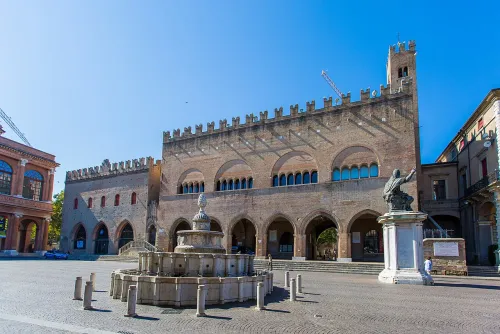
May is the warming-up shoulder month, with the sea reaching swimmable temperature (around 19-20°C) by late month and pleasant days in the low 20s. A run of fairs keeps the Fiera district busy, and RiminiWellness (28-31 May) brings 130,000-plus people for a full-city weekend. Outside that, May is calm, green and good value, ideal for couples and culture before the summer crush.
The vibe May is Rimini's quietly lovely shoulder: warm enough for a beach aperitivo and long enough evenings to linger, but without summer's heat, crowds or prices. Late May in particular is one of the most aesthetically pleasing times to wander the Borgo and the seafront.
Don't miss The sea reaches around 19-20°C by late May, the first swimmable days of the year. Long light evenings make the lungomare ideal for an early-season passeggiata, and the Borgo San Giuliano, Tempio Malatestiano and Parco Fellini are calm and uncrowded.
Crowd drivers A steady run of trade fairs (Venditalia, Expodental) keeps the Fiera busy, and RiminiWellness (28-31 May) fills the city for its weekend. Leisure crowds stay moderate until the very end of the month.
Shoulder pricing at 60-100 €/night, jumping to 110-160 €/night over the RiminiWellness weekend (28-31 May).
Events this month
🎉 FestivalRiminiWellness
May 28–31
the last weekend of May
The 20th edition of this four-day fitness, wellness and sport expo at the Rimini Fiera, with 130,000-plus visitors for live classes, demos and competitions.
Hotels spike 60-80% above normal May rates that weekend (110-160 €/night). A world-class show for fitness enthusiasts; everyone else may want to avoid the dates and save.
June in Rimini
High26°C / 80°F
Low18°C
Rain49mm / 7 rainy days
Sun13.1 h/day
Daylight15 h/day
Humidity68%
Crowds●●●●○Prices●●●●○
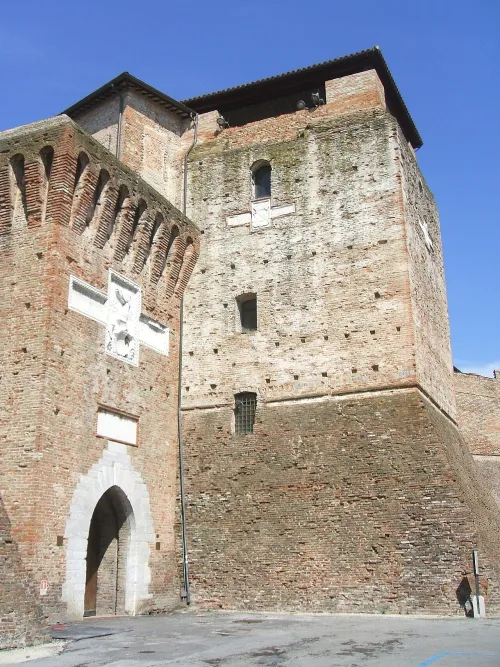
June opens the beach season and is one of the two best months to visit. The sea warms to 22°C, the days are the longest of the year (sunset around 21:00), and the first half of the month is uncrowded and well-priced. Then North Italian schools break up mid-month and the Notte Rosa (19-21 Jun) brings the single biggest early-summer hotel spike, with the whole Riviera selling out. Time your trip for 1-18 June for the sweet spot.
The vibe June is the tipping point into full summer, and the long light evenings are the payoff: dinner on the beach at 20:30 in full daylight is the defining experience. The first three weeks breathe, with warm sea and open beaches; then the Notte Rosa weekend turns the seafront into a pink, fireworks-lit party that sells the Riviera out.
Don't miss Early June (1-18) gives warm 22°C sea, open beaches and the Roman monuments uncrowded, the year's best all-round window. The Notte Rosa lights the landmarks pink with beach concerts, a Frecce Tricolori display and dawn concerts, though you should sleep at least ten streets back from the sea that weekend.
Crowd drivers North Italian schools break up mid-June, and the Notte Rosa (19-21 Jun), the RDS Summer Festival and the Ginnastica in Festa gymnastics championship (20-28 Jun) stack onto the third weekend to make it the month's peak.
Rates climb through the month from 90-150 €/night to a 180-260 €/night spike on the Notte Rosa weekend (19-21 Jun).
Events this month
🎉 FestivalThe Pink Night La Notte Rosa
Jun 19–21 ~
the summer-solstice weekend, usually the third weekend of June
The 21st edition of the Adriatic Riviera's signature festival, three nights of landmarks lit pink, beach concerts, fireworks, a Frecce Tricolori air display and dawn concerts, spanning 30-plus municipalities from Rimini to Ferrara.
June's single biggest hotel-price spike. The entire Riviera sells out, so book three-plus months ahead or skip the weekend and save 100 €/night. Sleep at least ten streets back from the sea, as the seafront is impenetrable midnight to 4 am.
🎵 MusicRDS Summer Festival
Jun 19–20 ~
two days coinciding with the Notte Rosa opening weekend
A two-day pop and radio concert festival on the Rimini seafront, programmed to coincide with the opening of the Notte Rosa.
It doubles as part of the Notte Rosa programme and rides the same hotel surge. Great if you want big free seafront concerts, another reason the third June weekend is the priciest of early summer.
🏃 SportGinnastica in Festa
Jun 20–28
nine days in late June
A national gymnastics championship at the Rimini Fiera over nine days, drawing thousands of athletes and their families.
It fills Fiera-side hotels through the Notte Rosa period and extends demand into late June. If you want the calmer side of June, base yourself in the historic centre rather than near the Fiera.
July in Rimini
High29°C / 84°F
Low21°C
Rain43mm / 6 rainy days
Sun13.5 h/day
Daylight15 h/day
Humidity66%
Crowds●●●●●Prices●●●●●
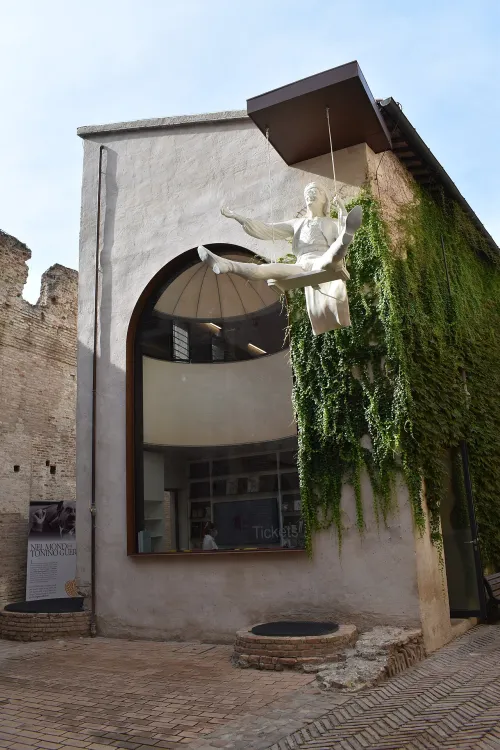
July is the peak of the beach season and the single busiest month. The sea sits at a warm 24-25°C, but midday heat is genuinely punishing at 32-35°C on the beach concrete. Italian, German and Czech families pack the seafront, the Campionati Italiani Danza Sportiva (4-12 Jul) keeps Fiera hotels full, and seafront rooms hit their annual high. It is the driest month, so rain is rare, but the crowds and prices are relentless.
The vibe July is hot, busy and beach-focused. The Roman old town has almost no shade, so walk it before 10:00 or after 17:30; the lungomare, with its 3-5°C sea breeze, stays walkable all day. This is full Italian summer, brilliant if you want the buzz, exhausting if you came for quiet culture.
Don't miss The Adriatic is at a warm 24-25°C and famously shallow and calm, ideal for families. Negotiate beach umbrella-and-sunbed sets Monday to Thursday when they are cheaper. The flat horizon gives spectacular sunsets, and dinner on the beach at 20:30 in daylight is the summer ritual.
Crowd drivers Peak family beach season plus the Ferragosto build-up, with the Campionati Italiani Danza Sportiva (4-12 Jul) keeping the Fiera sold out. Italian, German and Czech visitors are out in force all month.
Peak pricing: seafront hotels 130-220 €/night, centre 90-150 €/night, the most expensive sustained stretch of the year.
Events this month
🏃 SportItalian Dancesport Championships Campionati Italiani Danza Sportiva
Jul 4–12
nine days in early July
Italy's national competitive dance championships at the Rimini Fiera over nine days, with thousands of participants.
It keeps Fiera hotels sold out in the prime beach-open window and is one reason July is the single busiest month. Book early or accept seafront rates of 130-220 €/night.
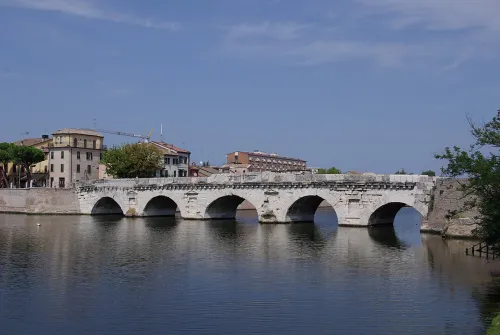
August in Rimini
High28°C / 83°F
Low20°C
Rain52mm / 7 rainy days
Sun12.4 h/day
Daylight14 h/day
Humidity68%
Crowds●●●●●Prices●●●●●
August is the co-peak and the month to avoid for value. Ferragosto (15 Aug) brings the beach to its absolute maximum, with crowds, 32-35°C heat and prices all at their highest. After a brief post-Ferragosto easing, the Meeting per l'Amicizia (21-26 Aug) brings 800,000-plus people and surges Fiera-side hotels again. The 13-26 August stretch is the worst week of the year unless you live for Italian summer chaos.
The vibe August is full-throttle Rimini: maximum crowds, maximum heat, maximum prices. Ferragosto is glorious if you love the chaos and miserable if you do not. The saving grace is that the Meeting's 800,000 visitors concentrate around the Fiera 3 km north, so the historic centre stays surprisingly navigable.
Don't miss The sea is at its warmest (25-26°C). The Sagra Musicale Malatestiana opens on 30 August with the Munich Philharmonic at the Teatro Galli, a calm cultural counterpoint. The historic centre, the Borgo and the Tempio stay walkable even during the Meeting, since the crowds cluster near the Fiera.
Crowd drivers Ferragosto (15 Aug) is the beach peak, and the Meeting per l'Amicizia (21-26 Aug) adds 800,000-plus congress visitors. Italian summer holidays run all month, keeping the seafront at maximum pressure.
Heads up Ferragosto (15 Aug) shuts supermarkets and thins transport outside Rimini, though restaurants stay open and packed. Many family-run old-town restaurants close the last week of August for staff holidays.
Co-peak: seafront 140-240 €/night, and Fiera-side hotels surge to 160-250 €/night during the Meeting (21-26 Aug).
Events this month
🇮 HolidayFerragosto
Aug 15
15 August
Italy's mid-August national holiday, the absolute peak of the beach season. Every restaurant is open and packed, shops largely shut, and transport outside Rimini thins right out.
The peak of the peak: avoid it if you dislike crowds and heat. If you love full-throttle Italian summer chaos, it is unmissable, but hotels have been full since July at the year's highest prices.
⛪ ReligiousMeeting for Friendship Among Peoples Meeting per l'Amicizia fra i Popoli
Aug 21–26
six days in late August
The annual Catholic congress of Comunione e Liberazione at the Rimini Fiera, drawing 800,000-plus visitors over six days, with occasional papal visits that sell out the Fiera district weeks ahead.
Fiera-side hotels sell out months ahead and spike to 160-250 €/night. Essential for pilgrims and CL members; everyone else should book the far side of the city, where the historic centre stays calm, or avoid the dates entirely.
🎵 MusicMalatesta Music Festival Sagra Musicale Malatestiana
Aug 30 – Nov 9
symphonic concerts from late August through November
The 77th edition of this international classical-music festival at the Teatro Galli, with the Munich Philharmonic under Lahav Shani (30 Aug), the Filarmonica della Scala under Riccardo Chailly (11 Oct) and the Chamber Orchestra of Europe under Antonio Pappano (9 Nov).
A rare chance to hear world-class orchestras in a restored Renaissance theatre in a crowd-free autumn city. Tickets sell quickly, so book ahead, and pair a concert with the cheap, calm 7-16 November window.
September in Rimini
High24°C / 76°F
Low17°C
Rain88mm / 9 rainy days
Sun10.5 h/day
Daylight12 h/day
Humidity72%
Crowds●●●○○Prices●●●○○
September is the other best month, often the finest of all. The crowd drops sharply after the first week, the sea still holds a warm 24-25°C, and the days stay long and pleasant. Italians and Germans linger through mid-month, and the Tecna and BEX fairs (22-25 Sep) cause a brief blip, but rates fall well below July and August. The Sagra Musicale Malatestiana adds world-class concerts in the Teatro Galli.
The vibe September feels like Rimini exhaling: warm sea, long evenings and full city life, but without August's crush or prices. The first three weeks are the sweet spot, with the beach pleasant and the old town calm. This is the connoisseur's month for couples and culture.
Don't miss The sea still holds 24-25°C into mid-September, swimmable but uncrowded. This is peak Romagna produce season, with porcini, fresh piadina and the Sangiovese grape harvest, and the Mercato Coperto at its richest. Sagra Musicale concerts begin to fill the Teatro Galli on autumn evenings.
Crowd drivers Crowds drop sharply after the first week as schools go back, though Italians and Germans stay through mid-September. The Tecna and BEX fairs (22-25 Sep) bring a short fair blip at the Fiera.
In season Peak Romagna harvest: fresh Apennine porcini, the Sangiovese grape harvest, piadina and passatelli, with La Vecchia Pescheria fish market on Via Castelfidardo best Tuesday to Saturday mornings.
Value returns at 75-120 €/night, with a fair blip to 100-140 €/night around Tecna and BEX (22-25 Sep).
Events this month
🎨 Art and cultureTecna + BEX
Sep 22–25
four days in late September
Trade fairs for ceramics and building technology at the Rimini Expo Centre, the main fair blip of an otherwise good-value September.
It nudges hotels up to 100-140 €/night for four days. Good to know if your September trip is value-driven; the rest of the month runs 75-120 €/night, well below July and August.
🎵 MusicMalatesta Music Festival Sagra Musicale Malatestiana
Aug 30 – Nov 9
symphonic concerts from late August through November
The 77th edition of this international classical-music festival at the Teatro Galli, with the Munich Philharmonic under Lahav Shani (30 Aug), the Filarmonica della Scala under Riccardo Chailly (11 Oct) and the Chamber Orchestra of Europe under Antonio Pappano (9 Nov).
A rare chance to hear world-class orchestras in a restored Renaissance theatre in a crowd-free autumn city. Tickets sell quickly, so book ahead, and pair a concert with the cheap, calm 7-16 November window.
October in Rimini
High20°C / 68°F
Low13°C
Rain76mm / 9 rainy days
Sun8.5 h/day
Daylight11 h/day
Humidity78%
Crowds●●○○○Prices●●○○○
October is the true shoulder, mild at around 20°C and the insider's swim window, with the sea still pleasant at 21°C and the beaches nearly empty. The exception is TTG Travel Experience (14-16 Oct), Italy's main tourism trade fair, which sells out every hotel in the city for three days. Either side of it, October is quiet, good-value and atmospheric, with the Romagna hills turning golden inland and Sagra Musicale concerts running.
The vibe October is the couples' and culture-lovers' month: warm enough for a last sea swim, calm enough to have the Borgo and the Roman monuments to yourself, and cheap once the TTG fair clears. Book around 14-16 October, but 17-19 October is the year's best calm-and-cheap window.
Don't miss The sea still holds about 21°C with empty beaches, the insider's swim window. The Filarmonica della Scala under Riccardo Chailly plays the Teatro Galli on 11 October for the Sagra Musicale. The Romagna hinterland 30 km inland turns golden with the vineyards, a fine day trip in the soft autumn light.
Crowd drivers TTG Travel Experience and InOut (14-16 Oct) pack the entire city for three days, the dominant October driver. Otherwise the month is quiet, with only light shoulder-season demand.
True shoulder at 55-90 €/night, but TTG week (14-16 Oct) packs the city and spikes rates to 130-200 €/night.
Events this month
🎨 Art and cultureTTG Travel Experience
Oct 14–16
three days in mid-October
Italy's leading travel trade fair, with the parallel hospitality expo InOut, both at the Rimini Expo Centre, drawing 45,000-plus trade visitors.
The entire city sells out from three days before through the fair, so any leisure visit on these dates needs early booking and a 130-200 €/night budget. Time it right and 17-19 October, just after, is the year's best calm-and-cheap window.
🎵 MusicMalatesta Music Festival Sagra Musicale Malatestiana
Aug 30 – Nov 9
symphonic concerts from late August through November
The 77th edition of this international classical-music festival at the Teatro Galli, with the Munich Philharmonic under Lahav Shani (30 Aug), the Filarmonica della Scala under Riccardo Chailly (11 Oct) and the Chamber Orchestra of Europe under Antonio Pappano (9 Nov).
A rare chance to hear world-class orchestras in a restored Renaissance theatre in a crowd-free autumn city. Tickets sell quickly, so book ahead, and pair a concert with the cheap, calm 7-16 November window.
November in Rimini
High15°C / 59°F
Low9°C
Rain98mm / 12 rainy days
Sun6.1 h/day
Daylight10 h/day
Humidity82%
Crowds●○○○○Prices●○○○○
November is back to deep off-season, the second cheapest and quietest month. The sea cools to a mild 17-18°C and the bora wind can make beach days unpleasant, but the Roman monuments and Borgo stand completely tourist-free. Ecomondo (3-6 Nov) is the dominant spike, with REBUILD and IBE keeping fair demand alive intermittently. The 7-16 November gap is the best budget-culture window of the entire calendar.
The vibe November is Rimini stripped back to its quiet, Roman self: grey, cheap and almost touristless between the fairs. It is a culture trip, not a beach one, but the empty monuments, the Sagra Musicale concerts and the floor-level prices make it the connoisseur's budget month.
Don't miss The 7-16 November lull offers 45-65 €/night hotels, the Roman monuments and Borgo entirely to yourself, and Sagra Musicale concerts on, with the Chamber Orchestra of Europe under Antonio Pappano at the Teatro Galli on 9 November. The covered market is a warm refuge from the cooling, bora-prone days.
Crowd drivers Ecomondo (3-6 Nov) dominates, with 103,000-plus visitors, and REBUILD (17-19 Nov) and IBE (24-26 Nov) keep fair demand alive intermittently. Between the fairs, leisure tourism is near zero.
Second-cheapest month at 45-75 €/night, but Ecomondo (3-6 Nov) spikes hotels to 120-180 €/night citywide.
Events this month
🎨 Art and cultureEcomondo
Nov 3–6
four days in early November
Europe's most important green-economy and circular-economy expo at the Rimini Expo Centre, with 103,000-plus visitors and 1,700-plus exhibitors.
The dominant November spike, lifting hotels from 45 to 120-180 €/night for four days. Book two-plus months ahead if you visit in early November, or aim for the cheap 7-16 November lull just after.
🎵 MusicMalatesta Music Festival Sagra Musicale Malatestiana
Aug 30 – Nov 9
symphonic concerts from late August through November
The 77th edition of this international classical-music festival at the Teatro Galli, with the Munich Philharmonic under Lahav Shani (30 Aug), the Filarmonica della Scala under Riccardo Chailly (11 Oct) and the Chamber Orchestra of Europe under Antonio Pappano (9 Nov).
A rare chance to hear world-class orchestras in a restored Renaissance theatre in a crowd-free autumn city. Tickets sell quickly, so book ahead, and pair a concert with the cheap, calm 7-16 November window.
December in Rimini
High11°C / 51°F
Low5°C
Rain65mm / 9 rainy days
Sun5.9 h/day
Daylight9 h/day
Humidity83%
Crowds●○○○○Prices●○○○○
December is the quietest month of all, with no major fair and the cheapest hotels outside fair weeks. Days are short (sunset around 16:30) and the sea cold, but a modest Christmas-market atmosphere lights Piazza Cavour and the old town, and the Roman monuments are utterly tourist-free. It is the deepest budget-and-culture window, with seafront rooms from 40 €/night.
The vibe December is Rimini at rest: no fairs, no crowds, just a small, warm Christmas-market glow in the old town and the cheapest rooms of the year. Come for the empty Roman monuments and the festive lights around Piazza Cavour, and accept that the sea and the bora wind are firmly winter.
Don't miss The Christmas market and lights warm Piazza Cavour and the old town, and the Fellini Museum, Domus del Chirurgo and Museo della Città are at their most peaceful. The free Roman monuments, the Arch of Augustus and Tiberius Bridge, stand empty in the low winter light.
Crowd drivers No major fair, so December is the year's quietest month. Only the modest Christmas-market weekends bring a slight uptick around Piazza Cavour and the old town.
Heads up Immaculate Conception (8 Dec) closes many civic museums and mixes shop hours; Christmas Day (25 Dec) shuts everything; St. Stephen's Day (26 Dec) keeps most shops closed with only light activity.
The quietest month: 40-65 €/night, rising only to 60-90 €/night on Christmas-market weekends. No major fair.
Frequently asked questions
What is the best time to visit Rimini?
Early June (1-18) and the first three weeks of September are the best overall. Both give warm sea (22-25°C), beaches uncrowded by Rimini standards, the full cultural programme of Roman monuments and the Fellini Museum, pleasant walking weather, and hotel rates 35-55% below August. June adds the longest days of the year with sunset at 21:00; September adds Sagra Musicale concerts and the Romagna grape harvest.
What is the cheapest time to visit Rimini?
February, November and December are the cheapest, with 3-star seafront hotels at 40-65 €/night, less than half the July-August peak of 130-240 €/night. The trade is a cold, off-season sea and short winter days. Avoid the fair weeks, SIGEP (16-20 Jan) and Ecomondo (3-6 Nov), which triple rates citywide; the 7-16 November gap is the single best budget window.
What is the worst time to visit Rimini?
13-26 August unless you love crowded Italian summer beaches. Ferragosto (15 Aug) brings the beach to its absolute maximum with 32-35°C heat and the year's highest prices, and the Meeting per l'Amicizia (21-26 Aug) adds 800,000-plus people and surges Fiera-side hotels to 160-250 €/night. The historic centre stays navigable, but accommodation is full and expensive citywide.
When can you swim in the sea at Rimini?
The Adriatic reaches swimming temperature (around 20°C) by late May, with comfortable swimming (22-24°C) from June through September and peak warmth (25-26°C) in August. The insider's window is October, when the sea still holds about 21°C but the beaches are nearly empty. The Adriatic here is calm and famously shallow, so children can wade far out and stay knee-deep.
How hot does Rimini get in summer?
July and August are genuinely punishing at midday, regularly hitting 32-35°C in the city and on the beach concrete, with reflected heat from the sand making it feel hotter still. Walk the Roman old town before 10:00 or after 17:30; the seafront lungomare stays comfortable all day thanks to a 3-5°C sea breeze. July is the driest month, so rain is rare.
Is Rimini worth visiting in winter?
Yes, as a budget-and-culture trip rather than a beach one. From November to February the beach is empty and the sea cold, but the Roman and Renaissance old town, the Fellini Museum, the Domus del Chirurgo and the Borgo San Giuliano murals are all tourist-free and cheap, with seafront hotels from 40 €/night. The Sagra Musicale Malatestiana also puts world-class orchestras in the Teatro Galli through autumn.
When is the Notte Rosa in Rimini?
The Notte Rosa, the Adriatic Riviera's pink-themed summer festival, falls on the summer-solstice weekend, usually the third weekend of June (19-21 June in 2026). Landmarks are lit pink with beach concerts, fireworks, a Frecce Tricolori air display and dawn concerts across 30-plus municipalities. It is June's single biggest hotel spike, so book three-plus months ahead and sleep at least ten streets back from the sea.
How busy do the trade fairs make Rimini?
Very busy, and they are the main reason off-season hotel prices spike. The big ones, SIGEP (16-20 Jan), TTG Travel Experience (14-16 Oct) and Ecomondo (3-6 Nov), each sell out the city and double or triple rates for their dates, so check the fair calendar before booking a winter or shoulder-season trip. The best value windows sit just after a fair clears, such as 17-19 October after TTG.
How many days do you need in Rimini?
Two to three days cover the essentials beyond the beach: the Roman old town with the Arch of Augustus and Tiberius Bridge, the Tempio Malatestiano, the Fellini Museum at Castel Sismondo, the Domus del Chirurgo, and the muralled Borgo San Giuliano. Add days for the beach in summer, when the calm, shallow Adriatic is the main draw, or a day trip into the golden Romagna hills inland.

Any month, any day: your guide is already there
Whatever date you pick, a private human guide gets pricier and harder to book on weekends, holidays and in peak season. Our live AI guide, the one that walks with you and answers anything you ask out loud, works the opposite way.
One flat price, every day
No holiday, weekend, night or peak-season surcharge. A private guide in Rimini runs well over 100 euro for a half day, and more on holidays. Ours stays the same.
Available the moment you want it
Start at midnight or at dawn, on Christmas, in the snow, in the August heat. No sold-out high season, no booking weeks ahead.
Your pace, no meter running
Pause for a long lunch, restart after dark, repeat a stop. The tour simply waits for you.
Free to try, a fraction of the cost
Test it for free, then a transparent flat price that undercuts any private guide, in every season.
The classic Rimini tour: 9 stops, 3.0 km, about 2 h on foot
Your live AI guide and the self-guided Rimini route, together in your browser.