Best Time to Visit Innsbruck
Month-by-month weather, crowds and prices, plus a full calendar of festivals and events worth planning a trip around.
Best monthsMay, Sep
CheapestMay, Oct, Nov
AvoidAug
BusiestFeb, Aug, Dec

When is the best time to visit Innsbruck?
Come in May or September: mild 15-22°C days, a queue-free Nordkette cable car, the Old Town without the summer crush, and hotel rates 35-50% below the August peak. February is the single busiest month (ski school holidays fill the valley and prices hit their ceiling), and August is the worst for heat and crowds. November's first two weeks and May are the cheapest, with 3-star rooms from 65-110 €.
Start our tool and find your best time to visit Innsbruck
Your perfect month
Free · ~30 seconds
or tap a month directly
What matters to you?
And this?
Best overall: May, Sep. May and September are the real sweet spot: 15-22°C, the Nordkette and Ambras Castle without queues, good hiking and cycling weather, and hotel rates 35-50% below peak. May adds the first alpine snowmelt waterfalls on the valley walls; September gives crystal-clear post-summer mountain views and quiet, full-capacity restaurants.
Best value: May, Oct, Nov. May, October and early November bring 65-110 € rooms, no cable-car queues, and free highlights like the Hofburg courtyard, the Hofgarten park and the Triumphal Arch. The catch in late October and November is shortening days and possible early snow above 2,000 m, so plan mountain trips for clear mornings.
Avoid: Aug, Feb. August is the year's worst for non-skiers: 28-33°C basin heat, 45-60 minute Nordkette queues, peak hotel rates (140-200 €), and a surge of Italian day-trippers over Ferragosto (15 August). February is the second to avoid on price: ski school holidays across Austria and Germany fill the valley and push rooms to their annual maximum.
- January: Tough month, 5°C. This is Innsbruck as a working ski city: lift queues, cold clear mountain air above the fog, and a Bergisel arena buzzing in the first week. Bring proper thermal layers for the exposed ski-jump stadium, where the wind chill is severe, and accept that the centre is busy and pricey through the holiday window.
- February: Tough month, 8°C. February is for skiers, and it shows: every lift has a line, hotels are full, and rates hit their annual ceiling. If you are here for the mountains it is glorious; if you came for the city alone, you are paying maximum prices for a town in full ski-holiday mode. The Winter Dance Festival is the cultural counterweight.
- March: Good time, 11°C. March is the transition month: skiable snow up high, milder air in the valley, and noticeably calmer streets than February. It is the last stretch where you can combine spring sightseeing with a day on the glacier, and prices have come off their winter ceiling.
- April: Good time, 14°C. April is Innsbruck shaking off winter. Waterfalls run on the valley walls from the thaw, the glacier still tempts skiers, and the streets are calm apart from the Easter spike. It is changeable, so pack layers, but the value and the spring energy make it a rewarding, underrated month.
- May: Great time, 18°C. May is the quietly perfect month nobody markets. No ski crowds, no summer heat, no festival markup, just long bright days, a green valley and a queue-free cable car. This is the month to ride the Nordkette in 15 minutes instead of an hour and walk the Old Town in peace, for half the August price.
- June: Good time, 24°C. June is the gentle on-ramp to summer: warm but not stifling, long evenings, and the high meadows in bloom. It is busier than May on weekends but still breathes during the week, and the reliable clear mornings make it one of the most comfortable months to be on the mountain.
- July: Good time, 25°C. July is hot, busy and festival-packed. The Inn valley basin gets stuffy at midday, especially on Föhn days, so the best walking hours are 07:00-10:00 and from 18:00 on. The real July Innsbruck is up the mountain in the cool morning air or out at the festivals, not baking in the Old Town at noon.
- August: Tough month, 25°C. August is full-throttle Innsbruck: packed, hot and lively. The basin is stuffy from noon to mid-afternoon, so avoid strenuous Old Town sightseeing 12:00-15:00 and head up the Nordkette to Hafelekar, 10-12°C cooler, instead. If you must visit in August, the KRAPOLDI street-arts festival is the free, joyful highlight that makes it worthwhile.
- September: Good time, 21°C. September feels like Innsbruck exhaling: warm enough for the terraces, the mountains crystal-clear after summer haze lifts, and the crowds gone. This is the month to come for everything open, the weather still kind, and the locals back in their normal rhythm rather than on holiday or serving tourists.
- October: Great time, 17°C. October is the couples' and quiet-traveller's month: golden foliage at Ambras Castle, calm hiking on the Nordkette, and intimate restaurants back at full capacity after summer. Cool, romantic and uncrowded, with some of the driest, clearest weather of the year and the lowest prices alongside May.
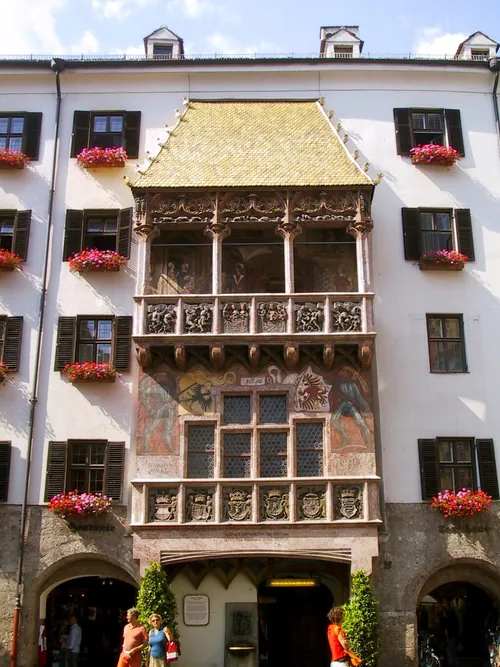
- November: Good time, 11°C. November is a month of two halves: the calm, cheap, almost touristless first fortnight, then the warm glow of the Christmas markets from mid-month. The early weeks are the year's best value, and the late weeks bring the first snowy Old Town and the markets under the Golden Roof, with the first Advent weekend the only real crowd.
- December: Tough month, 7°C. December trades November's calm for full festive bustle: five markets, mulled wine, snowy Old Town lanes and crowds. It is genuinely magical, especially the Old Town market under the Golden Roof and the Hungerburg market by cable car, but it is the most expensive month and the first Advent weekends and Christmas week are mobbed. Go midweek for the markets and book New Year's Eve well ahead.
Innsbruck weather by month
HighLowRainfall
Jan5°
Feb8°
Mar11°
Apr14°
May18°
Jun24°
Jul25°
Aug25°
Sep21°
Oct17°
Nov11°
Dec7°
| Month | Temp | Rain | Sun | Crowds | Prices | Highlight |
|---|---|---|---|---|---|---|
| Jan | 5° / -4° | 96mm · 15 rainy days | 5.8 h/day | ●●●●● | ●●●●● | Four Hills Tournament Innsbruck |
| Feb | 8° / -2° | 74mm · 12 rainy days | 7.0 h/day | ●●●●● | ●●●●● | Innsbruck Winter Dance Festival |
| Mar | 11° / 1° | 84mm · 14 rainy days | 8.6 h/day | ●●●●○ | ●●●●○ | Innsbruck Winter Dance Festival |
| Apr | 14° / 4° | 101mm · 16 rainy days | 10.0 h/day | ●●●○○ | ●●●○○ | Innsbruck Alpine Trailrun Festival |
| May | 18° / 8° | 175mm · 21 rainy days | 9.6 h/day | ●●○○○ | ●●○○○ | Innsbruck Alpine Trailrun Festival |
| Jun | 24° / 13° | 156mm · 18 rainy days | 11.6 h/day | ●●●○○ | ●●●○○ | |
| Jul | 25° / 15° | 163mm · 20 rainy days | 11.4 h/day | ●●●●○ | ●●●●○ | Nordkette Wetterleuchten Festival |
| Aug | 25° / 14° | 181mm · 17 rainy days | 10.3 h/day | ●●●●● | ●●●●● | Innsbruck Festival of Early Music |
| Sep | 21° / 11° | 127mm · 14 rainy days | 9.2 h/day | ●●●○○ | ●●●○○ | |
| Oct | 17° / 7° | 113mm · 12 rainy days | 7.6 h/day | ●●○○○ | ●●○○○ | |
| Nov | 11° / 2° | 96mm · 12 rainy days | 6.0 h/day | ●●○○○ | ●●○○○ | Innsbruck Christmas Markets |
| Dec | 7° / -1° | 88mm · 14 rainy days | 5.3 h/day | ●●●●● | ●●●●● | Innsbruck Christmas Markets |
How we score this: weather = long-run climate normals (Open-Meteo), crowds & prices = relative season read, events checked yearly against official dates.
Best time to visit Innsbruck: weather, prices & crowds
Best months for good weather
Jun, Sep
June and September give Innsbruck its most reliable comfort: 15-22°C, snow-free hiking from around 1,900 m on the Nordkette, and clear morning skies before any afternoon storm, without August's 28-33°C basin heat and Föhn stuffiness.
Quietest months to avoid the crowds
May, Oct, Nov
May, October and early November empty the city out. You ride the Nordkette cable car with a 15-minute wait instead of an hour, walk the Old Town under the Golden Roof without a tour group in sight, and have the Tirol Panorama museum to yourself.
Cheapest time to visit Innsbruck
May, Oct, Nov
May, October and the first half of November are the cheapest: 3-star rooms in the centre run 65-110 € a night, roughly half the February ski peak and the December Christmas-market rate.
Best time for festivals and events
Dec, Jan, Nov
When the first valley snow falls (typically 20 November to 10 December) the Old Town turns white under the Golden Roof while five Christmas markets glow until 9 pm. The Panorama Christkindlmarkt at the Hungerburg, reached by cable car at 860 m, sets stalls against a full mountain backdrop, best on a weekday afternoon.
How many days do you need in Innsbruck?
Two full days cover Innsbruck's historic core and its most distinctive feature: the mountains right above the city. A first day puts you through the Habsburg Old Town and up the Nordkette cable car; a second day stretches to Schloss Ambras and the Bergisel ski jump, leaving evenings free for the Markthalle and the Inn riverfront terraces. Three or four days reward those who want a day trip south to the South Tyrol wine country or a full alpine hiking circuit above 2,000 m.

One day
Old Town and the mountain above
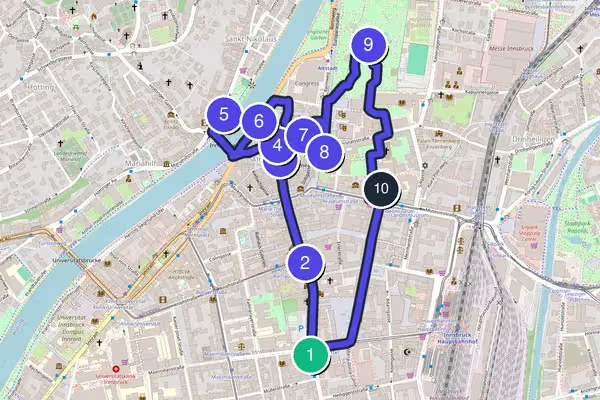
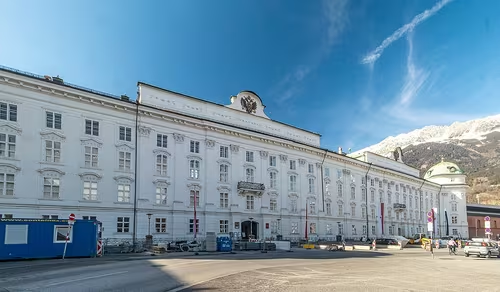
Start at the Triumphal Arch on Maria-Theresien-Straße and walk north toward the Golden Roof through the pedestrian zone: a self-guided Innsbruck walking tour covers 10 stops across 3.5 km in around 2 hours, taking you from the Triumphal Arch through the Imperial Palace, the Court Church and the Hofgarten. After the Old Town, ride the Nordkette cable car from the Hungerburg station to the Seegrube at 2,000 m for sweeping views over the Inn valley. Book the first cable car of the day, especially in summer, to avoid the queues that build fast after 10:00.
Two daysRecommended
Schloss Ambras, Bergisel and the Markthalle
Take tram 6 from the Hauptbahnhof to Schloss Ambras, 4 km southeast, and allow a half-day for the Spanish Hall and the collections. In the afternoon, head to Bergisel to see the Olympic ski-jump stadium designed by Zaha Hadid, where a glass panorama tower looks back across the basin and the city. Round off the day at the Markthalle at Innrain before it closes, which runs until 13:00 on Saturdays, for Tiroler Speck, Graukäse and mountain herbs.
Three days
A day trip into the Alps or South Tyrol
A third day opens the door to Innsbruck's wider Alpine reach. The Stubai Glacier is a 45-minute bus ride south and runs a summer hiking circuit above 3,200 m. Alternatively, drive or take the train 45 km south to the Bolzano area in South Tyrol for the wine harvest in September, the Ötzi Museum, or simply the contrast of a Ladin-Italian culture just over the Brenner Pass. Returning by late afternoon leaves time for dinner on the Inn riverfront, which is best on a warm September evening.
Four days or more
Deep alpine hiking and the Tirol Panorama
Four days or more suit hikers and those who want to slow down. The Nordkette offers serious trails from the Seegrube to the Hafelekar at 2,269 m and on to the Rumer Spitze, best done over a full day with an early start. The Tirol Panorama museum at Bergisel, often overlooked, holds the 360-degree panoramic painting of the 1809 Battle of Bergisel and is exceptional in any season. Side valleys such as the Stubai and Ötztal each warrant their own day for summer hiking or winter glacier skiing.
Best time to visit Innsbruck by traveller type
Same city, different trip. Here's the month that fits how you're travelling.
🧭
Best time to visit Innsbruck for the first time
MaySep
May or September: mild 14-22°C weather, a 15-minute Nordkette wait instead of an hour, the Old Town and Ambras Castle in comfort, and rooms 40-50% below the August peak. September adds the clearest mountain air of the year once summer haze clears.
❤️
Best time to visit Innsbruck for couples
DecOct
Early December on a weekday (Advent 2-12) for candlelit Christmas-market evenings, mulled wine in the snowy Old Town and that unmistakable Tyrolean glow without the first-Advent-weekend crowds. Or October for golden foliage at Ambras Castle and quiet, intimate dinners back at full capacity after summer.
💶
Best time to visit Innsbruck on a budget
MayNov
May or early November: rooms 65-110 €, free sights (Hofburg courtyard, Hofgarten, Triumphal Arch, Maria-Theresien-Straße), and the 45-minute Hungerburg walking trail as a free alternative to the 15.50 € gondola. The KRAPOLDI street-arts festival (late August) and the Christmas markets (from mid-November) are free cultural highlights.
🍝
Best time to visit Innsbruck for food and wine
SepJul
September for the Markthalle at its best, Tiroler Speck, Graukäse and mountain herbs, paired with a 45 km day trip south to the Bolzano and Merano wine harvest. July adds terrace dining on the Inn riverfront before the August crush, with summer menus still running.
Worst time to visit Innsbruck
August is the year's worst month for non-skiers: the Inn valley basin regularly hits 28-33°C, the Nordkette cable car runs 45-60 minute queues by mid-morning, 3-star rooms cost 140-200 € a night, and Italian Ferragosto day-trippers pour over the Brenner around 15 August, packing the Old Town at its hottest. February is the second month to approach carefully: school ski holidays across Austria and Germany overlap, every lift has queues, and hotel rates climb to 150-230 €, the annual ceiling for those not there specifically to ski.
Still worth it for August still works if you are there for the Festwochen der Alten Musik baroque concerts or the free KRAPOLDI street-arts festival, and the Nordkette's Hafelekar at 2,269 m runs 10-12°C cooler than the basin, making it a genuine escape. February suits anyone whose main goal is skiing the Nordkette, Patscherkofel or Stubai Glacier on reliable snow, with the Winter Dance Festival adding a cultural option in the evenings.
Go instead in May, September, when Innsbruck is at its best.
Best time for a tour of Innsbruck
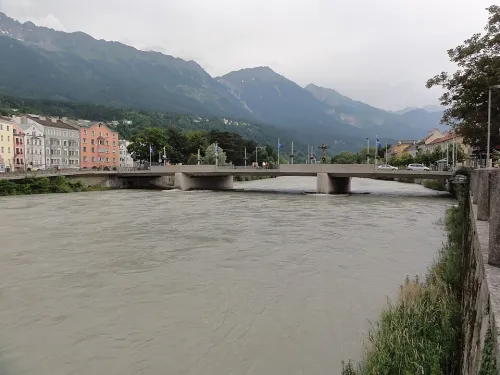
Innsbruck is a walk that lives or dies by its mountain-valley climate. The 3.5-kilometre loop from the Triumphal Arch up Maria-Theresien-Straße to the Golden Roof and back across the Innbrücke is almost entirely unsheltered stone and cobblestone, so the temperature and who else is on the streets matters enormously. September and October are the standout months: highs settle between 17 and 21 °C, rain eases to around 12 to 14 days, and the summer crowds have thinned to something comfortable. You can linger on the Innbrücke over the green Inn without being jostled, and the light on the Nordkette is sharp and clear. May is another reasonable option at around 18 °C, though it is the wettest month on the calendar with 21 rain days, so pack layers. July and August bring genuine warmth, 24 to 25 °C, but August is the busiest month of the year: the Golden Roof square fills shoulder to shoulder from mid-morning onward and the Hofgarten loses its calm. January and December read mild on paper at 5 to 7 °C, but both months pull packed crowds driven by ski season and the Christmas market respectively, and with barely 5 to 7 hours of daylight the Ferdinandeum and the Court Church feel rushed rather than savoured.
With AI Tourguide the tour operator's fixed schedule disappears entirely. You decide whether to set off at eight on a September morning when Maria-Theresien-Straße is nearly empty and the Inn glints in low autumn sun, or whether to wait out a May shower and start at noon once the cobblestones dry. The guide runs in your browser, no download needed, and a voice-first AI leads the whole walk: it tells you the story of the Imperial Palace before you step inside, asks what caught your eye at the Golden Roof, and remembers your answer when you reach the Cathedral of St. James ten minutes later. Start your Innsbruck tour whenever the weather and the light feel right, and let the guide adapt to the pace you set.

 +6
+6All 10 stops are already on the map.
You just press start.
You just press start.
 AI Tourguide
You just read the route.
Now walk it with a guide in your ear.
Press start wherever you are, even hundreds of kilometres from Innsbruck, and the guide begins telling its stories right away. In the city, pick any of the 10 stops to start from: it leads you there, then talks with you the whole route, asking, listening, remembering, and shaping the tour around your answers.
10stops3.5km2.1hours11languages
▶Start the tour freeFree to start · Runs in your browser · No app, no download
Innsbruck events and festivals calendar
Annual highlights worth timing a trip around, listed month by month.
January
🏃 SportFour Hills Tournament Innsbruck 74. Vierschanzentournee Innsbruck
Jan 3–4
always 3-4 January in Innsbruck (qualification on the 3rd, competition on the 4th)
Ski-jumping's most famous event series at the Bergisel Stadion, drawing around 25,000 spectators to the qualification on 3 January and the competition on 4 January.
🎨 Art and cultureInnsbruck Winter Dance Festival
Jan 30 – Mar 8
late January to early March
A multi-production contemporary dance festival at the Congress Innsbruck Dogana, typically featuring opera adaptations, artist tributes and international flamenco and contemporary companies.
April
🏃 SportInnsbruck Alpine Trailrun Festival adidas TERREX Innsbruck Alpine Trailrun Festival
Apr 29 – May 2
the last days of April into early May
Eleven trail races from 8 to 113 km through the Nordkette, with 1,500 places that sell out within two hours of registration opening.
July
🎵 MusicNordkette Wetterleuchten Festival Nordkette Wetterleuchten
Jul 18–19
a mid-July weekend, Saturday 4 pm to Sunday 4:30 pm
Europe's highest-altitude electronic music festival, staged at the Seegrube at 2,000 m, with the Nordkette cable car running to 3 am.
🏳️🌈 PrideInnsbruck Pride
Jul 23–25
late July, with the parade on the Saturday at 1:15 pm
A three-day queer cultural programme organised by Pride Tirol, with the main parade setting off from the Messe Vorplatz on 25 July and a rally finish, followed by an after-party.
🎵 MusicInnsbruck Festival of Early Music Innsbrucker Festwochen der Alten Musik
Jul 24 – Aug 30
late July to late August
One of Europe's leading early-music festivals, with around 30 concerts at historic venues, an orchestra in residence, and baroque operas at the Tiroler Landestheater running mid-to-late August.
August
🎨 Art and cultureKRAPOLDI Street Arts & Circus Festival KRAPOLDI Festival
Aug 21–30
city-centre phase 21-22 August, then Rapoldipark phase 25-30 August
International new circus, clownery, street theatre and acrobatics.
November
🎄 Christmas marketInnsbruck Christmas Markets Christkindlmärkte Innsbruck
Nov 15 – Jan 6
the Old Town and Marktplatz markets run 15 November to 23 December; the Maria-Theresien-Straße and Hungerburg markets run on to 6 January
Five simultaneous markets: the most atmospheric beneath the Golden Roof in the Old Town, the largest and most family-friendly on the Marktplatz, the longest-running on Maria-Theresien-Straße, and a small artisan market at 860 m on the Nordkette Hungerburg station, all open daily 11:00-21:00.
December
🌸 Seasonal natureBergsilvester (Mountain New Year's Eve) Bergsilvester Innsbruck
Dec 30–31
a children's NYE in the Old Town on 30 December, then the party mile and midnight fireworks on 31 December
Light projections on the Hofburg, City Tower, Cathedral and Inn Bridge, a children's fair in the Altstadt on 30 December (13:00-18:00), a party mile of DJs and live music on the Landestheater forecourt from 21:00 on 31 December, and midnight fireworks from the Seegrube on the Nordkette, visible across the city.
Insider tips for visiting Innsbruck
The rules buried in forums, in one place.
- In July and August the first Nordkette cable car (07:15 weekdays, 08:15 weekends) is the only way to dodge a 45-60 minute queue at the Hungerburgbahn. By 10:00 the first gondola stage is packed; a Wednesday or Thursday departure is markedly quieter than Saturday.
- Book Old Town accommodation by October for the Four Hills Tournament (3-4 January): centre hotels hit 100% occupancy and 200-280 € a night. If you miss the window, stay in Hall in Tirol, 10 km east with a direct train, at roughly half the city-centre price.
- The Four Hills Tournament event ticket doubles as a Tyrol-wide public-transport day pass. Take the STB bus from the Hauptbahnhof to Bergisel; parking near the ski jump is almost non-existent and a 30-minute walk from the city car parks.
- The Markthalle at Innrain, the city's best food shopping, closes at 13:00 on Saturday and is shut all Sunday. Time a Saturday visit before 12:30 to catch the full Tyrolean cheese, speck and produce stalls; a Sunday trip is wasted.
- The Hofkirche (Court Church) does not open until 12:30 on Sundays, so a 10:00 arrival meets a locked door. The adjacent Folk Art Museum, on the same ticket (12 €), opens at 09:00 daily.
- The first weekend of Advent (29-30 November) is Innsbruck's most crowded weekend of the year. Mid-week, Tuesday to Thursday, between the first Advent and 20 December is calm, atmospheric and 30-40% cheaper for hotels.
- Föhn wind closes the Nordkette upper gondolas (Seegrube to Hafelekar) above about 80 km/h. Check the live nordkette.com webcam before taking the taxi to the Hungerburgbahn, especially on warm, crystal-clear days.
- Ambras Castle sits 4 km from the Old Town, a 20-minute ride on tram 6 from the Hauptbahnhof (every 15 minutes). Allow a half-day; in August the Spanish Hall needs timed entry, so book the same week at schlossambras-innsbruck.at. The museum is closed Monday.
Public holidays in Innsbruck
On these dates many shops and offices close, transport thins out, and sights can be mobbed or shut. Plan around them.
| Date | Holiday | What closes |
|---|---|---|
| Jan 1 | New Year's Day | Everything closed: shops, offices, most restaurants. The Nordkette cable car runs a reduced schedule. A quiet day after the Bergsilvester crowds. |
| Jan 6 | Epiphany | Full closure; many shops shut. Tyrolean Sternsinger (carol singers) move through the streets in costume. A traditional, observed day across the region. |
| Apr 6 | Easter Monday | Everything closed. The Easter weekend (3-6 April) is a major short-break period, so the Old Town is crowded and hotels run 130-180 €. |
| May 1 | Labour Day | Full closure; a city parade fills Maria-Theresien-Straße. It coincides with the Alpine Trailrun Festival weekend, so the centre is lively despite the shop closures. |
| May 14 | Ascension Day | Full closure and the start of a popular long weekend (14-17 May). A favoured hiking window for Austrian travellers, so the Nordkette fills on the Saturday. |
| May 25 | Whit Monday | Full closure; another school and family long weekend. Shops shut, but most restaurants and the cable car run normally. |
| Jun 4 | Corpus Christi | Full closure, but worth catching: a traditional Tyrolean procession winds through the Old Town over carpets of flower petals laid on the cobblestones, with streets closed to traffic 08:00-11:00. |
| Aug 15 | Assumption | Full closure at the height of the summer peak. Many sights are mobbed and Italian Ferragosto day-trippers surge over the Brenner, so the Old Town is at its most crowded. |
| Oct 26 | National Day | Partial closures; some attractions stay open and certain federal museums offer free or reduced entry. Verify the year's offer at tiroler-landesmuseen.at in early October. |
| Nov 1 | All Saints' Day | Full closure; families visit cemeteries and the mood across the city is sombre and quiet. Most restaurants stay open. |
| Dec 8 | Immaculate Conception | Full closure, but the Christmas markets run and are very busy. One of the peak Advent shopping and market days, so expect crowds. |
| Dec 25 | Christmas Day | Everything closed and hotels full. Restaurants that open generally need a reservation. The markets have wound down for the holiday itself. |
| Dec 26 | St. Stephen's Day | Full closure (a Saturday in 2026); extended family travel keeps the city busy between Christmas and New Year, with hotel rates near their annual peak. |
Innsbruck month by month
January in Innsbruck
High5°C / 41°F
Low-4°C
Rain96mm / 15 rainy days
Sun5.8 h/day
Daylight9 h/day
Humidity75%
Crowds●●●●●Prices●●●●●
January is full ski-season Innsbruck. Valley temperatures sit around -2 to +4°C, often under inversion fog while the mountains above 1,000 m are sunny. The Four Hills Tournament (3-4 January) brings 25,000 spectators to Bergisel and clogs the valley roads, and the Austrian and German ski-holiday window from mid-January fills the resorts. The Stubai Glacier, Patscherkofel and Nordpark are all open, and ice-climbing season runs in the side valleys.
The vibe This is Innsbruck as a working ski city: lift queues, cold clear mountain air above the fog, and a Bergisel arena buzzing in the first week. Bring proper thermal layers for the exposed ski-jump stadium, where the wind chill is severe, and accept that the centre is busy and pricey through the holiday window.
Don't miss Watch the ski jumping at Bergisel, or take the Nordkette cable car above the valley inversion fog into sunshine. The Stubai Glacier offers reliable snow, and the side valleys run an ice-climbing season. On a foggy valley day the mountains above 1,000 m are often bright and clear.
Crowd drivers The Four Hills Tournament (3-4 January) spikes the first weekend, then Austrian and German school ski holidays from mid-January to early February fill the valley resorts. February's run-up keeps demand high all month.
In season Deep-winter Tyrolean comfort food: Gröstl, Kaspressknödel and Glühwein in the Old Town cellars, warming after a day on the slopes or in the Bergisel stands.
Heads up New Year's Day (1 January) closes nearly everything and the cable car runs a reduced schedule; Epiphany (6 January) brings a full closure with Sternsinger carol singers in the streets.
Winter ski peak: 3-star rooms 140-220 €, rising to 200-280 € over the Four Hills Tournament weekend (3-4 January).
Events this month
🏃 SportFour Hills Tournament Innsbruck 74. Vierschanzentournee Innsbruck
Jan 3–4
always 3-4 January in Innsbruck (qualification on the 3rd, competition on the 4th)
Ski-jumping's most famous event series at the Bergisel Stadion, drawing around 25,000 spectators to the qualification on 3 January and the competition on 4 January.
Unmissable for fans, and the event ticket doubles as a Tyrol-wide public-transport day pass. Book hotels three months ahead; non-attendees should know the valley roads are extremely congested on 3-4 January.
🎨 Art and cultureInnsbruck Winter Dance Festival
Jan 30 – Mar 8
late January to early March
A multi-production contemporary dance festival at the Congress Innsbruck Dogana, typically featuring opera adaptations, artist tributes and international flamenco and contemporary companies.
A strong shoulder-season reason to visit in February or March alongside the skiing, giving the deep-winter weeks a cultural pull beyond the slopes.
February in Innsbruck
High8°C / 46°F
Low-2°C
Rain74mm / 12 rainy days
Sun7.0 h/day
Daylight10 h/day
Humidity71%
Crowds●●●●●Prices●●●●●
February is statistically Innsbruck's busiest month for accommodation. The Tyrolean Semesterferien and German Winterferien overlap, filling the valley, and the Patscherkofel, Stubai and Nordpark ski areas all run at capacity. Valley temperatures stay around -2 to +4°C with inversion fog common, while the slopes above 1,900 m enjoy reliable snow. It is peak ski season, with prices and queues to match.
The vibe February is for skiers, and it shows: every lift has a line, hotels are full, and rates hit their annual ceiling. If you are here for the mountains it is glorious; if you came for the city alone, you are paying maximum prices for a town in full ski-holiday mode. The Winter Dance Festival is the cultural counterweight.
Don't miss Ski the Nordkette, Patscherkofel or the Stubai Glacier on reliable snow, then catch a contemporary dance production at the Congress Innsbruck during the Winter Dance Festival. On clear days, ride the Nordkette above any valley fog for sweeping winter panoramas.
Crowd drivers School ski holidays across Austria (Tiroler Semesterferien) and Germany (Winterferien) overlap, the single biggest demand driver of the year, with all three local ski areas open.
In season Still hearty winter cooking: fondue, raclette and Tiroler Speck plates in the Old Town, eaten between ski days. Booking is wise, as the centre is full.
The year's most expensive month: 3-star rooms 150-230 €, with the cheapest midweek off-holiday weeks down to 120-160 €.
Events this month
🎨 Art and cultureInnsbruck Winter Dance Festival
Jan 30 – Mar 8
late January to early March
A multi-production contemporary dance festival at the Congress Innsbruck Dogana, typically featuring opera adaptations, artist tributes and international flamenco and contemporary companies.
A strong shoulder-season reason to visit in February or March alongside the skiing, giving the deep-winter weeks a cultural pull beyond the slopes.
March in Innsbruck
High11°C / 52°F
Low1°C
Rain84mm / 14 rainy days
Sun8.6 h/day
Daylight12 h/day
Humidity71%
Crowds●●●●○Prices●●●●○
March is the late ski season winding down. The Stubai Glacier stays open into mid-May and the Nordpark runs to late March, while valley temperatures climb and the first signs of spring appear. Demand eases once the February holidays end, though a late-March surge can build ahead of an April Easter. The Winter Dance Festival runs to 8 March, bridging the slopes and the city.
The vibe March is the transition month: skiable snow up high, milder air in the valley, and noticeably calmer streets than February. It is the last stretch where you can combine spring sightseeing with a day on the glacier, and prices have come off their winter ceiling.
Don't miss Ski the Stubai Glacier or the higher Nordkette runs while the valley turns to spring. Catch the closing nights of the Winter Dance Festival, and watch the first snowmelt waterfalls start to appear on the valley walls toward the end of the month.
Crowd drivers Late ski season keeps the Stubai and upper Nordpark busy on weekends, and a pre-Easter surge builds toward month-end. The conference shoulder adds some midweek business demand.
In season The seasonal handover in the kitchens: late-winter game and dumplings give way to the first spring menus, with the Markthalle restocking after the cold months.
Rooms ease to 100-160 €, around 30% below the February peak, as the ski holidays end.
Events this month
🎨 Art and cultureInnsbruck Winter Dance Festival
Jan 30 – Mar 8
late January to early March
A multi-production contemporary dance festival at the Congress Innsbruck Dogana, typically featuring opera adaptations, artist tributes and international flamenco and contemporary companies.
A strong shoulder-season reason to visit in February or March alongside the skiing, giving the deep-winter weeks a cultural pull beyond the slopes.
April in Innsbruck
High14°C / 58°F
Low4°C
Rain101mm / 16 rainy days
Sun10.0 h/day
Daylight14 h/day
Humidity72%
Crowds●●●○○Prices●●●○○
April is spring shoulder season. The Easter weekend (3-6 April) spikes three nights and crowds the Old Town, but either side the city is quiet and good value. The Stubai Glacier is still skiable, snowmelt cascades down the Inn valley walls, and the Alpine Trailrun Festival (29 April to 2 May) brings trail runners to the Nordkette at month's end. For non-skiers the ski-city image starts to fade and the hiking season is just stirring.
The vibe April is Innsbruck shaking off winter. Waterfalls run on the valley walls from the thaw, the glacier still tempts skiers, and the streets are calm apart from the Easter spike. It is changeable, so pack layers, but the value and the spring energy make it a rewarding, underrated month.
Don't miss Watch the snowmelt cascades on the valley walls, ski the Stubai Glacier on its last solid weeks, or come for the end-of-month Alpine Trailrun Festival, free to watch from the city. Golden-hour photography from the Inn Bridge facing east is exceptional before 09:30.
Crowd drivers The Easter weekend (3-6 April) is the main spike, a major short-break period that crowds the Old Town. The Alpine Trailrun Festival fills a trail-runner niche from 29 April but adds only mild hotel pressure.
In season Spring arrives on the menus with the first asparagus and lighter Tyrolean cooking, and the Markthalle stalls fill out again with early-season produce.
Heads up Easter Monday (6 April) closes shops and offices, and the Easter weekend (3-6 April) crowds the centre. Most museums and restaurants stay open through the holiday.
Shoulder pricing at 80-130 €, rising to 130-180 € over the Easter weekend (3-6 April).
Events this month
🏃 SportInnsbruck Alpine Trailrun Festival adidas TERREX Innsbruck Alpine Trailrun Festival
Apr 29 – May 2
the last days of April into early May
Eleven trail races from 8 to 113 km through the Nordkette, with 1,500 places that sell out within two hours of registration opening.
Free to watch from the city and spectator-friendly, with only mild hotel pressure given the niche audience. Participants must register about a year ahead, as the 2026 races are sold out.
May in Innsbruck
High18°C / 65°F
Low8°C
Rain175mm / 21 rainy days
Sun9.6 h/day
Daylight15 h/day
Humidity77%
Crowds●●○○○Prices●●○○○
May is the quietest shoulder month and one of the best times to come. The Stubai Glacier closes around mid-May as the hiking season opens, with the Nordkette snow-free from about 1,900 m. Long daylight, mild 15-22°C days and minimal crowds make it superb value, and the Markthalle farmers' market is at its produce best. The Alpine Trailrun Festival spills into 1-2 May, the only event ripple in an otherwise calm month.
The vibe May is the quietly perfect month nobody markets. No ski crowds, no summer heat, no festival markup, just long bright days, a green valley and a queue-free cable car. This is the month to ride the Nordkette in 15 minutes instead of an hour and walk the Old Town in peace, for half the August price.
Don't miss Hike the snow-free Nordkette from around 1,900 m, ride the cable car with almost no wait, and shop the Markthalle at its produce peak. The long daylight and mild weather make this the ideal month for an unhurried first visit, with the Old Town and Ambras Castle in comfort.
Crowd drivers The calmest gap of the year. The ski season is over and the summer crowds have not arrived; only the tail of the Alpine Trailrun Festival on 1-2 May brings a brief, niche ripple.
In season Spring is the Markthalle's finest stretch: local tomatoes, mountain herbs, Tiroler Speck and Graukäse, with terrace dining opening along the Inn riverfront.
Joint-cheapest standard month alongside November, with 3-star rooms at 70-110 €.
Events this month
🏃 SportInnsbruck Alpine Trailrun Festival adidas TERREX Innsbruck Alpine Trailrun Festival
Apr 29 – May 2
the last days of April into early May
Eleven trail races from 8 to 113 km through the Nordkette, with 1,500 places that sell out within two hours of registration opening.
Free to watch from the city and spectator-friendly, with only mild hotel pressure given the niche audience. Participants must register about a year ahead, as the 2026 races are sold out.
June in Innsbruck
High24°C / 75°F
Low13°C
Rain156mm / 18 rainy days
Sun11.6 h/day
Daylight16 h/day
Humidity75%
Crowds●●●○○Prices●●●○○
June opens the summer hiking season. The cable car and Seegrube get busy on warm weekends, the Austrian school year ends late in the month, and the weather warms without yet reaching peak heat. Afternoon thunderstorms can build from around 14:00, but morning hiking windows are reliable. Late June brings the alpine flower bloom on the Nordkette Seegrube meadows at 2,000 m, with gentian, edelweiss and alpine rose.
The vibe June is the gentle on-ramp to summer: warm but not stifling, long evenings, and the high meadows in bloom. It is busier than May on weekends but still breathes during the week, and the reliable clear mornings make it one of the most comfortable months to be on the mountain.
Don't miss Catch the alpine flower bloom on the Seegrube meadows at 2,000 m in late June, hike the snow-free Nordkette under long daylight (nearly 15.5 hours at the solstice), and start the day early to beat the afternoon storms that build from about 14:00.
Crowd drivers Warm weekends fill the Nordkette and the Seegrube, and the Austrian school year ending late in the month starts to lift demand. Peak crowds hold off until July, so June stays moderate.
In season The Markthalle hits its summer stride with Tyrolean produce, and terrace and Inn-riverfront dining is in full swing through the long evenings.
Early-summer pricing at 90-140 €, still below the July and August peak.
July in Innsbruck
High25°C / 77°F
Low15°C
Rain163mm / 20 rainy days
Sun11.4 h/day
Daylight16 h/day
Humidity77%
Crowds●●●●○Prices●●●●○
July is the first summer peak. School holidays begin, and German, Dutch and domestic tourists arrive in force, building Nordkette queues and crowding Ambras Castle. The Wetterleuchten electronic festival (18-19 July) lights up the Seegrube, Innsbruck Pride parades on 25 July, and the Festwochen der Alten Musik opens on 24 July. Afternoon thunderstorms are common, so morning hiking is the reliable window, and the basin can hit 27-33°C.
The vibe July is hot, busy and festival-packed. The Inn valley basin gets stuffy at midday, especially on Föhn days, so the best walking hours are 07:00-10:00 and from 18:00 on. The real July Innsbruck is up the mountain in the cool morning air or out at the festivals, not baking in the Old Town at noon.
Don't miss Take the first cable car (07:15 weekdays) to beat the 45-60 minute queue, then dance above the city at the Wetterleuchten festival at 2,000 m. Innsbruck Pride parades through the centre on 25 July, and the Festwochen der Alten Musik opens with some free open-air concerts on Maria-Theresien-Straße.
Crowd drivers School holidays begin and German, Dutch and domestic tourists arrive, building Nordkette queues. The Wetterleuchten festival, Innsbruck Pride and the opening of the Festwochen all add to the demand.
In season Terrace dining on the Inn riverfront is at its best, with summer menus and aperitivo culture; note a minority of small Tyrolean restaurants take a two-week summer break, so check ahead for a specific place.
Summer-peak pricing at 120-180 € as school holidays begin and German, Dutch and domestic visitors arrive.
Events this month
🎵 MusicNordkette Wetterleuchten Festival Nordkette Wetterleuchten
Jul 18–19
a mid-July weekend, Saturday 4 pm to Sunday 4:30 pm
Europe's highest-altitude electronic music festival, staged at the Seegrube at 2,000 m, with the Nordkette cable car running to 3 am.
A genuinely unique alpine rave above the city. The 55 € two-day ticket includes the cable car and camping, which is very good value, but book your cable-car slots early.
🏳️🌈 PrideInnsbruck Pride
Jul 23–25
late July, with the parade on the Saturday at 1:15 pm
A three-day queer cultural programme organised by Pride Tirol, with the main parade setting off from the Messe Vorplatz on 25 July and a rally finish, followed by an after-party.
A colourful city-centre event. The parade partially closes Maria-Theresien-Straße for about two hours, and it is free to join or watch.
🎵 MusicInnsbruck Festival of Early Music Innsbrucker Festwochen der Alten Musik
Jul 24 – Aug 30
late July to late August
One of Europe's leading early-music festivals, with around 30 concerts at historic venues, an orchestra in residence, and baroque operas at the Tiroler Landestheater running mid-to-late August.
One of Europe's top Baroque festivals. Book opera tickets months ahead, as Il pomo d'oro sells out within days, but note some open-air concerts on Maria-Theresien-Straße are free.

August in Innsbruck
High25°C / 76°F
Low14°C
Rain181mm / 17 rainy days
Sun10.3 h/day
Daylight14 h/day
Humidity79%
Crowds●●●●●Prices●●●●●
August is full-throttle Innsbruck: packed, hot and lively. The basin is stuffy from noon to mid-afternoon, so avoid strenuous Old Town sightseeing 12:00-15:00 and head up the Nordkette to Hafelekar, 10-12°C cooler, instead. The free KRAPOLDI street-arts festival is the joyful highlight that makes an August visit worthwhile despite the heat and crowds.
The vibe August is full-throttle Innsbruck: packed, hot and lively. The basin is stuffy from noon to mid-afternoon, so avoid strenuous Old Town sightseeing 12:00-15:00 and head up the Nordkette to Hafelekar, 10-12°C cooler, instead. If you must visit in August, the KRAPOLDI street-arts festival is the free, joyful highlight that makes it worthwhile.
Don't miss Escape the heat on the Nordkette to Hafelekar (2,269 m), 10-12°C cooler than the basin, arriving at the Hungerburg base by 08:00 for a wait-free ride. Catch the free KRAPOLDI circus and street theatre in the pedestrian zone, and close out the Festwochen der Alten Musik. When the heat or the price of a private guide climbs, our live in-browser AI guide is the flat-priced, always-available alternative, telling you the story of everything you pass as you walk the Old Town in the cooler early hours.
Crowd drivers The summer peak compounds: the Festwochen runs all month, KRAPOLDI animates the centre, and Italian Ferragosto day-trippers surge from South Tyrol around the 15 August holiday. The Nordkette queues build fast after 10:00.
In season Terrace dining continues, but a handful of family-run Tyrolean restaurants take their two-week summer holiday in August, so check ahead for a specific Beisl before you set out.
Heads up Assumption (15 August) is a full public-holiday closure at the height of the peak, with sights mobbed and the Ferragosto surge of Italian visitors adding to the crowds.
Summer peak: 3-star rooms 140-200 €, the busiest summer month for accommodation.
Events this month
🎵 MusicInnsbruck Festival of Early Music Innsbrucker Festwochen der Alten Musik
Jul 24 – Aug 30
late July to late August
One of Europe's leading early-music festivals, with around 30 concerts at historic venues, an orchestra in residence, and baroque operas at the Tiroler Landestheater running mid-to-late August.
One of Europe's top Baroque festivals. Book opera tickets months ahead, as Il pomo d'oro sells out within days, but note some open-air concerts on Maria-Theresien-Straße are free.
🎨 Art and cultureKRAPOLDI Street Arts & Circus Festival KRAPOLDI Festival
Aug 21–30
city-centre phase 21-22 August, then Rapoldipark phase 25-30 August
International new circus, clownery, street theatre and acrobatics. The inner-city phase transforms the pedestrian zone around the Old Town, Maria-Theresien-Straße, Boznerplatz and Marktplatz, before moving to an atmospheric festival zone in the Rapoldipark.
The best free cultural event of the summer, and it pairs perfectly with the closing days of the Festwochen der Alten Musik for a packed late-August week.

September in Innsbruck
High21°C / 70°F
Low11°C
Rain127mm / 14 rainy days
Sun9.2 h/day
Daylight13 h/day
Humidity80%
Crowds●●●○○Prices●●●○○
September is the sweet shoulder, often the best month of all. Crowds thin after the Festwochen and KRAPOLDI end on 30 August, the first frosts touch the Nordkette, and the air clears to its best for hiking and mountain views. The Hafelekar shows its first autumn colour by mid-month, the wine harvest gets going in nearby South Tyrol, and there are no major city events to spike prices. Mild days and quiet streets make it ideal.
The vibe September feels like Innsbruck exhaling: warm enough for the terraces, the mountains crystal-clear after summer haze lifts, and the crowds gone. This is the month to come for everything open, the weather still kind, and the locals back in their normal rhythm rather than on holiday or serving tourists.
Don't miss Hike the Nordkette in the clearest air of the year, catch the first autumn colour on the Hafelekar by mid-month, and take a 45 km day trip south to the Bolzano and Merano wine harvest. The Tirol Panorama and Ambras Castle are crowd-free, and the terraces still run on the Inn riverfront.
Crowd drivers The summer crush vanishes once the August festivals close on 30 August, and no major city event takes its place. The South Tyrol wine harvest draws some day-trippers south, but general pressure is moderate.
In season September is the foodie peak: summer menus still running, the Markthalle at its best for Tiroler Speck and Graukäse, and the South Tyrol wine harvest an easy day trip away.
Shoulder pricing returns at 85-130 € as the summer crush clears after 30 August.
October in Innsbruck
High17°C / 62°F
Low7°C
Rain113mm / 12 rainy days
Sun7.6 h/day
Daylight11 h/day
Humidity79%
Crowds●●○○○Prices●●○○○
October is quiet, golden and one of the driest months. The Patscherkofel and Nordpark lifts go into maintenance, the Inn valley foliage peaks around 10-20 October, and tourist numbers are low. Early snow is possible on the Nordkette above 2,000 m, but the valley stays mild. The Tirol Panorama museum is excellent and crowd-free, and the autumn light on the valley hillsides and at Ambras Castle is at its best.
The vibe October is the couples' and quiet-traveller's month: golden foliage at Ambras Castle, calm hiking on the Nordkette, and intimate restaurants back at full capacity after summer. Cool, romantic and uncrowded, with some of the driest, clearest weather of the year and the lowest prices alongside May.
Don't miss Catch the foliage peak around 10-20 October on the Inn valley hillsides and at Ambras Castle, enjoy the crowd-free Tirol Panorama museum, and ride out the last solid hiking weeks. On the National Day (26 October) some federal venues offer free or reduced entry, worth checking at tiroler-landesmuseen.at.
Crowd drivers One of the quietest months. The Austrian autumn school holidays and the National Day (26 October) add a little demand, but the lifts going into maintenance and the lack of events keep pressure low.
In season Autumn cooking arrives with game, pumpkin and mushrooms on Tyrolean menus, and the Markthalle holds its quality into October before the winter slowdown.
Heads up National Day (26 October) brings partial closures, though some attractions stay open and certain federal museums offer free or reduced entry for the day.
Joint-cheapest with May and November, at 70-110 €, as the lifts go into maintenance.

November in Innsbruck
High11°C / 52°F
Low2°C
Rain96mm / 12 rainy days
Sun6.0 h/day
Daylight9 h/day
Humidity79%
Crowds●●○○○Prices●●○○○
November is the quietest month until mid-month, then the Christmas markets transform it. The first two weeks are the cheapest of the year, with quiet streets and lift-season prep underway. The Old Town and Marktplatz markets open on 15 November and the Hungerburg and Maria-Theresien-Straße markets follow, lifting the mood and the prices as the first Advent weekend (29-30 November) arrives. The first valley snow often falls between 20 November and 10 December, turning the Old Town white.
The vibe November is a month of two halves: the calm, cheap, almost touristless first fortnight, then the warm glow of the Christmas markets from mid-month. The early weeks are the year's best value, and the late weeks bring the first snowy Old Town and the markets under the Golden Roof, with the first Advent weekend the only real crowd.
Don't miss Visit in the calm, cheap first two weeks, or come for the markets opening on 15 November under the Golden Roof. The Panorama Christkindlmarkt at the Hungerburg, reached by cable car at 860 m, sets stalls against the mountains, best on a weekday afternoon. The first valley snow often arrives toward month-end.
Crowd drivers Near-empty until mid-November, then the Christmas markets opening on the 15th and the first Advent weekend (29-30 November) bring the year's late-season crowd surge.
In season Glühwein, roasted chestnuts and Kiachl appear as the markets open, and Tyrolean game and dumplings carry the restaurants through the dark first half of the month.
Heads up All Saints' Day (1 November) is a full closure with a sombre, cemetery-visiting mood; most restaurants stay open.
The cheapest month before Advent, with 3-star rooms at 65-100 € in the first two weeks.
Events this month
🎄 Christmas marketInnsbruck Christmas Markets Christkindlmärkte Innsbruck
Nov 15 – Jan 6
the Old Town and Marktplatz markets run 15 November to 23 December; the Maria-Theresien-Straße and Hungerburg markets run on to 6 January
Five simultaneous markets: the most atmospheric beneath the Golden Roof in the Old Town, the largest and most family-friendly on the Marktplatz, the longest-running on Maria-Theresien-Straße, and a small artisan market at 860 m on the Nordkette Hungerburg station, all open daily 11:00-21:00.
Innsbruck is among Europe's top-five Christmas-market cities. The first Advent weekend (29-30 November) is peak crowded; weekday evenings are calm, and the Maria-Theresien-Straße market is the one still running after 23 December into Epiphany.
December in Innsbruck
High7°C / 45°F
Low-1°C
Rain88mm / 14 rainy days
Sun5.3 h/day
Daylight8 h/day
Humidity76%
Crowds●●●●●Prices●●●●●
December is Christmas-market Innsbruck at its peak, with five simultaneous markets and Advent tourism from Germany, Italy and the Czech Republic. The first ski runs open (Patscherkofel from around 12 December, Nordpark following), valley temperatures sit around -2 to +4°C, and hotels block-book weeks ahead. The month ends with Bergsilvester on 30-31 December, light projections, a party mile and midnight fireworks from the Nordkette. Festive and magical, but crowded and the priciest stretch of the year.
The vibe December trades November's calm for full festive bustle: five markets, mulled wine, snowy Old Town lanes and crowds. It is genuinely magical, especially the Old Town market under the Golden Roof and the Hungerburg market by cable car, but it is the most expensive month and the first Advent weekends and Christmas week are mobbed. Go midweek for the markets and book New Year's Eve well ahead.
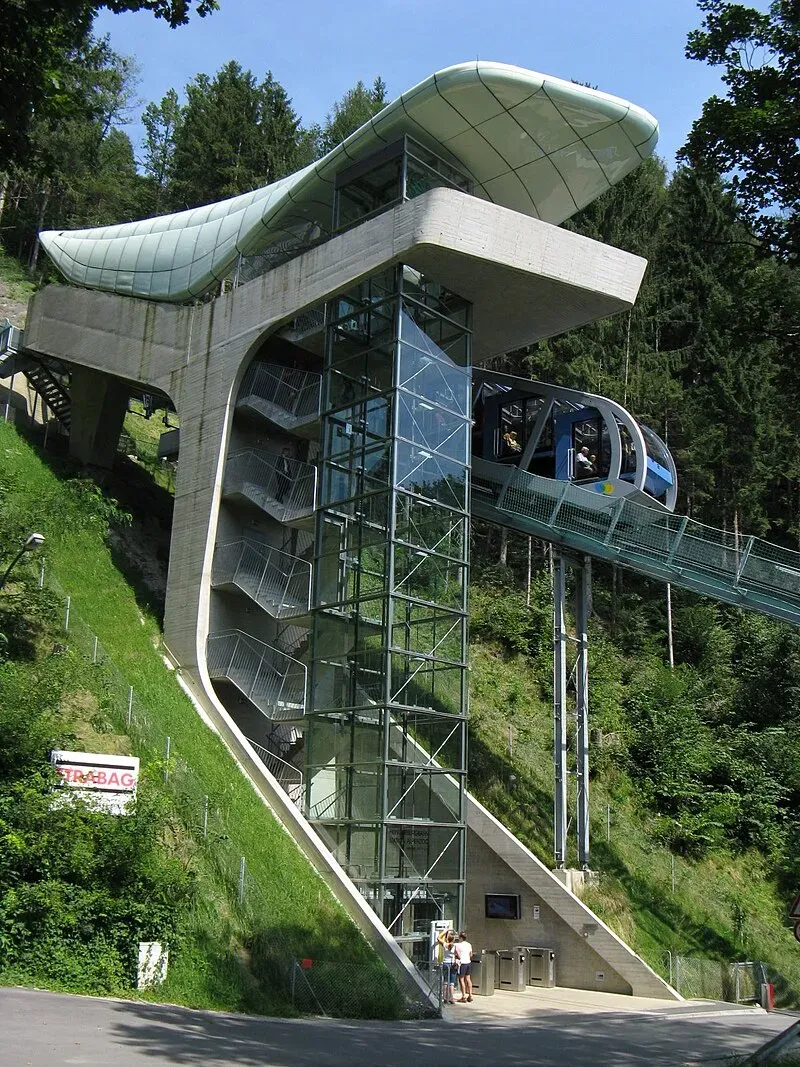
Don't miss Wander the five markets, from the Old Town under the Golden Roof to the Hungerburg Panorama market at 860 m by cable car, then ski the first runs on the Patscherkofel and Nordpark. Bergsilvester closes the year with light projections on the Hofburg and Cathedral, a party mile on 31 December, and midnight fireworks from the Seegrube visible across the city.
Crowd drivers The five Christmas markets are the main draw, packing the Old Town with Advent tourists from Germany, Italy and the Czech Republic. Christmas week and the Bergsilvester New Year's Eve celebration keep demand and prices at their annual maximum.
In season Glühwein, Kiachl, roasted chestnuts and Tiroler Speck at every market, with restaurant fondue and game season at their festive peak. Book a table for Christmas and New Year, when the centre is full.
Heads up Immaculate Conception (8 December) is a full closure but the markets run very busy; Christmas Day (25 December) closes nearly everything, and St. Stephen's Day (26 December) is a full closure with extended family travel keeping the city busy.
Christmas-market peak: 3-star rooms 160-250 €, rising to 200-280 € over Christmas week (22-26 December) and highest on New Year's Eve.
Events this month
🎄 Christmas marketInnsbruck Christmas Markets Christkindlmärkte Innsbruck
Nov 15 – Jan 6
the Old Town and Marktplatz markets run 15 November to 23 December; the Maria-Theresien-Straße and Hungerburg markets run on to 6 January
Five simultaneous markets: the most atmospheric beneath the Golden Roof in the Old Town, the largest and most family-friendly on the Marktplatz, the longest-running on Maria-Theresien-Straße, and a small artisan market at 860 m on the Nordkette Hungerburg station, all open daily 11:00-21:00.
Innsbruck is among Europe's top-five Christmas-market cities. The first Advent weekend (29-30 November) is peak crowded; weekday evenings are calm, and the Maria-Theresien-Straße market is the one still running after 23 December into Epiphany.
🌸 Seasonal natureBergsilvester (Mountain New Year's Eve) Bergsilvester Innsbruck
Dec 30–31
a children's NYE in the Old Town on 30 December, then the party mile and midnight fireworks on 31 December
Light projections on the Hofburg, City Tower, Cathedral and Inn Bridge, a children's fair in the Altstadt on 30 December (13:00-18:00), a party mile of DJs and live music on the Landestheater forecourt from 21:00 on 31 December, and midnight fireworks from the Seegrube on the Nordkette, visible across the city.
Spectacular and free, but hotels run 200-280 € a night on 31 December and book out months ahead, so reserve early or visit in the calmer 27-30 December window.
Frequently asked questions
What is the best time to visit Innsbruck?
May and September are the best overall. You get mild 15-22°C days, a queue-free Nordkette cable car (a 15-minute wait instead of an hour), the Old Town and Ambras Castle without the summer crush, and hotel rates 35-50% below the August peak. May adds the first snowmelt waterfalls on the valley walls and long daylight; September gives the clearest mountain air of the year once summer haze clears.
What is the cheapest time to visit Innsbruck?
The first two weeks of November are the cheapest, with 3-star centre rooms at 65-100 € a night, followed closely by May and October at 70-110 €. That is roughly half the February ski peak (150-230 €) and the December Christmas-market rate (160-250 €). Avoid the February school-holiday weeks and the 22 December to 5 January window, when prices hit their ceiling.
What is the worst time to visit Innsbruck?
August for non-skiers: the basin reaches 28-33°C, the Nordkette cable car runs 45-60 minute queues, hotel rates peak at 140-200 €, and Italian Ferragosto day-trippers surge over the Brenner around 15 August. February is the second to avoid on price, when ski school holidays across Austria and Germany fill the valley and push rooms to their annual maximum.
When is the best time for the Nordkette cable car?
May, June, September and October give clear mornings and short queues. In July and August, take the first car (07:15 weekdays, 08:15 weekends) to avoid a 45-60 minute wait at the Hungerburgbahn, as the first gondola stage is packed by 10:00. A Wednesday or Thursday is markedly quieter than Saturday. Note the upper gondolas close when Föhn wind exceeds about 80 km/h, so check the live nordkette.com webcam first.
When are the Innsbruck Christmas markets open?
Five markets run from mid-November. The atmospheric Old Town market under the Golden Roof and the Marktplatz market open on 15 November and run to 23 December; the Maria-Theresien-Straße market runs to 6 January, and the Hungerburg Panorama market (reached by cable car at 860 m) from 20 November to 6 January. All open daily 11:00-21:00. The first Advent weekend (29-30 November) is the most crowded; go Tuesday to Thursday for a calm, atmospheric and 30-40% cheaper visit.
What is the weather like in Innsbruck in winter?
Cold and often foggy in the valley rather than uniformly snowy. December to February valley temperatures average -2 to +4°C, and inversion fog (Hochnebel) can sit over the city while the mountains above 1,000 m are sunny. The Nordkette ski area above 1,900 m gets reliable snow. The first valley snow usually falls between 20 November and 10 December. On a foggy day, the cable car lifts you above the cloud into bright sunshine.
How hot does Innsbruck get in summer?
July and August bring 27-33°C in the Inn valley. Innsbruck sits in a basin and feels the Föhn, a warm Alpine downslope wind that can push temperatures 5-8°C above forecast and leave the air crystal-clear but the valley stuffy. Walk the Old Town early (07:00-10:00) or from 18:00, and avoid strenuous midday sightseeing 12:00-15:00. The Nordkette to Hafelekar (2,269 m) runs 10-12°C cooler as a reliable heat escape.
How many days do you need in Innsbruck?
Two to three days cover the essentials: the Old Town and the Golden Roof, the Hofburg and Hofkirche, a half-day up the Nordkette by cable car, and a half-day at Ambras Castle (4 km out, a 20-minute tram 6 ride). Add a day in summer for the Baggersee lake or a South Tyrol wine day trip, or in winter for skiing on the Nordkette, Patscherkofel or the Stubai Glacier. The compact, walkable centre means you see a lot on foot in a short stay.

Any month, any day: your guide is already there
Whatever date you pick, a private human guide gets pricier and harder to book on weekends, holidays and in peak season. Our live AI guide, the one that walks with you and answers anything you ask out loud, works the opposite way.
One flat price, every day
No holiday, weekend, night or peak-season surcharge. A private guide in Innsbruck runs well over 100 euro for a half day, and more on holidays. Ours stays the same.
Available the moment you want it
Start at midnight or at dawn, on Christmas, in the snow, in the August heat. No sold-out high season, no booking weeks ahead.
Your pace, no meter running
Pause for a long lunch, restart after dark, repeat a stop. The tour simply waits for you.
Free to try, a fraction of the cost
Test it for free, then a transparent flat price that undercuts any private guide, in every season.
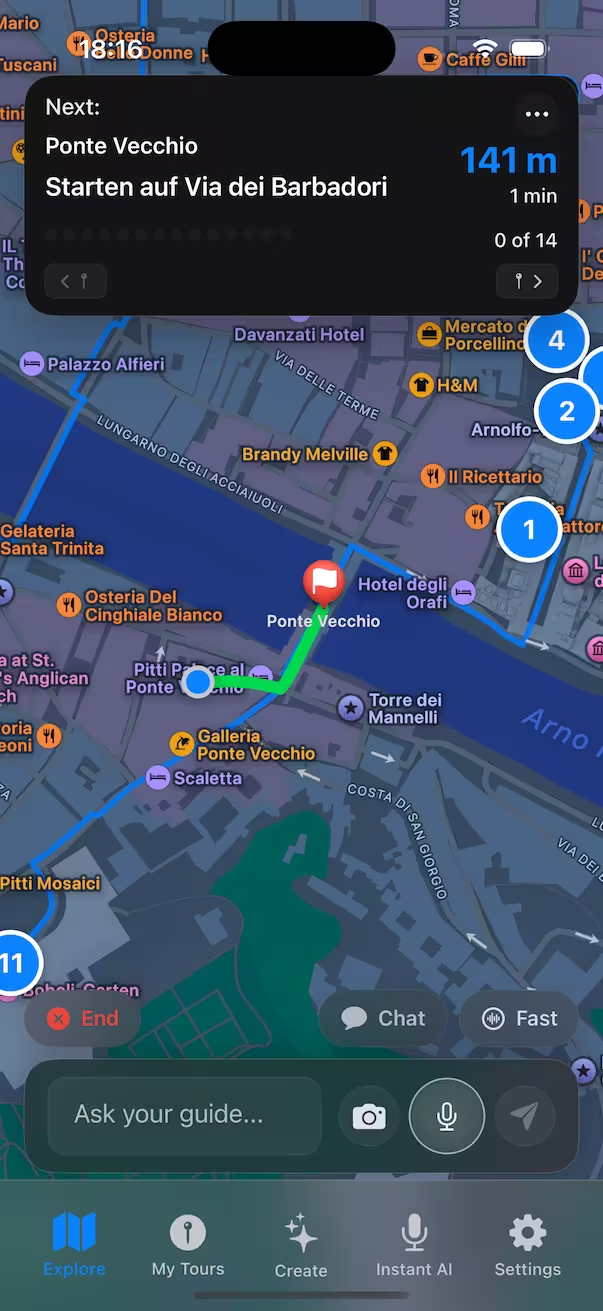
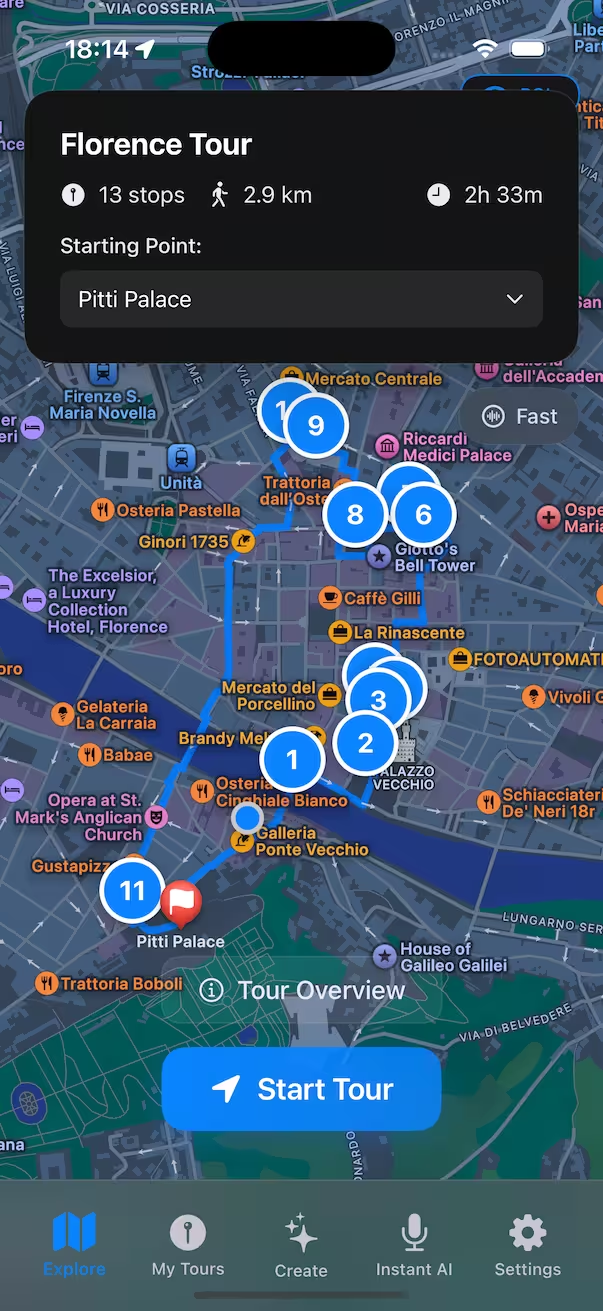
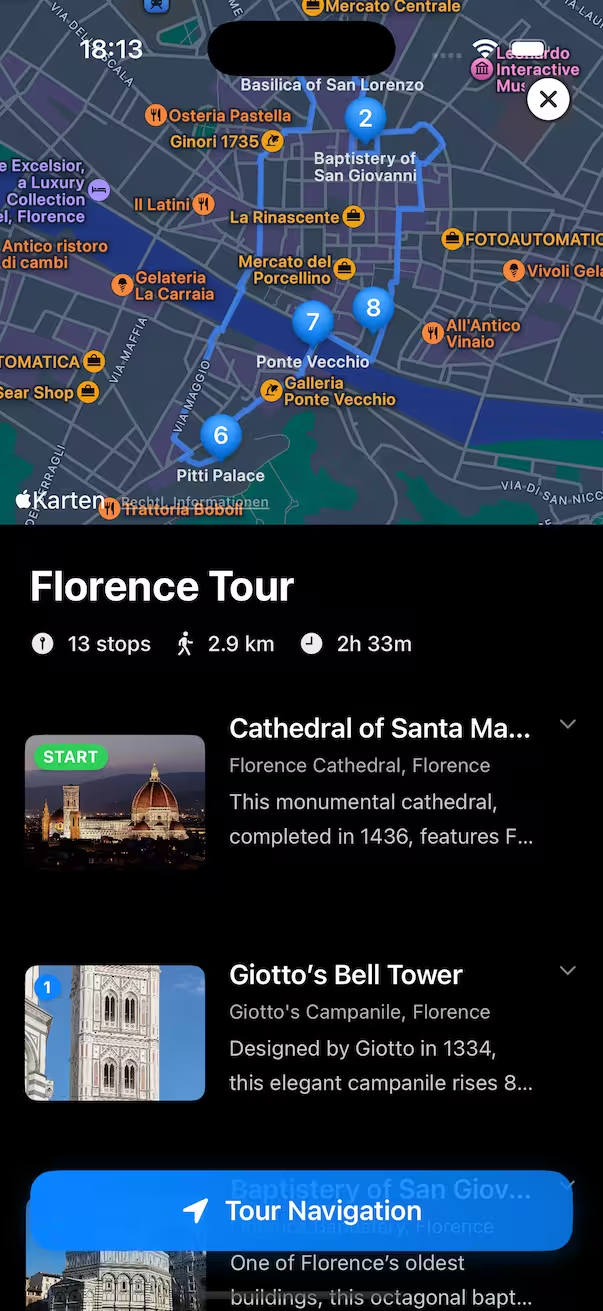
The classic Innsbruck tour: 10 stops, 3.5 km, about 2 h on foot
Your live AI guide and the self-guided Innsbruck route, together in your browser.