Best Time to Visit Carcassonne
Month-by-month weather, crowds and prices, plus a full calendar of festivals and events worth planning a trip around.
Best monthsMay, Sep, Oct
CheapestJan, Nov, Feb
AvoidJul
BusiestJul, Aug
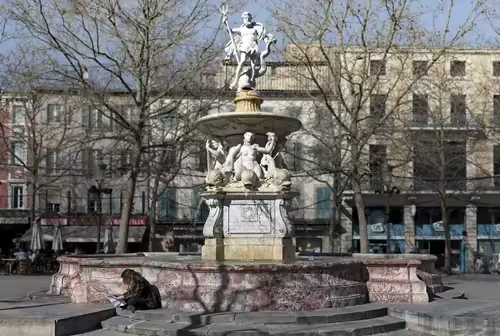
When is the best time to visit Carcassonne?
Visit Carcassonne in May, September or October: 20-26°C, the medieval Cité walkable instead of gridlocked, and hotels well below summer rates. July and August bring 29°C heat and the year's heaviest crowds. The single exception is the 14 July Embrasement fireworks, a spectacle worth braving peak prices for.
Start our tool and find your best time to visit Carcassonne
Your perfect month
Free · ~30 seconds
or tap a month directly
What matters to you?
And this?
Best overall: May, Sep, Oct. May for spring green and vine bud-break, or September and October for golden Canal du Midi plane trees and harvest light. All sights open, comfortable 20-26°C walking weather, hotels well below the summer ceiling, and crowds you can actually move through.
Best value: Jan, Nov, Feb. January, November and February bring the year's lowest hotel rates from around 40 euros, a Cité you have almost to yourself, and free first-Sunday entry to the Château Comtal. The trade is grey skies, short daylight and the chance of a hard Tramontane wind.
Avoid: Jul. The 14 July fireworks week saturates the city: hotels gone or astronomical, roads shut by noon, the Cité jammed by mid-morning. Brilliant if the Embrasement is your goal, miserable if it is not. General July and August mean heat and queues for the same peak prices.
- January: Good time, 10°C. This is the month you stand alone on the ramparts at dusk with the floodlights coming up over an empty Cité. Carcassonne sheds its tourist skin entirely and feels like the working Aude town it is. The price is short daylight and the risk of a hard Tramontane day that drives you indoors.
- February: Great time, 12°C. February is honest, unperformed Carcassonne, a real town in winter mode with no markup and no show put on for visitors. The light is soft and the ramparts are atmospheric in the morning mist rising off the Aude. Pick a day without the Tramontane and you have the place almost to yourself.
- March: Great time, 14°C. March feels like the town stretching after winter: vine rows budding in the Minervois, the first warm lunches outdoors, and a Cité you can still photograph without a crowd in the frame. That window closes fast once April and the Easter break arrive, so use it.
- April: Great time, 18°C. April is the month Carcassonne starts to feel busy without being overwhelmed. The Cité is lively but you can still wander the ramparts without queueing, and the surrounding vineyards and garrigue smell of wild thyme and rosemary. Good value too, the cheapest of the shoulder months despite the Easter bump.
- May: Great time, 21°C. May is the sweet spot locals quietly keep for themselves: warm but not hot, green everywhere, and the Cité busy enough to feel alive yet never gridlocked. This is when Carcassonne rewards a slow pace, a morning on the ramparts and an afternoon drifting down the canal.
- June: Great time, 26°C. June is the tipping point, when Carcassonne shifts from relaxed shoulder season toward full summer. Early in the month it is still easy going; by the last week the Festival energy and the heat have both arrived. Long light evenings mean concerts can start at 21:00 in daylight, the best of both worlds before July saturation.
- July: Tough month, 29°C. July is for travellers who do not mind heat, crowds and peak prices, because the payoff is real. The Festival concerts in a floodlit twelfth-century courtyard are unique in Europe, and the 14 July Embrasement is one of France's great spectacles. But midday in the Cité is a write-off, and the fireworks week tips the whole city into gridlock.
- August: Tough month, 29°C. August is the Cité at saturation: a slow shuffle down Rue Cros-Mayrevieille at noon and queues for everything. The Médiévales weekend, with knight combats and a medieval market staged on the double ramparts, is the redeeming spectacle and avoids the July fireworks-level crush. Come for that, plan around the heat, and you can still love it.
- September: Great time, 26°C. September is arguably the most atmospheric time of year for the Cité: summer warmth without the summer crush, golden harvest light, and a town exhaling after August. Once the first week passes, the medieval city feels rediscovered, and the wine country opens its doors to visitors at exactly the right moment.
- October: Great time, 21°C. October is the connoisseur's Carcassonne: golden canal light, vineyard colour, cool walking weather and almost no crowd. The medieval Cité feels reflective and uncrowded, and the wine country is at its most generous during the tail of harvest. The only catch is the chance of a heavy autumn downpour.
- November: Great time, 14°C. November is the quietest, most local month after January. The summer machinery has shut down, the Christmas lights are not yet up, and the Cité stands stripped back and atmospheric under low autumn skies. A hard Tramontane day is the gamble, but a calm one gives you the ramparts entirely alone.
- December: Good time, 12°C. December turns the floodlit Cité into one of the most photogenic Christmas scenes in southern France, a low-crowd alternative to the summer crush. Early in the month it stays quiet and cheap; the festive energy builds toward Christmas. The medieval city lit up for Noël is the reason to come now.
Carcassonne weather by month
HighLowRainfall
Jan10°
Feb12°
Mar14°
Apr18°
May21°
Jun26°
Jul29°
Aug29°
Sep26°
Oct21°
Nov14°
Dec12°
| Month | Temp | Rain | Sun | Crowds | Prices | Highlight |
|---|---|---|---|---|---|---|
| Jan | 10° / 4° | 73mm · 11 rainy days | 5.5 h/day | ●○○○○ | ●○○○○ | The Magic of Christmas |
| Feb | 12° / 5° | 60mm · 10 rainy days | 7.2 h/day | ●○○○○ | ●○○○○ | |
| Mar | 14° / 6° | 73mm · 12 rainy days | 8.7 h/day | ●○○○○ | ●○○○○ | |
| Apr | 18° / 9° | 70mm · 10 rainy days | 10.0 h/day | ●●○○○ | ●●○○○ | |
| May | 21° / 12° | 68mm · 11 rainy days | 11.3 h/day | ●●○○○ | ●●○○○ | |
| Jun | 26° / 17° | 41mm · 7 rainy days | 12.5 h/day | ●●●○○ | ●●●○○ | Carcassonne Festival |
| Jul | 29° / 19° | 30mm · 5 rainy days | 13.0 h/day | ●●●●● | ●●●●● | Carcassonne Festival |
| Aug | 29° / 18° | 28mm · 6 rainy days | 12.2 h/day | ●●●●● | ●●●●● | The Medieval Days of the Cité |
| Sep | 26° / 16° | 58mm · 7 rainy days | 10.1 h/day | ●●●○○ | ●●●○○ | Grape Harvest Season |
| Oct | 21° / 13° | 64mm · 8 rainy days | 8.3 h/day | ●●○○○ | ●●○○○ | Carcassonne Wine Festival |
| Nov | 14° / 8° | 72mm · 12 rainy days | 6.5 h/day | ●○○○○ | ●○○○○ | |
| Dec | 12° / 6° | 52mm · 9 rainy days | 5.7 h/day | ●●○○○ | ●●○○○ | The Magic of Christmas |
How we score this: weather = long-run climate normals (Open-Meteo), crowds & prices = relative season read, events checked yearly against official dates.
Best time to visit Carcassonne: weather, prices & crowds
Best months for good weather
May, Jun, Sep
May, June and September give Carcassonne its most reliable conditions: 21-26°C, dry sunny days, and the Tramontane corridor breeze that keeps the Cité from feeling stifling even in full sun.
Quietest months to avoid the crowds
Nov, Jan, Mar
From November through March the Cité is near-empty: you can walk the lices between the double ramparts alone, and the only competition for a café table is the occasional Tramontane gust.
Cheapest time to visit Carcassonne
Jan, Nov, Feb
January and November are the cheapest months, with hotels from around 40 euros a night and the Château Comtal free on the first Sunday of every month from November through March.
Best time for festivals and events
Jul
On 14 July the Embrasement de la Cité sets the 3 km of ramparts ablaze in colour, a finale of 1,200 fireworks in six seconds across a 600 m facade, watched by some 700,000 people on the Aude riverbank since 1898.
How many days do you need in Carcassonne?
Carcassonne rewards two full days. The first covers the medieval Cité, the Château Comtal and the Basilique Saint-Nazaire; the second lets you breathe in the lower-town Bastide Saint-Louis, take a Canal du Midi boat trip from Port de la Robine, and drive into the Minervois or Corbières for a wine tasting. One day is enough for the highlights, but two days let you split mornings in the Cité before the crowds build and afternoons in the cooler, more local Bastide.

One day
The Cité in full
Start at Place Carnot in the lower town for the Tuesday, Thursday or Saturday morning market, then cross the 14th-century Pont Vieux over the Aude to begin your climb to the fortress. Take the Carcassonne walking tour, a 6-stop, 2.5 km route of about 1.4 hours, through the Porte Narbonnaise and up into the Château Comtal to the Basilique Saint-Nazaire, finishing at the Porte d'Aude with its panorama of Pyrenees vineyards. Walk the lices between the double rampart walls in the early morning or after 17:00 to avoid the midday squeeze on Rue Cros-Mayrevieille.
Two daysRecommended
Bastide and the canal
Use the second morning to explore the Bastide Saint-Louis more slowly: the covered market halls, the Musée des Beaux-Arts and the café terraces on Place Carnot. In the afternoon, take a Canal du Midi boat trip from Port de la Robine, at its most scenic in spring green or autumn gold. Return to the illuminated Cité for the evening, when the crowds have thinned and the floodlit ramparts are at their most atmospheric.
Three days
Wine country and Cathar trails
A third day earns a drive through the Minervois or Corbières appellations, where small producers often pour for free without an appointment, especially during the September to October harvest. The medieval village of Minerve, 45 km northeast, sits on a dramatic gorge and pairs the wine tasting with Cathar history. Back in Carcassonne, the evening Festival OFF concerts in the Bastide Saint-Louis or a Château Comtal sunset are the reward.
Four days or more
Mediterranean coast and Cathar castles
Four days opens the broader Aude region: the Cathar castle circuit of Peyrepertuse, Quéribus and Aguilar to the south, each perched on a ridge with views across the Corbières scrubland, or the Mediterranean beaches at Gruissan and Narbonne, 1.5 hours away. The Canal du Midi, a UNESCO waterway, can also be followed by bike from Carcassonne to the coast across several days, combining history and landscape at an entirely different pace.
Best time to visit Carcassonne by traveller type
Same city, different trip. Here's the month that fits how you're travelling.
🧭
Best time to visit Carcassonne for the first time
MaySep
May or September: comfortable 20-26°C, crowds 40 to 50 percent below the July peak, every sight open, and the Château Comtal, Basilique Saint-Nazaire and rampart walk all accessible without a long gate queue.
❤️
Best time to visit Carcassonne for couples
SepOct
Late September into early October: the Canal du Midi plane trees turn gold, the Minervois and Corbières vineyards glow red, harvest-season domaines open their doors, and the evenings stay warm at around 20°C.
💶
Best time to visit Carcassonne on a budget
JanNovFeb
January, November or February for hotels near 40 euros, free first-Sunday Château Comtal entry, and the year-round free first Sunday at the Musée des Beaux-Arts.
🍝
Best time to visit Carcassonne for food and wine
Oct
October for the Fête des Vins on Place Carnot, the eight AOC appellations of the Aude poured side by side, harvest-season domaine visits, and cassoulet that finally makes sense in cooler weather.
Worst time to visit Carcassonne
The single worst stretch is the week of 14 July, unless the Embrasement fireworks are specifically your reason for coming. That one evening draws roughly 700,000 spectators, hotels with a Cité view sell out six months ahead at 300 to 400 euros a night, and every road into the medieval city closes by noon. Even outside that peak week, general July and August bring average highs of 29°C with heatwave days past 35°C, queues of 90 minutes or more at the Château Comtal gate by 11:00, and midday streets on Rue Cros-Mayrevieille reduced to a single-file shuffle.
Still worth it for July is still worth braving if the Embrasement or the Festival de Carcassonne concerts in the floodlit Château Comtal courtyard are your main goals. Come with early-morning plans, pre-booked tickets from remparts-carcassonne.fr, and a midday retreat to the shaded lices or the Lac de la Cavayère.
Go instead in May, September, October, when Carcassonne is at its best.
Best time for a tour of Carcassonne
Carcassonne is a city you read with your feet, and the calendar decides whether that reading is a pleasure or a slog. April through June and again from mid-September into October are the sweet spot: highs of 18 to 26 °C, long daylight, and the rain easing off, so the cobbled climb to the Château Comtal and the long ramparts walk past the Porte Narbonnaise feel earned rather than punishing. July and August are the trap. The medieval Cité bakes at 29 °C with almost no shade on the open walls, and these are also the only months that pack to the rafters, so the narrow lanes around the Basilica Saints Nazarius turn into a slow shuffle. Winter is quiet and cheap on atmosphere: January barely reaches 9.7 °C, dark falls early, and eleven rainy days make the steep, smooth stones of the Porte d'Aude genuinely slippery underfoot.
The good news is that the hour is yours to pick. With AI Tourguide running straight in your browser, no app and no download, you set off exactly when the weather suits the day and walk the 2.5 km loop at your own pace, pausing on the Pont Vieux for the postcard view as long as you like. A voice-first guide leads the whole way, telling the story of each gate and tower, asking what you want to linger on and remembering your answers, so a quiet July visit becomes simple: start your Carcassonne tour in the cool of early morning before the coaches arrive, then break for a long lunch when the ramparts turn to an oven. No fixed departure, no group to keep up with, just the climate and your own legs setting the rhythm.


 +2
+2All 6 stops are already on the map.
You just press start.
You just press start.
 AI Tourguide
You just read the route.
Now walk it with a guide in your ear.
Press start wherever you are, even hundreds of kilometres from Carcassonne, and the guide begins telling its stories right away. In the city, pick any of the 6 stops to start from: it leads you there, then talks with you the whole route, asking, listening, remembering, and shaping the tour around your answers.
6stops2.5km1.4hours11languages
▶Start the tour freeFree to start · Runs in your browser · No app, no download
Carcassonne events and festivals calendar
Annual highlights worth timing a trip around, listed month by month.
June
🎵 MusicCarcassonne Festival Festival de Carcassonne
Jun 26 – Jul 31
late June through July
One of France's top-ten festivals, with 120-plus performances across a dozen stages.
July
💡 LightsSetting the Cité Ablaze (Bastille Day Fireworks) Embrasement de la Cité
Jul 14
14 July, around 22:30
France's most famous fireworks display, staged on Bastille Day since 1898.
🇮 HolidayBastille Day Fête Nationale
Jul 14
14 July
France's national day, marked in Carcassonne with public dances, the firemen's bal des pompiers and the great Embrasement fireworks over the Cité in the evening.
August
🎨 Art and cultureThe Medieval Days of the Cité Les Médiévales de la Cité
Aug 15–16 ~
a weekend in mid-August
A historical reenactment weekend that turns the double ramparts into a stage for knight combats, a medieval market, troubadours, craft demonstrations and children's workshops, celebrating the legend of Dame Carcas.
September
🌸 Seasonal natureGrape Harvest Season Vendanges
Sep 15 – Oct 15 ~
mid-September to mid-October
The grape harvest across the Minervois and Corbières appellations just outside Carcassonne, with winery visits, harvest participation and tastings at the domaines.
🎨 Art and cultureEuropean Heritage Days Journées Européennes du Patrimoine
Sep 19–20 ~
third weekend of September
A weekend when more than 28 sites open for free guided tours, workshops and exhibitions, typically including the Château Comtal, the Canal du Midi and normally off-limits private monuments.
October
🍷 Food and wineCarcassonne Wine Festival Fête des Vins de Carcassonne
Oct 10–11 ~
a weekend in October
A two-day outdoor wine festival on Place Carnot in the Bastide, with winemaker stalls, tastings and food pairings focused on the AOC Minervois, Corbières, Cabardès and Malepère appellations.
December
🎄 Christmas marketThe Magic of Christmas La Magie de Noël
Dec 3 – Jan 3 ~
early December to early January
A month-long Christmas village across the Bastide Saint-Louis and the Cité, with an artisan market, ice rink, carousels, a light show, a medieval camp in the Cité, parades and workshops.
Insider tips for visiting Carcassonne
The rules buried in forums, in one place.
- For the 14 July Embrasement, book your hotel by January. Rooms in or near the Cité consistently sell out six months ahead, and balconies facing the ramparts run 300 to 400 euros a night. Arrive the day before and stay close, because all access roads and the Aude riverbank close by noon on the 14th and parking is impossible within three kilometres by early afternoon.
- In July and August the ticket queue at the Cité gate can pass 90 minutes by 11:00. Pre-buy online at remparts-carcassonne.fr and arrive when the Château Comtal opens at 10:00 in summer. By 10:30 the narrow inner streets are already congested.
- The Château Comtal is free on the first Sunday from November through March, but in December those Sundays collide with the Christmas market crowds. For genuinely quiet free entry, go on the first Sunday in January or February. The Musée des Beaux-Arts is free every first Sunday of the month, year-round, from 14:00 to 17:30.
- Between 11:00 and 15:00 from June to September, the main commercial street Rue Cros-Mayrevieille becomes a single-file shuffle. Walk the lices, the cooler shaded path between the two rampart walls, during the midday heat instead, and save the Cité streets for early morning or after 17:00.
- When the Tramontane blows at full strength, mostly October to April, the exposed rampart walkways turn unpleasant with gusts of 60 to 80 km/h. Use those days for the Château Comtal interior, the Basilique Saint-Nazaire, the Musée des Beaux-Arts, or a Canal du Midi boat trip down in the valley where the wind is calmer.
- Time a wine day for September or October. The Corbières and Minervois domaines are most welcoming during harvest, many small producers pour for free without an appointment, and the October Fête des Vins on Place Carnot gathers all eight Aude AOC appellations in one square.
- Spend the morning at the Cité and the afternoon in the Bastide Saint-Louis. The Cité bakes in sun all morning then the towers shade its alleys after lunch, while the lower town with its covered market halls, Place Carnot and local bars comes alive in the afternoon and evening once the Cité crowds thin.
- Canal du Midi boat trips from Port de la Robine run April to October and are most scenic in spring green or autumn gold. Reserve one to two weeks ahead in July and August. Note that sections of the famous plane-tree allée have been felled due to canker disease, so check the current tree cover before booking a trip for the tunnel of trees.
Public holidays in Carcassonne
On these dates many shops and offices close, transport thins out, and sights can be mobbed or shut. Plan around them.
| Date | Holiday | What closes |
|---|---|---|
| Jan 1 | New Year's Day | Château Comtal closed, most shops closed and restaurants limited. The deep off-season floor for hotels, but plan the day around what is open. |
| Apr 6 | Easter Monday | Public services closed, Château Comtal open. The French Zone C spring school break runs 18 April to 4 May, bringing domestic families to the Cité. |
| May 1 | Labour Day | The strongest closure day in France by law. The Château Comtal is shut, virtually all shops close, and many restaurants do not open. Avoid planning a castle visit on this date. |
| May 8 | Victory in Europe Day | Most shops closed and public transport reduced, but the Château Comtal stays open. Combined with Ascension it creates a long-weekend bump in domestic visitors. |
| May 14 | Ascension | Shops and government offices closed, forming a long bridge weekend with Friday 15 May. Moderate domestic French tourism and usually reliable weather. |
| May 25 | Whit Monday | Shops closed, but museums and monuments generally stay open. The last public holiday before the summer surge, a good just-before-peak window. |
| Jul 14 | Bastille Day | The Embrasement fireworks start at 22:30. City roads close from noon, everything is mobbed, and the Château Comtal queue runs two hours or more without a pre-booked ticket. Shops and offices closed. |
| Aug 15 | Assumption | Most shops and many restaurants closed, public transport reduced, and the Cité packed with August tourists. A good day to swap the medieval city for a Canal du Midi boat trip. |
| Nov 1 | All Saints' Day | Most shops closed and cemeteries busy, though the Château Comtal stays open. The French Toussaint school break runs 17 October to 2 November, so the first days of the month still see domestic families. |
| Nov 11 | Armistice Day | Shops closed and commemoration ceremonies at the war memorials. Tourism is very low, leaving the Cité peaceful. |
| Dec 25 | Christmas Day | Château Comtal closed and most of the city shut, but the La Magie de Noël market keeps the illuminated Cité and Bastide festive until around 3 January. |
Carcassonne month by month
January in Carcassonne
High10°C / 49°F
Low4°C
Rain73mm / 11 rainy days
Sun5.5 h/day
Daylight9 h/day
Humidity81%
Crowds●○○○○Prices●○○○○
January is Carcassonne at its emptiest and cheapest. Daytime highs hover near 10°C, skies are often grey and the Tramontane wind can bite, but snow is rare and a warm jacket is usually enough. The medieval Cité is yours: no gate queue, no shuffle along Rue Cros-Mayrevieille, and the lices between the ramparts walkable in near silence. School holidays are over once the new year settles in.
The vibe This is the month you stand alone on the ramparts at dusk with the floodlights coming up over an empty Cité. Carcassonne sheds its tourist skin entirely and feels like the working Aude town it is. The price is short daylight and the risk of a hard Tramontane day that drives you indoors.
Don't miss The Château Comtal is free on the first Sunday and genuinely quiet, unlike the December free Sundays that collide with the Christmas market. On a calm day the rampart walk and the Basilique Saint-Nazaire stained glass are yours without a single tour group.
Crowd drivers No school holidays, no festival, no cruise overflow. The lowest visitor pressure of the entire year, tied with November.
In season Cassoulet weather at its best, and the Cassoulet Festival usually runs this month in Castelnaudary, 20 km west, the dish's spiritual home.
Heads up New Year's Day closes the Château Comtal and most shops. Château Comtal winter hours apply, 09:30 to 17:00, last entry 45 minutes before close.
Cheapest month of the year; hotels from around 40 euros a night.
Events this month
🎄 Christmas marketThe Magic of Christmas La Magie de Noël
Dec 3 – Jan 3 ~
early December to early January
A month-long Christmas village across the Bastide Saint-Louis and the Cité, with an artisan market, ice rink, carousels, a light show, a medieval camp in the Cité, parades and workshops.
It is the low-crowd, low-price alternative to summer, and the illuminated medieval Cité at Christmas is one of the most photogenic scenes in southern France.
February in Carcassonne
High12°C / 54°F
Low5°C
Rain60mm / 10 rainy days
Sun7.2 h/day
Daylight10 h/day
Humidity78%
Crowds●○○○○Prices●○○○○
February stays deep in the off-season, mild but damp at around 12°C with roughly 10 rainy days. The French Zone C winter school break, 14 to 28 February, brings a small uptick of domestic families to the Cité, but nothing close to peak. Most days the medieval city is quiet, the Château Comtal queue-free, and hotel rates at their winter floor.
The vibe February is honest, unperformed Carcassonne, a real town in winter mode with no markup and no show put on for visitors. The light is soft and the ramparts are atmospheric in the morning mist rising off the Aude. Pick a day without the Tramontane and you have the place almost to yourself.
Don't miss The Musée des Beaux-Arts is free on the first Sunday, year-round, and almost deserted in February. The Château Comtal is also free on the first Sunday through March, the best month after January for genuinely quiet free entry.
Crowd drivers The Zone C school break, 14 to 28 February, lifts domestic family visits for two weeks. Outside that window the city is near-empty.
In season Black truffle season is in full swing in the surrounding Languedoc, and cassoulet remains the cold-weather staple in the Bastide bistros.
Budget floor continues; hotels around 45 euros a night, with a small uptick during the Zone C school break.
March in Carcassonne
High14°C / 58°F
Low6°C
Rain73mm / 12 rainy days
Sun8.7 h/day
Daylight12 h/day
Humidity75%
Crowds●○○○○Prices●○○○○
March is the last genuinely quiet month before spring fills Carcassonne. Highs climb toward 14-15°C, the countryside greens up and café terraces reopen, though the Tramontane can still gust hard. The French spring tourist season is weeks away, so the Cité stays calm, the Château Comtal free on the first Sunday, and hotels at off-season rates.
The vibe March feels like the town stretching after winter: vine rows budding in the Minervois, the first warm lunches outdoors, and a Cité you can still photograph without a crowd in the frame. That window closes fast once April and the Easter break arrive, so use it.
Don't miss The Canal du Midi plane trees leaf out and the boat season nears its April opening. On the first Sunday the Château Comtal is free and quiet, one of the last such Sundays before summer pricing takes over in April.
Crowd drivers No school holidays yet and no festival; day-trippers from Toulouse, 90 km away, pick up only on the mildest weekends.
In season Early spring lamb from the Aude hills appears on Bastide menus, a lighter counterpart to the winter cassoulet.
Heads up Château Comtal still on winter hours, 09:30 to 17:00, through to the end of the month.
Still pre-season pricing; hotels around 50 euros a night.
April in Carcassonne
High18°C / 64°F
Low9°C
Rain70mm / 10 rainy days
Sun10.0 h/day
Daylight13 h/day
Humidity70%
Crowds●●○○○Prices●●○○○
April brings Carcassonne back to life: 18°C highs, the Aude countryside in bloom and wildflowers along the Canal du Midi towpath. The French Zone C Easter break, 18 April to 4 May, drives domestic families and lifts crowds to a moderate level. The Canal du Midi boat season opens, the spring green at its freshest for a canal trip under the plane trees.
The vibe April is the month Carcassonne starts to feel busy without being overwhelmed. The Cité is lively but you can still wander the ramparts without queueing, and the surrounding vineyards and garrigue smell of wild thyme and rosemary. Good value too, the cheapest of the shoulder months despite the Easter bump.
Don't miss Boat trips from Port de la Robine resume, the spring leaf-out making the plane-tree allée at its greenest. The countryside bloom and budding vines make April the start of the wine-country touring season.
Crowd drivers The Zone C Easter school break, 18 April to 4 May, pulls in French families. Easter Monday on 6 April starts the run of spring bridge holidays.
In season Spring vegetables and Aude lamb dominate the markets; the first canal-side terrace lunches of the year open up.
Heads up Château Comtal switches to summer hours from 1 April, 10:00 to 18:30. Easter Monday closes public services but the castle stays open.
Cheapest shoulder month; hotels average around 97 euros, roughly 26 percent below the year average, with an Easter-break spike.
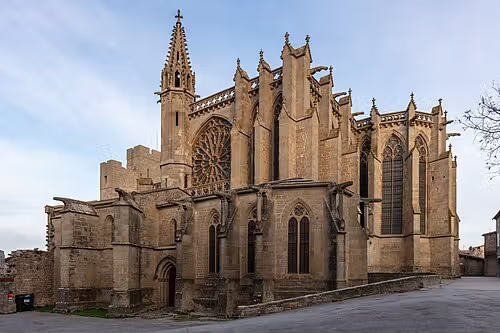
May in Carcassonne
High21°C / 70°F
Low12°C
Rain68mm / 11 rainy days
Sun11.3 h/day
Daylight15 h/day
Humidity69%
Crowds●●○○○Prices●●○○○
May is one of Carcassonne's two best windows. Highs sit at a comfortable 21°C, the vineyards are in full leaf and the Canal du Midi boat season is open. Crowds stay light outside the cluster of public holidays, when long weekends draw day-trippers from Toulouse. Every sight is open, the queues are short, and the heat that defines summer has not yet arrived.
The vibe May is the sweet spot locals quietly keep for themselves: warm but not hot, green everywhere, and the Cité busy enough to feel alive yet never gridlocked. This is when Carcassonne rewards a slow pace, a morning on the ramparts and an afternoon drifting down the canal.
Don't miss Prime Canal du Midi boat season with the plane trees in full spring green. The garrigue scents of wild thyme and rosemary peak in May and June, and the vineyards along the Minervois are at their most photogenic before summer heat browns the landscape.
Crowd drivers Four public holidays cluster this month, 1, 8, 14 and 25 May, each spawning a long weekend of domestic short-break tourism. The end of the Zone C Easter break tapers off in the first days.
In season The first outdoor market produce of the season fills Place Carnot, and canal-side terraces are in full swing for long warm lunches.
Heads up Labour Day on 1 May shuts the Château Comtal entirely, the one castle closure to plan around. The other May holidays leave it open.
Hotels average around 100 euros; public-holiday long weekends can nudge rates up.

June in Carcassonne
High26°C / 80°F
Low17°C
Rain41mm / 7 rainy days
Sun12.5 h/day
Daylight15 h/day
Humidity66%
Crowds●●●○○Prices●●●○○
June opens the Carcassonne summer warm at 26-27°C and almost dry, with the longest daylight of the year at over 15 hours. The Festival de Carcassonne begins on 26 June, France's top-ten festival filling the floodlit Château Comtal courtyard with music. The school year ending creates a pre-July buildup, so crowds are climbing but still manageable, especially before the last week.
The vibe June is the tipping point, when Carcassonne shifts from relaxed shoulder season toward full summer. Early in the month it is still easy going; by the last week the Festival energy and the heat have both arrived. Long light evenings mean concerts can start at 21:00 in daylight, the best of both worlds before July saturation.
Don't miss The Festival de Carcassonne brings symphonic music, opera and rock to the 3,000-seat Théâtre Jean-Deschamps and the Cour d'honneur. The Lac de la Cavayère, four kilometres from the Cité, opens for swimming, and the long evenings stretch festival nights well past dark.
Crowd drivers The Festival de Carcassonne opens 26 June, and the French school year winding down creates a pre-grandes-vacances buildup ahead of the 4 July exodus.
In season Apricots and the first summer stone fruit from the Aude valley appear at Place Carnot, and rosé from the Minervois moves to the centre of every terrace table.
Hotels start climbing toward the peak; Festival IN tickets run 49 to 89 euros.
Events this month
🎵 MusicCarcassonne Festival Festival de Carcassonne
Jun 26 – Jul 31
late June through July
One of France's top-ten festivals, with 120-plus performances across a dozen stages. The ticketed Festival IN runs 21 paid shows at the 3,000-seat Théâtre Jean-Deschamps and in the Château Comtal courtyard, mixing opera, classical, rock, French song and rap, while the Festival OFF stages about 100 free outdoor shows in the Bastide Saint-Louis.
Hearing symphonic music or a major rock act in a floodlit twelfth-century courtyard is an experience with no equal in Europe, and the free Festival OFF means you can join in even without tickets.

July in Carcassonne
High29°C / 84°F
Low19°C
Rain30mm / 5 rainy days
Sun13.0 h/day
Daylight15 h/day
Humidity60%
Crowds●●●●●Prices●●●●●
July is Carcassonne at full intensity. Average highs hit 29°C with heatwave days pushing past 35°C, and the grandes vacances from 4 July flood the Cité. The Festival de Carcassonne runs all month, and on 14 July the Embrasement fireworks draw some 700,000 people in a single evening. The medieval city near-saturates, with ticket queues past 90 minutes and midday streets at a standstill.
The vibe July is for travellers who do not mind heat, crowds and peak prices, because the payoff is real. The Festival concerts in a floodlit twelfth-century courtyard are unique in Europe, and the 14 July Embrasement is one of France's great spectacles. But midday in the Cité is a write-off, and the fireworks week tips the whole city into gridlock.
Don't miss The 14 July Embrasement ignites the 3 km of ramparts in colour, a finale of 1,200 fireworks in six seconds. The Festival OFF runs about 100 free outdoor shows in the Bastide Saint-Louis every evening, and the Lac de la Cavayère is supervised for swimming.
Crowd drivers French grandes vacances from 4 July, the Festival de Carcassonne running all month, and the 14 July Embrasement drawing roughly 700,000 spectators in one night.
In season Peak Aude melon and tomato season; eat early or late, because July midday in the sun-baked Cité is no place for a heavy cassoulet.
Heads up On 14 July all roads into the Cité close by noon and the castle queue runs two hours or more without a pre-booked ticket. Château Comtal on summer hours, 10:00 to 18:30.
Year's highest prices; hotels average around 165 euros, and 14 July rooms book out six months ahead.
Events this month
🎵 MusicCarcassonne Festival Festival de Carcassonne
Jun 26 – Jul 31
late June through July
One of France's top-ten festivals, with 120-plus performances across a dozen stages. The ticketed Festival IN runs 21 paid shows at the 3,000-seat Théâtre Jean-Deschamps and in the Château Comtal courtyard, mixing opera, classical, rock, French song and rap, while the Festival OFF stages about 100 free outdoor shows in the Bastide Saint-Louis.
Hearing symphonic music or a major rock act in a floodlit twelfth-century courtyard is an experience with no equal in Europe, and the free Festival OFF means you can join in even without tickets.
💡 LightsSetting the Cité Ablaze (Bastille Day Fireworks) Embrasement de la Cité
Jul 14
14 July, around 22:30
France's most famous fireworks display, staged on Bastille Day since 1898. For 25 minutes the 3 km of ramparts ignite in colour, with a finale of 1,200 impacts in six seconds across a 600 m facade, watched by roughly 700,000 spectators on the Aude riverbank.
It is the most spectacular free show in France, but hotels book out six months ahead, roads into the centre close by noon, and you should claim a riverbank spot at least two hours early.
🇮 HolidayBastille Day Fête Nationale
Jul 14
14 July
France's national day, marked in Carcassonne with public dances, the firemen's bal des pompiers and the great Embrasement fireworks over the Cité in the evening.
It is the single biggest day of the Carcassonne year, but shops and offices close and the medieval city is mobbed, so come for the spectacle, not for sightseeing.

August in Carcassonne
High29°C / 85°F
Low18°C
Rain28mm / 6 rainy days
Sun12.2 h/day
Daylight14 h/day
Humidity60%
Crowds●●●●●Prices●●●●●
August keeps Carcassonne at peak. The grandes vacances continue and German, Dutch and British visitors join the French crowd, with heatwave days reaching 35°C and the Cité near-impenetrable by midday. The Médiévales de la Cité reenactment weekend and the Assumption holiday on 15 August anchor the month. It is the busiest, hottest, priciest stretch of the year, manageable only with early mornings and a midday retreat to the shaded lices.
The vibe August is the Cité at saturation: a slow shuffle down Rue Cros-Mayrevieille at noon and queues for everything. The Médiévales weekend, with knight combats and a medieval market staged on the double ramparts, is the redeeming spectacle and avoids the July fireworks-level crush. Come for that, plan around the heat, and you can still love it.
Don't miss Les Médiévales de la Cité, a weekend of knight combats, a medieval market and troubadours staged in the double ramparts, celebrates the legend of Dame Carcas. The Lac de la Cavayère and the Mediterranean beaches at Gruissan, 1.5 hours away, offer escape from the heat.
Crowd drivers Continuing grandes vacances, the influx of German, Dutch and British summer tourists, the 15 August Assumption holiday, and the Médiévales de la Cité weekend.
In season Some Cité restaurants close one to two weeks for owner holidays, so check ahead. Markets overflow with Aude peaches, figs and the season's first grapes.
Heads up Assumption on 15 August closes most shops and many restaurants; public transport is reduced. The Cité itself stays open but is packed.
Statistically the most expensive month; peak summer rates hold across hotels and tours.
Events this month
🎨 Art and cultureThe Medieval Days of the Cité Les Médiévales de la Cité
Aug 15–16 ~
a weekend in mid-August
A historical reenactment weekend that turns the double ramparts into a stage for knight combats, a medieval market, troubadours, craft demonstrations and children's workshops, celebrating the legend of Dame Carcas.
It is the most vivid way to feel the medieval atmosphere of the Cité, and it avoids the late-July fireworks crush while still delivering full-scale spectacle.
🍷 Food and wineCarcassonne Wine Festival Fête des Vins de Carcassonne
Oct 10–11 ~
a weekend in October
A two-day outdoor wine festival on Place Carnot in the Bastide, with winemaker stalls, tastings and food pairings focused on the AOC Minervois, Corbières, Cabardès and Malepère appellations.
It is the best chance to taste the eight AOC appellations of the Aude side by side at fair prices, ideally paired with a harvest-season vineyard visit.

September in Carcassonne
High26°C / 78°F
Low16°C
Rain58mm / 7 rainy days
Sun10.1 h/day
Daylight12 h/day
Humidity66%
Crowds●●●○○Prices●●●○○
September is the second of Carcassonne's two best windows. French schools go back on 1 September and the crowds thin quickly after the first week, leaving comfortable 25-26°C days for rampart walks. Harvest season begins in the Minervois and Corbières, and the European Heritage Days on 19-20 September open the Château Comtal and usually off-limits monuments for free. Prices fall and the Cité becomes navigable again.
The vibe September is arguably the most atmospheric time of year for the Cité: summer warmth without the summer crush, golden harvest light, and a town exhaling after August. Once the first week passes, the medieval city feels rediscovered, and the wine country opens its doors to visitors at exactly the right moment.
Don't miss The European Heritage Days, 19-20 September, give free guided access to the Château Comtal, the Canal du Midi and normally closed monuments. The vendange in the Minervois and Corbières makes the domaines most welcoming, many pouring for free without an appointment.
Crowd drivers French schools back on 1 September thin the crowds fast; the European Heritage Days weekend, 19-20 September, brings a brief local-visitor bump.
In season Grape harvest is the headline: time a visit with the vendange for tastings straight from the press, and the first new-wine bottlings appear in the Bastide cellars.
Heads up Château Comtal still on summer hours through to the end of the month before winter hours resume on 1 October.
Hotels drop to around 80 euros a night as the summer crowd clears.
Events this month
🎨 Art and cultureEuropean Heritage Days Journées Européennes du Patrimoine
Sep 19–20 ~
third weekend of September
A weekend when more than 28 sites open for free guided tours, workshops and exhibitions, typically including the Château Comtal, the Canal du Midi and normally off-limits private monuments.
It gives free access to the castle and to spaces usually closed to the public, and it falls in the September harvest sweet spot, an ideal pairing.
🌸 Seasonal natureGrape Harvest Season Vendanges
Sep 15 – Oct 15 ~
mid-September to mid-October
The grape harvest across the Minervois and Corbières appellations just outside Carcassonne, with winery visits, harvest participation and tastings at the domaines. The Aude carries eight AOC designations.
Harvest is when the wineries are most welcoming and the wine-tourism infrastructure is fully active, many small producers pouring for free without an appointment.

October in Carcassonne
High21°C / 69°F
Low13°C
Rain64mm / 8 rainy days
Sun8.3 h/day
Daylight11 h/day
Humidity76%
Crowds●●○○○Prices●●○○○
October is one of Carcassonne's three quietest months and a foodie's pick. Highs ease to 20-21°C and the Canal du Midi plane trees turn gold, with the Minervois and Corbières vineyards going red. Rain arrives in episodes, sometimes sudden cévenol downpours, so pack a layer. The Fête des Vins on Place Carnot pours all eight Aude AOC appellations, and the French Toussaint break starts on 17 October.
The vibe October is the connoisseur's Carcassonne: golden canal light, vineyard colour, cool walking weather and almost no crowd. The medieval Cité feels reflective and uncrowded, and the wine country is at its most generous during the tail of harvest. The only catch is the chance of a heavy autumn downpour.
Don't miss The Fête des Vins on Place Carnot gathers the eight Aude AOC appellations for free tasting, and harvest-season domaine visits in the Minervois and Corbières run alongside it. The Canal du Midi plane trees at peak gold make a boat trip especially scenic before the season closes.
Crowd drivers Tourist numbers are among the year's lowest until the French Toussaint school break begins on 17 October and brings a late-month domestic bump.
In season Peak wine month, with the Fête des Vins and the vendange tail; cassoulet returns to its rightful place as the weather cools.
Heads up Château Comtal switches back to winter hours, 09:30 to 17:00, from 1 October. Free first-Sunday entry does not yet apply, it resumes in November.
Low-season rates return, comparable to April; one of the three quietest months.
Events this month
🍷 Food and wineCarcassonne Wine Festival Fête des Vins de Carcassonne
Oct 10–11 ~
a weekend in October
A two-day outdoor wine festival on Place Carnot in the Bastide, with winemaker stalls, tastings and food pairings focused on the AOC Minervois, Corbières, Cabardès and Malepère appellations.
It is the best chance to taste the eight AOC appellations of the Aude side by side at fair prices, ideally paired with a harvest-season vineyard visit.
🌸 Seasonal natureGrape Harvest Season Vendanges
Sep 15 – Oct 15 ~
mid-September to mid-October
The grape harvest across the Minervois and Corbières appellations just outside Carcassonne, with winery visits, harvest participation and tastings at the domaines. The Aude carries eight AOC designations.
Harvest is when the wineries are most welcoming and the wine-tourism infrastructure is fully active, many small producers pouring for free without an appointment.

November in Carcassonne
High14°C / 58°F
Low8°C
Rain72mm / 12 rainy days
Sun6.5 h/day
Daylight10 h/day
Humidity81%
Crowds●○○○○Prices●○○○○
November empties Carcassonne out. Once the Toussaint break ends on 2 November the Cité is near-deserted, with highs around 14°C and the Tramontane increasingly likely. Christmas season has not yet begun, so hotels sit at their cheapest outside January and the medieval city is yours to wander. Armistice Day on 11 November closes the shops, otherwise it is one of the calmest months of the year.
The vibe November is the quietest, most local month after January. The summer machinery has shut down, the Christmas lights are not yet up, and the Cité stands stripped back and atmospheric under low autumn skies. A hard Tramontane day is the gamble, but a calm one gives you the ramparts entirely alone.
Don't miss The Château Comtal free first Sunday resumes this month and is genuinely quiet, the calmest free-entry day before December's Christmas-market crowds arrive. Tramontane days are ideal for the Basilique Saint-Nazaire and the Musée des Beaux-Arts interiors.
Crowd drivers The Toussaint school break ends on 2 November, after which visitor numbers fall to near their annual low, tied with January.
In season Cassoulet season is fully back, and the first black truffles of the Languedoc winter appear on Bastide menus.
Heads up All Saints' Day on 1 November and Armistice Day on 11 November close most shops. Château Comtal open on winter hours.
Cheapest hotels outside January; free first-Sunday Château Comtal entry resumes.

December in Carcassonne
High12°C / 53°F
Low6°C
Rain52mm / 9 rainy days
Sun5.7 h/day
Daylight9 h/day
Humidity83%
Crowds●●○○○Prices●●○○○
December wraps Carcassonne in La Magie de Noël, a month-long Christmas village in the Bastide Saint-Louis and the Cité with an artisan market, ice rink, carousels and a light show running from about 3 December to 3 January. Highs sit near 12°C and daylight is short, but the illuminated medieval ramparts are genuinely magical. Crowds stay low until families return for the Christmas-to-New-Year stretch.
The vibe December turns the floodlit Cité into one of the most photogenic Christmas scenes in southern France, a low-crowd alternative to the summer crush. Early in the month it stays quiet and cheap; the festive energy builds toward Christmas. The medieval city lit up for Noël is the reason to come now.
Don't miss La Magie de Noël fills the Bastide and Cité with market stalls, an ice rink, a medieval camp, parades and a light show. The Château Comtal first-Sunday free entry applies, though it collides with the market crowds, so January or February is better for quiet free entry.
Crowd drivers La Magie de Noël from around 3 December draws regional day-trippers, and the Christmas-to-New-Year window from about 20 December brings families back to the Cité.
In season Mulled wine and roasted chestnuts at the Christmas market, and cassoulet at its seasonal best in the warm Bastide bistros.
Heads up Christmas Day closes the Château Comtal and most of the city. The market keeps the Cité and Bastide festive until around 3 January.
Rates rise slightly from the November floor; the Christmas-to-New-Year window sees families return.
Events this month
🎄 Christmas marketThe Magic of Christmas La Magie de Noël
Dec 3 – Jan 3 ~
early December to early January
A month-long Christmas village across the Bastide Saint-Louis and the Cité, with an artisan market, ice rink, carousels, a light show, a medieval camp in the Cité, parades and workshops.
It is the low-crowd, low-price alternative to summer, and the illuminated medieval Cité at Christmas is one of the most photogenic scenes in southern France.
Frequently asked questions
What is the best time to visit Carcassonne?
May, September and October are the best months. You get comfortable 20-26°C walking weather, the medieval Cité navigable instead of gridlocked, hotels well below summer rates, and every sight open. May adds spring green and vine bud-break, while September and October bring golden Canal du Midi plane trees and the Minervois harvest.
When is the cheapest time to visit Carcassonne?
January and November are the cheapest, with hotels from around 40 euros a night and the Cité near-empty. The Château Comtal is free on the first Sunday from November through March, and the Musée des Beaux-Arts is free every first Sunday year-round. The trade is grey skies, short daylight and the chance of a hard Tramontane wind.
What is the worst time to visit Carcassonne?
The week of 14 July, unless you are coming for the Embrasement fireworks. That evening draws around 700,000 people, hotels book out six months ahead, and roads into the Cité close by noon. General July and August also mean 29°C heat, heatwave days past 35°C, and the busiest crowds of the year for peak prices.
When is the Bastille Day fireworks display in Carcassonne?
The Embrasement de la Cité takes place on 14 July at around 22:30, as it has since 1898. For 25 minutes the 3 km of ramparts light up in colour, ending with 1,200 fireworks in six seconds. Book a hotel by January, arrive the day before, and claim a riverbank spot on the Aude at least two hours early.
How many days do you need in Carcassonne?
One full day covers the medieval Cité, the Château Comtal and the Basilique Saint-Nazaire. Add a second day for the lower town Bastide Saint-Louis, a Canal du Midi boat trip from Port de la Robine, and a wine-tasting drive into the Minervois or Corbières. Two days lets you split mornings in the Cité and afternoons in the cooler, livelier Bastide.
What is the weather like in Carcassonne in summer?
July and August average 29°C highs, with heatwave days pushing past 35°C and very little rain. The Cité has limited shade, so the lices path and Rue Cros-Mayrevieille bake in full sun at midday. Walk the ramparts before 09:30 or after 17:00, and use the shaded lices between the two walls during the hottest hours.
Is the Château Comtal ever free to enter?
Yes. The Château Comtal is free on the first Sunday of every month from November through March, but in December those Sundays clash with the Christmas-market crowds. For genuinely quiet free entry, go on the first Sunday in January or February. The Musée des Beaux-Arts is free every first Sunday of the month, year-round, from 14:00 to 17:30.
When is the best time for wine tasting near Carcassonne?
September and October, during the vendange in the Minervois and Corbières, when the domaines are most welcoming and many small producers pour for free without an appointment. The October Fête des Vins on Place Carnot gathers all eight Aude AOC appellations in one square, ideal for tasting Minervois, Corbières, Cabardès and Malepère side by side.

Any month, any day: your guide is already there
Whatever date you pick, a private human guide gets pricier and harder to book on weekends, holidays and in peak season. Our live AI guide, the one that walks with you and answers anything you ask out loud, works the opposite way.
One flat price, every day
No holiday, weekend, night or peak-season surcharge. A private guide in Carcassonne runs well over 100 euro for a half day, and more on holidays. Ours stays the same.
Available the moment you want it
Start at midnight or at dawn, on Christmas, in the snow, in the August heat. No sold-out high season, no booking weeks ahead.
Your pace, no meter running
Pause for a long lunch, restart after dark, repeat a stop. The tour simply waits for you.
Free to try, a fraction of the cost
Test it for free, then a transparent flat price that undercuts any private guide, in every season.
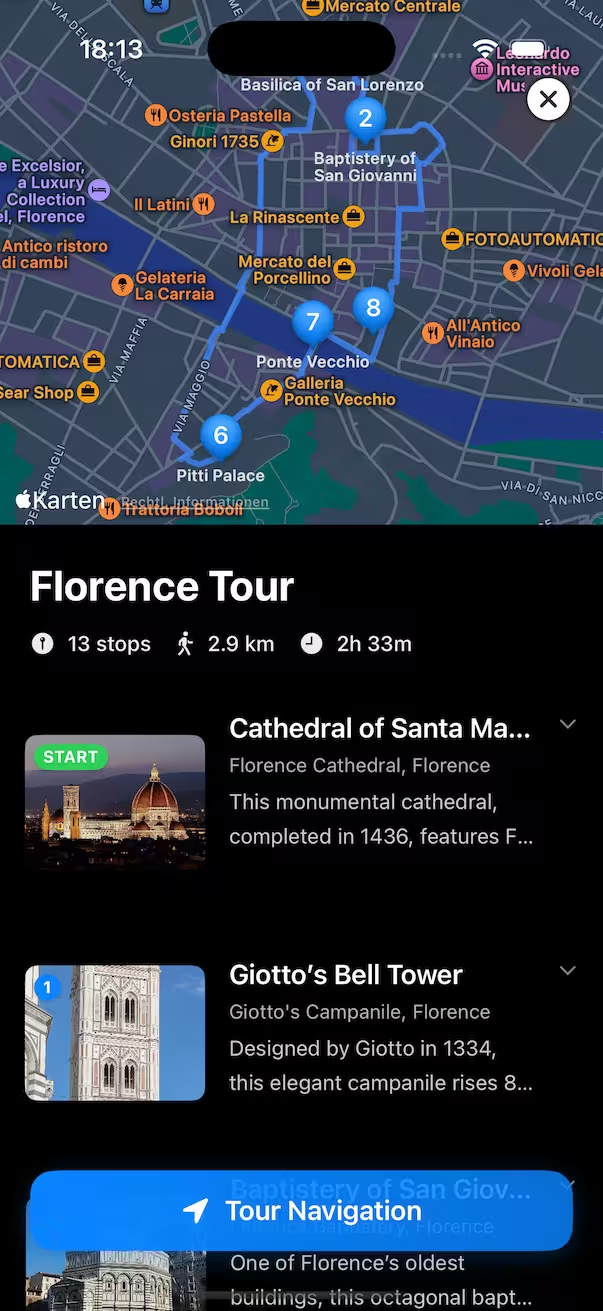
The classic Carcassonne tour: 6 stops, 2.5 km, about 1 h on foot
Your live AI guide and the self-guided Carcassonne route, together in your browser.