Best Time to Visit Toulouse
Month-by-month weather, crowds and prices, plus a full calendar of festivals and events worth planning a trip around.
Best monthsMay, Sep, Oct
CheapestJan, Feb, Nov
AvoidJul
BusiestJul

When is the best time to visit Toulouse?
Visit in May, September or October: 20-26°C, the pink-brick old town comfortable to walk, and the fullest festival calendar. July brings 35°C-plus afternoons and the year's highest hotel rates. January, February and November are the cheapest and quietest, the trade being short grey days.
Start our tool and find your best time to visit Toulouse
Your perfect month
Free · ~30 seconds
or tap a month directly
What matters to you?
And this?
Best overall: May, Sep, Oct. May and September are the real answer: warm but not punishing, every museum open after the Augustins reopened, and festivals back to back. October keeps the mild light and adds autumn colour in the Grand Rond, just dodge the All Saints holiday week.
Best value: Jan, Feb, Nov. January, February and November bring rooms from around 42 euros, free first-Sunday museums, the always-free Fondation Bemberg, and the rare pleasure of an empty Marché Victor Hugo on a weekday morning.
Avoid: Jul. July: 35°C-plus afternoons, the year's highest hotel rates, and a centre that bakes. Early December's Aeromart week is the other trap, when the aerospace convention sells out every hotel in town.
- January: Good time, 9°C. This is the one month you have the Cité de l'Espace and Saint-Sernin almost to yourself. The 130,000 students are back in lecture halls, café terraces are heated and slow, and the lanes around Victor Hugo sound French again. Grey skies are the price, and at these prices it is a fair one.
- February: Good time, 12°C. February is honest, un-staged Toulouse: no tourist show, no seasonal markup, just a real southern city in winter mode. The Violet Festival is the one weekend the whole city leans into a tradition that exists nowhere else, and it is completely free to wander.
- March: Great time, 14°C. March is the last genuinely quiet month before the festival season opens. The city wakes up, terraces reappear and the markets pile high with spring produce, yet you can still walk into a good restaurant on a Saturday without booking. That window shuts fast.
- April: Great time, 18°C. April is Toulouse at its most balanced: mild, green, every museum open, and still affordable. It rarely feels crowded outside the Easter week itself, which makes it the quiet favourite of people who have visited in both spring and high summer.
- May: Good time, 21°C. May genuinely delivers Toulouse's best weather and its richest weekend calendar at once. The catch is the run of public holidays and their bridge weekends, which empty the independent shops and fill the hotels. Plan around the ponts and May rewards you better than any other month.
- June: Good time, 26°C. June is the tipping point, when Toulouse shifts from pleasant into full summer energy. Days get hot by the third week, but the late evenings and the festival run more than redeem it. If you want the city at its most exuberant rather than its most comfortable, this is the month.
- July: Good time, 28°C. July is for travellers who genuinely don't mind a 35°C afternoon and peak prices. Midday in the centre is a write-off. The payoff is the long warm night: Bastille Day fireworks over the Garonne and the riverbanks alive after dark are a completely different, better Toulouse.
- August: Good time, 29°C. August is the quiet paradox of a working aerospace city. With the locals gone the streets feel half-emptied and oddly calm, and the hotels can be cheaper than peak July. The cost is the heat and the run of closed neighbourhood restaurants, which leaves the tourist tables near the Capitole doing the heavy lifting.
- September: Great time, 25°C. If you want the real, fully-alive Toulouse with bearable weather, September is it. The students are back, the festival calendar is rich, and the heat has broken without the autumn damp setting in yet. Locals will tell you this, not July, is the city's true high point.
- October: Great time, 21°C. October is the quietly excellent month nobody books in time. Soft light, autumn colour along the Grand Rond, mild days, and still-low crowds outside the conference and holiday weeks. The only real planning task is dodging the EASN and All Saints dates.
- November: Good time, 14°C. November feels like the city exhaling after the autumn rush. It is grey and wet, but the lowest prices of the season and a near-empty Marché Victor Hugo on a weekday morning are the reward, before the Christmas market warms the final week back up.
- December: Good time, 11°C. December splits in two. The first week is an aerospace-trade scramble with sky-high hotel rates and no rooms, then the rest is a cosy red-brick Christmas-market month. If you are coming for the market, simply avoid 1-3 December and the rest of the month is genuinely lovely.
Toulouse weather by month
HighLowRainfall
Jan9°
Feb12°
Mar14°
Apr18°
May21°
Jun26°
Jul28°
Aug29°
Sep25°
Oct21°
Nov14°
Dec11°
| Month | Temp | Rain | Sun | Crowds | Prices | Highlight |
|---|---|---|---|---|---|---|
| Jan | 9° / 3° | 79mm · 12 rainy days | 5.0 h/day | ●○○○○ | ●○○○○ | |
| Feb | 12° / 4° | 60mm · 10 rainy days | 6.9 h/day | ●●○○○ | ●○○○○ | Violet Festival |
| Mar | 14° / 6° | 68mm · 12 rainy days | 8.4 h/day | ●●○○○ | ●●○○○ | Toulouse à Table |
| Apr | 18° / 8° | 72mm · 11 rainy days | 9.4 h/day | ●●●○○ | ●●○○○ | Toulouse à Table |
| May | 21° / 11° | 78mm · 12 rainy days | 10.5 h/day | ●●●○○ | ●●●○○ | European Night of Museums |
| Jun | 26° / 16° | 61mm · 10 rainy days | 11.5 h/day | ●●●●○ | ●●●○○ | Le Nouveau Printemps |
| Jul | 28° / 18° | 48mm · 8 rainy days | 11.8 h/day | ●●●●● | ●●●●○ | Bastille Day |
| Aug | 29° / 18° | 49mm · 7 rainy days | 11.6 h/day | ●●●●○ | ●●●○○ | Toulouse à Table |
| Sep | 25° / 15° | 54mm · 8 rainy days | 10.2 h/day | ●●●○○ | ●●●○○ | Piano aux Jacobins |
| Oct | 21° / 12° | 54mm · 8 rainy days | 8.0 h/day | ●●●○○ | ●●●○○ | Toulouse à Table |
| Nov | 14° / 7° | 80mm · 13 rainy days | 6.2 h/day | ●●○○○ | ●●○○○ | Toulouse Marathon |
| Dec | 11° / 4° | 69mm · 11 rainy days | 5.2 h/day | ●●●○○ | ●●●○○ | Christmas Market |
How we score this: weather = long-run climate normals (Open-Meteo), crowds & prices = relative season read, events checked yearly against official dates.
Best time to visit Toulouse: weather, prices & crowds
Best months for good weather
May, Jun, Sep
May, June and September give you Toulouse at its most comfortable: 21-26°C, long evenings, and golden light raking across the rose-coloured brick along the Garonne well past 9 pm.
Quietest months to avoid the crowds
Jan, Feb, Nov
From November to February the city belongs to its 130,000 students again. Queues at the Cité de l'Espace and the basilica vanish, and you hear French rather than holiday English in the lanes around Marché Victor Hugo.
Cheapest time to visit Toulouse
Jan, Feb, Nov
January and February are the cheapest months: three-star rooms start around 42-55 euros a night, and the first Sunday brings free entry to the city museums.
Best time for festivals and events
Sep
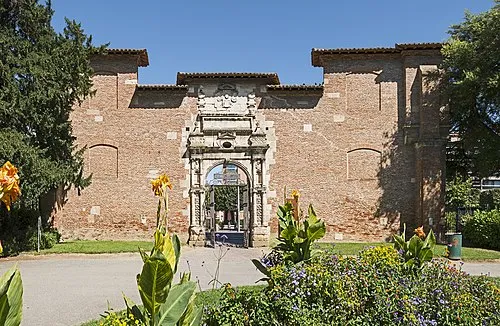
September is unmatched: Piano aux Jacobins stages fifteen pianists inside the Gothic cloister of the Couvent des Jacobins, where the sound under the palm-vault ceiling has no equal in any concert hall.
How many days do you need in Toulouse?
Two days is the right call for Toulouse. The pink-brick historic core is compact, with the main sights clustering tightly between Place du Capitole and the Garonne, but the depth here rewards a slower pace: one day leaves you rushing past museums you will wish you had entered. A third day opens the wider city for the aerospace museums and the riverside market scene at a genuinely leisurely rhythm.

One day
The pink-brick core
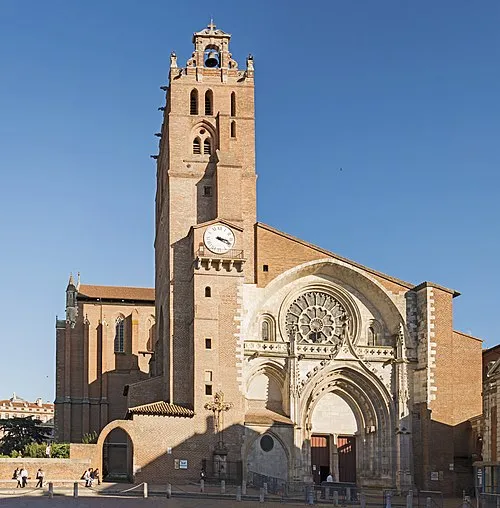
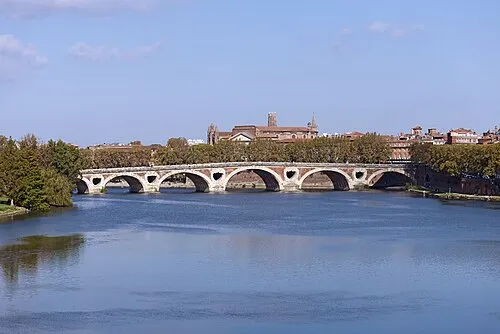
Start on Place du Capitole at opening, before the tour groups arrive on the great ochre square, then walk north to the Basilique Saint-Sernin, the largest Romanesque church in Europe. A self-guided Toulouse walking tour threads 7 stops across 4.2 km in about 1.9 hours, covering the Musée des Augustins, the Fondation Bemberg, Pont Neuf and the Quai de la Daurade in one flowing loop. That leaves the afternoon free for the Cathédrale Saint-Étienne and a slow evening on the riverbank as the golden light hits the brick.
Two daysRecommended
Art, markets and the Garonne
Give the morning to the Musée des Augustins and its Gothic cloister, then cross to the Fondation Bemberg in the Renaissance Hôtel d'Assézat for its Bonnard collection, always free. Hit Marché Victor Hugo before 11 am for the freshest stalls, eat at one of the upstairs market restaurants, then spend the afternoon on the Quai de la Daurade watching the river light change. In September, an evening at Piano aux Jacobins inside the Jacobins cloister is the logical close.
Three days
Aerospace and the wider city
Reserve a full day for the Cité de l'Espace on the eastern edge of the city, where the full-scale Ariane 5 rocket and the outdoor space park need several hours, and book timed entry online to avoid queues. Alternatively, Aéroscopia near the airport holds a Concorde and an Airbus A380. Back in the centre, the Couvent des Jacobins with its famous palm-vault ceiling deserves the time you did not have on day one.
Four days or more
Festivals, food and day trips
Four or more days lets Toulouse breathe. In May or September a festival weekend takes one afternoon naturally: the Nuit des Musées in May, or a weekday Piano aux Jacobins concert in September. With extra time, the Marché des Carmes is worth a morning alongside Victor Hugo. The Pyrenees foothills are an easy day trip in clear autumn weather, and the Canal du Midi west of the city rewards an afternoon by bike.
Best time to visit Toulouse by traveller type
Same city, different trip. Here's the month that fits how you're travelling.
🧭
Best time to visit Toulouse for the first time
MaySep
May or September: mild 21-26°C, every museum open including the freshly reopened Musée des Augustins, moderate crowds, and a festival on almost every weekend. The safe, full-value answer most first-timers want.
❤️
Best time to visit Toulouse for couples
SepOct
September or October for golden-hour light on the pink brick from Pont Neuf and the Quai de la Daurade, warm-but-not-hot 20-26°C days, and Piano aux Jacobins for an evening in the cloister.
💶
Best time to visit Toulouse on a budget
JanFebNov
January, February or November: the year's lowest rooms from 42 euros, free city museums on the first Sunday, the always-free Fondation Bemberg, and the free Violet Festival in February.
🍝
Best time to visit Toulouse for food and wine
FebOct
February for fresh Toulouse violets and peak cassoulet season, or October when truffles and the first wild mushrooms reach Marché Victor Hugo and the Toulouse à Table food festival is still running.
Worst time to visit Toulouse
Mid-July to mid-August is the stretch most worth skipping if heat or budget matter. Afternoon temperatures regularly hit 35 to 38°C, and the pink-brick centre stores the heat like a furnace with almost no shade on Place du Capitole. Many neighbourhood brasseries and bistrots close for two weeks around 15 August, so the genuine local dining scene thins to tourist-facing restaurants near the Capitole. Hotel rates in July are the year's highest, around 130 euros for a three-star room.
Still worth it for July still works for travellers who genuinely do not mind midday heat and can shift sightseeing to before 10 am and after 6 pm. Bastille Day on 14 July brings spectacular fireworks over the Garonne, and August can be surprisingly cheap once business travel stops, with three-star rooms sometimes slipping to 90 to 100 euros.
Go instead in May, September, October, when Toulouse is at its best.
Best time for a tour of Toulouse
The 4.2-kilometre walk through Toulouse rewards patience with the calendar. April and May are the sweet spot: highs of 17 to 21 °C, enough sunshine to bring the pink-brick façades of the Place du Capitole alive without scorching you, and rain on roughly 11 to 12 days that mostly clear by afternoon. September and October are nearly as good, the heat has softened to 20 to 25 °C and the streets thin out after the summer peak. July and August are workable early or late in the day, but highs hitting 28 to 29 °C with almost no shade on the broad esplanade around the Capitole or along the open quays at the Quai de la Daurade turn the midday stretch into a slog. At the other extreme, January is quiet and very cheap, but you are looking at barely 9 °C, 12 rain days, and dark arriving before 6 pm, which compresses the pleasant walking window considerably. The long Romanesque nave of the Basilique Saint-Sernin is gorgeous in any weather, but the approach across the open parvis in a January drizzle tests your motivation. June already draws sizeable crowds and school-holiday July is the most packed the city gets, every café terrace on the Capitole filled to the edges.
What the climate should not decide is the hour you leave or the speed you walk, and that is where starting your Toulouse tour with AI Tourguide changes things. The guide runs entirely in your browser, no download, no booking, no fixed departure slot. It is a voice-first companion that leads you through the route, tells you the story of each place, asks you questions along the way, and adapts what it says based on what you tell it. So on a warm May morning you can set off at 8 am when the Quai de la Daurade is nearly empty and the light on the Garonne is soft, linger as long as you like at the Musée des Augustins, and let the conversation with your guide fill whatever pace suits the day, cooler hours or not.


 +3
+3All 7 stops are already on the map.
You just press start.
You just press start.
 AI Tourguide
You just read the route.
Now walk it with a guide in your ear.
Press start wherever you are, even hundreds of kilometres from Toulouse, and the guide begins telling its stories right away. In the city, pick any of the 7 stops to start from: it leads you there, then talks with you the whole route, asking, listening, remembering, and shaping the tour around your answers.
7stops4.2km1.9hours11languages
▶Start the tour freeFree to start · Runs in your browser · No app, no download
Toulouse events and festivals calendar
Annual highlights worth timing a trip around, listed month by month.
February
🌸 Seasonal natureViolet Festival Fête de la Violette
Feb 21–22
third weekend of February
A weekend market on Place du Capitole devoted to the Toulouse violet: fresh flowers, violet perfume, confiserie, pottery and tastings of the crystallised Violettes de Toulouse made here since the Belle Époque, roughly 10 am to 5 pm.
March
🍷 Food and wineToulouse à Table
Mar 1 – Nov 30
March to November
A long-running gastronomy season of tastings, chef events and producer markets across the city, celebrating southwest French cooking from cassoulet to local wines.
May
🌙 Museum nightEuropean Night of Museums Nuit Européenne des Musées
May 23
third Saturday of May
Museums open free from 7 pm to midnight.
🎨 Art and cultureLe Nouveau Printemps
May 29 – Jun 28
late May to late June
The former Printemps de Septembre, an open-air contemporary art festival with 40-plus artists installing work across the Marengo, Bonnefoy and Jolimont quarters, all free to visit.
June
🏳️🌈 PridePride March Marche des Fiertés
Jun 6
first Saturday of June
Around 30,000 people march from Place du Capitole through Alsace-Lorraine and the Allées Jean-Jaurès, with an after-Pride party back on Place du Capitole into the evening.
🎵 MusicRio Loco Festival Rio Loco
Jun 10–14
mid-June
The region's biggest world-music festival, held on the Prairie des Filtres beside the Garonne, with global acts, DJ sets and visual arts across five days.
🎵 MusicFête de la Musique
Jun 21
always 21 June
City-wide free concerts on squares, in parks and in courtyards, from Place du Capitole and the Prairie des Filtres to small neighbourhood squares, all in a single spontaneous evening.
July
🇮 HolidayBastille Day Fête Nationale
Jul 14
always 14 July
France's national day, with fireworks over the Garonne from the Prairie des Filtres on the evening of 13 July and again at the Lac de la Reynerie on the 14th, plus a parade, firemen's balls and concerts.
September
🎵 MusicPiano aux Jacobins Festival Piano aux Jacobins
Sep 8–30
all of September
Fifteen leading pianists perform across September inside the Couvent des Jacobins, using the Gothic cloister with its famous palm-vault as the concert hall.
November
🏃 SportToulouse Marathon Toulouse Métropole Run Experience
Nov 1
early November
A marathon, half marathon, 10 km and relays through the centre on a Sunday morning, with central streets closed for the route.
🎄 Christmas marketChristmas Market Marché de Noël de Toulouse
Nov 25 – Dec 26
late November to 26 December
Wooden chalets of crafts, mulled wine and decorations spread across Place du Capitole, Square Charles de Gaulle, the Allées Jean Jaurès and the Allées Jules Guesde.
December
🎨 Art and cultureAeromart Toulouse
Dec 1–3
first days of December
The world's largest aerospace business convention, held at the MEETT exhibition park, drawing manufacturers, suppliers and startups from across the industry.
Insider tips for visiting Toulouse
The rules buried in forums, in one place.
- Marché Victor Hugo runs every morning except Monday, but Saturday from 7 to 9 am is the one window with full stalls and peak-fresh produce. After 11 am the best stands are stripped bare and the aisles are jammed. Come early, eat upstairs at one of the market restaurants for lunch.
- The Basilique Saint-Sernin, the largest Romanesque church in Europe, is quietest Tuesday to Friday between 10 and 11 am, before the tour groups and the midday prayer. The crypt with its relics costs about 3 euros and you walk straight in with no queue.
- City museums, including the Augustins, Saint-Raymond and the Muséum, are free on the first Sunday of each month. It sounds like a steal until you arrive to a queue, so come right at opening or pay full price on a quiet weekday and walk straight in.
- Watch the Musée des Augustins opening days since its reopening: it closes both Tuesday and Wednesday, not just one day. Saint-Raymond, the Muséum and the Fondation Bemberg all shut on Monday, the same day the markets close, so Monday is the weakest day for indoor culture.
- Aeromart, the aerospace business convention, fills the city in the first days of December and pushes hotel rates 30-50% above the off-season floor across the whole week. If you are not attending, book well ahead or shift your dates to 4-7 December once the convention clears.
- Piano aux Jacobins weekend concerts sell out within about 48 hours of the early-May box-office opening. Weekday slots in the cloister stay available much longer, so aim for a Tuesday or Wednesday night and book the moment tickets go live.
- After snowmelt in the Pyrenees in March and April the Garonne can rise sharply and flood the Prairie des Filtres, the Quai de la Daurade and the Passerelle Viguerie. Check the river level on vigicrues.gouv.fr before a riverside walk in those two months.
- On a 35°C summer day the Fondation Bemberg inside the Renaissance Hôtel d'Assézat is the smartest midday escape: air-conditioned rooms, free entry, and a courtyard that stays cool. Save the shadeless Place du Capitole and the Garonne quays for after 6 pm.
Public holidays in Toulouse
On these dates many shops and offices close, transport thins out, and sights can be mobbed or shut. Plan around them.
| Date | Holiday | What closes |
|---|---|---|
| Jan 1 | New Year's Day | Everything closes: shops, museums, most restaurants, and public transport runs a stripped-back holiday timetable. Plan the day around what little stays open. |
| Apr 5 | Easter Sunday | Restaurants and most sights stay open, but the Marché Victor Hugo and the Marché des Carmes both close. Falls inside the Zone C school spring holidays, so the city draws extra French family visitors. |
| Apr 6 | Easter Monday | Public holiday: many shops shut and museum hours vary, so check before setting out. A good day for the Cité de l'Espace, which opens daily including holidays. |
| May 1 | Labour Day | Almost everything closes, including the Marché Victor Hugo. The Cité de l'Espace generally stays open. The lily-of-the-valley tradition fills the streets with small flower sellers. |
| May 8 | Victory in Europe Day | Public holiday with a commemoration at the Capitole; many shops closed. It often bridges to the weekend, so the centre feels Sunday-quiet for several days. |
| May 14 | Ascension Day | Public holiday on a Thursday that most locals bridge into a four-day weekend (pont), pushing hotel rates up 15-25% and emptying many independent shops. |
| May 25 | Whit Monday | Public holiday closing another long weekend. Museums often open, but many shops and smaller restaurants stay shut. |
| Jul 14 | Bastille Day | National day with fireworks over the Garonne on the evening of 13 July from the Prairie des Filtres and on 14 July at the Lac de la Reynerie. Streets in the centre are closed for the parade and shops shut. |
| Aug 15 | Assumption Day | Public holiday at the peak of the local summer exodus: many brasseries and bistrots are already closed for a two-week break. Tourist sights stay open with little disruption to a visit. |
| Nov 1 | All Saints' Day | Public holiday inside the Zone C autumn break (17 October to 2 November): most shops and smaller restaurants close. The Toulouse marathon runs the same morning, so the centre is partly cordoned off and transport is reduced. |
| Nov 11 | Armistice Day | Public holiday with a remembrance ceremony at the Capitole. Many shops close, though museums and tourist sights largely stay open. |
| Dec 25 | Christmas Day | Everything closes except a handful of tourist restaurants. The Christmas market on Place du Capitole does not open on the 25th. Public transport runs a minimal timetable. |
Toulouse month by month
January in Toulouse
High9°C / 49°F
Low3°C
Rain79mm / 12 rainy days
Sun5.0 h/day
Daylight9 h/day
Humidity85%
Crowds●○○○○Prices●○○○○
January is Toulouse at its quietest, a working university city with no holidays once New Year passes. Daytime highs sit around 9°C with frequent grey, damp skies and roughly 12 rainy days, though hard frost is rare. Hotels are at their year-low and the museums are close to empty. This is the cheapest, calmest stretch of the entire calendar, the trade being short daylight that fades by 5.30 pm.
The vibe This is the one month you have the Cité de l'Espace and Saint-Sernin almost to yourself. The 130,000 students are back in lecture halls, café terraces are heated and slow, and the lanes around Victor Hugo sound French again. Grey skies are the price, and at these prices it is a fair one.
Don't miss Fresh Toulouse violets are in season from November through March, sold at the Serre Municipale and Marché Victor Hugo. A heated weekday morning in the Fondation Bemberg, always free, feels almost private in January.
Crowd drivers No school holidays and no events once New Year is over. The lowest tourist pressure of the entire year.
In season Peak cassoulet season. The slow-cooked white-bean, duck and Toulouse-sausage stew is at its best from October to March, eaten at an old-school table like Au Gascon or Émile.
Heads up 1 January is a national holiday with nearly everything shut and reduced transport. Markets close on Mondays year-round.
Cheapest month of the year; three-star rooms from around 42 euros a night.
February in Toulouse
High12°C / 53°F
Low4°C
Rain60mm / 10 rainy days
Sun6.9 h/day
Daylight10 h/day
Humidity80%
Crowds●●○○○Prices●○○○○
February stays mild for the latitude, around 12°C by day, and is noticeably drier and sunnier than January with about 10 rainy days. It is still firmly low season, with rooms near their cheapest. The standout is the Fête de la Violette on the third weekend, when Place du Capitole fills with stalls of fresh violets, violet perfume and crystallised Violettes de Toulouse, the city's Belle Époque sweet speciality.
The vibe February is honest, un-staged Toulouse: no tourist show, no seasonal markup, just a real southern city in winter mode. The Violet Festival is the one weekend the whole city leans into a tradition that exists nowhere else, and it is completely free to wander.
Don't miss Fresh Toulouse violets are still in season and at their showiest around the Fête de la Violette (third weekend), the only time of year you can buy the flowers fresh in quantity at Marché Victor Hugo.
Crowd drivers The Fête de la Violette weekend pulls a modest local crowd; otherwise the quiet university rhythm holds.
In season Crystallised violets and violet confiserie are everywhere this month, and cassoulet season is still in full swing in the bistrots.
Heads up Markets closed Mondays; the Musée des Augustins closes both Tuesday and Wednesday.
Still low season; among the best hotel value of the year.
Events this month
🌸 Seasonal natureViolet Festival Fête de la Violette
Feb 21–22
third weekend of February
A weekend market on Place du Capitole devoted to the Toulouse violet: fresh flowers, violet perfume, confiserie, pottery and tastings of the crystallised Violettes de Toulouse made here since the Belle Époque, roughly 10 am to 5 pm.
It is the only season the city's signature flower is sold fresh in quantity, and the whole event is free to wander.
March in Toulouse
High14°C / 58°F
Low6°C
Rain68mm / 12 rainy days
Sun8.4 h/day
Daylight12 h/day
Humidity75%
Crowds●●○○○Prices●●○○○
March brings spring to Toulouse: highs climbing toward 14°C, café terraces filling again, and the first day-trippers from across the southwest. Crowds stay light. One practical catch is the river: snowmelt in the Pyrenees can push the Garonne up sharply this month, occasionally flooding the Prairie des Filtres and the Quai de la Daurade, so check the level before a riverside walk.
The vibe March is the last genuinely quiet month before the festival season opens. The city wakes up, terraces reappear and the markets pile high with spring produce, yet you can still walk into a good restaurant on a Saturday without booking. That window shuts fast.
Don't miss Early blossom appears in the Jardin des Plantes and around the Grand Rond. The Toulouse à Table gastronomy season opens, running through to November with tastings and chef events across the city.
Crowd drivers A late-March Easter and the Zone C spring holidays trigger the first real family bump; otherwise crowds stay moderate.
In season Last reliable weeks of cassoulet season before warmer weather, and the first spring vegetables reach the Marché des Carmes.
Heads up Garonne flood risk from snowmelt can close riverside paths; check vigicrues.gouv.fr.
Prices edge up; Easter, if it lands in March, brings a school-holiday bump.
April in Toulouse
High18°C / 64°F
Low8°C
Rain72mm / 11 rainy days
Sun9.4 h/day
Daylight13 h/day
Humidity70%
Crowds●●●○○Prices●●○○○
April is one of the best months to bring a family, with comfortable highs near 18°C and the Zone C spring holidays usually landing early in the month. It is warm enough to enjoy the long outdoor site at the Cité de l'Espace without summer heat, and queues stay shorter than in peak season. Up to 11 rainy days are possible, mostly as passing showers rather than all-day rain.
The vibe April is Toulouse at its most balanced: mild, green, every museum open, and still affordable. It rarely feels crowded outside the Easter week itself, which makes it the quiet favourite of people who have visited in both spring and high summer.
Don't miss Ideal Cité de l'Espace weather: the full-scale Ariane 5 and the outdoor space park are comfortable to explore. Book timed entry in the school-holiday weeks. The Garonne golden hour from Pont Neuf is back as the days lengthen.
Crowd drivers Zone C Easter school holidays (typically early April) bring French families; the Cité de l'Espace can hit 4,000 visitors a day in holiday weeks.
In season Spring vegetables, asparagus and the first strawberries reach the Marché des Carmes as the cassoulet season winds down.
Heads up Easter Sunday closes the Victor Hugo and Carmes markets; Easter Monday is a public holiday with variable museum hours.
Mid-season rates, roughly 20% below summer; Easter-week bump if the holiday falls in April.

May in Toulouse
High21°C / 70°F
Low11°C
Rain78mm / 12 rainy days
Sun10.5 h/day
Daylight15 h/day
Humidity71%
Crowds●●●○○Prices●●●○○
May is the month locals quietly name as the best: highs around 21°C, long bright evenings, and the cultural calendar bursting open. Several public holidays fall this month (1 and 8 May, Ascension, Whit Monday), and the bridge weekends (ponts) around them push hotel rates up. On the third Saturday the Nuit Européenne des Musées throws museums open free until midnight, and Le Nouveau Printemps fills the eastern quarters with free contemporary art.
The vibe May genuinely delivers Toulouse's best weather and its richest weekend calendar at once. The catch is the run of public holidays and their bridge weekends, which empty the independent shops and fill the hotels. Plan around the ponts and May rewards you better than any other month.
Don't miss The Nuit Européenne des Musées (third Saturday, 7 pm to midnight) opens the Augustins, Saint-Raymond and Les Abattoirs free, with live music and projections in the cloisters. Le Nouveau Printemps scatters free contemporary art across the Marengo and Bonnefoy quarters.
Crowd drivers A cluster of public holidays (1 May, 8 May, Ascension on 14 May, Whit Monday on 25 May) and their bridge weekends drive the month's busiest, priciest stretches.
In season The Marché des Carmes hits its spring peak with asparagus, strawberries and early cherries.
Heads up Four public holidays this month close many shops; bridge weekends leave the centre Sunday-quiet for days at a time.
Bridge-holiday weekends add a 15-25% hotel premium; otherwise solid mid-season value.
Events this month
🌙 Museum nightEuropean Night of Museums Nuit Européenne des Musées
May 23
third Saturday of May
Museums open free from 7 pm to midnight. The Musée des Augustins programmes live music, video projections, dance and aerial circus in its cloister, with Saint-Raymond and Les Abattoirs also open late.
A free, unforgettable late-night walk through the city's collections, with the Augustins cloister staged like a theatre.
🎨 Art and cultureLe Nouveau Printemps
May 29 – Jun 28
late May to late June
The former Printemps de Septembre, an open-air contemporary art festival with 40-plus artists installing work across the Marengo, Bonnefoy and Jolimont quarters, all free to visit.
A fresh, urban counterpoint to the classic museums that puts ambitious art free on the street for a month.
June in Toulouse
High26°C / 79°F
Low16°C
Rain61mm / 10 rainy days
Sun11.5 h/day
Daylight15 h/day
Humidity68%
Crowds●●●●○Prices●●●○○
June opens the Toulouse summer warm at 26°C average highs, nearly the year's longest daylight at over 15 hours, and the festival season at full tilt. The schools wind down toward month-end. This is the loudest, most alive stretch of the year: Rio Loco brings world music to the Garonne, the Marche des Fiertés fills the centre, and the city-wide Fête de la Musique turns every square into a free stage on 21 June.
The vibe June is the tipping point, when Toulouse shifts from pleasant into full summer energy. Days get hot by the third week, but the late evenings and the festival run more than redeem it. If you want the city at its most exuberant rather than its most comfortable, this is the month.
Don't miss Rio Loco on the Prairie des Filtres offers free daytime access (evening concerts ticketed), with Wednesday and Thursday the best value before the weekend sells out. The Fête de la Musique on 21 June is free city-wide, and the Garonne sunset from Pont Neuf lands near 9.30 pm.
Crowd drivers End-of-school-year travel plus three big festivals (Rio Loco, Pride, Fête de la Musique) book out festival weekends well ahead.
In season Riverside aperitivo and terrace season hits its stride, with summer fruit at its peak in the markets.
Rates climb as summer starts; festival weekends sell out and average around 110 euros.
Events this month
🎵 MusicRio Loco Festival Rio Loco
Jun 10–14
mid-June
The region's biggest world-music festival, held on the Prairie des Filtres beside the Garonne, with global acts, DJ sets and visual arts across five days.
Daytime access is often free and the riverside setting is unbeatable; Wednesday and Thursday give the best value before the weekend sells out.
🏳️🌈 PridePride March Marche des Fiertés
Jun 6
first Saturday of June
Around 30,000 people march from Place du Capitole through Alsace-Lorraine and the Allées Jean-Jaurès, with an after-Pride party back on Place du Capitole into the evening.
One of southern France's liveliest, best-attended Prides; central streets are closed to traffic through the afternoon.
🎵 MusicFête de la Musique
Jun 21
always 21 June
City-wide free concerts on squares, in parks and in courtyards, from Place du Capitole and the Prairie des Filtres to small neighbourhood squares, all in a single spontaneous evening.
The national day of music turns the whole city into a free, open stage, at its most local and unscripted here.

July in Toulouse
High28°C / 83°F
Low18°C
Rain48mm / 8 rainy days
Sun11.8 h/day
Daylight15 h/day
Humidity62%
Crowds●●●●●Prices●●●●○
July is Toulouse at full heat: 28°C average highs with 35-38°C afternoons increasingly common, and the year's highest hotel rates. The Zone C summer holidays start in early July. The pink-brick centre stores the heat like a furnace and Place du Capitole has almost no shade, so the smart move is to sightsee before 10 am or after 6 pm. Bastille Day on 14 July brings spectacular fireworks over the Garonne the night before.
The vibe July is for travellers who genuinely don't mind a 35°C afternoon and peak prices. Midday in the centre is a write-off. The payoff is the long warm night: Bastille Day fireworks over the Garonne and the riverbanks alive after dark are a completely different, better Toulouse.
Don't miss On a 35°C day the air-conditioned Fondation Bemberg in the Renaissance Hôtel d'Assézat is the perfect free midday refuge. Save the shadeless Capitole and the Garonne quays for after 6 pm, when the golden-hour light on the brick is at its best. Bastille Day fireworks light the river on the night of 13 July.
Crowd drivers Zone C summer holidays from early July plus the 14 July national day put visitor numbers at their annual peak.
In season Cassoulet retreats from menus in the heat; markets turn to summer fruit, melon and chilled rosé from the nearby Languedoc.
Heads up 14 July closes shops and cordons off the centre for the parade. The first brasseries begin their two-week summer break late in the month.
Year's highest rates; three-star rooms from around 130 euros, though prices can dip oddly as business travel stops.
Events this month
🇮 HolidayBastille Day Fête Nationale
Jul 14
always 14 July
France's national day, with fireworks over the Garonne from the Prairie des Filtres on the evening of 13 July and again at the Lac de la Reynerie on the 14th, plus a parade, firemen's balls and concerts.
The fireworks over the Garonne are spectacular, and the firemen's balls (bals des pompiers) are a very local way to spend the night.

August in Toulouse
High29°C / 84°F
Low18°C
Rain49mm / 7 rainy days
Sun11.6 h/day
Daylight14 h/day
Humidity62%
Crowds●●●●○Prices●●●○○
August is the hottest month, with 29°C average highs and the same furnace-like brick at midday as July. The twist is that locals leave: with the business travel that normally fills Toulouse's hotels gone, room rates often slip below July's. Many neighbourhood brasseries and bistrots close for two weeks around 15 August while their owners take their own holiday, so the local dining scene thins.
The vibe August is the quiet paradox of a working aerospace city. With the locals gone the streets feel half-emptied and oddly calm, and the hotels can be cheaper than peak July. The cost is the heat and the run of closed neighbourhood restaurants, which leaves the tourist tables near the Capitole doing the heavy lifting.
Don't miss The reliably open Cité de l'Espace is a good full-day option, while the air-conditioned Fondation Bemberg makes the ideal heat escape. Long warm evenings on the Quai de la Daurade are when the city finally comes out.
Crowd drivers Local exodus and the 15 August holiday empty the city of residents; tourist numbers stay high but business travel vanishes.
In season Many bistrots are shut for the owners' two-week break, so book ahead or stick to the larger Capitole-area restaurants.
Heads up Two-week summer closures of many brasseries and bistrots peak around 15 August (a public holiday).
A local paradox: hotels often run cheaper than July because business travel stops; averages near 90-100 euros.

September in Toulouse
High25°C / 78°F
Low15°C
Rain54mm / 8 rainy days
Sun10.2 h/day
Daylight12 h/day
Humidity66%
Crowds●●●○○Prices●●●○○
September is the strongest single month to visit. Temperatures fall back to a comfortable 25°C, the brutal afternoon heat fades, and the 130,000 students pour back in and bring the city alive. Hotels run roughly 10-20% below July through mid-month. The headline event is Piano aux Jacobins, fifteen world-class pianists performing inside the Gothic cloister of the Couvent des Jacobins all month.
The vibe If you want the real, fully-alive Toulouse with bearable weather, September is it. The students are back, the festival calendar is rich, and the heat has broken without the autumn damp setting in yet. Locals will tell you this, not July, is the city's true high point.
Don't miss Piano aux Jacobins runs all month in the Jacobins cloister, where the acoustics under the palm-vault have no equal; weekday slots last longer than the weekend ones, which sell out in 48 hours. The Garonne golden hour is at its softest and warmest now.
Crowd drivers Student return (around 300,000 across the metro area) revives the city; late-September conventions begin to firm up hotel demand.
In season The first autumn produce arrives at Victor Hugo, and the new wine vintage from the nearby Languedoc starts appearing.
Bargains hold until mid-month; demand and rates pick up as students and conventions return late September.
Events this month
🎵 MusicPiano aux Jacobins Festival Piano aux Jacobins
Sep 8–30
all of September
Fifteen leading pianists perform across September inside the Couvent des Jacobins, using the Gothic cloister with its famous palm-vault as the concert hall.
The sound inside the medieval cloister has no equal in any modern concert hall; book weekday slots, as weekend concerts sell out within 48 hours of the early-May opening.
October in Toulouse
High21°C / 69°F
Low12°C
Rain54mm / 8 rainy days
Sun8.0 h/day
Daylight11 h/day
Humidity76%
Crowds●●●○○Prices●●●○○
October keeps the mild light, with highs around 21°C, and adds autumn colour through the Grand Rond and Jardin des Plantes. It is a fine family month thanks to the Zone C autumn break (17 October to 2 November). Two events squeeze the hotels: the EASN aerospace conference late in the month, and the run-up to the All Saints weekend. October is also the wettest stretch of autumn, so pack a light rain layer.
The vibe October is the quietly excellent month nobody books in time. Soft light, autumn colour along the Grand Rond, mild days, and still-low crowds outside the conference and holiday weeks. The only real planning task is dodging the EASN and All Saints dates.
Don't miss Autumn foliage peaks in the Grand Rond, the Jardin des Plantes and along the Allées Jules Guesde. Truffle season opens and the first wild mushrooms reach Marché Victor Hugo, the foodie's October draw.
Crowd drivers The EASN aerospace conference (late October) fills central hotels despite being held outside the centre, and the Zone C autumn break brings French families.
In season Truffles, wild mushrooms and the new wine vintage all arrive, and cassoulet starts returning to menus as the weather cools.
Good deals overall, but EASN conference week books out central hotels; expect a spike on those dates.
November in Toulouse
High14°C / 58°F
Low7°C
Rain80mm / 13 rainy days
Sun6.2 h/day
Daylight10 h/day
Humidity83%
Crowds●●○○○Prices●●○○○
November is the cheapest, quietest autumn month, with mild but damp days around 14°C and the year's highest rain. The Toulouse marathon runs on the 1st, the same day as the All Saints holiday, closing central streets and thinning transport on a Sunday morning. The mood shifts late in the month: from 25 November the Christmas market spreads across Place du Capitole and the allées, livening the weekends.
The vibe November feels like the city exhaling after the autumn rush. It is grey and wet, but the lowest prices of the season and a near-empty Marché Victor Hugo on a weekday morning are the reward, before the Christmas market warms the final week back up.
Don't miss Fresh Toulouse violets return to the markets and the Serre Municipale. From 25 November the Christmas market lights up Place du Capitole, Square Charles de Gaulle and the Allées Jean Jaurès with crafts and mulled wine.
Crowd drivers The marathon and All Saints holiday cluster on the 1st; the rest of the month is quiet until the Christmas market opens on the 25th.
In season Cassoulet is fully back for the cold season, and mulled wine appears at the late-month Christmas market.
Heads up 1 November (All Saints) closes most shops; the marathon cordons off the centre that morning. Markets closed Mondays.
Cheapest autumn month; Christmas-market Saturdays from the 25th lift weekend rates.
Events this month
🏃 SportToulouse Marathon Toulouse Métropole Run Experience
Nov 1
early November
A marathon, half marathon, 10 km and relays through the centre on a Sunday morning, with central streets closed for the route.
Worth knowing about whether you run or not: it falls on the All Saints holiday, so the centre is cordoned off and transport reduced that morning.
🎄 Christmas marketChristmas Market Marché de Noël de Toulouse
Nov 25 – Dec 26
late November to 26 December
Wooden chalets of crafts, mulled wine and decorations spread across Place du Capitole, Square Charles de Gaulle, the Allées Jean Jaurès and the Allées Jules Guesde.
The red-brick Capitole square makes a glowing backdrop; Saturdays draw up to 30,000 visitors, so go on a weekday evening for a calmer wander.
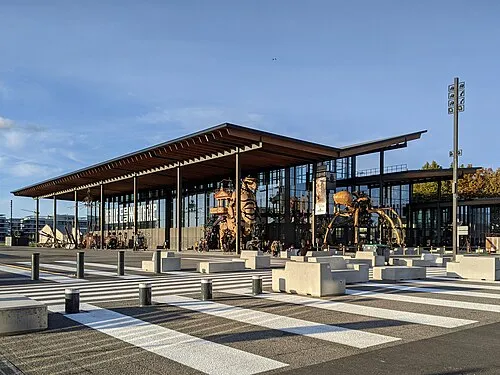
December in Toulouse
High11°C / 52°F
Low4°C
Rain69mm / 11 rainy days
Sun5.2 h/day
Daylight9 h/day
Humidity87%
Crowds●●●○○Prices●●●○○
December is short and damp, with highs near 11°C and sunset by 5.20 pm, but the Christmas market on Place du Capitole gives it a warm glow through the 26th. The week to plan around is the very start of the month: Aeromart, the world's largest aerospace business convention, sells out hotels across the city from 1 to 3 December and pushes rates up 30-50%. School holidays begin around the 19th.
The vibe December splits in two. The first week is an aerospace-trade scramble with sky-high hotel rates and no rooms, then the rest is a cosy red-brick Christmas-market month. If you are coming for the market, simply avoid 1-3 December and the rest of the month is genuinely lovely.
Don't miss The Marché de Noël on Place du Capitole, Square Charles de Gaulle and the allées runs to 26 December, all glühwein, crafts and lights against the red brick. The shortest day around 21 December still gives a soft low winter light over the Garonne.
Crowd drivers Aeromart (1-3 December) books out the entire city; Christmas-market Saturdays draw up to 30,000 visitors to Place du Capitole.
In season Peak cassoulet weather, plus mulled wine and seasonal sweets at the Christmas market stalls.
Heads up 25 December closes nearly everything, including the Christmas market that day. School holidays start around the 19th.
Aeromart week (early December) and Christmas-market Saturdays push hotels 30-40% above the year's floor.
Events this month
🎄 Christmas marketChristmas Market Marché de Noël de Toulouse
Nov 25 – Dec 26
late November to 26 December
Wooden chalets of crafts, mulled wine and decorations spread across Place du Capitole, Square Charles de Gaulle, the Allées Jean Jaurès and the Allées Jules Guesde.
The red-brick Capitole square makes a glowing backdrop; Saturdays draw up to 30,000 visitors, so go on a weekday evening for a calmer wander.
🎨 Art and cultureAeromart Toulouse
Dec 1–3
first days of December
The world's largest aerospace business convention, held at the MEETT exhibition park, drawing manufacturers, suppliers and startups from across the industry.
Not a tourist event, but it matters because it books out hotels across the whole city and pushes rates up 30-50% that week; non-attendees should book far ahead or avoid the dates.
Frequently asked questions
What is the best time to visit Toulouse?
May, September and October are the best months. You get comfortable 20-26°C days, the heavy summer heat gone, every museum open including the reopened Augustins, and a packed festival calendar from the Nuit des Musées in May to Piano aux Jacobins in September. September is the single strongest pick, with the students back and the city fully alive.
What is the cheapest month to visit Toulouse?
January is the cheapest, with three-star rooms from around 42 euros a night, followed closely by February and November. Add the free first-Sunday entry to the city museums, the always-free Fondation Bemberg, and the free Violet Festival in February, and a winter trip costs a fraction of a summer one. The trade-off is short, often grey days.
When should you avoid visiting Toulouse?
Mid-July to mid-August if heat or budget matters: afternoons hit 35-38°C, the pink brick stores the heat, and many local bistrots close for two weeks around 15 August. The other date to dodge is 1-3 December, when the Aeromart aerospace convention books out hotels citywide and lifts rates 30-50%.
How hot does Toulouse get in summer?
Average July and August highs are around 28-29°C, but afternoons of 35-38°C are increasingly common in heatwaves. The pink-brick centre traps heat and Place du Capitole has almost no shade, so the comfortable hours to walk are before 10 am or after 6 pm. The Fondation Bemberg's air-conditioned rooms make a good free midday refuge.
Is Toulouse worth visiting in winter?
Yes, if you want low prices and an authentic, student-driven city. Winter highs sit around 9-12°C, damp but rarely freezing, and the museums are near-empty. February adds the free Violet Festival and December brings the Christmas market on Place du Capitole from the 25th of November to the 26th of December. Just avoid the Aeromart week in early December.
When is the best time to visit Toulouse with kids?
April and October, both on the Zone C school holidays, with manageable 15-20°C days. The heat stays off, so the long outdoor site at the Cité de l'Espace, with its full-scale Ariane 5, never becomes an ordeal. Book the Cité's timed entry online: holiday weeks draw up to 4,000 visitors a day against 1,500 off-season, and tickets sell out.
When is the best weather in Toulouse?
May, June and September offer the most reliable comfort: 21-26°C, long bright evenings, and golden light on the Garonne brick past 9 pm in midsummer. July and August are hotter (28-38°C) but punishing at midday. October stays mild near 21°C but is the wettest autumn month, so carry a light rain layer.
What festivals is Toulouse known for?
The big draws are Rio Loco world music on the Garonne and the Fête de la Musique on 21 June, Piano aux Jacobins in the Gothic cloister all September, the Nuit des Musées in May, and the Pride march in early June. February's Fête de la Violette celebrates the city's signature violet, and the Christmas market runs from late November.
How many days do you need in Toulouse?
Two to three days covers the essentials: a day for the centre (Place du Capitole, Saint-Sernin, the Jacobins and the Augustins), a day for the Cité de l'Espace or Aéroscopia out by the airport, and time along the Garonne and the markets. Add a day in spring or autumn if you want to slow down for the festivals and the food scene.

Any month, any day: your guide is already there
Whatever date you pick, a private human guide gets pricier and harder to book on weekends, holidays and in peak season. Our live AI guide, the one that walks with you and answers anything you ask out loud, works the opposite way.
One flat price, every day
No holiday, weekend, night or peak-season surcharge. A private guide in Toulouse runs well over 100 euro for a half day, and more on holidays. Ours stays the same.
Available the moment you want it
Start at midnight or at dawn, on Christmas, in the snow, in the August heat. No sold-out high season, no booking weeks ahead.
Your pace, no meter running
Pause for a long lunch, restart after dark, repeat a stop. The tour simply waits for you.
Free to try, a fraction of the cost
Test it for free, then a transparent flat price that undercuts any private guide, in every season.
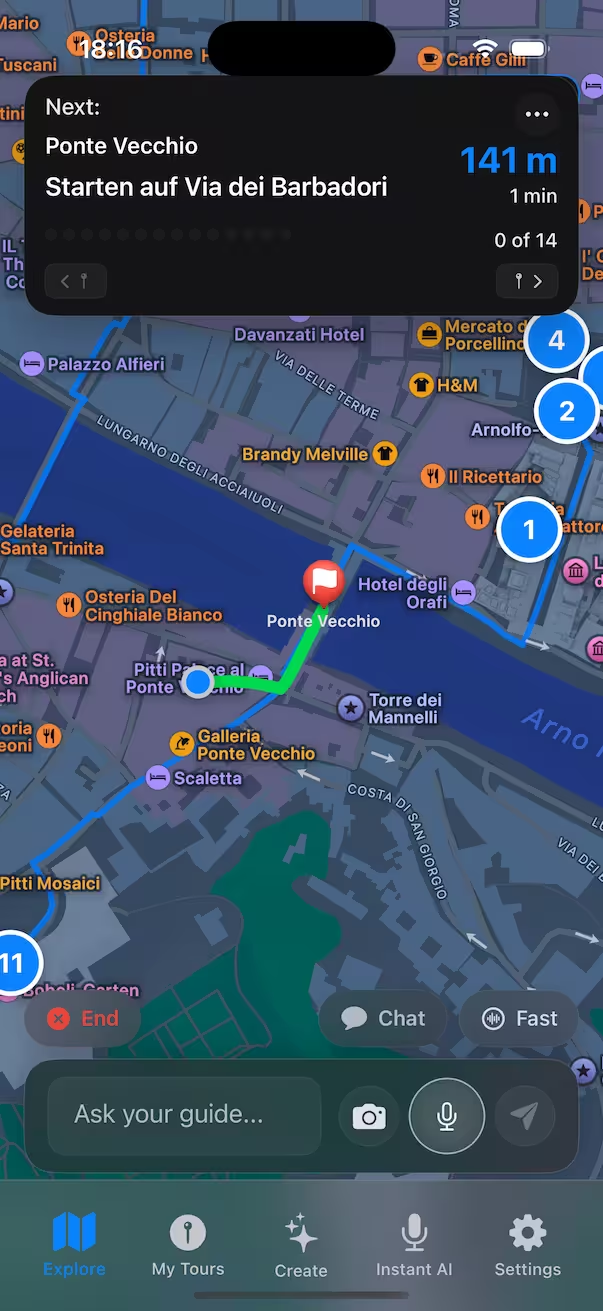
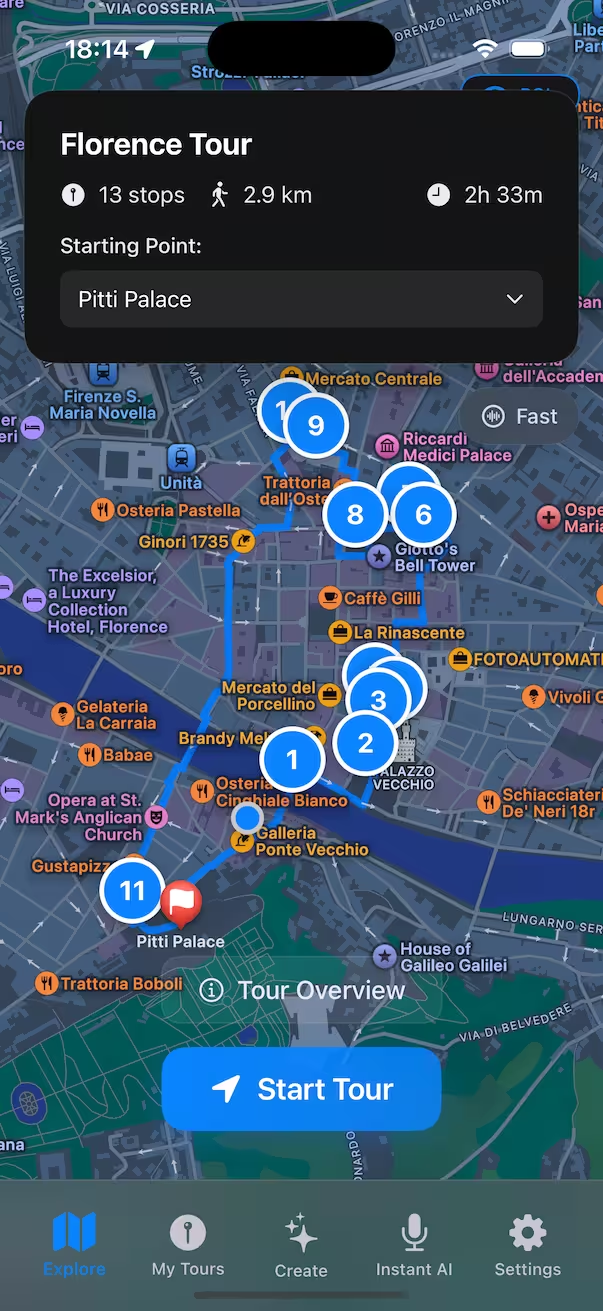
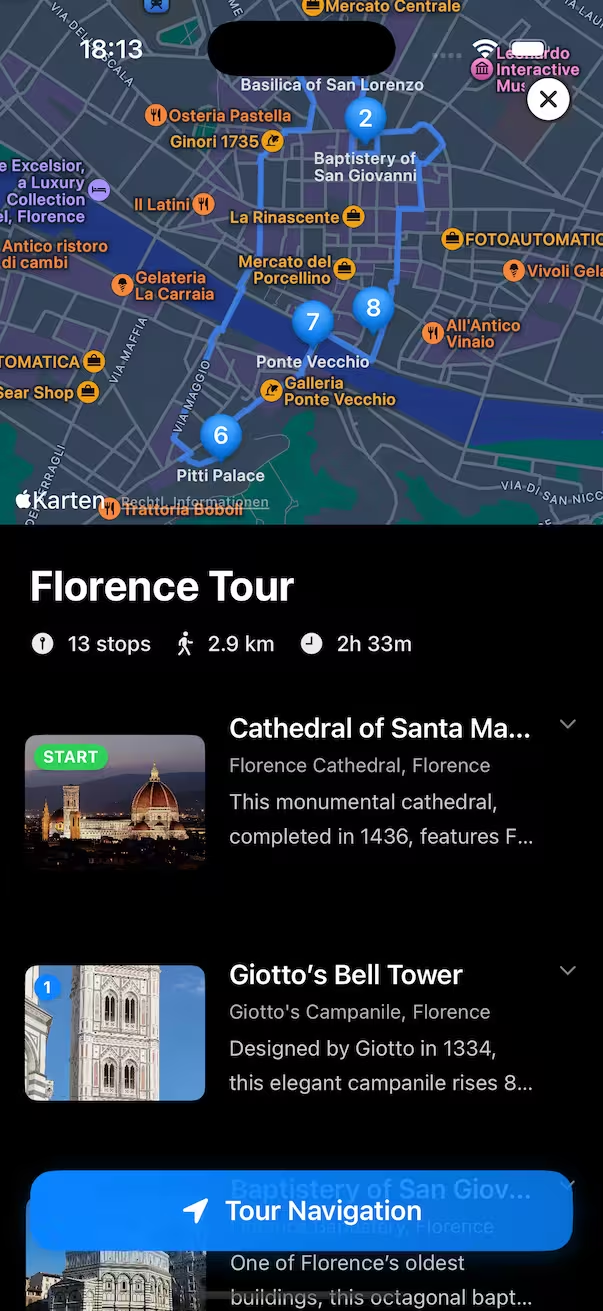
The classic Toulouse tour: 7 stops, 4.2 km, about 2 h on foot
Your live AI guide and the self-guided Toulouse route, together in your browser.