Best Time to Visit Bayonne
Month-by-month weather, crowds and prices, plus a full calendar of festivals and events worth planning a trip around.
Best monthsMay, Sep
CheapestJan, Feb, Mar
AvoidJul
BusiestJul, Aug

When is the best time to visit Bayonne?
Visit Bayonne in May or September: around 19-23°C, the Atlantic warming, museums fully open, and prices 25-50% below summer. July is the worst week if you avoid crowds, when the Fetes de Bayonne pull over a million people in five days. January is cheapest and quietest, the trade being rain on 16 days.
Start our tool and find your best time to visit Bayonne
Your perfect month
Free · ~30 seconds
or tap a month directly
What matters to you?
And this?
Best overall: May, Sep. May and September are the sweet spot: warm enough for the beach at nearby Biarritz, every museum open including the reopened Bonnat-Helleu, the Feria de l'Atlantique for September drama, and prices well below the July peak. The weather is at its kindest and the city stays a real place rather than a festival camp.
Best value: Jan, Feb, Mar, Nov. January, February, March and November bring the lowest rates of the year, free first-Sunday entry at the Musee Basque, and the chance to eat your way through Les Halles without a single queue. November even throws in the free Bayonne Celebrates Chocolate festival.
Avoid: Jul. The third week of July, when the Fetes de Bayonne triple hotel prices to 223-376 euros a night, fill the centre with a million revellers, and seal it inside a secure pedestrian perimeter. The worst week of the year for sightseeing, unless the festival is the whole point.
- January: Good time, 11°C. This is the one month Bayonne is entirely itself, with no festival crowds, no markup, just a working Basque town in winter. The rain is real and the light is short, but the trade is a city that feels lived-in rather than performed for visitors.
- February: Good time, 13°C. February rewards anyone who wants the real Basque country without the crowds. The Carnaval is the genuine article, locals in costume and a fire ritual rather than a tourist show, and the rest of the month is honest, off-season Bayonne.
- March: Great time, 15°C. March is the last properly quiet month before the spring events begin. The terraces are tentatively reopening and the markets are filling with spring produce, yet you can still get a table anywhere without booking. That window closes fast.
- April: Great time, 17°C. April is spring proper in Bayonne, with the ham fair giving it real character and none of the July madness. This is a food town showing its best side, generous and unhurried, before the summer prices arrive.
- May: Great time, 19°C. May is the quiet favourite of anyone who knows Bayonne. The weather is reliably kind, the quays come alive with terrace tables, and you get the city at its prettiest without paying or queuing for it. The closest thing to a perfect time to come.
- June: Good time, 22°C. June is the tipping point, when Bayonne shifts from spring-quiet into summer mode. The long golden evenings are the real reward, and the beach is open but not yet packed. Come in the first half if you can, before the grandes vacances crowds arrive.
- July: Tough month, 24°C. July is euphoric if you have come for the Fetes, and overwhelming if you have not. The streets are an impenetrable sea of white and red, the museums are hard to reach, and casual sightseeing is close to impossible. If crowds are not your thing, this is the one week to avoid.
- August: Good time, 25°C. August is beach-and-crowds Bayonne. The old town is walkable again after the Fetes, but the coast is at its fullest and the heat, though never punishing, peaks now. Best for swimmers willing to share the sand, less so for anyone chasing quiet.
- September: Great time, 23°C. September is when Bayonne becomes a real city again, warm and uncrowded, with the Feria adding just enough atmosphere. Couples and beach-lovers get the best of summer without the August crush or the July chaos. Arguably the single best time to come.
- October: Great time, 21°C. October is autumn at its most relaxed in the Basque country, warm enough for terraces, quiet enough to feel local, and close enough to Espelette for a perfect food day trip. The pace is unhurried and the prices are right.
- November: Great time, 16°C. November is the bargain hunter's Bayonne, rainy and bare but genuinely cheap and entirely local. The chocolate festival gives the start of the month real warmth, and the museums are yours alone the rest of the way.
- December: Good time, 14°C. December is festive without the Paris price tag or the summer madness. The market is genuinely pretty against the old stone, the mood is relaxed, and the only real catch is the rain and the early dark.
Bayonne weather by month
HighLowRainfall
Jan11°
Feb13°
Mar15°
Apr17°
May19°
Jun22°
Jul24°
Aug25°
Sep23°
Oct21°
Nov16°
Dec14°
| Month | Temp | Rain | Sun | Crowds | Prices | Highlight |
|---|---|---|---|---|---|---|
| Jan | 11° / 6° | 171mm · 16 rainy days | 5.7 h/day | ●○○○○ | ●○○○○ | |
| Feb | 13° / 6° | 128mm · 14 rainy days | 7.2 h/day | ●●○○○ | ●○○○○ | Bayonne Carnival |
| Mar | 15° / 8° | 125mm · 16 rainy days | 8.5 h/day | ●○○○○ | ●○○○○ | |
| Apr | 17° / 10° | 105mm · 12 rainy days | 9.9 h/day | ●●○○○ | ●●○○○ | Bayonne Ham Fair |
| May | 19° / 12° | 103mm · 14 rainy days | 11.1 h/day | ●●○○○ | ●●○○○ | Ascension Long Weekend |
| Jun | 22° / 16° | 104mm · 13 rainy days | 11.6 h/day | ●●●○○ | ●●●○○ | |
| Jul | 24° / 18° | 67mm · 10 rainy days | 12.2 h/day | ●●●●● | ●●●●● | Bayonne Festival |
| Aug | 25° / 18° | 74mm · 10 rainy days | 11.8 h/day | ●●●●○ | ●●●●○ | |
| Sep | 23° / 16° | 101mm · 11 rainy days | 10.4 h/day | ●●●○○ | ●●●○○ | Atlantic Feria |
| Oct | 21° / 13° | 95mm · 11 rainy days | 8.1 h/day | ●●○○○ | ●●○○○ | Espelette Pepper Festival |
| Nov | 16° / 9° | 216mm · 17 rainy days | 6.3 h/day | ●○○○○ | ●○○○○ | Bayonne Celebrates Chocolate |
| Dec | 14° / 7° | 165mm · 14 rainy days | 5.4 h/day | ●●○○○ | ●●○○○ | Christmas in Bayonne |
How we score this: weather = long-run climate normals (Open-Meteo), crowds & prices = relative season read, events checked yearly against official dates.
Best time to visit Bayonne: weather, prices & crowds
Best months for good weather
Jun, Jul, Aug, Sep
July through September give Bayonne its driest, warmest spell: highs of 23-25°C, the Atlantic at Biarritz between 20 and 23°C, and long golden evenings with sunset near 21:30 in late July.
Quietest months to avoid the crowds
Jan, Feb, Mar, Nov
January to March and November are the emptiest months: Les Halles and the Musee Basque are calm, the old town belongs to locals, and you trade only grey skies and rain for the quiet.
Cheapest time to visit Bayonne
Jan, Feb, Mar
January through March are the cheapest months, with hotel rooms from around 44 euros a night, free Musee Basque on the first Sunday, and a free Natural History Museum any day.
Best time for festivals and events
Jul
The Fetes de Bayonne (15-19 July) are the defining local experience: five days of white-and-red dress code, bandas, parades and corridas that turn the whole city into France's largest popular festival.
How many days do you need in Bayonne?
Bayonne rewards two full days: one for the walled old town, its Gothic cathedral, and the covered market Les Halles, and a second for the Basque museums and the short hop to Biarritz for the Atlantic coast. Three days opens up Petit Bayonne's bar circuit and a half-day in the Basque countryside, but the city centre itself is compact enough that two days leaves nothing essential unseen.

One day
Cathedral, market, and the Nive quays
Start at Les Halles market on the Grande Bayonne side before 9:00 to catch the morning produce stalls at their best. Cross the Pont Marengo into Petit Bayonne for the Musée Basque, then walk back to the Cathédrale Sainte-Marie, arriving before the 13:00 lunch closure. Spend the afternoon on the Nive quayside, picking up Bayonne ham and local chocolate along the way, and finish the evening on Rue des Cordeliers for the Basque txikiteo tapas circuit.
Two daysRecommended
Museums, beaches, and Biarritz
Day two is for the Musée Bonnat-Helleu, which holds one of France's finest private painting collections including 2,500 loans from the Louvre, best visited on a weekday morning to avoid queues. After lunch, take the 10-minute bus to Biarritz and walk the Côte des Basques cliff path to the Grande Plage. Return to Bayonne for dinner in one of the Petit Bayonne bistros specialising in axoa veal stew and Irouléguy wine.
Three days
Countryside, chocolate, and the Basque villages
A third day opens the Basque hinterland: drive or take a bus 30 km south-east to Espelette for the painted white-and-red houses and the pepper cooperative, then continue to Saint-Jean-Pied-de-Port on the Camino de Santiago. Back in Bayonne, the Plaine d'Ansot nature reserve is a free and uncrowded walk along the Adour flood plain, and an evening at one of the city's long-established chocolatiers rounds out the Basque food story.
Four days or more
Deep Basque Country and the surf coast
With four days you can reach Saint-Jean-de-Luz for its covered market and the bay where Louis XIV was married, take a surf lesson at the Côte des Basques in Biarritz, and still have an evening to explore the Jardin Botanique along the Nive. If you time a longer stay for early September, the Feria de l'Atlantique brings corridas and street music to the bullring at a fraction of the July Fêtes crowds, making it a rewarding reason to linger.
Best time to visit Bayonne by traveller type
Same city, different trip. Here's the month that fits how you're travelling.
🧭
Best time to visit Bayonne for the first time
MaySep
May for perfect 19°C weather and no crowds, or September for warm beach days and the Feria de l'Atlantique, both with full museum access and prices a quarter below August.
❤️
Best time to visit Bayonne for couples
SepOct
September and October for golden light over the Nive quays, long warm evenings, uncrowded beaches and a day trip to the Espelette pepper festival at the end of October.
💶
Best time to visit Bayonne on a budget
JanFebMar
January to March for hotel rooms from 44 euros, free first-Sunday museums and the free Plaine d'Ansot nature reserve. Avoid July, when prices triple.
🍝
Best time to visit Bayonne for food and wine
AprOct
April for the free Foire au Jambon ham fair, or late October for the Espelette pepper festival paired with Bayonne Celebrates Chocolate, in France's only ham-and-chocolate city.
Worst time to visit Bayonne
The third week of July, when the Fêtes de Bayonne run for five consecutive days, is the hardest time to visit the city for sightseeing purposes. Hotel rates triple to 223-376 euros a night, rooms sell out six months in advance, and the historic centre is sealed inside a secure pedestrian perimeter accessible only with a paid bracelet. A million people in five days means impassable streets, 45-minute bar queues, and Basque Country's famous restaurant culture largely buried under festival logistics.
Still worth it for If the Fêtes themselves are the reason for the trip, July is unmissable: there is nothing else like France's largest popular festival, and fans of the white-and-red dress code, bandas, and corridas plan a year ahead to be there.
Go instead in May, September, when Bayonne is at its best.
Bayonne events and festivals calendar
Annual highlights worth timing a trip around, listed month by month.
February
⛪ ReligiousFeast of Saint Leon Fete de la Saint-Leon
Feb 1 ~
around the start of February, on the patron saint's feast day
Processions and solemn blessings at the Cathedrale Sainte-Marie for the patron saint of Bayonne, Saint Leon.
April
🍷 Food and wineBayonne Ham Fair Foire au Jambon de Bayonne
Apr 23–26 ~
four days around Easter, on the Quais de la Nive and Place des Basques
France's oldest food fair, running continuously since 1462, with ham competitions, a brotherhoods' parade, tastings and music spread along the Quais de la Nive and Place des Basques.
May
🇮 HolidayAscension Long Weekend Pont de l'Ascension
May 14–17 ~
a four-day weekend in mid-May
A French national holiday that creates a four-day long weekend and a moderate spike in domestic tourism, with crowds gravitating to the Biarritz beaches.
July
🎉 FestivalBayonne Festival Fetes de Bayonne
Jul 15–19
five days from the third Wednesday of July
France's largest popular festival, drawing over a million visitors for five days and nights of white-and-red dress code, parades, bandas, corridas, vachette cow runs, concerts and fireworks, opened by King Leon throwing the keys from the Hotel de Ville balcony.
🏃 SportFestival Bullfights Corridas des Fetes
Jul 17–18
the Friday and Saturday of Fetes week
Two corridas during the Fetes de Bayonne, including a corrida a cheval, staged in one of France's oldest bullrings.
🎵 MusicArenes en Scene Concerts Arenes en Scene
Jul 25–28
late July, immediately after the Fetes
A summer concert series at the Bayonne bullring, with French headliners playing on consecutive nights under the open sky in the historic arena.
September
🎨 Art and culturePoints de Vue Street Art Festival Points de Vue
Sep 1 ~
September, dates vary year to year
A street-art and urban-culture festival that fills Bayonne's walls with murals and installations across the city.
🎉 FestivalAtlantic Feria Feria de l'Atlantique
Sep 4–6
first weekend of September, around the Arenes
A three-day feria around the bullring with a corrida goyesque, a novillada and the Corrida des Promesses (500 seats at a special 12 euros), plus street music through the evenings.
October
🍷 Food and wineEspelette Pepper Festival Fete du Piment d'Espelette
Oct 24–25
last full weekend of October, in Espelette village 30 km away
The pepper-harvest festival in the village of Espelette, 30 km from Bayonne, with a solemn mass and pepper blessing, a brotherhoods' parade, bandas and a gastronomic fair of Bayonne ham, sheep's cheese and gateau basque.
🍷 Food and wineBayonne Celebrates Chocolate Bayonne Fete son Chocolat
Oct 31 – Nov 2
three days at the turn of October into November
A city-wide chocolate festival with 25-plus chocolatiers, tastings and workshops centred on Les Halles and the town centre, telling the story of Bayonne's 400-year chocolate tradition.
November
🎄 Christmas marketChristmas in Bayonne Noel a Bayonne
Nov 28 – Jan 4
late November to early January, on the Esplanade de l'Echauguette and Place du Reduit
A Christmas market on the Esplanade de l'Echauguette and Place du Reduit with 18 artisan chalets, a 45-metre Ferris wheel, Santa's village and themed weekends, open seven days a week.
Insider tips for visiting Bayonne
The rules buried in forums, in one place.
- Hotels within 5 km of Bayonne sell out three to six months ahead for the Fetes de Bayonne, with rates running three to four times normal. If the city is full, book Biarritz or Anglet, both ten minutes away by car. The 15-euro Pass Fetes bracelet is required to enter the secure perimeter from Friday morning, so buy it online in advance and skip the long street queues.
- The Musee Basque is free on the first Sunday of every month, which builds long queues by 9:30 am. Arrive when the doors open at 10:00, or visit on any Thursday evening when entry is free from 18:00 to 20:00. The museum is closed Mondays and most public holidays, but stays open exceptionally on 15 August.
- Les Halles, the covered market, is fullest on Saturday between 9:00 and 12:00. For the best produce without the crush, come Tuesday to Friday by 8:00. It is closed all day Monday, one of the few quirks that catches visitors out.
- The Bonnat-Helleu Museum reopened in November 2025 after 14 years closed and still draws heavy crowds. Visit on a weekday morning, avoiding Friday, and in high season (May to October) the Friday 12:00-21:00 night slot is the quietest window for its 2,500 Louvre loans and Leon Bonnat paintings. It is closed on Tuesdays.
- The Cathedrale Sainte-Marie closes from 13:00 to 15:00 for lunch (Monday to Saturday), so plan your visit before 12:45 or after 15:00. Sunday mass is at 9:15 and 11:00, and tourist visits are restricted during the liturgy.
- Do not drive into Bayonne from Friday morning during the Fetes: the centre is fully pedestrianised and driving in means a two-hour delay minimum. Park at the free P+R lots on the outskirts, such as Mousserolles, and take the Txik Txak shuttle buses, which run until 4 am during the festival.
- The Atlantic rip current at Biarritz's Grande Plage is powerful in July and August, so always swim between the flags, with the supervised window running 10:00 to 19:00 in summer. September brings calmer conditions with the water still at 20-22°C and far fewer people on the sand.
- The Petit Bayonne tapas circuit along Rue des Cordeliers and Rue Pannecau, the Basque txikiteo tradition, is liveliest Thursday to Saturday evenings. In August many neighbourhood restaurants close for one or two weeks, so check ahead or stick to the tourist-facing places.
Public holidays in Bayonne
On these dates many shops and offices close, transport thins out, and sights can be mobbed or shut. Plan around them.
| Date | Holiday | What closes |
|---|---|---|
| Jan 1 | New Year's Day | Almost all shops and most restaurants close. The cathedral stays open for mass. |
| Apr 6 | Easter Monday | Many shops close and Les Halles may run reduced hours. The Foire au Jambon ham fair runs the week before, from 23 to 26 April. |
| May 1 | Labour Day | Shops close by law and it is one of the very few days Les Halles is shut. Most restaurants stay open. |
| May 8 | Victory in Europe Day | Most shops close and museums may shut, creating a long weekend with the surrounding days. |
| May 14 | Ascension Day | Creates a four-day long weekend and a moderate domestic visitor spike, with crowds concentrating at the Biarritz beaches rather than in town. |
| May 25 | Whit Monday | Shops close and the city stays quiet. |
| Jul 14 | Bastille Day | Falls the day before the Fetes de Bayonne open on 15 July, so the festival atmosphere is already building, with fireworks common across the city. |
| Aug 15 | Assumption Day | Shops close and restaurants are in high demand. The Musee Basque stays open exceptionally on this holiday. |
| Nov 1 | All Saints' Day | Shops close, but the Bonnat-Helleu Museum stays open and Bayonne Celebrates Chocolate runs to 2 November. |
| Nov 11 | Armistice Day | Shops and some museums close. |
| Dec 25 | Christmas Day | Almost everything closes and the Christmas market pauses. Restaurants that do open are booked two to three weeks ahead. |
Bayonne month by month
January in Bayonne
High11°C / 53°F
Low6°C
Rain171mm / 16 rainy days
Sun5.7 h/day
Daylight9 h/day
Humidity80%
Sea13°C
Crowds●○○○○Prices●○○○○
January is Bayonne at its quietest and cheapest, the deep off-season with no events and the French school holidays not yet started. Days hover around 11°C, mild for the season, but this is the rainiest stretch of the year with 16 wet days and Atlantic fronts that can settle in. Snow is unheard of. The old town belongs to locals, museums are queue-free, and a jacket and a rain layer are all you need.
The vibe This is the one month Bayonne is entirely itself, with no festival crowds, no markup, just a working Basque town in winter. The rain is real and the light is short, but the trade is a city that feels lived-in rather than performed for visitors.
Don't miss The Musee Basque and the reopened Bonnat-Helleu can be walked through almost alone, and first-Sunday free entry at the Musee Basque (4 January) has none of the summer queue. The Jardin Botanique and Plaine d'Ansot nature reserve are free and open year-round for a damp but quiet walk.
Crowd drivers No events, no cruise traffic, and French school holidays have not begun. The lowest visitor pressure of the entire year.
In season Deep winter is the season for hearty Basque cooking: axoa veal stew and piperade in the bistros of the old town, washed down with Irouleguy red from just up the valley.
Heads up 1 January is a national holiday with almost all shops and most restaurants shut. Les Halles and museums are closed Mondays as usual.
Cheapest month of the year; hotel rooms from around 44 euros a night, best deals on Tuesdays.
February in Bayonne
High13°C / 56°F
Low6°C
Rain128mm / 14 rainy days
Sun7.2 h/day
Daylight10 h/day
Humidity78%
Sea12°C
Crowds●●○○○Prices●○○○○
February stays mild and quiet at around 13°C, with rain easing slightly to 14 days. The one spike is the Carnaval de Bayonne, a traditional Basque carnival with the San Pantzar cavalcade and a bonfire ritual that fills the old town for an afternoon. Outside that weekend the city is still in its winter rhythm, with low rates and uncrowded museums. The Saint-Leon patron-saint feast brings processions to the Gothic cathedral early in the month.
The vibe February rewards anyone who wants the real Basque country without the crowds. The Carnaval is the genuine article, locals in costume and a fire ritual rather than a tourist show, and the rest of the month is honest, off-season Bayonne.
Don't miss Carnaval de Bayonne (21 February) runs the San Pantzar cavalcade from Place Jacques-Portes at 15:30, with choirs, a bonfire and folk dances into the evening. The Saint-Leon feast brings solemn blessings to the Cathedrale Sainte-Marie around the start of the month.
Crowd drivers The Carnaval weekend (around 21 February) brings a local spike and partial road closures from 14:00 to 20:00. Otherwise the city stays empty.
In season Still ham and chocolate country: pick up cured Bayonne ham and single-origin chocolate at Les Halles, and try a winter gateau basque from one of the old-town patisseries.
Rates stay very low outside the Carnaval weekend; among the year's best value.
Events this month
🎭 CarnivalBayonne Carnival Carnaval de Bayonne
Feb 21 – Mar 1
main day late February, with continuation the following weekend
A traditional Basque carnival built around the San Pantzar cavalcade, which sets off from Place Jacques-Portes at 15:30. Choirs sing from 11:00, a trial and bonfire ritual follow at 17:00, and folk dances and mutxiko close the evening.
An authentic local carnival with costumes, fire and music in the old town, entirely free of mass tourism, the real Basque thing rather than a show.
⛪ ReligiousFeast of Saint Leon Fete de la Saint-Leon
Feb 1 ~
around the start of February, on the patron saint's feast day
Processions and solemn blessings at the Cathedrale Sainte-Marie for the patron saint of Bayonne, Saint Leon.
A genuine local religious feast rather than a tourist event, and a fine excuse to see the Gothic cathedral at its most ceremonial.

March in Bayonne
High15°C / 59°F
Low8°C
Rain125mm / 16 rainy days
Sun8.5 h/day
Daylight12 h/day
Humidity76%
Sea13°C
Crowds●○○○○Prices●○○○○
March is the second cheapest and one of the quietest months, with highs climbing to 15°C and the Jardin Botanique beginning to bloom. Rain is still frequent at 16 days, but the showers are softening into spring. A brief Bordeaux-zone school holiday can lift crowds for a week, but for most of the month Bayonne stays calm and well-priced, a strong window for independent travellers who want the city to themselves.
The vibe March is the last properly quiet month before the spring events begin. The terraces are tentatively reopening and the markets are filling with spring produce, yet you can still get a table anywhere without booking. That window closes fast.
Don't miss The Jardin Botanique blooms from March, and the riverside woodland of Plaine d'Ansot starts to green up. With the Pyrenees still snow-capped, clear days give long views from the ramparts.
Crowd drivers A short Bordeaux zone B school holiday in late February or early March generates a brief spike. Otherwise crowds stay minimal.
In season Spring lamb from the Pyrenees foothills starts appearing on menus, alongside the year-round Bayonne ham and the first asparagus at Les Halles.
Second cheapest month; strong value for independent travellers outside the brief school-holiday spike.

April in Bayonne
High17°C / 62°F
Low10°C
Rain105mm / 12 rainy days
Sun9.9 h/day
Daylight13 h/day
Humidity76%
Sea14°C
Crowds●●○○○Prices●●○○○
April warms to a comfortable 17°C and dries out a little, with rain down to 12 days and nearly 10 hours of sun. The headline draw is the Foire au Jambon, France's oldest food fair, free and intimate, filling the Quais de la Nive and Place des Basques over four days. Easter falls early in the month. Crowds stay moderate and prices sit well below summer, making April one of the best-value spring windows.
The vibe April is spring proper in Bayonne, with the ham fair giving it real character and none of the July madness. This is a food town showing its best side, generous and unhurried, before the summer prices arrive.
Don't miss The Foire au Jambon (23-26 April) runs ham competitions, a brotherhoods' parade, tastings and music on the quays, free to enter and a genuine Basque food event rather than a tourist trap. The Atlantic is still cold for swimming but the cliff paths at the Cote des Basques are at their greenest.
Crowd drivers The Foire au Jambon (23-26 April) draws food tourists for a modest local uplift, and the Easter weekend (5-6 April) brings a short domestic spike.
In season Bayonne ham is the whole point this month: the Foire au Jambon brings producers face to face for tastings, the 563rd edition of a fair running since 1462.
Hotel rates run 30-40% below July; the Ham Fair weekend brings a modest local uplift.
Events this month
🍷 Food and wineBayonne Ham Fair Foire au Jambon de Bayonne
Apr 23–26 ~
four days around Easter, on the Quais de la Nive and Place des Basques
France's oldest food fair, running continuously since 1462, with ham competitions, a brotherhoods' parade, tastings and music spread along the Quais de la Nive and Place des Basques.
One of France's most characterful food events, free, intimate and genuinely Basque, the opposite of a tourist trap.
May in Bayonne
High19°C / 67°F
Low12°C
Rain103mm / 14 rainy days
Sun11.1 h/day
Daylight15 h/day
Humidity78%
Sea16°C
Crowds●●○○○Prices●●○○○
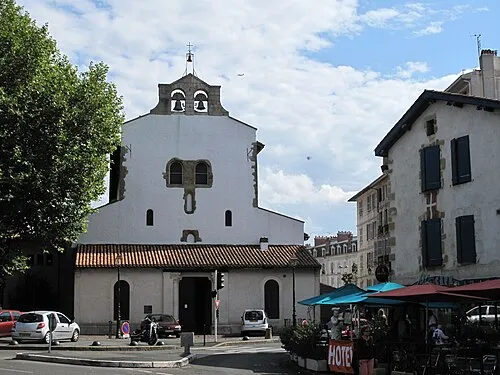
May is the best all-round month in Bayonne: perfect 19°C weather, nearly 11 hours of sun a day, and the city in full spring colour without the summer crowds. The Atlantic reaches a swimmable 16°C and museums are fully open. French school holidays bring a couple of busier weeks early on and the Ascension long weekend lifts demand, but availability stays good and prices sit 40-50% below the July peak.
The vibe May is the quiet favourite of anyone who knows Bayonne. The weather is reliably kind, the quays come alive with terrace tables, and you get the city at its prettiest without paying or queuing for it. The closest thing to a perfect time to come.
Don't miss The river quays of the Nive come fully alive in May, ideal for an evening stroll, and the Bonnat-Helleu Friday night slot (12:00-21:00) is the quietest way to see its Louvre loans. The Atlantic is just warm enough for a brisk first swim at Biarritz.
Crowd drivers French zone B school holidays (around two weeks in early May) and the Ascension long weekend (14-17 May) lift demand, though crowds head for the coast.
In season Aperitivo on the quays begins in earnest, with Txakoli white and Irouleguy reds poured at terrace tables as the evenings lengthen.
Solid shoulder pricing 40-50% below July; long weekends are the only tight spots.
Events this month
🇮 HolidayAscension Long Weekend Pont de l'Ascension
May 14–17 ~
a four-day weekend in mid-May
A French national holiday that creates a four-day long weekend and a moderate spike in domestic tourism, with crowds gravitating to the Biarritz beaches.
Good for Bayonne itself if you stay off the coast, since the beach crowds concentrate at Biarritz and leave the old town breathable.
June in Bayonne
High22°C / 72°F
Low16°C
Rain104mm / 13 rainy days
Sun11.6 h/day
Daylight15 h/day
Humidity81%
Sea19°C
Crowds●●●○○Prices●●●○○
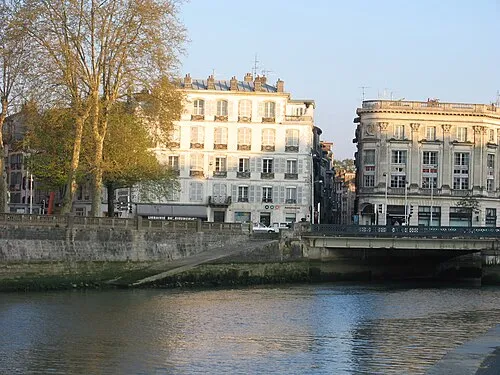
June opens the Basque summer warm and long: highs of 22-23°C, over 15 hours of daylight, and sunset near 22:00 at the solstice. The Atlantic hits 19°C and the Biarritz surf season opens. French school holidays end mid-month, so the first half is calmer than the second as the pre-summer wave builds. Mid-season prices arrive, but accommodation is still far easier to find than in the July-August peak.
The vibe June is the tipping point, when Bayonne shifts from spring-quiet into summer mode. The long golden evenings are the real reward, and the beach is open but not yet packed. Come in the first half if you can, before the grandes vacances crowds arrive.
Don't miss The surf season opens at the Cote des Basques and the long solstice evenings give golden-hour light over the cathedral and the Nive quays until past 21:30. The Atlantic at 19°C is brisk but swimmable for the brave.
Crowd drivers French school holidays end mid-June and the pre-summer wave begins, with the Biarritz surf season opening and drawing the first beach crowds.
In season Early summer brings the first ttoro, the Basque fish stew, and chipirons (small squid) to the bistros, best eaten on a quayside terrace.
Mid-season pricing kicks in; still easier on availability than July and August.

July in Bayonne
High24°C / 75°F
Low18°C
Rain67mm / 10 rainy days
Sun12.2 h/day
Daylight15 h/day
Humidity80%
Sea21°C
Crowds●●●●●Prices●●●●●
The Fetes de Bayonne are the defining local experience: five days and nights of bandas, parades, vachette cow runs and fireworks, opened by King Leon throwing the keys from the Hotel de Ville balcony. The Arenes en Scene concerts (25-28 July) bring French pop to the historic bullring. Go early, before 9:00, to explore the old town before the crowds wake, and book your Pass Fetes bracelet online well in advance.
The vibe July is euphoric if you have come for the Fetes, and overwhelming if you have not. The streets are an impenetrable sea of white and red, the museums are hard to reach, and casual sightseeing is close to impossible. If crowds are not your thing, this is the one week to avoid.
Don't miss The Fetes de Bayonne are the defining local experience: five days and nights of bandas, parades, vachette cow runs and fireworks, opened by King Leon throwing the keys from the Hotel de Ville balcony. The Arenes en Scene concerts (25-28 July) bring French pop to the historic bullring. With private guides charging summer-maximum rates and booking out, our live AI guide stays a flat 5 euros an hour, telling you the story of everything you pass and letting you sightsee in the cool early hours before the crowds wake.
Crowd drivers The Fetes de Bayonne (15-19 July) draw over a million visitors, the French grandes vacances are in full flood, and the Arenes en Scene concerts (25-28 July) and corridas pile on top.
In season The Fetes turn the streets into one long food stall: grilled ventreche, taloa cornbread and chistorra sausage, washed down with the festival's red wine, day and night.
Heads up From Friday 15 July the entire centre is a secure pedestrian perimeter with no car access and modified bus services. A 15-euro Pass Fetes bracelet is required from Friday to Sunday.
Busiest and most expensive month; Fetes week hotels run 223-376 euros a night versus around 80 off-peak. Book six-plus months ahead.
Events this month
🎉 FestivalBayonne Festival Fetes de Bayonne
Jul 15–19
five days from the third Wednesday of July
France's largest popular festival, drawing over a million visitors for five days and nights of white-and-red dress code, parades, bandas, corridas, vachette cow runs, concerts and fireworks, opened by King Leon throwing the keys from the Hotel de Ville balcony.
The defining Bayonne experience and euphoric to be in, but the streets are impenetrable, hotels run 223-376 euros a night, and you must book six months ahead; if you dislike crowds, avoid it entirely.
🎵 MusicArenes en Scene Concerts Arenes en Scene
Jul 25–28
late July, immediately after the Fetes
A summer concert series at the Bayonne bullring, with French headliners playing on consecutive nights under the open sky in the historic arena.
French pop under the summer stars in a centuries-old arena, though it overlaps the Fetes week, so book early and expect the same accommodation pressure.
🏃 SportFestival Bullfights Corridas des Fetes
Jul 17–18
the Friday and Saturday of Fetes week
Two corridas during the Fetes de Bayonne, including a corrida a cheval, staged in one of France's oldest bullrings.
A core part of Bayonne's Basque-Gascon identity and an unavoidable backdrop during July, whatever your view of the tradition.

August in Bayonne
High25°C / 76°F
Low18°C
Rain74mm / 10 rainy days
Sun11.8 h/day
Daylight14 h/day
Humidity78%
Sea23°C
Crowds●●●●○Prices●●●●○
August is hot for the Atlantic coast at 25°C, the warmest month, with the sea peaking at 22-23°C for the only genuinely warm swim window of the year. The French grandes vacances run all month and Spanish and Basque tourists arrive, so the beaches and old town stay busy. It is 15-20% cheaper than July without the Fetes, but the Assumption (15 August) brings a spike, and some Petit Bayonne restaurants close for two weeks. Heat above 32°C is brief, usually 5 to 10 days.
The vibe August is beach-and-crowds Bayonne. The old town is walkable again after the Fetes, but the coast is at its fullest and the heat, though never punishing, peaks now. Best for swimmers willing to share the sand, less so for anyone chasing quiet.
Don't miss This is the only month the Atlantic is genuinely warm, 22-23°C at the Biarritz beaches, so it is prime swimming and surf-watching time. The Musee Basque stays open exceptionally on 15 August when most things shut. Walk the shaded old-town streets at 8:00-11:00 or after 17:00 to dodge the midday heat.
Crowd drivers The French grandes vacances run the entire month, the Assumption (15 August) brings a domestic spike, and Spanish and Basque summer tourists arrive in force.
In season Peak season for chipirons and ttoro on the quays, though check ahead in Petit Bayonne, where many neighbourhood restaurants take a one to two week summer break.
Heads up Many Petit Bayonne restaurants close for one or two weeks in August. Shops shut on the 15 August Assumption holiday, though the Musee Basque stays open.
15-20% cheaper than July but still high; the Assumption (15 August) spike fills restaurants.

September in Bayonne
High23°C / 74°F
Low16°C
Rain101mm / 11 rainy days
Sun10.4 h/day
Daylight12 h/day
Humidity78%
Sea21°C
Crowds●●●○○Prices●●●○○
September is the other ideal month, still warm at 23°C with the Atlantic at a swimmable 20-22°C and the beaches far emptier than August. Prices drop 25-30% once the French rentree hits on 1 September. The Feria de l'Atlantique (4-6 September) brings corridas and street music for those who missed July, at a fraction of the Fetes crowds and prices. The light over the Nive quays turns golden and the evenings stay long and warm.
The vibe September is when Bayonne becomes a real city again, warm and uncrowded, with the Feria adding just enough atmosphere. Couples and beach-lovers get the best of summer without the August crush or the July chaos. Arguably the single best time to come.
Don't miss The Feria de l'Atlantique (4-6 September) brings corridas, a corrida goyesque and street music, with 500 special 12-euro seats for the Corrida des Promesses. The Points de Vue street-art festival transforms the city's walls, and the sea at 20-22°C is still excellent for swimming with the crowds gone.
Crowd drivers The Feria de l'Atlantique (4-6 September) draws a festive crowd, and lingering Spanish summer tourists keep the first weeks busier than the rest of the month.
In season The autumn produce starts at Les Halles, with cep mushrooms from the Pyrenees foothills and the first piment d'Espelette of the new harvest.
Rates drop 25-30% from August after the 1 September French back-to-school.
Events this month
🎉 FestivalAtlantic Feria Feria de l'Atlantique
Sep 4–6
first weekend of September, around the Arenes
A three-day feria around the bullring with a corrida goyesque, a novillada and the Corrida des Promesses (500 seats at a special 12 euros), plus street music through the evenings.
The best time for bullfighting enthusiasts who missed July, with prices and crowds far below the Fetes and atmospheric warm September evenings.
🎨 Art and culturePoints de Vue Street Art Festival Points de Vue
Sep 1 ~
September, dates vary year to year
A street-art and urban-culture festival that fills Bayonne's walls with murals and installations across the city.
A draw for contemporary-art visitors that reshapes the streetscape without disrupting normal sightseeing.

October in Bayonne
High21°C / 69°F
Low13°C
Rain95mm / 11 rainy days
Sun8.1 h/day
Daylight11 h/day
Humidity77%
Sea18°C
Crowds●●○○○Prices●●○○○
October is a warm, golden shoulder month at 21°C, with foliage colouring the Jardin Botanique and Plaine d'Ansot from mid-month. The sea cools to 17-18°C, wetsuit territory now. Crowds thin and prices are gentle. The big draw is a half-day trip to the Fete du Piment d'Espelette (24-25 October), 30 km away, where the pepper harvest is celebrated with a parade, blessing and gastronomic fair. Late-October school holidays bring a brief lift.
The vibe October is autumn at its most relaxed in the Basque country, warm enough for terraces, quiet enough to feel local, and close enough to Espelette for a perfect food day trip. The pace is unhurried and the prices are right.
Don't miss The Fete du Piment d'Espelette (24-25 October), an easy half-day trip, celebrates the pepper harvest with a solemn mass, brotherhoods' parade and a gastronomic fair of Bayonne ham, sheep's cheese and gateau basque. Foliage colours the free Jardin Botanique and Plaine d'Ansot, with the Pyrenees clear on crisp days.
Crowd drivers Late-October French school holidays and the Toussaint long weekend around 1 November bring brief spikes. The Espelette festival draws day-trippers from Bayonne on its weekend.
In season Piment d'Espelette is everywhere this month, fresh-strung garlands and the new harvest at the Espelette festival, alongside autumn ceps and the first hearty Basque stews.
Good shoulder pricing; the Toussaint weekend around 1 November can spike briefly.
Events this month
🍷 Food and wineEspelette Pepper Festival Fete du Piment d'Espelette
Oct 24–25
last full weekend of October, in Espelette village 30 km away
The pepper-harvest festival in the village of Espelette, 30 km from Bayonne, with a solemn mass and pepper blessing, a brotherhoods' parade, bandas and a gastronomic fair of Bayonne ham, sheep's cheese and gateau basque.
An easy half-day from Bayonne that folds Basque food culture into one village event, with manageable October crowds.

November in Bayonne
High16°C / 60°F
Low9°C
Rain216mm / 17 rainy days
Sun6.3 h/day
Daylight10 h/day
Humidity80%
Sea16°C
Crowds●○○○○Prices●○○○○
November is wet and quiet, the rainiest month of the year with 216mm over 17 days as Atlantic fronts roll in. Days cool to 15°C. It is one of the cheapest and emptiest months, broken only by Bayonne Celebrates Chocolate (31 October to 2 November), a city-wide festival honouring a 400-year chocolate tradition. The newly reopened Bonnat-Helleu draws fresh interest, and the Christmas market begins setting up late in the month.
The vibe November is the bargain hunter's Bayonne, rainy and bare but genuinely cheap and entirely local. The chocolate festival gives the start of the month real warmth, and the museums are yours alone the rest of the way.
Don't miss Bayonne Celebrates Chocolate (31 October to 2 November) gathers 25-plus chocolatiers for tastings and workshops around Les Halles, marking the 400-year tradition that Jewish refugees from Spain brought in 1609. Inside, the reopened Bonnat-Helleu is the dry-weather refuge of the month.
Crowd drivers Bayonne Celebrates Chocolate (31 October to 2 November) lifts the first weekend, with the Bonnat-Helleu reopening drawing new museum visitors. Otherwise the city is empty.
In season Chocolate is the whole story early in the month, hot chocolate and single-origin tasting bars in a city that has been making it since 1609. Hearty winter Basque cooking takes over after.
Low pricing except the chocolate-festival weekend; among the year's best value.
Events this month
🍷 Food and wineBayonne Celebrates Chocolate Bayonne Fete son Chocolat
Oct 31 – Nov 2
three days at the turn of October into November
A city-wide chocolate festival with 25-plus chocolatiers, tastings and workshops centred on Les Halles and the town centre, telling the story of Bayonne's 400-year chocolate tradition.
Bayonne is the only place in France with a four-century chocolate tradition, brought by Jewish refugees from Spain in 1609, so the festival is both educational and genuinely delicious.

December in Bayonne
High14°C / 56°F
Low7°C
Rain165mm / 14 rainy days
Sun5.4 h/day
Daylight9 h/day
Humidity80%
Sea14°C
Crowds●●○○○Prices●●○○○
December brings a festive but unhurried Bayonne, with the Christmas market on the Esplanade de l'Echauguette and Place du Reduit running from late November to early January. Eighteen artisan chalets, a 45-metre Ferris wheel and Santa's village set against medieval architecture make a beautiful backdrop. Days are short and cool at 13°C, with rain on 14 days and sunset by 17:30. Some Spanish day-trippers add to the holiday buzz. Almost everything closes on 25 December.
The vibe December is festive without the Paris price tag or the summer madness. The market is genuinely pretty against the old stone, the mood is relaxed, and the only real catch is the rain and the early dark.
Don't miss The Christmas market runs seven days a week with 18 artisan chalets, a 45-metre Ferris wheel and a Santa's village, themed weekends adding variety. The medieval old town under festive lights is the photograph of the month, with sunset by 17:30 giving long evening illumination.
Crowd drivers The Christmas market and Noel shopping draw a steady festive crowd, with some Spanish day-trippers crossing the border for the season.
In season Hot chocolate is the seasonal essential in France's chocolate capital, alongside gateau basque, roast chestnuts on the market squares and Bayonne ham for the Christmas table.
Heads up Almost everything closes on 25 December and the Christmas market pauses for the day. Restaurants that open are booked two to three weeks ahead.
Moderate pricing; festive atmosphere without summer madness.
Events this month
🎄 Christmas marketChristmas in Bayonne Noel a Bayonne
Nov 28 – Jan 4
late November to early January, on the Esplanade de l'Echauguette and Place du Reduit
A Christmas market on the Esplanade de l'Echauguette and Place du Reduit with 18 artisan chalets, a 45-metre Ferris wheel, Santa's village and themed weekends, open seven days a week.
Festive without Paris prices, and Bayonne's medieval architecture makes for a beautiful Christmas backdrop.
Frequently asked questions
What is the best time to visit Bayonne?
May and September are the best months. May brings perfect 19°C weather, full spring colour and prices 40-50% below summer, with every museum open. September stays warm at 23°C with the Atlantic swimmable at 20-22°C, the Feria de l'Atlantique for atmosphere, and the August crowds gone. Both avoid the July festival crush.
When is the cheapest time to visit Bayonne?
January through March are the cheapest months, with hotel rooms from around 44 euros a night and the best deals often found on Tuesdays. The Musee Basque is free on the first Sunday of each month, the Natural History Museum is free year-round, and the Plaine d'Ansot nature reserve costs nothing. The trade-off is frequent rain, up to 16 days a month.
What is the worst time to visit Bayonne?
The third week of July, 15 to 19 July, when the Fetes de Bayonne draw over a million people. Hotel rates triple to 223-376 euros a night and book out six months ahead, the centre becomes a secure pedestrian perimeter, and casual sightseeing is nearly impossible. Avoid it unless attending the festival is the whole point of the trip.
When are the Fetes de Bayonne in 2026?
The Fetes de Bayonne run from Wednesday 15 to Sunday 19 July 2026, always starting the third Wednesday of July. France's largest popular festival fills the city with over a million visitors in white and red. Book accommodation six months ahead, buy the 15-euro Pass Fetes bracelet online, and do not plan to drive into the pedestrianised centre.
Can you swim near Bayonne, and when is the sea warmest?
Bayonne is 8 km from the Biarritz and Cote Basque beaches. The Atlantic is swimmable from June, when it reaches about 19°C, and peaks in August at 22-23°C, the only genuinely warm window of the year. September stays excellent at 20-22°C with far fewer people. Always swim between the flags, as the rip currents are strong in summer.
What is the weather like in Bayonne in December?
December is cool and wet, with highs around 13°C, lows near 7°C, rain on 14 days and sunset by 17:30. It is one of the rainiest months thanks to Atlantic fronts, but rarely cold. The Christmas market on the Esplanade de l'Echauguette runs daily with 18 chalets and a 45-metre Ferris wheel, giving the medieval old town a festive glow.
Is Bayonne worth visiting in winter?
Yes, if you want the lowest prices and the real Basque town without crowds. Winter days stay mild at 11-13°C, museums are queue-free, and February brings the authentic Carnaval de Bayonne. The catch is the rain, with November the wettest month at 216mm over 17 days. Pack a rain layer and you will have the city largely to yourself.
How many days do you need in Bayonne?
Two days cover Bayonne's compact old town: the Cathedrale Sainte-Marie, the Musee Basque, the reopened Bonnat-Helleu and Les Halles, plus the Petit Bayonne tapas circuit. Add a third day to reach the Biarritz beaches 8 km away, and a fourth if you want a day trip to Espelette for the pepper country, 30 km inland.
When can you see the best food festivals in Bayonne?
April for the free Foire au Jambon, France's oldest food fair, running since 1462 on the Quais de la Nive. Late October pairs the Espelette pepper festival, 30 km away, with Bayonne Celebrates Chocolate at the turn of the month. Bayonne is the only French city with both a ham and a 400-year chocolate tradition, so autumn is a foodie pilgrimage.

Any month, any day: your guide is already there
Whatever date you pick, a private human guide gets pricier and harder to book on weekends, holidays and in peak season. Our live AI guide, the one that walks with you and answers anything you ask out loud, works the opposite way.
One flat price, every day
No holiday, weekend, night or peak-season surcharge. A private guide in Bayonne runs well over 100 euro for a half day, and more on holidays. Ours stays the same.
Available the moment you want it
Start at midnight or at dawn, on Christmas, in the snow, in the August heat. No sold-out high season, no booking weeks ahead.
Your pace, no meter running
Pause for a long lunch, restart after dark, repeat a stop. The tour simply waits for you.
Free to try, a fraction of the cost
Test it for free, then a transparent flat price that undercuts any private guide, in every season.
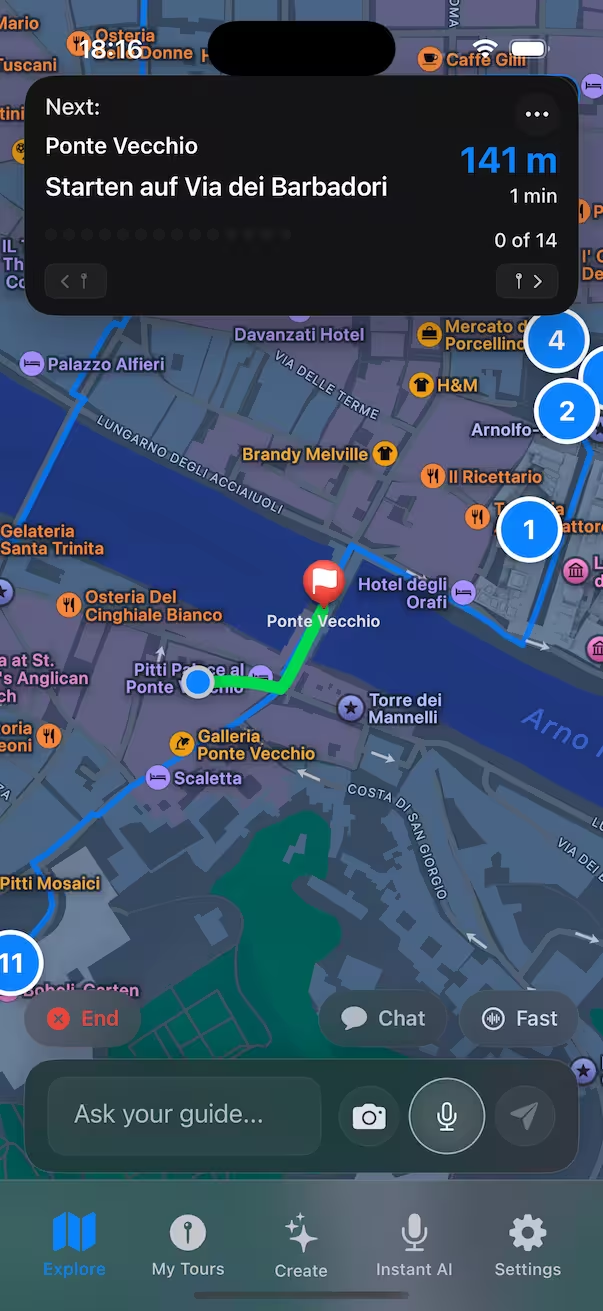

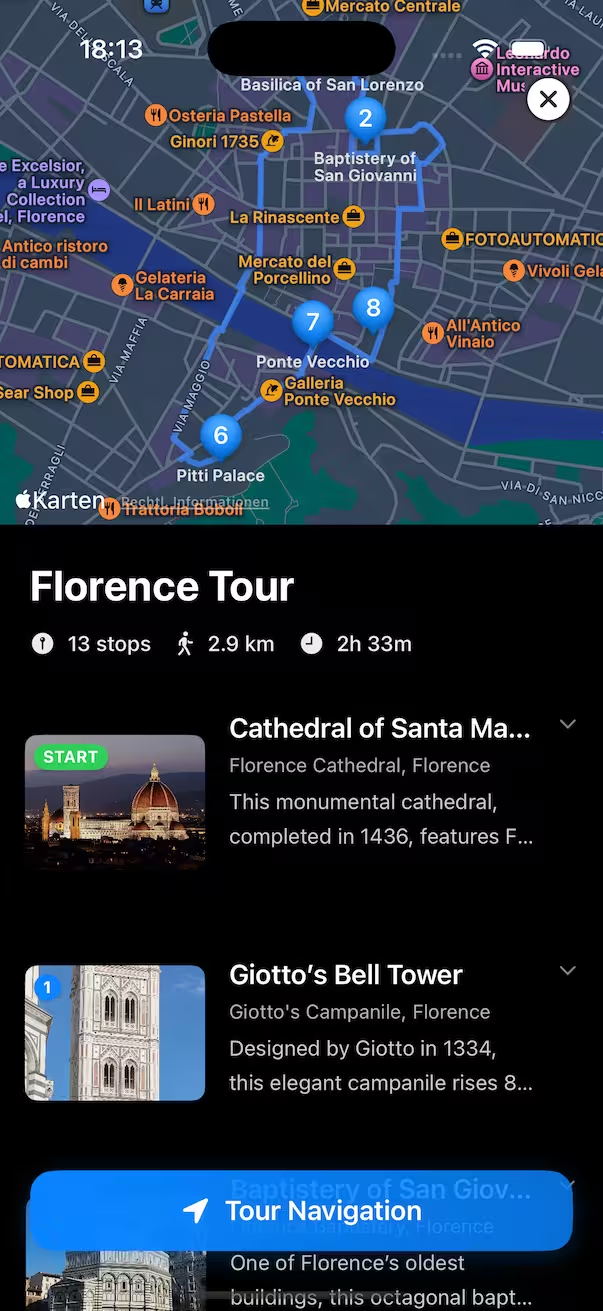
Your live AI guide and the self-guided Bayonne route, together in your browser.
