Best Time to Visit Segovia
Month-by-month weather, crowds and prices, plus a full calendar of festivals and events worth planning a trip around.
Best monthsApr, May, Oct
CheapestJan, Feb, Nov
AvoidAug
BusiestAug, Sep

When is the best time to visit Segovia?
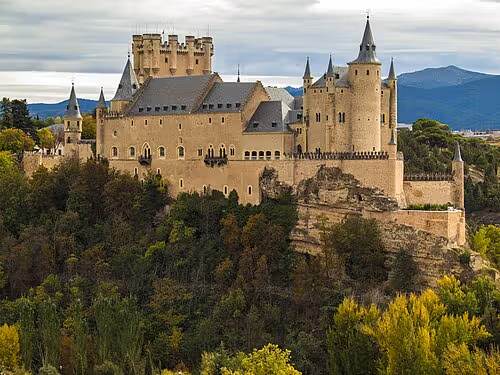
Come in late April, May or October. You get mild 14-22°C walking weather, the Eresma valley either in blossom or golden foliage, long evenings and hotel rates 30% below summer (75-110 €). Skip August: meseta heat hits 35-39°C, the Alcázar queue runs 45-60 minutes and central hotels peak at 110-180 €. January and February are the cheapest and quietest of all (45-70 €), if you can take the cold and possible frost.
Start our tool and find your best time to visit Segovia
Your perfect month
Free · ~30 seconds
or tap a month directly
What matters to you?
And this?
Best overall: Apr, May, Oct. Late April to mid-May and October are the real sweet spot: 14-22°C walking weather, minimal heat stress, hotel rates around 75-110 €, and either spring blossom in the Eresma valley or golden October foliage. May can add the spectacle of Titirimundi, while October delivers the year's best photography light on the Alcázar from the valley floor.
Best value: Jan, Feb, Nov. January, February and November bring hotels at 45-80 €, near-zero queues at all three UNESCO monuments, and free state museums on Tuesdays and Sundays. A full day of sightseeing costs under 20 € per person including the 9 € Alcázar. The catch is genuine winter cold, night frosts and short days, with monuments deep in shade by 16:30.
Avoid: Aug. August is the year's worst value: meseta heat of 35-39 °C at midday, the Alcázar queue running 45-60 minutes, every central hotel sold out at peaks of 140-180 €, and Madrid day-trippers flooding the Azoguejo and Cathedral from 10:30 until 19:00 daily. The Azoguejo's unshaded stone radiates heat all afternoon.
- January: Good time, 7°C. This is the one month you have the city to yourself midweek. Wrap up warm, the air can sit below freezing, but the payoff is the Alcázar with no queue, empty old-city lanes, and a town living at its own authentic rhythm rather than performing for visitors.
- February: Good time, 9°C. February is honest, unperformed Segovia. No festival, no markup, no day-tripper crush midweek, just a cold, quiet, walkable medieval town. If you want the monuments to yourself and the lowest prices of the year, and you can dress for the chill, this is your month.
- March: Good time, 12°C. March is the last genuinely quiet, cheap stretch before spring crowds arrive. The almond and cherry blossom in the valley below the Alcázar is at its best, the cold is easing, and you can still get a midweek cochinillo table without booking. Use the window before Holy Week fills the streets.
- April: Good time, 15°C. April is Segovia coming fully alive after winter. The light is soft and golden on the honey-coloured stone, the valley is in blossom, and the Easter processions give the first half of the month real theatre. After Easter it quiets and cheapens again, making mid-to-late April a near-perfect, value-rich window.
- May: Great time, 20°C. May is the quietly perfect month, green and mild with long light evenings, and the one week of Titirimundi turns the whole old city into an open-air puppet stage. Time it either to ride that festival energy or to dodge it for a calmer, cheaper week, and you have Segovia close to its best.
- June: Good time, 24°C. Early June is still mild and manageable; late June is full-throttle fiesta. If you come for San Juan y San Pedro you see Segovia through local eyes, the whole city out in the streets, but every bar is rammed until 4am. Want it quiet? Stick to the first two weeks before the fireworks start.
- July: Good time, 29°C. July is hot, bright and busy at weekends. Midday touring is punishing in the treeless Azoguejo, so flip your day: an early Alcázar visit at opening, a long lunch indoors, and the miradors and Eresma valley walk in the cooler evening. Midweek is noticeably quieter and a touch cheaper than the weekend.
- August: Tough month, 29°C. August is full-throttle, hot and expensive Segovia. The day-tripper flood runs from 10:30 to 19:00 daily, there is no shade at the Azoguejo, and prices hit their annual peak. If you must come in August, pre-book the Alcázar online, walk early and late, and treat the heat with respect.
- September: Tough month, 23°C. September is the premium sweet spot: glorious 20-25°C weather, clear light, and the cultural buzz of the Hay Festival, with families gone from the streets so the town breathes despite the high prices. If your budget can flex, a September weekday gives you Segovia close to its best.
- October: Great time, 19°C. October is the couples' and photographers' month: warm-enough days, amber foliage in the valley, and that low autumn sun lighting the castle. Quiet midweek, well-priced, and atmospheric in the evenings, it gives you everything August does without the heat, queues or prices.
- November: Good time, 12°C. November is introverted Segovia: grey, sometimes foggy, quiet and cheap. The monuments are near-empty and the cochinillo houses easy to book, while the first Guadarrama snow behind the castle gives the valley-floor view a dramatic backdrop. Bring an umbrella and warm layers and you get the city at its calmest.
- December: Good time, 10°C. December trades autumn calm for festive warmth: market stalls, hot chestnuts and mulled wine under the lights of the medieval centre. Go on a weekday to enjoy the market in peace, steer clear of the packed 8 December bridge weekend, and you get a magical, well-priced winter break.
Segovia weather by month
HighLowRainfall
Jan7°
Feb9°
Mar12°
Apr15°
May20°
Jun24°
Jul29°
Aug29°
Sep23°
Oct19°
Nov12°
Dec10°
| Month | Temp | Rain | Sun | Crowds | Prices | Highlight |
|---|---|---|---|---|---|---|
| Jan | 7° / 0° | 104mm · 13 rainy days | 6.4 h/day | ●○○○○ | ●○○○○ | |
| Feb | 9° / 1° | 80mm · 10 rainy days | 7.8 h/day | ●○○○○ | ●○○○○ | |
| Mar | 12° / 3° | 86mm · 13 rainy days | 8.9 h/day | ●●○○○ | ●●○○○ | Holy Week in Segovia |
| Apr | 15° / 5° | 79mm · 12 rainy days | 10.6 h/day | ●●●○○ | ●●●○○ | Holy Week in Segovia |
| May | 20° / 8° | 49mm · 8 rainy days | 12.3 h/day | ●●●○○ | ●●●○○ | Titirimundi International Puppet Festival |
| Jun | 24° / 13° | 52mm · 8 rainy days | 13.4 h/day | ●●●●○ | ●●●●○ | San Juan and San Pedro Fiestas |
| Jul | 29° / 16° | 13mm · 3 rainy days | 14.0 h/day | ●●●●○ | ●●●●○ | La Granja Fountain Days |
| Aug | 29° / 16° | 7mm · 2 rainy days | 12.7 h/day | ●●●●● | ●●●●● | La Granja Fountain Days |
| Sep | 23° / 13° | 31mm · 7 rainy days | 11.1 h/day | ●●●●● | ●●●●● | Hay Festival Segovia |
| Oct | 19° / 10° | 85mm · 10 rainy days | 8.6 h/day | ●●●○○ | ●●●○○ | |
| Nov | 12° / 4° | 124mm · 14 rainy days | 6.6 h/day | ●●○○○ | ●●○○○ | |
| Dec | 10° / 2° | 93mm · 10 rainy days | 6.2 h/day | ●●○○○ | ●●○○○ | Segovia Christmas Market |
How we score this: weather = long-run climate normals (Open-Meteo), crowds & prices = relative season read, events checked yearly against official dates.
Best time to visit Segovia: weather, prices & crowds
Best months for good weather
May, Jun, Oct
May, June and October give Segovia its most comfortable days: 18-25°C, clear skies, and long golden evenings without July and August's punishing 35-39°C midday heat in the unshaded stone bowl of the Azoguejo.
Quietest months to avoid the crowds
Jan, Feb, Nov
From November through February the day-tripper flood from Madrid dries up midweek. You walk into the Alcázar with no queue and have the Cathedral and the city walls almost to yourself, the city at its most authentic.
Cheapest time to visit Segovia
Jan, Feb, Nov
January and February are the cheapest months of the year: 3-star hotels in the historic centre run 45-70 € a night on a weeknight, roughly half the August weekend rate of 140-180 €. November is the cheapest autumn month at 50-80 €.
Best time for festivals and events
May, Sep, Apr
Time your visit to a signature festival: Titirimundi (mid-May) fills 25 city venues with 330 puppet shows, mostly free; the Hay Festival (second weekend of September) brings authors and thinkers to the Alcázar gardens; and Semana Santa (late March into April) parades 29 religious floats past the Roman Aqueduct.
How many days do you need in Segovia?
Segovia is built for a single focused day. The old city is compact and all three UNESCO monuments line up along one ridge, so you can walk from the Roman Aqueduct at the eastern gate straight through to the Alcázar at the western cliff in a morning, with time left for a long lunch and the miradors. A second day slows everything down pleasantly, but a single day done well covers the essentials without rush.

One dayRecommended
Aqueduct to Alcázar: the full ridge
Start at the Plaza del Azoguejo under the Roman Aqueduct's 28.5-metre double arch, then climb the Calle Real through San Martín's carved Romanesque atrium to the Cathedral on the Plaza Mayor. Carry on to the prow-shaped Alcázar at the ridge's tip, and tuck in the Corpus Christi Church on the way back. The self-guided Segovia walking tour threads all 5 stops over 3.1 km in about 1.4 hours, leaving the afternoon for the valley-floor miradors and a table at Mesón de Cándido or Mesón Duque.
Two days
Slow lunch, valley walk and La Granja
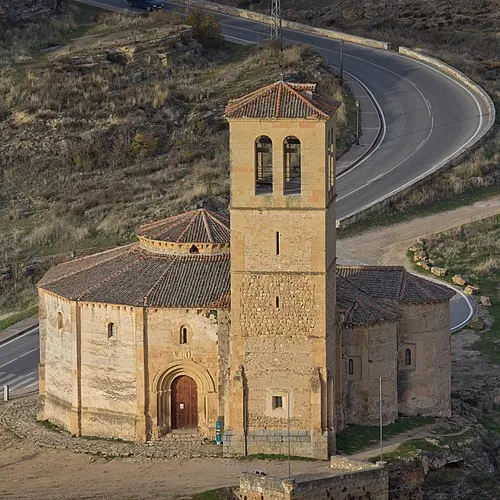
Day one covers the ridge monuments at a comfortable pace. Day two belongs to the Eresma valley: walk down from the Alcázar through the riverside path to the twelve-sided Vera Cruz church and the Monastery of El Parral, timing your visit to the monks' 11:00 or 17:00 opening. Add a long cochinillo lunch at Mesón Duque and an evening on the Plaza Mayor as the floodlights come up.
Three days
La Granja and the wider province
With three days, catch the Royal Palace and Baroque gardens at La Granja de San Ildefonso, 13 km south by bus, which is worth a full half-day even when the fountains are not running. Back in the city, the Museum of Segovia (free Tuesdays and Sundays) and the Zuloaga Museum fill any remaining gaps, and you have an evening to linger over wild-mushroom menus in October or terrace wine in June.
Four days or more
Festival timing and deeper Castile
Four or more days make sense only around a festival: arriving for Titirimundi in mid-May gives you a week of puppet performances across every plaza, or the Hay Festival in the second weekend of September fills four days with authors and debates in the Alcázar gardens. Beyond Segovia itself, the walled town of Pedraza and the aqueduct village of Turégano are each under an hour by road and make strong day-trip additions.
Best time to visit Segovia by traveller type
Same city, different trip. Here's the month that fits how you're travelling.
🧭
Best time to visit Segovia for the first time
AprOct
April or October. April gives mild 12-18°C days, spring light on the Aqueduct and Alcázar, manageable crowds and the possible bonus of Easter processions. October delivers autumn colour, 18-22°C, thin midweek crowds and the best light of the year. Both balance a rich experience with good value, and both spare you August's heat and prices.
❤️
Best time to visit Segovia for couples
OctMay
October for golden foliage, quiet evenings and intimate cochinillo dinners without queues, or May outside Titirimundi week for lush spring light and long evenings. The Eresma valley walk at dusk in late October, with the Alcázar silhouetted against a red sky, is the city's most romantic hour.
💶
Best time to visit Segovia on a budget
JanFeb
January and February: hotels at 45-70 €, almost no queues, and the Museum of Segovia free on Tuesdays and Sundays. The Cathedral exterior, the Roman Aqueduct, the full city walls, every mirador and the Zuloaga Museum are free, so a full sightseeing day stays under 20 € including the Alcázar. March midweek is nearly as cheap at 55-90 €.
🍝
Best time to visit Segovia for food and wine
OctApr
October-November and March-April. Cochinillo (roast suckling pig) and judiones de La Granja (giant white beans with chorizo) are year-round, but the kitchens work at their best in the shoulder months without summer capacity strain. October adds wild-mushroom (setas) and game dishes. Book Mesón de Cándido for Saturday lunch at least three days ahead, and never try a walk-in there on an August Saturday.
Worst time to visit Segovia
August is the one month to avoid. The meseta sun drives midday temperatures to 35-39°C in the unshaded stone bowl of the Azoguejo, the Alcázar queue runs 45-60 minutes, and every central hotel sells out at 140-180 € a night, roughly double the spring rate. Madrid day-trippers flood the Cathedral and Azoguejo from 10:30 to 19:00 daily, peaking on 15 August when La Granja's fountain crowds also overflow into town.
Still worth it for August still works if you pre-book the Alcázar online, restrict walking to before 10:00 and after 18:30, and treat the long midday hours as time for a shaded restaurant lunch rather than sightseeing.
Go instead in April, May, October, when Segovia is at its best.
Best time for a tour of Segovia
Segovia rewards walkers most generously in May and October. Temperatures sit between 15 and 20 °C, rain days drop to single figures, and the light on the Roman Aqueduct in the late afternoon turns the granite honey-gold. Those months are busy enough that the old city feels alive, but you can still stand at the feet of the Alcázar of Segovia without elbowing anyone. June is already warm enough to be tiring on exposed stretches near Segovia Cathedral, where the stone plaza holds the heat well into evening. July and August push highs to nearly 29 °C with barely any rain, and August in particular is shoulder to shoulder in the streets below the aqueduct: crowds stream in from Madrid on day trips every weekend, and the route up through the old quarter offers almost no shade at midday. January and February are the opposite extreme: highs barely reach 7 to 9 °C, around 10 to 13 days of rain each month, and dark by half past five. The walk is short at 3.1 km, but wind funnels through the lanes near the Church of San Martín and cold seeps through even a good jacket. Spring and autumn are simply the right call.
The upside of a city this compact is that you are never locked to a fixed hour. With AI Tourguide running in your browser, no download or login needed, you choose when to set off. On a warm June day that means leaving the hotel at seven in the morning, reaching the Roman Aqueduct before the first tour buses arrive, and letting the AI guide open the walk with the full story of how 20,000 granite blocks were laid without a drop of mortar. In October you can linger as long as you like at the Alcázar and still finish in the gold hour. Start your Segovia tour whenever the morning air suits you, and let the guide lead the conversation from there.


 +1
+1All 5 stops are already on the map.
You just press start.
You just press start.
 AI Tourguide
You just read the route.
Now walk it with a guide in your ear.
Press start wherever you are, even hundreds of kilometres from Segovia, and the guide begins telling its stories right away. In the city, pick any of the 5 stops to start from: it leads you there, then talks with you the whole route, asking, listening, remembering, and shaping the tour around your answers.
5stops3.1km1.4hours11languages
▶Start the tour freeFree to start · Runs in your browser · No app, no download
Segovia events and festivals calendar
Annual highlights worth timing a trip around, listed month by month.
March
⛪ ReligiousHoly Week in Segovia Semana Santa de Segovia
Mar 27 – Apr 5 ~
late March into early April, ending on Easter Sunday
Twelve brotherhoods (cofradías) parade 29 religious floats (pasos) through the medieval old city over Holy Week, and the Procession of the Pasos passes in front of the Roman Aqueduct.
May
🎉 FestivalTitirimundi International Puppet Festival Festival Internacional Titirimundi
May 12–17
around the middle week of May
In its 40th edition, 40 companies from 9 countries stage 330 performances across 25 city venues, from plazas and cloisters to palace courtyards.
🌸 Seasonal natureLa Granja Fountain Days Fuentes de La Granja
May 24 – Aug 25 ~
a handful of fixed royal-decree dates, typically Easter Sunday, Whit Sunday, 25 July, 15 and 25 August
The 18th-century Baroque garden fountains at the Royal Palace of La Granja de San Ildefonso, 13 km from Segovia, run at full pressure only on roughly five fixed dates a year, drawing huge crowds from across Castile.
June
⛪ ReligiousCorpus Christi Corpus Christi de Segovia
Jun 4 ~
early June, the ninth Thursday after Easter
A solemn procession through the medieval streets led by the Cathedral chapter, with flower-covered altars laid along the route.
🎉 FestivalSan Juan and San Pedro Fiestas Ferias y Fiestas de San Juan y San Pedro
Jun 19–30
late June, with a preliminary programme from around 9 June
Segovia's main annual fiesta: more than 140 activities including open-air concerts, a giants parade, the Vuelta a Segovia cycling races, fireworks and the traditional Tajada de San Andrés, centred on the Plaza Mayor and the Azoguejo.
September
🎨 Art and cultureHay Festival Segovia
Sep 10–13
the second weekend of September
Now in its 20th edition, an international literature and ideas festival: authors, thinkers and politicians over four days in historic venues, with many sessions in the Alcázar gardens and the Teatro Juan Bravo, plus concerts, film and debates.
December
More in December →Insider tips for visiting Segovia
The rules buried in forums, in one place.
- The Monastery of El Parral visit window is five minutes. The monks open the doors only at 11:00 and 17:00 for a guided five-minute glimpse, then close again immediately. Arrive five minutes early at the gate, not at the entrance: miss it by two minutes and you have a wasted half-hour walk down from the old city. It is also closed Monday and Tuesday.
- Be at the Alcázar gate at the 10:00 opening. The first Madrid AVE train reaches Segovia around 09:40-10:00, and by 10:30 the Azoguejo and Cathedral are filling with day-trippers. Opening time gives you 30-45 minutes ahead of the wave even in peak season. Pre-book online at alcazardesegovia.com to skip the box-office queue, which runs 45-60 minutes on an August Saturday.
- Skip the Alcázar on La Granja fountain days. On the roughly five annual fountain-run dates (Easter Sunday, Whit Sunday, 25 July, 15 and 25 August) everyone drives to La Granja palace 13 km away, so the Alcázar queues thin dramatically. The fountains there run at full pressure only on those fixed dates and draw crush crowds from 10:00, so arrive by 9:00 if you go.
- Vera Cruz is a Monday and winter trap. The twelve-sided Templar-linked church is closed Monday and runs reduced mornings-only hours November to February (otherwise 10:00-14:00 and 16:00-18:00). Many visitors attempt it after the Alcázar on a Monday afternoon, a 15-minute walk away, and find it shut. Check the hours and never try it on a Monday.
- Cochinillo restaurants fill up on Saturdays and in August. Mesón de Cándido (Azoguejo 5) and Mesón Duque are the famous roast-suckling-pig institutions; Saturday lunch in July and August fills by 13:30 with no tables left. Book Saturday cochinillo at least three days ahead. Midweek you can usually walk in for lunch up to about 14:15.
- Use the free days but beat the local crowd. The Museum of Segovia is free every Sunday and Tuesday, so arrive before 11:00 on a Sunday to get ahead of local families. The Cathedral gives free entry to Mass on Sunday mornings before 12:30, though the 4 € tourist visit is not possible during services. The Alcázar has no free day and charges daily.
- Time the classic Alcázar photo to the light. The postcard shot from the Mirador de la Pradera de San Marcos on the valley floor needs the sun low and behind you, so it is best October to February in the late afternoon, 15:30-17:00. For a front-lit morning shot use the Mirador del Alcázar y los Dos Valles on the north bank of the Eresma in October to March.
- Avoid driving into the old city on fiesta weekends. The June fiesta of San Juan y San Pedro (19-30 June) closes streets in the historic centre and parking turns near-impossible. Park free near the train and bus station or at the municipal Paseo del Salón car park, both about ten minutes' walk from the Azoguejo, and walk in.
Public holidays in Segovia
On these dates many shops and offices close, transport thins out, and sights can be mobbed or shut. Plan around them.
| Date | Holiday | What closes |
|---|---|---|
| Jan 1 | New Year's Day (Año Nuevo) | Virtually everything is closed and the old city is deserted, which makes it pleasant and atmospheric for a quiet walk among the empty monuments. |
| Jan 6 | Epiphany (Reyes Magos) | Shops are closed. The Three Kings parade fills the streets on the evening of 5 January and the city is festive; the day itself is slow and family-focused. |
| Mar 19 | Saint Joseph's Day (San José) | Spain's Father's Day and a national holiday: many shops close and some restaurants are shut. A normal, calm pre-Easter shoulder day otherwise. |
| Apr 3 | Good Friday (Viernes Santo) | The peak day of Semana Santa: processions close central streets, hotels are sold out and some restaurants close. Castilla y León school holidays are running, so the old city is at its busiest. |
| May 1 | Labour Day (Día del Trabajo) | Shops close and a long weekend (30 April to 3 May) puts pressure on central hotels with domestic short-break travellers. |
| Jun 4 | Corpus Christi | A local public holiday in Segovia: a solemn procession with flower-covered altars closes central streets and some city-centre restaurants close at midday. It adds to June hotel pressure. |
| Jun 29 | Saint Peter (San Pedro), patron of Segovia | A local public holiday and the climax of the city fiesta, with fireworks the night of 28-29 June. Bars are rammed until the early hours and the centre is at its liveliest. |
| Aug 15 | Assumption (Asunción de la Virgen) | A national holiday and a La Granja fountain day, which makes it the single most crowded day of the year at the Alcázar. Hotels peak and the Azoguejo is packed all afternoon. |
| Oct 12 | National Day of Spain (Día de la Hispanidad) | A national holiday that turns the weekend around it into a busy long-weekend break, lifting central hotel rates to 120-160 € for those nights. |
| Nov 1 | All Saints' Day (Todos los Santos) | Most shops close and the atmosphere is solemn as families visit cemeteries. With the 2 November local holiday it forms a quiet bridge weekend of modest extra demand. |
| Dec 8 | Immaculate Conception (Inmaculada Concepción) | The famous Puente de la Inmaculada long weekend (Saturday 5 to Tuesday 8 December): heavy domestic travel and the Christmas-market crowd peak. Central hotels fill and rates jump 40-60% for the weekend, so book early. |
| Dec 25 | Christmas Day (Navidad) | Nearly everything is closed and the city is very quiet; some of the famous cochinillo restaurants shut for the day, so reserve ahead anywhere that opens. |
Segovia month by month
January in Segovia
High7°C / 45°F
Low0°C
Rain104mm / 13 rainy days
Sun6.4 h/day
Daylight10 h/day
Humidity78%
Crowds●○○○○Prices●○○○○
January is Segovia at its quietest and cheapest. At 1,000 m on the meseta the cold is genuine, with night frosts, occasional snow and monuments deep in shade by 16:30. Domestic Spanish travel is at its annual low and very few day-trippers come midweek, so the Alcázar, Cathedral and city walls are near-empty. It is cold but often dry and bright, and the low winter sun on the Romanesque churches is exceptional for photography.
The vibe This is the one month you have the city to yourself midweek. Wrap up warm, the air can sit below freezing, but the payoff is the Alcázar with no queue, empty old-city lanes, and a town living at its own authentic rhythm rather than performing for visitors.
Don't miss Catch the golden afternoon light on the Romanesque churches between 15:00 and 17:00, the best photography window of the year in the low winter sun. The Museum of Segovia is free on Tuesdays and Sundays, and a full day with the Alcázar (9 €) costs under 20 € per person.
Crowd drivers The deep off-season, with Spanish domestic travel at its annual low and almost no Madrid day-trippers midweek. The lowest visitor pressure of the year.
In season Prime cochinillo (roast suckling pig) and judiones de La Granja (giant beans with chorizo) weather; you can usually walk into Mesón de Cándido or Mesón Duque for a midweek lunch up to about 14:15.
Heads up New Year's Day (1 January) shuts almost everything and the old city is deserted; Epiphany (6 January) closes shops, with the Three Kings parade the evening before.
The cheapest month of the year: 3-star hotels in the centre run 45-70 € a night on a weeknight, roughly half the August weekend rate.
February in Segovia
High9°C / 49°F
Low1°C
Rain80mm / 10 rainy days
Sun7.8 h/day
Daylight11 h/day
Humidity74%
Crowds●○○○○Prices●○○○○
February stays firmly off-season. It is cold with possible frost and occasional snow, but dry bright spells make for crisp walks, and the snow on the Guadarrama peaks behind the Alcázar is at its most photogenic. Late in the month the almond and cherry trees in the Eresma valley below the Alcázar begin to blossom. Crowds are minimal and prices sit at their floor, the same as January.
The vibe February is honest, unperformed Segovia. No festival, no markup, no day-tripper crush midweek, just a cold, quiet, walkable medieval town. If you want the monuments to yourself and the lowest prices of the year, and you can dress for the chill, this is your month.
Don't miss Watch for the first almond and cherry blossom in the Eresma valley late in the month, best viewed from the Mirador de los Dos Valles below the Alcázar. The Guadarrama snow behind the castle makes the classic valley-floor photo at its winter best, and free-entry days continue at the Museum of Segovia on Tuesdays and Sundays.
Crowd drivers Still deep off-season; only a Carnaval weekend brings a brief, modest local uptick. International visitors are essentially absent.
In season Still cochinillo and judiones season, with the kitchens unhurried and easy to book; this is the time to linger over a long Castilian lunch without a reservation battle.
Joint cheapest with January at 45-75 € a night; a Carnaval weekend may add 10-15% for a night or two.
March in Segovia
High12°C / 53°F
Low3°C
Rain86mm / 13 rainy days
Sun8.9 h/day
Daylight12 h/day
Humidity71%
Crowds●●○○○Prices●●○○○
March is a quiet, good-value shoulder month, with spring blossom peaking in the Eresma valley and milder, lengthening days. Pre-Easter weekdays stay calm and cheap. Late in the month Semana Santa begins (from 27 March in 2026), pushing the Easter weekend into early April and bringing the first big crowd of the year, with 29 religious floats parading past the Roman Aqueduct.
The vibe March is the last genuinely quiet, cheap stretch before spring crowds arrive. The almond and cherry blossom in the valley below the Alcázar is at its best, the cold is easing, and you can still get a midweek cochinillo table without booking. Use the window before Holy Week fills the streets.
Don't miss The almond and cherry blossom in the Eresma valley peaks now, best from the Mirador de los Dos Valles. If you stay for Semana Santa, the Procession of the Pasos before the Roman Aqueduct is the signature sight, declared of National Tourist Interest.
Crowd drivers Mostly calm midweek, until Semana Santa from the end of the month closes streets and sells out hotels for the Easter run. Saint Joseph's Day (19 March) closes some shops.
In season A strong shoulder month for the cochinillo houses: the kitchens are at ease before the summer rush, and midweek walk-ins are still realistic at the famous Azoguejo restaurants.
Heads up Saint Joseph's Day (19 March) closes many shops. From 27 March, Holy Week processions close central streets and some restaurants shut on Good Friday.
Shoulder pricing at 55-90 €, identified as an annual low-season average; the Easter weekend at the very end adds 40-60%.
Events this month
⛪ ReligiousHoly Week in Segovia Semana Santa de Segovia
Mar 27 – Apr 5 ~
late March into early April, ending on Easter Sunday
Twelve brotherhoods (cofradías) parade 29 religious floats (pasos) through the medieval old city over Holy Week, and the Procession of the Pasos passes in front of the Roman Aqueduct. It is declared of National Tourist Interest.
Time it for a solemn, theatrical atmosphere and the unique sight of hooded processions before the Aqueduct. Avoid it if you want a quiet town: hotels sell out, streets are closed and day-trippers from Madrid arrive en masse, especially on Good Friday and Easter Sunday.
April in Segovia
High15°C / 59°F
Low5°C
Rain79mm / 12 rainy days
Sun10.6 h/day
Daylight13 h/day
Humidity68%
Crowds●●●○○Prices●●●○○
April is one of Segovia's best months. Pleasant 12-18°C walking weather, spring light on the Aqueduct and Alcázar, and a secondary apple and pear blossom in the La Granja palace gardens. Easter holidays bring madrileños and Castilla y León school breaks early in the month, while mid-April calms down and prices drop back. Convective afternoon showers are possible, so pack a light rain layer.
The vibe April is Segovia coming fully alive after winter. The light is soft and golden on the honey-coloured stone, the valley is in blossom, and the Easter processions give the first half of the month real theatre. After Easter it quiets and cheapens again, making mid-to-late April a near-perfect, value-rich window.
Don't miss Spring light makes April the first-timer's month for the Aqueduct and Alcázar. The apple and pear blossom comes to the La Granja gardens, 13 km away, and Easter Sunday is also a La Granja fountain day when the Alcázar in town stays comparatively quiet.
Crowd drivers Easter break and madrileño spring travel pack the first part of the month; Castilla y León school holidays run to around 5 April. From mid-month the crowds thin and prices ease.
In season Shoulder-season cooking at its best: cochinillo and judiones without the summer capacity strain, and a good month to book a serious Castilian lunch ahead of the festival-packed weeks to come.
Heads up Good Friday (3 April) and the wider Semana Santa close streets, sell out hotels and shut some restaurants; the Easter break runs to around 5 April.
Easter week peaks at 120-150 €; mid-April settles back to 70-90 € a night.
Events this month
⛪ ReligiousHoly Week in Segovia Semana Santa de Segovia
Mar 27 – Apr 5 ~
late March into early April, ending on Easter Sunday
Twelve brotherhoods (cofradías) parade 29 religious floats (pasos) through the medieval old city over Holy Week, and the Procession of the Pasos passes in front of the Roman Aqueduct. It is declared of National Tourist Interest.
Time it for a solemn, theatrical atmosphere and the unique sight of hooded processions before the Aqueduct. Avoid it if you want a quiet town: hotels sell out, streets are closed and day-trippers from Madrid arrive en masse, especially on Good Friday and Easter Sunday.

May in Segovia
High20°C / 67°F
Low8°C
Rain49mm / 8 rainy days
Sun12.3 h/day
Daylight14 h/day
Humidity61%
Crowds●●●○○Prices●●●○○
May is a sweet spot: lush spring light, long evenings and comfortable 18-24°C, the meseta heat not yet arrived. It is one of the wetter months, with short convective afternoon showers rather than all-day rain. The 40th-edition Titirimundi puppet festival (12-17 May) fills 25 venues with 330 shows and sells out every central hotel, while the 1 May long weekend adds an early spike. Outside Titirimundi week, May weeknights are calm and well-priced.
The vibe May is the quietly perfect month, green and mild with long light evenings, and the one week of Titirimundi turns the whole old city into an open-air puppet stage. Time it either to ride that festival energy or to dodge it for a calmer, cheaper week, and you have Segovia close to its best.
Don't miss Titirimundi puts 330 puppet performances across plazas, cloisters and palace courtyards, most of the street shows free, the most festive week of the city's year. The spring blossom lingers in the valley, and long 18-24°C evenings make the Eresma walk and the miradors a pleasure.
Crowd drivers Titirimundi (12-17 May) sells out the historic centre, and the 1 May Labour Day long weekend brings an early spike. Whit Sunday (24 May) is a La Granja fountain day. Outside those, May stays light.
In season Warm enough now for terrace lunches; the cochinillo houses are still bookable midweek, but Titirimundi week packs the central restaurants, so reserve if you visit then.
Titirimundi week (12-17 May) adds 30-50% and sells out the old city; other May weeknights run 75-95 €.
Events this month
🎉 FestivalTitirimundi International Puppet Festival Festival Internacional Titirimundi
May 12–17
around the middle week of May
In its 40th edition, 40 companies from 9 countries stage 330 performances across 25 city venues, from plazas and cloisters to palace courtyards. Many of the street shows are free; theatre sessions at venues like the Teatro Juan Bravo are ticketed.
A spectacular week with puppetry filling every plaza, and especially rewarding for families. Every hotel in the old city sells out, so book six or more weeks ahead, look to the outer Barrio de El Salvador or Barrio Nuevo, or base in Madrid and take the AVE in daily.
🌸 Seasonal natureLa Granja Fountain Days Fuentes de La Granja
May 24 – Aug 25 ~
a handful of fixed royal-decree dates, typically Easter Sunday, Whit Sunday, 25 July, 15 and 25 August
The 18th-century Baroque garden fountains at the Royal Palace of La Granja de San Ildefonso, 13 km from Segovia, run at full pressure only on roughly five fixed dates a year, drawing huge crowds from across Castile.
On fountain days the palace gardens are spectacular, but crush crowds arrive from 10:00, so come by 9:00 and arrange your taxi back in advance. The bonus is that the Alcázar of Segovia is comparatively empty on those same days.
June in Segovia
High24°C / 76°F
Low13°C
Rain52mm / 8 rainy days
Sun13.4 h/day
Daylight15 h/day
Humidity55%
Crowds●●●●○Prices●●●●○
June builds toward summer, with heat starting to climb and the madrileño escape to cooler Castilian air beginning. School terms end around 20 June. The first half is calmer, then the San Juan y San Pedro fiestas (19-30 June, programme from 9 June) take over with concerts, a giants parade, cycling races and fireworks across the Plaza Mayor and Azoguejo. Corpus Christi (4 June) adds an atmospheric flower-altar procession early in the month.
The vibe Early June is still mild and manageable; late June is full-throttle fiesta. If you come for San Juan y San Pedro you see Segovia through local eyes, the whole city out in the streets, but every bar is rammed until 4am. Want it quiet? Stick to the first two weeks before the fireworks start.
Don't miss The fiesta brings 140-plus activities, free open-air concerts and fireworks the night of 28-29 June. Corpus Christi early in the month lays flower-covered altars along the procession route. Long daylight (sunset near 21:45) makes for golden late evenings on the miradors. Park at the station or Paseo del Salón car parks and walk in during fiesta weekends.
Crowd drivers The San Juan y San Pedro fiesta (19-30 June) drives the month, packing the centre and closing streets. Corpus Christi (4 June) and the start of the Spanish summer escape add demand; heat is building.
In season The fiestas bring street-food stalls and packed wine bars to the plazas; the famous cochinillo restaurants get busy, so book ahead for late-June weekends.
Heads up Corpus Christi (4 June) is a local holiday closing central streets and some midday restaurants; San Juan (24 June) and San Pedro (29 June) are local holidays during the fiesta.
The fiesta peak (19-30 June) rises to 120-150 €; the first two weeks are calmer at 80-110 €.
Events this month
⛪ ReligiousCorpus Christi Corpus Christi de Segovia
Jun 4 ~
early June, the ninth Thursday after Easter
A solemn procession through the medieval streets led by the Cathedral chapter, with flower-covered altars laid along the route. It is one of Castilla's most atmospheric Corpus celebrations and a local public holiday in Segovia.
Worth catching for the flower altars and ceremony, but note central streets close and some restaurants shut at midday. It also adds to the June hotel pressure ahead of the main San Juan fiesta.
🎉 FestivalSan Juan and San Pedro Fiestas Ferias y Fiestas de San Juan y San Pedro
Jun 19–30
late June, with a preliminary programme from around 9 June
Segovia's main annual fiesta: more than 140 activities including open-air concerts, a giants parade, the Vuelta a Segovia cycling races, fireworks and the traditional Tajada de San Andrés, centred on the Plaza Mayor and the Azoguejo.
The best chance to see Segovia through local eyes, with the whole city alive and festive. Avoid it if you want quiet: every bar is rammed from midnight to 4am, streets are closed and parking is near-impossible, so leave the car at the station car parks.

July in Segovia
High29°C / 84°F
Low16°C
Rain13mm / 3 rainy days
Sun14.0 h/day
Daylight15 h/day
Humidity45%
Crowds●●●●○Prices●●●●○
July is meseta high summer: 35-39°C is possible at midday, though the 1,000 m altitude keeps evenings cooler than Madrid. Spanish domestic summer travel and Madrid day-trippers seeking cooler Castilian air mean heavy weekend overflow. The unshaded stone of the Azoguejo radiates heat all afternoon, so the smart move is to walk before 10:00 and after 18:30. 25 July is a La Granja fountain day.
The vibe July is hot, bright and busy at weekends. Midday touring is punishing in the treeless Azoguejo, so flip your day: an early Alcázar visit at opening, a long lunch indoors, and the miradors and Eresma valley walk in the cooler evening. Midweek is noticeably quieter and a touch cheaper than the weekend.
Don't miss Beat the heat and the 10:15 AVE wave by being at the Alcázar gate at 10:00. The riverside Eresma valley walk to Vera Cruz and El Parral is the coolest route thanks to shade. 25 July (Santiago) is a La Granja fountain day, so the Alcázar in town is quieter while crowds head to the palace gardens.
Crowd drivers Spanish summer holidays and Madrid day-trippers fleeing the heat drive heavy weekend overflow; there is no single festival spike, but every weekend runs busy.
In season Saturday lunch at Mesón de Cándido and Mesón Duque fills by 13:30 in July, so book at least three days ahead; midweek you can usually still walk in up to about 14:15.
Steady weekend demand at 90-130 €; no single event spike, with midweek dips to 80-100 €.
Events this month
🌸 Seasonal natureLa Granja Fountain Days Fuentes de La Granja
May 24 – Aug 25 ~
a handful of fixed royal-decree dates, typically Easter Sunday, Whit Sunday, 25 July, 15 and 25 August
The 18th-century Baroque garden fountains at the Royal Palace of La Granja de San Ildefonso, 13 km from Segovia, run at full pressure only on roughly five fixed dates a year, drawing huge crowds from across Castile.
On fountain days the palace gardens are spectacular, but crush crowds arrive from 10:00, so come by 9:00 and arrange your taxi back in advance. The bonus is that the Alcázar of Segovia is comparatively empty on those same days.

August in Segovia
High29°C / 83°F
Low16°C
Rain7mm / 2 rainy days
Sun12.7 h/day
Daylight14 h/day
Humidity43%
Crowds●●●●●Prices●●●●●
August is full-throttle, hot and expensive Segovia. The day-tripper flood runs from 10:30 to 19:00 daily, there is no shade at the Azoguejo, and prices hit their annual peak. Pre-book the Alcázar at alcazardesegovia.com to skip the 45-60 minute box-office queue, and be at the gate for the 10:00 opening to get ahead of the day-trippers. On the 15 and 25 August fountain days, escape to La Granja's gardens by 9:00 for a spectacular morning, or stay in town to enjoy a comparatively quiet Alcázar while the crowds head to the palace.
The vibe August is full-throttle, hot and expensive Segovia. The day-tripper flood runs from 10:30 to 19:00 daily, there is no shade at the Azoguejo, and prices hit their annual peak. If you must come in August, pre-book the Alcázar online, walk early and late, and treat the heat with respect.
Don't miss Pre-book the Alcázar at alcazardesegovia.com to skip the 45-60 minute box-office queue, and be at the gate for the 10:00 opening to get ahead of the day-trippers. On the 15 and 25 August fountain days, escape to La Granja's gardens by 9:00, or use them to enjoy a quieter in-town Alcázar. When peak heat and pricey guided tours make a midday walk unappealing, our live AI guide is the always-available, flat-priced alternative to an expensive pre-booked human guide, telling you the story of the Aqueduct, Cathedral and Alcázar as you walk them in the cooler early hours.
Crowd drivers The whole of Spain on holiday plus maximal Madrid day-trip overflow. La Granja fountain days on 15 and 25 August add huge crowds, with 15 August the Alcázar's busiest day of the year.
In season Walk-ins are near-impossible at the two famous cochinillo houses on August Saturdays; book three days ahead. A few family-run places take their own summer break, so check before you set out.
Heads up Assumption Day (15 August) is a national holiday; many small shops close while the monuments and main restaurants stay open and very busy.
The year's most expensive: 110-160 € weeknights, weekend peaks of 140-180 €, and last-minute single nights touching 200 €.
Events this month
🌸 Seasonal natureLa Granja Fountain Days Fuentes de La Granja
May 24 – Aug 25 ~
a handful of fixed royal-decree dates, typically Easter Sunday, Whit Sunday, 25 July, 15 and 25 August
The 18th-century Baroque garden fountains at the Royal Palace of La Granja de San Ildefonso, 13 km from Segovia, run at full pressure only on roughly five fixed dates a year, drawing huge crowds from across Castile.
On fountain days the palace gardens are spectacular, but crush crowds arrive from 10:00, so come by 9:00 and arrange your taxi back in advance. The bonus is that the Alcázar of Segovia is comparatively empty on those same days.

September in Segovia
High23°C / 74°F
Low13°C
Rain31mm / 7 rainy days
Sun11.1 h/day
Daylight12 h/day
Humidity55%
Crowds●●●●●Prices●●●●●
September is the most expensive month and arguably the most beautiful. The summer heat fades to clear-skied 20-25°C, but a post-summer rebound and the Hay Festival (10-13 September, 20th edition) keep demand and prices high. With schools back, the streets feel calmer than the price suggests. The combination of festival demand, clear autumn skies and ideal temperatures makes September weekdays a near-peak experience at high but not-August-weekend rates.
The vibe September is the premium sweet spot: glorious 20-25°C weather, clear light, and the cultural buzz of the Hay Festival, with families gone from the streets so the town breathes despite the high prices. If your budget can flex, a September weekday gives you Segovia close to its best.
Don't miss The Hay Festival brings authors and thinkers to the Alcázar gardens and the Teatro Juan Bravo over four days; many sessions sell out weeks ahead, so book as soon as the programme publishes in late June. The clear, mild weather makes this the prime month for the miradors and the Eresma valley walk.
Crowd drivers The Hay Festival (10-13 September) is the single largest hotel-price spike of the year, and a post-summer domestic rebound with a mid-September long weekend adds demand. School holidays end late in the month.
In season Cooler weather brings the cochinillo and judiones houses back to their unhurried best, and the early autumn menus start to feature wild mushrooms and game.
The year's highest-price month: Hay Festival week adds 40%; budget options sit at 90-120 €.
Events this month
🎨 Art and cultureHay Festival Segovia
Sep 10–13
the second weekend of September
Now in its 20th edition, an international literature and ideas festival: authors, thinkers and politicians over four days in historic venues, with many sessions in the Alcázar gardens and the Teatro Juan Bravo, plus concerts, film and debates.
An intellectually rich long weekend in still-warm September weather, and the single largest hotel-price spike of the year, lifting rates around 40%. Many sessions sell out within weeks, so book as soon as the programme publishes in late June.

October in Segovia
High19°C / 66°F
Low10°C
Rain85mm / 10 rainy days
Sun8.6 h/day
Daylight11 h/day
Humidity65%
Crowds●●●○○Prices●●●○○
October is golden-autumn Segovia and one of the best months of all. Mild 18-22°C days, the poplars and oaks along the Eresma turning gold and copper from mid-month, and the year's finest photography light on the Alcázar from the valley floor. Crowds thin to comfortable shoulder levels apart from the 12 October Día de la Hispanidad long weekend. The romantic Eresma valley walk at dusk, with the Alcázar against a red sky, is at its peak.
The vibe October is the couples' and photographers' month: warm-enough days, amber foliage in the valley, and that low autumn sun lighting the castle. Quiet midweek, well-priced, and atmospheric in the evenings, it gives you everything August does without the heat, queues or prices.
Don't miss Foliage peaks along the Eresma and in the La Granja gardens from mid-month. The classic valley-floor Alcázar shot from the Mirador de la Pradera de San Marcos is best in the late afternoon, 15:30-17:00, with the low sun behind you. October is also truffle and wild-mushroom season on local menus.
Crowd drivers Mostly relaxed shoulder crowds, spiking only for the 12 October Día de la Hispanidad long weekend. Autumn light and foliage draw photographers but no mass tourism.
In season The foodie high point: October adds setas (wild mushrooms) and game to the cochinillo and judiones standards, and the shoulder-season kitchens are at ease without summer crowds.
The 12 October long weekend hits 120-160 €; the rest of October settles at 75-100 € a night.

November in Segovia
High12°C / 53°F
Low4°C
Rain124mm / 14 rainy days
Sun6.6 h/day
Daylight10 h/day
Humidity79%
Crowds●●○○○Prices●●○○○
November is an off-shoulder month, damp and grey by mid-month, with the meseta sometimes fog-locked for two or three days at a stretch. The monuments are quiet and the restaurants are out of summer capacity strain. The Todos los Santos long weekend (1-2 November) brings some local traffic, but otherwise this is the cheapest and calmest autumn month, with the first snow appearing on the Guadarrama peaks behind the Alcázar.
The vibe November is introverted Segovia: grey, sometimes foggy, quiet and cheap. The monuments are near-empty and the cochinillo houses easy to book, while the first Guadarrama snow behind the castle gives the valley-floor view a dramatic backdrop. Bring an umbrella and warm layers and you get the city at its calmest.
Don't miss Quiet, queue-free monument visits and the year's most authentic feel, with the cochinillo restaurants no longer under summer strain. The first snow dusts the Guadarrama peaks behind the Alcázar, framing the classic valley-floor photo. Pack an umbrella for grey fronts and possible multi-day fog.
Crowd drivers Off-shoulder calm for most of the month, with only the Todos los Santos bridge weekend (1-2 November) adding modest local demand. International tourism is minimal.
In season Prime time for a leisurely Castilian feast: judiones de La Granja and cochinillo come into their own in the cold, and you can almost always get a table without booking.
Heads up All Saints' Day (1 November) closes most shops and brings a solemn, family atmosphere; the 2 November local holiday extends the quiet bridge weekend.
The cheapest autumn month at 50-80 €; the Todos los Santos weekend adds 20-25%.

December in Segovia
High10°C / 49°F
Low2°C
Rain93mm / 10 rainy days
Sun6.2 h/day
Daylight9 h/day
Humidity78%
Crowds●●○○○Prices●●○○○
December brings festive Segovia, with the Christmas market on the Plaza Mayor (roughly 8-23 December) and the floodlit Romanesque old city at its most atmospheric. Cold, with possible snow in the old city and short days, but prices stay well below summer. The Puente de la Inmaculada long weekend (5-8 December) is the month's busy peak; New Year's Eve is quiet, and the days after Christmas are the cheapest of the season.
The vibe December trades autumn calm for festive warmth: market stalls, hot chestnuts and mulled wine under the lights of the medieval centre. Go on a weekday to enjoy the market in peace, steer clear of the packed 8 December bridge weekend, and you get a magical, well-priced winter break.
Don't miss The Christmas market on and around the Plaza Mayor runs roughly 8-23 December with handicrafts, sweets, hot chestnuts and mulled wine; weekdays are far calmer than the 8 December weekend. The floodlit old city and low winter light make for memorable evening walks and photography.
Crowd drivers The Puente de la Inmaculada (5-8 December) is the busy peak, filling central hotels at a 40-60% premium; the Christmas-market fortnight draws steady weekend crowds, while 26-31 December goes quiet.
In season Festive cochinillo season peaks; reserve anywhere over the holidays, as some of the famous houses close for Christmas Day. The market adds roasted chestnuts and mulled wine on the Plaza Mayor.
Heads up Immaculate Conception (8 December) is a national holiday and the bridge-weekend peak; Christmas Day (25 December) closes nearly everything and some cochinillo restaurants shut, so book ahead.
Prices run about 48% below August; the 8 December bridge weekend hits 90-120 €, and 26-31 December is the cheapest stretch.
Events this month
🎄 Christmas marketSegovia Christmas Market Mercado de Navidad de Segovia
Dec 8–23 ~
roughly 8 to 23 December
A traditional Christmas market on and around the Plaza Mayor with handicrafts, sweets, hot chestnuts and mulled wine, set against the floodlit Romanesque old city.
A pleasant family winter visit; modest in scale next to northern-European markets but special for its setting. Weekdays are far more pleasant than the packed Puente de la Inmaculada weekend (5-8 December) when hotel rates jump 40-60%.
Frequently asked questions
What is the best time to visit Segovia?
Late April to mid-May and October are the best overall. You get mild 14-22°C walking weather, minimal heat stress, hotel rates around 75-110 €, and either spring blossom or golden October foliage in the Eresma valley. May can add the spectacle of the Titirimundi puppet festival, while October offers the year's best light on the Alcázar from the valley floor.
What is the cheapest time to visit Segovia?
January and February are the cheapest, with 3-star hotels in the historic centre at 45-75 € a night on a weeknight, roughly half the August weekend rate of 140-180 €. November is the cheapest autumn month at 50-80 €. The trade is genuine winter cold, possible frost and short days, with monuments in shade by 16:30.
What is the worst time to visit Segovia?
August. The meseta heat reaches 35-39°C at midday, the Alcázar queue runs 45-60 minutes, every central hotel sells out at peaks of 140-180 €, and Madrid day-trippers flood the Azoguejo and Cathedral from 10:30 to 19:00 daily. July runs a close second for heat and busy weekends. If you must come, pre-book the Alcázar and walk early and late.
How hot does Segovia get in summer, and is it cooler than Madrid?
July and August can reach 35-39°C at midday, hot and dry but rarely the sweaty 40-plus of Seville. Sitting at 1,000 m, Segovia's evenings stay cooler than Madrid's even in August, which is exactly why madrileños day-trip up for the cooler Castilian air. Walk before 10:00 and after 18:30, as the unshaded stone of the Azoguejo radiates heat all afternoon.
Is Segovia worth visiting as a day trip from Madrid?
Yes. The AVE (Renfe Avant) covers it in about an hour each way, so a day trip easily takes in the Roman Aqueduct, the Cathedral and the fairy-tale Alcázar. The catch is timing: the first train arrives around 09:40-10:00 and by 10:30 the Azoguejo fills with day-trippers, so be at the Alcázar gate for the 10:00 opening to get ahead of the wave.
When is the Titirimundi puppet festival in Segovia?
Titirimundi runs in mid-May, 12-17 May in 2026 for its 40th edition, with 330 performances across 25 city venues from plazas to palace courtyards. Many street shows are free and it is wonderful for families, but every central hotel sells out, so book six or more weeks ahead, look to the outer barrios, or base in Madrid and take the AVE in daily.
Does Segovia have a Christmas market, and when?
Yes, a traditional market on and around the Plaza Mayor, roughly 8-23 December, with handicrafts, sweets, hot chestnuts and mulled wine against the floodlit Romanesque old city. It is modest next to northern-European markets but special for its setting. Go on a weekday, as the Puente de la Inmaculada weekend (5-8 December) is packed and pushes hotel rates up 40-60%.
How many days do you need in Segovia?
One full day covers the essentials: the Roman Aqueduct, the Cathedral and the Alcázar, with the city walls and miradors woven in between. A second day lets you slow down for the Eresma valley walk to Vera Cruz and El Parral, a long cochinillo lunch, and a trip out to the La Granja palace gardens 13 km away. The old city is compact and very walkable.

Any month, any day: your guide is already there
Whatever date you pick, a private human guide gets pricier and harder to book on weekends, holidays and in peak season. Our live AI guide, the one that walks with you and answers anything you ask out loud, works the opposite way.
One flat price, every day
No holiday, weekend, night or peak-season surcharge. A private guide in Segovia runs well over 100 euro for a half day, and more on holidays. Ours stays the same.
Available the moment you want it
Start at midnight or at dawn, on Christmas, in the snow, in the August heat. No sold-out high season, no booking weeks ahead.
Your pace, no meter running
Pause for a long lunch, restart after dark, repeat a stop. The tour simply waits for you.
Free to try, a fraction of the cost
Test it for free, then a transparent flat price that undercuts any private guide, in every season.
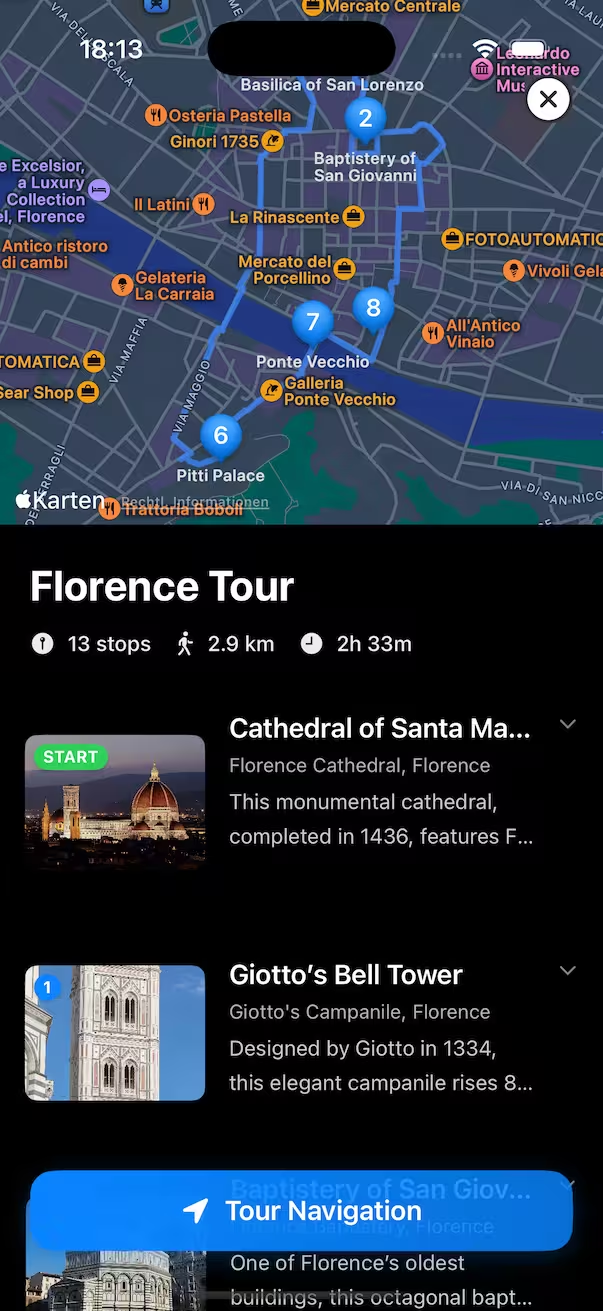
The classic Segovia tour: 5 stops, 3.1 km, about 1 h on foot
Your live AI guide and the self-guided Segovia route, together in your browser.