Best Time to Visit Salamanca
Month-by-month weather, crowds and prices, plus a full calendar of festivals and events worth planning a trip around.
Best monthsOct, May
CheapestJan, Feb, Nov
AvoidAug
BusiestJul, Aug, Sep
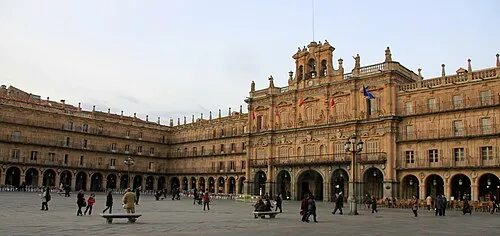
When is the best time to visit Salamanca?
Come in October or May. October gives you the city's most photographic light, warm amber sun raking across the golden sandstone of the Plaza Mayor and the University facade, with comfortable 15-22°C days, every museum open and hotels 20-30% below the September peak. May matches it for spring gardens and the free FACYL arts festival. Skip July and August, when the mesa heat climbs to 36-38°C and street walking is punishing between noon and 6 pm, and dodge the 7-15 September Ferias week, the year's most expensive stretch.
Start our tool and find your best time to visit Salamanca
Your perfect month
Free · ~30 seconds
or tap a month directly
What matters to you?
And this?
Best overall: Oct, May. October and May are the clear pick. October has comfortable 15-22°C days, the golden sandstone at its most photogenic in autumn light, the university population filling the bars and tapas of the Barrio Humedo without the extremes of Ferias, and hotel rates 20-30% below September. May is the spring equivalent, with long days, the gardens of the Huerto de Calixto y Melibea at their lush best, and the free FACYL arts festival in late May.
Best value: Jan, Feb, Nov. January, February and November deliver the lowest rates (45-75 EUR a night for a 3-star centre), zero queues and full access to every sight. The catch is real cold: highs of 8-10°C with overnight lows near 1°C and frost. Pack warm layers and the low winter sun on the frost-touched sandstone is a quiet reward few visitors ever see.
Avoid: Aug, Jul. July and August are worst for the heat: daytime highs of 36-38°C, occasionally 40°C, with almost no shade outside the university courtyards and the riverside Alameda. Street walking is genuinely unpleasant from 11 am to 6 pm, many neighbourhood restaurants close for one or two weeks, and the student energy that defines the city is at its annual low. For value specifically, also avoid the 7-15 September Ferias week, when rates spike to 130-200 EUR.
- January: Good time, 9°C. This is the month for the city without an audience. The low winter sun on the golden sandstone, sometimes touched with frost, is quietly spectacular, and the Plaza Mayor at dawn is empty. It is genuinely cold, so dress for it, but the calm and the prices are the reward.
- February: Great time, 11°C. February is honest, unperformed Salamanca: no festival, no markup, just a working university city under low winter sun. The students fill the bars at night while the daytime sights stay yours alone. If you can take the cold, it is the most peaceful month of the year.
- March: Great time, 14°C. March is the last genuinely quiet stretch before the spring crowds, unless you land on Semana Santa. Early in the month you get mild days and empty courtyards; by the final week the brotherhoods and their torchlit processions transform the city into one of Spain's great Holy Week experiences.
- April: Great time, 17°C. April is spring Salamanca at ease: mild 14-19°C days, blossom in the parks, and the post-Holy-Week calm. It is one of the loveliest months to wander the carved facades and courtyards without heat or big crowds, with the bonus of an authentic local picnic fiesta mid-month.
- May: Great time, 21°C. May is the spring sweet spot: long daylight, blossom in the Parque de San Francisco and the Huerto de Calixto y Melibea, and world-class FACYL performances staged for free in Renaissance courtyards. Mild, green and culturally alive, it rivals October for the best all-round visit.
- June: Great time, 26°C. June is the tipping point into summer, and the long light evenings are the payoff. The Cathedral lit by low evening sun after 8 pm is spectacular, and terrace life runs late. Midday is already warming up, so the rhythm shifts toward early mornings and long, lit evenings.
- July: Good time, 30°C. July is hot, busy and best lived early and late. With very little shade outside the university courtyards and the riverside Alameda, the smart rhythm is sightseeing before 10 am and after 7 pm, with a long midday pause. The intimate Jazz Festival in the Patio Chico is the month's evening highlight.
- August: Good time, 30°C. August is not the romantic Salamanca of the postcards, it is a furnace of golden stone. The student energy that defines the city is at its annual low and many neighbourhood haunts are shuttered. If you must come, treat it like a desert city: out early, hidden at midday, alive again after dark.
- September: Tough month, 25°C. September is Salamanca at full volume. The Ferias turn the whole centre into a ten-day party, and the arrival of thousands of students refills the bars and tapas streets. It is exhilarating if you came for the energy, but the quietest sightseeing is gone and prices are at their annual high.
- October: Great time, 20°C. October is the connoisseur's month: warm amber afternoon light on the Plateresque stonework, romantic evening tapas in the Barrio Humedo, uncrowded courtyards, and the city in full term-time swing without the noise of peak Ferias. Cool, golden and quietly social, it is Salamanca at its best.
- November: Good time, 13°C. November is introverted, value-rich Salamanca: empty courtyards, no tourist crowds and rock-bottom rates, set against crisp cold and the occasional short shower. The reward at month-end is the Christmas lights flickering on, turning the golden stone of the Plaza Mayor festive just as the calm winter sets in.
- December: Good time, 10°C. December trades the empty calm of deep winter for a warm festive glow, but on a human scale: atmospheric and uncrowded next to bigger Spanish cities, and lovely for families. The one frenetic night is the student Nochevieja in mid-December, when the square overflows. Short 9-hour days and frosty cold are the trade.
Salamanca weather by month
HighLowRainfall
Jan9°
Feb11°
Mar14°
Apr17°
May21°
Jun26°
Jul30°
Aug30°
Sep25°
Oct20°
Nov13°
Dec10°
| Month | Temp | Rain | Sun | Crowds | Prices | Highlight |
|---|---|---|---|---|---|---|
| Jan | 9° / 0° | 43mm · 8 rainy days | 6.3 h/day | ●○○○○ | ●○○○○ | Salamanca Christmas Season |
| Feb | 11° / 2° | 42mm · 7 rainy days | 7.8 h/day | ●○○○○ | ●○○○○ | |
| Mar | 14° / 3° | 43mm · 8 rainy days | 9.0 h/day | ●●○○○ | ●●○○○ | Holy Week |
| Apr | 17° / 6° | 55mm · 11 rainy days | 10.5 h/day | ●●○○○ | ●●○○○ | Holy Week |
| May | 21° / 9° | 35mm · 7 rainy days | 12.2 h/day | ●●●○○ | ●●●○○ | FACYL International Arts Festival |
| Jun | 26° / 13° | 30mm · 7 rainy days | 13.5 h/day | ●●●○○ | ●●●○○ | Corpus Christi Procession |
| Jul | 30° / 15° | 9mm · 3 rainy days | 14.0 h/day | ●●●●○ | ●●●●○ | International Jazz Festival Salamanca |
| Aug | 30° / 15° | 6mm · 1 rainy days | 12.7 h/day | ●●●●○ | ●●●●○ | |
| Sep | 25° / 12° | 22mm · 4 rainy days | 11.1 h/day | ●●●●● | ●●●●● | Salamanca City Festival (Virgen de la Vega) |
| Oct | 20° / 9° | 62mm · 8 rainy days | 8.5 h/day | ●●●○○ | ●●●○○ | |
| Nov | 13° / 5° | 60mm · 11 rainy days | 6.8 h/day | ●●○○○ | ●●○○○ | Salamanca Christmas Season |
| Dec | 10° / 2° | 45mm · 7 rainy days | 6.2 h/day | ●●○○○ | ●●○○○ | University New Year's Eve |
How we score this: weather = long-run climate normals (Open-Meteo), crowds & prices = relative season read, events checked yearly against official dates.
Best time to visit Salamanca: weather, prices & crowds
Best months for good weather
Oct, May, Apr
Late April, May and October are Salamanca's comfort zone: daytime highs of 15-22°C, dry air, and the short intense showers that fall here rather than all-day drizzle. Salamanca is one of Spain's driest cities at around 400mm a year, so pack a light packable jacket and you will rarely need it.
Quietest months to avoid the crowds
Jan, Feb, Nov
January, February and November are the quietest months for foreign tourists. You walk into the University's Plateresque interior and the Casa Lis with no queue, and the Plaza Mayor at dawn is essentially empty. The trade is genuine cold: highs of 8-10°C with overnight frost and a bitter Castilian wind.
Cheapest time to visit Salamanca
Jan, Feb, Nov
January, February and November bring the lowest rates of the year: a 3-star central hotel runs 45-75 EUR a night, roughly half the September peak. Every paid sight stays open, the Cathedral, the University interior, the convents, so the value is real if you can take the cold.
Best time for festivals and events
Oct, Sep, Dec
October light is the city's signature: warm afternoon sun angled onto the carved stone of the Plaza Mayor, University facade and Casa de las Conchas, with sunset around 7:30 pm catching the eastern Cathedral towers. For something rarer, the Nochevieja Universitaria in mid-December packs 18,000 students into the Plaza Mayor to eat twelve gummy sweets at midnight, a uniquely Salamanca spectacle.
How many days do you need in Salamanca?
Two days is Salamanca's sweet spot. The walkable historic core is compact enough to cover on foot in a single day, but a second day lets you linger in the courtyards, climb the Clerecía towers, explore the double cathedral at your own pace and eat properly without rushing. A third day adds day trips or deeper dives into the monasteries and Casa Lis.
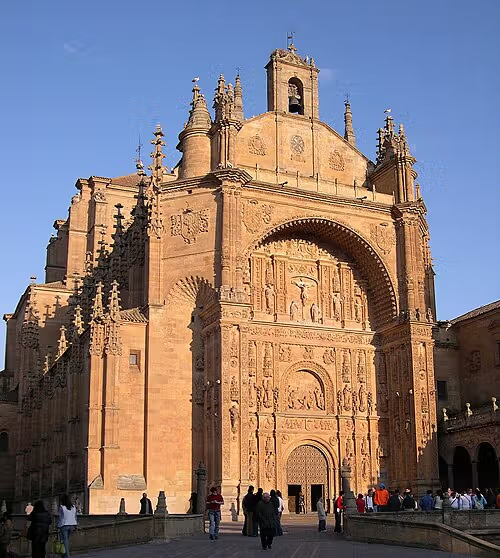
One day
The golden core in a single stride
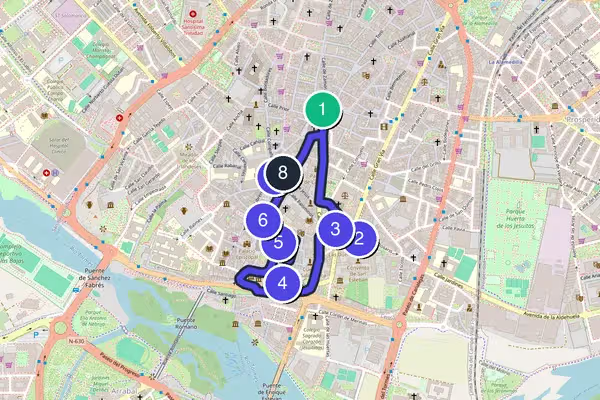
Start at the Plaza Mayor before 9 am while the sandstone arcade is still in shadow, then walk south down Rua Mayor to the University facade and hunt the famous frog on the right-hand pillar. Cross to the double cathedral, loop through the Huerto de Calixto y Melibea for the river view, and end at the Casa de las Conchas. This is the route of the self-guided Salamanca walking tour, 8 stops across 2.3 km in about 1.6 hours, leaving the afternoon free for the Clerecía tower climb or a long lunch in the Barrio Húmedo.
Two daysRecommended
Monasteries, museums and the slower side
Day two starts at Convento de San Esteban (Soto Staircase, open from 10 am, about 3 EUR) and the Monastery of Las Dueñas next door, where the pentagonal cloister and almond cookies are both worth the 5 EUR. In the afternoon, visit the Casa Lis art nouveau museum on Calle Gibraltar, then return to the Plaza Mayor after 10 pm to see it lit by its lanterns with almost no one there.
Three days
Markets, day trips and the Cathedral tower
Three days open up the Cathedral tower climb (Ieronimus route, roughly 3.75 EUR, book at the Cathedral door), the DA2 Domus Artium contemporary gallery, and the Mercado Central on Calle San Justo on a Thursday or Friday morning. A half-day at the Duque de Alba estate in Alba de Tormes, 20 km east, rounds out a three-day stay with the Castilian countryside.
Four days or more
Deep Castile: Ciudad Rodrigo and Zamora
From a base in Salamanca, four days let you add a full day in Ciudad Rodrigo (90 km south-west), a walled medieval city with a 12th-century cathedral and a fortress parador, or head north to Zamora (65 km), whose 12 Romanesque churches are among the densest concentrations in Spain. Back in Salamanca, the university library collection and the Sala de las Tortugás in the Palacio de Monterrey fill any remaining gaps.
Best time to visit Salamanca by traveller type
Same city, different trip. Here's the month that fits how you're travelling.
🧭
Best time to visit Salamanca for the first time
OctMay
October or May. October gives golden-stone autumn light, comfortable 15-22°C days, every museum open, no major event crowds and rates 25-30% below the September peak. May offers long days, spring gardens and the bonus of the FACYL festival (late May). Both let you do a full sightseeing agenda without heat stress.
❤️
Best time to visit Salamanca for couples
OctApr
October is the romantic pick: warm amber afternoon light on the Plateresque stonework, evening tapas in the Barrio Humedo, uncrowded courtyards and the city in full university swing. Late April is a strong second, with post-Semana-Santa quiet, mild spring days and the Lunes de Aguas picnic on the banks of the Tormes.
💶
Best time to visit Salamanca on a budget
JanFebNov
January, February or November give the lowest hotel rates (45-75 EUR a night), no queues anywhere and full access to every sight. There is no Cathedral free-entry day and the University interior and Casa Lis charge year-round, but the Plaza Mayor, Roman Bridge, Casa de las Conchas courtyard and all the carved facades are free in any month. Pack warm layers for lows near 1°C.
🍝
Best time to visit Salamanca for food and wine
OctSep
September and October are the food months. October is truffle and game season, when Castilian kitchens build dishes around lechazo asado (roast suckling lamb), farinato sausage and chanfaina; visit the Mercado Central on Calle San Justo on a Thursday or Friday morning when seasonal produce peaks. September Ferias brings extra artisan food stalls. For a one-off, time the Lunes de Aguas in April for a freshly baked hornazo picnic by the Tormes.
Worst time to visit Salamanca
August is the clear low point: daytime highs of 36 to 38°C, occasionally touching 40°C, make street walking between 11 am and 6 pm genuinely punishing on the shadeless stone lanes between the Plaza Mayor and the University. The student energy that defines Salamanca is absent, the university is on holiday, and many neighbourhood restaurants close for one or two weeks, typically in the first half of the month. For value, also avoid the 7 to 15 September Ferias y Fiestas window, when hotel rates spike to 130 to 200 EUR a night and rooms disappear months in advance.
Still worth it for August suits travellers who plan an early-morning and late-evening schedule, are comfortable with the siesta rhythm and want zero queues at every sight. The Ferias week in September, despite the prices, delivers a genuine fiesta atmosphere with free Plaza Mayor concerts and fireworks that justify the cost for those who book far ahead.
Go instead in October, May, when Salamanca is at its best.
Best time for a tour of Salamanca
The sweet spot for walking Salamanca is May and early June, when highs sit at 21 to 26 °C, lows stay above 8 °C, and long evenings stretch the day well past 9 pm. The 2.3-kilometre loop feels genuinely pleasant: the sandstone of the University of Salamanca glows in soft afternoon light, the arcades around Plaza Mayor offer shade without needing it, and the alleyways near Casa de las Conchas stay cool well into the afternoon. Rain is possible in both months, around seven days each, but showers are short and the rest of the route is pleasant. By contrast, July and August push highs to 30 °C with almost no rain, which sounds ideal until you are standing in full sun on the open square outside Salamanca Cathedral with nowhere to shelter. September brings the most pleasant temperatures of autumn, 24 to 25 °C, but also the most visitors of the year: the route feels shoulder to shoulder at popular stops. October is tempting at 20 °C, though eleven rain days in November make the tail end of autumn unreliable. January and February are near-empty and atmospheric, but highs barely reach 9 °C and lows dip below freezing, which makes a 95-minute walk uncomfortable rather than memorable.
The practical upside of AI Tourguide is that none of this locks you into a fixed departure time. Because the guide runs entirely in your browser, no app or sign-up needed, you choose when to set off. In July or August that means leaving the Hotel Rector area at 8 am before the sandstone radiates heat, reaching Plaza Mayor while the chairs are still being unstacked. In May you can linger until dusk without a group pulling you forward, letting the conversation with the guide stretch out under the last light on the Clerecía towers. Start your Salamanca tour whenever the temperature suits you, and the guide will be ready.

 +4
+4All 8 stops are already on the map.
You just press start.
You just press start.
 AI Tourguide
You just read the route.
Now walk it with a guide in your ear.
Press start wherever you are, even hundreds of kilometres from Salamanca, and the guide begins telling its stories right away. In the city, pick any of the 8 stops to start from: it leads you there, then talks with you the whole route, asking, listening, remembering, and shaping the tour around your answers.
8stops2.3km1.6hours11languages
▶Start the tour freeFree to start · Runs in your browser · No app, no download
Salamanca events and festivals calendar
Annual highlights worth timing a trip around, listed month by month.
January
🇮 HolidayThree Kings Parade Cabalgata de los Reyes Magos
Jan 5
the evening of 5 January
An evening torchlit procession of the three Magi through the city centre, with sweets thrown to children.
March
⛪ ReligiousHoly Week Semana Santa de Salamanca
Mar 27 – Apr 5 ~
late March to mid April, Easter-linked
A Festival of National Tourist Interest.
April
🍷 Food and wineMonday of Waters Lunes de Aguas
Apr 13 ~
the Monday after Easter week
A Fiesta of Regional Tourist Interest.
May
🎨 Art and cultureFACYL International Arts Festival Festival Internacional de las Artes de Castilla y Leon
May 27–31
late May, five days
Five days and more than 80 artistic proposals from over 40 national and international companies: theatre, dance, music, literature and multimedia, staged in the Plaza Mayor, the Casa de las Conchas, the Patio Chico, the Teatro Liceo and the Claustro de Anaya.
June
⛪ ReligiousCorpus Christi Procession Corpus Christi
Jun 7 ~
the Sunday after Corpus Christi Thursday
A solemn procession leaves the New Cathedral with the Blessed Sacrament, following a route decorated with a salt carpet (alfombra de sal).
🎉 FestivalFeast of St John (Midsummer) San Juan
Jun 24
24 June, midsummer
Midsummer bonfires and popular festivities around the feast of St John, liveliest in the student bar district along Calle Van Dyck.
July
🎵 MusicInternational Jazz Festival Salamanca Festival Internacional de Jazz de Salamanca
Jul 14–18
mid July, five evenings
Five evenings of jazz in the intimate, arcaded Patio Chico beside the New Cathedral, organised by the city.
September
🎉 FestivalSalamanca City Festival (Virgen de la Vega) Ferias y Fiestas de Salamanca
Sep 7–15
first and second week of September
A ten-day city festival honouring the patron Virgen de la Vega, whose feast day is 8 September.
November
More in November →December
🎉 FestivalUniversity New Year's Eve Nochevieja Universitaria
Dec 17 ~
the second-to-last teaching Thursday of December
A 40-year-old tradition in which around 18,000 students gather in the Plaza Mayor to eat twelve gummy sweets, instead of the customary grapes, when the clock strikes midnight.
Insider tips for visiting Salamanca
The rules buried in forums, in one place.
- The carved Plateresque facade of the University (Patio de las Escuelas) is free to view from the street at any time, but the interior with the lecture room of Fray Luis de Leon costs about 4 EUR and is ticket-gated. The space in front of the facade gets very congested from 10 am to 1 pm in summer, so arrive before 9:15 am on a weekday for the first entry slot.
- Hunt for the small carved frog on the University facade, a student luck tradition every guidebook mentions. It sits on the upper-right pillar. Knowing the spot in advance means you spend 30 seconds finding it rather than 20 minutes craning your neck while crowds build behind you.
- Siesta is real at the convents. Both Las Duenas and San Esteban close from roughly 1 to 2 pm for a genuine midday break, and Las Duenas (5 EUR) observes its 1 pm to 4:30 pm closure tightly. Arrive by 11 am or return after 4:30 pm rather than assuming continuous museum-style hours.
- Monday is the day most museums shut: Casa Lis, the DA2 Domus Artium, the Salamanca Museum and most smaller galleries are all closed. Plan your museum day for Tuesday to Sunday. The Cathedral (daily 10 am-5 pm, 4-6 EUR with tower access) and the Plaza Mayor stay open regardless.
- For the best panorama of the Plaza Mayor and the old city, climb the Scala Coeli rooftop towers of the Clerecia. It is arguably better than any other viewpoint in town, little known by first-timers, and the queue is almost never more than 10 minutes. Go during the church's visitor hours and check the seasonal timetable.
- If you want the Ferias y Fiestas (7-15 September), book hotels by May; rooms for that window are largely gone by June and rates run 130-200 EUR. If you want to avoid the crowds and high prices entirely, simply skip the first two weeks of September. The same goes for Semana Santa (27 March to 5 April in 2026), when Holy Week rates double.
- The Plaza Mayor holds about 18,000 people for Nochevieja Universitaria, the student new-year held on the second-to-last teaching Thursday of December (around 17-18 December in 2026). The square is sealed off from about 10 pm, so arrive before 9 pm and hold your ground, or watch from the bars on Rua Mayor and Calle Zamora. Central hotels sell out weeks ahead for that one Thursday.
- During the July Jazz Festival the free ring of the Patio Chico fills to capacity about 40-45 minutes before each concert. The 6 EUR central seats are genuinely worth it for the acoustics in the arcaded square beside the New Cathedral; reserve them in advance via the Teatro Liceo box office rather than chancing the free section.
- For photography, beat the tour groups. The Plaza Mayor at dawn before 8 am and again after 10 pm is essentially empty and beautifully lit by its internal lanterns; tour groups arrive from 10 am. The University facade is at its best between 8 and 9 am before the crowds form. When you want context for what you are seeing without a fixed group tour, our live in-browser AI guide walks at your pace, tells the story at each stop and answers your questions, a flat-priced, fully flexible alternative to an expensive private guide.
Public holidays in Salamanca
On these dates many shops and offices close, transport thins out, and sights can be mobbed or shut. Plan around them.
| Date | Holiday | What closes |
|---|---|---|
| Jan 1 | New Year's Day | Everything closed: shops, museums and most restaurants. A very quiet day in the city centre. |
| Jan 6 | Epiphany (Three Kings) | National holiday: shops, banks and most museums closed. The Cathedral and major churches open for Mass. The torchlit Three Kings parade runs the evening before, on 5 January, with streets closed from about 6 pm. |
| Apr 2 | Maundy Thursday | National holiday: most shops closed and Semana Santa processions begin in the afternoon and evening. The historic centre fills with brotherhoods carrying their floats. |
| Apr 3 | Good Friday | National holiday: banks and commerce shut. The biggest processions of Holy Week take place, including dramatic torchlit crossings of the Roman Bridge. Plan to eat at tourist-facing restaurants near the Plaza Mayor. |
| Apr 13 | Monday of Waters (Lunes de Aguas) | A regional fiesta, not a closure day: Salamantinos picnic on the banks of the Tormes with hornazo, a dense pork-filled bread. Picnic spots near the Roman Bridge fill up by noon, so order your hornazo a day ahead. |
| May 1 | Labour Day | National holiday: shops and offices closed. Most sights and restaurants in the centre stay open, but expect a slower pace. |
| Jun 7 | Corpus Christi | A solemn procession leaves the New Cathedral, with a salt carpet decorating the route and Mass at 6 pm. The Cathedral-area streets close during the procession; the rest of the city is quiet. |
| Jul 25 | Feast of Santiago Apostol | National holiday in Spain: shops closed. Sights and central restaurants stay open. Summer heat is at its peak, so plan early-morning or evening sightseeing. |
| Sep 8 | Virgen de la Vega (Patron of Salamanca) | Local public holiday and the main fiesta day within Ferias y Fiestas. The city is at its busiest and most expensive, with free concerts in the Plaza Mayor, a bullfighting fair and fireworks. Book months ahead. |
| Oct 12 | National Day of Spain | National holiday with a light tourism effect in Salamanca: some shops closed but most sights and restaurants open. Comes during the city's best-value autumn stretch. |
| Nov 1 | All Saints' Day | National holiday: shops closed and cemeteries busy with local visitors. The Cathedral and churches hold Mass; the centre is quiet and cool. |
| Dec 6 | Constitution Day | National holiday with a light tourism effect, falling in the run-up to Christmas when the markets and lights are already up around the Plaza Mayor. |
| Dec 8 | Immaculate Conception | National holiday: nearly everything closed, with religious processions at the Cathedral. Part of a festive early-December weekend when the Christmas market is in full swing. |
| Dec 25 | Christmas Day | Everything closed; restaurants that open generally need a reservation. A still day in the centre, though the Christmas lights and market displays remain up. |
Salamanca month by month
January in Salamanca
High9°C / 47°F
Low0°C
Rain43mm / 8 rainy days
Sun6.3 h/day
Daylight10 h/day
Humidity82%
Crowds●○○○○Prices●○○○○
January is Salamanca at its quietest and cheapest. Daytime highs hover near 8-10°C with overnight frost common, and a bitter Castilian wind sharpens the cold. The post-holiday lull and the mid-month restart of the university term mean very few foreign tourists. You have the Plaza Mayor, the Cathedral and the University interior almost to yourself, with no queue anywhere.
The vibe This is the month for the city without an audience. The low winter sun on the golden sandstone, sometimes touched with frost, is quietly spectacular, and the Plaza Mayor at dawn is empty. It is genuinely cold, so dress for it, but the calm and the prices are the reward.
Don't miss The Christmas lights and the Salamanca Es Navidad market run until 5 January, so the first days still glow. After that, this is the month for the indoor heavyweights with no crowds: the University interior with the Fray Luis de Leon lecture room, the Casa Lis Art Nouveau museum, and the Cathedral with its tower climb.
Crowd drivers The post-holiday lull and bitter cold keep foreign tourism at its annual low. The Three Kings parade on 5 January and the holiday on 6 January briefly draw local families, then the city settles into deep off-season as the university term resumes mid-month.
In season Hearty Castilian winter cooking is at its best now: lechazo asado (roast suckling lamb), warming chanfaina and farinato sausage, eaten without ever queueing for a table.
Heads up New Year's Day (1 January) and Epiphany (6 January) close shops, museums and most restaurants; the Cathedral and churches open for Mass. Most museums are also closed every Monday year-round.
Annual price floor: a 3-star central hotel runs 45-70 EUR a night, roughly half the September peak.
Events this month
🎄 Christmas marketSalamanca Christmas Season Salamanca Es Navidad
Nov 28 – Jan 5 ~
late November to 5 January
The Plaza Mayor is dressed with Christmas stalls of local artisans and food, an evening audiovisual light show projected onto the Baroque facade, a Christmas train and an ice rink, with golden-stone lanes lit by fairy lights across the old city.
Atmospheric and uncrowded next to bigger Spanish cities, and ideal for families. The outdoor market and light show are free; the ice rink is ticketed. It overlaps the Nochevieja Universitaria weekend in mid-December.
🇮 HolidayThree Kings Parade Cabalgata de los Reyes Magos
Jan 5
the evening of 5 January
An evening torchlit procession of the three Magi through the city centre, with sweets thrown to children. It is the eve of Three Kings Day on 6 January, the day Spanish children traditionally receive their gifts.
A warm family event to catch if you are in town over the holidays. Note that most shops and attractions close the following day, 6 January, a public holiday.
February in Salamanca
High11°C / 52°F
Low2°C
Rain42mm / 7 rainy days
Sun7.8 h/day
Daylight11 h/day
Humidity76%
Crowds●○○○○Prices●○○○○
February is the deep off-season. It is bitterly cold, with lows near 1°C and frost, and the city is in full university swing but with minimal tourism. Salamanca is one of Spain's driest cities, so February rarely means grey drizzle; expect crisp, clear cold instead. Museums stay uncrowded and prices sit at their floor.
The vibe February is honest, unperformed Salamanca: no festival, no markup, just a working university city under low winter sun. The students fill the bars at night while the daytime sights stay yours alone. If you can take the cold, it is the most peaceful month of the year.
Don't miss A perfect month for the indoor circuit with no queues: the Cathedral and its towers, the Convento de San Esteban (3 EUR), the Monastery of Las Duenas, and the Casa Lis stained glass. Climb the Scala Coeli towers of the Clerecia for the best Plaza Mayor panorama, almost always with a sub-10-minute wait.
Crowd drivers The coldest stretch of winter and the absence of any major event keep foreign tourism at its minimum. Student density is high (second semester runs February to mid-June), so nights in the bar district are lively even when the sights are empty.
In season Still firmly winter-stew weather. The Mercado Central on Calle San Justo (Monday to Saturday from 8 am) is the place for Iberico ham, local cheeses and the raw materials of a Castilian table.
Heads up Most museums close on Monday (Casa Lis, the DA2 Domus Artium, the Salamanca Museum), so plan museum days for Tuesday to Sunday. Convents observe a strict midday siesta closure, roughly 1 to 4 pm.
Prices at their annual floor alongside January: 45-70 EUR a night for a 3-star central hotel.
March in Salamanca
High14°C / 56°F
Low3°C
Rain43mm / 8 rainy days
Sun9.0 h/day
Daylight12 h/day
Humidity70%
Crowds●●○○○Prices●●○○○
March brings the first lift of spring. Spanish domestic day-trippers pick up, days grow milder, and the gardens start to wake. The big variable is Semana Santa, which falls late in the month into early April and drives a sharp price spike; advance bookings for Holy Week fill fast. Outside that window, March is still a calm, good-value month.
The vibe March is the last genuinely quiet stretch before the spring crowds, unless you land on Semana Santa. Early in the month you get mild days and empty courtyards; by the final week the brotherhoods and their torchlit processions transform the city into one of Spain's great Holy Week experiences.
Don't miss Outside Holy Week, March is ideal for unhurried sightseeing in mild air. During Semana Santa, the night processions over the Roman Bridge by torchlight are the highlight; arrive early to find a spot, and expect shops shut on Good Friday.
Crowd drivers Spanish domestic day-trippers return as the weather warms. Semana Santa (27 March to 5 April in 2026) is the dominant driver late in the month, doubling hotel rates and packing the historic centre for the processions.
In season If you are here for Semana Santa, order a hornazo from a bakery 24 hours ahead. Lenten dishes such as bacalao (salt cod) appear on traditional menus through the period.
Heads up If Maundy Thursday or Good Friday fall in late March, shops and commerce close and processions take over the centre. Most museums remain closed on Mondays as usual.
Rates recover gently to 55-85 EUR, but Semana Santa week jumps to 150-200 EUR; book Holy Week well ahead.
Events this month
⛪ ReligiousHoly Week Semana Santa de Salamanca
Mar 27 – Apr 5 ~
late March to mid April, Easter-linked
A Festival of National Tourist Interest. Brotherhoods (cofradias) carry centuries-old sculptures through the streets by torchlight, including dramatic night-time crossings of the Roman Bridge, with the Acto del Descendimiento as the emotional apex.
The atmospheric night processions on golden-stone streets are unforgettable, but everything closes on Good Friday and hotel rates double, so book eight or more weeks ahead and plan for limited shop opening.
April in Salamanca
High17°C / 62°F
Low6°C
Rain55mm / 11 rainy days
Sun10.5 h/day
Daylight13 h/day
Humidity66%
Crowds●●○○○Prices●●○○○
April is mild, pleasant and mostly quiet once Semana Santa passes. The university is in full term, foreign tourism is light, and spring gardens like the Huerto de Calixto y Melibea and the Parque de la Alamedilla start to show colour. The local Lunes de Aguas (13 April) brings domestic visitors for a single picnic day on the Tormes.
The vibe April is spring Salamanca at ease: mild 14-19°C days, blossom in the parks, and the post-Holy-Week calm. It is one of the loveliest months to wander the carved facades and courtyards without heat or big crowds, with the bonus of an authentic local picnic fiesta mid-month.
Don't miss Join the Lunes de Aguas picnic on the banks of the Tormes near the Roman Bridge with a freshly baked hornazo. The spring gardens of the Huerto de Calixto y Melibea are lush, and mild days make this the best time for the full walking circuit of facades and courtyards.
Crowd drivers A quiet post-Semana-Santa lull dominates, with lighter foreign tourism. The Lunes de Aguas (13 April) draws domestic visitors for the day, filling the riverside picnic spots by noon.
In season Hornazo is the dish of the month around Lunes de Aguas. Spring also brings the first lighter Castilian cooking and asparagus to the Mercado Central.
Heads up If Easter falls in early April, Maundy Thursday and Good Friday close shops. Convents keep their strict midday closures, and most museums remain shut on Mondays.
Post-Semana-Santa rates ease back to 60-90 EUR, a genuine value window before the summer climb.
Events this month
🍷 Food and wineMonday of Waters Lunes de Aguas
Apr 13 ~
the Monday after Easter week
A Fiesta of Regional Tourist Interest. Salamantinos picnic on the banks of the Tormes with hornazo, a dense bread crust filled with marinated pork loin, chorizo and hard-boiled egg. The tradition dates to the medieval custom of welcoming people back to the city after Lent.
A charming, authentic local celebration rarely on the tourist radar. Order a hornazo from a bakery a day ahead, since picnic spots near the Roman Bridge and La Aldehuela fill up by noon.

May in Salamanca
High21°C / 71°F
Low9°C
Rain35mm / 7 rainy days
Sun12.2 h/day
Daylight14 h/day
Humidity58%
Crowds●●●○○Prices●●●○○
May is one of Salamanca's two best months. Temperatures are ideal for walking, the gardens are at their lush peak, and the free FACYL arts festival (27-31 May) animates the courtyards and squares. Spanish school groups appear, but the city is busy without ever feeling overwhelmed. Pack a light jacket for the short intense spring showers.
The vibe May is the spring sweet spot: long daylight, blossom in the Parque de San Francisco and the Huerto de Calixto y Melibea, and world-class FACYL performances staged for free in Renaissance courtyards. Mild, green and culturally alive, it rivals October for the best all-round visit.
Don't miss FACYL puts free theatre, dance and music in the Plaza Mayor, the Casa de las Conchas, the Patio Chico and the Claustro de Anaya. Away from the festival, May is the month for the gardens and for a slow circuit of the Cathedral, University and convents in kind weather.
Crowd drivers The spring shoulder brings comfortable weather, Spanish school groups and a cultural crowd around the FACYL festival (27-31 May). The city is lively but not crushed, the way a peak summer week would be.
In season Spring produce peaks at the Mercado Central; visit on a Thursday or Friday morning. Terrace tapas in the Barrio Humedo come into their own as the evenings warm.
Spring shoulder rates of 70-110 EUR, rising to 80-130 EUR during the late-May FACYL festival week.
Events this month
🎨 Art and cultureFACYL International Arts Festival Festival Internacional de las Artes de Castilla y Leon
May 27–31
late May, five days
Five days and more than 80 artistic proposals from over 40 national and international companies: theatre, dance, music, literature and multimedia, staged in the Plaza Mayor, the Casa de las Conchas, the Patio Chico, the Teatro Liceo and the Claustro de Anaya.
Worth timing a trip for: free, world-class performances in spectacular Renaissance courtyards, with the city animated but never overwhelmed. Most events are free or low cost, with some central seating ticketed.

June in Salamanca
High26°C / 78°F
Low13°C
Rain30mm / 7 rainy days
Sun13.5 h/day
Daylight15 h/day
Humidity54%
Crowds●●●○○Prices●●●○○
June brings long warm days, with daylight close to 15 hours and sunset after 9:30 pm. The university finishes exams and breaks up, and the Erasmus students leave at the end of the month, while Spanish domestic tourism rises. Corpus Christi (7 June) brings a short local spike, and the heat starts to build toward the July peak.
The vibe June is the tipping point into summer, and the long light evenings are the payoff. The Cathedral lit by low evening sun after 8 pm is spectacular, and terrace life runs late. Midday is already warming up, so the rhythm shifts toward early mornings and long, lit evenings.
Don't miss Time an evening walk for the Cathedral towers catching the last sun after 8 pm. Corpus Christi decorates the Cathedral route with a salt carpet, and San Juan bonfires animate the Calle Van Dyck district. With sunset after 9:30 pm, evenings are long and warm.
Crowd drivers Rising Spanish domestic tourism and the end of the university year shape the month. Corpus Christi (7 June) brings a brief local spike, and San Juan (24 June) lights up the student bar district for midsummer.
In season Terrace and tapas season in the Barrio Humedo hits its stride. Lighter summer dishes and chilled local wines replace the winter stews on most menus.
Summer pricing begins, 75-110 EUR, as domestic tourism rises and the days lengthen.
Events this month
⛪ ReligiousCorpus Christi Procession Corpus Christi
Jun 7 ~
the Sunday after Corpus Christi Thursday
A solemn procession leaves the New Cathedral with the Blessed Sacrament, following a route decorated with a salt carpet (alfombra de sal). Adoration runs from 11 am and Mass is at 6 pm.
A religious spectacle on the golden-stone streets around the Cathedral. Those streets close during the procession and shops are shut, but the rest of the city stays quiet.
🎉 FestivalFeast of St John (Midsummer) San Juan
Jun 24
24 June, midsummer
Midsummer bonfires and popular festivities around the feast of St John, liveliest in the student bar district along Calle Van Dyck. Low-key compared with the city's main festivals.
A relaxed way to feel the start of summer with the locals. Minor in scale, but it sets the warm-season mood as the long days peak.

July in Salamanca
High30°C / 86°F
Low15°C
Rain9mm / 3 rainy days
Sun14.0 h/day
Daylight15 h/day
Humidity45%
Crowds●●●●○Prices●●●●○
July is the hot heart of summer on the mesa. Daytime highs regularly reach 35-38°C, with the golden sandstone radiating stored heat after 3 pm, so street walking is genuinely punishing from noon to 6 pm. The Erasmus crowd is gone, replaced by language-school students and Spanish domestic holidaymakers. The Jazz Festival (14-18 July) adds welcome evening culture.
The vibe July is hot, busy and best lived early and late. With very little shade outside the university courtyards and the riverside Alameda, the smart rhythm is sightseeing before 10 am and after 7 pm, with a long midday pause. The intimate Jazz Festival in the Patio Chico is the month's evening highlight.
Don't miss The Jazz Festival fills the arcaded Patio Chico beside the New Cathedral; reserve the 6 EUR central seats for the acoustics. For sightseeing, hit the University facade at 8-9 am and the Plaza Mayor after 10 pm, when it is empty and lit by its lanterns. Carry water, as the city has very few public fountains.
Crowd drivers Peak Spanish domestic tourism and language-school students fill the city, replacing the departed Erasmus crowd. The Jazz Festival (14-18 July) draws a culture crowd to the Patio Chico over five evenings.
In season Tapas move to the cooler evening hours. Many traditional restaurants in the Barrio Humedo and Van Dyck area begin their summer closures, so tourist-facing places near the Plaza Mayor are your reliable bet.
Heads up The Feast of Santiago (25 July) is a national holiday with shops closed. Some neighbourhood restaurants begin one-to-two-week summer breaks; most museums stay shut on Mondays.
Peak summer pricing of 90-140 EUR a night as domestic holidaymakers and language students fill the city.
Events this month
🎵 MusicInternational Jazz Festival Salamanca Festival Internacional de Jazz de Salamanca
Jul 14–18
mid July, five evenings
Five evenings of jazz in the intimate, arcaded Patio Chico beside the New Cathedral, organised by the city. The free ring of the square surrounds a block of ticketed central seats.
One of the best-value festival experiences in Spain. Reserve the 6 EUR central seats for the acoustics, as the free ring fills to capacity about 45 minutes before each concert.

August in Salamanca
High30°C / 86°F
Low15°C
Rain6mm / 1 rainy days
Sun12.7 h/day
Daylight14 h/day
Humidity45%
Crowds●●●●○Prices●●●●○
August is full continental heat, with highs of 36-38°C and occasional spikes toward 40°C. Spanish domestic tourism is at its maximum, and although the university is on holiday and the student atmosphere fades, tourists fill the gap. Many local restaurants close for one or two weeks, usually the first half of the month. It is the year's worst stretch for heat.
The vibe August is not the romantic Salamanca of the postcards, it is a furnace of golden stone. The student energy that defines the city is at its annual low and many neighbourhood haunts are shuttered. If you must come, treat it like a desert city: out early, hidden at midday, alive again after dark.
Don't miss Seek shade in the university courtyards and the riverside Alameda, and save the open Plaza Mayor and exposed facades for dawn or late evening. The Cathedral interior and the Casa Lis offer cool indoor refuge through the punishing midday hours. Carry water at all times.
Crowd drivers Spanish domestic holidaymaking peaks even as the university empties for the summer break. The mix means busy sights by day but a noticeably thinner local night-time scene than term-time months.
In season Check ahead before counting on a specific Barrio Humedo restaurant: many family-run places close for one or two weeks, usually the first half of August. The tourist-facing places around the Plaza Mayor stay open.
Heads up Beyond the seasonal restaurant closures, the usual Monday museum closures apply. Convents keep their strict 1-to-4 pm siesta breaks, which matter more when the midday heat drives you indoors.
Full summer rates of 90-145 EUR; many neighbourhood restaurants close for one to two weeks.
September in Salamanca
High25°C / 77°F
Low12°C
Rain22mm / 4 rainy days
Sun11.1 h/day
Daylight12 h/day
Humidity57%
Crowds●●●●●Prices●●●●●
September is the busiest and most expensive month of the Salamanca year. The Ferias y Fiestas (7-15 September) honour the patron Virgen de la Vega with concerts, bullfights, a medieval market and fireworks, then the university freshers and Erasmus arrivals pour in from late September. Summer warmth lingers while the worst heat eases, but rates peak and rooms vanish.
The vibe September is Salamanca at full volume. The Ferias turn the whole centre into a ten-day party, and the arrival of thousands of students refills the bars and tapas streets. It is exhilarating if you came for the energy, but the quietest sightseeing is gone and prices are at their annual high.
Don't miss During Ferias, the Plaza Mayor hosts free concerts, with a bullfighting fair, a medieval market, brass bands, giant puppet heads and fireworks across the city. If you want it, book by May; if you want quiet, skip the first two weeks entirely. The Mercado Central gains extra artisan food stalls during the festival.
Crowd drivers The Ferias y Fiestas (7-15 September) are the single biggest crowd-and-price driver of the year, peaking on the 8 September patron's feast. From late September, university freshers and Erasmus arrivals stack a second wave of demand on top.
In season Ferias brings extra market and artisan food stalls. This is also the lead-in to game and truffle season, the first hearty Castilian autumn dishes returning to the menus.
Heads up The Virgen de la Vega feast (8 September) is a local public holiday, the main fiesta day. Bullfights and some theatre shows are ticketed; most museums still close on Mondays.
Busiest and most expensive month: 110-180 EUR a night, rising to 160-200 EUR during Ferias (7-15 September).
Events this month
🎉 FestivalSalamanca City Festival (Virgen de la Vega) Ferias y Fiestas de Salamanca
Sep 7–15
first and second week of September
A ten-day city festival honouring the patron Virgen de la Vega, whose feast day is 8 September. More than 100 events: free concerts in the Plaza Mayor, a bullfighting fair, a medieval market, street brass bands, giant puppet heads, fireworks and a fairground at La Aldehuela.
The single biggest event of the Salamanca year. Hotel rates peak at 130-200 EUR a night and availability is near zero without booking twelve or more weeks ahead, so this is also the time to avoid if you want quiet access to the sights.

October in Salamanca
High20°C / 68°F
Low9°C
Rain62mm / 8 rainy days
Sun8.5 h/day
Daylight11 h/day
Humidity66%
Crowds●●●○○Prices●●●○○
October is the consensus best month. Average highs near 18°C make for comfortable walking, the autumn light on the golden sandstone is the city's most photographic condition, and the settled university population fills the bars without the extremes of Ferias. October is also the wettest month at about 64mm, but the rain comes as short showers. Rates fall 20-30% below the September peak.
The vibe October is the connoisseur's month: warm amber afternoon light on the Plateresque stonework, romantic evening tapas in the Barrio Humedo, uncrowded courtyards, and the city in full term-time swing without the noise of peak Ferias. Cool, golden and quietly social, it is Salamanca at its best.
Don't miss Chase the golden hour: October sunset around 7:30 pm catches the eastern Cathedral towers, and the carved facades of the Plaza Mayor and Casa de las Conchas glow in the angled light. With every museum open and no event crowds, it is the ideal month for the full walking circuit, capped by the Scala Coeli tower view.
Crowd drivers A pleasant cool autumn with the university in full swing and Erasmus students settled, but no major tourist events. Demand is moderate and the value is strong, making October the smart shoulder pick.
In season Truffle and game season opens: Castilian kitchens build dishes around local produce, lechazo asado, farinato and chanfaina. The Mercado Central is at its seasonal best on a Thursday or Friday morning.
Heads up The National Day of Spain (12 October) closes some shops but most sights and restaurants stay open. The usual Monday museum closures and convent siesta breaks apply.
Rates drop 20-30% from September to 65-95 EUR; one of the best-value months of the year.
November in Salamanca
High13°C / 55°F
Low5°C
Rain60mm / 11 rainy days
Sun6.8 h/day
Daylight10 h/day
Humidity82%
Crowds●●○○○Prices●●○○○
November is the quietest month for foreign tourism: cold, with some rain, the university in full term, and excellent value. Highs slip to around 10°C with the first hard frosts. The atmosphere shifts at the end of the month as the Salamanca Es Navidad Christmas lights and market go up around the Plaza Mayor, bringing the first festive glow.
The vibe November is introverted, value-rich Salamanca: empty courtyards, no tourist crowds and rock-bottom rates, set against crisp cold and the occasional short shower. The reward at month-end is the Christmas lights flickering on, turning the golden stone of the Plaza Mayor festive just as the calm winter sets in.
Don't miss A perfect month for the indoor circuit with no queues: the Cathedral and towers, the University interior, the Casa Lis and the convents. By the final week, the Salamanca Es Navidad lights and market animate the Plaza Mayor, with the evening light show projected onto the Baroque facade.
Crowd drivers The coldest run-up to winter keeps foreign tourism at its lowest, though term-time students keep the bars busy at night. The Christmas market and lights launching in late November bring the first uptick toward the festive season.
In season Game and truffle season continues on the Castilian menus, and the Mercado Central fills with autumn and winter produce. Warming stews return as the cold deepens.
Heads up All Saints' Day (1 November) closes shops and fills the cemeteries. Most museums stay shut on Mondays, and convents keep their strict midday closures.
Very good value at 50-75 EUR a night, the quietest foreign-tourism month; Christmas lights go up late in the month.
Events this month
🎄 Christmas marketSalamanca Christmas Season Salamanca Es Navidad
Nov 28 – Jan 5 ~
late November to 5 January
The Plaza Mayor is dressed with Christmas stalls of local artisans and food, an evening audiovisual light show projected onto the Baroque facade, a Christmas train and an ice rink, with golden-stone lanes lit by fairy lights across the old city.
Atmospheric and uncrowded next to bigger Spanish cities, and ideal for families. The outdoor market and light show are free; the ice rink is ticketed. It overlaps the Nochevieja Universitaria weekend in mid-December.
December in Salamanca
High10°C / 50°F
Low2°C
Rain45mm / 7 rainy days
Sun6.2 h/day
Daylight9 h/day
Humidity85%
Crowds●●○○○Prices●●○○○
December is festive but never overwhelmed. The Salamanca Es Navidad market and lights run through the month, with an evening light show on the Plaza Mayor facade, a Christmas train and an ice rink. The standout is the Nochevieja Universitaria (around 17-18 December), when 18,000 students fill the Plaza Mayor at midnight; the actual 31 December is comparatively quiet.
The vibe December trades the empty calm of deep winter for a warm festive glow, but on a human scale: atmospheric and uncrowded next to bigger Spanish cities, and lovely for families. The one frenetic night is the student Nochevieja in mid-December, when the square overflows. Short 9-hour days and frosty cold are the trade.
Don't miss Catch the Salamanca Es Navidad light show projected onto the Baroque Plaza Mayor facade, plus the Christmas train and ice rink. For the Nochevieja Universitaria, arrive by 9 pm to claim a spot before the square is sealed off at about 10 pm, or watch from the bars on Rua Mayor and Calle Zamora.
Crowd drivers The Christmas market and lights run from late November to 5 January, drawing local families. The Nochevieja Universitaria in mid-December is the sharp peak, with students travelling from across Spain and central hotels selling out for that single Thursday.
In season Festive Castilian cooking is at its peak: roast lamb, game and the rich winter stews, with mulled wine and roasted chestnuts around the market stalls.
Heads up Constitution Day (6 December), the Immaculate Conception (8 December) and Christmas Day (25 December) close nearly everything, with religious processions at the Cathedral on 8 December. Most museums also close on Mondays.
Good value at 55-80 EUR, with a slight spike around the Nochevieja Universitaria weekend in mid-December.
Events this month
🎄 Christmas marketSalamanca Christmas Season Salamanca Es Navidad
Nov 28 – Jan 5 ~
late November to 5 January
The Plaza Mayor is dressed with Christmas stalls of local artisans and food, an evening audiovisual light show projected onto the Baroque facade, a Christmas train and an ice rink, with golden-stone lanes lit by fairy lights across the old city.
Atmospheric and uncrowded next to bigger Spanish cities, and ideal for families. The outdoor market and light show are free; the ice rink is ticketed. It overlaps the Nochevieja Universitaria weekend in mid-December.
🎉 FestivalUniversity New Year's Eve Nochevieja Universitaria
Dec 17 ~
the second-to-last teaching Thursday of December
A 40-year-old tradition in which around 18,000 students gather in the Plaza Mayor to eat twelve gummy sweets, instead of the customary grapes, when the clock strikes midnight. The square fills from 10 pm with DJ sets and fancy dress, and students travel here from across Spain for the single night.
An extraordinary spectacle, and the actual 31 December New Year is far quieter by comparison. Central hotels fill for that Thursday, so arrive by 9 pm to claim a spot on the square.
Frequently asked questions
What is the best time to visit Salamanca?
October and May are the best overall. October gives you comfortable 15-22°C days, the golden sandstone at its most photogenic in warm autumn light, every museum open, the university filling the tapas bars, and hotel rates 20-30% below the September peak. May matches it for spring gardens, long days and the free FACYL arts festival in late May. Both let you do a full sightseeing agenda without heat stress.
What is the cheapest time to visit Salamanca?
January, February and November are the cheapest, with a 3-star central hotel running 45-75 EUR a night, roughly half the September peak. Every paid sight stays open, the Cathedral, the University interior, the convents and the Casa Lis, so the value is real. The trade is genuine cold: highs of 8-10°C with overnight frost and a bitter Castilian wind, so pack warm layers.
What is the worst time to visit Salamanca?
July and August for the heat alone: daytime highs of 36-38°C, occasionally 40°C, with almost no shade outside the university courtyards and the riverside Alameda. Street walking is genuinely unpleasant from 11 am to 6 pm, many neighbourhood restaurants close for one or two weeks, and the student atmosphere that defines the city is at its low. For value specifically, also avoid the 7-15 September Ferias week, when rates spike to 130-200 EUR.
How hot does Salamanca get in summer?
Very hot. Sitting on a mesa at 800 metres, Salamanca has one of Spain's most extreme continental climates. July and August daytime highs regularly reach 35-38°C, with occasional heat waves to 40°C, and the golden sandstone radiates stored heat after 3 pm. The city has little shade and very few public fountains, so carry water and sightsee before 10 am and after 7 pm with a long midday pause.
Is Salamanca worth visiting in winter?
Yes, if you can take the cold. Winter highs sit near 8-10°C with overnight lows around 1°C and frost, and a bitter wind, but Salamanca is one of Spain's driest cities so winter is more crisp and clear than grey and wet. You get the Cathedral, the University, the Casa Lis and the convents with no queues, rock-bottom hotel rates, and the low winter sun on the frost-touched sandstone, a sight few visitors ever see.
When is Semana Santa in Salamanca and is it worth it?
Semana Santa runs from 27 March to 5 April in 2026, with Maundy Thursday on 2 April and Good Friday on 3 April. A Festival of National Tourist Interest, it brings brotherhoods carrying centuries-old sculptures through the streets by torchlight, including dramatic night-time crossings of the Roman Bridge. It is unforgettable, but hotel rates double and almost everything closes on Good Friday, so book eight or more weeks ahead.
What is the busiest time in Salamanca?
The Ferias y Fiestas, 7-15 September, the ten-day city festival for the patron Virgen de la Vega, with the 8 September feast day as its peak. Hotel rates jump to 130-200 EUR a night and availability is near zero without booking twelve or more weeks ahead. Late September adds a second wave as university freshers and Erasmus students arrive, making September the busiest and most expensive month of the year.
How many days do you need in Salamanca?
Two days cover the essentials comfortably: the Plaza Mayor, the New and Old Cathedrals with the tower climb, the University facade with its hidden frog, the Casa de las Conchas, the Roman Bridge, and a convent such as San Esteban or Las Duenas. Add the Scala Coeli tower view at the Clerecia and the Casa Lis Art Nouveau museum. The compact, walkable old city means you see a great deal on foot in a short stay.

Any month, any day: your guide is already there
Whatever date you pick, a private human guide gets pricier and harder to book on weekends, holidays and in peak season. Our live AI guide, the one that walks with you and answers anything you ask out loud, works the opposite way.
One flat price, every day
No holiday, weekend, night or peak-season surcharge. A private guide in Salamanca runs well over 100 euro for a half day, and more on holidays. Ours stays the same.
Available the moment you want it
Start at midnight or at dawn, on Christmas, in the snow, in the August heat. No sold-out high season, no booking weeks ahead.
Your pace, no meter running
Pause for a long lunch, restart after dark, repeat a stop. The tour simply waits for you.
Free to try, a fraction of the cost
Test it for free, then a transparent flat price that undercuts any private guide, in every season.
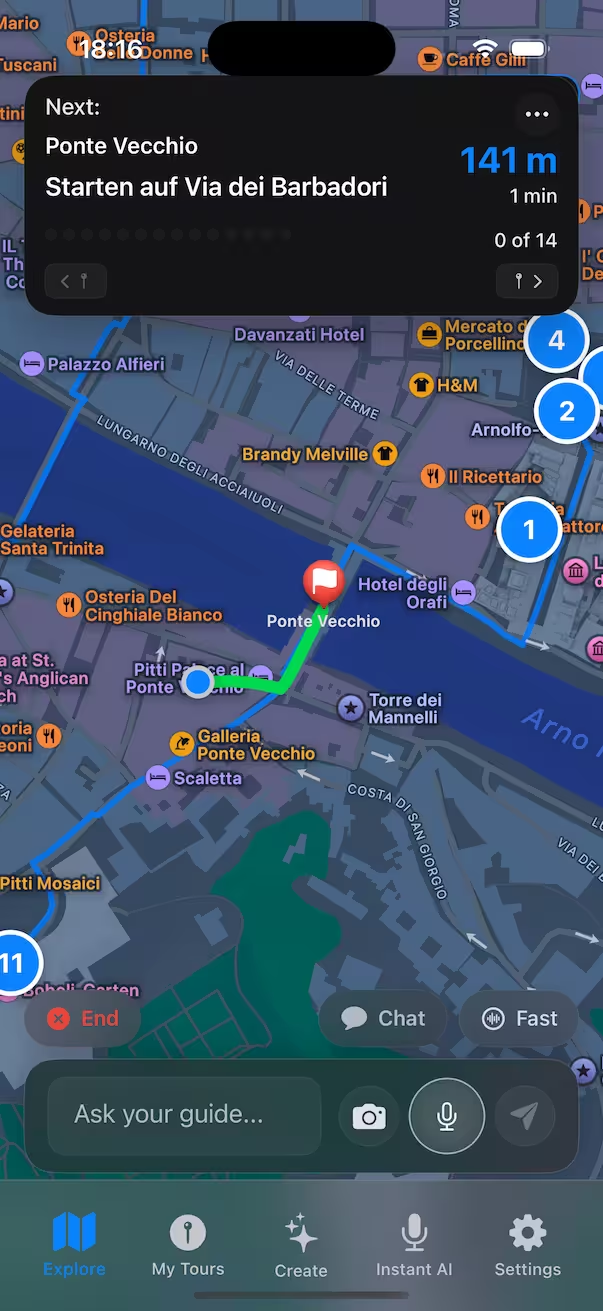
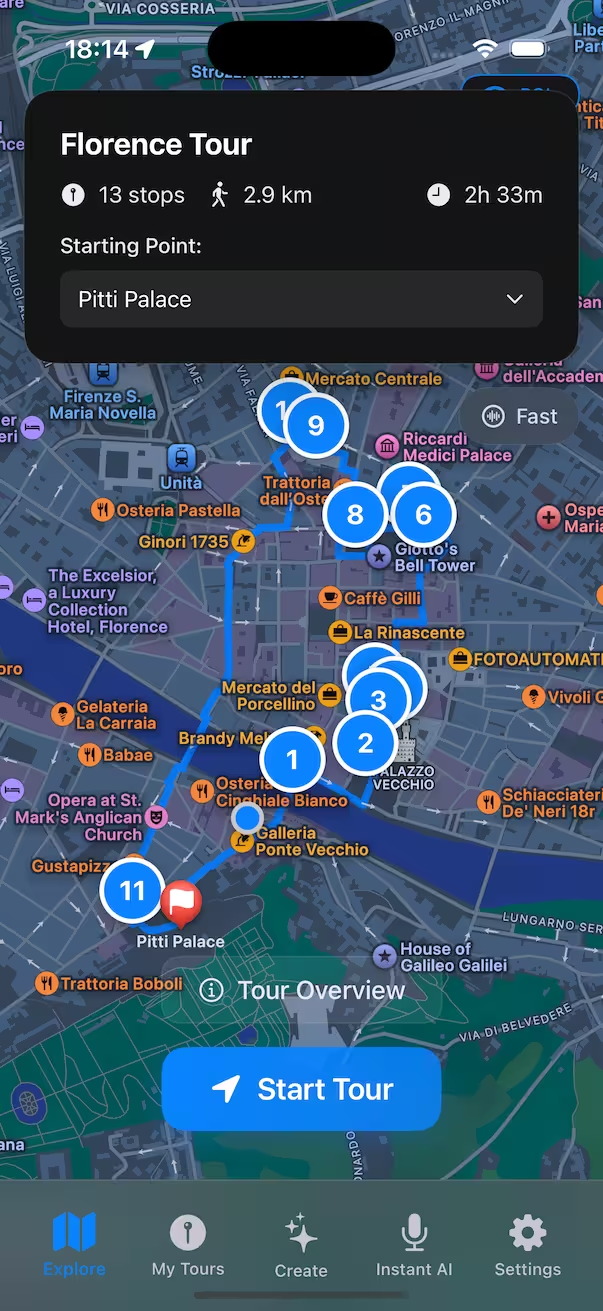
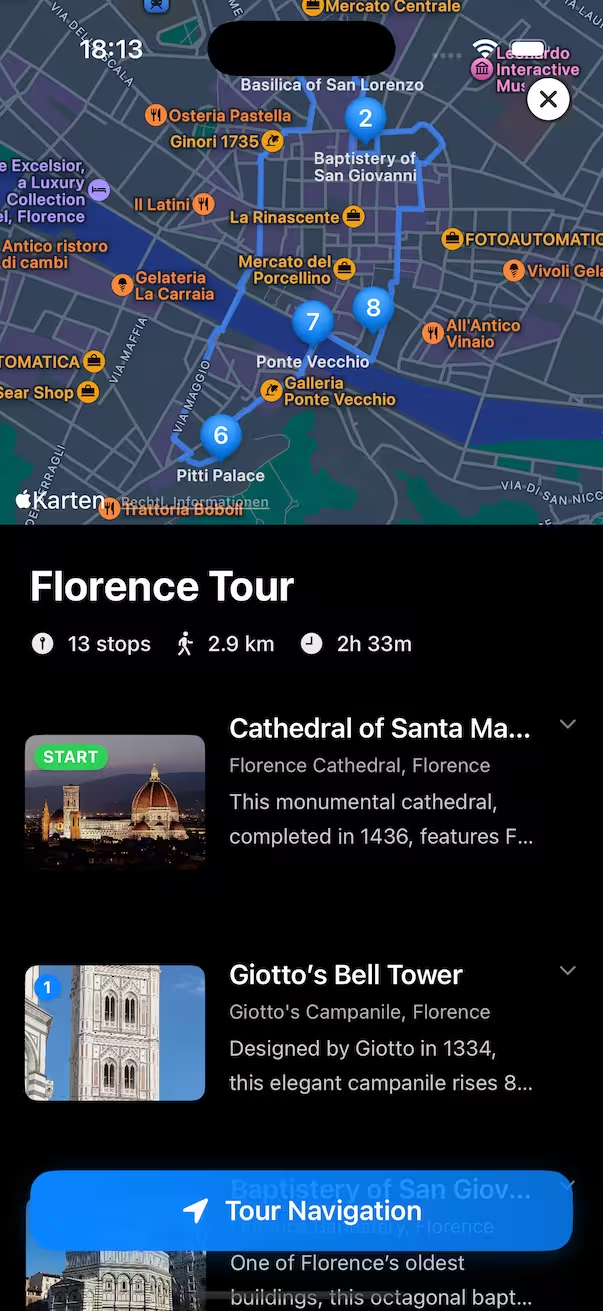
The classic Salamanca tour: 8 stops, 2.3 km, about 2 h on foot
Your live AI guide and the self-guided Salamanca route, together in your browser.